holiday

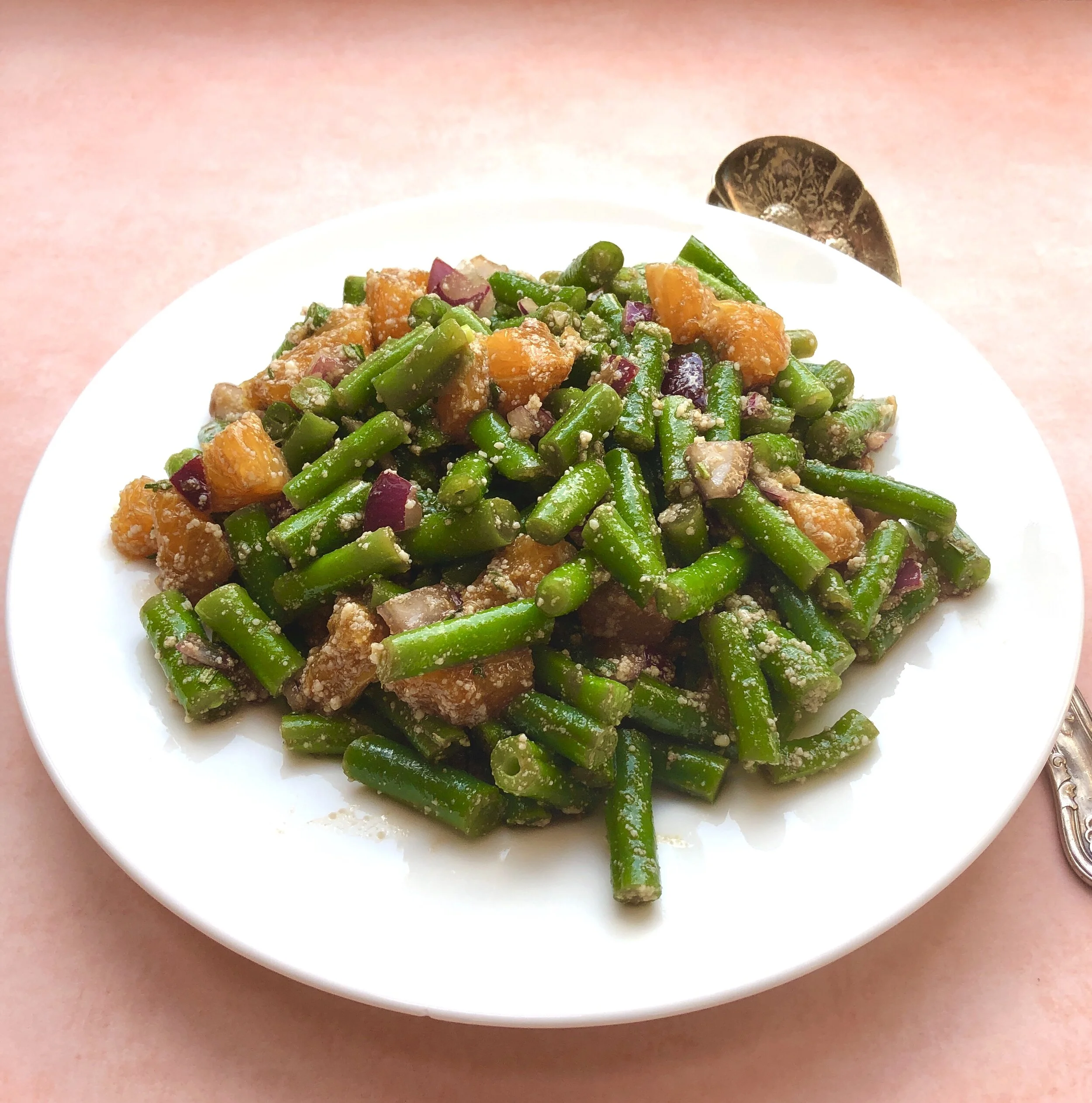
Green Bean Salad with Orange

Green Bean Salad with Orange

Green Bean Salad with Orange

Historians tell us that Queen Esther was a vegetarian, that in order to keep her Jewish identity secret and stay within kashrut, she ate only fruits, vegetables, legumes, seeds and grains. Perhaps some dairy products as well.

On Purim we honor this extraordinary woman, who outwitted the evil Haman and saved the Jews of ancient Persia from complete annihilation.

This is often a time when even meat-eaters have a vegetarian meal.

Here’s a salad that would be a delicious starter to any meal, vegetarian or not (the grated cheese is optional). It also makes a nice transition dish to spring — it’s coming!! Serve this dish at room temperature.

Green Bean Salad with Orange

  • 1/2 pound green beans

  • 1/3 cup chopped red onion

  • 1 orange, peeled; segments cut into pieces

  • 2 tablespoons olive oil

  • 1 tablespoon white wine vinegar

  • 1 tablespoon Balsamic vinegar

  • 1 teaspoon chopped fresh rosemary

  • 1/4 cup grated Parmesan cheese or ground almonds, optional

Cook the green beans until they are just fork tender, drain under cold water and let dry on paper towels. Place the green beans in a bowl and add the red onion and orange pieces. Pour in the olive oil and toss the ingredients to coat them with the oil. Pour in the white wine vinegar and Balsamic vinegar and add the rosemary. Toss the ingredients to coat and distribute them evenly. Sprinkle with cheese or nuts if desired. Let rest for 10-15 minutes before serving.

Makes 4 servings

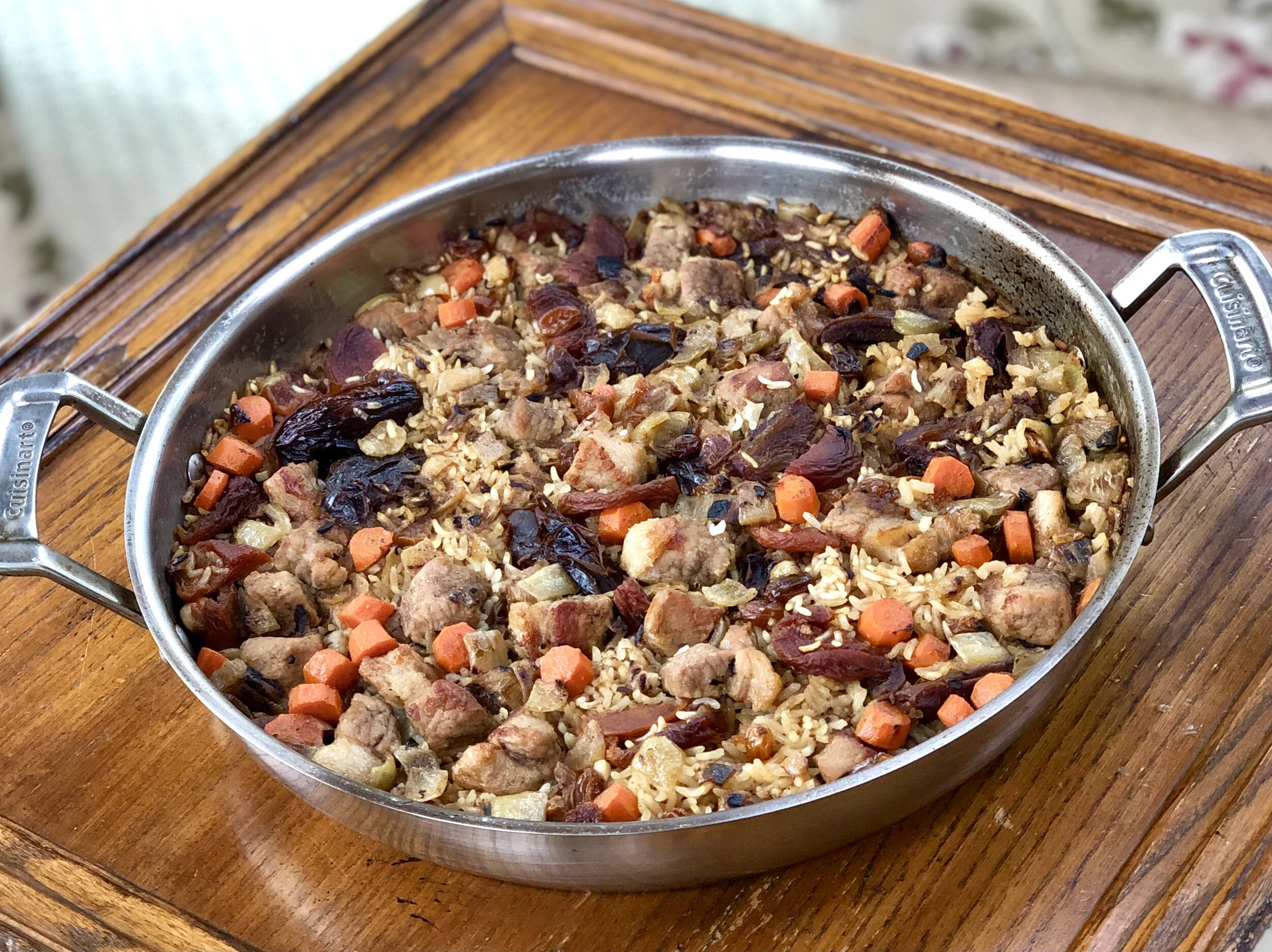
Azerbaijani Plov

9CEF1DB5-7306-435A-949E-477B7CB80F43_1_201_a.jpeg

A while ago my husband and I took the plunge and took the 23-and-me DNA tests.

One of the best things that happened is that I met a couple of wonderful new cousins I didn’t know I had! And I also was able to catch up on news with family we had lost contact with years and years ago.

I wasn’t surprised by anything in my ethnic background. I am an Ashkenazi Jew and that’s what it said.

Mostly.

There were a couple of odd little things. The one that intrigued me most was the tiny, tiny, tiny bit of “Azeri” — roughly meaning from Azerbaijan.

Wow. Where did that come from?

It doesn’t matter. I will never be able to trace anything to anyone. My “people” come from Romania and Ukraine.

I only actually wondered about one thing: what do they eat in Azerbaijan?

Alas, no relatives to tell me. So, I did some research and some cooking.

One of the best Azerbaijani dishes is something called Plov. It’s basically “pilaf” — the west Asian version. And, like pilaf (Caribbean Pelau, Carolina Bog, Kenyan Pilau, Turkish Pilav) it means: rice with stuff in it. Azerbaijani versions are generally sweeter than others. They usually include dates and dried apricots — so the dish is perfect for Tu B’shevat (the Jewish holiday with some really delicious food). They mostly contain meat, but can be vegetarian.

I experimented of course. The best version is the one below, which I made using veal, because that’s what I had, but I know it would be even better with lamb. Vegetarians — use vegetable stock and leave out the meat (you can add peas nearer the end of the cooking time if you wish).

I have no idea if this tastes like an authentic Azerbaijani dish. But it’s really good and, alas, I didn’t have an ancient family recipe to guide me.

Azerbaijani Plov

  • 3 tablespoons olive oil
    1 pound lamb, veal or boneless chicken, cut into bite size pieces
    1 onion, chopped 
    1 clove garlic, chopped
    3 medium carrots, sliced 1/2-inch thick
    1/2 cup halved dates, preferably medjool 
    1/2 cup cut up dried apricots
    1/3 cup golden raisins 
    Salt 
    1 teaspoon ground cumin
    1/2 teaspoon ground coriander
    1/2 teaspoon saffron threads, optional
    Pinch or two of Aleppo pepper, cayenne or crushed red pepper
    1 cup white rice
    2 cups chicken, beef or vegetable stock 

Preheat the oven to 350 degrees. Heat 2 tablespoons of the olive oil in a large heat-proof, oven-proof pan over medium heat. Add the meat and cook, turning the pieces, for 4-5 minutes or until lightly browned. Remove the meat and set aside. Pour the remaining olive oil into the pan. Add the onion and cook for 2-3 minutes. Add the garlic and carrots and cook for 1-2 minutes. Add the dates, apricots and raisins. Sprinkle with salt, cumin,  coriander, saffron and Aleppo pepper, stir and cook for 1-2 minutes. Add the rice and meat. Stir to distribute the ingredients evenly. Pour in the stock, bring to a boil. Remove from the heat, cover the pan and place in the oven. Bake for about 45 minutes. Let rest, covered, for 10 minutes.

Makes 4 servings
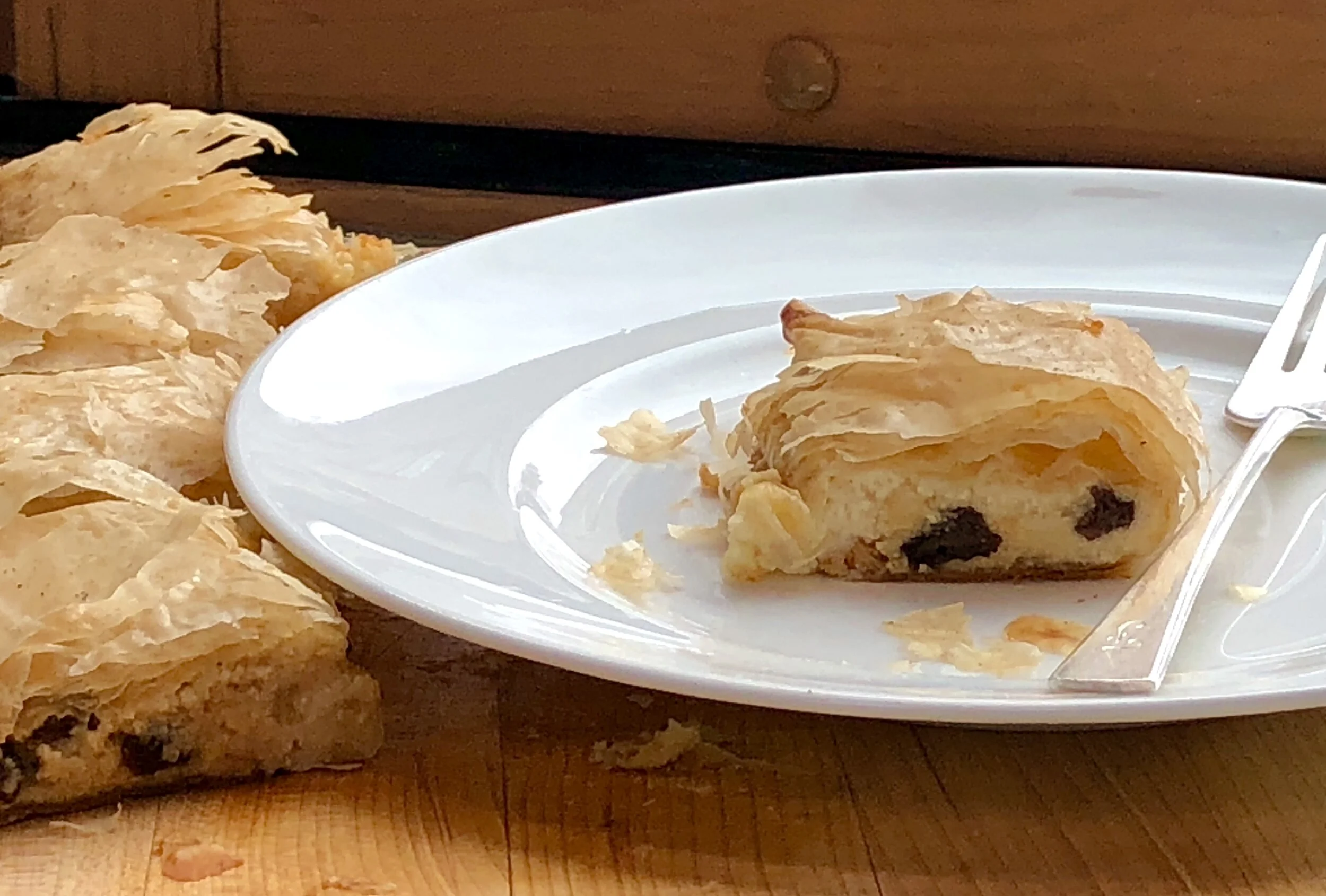
Cheese Strudel

FFF6A430-4CAD-49F0-AFDE-EB21991F7A34_1_201_a.jpeg

In our family, there are always latkes for Hanukkah.

SERIOUSLY! WOULD THERE EVER BE ANY DOUBT ABOUT THAT?!

But also, we always have some dish that includes cheese, to honor Judith, who played a major part in the Maccabee victory. You can read all about it here.

Most often I make cheese-filled blintzes, because … blintzes! One of man/womankind’s all-time favorite foods. One of my favorites, anyway.

When I am feeling even more ambitious, I make potato-cheese kreplach. Boy do I LOVE those! In fact, they are on my list of top-five foods of all time.

But this year, the dairy dish will be cheese strudel because this coming Sunday (December 13th) I am giving a Zoom demo of Hanukkah foods for my local Hadassah chapter and one of the recipes I am making will be cheese strudel. My husband and I will have some of it for dessert and then I will have the leftovers to stash away for New Year’s, when my cousins come after they have quarantined so they can be with us! New Year’s Eve might seem normal this year!

Cheese strudel — for Hanukkah. For New Year’s. Whenever!

Cheese Strudel 

  • 10 sheets phyllo dough

  • 3-4 tablespoons butter

  • 1-1/2 cups farmer cheese

  • 4 ounces cream cheese

  • 1/3 cup sour cream

  • 1/2 cup sugar

  • 1 large egg yolk

  • 3 tablespoons all-purpose flour

  • 1/2 teaspoon grated lemon peel

  • 3/4 teaspoon vanilla extract

  • 1/4 teaspoon salt

  • 1/3-1/2 cup raisins, optional

  • 3 tablespoons bread crumbs, approximately

Line a baking sheet with parchment paper. Open the package of phyllo dough and cover the sheets with a barely moist kitchen towel. Melt the butter and keep warm over low heat. Place the farmer cheese, cream cheese, sour cream, sugar, egg yolk, flour, lemon peel, vanilla extract, salt and raisins, if used, in a bowl and mix to combine the ingredients. Place one sheet of phyllo dough on a work surface and brush lightly with some of the melted butter. Sprinkle with some bread crumbs (about 1/2 tablespoon). Layer a second sheet of phyllo on top, Lightly brush with butter, sprinkle with some bread crumbs and repeat for a third and fourth layer. Add a final fifth sheet on top. Spoon half the cheese mixture down the long side of the phyllo sheet leaving about one inch on each end. Roll the dough over the cheese and finish rolling, jellyroll style until the roll is complete. Place the roll, seam side down. On the parchment lined baking sheet. Repeat with another five sheets of phyllo and the remaining cheese mixture. Place the second roll on the baking sheet. Brush the surface of the rolls with remaining butter. Chill for about one hour. Preheat the oven to 375 degrees. Bake for about 30 minutes or until golden brown.

Makes 2 rolls, each serving 4-6 people

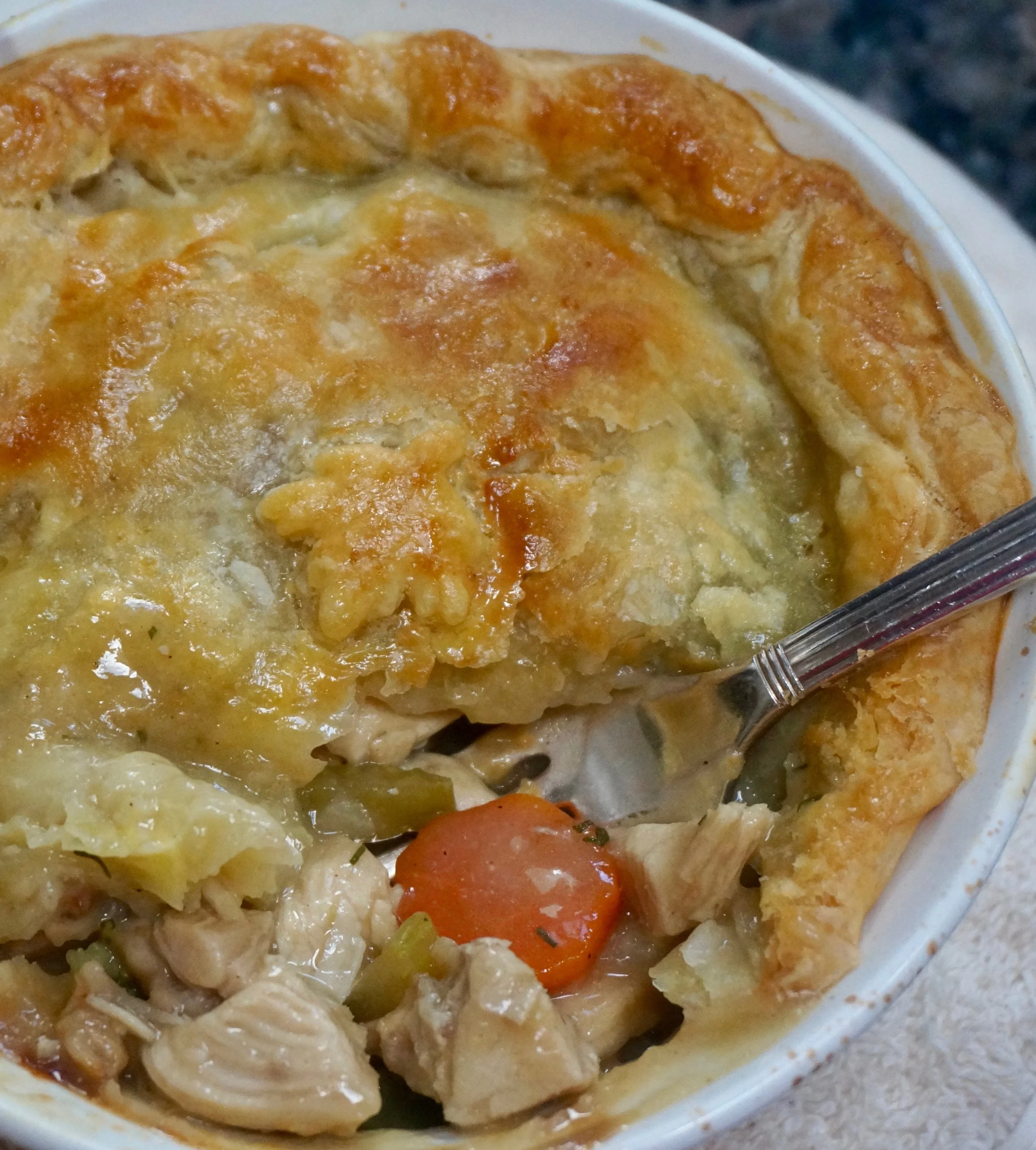
Turkey Pot Pie

Our Thanksgiving celebration this year won’t be like any other. No kids or grandkids. No extended family. Just my brother and sister-in-law, who have committed to stay more or less quarantined so the four of us can have as safe a Thanksgiving dinner as possible, distanced even in my house.

Nevertheless, I am still thankful. So far everyone is okay. And although we are sad we won’t all get together, we are all in accord that we remain dug in until it’s safe to do otherwise. We look forward to — maybe Passover?

Still — I will make a more or less classic Thanksgiving dinner. Including roasted turkey, sweet potatoes, baked cranberries, stuffing, Brussels sprouts and pumpkin pie.

And of course there will be more leftovers than usual this year.

So: turkey pot pie is likely to be in the menu soon after the holiday.

Turkey Pot Pie

  • 3 tablespoons vegetable oil

  • 1 medium onion, chopped

  • 2 carrots, sliced 1/4-inch thick

  • 2 stalks celery, sliced 1/4-inch thick

  • 1 cup cut up broccoli (bite-size)

  • 1 cup zucchini chunks (bite-size)

  • 4 cups chopped cooked turkey

  • 5 tablespoons all-purpose flour

  • 3 cups chicken stock

  • 2 tablespoons chopped fresh dill

  • salt and freshly ground black pepper to taste

  • pie dough or thawed frozen puff pastry sheets

Preheat the oven to 350 degrees. Heat the vegetable oil in a large saucepan over medium heat. Add the onion and cook, stirring frequently, for 2-3 minutes or until softened. Add the carrots, celery and broccoli and cook for 2 minutes. Add the zucchini and turkey and stir to distribute the ingredients evenly. Sprinkle the flour over the ingredients and stir to mix it in completely. Cook for 1-2 minutes, stirring frequently. Pour in the stock gradually, stirring constantly. Raise the heat and bring the liquid to a boil. Reduce the heat and simmer the ingredients, stirring frequently, for about 10 minutes or until the sauce has thickened. Stir in the dill. Season to taste with salt and pepper. Spoon the filling into a baking dish. Cover with the pie dough or puff pastry. Seal the edges to the dish. Cut 2-3 slits in the crust to allow steam to escape. Bake for about 35 minutes or until crispy and golden brown.

Makes 4 servings


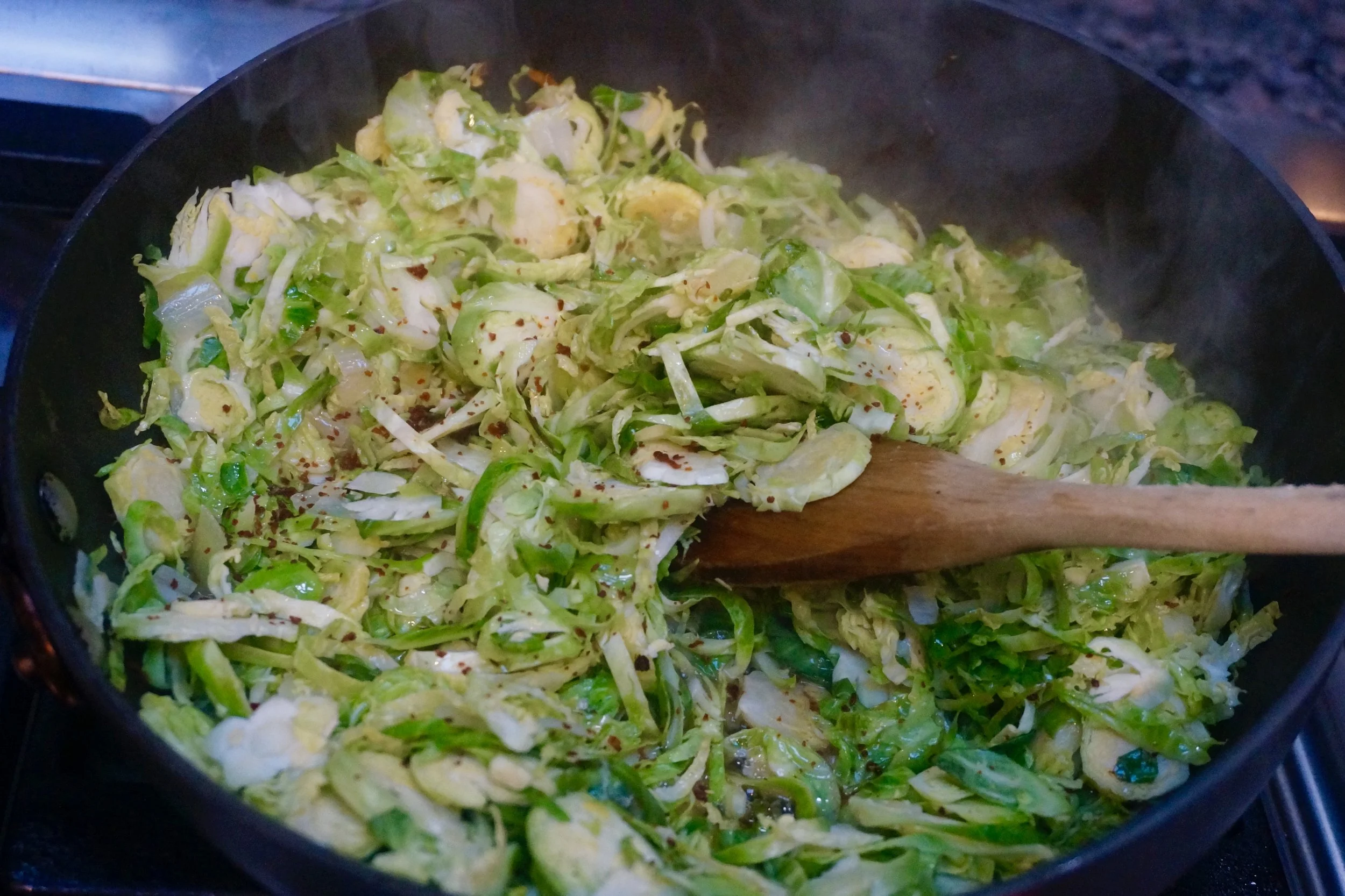
Brussels Sprouts with Shallots and Lemon

I’ve mentioned this before but we talk about it all the time because the outcome could never have been predicted —- when we were first married, Ed told me he hated Brussels sprouts and also, that if I ever made them he would file for divorce.

He was kidding of course.

But I didn't make Brussels sprouts anyway until I got an assignment from an editor to do a food story on -- you guessed it -- and couldn't turn down the opportunity.

In preparation for the article, I experimented with several recipes. My kitchen was laden with pots and pans, all sots of seasonings and of course, a ton of Brussels sprouts. 

Ed liked them all! And from that point on, we became a Brussels sprouts family.

Over the years I've posted recipes for a few of the dishes I've made, including one for Roasted Brussels sprouts with tangerine and hazelnuts, and a salad, which included Brussels sprouts and beets, and of course, a Vegetable Hash.

This vegetable has become such a favorite in our family that a while ago, when one of my grandkids wanted to prepare dinner for her siblings, one of the dishes she chose was roasted Brussels sprouts.

Last time I made Brussels sprouts for dinner I decided on something different. Rather than roast the vegetable whole or as chunks, I decided to shred instead. 

Perfecto!

Not only delicious, but incredibly quick. This recipe finished cooking in about 6 minutes! (You can clean and shred them a day or so ahead.)

Remember this one for Thanksgiving!

Brussels Sprouts with shallots and Lemon

  • 2 dozen large Brussels sprouts

  • 1 tablespoon lemon juice

  • 1 teaspoon grated fresh lemon zest

  • 3 tablespoons olive oil

  • 2 medium shallots, chopped

  • 1 large clove garlic, chopped

  • 1/4 cup white wine

  • 1/2 teaspoon Aleppo pepper (or use crushed red pepper)

  • salt to taste

Trim the Brussels sprouts and shred them either by hand or in a food processor. Place the shreds in a bowl, sprinkle with lemon juice and zest, toss ingredients and set aside. Heat the olive oil in a large sauté pan over medium heat. Add the shallots and garlic and cook, stirring frequently, for 2 minutes. Add the sprouts and cook, stirring frequently, for about 2 minutes. Add the wine, Aleppo pepper and salt. Cook for about 2 minutes or until sprouts are tender but still slightly crispy.

Makes 6 servings


Honey-Spice Sweet Potatoes

D1479907-BE5E-4F69-AE0B-27D1010BD47A_1_201_a.jpeg

It will be a tiny Thanksgiving dinner for us this year. It’s sad. And yet, I am still thankful that my kids and grandkids will celebrate separately and we will FaceTime during the day to send virtual hugs. And we will hope that next year we can go back to the large, crowded, noisy celebrations of days gone by.

Also, I am thankful that my brother and sister-in-law, who live nearby, will have dinner with us, seated far apart.

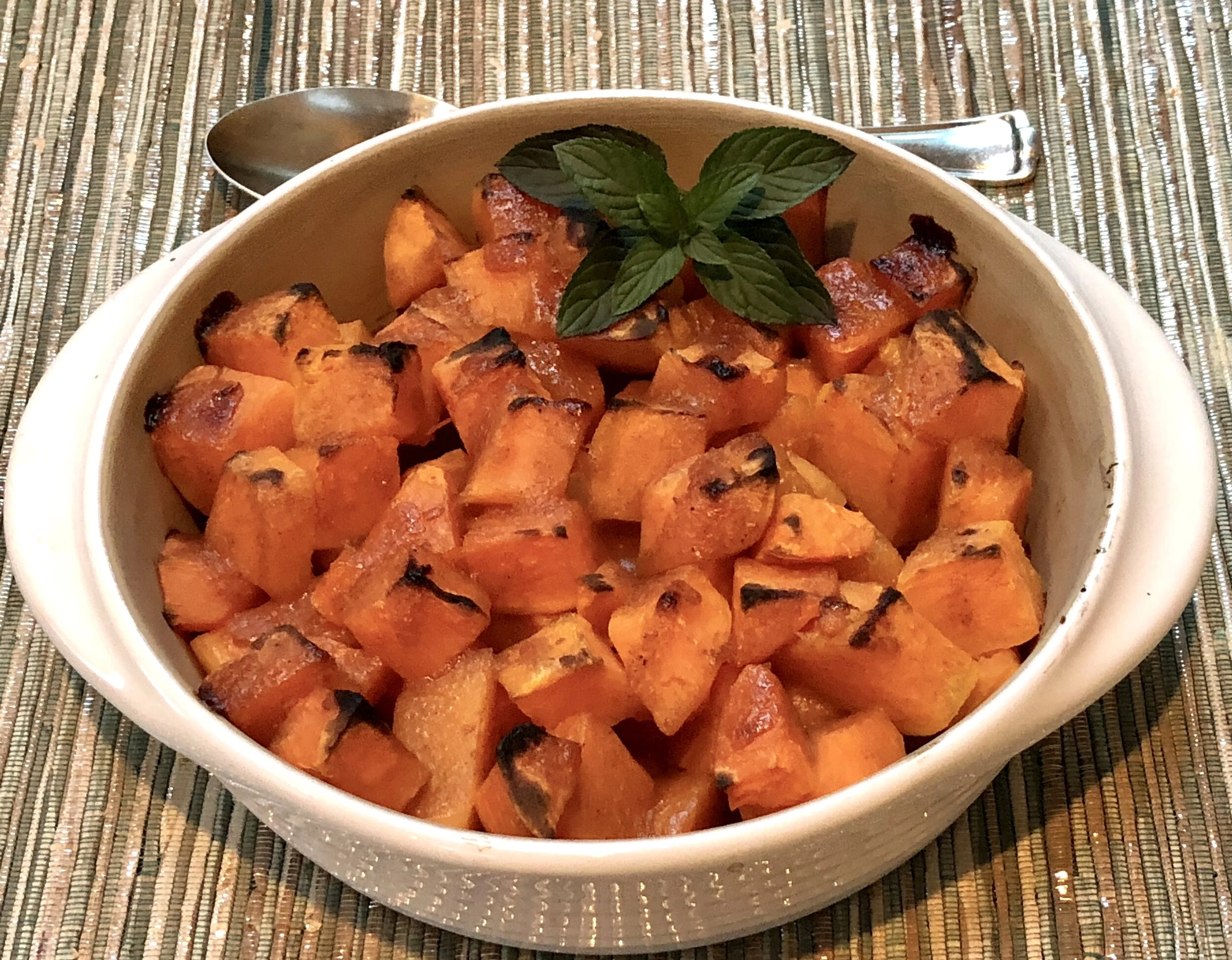
So, a scaled-down dinner. I know everyone will want sweet potatoes, so here is the scaled-down version of a dish I sometimes serve. It’s enough for 4 or 6 so maybe there will be some leftovers.

Btw, you can set this up ahead and pop it into the oven at the last minute.

Honey-Spice Sweet Potatoes

  • 3 medium sweet potatoes

  • 1/4 cup honey

  • 1/4 teaspoon salt or to taste

  • 1/4 teaspoon cinnamon

  • 1/4 teaspoon ground ginger

  • 1/8 teaspoon freshly ground nutmeg

  • 1 teaspoon freshly grated orange peel

  • 3 tablespoons orange juice

  • 1 teaspoon lemon juice

  • 1-1/2 teaspoons cornstarch

  • 1 tablespoon water

  • 1-1/2 tablespoons vegetable oil, butter, margarine or coconut oil

Peel the sweet potatoes, cut them into chunks and place in a saucepan. Cover with lightly salted water and bring to a boil over high heat. Lower the heat and cook for 15-18 minutes or until the potatoes are fork tender. Drain under cold water and place in a lightly oiled casserole dish. In another saucepan, combine the honey, salt, cinnamon, ginger, nutmeg, orange peel, orange juice and lemon juice. Bring the ingredients to a boil over high heat, stirring occasionally. Mix the cornstarch and water together to form a paste. Spoon the paste into the boiling honey mixture and stir briefly until the sauce thickens. Stir in the vegetable oil. Pour the sauce over the potatoes. Set aside. About a half hour before you are ready to serve the dish, preheat the oven to 375 degrees and bake the casserole for about 20 minutes.

Makes 4-6 servings


Quinoa, Turkey and Veggie Stuffed Peppers

fullsizeoutput_b930.jpeg

My grandma made stuffed peppers for Sukkot. Unfortunately they weren’t my favorite dish because bell peppers and my stomach don’t get along, even when I was a kid.

But I did love what she put on the insides. It was sort of a Turkish-style filling. The family wasn’t Turkish, they were from Romania, which was part of the Ottoman Empire when she was a girl, and a lot of the food she made was influenced by the fabulous cuisine of Turkey.

I realized later in life that using red, orange and yellow peppers made all the difference to my digestive system. They are much easier going down than the green ones my grandma always used! So, I’ve made and enjoyed her recipe from time to time over the years.

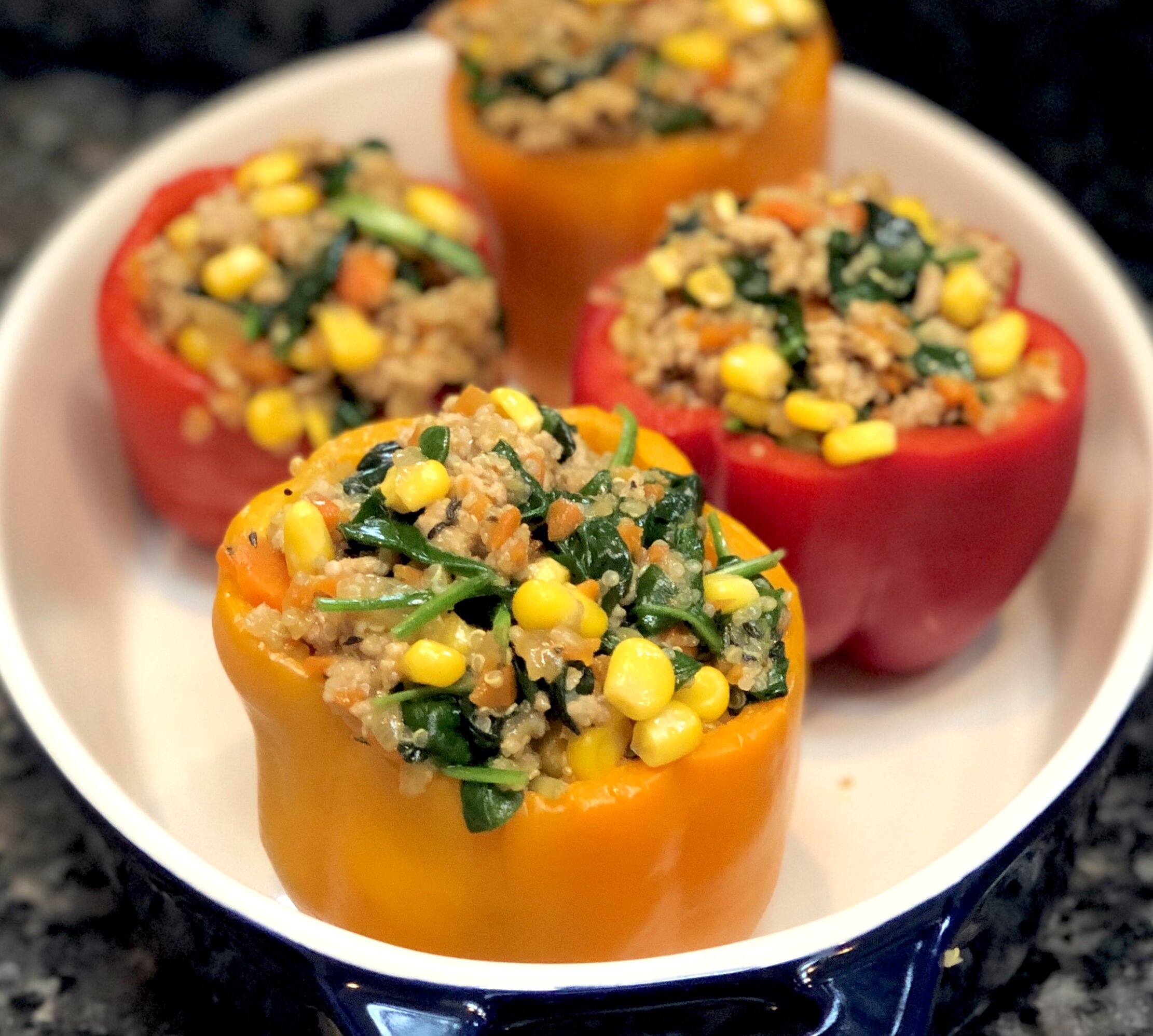
But this year I decided on a whole new stuffing based on quinoa instead of rice. It’s nothing like grandma’s but is very tasty and it reminds me of her anyway.

Veggie and Quinoa Stuffed Peppers

  • 4 large bell peppers

  • 1/4 cup quinoa

  • 1/2 cup chicken or vegetable stock or water

  • 2 tablespoons olive oil

  • 2 chopped carrots

  • 1 medium onion, chopped

  • 1 large clove garlic, chopped

  • 1 cup ground veal, beef or turkey

  • 2 packed cups chopped spinach

  • 1 cup corn kernels

  • 2 large eggs

  • 2 teaspoons chopped fresh thyme

  • Salt and freshly ground black pepper to taste


Preheat the oven to 350 degrees. Cut the top of the peppers to remove about 1/2-inch from the top. Reserve the caps. Reach inside the peppers and remove the stringy flesh and the seeds. Place the peppers open side up in a large pot. Fill the peppers with water, then carefully fill the pot with water to cover the peppers. Bring the water to a boil over high heat. Cover the pan. Reduce the heat to medium. Cook for 3-4 minutes. Remove the peppers with a slotted spoon and let cool. Place the quinoa and stock in a saucepan, bring to a boil over high heat, reduce the heat to low, cover the pan and cook for about 15 minutes or until all the liquid has been absorbed and the quinoa is fluffy. Set aside. Heat the olive oil in a sauté pan over medium heat. Add the carrots, onion and garlic and cook for 3-4 minutes, to soften them slightly. Add the veal and spinach and cook, breaking the meat into smaller pieces, for 3-4 minutes or until no longer pink. Remove the pan from the heat. Stir in the corn and quinoa and stir to distribute the ingredients evenly. Mix in the eggs, thyme and salt and pepper to taste. Spoon equal amounts of the mixture inside the peppers. Cover with aluminum foil and bake for 25 minutes. Remove the cover and bake for another 10-15 minutes or until the peppers are tender.

Makes 4

Greens with Figs and Roasted Hazelnuts

fullsizeoutput_b2cd.jpeg

I find it incredibly sad that Ed and I will not be able to host our annual Break-the-Fast. Our group has been gathering together for what seems like forever, and unlike all the other holidays which we celebrate with family, our Yom Kippur break-the-fast included friends from our synagogue and community, people who got together, just for this occasion.

I can’t even remember when we started.

Decades ago.

Not everyone who came had fasted, but we had all done something — skipped breakfast or not had carbs or not had coffee — that reminded us to be mindful about the joy and meaning behind celebrating the new year as well as looking back on what had happened the year before, who we needed to be better to, what we needed to be better at. The Break-the-fast marked a real beginning.

But now we can’t begin because the end of what has brought us to this place doesn’t seem anywhere in sight.

Virtual break-the-fast just doesn’t cut it for me.

I will miss the food too. Our meal is always vegetarian/dairy. No fish because my daughter is allergic. Our must-haves have always been mujadarah, eggplant-mashed potato gratin, my friend Susan’s kugel, a giant challah. And much more, with some changes over the years.

Dessert of course.

But this year it’s just the two of us, so dinner will be salad and roasted salmon.

But ——— even with all the trials and tribulations of the past year as well as the health concerns and social unrest that continue into 5781, I try to be grateful. For my family, friends, my life.

As for food? It will be different this one year. Fortunately, fresh figs are now available! (But only for a short time — one of those get-them-while-you-can items.) Ed and I both love them and I’ve already made several recipes using both green and black figs.

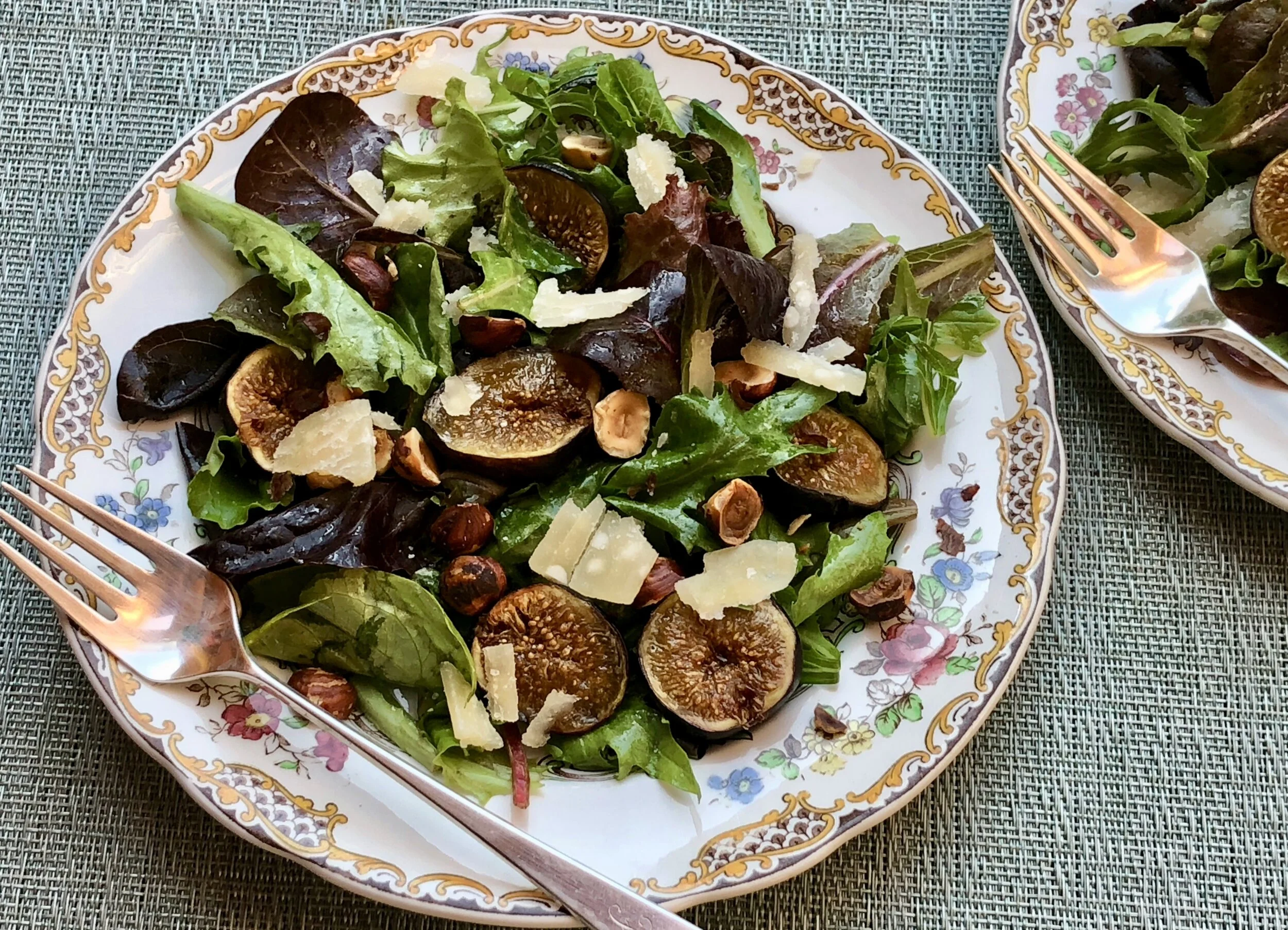
But this salad is the fig dish I’ll be serving post Yom Kippur. It’s easy, festive enough for a holiday meal and easy on the stomach after not eating for a while.

Greens with Figs and Roasted Hazelnuts

  • 6 fresh figs

  • 2 tablespoons olive oil plus extra for coating the figs

  • 3 tablespoons coarsely chopped hazelnuts

  • 3 packed cups mixed soft greens such as spinach, frisee, Bibb lettuce, washed and dried

  • 2-3 teaspoons white wine vinegar

  • salt and freshly ground black pepper

  • Parmesan cheese

Preheat an outdoor grill or oven broiler. Brush the figs with a thin film of olive oil and cut them in half. Place them, flesh side down, on a parchment lined baking sheet. Broil for about 5 minutes or until lightly browned. Remove the figs and set them aside. OR: grill them on an outdoor grill. Place the hazelnuts on the baking sheet and broil them for a minute or two to toast them lightly (or bake in a preheated 400 degree oven for 5-6 minutes). Remove the nuts and set aside. Place the greens in a bowl. Pour in the 2 tablespoons olive oil and toss to coat the leaves. Add 2 teaspoons wine vinegar and toss, taste and add the additional vinegar if desired. Add the figs and nuts, toss, taste and add salt and pepper to taste. Grate or shave Parmesan cheese over the greens and serve.

Makes 2 servings


Quarantine Charoset or Pantry Charoset or Completely Made-up Charoset

fullsizeoutput_a458.jpeg

When I was growing up the Seder charoset was used symbolically only. My grandmother, and in later years my mother, would grate an apple or two, mix it with some walnuts and Manischewitz concord grape wine and that was that. It always turned brown and didn’t look very appetizing and we ate it only as commanded during the reading of the Haggadah.

Then, several years ago, charoset became a big deal. It was now expected to taste good, look good and be eaten like a side dish, the way we eat cranberry sauce or apple sauce.

And so, I stopped making the apple mush. Instead, over the years, I’ve made Persian versions, nut-free versions, coconut charosets and all sorts of others, based on different ethnicities.

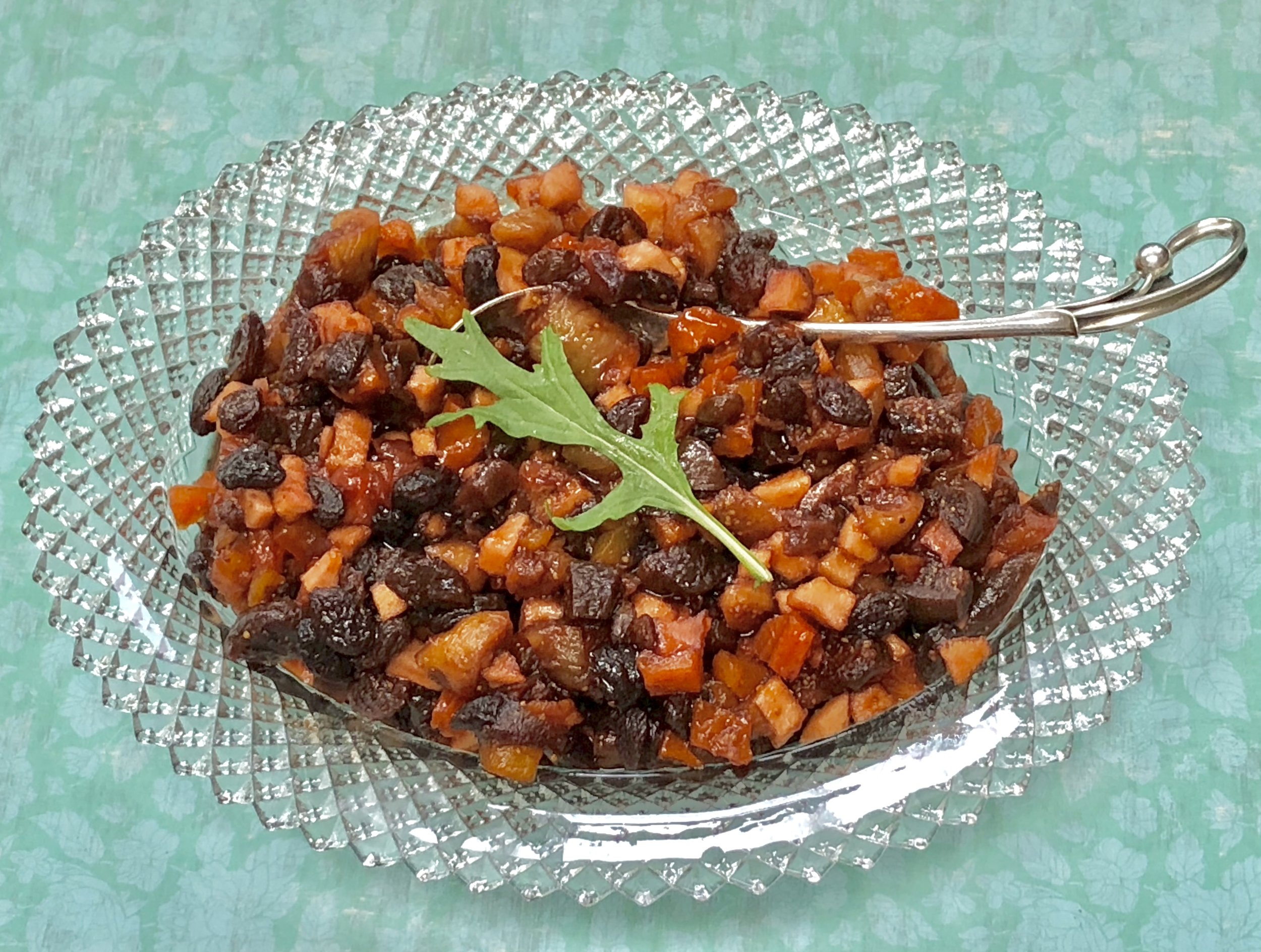
This year I am making my special COVID19 jumble, made with what I have on hand in the way of dried fruit (plus an orange, which I always have in the fridge.

Should I call it Quarantine Charoset, Pantry Charoset or simply Completely Made Up Charoset?

I don’t use any nuts because of allergies, but you can add 1/3-1/2 cup of chopped nuts (any kind) to this recipe if you have some in your pantry.

Quarantine Charoset or Pantry Charoset or Completely Made-up Charoset

  • 1-1/2 cups chopped dates

  • 1 cup chop dried figs

  • 1 cup chopped dried apricots

  • 1/2 cup raisins

  • 1 fresh apple, peeled and chopped

  • 1/2 cup pomegranate jam (or any jam you have)

  • 1/3 cup Passover wine (preferably Concord grape)

  • 1/4 cup orange juice

  • 1 teaspoon grated fresh orange peel

Place the dates, figs, apricots, raisins and apple in a bowl and toss the fruit to distribute the pieces evenly. Add the pomegranate jam and stir to coat the fruit. Pour in the wine and orange juice; add the orange peel. Toss the ingredients. Let rest for at least one hour before serving.

Makes about 5 cups

Banana Cake with Dates and Orange

fullsizeoutput_b58f.jpeg

Tu B’shevat is not one of the more well-known Jewish holidays, but it certainly is one of the more delicious ones. It’s known as “new year of the trees” and although it comes in mid-winter it’s a reminder that tree fruit is forming, that winter is nearly over, that warmer weather and new crops will be here soon.

And so, on Tu B’shevat we eat fruit. Our meals typically include some or all of the 7 species mentioned in the Torah: wheat, barley, grapes, figs, pomegranates, olives, and dates.

What a perfect occasion for banana cake studded with sweet, dried dates! I use medjool dates, but any variety will do. Or, you could substitute dried figs or raisins (dried grapes, right?)

Banana Cake with Dates and Orange

  • 2-1/2 cups flour

  • 1 teaspoon salt

  • 1 teaspoon freshly grated orange peel

  • 1 teaspoon baking soda

  • 1 teaspoon baking powder

  • 1/2 cup butter, margarine or vegetable shortening

  • 1 cup sugar

  • 1/4 cup date syrup (silan)

  • 3 very ripe bananas, mashed

  • 3 large eggs, slightly beaten

  • 1 cup chopped dates

Preheat the oven to 350 degrees. Grease and flour a (10-inch) 8-cup bundt pan. Mix the flour, salt, orange peel, baking soda and baking powder together in a bowl and set aside. In the bowl of an electric mixer set at medium speed, beat the butter and sugar until well blended. Add the date syrup and bananas and blend them in thoroughly. Add the eggs and beat well. Add the flour mixture and beat until batter is well blended. Fold in the dates. Pour into the prepared pan and bake for about 45-50 minutes or until a cake tester inserted into the center comes out clean. Remove from the oven and let cool in the pan for 10 minutes. Remove to a cake rack to cool completely.

Makes one cake serving 12-16