Roasted Fruit Cocktail

Roasted Fruit Cocktail

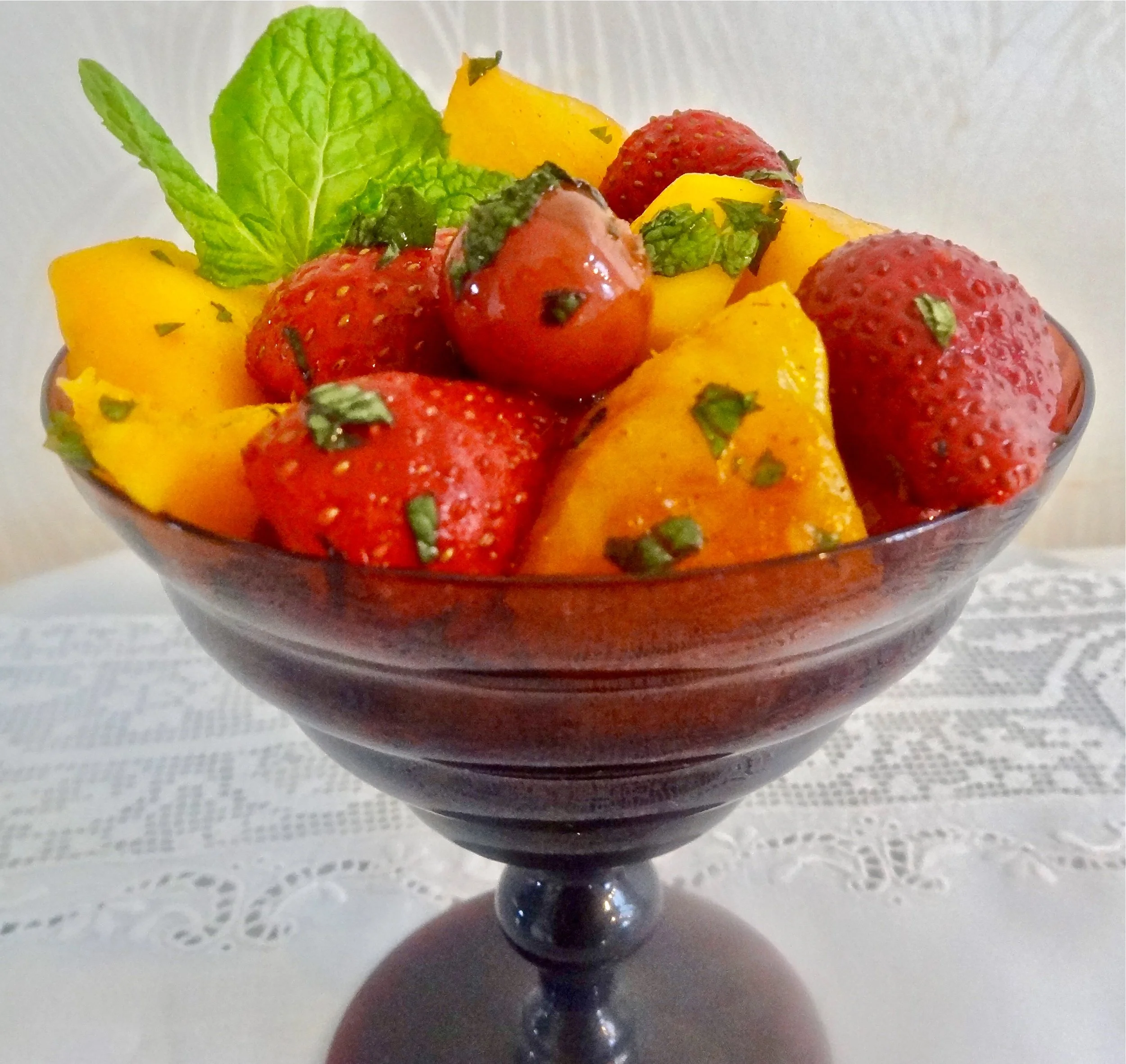
After a huge Passover Seder meal (or any big dinner), Roasted Fruit Cocktail is an excellent choice for dessert. Roasting brings out the fruit sugars in a tantalizing way with hints of rum and molasses. The chopped mint adds color and a really fresh, perky finish.

ROASTED FRUIT COCKTAIL

  • 1 ripe fresh pineapple

  • 2 fresh mangos

  • 3/4 cup orange juice

  • 1/4 cup honey

  • cinnamon

  • 18-20 strawberries, hulls removed

  • 1 cup seedless red grapes

  • 1/4 cup chopped fresh mint

  • sorbet or ice cream, optional

Preheat the oven to 450 degrees. Line a jelly roll sheet with parchment paper. Set aside.Remove the leaves and hard outer shell of the pineapple. Cut the pineapple lengthwise into 1-inch thick strips. Discard the fibrous core. Place the remaining strips on the parchment-lined jelly roll pan. Peel the mango and cut the flesh into strips. Set aside. Place the orange juice and honey in a saucepan and bring to a boil over high heat. Lower the heat slightly and cook for 5-6 minutes or until the liquid is slightly thickened. Generously brush all surfaces of the pineapple strips with the orange juice mixture. Sprinkle with cinnamon. Roast for 4-5 minutes. Turn the strips over. Add the mango strips, strawberries and grapes to the pan. Brush with the remaining orange juice mixture. Roast for another 6-7 minutes or until fruit is soft and lightly caramelized. Remove the pan from the oven and let cool. Cut the pineapple and mango strips into bite size pieces. Place all the fruit and accumulated pan juices in a bowl, sprinkle with the mint and toss. Place into serving dishes. Serve plain or with sorbet or ice cream.

Makes 8 servings
Khoshaf for Passover

Khoshaf

My grandma always cooked stewed dried fruit and I always associated that particular dish with her generation of Ashkenazi Jewish grandmas.

But, several years ago when Ed and I were in Egypt I noticed what looked like grandma’s “dried fruit compote” on every hotel breakfast buffet.

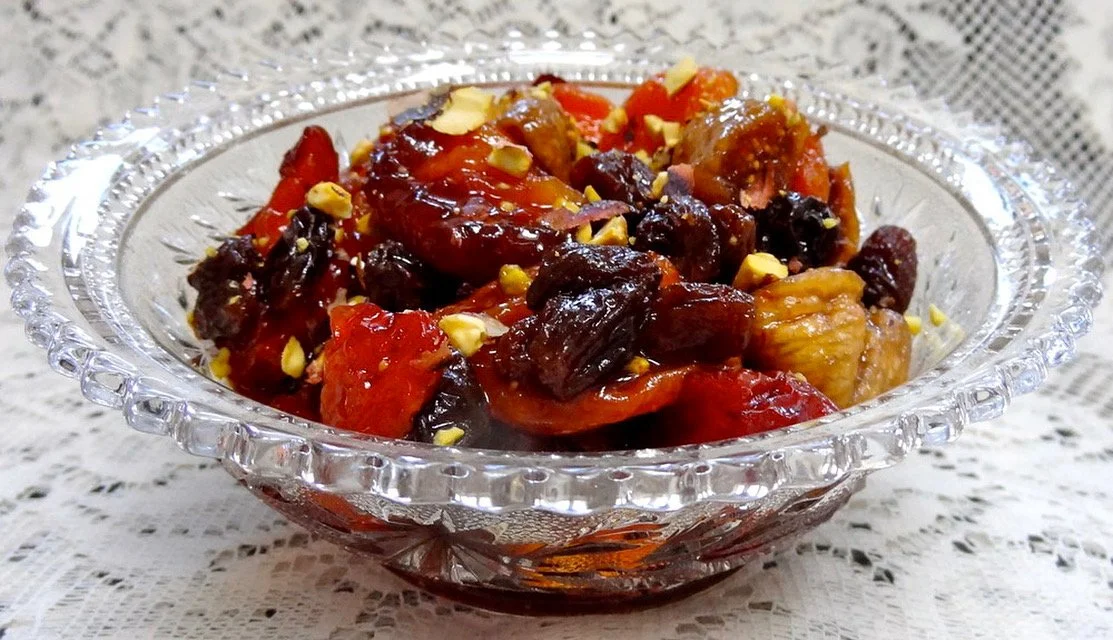
It wasn’t compote though. It was a dish called Khoshaf and apparently is a specialty served to break the Ramadan fast (and at lots of other times too). It is made with dried fruit, like compote, but it isn’t stewed! The fruit is steeped in a sweet, boiling syrupy liquid so it stays firm and pleasantly chewy. I took one taste and was hooked! I still make stewed fruit compote sometimes but other times I have a yen for khoshaf. It’s a special treat and perfect for Passover.

Follow me on Instagram @RonnieVFein

KHOSHAF

  • 1-1/2 cups water

  • 1 cup apricot nectar (or orange juice, peach juice, white grape juice, etc)

  • 1/4 cup (or more or less to taste) sugar

  • 1 tablespoon orange flower water, rosewater or 1 teaspoon vanilla extract or 1/2 lemon or orange cut into quarters

  • 1 cup dried apricots

  • 1 cup prunes or dried plums

  • 1 cup dried figs, halved or quaretred, depending on size

  • 1 cup raisins

  • chopped pistachio nuts

Combine the water, apricot nectar and sugar in a saucepan. Bring to a boil and stir until sugar dissolves. Cook for 4-5 minutes or until slightly syrupy. Remove from the heat and stir in the flavoring. Pour over the fruit and toss ingredients. Let rest for at least one hour, tossing the ingredients occasionally. Sprinkle with nuts and serve.

Makes 6-8 servings

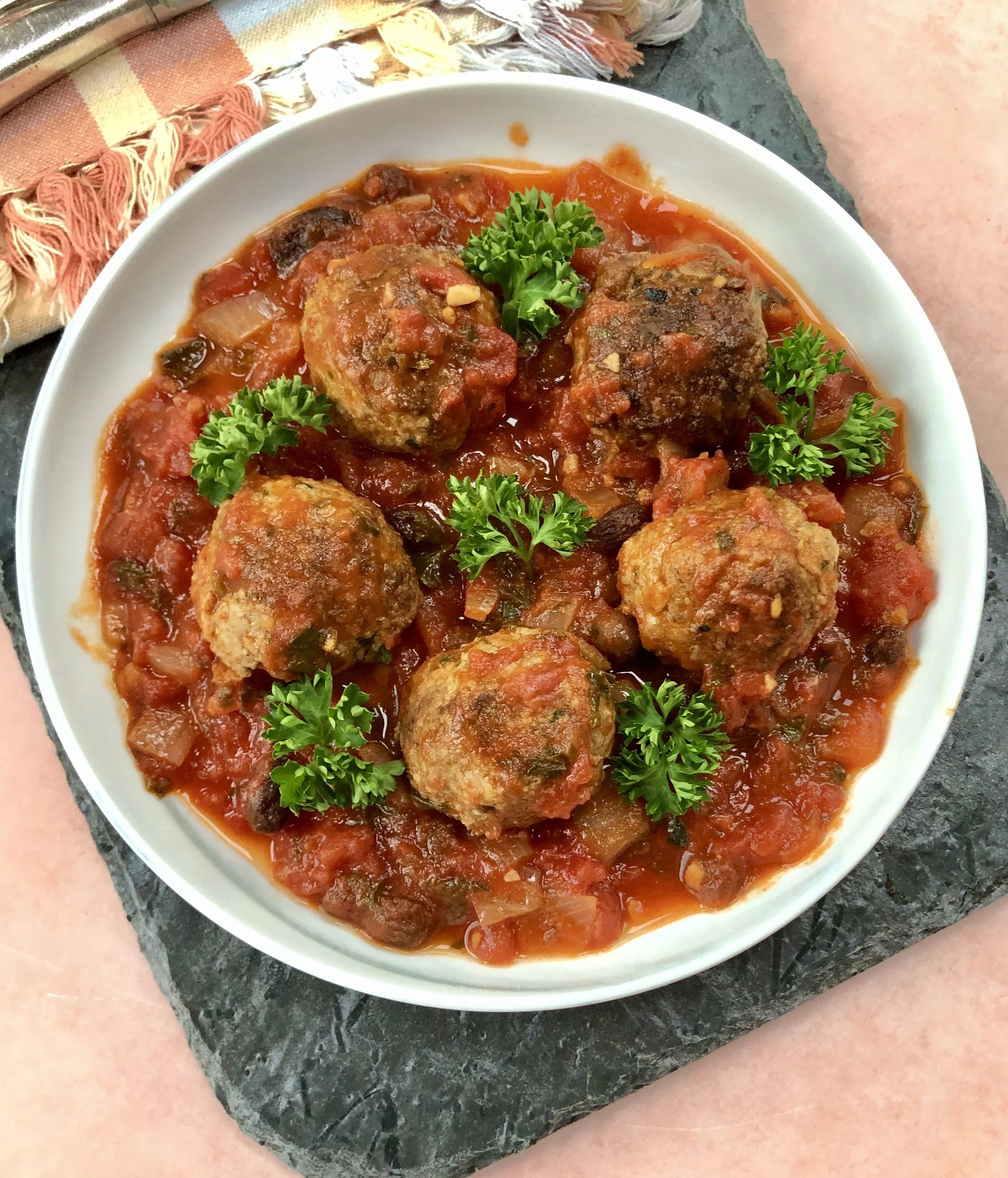
Moroccan Meatballs

Check out this article I wrote for The Nosher. It's about meatballs.

Who doesn't love meatballs?

These are slightly spicy and cloaked in a rich, chunky tomatoey sauce. So good any night of the year. Also a good choice for Passover.

Bonus: you can make them ahead!

https://www.myjewishlearning.com/the-nosher/make-ahead-moroccan-meatballs-recipe/

Quickie Ratatouille

So many people think ratatouille is an elaborate and difficult, time-consuming dish.

It doesn't have to be.

Sure, there are lots of vegetables to prepare. I do it all ahead and save the prepped veggies in containers or plastic bags in the fridge until I am ready to use them. The actual cooking is a cinch and doesn't take long at all.

This is a terrific side dish for Passover (it's parve). But I make this throughout the year. It goes with everything. Everything!

QUICKIE RATATOUILLE

  • 1/3 cup olive oil, approximately

  • 8 thick scallions, chopped

  • 6 large cloves garlic, chopped

  • 1 medium fresh chili pepper, deseeded and chopped

  • 2 cups diced eggplant

  • 1 cup diced red bell pepper

  • 2 cups diced zucchini

  • 8 large tomatoes, chopped

  • 6-8 tablespoons chopped fresh basil

  • salt and freshly ground red pepper to taste

Heat 3 tablespoons olive oil in a large sauté pan over medium heat. Add the scallion, garlic and chili pepper and cook, stirring frequently, for one minute. Add the eggplant and bell pepper and cook, stirring often, for 4-5 minutes or until the vegetables have softened. Pour in the remaining olive oil and add the zucchini (add more olive oil if the vegetables start to stick to the bottom of the pan). Cook for 3-4 minutes, stirring frequently. Add the tomatoes and basil and cook, stirring frequently, for 12-15 minutes or until the vegetables are soft and there is little liquid left in the pan. Season to taste with salt and pepper.

Makes 8 servings

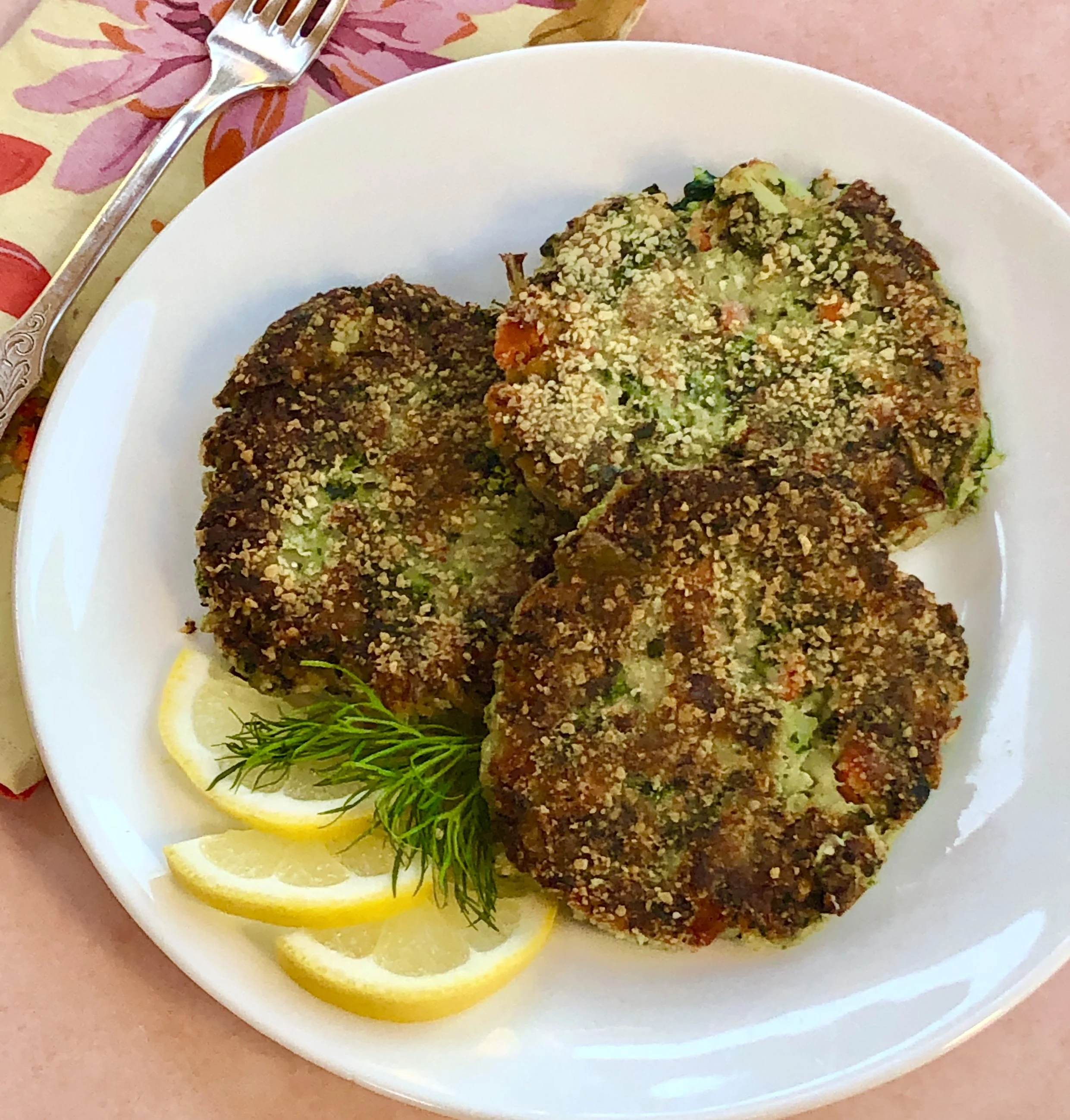
Potato and Vegetable Croquettes

These vegetable croquettes are filled with veggie goodness and lush mashed potatoes, crusted with matzo meal and fried to a crisp.

Perfect for Passover (or any other time!). They go with any entree you might be serving. But we also eat these with a fried egg when we want a meatless meal.

These croquettes (like all mashed potatoes croquettes) are fragile, so be sure to refrigerate them for at least 30 minutes before frying. And be careful flipping them. Even so, they might break, but who cares? The pieces of crispy goodness are absolutely delicious.

VEGETABLE CROQUETTES

  • 1/2 cup vegetable oil, approximately

  • 1 medium onion, finely chopped

  • 1 cup chopped cooked cabbage

  • 2 chopped, cooked carrots

  • 10 ounce package frozen spinach, thawed

  • 3 cups mashed potatoes

  • salt and freshly ground black pepper to taste

  • 1/2 cup matzo meal, approximately

Heat 2 tablespoons vegetable oil in a sauté pan over medium heat. Add the onion and cook for 3-4 minutes or until softened. Spoon the onions into a bowl. Add the cabbage, carrots, spinach, mashed potatoes and some salt and pepper. Mix thoroughly and shape the mixture into 1/2-inch patties. Place the matzo meal on a plate. Press both sides of each patty into the crumbs. Refrigerate for at least 30 minutes. Heat 2-3 tablespoons vegetable oil in the sauté pan over medium heat. Fry the patties a few at a time (leave plenty of space between each) for 3-4 minutes per side or until crispy and golden brown, adding more vegetable oil to the pan as needed.

Makes 8-10

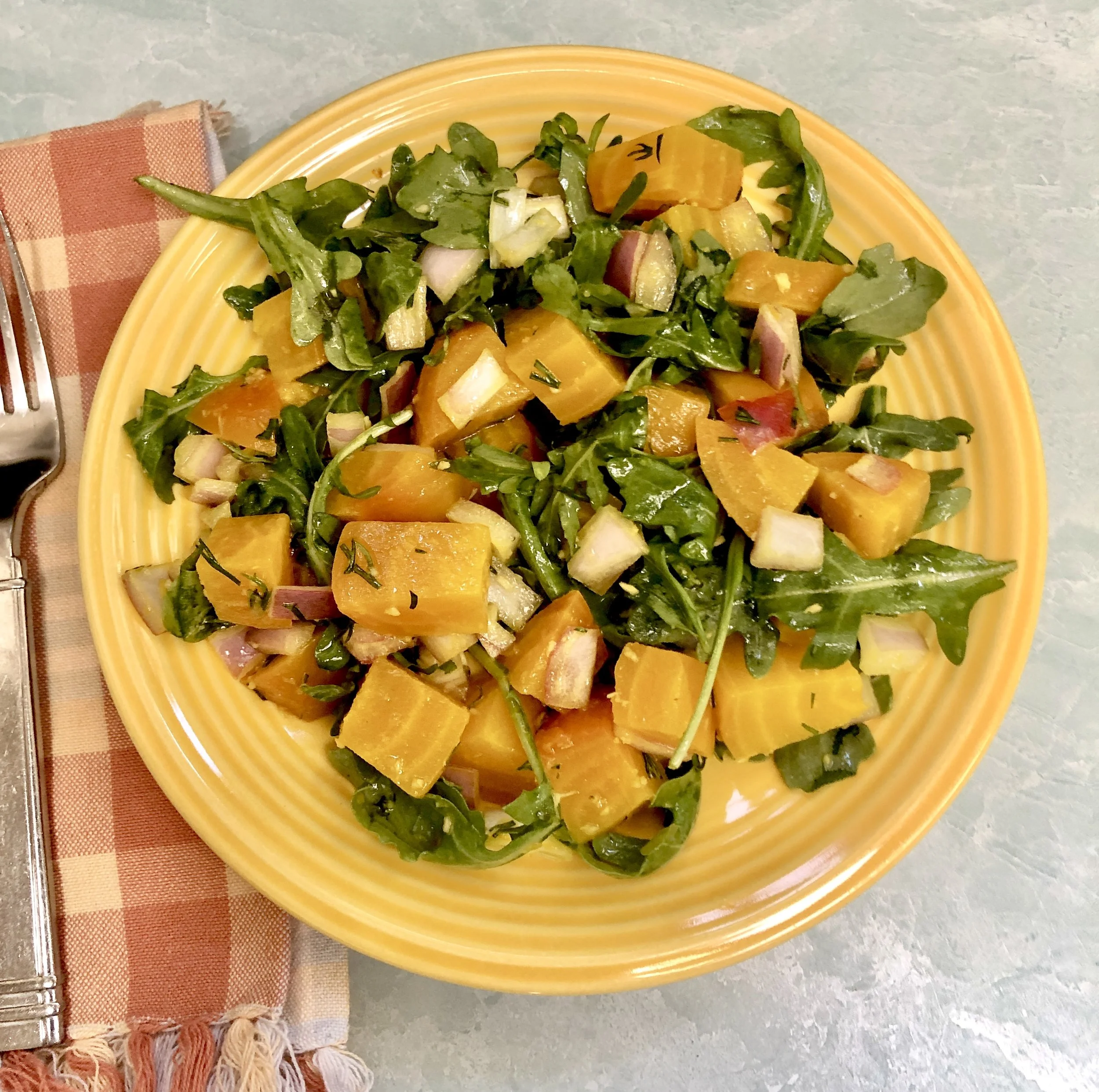
Golden Beet Salad with Horseradish Vinaigrette

Golden Beet Salad

I usually make beet salad with red beets but the golden beets at the market looked so good I used them instead.

Same thing, different color. It’s all good.

Keep this in mind for Passover. You’re probably going to have some horseradish in the fridge.

Golden Beet Salad with Horseradish Vinaigrette

  • 3 medium golden beets

  • 3 cups packed baby arugula

  • 1/2 cup chopped red onion

  • 1-1/2 tablespoons chopped fresh dill

  • 1 tablespoon freshly grated white horseradish

  • 3 tablespoons avocado oil or olive oil

  • 2-3 tablespoons apple cider vinegar

  • salt and freshly ground black pepper to taste

Preheat the oven to 425 degrees. Scrub and trim the beets, cutting away the greens, if any. Wrap the beets tightly in aluminum foil and roast for about one hour or until the beets are tender. Remove the packet from the oven, open the foil and let the beets cool. Peel the beets, cut them into bite-size pieces and place in a bowl. Add the arugula, red onion, dill and horseradish and toss the ingredients. Pour in the olive oil and 2 tablespoons of the cider vinegar and toss the ingredients. Season to taste with salt and freshly ground black pepper. Let rest for 10-15 minutes before serving. Taste and add more vinegar if needed.

Makes 4-6 servings

Spanakopitas/Bourekas

I used to make spanakopitas but it was really labor intensive. You have to butter several layers of phyllo dough, which is thin and fragile and breaks apart a lot.

Frustrating!

One day I decided it was enough! From then on I used the same delicious filling but made it into one big spinach pie. Much easier.

Then, last year I read a post by Dana L Shrager that included her recipe for spinach and cheese bourekas wrapped in puff pastry. She said it was a real treat for Purim.

Genius!

Bourekas are triangle shape, just like spanakopitas but SO MUCH EASIER to prepare. So, for Purim, here’s my recipe, same filling as I used for the spanakopitas but inside puff pastry. Perfect for Purim.

Thanks for the inspiration Dana!

SPINACH AND CHEESE BOUREKAS

  • 1 10-ounce package frozen chopped spinach, thawed

  • 2 tablespoons olive oil

  • 1 medium onion, chopped

  • 1 large egg

  • 4 ounces feta cheese, crumbled

  • 3 tablespoons grated Parmesan cheese

  • 1 tablespoon finely chopped fresh dill

  • freshly ground black pepper to taste

  • 2 sheets puff pastry, defrosted

Preheat the oven to 375 degrees. Squeeze as much water out of the spinach as possible and set aside. Heat the olive oil in a saute pan over medium heat. Add the onion and cook for 2-3 minutes. Stir in the spinach and mix well. Remove the pan from the heat. Add the egg, feta cheese, Parmesan cheese, dill and pepper. Mix well and set aside. Using one sheet at a time, roll the puff pastry on a lightly floured board slightly thinner (I did 12”x9”). Cut each sheet on the long side into 4 equal strips (3”). Cut the strips into thirds (making 12 pieces). Place equal amounts of the filling in the center of each piece of dough. Fold the dough to enclose the filling and make a triangle. Press the edges to seal them. If necessary, wet the edges of the pieces before folding, OR, press the edges down with the tines of a fork. Refrigerate for at least 30 minutes before baking. Bake for about 15-18 minutes or until browned and crispy.

Makes 24

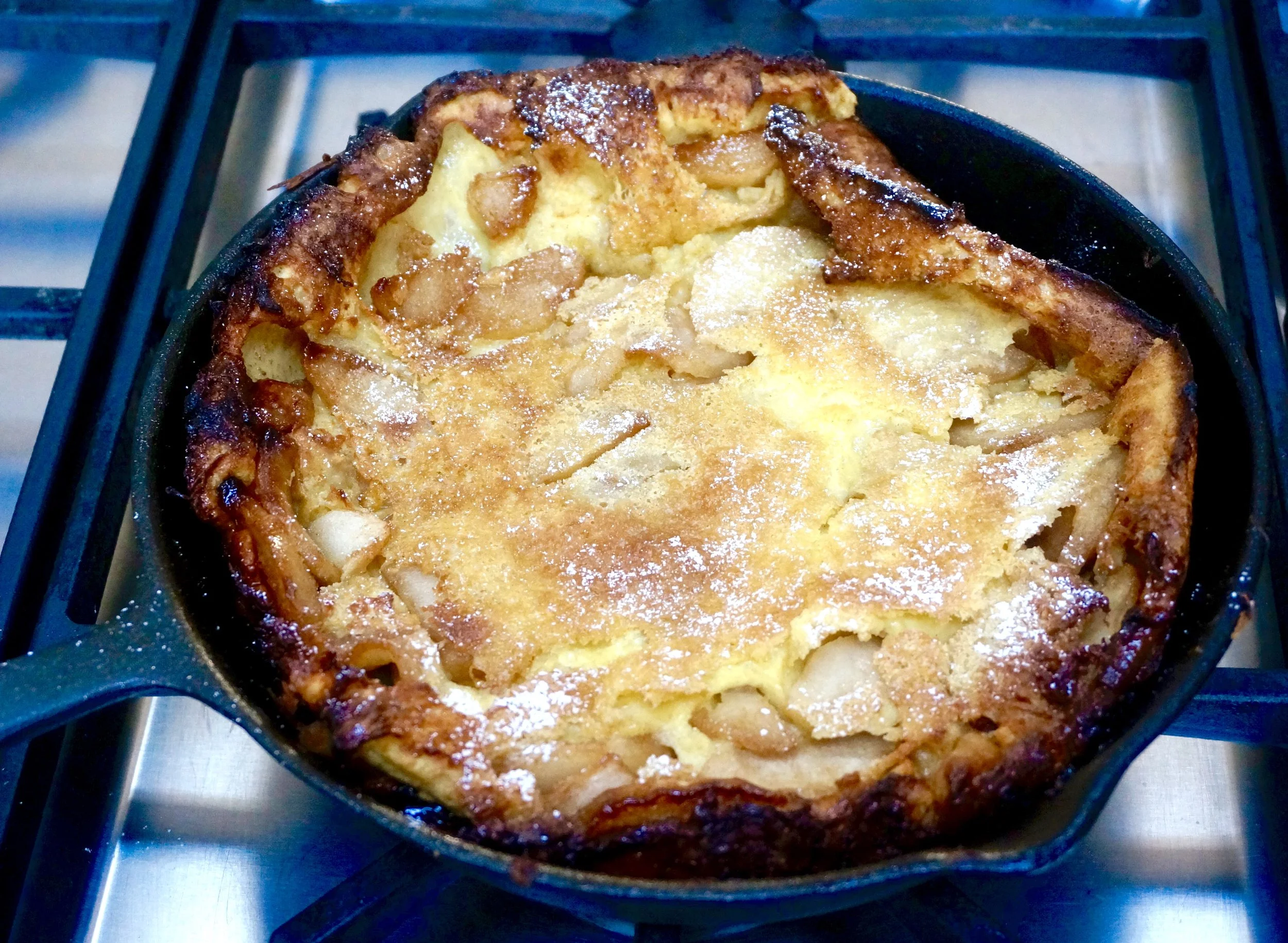
German Apple Pancake

People joke that for every Jewish holiday there’s a different food and that’s actually true, except for fast days which means no food, but food is still part of the holiday, if you know what I mean. 

Because I’m a food writer I love the culinary aspect of holidays and love making holiday specialties. Chremslach during Passover. Cheesecake for Shavuot. Honey Cake for Rosh Hashanah.

Of course other religions and ethnic groups have delicious foods for holidays too. I love making and eating some of them. I don’t celebrate St. Patrick’s Day but I can still enjoy an Irish coffee. And I don’t observe Lent but absolutely love being reminded about pancakes when Shrove Tuesday (aka Pancake Tuesday) rolls around, which it will, soon.

Actually our family enjoys pancakes on any given weekend, and particularly my German Apple Pancake in the fall, when the fresh crop of apples is available — this is a traditional treat for us for Rosh Hashanah.

But since I have been thinking about pancakes I figure, why wait? I like to serve a meatless meal at least once a week and I can’t think of anything I’d like more this week than that German Apple Pancake we love so much.

When I make this for Rosh Hashanah, I use Rhode Island Greenings, Gravensteins or Jonagold apples. This time of year I use Honeycrisp. 

GERMAN APPLE PANCAKE

  • 2 large, tart apples, peeled, cored and sliced

  • 3 tablespoons sugar

  • 1 teaspoon ground cinnamon

  • 3/4 cup all-purpose flour

  • 1/2 teaspoon salt

  • 3/4 cup milk

  • 4 large eggs

  • 1/2 teaspoon vanilla extract

  • 6 tablespoons butter

  • 1-2 teaspoons sifted confectioner’s sugar, optional

Preheat the oven to 425 degrees. Place the apple slices in a bowl. Add the sugar and cinnamon, mix and set aside. Mix the flour and salt together in a bowl and set aside. Combine the milk, eggs and vanilla in another bowl, add the flour mixture and whisk the ingredients into a smooth batter and set aside. Heat the butter in a heavy skillet, preferably cast-iron, over medium heat. When the butter has melted and looks foamy, add the apples, including any juices, and cook for about 5 minutes, stirring occasionally, or until the apples are soft and caramelized. Pour the batter over the apples. Place the pan in the oven. Bake for about 20 minutes or until the pancake is puffed and golden brown. Invert onto a serving platter. Serve as is or sprinkle with confectioner’s sugar.

Makes 4 servings

Dairy Hamantaschen

Dairy Hamantaschen

If you follow a food calendar the way I do, you know it’s hamantaschen season.

I don’t understand why we wait for Purim to eat these magnificent pastries. Sure, they’re classic for this holiday, but I like them in June and October and any given Sunday.

Anyway, here’s one of my favorite recipes. There’s a recipe for prune lekvar on my website. For apricot lekvar: put about one pound dried apricots (I use California apricots because I think the Turkish or Mediterranean ones don’t have good flavor) in a pot, add about 1/4 cup sugar and cover with orange juice. Simmer for about 25 minutes or until soft, then puree.

DAIRY HAMANTASCHEN

  • 2-1/4 cups all-purpose flour

  • 1/4 cup sugar

  • 1 teaspoon salt

  • 1 cup butter, cut into chunks

  • 8 ounces cream cheese, cut into chunks

  • 1 large egg, beaten

  • lekvar (about one cup)

Place the flour, sugar and salt in the bowl of an electric mixer and mix briefly. Add the butter and cream cheese and mix on low speed for a minute or so until the mixture is crumbly. Raise the speed to medium and continue to mix until a smooth dough has formed. Wrap the dough in plastic and refrigerate for at least 8 hours. Preheat the oven to 350 degrees. Using small chunks of dough at a time, roll the dough thin (about 1/8th-inch) and cut out circles with a 3-inch cookie cutter. Brush each circle lightly with the beaten egg. Place one slightly mounded teaspoon of lekvar in the middle of each circle. Bring up the sides to shape the circles into a triangle. Press the sides tightly to keep them from opening when they bake. Place the triangles on a lightly greased cookie sheet. Refrigerate for at least 30 minutes. Bake for about 30 minutes or until lightly browned.

Makes about 36

#hamantaschen #purim #purim2025 #lekvar

Shabbat Roasted Chicken

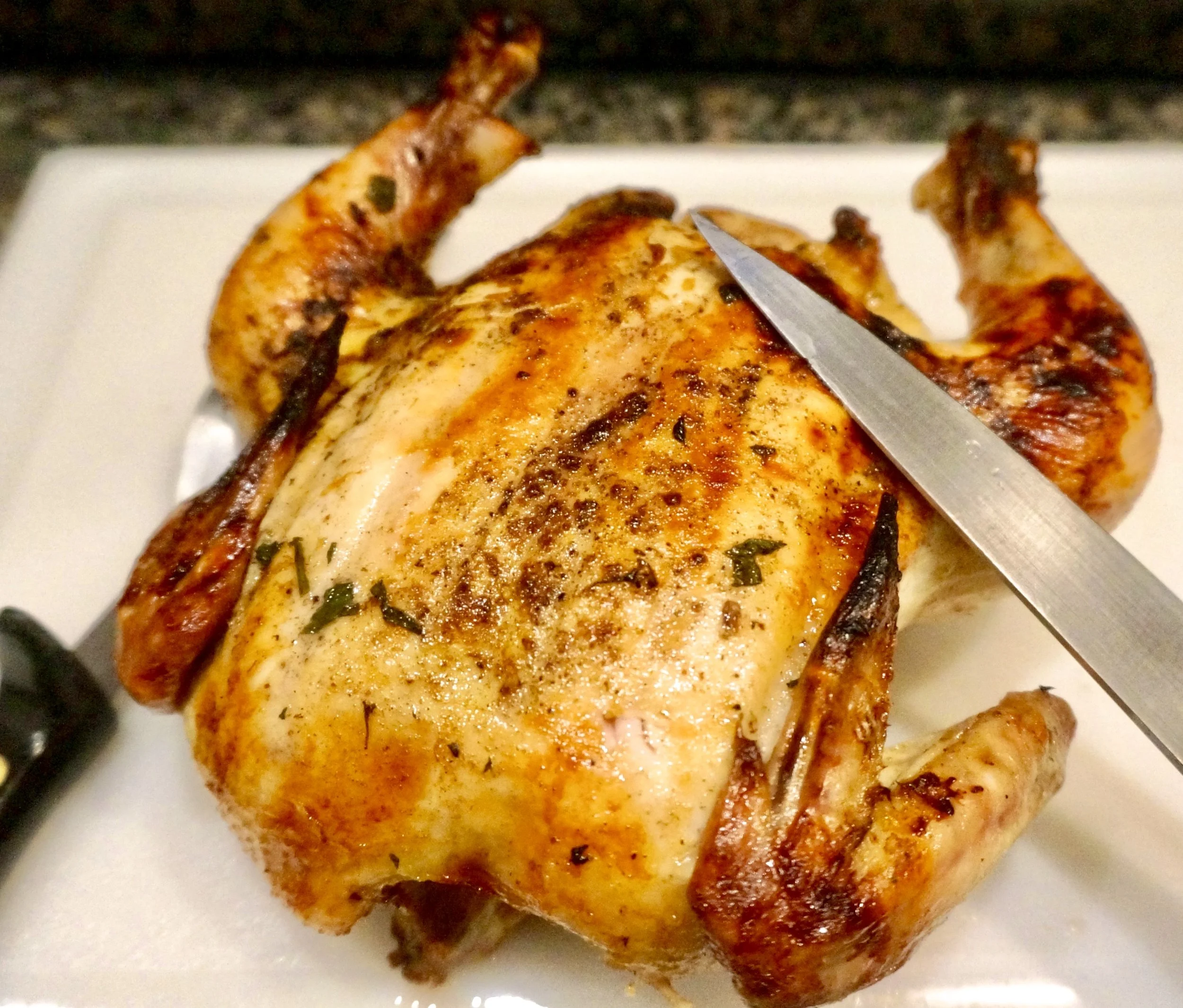
In these current times of anger and division, when the news always seems to be bad and the world seems ready to explode, how fortunate we are to have Shabbat, a day of rest, contemplation and togetherness with our loved ones. 

Put the world aside. 

The sorrow, the political madness will not go away, but we can enjoy our day of peace. We can enjoy a festive Shabbat dinner. 

What could be better for the feast than roasted chicken, the traditional Shabbat dinner? Our ancestors ate roasted chicken in the shtetls of Eastern Europe and in the luxurious dining rooms in Vienna and Bucharest.

Roasted chicken is beyond delicious. It’s iconic. It’s comforting. 

Shabbat shalom.

ROASTED CHICKEN

  • 1 whole chicken, about 5 pounds

  • 1 tablespoon olive oil 

  • salt and freshly ground black pepper to taste

  • garlic powder and paprika, optional

  • ras el hanout, baharat, garam masala, harissa, chopped fresh herbs to taste, optional

  • 1 to 1-1/2 cups fruit juice, chicken stock or white wine

Preheat the oven to 400 degrees. Remove any pinfeathers and extra flesh and fat from the chicken. Take out the package of giblets inside the cavity (you may save these pieces for stock, except for the liver, or roast them along with the chicken). Brush the olive oil all over the chicken. Sprinkle with salt and pepper and optional seasonings. Place the chicken breast side down on a rack placed inside a roasting pan. Roast for 15 minutes. Reduce the oven heat to 350 degrees. Roast the chicken for 15 minutes. Pour the juice (stock or wine) over the chicken and roast for another 15 minutes. Turn the chicken breast side up. Roast the chicken, basting occasionally, for 45-60 minutes, depending on the size of the chicken, or until the chicken is cooked through (a meat thermometer inserted in the thickest part of the breast registers 160 degrees or 165 degrees in the thickest part of the thigh). Remove the chicken to a carving board and let rest for 15 minutes before carving. Serve with pan juices (you may strain the pan fluids if desired, and/or reduce them to desired thickness by boiling the fluids in a small saucepan over high heat).

Makes 6 servings