vegetable

Gorgeous Blood Oranges! Get them while you can!

Once upon a time fruits and vegetables such as strawberries or asparagus were nowhere to be seen except after March sometime. Peaches and melons only in the summer. Apples and sweet potatoes in the autumn. But in recent years we've become accustomed to buying almost every item of produce whenever we want it. 

With some exceptions.

Blood oranges for example. They're available at the moment, but only until March or May, depending on the variety.

Blood oranges taste more or less like regular oranges, except they aren't as sweet and they're less acidic. They cost more than regular oranges, so you might wonder whether and why they are worth buying.

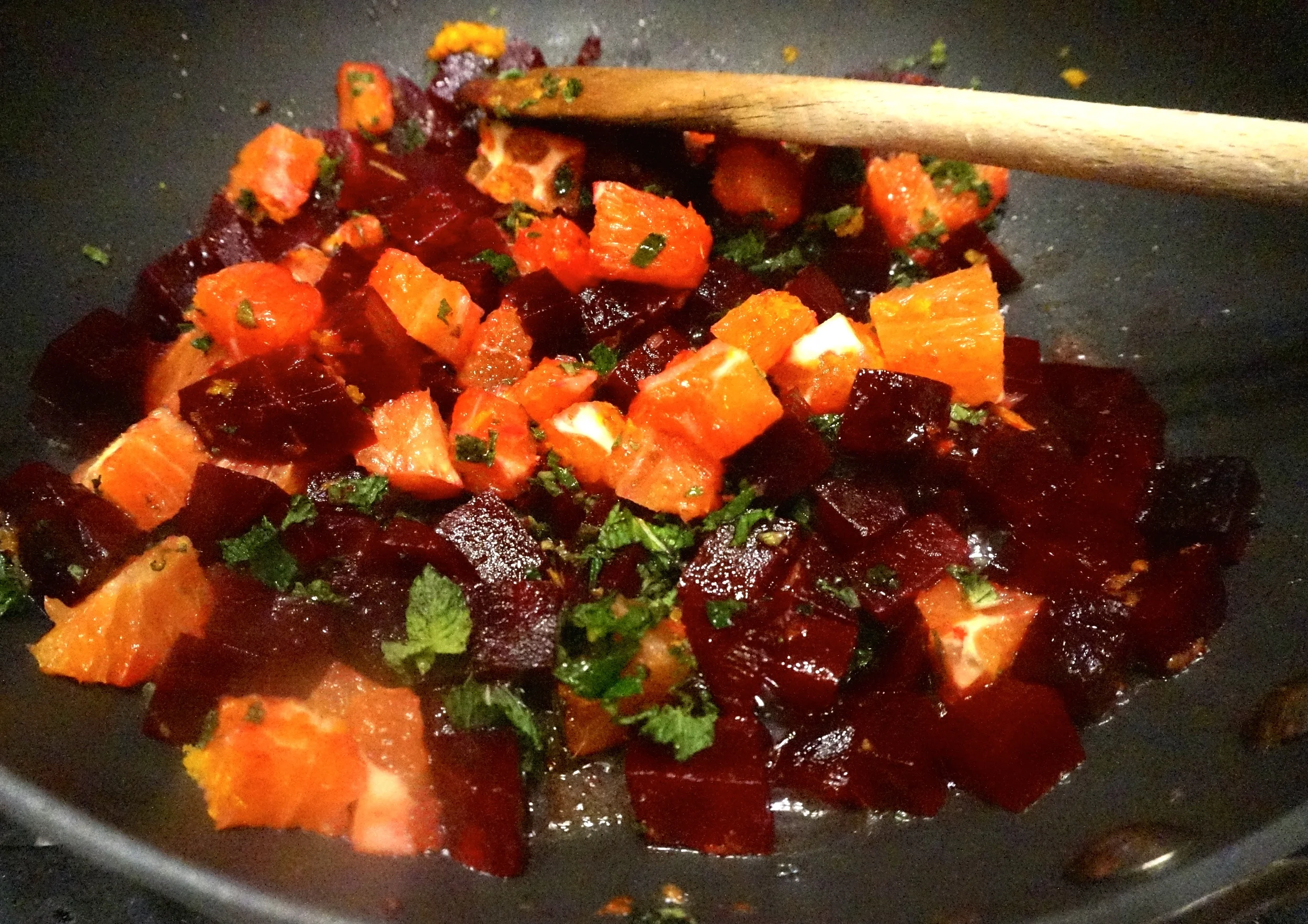
I guess it's because the flesh is so beautiful. The ruby-ish color looks so fabulous when you mix it with other vibrantly colored ingredients like bright green lettuce leaves or white coconut. Or roasted beets. Like in this dish, which pairs especially well with grilled or roasted salmon or Arctic char:

Roasted Beets with Blood Orange

  • 2 medium beets
  • 1 blood orange
  • 1 tablespoon butter
  • 1 tablespoon vegetable oil
  • 2 tablespoons chopped fresh mint
  • 1 teaspoon grated orange peel
  • salt to taste


Preheat the oven to 450 degrees. Scrub the beets, trim the tip and stem ends, wrap the beets in aluminum foil and roast for 45 minutes or until tender. Let cool, peel and dice. Set the beets aside. Slice the blood orange and trim the peel from the slices. Cut the slices into smaller pieces. Heat the butter and vegetable oil in a saute pan over medium heat. When the butter has melted and looks foamy, add the beets, blood orange, mint, orange peel and salt to taste. Cook, stirring often, for 2-3 minutes or until ingredients are nicely distributed and hot.

Makes 4 servings


Cauliflower wins

Because it is the prettiest, mildest and most versatile of all the cabbages.

Because, for me anyway, it doesn't do the same awful things to my tummy as the other cabbage cousins do.

It's pretty, and usually has a creamy-color head but you can get it in several other colors, including purple.

It's healthy.

It tastes so good, especially when you roast it.

The other day I had a cabbage and a Meyer lemon in the bin. What to do?

Make this incredibly easy side dish for dinner:

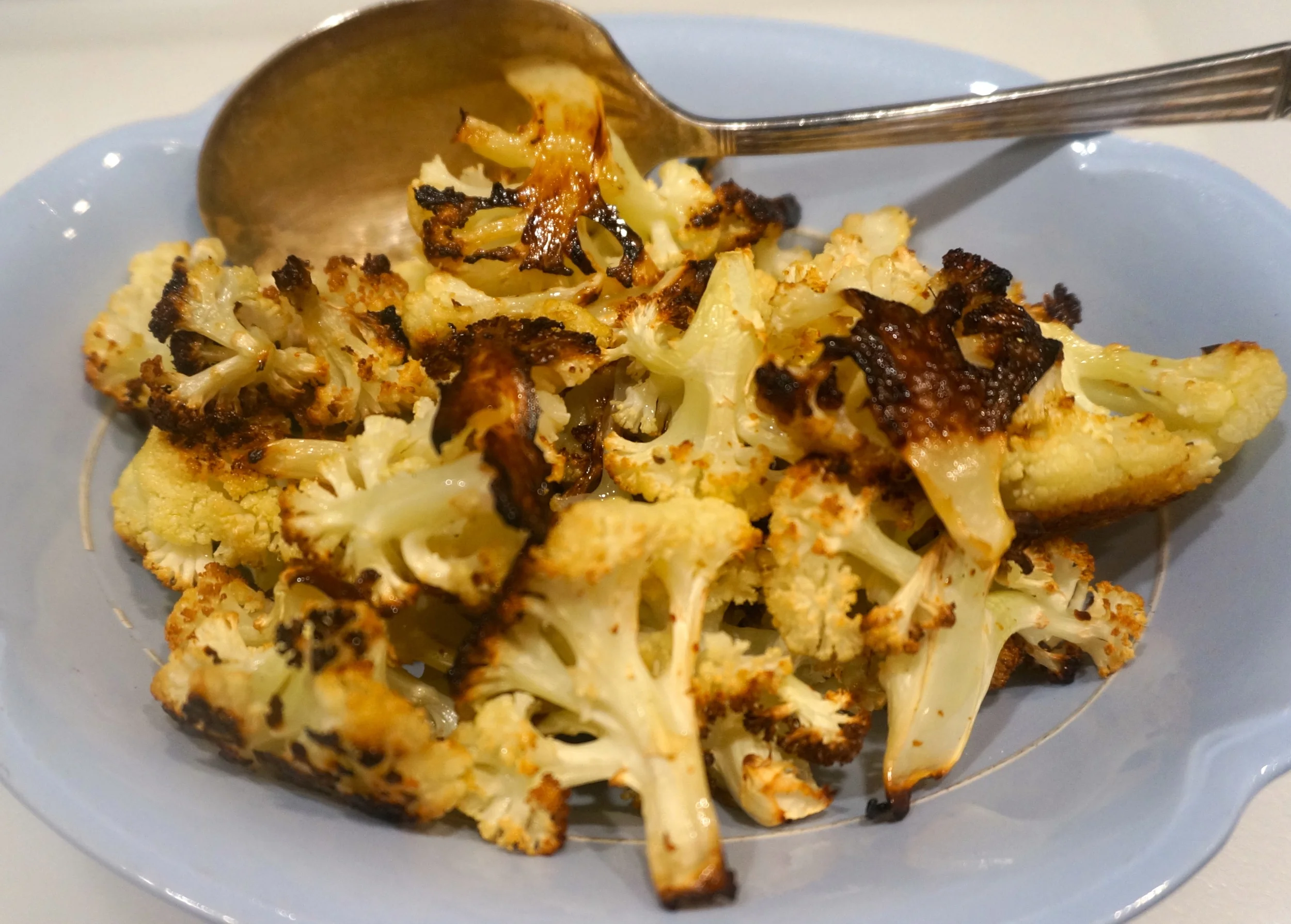
Roasted Cauliflower with Meyer Lemon

  • 1 medium cauliflower
  • 3 tablespoons olive oil
  • 2 tablespoons Meyer lemon juice (or use regular lemon juice)
  • salt to taste
  • Aleppo pepper, cayenne or crushed red pepper

Preheat the oven to 400 degrees. Line a baking sheet with aluminum foil or parchment paper. Wash the cauliflower, trim the ends and break the head up into smaller pieces. Wipe dry with paper towels. Mix the olive oil and Meyer lemon juice in a large bowl. Add the cauliflower pieces and toss the pieces to coat them on all sides. Place the pieces on the prepared sheet, drizzling them with juices left n the bowl. Sprinkle with salt and Aleppo pepper. Roast for 20 minutes, turning the pieces occasionally, or until the pieces are crispy and lightly browned.

Makes 4 servings

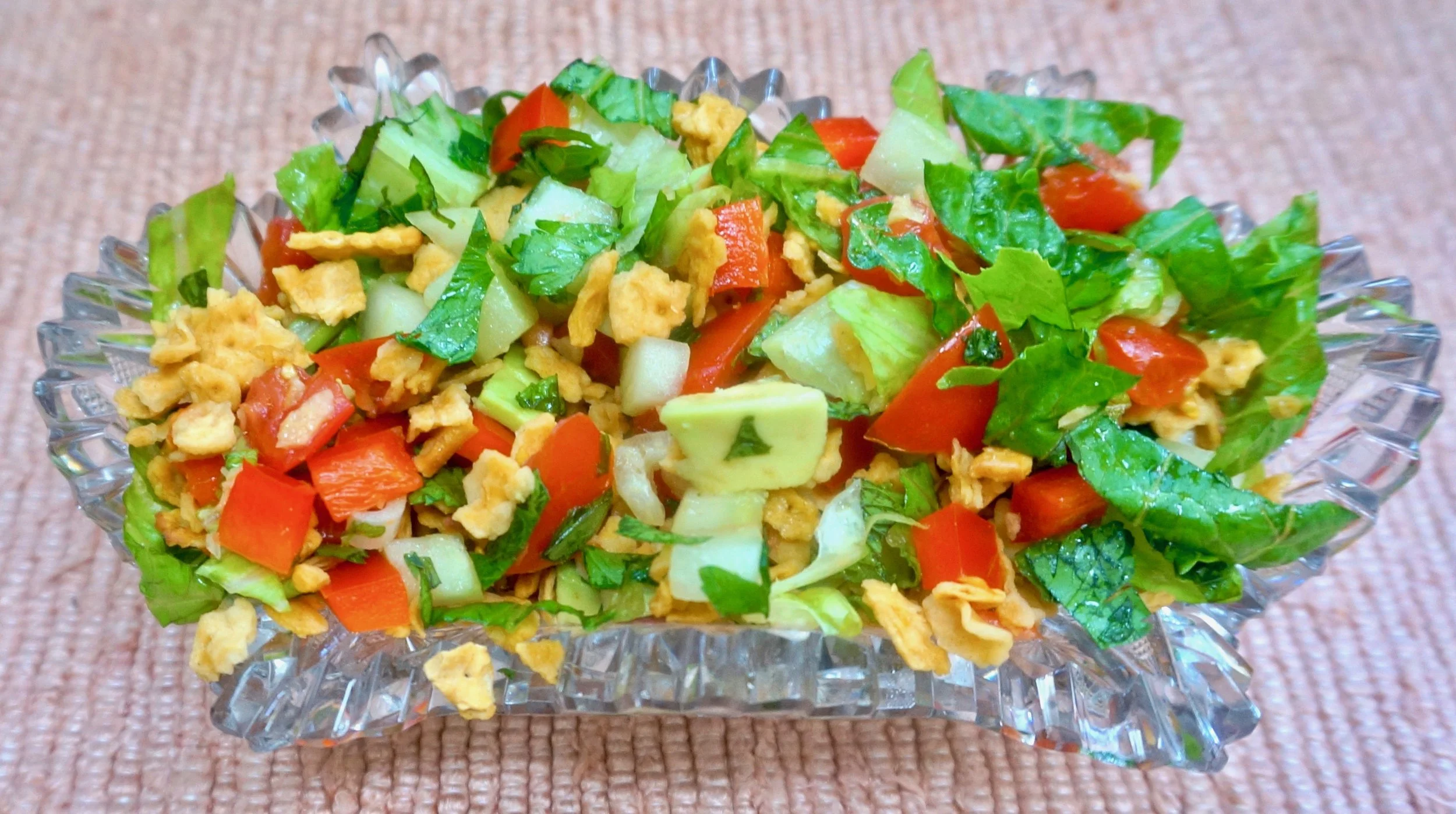
Matzo Farfel Fattoush

DSC02462.jpg

Every year I buy a kitchen’s worth of Passover ingredients and most of it gets eaten, except for the matzo farfel. I know you can use matzo farfel for stuffing, matzo brei, granola and other foods. But I don’t. A few family members like it cooked like oatmeal, for breakfast, but that’s about it. So I always have a lot left over.

Last year I decided to experiment a bit and see how I could use matzo farfel to advantage.

Fattoush, a light and refreshing salad, was a big winner. 

The word fattoush means “crumbled bread” in Arabic and the salad is pretty basic — seasonal vegetables such as tomatoes, cucumber and greens mixed with toasted flat bread.

During the year it’s a good way to use up stale bread. During Passover, matzo farfel is perfect.                                                                                                                                                                                                                                        

Matzo Farfel Fattoush


  • 2 cups matzo farfel
  • 6 tablespoons olive oil
  • 3 cups shredded Romaine lettuce (6-8 large leaves)
  • 2 medium tomatoes, chopped
  • 1 medium cucumber, chopped
  • 1 ripe avocado, peeled and chopped
  • 1/2 medium red bell pepper, deseeded and chopped
  • 2-3 scallions, chopped
  • 1/2 cup chopped parsley
  • 1/4 cup chopped mint
  • 1/4 cup lemon juice
  • salt and freshly ground black pepper to taste


Preheat the oven to 350 degrees. Place the farfel on a baking sheet. Pour 2 tablespoons olive oil over the farfel and toss, coating all the pieces. Bake for about 15 minutes, tossing the farfel occasionally, or until it is lightly browned. Remove from the oven and let cool. Place the lettuce shreds, tomatoes, cucumber, avocado, bell pepper, scallions, parsley and mint in a bowl. Mix the remaining 4 tablespoons olive oil and the lemon juice together. Pour the dressing over the salad, sprinkle with salt and pepper to taste and toss the ingredients. Add the toasted farfel, toss again and let rest for a few minutes before serving.


Makes 8 servings

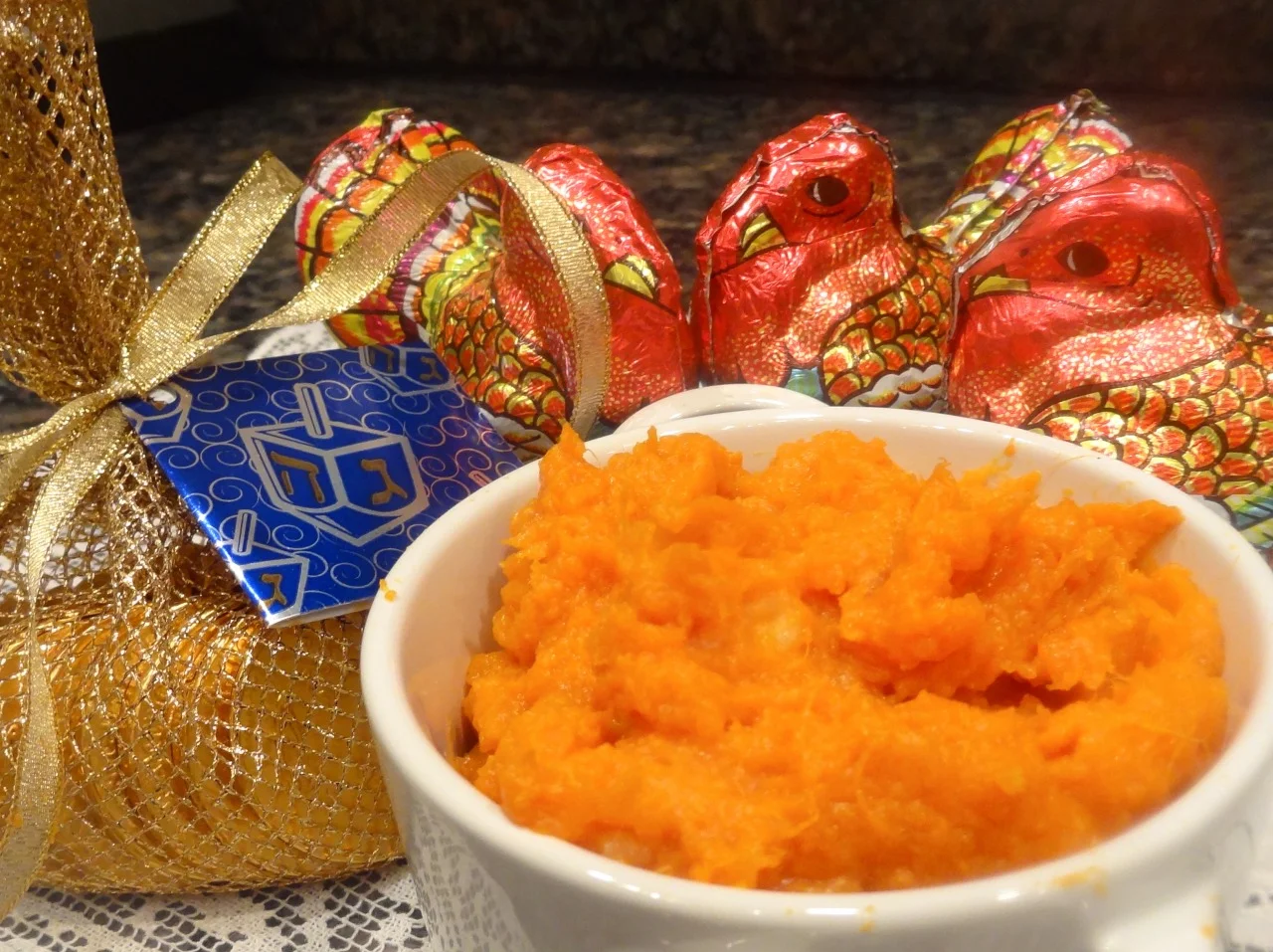
Three Ingredient Sweet Potato Casserole

Need a last minute Thanksgiving or Thanksgivvukah dish? Try this sweet potato recipe. It has three ingredients (plus salt if you wish). Its other virtue is that it is barely sweetened, because I think sweet potatoes are so naturally sugary they don&…

Need a last minute Thanksgiving or Thanksgivvukah dish? Try this sweet potato recipe. It has three ingredients (plus salt if you wish). Its other virtue is that it is barely sweetened, because I think sweet potatoes are so naturally sugary they don’t need much more.

You can make this ahead and reheat it. Even put marshmallows on top (a few minutes before serving, and after the casserole is already hot).

I use Sarabeth’s Orange-Apricot Marmalade. But you can use either plain orange marmalade or apricot jam (or mix the two).

Three Ingredient Sweet Potato Casserole

  • 4 medium sweet potatoes

  • 3 tablespoons orange-apricot marmalade

  • 2 tablespoons Earth Balance Buttery Spread, margarine or butter

  • salt to taste

Preheat the oven to 400 degrees. Scrub the sweet potatoes, prick them with the tip of a sharp knife and roast them for about one hour or until tender. When cool enough to handle, scoop the flesh into a bowl (discard the skin or eat separately). Add the marmalade and Earth Balance and mash until smooth. Season to taste with salt.

Makes 4-6 servings 

Crusted Mashed Potatoes

Prune or potato?My mother, who was very funny, always said that when a woman gets old she becomes either a prune or a potato. You know, she gets thin, frail, fragile and wrinkled or, um, plump and not so frail or fragile (and not so wrinkled).I like…

Prune or potato?

My mother, who was very funny, always said that when a woman gets old she becomes either a prune or a potato. You know, she gets thin, frail, fragile and wrinkled or, um, plump and not so frail or fragile (and not so wrinkled).

I like prunes. The dried plums and also some people I know who are senior citizens and slim, whom my mother would regard as prunes.

But potatoes! What can I say?! To me, there is nothing better than a potato, except maybe a cup of hot coffee, but that isn’t food.

Potato. Every kind, every way. That’s for me. 

Women? Men? I don’t really care about their girth or lack thereof.

Give me a potato to eat and I’m happy.

Today, National Potato Lover’s Day, seems made for me, don’t you think?

I’m having potatoes with dinner.

These:


CRUSTED MASHED POTATOES


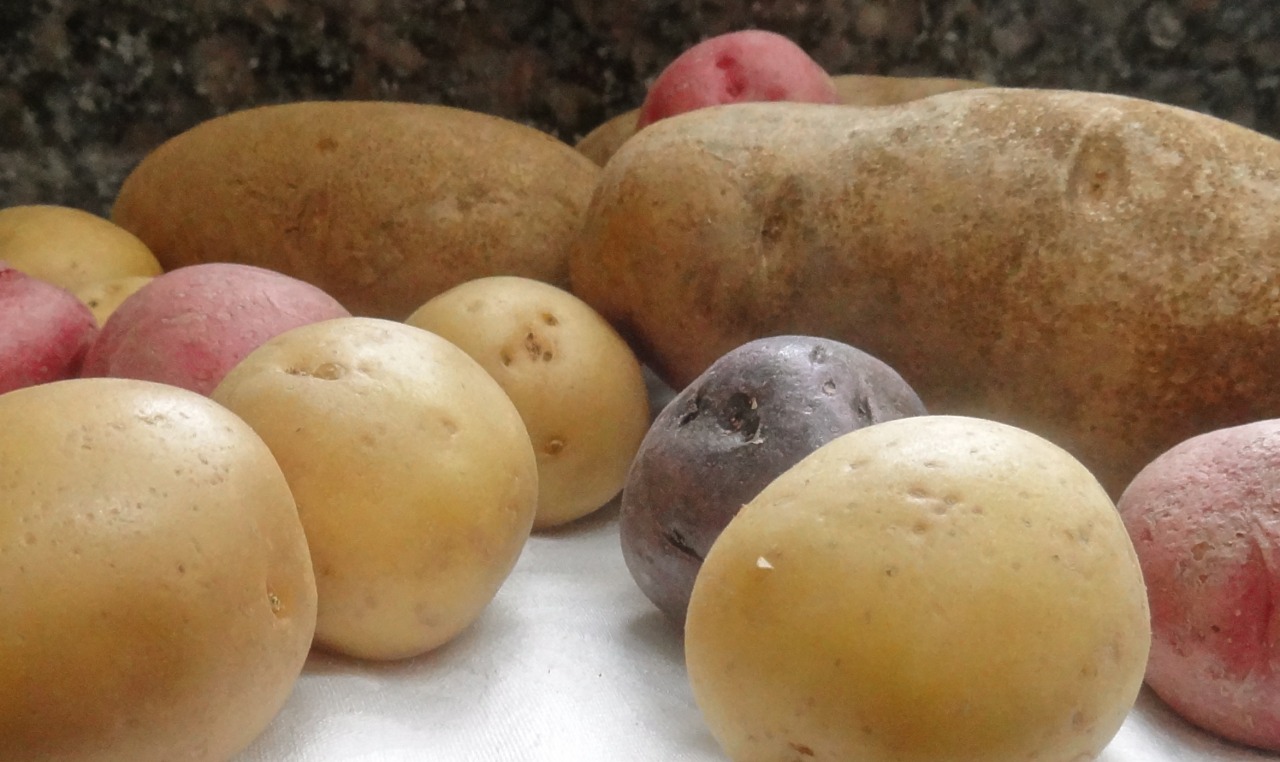
5 medium all-purpose potatoes such as Yukon Gold

1/4 cup olive oil

1 small onion, chopped

1 large clove garlic, chopped

3 tablespoons lemon juice

3 tablespoons chicken or vegetable stock

salt to taste

pinch or two of cayenne pepper

3 tablespoons fresh bread crumbs


Preheat the oven to 400 degrees. Peel the potatoes, cut them into chunks and cook them in lightly salted water for about 15 minutes, or until they are fork tender. While the potatoes are cooking, heat the olive oil in a sauté pan and add the onion. Cook, stirring occasionally, for about 3 minutes, then add the garlic. Cook for another 1-2 minutes, or until the vegetables are beginning to brown. Set aside. Drain the potatoes and mash them with a ricer or potato masher until the lumps have disappeared. Add the vegetables and olive oil and stir them in gently. Stir in the lemon juice, stock, salt and the cayenne pepper. Place the mixture in a baking dish. Sprinkle with the bread crumbs. Bake for 10-15 minutes or until the top is crispy and brown.

Makes 6 servings


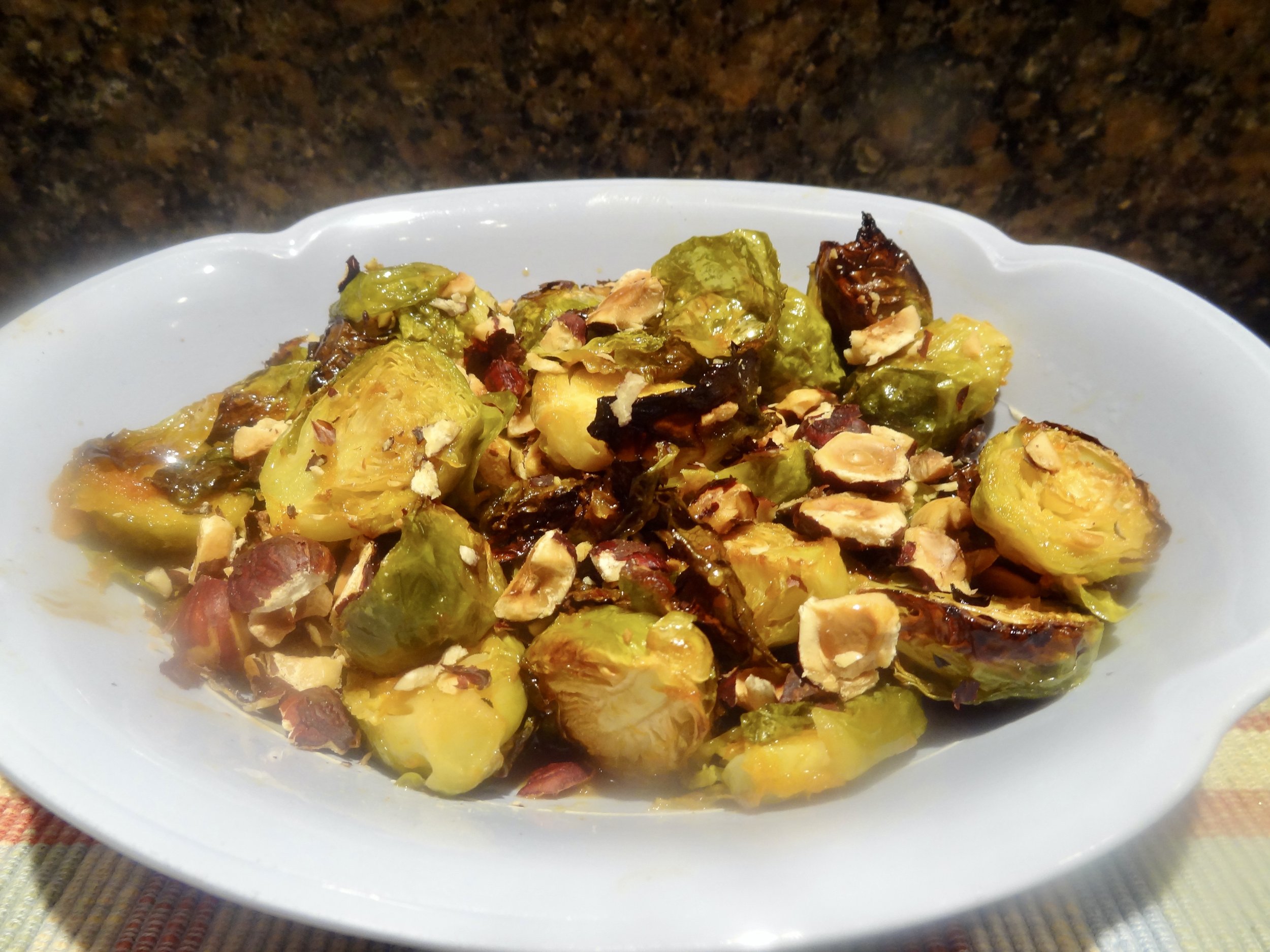
Brussels Sprouts with Tangerine and Hazelnuts

I may have mentioned that long, long ago my husband Ed once told me that if I ever cooked Brussels sprouts he would divorce me. 

Just kidding of course, which is why I felt confident to cook up some of these tiny cabbages once when I had to write an article about them. I made several recipes in one day figuring I would get the aroma and arguments all over with in one swoop, as they say.

But surprise of surprises! He liked them! All of them. Every version I made.

So it just goes to show that sometimes you might actually like something you thought you hated if you try it again.

Maybe.

The thing about Brussels sprouts, like all cabbages, is that they can produce an awful smell, especially if you cook them too long, which is what so many cooks did in the days that Ed’s and my mom cooked vegetables. So we grew up believing vegetables should be mushy, army green and, if in the cabbage family, smelly.

No more of that.

This recipe for Brussels sprouts has a small amount of maple and sweet tangerine to tone down the bitter cabbage. 

Brussels Sprouts with Tangerine and Hazelnuts

  • 16-18 Brussels sprouts (about 12 ounces)

  • 2 tablespoons vegetable oil

  • 1/2 cup tangerine juice (or use orange juice)

  • 2 tablespoons maple syrup

  • 2 teaspoons grated tangerine peel (or use orange peel)

  • 1/3 cup coarsely chopped toasted hazelnuts

  • salt and freshly ground black pepper to taste

Preheat the oven to 400 degrees. Cut the Brussels sprouts in half, rinse them, then drain and dry on paper towels. Place the vegetable oil, tangerine juice, maple syrup and tangerine peel in a small saucepan and bring to a boil over high heat. Cook for 3-4 minutes or until slightly thickened. Place the Brussels sprouts in a roasting pan and pour the tangerine mixture on top. Toss to coat the vegetables evenly.* Place the pan in the oven and cook for about 30 minutes or until tender. Mix once during this time. Remove the Brussels sprouts from the oven, toss with the hazelnuts and sprinkle to taste with salt and pepper.

Makes 4 servings

*Can prepare ahead to here

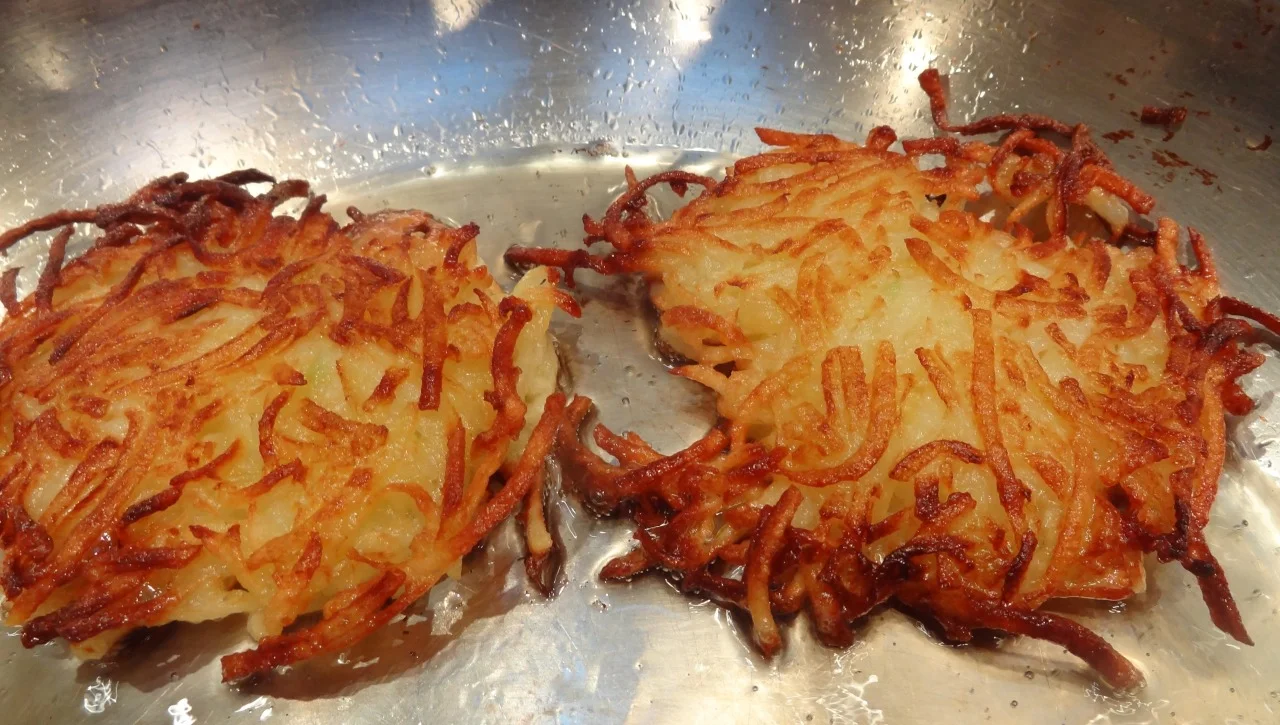
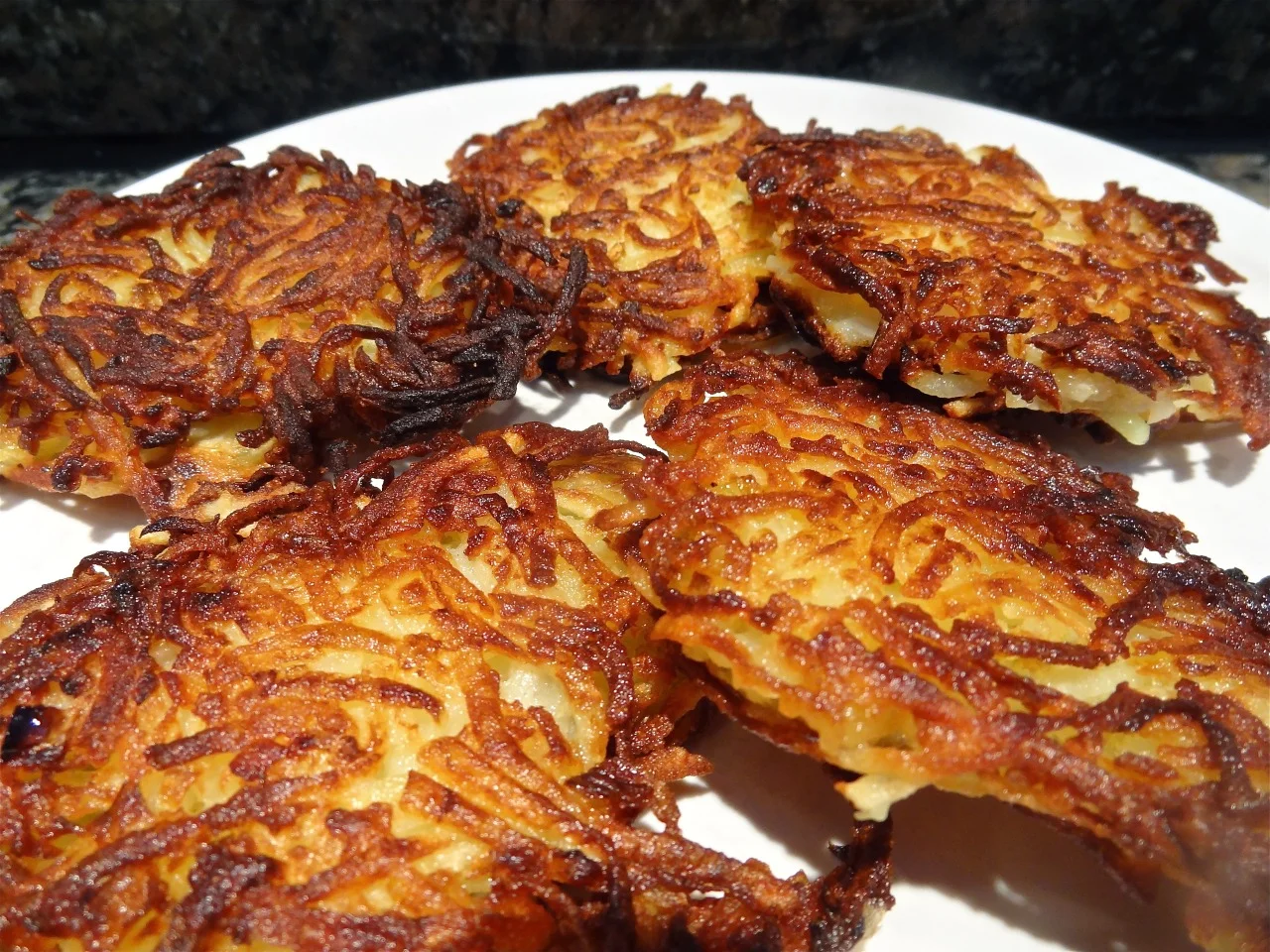
Potato Latkes

What do you do when you have finished preparing potato latkes for a Hanukkah party and you’re sitting in your family room watching TV and your husband comes in with a handful of the latkes you just made and says “I’m taking a down payment on our Hanukkah party on Saturday night.”

And you’ve cleaned up the kitchen and everything and you thought you were done with latkes and the entire house smells from fried so you had to make a kitchen bouquet (1/4 cloves, 3 broken cinnamon sticks, tablespoon or so cardamom pods, orange peel, water) so that anyone who comes to the house even the next day (like the UPS delivery man or the guy who is coming to repair the oven) isn’t blasted with stale fried smell?

Why, you get up the next day and make more latkes. Otherwise there won’t be enough. Because I know what happens when people see potato latkes. You can’t eat just one.

And so I did.

These:

Potato Latkes

  • 4 large peeled baking potatoes

  • 1 large onion

  • 2 large eggs

  • 3 tablespoons potato starch

  • 1 teaspoon salt or to taste

  • freshly ground black pepper to taste

  • 1/2 teaspoon baking powder

  • vegetable oil for frying


Shred the potatoes and onion in a food processor. Squeeze out as much of the liquid as possible (I put portions of the shreds in a kitchen towel and squeeze until they are practically dry). Place the shreds in a bowl. Immediately mix the eggs in (this helps keep the potatoes from browning). Add the potato starch, salt, pepper and baking powder. Heat about 1/4” vegetable oil in a heavy pan over medium-high heat. Shape latkes by hand, squeezing liquid out if there is any, and place them in the hot oil, leaving space between each one so that they brown well and become crispy (if they are too close they will “steam” and become soggy). Press down on the latkes to keep them evenly shaped. Fry for 2-3 minutes per side or until the pancakes are golden brown and crispy. Drain on paper towels. Makes 12-15


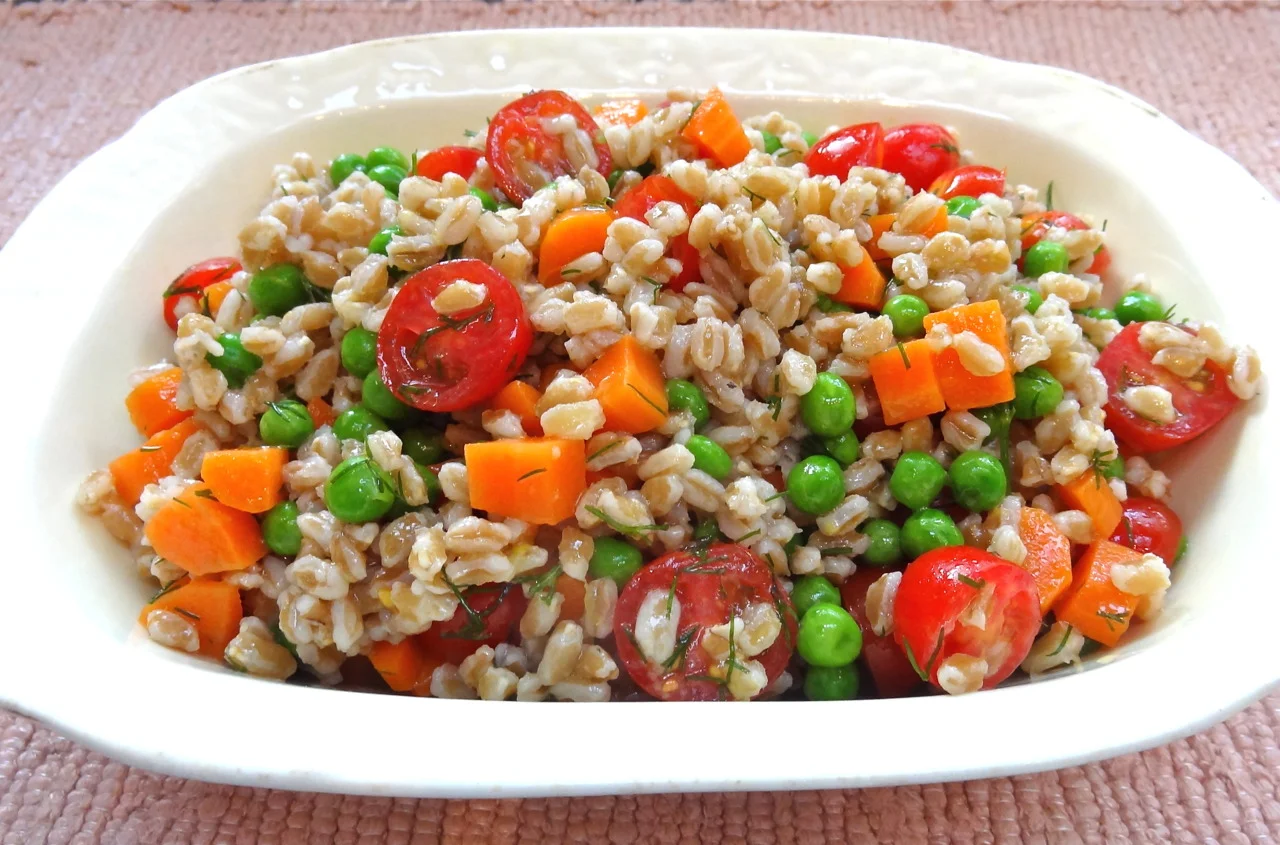
Farro Salad with Carrots, Peas, Tomatoes and Dill

Farro is becoming trendy. So says this article, which I read recently.Actually, farro has been pretty popular in my house for the last several years. It’s one of those whole grains, you know, the stuff everyone says is so healthy, full of fiber…

Farro is becoming trendy. So says this article, which I read recently.

Actually, farro has been pretty popular in my house for the last several years. It’s one of those whole grains, you know, the stuff everyone says is so healthy, full of fiber and nutrients and so on.

It’s popular with me because it tastes so good and because there are so many things you can do with it.

I first cooked farro because I was getting bored with white rice, brown rice, black rice, red rice and every other kind of rice. And with pasta, potatoes and egg noodles. And there’s been an overload of quinoa recently too.

But I wanted something filling and “starchy” as a side dish with dinner. 

There was this little bag of farro in the store. It looked intriguing. I decided to give it a try.

SUCCESS! Farro is sumptuous and tastes sort of nutty and toasty.

I’ve made it dozens of ways, treating it just like rice: steamed, poached, sauteed, in pilaf. Plain. With vegetables. As a salad, drizzled with vinaigrette.

Every recipe is terrific.

Some say farro is the same as spelt, but it is actually a different, if similar grain. It is also a lot like wheatberries and oat groats (so you can substitute those in recipes). Farro is sometimes called emmer wheat. 

Do try it. You can use it all summer in a salad and all through the year in other ways.

Here’s one recipe we love at our house. 

Farro Salad with Carrots, Peas, Tomatoes and Dill


1 cup farro

1-3/4 cup water or vegetable stock

2 carrots, chopped

1 cup thawed frozen green peas

1 cup halved grape tomatoes

3 tablespoons olive oil

2 tablespoons lemon juice

1-1/2 tablespoons chopped fresh dill

1 teaspoon grated fresh lemon peel

salt and freshly ground black pepper to taste


Place the farro and water in a saucepan and bring the liquid to a boil over high heat. Lower the heat, cover the pan and simmer for about 30 minutes or until the farro is tender, but still chewy. Set the farro aside to cool slightly. Cook the carrots in boiling water for 3-4 minutes or until tender. Drain and add to the farro. Add the peas and tomatoes and toss the ingredients to distribute them evenly. In a separate bowl or a jar, combine the olive oil, lemon juice, dill and lemon peel. Whisk the ingredients until well combine (or shake in a covered jar). Pour into the farro mixture and toss the ingredients. Season to taste with salt and pepper.


Makes 4-6 servings 


Imam Bayildi

Need a good side dish? Imam Bayildi is one of my favorite go-to recipes whenever I am at a loss. It’s a good family dish and also works for company. 

I learned to make Imam Bayildi years ago when I was working on an article for eggplant. I found a recipe and the name of the dish, translated, was so intriguing — “the Imam fainted” — I had to try it. If only because, as the story goes, the Imam (an Islamic clergyman or spiritual leader) who first ate this dish was so delighted that he passed out from joy.

Well, whether the tale is apocryphal or not, this dish is very very good. And what’s more, you can serve it hot, warm or at room temp, so you can either get it together in advance and cook it for dinner, or make the whole thing in advance and serve it for dinner.

It’s also a good item for a vegetarian meal (I like it accompanied by scrambled eggs or mushroom ragout).

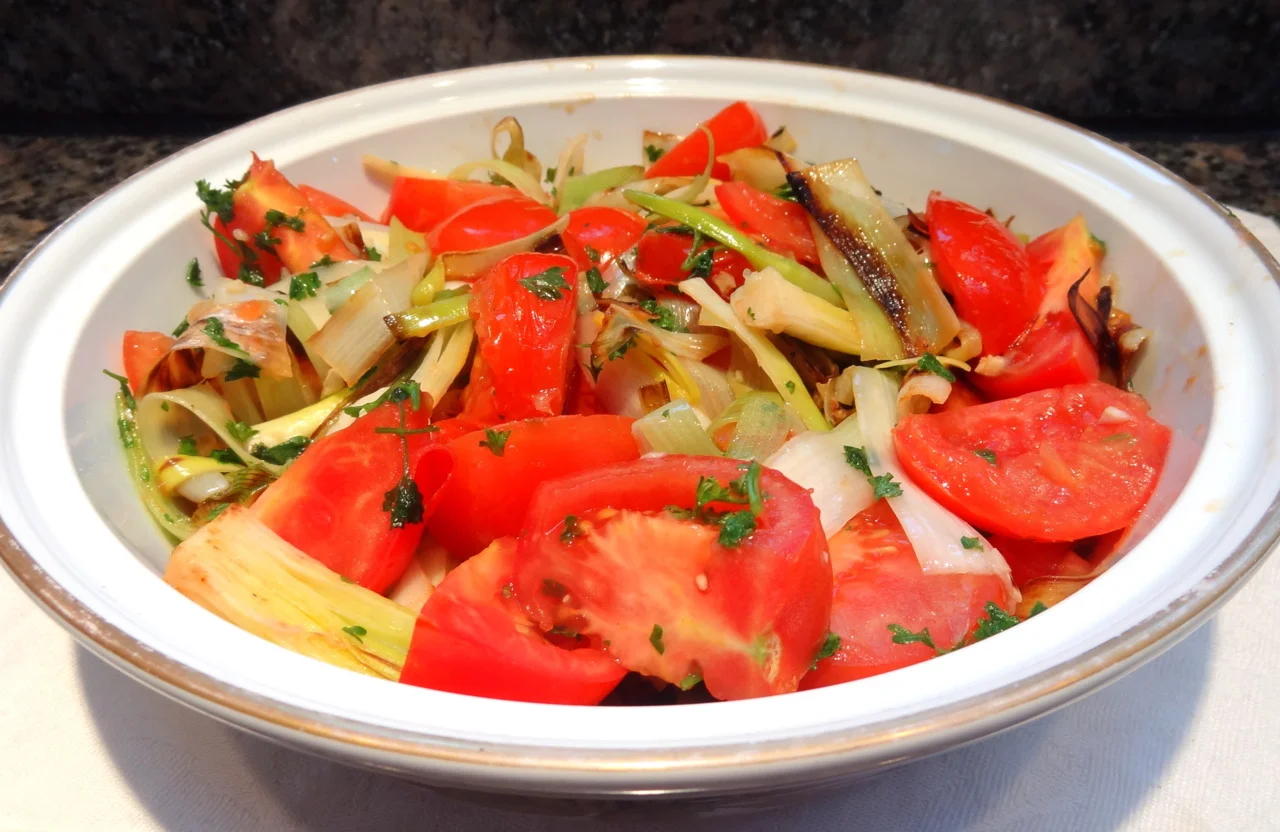
This year during Passover I made this dish for dinner and used leeks instead of the usual onions. My family liked it even better this way, so here’s the recipe.

Btw, a tumblr reader once told me she added olives to the dish when she made it. I’ve tried that and it is delicious! So, add some olives if you like — black, pitted olives make the dish even more colorful.

Imam Bayildi

  • 1 medium eggplant

  • salt

  • 1/2 cup olive oil

  • 3 medium leeks, cleaned and sliced

  • 2 large cloves garlic, chopped

  • 3 large tomatoes, deseeded and chopped

  • 3 tablespoons chopped fresh parsley

  • 1 teaspoon sugar

  • 1 teaspoon salt or to taste

  • 3 tablespoons fresh lemon juice

  • 1/3 cup water

Cut the eggplant into slices about 3/8-inch thick. Sprinkle with salt and let rest for 30 minutes. Wipe the eggplant slices dry with paper towels. Preheat the oven to 350 degrees. Heat one tablespoon olive oil in a saute pan over medium heat. Cook the eggplant slices a few at a time for 2-3 minutes per side or until slightly wilted. Add more olive oil to the pan as needed to prevent scorching (use 4-5 tablespoons more if needed). Place the cooked eggplant into a baking dish (cut it into smaller pieces if you wish). Add 2 tablespoons olive oil to the pan. Add the leeks and cook for 2-3 minutes. Add the garlic and cook for another minute. Add the tomatoes, parsley, sugar, salt and lemon juice. Cook for one minute, stirring frequently. Spoon the vegetables on top of the eggplant. Drizzle with any remaining olive oil and the water. Cover the pan and bake for 45 minutes. Serve hot, warm or at room temperature.

Makes 6-8 servings
Imam Bayildi with Onions

Passover will feel a little strange for me this year. I’m used to having lots of grownups and a bunch of kid cousins, a crowded dining room with tables that spill into the entryway, a ton of food, crayon-friendly placemats for the little ones, plus puppets and other props we use to keep the children occupied and interested during the Haggadah reading.

But families get bigger as the years go by and people move and somehow — it seems this happens to so many people — the time comes when families separate and have their own Seders. That’s what’s happening to me this year.

It’s been my gig for more than 25 years. In the early days when my generation were the young ones with children, there were a couple of times when my sister-in-law Barbara had a Seder. And two or three times we went to my brother Jeff’s house for Passover. And once we even had a Seder at a restaurant with extended family. I hated that.

My Mom had the Seders before I took over. Now I understand how she felt when my aunt Min called one year before Passover and told her that their family had become so big (4 children had married and had kids) they couldn’t burden my Mom anymore and would have their own.

But we’ll still celebrate. Still read the Haggadah. Still have the Seder plate and sing the songs and hide the afikomen and pour the cup of wine for Elijah. Passover is a joyous holiday. A time to be happy that so many of us are still together, celebrating together, appreciating our lives and being grateful for what we have. Isn’t that what the Haggadah really tells us? To read about the journey to freedom and be thankful for it?

A Thanksgiving of sorts. 

In fact, when my son-in-law Jesse asks what I’m serving and I tell him “turkey” he answers, “oh, Thanksgiving.”

Sort of. My Passover menu always centers around turkey. My mother made turkey. My grandmother made turkey. There’s also cranberry sauce. But that’s where the Thanksgiving comparison ends. Obviously there won’t be pie or bread stuffing!

Of course there will still be a ton of other food. Like most families, we will repeat our favorite menu, although I can’t help but add a few things here and there and experiment with a few dishes so we always wind up with days worth of leftovers.

One of the constant dishes in my menu is Imam Bayildi, which is braised eggplant with tomatoes. It’s a good side dish and you can make it a day or so ahead. Also, it’s the kind of dish you can eat hot, warm or at room temperature. If there’s a vegetarian in your life, this dish is also a winner.

So, smaller Seder or whatever, we are going to celebrate and wish everyone a Happy Passover.

Here’s the recipe:

Imam Bayildi

  • 1 medium eggplant
  • salt
  • 1/2 cup olive oil
  • 2 medium onions, chopped
  • 2 large cloves garlic, chopped
  • 3 large tomatoes, deseeded and chopped
  • 3 tablespoons chopped fresh parsley
  • 1 teaspoon sugar
  • 1 teaspoon salt or to taste
  • 3 tablespoons fresh lemon juice
  • 1/3 cup water

Cut the eggplant into slices about 3/8-inch thick. Sprinkle with salt and let rest for 30 minutes. Wipe the eggplant slices dry with paper towels. Preheat the oven to 350 degrees. Heat one tablespoon olive oil in a saute pan over medium heat. Cook the eggplant slices a few at a time for 2-3 minutes per side or until slightly wilted. Add more olive oil to the pan as needed to prevent scorching (use 4-5 tablespoons more if needed). Place the cooked eggplant into a baking dish (cut it into smaller pieces if you wish). Add 2 tablespoons olive oil to the pan. Add the onions and cook for 3 minutes. Add the garlic and cook for another minute. Add the tomatoes, parsley, sugar, salt and lemon juice. Cook for one minute, stirring frequently. Spoon the vegetables on top of the eggplant. Drizzle with any remaining olive oil and the water. Cover the pan and bake for 45 minutes. Serve hot, warm or at room temperature.

Makes 6-8 servings