side dish

Cornbread Stuffing

_DSC9813.jpg

There will be more of us for Thanksgiving dinner this year. 

That means: more stuffing.

So, I can always make my Mom's barley-shape noodle "filling" or a sorghum-based version of that.

Maybe my Bread Stuffing with Figs and Hazelnuts or my well-loved chestnut-sausage stuffing?

But this year I'm thinking maybe I'll add a cornbread stuffing to the mix.

This one:

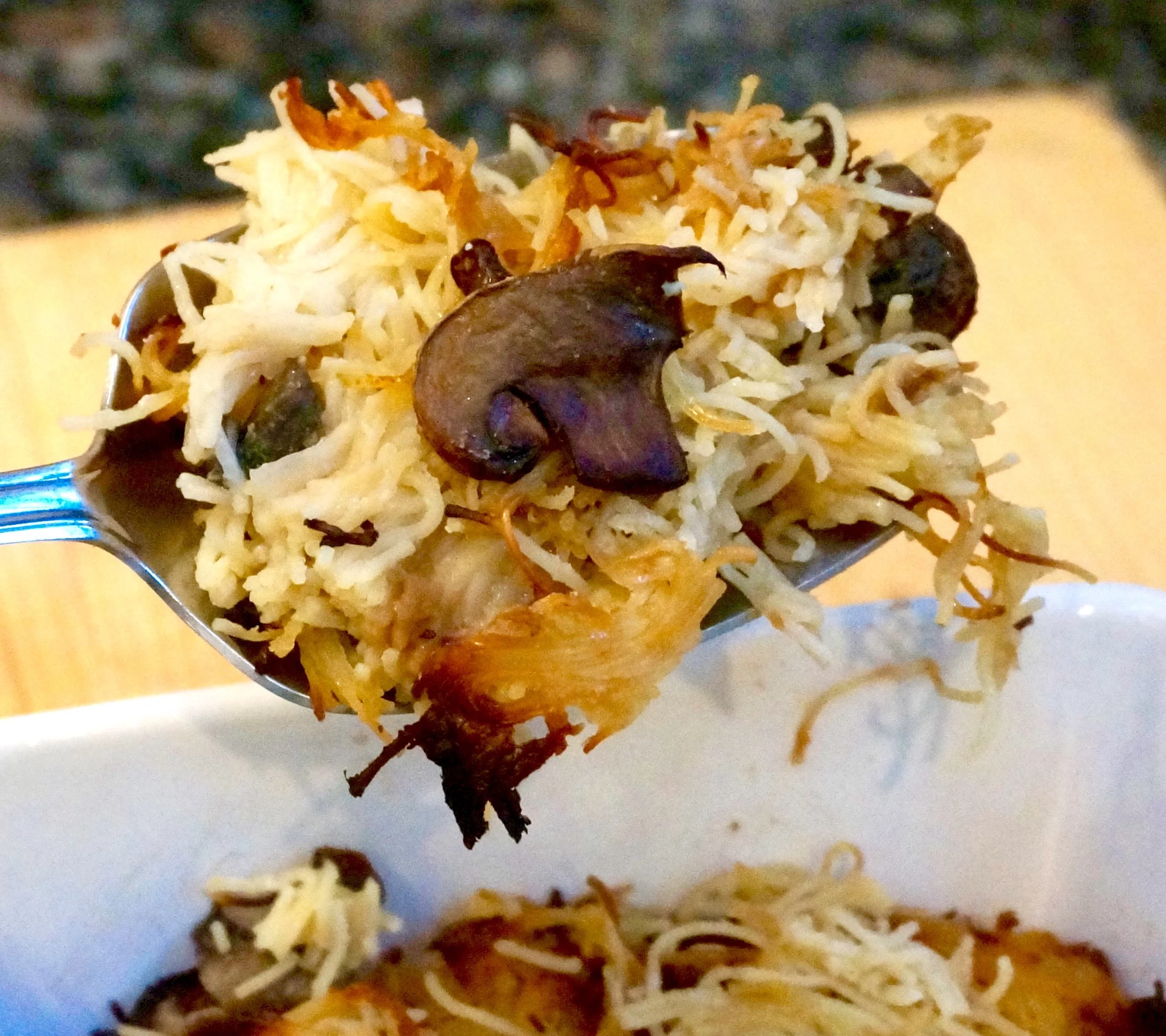
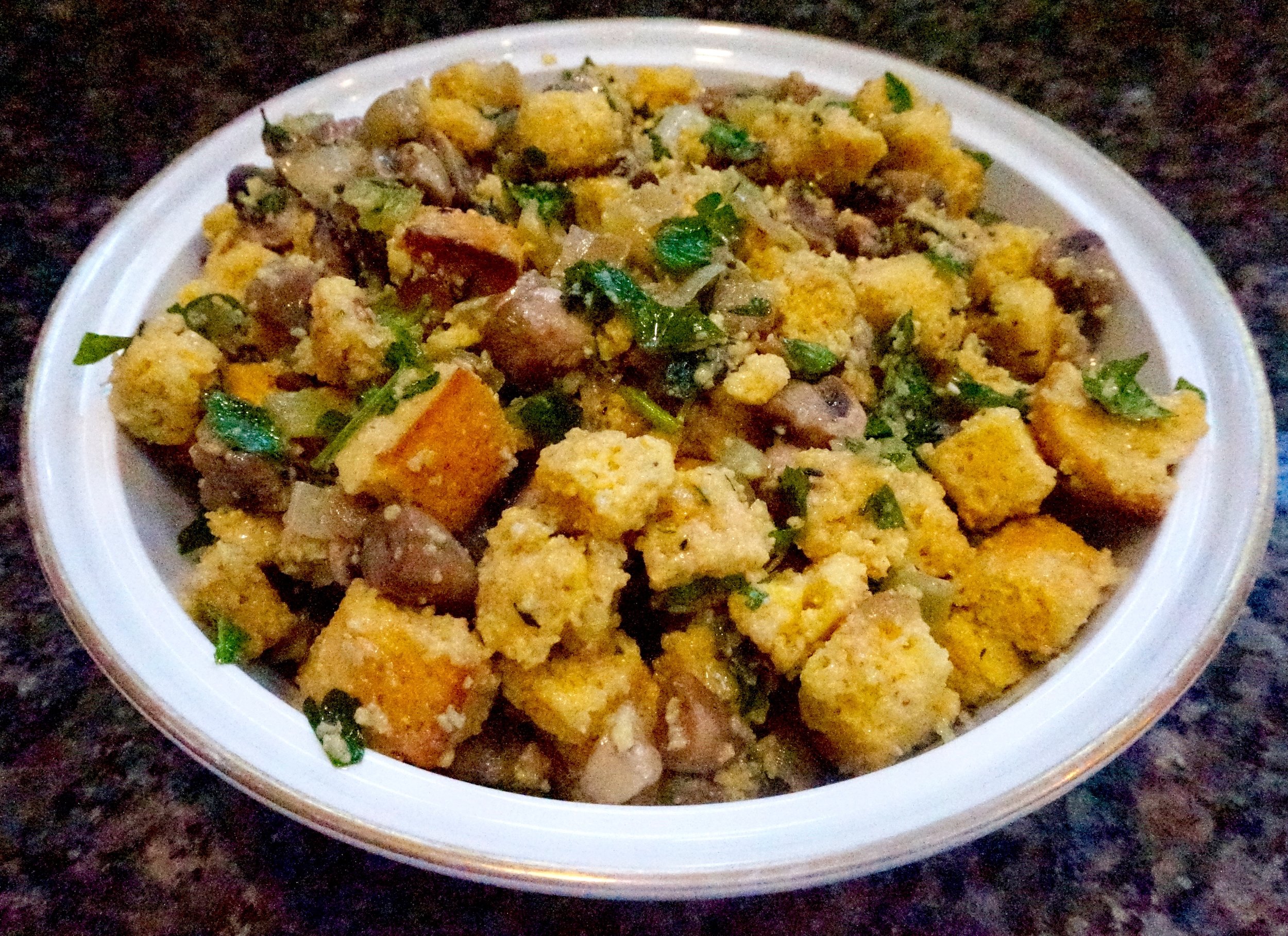
Cornbread Stuffing


  • 6 cups cornbread cubes
  • 2 tablespoons olive oil
  • 1 large onion, chopped
  • 10 ounces fresh mushrooms, coarsely chopped
  • 3 stalks celery, chopped
  • 2 tablespoons fresh parsley
  • 2 teaspoons fresh thyme leaves
  • salt to taste
  • 2 large eggs (or use chicken or vegetable stock)

Preheat the oven to 375 degrees. Lightly grease a casserole dish (about 2-quart). Cut the cornbread into 1/2-inch cubes and place them in a bowl. Heat the olive oil in a large saute pan over medium heat. Add the onion, mushrooms and celery and cook, stirring occasionally, for 4-5 minutes or until the vegetables have softened. Add the parsley, thyme and salt to taste. Remove the pan from the heat. Add the vegetables to the cornbread and toss the ingredients. Beat the eggs and add them to the bowl. Mix and spoon the stuffing into the prepared pan. Bake for about 25-30 minutes or until the top is crispy.

Makes 8 servings

Potato Chips May Save the Day

When I feel stressed I want potatoes.

Any kind.

Baked, boiled, fried, mashed, cakes, salad, pierogi, kugel, soup.

This election is giving me stress.

I know a lot of people who are freaking out. So it's not just me.

But I definitely need some sort of potato to calm me down.

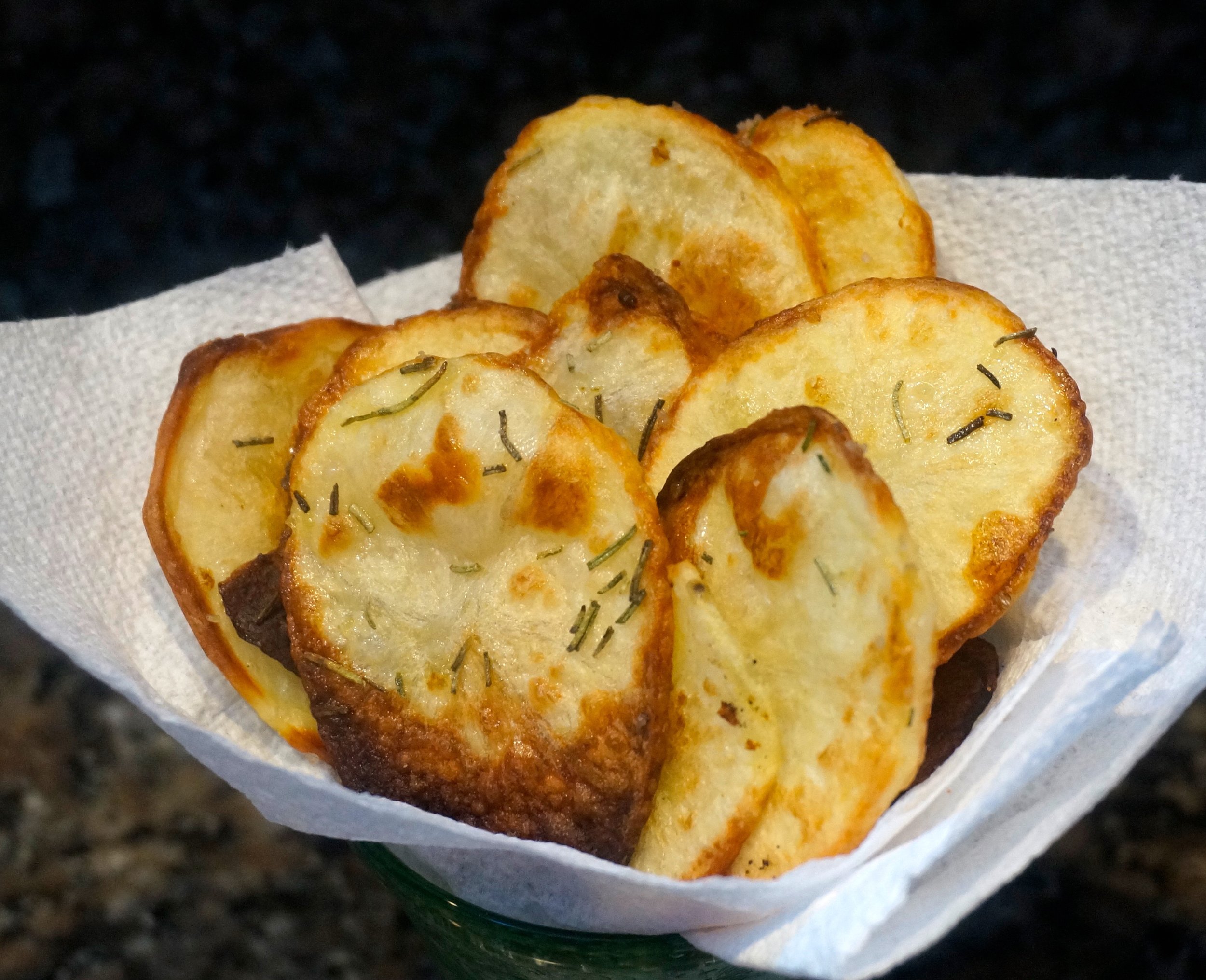
So tonight, when I have people over for my first debate watch gathering, I am serving homemade potato chips. These:

Rosemary and Sea Salt Potato Chips

  • 3 medium russet type potatoes, peeled and sliced 1/8-inch thick
  • 3 tablespoons olive oil
  • 2 teaspoons chopped rosemary (or use dried, crushed rosemary)
  • sea salt, preferably coarse, freshly ground salt

Preheat the oven to 425 degrees. Line a baking sheet with parchment paper. Wipe the potato slices dry. Pour the olive oil into a bowl. Add the potato slices and toss them to coat on all sides. Place the potato slices in a single layer on the baking sheet. Sprinkle with rosemary and sea salt. Bake for 15-18 minutes, turning the slices once.  

 Makes 4 servings


Summary Block
This is example content. Double-click here and select a page to feature its content. Learn more

Grandma Hoffman's Skinny Noodle Crusty-Top Mushroom Onion Kugel

Kugel is the kind of food that people can get into an argument about.

The issues can become monumental.

Like -- should it be sweet or salty?

have cheese or not? 

if cheese-- what kind?

And lots more.

Including this biggie -- what width noodles to use!

Skinny? Medium? Wide?

OY!

Here's my answer. Medium or wide for sweet, creamy, dairy-based or fruit-laden kugels served as side dishes with dairy or for dessert, because you want more pasta-surface area to absorb the sauce.

BUT, definitely skinny noodles for a savory kugel because you want it crispy on top to crunch under the pan juices or gravy that come with the tender meat and vegetables.

I grew up in a family where salty kugels were the thing. And ALWAYS made with the skinniest of noodles.

Here's my grandma's recipe. If you make it in a shallow baking pan the entire kugel is one huge crunch. Use a deeper pan if you prefer some soft noodles under the crusty top.

Grandma Hoffman's Mushroom Onion Kugel

  • 10 ounces skinny egg noodles
  • 2 tablespoons vegetable oil or schmaltz
  • 1 large onion, chopped
  • 10 ounces fresh mushrooms, any variety, sliced
  • 2 large eggs
  • salt and freshly ground black pepper to taste
  • paprika

Preheat the oven to 375 degrees. Bring a large pot of lightly salted water to a boil. Add the noodles and cook according to package directions, until the noodles are tender but not mushy. Drain under cold water and set aside. While the noodles are cooking, heat the vegetable oil in a large saute pan over medium heat. Add the onion and cook, stirring occasionally, for about 2 minutes. Add the mushrooms and cook, stirring occasionally, for 10-12 minutes or until the vegetables are soft. Set aside. Place the noodles in a large bowl. Add the vegetables with any accumulated juices, and stir the ingredients to distribute them evenly. Add the eggs and some salt and pepper to taste and mix them in. Place the mixture inside a baking dish. Sprinkle the top with paprika. Bake for about 25 minutes. Raise the heat to 400 degrees and cook for another 10 minutes or until the top is crispy and browned.

Makes 8 servings

Carrots with Pomegranate Jam Glaze

There are several ingredients in my life that I cook over and over.

Salmon. I make it so often for Ed and me that we are turning into fish.

Except that I also cook a lot of turkey, so maybe instead of growing fins and swimming up river we will grow feathers and start saying "gobble gobble."

And carrots. They're my go-to vegetable because most people like them and even people who say they hate vegetables usually say carrots are okay. 

I will definitely serve carrots for Rosh Hashanah. Why?

Tradition!

Pomegranates are also traditional for the holiday, so a while ago I cooked carrots and pomegranates (in the form of pomegranate molasses) together once and the result was really delicious.

But recently I decided to rework my old recipe using pomegranate jam that I bought from Crafted Kosher

It's a keeper.

Also, you can make the recipe up to the point of actually roasting them, so it's one of those wonderful dishes you can make ahead during this crazily busy holiday time.

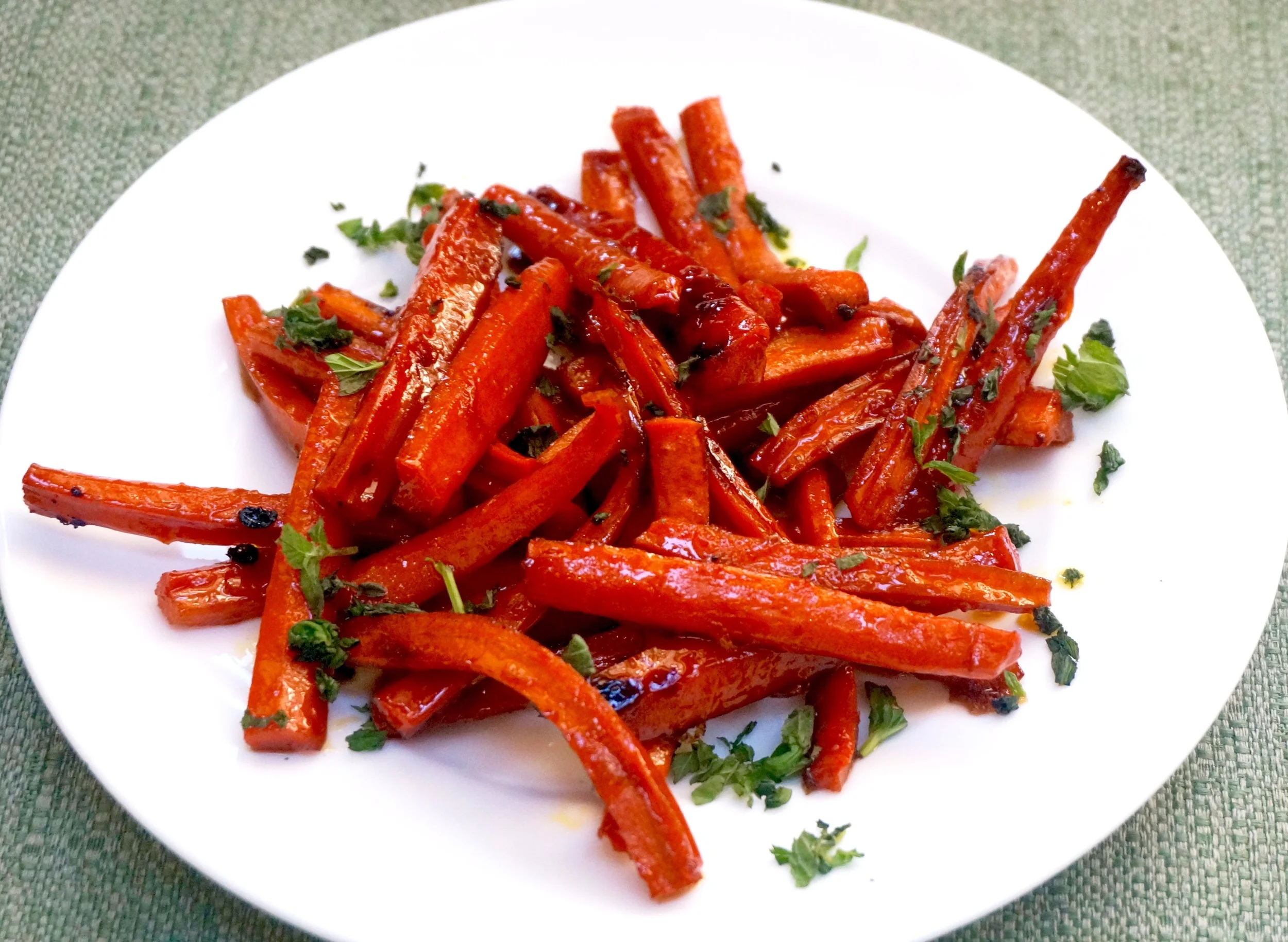
Carrots with Pomegranate Jam

  • 1/4 cup pomegranate jam
  • 2 tablespoons orange juice
  • 2 tablespoons vegetable oil
  • 1 teaspoon grated fresh orange peel
  • pinch cayenne pepper
  • salt to taste
  • 1 pound carrots
  • 1 tablespoon finely chopped fresh mint

Preheat the oven to 400 degrees. Line a baking sheet with parchment paper. Place the pomegranate jam, orange juice, vegetable oil, orange peel, cayenne pepper and salt in a small saucepan. Bring to a boil over high heat, stirring to blend the ingredients, and cook for one minute, making sure the jam has melted. Peel the carrots and cut them lengthwise in half or quarters, depending on thickness. Place the carrots on the parchment lined baking sheet and pour the jam mixture over them. Roast the carrots, stirring occasionally, for 18-20 minutes or until they are tender and well glazed. Sprinkle with mint and serve. 

Makes 4 servings


Roasted Cauliflower Steaks with Garlic, Sea Salt and Lime

_DSC9908.jpg

Recently, Faye Levy, noted cookbook author and food writer, wrote a piece for the Jerusalem Post about Cara Mangini, the "Vegetable Butcher." She also posted about it on Facebook. Then she asked if anyone else prepared "cauliflower steaks."

I do! Have done. Many times!

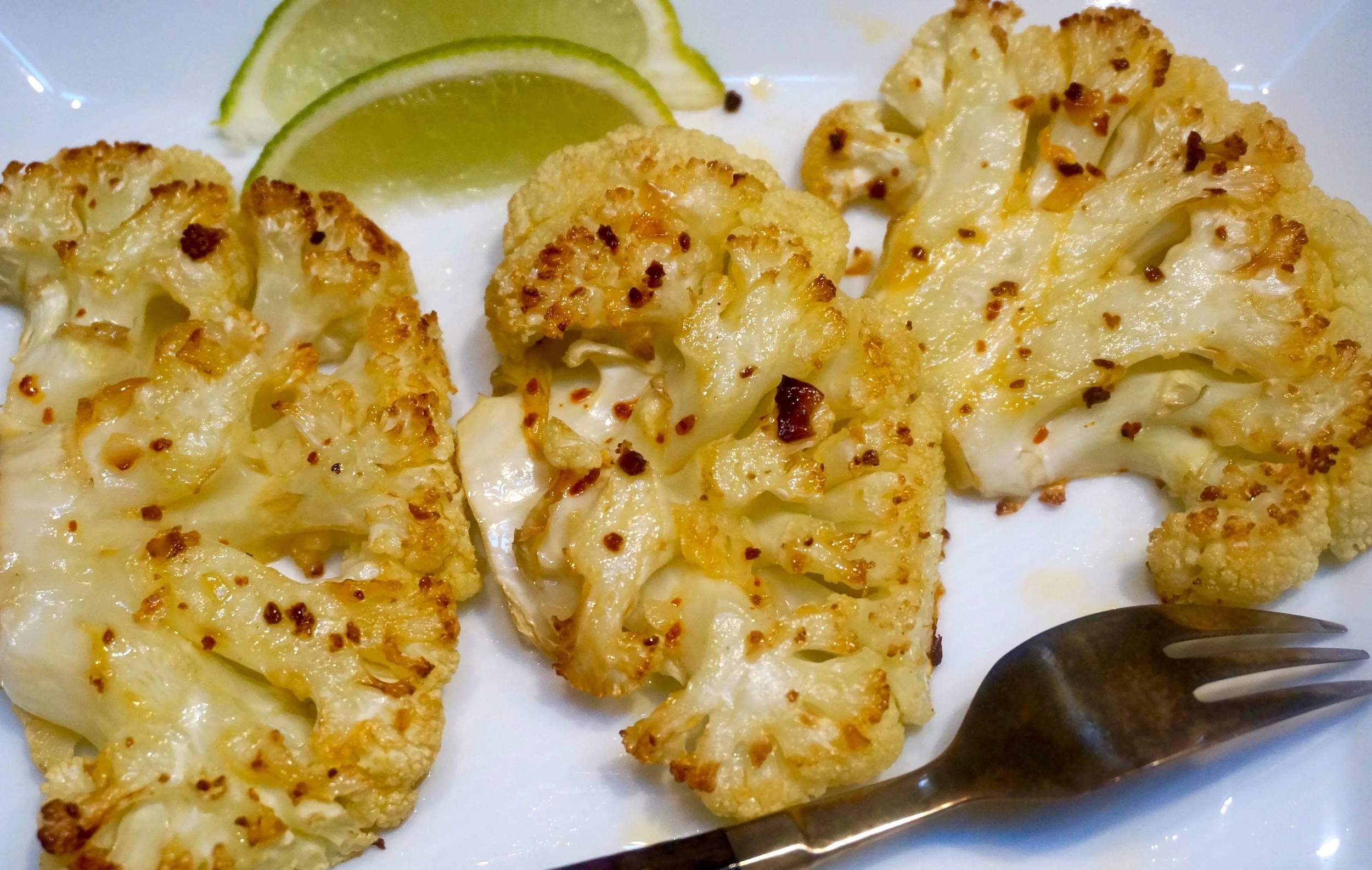
We are a family of cauliflower lovers and the "steaks" -- that is, thick slices cut from a whole head of cauliflower -- look beautiful on a plate, making them a special side dish at dinner.

I have a recipe for cauliflower steaks in my latest cookbook, The Modern Kosher Kitchen. Thanks for posting this, Liz Rueven, at kosherlikeme.com.

Note -- the steaks taste the same as any other "cut" of cauliflower.

The cutting takes some doing, and a very sharp chef's knife. Also, truth to tell, the smaller sections at the side of the cauliflower head fall away into regular florets. No worries. Cook them alongside the steaks. They're like the "burnt ends" that you get from barbecue -- no one ever complains about those, do they?

After the cutting, its' simple. A bit of oil and seasoning.

Like this recipe:


Roasted Cauliflower with Garlic, Sea Salt and Lime

  • 1 head cauliflower
  • 3 tablespoons olive oil
  • 2 cloves garlic, finely chopped
  • 1/2 teaspoon Dijon mustard
  • sea salt to taste
  • 2 tablespoons lime juice

Preheat the oven to 400 degrees. Line a cookie sheet with parchment paper. Remove the green leaves at the bottom of the cauliflower and trim most of the fibrous stem attached to the head. Slice the head into “steaks” about 3/8-inch thick. Rinse and dry the slices on paper towels. Combine the olive oil, garlic and Dijon mustard and brush this mixture on both sides of the cauliflower slices. Place the slices on the parchment. Sprinkle with sea salt. Roast for 15 minutes. Turn the slices over and roast for another 10-15 minutes or until tender and crispy. Sprinkle the roasted cauliflowers steaks with lime juice. Note: for smaller pieces that fall away when you slice the head, cook along with the steaks. They may be done sooner, so look at them about 5 minutes ahead, or let them get browner, no harm done.

Makes 4 servings

Cleveland Cuisine! Really.

Cleveland cuisine? Really?

Yes!

Cleveland is an important place.

For one thing, it's the home of the Rock and Roll Hall of Fame.

And that should be enough.

But there's also The Cleveland Museum of Art -- it has a large, diverse collection. And unlike so many museums of its kind, admission is FREE!!!!

Also -- Cleveland has a world-famous orchestra, a distinguished university (Case Western Reserve), an AFC football team (the Browns) and a major league baseball team (the Indians).

AND, of course, their basketball team is this year's NBA Champions! (You've surely heard of the Cavaliers!)

I'm impressed!

And now there's more. This summer Cleveland will be home to the 2016 Republican National Convention (July 18-21).

And, whatever the goings on at the convention itself, the city will get lots of extra attention in the press. There will be loads and loads of extra people in Cleveland.

So, me being me, I got to wondering about what those people might be eating during their stay. 

I don't mean the food they're going to get at the convention. I mean real, special, famous Cleveland food. 

Not every city has its own culinary specialties. Surely nothing in Stamford, CT., where I live. 

But Cleveland does! And some real goodies, at that! 

For example, because the city is home to large numbers of families whose origins trace back to central and eastern Europe, bratwurst (on a bun) and crunchy apple fritters are really popular.

The apple fritters alone are worth a visit I think.

But also this -- among the most famous of "Cleveland food" is something called the Polish Boy (basically a kielbasa sandwich with coleslaw, french fries and barbecue sauce all on a club roll).

Well, okay. Maybe.

Then I discovered that among the iconic Cleveland dishes are pierogi.

Pierogi. Do you hear my heart pounding? Can you see my grin?

Oh! How I love pierogi! Doughy dumplings stuffed with stuff. Like beef cheeks or potato and cheese (served with thick, tangy sour cream).

Pierogi. The kind of food some of us used to get at grandma's, if we were lucky.

I haven't had a pierogi for as long as I can remember. Thanks to Cleveland I was reminded of that fact.

I had to have some. But the only ones I could find in Stamford, CT. were packaged.

So I decided to make some myself. And after a couple of tries -- oh!

They are as wonderful as I remember.

Thank you, Cleveland, for inspiring this recipe. Good luck this summer.


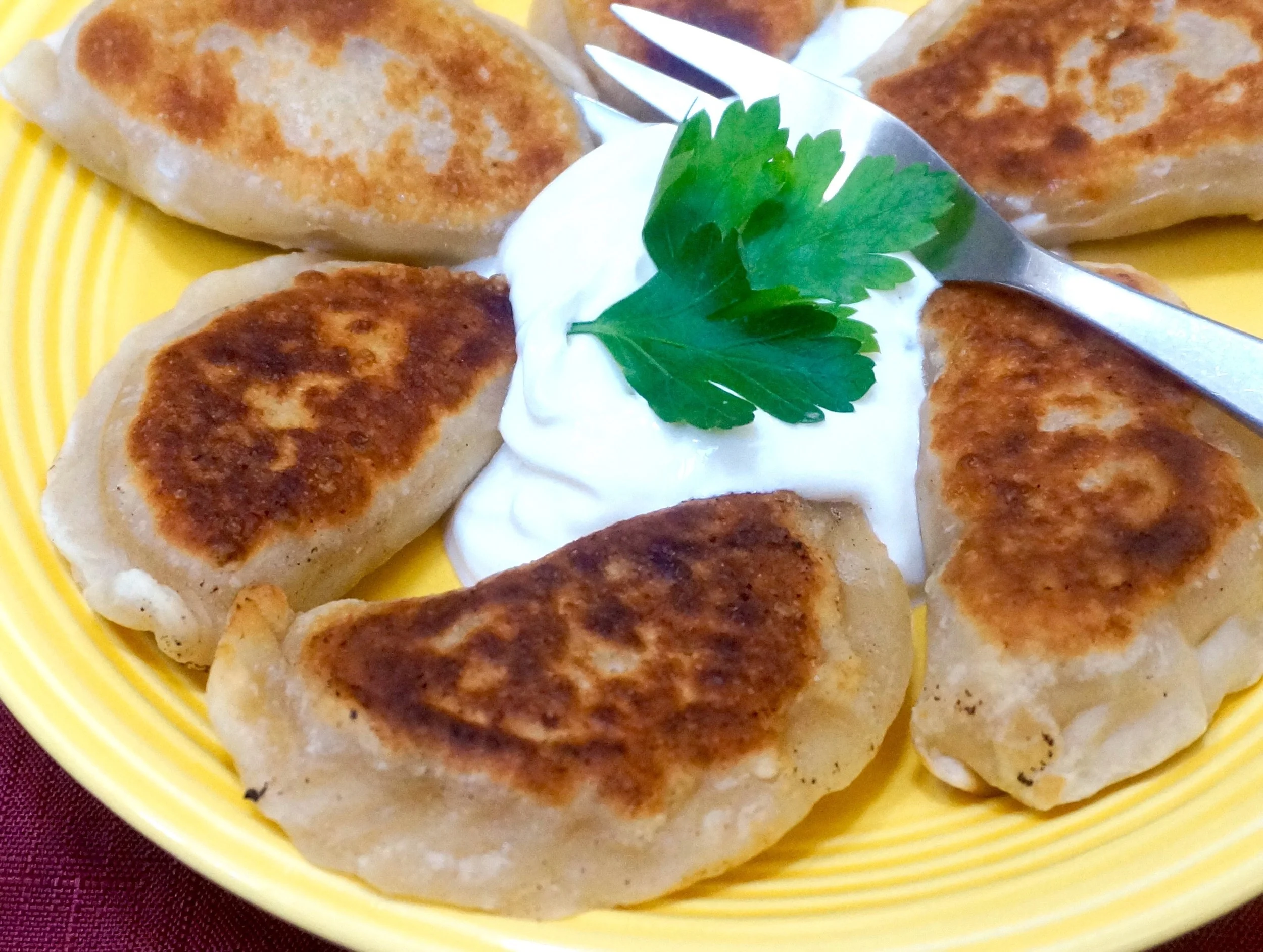
Potato Cheese Pierogi

Filling:

  • 3 large Yukon Gold potatoes (about one pound), peeled, cut into chunks (about 3 cups mashed potatoes)
  • 2 tablespoons butter
  • 1 large onion, chopped
  • 1 cup farmer cheese
  • salt and freshly ground black pepper to taste

Place the potato chunks in a large saucepan, cover with water and bring to a boil. Lower the heat to a simmer and cook for about 15 minutes or until the potatoes are tender. Drain the potatoes and spoon into a bowl. While the potatoes are cooking, heat the butter in a sauté pan over medium heat. When the butter has melted and looks foamy, add the onions and cook, stirring occasionally, for 12-15 minutes or until soft and golden brown. Add the onions to the potatoes. Add the farmer cheese, sprinkle with salt and pepper and mix the ingredients until well blended. Set aside to cool before filling the dough.

Dough:

  • 3-1/2 cups all-purpose flour
  • 1 teaspoon salt
  • 1/4 cup butter, cut into chunks
  • 1/2 cup water, approximately
  • 1 cup dairy sour cream

Extras:

  • butter
  • vegetable oil
  • sour cream

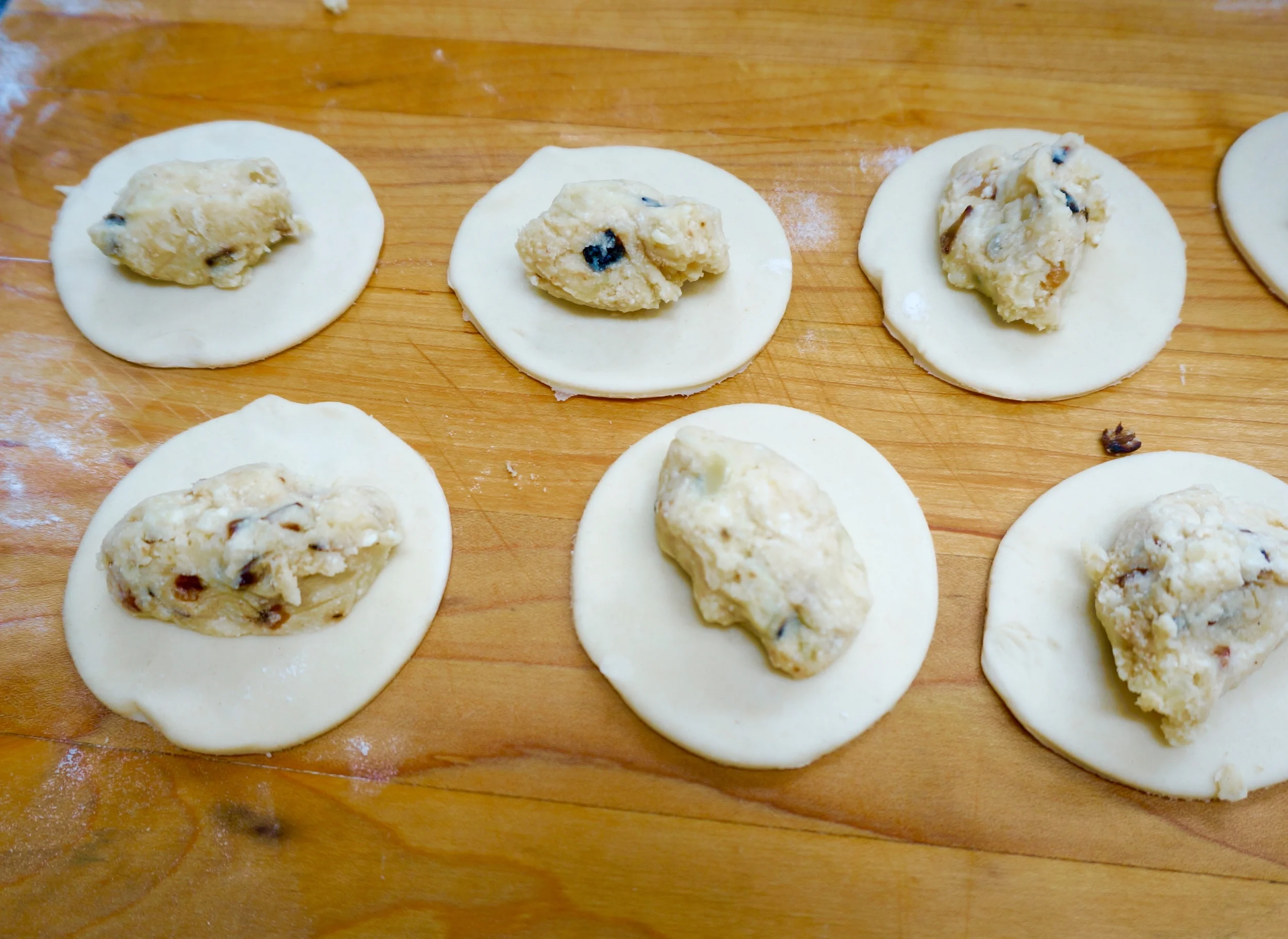
To make the dough: place the flour and salt in a large bowl. Add the butter and work it into the dough until the mixture is crumbly. Add 1/2 cup of the water and the sour cream and mix the dough until it is smooth, soft and well blended. If the dough seems too dry, add more water. (You can do this in a food processor.) Let the dough rest for at least 30 minutes. Using portions of the dough, roll the dough on a floured surface to 1/8-inch thick and cut out circles with a 3-inch cookie cutter. Place the circles on a board or cookie sheet and cover them with plastic wrap or a kitchen towel while you cut the rest of the dough. Fill the dough using about one tablespoon of the filling for each circle.

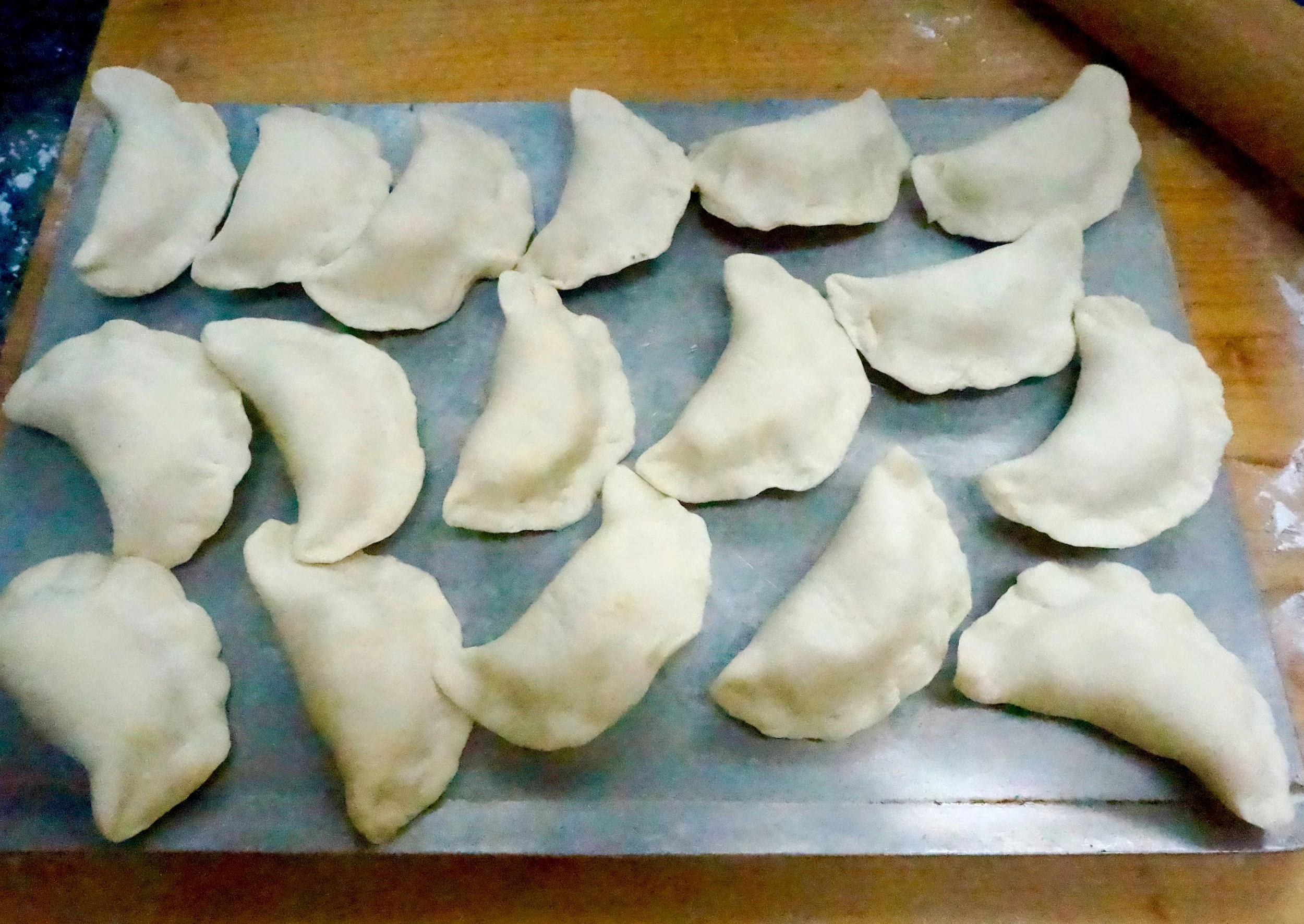
To fill the pierogis: place the filling in the center of the dough circle. Fold the circle in half, pinching the edges to seal in the filling.

To cook the pierogis: bring a large pot of lightly salted water to a boil. Add the filled pierogis, 6-8 at a time, and boil for about 3-8 minutes depending on whether they are at room temperature, refrigerated or frozen (or until they float to the surface). Remove the pierogis with a slotted spoon and set aside; repeat with remaining pierogis.

Extras: To serve the pierogis: serve boiled (as above), with sour cream (can also serve with caramelized onions – make more when making filling above). OR, heat 1 tablespoon butter plus 1 tablespoon vegetable oil in a sauté pan over medium heat. When the butter has melted and looks foamy, add some of the pierogi (do not crowd the pan) and cook for 3-4 minutes on the flat side, or until golden brown on the bottom, then turn the pierogis over and cook for another 2-3 minutes or until crusty and golden brown. Repeat using more butter/vegetable oil with the remaining pierogis. Serve with sour cream (and sautéed onion if desired). 

Makes about 4 dozen
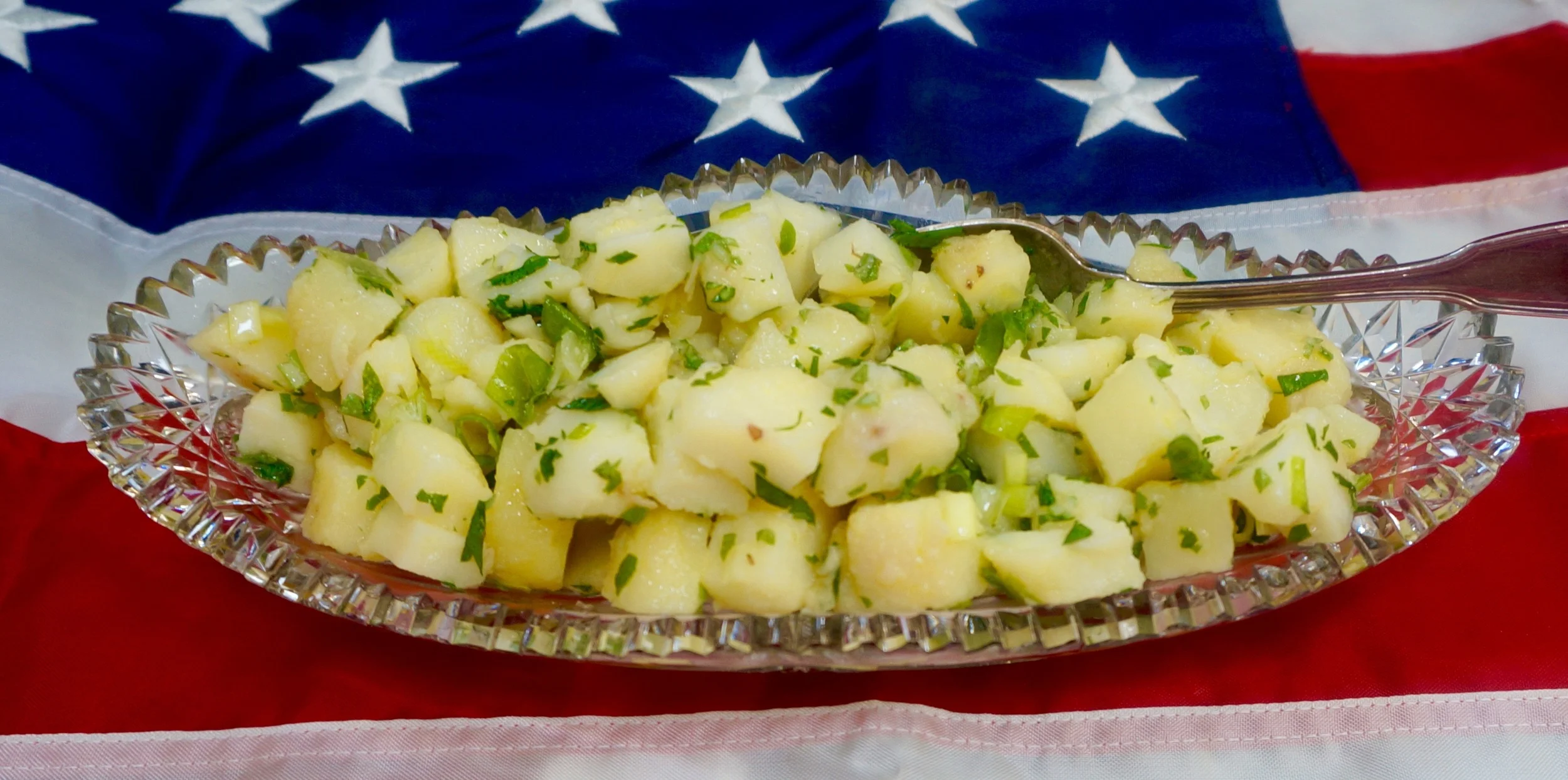
Potato Salad with Lemon-Oregano Vinaigrette

_DSC6159 (1).jpg

Some people say potato salad comes from German cuisine. Others tell you it is French. Or from some other European country.

But I think potato salad is actually thoroughly American.

Potatoes are a "new world" plant. Back in the 16th century, before Europeans ever knew there was even another continent, Spanish explorers sailed to what would later become the "Americas." They were looking for gold and plenty in the mythical kingdom of El Dorado. 

Surprise!

What they found were plenty of potatoes, and that was their real treasure.

They brought potatoes back to Europe, where it met with mixed reviews, especially because so many people thought potatoes were poisonous. Others refused to eat potatoes because they weren't mentioned in the bible. 

Fortunately potatoes are nourishing and easy to grow, so in the poorer European communities the people were obliged to eat them or starve. 

And so by the time Europeans settled in what would become the United States, potatoes were a staple part of the diet.

With all this in mind, I say again: potato salad is an American food, because -- it all started with the potato. And so it's the perfect side dish for a 4th of July picnic, barbecue or any other sort of get-together.

For my money -- potato salad is best when served at room temperature. Not hot, not cold. There are a zillion versions. Here's one:

Potato Salad with Lemon-Oregano Vinaigrette

  • 2-1/2 pounds small red potatoes        
  • lightly salted water
  • 1/4 cup olive oil
  • 1/4 cup fresh lemon juice
  • 2 scallions, finely chopped        
  • 1 tablespoon minced parsley
  • 1-1/2 tablespoons chopped fresh oregano (1-1/2 teaspoons dried) 
  • 3/4 teaspoon salt, or salt to taste
  • freshly ground black pepper to taste

Place the potatoes in a saucepan, cover with lightly salted water and bring to a boil over high heat. Lower the heat and simmer for 15-20 minutes or until tender. Drain under cold water and peel, if desired. Cut the potatoes into bite-size pieces and place in a large bowl. Pour in the olive oil and lemon juice and toss ingredients gently. Add the scallions, parsley, oregano, salt, and pepper. Toss gently. Let rest at least 1 hour before serving.

Makes 4-6 servings


I Hate Going on a Diet

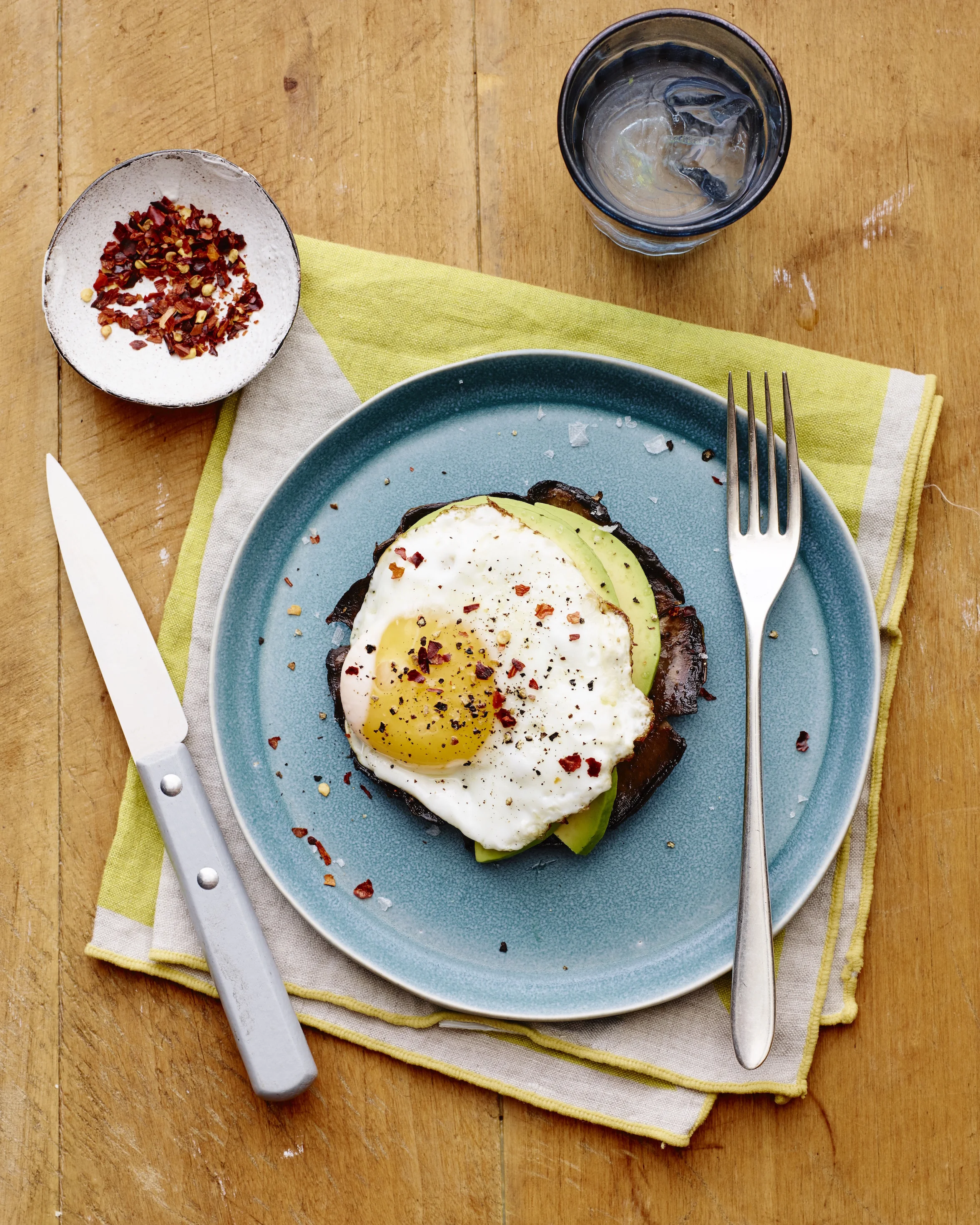
PORTOBELLOEGG_537.jpeg

I hate going on a diet.

The thing is, I like food. I like to eat. It's not even that I have a sweet tooth and consume too many doughnuts or that I drink soda (haven't had one for decades).

I just like regular food. 

And unfortunately, last year I ate a lot more of it than usual. Stress eating. It was a difficult year.

I gained TEN pounds.

That's a lot.

My children tell me I am not allowed to use the word "fat" because of "shaming."

So I suppose plump and chubby are off limits too.

I am supposed to say that I don't like how I look.

OK.

I don't like how I look.

Unfortunately my son-in-law Greg said he read an article that said women who go on diets and lose weight tend to re-gain the weight plus more.

OY!

Just in time -- comes THIS: The JoyofKosher 28 Day Challenge.

This is a four week diet plan of the most scrumptious non-diet sounding, most gorgeous food you ever saw in a weight loss plan. 

Check out the photos. The first for Grilled Fennel with toasty, crunchy quinoa seeds. The second for an avocado and egg-filled portobello mushroom cap that is so easy I am going to make it when my cousins come to sleep over in a few weeks.

This is not your ordinary "diet food."

It's good food, coming to you via two good friends of mine: Jamie Geller, cookbook author and founder, JoyofKosher, and Tamar Genger, a registered dietitian and professor of nutrition.

Have a look, even if you aren't on a diet. Even if you aren't kosher.

Here's what it is: When you sign up you get the menu plan for 28 days, plus a shopping list, plus 75 recipes with vegetarian and gluten-free substitutes (in a downloadable pdf file), plus nutritional info, plus tips, plus a Facebook page where you can discuss food stuff with other people on the challenge, plus --- go ahead and click the link and you'll see it all. For $28.

It's not a crazy diet. Just a simple plan, great, healthy, delicious food, easy, doable recipes with lovely photos and so much more. 

Inspiring.

Sounds like a plan. I'm determined to like the way I look.

GRILLED FENNEL AND TOASTED QUINOA (from JoyofKosher 28 Day Challenge)

Servings 6

Fennel is high in potassium and loaded with other nutrients that have been found to improve bone health.

Ingredients:

2 fennel bulbs, sliced

3 tablespoons extra virgin olive oil, divided

Kosher salt
Freshly ground black pepper

Instructions

1⁄4 cup fresh herbs like basil, parsley, and thyme and some fennel fronds

Zest and juice of 1 lemon 1⁄4 cup raw quinoa

1. Trim fennel bulbs by removing stalks and fronds (set aside fronds to mix with herbs).

2. Cut off any hard inedible outer layers.
3. With your fennel bulb upright, cut 1⁄4-inch slices vertically.
4. Brush each side using 2 tablespoons olive oil and sprinkle with salt and pepper.

5. Place slices on a medium hot grill, turning until you get a nice char on each side and fennel is tender to the touch. Alternatively, place on a baking pan and broil until charred.

6. Whisk together remaining 1 tablespoon olive oil, herbs, and lemon juice and zest, adding salt and pepper to taste. Drizzle all over fennel.

7. Meanwhile, toast quinoa: Rinse well, drain, and pour into a medium sauté pan. Stir grains over medium-high heat. Watch as quinoa dries out and begins to brown and even pop—that’s how you know it is ready. Remove from heat and set aside until ready to use.

8. Sprinkle toasted quinoa over fennel and serve warm or at room temperature. Nutritional Information / Per Serving

110 calories, 7g fat, 0mg cholesterol, 67mg sodium, 10g carbohydrates, 3g fiber, 3g sugar, 2g protein 


Beet and Brussels Sprouts Salad

Now that my children are grown, with children of their own, I sometimes think about the “old days” and remember the good times, the festive occasions, the fun we had. The Jewish holidays rank high on my list of best memories, especially the Passover Seders. Whether I’m thinking about the times that my cousin and I would crawl under the table while my uncle recited the Haggadah or last year, when my grandchildren threw the styrofoam “hail” and plastic locusts as we mentioned the Ten Plagues, the memories are good, the kind that I love to deposit in my memory bank.

There are good food memories too, from my grandma’s famous chicken soup to the complaints I got when I first served haroset made with dried apricots, pistachio nuts and cayenne pepper.

My first Seder continues my family's generations long menu featuring matzo ball soup, followed by roasted turkey. Chremslich, of course. In fact, a double portion of that. 

But all the rest is different. Over the years there was one food change after another, little by little as new in-laws came into our family, tastes changed and allergies had to be considered. So these days we have our own family expected recipes -- matzo ball soup and turkey, plus homemade baked cranberries, spinach pie (made with a matzo crust), imam bayeldi, and lots of other vegetables and the now standard spicy dried fruit haroset.

I used to serve flourless chocolate cake, but we had that a little too often, so because Passover is also my grandson's birthday, I will serve homemade macaroons along with a traditional chocolate roll, the one I used to make when my daughter Meredith's birthday fell during Passover. (You can stuff the roll with whipped cream, jelly or parve lemon curd filling).

Every year I add one new dish to my first Seder. One year it was Ratatouille. A few times there was a new version of haroset. I even made matzo farfel chocolates one year.

This year? A new salad! Here it is:

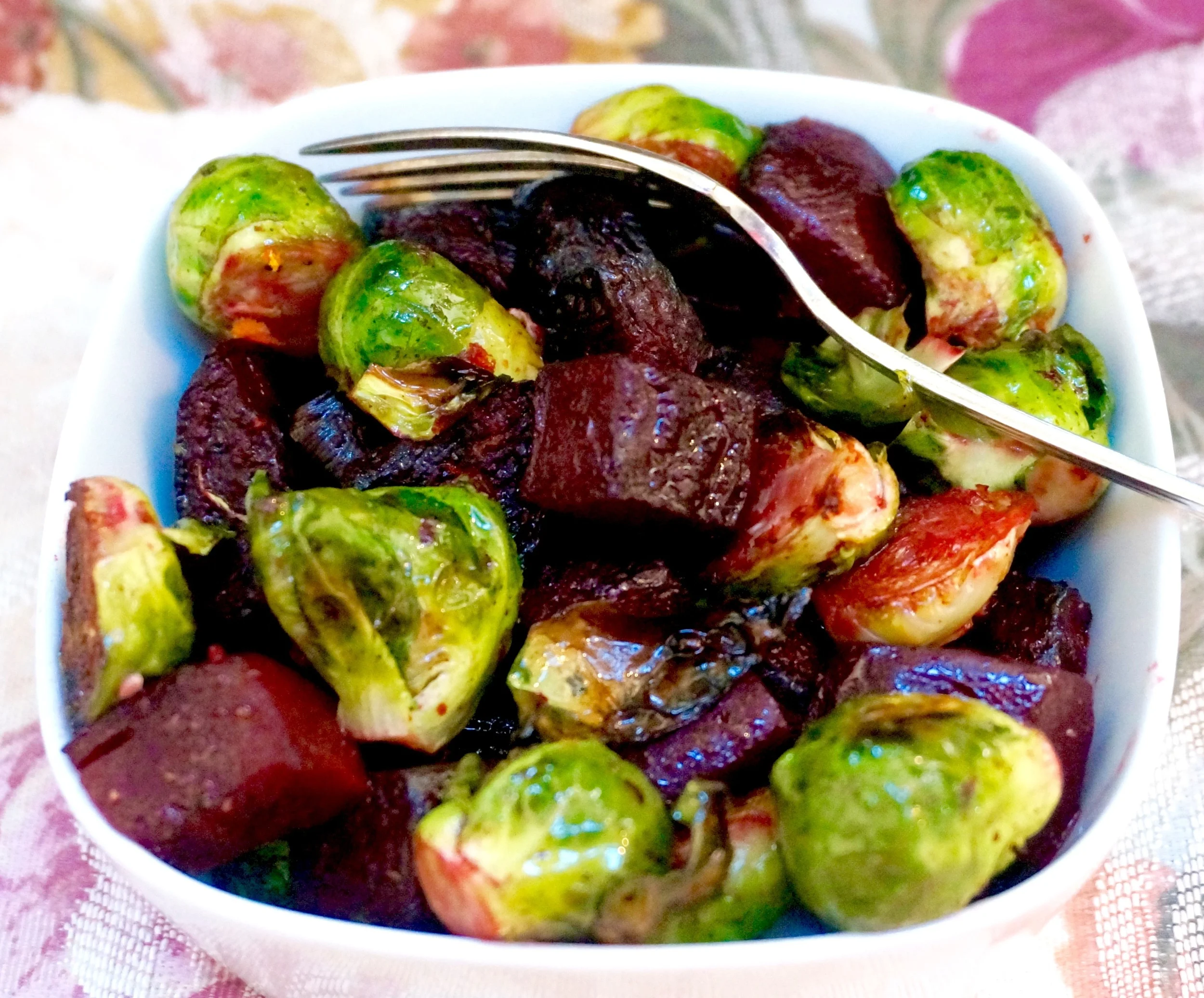
Roasted Beet and Brussels Sprouts Salad

  • 4 medium beets
  • 3 tablespoons olive oil
  • salt to taste
  • 1/2 pound (about 30) medium size Brussels sprouts
  • 2 tablespoons apple cider vinegar (or use Balsamic vinegar)
  • 1 tablespoon lemon juice
  • 2 teaspoons grated fresh orange peel
  • freshly ground black pepper

Preheat the oven to 425 degrees. Peel the beets and cut them into bite size pieces. Place the beets on a baking sheet and pour one tablespoon olive oil over them. Toss to coat the beets. Sprinkle with salt. Roast for about 20 minutes or until tender. Trim the Brussels sprouts (cut them in half if they are large). Place them on a baking sheet and pour one tablespoon olive oil over them. Toss to coat the sprouts. Sprinkle with salt. Roast for about 15 minutes or until tender. Place the vegetables together in a bowl. Mix the remaining olive oil, apple cider vinegar, lemon juice and orange peel and pour over the ingredients. Let rest for about 10 minutes, place in a serving bowl and sprinkle with salt and black pepper to taste.

Makes 6-8 servings


Fried Rice is Always Welcome

Ed and I have eaten a lot of fried rice recently. In Hong Kong. In Vietnam. In Cambodia. In the Philippines.

You could say fried rice is a staple in our lives. Just this simple dish: hot rice, vaguely crispy from the fry, lightly salty (but never with added soy sauce) and with a bit of egg, onion (usually in the form of scallion) and cooked vegetables. And that's how we had it (with a change of seasonings, depending on where we were) throughout Southeast Asia.

And that's how we have it at home (only from now on I will add more of the flavorings we recently sampled -- like sliced chili pepper or fresh coriander or star anise).

Because no matter what else I make for dinner, Ed will always welcome fried rice as a side dish.

He will also welcome fried rice as the main dish.

That makes it very easy for me, especially on days when I don't feel like fussing over dinner.

It does take some thinking ahead, because it's best to make fried rice using cold, cooked rice.

After that it's simple. You stirfry the rice and add all sorts of other ingredients from cooked carrots or mushrooms or any other veggie, to frozen peas to canned water chestnuts to fresh scallions to leftover chicken or veal to scrambled eggs -- whatever you have! And season it the way you like.

Like the recipe below, which was a filling, satisfying, delicious one-pot dinner.

Another bonus -- I added some of the Carrington Sriracha flavored coconut oil that I mentioned when I posted about Sriracha-Parmesan Popcorn. I got the oil, among other things at Crafted Kosher, a new website that has an enormous assortment of interesting products. The coconut oil is coming in handy for many of my recipes (stay tuned). Just a small amount makes a huge flavor difference, as it did with this fried rice.

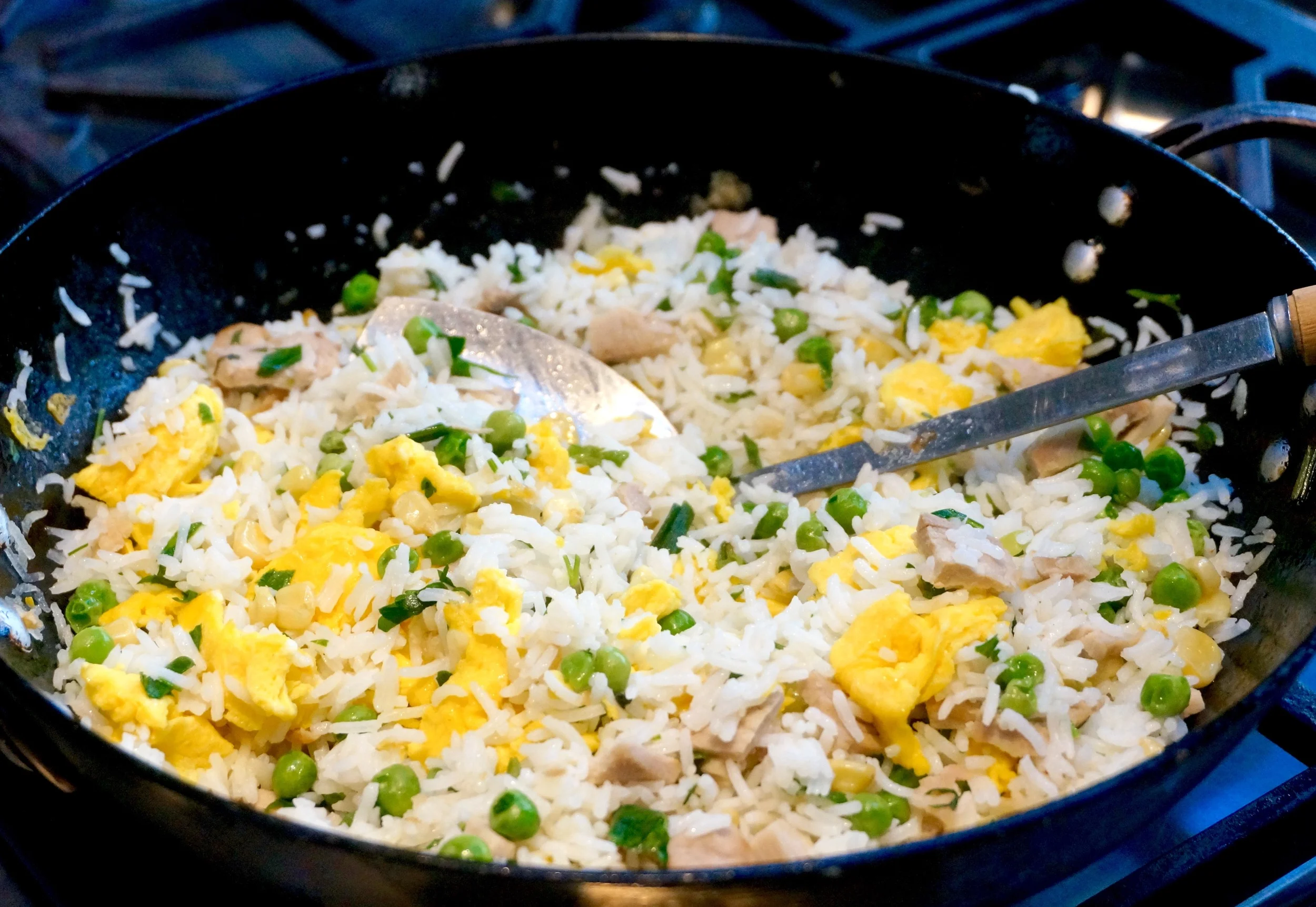
Fried Rice with Egg and Peas

  • 4 large eggs
  • 2 tablespoons vegetable oil
  • 1 tablespoon Sriracha flavored coconut oil
  • 4 scallions, chopped
  • 3 cups cooked cold rice
  • 3/4 cup thawed frozen peas
  • 1 cup diced leftover turkey, chicken or veal, optional
  • 1/2 teaspoon salt or to taste

Beat the eggs in a bowl and set aside. Heat 2 teaspoons of the vegetable oil in a wok or stirfry pan over medium-high heat. Add the eggs and cook, stirring once or twice until they are set on the bottom. Turn the eggs over and cook briefly until firm. Dish out the eggs onto a chopping board, chop them and set them aside. Heat the remaining vegetable oil and the coconut oil in the pan. Add the scallions and stirfry for about one minute. Add the rice, eggs, peas, optional meat and salt and stirfry for 2-3 minutes to distribute ingredients and heat the rice.

Makes 2-4 servings, depending on whether this is a one-dish meal or part of a meal