kosher

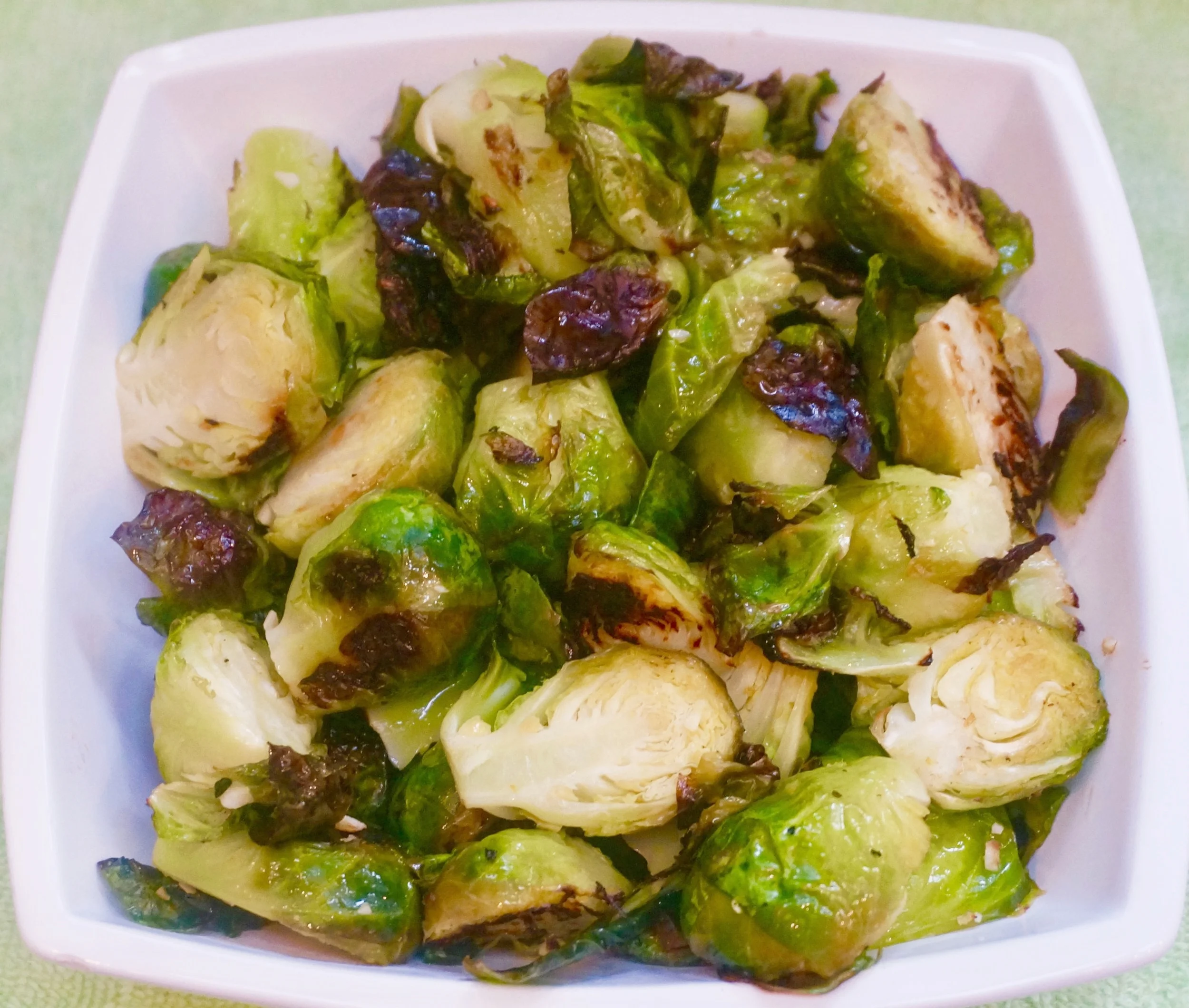
Roasted Lemony Brussels Sprouts

fullsizeoutput_82dd.jpeg

My husband once told me that if I ever made Brussels Sprouts for dinner he would want a divorce.

So, none of that particular vegetable for at least 10-12 years into the marriage.

Then I got an assignment from a food editor at the paper I wrote for, to do an article on --- Brussels Sprouts. I made several recipes.

We hate food waste at our house, so Ed tried them all.

Surprise! He loved them all.

It's been a Brussels Sprouts bonanza ever since. Turns out this is one of his favorite vegetables.

So I am making this for Father's Day.


Roasted Lemony Brussels Sprouts

  • 1 pound Brussels sprouts
  • 3 tablespoons lemon juice
  • 2 tablespoons olive oil
  • 2 medium cloves garlic, finely chopped
  • 2 teaspoons finely grated fresh lemon peel
  • salt and freshly ground black pepper to taste

Preheat the oven to 425 degrees. Line a baking sheet with parchment paper. Cut the Brussels sprouts in half (or smaller, depending on size) and wash under cold water. Drain and place the Brussels sprouts on the parchment paper. In a small bowl, mix the lemon juice, olive oil, garlic and lemon peel and pour over the vegetable. Toss the Brussels sprouts to coat all of them. Sprinkle with salt and pepper. Roast for about 15-18 minutes, turning the sprouts once or twice during roasting, or until tender and lightly golden brown.

Make 4-6 servings

Herbed Feta Cheese with Sundried Tomatoes and Olives

fullsizeoutput_846b.jpeg

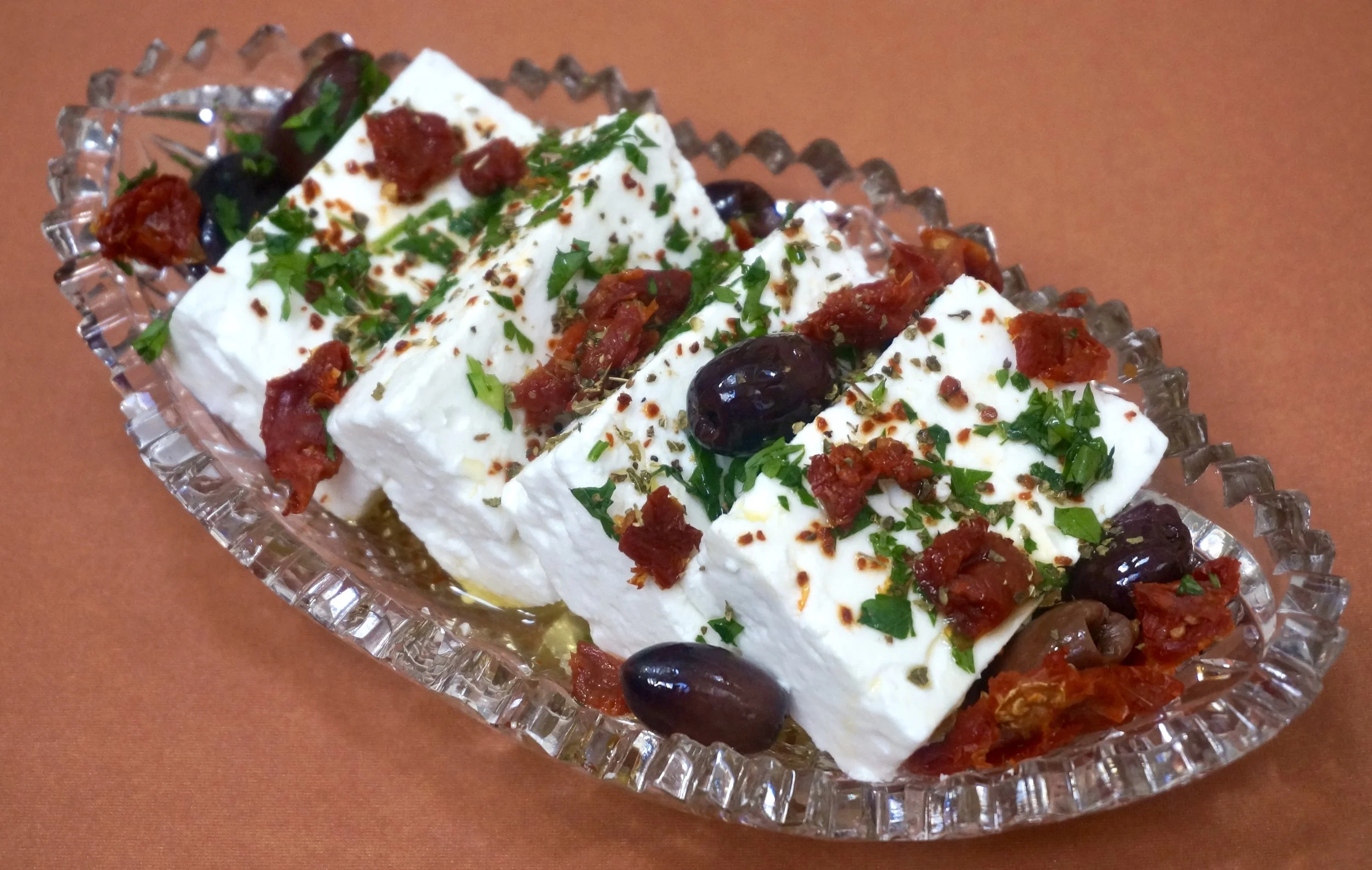
A few weeks ago I took a quickie trip to Berlin with my daughter. We took a stroll through the Turkish outdoor market, where I saw someone selling a gorgeous hunk of feta cheese, scattered with sundried tomatoes and olives, seasoned with herbs and sprinkled with a drizzle of olive oil.

I noted the ingredients and took a photo. 

It looked so delicious that the moment I saw this cheese thing I knew I had to make it at home.

I did.

It is as good as I thought it would be. I served it to guests last weekend.

They raved.

Here's the recipe. 

Herbed Feta Cheese with Sundried Tomatoes and Olives

  • 1/2 pound feta cheese
  • 3 sundried tomatoes in oil
  • 8-10 imported black pitted olives
  • 2 teaspoons finely chopped fresh parsley
  • 1/2 teaspoon dried oregano
  • Aleppo pepper
  • 1 tablespoon olive oil

Cut the feta cheese into thick slices and place on a serving dish. Chop the sundried tomatoes and scatter them over the cheese. Scatter the olives around the cheese and dish. Scatter the parsley over the ingredients and sprinkle with the oregano and some Aleppo pepper to taste. Drizzle the olive oil on top.

Makes 8-10 servings


Potato Cheese and Spinach Kugel

Tell me Shavuot is coming and my first thought is cheesecake.

Of course. Cheesecake the dish most associated with the holiday. I love it. Make all kinds. Some plain. Some spiced. Some covered with fruit. Some with chocolate.

On the other hand you can't just eat cheesecake. 

Shavuot is generally a dairy holiday.

I love dairy.

Especially if there is a potato involved.

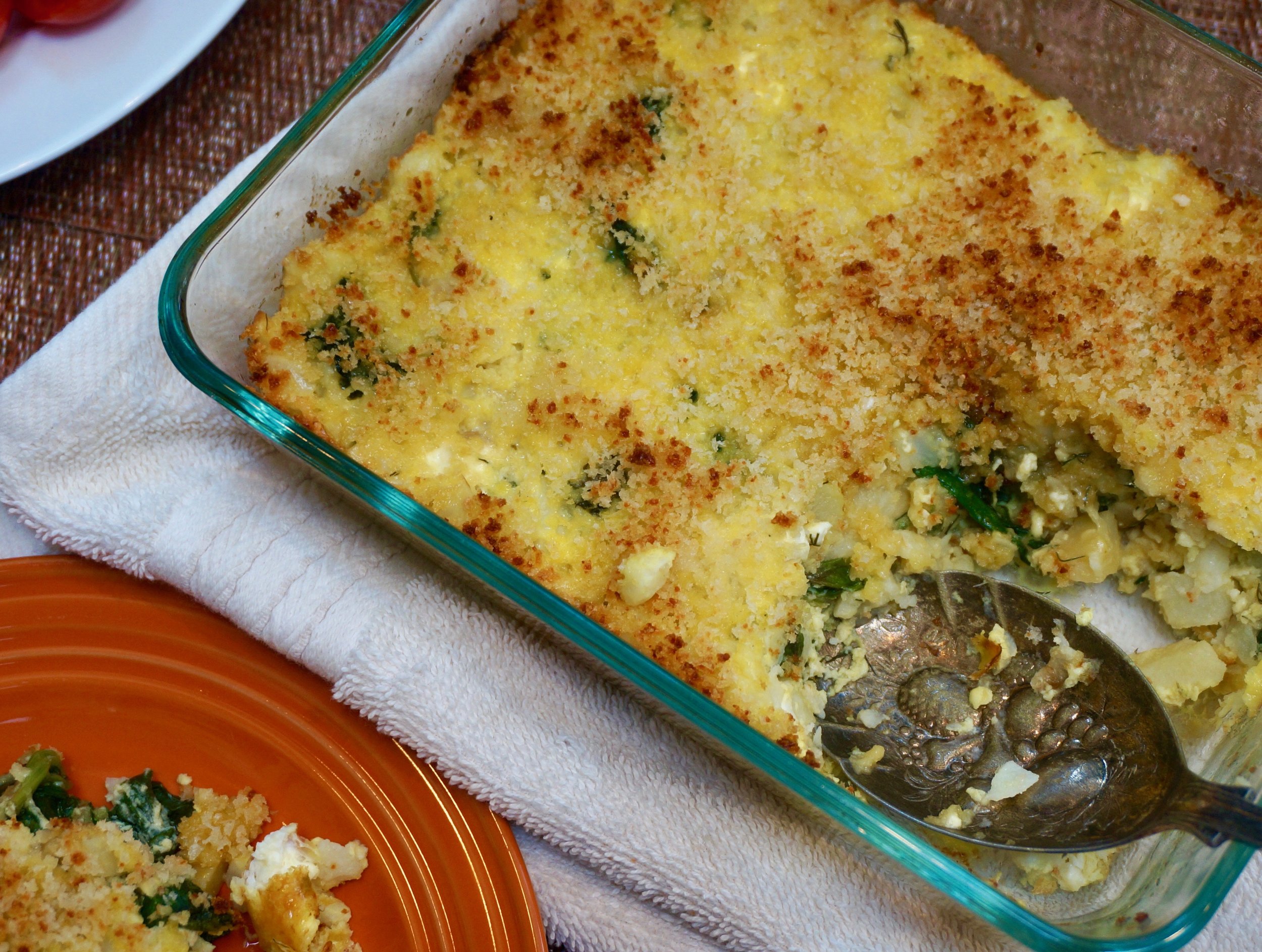
Like in this kugel, which is a wonder all by itself. But also good with salad, other dairy dishes or served with sunnyside eggs on top.

Perfect dish for the holiday.


Potato Cheese and Spinach Kugel

  • 4 medium Yukon Gold potatoes (about 1-1/2 pounds)

  • 8-10 ounces fresh spinach

  • 2 tablespoons olive oil

  • 1 medium onion, chopped

  • 1 cup crumbled feta cheese

  • 2 tablespoons chopped fresh dill

  • 6 large eggs

  • 5 tablespoons melted butter

  • salt and freshly ground black pepper to taste

  • 3/4 cup panko crumbs

  • 2-3 tablespoons grated Parmesan cheese

Preheat the oven to 375 degrees. Lightly grease a 2-quart baking dish. Peel the potatoes, cut them into chunks and boil them in lightly salted water for about 15 minutes or until tender. Let cool and chop into small pieces. Place the potatoes in a bowl. While the potatoes are cooking, wash and dry the spinach and chop it coarsely. Heat 2 tablespoons olive oil in a sauté pan over medium heat. Add the onion and cook for about 3 minutes or until softened. Add the spinach and cook for 2-3 minutes or until wilted (if there is liquid in the pan, raise the heat and cook until it evaporates, or drain using a strainer). Add the spinach mixture, the feta cheese and dill to the potatoes and mix gently to distribute the ingredients evenly. Beat the eggs in a large bowl. Mix in 3 tablespoons of the melted butter and pour over the potato mixture. Sprinkle with salt and pepper. Gently mix the ingredients. Place the mixture inside the greased baking dish. In a small bowl, mix the panko, the remaining 2 tablespoons melted butter and the Parmesan cheese and sprinkle over the ingredients. Bake for about 30 minutes or until hot and crispy.

Makes 8-10 servings


Stir-fried String Beans with Meat (Ants on a Tree)

DSC04806.jpg

There's an old, ongoing joke about Jews and Chinese food. You know, the Jewish year is 5777 and the Chinese year is 4714; we love Chinese food so how did we get along without it for over a thousand years?

All kidding aside, there is a real connection among the Jews and Chinese going back -- in the United States at least -- to May 1903. 

In April of that year there was a terrible pogrom in Kishinev (now in Moldava) during Russian Easter. Several days of anti-semitic violence took its toll on the Jewish community: 49 dead, 500 injured and about 2,000 homeless. News of the violence reached the United States, where Jewish philanthropists raised money to help the victims.

But a Chinese businessman on New York's Lower East Side felt the outrage too.

His name was John Singleton, who understood the cruelty and sometimes barbarism inflicted upon minority groups. He and three fellow merchants Guy Main (Yee Kai Man), Dek Foon and Jue Chue arranged for a benefit performance at the Chinese Theater on Doyers Street on May 11, 1903.

The program consisted of a short play (performed in Chinese) -- all the Chinese actors donated their time. Then speakers. Guy Main and Rabbi Joseph Zeff (who spoke in Yiddish) talked about the common bond between the two people, noting the atrocities committed by Russians against both. Another speaker expressed Jewish gratitude to the Chinese and wished the United States to welcome them as Americans, a somewhat veiled protest against the Chinese Exclusion Act.

Finally? Dinner at Mon Lay Won, considered the "Chinese Delmonico's." A very special place. The famous Yiddish actress Bertha Kalisch attended, as well as many other prominent Jews. There is no record of the menu, but it was definitely NOT kosher. The restaurant, which usually served featured pork and shrimp, apparently tried to be sensitive to the Jewish dietary laws and didn't serve those items, but we know that among the dishes served were chicken, squab and reindeer.

The event raised about $280 for the Kishinev victims (that's about $7,300 in today's dollars).

Of course this is not the reason that Jews love Chinese food. But the gesture stands, the solidarity cannot be forgotten. And so, on this 114th anniversary of the event, I offer a tasty Chinese dish that's welcome for spring. If you can get Chinese long beans that's perfect, but I make the dish with common string beans. The authentic Chinese version calls for ground pork, but my recipe uses turkey. It's kosher.

Celebrate solidarity, unity, kinship, friendship, respect for all ethnic groups and minorities.

Stir Fried String Beans with Meat

  • 1/2 pound Chinese long beans, green string beans or haricots vertes
  • 3 scallions, shredded
  • 3 tablespoons vegetable oil
  • 4 ounces ground turkey or veal
  • 1/2 cup water
  • 1 tablespoon rice wine or sherry
  • 2 teaspoons soy sauce
  • 1 teaspoon sugar
  • 2 dried red chili peppers (or 1/2 teaspoon crushed red pepper)
  • 1 tablespoon sesame oil
  • 1 teaspoon finely chopped fresh ginger

Wash and trim the beans. Shred the scallions by using a small sharp knife tip and cutting through from the root end through the greens. Cut away the root and set the scallions aside. Steam the beans for about 3 minutes or until barely tender. Drain under cold water and set aside. Preheat a wok or stirfry pan. Pour in the vegetable oil, let it get hot. Add the meat and stirfry for a minute or so, stirring constantly and breaking up the pieces, until the meat is no longer pink. Add the water, wine, soy sauce, sugar, peppers and sesame oil. Cook for 3-4 minutes or until the water has evaporated. Add the scallions and ginger and mix them in. Add the beans and stirfry for a bout a minute, mixing the ingredients to distribute them evenly. 

Makes 4 servings
Roasted Shad

DSC03914.jpg

When springtime comes, can shad be far behind?

Not in Connecticut!

Lucky us. The shad are running, swimming their way through the Connecticut River to spawn, on their way to the ocean.

The season is short, so get your fill now. (FYI, shad do run through other rivers along the east and west coasts so you can get it too.)

If you've never tasted shad, a herring cousin, you've missed out. It's one of the most tender of fish and it's loaded with omega-3 fat, which means it's not only healthy but also big on flavor.

The big problem with shad is the bones. There are lots of them, very very thin bones. A Native American tale says that shad was once a porcupine who turned inside out when it went into the water.

I managed to buy the filets already deboned, (which you can do at many fish markets). Many shad recipes call for cooking the fish at low temperatures for a long time (250 degrees for several hours), because the bones melt in the slow heat. But for a quick, tasty meal try the easy recipe below.

If you can't get deboned shad it's still worth eating because it tastes so good. You can also substitute any herring, trout, bluefish or mackerel filets.

ROASTed Shad with Thyme and Raisins

  • 1/2 cup raisins
  • 4 deboned shad filets
  • 1 tablespoon olive oil
  • 1 teaspoon Dijon mustard
  • 1 tablespoon lemon juice
  • 2 teaspoons fresh thyme leaves
  • salt and freshly ground black pepper to taste
  • thin slices of lemon

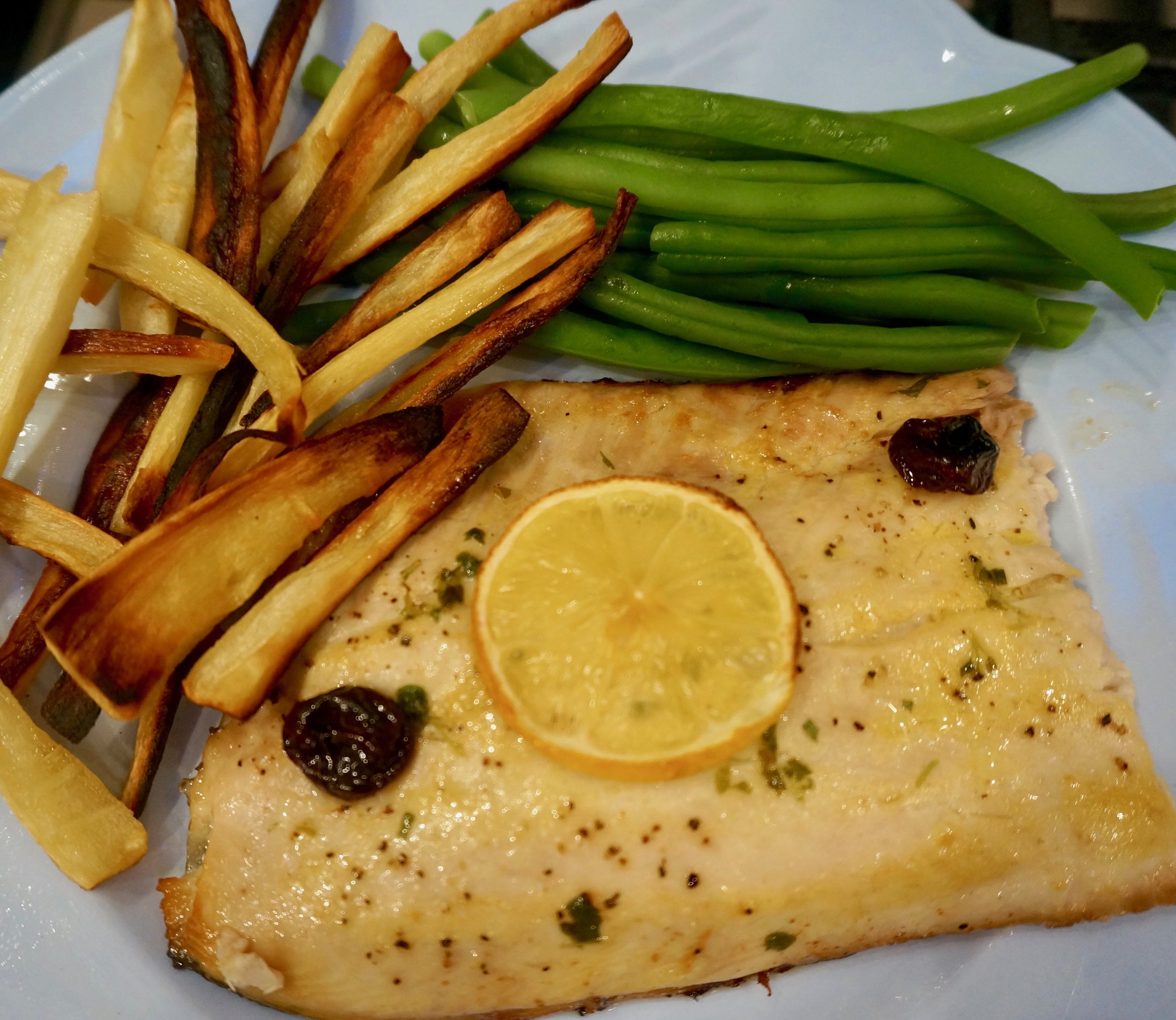
Preheat the oven to 450 degrees. Place the raisins on a parchment-lined baking sheet. Place the shad filets on top. Mix the olive oil and mustard and brush over each filet. Sprinkle the filets with lemon juice, thyme and salt and pepper to taste. Place lemon slices on top of each filet. Roast for about 8 minutes or until lightly crispy. 

Makes 4 servings

Lullabye Bread

DSC08114.jpg

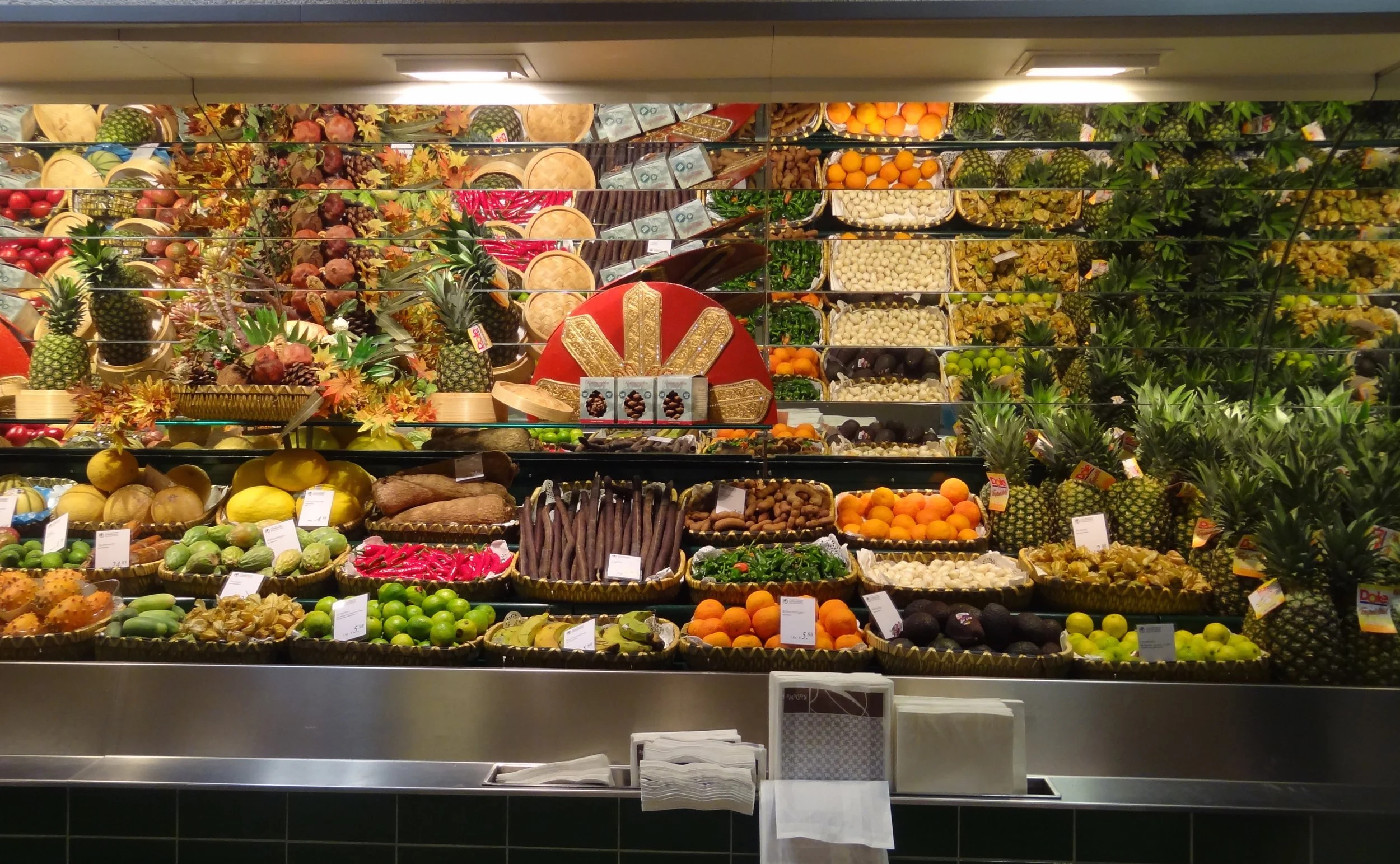
A few years ago Ed and I were in Berlin and checked out KaDeWe, the city's famous department store that has the biggest food halls in Europe and maybe in the world. They sell every kind of food you can imagine. Gorgeous cakes and pastries. Bountiful, beautiful fruit. Different kinds of eggs, dairy products, chocolates. 

It was all familiar. Pineapples. Peaches. Sachertorte. Macarons. Freshly butchered chickens, and so on.

We stopped counting the different kinds of sausages after we reached 100. Apparently they sell sausages from every region in Germany. 

But we were there for lookin', not cookin' -- so, in the two hours we walked through this place it was more like a visit to an art gallery. 

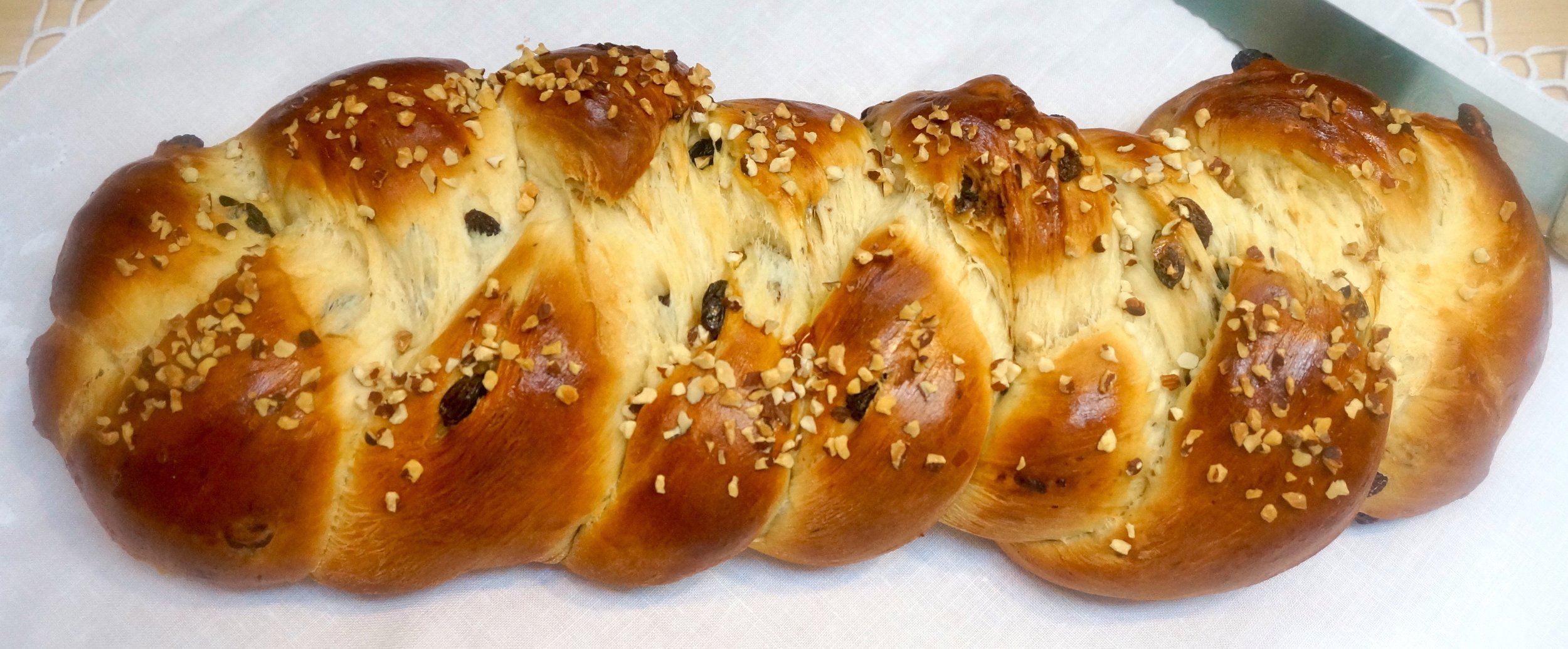
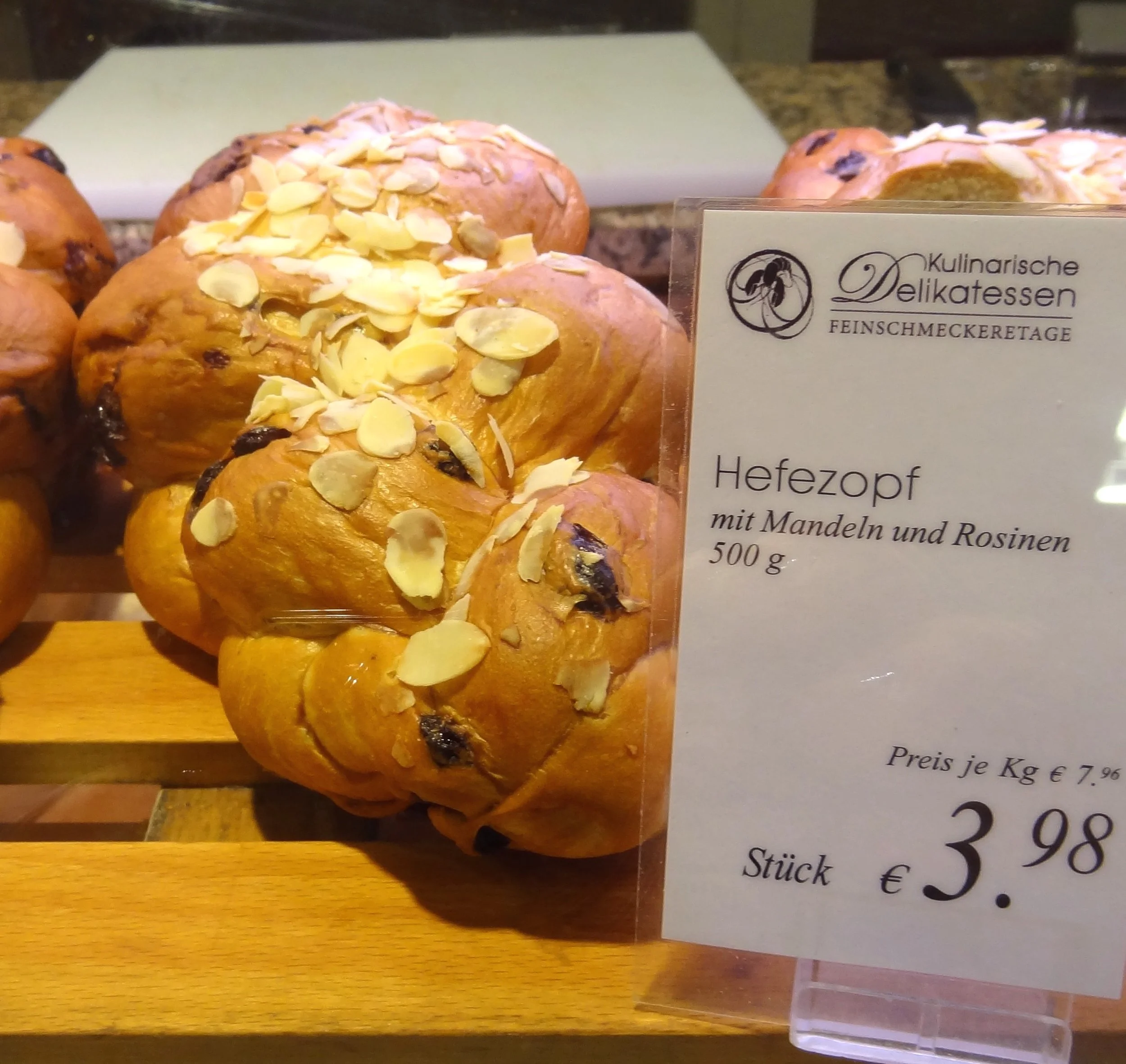
But then we came to the bakery and there, in the case, was a beautiful, braided loaf called Hefezopf, which is like a challah, but with raisins and almonds.

It was a vision. All at once my mind filled with memories of a lovely shabbat challah mixed with grandma singing rozhinkes mit mandlen, that hauntingly beautiful, classic Yiddish lullabye.

Oh my. My eyes well up even thinking about it.

This was something I had to try at home and get right.

I did, but it took several tries. At first I used my challah recipe and sweetened it a bit, but that just tasted like sweeter challah. The consistency wasn't right.

After doing some research about Hefezopf I realized it was more like brioche -- dense, buttery, dairy-laden, so I started tinkering with my brioche recipe.

Yes. 

A taste is worth a thousand looks.

Try this. It's called Hefezopf, but like to call it Lullabye Bread.

Lullabye Bread (HEFEZOPF)

  • 1 cup milk
  • 1 3-inch piece of cinnamon stick, broken in half
  • 2 2-inch strips of lemon peel
  • 5 tablespoons butter
  • 1/3 cup sugar
  • 1 package active dry yeast
  • 3-1/2 cups all purpose flour, approximately
  • 1 teaspoon salt
  • 2 large eggs
  • 1 cup raisins, optional
  • 2-3 tablespoons chopped almonds, optional


Lightly grease a baking sheet. Pour the milk into a saucepan. Add the cinnamon stick, lemon peel, butter and sugar cook over medium heat, stirring to dissolve the sugar, until bubbles form around the edges of the pan and the mixture is hot. Set aside to cool to lukewarm (about 105-110 degrees). Sprinkle the yeast over the milk mixture and whisk the ingredients to dissolve the yeast. Let rest for about 5 minutes or until thick bubbles form. Place the flour and salt in the bowl of an electric mixer. Remove the cinnamon stick pieces and lemon peel from the yeast mixture and pour the liquid into the mixer bowl. Add one egg and mix the dough with a dough hook for about 2 minutes. Add the raisins, if used, and mix for another 2 minutes or so, or until the dough is smooth. If the dough is sticky, add more flour as needed. (Kneading can be done in a food processor or by hand.) Cover the bowl and let rise in a warm place for about 1-1/2 hours or until doubled in bulk. Punch the dough down and cut it into 3 equal pieces. Working on a floured surface, roll the pieces to make strands of about 12-inches long. Braid the strands and place them on the baking sheet. Beat the remaining egg with one teaspoon water and brush the egg wash over the surface of the braid. Sprinkle with almonds, if used. Let rise again for 30 minutes. Preheat the oven to 350 degrees. Bake for about 30 minutes or until puffed and golden brown.

Makes one bread

Zucchini Bayildi

Every year, at every Passover Seder, I serve a side dish called Imam Bayildi, which is basically stewed eggplant, leeks and tomatoes, though sometimes I've made it with onions instead of leeks.

Somehow the occasion wouldn't seem right without this traditional dish.

And yet, last year my kids said that maybe it was getting a little boring. One of them doesn't care for eggplant, so -- there was no Imam Bayildi this year. 

But during the week I will serve a kind of "bayildi" (which means "fainted" -- because it tastes so good that the Imam who first tasted it fainted).

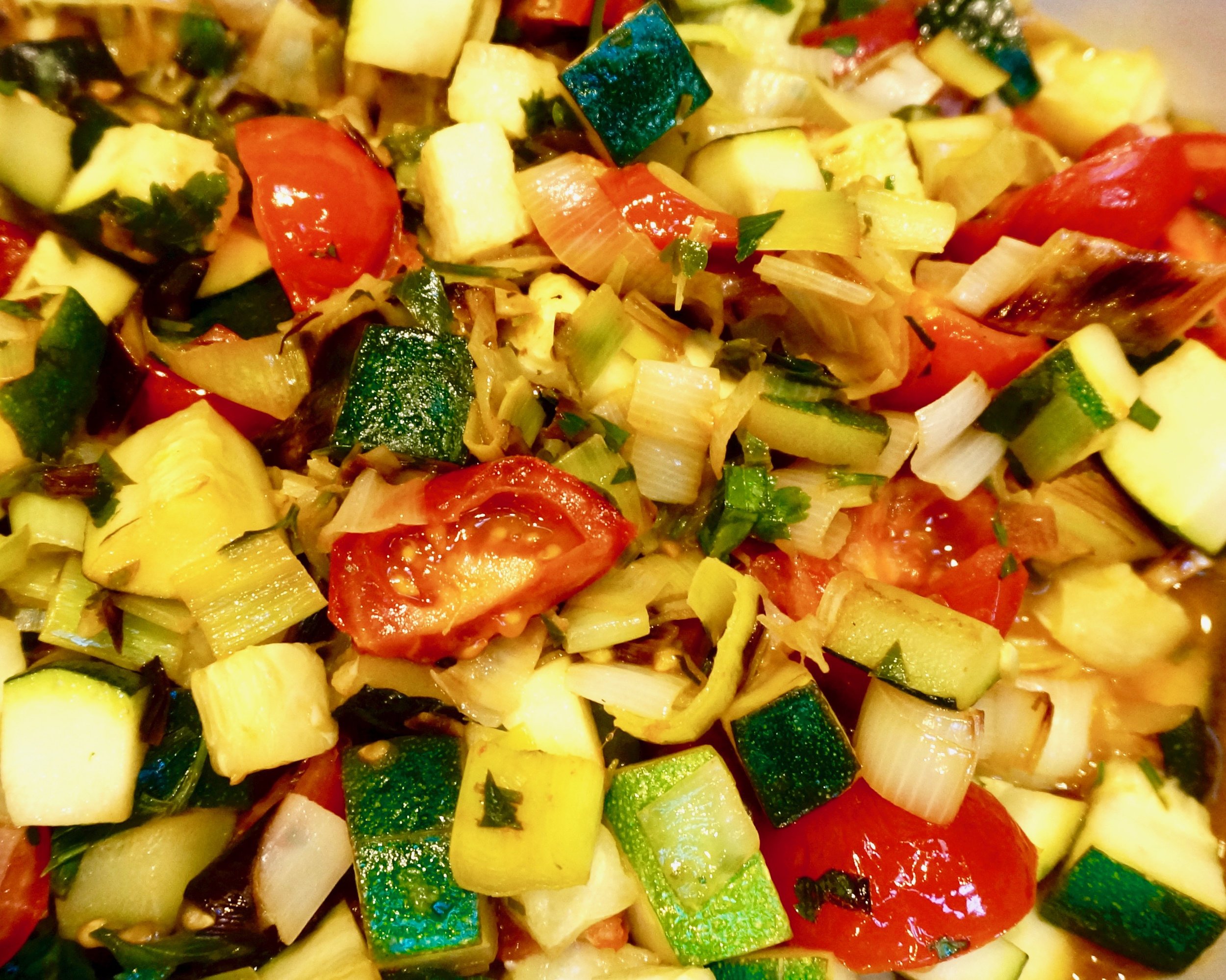
This new dish is colorful and chock full of vegetables. It's spring-like and refreshing, so it is perfect for Passover's sometimes heavy meals. But it's also an all-year round dish that goes with any meat, poultry or fish you might serve. Or serve it as part of a vegetarian dinner.

It also takes much less time than the original recipe.

Zucchini “BayIldi”

  • 3 tablespoons olive oil
  • 3 medium leeks, cleaned and sliced
  • 2 large cloves garlic, chopped
  • 1 large zucchini, cut into bite size pieces
  • 3 large tomatoes, chopped (or 10-12 campari tomatoes)
  • 3 tablespoons chopped fresh parsley
  • 1 teaspoon sugar
  • 1/2 teaspoon salt or to taste
  • 2 tablespoons lemon juice
  • 2 tablespoons water

Heat the olive oil in a saute pan over medium heat. Add the leeks and garlic and cook, stirring occasionally, for 2-3 minutes. Add the zucchini and cook for 2 minutes. Add the tomatoes, parsley, sugar, salt, lemon juice and water. Cook for 3-5 minutes, stirring frequently, or until all the vegetables are tender. Serve hot, warm or at room temperature.

Makes 6-8 servings


Passover Butter Cookies

As far as I know, my father's Aunt Fanny didn't have any child named after her, but, in keeping with our Ashkenazi tradition, she does have something that bears her name: the family recipe for butter cookies.

We call them Fannies, because these butter cookies were her creation and somehow calling them Fanny's just didn't seem right to anyone but the English majors in our lives.

I have made these cookies so often I can mix the dough and shape them without even looking at what I'm doing. My kids make them. My grandkids even make them. 

Fannies are the ultimate butter cookie. You need look no further to find a better one.

But of course, not during Passover.

Which got me to thinking that -- this recipe is so good, why not try a Passover version?

After a few tries -- voila!

Thank you Aunt Fanny. I named them after you too.


aunt fanny's Passover Butter Cookies -- Passover Fannies

  • 1 cup matzo cake meal

  • 1/2 cup ground toasted almonds

  • 3/4 cup sugar

  • 1/2 teaspoon salt

  • 15 tablespoons unsalted butter, slightly softened, cut into chunks

  • 2 large egg yolks

  • 1 teaspoon vanilla extract

  • chocolate chips (about 50) (or use lekvar)

Place the matzo cake meal, ground almonds, sugar and salt in the bowl of an electric mixer and mix on low speed for about a minute until the ingredients are evenly combined. Add the butter and mix on medium speed for about 3 minutes. The mixture will be crumbly. Add the egg yolks and vanilla extract and mix for another minute or so until a soft, uniform dough forms. Place the dough in the refrigerator for 30-40 minutes or until somewhat chilled and slightly firmer. Preheat the oven to 350 degrees. Take small chunks of dough and shape into balls about one-inch in diameter. Flatten the balls in the palm of your hands into disks that are about 1/4-inch thick. Place the flattened balls on ungreased cookie sheets, leaving some space between each cookie (they will spread slightly). Place a chocolate chip in the center of each dough disk (they hold better if you place the chips upside down). Bake for 10-2 minutes or until golden brown.

Makes about 50.

Note: if you use lekvar, make a thumbprint in the center of each cookie and fill the hollow with a small amount of apricot or prune lekvar 

Banana Bread with Dates and Figs

_DSC2355.jpg

Every Purim I try new hamantaschen from different bakeries. I've also made my own hamantaschen using a variety of recipes.

But so far, after years and years of buying this one and that one, my favorites are the (parve) ones I get at The Bakery, in Plainview, NY. For me, they are the enduring treats of childhood, never failing to please, never changing, even in a world where innovation is honored.

And so -- I will buy my hamantaschen this year. Old fashioned flavors: prune and apricot. At The Bakery.

Which means that for Purim, instead of creating a completely new hamantaschen recipe or even trying a new pastry recipe with old fashioned filling, I am going to bake banana bread as mishloach manot gifts.

I have a zillion recipes for banana bread. Some with streusel. Some dairy-free. Some loaded with chocolate chips, some with coconut. Some all chocolate-y. Some spicy. And on and on.

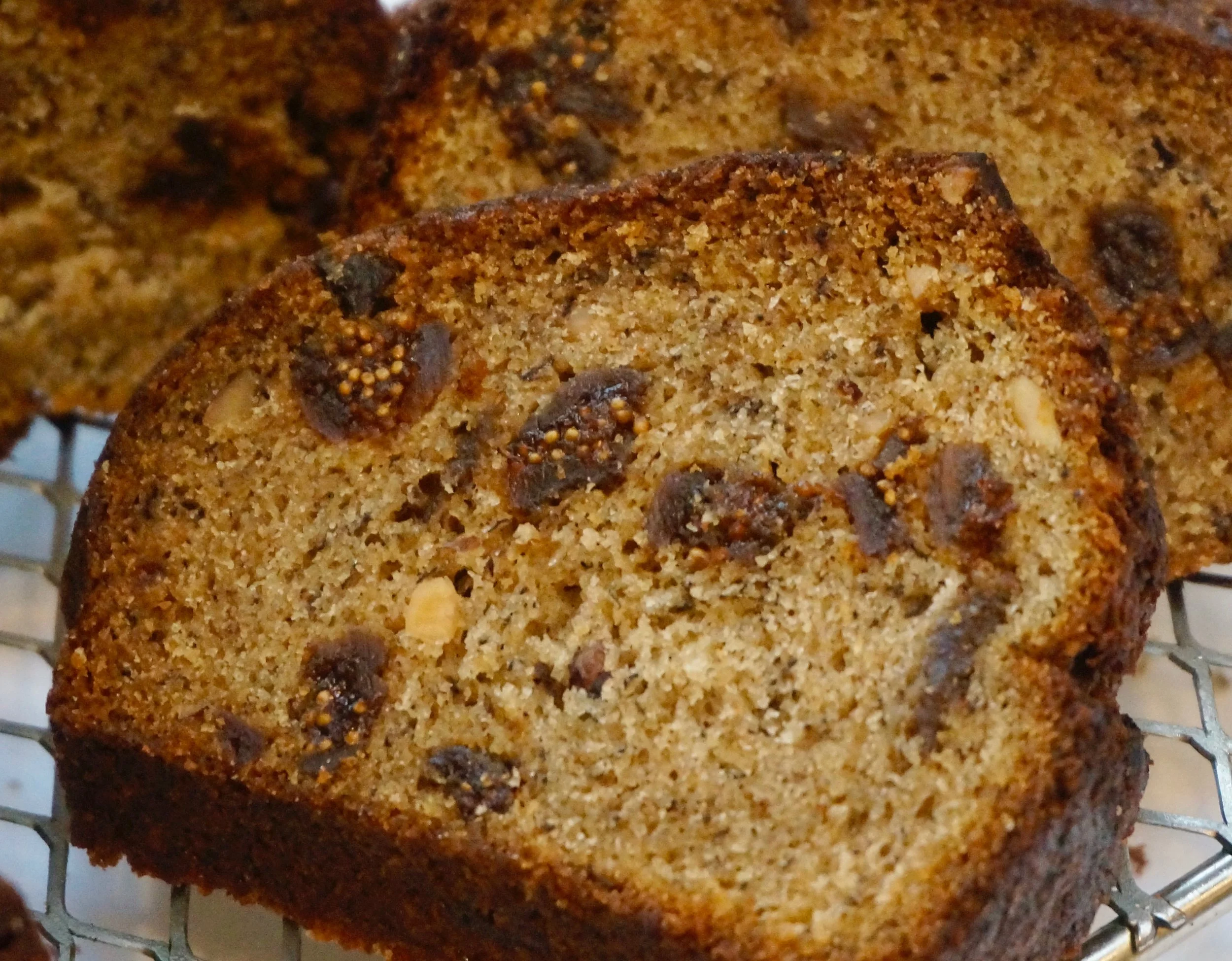
This is my most recent banana bread recipe, one I came up with while revising my mother's date-nut bread recipe. 


Banana Bread with Figs, Dates and Nuts

  • 2-1/2 cups all-purpose flour
  • 1 teaspoon salt
  • 2 teaspoons cinnamon
  • 2 teaspoons baking soda
  • 1 cup vegetable shortening
  • 1-1/2 cups sugar
  • 4 large very ripe bananas, mashed
  • 4 large eggs
  • 1 cup chopped dried figs
  • 1/2 cup chopped dried dates
  • 1/2 cup chopped toasted almonds

Preheat the oven to 350 degrees. Grease and flour a 10-cup bundt pan. Mix the flour, salt, cinnamon and baking soda together in a bowl. In the bowl of an electric mixer set at medium speed, beat the shortening and sugar until well blended. Add the bananas and beat them in thoroughly. Add the eggs and beat them in thoroughly. Add the flour mixture and beat for a minute or so until the batter is well blended. Fold in the figs, dates and nuts. Pour the batter into the prepared pan and bake for about one hour or until a cake tester inserted into the center comes out clean. Remove from the oven and let cool in the pan for 15 minutes. Remove to a cake rack to cool completely.

Makes one bread, serving 16-18


Kaniwa Mujadarah

_DSC2680.jpg

Everyone who knows me knows that Mujadarah is among my favorite things to eat. I serve it for my annual break-the-fast. I serve it anytime I have lots of people over for a celebration, like a birthday or a welcome-to-the-world party for a new grandchild.

I've made Mujadarah using brown rice. I've made it with bulgur wheat

Sometimes I add mushrooms (there's a recipe for that in my book, Hip Kosher).

Recently, the good folks at Pereg sent me a bag of Kaniwa. 

What?

Have you heard of kaniwa?

It's similar to quinoa (in fact some call it baby quinoa), but the seeds are much smaller (about the same size as poppy seeds). It is a complete protein, it's gluten-free and high in iron. That is a big big deal when you are looking for nourishing, meat-free recipes.

Unlike quinoa, kaniwa does not have a coating of saponin on the surface, which means it does not have the somewhat bitter, somewhat soapy taste that some find objectionable in quinoa. You don't have to rinse kaniwa (in fact, if you do, these teeny things will fall right through the holes in the strainer!).

I've actually cooked with kaniwa. A while ago I posted a recipe for Kaniwa Salad with Roasted Tomatoes. It's a terrific base for salads. A nice soup filler. You can sweeten it and eat it like cereal, for breakfast.

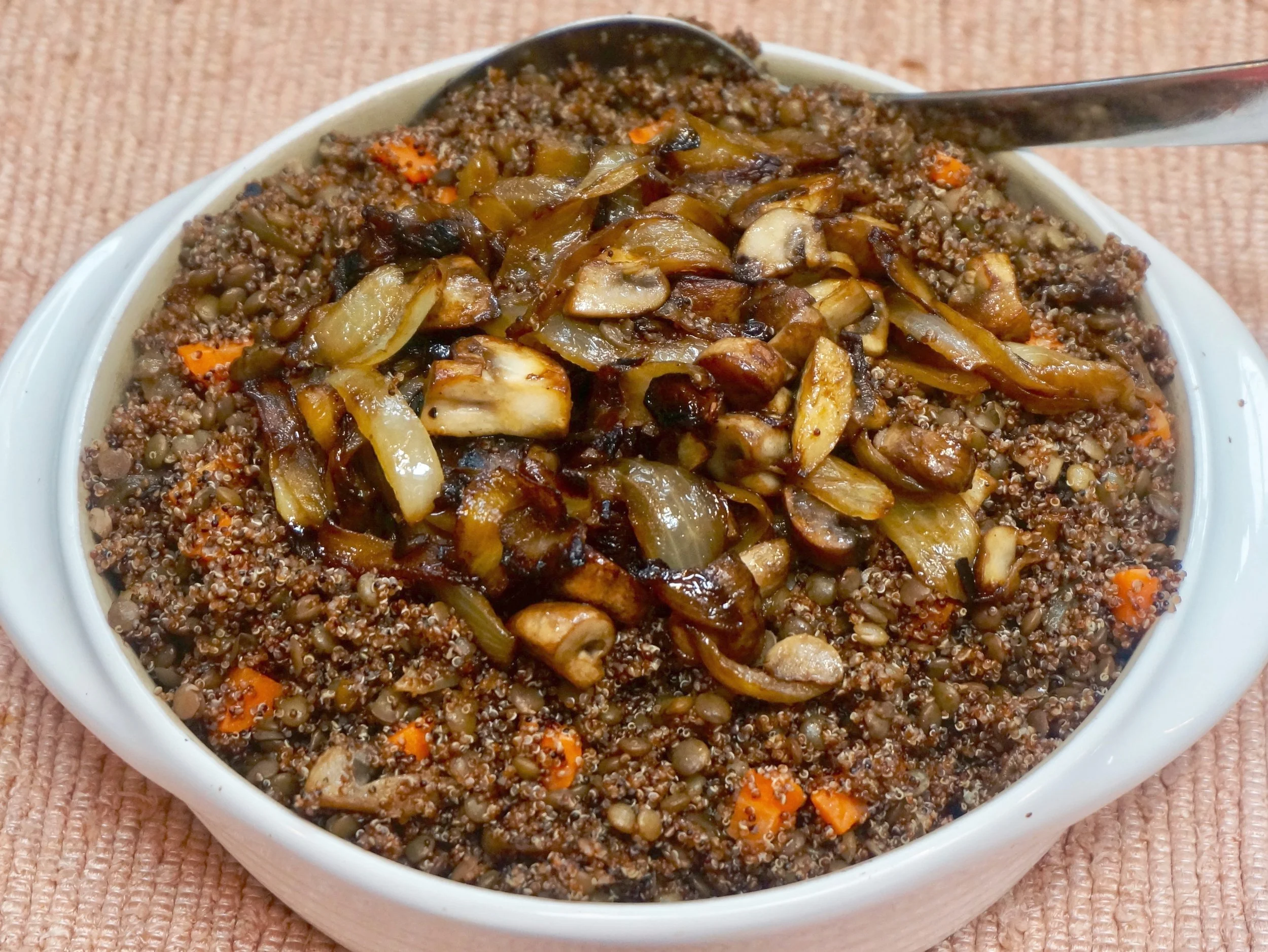
But me, with my mujadarah love? I made some kaniwa mujadarah! Look how beautiful this is! Perfect dish for a meatless Monday.


Kaniwa Mujadarah

  • 3/4 cup lentils
  • water or stock
  • 3 carrots, diced
  • 1 cup kaniwa
  • 1-3/4 cup water
  • 1/2 cup olive oil
  • 4 large yellow onions, peeled and sliced
  • 10 ounces mushrooms, cut up
  • 1/2 cup chopped fresh parsley, optional
  • 1 teaspoon ground cumin, optional
  • salt to taste

Place the lentils in a saucepan, cover with water and bring to a boil over high heat. When the water starts to boil, lower the heat, cover the pan and cook the lentils for about 25 minutes or until they are tender. Drain the lentils and set them aside. While the lentils are cooking, place the carrots in a saucepan, cover with water and bring to a boil over high heat. When the water starts to boil, lower the heat, cover the pan and cook the carrots for 5-6 minutes or until they are tender. Drain the carrots and set them aside. Place the kaniwa in a saucepan, cover with 1-3/4 cups water and bring to a boil over high heat. Lower the heat, cover the pan and cook for about 15-18 minutes until all the water has been absorbed. While the kaniwa is cooking, heat 5 tablespoons of the olive oil in a large saute pan over medium heat. Add the onions and cook, stirring occasionally, for about 10 minutes or until beginning to brown. Add the mushrooms and cook an additional 5 minutes or until the onions and mushrooms are soft and brown. Place the lentils, carrots, kaniwa and most of the onion-mushroom mixture in a bowl. Stir gently to distribute the ingredients evenly. Stir in the remaining olive oil. Add the parsley and cumin, if desired and toss the ingredients. Sprinkle with salt to taste. Top with the remaining onion-mushroom mixture.

If serving at a later time, cover the pan and reheat in a covered baking dish in a preheated 350 degree oven.

Makes 6-8 servings