buffet food

Lullabye Bread

DSC08114.jpg

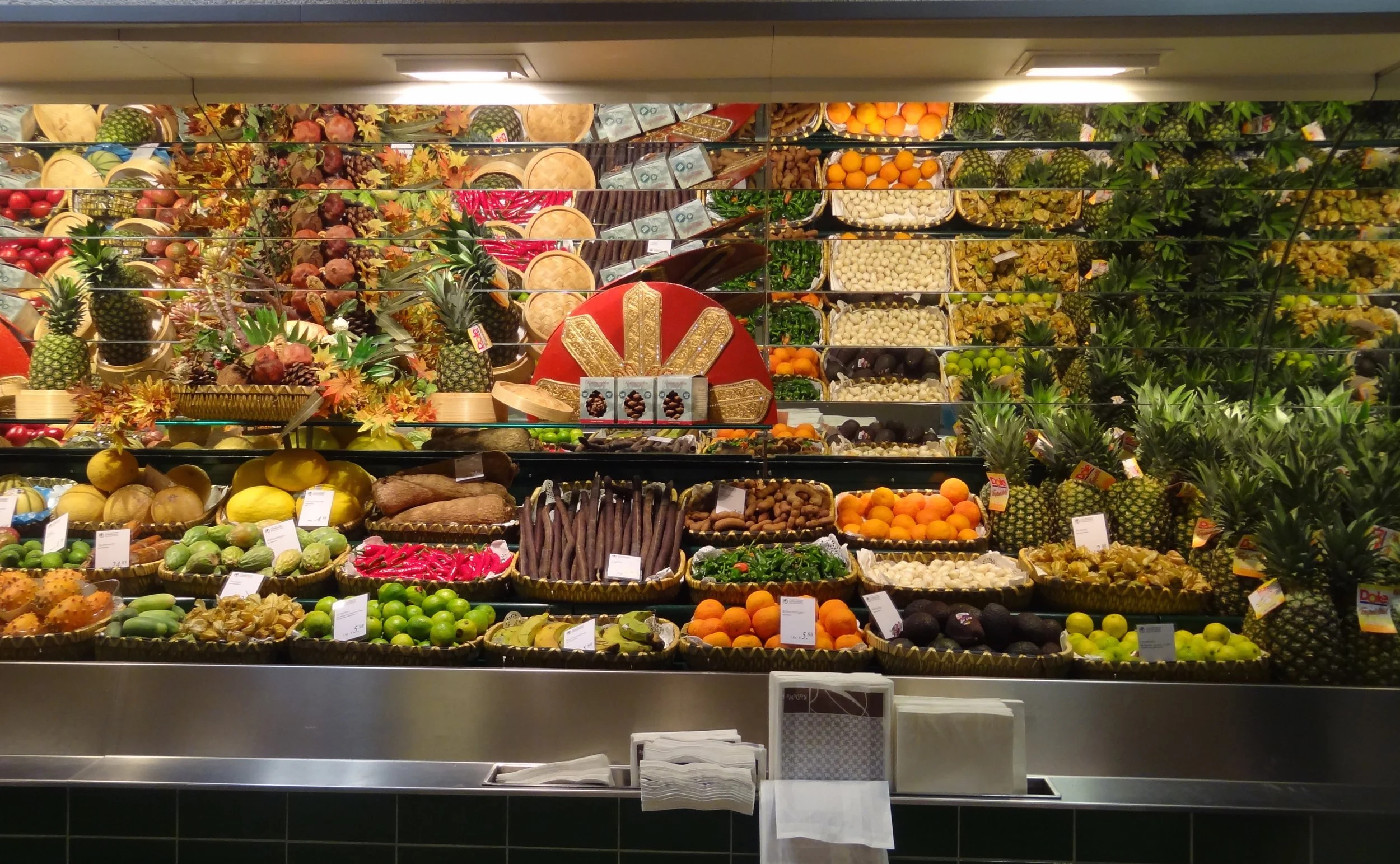
A few years ago Ed and I were in Berlin and checked out KaDeWe, the city's famous department store that has the biggest food halls in Europe and maybe in the world. They sell every kind of food you can imagine. Gorgeous cakes and pastries. Bountiful, beautiful fruit. Different kinds of eggs, dairy products, chocolates. 

It was all familiar. Pineapples. Peaches. Sachertorte. Macarons. Freshly butchered chickens, and so on.

We stopped counting the different kinds of sausages after we reached 100. Apparently they sell sausages from every region in Germany. 

But we were there for lookin', not cookin' -- so, in the two hours we walked through this place it was more like a visit to an art gallery. 

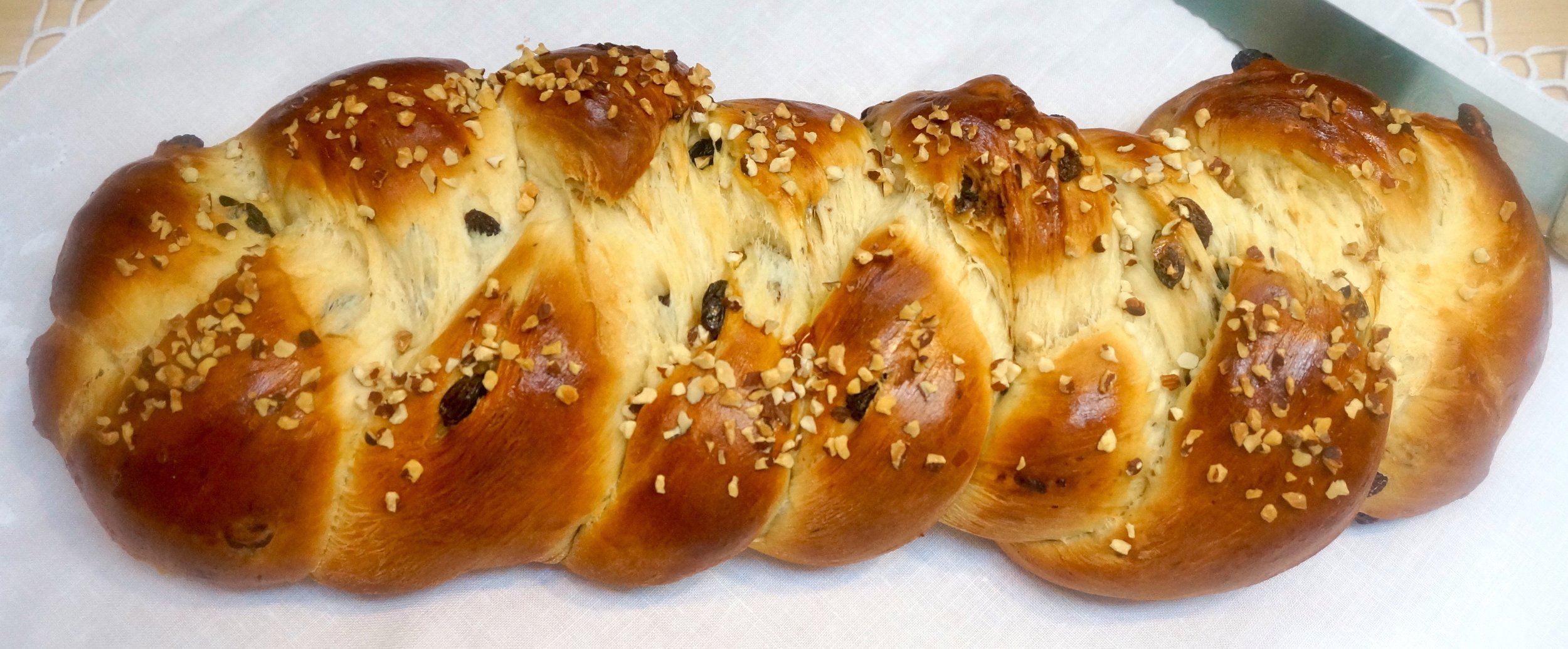
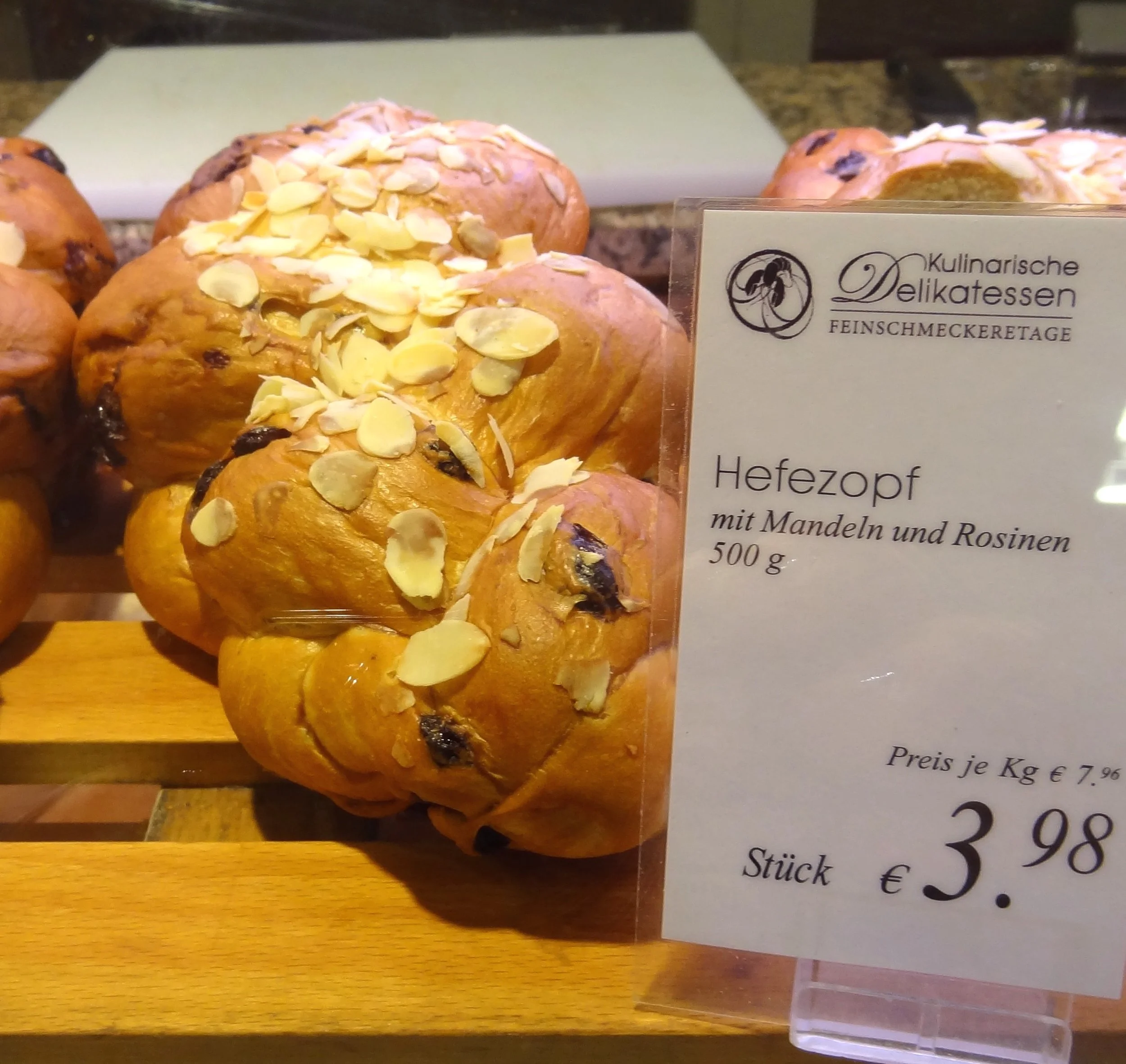
But then we came to the bakery and there, in the case, was a beautiful, braided loaf called Hefezopf, which is like a challah, but with raisins and almonds.

It was a vision. All at once my mind filled with memories of a lovely shabbat challah mixed with grandma singing rozhinkes mit mandlen, that hauntingly beautiful, classic Yiddish lullabye.

Oh my. My eyes well up even thinking about it.

This was something I had to try at home and get right.

I did, but it took several tries. At first I used my challah recipe and sweetened it a bit, but that just tasted like sweeter challah. The consistency wasn't right.

After doing some research about Hefezopf I realized it was more like brioche -- dense, buttery, dairy-laden, so I started tinkering with my brioche recipe.

Yes. 

A taste is worth a thousand looks.

Try this. It's called Hefezopf, but like to call it Lullabye Bread.

Lullabye Bread (HEFEZOPF)

  • 1 cup milk
  • 1 3-inch piece of cinnamon stick, broken in half
  • 2 2-inch strips of lemon peel
  • 5 tablespoons butter
  • 1/3 cup sugar
  • 1 package active dry yeast
  • 3-1/2 cups all purpose flour, approximately
  • 1 teaspoon salt
  • 2 large eggs
  • 1 cup raisins, optional
  • 2-3 tablespoons chopped almonds, optional


Lightly grease a baking sheet. Pour the milk into a saucepan. Add the cinnamon stick, lemon peel, butter and sugar cook over medium heat, stirring to dissolve the sugar, until bubbles form around the edges of the pan and the mixture is hot. Set aside to cool to lukewarm (about 105-110 degrees). Sprinkle the yeast over the milk mixture and whisk the ingredients to dissolve the yeast. Let rest for about 5 minutes or until thick bubbles form. Place the flour and salt in the bowl of an electric mixer. Remove the cinnamon stick pieces and lemon peel from the yeast mixture and pour the liquid into the mixer bowl. Add one egg and mix the dough with a dough hook for about 2 minutes. Add the raisins, if used, and mix for another 2 minutes or so, or until the dough is smooth. If the dough is sticky, add more flour as needed. (Kneading can be done in a food processor or by hand.) Cover the bowl and let rise in a warm place for about 1-1/2 hours or until doubled in bulk. Punch the dough down and cut it into 3 equal pieces. Working on a floured surface, roll the pieces to make strands of about 12-inches long. Braid the strands and place them on the baking sheet. Beat the remaining egg with one teaspoon water and brush the egg wash over the surface of the braid. Sprinkle with almonds, if used. Let rise again for 30 minutes. Preheat the oven to 350 degrees. Bake for about 30 minutes or until puffed and golden brown.

Makes one bread
Kaniwa Mujadarah

_DSC2680.jpg

Everyone who knows me knows that Mujadarah is among my favorite things to eat. I serve it for my annual break-the-fast. I serve it anytime I have lots of people over for a celebration, like a birthday or a welcome-to-the-world party for a new grandchild.

I've made Mujadarah using brown rice. I've made it with bulgur wheat

Sometimes I add mushrooms (there's a recipe for that in my book, Hip Kosher).

Recently, the good folks at Pereg sent me a bag of Kaniwa. 

What?

Have you heard of kaniwa?

It's similar to quinoa (in fact some call it baby quinoa), but the seeds are much smaller (about the same size as poppy seeds). It is a complete protein, it's gluten-free and high in iron. That is a big big deal when you are looking for nourishing, meat-free recipes.

Unlike quinoa, kaniwa does not have a coating of saponin on the surface, which means it does not have the somewhat bitter, somewhat soapy taste that some find objectionable in quinoa. You don't have to rinse kaniwa (in fact, if you do, these teeny things will fall right through the holes in the strainer!).

I've actually cooked with kaniwa. A while ago I posted a recipe for Kaniwa Salad with Roasted Tomatoes. It's a terrific base for salads. A nice soup filler. You can sweeten it and eat it like cereal, for breakfast.

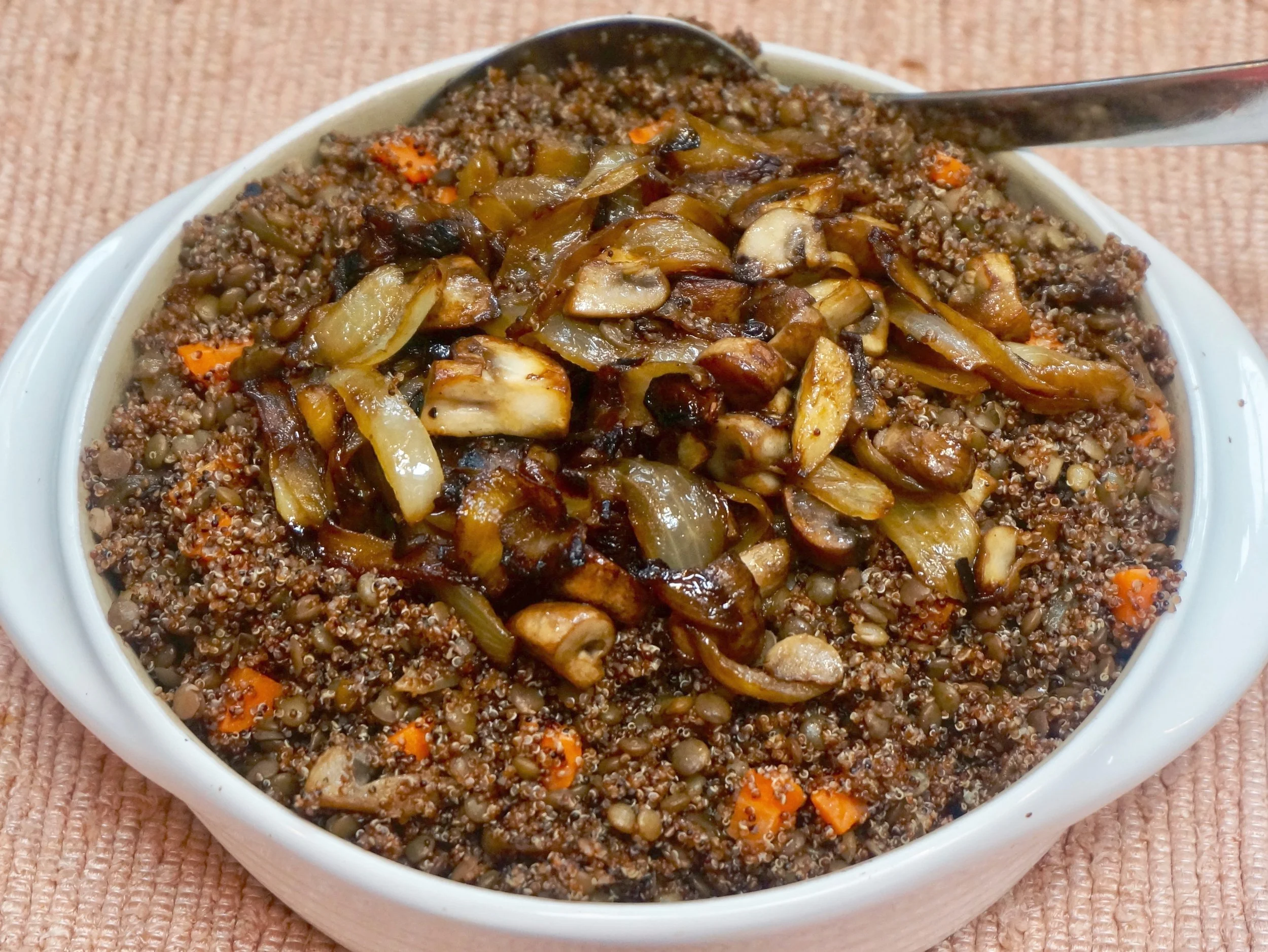
But me, with my mujadarah love? I made some kaniwa mujadarah! Look how beautiful this is! Perfect dish for a meatless Monday.


Kaniwa Mujadarah

  • 3/4 cup lentils
  • water or stock
  • 3 carrots, diced
  • 1 cup kaniwa
  • 1-3/4 cup water
  • 1/2 cup olive oil
  • 4 large yellow onions, peeled and sliced
  • 10 ounces mushrooms, cut up
  • 1/2 cup chopped fresh parsley, optional
  • 1 teaspoon ground cumin, optional
  • salt to taste

Place the lentils in a saucepan, cover with water and bring to a boil over high heat. When the water starts to boil, lower the heat, cover the pan and cook the lentils for about 25 minutes or until they are tender. Drain the lentils and set them aside. While the lentils are cooking, place the carrots in a saucepan, cover with water and bring to a boil over high heat. When the water starts to boil, lower the heat, cover the pan and cook the carrots for 5-6 minutes or until they are tender. Drain the carrots and set them aside. Place the kaniwa in a saucepan, cover with 1-3/4 cups water and bring to a boil over high heat. Lower the heat, cover the pan and cook for about 15-18 minutes until all the water has been absorbed. While the kaniwa is cooking, heat 5 tablespoons of the olive oil in a large saute pan over medium heat. Add the onions and cook, stirring occasionally, for about 10 minutes or until beginning to brown. Add the mushrooms and cook an additional 5 minutes or until the onions and mushrooms are soft and brown. Place the lentils, carrots, kaniwa and most of the onion-mushroom mixture in a bowl. Stir gently to distribute the ingredients evenly. Stir in the remaining olive oil. Add the parsley and cumin, if desired and toss the ingredients. Sprinkle with salt to taste. Top with the remaining onion-mushroom mixture.

If serving at a later time, cover the pan and reheat in a covered baking dish in a preheated 350 degree oven.

Makes 6-8 servings


The Silver Platter Simple Elegance Cookbook

The older I get, the easier my recipes become. Years ago I was willing to trek through a 3-pager with multiple steps. I made dishes such as French Onion Soup only after preparing my own stock. I was willing to put together a long-winded recipe for Paris-Brest.

No longer. I don't have the time, energy or patience -- and will leave those wonderful, worthy chores to younger folks. These days I create recipes that are simple, flavorful and interesting, but without taking shortcuts that would detract from the food.

I also appreciate when other people share the same ideals, which is why I love "The Silver Platter Simple Elegance," a new cookbook from the kitchen of Daniella Silver, with tips and notes from Norene Gilletz, renowned food blogger, cookbook author and matriarch of kosher cooking.

This is not merely a book where you can pick up a good recipe or two. Every recipe is approachable, using ingredients that even novice cooks will find familiar, with selections that are perfect for everyday cooking and many that are suitable for entertaining: Zucchini Dill Soup and Flaked Quinoa Schnitzel and Mustard-and-Garlic Roasted Potatoes and Granola Ice Cream Cake are just a few, glorious but easy finds that will make your family happy at dinnertime.

There's more: at the bottom of each recipe are tips from the master, Norene Gilletz, on such topics as what equipment is best to use, what can be done ahead, what substitutions are appropriate, how to make an everyday dish more company-friendly, and so on. 

The photos are gorgeous too.

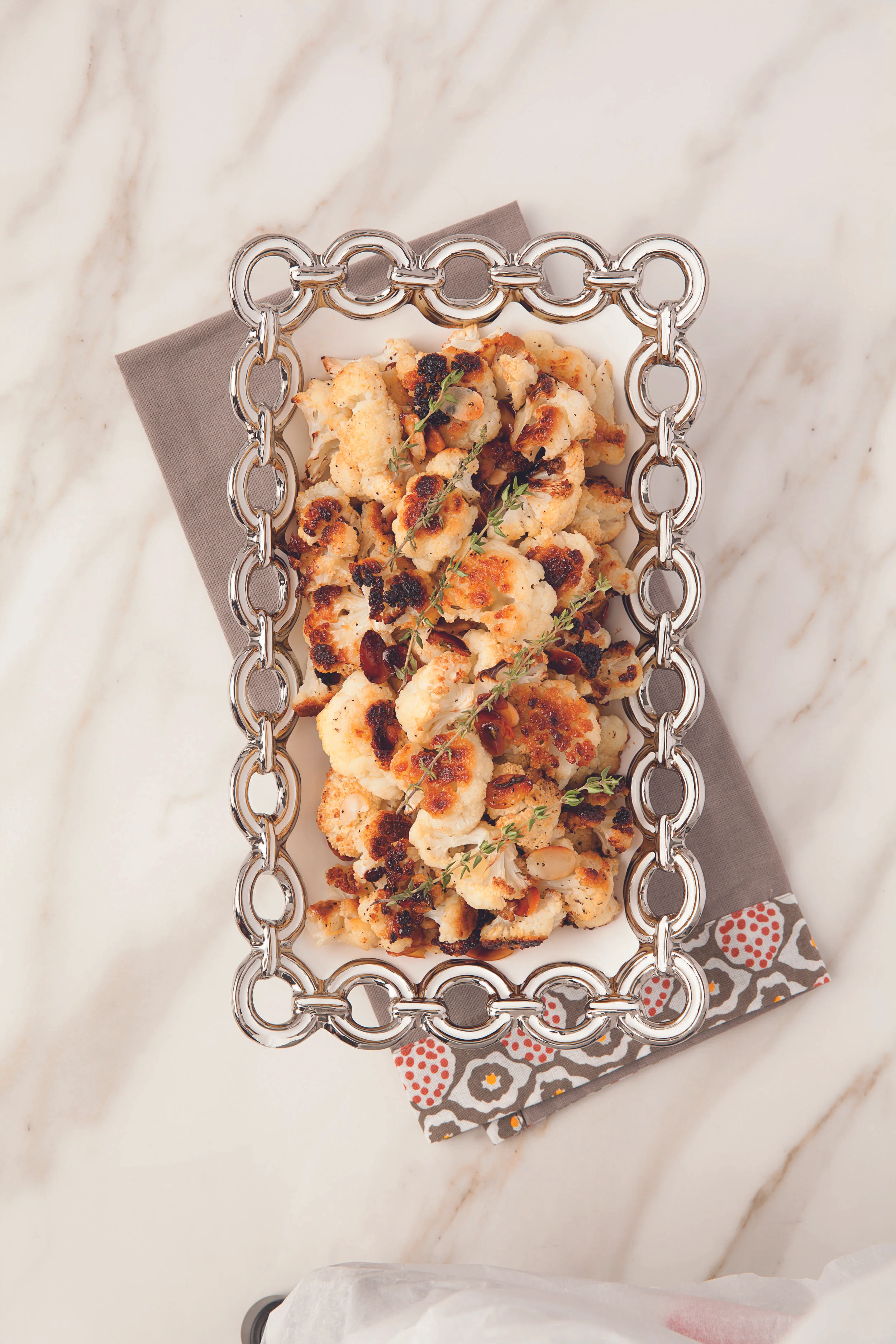
The first recipe that caught my eye is the one for Candied Cauliflower. Can you imagine such a thing?! With but 5 ingredients (not including salt and pepper), this sounded too fabulous to miss, and it was every bit as delicious as it looks on the page. (And includes tips on buying cauliflower and nut-seed substitutions.)

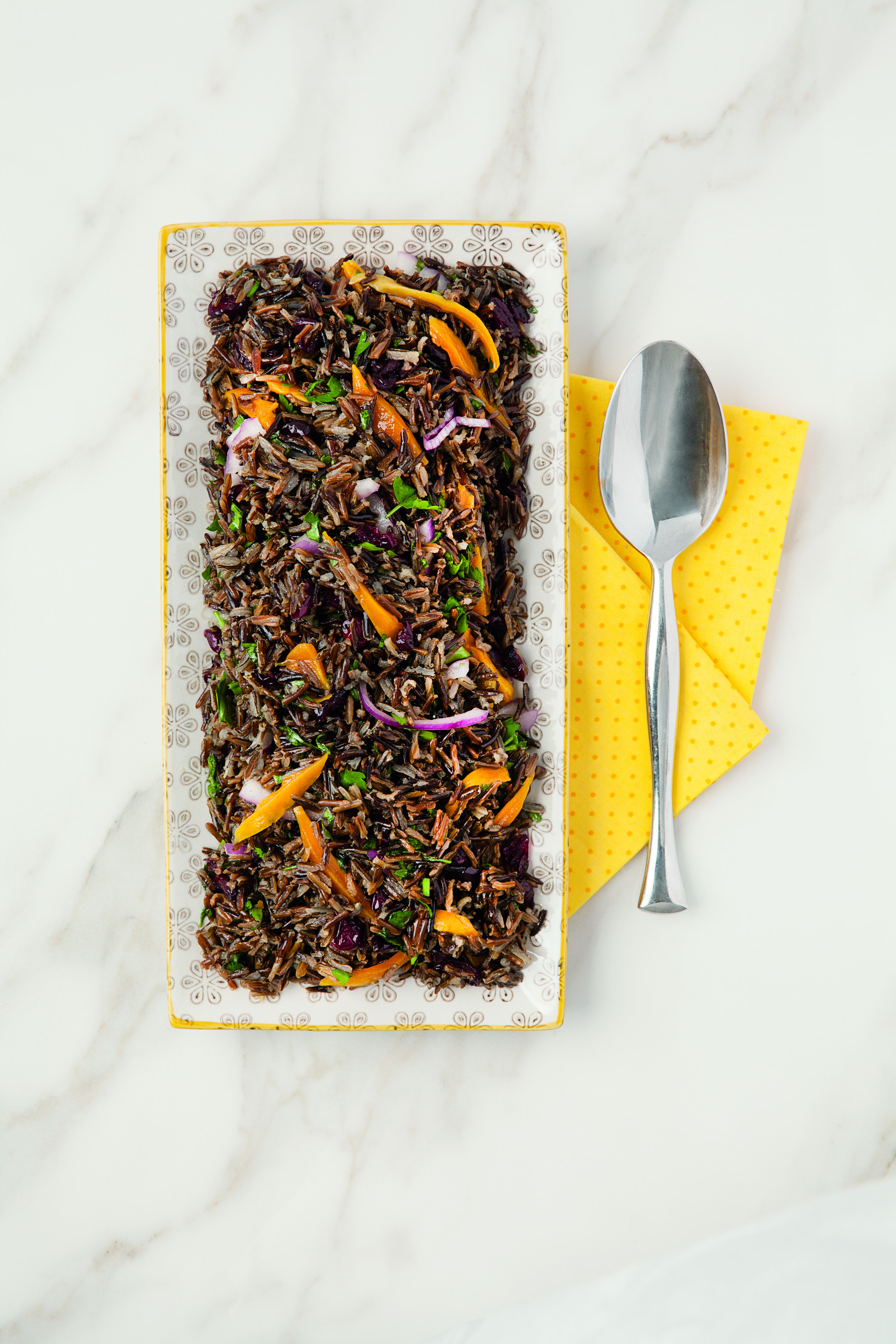
Next, the Mango Wild Rice, because I love any dish with mango in it. This recipe is fairly simple, colorful, flavorful and with the bonus that you can cook it ahead. One of Norene's tips is to substitute dried apricots for the dried mango, but I used fresh mango instead. The recipe is versatile too!

Taste for yourself: Here are the two recipes I found particularly worthy. The recipes and photos are reproduced from The Silver Platter Simple Elegance by Daniella Silver with Norene Gilletz, with permission from the copyright holders. ArtScroll/Mesorah Publications, LTD.

Another thought -- this book make a delicious Hanukkah gift for someone who likes to cook.


CANDIED CAULIFLOWER WITH ALMONDS

pareve, Passover, gluten-free, do not freeze, yields 6 servings


Candied cauliflower, drizzled with honey and thyme and topped with sliced almonds, is a beautiful dish that will keep your guests coming back for more. I suggest you double the recipe!


Ingredients

  • 1 large cauliflower, trimmed

  • kosher salt

  • freshly ground black pepper

  • 1 Tbsp minced fresh thyme leaves

  • 2 Tbsp olive oil

  • 3 Tbsp honey

  • ½ cup sliced almonds

  • thyme sprigs, for garnish


Method


1.  Preheat oven to 400°F. Line a rimmed baking sheet with parchment paper.

2.  Cut cauliflower into 2-inch florets. Transfer to prepared baking sheet. 

3.  Sprinkle florets with salt, pepper, and thyme. Drizzle with oil and honey. Top with sliced almonds. Rub all over to coat evenly. (Can be prepared up to this point and refrigerated.)

 4.  Bake, uncovered, for 35-40 minutes, or until cauliflower is golden brown and tender. Serve immediately.


Norene’s Notes:


Variation: Use pecan pieces or coarsely chopped cashews instead of almonds. If you have a nut allergy, substitute pumpkin seeds.


Hot Stuff: Don’t worry about the almonds burning. The steam created during cooking prevents that from happening. If your oven is on the hot side, you may prefer to stir in the almonds during the last 15 minutes of baking.


WILD RICE WITH DRIED MANGO & RED ONION

pareve, gluten-free, freezes well, yields 8 servings


My three girls are in love with mango, and this wild rice dish has become their latest obsession. The nutty flavor of wild rice is a perfect match for sweet mango and red onion. The dried mango plumps up a bit when marinated in the dressing, adding some softness to the texture of this dish.


Ingredients

  •  
  • 4 cups water
  • 1½ cups wild rice, rinsed and drained
  • 1 tsp kosher salt
  • ½ medium red onion, quartered and thinly sliced
  • 12 dried mango slices, thinly sliced into strips
  • ¾ cup dried cranberries
  • 3 Tbsp extra virgin olive oil
  • ⅓ cup orange or mango juice
  • 3 Tbsp honey
  • ½ cup chopped fresh parsley
  • kosher salt
  • freshly ground black pepper


Method


1.  Bring water to a boil in a medium saucepan over high heat. Add rice and salt; cover. Reduce heat; simmer for about 45 minutes, or until the grains split and burst. Remove from heat; let stand, covered, for 10 minutes. Drain, if necessary. Transfer to a large bowl; let cool.

2.  Add onion, dried mangoes, and cranberries. Stir in oil, orange juice, honey, parsley, salt, and pepper. Toss to combine. Adjust seasonings to taste. Serve chilled or at room temperature.


Norene’s Notes:


Variation: Since wild rice is fairly expensive, you can use ¾ cup wild rice and ¾ cup whole grain brown rice — their cooking time is about the same.

No dried mango? Substitute dried apricots.

Wild rice is gluten-free, fiber-packed, and high in protein and B vitamins. Elegance in health!

An easy way to cut dried mango is to use kitchen scissors.  


GIANT Knish

Anyone who reads this blog knows that potatoes are my go-to comfort food. My magic medicine for when I'm stressed out.

So I'm definitely going to need something potato tonight when Ed and I have our debate-watch group over. (By the time this election is over my potato consumption for the year will be way over the limit.)

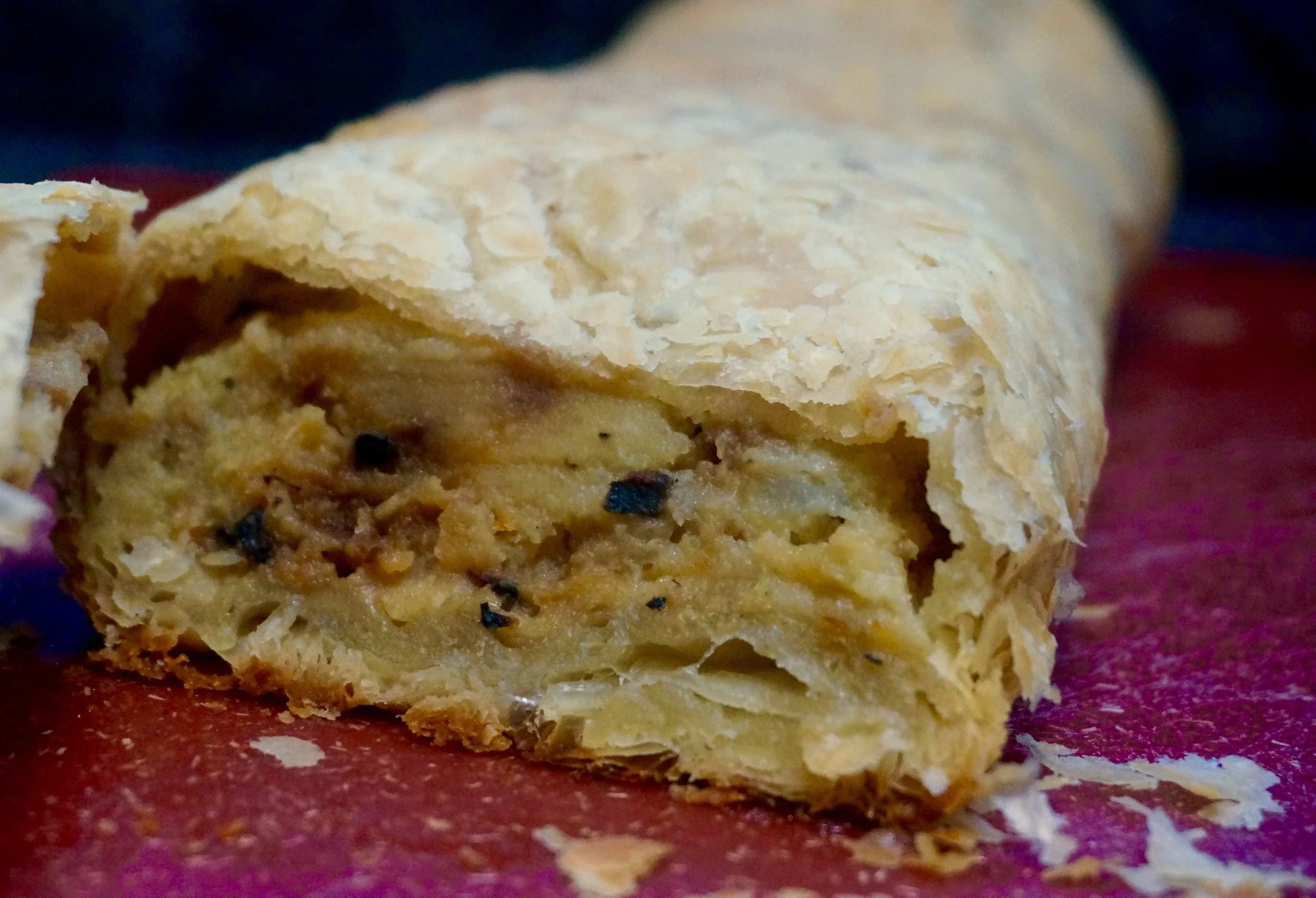
So I made a stuffed potato roll. Actually mashed potatoes with caramelized onions wrapped inside puff pastry.

Actually, a giant knish.

And guess what!? This dish is absolutely perfect for my Vegetarian Break-the-Fast, so I made one for that occasion too!

And also guess what!? It's also perfect for Meatless Monday. And also for Sukkot, when it is traditional to serve stuffed foods.

All in all, this is a big, big winner for whenever. Really. Whenever.


Giant Knish

  • 3 pounds all-purpose potatoes
  • 4 tablespoons olive oil
  • 1 large sliced onion
  • 1 large egg
  • 1 teaspoon salt or to taste
  • freshly ground black pepper to taste
  • 2 sheets frozen parve puff pastry

Preheat the oven to 375 degrees. Lightly grease a flat baking sheet. Peel the potatoes, cut them into chunks and boil them in lightly salted water for about 15 minutes, or until they are cooked through. Drain the potatoes and return them to the pan. Add 2 tablespoons of the olive oil and mash the potatoes until they are fluffy. While the potatoes are cooking, heat the remaining 2 tablespoons olive oil in a sauté pan over medium heat. Add the onion and cook for 12-15 minutes or until lightly browned. Add the onions to the potatoes. Add the egg, salt and pepper and stir gently to mix ingredients. Let cool. Using one sheet of puff pastry at a time, roll the dough slightly thinner. Place half the potato filling down the center of the dough, using up the middle 1/3 of the dough and leaving a one-inch margin at both of the short ends. Enclose the filling: place one side of the dough over the filling, then place the other side of the dough over the filling. Press the short ends to enclose the filling at the top and bottom. Place the roll, seam side down, on the prepared baking sheet. Refrigerate for about 30 minutes or until the dough feels cool and firm. Bake for 30-35 minutes, or until golden brown. Cut with a serrated knife. 


Makes 2 rolls, each serving 6 people


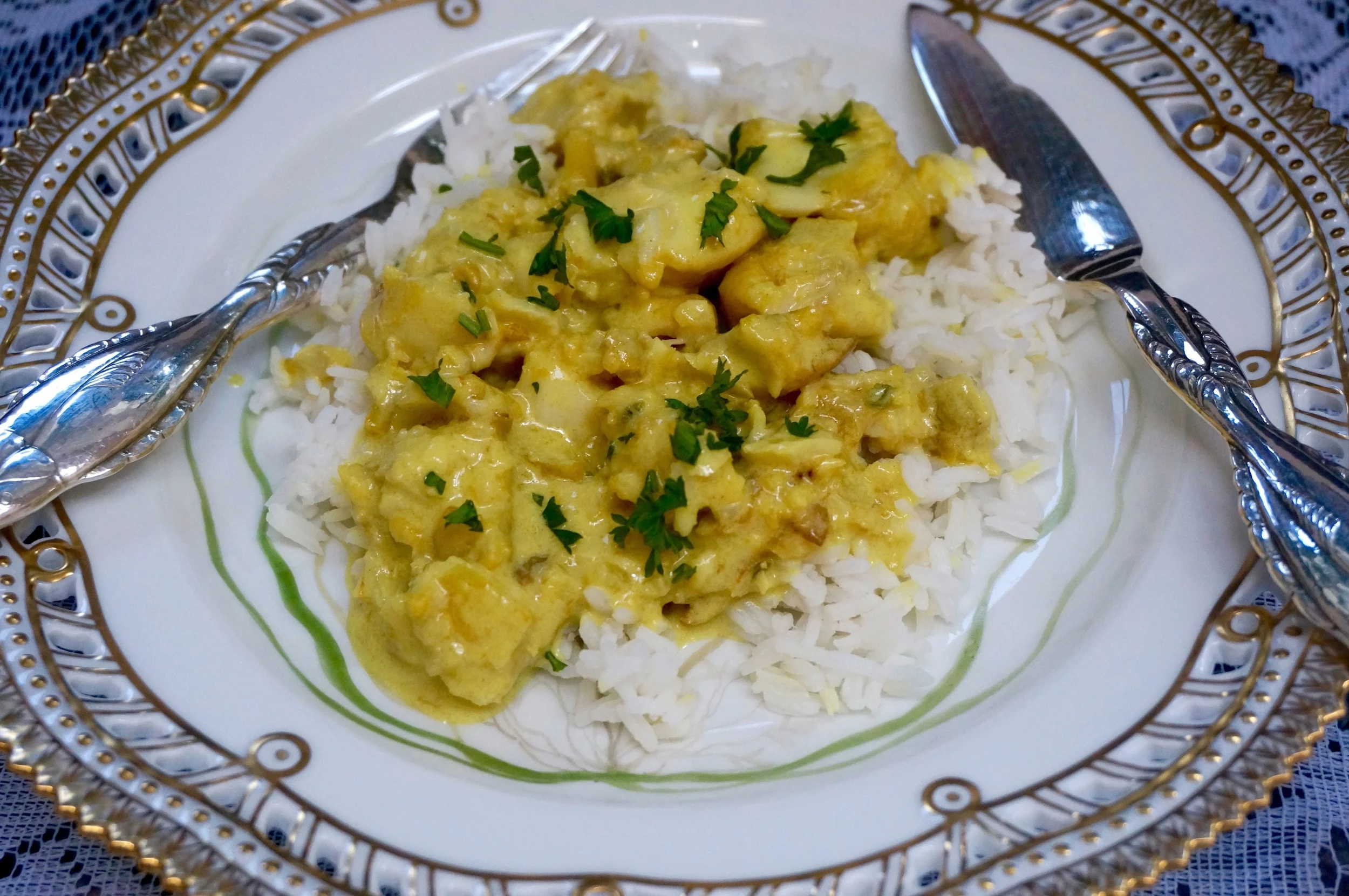
Malaysian Style Fish in Coconut Curry

When it's fish on the menu I usually grill, broil or roast salmon with lots of different glazes or toppings. Either as filets or steaks. Ed likes salmon (and not much other fish), so, no complaints at dinner.

But recently we had company for dinner and even though some of my salmon recipes are suitable for a somewhat fancier meal than on any old Tuesday or such, I wanted to cook something different, something special.

So I experimented a few times to develop a good recipe for Malaysian style fish curry, because, (in my opinion anyway), Malaysian food is one of the most interesting, most intriguing and most delicious of all world cuisines.

This was the winner. I served it to our dinner guests. All plates were scraped clean.

But the recipe isn't that time consuming or elaborate, so you don't need to save it for a special occasion. Cook it anytime -- during the Nine Days before Tisha B'av, for example, when you might be more likely to be preparing fish for dinner. 

Or any Tuesday and such.

Although I served the curry with cooked rice, it would also be wonderful with rice noodles.

Malaysian Style Fish Curry

  • 1 stalk lemongrass
  • 1-1/2 cups coconut milk
  • 2-inch cinnamon stick, cut in half
  • 6 whole cloves
  • 3 tablespoons vegetable oil
  • 1 medium onion, chopped
  • 3 cloves garlic, chopped
  • 1 small chili pepper, chopped
  • 1 teaspoon chopped fresh ginger
  • 1/2 teaspoon turmeric
  • salt to taste
  • 24 ounces snapper, tilapia or halibut, cut into chunks (or 24 extra large shrimp)
  • cooked rice or rice noodles

Remove and discard the tough outer leaves of the lemongrass stalk. Remove some of the thinner, softer leaves and set them aside. Chop the tender portions (the thinnest inner leaves plus the bulb at the bottom). Combine the coconut milk, set-aside lemongrass leaves, cinnamon stick and whole cloves in a saucepan. Bring to a boil, lower the heat and simmer for about 10 minutes, stirring occasionally, until slightly thickened. Set aside. Heat the vegetable oil in a large saute pan over medium heat (or use a wok or stir fry pan). Add the onion and cook for a minute, stirring often. Add the garlic, chopped lemongrass, chili pepper, ginger, turmeric and salt to taste and stir fry for another minute. Add the fish and cook, stirring gently, for 3-4 minutes or until the pieces are lightly cooked. Strain the coconut milk mixture and pour the liquid into the pan with the fish. Bring to a simmer and cook for about 10 minutes. Remove the cinnamon stick and cloves. Serve with cooked rice or rice noodles.

Makes 4 servings

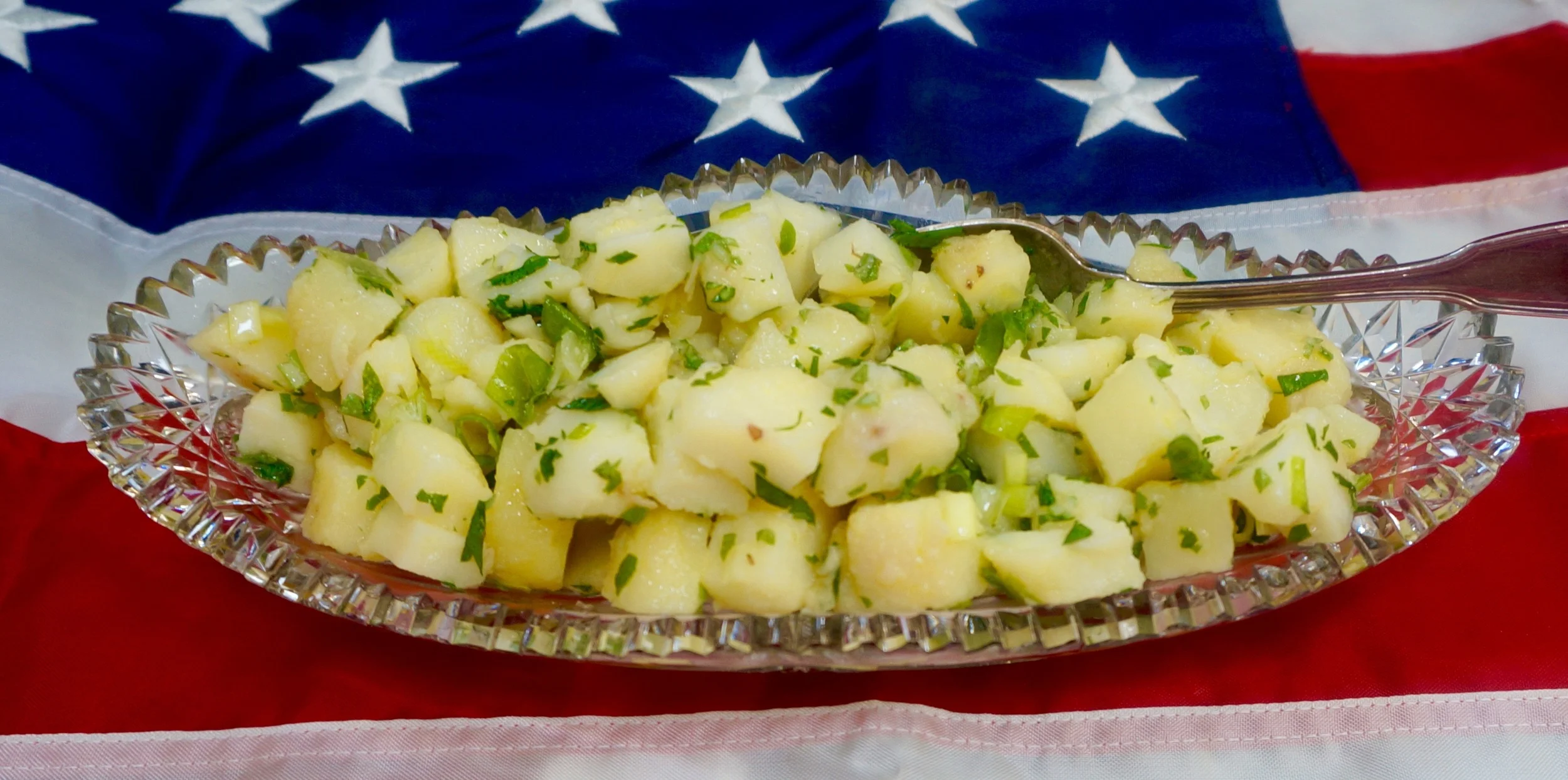
Potato Salad with Lemon-Oregano Vinaigrette

_DSC6159 (1).jpg

Some people say potato salad comes from German cuisine. Others tell you it is French. Or from some other European country.

But I think potato salad is actually thoroughly American.

Potatoes are a "new world" plant. Back in the 16th century, before Europeans ever knew there was even another continent, Spanish explorers sailed to what would later become the "Americas." They were looking for gold and plenty in the mythical kingdom of El Dorado. 

Surprise!

What they found were plenty of potatoes, and that was their real treasure.

They brought potatoes back to Europe, where it met with mixed reviews, especially because so many people thought potatoes were poisonous. Others refused to eat potatoes because they weren't mentioned in the bible. 

Fortunately potatoes are nourishing and easy to grow, so in the poorer European communities the people were obliged to eat them or starve. 

And so by the time Europeans settled in what would become the United States, potatoes were a staple part of the diet.

With all this in mind, I say again: potato salad is an American food, because -- it all started with the potato. And so it's the perfect side dish for a 4th of July picnic, barbecue or any other sort of get-together.

For my money -- potato salad is best when served at room temperature. Not hot, not cold. There are a zillion versions. Here's one:

Potato Salad with Lemon-Oregano Vinaigrette

  • 2-1/2 pounds small red potatoes        
  • lightly salted water
  • 1/4 cup olive oil
  • 1/4 cup fresh lemon juice
  • 2 scallions, finely chopped        
  • 1 tablespoon minced parsley
  • 1-1/2 tablespoons chopped fresh oregano (1-1/2 teaspoons dried) 
  • 3/4 teaspoon salt, or salt to taste
  • freshly ground black pepper to taste

Place the potatoes in a saucepan, cover with lightly salted water and bring to a boil over high heat. Lower the heat and simmer for 15-20 minutes or until tender. Drain under cold water and peel, if desired. Cut the potatoes into bite-size pieces and place in a large bowl. Pour in the olive oil and lemon juice and toss ingredients gently. Add the scallions, parsley, oregano, salt, and pepper. Toss gently. Let rest at least 1 hour before serving.

Makes 4-6 servings


Easy Guacamole

_DSC9961.jpg

Recently I posted a recipe for an Avocado, Egg and Tomato Sandwich with Pesto Mayonnaise, in which I mentioned that I eat a lot of avocados. In fact there are always 4-5 avocados in my house, some in the crisper bin of the fridge, others ripening on the counter top.

Besides eating avocados as a snack, I find that when I am at a loss for a vegetable side dish or when I am rushed, stressed or busy, an avocado comes in really handy (not to mention delicious and also healthy). Just peel and cut it up and serve with anything: chicken, beef, eggs, whatever. Maybe sprinkle a little lime juice on top.

But of course, as I mentioned in that previous post, there's always Guacamole! One of the tastiest, easiest, well-loved dips there ever was.

Here are some ideas for guacamole in addition to serving it with chips:

1. spread on top of toast for a sandwich (by itself or with tomato slices, chicken or turkey)

2. use instead of ketchup for burgers

3. use to replace the butter on a baked potato

4. tuck inside eggs within an omelet 

5. stuff inside hollowed tomatoes

Here's my easy recipe for guacamole. It will take you far.

Guacamole

  • 2 medium avocados
  • 1 large tomato
  • 1 small serrano chili pepper, deseeded and chopped
  • 1 medium clove garlic, finely chopped
  • 2 teaspoons chopped fresh cilantro, optional
  • 3 tablespoons lemon or lime juice
  • salt to taste
  • chips

Peel the avocado and scoop the flesh into a food processor (or bowl or molcajete). Chop the tomato and add the tomato pieces, chili pepper, garlic, cilantro, if used, juice and salt to taste to the food processor. Process to desired texture using pulse feature (or mash with a fork or tejolete). 

Serve with corn chips.

Makes about 2 cups

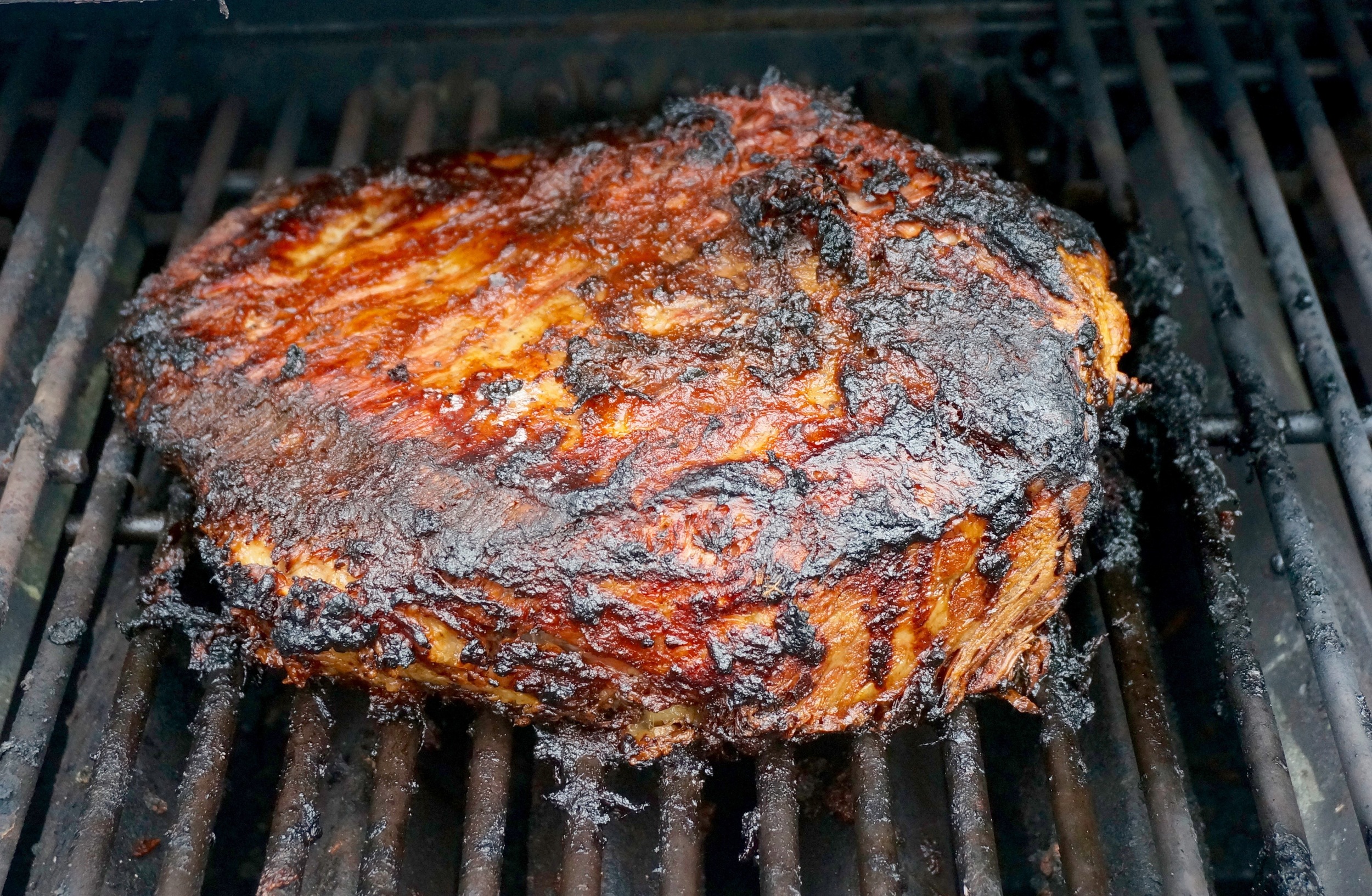
Burnt Ends! Let the Grilling Begin

I'm not a big brisket fan. Not when it's braised and swimming in liquid anyway, and I realize that it is an almost heretical thing for a Jewish woman to admit. But there it is.

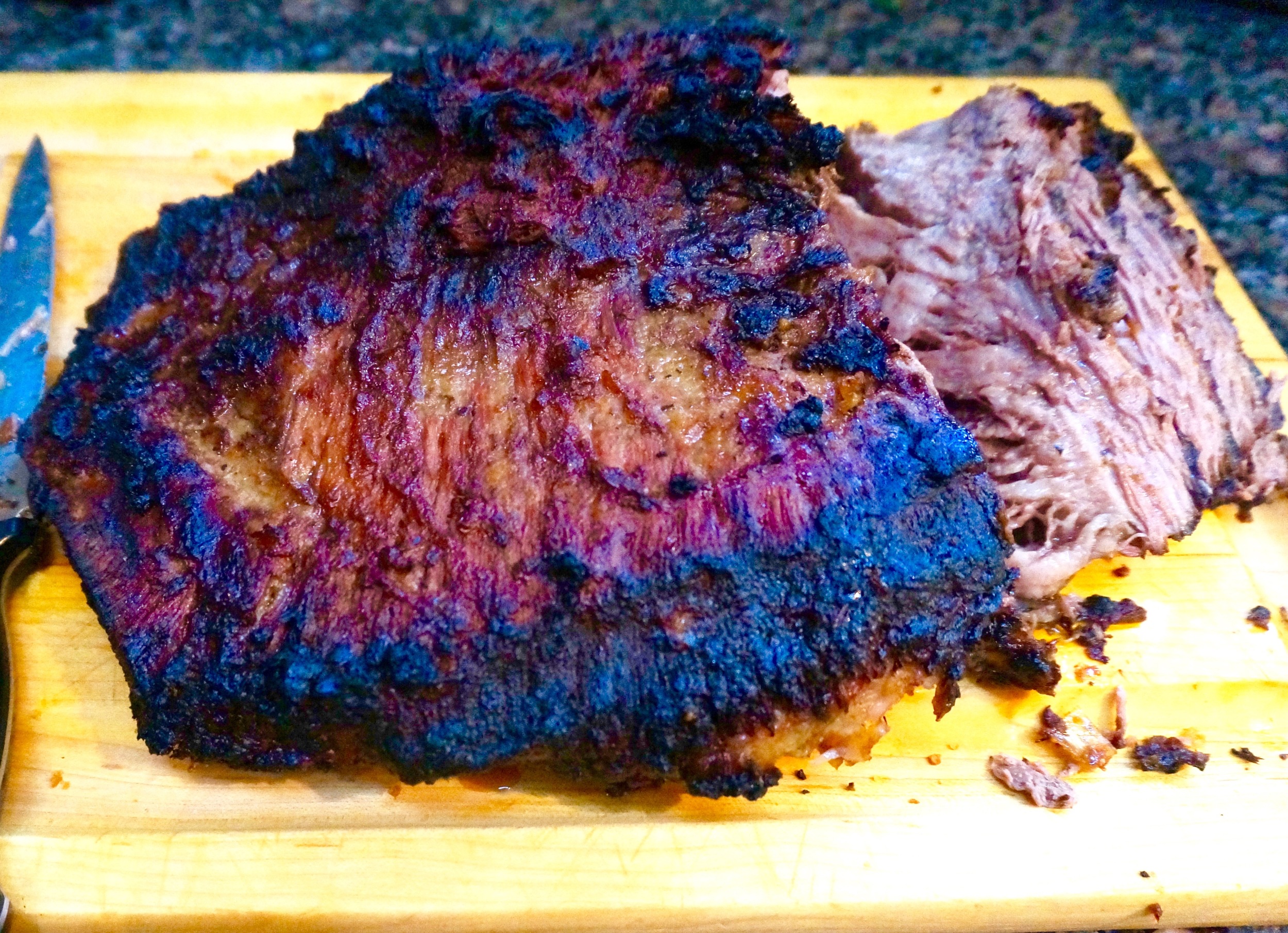
However -- SouthWest style brisket? With barbecue sauce and dark, crusty burnt ends?

Oh yes! Love that. And now that grilling season has arrived (at least here in Connecticut), I can have some!

Briskets were on sale recently at Fairway supermarket, so I bought a whole, gigantic piece and cooked it with a new recipe for barbecue sauce.

SO good. 

Really.

The instructions on how to cook brisket before grilling it are here.

Here's the recipe for the barbecue sauce. Keep slathering it on the meat. If you make a smaller hunk, you can keep the rest of the sauce in the refrigerator for a few weeks.

Applesauce and Tomato Barbecue Sauce

  • 2 tablespoons olive oil
  • 1 large onion, chopped
  • 2 large cloves garlic, chopped
  • 1-1/2 teaspoons chopped chili pepper
  • 1 teaspoon chopped fresh ginger
  • 1 cup tomato sauce
  • 1 cup apple sauce
  • 6 tablespoons honey
  • 1/3 cup apple cider vinegar
  • 1 tablespoon soy sauce
  • 1 tablespoon chili powder

Heat the vegetable oil in a large saucepan over medium heat. Add the onion, garlic, chili pepper and ginger and cook, stirring occasionally, for 2-3 minutes or until softened. Add the tomato sauce, apple sauce, honey, cider vinegar, soy sauce and chili powder and stir until the ingredients are well blended. Simmer the sauce for 25-30 minutes, or until thickened.

Makes about 2-1/2 cups


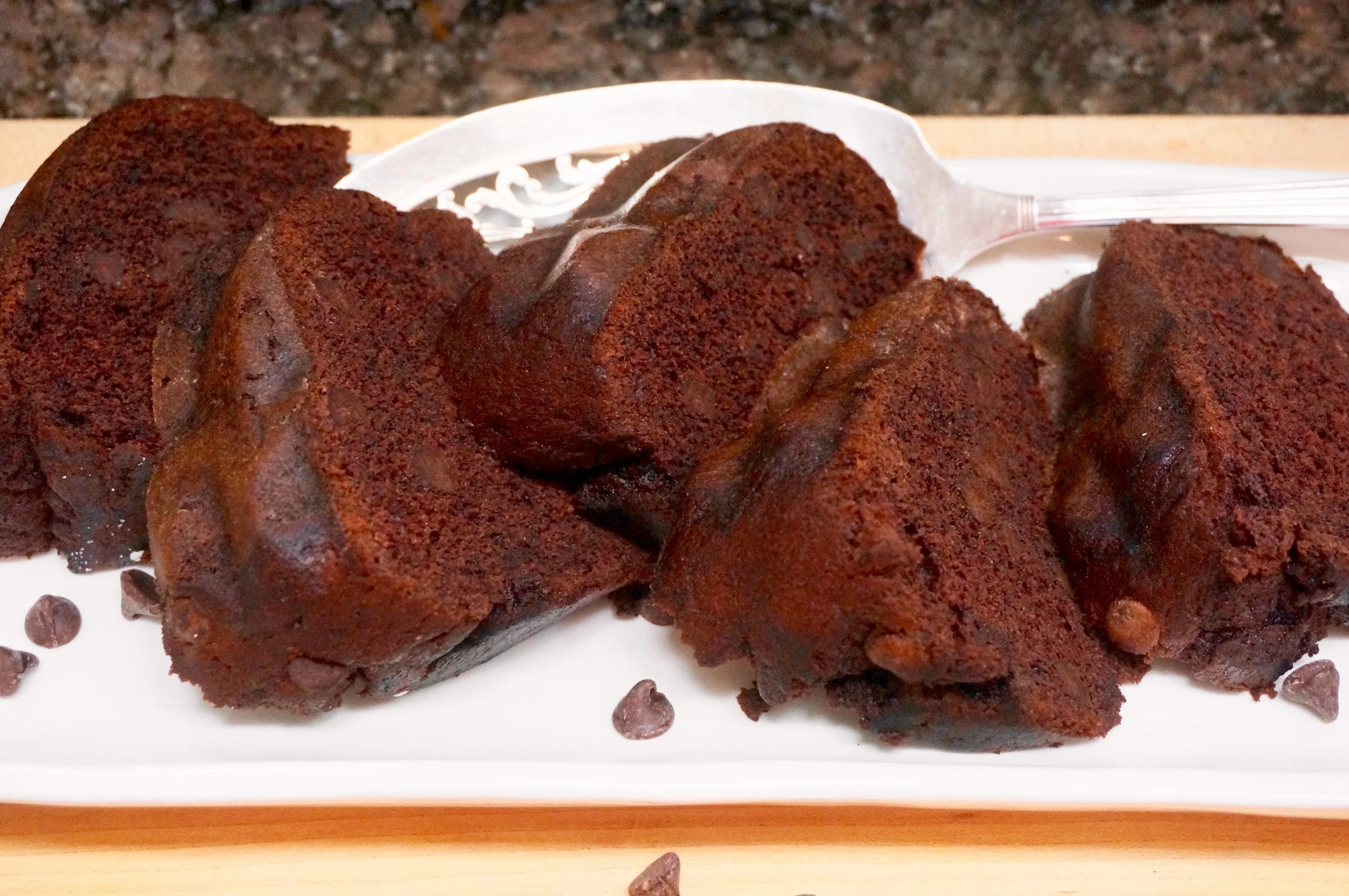
Banana Chocolate Cake

My grandson wanted to bake a cake with me. I think he actually liked the licking-out-the-bowl part the best and I actually was most thrilled that he came up with the idea about combining banana bread and chocolate cake.

I looked through my recipes for endless variations of banana bread. And chocolate cake. I fooled around with them, combining this and that from several of the recipes and came up with the one here. It's dairy-free, so his sister, my 3-1/2 year-old grand daughter, could eat some too. And we added some chocolate chips, just for good measure.

He did like the licking-out-the-bowl thing.

He also told me the cake was too dry. But I think that was because the temperature indicator on my oven has been cleaned so often for so many years that the numbers have disappeared and I can only estimate the proper cooking temperature. I do have an oven thermometer but that also needs "updating." so I don't know if the cake baked at exactly the right temperature.

Also, I forgot to set the timer.

Anyway, everyone else declared the cake delicious. Even my grandson said it was and would want it again when I finally decide what oven I want to get to replace the old one.

So here it is, the creation.

Banana Cocoa Chocolate Chip Cake

  • 1-3/4 cups flour
  • 3/4 cup unsweetened cocoa
  • 1 teaspoon salt
  • 2 teaspoons cinnamon
  • 2 teaspoons baking soda
  • 1 cup vegetable shortening
  • 1 cup sugar
  • 4 large very ripe bananas, mashed
  • 4 eggs, slightly beaten
  • 2 teaspoons vanilla extract
  • 1 cup chocolate chips

Preheat the oven to 350 degrees. Grease and flour a 10-inch (8-cup) bundt pan. Mix the flour, cocoa, salt, cinnamon and baking soda together in a bowl. In the bowl of an electric mixer beat the shortening and sugar at medium speed for 2-3 minutes or until well blended. Add the bananas and blend them in thoroughly. Add the eggs and vanilla extract and blend them in thoroughly. Add the flour mixture and beat until batter is well blended. Fold in the chocolate chips. Pour into the prepared pan and bake for 60-70 minutes or until a cake tester inserted into the center comes out clean. Remove from the oven and let cool in the pan for 10 minutes. Remove to a cake rack to cool completely.

Makes 16-18 servings


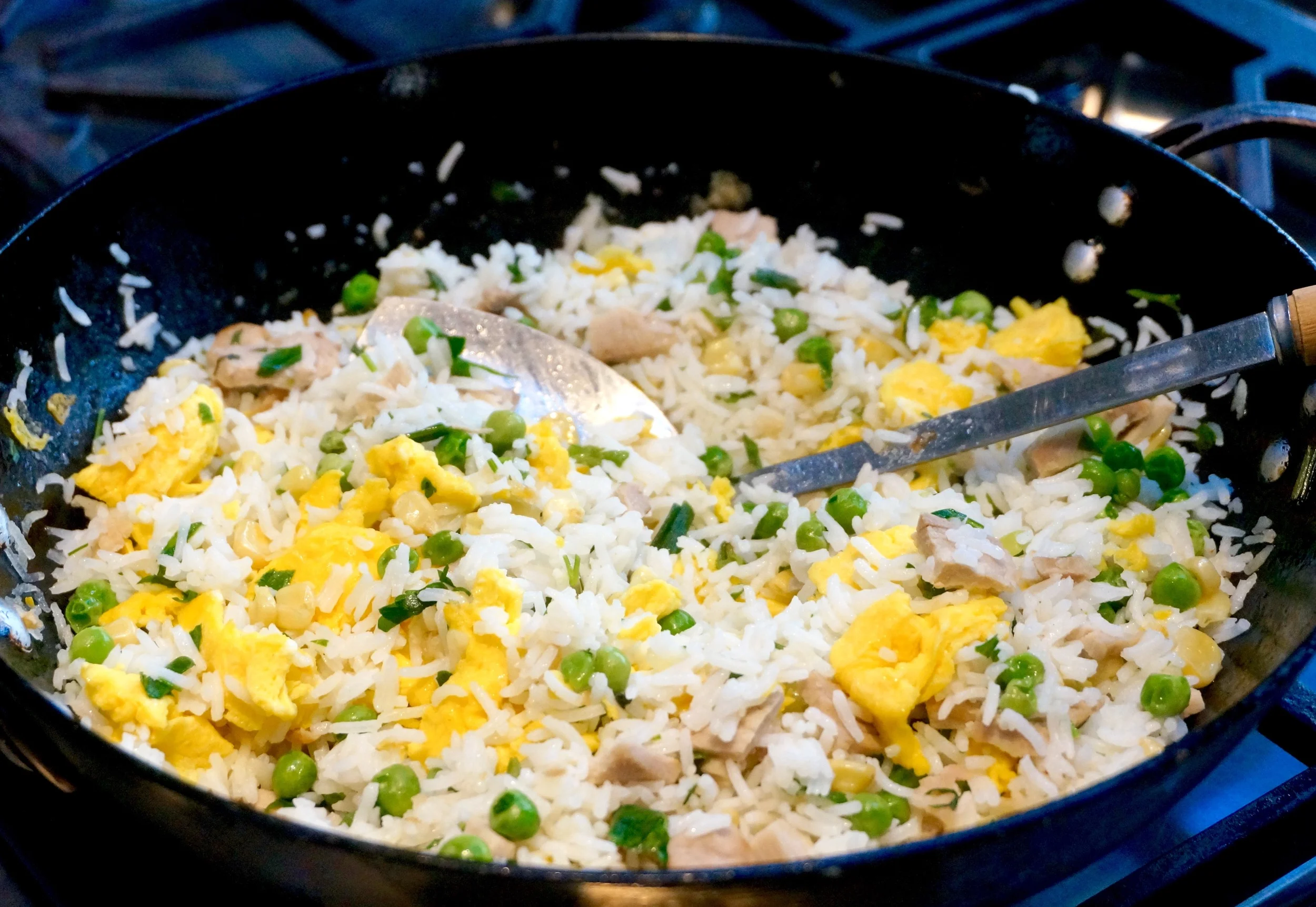
Fried Rice is Always Welcome

Ed and I have eaten a lot of fried rice recently. In Hong Kong. In Vietnam. In Cambodia. In the Philippines.

You could say fried rice is a staple in our lives. Just this simple dish: hot rice, vaguely crispy from the fry, lightly salty (but never with added soy sauce) and with a bit of egg, onion (usually in the form of scallion) and cooked vegetables. And that's how we had it (with a change of seasonings, depending on where we were) throughout Southeast Asia.

And that's how we have it at home (only from now on I will add more of the flavorings we recently sampled -- like sliced chili pepper or fresh coriander or star anise).

Because no matter what else I make for dinner, Ed will always welcome fried rice as a side dish.

He will also welcome fried rice as the main dish.

That makes it very easy for me, especially on days when I don't feel like fussing over dinner.

It does take some thinking ahead, because it's best to make fried rice using cold, cooked rice.

After that it's simple. You stirfry the rice and add all sorts of other ingredients from cooked carrots or mushrooms or any other veggie, to frozen peas to canned water chestnuts to fresh scallions to leftover chicken or veal to scrambled eggs -- whatever you have! And season it the way you like.

Like the recipe below, which was a filling, satisfying, delicious one-pot dinner.

Another bonus -- I added some of the Carrington Sriracha flavored coconut oil that I mentioned when I posted about Sriracha-Parmesan Popcorn. I got the oil, among other things at Crafted Kosher, a new website that has an enormous assortment of interesting products. The coconut oil is coming in handy for many of my recipes (stay tuned). Just a small amount makes a huge flavor difference, as it did with this fried rice.

Fried Rice with Egg and Peas

  • 4 large eggs
  • 2 tablespoons vegetable oil
  • 1 tablespoon Sriracha flavored coconut oil
  • 4 scallions, chopped
  • 3 cups cooked cold rice
  • 3/4 cup thawed frozen peas
  • 1 cup diced leftover turkey, chicken or veal, optional
  • 1/2 teaspoon salt or to taste

Beat the eggs in a bowl and set aside. Heat 2 teaspoons of the vegetable oil in a wok or stirfry pan over medium-high heat. Add the eggs and cook, stirring once or twice until they are set on the bottom. Turn the eggs over and cook briefly until firm. Dish out the eggs onto a chopping board, chop them and set them aside. Heat the remaining vegetable oil and the coconut oil in the pan. Add the scallions and stirfry for about one minute. Add the rice, eggs, peas, optional meat and salt and stirfry for 2-3 minutes to distribute ingredients and heat the rice.

Makes 2-4 servings, depending on whether this is a one-dish meal or part of a meal