Seder

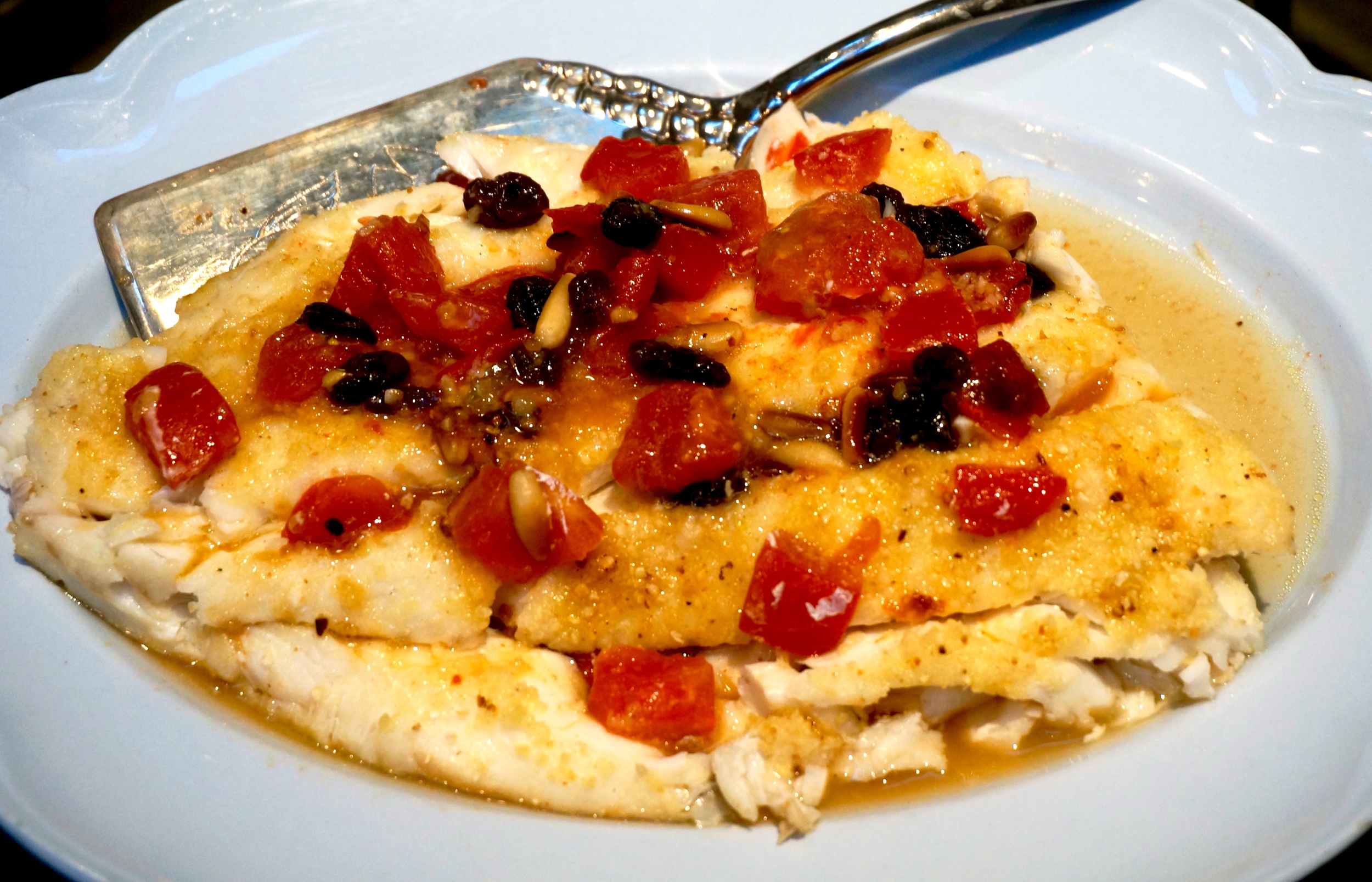
Roasted Cod with Tomatoes, Raisins and Pine Nuts

Although I love to cook and don't mind fussing, chopping, washing veggies and so on, sometimes I get lazy or tired and prefer to take the easy way out. I don't mean order-in (although I do understand that). I mean, make food that's easy.

In fact, I find that I like quick-and-easy more and more often.

Like this roasted cod dish. I had been looking at loads of recipes that include tomatoes, raisins and pine nuts with fish. Most of the recipes involve searing and/or roasting the fish and making the sauce separately. But I didn't feel up to doing all that. And I certainly didn't want an extra pan to clean.

So I put all the ingredients together in a roasting pan and placed the fish on top, thinking the sauce would become sauce all by itself, moistened by the natural juices leeching from the fish.

And voila! I was right. There it was. Crispy topped fish and lovely, savory sauce. So good. So easy. Cleanup almost free.

I scattered some bread crumbs on top to give it a lightly crispy surface. (During Passover you could use matzo meal.)

Roasted Cod with Tomatoes, Raisins and Pine Nuts

  • 2 tomatoes, chopped
  • 1/4 cup raisins
  • 2-3 tablespoons toasted pine nuts
  • 1 large clove garlic, chopped
  • 2 pounds fresh cod
  • 2 tablespoons olive oil
  • salt and freshly ground black pepper to taste
  • 2 tablespoons breadcrumbs (or matzo meal)

Preheat the oven to 425 degrees. Place the tomatoes, raisins, pine nuts and garlic in a roasting pan and toss the ingredients to distribute them evenly. Place the fish on top of the tomato mixture. Brush the fish with the olive oil. Sprinkle with salt and pepper. Scatter the bread crumbs over the top. Roast for 18-20 minutes or until top is lightly crispy and the fish is cooked through.

Makes 4 servings

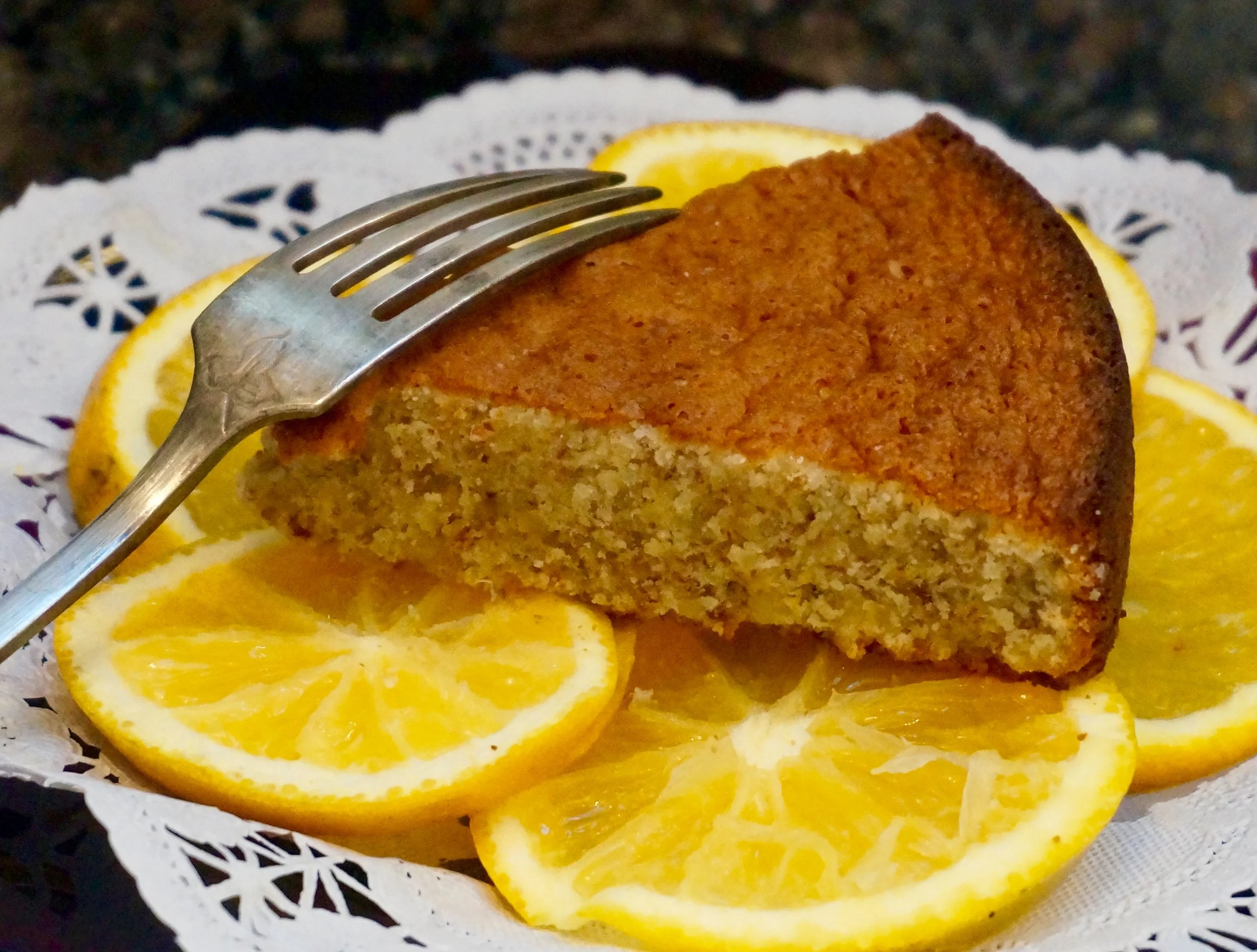
Passover Orange Almond Cake

A few weeks ago I was going through my Passover recipes file and came across a recipe for Italian Almond Cake with Poached Fruit from the Jerusalem Post. Unfortunately, it didn't say whose recipe it was. Also I didn't have the second page of instructions.

I made some changes and figured out how to proceed based on similar cakes I've baked.

 First, I converted all the metric measurements. 

I figured out how much, in cups, came from 3/4 cup whole almonds.

I didn't use blanched almonds, figuring that almonds with skin were just as good.

I switched to coconut oil because I don't like margarine. 

I deleted the liquor and used orange juice instead, and added some freshly grated orange peel. 

I separated the eggs and whipped the whites with sugar to provide a lighter texture than I thought the cake would have without fluffed whites.

I didn't serve it with poached fruit (I used fresh oranges and sorbet).

Some would say that with all these changes the recipe is now mine, and I understand that.

Still, the cake was delicious and I would have preferred to give credit!

Btw, it's gluten free!

Here's my version of Passover Orange-Almond Cake.

Passover Orange Almond Cake

  • 1/3 cup coconut oil
  • 1 cup ground almonds
  • 6 tablespoons plus 2 tablespoons sugar
  • 3 large eggs, separated
  • 2 tablespoons orange juice
  • 2 teaspoons finely grated fresh orange peel
  • 1/4 cup potato starch

Preheat the oven to 350 degrees. Using a small amount of the coconut oil, lightly grease an 8-inch round cake pan, line the bottom with parchment paper and lightly grease the paper. Set aside. Melt the remaining coconut oil and set aside to cool. Place the almonds and 6 tablespoons sugar in the bowl of an electric mixer and stir at low speed for a minute until the ingredients are well distributed. Add the egg yolks, orange juice and orange peel and beat them in at medium speed for about one minute. Stir in the potato starch. Stir in the cooled coconut oil. In a separate bowl, beat the egg whites for 1-2 minutes, going from low to high speed, or until the whites stand in soft peaks. Add the remaining sugar and beat until the mixture stands in stiff peaks. Fold them into the almond mixture. Pour the batter into the prepared pan. Bake for about 25 minutes or until golden brown and a cake tester inserted into the center comes out clean.

Makes 6-8 servings


Beet and Brussels Sprouts Salad

Now that my children are grown, with children of their own, I sometimes think about the “old days” and remember the good times, the festive occasions, the fun we had. The Jewish holidays rank high on my list of best memories, especially the Passover Seders. Whether I’m thinking about the times that my cousin and I would crawl under the table while my uncle recited the Haggadah or last year, when my grandchildren threw the styrofoam “hail” and plastic locusts as we mentioned the Ten Plagues, the memories are good, the kind that I love to deposit in my memory bank.

There are good food memories too, from my grandma’s famous chicken soup to the complaints I got when I first served haroset made with dried apricots, pistachio nuts and cayenne pepper.

My first Seder continues my family's generations long menu featuring matzo ball soup, followed by roasted turkey. Chremslich, of course. In fact, a double portion of that. 

But all the rest is different. Over the years there was one food change after another, little by little as new in-laws came into our family, tastes changed and allergies had to be considered. So these days we have our own family expected recipes -- matzo ball soup and turkey, plus homemade baked cranberries, spinach pie (made with a matzo crust), imam bayeldi, and lots of other vegetables and the now standard spicy dried fruit haroset.

I used to serve flourless chocolate cake, but we had that a little too often, so because Passover is also my grandson's birthday, I will serve homemade macaroons along with a traditional chocolate roll, the one I used to make when my daughter Meredith's birthday fell during Passover. (You can stuff the roll with whipped cream, jelly or parve lemon curd filling).

Every year I add one new dish to my first Seder. One year it was Ratatouille. A few times there was a new version of haroset. I even made matzo farfel chocolates one year.

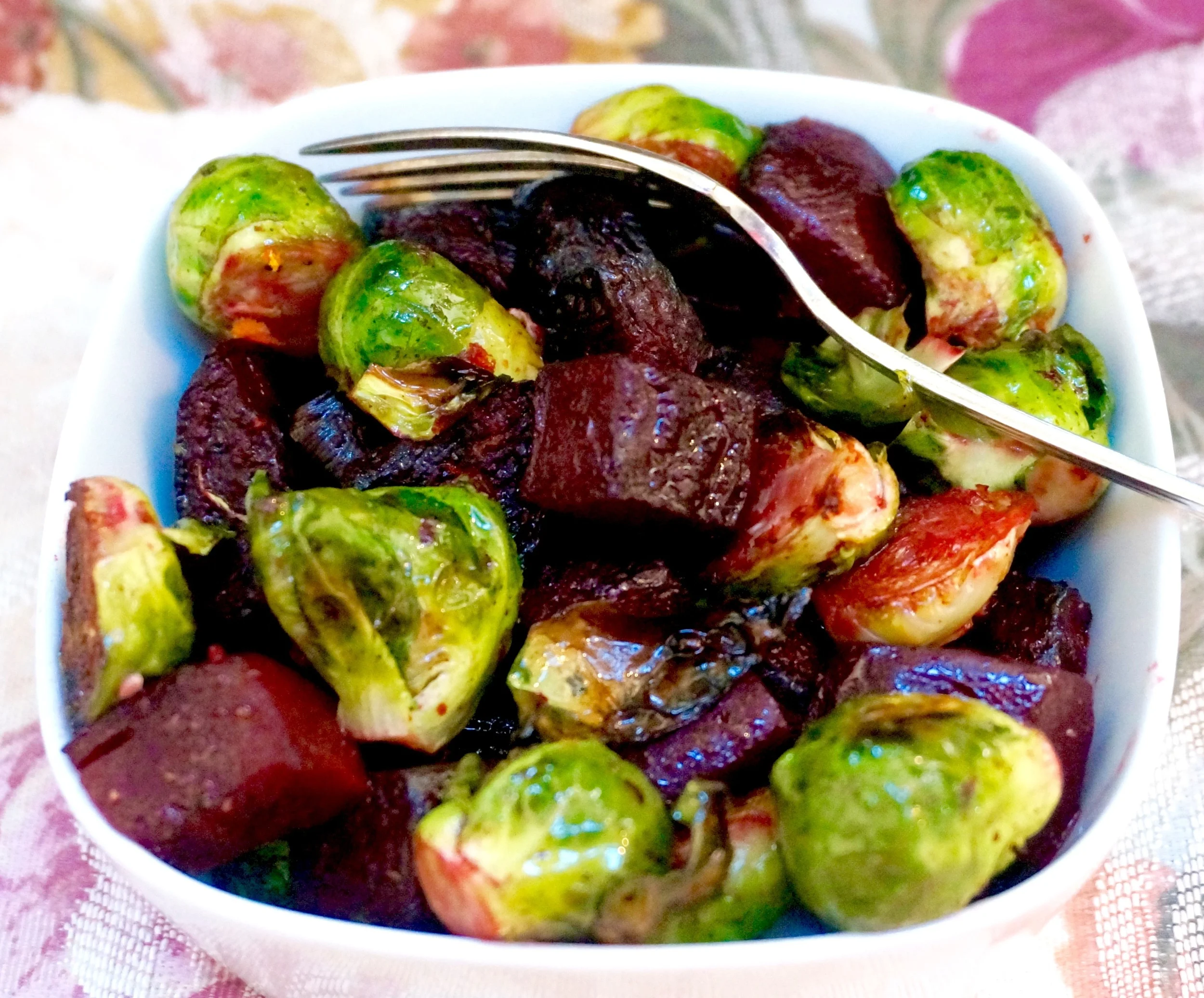
This year? A new salad! Here it is:

Roasted Beet and Brussels Sprouts Salad

  • 4 medium beets
  • 3 tablespoons olive oil
  • salt to taste
  • 1/2 pound (about 30) medium size Brussels sprouts
  • 2 tablespoons apple cider vinegar (or use Balsamic vinegar)
  • 1 tablespoon lemon juice
  • 2 teaspoons grated fresh orange peel
  • freshly ground black pepper

Preheat the oven to 425 degrees. Peel the beets and cut them into bite size pieces. Place the beets on a baking sheet and pour one tablespoon olive oil over them. Toss to coat the beets. Sprinkle with salt. Roast for about 20 minutes or until tender. Trim the Brussels sprouts (cut them in half if they are large). Place them on a baking sheet and pour one tablespoon olive oil over them. Toss to coat the sprouts. Sprinkle with salt. Roast for about 15 minutes or until tender. Place the vegetables together in a bowl. Mix the remaining olive oil, apple cider vinegar, lemon juice and orange peel and pour over the ingredients. Let rest for about 10 minutes, place in a serving bowl and sprinkle with salt and black pepper to taste.

Makes 6-8 servings


Breast of Veal for Passover

_DSC9020.jpg

In my world, Passover is not usually the brisket fest that is typical for so many of the other families I know.

Our usual is turkey. Second night veal.

That's because, growing up, when the Seders were at my grandma's house, and the crowd could be as many as 24 people, she always served a big turkey the first night. The second night, when we were a much smaller group, she would cook a batch of veal cutlets with a crunchy matzo meal crust.

Frankly, I don't feel like frying up a whole mess of cutlets, so my Passover veal dinner will likely be breast of veal, one of my favorites meats to eat. I realize a lot of people think breast of veal is too down home for a festive occasion such as Passover.

I don't agree. Look how beautiful this roast is! Golden brown skin, meaty bones, moist meat, savory vegetables to accompany. Looks impressive to me! And also quite good to eat, for Passover or otherwise.

Roast Breast of Veal with Mushrooms, Onions and White Wine

  • 3 tablespoons olive oil
  • 1 large onion, chopped
  • 10 ounces fresh mushrooms
  • 1 large clove garlic, finely chopped
  • 2 tablespoons chopped fresh parsley
  • salt and freshly ground black pepper to taste
  • 1 breast of veal, about 3-4 pounds
  • 1/2 cup white wine

Preheat the oven to 400 degrees. Heat 2 tablespoons of the olive oil in a saute pan over medium heat. Add the onion and cook for about 2 minutes, to soften slightly. Add the mushrooms, garlic and parsley, stir and cook for another 2 minutes. Season to taste with salt and pepper. Spoon the vegetables into a roasting pan. Place the veal breast on top. Brush the top surface of the meat with the remaining olive oil. Sprinkle with salt and pepper. Roast for 30 minutes. Pour the wine over the meat. Reduce the heat to 350 degrees. Roast for another 45-50 minutes, basting occasionally, or until the surface is crispy.

Makes 4 servings

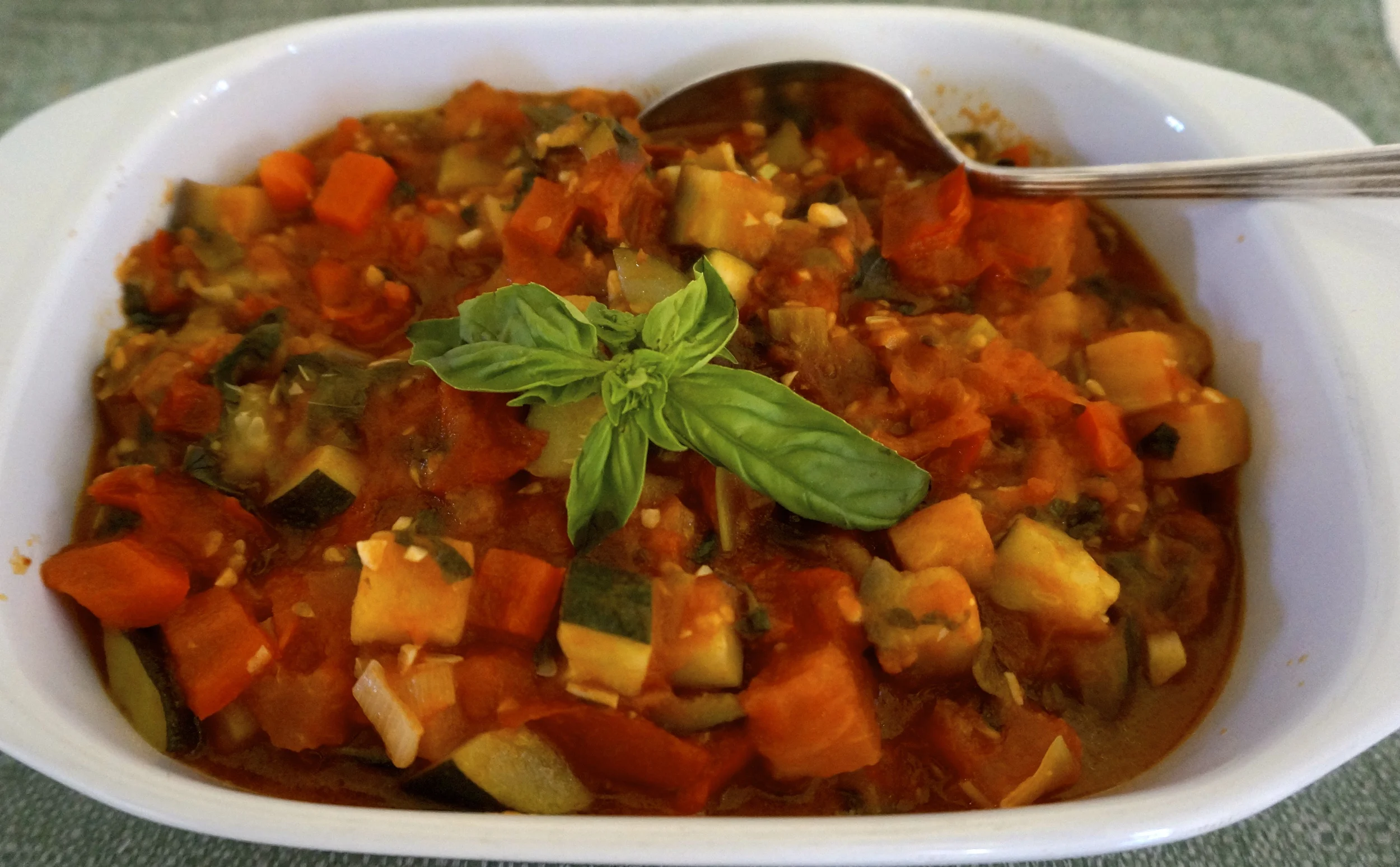
Quickie Ratatouille

Classic ratatouille is time consuming and labor intensive. Also fabulously delicious.

Unfortunately, I don't have the time or patience to cook the authentic recipe these days. Especially not for Passover.

So, whereas a cartoon rat might win raves for his ratatouille, and my version might not be quite so beautiful as the one in the Disney movie (Ratatouille), here are the benefits to my recipe:

it's easy: about 30 minutes prep time

it's quick (less than 30 minutes to cook)

it's a perfect dish for Seders, vegetarian meals or side dishes, any old dinner

it's fabulously delicious

So here's the recipe:

Quickie Ratatouille


  • 1/3 cup olive oil, approximately
  • 8 thick scallions, chopped
  • 6 large cloves garlic, chopped
  • 1 medium fresh chili pepper, deseeded and chopped
  • 2 cups diced eggplant
  • 1 cup diced red bell pepper
  • 2 cups diced zucchini
  • 8 large tomatoes, chopped
  • 6-8 tablespoons chopped fresh basil
  • salt and freshly ground red pepper to taste


Heat 3 tablespoons olive oil in a large sauté pan over medium heat. Add the scallion, garlic and chili pepper and cook, stirring frequently, for one minute. Add the eggplant and bell pepper and cook, stirring often, for 4-5 minutes or until the vegetables have softened. Pour in the remaining olive oil and add the zucchini (add more olive oil if the vegetables start to stick to the bottom of the pan). Cook for 3-4 minutes, stirring frequently. Add the tomatoes and basil and cook, stirring frequently, for 12-15 minutes or until the vegetables are soft and there is little liquid left in the pan. Season to taste with salt and pepper.


Makes 8 servings


Chremslach

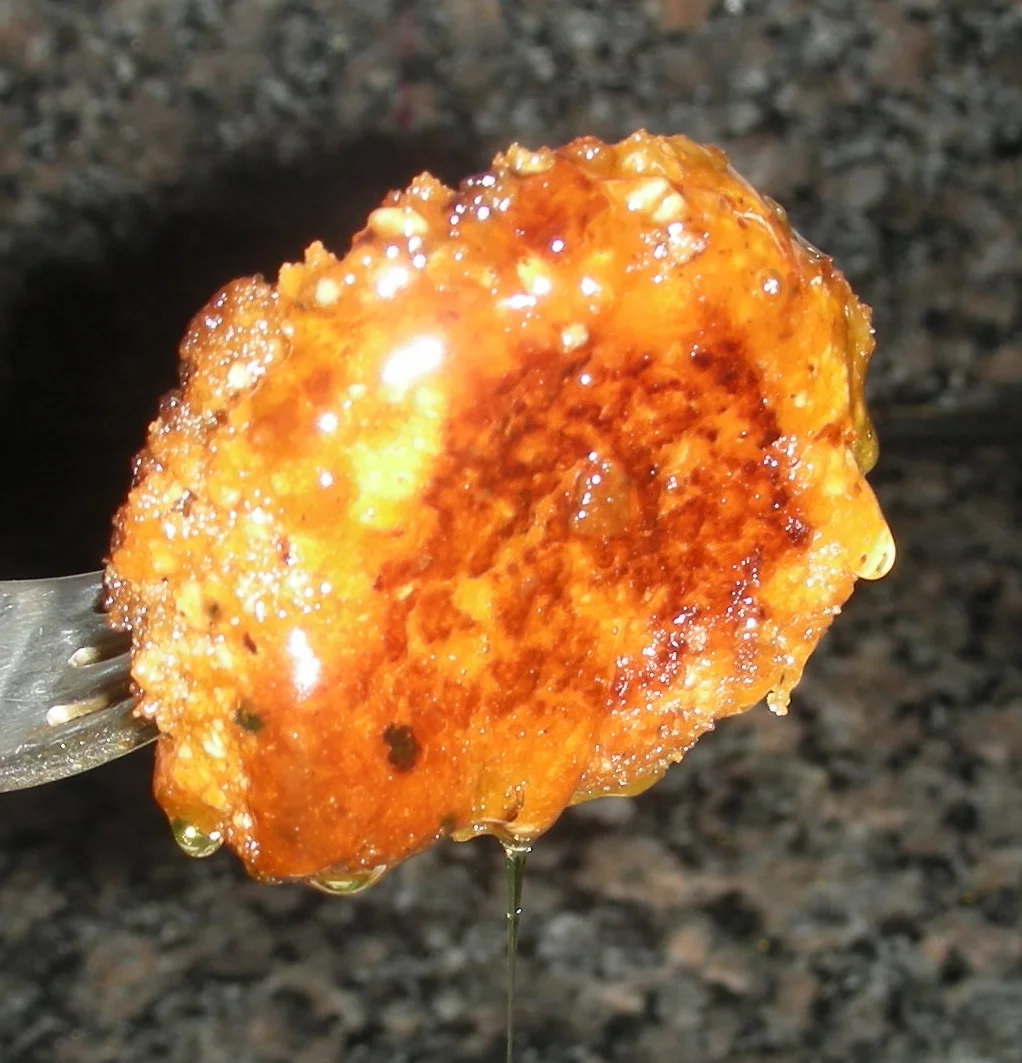
Passover wouldn’t be right without Chremslich. My grandma’s soft, honey-drenched matzo fritters.
I can’t remember ever having a Seder without these. 
Some people eat chremslich for dessert but grandma always served them with the tu…

Chremslach

Passover wouldn’t be right without Chremslich. My grandma’s soft, honey-drenched matzo fritters.

I can’t remember ever having a Seder without these. 

Some people eat chremslich for dessert but grandma always served them with the turkey, right alongside whatever vegetables there were. Like the cranberry sauce at Thanksgiving.

There are hundreds of recipes for chremslich and I’ve tried many. But none measure up to the ones I’ve known since before I can even remember.

Except that my grandmother added broken walnuts to hers and my daughter Gillian is allergic to walnuts so I make mine with pignolis, to which my brother Jeff always says “it’s better with walnuts,” but it actually isn’t.

I have also included raisins, on occasion, just to see what it’s like. And once in a while, grated fresh orange peel. Although methinks that the orange peel, though delicious, might be a bit too nouvelle for some people.

Maybe.

Anyway, here’s grandma’s recipe. I hope this is one of those recipes that my kids make in years to come. I can’t imagine Passover without these.

Btw, you can make these days in advance and keep them in the honey — and add more honey because by then the fritters are soaked through. And they are just as good. Some would say even better.

Or you can keep the fritters and honey separate and cook them together just before you serve them.

Chremslach

  • 3 large eggs

  • pinch of salt

  • 1 tablespoon vegetable oil

  • 1 teaspoon grated fresh lemon or orange peel, OPTIONAL

  • 1/4 cup sugar

  • 3/4 cup matzo meal

  • vegetable oil for frying

  • 1 pound honey, approximately

  • 1/2 cup raisins, OPTIONAL

  • 1/3 cup pignoli nuts (or use 1/2 cup chopped walnuts)

Separate the eggs. In a bowl, beat the egg yolks, salt and one tablespoon vegetable oil together until well blended. Stir in the citrus peel, if used, and set aside. In a separate bowl, beat the egg whites until foamy. Gradually add the 1/4 cup sugar and continue to beat until the whites stand up in peaks. Fold the beaten whites into the egg yolk mixture. Fold in the matzo meal. Let the mixture rest for about 30 minutes (I refrigerate). With cool, wet hands, shape portions of the mixture into disks about 1-1/2-inches in diameter and 1/2-inch thick (sometimes I drop the batter by the tablespoonful into the pan). Heat about 1/4-inch vegetable oil in a saute pan over medium heat. Fry the disks for 1-2 minutes per side or until golden brown on both sides (you may have to flatten them slightly with a rigid spatula). Drain on paper towels and place the fried disks in a large saucepan. Pour the honey over the disks. Add the raisins, if used, and the nuts. Cook over low-medium heat for 5-6 minutes or until heated through and all the disks are coated with honey. Serve immediately or make ahead and reheat. Add more honey as tastes dictate.

Makes 10-12 servings

Haroset with Pistachios and Pepper

fullsizeoutput_a305.jpeg

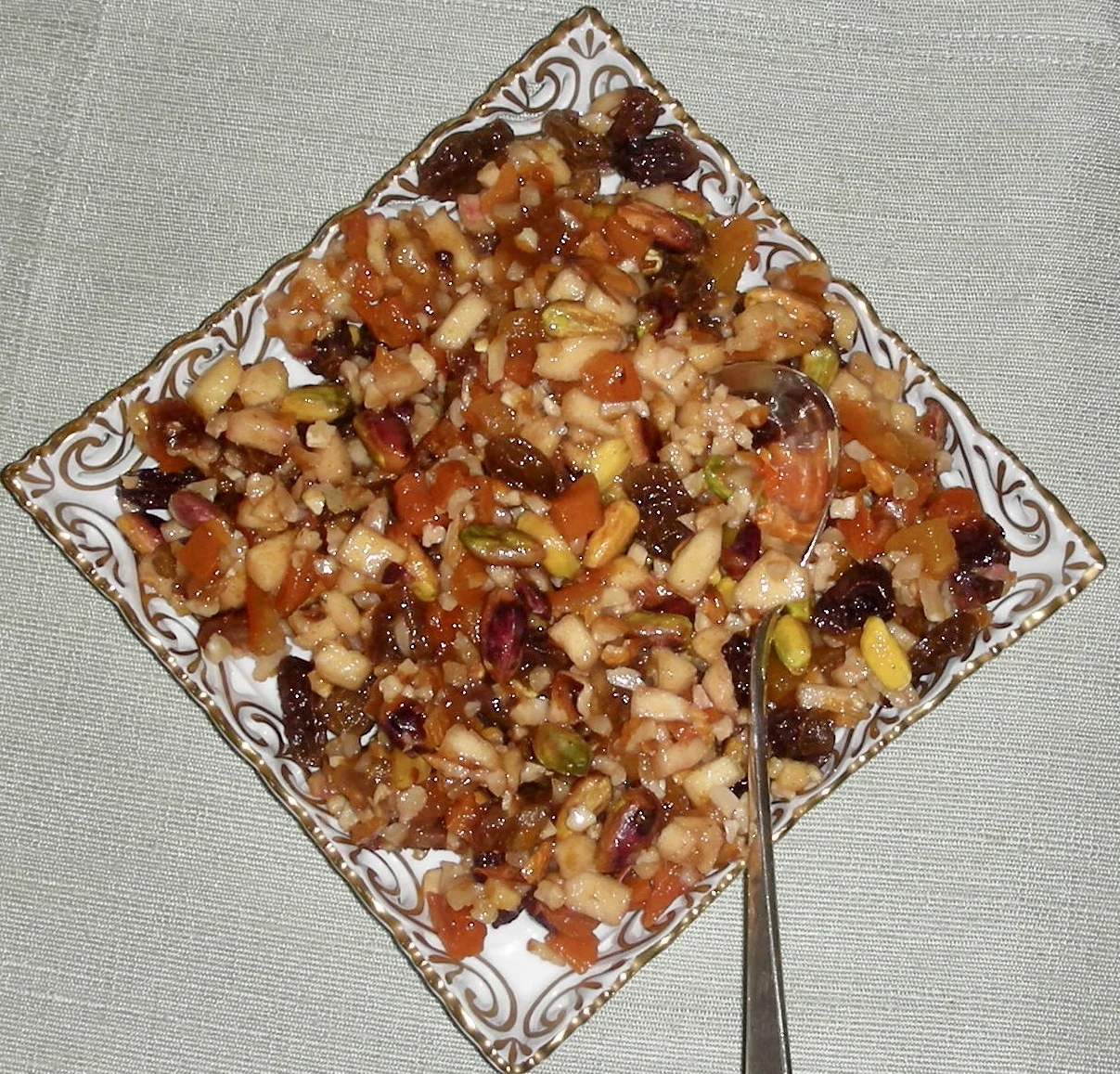
Charoset (Haroset) is more than a blob of stuff that sits on the Passover Seder plate. Sure, we talk about it during the Haggadah reading. It’s there to symbolize the mortar used between the bricks that Jewish slaves used to build the pyramids for the ancient Egyptian pharaoh.

But it’s also food. In our family, another fabulous side dish, more like a relish, that we eat plenty of during the meal.

None of us ever really loved the old fashioned apple-wine mixture that most of us Ashkenazi Jews of Eastern European descent grew up with. It always tasted a bit sour and it got brown and ugly and besides, my daughter Gillian can’t eat walnuts and somehow almonds didn’t taste right in the mixture.

So, years ago I experimented with lots of recipes and found one I liked. It was a “Persian” recipe that I changed over and over until I got it the way I liked. At first my kids refused to eat it saying they would rather eat real mortar than this new charoset. But over the years they gradually came to love it and now insist they always did or at least can’t remember when they didn’t.

I double the recipe I am going to post here because it’s so good we eat a lot of it and besides, this relish lasts a while in the fridge so you can keep on having it all during Passover.

Haroset with Pistachios and Pepper

  • 1 cup chopped dried apricots

  • 1 cup chopped dates

  • 1/2 cup raisins

  • 1 cup shelled pistachio nuts

  • 1 cup chopped almonds

  • 2 tart apples, peeled, cored and chopped

  • 2/3 cup sweet red Passover wine

  • 1/4 cup apple cider vinegar

  • 2 teaspoons grated fresh orange peel

  • 2 teaspoons finely chopped fresh ginger

  • 3/4 teaspoon ground cinnamon

  • 1/2 teaspoon cayenne pepper

  • 1/2 cup orange marmalade

    Combine the apricots, dates, raisins, pistachio nuts and almonds in a bowl and toss ingredients to distribute them evenly. (You can prepare this much a week ahead). Add the apples, wine, vinegar, orange peel, ginger, cinnamon, cayenne and marmalade and mix ingredients. Let rest at least 4 hours before serving. May be made 3 days ahead.

Makes about 6 cups.

Imam Bayildi with Onions

Passover will feel a little strange for me this year. I’m used to having lots of grownups and a bunch of kid cousins, a crowded dining room with tables that spill into the entryway, a ton of food, crayon-friendly placemats for the little ones, plus puppets and other props we use to keep the children occupied and interested during the Haggadah reading.

But families get bigger as the years go by and people move and somehow — it seems this happens to so many people — the time comes when families separate and have their own Seders. That’s what’s happening to me this year.

It’s been my gig for more than 25 years. In the early days when my generation were the young ones with children, there were a couple of times when my sister-in-law Barbara had a Seder. And two or three times we went to my brother Jeff’s house for Passover. And once we even had a Seder at a restaurant with extended family. I hated that.

My Mom had the Seders before I took over. Now I understand how she felt when my aunt Min called one year before Passover and told her that their family had become so big (4 children had married and had kids) they couldn’t burden my Mom anymore and would have their own.

But we’ll still celebrate. Still read the Haggadah. Still have the Seder plate and sing the songs and hide the afikomen and pour the cup of wine for Elijah. Passover is a joyous holiday. A time to be happy that so many of us are still together, celebrating together, appreciating our lives and being grateful for what we have. Isn’t that what the Haggadah really tells us? To read about the journey to freedom and be thankful for it?

A Thanksgiving of sorts. 

In fact, when my son-in-law Jesse asks what I’m serving and I tell him “turkey” he answers, “oh, Thanksgiving.”

Sort of. My Passover menu always centers around turkey. My mother made turkey. My grandmother made turkey. There’s also cranberry sauce. But that’s where the Thanksgiving comparison ends. Obviously there won’t be pie or bread stuffing!

Of course there will still be a ton of other food. Like most families, we will repeat our favorite menu, although I can’t help but add a few things here and there and experiment with a few dishes so we always wind up with days worth of leftovers.

One of the constant dishes in my menu is Imam Bayildi, which is braised eggplant with tomatoes. It’s a good side dish and you can make it a day or so ahead. Also, it’s the kind of dish you can eat hot, warm or at room temperature. If there’s a vegetarian in your life, this dish is also a winner.

So, smaller Seder or whatever, we are going to celebrate and wish everyone a Happy Passover.

Here’s the recipe:

Imam Bayildi

  • 1 medium eggplant
  • salt
  • 1/2 cup olive oil
  • 2 medium onions, chopped
  • 2 large cloves garlic, chopped
  • 3 large tomatoes, deseeded and chopped
  • 3 tablespoons chopped fresh parsley
  • 1 teaspoon sugar
  • 1 teaspoon salt or to taste
  • 3 tablespoons fresh lemon juice
  • 1/3 cup water

Cut the eggplant into slices about 3/8-inch thick. Sprinkle with salt and let rest for 30 minutes. Wipe the eggplant slices dry with paper towels. Preheat the oven to 350 degrees. Heat one tablespoon olive oil in a saute pan over medium heat. Cook the eggplant slices a few at a time for 2-3 minutes per side or until slightly wilted. Add more olive oil to the pan as needed to prevent scorching (use 4-5 tablespoons more if needed). Place the cooked eggplant into a baking dish (cut it into smaller pieces if you wish). Add 2 tablespoons olive oil to the pan. Add the onions and cook for 3 minutes. Add the garlic and cook for another minute. Add the tomatoes, parsley, sugar, salt and lemon juice. Cook for one minute, stirring frequently. Spoon the vegetables on top of the eggplant. Drizzle with any remaining olive oil and the water. Cover the pan and bake for 45 minutes. Serve hot, warm or at room temperature.

Makes 6-8 servings