Passover

Bitter Greens Salad with Orange

Bitter Greens Salad with Orange 

Bitter Greens Salad with Orange 

There’s always so much food on Thanksgiving that everyone I know complains, including me.

Before: there’s going to be too much food. Day of: there’s too much food. Day after: there was too much food.

The complaining is a necessary part of the routine IMHO, maybe in a way to forgive ourselves the plenty. And for overeating of course. 

But the whole idea of Thanksgiving IS the plenty. Isn’t that symbolic of all the things we are thankful for?

Well, I don’t want to get any more philosophical. So I’ll just say I like serving lots of food, even if everyone groans “there’s too much!” and then eats everything and then complains. Call it the Jewish mother in me.

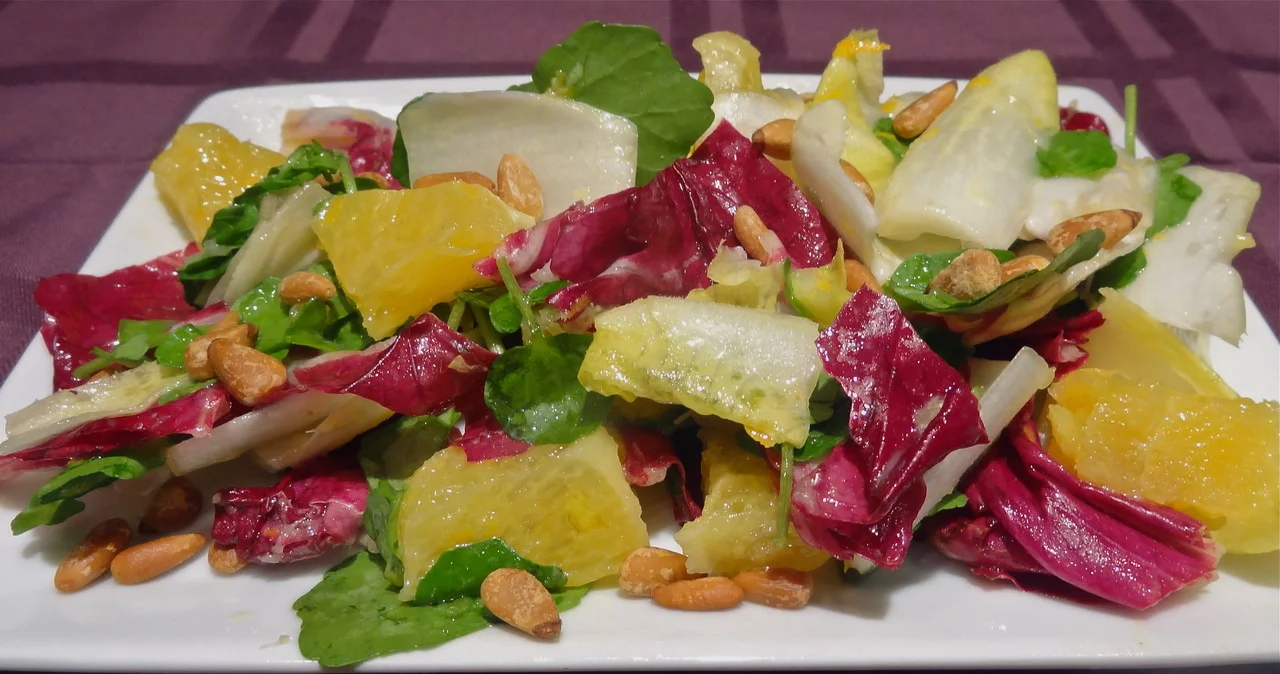
But honestly, one thing I find helpful when serving a meal of plenty that includes heavy dishes like stuffing and potatoes and gravy and vegetables with crusts or sauces, is to have a salad too. Not just as an extra, another side dish to put on the table, but because salad ingredients, especially if they have robust greens (arugula, endive, radicchio, watercress and so on) and acidic dressings (vinaigrette as opposed to Ranch or thick sour cream dressings) help balance and lighten up the meal. 

Here’s a salad made with three kinds of hardy greens, cut with chunks of orange, a little crunch of nuts (you can leave these out if you wish) and a light citrusy dressing. It’s pretty too, adding a bit of color to the meal.

Bitter Greens Salad with Orange

  • 3 navel oranges

  • 1 tablespoon white wine vinegar

  • 3 tablespoons olive oil

  • 2 teaspoons Dijon mustard

  • 3 large Belgian endives

  • 1 bunch watercress

  • 1 small head radicchio

  • salt and freshly ground black pepper to taste

  • 3-4 tablespoons toasted pignoli nuts, optional

Grate enough of the peel of one orange to equal one teaspoon. Place in a bowl and add the white wine vinegar, olive oil and mustard. Halve the orange that has been grated and squeeze the juice from one of the halves into the bowl. Mix to blend the ingredients completely and set aside. Reserve the other half of the orange for other purposes. Peel the remaining two oranges and remove all the white pith that surrounds the segments. Cut the orange flesh into thick slices, then cut the slices into chunks and set aside. Wash and dry the endive leaves and cut them in half. Place the endive in a bowl. Wash and dry the watercress, discard any thick stems and add to the bowl with the endive. Wash and dry the radicchio leaves, cut them if they are large, and add them to the bowl and toss the greens. Pour the dressing over the leaves and toss. Sprinkle with salt and pepper to taste. Scatter the nuts over the salad if desired.

Makes 8 servings

Imam Bayildi

Need a good side dish? Imam Bayildi is one of my favorite go-to recipes whenever I am at a loss. It’s a good family dish and also works for company. 

I learned to make Imam Bayildi years ago when I was working on an article for eggplant. I found a recipe and the name of the dish, translated, was so intriguing — “the Imam fainted” — I had to try it. If only because, as the story goes, the Imam (an Islamic clergyman or spiritual leader) who first ate this dish was so delighted that he passed out from joy.

Well, whether the tale is apocryphal or not, this dish is very very good. And what’s more, you can serve it hot, warm or at room temp, so you can either get it together in advance and cook it for dinner, or make the whole thing in advance and serve it for dinner.

It’s also a good item for a vegetarian meal (I like it accompanied by scrambled eggs or mushroom ragout).

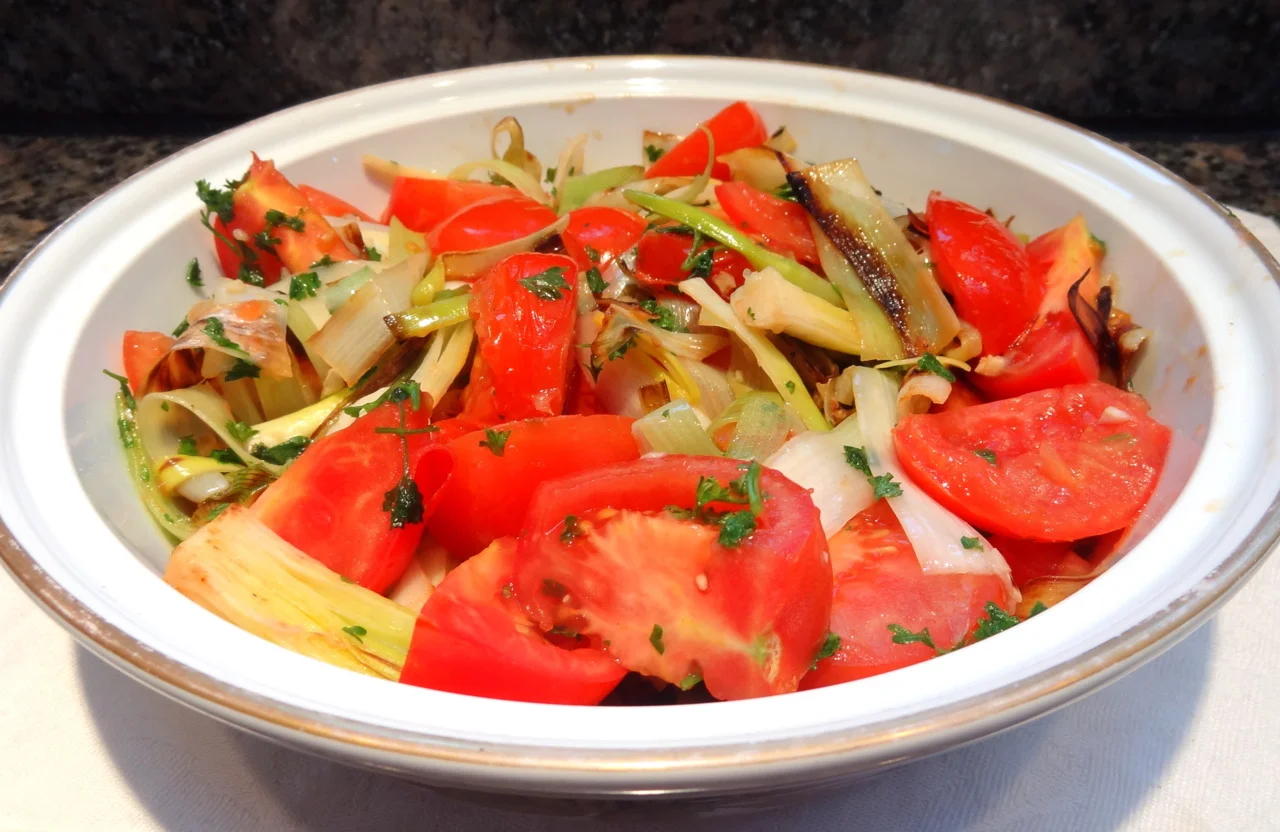
This year during Passover I made this dish for dinner and used leeks instead of the usual onions. My family liked it even better this way, so here’s the recipe.

Btw, a tumblr reader once told me she added olives to the dish when she made it. I’ve tried that and it is delicious! So, add some olives if you like — black, pitted olives make the dish even more colorful.

Imam Bayildi

  • 1 medium eggplant

  • salt

  • 1/2 cup olive oil

  • 3 medium leeks, cleaned and sliced

  • 2 large cloves garlic, chopped

  • 3 large tomatoes, deseeded and chopped

  • 3 tablespoons chopped fresh parsley

  • 1 teaspoon sugar

  • 1 teaspoon salt or to taste

  • 3 tablespoons fresh lemon juice

  • 1/3 cup water

Cut the eggplant into slices about 3/8-inch thick. Sprinkle with salt and let rest for 30 minutes. Wipe the eggplant slices dry with paper towels. Preheat the oven to 350 degrees. Heat one tablespoon olive oil in a saute pan over medium heat. Cook the eggplant slices a few at a time for 2-3 minutes per side or until slightly wilted. Add more olive oil to the pan as needed to prevent scorching (use 4-5 tablespoons more if needed). Place the cooked eggplant into a baking dish (cut it into smaller pieces if you wish). Add 2 tablespoons olive oil to the pan. Add the leeks and cook for 2-3 minutes. Add the garlic and cook for another minute. Add the tomatoes, parsley, sugar, salt and lemon juice. Cook for one minute, stirring frequently. Spoon the vegetables on top of the eggplant. Drizzle with any remaining olive oil and the water. Cover the pan and bake for 45 minutes. Serve hot, warm or at room temperature.

Makes 6-8 servings

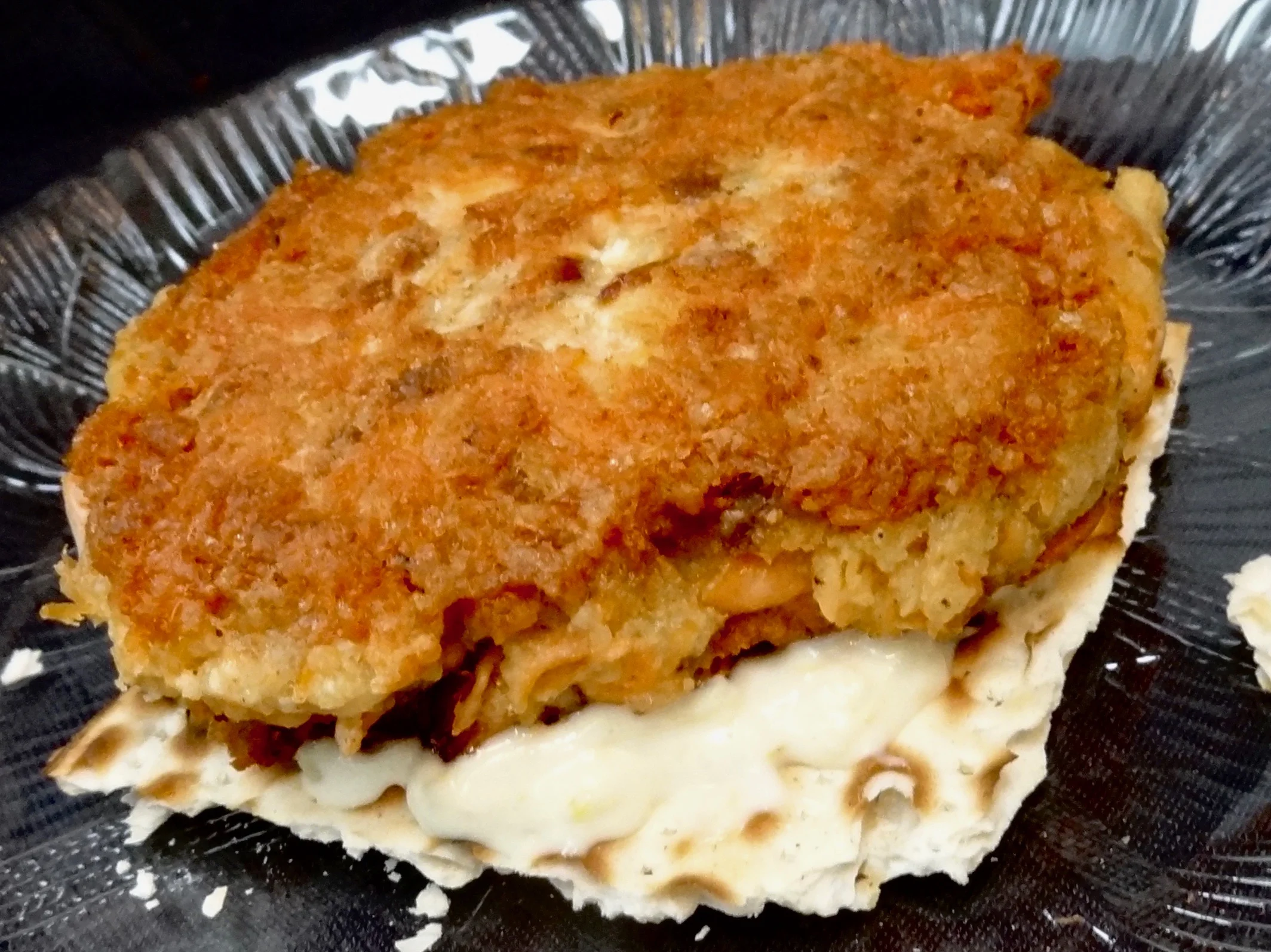
Salmon Latkes with Lemon-Scented Mayo on Matzo

DSC02238.jpeg

Half a lifetime went by before I understood the unique wonderfulness of sandwiches on matzo. As a kid I felt awkward and embarrassed bringing cream cheese and jelly or egg salad sandwiches on matzo in my school lunch.

No matter that several other kids did the same thing. I thought it was weird and I hated it.

Nevertheless, even then I had to confess, if only to myself, that those sandwiches were really really good. The crunch and crispiness of matzo was perfection against anything soft inside. So if it was anything creamy or tender, like tuna or chicken salad, well, that was good. If weird.

Roast beef? Not so much. Too hard to chew a piece while at the same time trying to keep the matzo from crumbling into a million pieces.

My Mom sometimes made salmon latkes to eat on matzo. I would never bring this to school. Much too weird I thought. Too fishy. It might smell.

Kids are embarrassed by those sorts of things.

But at home? Well, salmon latkes on matzo (with a dollop of lemon-scented mayo) is a real treat.

Try it for yourself!

SALMON LATKES WITH LEMON-SCENTED MAYO ON MATZO

  • · 2 cups mashed cooked salmon

  • · 2 large eggs

  • · 1/2 cup matzo meal

  • · 1 small grated onion, optional

  • · 1 tablespoon chopped fresh dill, optional

  • · salt and freshly ground black pepper to taste

  • · vegetable oil

  • · mayonnaise

  • · lemon juice

  • · grated fresh lemon peel

  • · matzos

In a bowl, mix the salmon, eggs, matzo meal, onion, if used, dill and salt and pepper to taste until well combined. Heat about 1/8-inch vegetable oil in a saute pan over medium heat. Shape the salmon mixture into 8-10 cakes. Fry for 2-3 minutes per side or until crispy. Drain on paper towels. Eat plain or with Lemon-Mayo on Matzo.

Makes 8-10

For each portion Lemon-Mayo, mix mayonnaise (2 tablespoons) with 2 teaspoons lemon juice and 1/2 teaspoon grated lemon peel per portion. Spread on a half piece of matzo, top with one salmon latke.

Chremslach

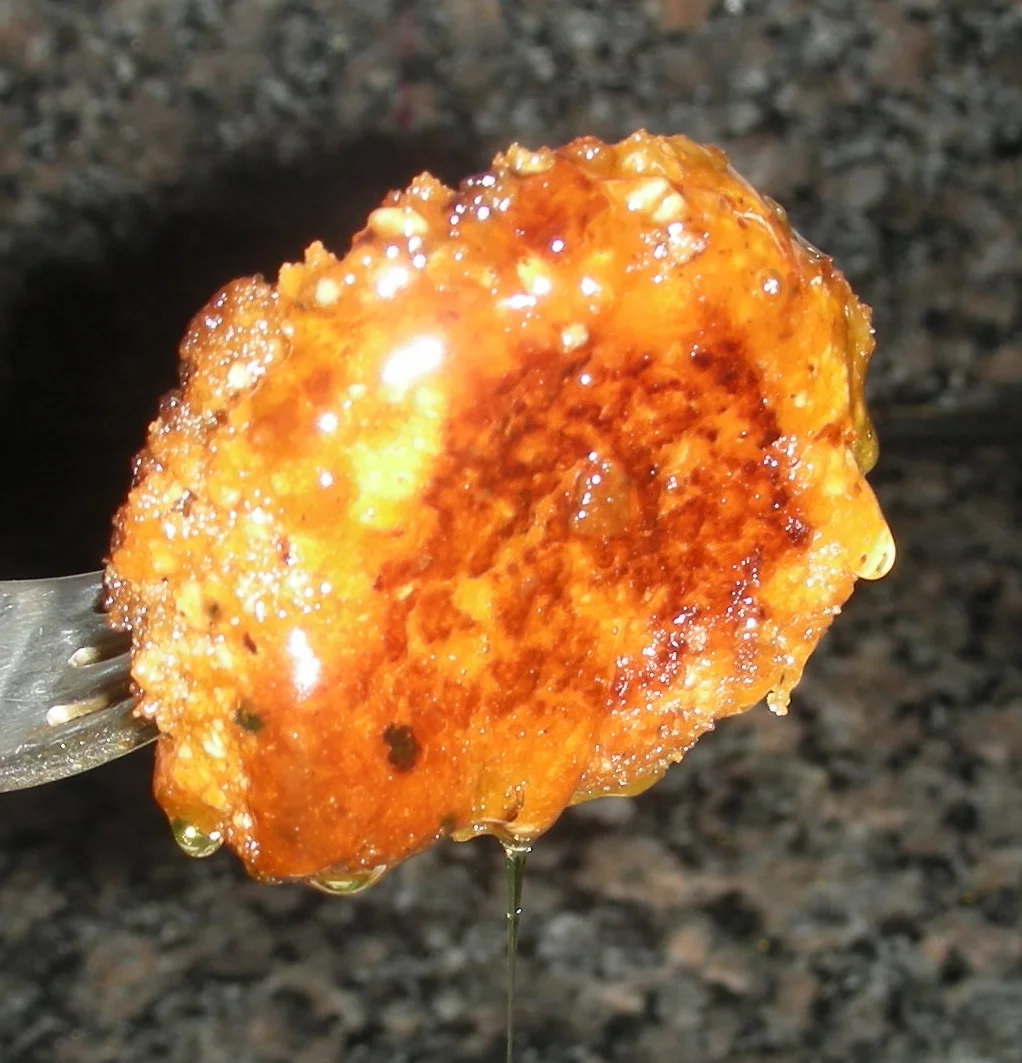
Passover wouldn’t be right without Chremslich. My grandma’s soft, honey-drenched matzo fritters.
I can’t remember ever having a Seder without these. 
Some people eat chremslich for dessert but grandma always served them with the tu…

Chremslach

Passover wouldn’t be right without Chremslich. My grandma’s soft, honey-drenched matzo fritters.

I can’t remember ever having a Seder without these. 

Some people eat chremslich for dessert but grandma always served them with the turkey, right alongside whatever vegetables there were. Like the cranberry sauce at Thanksgiving.

There are hundreds of recipes for chremslich and I’ve tried many. But none measure up to the ones I’ve known since before I can even remember.

Except that my grandmother added broken walnuts to hers and my daughter Gillian is allergic to walnuts so I make mine with pignolis, to which my brother Jeff always says “it’s better with walnuts,” but it actually isn’t.

I have also included raisins, on occasion, just to see what it’s like. And once in a while, grated fresh orange peel. Although methinks that the orange peel, though delicious, might be a bit too nouvelle for some people.

Maybe.

Anyway, here’s grandma’s recipe. I hope this is one of those recipes that my kids make in years to come. I can’t imagine Passover without these.

Btw, you can make these days in advance and keep them in the honey — and add more honey because by then the fritters are soaked through. And they are just as good. Some would say even better.

Or you can keep the fritters and honey separate and cook them together just before you serve them.

Chremslach

  • 3 large eggs

  • pinch of salt

  • 1 tablespoon vegetable oil

  • 1 teaspoon grated fresh lemon or orange peel, OPTIONAL

  • 1/4 cup sugar

  • 3/4 cup matzo meal

  • vegetable oil for frying

  • 1 pound honey, approximately

  • 1/2 cup raisins, OPTIONAL

  • 1/3 cup pignoli nuts (or use 1/2 cup chopped walnuts)

Separate the eggs. In a bowl, beat the egg yolks, salt and one tablespoon vegetable oil together until well blended. Stir in the citrus peel, if used, and set aside. In a separate bowl, beat the egg whites until foamy. Gradually add the 1/4 cup sugar and continue to beat until the whites stand up in peaks. Fold the beaten whites into the egg yolk mixture. Fold in the matzo meal. Let the mixture rest for about 30 minutes (I refrigerate). With cool, wet hands, shape portions of the mixture into disks about 1-1/2-inches in diameter and 1/2-inch thick (sometimes I drop the batter by the tablespoonful into the pan). Heat about 1/4-inch vegetable oil in a saute pan over medium heat. Fry the disks for 1-2 minutes per side or until golden brown on both sides (you may have to flatten them slightly with a rigid spatula). Drain on paper towels and place the fried disks in a large saucepan. Pour the honey over the disks. Add the raisins, if used, and the nuts. Cook over low-medium heat for 5-6 minutes or until heated through and all the disks are coated with honey. Serve immediately or make ahead and reheat. Add more honey as tastes dictate.

Makes 10-12 servings

Orange-Honey-Nut Tart

What to do with MacaroonsIn the old days we ate macaroons straight out of the can. That was dessert.But there are so many delicious things you can do with plain old macaroons. Like use them to make a crust for cheesecake. Or crumble them to top a fr…

What to do with Macaroons

In the old days we ate macaroons straight out of the can. That was dessert.

But there are so many delicious things you can do with plain old macaroons. Like use them to make a crust for cheesecake. Or crumble them to top a fruit crisp. Or break them up into a parfait dish with ice cream and chocolate sauce.

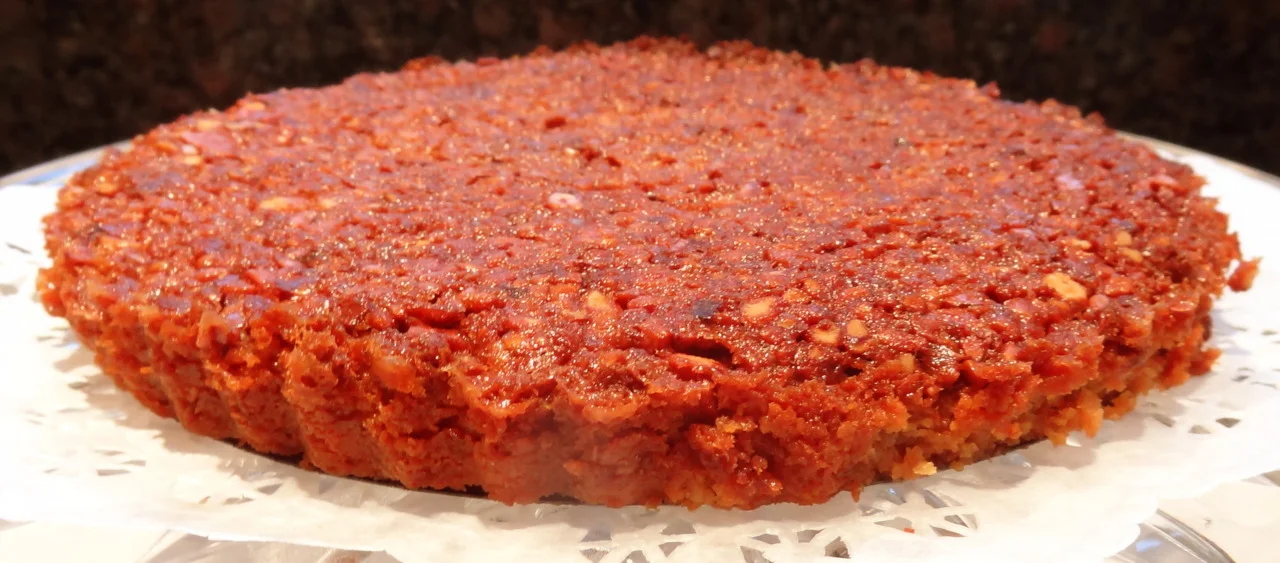
Or make this fabulously rich tart. It’s sort of like a Chess Pie or Pecan pie. With a macaroon crust. 

Make it ahead and keep it in the fridge for 2-3 days. You won’t be sorry.


Orange-Honey-Nut Tart


18-20 macaroons

2/3 cup honey

1/2 cup butter

1/3 cup sugar

3/4 teaspoon salt

1/2 cup cream (light, whipping or half and half)

2 large eggs

1 tablespoon grated fresh orange peel

1 cup medium-fine chopped almonds


Preheat the oven to 375 degrees. Lightly grease the bottom and sides of a 10-inch tart pan with removable bottom. Crumble the macaroons and press them onto the bottom and sides of the greased pan. Set aside. Place the honey, butter, sugar and salt and bring to a boil over medium-high heat, mixing constantly. Cook for about a minute or until the sugar has completely dissolved. Set aside to cool slightly. In a bowl, beat the cream, eggs and orange peel together until well blended. Pour in the honey mixture and blend ingredients thoroughly. Pour the mixture into the macaroon crust. Scatter the nuts on top. Place the tart in the oven and bake for about 30 minutes or until golden brown. Let cool.

Makes 8 servings

How to Cook Brisket, plus Mango-Honey Barbecue Sauce

I never liked my mother’s brisket. In fact I didn’t like brisket at all until recently. To me it was always this brown, wet meat and the slices were too narrow and lean. And unless the meat was cut into very thin slices, it was tough and stringy.My …

How to make brisket

I never liked my mother’s brisket. In fact I didn’t like brisket at all until recently. To me it was always this brown, wet meat and the slices were too narrow and lean. And unless the meat was cut into very thin slices, it was tough and stringy.

My mother always used first cut brisket.

Then I met my mother-in-law, who used second cut brisket.

My parents and in-laws actually got along and were good friends who travelled together. Even so, you can imagine what each of the women had to say about the other one’s recipe. 

My mother said second cut brisket was too fatty. My mother-in-law said first cut wasn’t fatty enough.

I thought both were still too tough, too wet and too stringy.

So I experimented. Because that’s what I do. And in the process learned quite a lot about cooking this particular portion of meat.

Which can be tough and stringy if you don’t cook it right. And wet if you don’t do something good with the pan juices.

I buy a whole brisket. First and second cut. Yes, it’s way too big for my family, but I freeze some of it (portions from the fatty and lean parts together to please everyone tastes) because braised meat holds up very well in cold storage. A whole brisket has enough fat to enrich the meat, so that the leanest portions are more flavorful. And after the cooking has ended, you can cut away any excess fat that you don’t actually want to eat.

The real trick to brisket is LONG SLOW cooking.

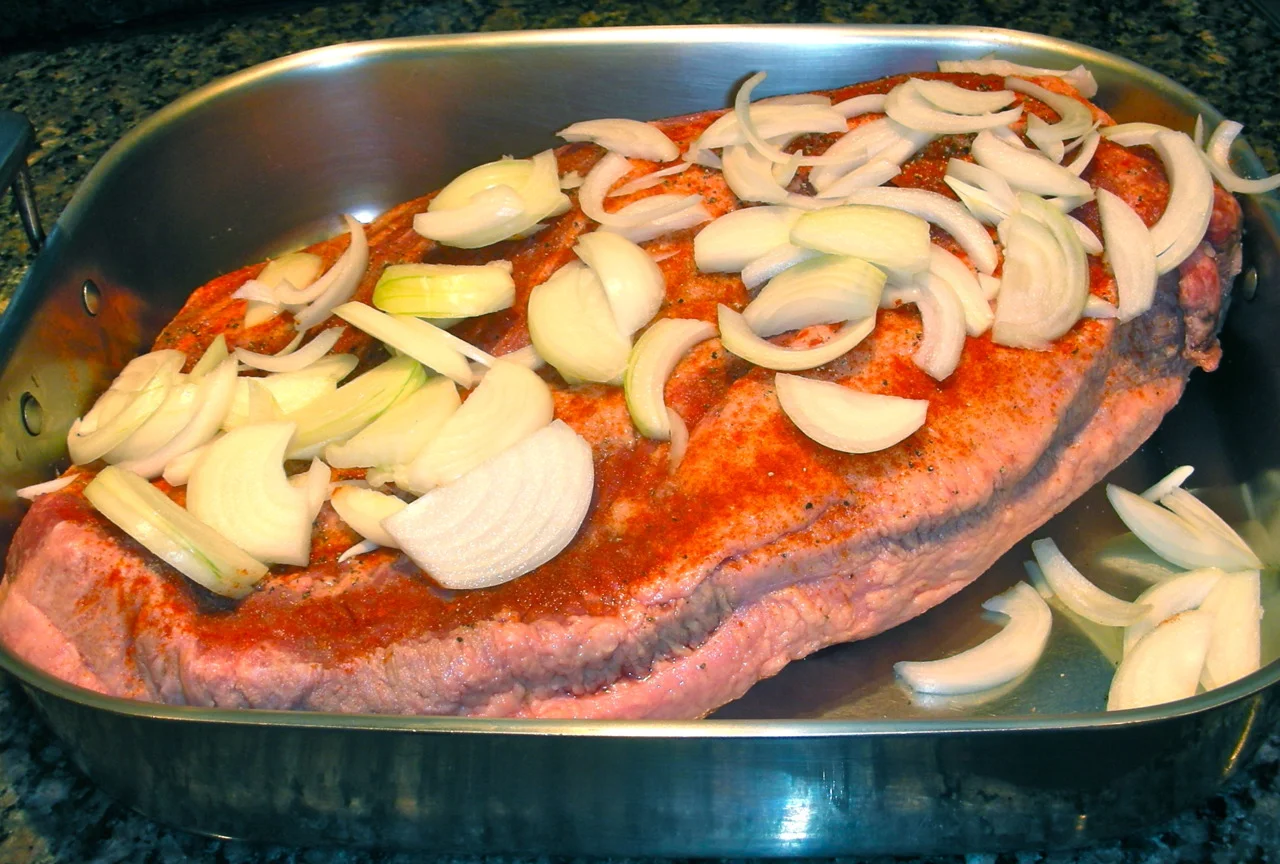
Here’s what I do: you can see from the photo that all I do is season the meat with garlic powder, pepper and paprika (and salt if necessary). I scatter a lot of onions on top and throughout the pan. I cover the pan tightly with aluminum foil.

NO STOCK. NO WATER. NO WINE.

It doesn’t need anymore liquid. The onions and the meat give off enough.

I put the pan in a cold oven before I go to bed at night, set the oven to bake at 250-275F degrees and go to sleep.

The next morning the brisket alarm clock wakes me up about many hours (for a large brisket 8 hours) later with the most glorious aroma ever. (Actually it competes with the coffee, which is set to brew just about when the meat is done.) If you choose a smaller portion, say a first or second cut piece, obviously, it takes less time (let’s say 4-5 hours).

But don’t follow those recipes that tell you to cook brisket at 350 degrees! Your pot roast will rebel and show you how tough it is.

I usually don’t serve brisket with the pan gravy. Sometimes I strain the juices and use it for soup. Sometimes I boil the pan gravy down and use it for things like mashed potatoes. Sometimes I puree the juices with the onions. It really all depends on my particular culinary needs at the moment.

As for the brisket: none of us likes it wet. So I let the meat cool and put it on the grill (or under the broiler or in a 425F oven), and keep slathering the surface with barbecue sauce and cook the meat until it is hot and crispy to a mahogany glaze on the surface. 

This is not wet, stringy or tough. It’s just dee-lish!

The sauce I frequently use as a glaze is not appropriate for Passover. But here’s one that’s just fine.

Mango-Honey Barbecue Sauce

  • 1 large ripe mango

  • 1 tablespoon vegetable oil

  • 1 medium onion, finely chopped

  • 1 large clove garlic, finely chopped

  • 1 teaspoon finely chopped fresh ginger

  • 1 teaspoon grated fresh orange peel

  • 1 cup bottled chili sauce

  • 1/4 cup orange juice

  • 1/4 cup honey

  • 1/4 teaspoon cayenne pepper

Peel the mango and puree the flesh in a food processor. Heat the vegetable oil in a nonstick saucepan over medium heat. Add the onion and cook for one minute. Add the garlic and ginger and cook for another minute. Add the orange peel, mango puree, chili sauce, orange juice, honey and cayenne pepper. Stir to blend the ingredients thoroughly. Cook over low-medium heat for about 15 minutes, stirring occasionally, or until slightly thickened. Let cool.

Makes about 2-1/2 cups

Salmon Fish Cakes

I understand why certain foods are associated with specific ethnic groups. Like spaghetti and marinara sauce, which may be an American favorite but its origin is Italian. Egg rolls are part of Chinese cuisine, crepes are French and so on.

What I don’t get is why Salmon Fish Cakes are thought of as Jewish food?

Or are they?

Okay, my Mom made them by mixing a can of red salmon (she was adamant that it had to be red, not pink, salmon) with eggs and matzo meal. And she did call them latkes (a Yiddish word for “patties”). But sometimes she made them with regular bread crumbs and called them croquettes.

Yet, every Jewish kid I knew (and those who are now grown up) had a mother who made them. And every non-Jewish kid (now adult) I knew didn’t.

Really, fish cakes are multi-ethnic. Non-ethnic. They’re just fish cakes. You can make them with almost any leftover fish, bind them with eggs and a starch (matzo meal or bread crumbs or mashed potatoes or corn meal, whatever), shape them into patties and fry them.

They are also a good way to use fish leftovers (or fish from scratch). They are easy to make, quick to cook. And they taste good whether hot, room temperature or cold.

What more could you ask of a summer meal?

Whatever your background, try Salmon Fish Cakes. You can eat them plain or in a sandwich with a thick slice of summer tomato and some mayo. Or serve them a bit fancier with some easy to make Horseradish Cream Sauce (recipe follows).

Salmon Fish Cakes

  • 2 medium Yukon Gold or all-purpose potatoes
  • 2 cups crumbled, cooked salmon
  • 1 large egg
  • 1 thick scallion, finely chopped, optional
  • 1 tablespoon finely chopped fresh dill, optional
  • salt and freshly ground black pepper to taste
  • matzo meal (or all-purpose flour)
  • 2 tablespoons butter
  • 2 tablespoons vegetable oil

Peel and cut the potatoes into chunks, cook them in boiling water for 12-15 minutes or until tender, drain and place the chunks in a bowl. Mash the chunks. Add the fish, egg, scallion, dill and some salt and pepper and mix the ingredients thoroughly. Shape portions of the mixture into 4 patties about 3/4-inch thick. Dredge the patties in some matzo meal to coat the surface. Heat the butter and vegetable oil in a saute pan over medium heat. When the butter has melted and looks foamy, place the patties in the pan and cook for about 3 minutes per side or until crispy. Drain on paper towels.

Makes 4 servings

Horseradish Cream Sauce

  • 1/2 cup plain yogurt, preferably Greek style
  • 1 tablespoon prepared white horseradish
  • 1 tablespoon chopped fresh dill
  • 2 teaspoons lemon juice

Mix ingredients thoroughly.

Makes 1/2 cup

Passover Birthday Cake

Passover Birthday CakeMy daughter Meredith’s birthday sometimes falls during Passover, which means that in certain years she isn’t able to have a “traditional” birthday cake.Which didn’t bother her one bit when she was a kid because she absolutely l…

Passover Birthday Cake

My daughter Meredith’s birthday sometimes falls during Passover, which means that in certain years she isn’t able to have a “traditional” birthday cake.

Which didn’t bother her one bit when she was a kid because she absolutely loved the flourless chocolate jelly roll cake I made for her and for years this is what she asked me to bake even when it wasn’t Passover. I always thought it was an interesting and glamorous choice considering her age.

Guess it all comes down to how it tastes. Mer was never one to pick something just because it was “the thing” or because someone else liked or wanted it. She liked how this chocolate roll tasted and I don’t blame her. It’s de-lish. Passover-friendly too. But you can make this any old time.

Here’s the recipe.


Flourless Chocolate Jelly Roll Cake


6 ounces semisweet chocolate

3 tablespoons cooled coffee (or brandy or rum)

5 large eggs 

1 cup sugar

1-1/2 cups heavy cream

1-1/2 teaspoons vanilla extract

1 pint strawberries, sliced

cocoa powder or (Passover) confectioner’s sugar


Preheat the oven to 350 degrees. Butter a 15-1/2”x10-1/2” jelly roll pan. Line the pan with parchment paper, leaving several inches hanging over each of the short edges. Butter the portion of the paper that fits inside the pan. 

Melt the chocolate and coffee together in the top part of a double boiler set over barely simmering water. Mix the ingredients well and remove the top part of the pan from the heat. Let cool. In the bowl of an electric mixer set at medium speed (or use a hand mixer), beat the egg yolks and all but 2 teaspoons of the sugar together for 3-4 minutes or until thick and pale. Add the cooled chocolate mixture and blend it in thoroughly. In another bowl, beat the egg whites until they stand in stiff peaks. Mix about 1/4 of the beaten whites into the chocolate mixture. Fold the remaining whites into the chocolate mixture. Spoon the batter into the prepared pan, smoothing it to make it even. Bake for about 10 minutes or until “set.” Remove the cake from the oven. Cover it with a slightly dampened kitchen towel. Let cool.

Loosen the cake by pulling the overlapping ends of parchment paper. Invert the cake onto a clean sheet of parchment paper or kitchen towel and roll it up starting with one of the long sides. Set aside. 

Whip the cream and remaining 2 teaspoons sugar and vanilla extract until thick (use an electric mixer or hand mixer). Unroll the cake and spread the whipped cream on top of the cake, leaving about 1-inch at the edges. Top with the strawberries. Roll the cake starting on the long side. Place on a serving platter, seam side down. Dust (using a strainer) with cocoa or confectioner’s sugar.

Makes 10-12 servings

Soft Matzo Brei

IMG_4290.jpeg

“There’s no French Toast during Passover.” That’s what I told my grandkids when they were here for a few days for Seders and sleepovers. They’re used to French Toast when they come to grandma’s house because I always have a spare challah in the freezer, or we make one and then have leftovers, and everyone on earth knows that the best French Toast is made with challah.

But never mind that. “Israeli Toast” is on the menu, is what I told them.

You know. Matzo Brei. It’s the same thing as French Toast but instead of using bread, you use matzo.

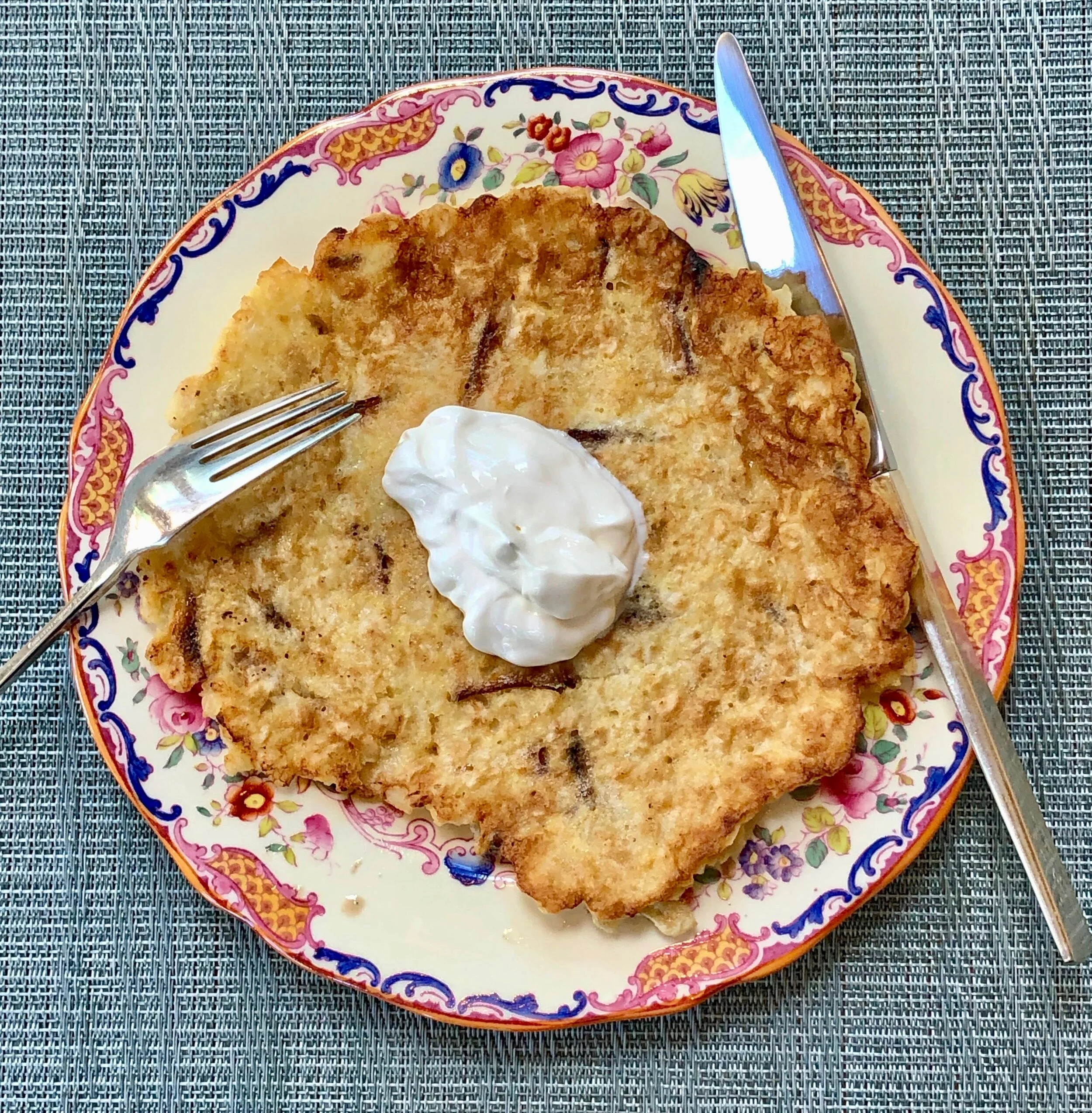
But here’s a dilemma. Topping for French Toast is easy: either maple syrup, cinnamon sugar or jelly. A lot of people do the same for Matzo Brei. But when I was a little girl my grandma served Matzo Brei sprinkled with salt and topped with a big blob of sour cream. Sometimes applesauce.

My husband Ed always thought this was weird. But it’s how I served it to my own daughters too, who think it’s weird to drizzle matzo brei with anything as sweet as maple syrup. If I had sour cream in the fridge, that’s what they would choose. But we’ve switched to fat-free Greek yogurt instead.

“Israeli Toast” or Matzo Brei is so easy to make. And a delicious switch from every other cereal-based breakfast. So if you want to give it a try, here’s my recipe:

Matzo Brei

  • 3 pieces of matzo

  • hot water

  • 2 large eggs

  • salt

  • butter

  • sour cream or plain Greek style yogurt

Break the matzot into small pieces into a bowl. Cover with hot water and let it soak until the pieces are soft. Drain any non-absorbed water, then squeeze the pieces to extract as much excess water as possible. Add the eggs to the soft matzo pieces and mix until the matzo and egg are well combined. Sprinkle to taste with salt. Heat the butter in a saute pan over medium heat. When the butter has melted and looks foamy, add the egg-matzo mixture. Cook for 2-3 minutes per side or until golden brown and crispy. Serve with sour cream or plain yogurt, or, if you must, with maple syrup.

Makes 2-3 servings

Haroset with Pistachios and Pepper

fullsizeoutput_a305.jpeg

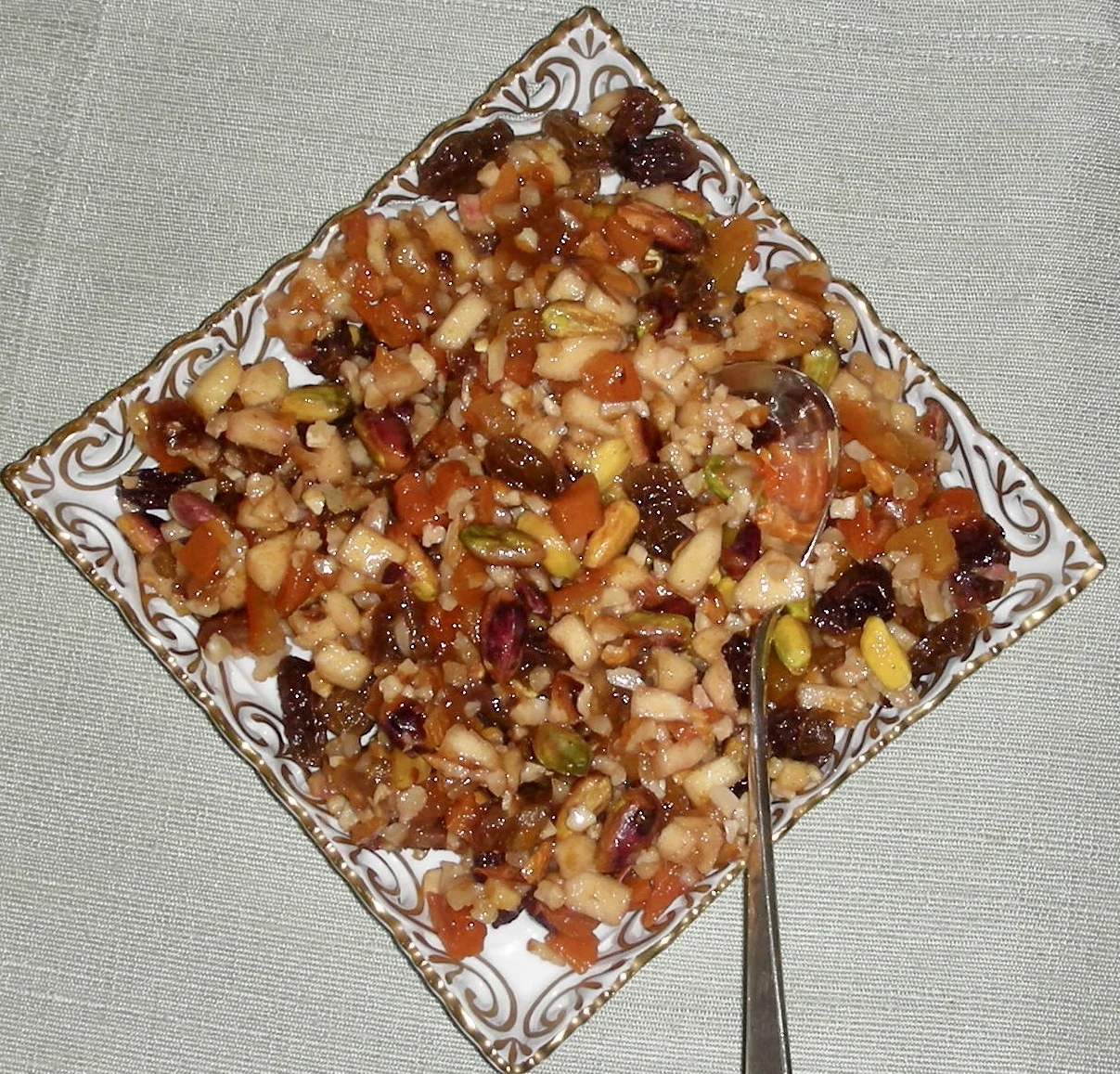
Charoset (Haroset) is more than a blob of stuff that sits on the Passover Seder plate. Sure, we talk about it during the Haggadah reading. It’s there to symbolize the mortar used between the bricks that Jewish slaves used to build the pyramids for the ancient Egyptian pharaoh.

But it’s also food. In our family, another fabulous side dish, more like a relish, that we eat plenty of during the meal.

None of us ever really loved the old fashioned apple-wine mixture that most of us Ashkenazi Jews of Eastern European descent grew up with. It always tasted a bit sour and it got brown and ugly and besides, my daughter Gillian can’t eat walnuts and somehow almonds didn’t taste right in the mixture.

So, years ago I experimented with lots of recipes and found one I liked. It was a “Persian” recipe that I changed over and over until I got it the way I liked. At first my kids refused to eat it saying they would rather eat real mortar than this new charoset. But over the years they gradually came to love it and now insist they always did or at least can’t remember when they didn’t.

I double the recipe I am going to post here because it’s so good we eat a lot of it and besides, this relish lasts a while in the fridge so you can keep on having it all during Passover.

Haroset with Pistachios and Pepper

  • 1 cup chopped dried apricots

  • 1 cup chopped dates

  • 1/2 cup raisins

  • 1 cup shelled pistachio nuts

  • 1 cup chopped almonds

  • 2 tart apples, peeled, cored and chopped

  • 2/3 cup sweet red Passover wine

  • 1/4 cup apple cider vinegar

  • 2 teaspoons grated fresh orange peel

  • 2 teaspoons finely chopped fresh ginger

  • 3/4 teaspoon ground cinnamon

  • 1/2 teaspoon cayenne pepper

  • 1/2 cup orange marmalade

    Combine the apricots, dates, raisins, pistachio nuts and almonds in a bowl and toss ingredients to distribute them evenly. (You can prepare this much a week ahead). Add the apples, wine, vinegar, orange peel, ginger, cinnamon, cayenne and marmalade and mix ingredients. Let rest at least 4 hours before serving. May be made 3 days ahead.

Makes about 6 cups.