Jewish food

Grandma's Stewed Fruit

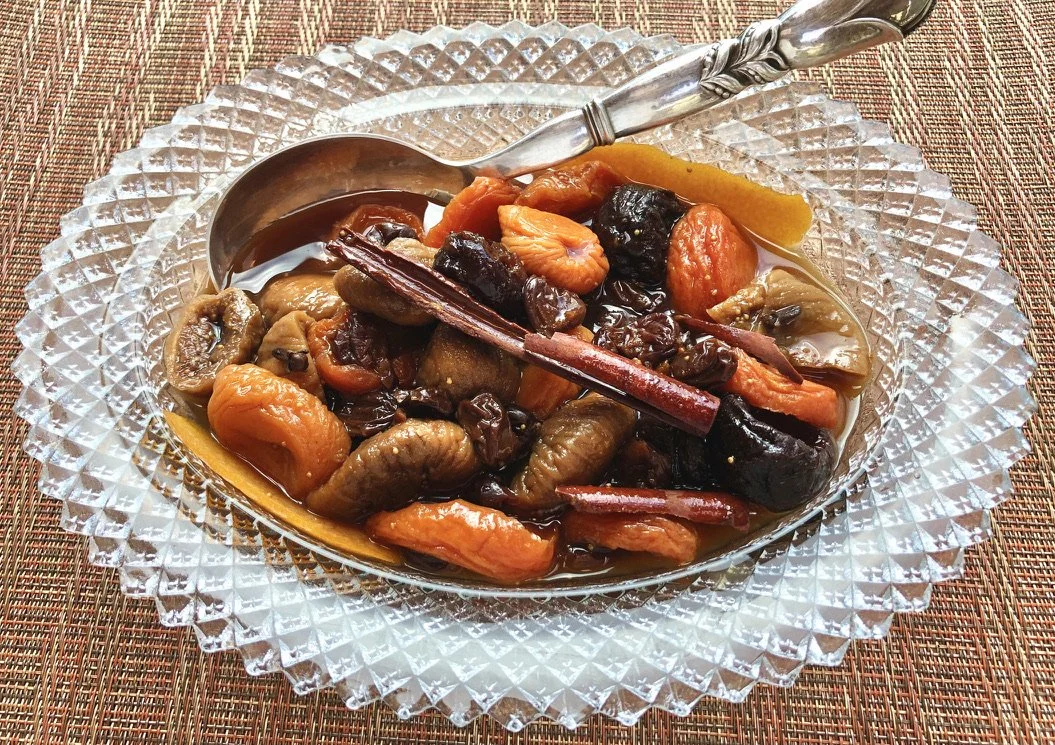
Many of us over a certain age remember Grandma’s stewed fruit!

I call this Grandma’s Stewed Fruit even though it is way different than my grandma’s version, but I’m the grandma now……. and this is one of the many ways my grandkids have tasted this iconic dish.

It is one of the dishes I cooked for my Tu B’shevat class last week at Temple Beth El in Stamford, CT. I’ve made this so many times and keep changing the fruit, depending on what I actually have in my cupboard. The poaching liquid too — sometimes I use a different juice or add some white wine (I particularly love a German sweet wine). And of course — the seasonings. Cinnamon is always good but there’s also cloves, cardamom, dried coriander, mace, etc. to consider.

It’s always delicious, no matter how you cook it.

Eat some with yogurt for breakfast. Use it for dessert! Remember this for Passover. Or Break-the-fast. It’s versatile, attractive, useful, make-ahead! No wonder this is such an icon of Jewish cuisine.

Grandma’s Stewed Fruit 

  • 2 cups orange or orange/pineapple juice

  • 1-1/2 cups water

  • 1/4 cup maple syrup

  • 1 3” cinnamon stick

  • 2 tablespoons chopped crystallized ginger

  • 1 teaspoon cloves

  • 6-8 whole dried figs

  • 6-8 pitted Medjool dates

  • 1 cup dried apricot halves

  • 8-10 prunes

  • 1/2 cup golden raisins

Place the water, juice, maple syrup, cinnamon stick, ginger and cloves in a saucepan large enough to hold all the fruit. Bring to a boil over high heat. Turn the heat to medium-low and simmer for 15 minutes. Add the figs, dates, apricots, prunes and raisins and simmer another 15-20 minutes or until the fruit is soft. Let the fruit cool in the pan. Discard the cinnamon stick and cloves. Let cool. Serve with the poaching liquid.

Makes 8 servings


Braised Chicken with Figs and Grapes

I recently bought a whole bunch of dried figs, dates, plums (prunes) and California apricots in preparation for a Tu B’Shevat food demo/class I am doing for Temple Beth El in Stamford, CT on Thursday, January 18th, 2024 (it’s free, so if you’re in the area, give us a call).

Tu B’Shevat is a joyous holiday, a kind of Earth Day, when we celebrate and try to be mindful of our planet and its resources. This was a day I remember my parents donating money to plant trees in Israel.

With its focus on earth’s bounty, the food for this holiday features lots of fruit, including those dried fruits I mentioned. Like this chicken dish, which is braised with apple cider (sometimes I use orange juice or orange-pineapple juice), seasoned with curry and ginger and of course, includes dried figs (though any dried fruit will do!).

braised CHICKEN WITH FIGS AND GRAPES

  • 1-3/4 cups apple cider (or use orange or orange-pineapple juice)

  • 2 tablespoons vegetable oil

  • 6 bone-in pieces of chicken

  • 1 shallot, chopped (or use a small onion)

  • 1-1/2 teaspoons chopped fresh ginger

  • 1/2 cup diced dried figs (or use other dried fruit such as prunes, apricots, nectarines or dates)

  • 2-1/2 teaspoons curry powder

  • 1/4 teaspoon Aleppo pepper (or use 1/8 teaspoon cayenne pepper)

  • salt and freshly ground black pepper to taste

  • 1 cup halved fresh grapes

  • chopped fresh mint

  • cooked bulgur wheat, rice or noodles, optional

Boil the cider for about 5 minutes or until it has reduced to 3/4 cup. Heat the vegetable oil in a sauté pan over medium heat. Add the chicken and cook for 8-10 minutes, or until lightly browned, turning the pieces occasionally. Remove the chicken pieces and set them aside on a plate. Add the shallot, ginger and diced figs to the pan and cook for 1-2 minutes over low-medium heat. Return the chicken to the pan. Sprinkle the ingredients with curry powder, Aleppo pepper and salt and black pepper to taste. Pour in the reduced cider. Turn the pieces of chicken to coat all sides with the pan ingredients. Cover the pan, turn the heat to low and cook for 15 minutes. Add the grapes and cook for an additional 10 minutes or until the chicken is cooked through. Sprinkle with chopped fresh mint. Serve on a bed of cooked bulgur wheat, rice or noodles if desired.

Makes 4-6 servings

Shakshuka

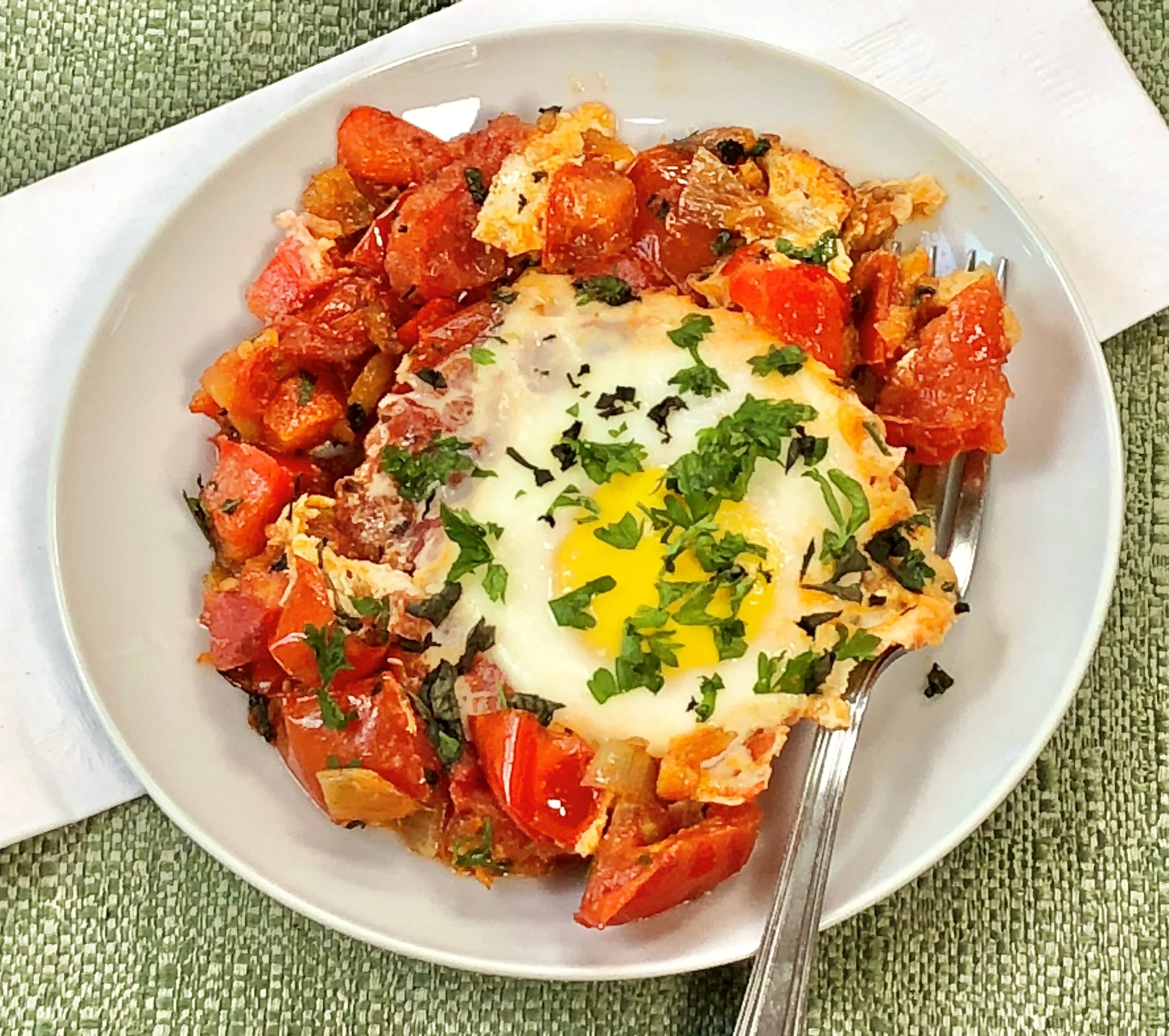
Lately, Ed and I have not been in the mood for a meat meal, so I make pasta or pizza or a big salad and such. These days it’s really easy (also delicious) to put together a tasty vegetarian dinner. One of our favorites is Shakshuka - originally a North African dish but popular everywhere now. I season it differently from time to time (there’s a good recipe for Indian style Shakshuka right here on my website). But this one is my old standby. It’s seasoned with basil, which I realize is not traditional in North Africa or anywhere in the Middle East. But we like it this way. We also prefer a thick, chunky tomato base rather than a more sauce-like version that’s typical of restaurant Shakshuka that we’ve tried. Here it is; it’s a nice dinner but also a feast of a weekend breakfast.

SHAKSHUKA

  • 1/4 cup olive oil

  • 1 medium onion, chopped

  • 1 red bell pepper, deseeded and chopped

  • 2 small habanero or other chili peppers, deseeded and finely chopped

  • 1 large clove garlic, finely chopped

  • 6-8 plum tomatoes, chopped

  • 1 tablespoon chopped fresh basil

  • 1 tablespoon lemon juice

  • 8 large eggs

  • 3/4 teaspoon zatar

Heat the olive oil in a large sauté pan over medium heat. Add the onion, bell pepper, and habanero peppers. Cook for 4–5 minutes or until softened slightly. Add the garlic and cook briefly. Add the tomatoes, basil and lemon juice, stir, cover the pan, turn the heat to low and cook for 8–10 minutes, stirring occasionally, or until vegetables are very soft. Crack the eggs into a small bowl one at a time then transfer each one next to the other over the vegetables. Cover the pan and cook for 4–5 minutes or until the eggs are set but yolks are still slightly runny. Sprinkle with zatar. Serve each person 2 eggs and some of the vegetables.

Makes 4 servings

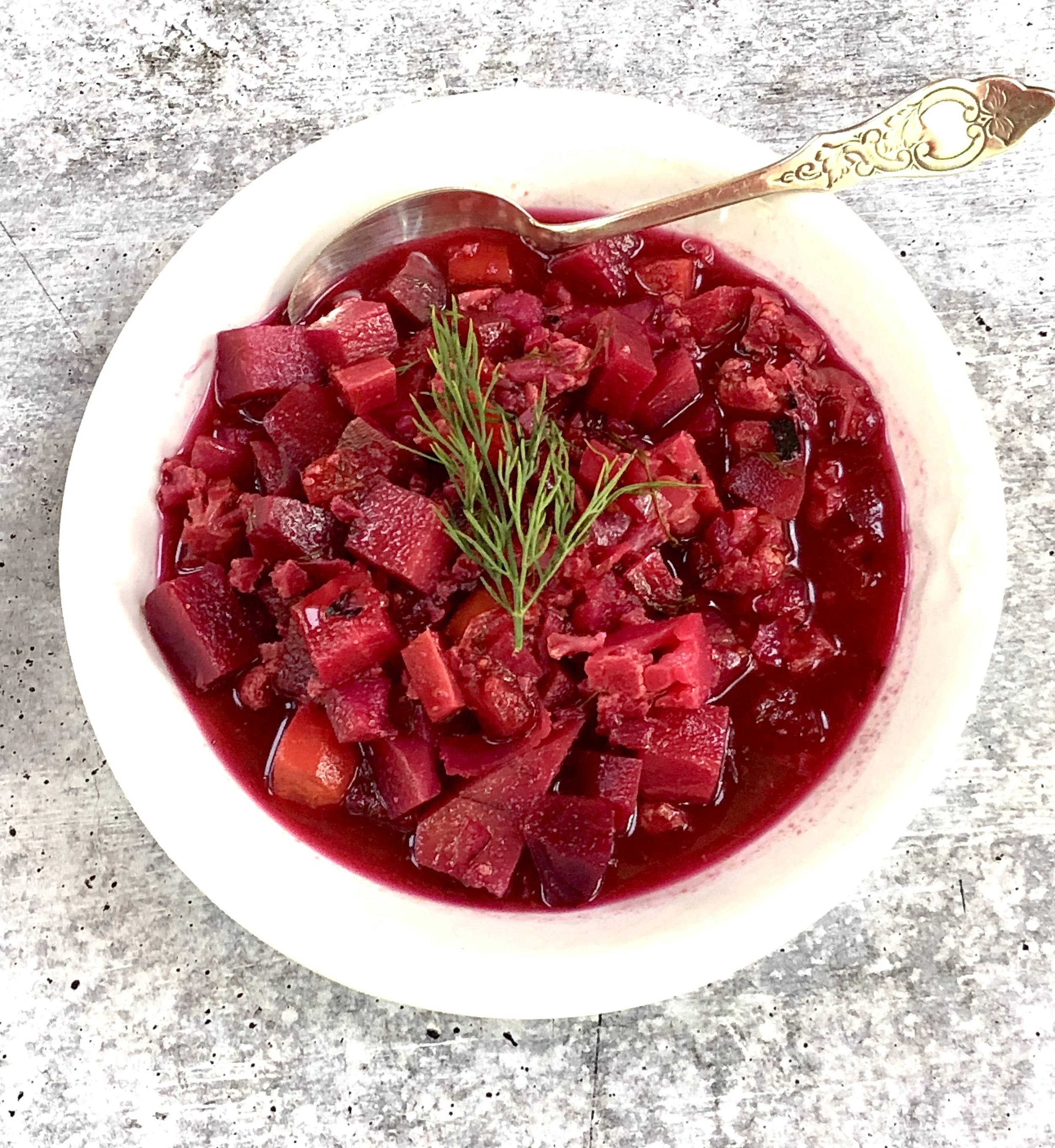
Borscht with Cauliflower

Borscht with Cauliflower

Like most everyone I know, I overindulged over the December holidays. So, it’s time for some austerity — caloriewise, healthwise — with the menu.

But I like good food. Tasty food. Filling, satisfying food that looks good enough to please.

This soup has it all. It’s a riff on classic Borscht — cabbage is the foundation of Borscht but I didn’t have any! So I used cauliflower. It’s in the cabbage family after all. Mishpocha maybe.

It was perfect.

Borscht with Cauliflower

  • 2 tablespoons vegetable oil

  • 1 medium onion, chopped

  • 1 clove garlic, chopped

  • 2 medium-large beets, peeled and shredded

  • 2 plum tomatoes, chopped

  • 1 parsnip, peeled and shredded

  • 2 cups cut up cauliflower

  • 2 tablespoons chopped parsley

  • 6 cups vegetable stock

  • 1 bay leaf

  • 1 teaspoon salt or to taste

  • freshly ground black pepper to taste

  • 1 large Yukon gold potato, peeled and diced

  • 3 tablespoons white vinegar, approximately

  • 1-1/2 tablespoons chopped fresh dill

  • dairy sour cream or plain Greek style yogurt, optional

Heat the vegetable oil in a soup pot over medium heat. Add the onion and cook, stirring occasionally, for 2 minutes. Add the garlic, beets, tomatoes, parsnip, cauliflower and parsley and cook, stirring occasionally, for 3-4 minutes. Pour in the stock, add the bay leaf and salt and pepper to taste. Bring the liquid to a boil. Lower the heat and simmer, partially covered, one hour. Add the potato and cook for 45-60 minutes or until the vegetables have softened. Stir in the vinegar and dill and cook for 12-15 minutes. Taste for seasoning and add more salt, pepper or vinegar to taste. Remove the bay leaf. If the soup is cooked using vegetable stock, serve it garnished with a dollop of sour cream if desired. 

Makes 6-8 servings

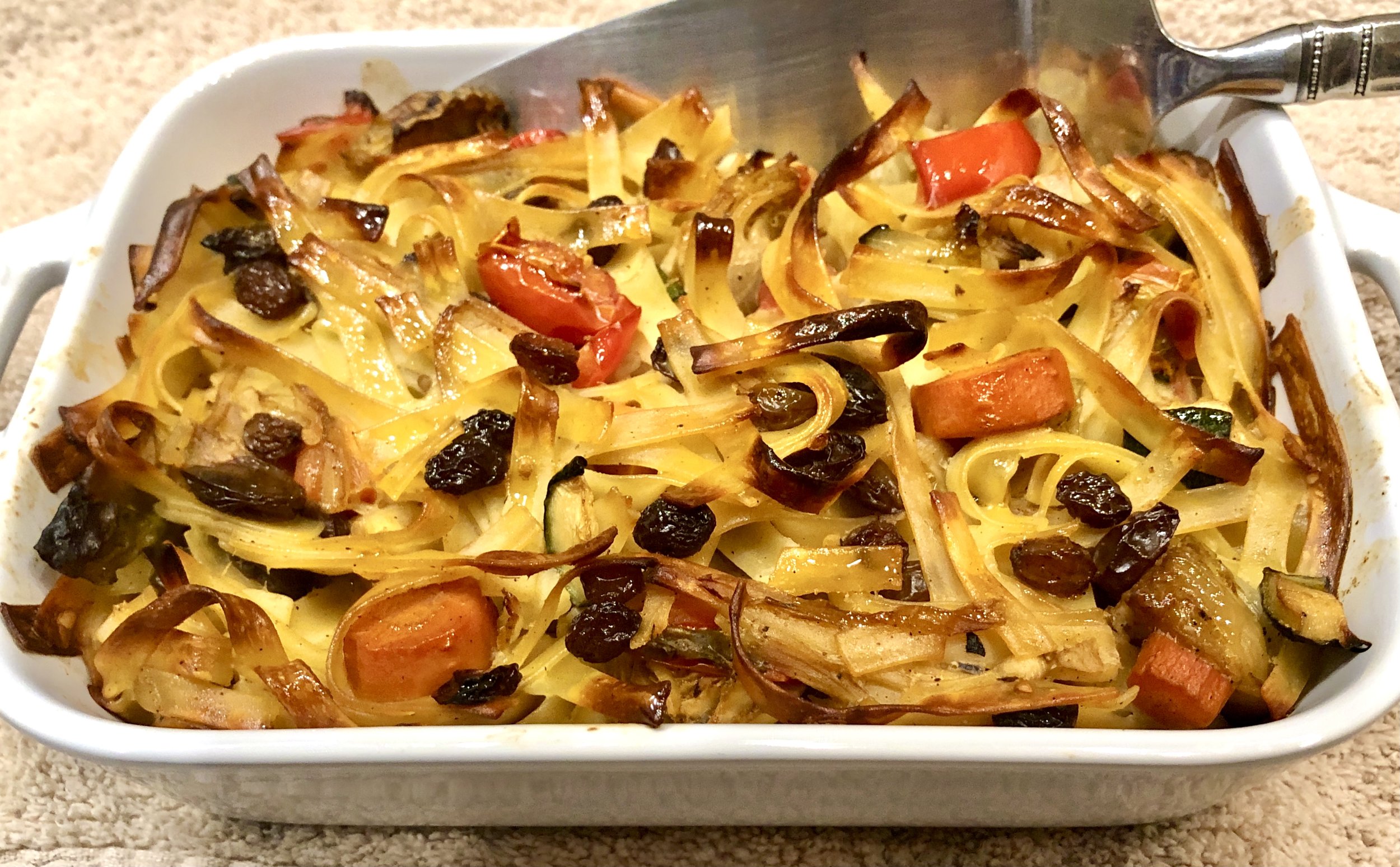
Moroccan-Spiced Vegetable Kugel

Back in September I posted a recipe for a dish (Couscous with Seven Vegetables) that is traditional on Rosh Hashanah among the Jews of North Africa. We love the dish so much that I made it several times, changing the spices a bit each time. Then, one time, I decided to use the same vegetables and seasonings but instead of serving them over couscous, mix them into a kugel.

It worked perfectly!

Of course the texture of kugel vs braised vegetables over couscous is quite different. But the flavors are reminiscent of each other and just as delicious, either way.

This is a good side dish for Thanksgiving. First, it goes so well with turkey. It’s a good choice for any vegetarians who might be at your table. and also, you can make it in advance

Moroccan-Spiced Vegetable Kugel 

  • 2 tablespoons olive oil

  • 1 small onion, sliced

  • 1 clove garlic, finely chopped

  • 1/2 teaspoon chopped fresh ginger

  • 1 carrot, peeled and cut into 1/2-inch slices

  • 1 medium tomato, cut into chunks

  • 1 small parsnip, peeled and cut in 1/2-inch slices, optional

  • 1/2 cup cut up bite sized butternut squash

  • 1/2 teaspoon ras al hanout (or use 1/4 teaspoon harissa plus 1/8 teaspoon each of ground ginger, turmeric and cinnamon)

  • 3/4 cup vegetable stock

  • 1 cup diced zucchini

  • 1/4 red bell pepper, cut into bite sized chunks

  • 1/2 cup raisins

  • 1/2 cup canned chickpeas, rinsed and drained

  • Salt to taste

  • 12 ounces egg noodles

  • 3 eggs

Preheat the oven to 375F. Heat the olive oil in sautepan over medium heat. Add the onion and cook, stirring often, for about 4 minutes or until softened and beginning to brown. Add the garlic and ginger and cook for a minute. Add the carrot, tomato, parsnip and squash and stir the ingredients. Stir in the ras al hanout. Add the stock, bring to a boil, reduce the heat to medium low and cook for about 15 minutes. Add the zucchini, bell pepper, raisins and chickpeas. Cook for about 10 minutes more, or until vegetables are tender. Add salt to taste. Cook the noodles according to the manufacturer’s directions. Spoon the vegetables and pan fluids into the noodles and mix to distribute the ingredients evenly. Beat the eggs and mix them in. Place inside a baking dish and bake for about 35-40 minutes or until the top is crispy.

Makes 4 dinner servings, 8 side dish servings

Potato Pancakes for all occasions

Is there anyone who doesn’t like potato pancakes?

Can’t be!

I make all sorts of versions: Ashkenazi Jewish, Irish, Peruvian, German ….. and more. I make some with raw, shredded potatoes and some with cooked, mashed potatoes ….. and more.

I love all of them.

Recently I tinkered with one of my recipes for Irish mashed potato pancakes, basically combining it with another fabulous Irish mashed potato dish called Colcannon, which includes chopped cabbage or kale.

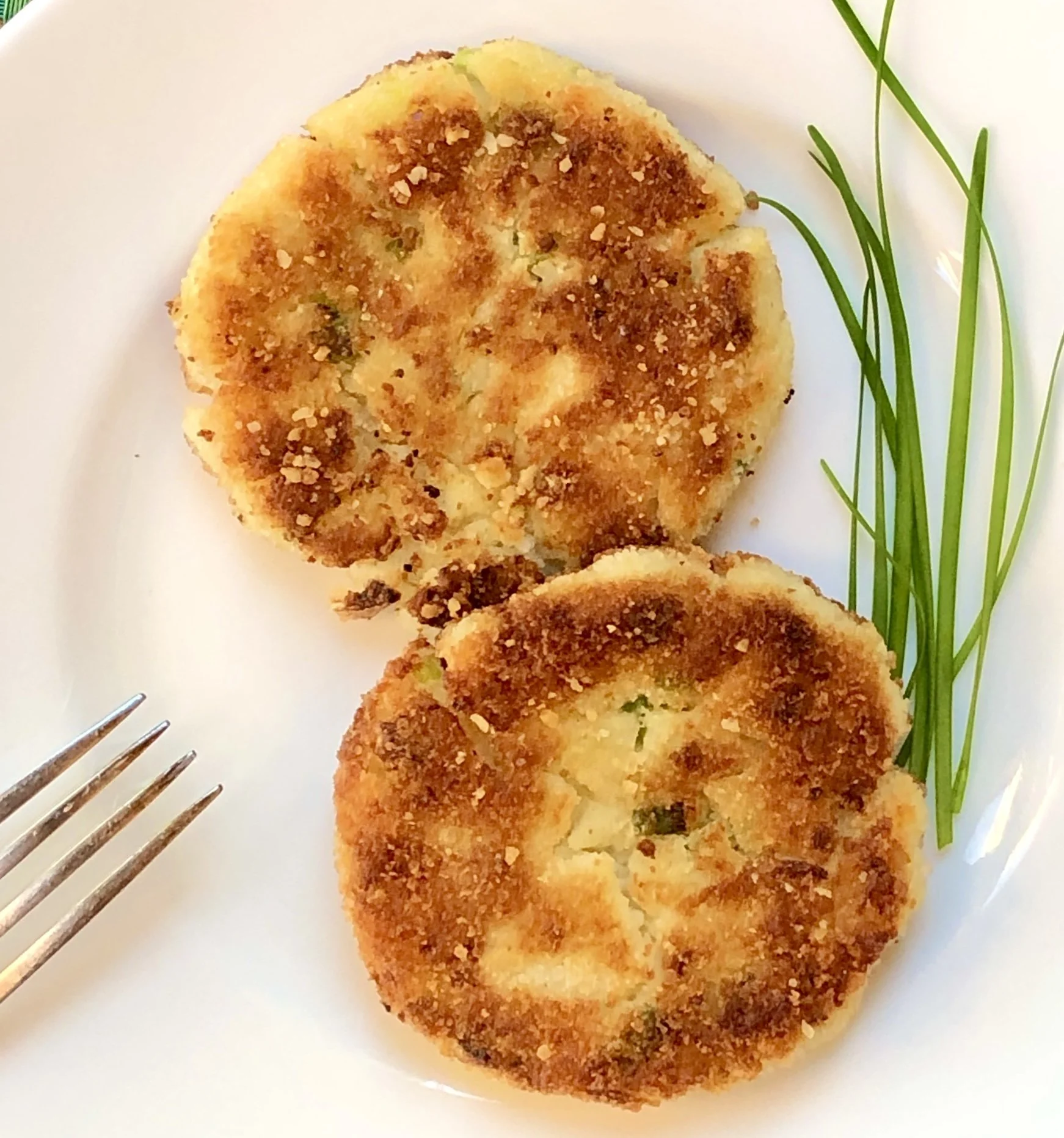
The result was these wonderful, crispy outside, meltingly tender inside Mashed Potato and Cabbage Pancakes.

I’ve made them with both cabbage and kale. I’ve coated them with panko, breadcrumbs and matzo meal.

They all work!

So — the recipe below, which is dairy-free and has a matzo meal crust, is a winner for St. Patrick’s Day, which is fun and gastronomically wonderful even if you’re not Irish, AND is a great side dish for Passover.

MASHED POTATO and Cabbage PANCAKES 

  • 2 large all-purpose or Yukon Gold potatoes, peeled and cut into chunks

  • 1/2 to 3/4 cup chopped cabbage or kale

  • 1 large egg

  • 3 chopped fresh scallions

  • 1/4 cup matzo meal (or bread crumbs)

  • Salt and freshly ground black pepper to taste

  • 1/2 cup matzo meal, approximately (or use bread crumbs or panko)

  • vegetable oil

Place the potatoes in a saucepan, cover with water and bring to a boil over high heat. When the water begins to boil, reduce the heat to a simmer and cook for about 12 minutes or until the potatoes are barely tender. Add the cabbage and cook for another 3-4 minutes. Drain and return the potato-cabbage mixture to the saucepan. Mash the vegetables with a fork or mashing tool. Stir in the egg, scallions and 1/4 cup matzo meal. Season to taste with salt and pepper. Make flat cakes, about 1/4-inch thick out of the potato mixture. Press each side of the cake into the remaining matzo meal, to coat each side. Refrigerate for at least 30 minutes. Heat about 1/4-inch vegetable oil in a cast iron skillet or heavy, heat retaining sautepan over moderately high heat. Fry for about 3 minutes per side or until the pancakes are golden brown and crispy. Drain on paper towels.

Makes about 12

Classic, Dairy-free Hamantashen

Every year in the few weeks before Purim I look with great anticipation for new variations on hamantashen. I can’t get over the creativity, not to mention how delicious so many of them sound! Halvah hamantashen (Amy Kritzer). Savory gochujang caramel hamantashen (Sharon Matten). A large, all-in-one, easy-to-bake pear-filled puff pastry hamantashen galette (Leah Koenig). Mazal tov to these fabulous women and the culinary magic they spin.

I also love tinkering and experimenting with recipes, creating new riffs on classics and making up recipes out of whole cloth. I’ve been doing this throughout my food-writing career. In fact, speaking of Purim and hamantashen, one year I won a contest run by Soom foods for my Spiced Lamb Phyllo Hamantashen with Lemon-Tahini Sauce.

OTOH sometimes I just want the old thing.

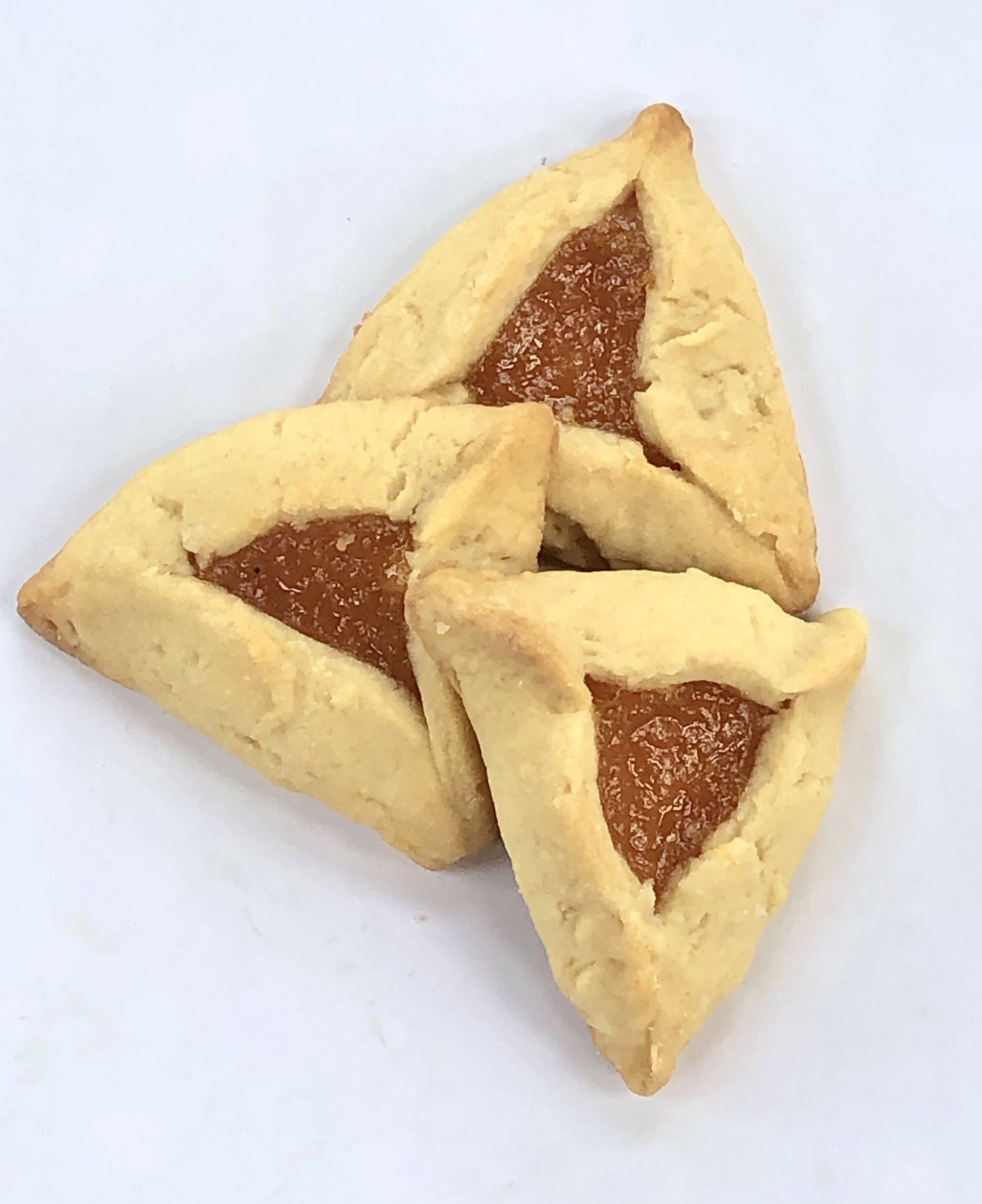
Like this past week, when I decided to bake some hamantashen for Purim and just wanted plain old apricot.

How about both? Why not!

Have fun baking hamantashen for the holiday — whether you decide to go with something new or the old classic. Or both.

Btw, if you need a good, classic dairy/shortbread version, here it is.

Here’s one for frozen dough hamantashen.

And in case you like prune-filled hamantashen, here’s my recipe for prune lekvar.

Classic, Dairy-free Hamantashen

  • 1-3/4 cups all-purpose flour

  • 1/2 cup confectioners’ sugar

  • 1-1/2 teaspoons grated orange peel

  • 1-1/2 teaspoons baking powder

  • 1/4 teaspoon salt

  • 1/4 cup cold vegetable shortening, cut into chunks

  • 3 tablespoons solid coconut oil

  • 3 tablespoons vegetable oil

  • 1/3 cup orange juice

    Combine the flour, confectioners’ sugar, orange peel, baking powder and salt in a bowl. Add the shortening and coconut oil and work into the dry ingredients until the mixture is crumbly. Combine the vegetable oil and orange juice and pour into the flour mixture. Mix until a soft dough has formed. Cover and chill for at least one hour. Preheat the oven to 350 degrees. Roll the dough thin (about 1/8” inch thick). Cut out circles with a 3-inch cookie cutter. Place about 2 teaspoons of filling in the center of each circle. Fold the dough around the filling to form a triangle. Seal them edges tightly. Place the triangles on a parchment-lined baking sheet and bake for 20-22 minutes or lightly tanned.

     Makes 16-18


Pan Roasted Chicken with Rice

We are about to celebrate Purim, a joyous, raucous holiday — this year it begins at sundown March 6, 2023.

Everyone will be feasting on hamantashen of course. And maybe other triangular shaped foods that imitate Haman’s hat. But Queen Esther was married to King Ahasuerus, a Persian, so a a traditional Purim Seudah (feast) could also include some delicious dishes from that part of the world.

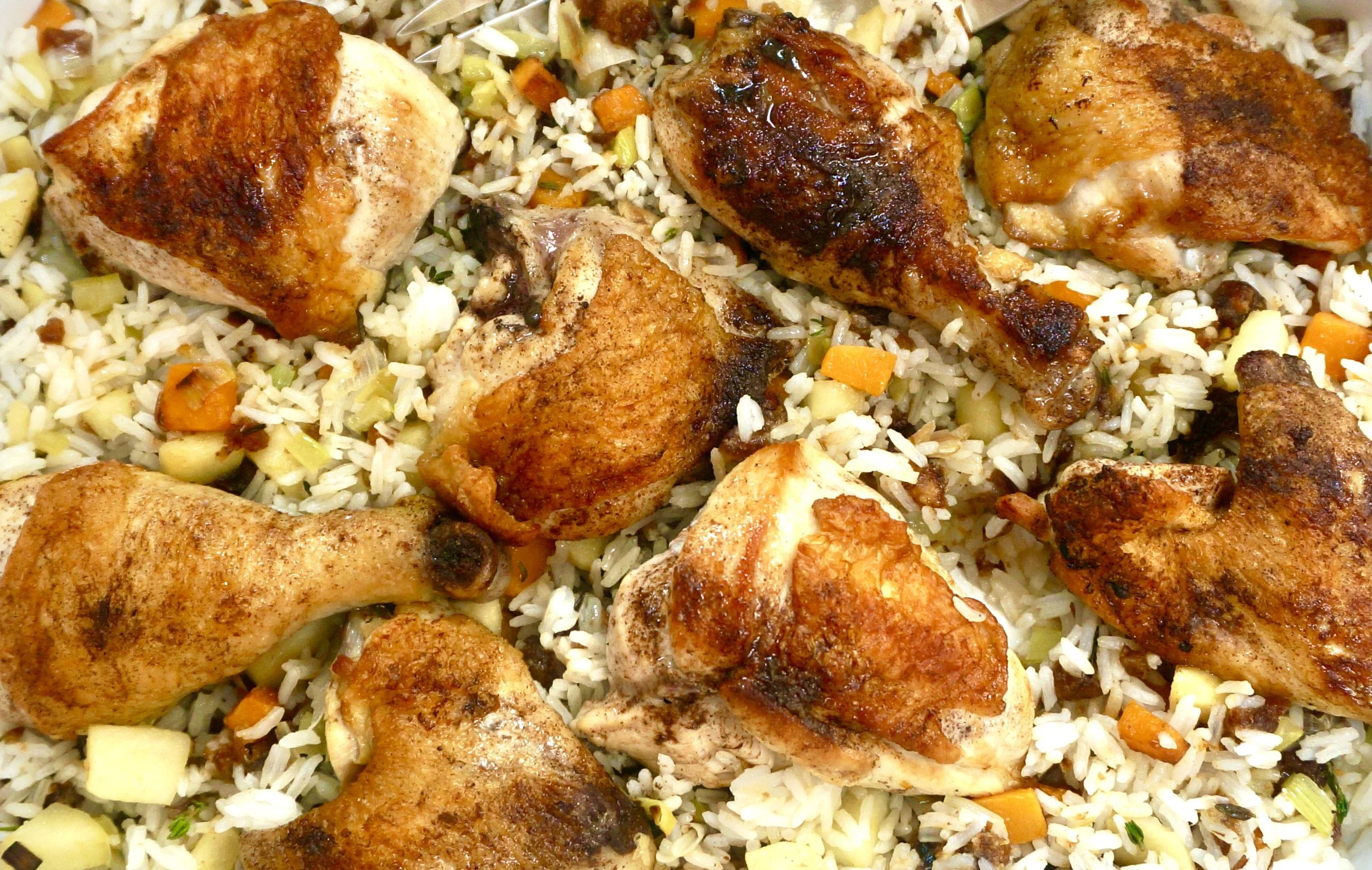
Here is my recipe for Pan Roasted Chicken with Rice Stuffing, a dish inspired by the flavors of Persia. Of course it’s suitable any tine, but it is a festive, flavorful entree that’s perfect for Purim.

Pan Roasted Chicken with Rice Stuffing

Stuffing:

  • 1 cup white rice

  • 1-3/4 cups water

  • 1 medium leek

  • 2 tablespoons olive oil

  • 1 cup diced winter squash

  • 1 stalk celery, chopped

  • 1 tart apple, peeled, cored and chopped

  • 1 cup chopped dried chopped dates

  • 2 teaspoons fresh thyme leaves

  • salt and freshly ground black pepper to taste

Place the rice and water in a saucepan, bring to a boil over high heat and cook for one minute. Stir, turn the heat to lowest, cover the pan and cook for 18 minutes. Remove from the heat and let cool. Trim the leek, discarding the thick, fibrous green leaves, and chop the tender green and white portion into small pieces. Set aside. Heat the olive oil in a sauté pan over medium heat. Add the squash and cook, stirring often, until the pieces are lightly crispy, about 3 minutes. Add the chopped leek and celery and cook for 2 minutes or until they have softened slightly. Remove the pan from the heat, add the cooled rice, apple, dates, thyme and salt and pepper to taste. Mix thoroughly and set aside (reheat later or keep in a warm oven).

Chicken:

  • 1 broiler-fryer chicken cut into 8 pieces (or use legs, breasts, etc.)

  • 1 tablespoon olive oil

  • salt and freshly ground black pepper to taste

  • 1/4 teaspoon ground cinnamon

  • 1/4 teaspoon freshly grated nutmeg

  • 1/4 teaspoon ground allspice or 1/8 teaspoon ground cloves

  • 1/8 teaspoon cayenne pepper

Preheat the oven to 425°F. Rinse and dry the chicken parts. Heat the olive oil in a sauté pan over medium-high heat and cook the chicken, turning pieces once, for about 8 minutes, or until the skin is lightly browned. Mix the salt, pepper, cinnamon, nutmeg, allspice and cayenne pepper and sprinkle over the chicken. Place the pan in the oven. Roast for about 15 minutes, or until chicken is cooked through (an instant-read thermometer should read 160°F). Spoon the stuffing onto a serving dish, top with chicken parts, drizzle the stuffing with any accumulated juices and serve.

Makes 4-6 servings.

Stewed Dried Fruit

I know some people think it’s too old fashioned, but I have always loved — still love — dried fruit compote.

Last year I wrote about it for The Nosher (My Jewish Learning) and got lots of responses! It’s the kind of dish that some people absolutely hate (until they try some updated version) but people like me love not just for the flavor but also the memories this dish conjures up.

I grew up in an Ashkenazi Jewish family so dried fruit compote was a given! My grandmother, who made it basically with prunes and the occasional dried apricot, called it kumput. The young kids, me included, hated it.

Years later I rediscovered the dish after trying something similar (Khoshaf) in Egypt and I’ve been tinkering with the recipe ever since. This is my latest version; a tasty and fitting dish anytime, but especially for the lovely holiday of Tu B’shevat (New Year of the Trees), which comes at the beginning of a new season in Israel when trees bring forth their first fruits of the year (this year the holiday starts at sundown on February 5th).

We eat compote with yogurt for breakfast but I’ve also served it with mascarpone cheese for dessert. It’s really good anytime.

Dried Fruit Compote

  • 2 cups orange juice

  • 1-1/2 cups water

  • 1/4 cup honey

  • 1 3” cinnamon stick

  • 12 whole cloves

  • 2 pieces of orange peel, each about 2-inches long

  • 12 prunes

  • 8-10 whole dried figs, cut in half

  • 1 cup dried cherries, blueberries or cranberries

  • 1 cup dried apricot halves

Place the juice, water, honey, cinnamon stick, cloves and orange peel in a saucepan large enough to hold all the dried fruit. Bring to a boil over high heat. Turn the heat to medium-low and simmer for 15 minutes. Add the fruit and simmer another 18-20 minutes or until the fruit is soft. Let the fruit cool in the pan. The sauce will thicken as the fruit absorbs some of it. Discard the cinnamon stick (you won’t find the cloves). Serve with the poaching liquid.

Makes 8 servings
Tzimmes Chicken

 Not everyone in my family likes brisket, so on Rosh Hashanah I make a second main course. This year I had planned on Baked Chicken with Fig-Orange Balsamic Sauce, the most popular dish on my website. But I’ve not been able to get fresh figs.

Wow, that was a short fig season!

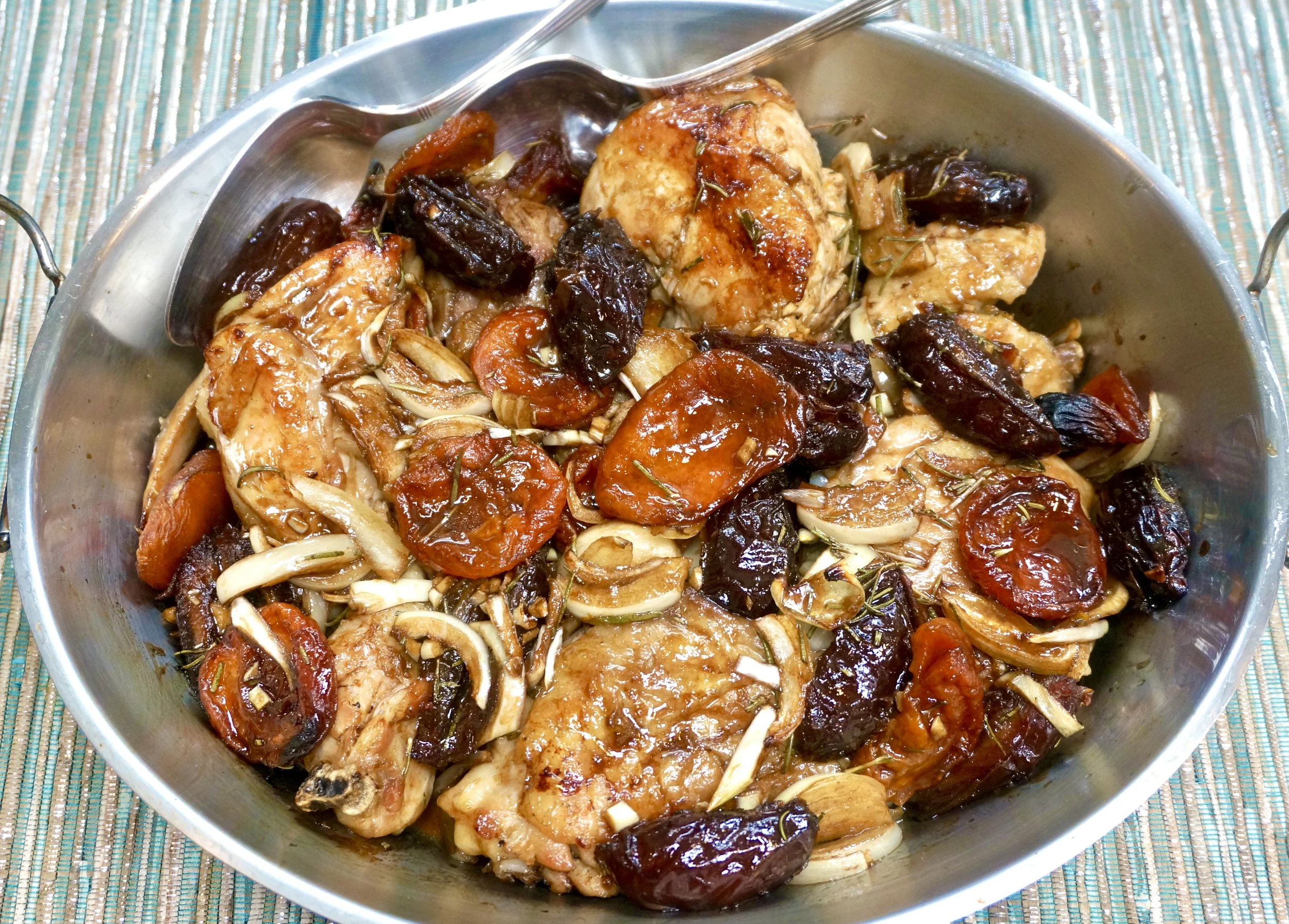
So, I’m going to make this Tzimmes Chicken, which is basically braised/roasted chicken plus some of the ingredients I use to make one of my modern meatless tzimmes recipes.

Although the Yiddish word tzimmes means “a big fuss,”this recipe certainly isn’t! It’s not complicated, it’s easy to cook and you can make it ahead and reheat.

Fyi, a few years ago this recipe appeared in The Jewish Week Food & Wine, but the recipes on their website are no longer be available.

Shanah Tovah.

ROASTED TZIMMES CHICKEN

  • 3 1/2 to 4-pound chicken, cut into 8 pieces

  • 3 tablespoons olive oil or vegetable oil

  • salt and freshly ground black pepper to taste

  • 1 medium onion, sliced

  • 2 cloves garlic, chopped

  • 16-18 dried apricots

  • 12 large Medjool dates, pitted

  • 1 teaspoon grated fresh orange peel

  • 1 teaspoon chopped fresh rosemary

  • 3 tablespoons Balsamic vinegar

  • 2 tablespoons honey

Preheat the oven to 450 degrees. Place a large oven-proof sauté pan in the oven (cast iron if you have it) for 15 minutes. Dry the chicken using paper towels. Rub one tablespoon of the olive oil over the pieces and season to taste with salt and pepper. Place the chicken pieces, skin down for breasts and thighs in the hot pan and place the pan in the oven. Roast for 10 minutes. While the chicken is roasting, combine the onion, garlic, apricots, dates, orange peel, rosemary, Balsamic vinegar, honey and the remaining 2 tablespoons olive oil in a bowl. Toss the ingredients to distribute them evenly. After the initial 10 minutes of roasting, turn the chicken pieces. The skin should be browned, if not, return to the oven for another 3-4 minutes. Scatter the fruit mixture on top of and between the chicken pieces. Return the pan to the oven. Turn the heat to 350 degrees. Roast for another 20 minutes or until chicken is cooked through (a meat thermometer will read 160 degrees). Baste 2-3 times during roasting. Let rest for about 10 minutes before serving.

Makes 4-6 servings