Banana Bread with Orange Marmalade

Before Mother’s Day I bought the usual 16 tons of fruit my family consumes over a weekend, including several bananas.

But, as things happened, Covid called off the visit and I was left with 16 tons of fruit, including several bananas.

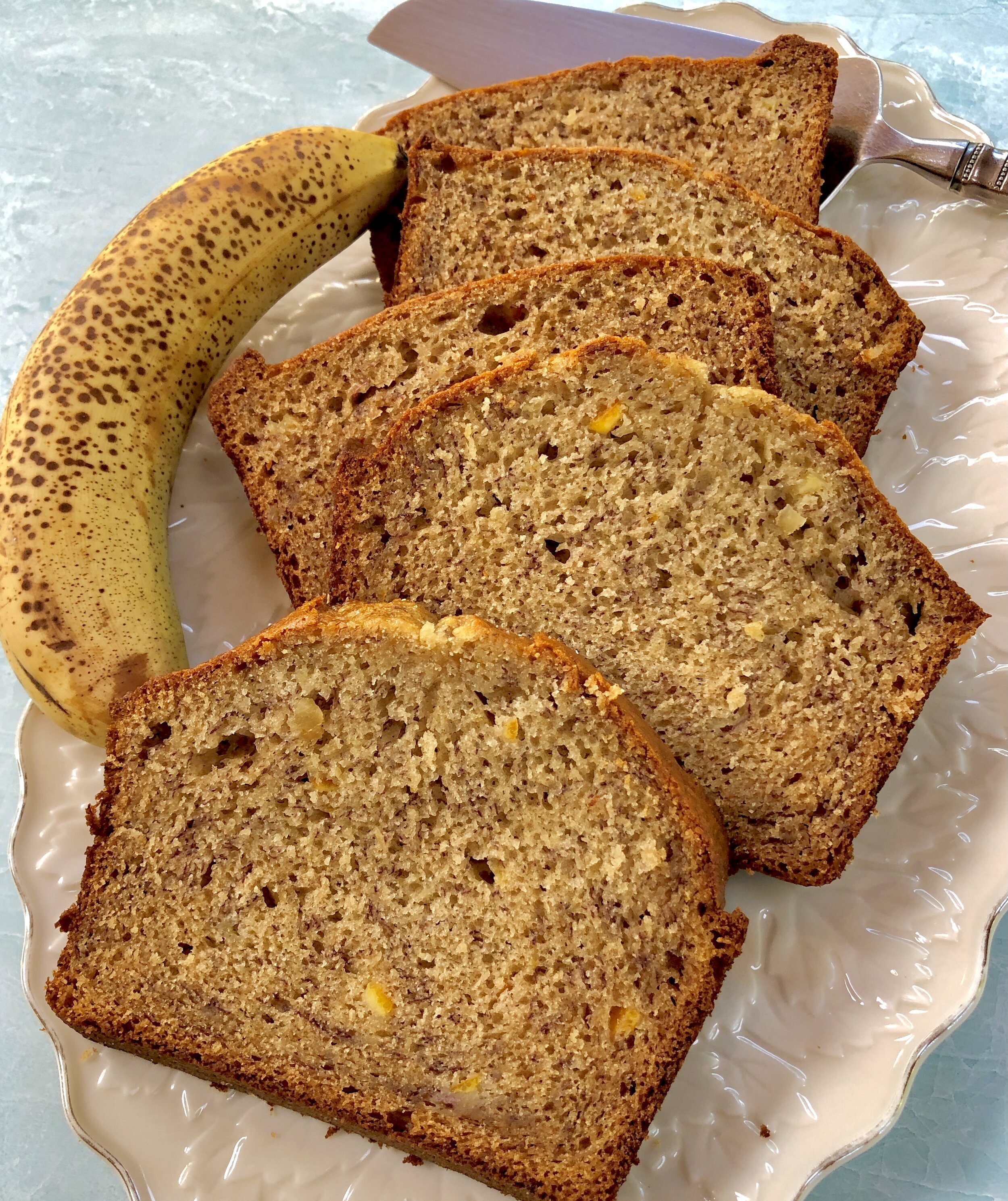
I used up the bananas in a couple of banana breads, including this one, to which I added orange marmalade. The marmalade added a nice tangy flavor and also a lovely, tender texture. Have a slice with creamy sweet butter for a real treat!

Banana Bread with Orange Marmalade

  • 2 cups all-purpose flour

  • 1 teaspoon baking soda

  • 1/2 teaspoon baking powder

  • 1/2 teaspoon cinnamon

  • 1/2 teaspoon ground nutmeg

  • 1/2 teaspoon salt

  • 3/4 cup sugar

  • 1/2 cup orange marmalade

  • 1/3 cup vegetable oil

  • 2 large eggs

  • 3 medium very ripe bananas

  • 1/4 cup orange juice

  • 1 teaspoon vanilla extract

Preheat the oven to 350 degrees. Grease a 9”x5”x3” loaf pan. Mix the flour, baking soda, baking powder, cinnamon, nutmeg and salt into a bowl and set it aside. Beat the sugar, marmalade and vegetable oil in a mixer (or with a handheld mixer and bowl) set at medium speed for 2-3 minutes or until the mixture is light and fluffy. Add the eggs one at a time, beating after each addition. Mash the bananas and add them to the sugar mixture. Beat thoroughly until the ingredients are well blended. Add the flour mixture and beat for 1-2 minutes to blend the ingredients thoroughly. Stir in the juice and vanilla extract. Pour the batter into the prepared pan. Bake for 50-55 minutes or until a cake tester inserted into the center comes out clean. Cool the bread in the pan 15 minutes. Remove the bread from the pan and let it cool on a cake rack.

Makes one bread serving 8-10


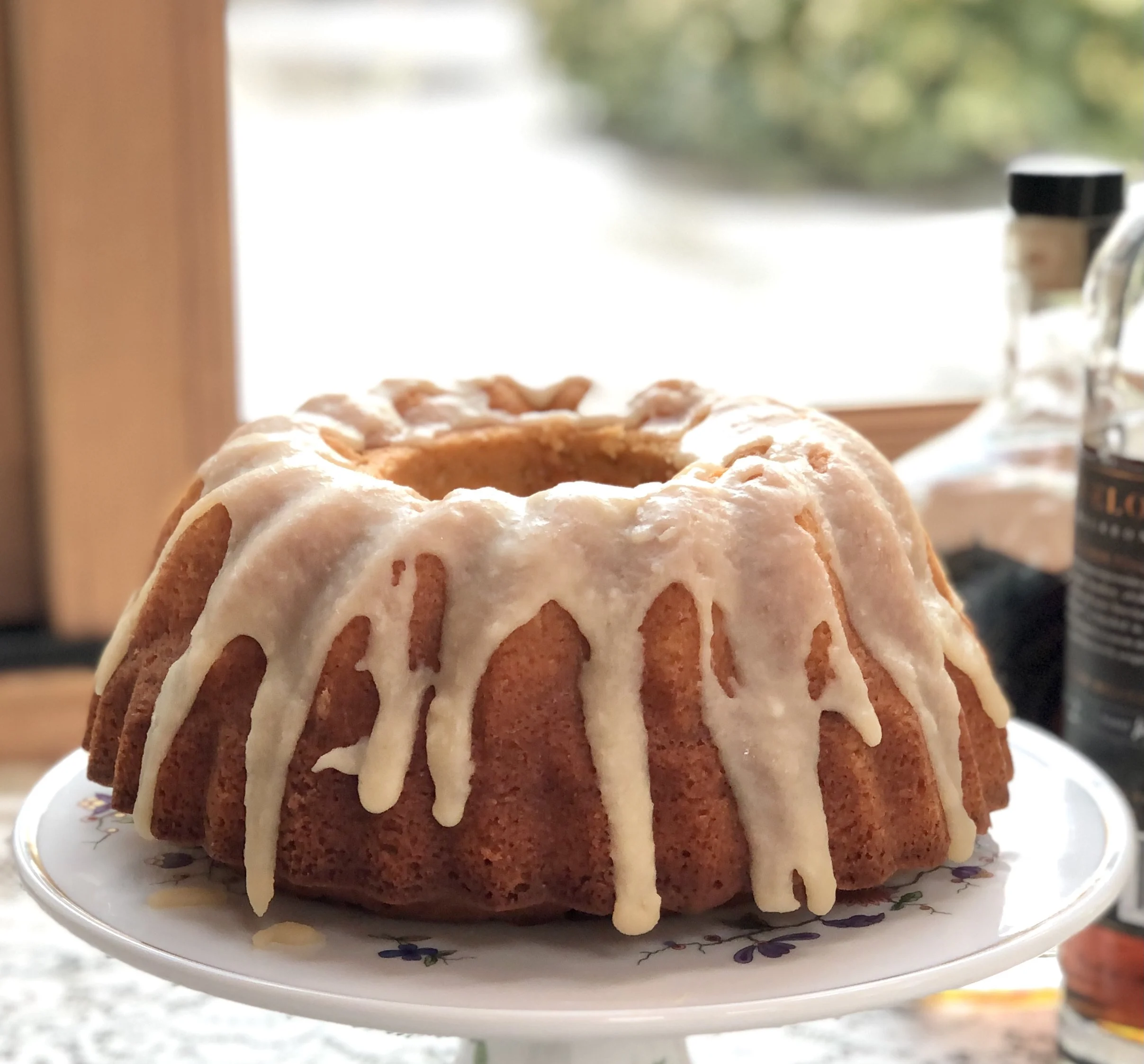
Kentucky Bourbon Cake

Everyone who knows me knows I am a bourbon drinker. Why? Because when I was young my older brother, who was cool and knew all sorts of stuff, drank bourbon. So, if he said it was the best thing to drink, it was.

There’s something sweet and rich about good bourbon, and it’s not just for sipping but also for flavoring baked cakes and such.

Like this Kentucky Bourbon Cake, with both cake and frosting flavored with my favorite booze. We’ll feast on some while we watch the Kentucky Derby this weekend.

If there’s any left —- we can have another round on Sunday, Mother’s Day!

Kentucky Bourbon Cake

  • 3 cups all-purpose flour

  • 1-1/2 teaspoons baking powder

  • 1/2 teaspoon baking soda

  • 1 tablespoon grated fresh orange peel

  • 1 teaspoon salt

  • 1-1/4 cups plain Greek style yogurt

  • 1/4 cup bourbon

  • 1 cup butter

  • 3/4 cup sugar

  • 3/4 cup brown sugar

  • 4 large eggs

Preheat the oven to 350 degrees. Grease a 10-cup bundt pan. In a bowl, combine the flour, baking powder, baking soda, orange peel and salt. Set aside. In another bowl, whisk together the yogurt and bourbon until well blended. Set aside. Beat the butter, white sugar and brown sugar together at medium speed for 1-2 minutes or until well blended. Add eggs one at a time, beating after each addition. Alternate adding half the dry and liquid ingredients, beating after each addition; repeat with the remaining dry and liquid ingredients and beat for 1-2 minutes or until the batter is smooth and uniform. Spoon the batter into the bundt pan. Bake for 50-55 minutes or until a cake tester inserted into the center comes out clean. Let cool in the pan for 10 minutes then invert onto a cake rack to cool completely. While the cake is still warm, pour the glaze over the top.

Makes 10 servings

Bourbon glaze

  • 6 tablespoons butter

  • 1/2 cup sugar

  • 3 tablespoons bourbon

Melt the butter and sugar together in a saucepan over medium heat. Whisk constantly and cook for several minutes until the sugar is nearly dissolved. Add the bourbon and whisk continually to incorporate it into the butter mixture. Cook for several minutes until the sugar dissolves completely.


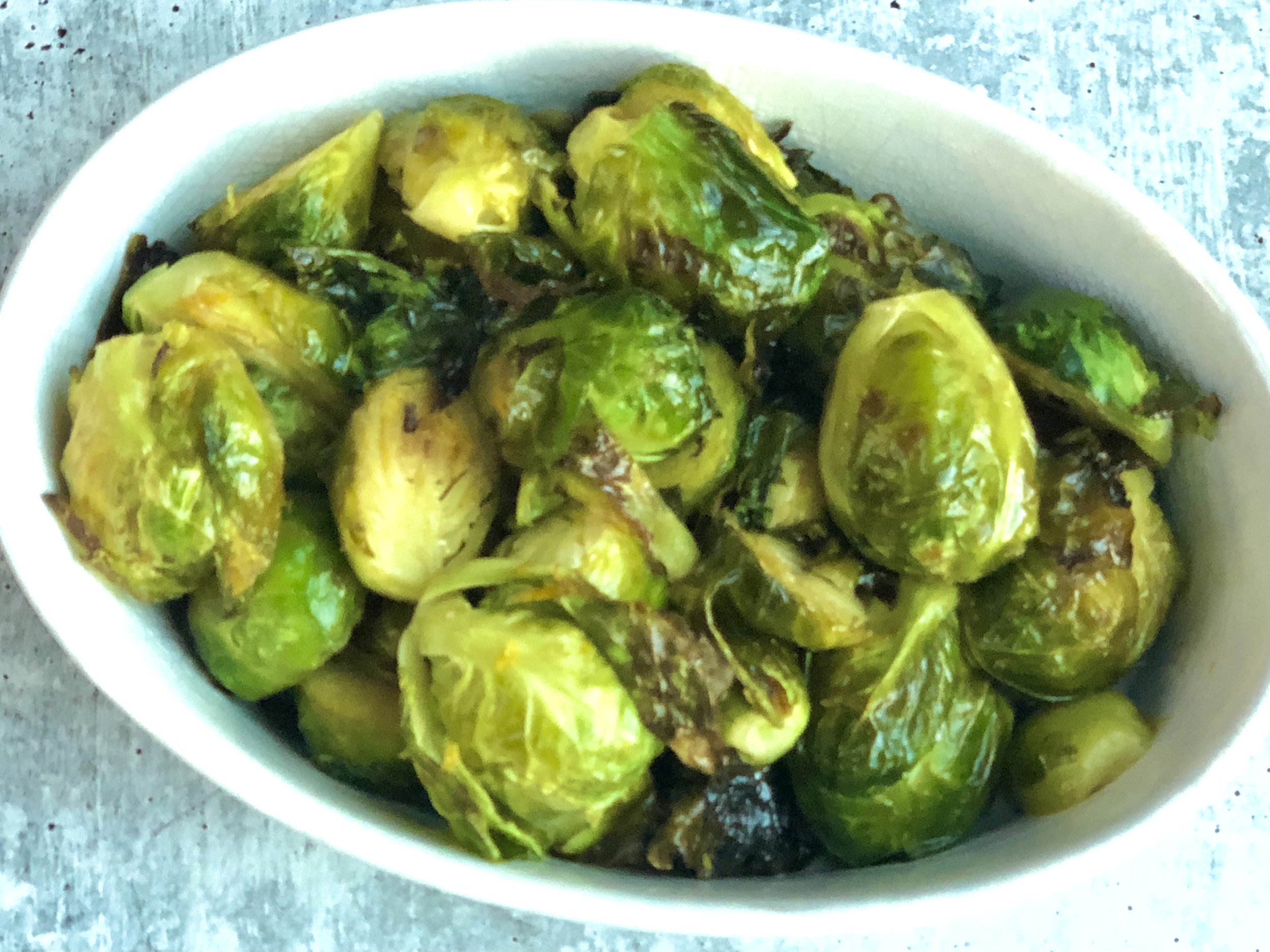
Honey-Balsamic Glazed Brussels Sprouts

I remember when my husband said he wouldn’t eat Brussels sprouts. Now he’s a big fan and we eat them at least once a week. My kids like them. The grandkids like them.

This simple recipe with just a touch of Balsamic vinegar and honey and a sprinkle of orange peel works wonders to balance what former Brussie-haters thought of as bitter tasting.

Honey-Balsamic Glazed Brussels Sprouts

  • 1 pound Brussels Sprouts

  • 2 tablespoons olive oil

  • salt to taste

  • 1 tablespoon Balsamic vinegar

  • 1 tablespoon honey (or maple syrup)

  • 1 teaspoon finely grated fresh orange zest

Preheat the oven to 375 degrees. Line a baking sheet with parchment paper. Trim the Brussels Sprouts, cut them in half, then wash them. Pat them dry with paper towels. Place the vegetables on the baking sheet. Pour the olive oil over the vegetables and toss to coat them. Sprinkle with salt to taste. Bake for about 12-15 minutes, tossing the ingredients once. Mix the vinegar, honey and orange zest, pour over the vegetables, toss and bake for another 10 minutes or until the Brussels Sprouts are tender.

 Makes 4 servings


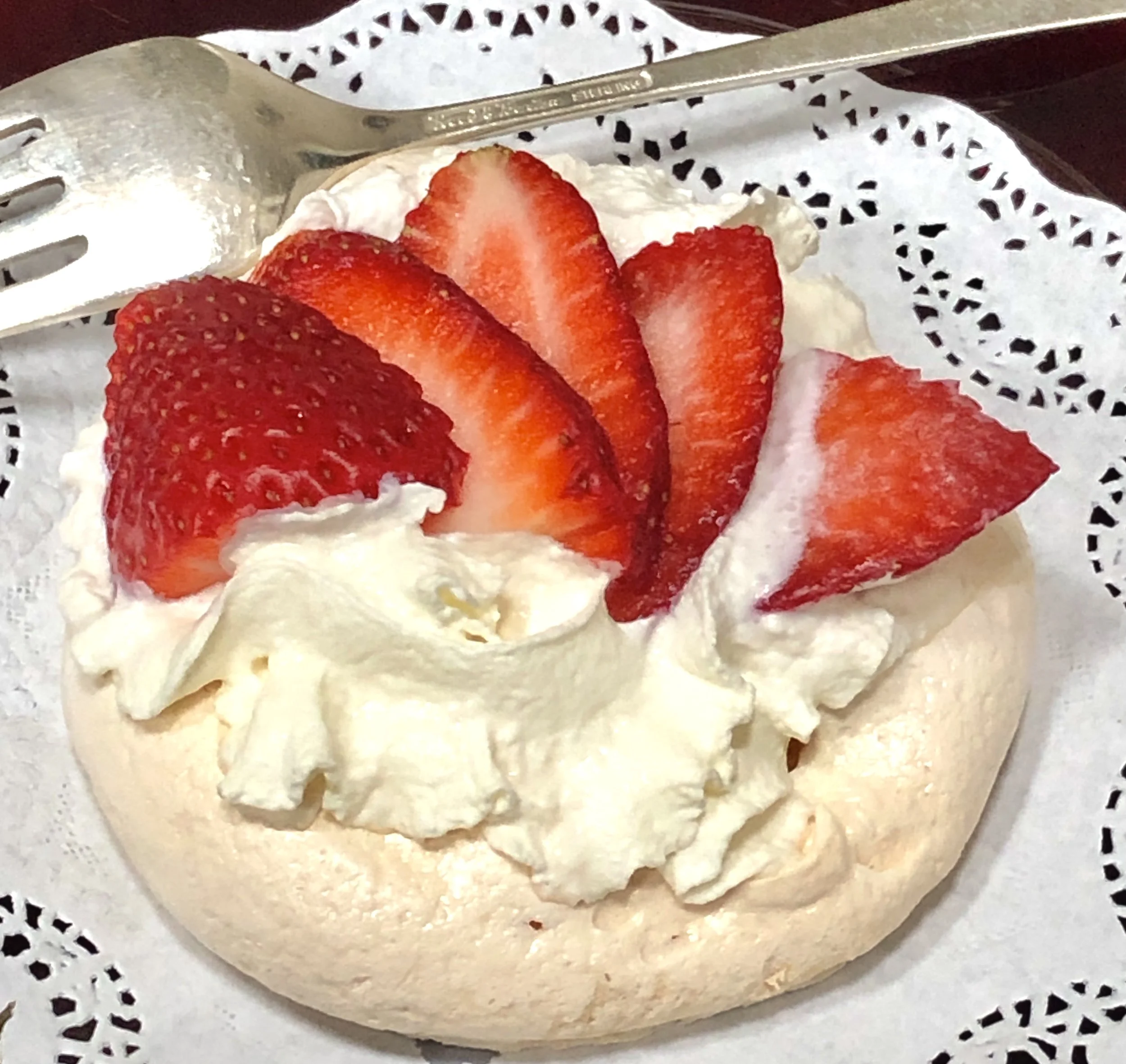
Strawberry Pavlova

If you’re like everyone else who observes Passover, you’ve used a lot of eggs during the holiday!

Our usual family Passover menus use up more yolks than whites, so I’m always left with a load of egg whites. So, because I am one of those “waste not want not” people, I recently made a lot of meringues and meringue cookies and these Pavlovas.

Pavlovas, which are hard meringue shells filled with fruit, lavished with sauce and topped with whipped cream, are sugary sweet and you can do a lot with them. They’re also easy to make and are terrific for Passover because there’s no flour or any other ingredient we can’t eat during the holiday.

The meringue shell-cream-fruit dessert is named after a famous Russian ballet dancer named Anna Pavlova (1881-1931). Food historians say that a hotel chef in either Australia or New Zealand named the dessert after her visit there in 1926. The white meringue shell is said to mimic her tutu and in the original recipe, the shells were filled with kiwi fruit, in imitation of the decorations on one of her outfits. But any soft fruit will do.

Note: for more on beating egg whites properly, click here.

Pavolvas

Meringue Shells:

  • 4 large egg whites at room temperature

  • 1 tablespoon lemon juice

  • 1/4 teaspoon salt

  • 1 cup sugar

  • 3/4 teaspoon vanilla extract

  • whipped cream

  • sliced fruit such as strawberries, kiwi fruit, bananas, etc.

Preheat the oven to 275 degrees. Line a cookie sheet with parchment paper. Beat the egg whites in the bowl of an electric mixer with whisk attachment set at medium speed until the mixture is foamy. Add the lemon juice and salt and beat, gradually increasing the speed, until soft peaks form. Gradually add the sugar (2 tablespoons at a time) and the vanilla and continue to beat, gradually increasing the speed to high, until the mixture stands in stiff, glossy peaks. Spread 8-10 equal amounts of the meringue mixture onto the sheet. Flatten the mounds with the back of a large spoon, leaving the edges slightly higher. Bake for 45 minutes. Reduce the oven heat to 250 degrees. Bake for another 15 minutes. Remove the cookie sheet to a cake rack to cool. Gently release the meringues from the parchment. Fill the centers of the meringue shells with whipped cream. Top with sliced fresh fruit.

Makes 8-10

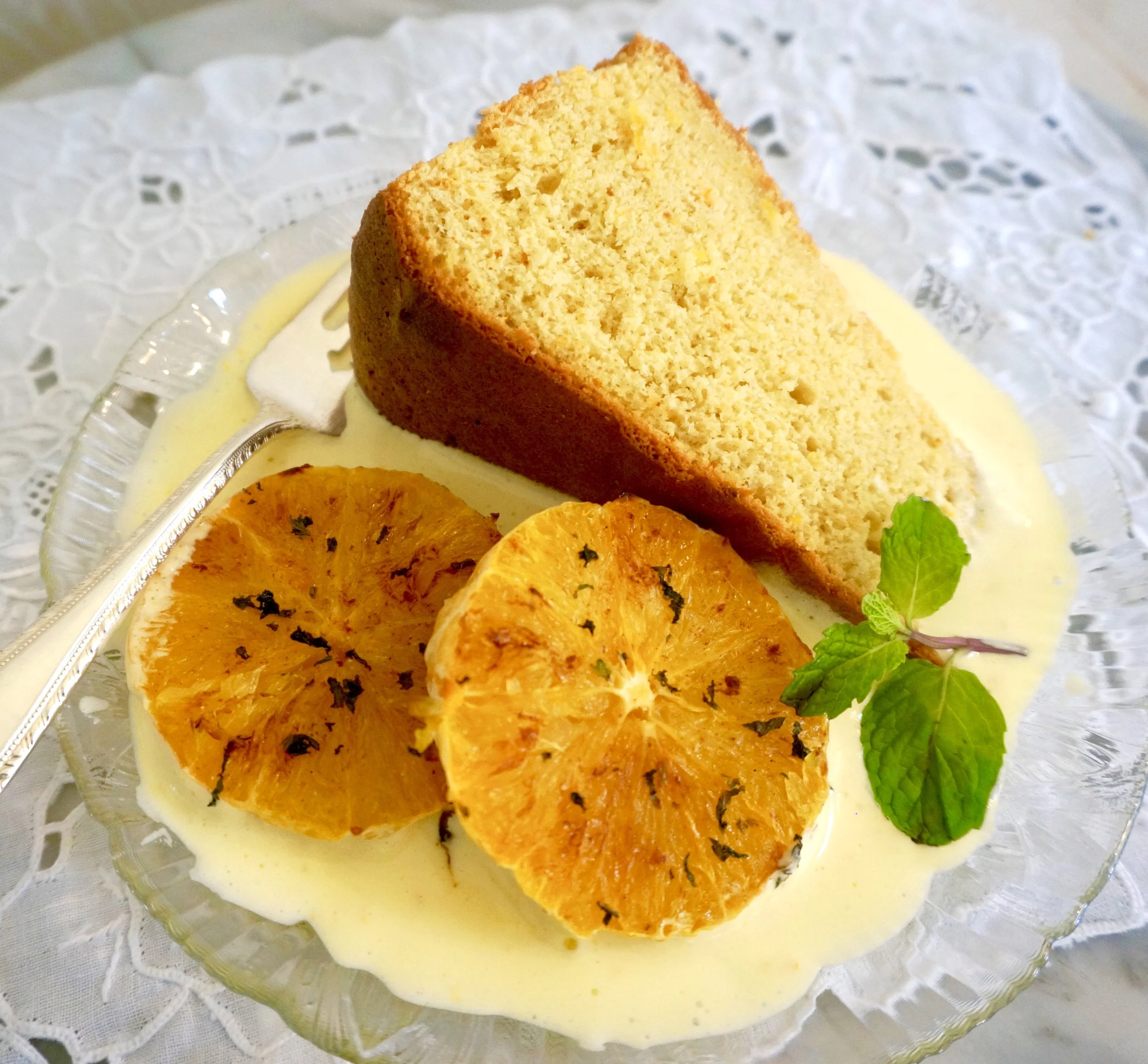
Passover Orange Cake with Roasted Oranges and Zabaglione

fullsizeoutput_89c2.jpeg

When I was growing up the standard Seder dessert was sponge cake. Everyone made fun of it and said it was true to its name and that frankly, biting into a sponge was not a good thing.

I actually never cared because as long as I got chocolate covered macaroons I was a happy girl.

By the time I began to host the Seders, flourless chocolate cakes had become fashionable and my aunt Rozzie's recipe for sponge cake was tucked away in a recipe file.

Now more time has gone by and my family got bored with flourless chocolate cake. So I spent years experimenting with flourless rolled cakes and cakes made with nut crumbs instead of wheat and going fancy with layers of jelly-roll pan cakes. Some of those were absolutely fabulous.

But a few years ago I decided to pull out the family recipe. That sponge cake isn't spongy at all. The trick is not to overbeat the egg whites, which are supposed to be thick and glossy with tips that fall over slightly (not so beaten that you can cut a chunk off). Also — fold in the beaten whites rather than mixing them in vigorously.

Although the cake is just fine, plain or served with sorbet, I have served it with a rich and creamy zabaglione sauce and some roasted oranges, which provide a tangy contrast to the sweet cake. They also make a plain sponge cake a bit more festive looking, so it’s a good bet for the holiday.

Bonus: you can make all parts in advance!


Passover Orange Cake with Roasted Oranges and Zabaglione

  • 12 large eggs, separated, at room temperature

  • 1-3/4 cups sugar

  • 6 tablespoons orange juice

  • 1/4 cup lemon juice

  • 2 tablespoons finely grated orange peel

  • 1 tablespoon finely grated lemon peel

  • 1 cup matzo cake meal, sifted after measuring

  • 1/3 cup potato starch

  • Passover Zabaglione

  • Roasted Orange Slices

Preheat the oven to 350 degrees. Line the bottom of a large (10-1/2-inch - 11-inch springform pan with parchment paper and lightly grease the paper. Beat the egg yolks and 1-cup of the sugar in a mixer bowl at medium-high speed for 3-4 minutes or until the mixture is thick and pale yellow. Stir in the orange juice, lemon juice, orange peel and lemon peel, mix thoroughly and set aside. In another bowl, beat the egg whites at medium speed until they are foamy. Continue to beat, gradually increasing the speed and gradually adding the remaining 3/4 cup sugar. Beat until the whites are stiff but not dry, and look glossy. Stir about one-quarter of the beaten whites into the yolk mixture. Gently fold the remaining beaten whites into the yolk mixture, until the mixture is uniform in color. In a small bowl whisk the matzo cake meal and potato starch until they are thoroughly blended. Using about 1/4 of the matzo meal mixture at a time, fold the mixture into the egg mixture until the ingredients are thoroughly blended. Pour the batter into the prepared pan. Bake for 55-60 minutes or until a cake tester inserted into the center comes out clean. Cool the cake in the pan on a wire rack. When ready to serve, spoon some zabaglione onto serving dishes, place a slice of cake on top and surround with some roasted orange slices. (Or serve with sorbet, whipped cream, ice cream, etc. to suit your meal.)

Makes 12 servings

Passover Zabaglione

  • 8 large egg yolks

  • 3/4 cup sugar

  • 2 tablespoons finely grated orange peel

  • 1/2 cup sweet white Passover wine

  • fresh mint as garnish

Place the egg yolks, 3/4 cup sugar and the orange peel in the top part of a double boiler set over barely simmering water. Beat the ingredients with a hand mixer at medium speed for about 3 minutes or until the mixture is thick and pale yellow. Continue to beat, gradually increasing the speed to high and gradually adding the wine. Beat for 8-10 minutes or until the mixture is thick and fluffy. You may use the zabaglione warm, immediately, or let it cool to room temperature.

Makes about 3 cups

Roasted Orange Slices

  • 6 navel oranges

  • 2 tablespoons melted coconut oil (or butter)

  • 1 tablespoon sugar

  • ground cinnamon (approximately 1/2 teaspoon)

  • 2 tablespoons finely chopped fresh mint

Preheat the oven to 450 degrees. Line a baking sheet with parchment paper. Peel the oranges removing as much of the white pith as possible. Cut the oranges crosswise into 24 even slices (there should be 4 center slices from each orange; reserve the ends for other purposes). Place the slices on the baking sheet. Brush the tops with the coconut oil. Sprinkle with the sugar. Sprinkle lightly with cinnamon and the mint. Roast for about 4 minutes. Turn the slices over and roast for another 4-6 minutes or until lightly browned. Remove from the oven and set aside.

Makes 12 servings
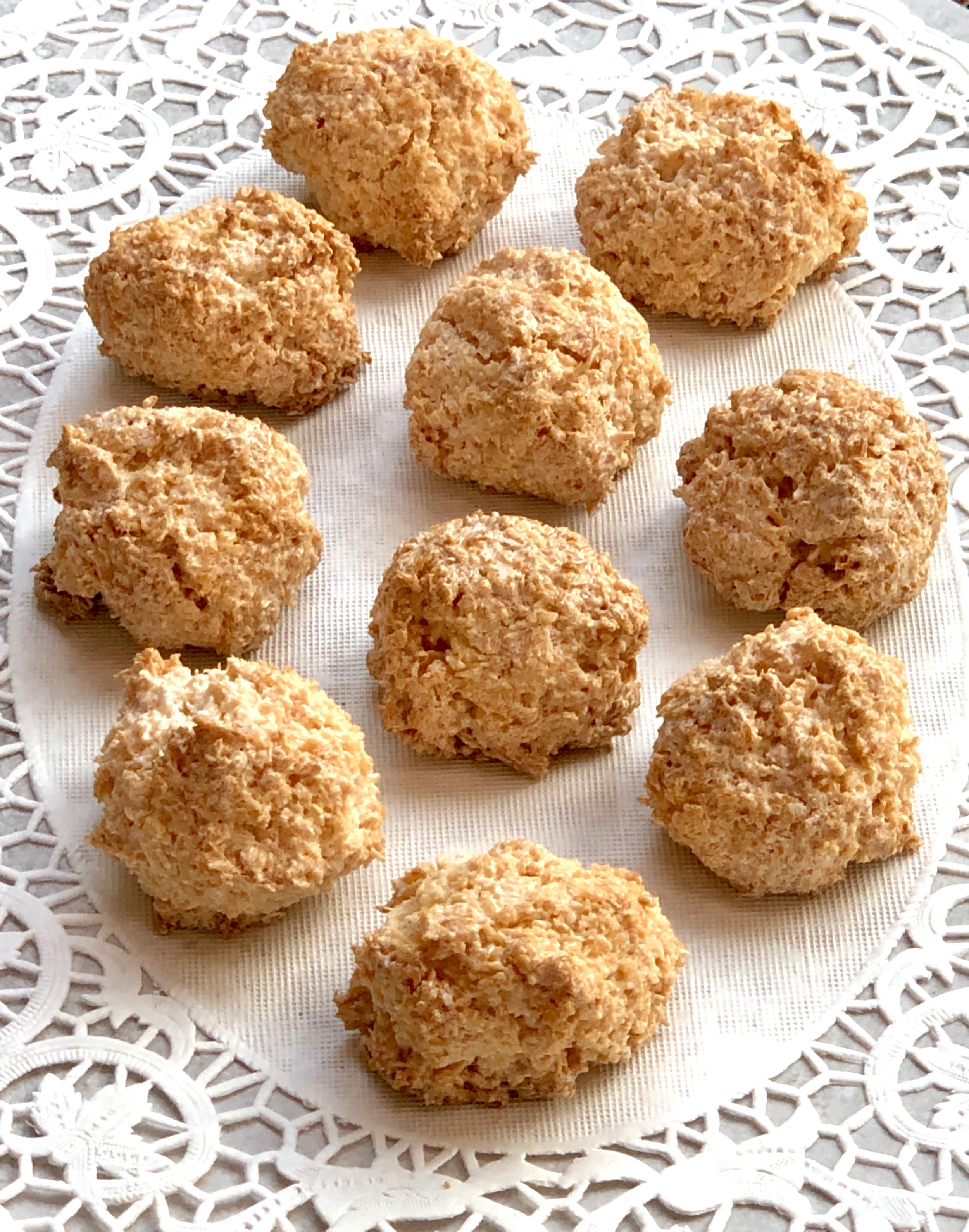
Coconut Meringue Cookies

I’ve been baking lots of gluten-free butter cookies lately, experimenting for Passover — using our family “fannies” or butter cookies as a base. But because the recipes use egg yolks I had a ton of whites left over. So …… I’ve also been experimenting with meringues (see how-to whip egg whites) and decided to use some for cookies. These coconut cookies are not only an easy way to use meringue but they are tender and sweet and perfect for Passover.

Here’s how: mix 2 cups of meringue (recipe below) with 1-1/2 to 2 cups shredded coconut (amount depends on the size of the shreds: you need enough to form a soft “dough”). Place blobs of the dough (about 1-1/2 inches) on a parchment lined cookie sheet. Preheat the oven to 325 degrees. Bake for 15-22 minutes or until lightly browned. Some people prefer these very light color; we like them honey colored.

I’ve now made these cookies several times. The less coconut you use, the softer and flatter the cookies will be. But either way, the cookies are tender, sweet and oh so tasty!

Meringue:

  • 4 large egg whites at room temperature

  • 1 tablespoon lemon juice

  • 1/4 teaspoon salt

  • 1 cup sugar

  • 3/4 teaspoon vanilla extract

Beat the egg whites in the bowl of an electric mixer with whisk attachment set at medium speed until the mixture is foamy. Add the lemon juice and salt and beat, gradually increasing the speed, until soft peaks form. Gradually add the sugar and continue to beat, gradually increasing the speed to high, until the mixture stands in stiff, glossy peaks. Stir in the vanilla extract.

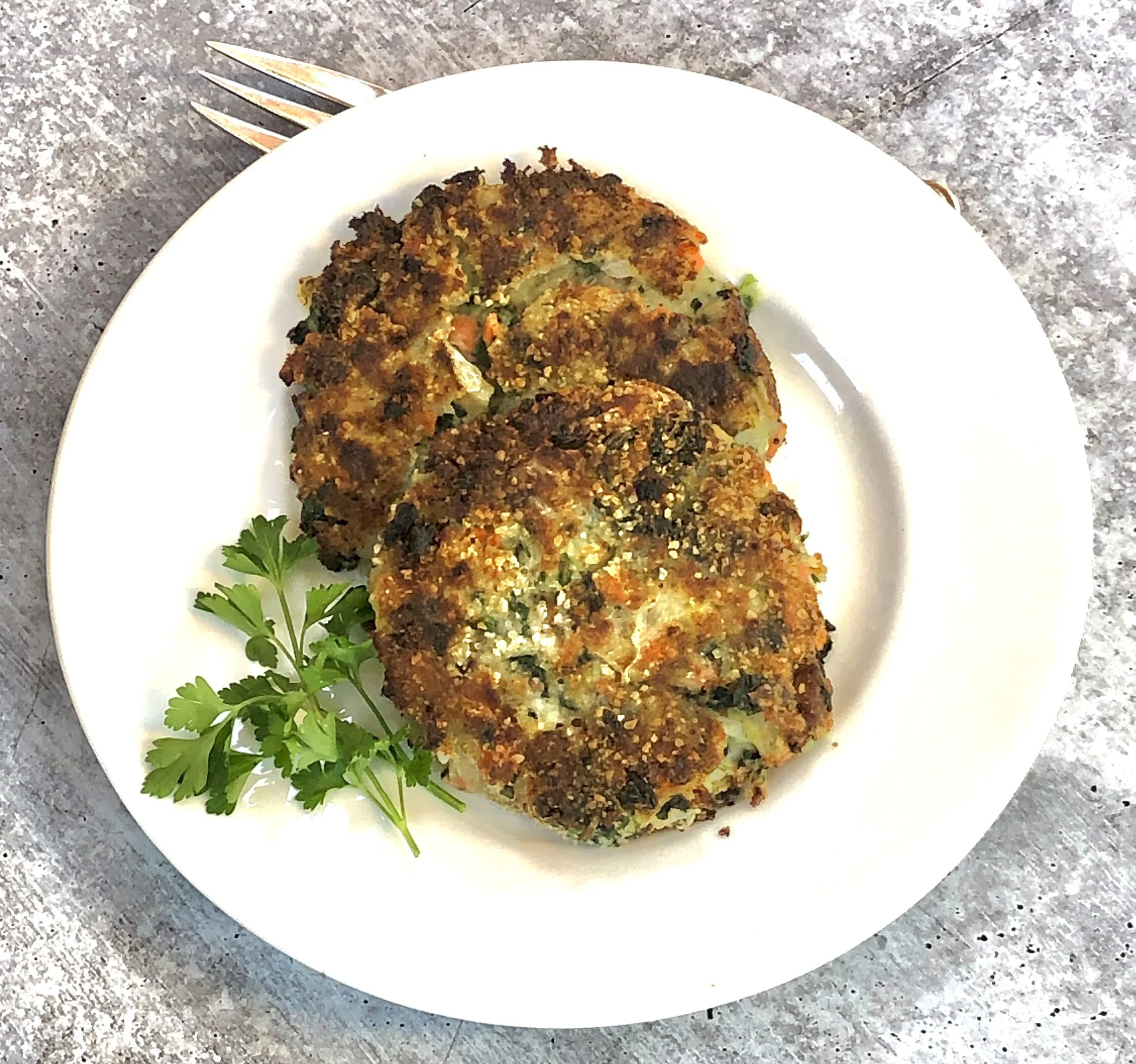
Vegetable Croquettes (Passover)

I was once in a pub in the west of England and ordered a dish called Bubble & Squeak. It’s simple, unfancy food, tasty and nourishing, consisting of mashed potatoes and cabbage fried to a crispy brown and topped with an egg.

It was magical.

So I made it many times at home, and, me being me, and this recipe being the kind that allows for endless variation, I added this and that to the potatoes, depending on what leftover vegetables I had. I used Brussels sprouts instead of cabbage (as do many restaurants in England); I’ve added corn, peas, carrots, spinach, broccoli and such. Once or twice I included cheese (feta, Parmesan) but I prefer the all-vegetable version best.

I don’t call it Bubble & Squeak (so named for the sounds it supposedly makes while being cooked), so I’ll just say: Vegetable Croquettes. We’ve eaten them as a side dish with meat but most of the time they are dinner, topped with a fried egg.

This is my Passover version. At other times of the year you can add beans/peas and coat the patties with bread crumbs.

Vegetable Croquettes

  • 1/2 cup vegetable oil, approximately

  • 1 medium onion, finely chopped

  •  1 cup chopped cooked cabbage

  •  2 chopped, cooked carrots

  • 10 ounce package frozen spinach, thawed

  • 3 cups mashed potatoes

  • salt and freshly ground black pepper to taste

  • 1/2 cup matzo meal, approximately

Heat 2 tablespoons vegetable oil in a sauté pan over medium heat. Add the onion and cook for 3-4 minutes or until softened. Spoon the onions into a bowl. Add the cabbage, carrots, spinach, mashed potatoes and some salt and pepper. Mix thoroughly and shape the mixture into 1/2-inch patties. Place the matzo meal on a plate. Press both sides of each patty into the crumbs. Refrigerate for at least 30 minutes. Heat 2-3 tablespoons vegetable oil in the sauté pan over medium heat. Fry the patties a few at a time (leave plenty of space between each) for 3-4 minutes per side or until crispy and golden brown, adding more vegetable oil to the pan as needed.

Makes 8-10


How to Whip Egg Whites

Have you ever realized how many eggs we use during Passover?

LOTS!

And many Passover recipes, especially desserts, use whipped egg whites. So you read things like “soft peaks” and “stiff but not dry” and such.

What does it all mean? Looks easy but ……

sometimes the food preparations that look the easiest turn out to be the most intimidating.

Egg whites are among those. But if you want to make perfectly soft soufflés, tender Baked Alaska, crispy meringues  and other wonderful treats, it’s important to get it right.

These tips will help:

  • Use the freshest eggs possible; their thicker whites whip to greater volume and with more stability than the thin, runny whites of older eggs.

  • Separate the yolks and whites when the eggs are cold. This helps prevent even the tiniest particle of yolk from falling into the whites. Egg yolks contain fat, and any kind of fat inhibits volume.

  • For the best volume, let the egg whites come to room temperature (usually about 30 minutes) before you beat them.

  • Copper bowls are the best for the job, (the acid in the metal helps stabilize the foam), but stainless steel, ceramic or glass bowls are fine too. Don’t use plastic bowls because no matter how much you wash them the surface of retains some fat particles.

  • Use a balloon or large whisk or the whisk attachment of an electric mixer or hand mixer. Standard cake batter beaters don’t whip egg whites well; neither does a food processor.

  • Start beating the whites on slow and gradually increase the speed as volume increases.

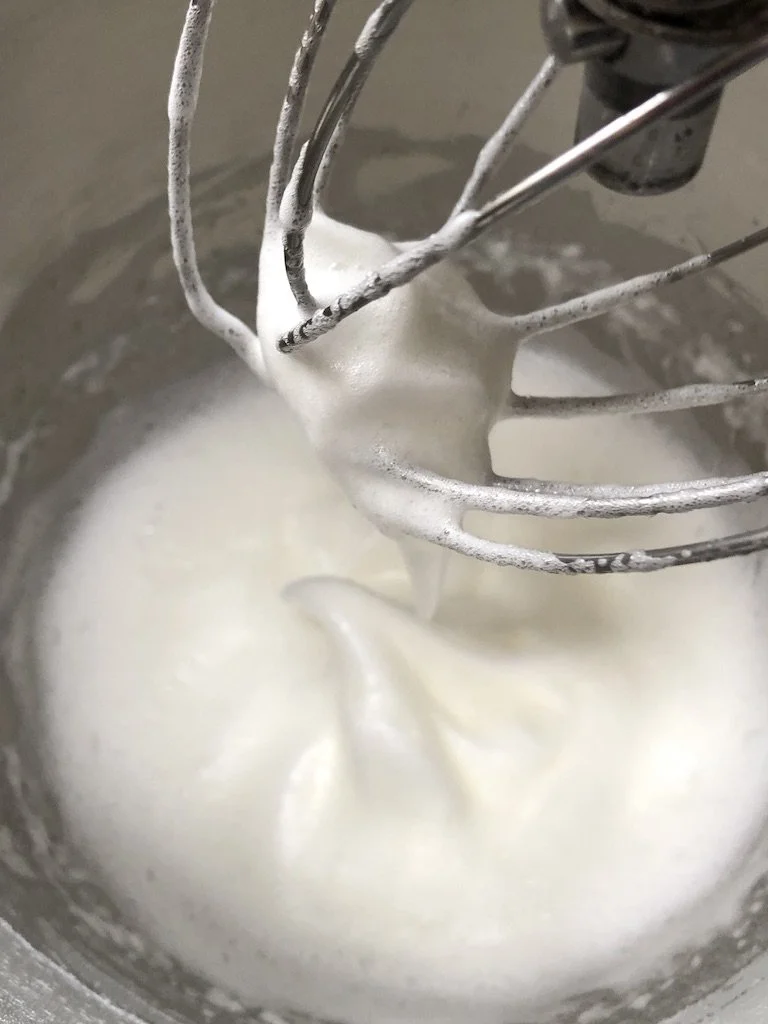
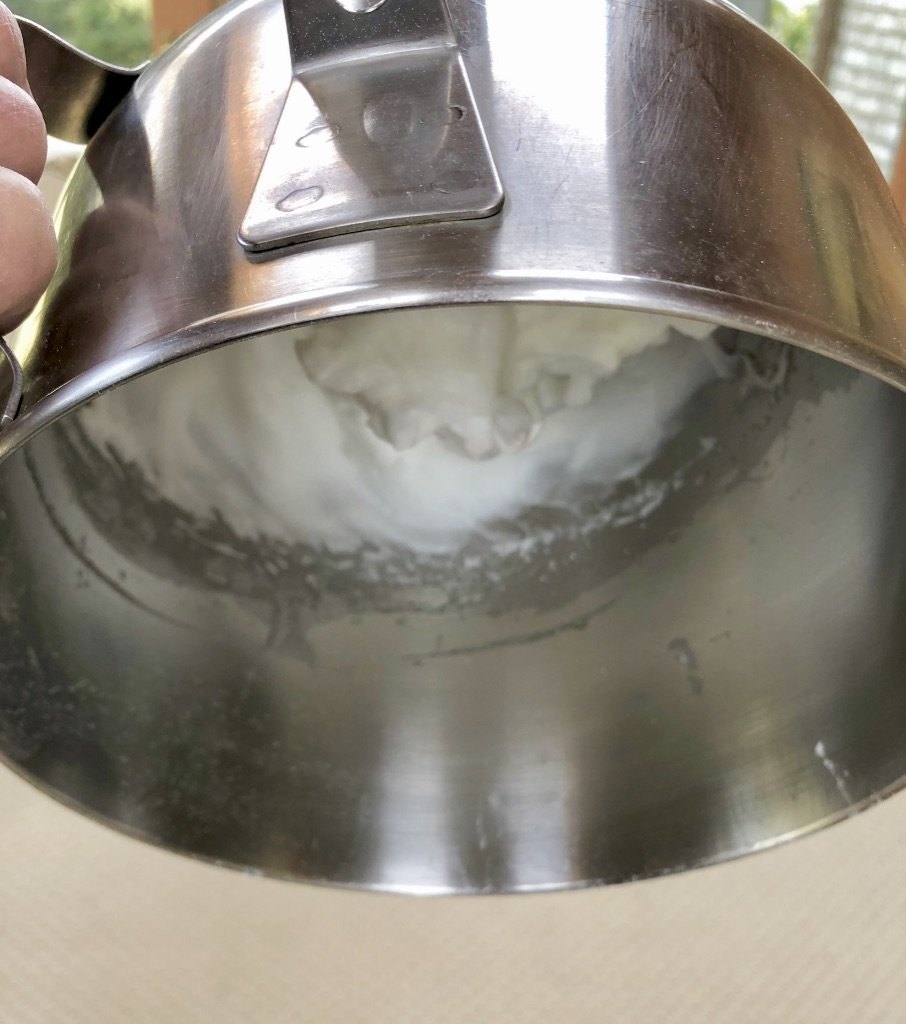
  • Beat the whites to the foamy stage (photo #1)before you add ingredients such as cream of tartar, salt, lemon juice or vinegar.

  • Add any sugar gradually (about 2 tablespoonfuls at a time), and only after the whites have been beaten to the "soft peak" stage.

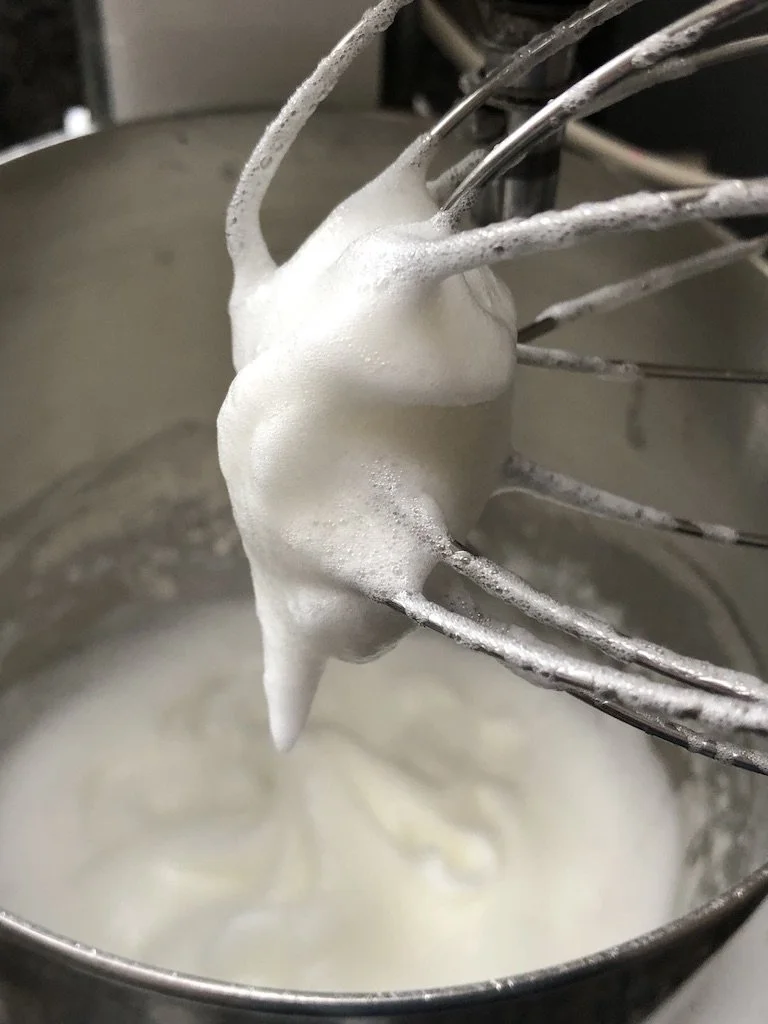
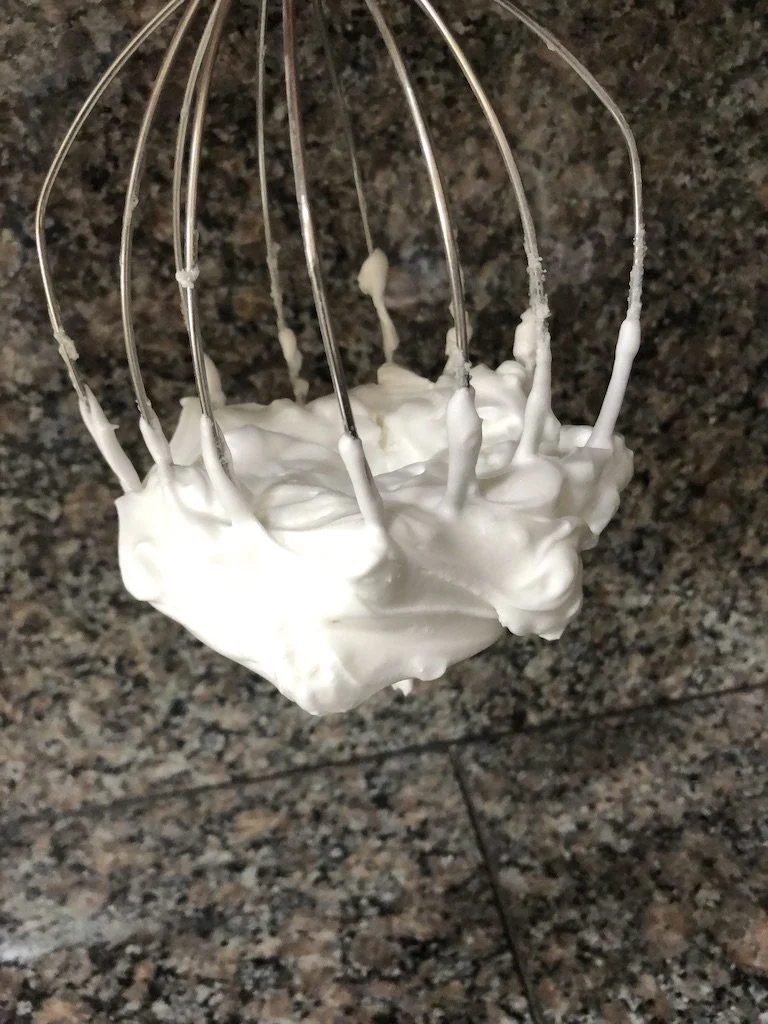
  • “Soft peaks” (photo #2) means beaten whites with tips that fall over when you lift the beater.

  • "Stiff but not dry" (photo #3) means beaten egg whites that are thick and glossy looking and with tips that stand up firmly with only a tiny bit at the top lopping over.

  • To test whether whites are stiff enough, either turn the bowl over – it’s ok! the whites won’t fall out! (photo #4) Or, spoon a small amount out of the bowl and turn the spoon over – the whites should cling, not fall out.

  • Photo#5 shows the meringue with eggs whipped and sugar added

Passover Butter Cookies Redux

Last year I posted a recipe for a Passover version of my Aunt Fanny’s famous butter cookies (which we call Fannies in her honor). They were a big hit at our house.

But this year, after reading an article in Hadassah magazine by food writer and cookbook author Adeena Sussman, I took yet another approach. The article suggested using the grain-free products such as almond flour and coconut flour that have become available in recent years.

I made several versions, experimenting with amounts (you can’t just substitute all-purpose flour or matza cake meal 1:1 for grain-free flour) and had my “tasters” try all of them.

We had two winners. Most people liked the almond and coconut flour recipe; it is tender and buttery. But some liked the matza cake meal and coconut flour recipe; it is dense, more crumbly, and suitable for nut-free diets.

I’m not finished experimenting. Aunt Fanny, wherever you are — your cookie recipe is immortal, now in the original and in Passover versions now and yet to come.

Here are both recipes.

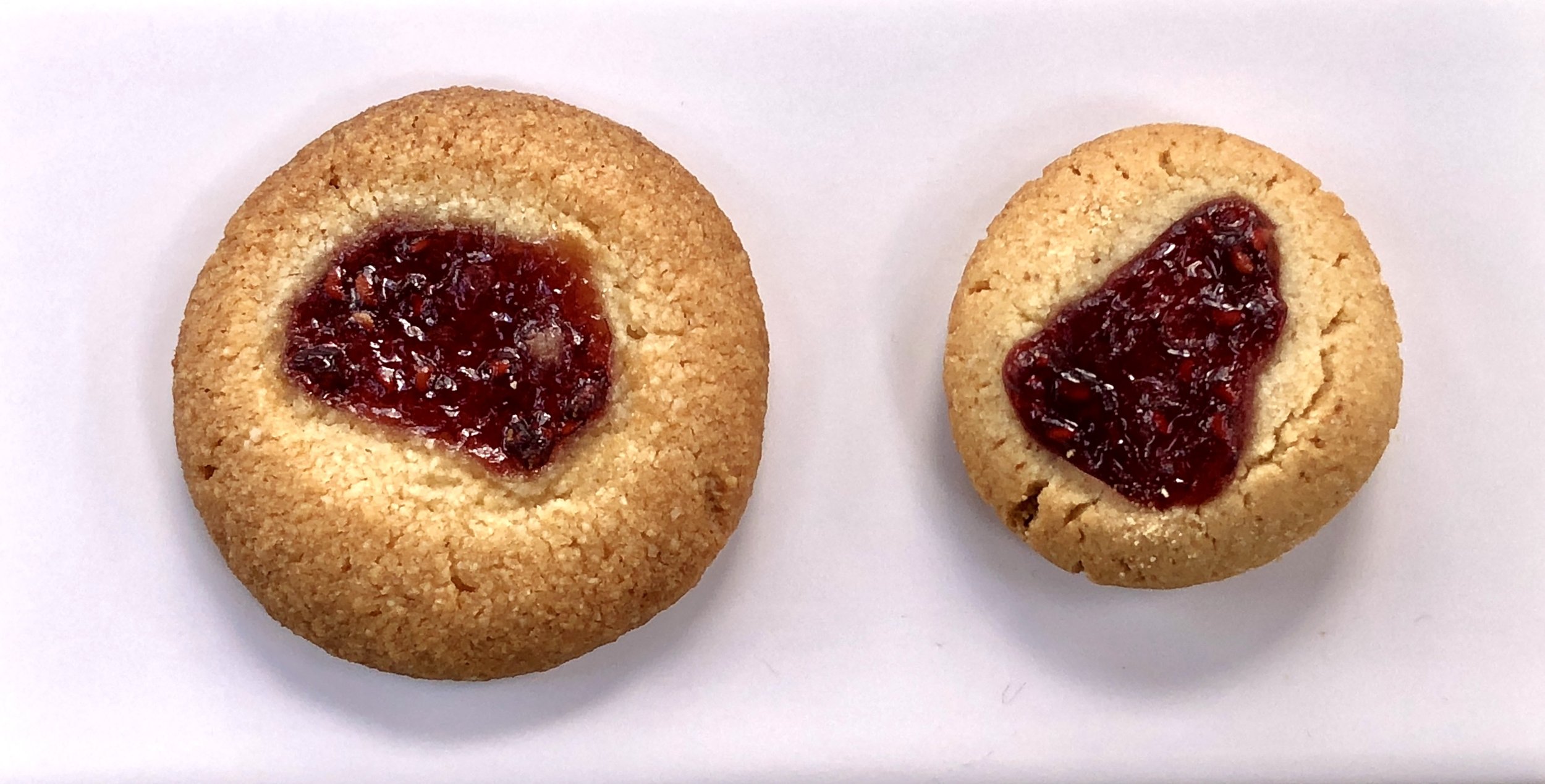
Almond and Coconut Butter Cookies (Passover)

  • 2 cups almond flour

  • 1/2 cup coconut flour

  • 1/2 teaspoon salt

  • 1/2 pound unsalted butter

  • 3/4 cup sugar

  • 2 large egg yolks

  • 1-1/2 teaspoons vanilla extract

  • jam, lekvar, chocolate chips, etc.

Preheat the oven to 350 degrees. Mix the almond flour, coconut flour and salt in a bowl and set aside. Place the butter and sugar in the bowl of an electric mixer and mix on medium speed for 1-2 minutes or until the ingredients are evenly combined.or until the mixture is light and fluffy. Add the almond flour mixture and mix another 1-2 minutes, or until the ingredients are almost blended. Add the egg yolks and vanilla extract. Mix the ingredients 1-2 minutes, or until a uniform dough forms. Refrigerate the dough for at least 45 minutes. Scoop pieces of dough and shape them into balls about 1" in diameter. Flatten the balls between your palms. Press each circle with your thumb to make an indentation in the center. Place the cookies on a cookie sheet, leaving an inch of space between them. Fill the thumb print spaces with a small amount of lekvar, jam, etc. Bake for 18-23 minutes or until the cookies are golden brown.

Makes about 50

Matza Cake Meal and Coconut Butter Cookies (Passover)

  • 1 cup matza cake meal

  • 1 cup coconut flour

  • 1/2 teaspoon salt

  • 1/2 pound unsalted butter

  • 3/4 cup sugar

  • 4 large egg yolks

  • 1 teaspoon vanilla extract

  • jam, lekvar, chocolate chips, etc.

Preheat the oven to 350 degrees. Mix the matza cake meal, coconut flour and salt in a bowl and set aside. Place the butter and sugar in the bowl of an electric mixer and mix on medium speed for 1-2 minutes or until the ingredients are evenly combined.or until the mixture is light and fluffy. Add the dry ingredients and mix another 1-2 minutes, or until the ingredients are almost blended. Add the egg yolks and vanilla extract. Mix the ingredients 1-2 minutes, or until a uniform dough forms. Scoop pieces of dough and shape them into balls about 1" in diameter. Flatten the balls between your palms. Press each circle with your thumb to make an indentation in the center. Place the cookies on a cookie sheet, leaving an inch of space between them. Fill the thumb print spaces with a small amount of lekvar, jam, etc. Bake for 22-25 minutes or until the cookies are golden brown.

Makes about 50

Honey Glazed Roasted Beets

I’m already planning side dishes for our Passover Seder. I like the ones that have vibrant color, that aren’t too difficult to prepare — it’s just too much work what with all the other food I am planning to cook — and also that I can make in advance.

Roasted beets meet all these requirements. I serve them in some form every year at our Seder.

This year’s version couldn’t be easier. We’ve had it several times already. We like it best when served at room temperature. I’ve made this using Balsamic vinegar instead of wine vinegar. It’s somewhat sweeter that way, but we prefer the white wine vinegar tang.

Honey Glazed Roasted Beets 

  • 3 large beets

  • 3 tablespoons honey

  • 2 tablespoons olive oil

  • 2 teaspoons fresh thyme leaves

  • salt to taste

  • sprinkle of Aleppo pepper (or use cayenne or some other smokey dried pepper)

  • 1-2 tablespoons white wine vinegar

  • 2 tablespoons chopped chives or green scallion tops

Preheat the oven to 425 degrees. Peel the beets and cut them into bite-size pieces. Place the beets in a baking dish. Heat the honey and olive oil together over medium heat for about one minute or until the liquid has thinned and easily blended. Pour the liquid over the beets and toss to coat each piece. Sprinkle with thyme, salt and Aleppo pepper. Cover the beets with foil. Bake for 25 minutes or until the beets are tender. Remove the foil and bake for another 8-10 minutes to crisp and glaze the surface. Remove the baking dish from the oven, pour the vinegar over the beets, toss and let rest for 10-15 minutes. Sprinkle with chives and serve.

Makes 4-6 servings