Vegetable Croquettes (Passover)

I was once in a pub in the west of England and ordered a dish called Bubble & Squeak. It’s simple, unfancy food, tasty and nourishing, consisting of mashed potatoes and cabbage fried to a crispy brown and topped with an egg.

It was magical.

So I made it many times at home, and, me being me, and this recipe being the kind that allows for endless variation, I added this and that to the potatoes, depending on what leftover vegetables I had. I used Brussels sprouts instead of cabbage (as do many restaurants in England); I’ve added corn, peas, carrots, spinach, broccoli and such. Once or twice I included cheese (feta, Parmesan) but I prefer the all-vegetable version best.

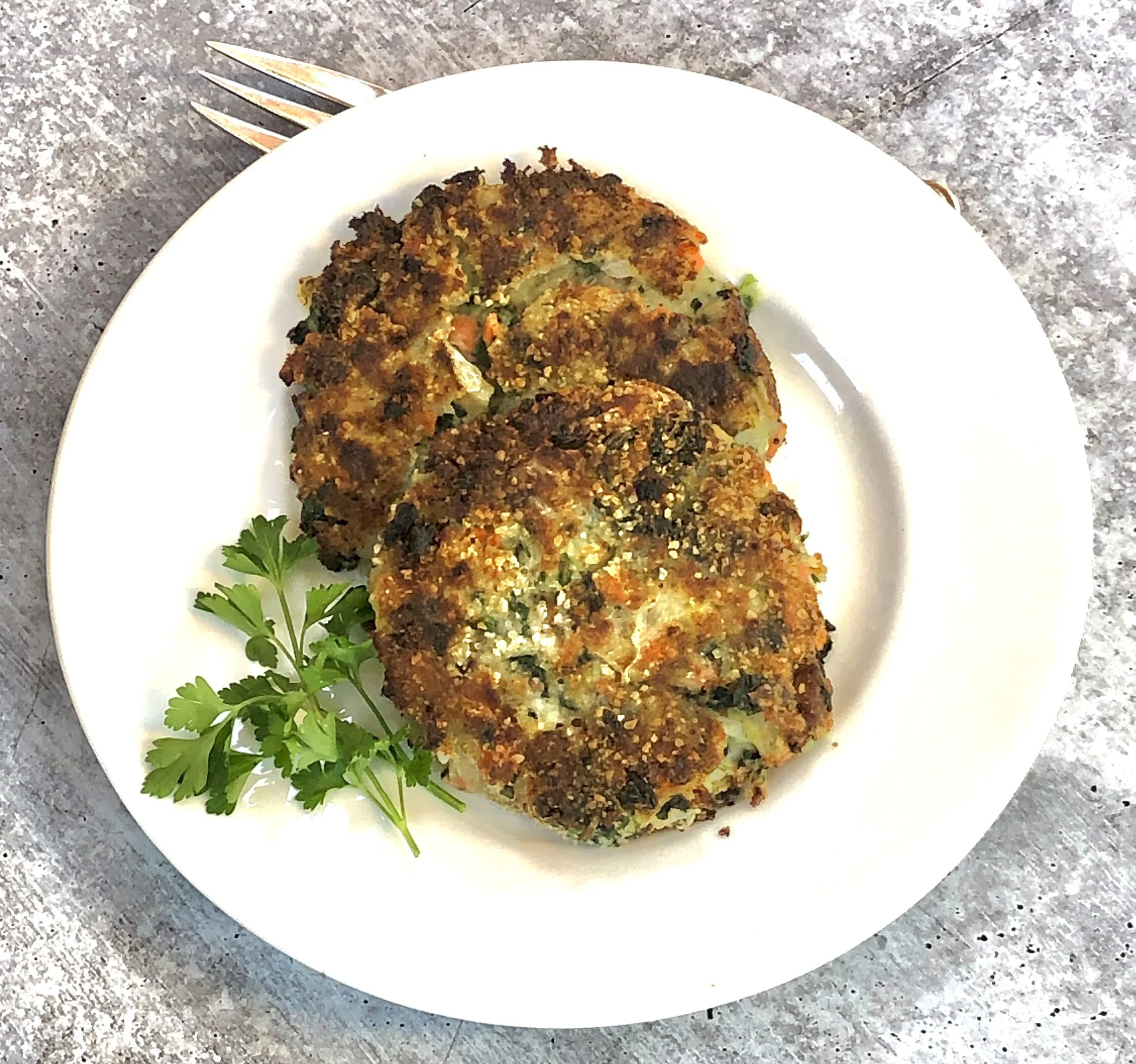
I don’t call it Bubble & Squeak (so named for the sounds it supposedly makes while being cooked), so I’ll just say: Vegetable Croquettes. We’ve eaten them as a side dish with meat but most of the time they are dinner, topped with a fried egg.

This is my Passover version. At other times of the year you can add beans/peas and coat the patties with bread crumbs.

Vegetable Croquettes

  • 1/2 cup vegetable oil, approximately

  • 1 medium onion, finely chopped

  •  1 cup chopped cooked cabbage

  •  2 chopped, cooked carrots

  • 10 ounce package frozen spinach, thawed

  • 3 cups mashed potatoes

  • salt and freshly ground black pepper to taste

  • 1/2 cup matzo meal, approximately

Heat 2 tablespoons vegetable oil in a sauté pan over medium heat. Add the onion and cook for 3-4 minutes or until softened. Spoon the onions into a bowl. Add the cabbage, carrots, spinach, mashed potatoes and some salt and pepper. Mix thoroughly and shape the mixture into 1/2-inch patties. Place the matzo meal on a plate. Press both sides of each patty into the crumbs. Refrigerate for at least 30 minutes. Heat 2-3 tablespoons vegetable oil in the sauté pan over medium heat. Fry the patties a few at a time (leave plenty of space between each) for 3-4 minutes per side or until crispy and golden brown, adding more vegetable oil to the pan as needed.

Makes 8-10


How to Whip Egg Whites

Have you ever realized how many eggs we use during Passover?

LOTS!

And many Passover recipes, especially desserts, use whipped egg whites. So you read things like “soft peaks” and “stiff but not dry” and such.

What does it all mean? Looks easy but ……

sometimes the food preparations that look the easiest turn out to be the most intimidating.

Egg whites are among those. But if you want to make perfectly soft soufflés, tender Baked Alaska, crispy meringues  and other wonderful treats, it’s important to get it right.

These tips will help:

  • Use the freshest eggs possible; their thicker whites whip to greater volume and with more stability than the thin, runny whites of older eggs.

  • Separate the yolks and whites when the eggs are cold. This helps prevent even the tiniest particle of yolk from falling into the whites. Egg yolks contain fat, and any kind of fat inhibits volume.

  • For the best volume, let the egg whites come to room temperature (usually about 30 minutes) before you beat them.

  • Copper bowls are the best for the job, (the acid in the metal helps stabilize the foam), but stainless steel, ceramic or glass bowls are fine too. Don’t use plastic bowls because no matter how much you wash them the surface of retains some fat particles.

  • Use a balloon or large whisk or the whisk attachment of an electric mixer or hand mixer. Standard cake batter beaters don’t whip egg whites well; neither does a food processor.

  • Start beating the whites on slow and gradually increase the speed as volume increases.

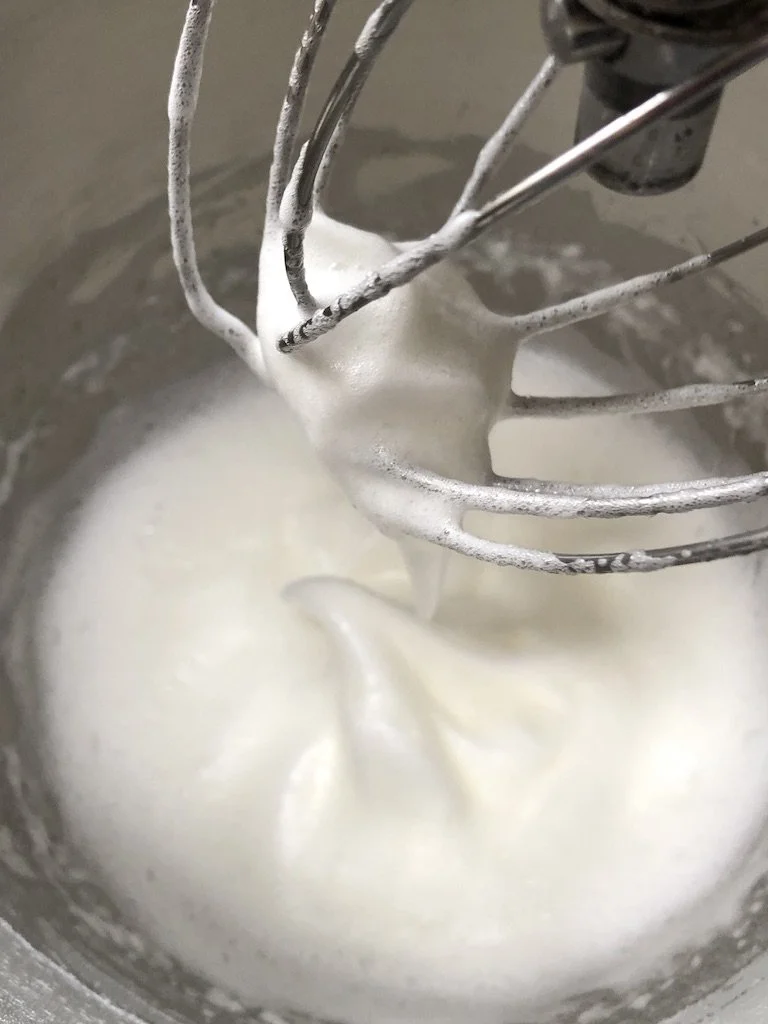
  • Beat the whites to the foamy stage (photo #1)before you add ingredients such as cream of tartar, salt, lemon juice or vinegar.

  • Add any sugar gradually (about 2 tablespoonfuls at a time), and only after the whites have been beaten to the "soft peak" stage.

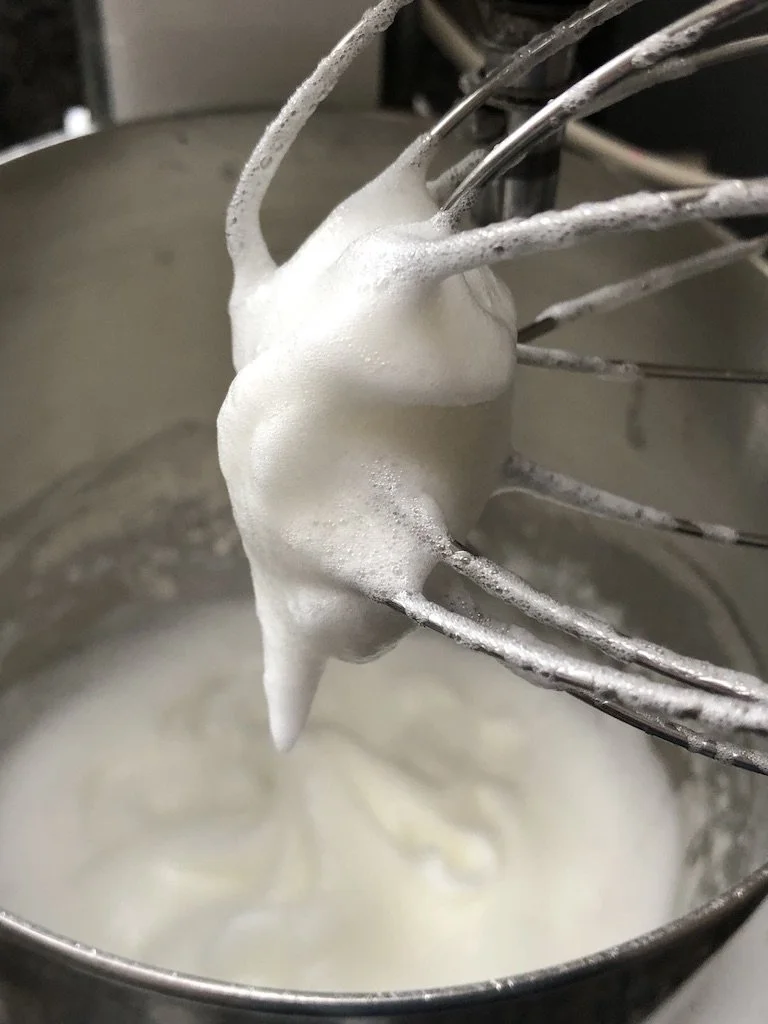
  • “Soft peaks” (photo #2) means beaten whites with tips that fall over when you lift the beater.

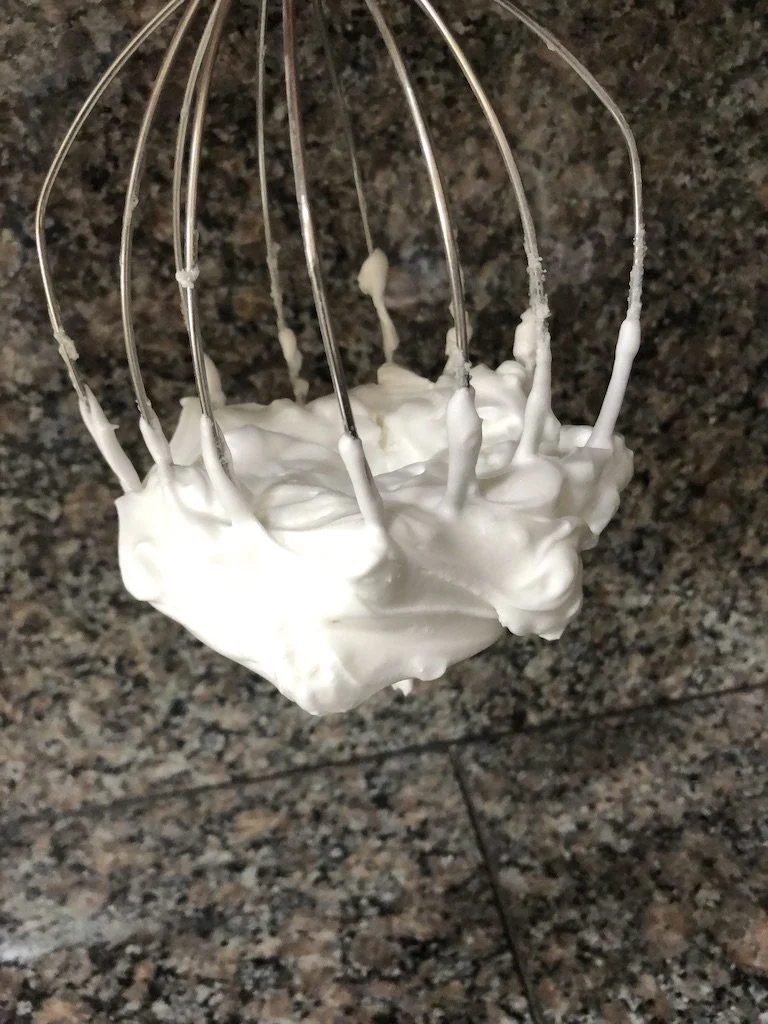
  • "Stiff but not dry" (photo #3) means beaten egg whites that are thick and glossy looking and with tips that stand up firmly with only a tiny bit at the top lopping over.

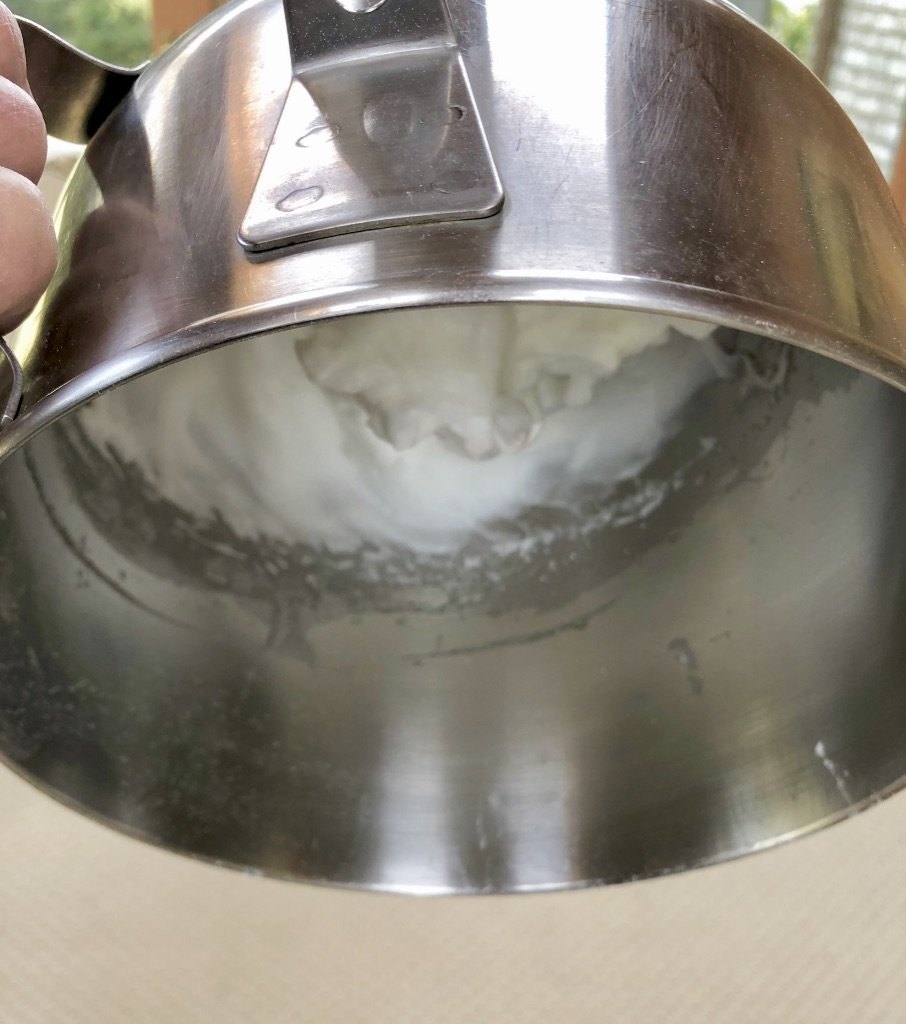
  • To test whether whites are stiff enough, either turn the bowl over – it’s ok! the whites won’t fall out! (photo #4) Or, spoon a small amount out of the bowl and turn the spoon over – the whites should cling, not fall out.

  • Photo#5 shows the meringue with eggs whipped and sugar added

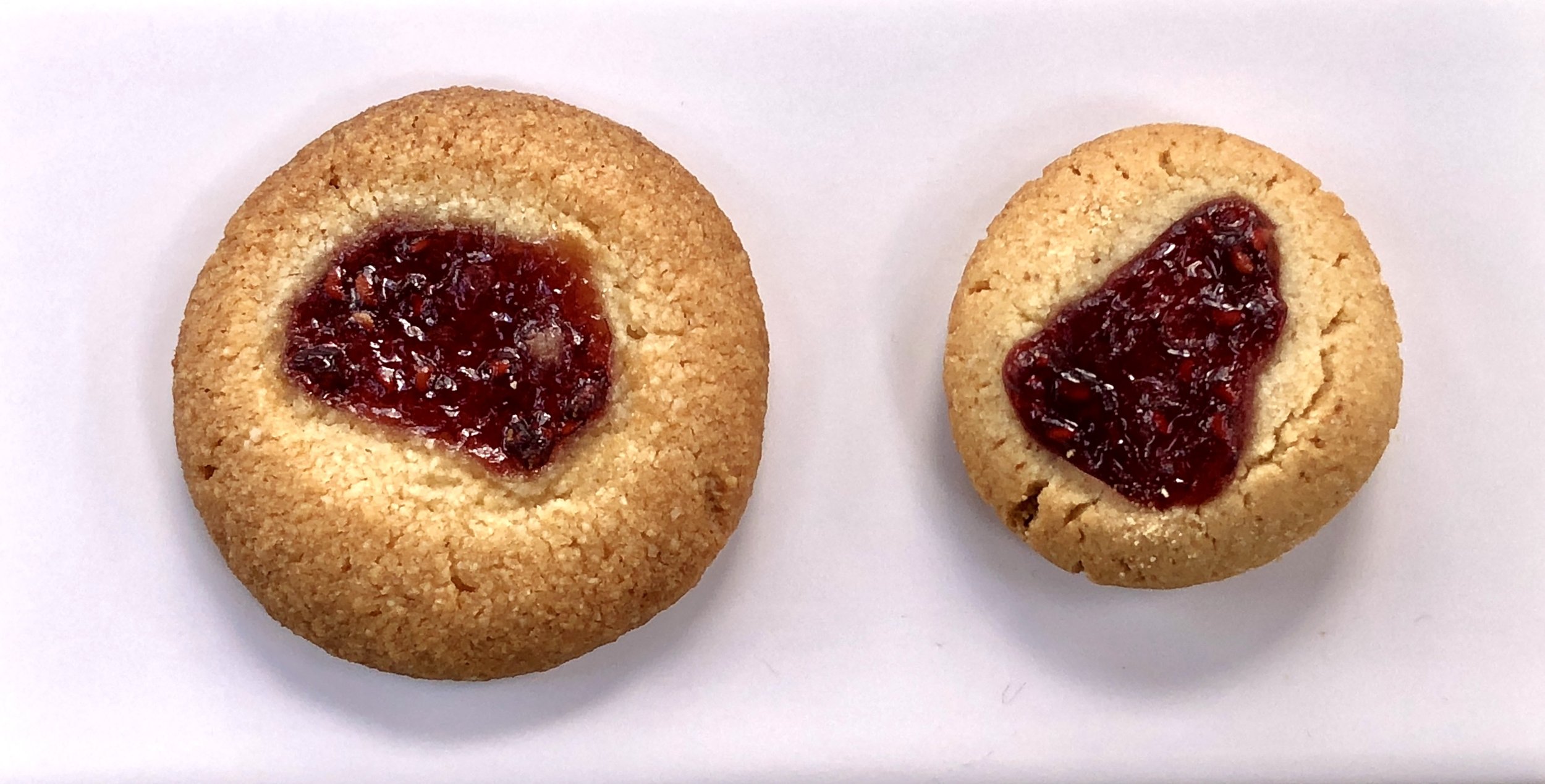
Passover Butter Cookies Redux

Last year I posted a recipe for a Passover version of my Aunt Fanny’s famous butter cookies (which we call Fannies in her honor). They were a big hit at our house.

But this year, after reading an article in Hadassah magazine by food writer and cookbook author Adeena Sussman, I took yet another approach. The article suggested using the grain-free products such as almond flour and coconut flour that have become available in recent years.

I made several versions, experimenting with amounts (you can’t just substitute all-purpose flour or matza cake meal 1:1 for grain-free flour) and had my “tasters” try all of them.

We had two winners. Most people liked the almond and coconut flour recipe; it is tender and buttery. But some liked the matza cake meal and coconut flour recipe; it is dense, more crumbly, and suitable for nut-free diets.

I’m not finished experimenting. Aunt Fanny, wherever you are — your cookie recipe is immortal, now in the original and in Passover versions now and yet to come.

Here are both recipes.

Almond and Coconut Butter Cookies (Passover)

  • 2 cups almond flour

  • 1/2 cup coconut flour

  • 1/2 teaspoon salt

  • 1/2 pound unsalted butter

  • 3/4 cup sugar

  • 2 large egg yolks

  • 1-1/2 teaspoons vanilla extract

  • jam, lekvar, chocolate chips, etc.

Preheat the oven to 350 degrees. Mix the almond flour, coconut flour and salt in a bowl and set aside. Place the butter and sugar in the bowl of an electric mixer and mix on medium speed for 1-2 minutes or until the ingredients are evenly combined.or until the mixture is light and fluffy. Add the almond flour mixture and mix another 1-2 minutes, or until the ingredients are almost blended. Add the egg yolks and vanilla extract. Mix the ingredients 1-2 minutes, or until a uniform dough forms. Refrigerate the dough for at least 45 minutes. Scoop pieces of dough and shape them into balls about 1" in diameter. Flatten the balls between your palms. Press each circle with your thumb to make an indentation in the center. Place the cookies on a cookie sheet, leaving an inch of space between them. Fill the thumb print spaces with a small amount of lekvar, jam, etc. Bake for 18-23 minutes or until the cookies are golden brown.

Makes about 50

Matza Cake Meal and Coconut Butter Cookies (Passover)

  • 1 cup matza cake meal

  • 1 cup coconut flour

  • 1/2 teaspoon salt

  • 1/2 pound unsalted butter

  • 3/4 cup sugar

  • 4 large egg yolks

  • 1 teaspoon vanilla extract

  • jam, lekvar, chocolate chips, etc.

Preheat the oven to 350 degrees. Mix the matza cake meal, coconut flour and salt in a bowl and set aside. Place the butter and sugar in the bowl of an electric mixer and mix on medium speed for 1-2 minutes or until the ingredients are evenly combined.or until the mixture is light and fluffy. Add the dry ingredients and mix another 1-2 minutes, or until the ingredients are almost blended. Add the egg yolks and vanilla extract. Mix the ingredients 1-2 minutes, or until a uniform dough forms. Scoop pieces of dough and shape them into balls about 1" in diameter. Flatten the balls between your palms. Press each circle with your thumb to make an indentation in the center. Place the cookies on a cookie sheet, leaving an inch of space between them. Fill the thumb print spaces with a small amount of lekvar, jam, etc. Bake for 22-25 minutes or until the cookies are golden brown.

Makes about 50

Honey Glazed Roasted Beets

I’m already planning side dishes for our Passover Seder. I like the ones that have vibrant color, that aren’t too difficult to prepare — it’s just too much work what with all the other food I am planning to cook — and also that I can make in advance.

Roasted beets meet all these requirements. I serve them in some form every year at our Seder.

This year’s version couldn’t be easier. We’ve had it several times already. We like it best when served at room temperature. I’ve made this using Balsamic vinegar instead of wine vinegar. It’s somewhat sweeter that way, but we prefer the white wine vinegar tang.

Honey Glazed Roasted Beets 

  • 3 large beets

  • 3 tablespoons honey

  • 2 tablespoons olive oil

  • 2 teaspoons fresh thyme leaves

  • salt to taste

  • sprinkle of Aleppo pepper (or use cayenne or some other smokey dried pepper)

  • 1-2 tablespoons white wine vinegar

  • 2 tablespoons chopped chives or green scallion tops

Preheat the oven to 425 degrees. Peel the beets and cut them into bite-size pieces. Place the beets in a baking dish. Heat the honey and olive oil together over medium heat for about one minute or until the liquid has thinned and easily blended. Pour the liquid over the beets and toss to coat each piece. Sprinkle with thyme, salt and Aleppo pepper. Cover the beets with foil. Bake for 25 minutes or until the beets are tender. Remove the foil and bake for another 8-10 minutes to crisp and glaze the surface. Remove the baking dish from the oven, pour the vinegar over the beets, toss and let rest for 10-15 minutes. Sprinkle with chives and serve.

Makes 4-6 servings

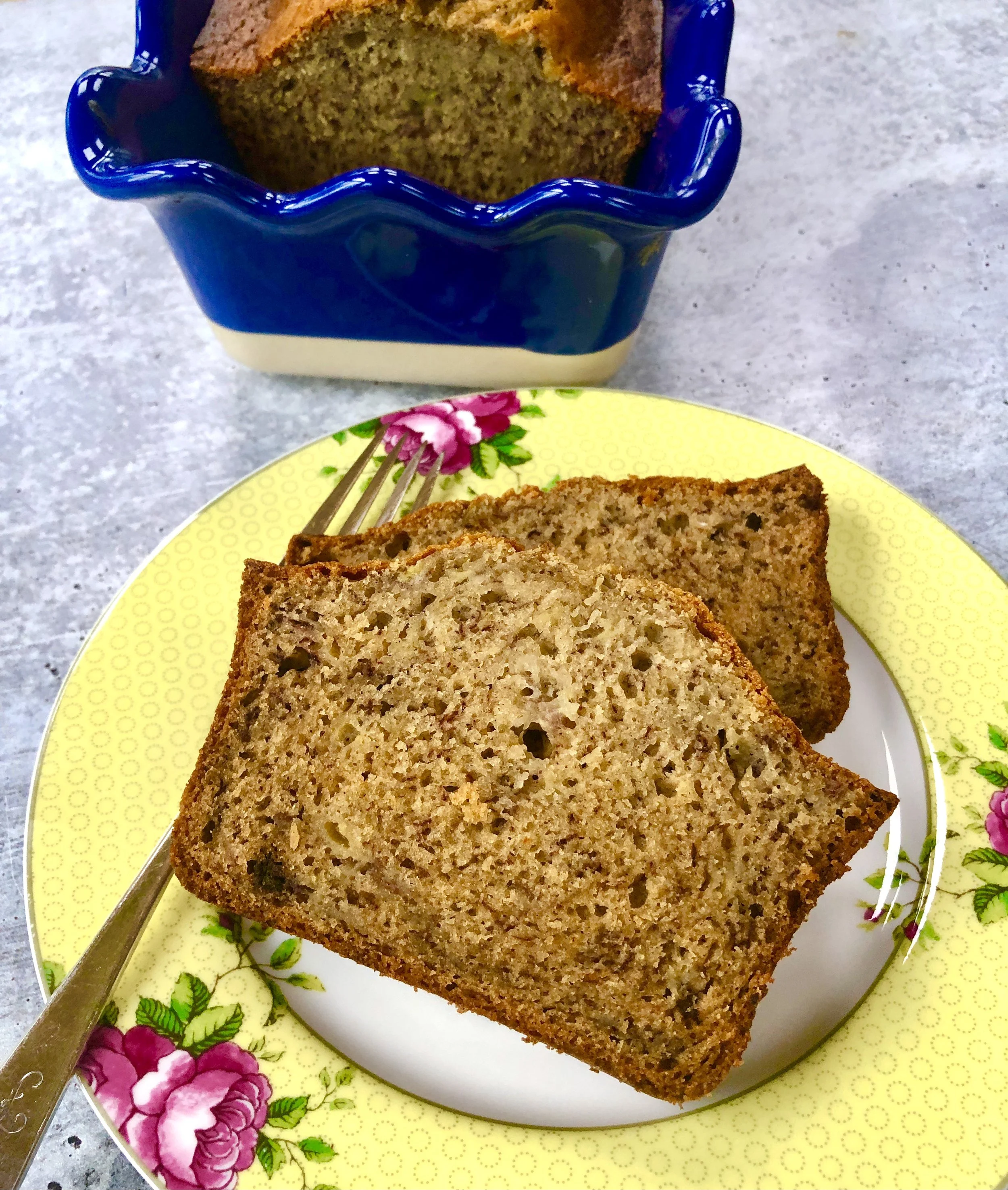
Plain Old Banana Bread

This is the time of year - just past Purim - when people who observe Passover clean out their cabinets (a good spring clean!), throw out stuff they’re never going to use or that’s past a “sell-by” date, give ingredients away and use up prohibited ingredients such as flour, cookies, bread and such.

I’m also always looking for ways to use up uneaten bananas. So, for me, one of the most delicious ways to use up the flour AND the bananas is: Banana Bread!

Like this very simple one to which you could add: chocolate chips, raisins, chopped nuts, crystallized ginger, candied orange peel (about 1/2 to 3/4 cups of any extra).

plain old BANANA BREAD

  • 2 cups all-purpose flour

  • 1 teaspoon ground cinnamon

  • 1/2 teaspoon freshly ground nutmeg

  • 1 teaspoon baking soda

  • 1/2 teaspoon baking powder

  • 1/2 teaspoon salt

  • 2/3 cup sugar

  • 1/3 cup vegetable oil

  • 1 teaspoon vanilla extract

  • 2 large eggs

  • 1/2 cup buttermilk

  • 3 ripe medium bananas, mashed

Preheat the oven to 350 degrees. Lightly grease a 9”x5”x3” loaf pan. Mix the flour, cinnamon, nutmeg, baking soda, baking powder and salt in a bowl and set aside. Mix the sugar and vegetable oil together in the bowl of an electric mixer set at medium speed for 1-2 minutes or until thoroughly combined. Add the vanilla extract and eggs and beat them in until well combined. Add the buttermilk and bananas and blend them in thoroughly. Add the flour mixture and blend it in. Spoon the batter into the prepared loaf pan. Bake for about one hour or until a cake tester inserted into the center comes out clean.

Makes one loaf

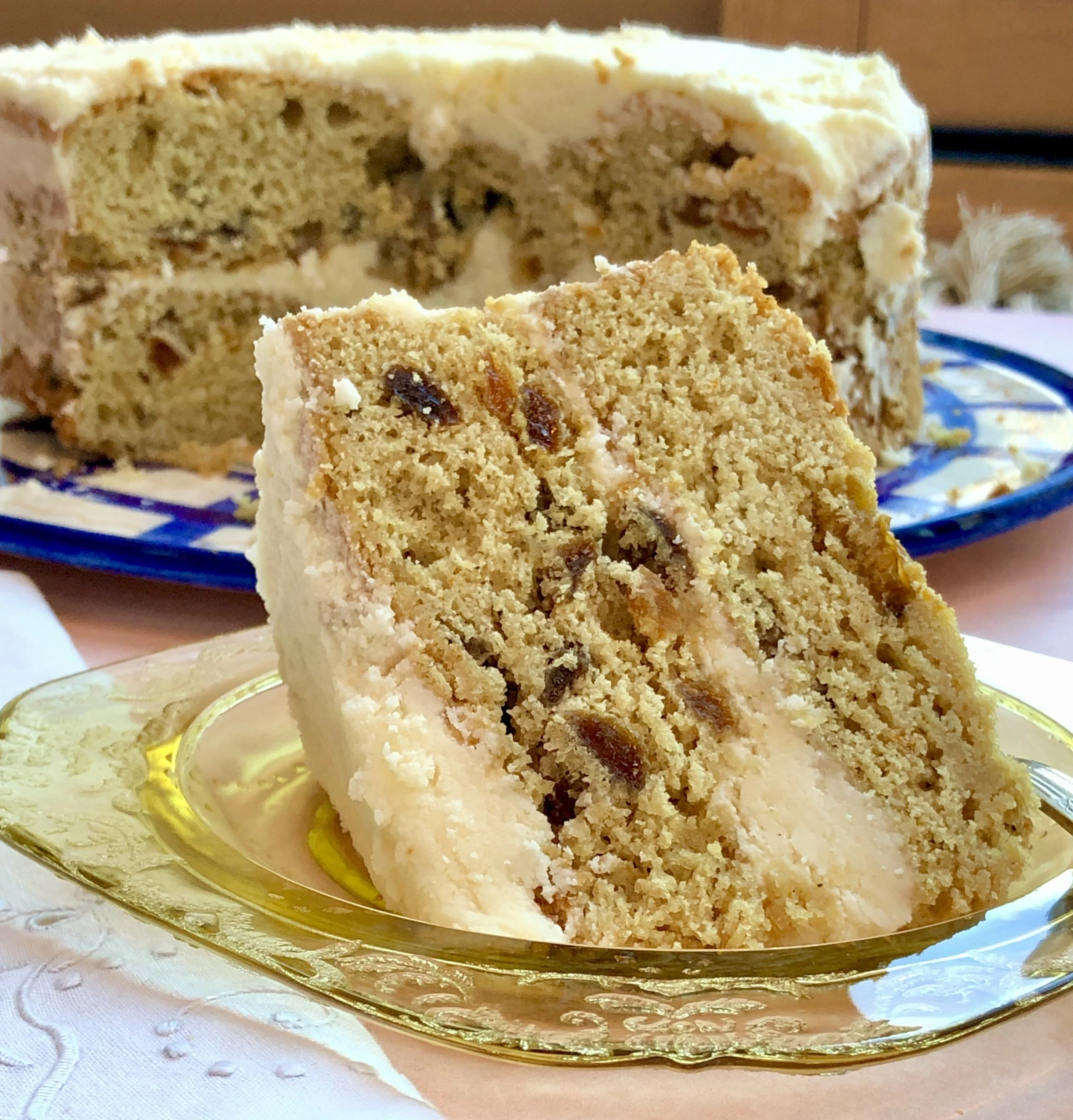
Irish Whiskey Cake

Purim is an extraordinarily joyous holiday and it’s been Jewish tradition to celebrate with a glass or two of wine or some other alcoholic beverage. The focus on drinking has its roots in something that Rabbi Rava said in the Talmud: on Purim, people should drink until they can no longer distinguish between "Cursed be Haman" and "Blessed is Mordecai."

Well, I’m not giving advice on how much booze anyone should drink

BUT

the fact that Purim comes on the same day as St.Patrick’s Day, gave me this most stupendously delicious thought about whiskey and such: eat Irish Whiskey Cake.

I have made this particular cake often. There is never a crumb left.

Celebrate Purim AND St. Patrick’s Day. Make Merry! Have cake!

Irish Whiskey Cake

  • 1 cup golden raisins

  • 1 tablespoon grated fresh orange peel

  • 1/4 cup Irish whiskey

  •  2 cups all-purpose flour

  • 2 teaspoons baking powder

  • 1 teaspoon baking soda

  • 1/2 teaspoon salt

  • 1/2 teaspoon freshly grated nutmeg

  • 1/4 teaspoon ground cloves

  • 3/4 cup butter at room temperature

  • 3/4 cup sugar

  • 2 large eggs

  • 1/3 cup orange juice

Frosting

  • 3/4 cup butter, at room temperature

  • 2 cups confectioners' sugar

  • 1/4 cup Irish whiskey

Preheat the oven to 350 degrees. Lightly grease two eight-inch cake pans. Line the bottoms with parchment paper and lightly grease the paper. Place the raisins and orange peel in a bowl, pour in the whiskey and let soak for at least 30 minutes. Combine the flour, baking powder, baking soda, salt, nutmeg and cloves in a bowl. Set aside. Beat the butter and sugar in the bowl of an electric mixer set at medium speed for 2-3 minutes or until smooth and well blended. Add the eggs and beat for another 2-3 minutes or until the mixture becomes smooth (scrape down the sides of the bowl with a spatula). Add the flour mixture and beat for 1-2 minutes to incorporate it into the other ingredients. Add the raisins (with any remaining liquid) and the orange juice and beat for another 1-2 minutes until a uniform batter has formed. Spoon the mixture into the cake pans. Bake for 20-22 minutes until a cake tester inserted into the center comes out clean. Let the cake cool in the pans for 10 minutes, then remove the cakes and let them cool completely. Make the frosting by beating the butter and confectioners’ sugar together until smooth. Gradually add the whiskey and beat until smooth. Frost the bottom layer, place the second layer on top and frost the top of the second layer.

 Makes 8 servings

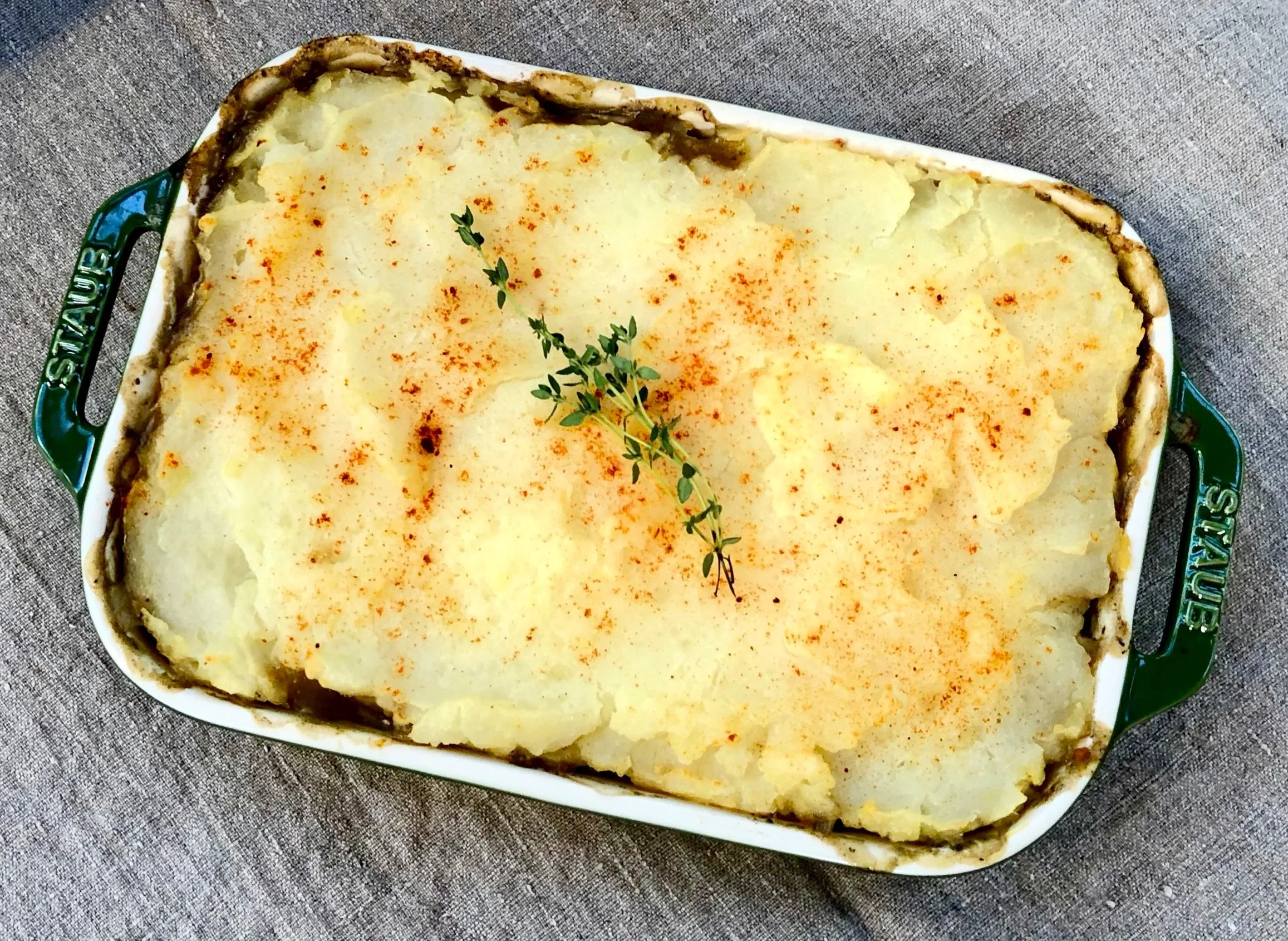
Vegetarian Shepherd's Pie

Vegetarian Shepherd’s Pie

During the run-up to Purim, the media is loaded with recipes for hamantashen. (Of course!)

But, because historians have speculated that the heroine of this holiday, Queen Esther, was a vegetarian, meatless meals are also traditional.

A vegetarian version of classic Shepherd’s Pie is hearty and filling enough to convince even a hardcore meat eater. And it’s also a festive dish worthy of a celebratory meal.

Note to self: this dish also makes a splendid choice for Break-the-Fast after Yom Kippur.


Vegetarian Shepherd’s Pie*

  •  6 medium all-purpose potatoes such as Yukon Gold

  • 1/3 cup vegetable stock

  • 4 tablespoons olive oil

  • 2 tablespoons lemon juice

  • salt and freshly ground black pepper to taste

  • 1 cup lentils, preferably French green

  • 1 medium onion, chopped

  • 3 carrots, chopped

  • 12-14 ounces mushrooms, chopped

  • 2 large cloves garlic, finely chopped

  • 1 medium zucchini, cut into bite sized pieces

  • 2 cups vegetable stock

  • 1 tablespoon fresh thyme leaves

  • 2 tablespoons soy sauce

  • 2 tablespoons cornstarch

  • 1 cup frozen peas or cut up cooked green beans

  • paprika 

Peel the potatoes, cut them into chunks and cook them in lightly salted water for about 15 minutes, or until they are fork tender. Drain the potatoes and mash them with a ricer or potato masher until the lumps have disappeared. Stir in the stock, 2 tablespoons of the olive oil, lemon juice and salt and pepper to taste.  

Cook the lentils according to package directions. When the lentils are tender, drain them and set them aside.

Preheat oven to 400 degrees. Heat the remaining 2 tablespoons olive oil in a large sauté pan over medium-high heat. Add the onion, carrots, mushrooms and garlic and cook for about 3-4 minutes or until the vegetables have softened slightly. Add the zucchini and cook for another 1-2 minutes. Add the cooked lentils, vegetable stock, thyme and soy sauce. Bring to a boil. Mix the cornstarch with enough water to make a smooth paste. Add to the vegetable mixture. Stir and cook for 2-4 minutes or until the pan liquid has thickened. Stir in the peas. Season to taste with salt and pepper. Remove from the heat.

Place the vegetables in a lightly oiled baking dish. Cover the top with the mashed potatoes. Garnish with a sprinkle of paprika (can be cooked ahead up to this point).

Bake for 20-25 minutes or until the pie is hot and bubbling around the edges and the crust has browned lightly (if you make this ahead and refrigerate the dish, it may take 25-30 minutes to reheat).

Makes 8 servings

*a version of this dish appeared in The Jewish Week Food&Wine.


Chicken Cacciatore

I recently read a book about four women who entered a cooking contest in World War II England. One of the contestants had met an Italian POW who told her about Italian cuisine (virtually unknown in England at the time) and taught her how to make chicken cacciatore.

The book was just okay but the recipes were fascinating, what with dealing with rationed food and all sorts of shortages. One woman used whale meat for her entree; the contestant who planned to make chicken cacciatore actually used rabbit.

In addition, I realized that it had been years, maybe more than a decade, since I cooked chicken cacciatore.

I got out my old recipe, and, like the wartime home cooks who learned to be flexible because ingredients were difficult to get, I made a few changes based on what I had at hand. I only had grape tomatoes; had fresh parsley but not fresh basil or oregano. I was minus a bell pepper (which we don’t love anyway), and whereas my original recipe called for red wine, I had a bottle of white open, so I used that instead.

The result was a complete success.

Here is the recipe with flexible ingredient options. Might be a nice change of pace for Shabbat chicken.

Chicken Cacciatore

  • 1 broiler-fryer chicken cut into 8 pieces (or use 4 large breasts or whole legs)

  • 2 tablespoons all-purpose flour

  • salt and freshly ground black pepper to taste

  • 3 tablespoons olive oil

  • 1 large onion, chopped

  • 2 cloves garlic, chopped

  • 8 ounces fresh mushrooms, cut into bite size pieces

  • 3 cups halved cherry or grape tomatoes (or use 4-5 plum tomatoes, chopped)

  • 1 small bell pepper, seeded and chopped, optional

  • 1/2 cup wine (red or white)

  • 1/2 cup chicken or vegetable stock

  • 1/4 cup chopped fresh herbs: parsley, oregano, basil (or use 2 tablespoons chopped parsley plus 1 teaspoon each of dried oregano and basil)

  • cooked pasta, rice or polenta

Coat the chicken pieces with some flour and sprinkle with salt and pepper. Heat the olive oil in a large saute pan. Cook the chicken pieces a few at a time for 5-6 minutes, turning them occasionally, until they are lightly crispy. Remove the chicken pieces and set aside. Add the remaining olive oil to the pan. Add the onions and cook for 2-3 minutes. Add the garlic, mushrooms, tomatoes and bell pepper, if used, and cook for 5-6 minutes until the vegetables are slightly softened. Pour in the wine and stock. Add the herbs. Cover the pan, lower the heat and simmer the ingredients for 25-30 minutes or until the chicken is tender and cooked through. Serve on top of cooked pasta, rice or polenta.

Makes 4-6 servings

Cherry Muffins for a President

Did George Washington chop down a cherry tree and then confess to his father?

That story has been around for as long as I can remember.

But in our current political atmosphere, where lies are often touted as truths and facts don’t seem to matter, I decided to look into this one.

According to Mount Vernon’s George Washington:

the story isn’t true.

But it isn’t Washington’s fault.

The story was a complete fabrication by Mason Locke Weems, George Washington’s first biographer. This is how most of us learned it: someone gave a hatchet to George Washington when he was age six, and somehow the young boy damaged one of the trees near the family home. When his father confronted him Washington said “Father, I cannot tell a lie. I cut down the tree.” And his father told him that his honesty was worth 100 trees.

It’s a myth.

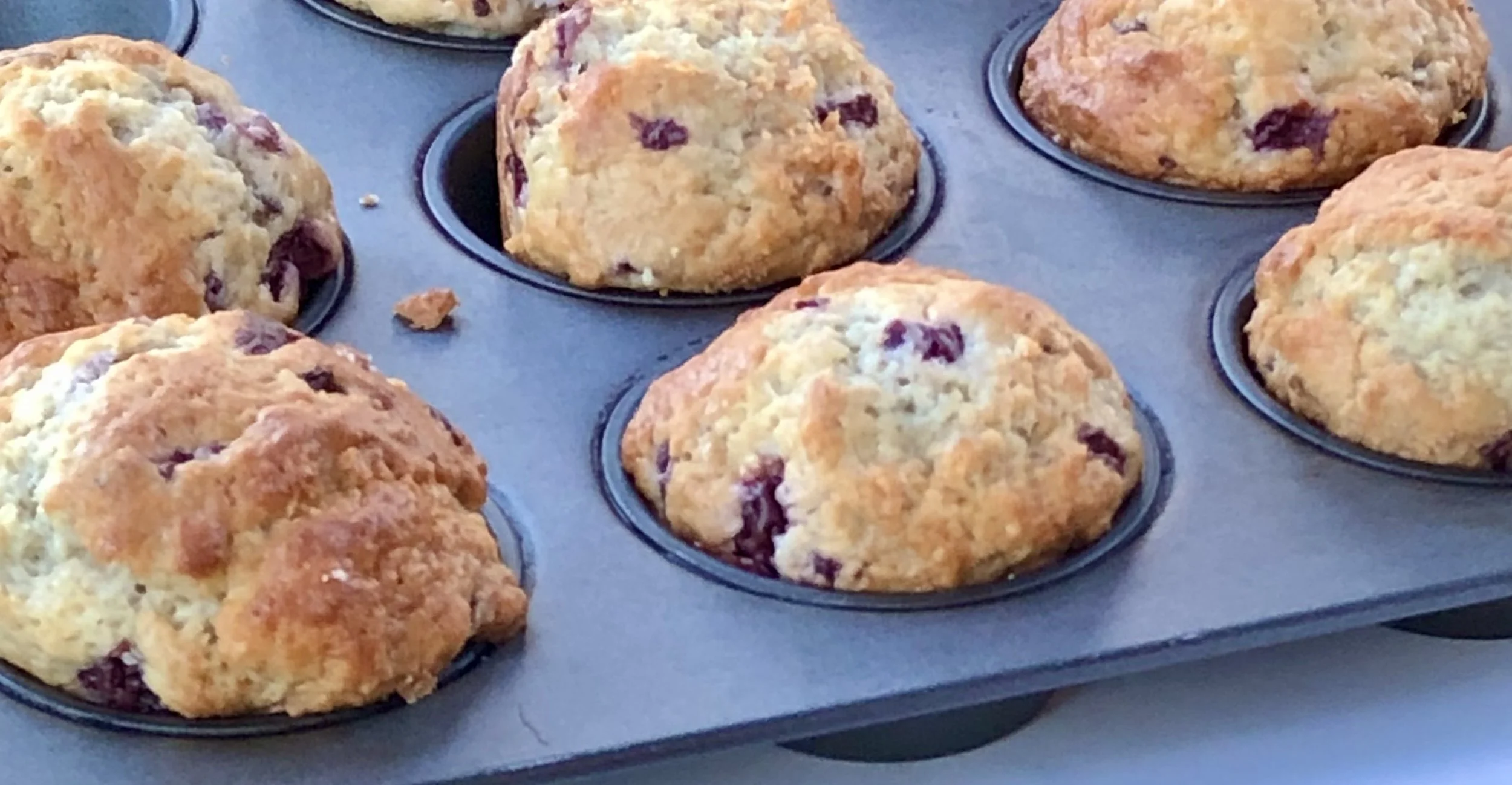
OTOH, it’s really nice that the whole cherry thing happened and long ago cherry recipes became iconic food for Washington’s birthday (now celebrated as President’s Day). Because cherries are delicious by themselves and also add a lot of flavor and texture to so many foods, including muffins.

These cherry muffins would make nice mishloach manot gifts for Purim.

Cherry Muffins

  • 6 tablespoons unsalted butter

  • 2 cups all-purpose flour

  • 1/2 cup sugar

  • 1- 1/2 teaspoons baking powder

  • 1/2 teaspoon baking soda

  • 1/2 teaspoon salt

  • 1/2 teaspoon ground cinnamon

  • 2 large eggs

  • 1 cup plain yogurt or dairy sour cream or buttermilk

  • 1 teaspoon vanilla extract

  • 1 cup chopped sour (or sweet) cherries


Preheat the oven to 400 degrees. Grease 10 muffin tins. Melt the butter and set it aside to cool. Combine the flour, sugar, baking powder, baking soda, salt and cinnamon in a large bowl. In another bowl mix the eggs, melted, cooled butter, yogurt and vanilla extract until thoroughly blended. Pour the liquid ingredients into the dry ones and mix to combine ingredients. Fold in the cherries. Spoon the batter into the prepared muffin tins. Bake for 20-22 minutes or until a cake tester inserted into the center comes out clean.

Makes 10


Chocolate Sour Cream Bundt Cake

_DSC0080.jpg

Is it part of my Jewish DNA that whenever a holiday (religious or otherwise) comes I think — “what food do I cook for this one?”

So, Valentine’s Day is coming. Also Ed’s birthday.

What do I cook for this one?

Chinese food. Maybe Beef with Orange or Chicken with Peanuts.

Scallion cakes?

He loves those Duck Legs with Hoisin sauce…….

Definitely cake.

Thinking this one ………

Chocolate Sour Cream Bundt Cake

  • 4 ounces bittersweet chocolate

  • 2 cups flour

  • 1 teaspoon baking soda

  • 1 teaspoon baking powder

  • 1/2 teaspoon salt

  • 1 cup sugar

  • 1/2 cup butter

  • 2 eggs

  • 1 cup sour cream

  • 1-1/2 teaspoons vanilla extract

Preheat the oven to 350 degrees. Lightly grease a bundt pan. Melt the chocolate in the top part of a double boiler set over barely simmering water. When the chocolate has melted, remove the top pan and let the chocolate cool slightly. Mix the flour, baking soda, baking powder and salt in a bowl. Set aside. In the bowl of an electric mixer, cream the sugar and butter on medium speed for 3-4 minutes, or until the mixture is smooth and creamy. Add the eggs and beat for 2-3 minutes, until well blended. Add the flour mixture alternating with the sour cream. Stir in the vanilla extract. Stir in the melted chocolate and mix until the batter has a uniform color. Pour the batter into the prepared bundt pan. Bake for 45 minutes or until a cake tester inserted into the center comes out clean. Cool the cake in the pan for 10 minutes. Invert onto a cake rack to cool completely.


Makes 12-16 servings