Strawberries Romanoff

Need a quick Passover dessert? Need a quick springtime dessert?

One of my favorites is Strawberries Romanoff, an old old recipe from long ago that’s so good it has endured for almost two centuries.

Supposedly Strawberries Romanoff was created in the mid-19th century by world-famous chef Antoine Careme for the Czar of Russia (Nicholas I). But it may have been invented by Prince Michael Romanoff, who once owned a restaurant in Beverly Hills, wasn’t related to the Russian royal family, wasn’t a prince and whose real name was Hershel Geguzin. Whatever — the Hollywood elite loved his place.

And I don’t know anyone who doesn’t love Strawberries Romanoff. It’s a mixture of fresh springtime strawberries — try to get the small, local ones instead of those wintery, huge, cotton-textured berries from who knows where — mixed with orange juice and brandy. It takes just a couple of minutes to mix together.

Strawberries Romanoff is usually served with whipped cream, but you can serve them plain or with sorbet.

Strawberries Romanoff

  • 2 pints strawberries

  • 2 tablespoons sugar

  • 1/4 cup orange flavored brandy

  • 3 tablespoons orange juice

  • sprigs of mint, candied orange peel, etc. as garnish

  • whipped cream or sorbet

Wash the berries and slice them into a bowl. Sprinkle with the sugar and pour in the brandy and orange juice. Toss the ingredients and let rest for at least one hour, tossing the ingredients occasionally. Serve plain with a garnish or mint leaves or candied orange peel. Or serve with whipped cream or sorbet.

Makes 6 servings

Pavolvas

Once I had a meringue race with a KitchenAid mixer and I WON! I was teaching a class and we were making Pavlovas. I used a big copper bowl and balloon whisk. The KitchenAid mixer had a stainless steel bowl and whisk attachment plus 10 speeds.

Now, I am NOT saying it was worth the effort. Just because I CAN do something doesn’t mean I want to. I wouldn’t ever want to be without my standing mixer. And I always make meringues in the stainless steel bowl (there is a copper bowl attachment but I never bought one).

Just thought I’d mention it. Ahem.

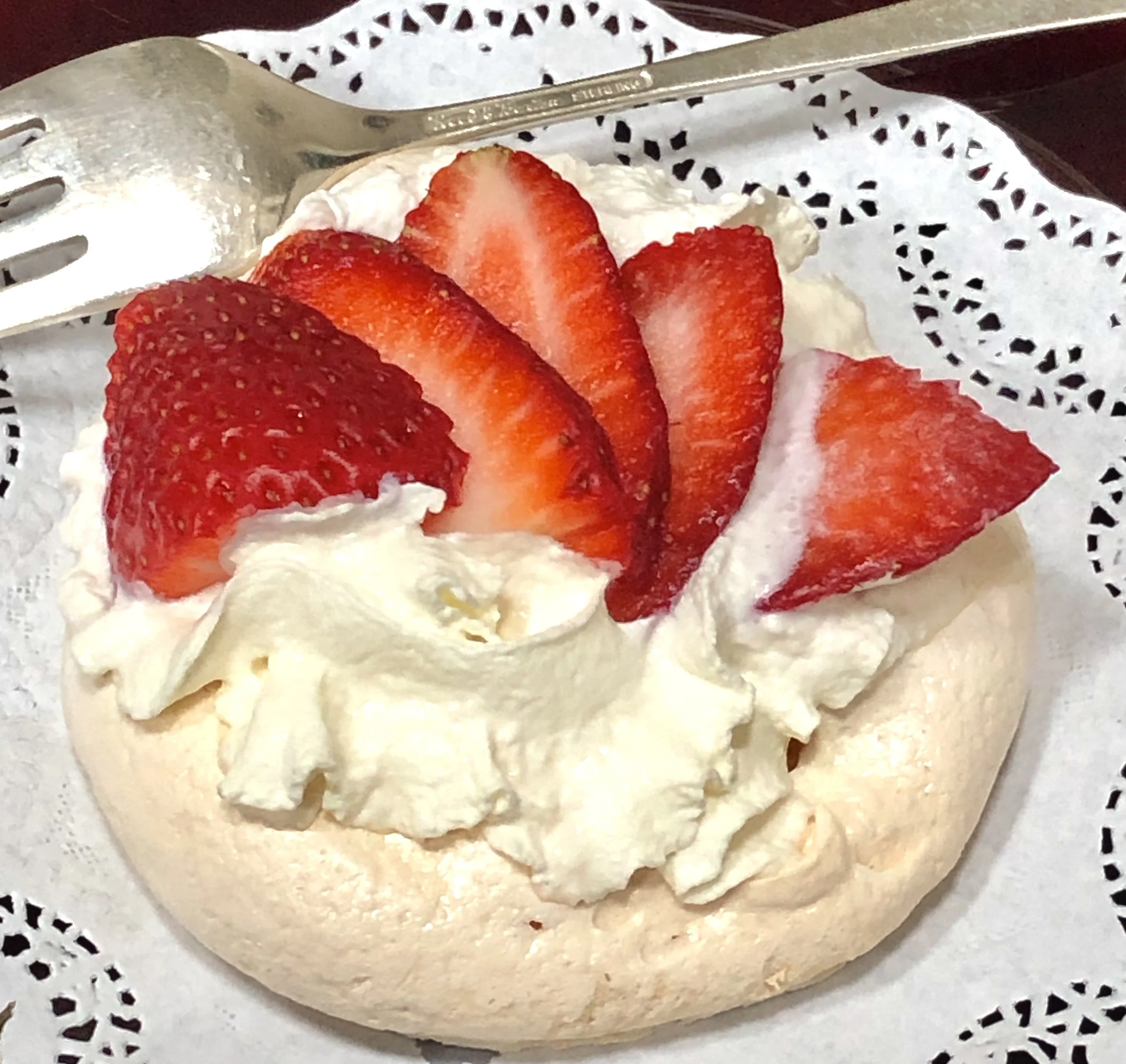
Pavlovas, which are hard meringue shells filled with fruit, lavished with sauce and topped with whipped cream, are sugary sweet and you can do a lot with them. And they’re so easy to make. They’re also a good dessert for Passover because there’s no flour and stuff we can’t eat during the holiday.

They are named after a famous Russian ballet dancer named Anna Pavlova (1881-1931). Food historians say that a hotel chef in either Australia or New Zealand named the dessert after her visit there in 1926. The white meringue shell is said to mimic her tutu and in the original recipe, the shells were filled with kiwi fruit, in imitation of the cabbage rose decorations on her outfit.

Anyway, Pavlova meringues are quick enough to put together and they are perfect containers for springtime’s wonderful profusion of berries and other fruit. I usually use strawberries and kiwi, but any soft fruit will do.

Pavolvas

Meringue Shells:

4 large egg whites at room temperature

1 tablespoon lemon juice

1/4 teaspoon salt

1 cup sugar

3/4 teaspoon vanilla extract

Preheat the oven to 275 degrees. Beat the egg whites in the bowl of an electric mixer with whisk attachment set at medium speed until the mixture is foamy. Add the lemon juice and salt and beat, gradually increasing the speed, until soft peaks form. Gradually add the sugar and continue to beat, gradually increasing the speed to high, until the mixture stands in stiff, glossy peaks. Stir in the vanilla extract. Line a cookie sheet with parchment paper. Spread 6 equal amounts of the meringue mixture onto the sheet. Flatten the mounds with the back of a large spoon, leaving the edges slightly higher. Bake for 45 minutes. Reduce the oven heat to 250 degrees. Bake for another 15 minutes. Remove the cookie sheet to a cake rack to cool. Gently release the meringues from the parchment. Makes 6

Filling and Sauce:

2 cups raspberries

1 tablespoon brandy or orange juice

1 tablespoon sugar

1 cup whipping cream

1-1/2 to 2 cups cut up strawberries and/or kiwi fruit, bananas, mango, papaya, blueberries, etc.

mint leaves

Place the raspberries, the brandy and all but one teaspoon of the sugar into a food processor and puree the ingredients. Set aside. Whip the cream with the remaining one teaspoon sugar until it is thick. Spoon the raspberry sauce onto 6 dessert plates. Place the meringue shells on top. Fill the shells with the cut up fruit. Top with the whipped cream. Garnish with mint leaves. Makes 6 servings

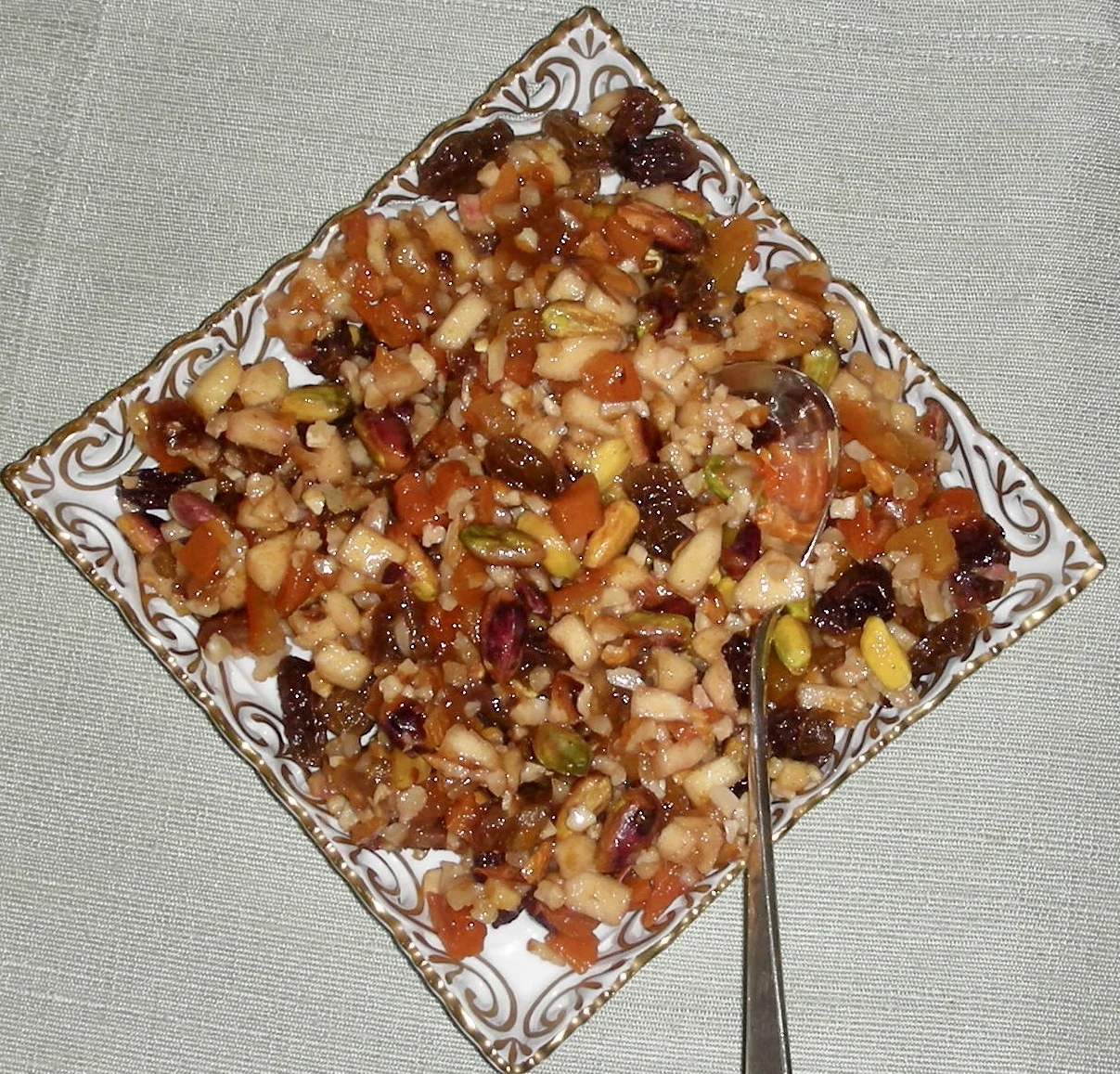
Haroset with Pistachios and Pepper

fullsizeoutput_a305.jpeg

Charoset (Haroset) is more than a blob of stuff that sits on the Passover Seder plate. Sure, we talk about it during the Haggadah reading. It’s there to symbolize the mortar used between the bricks that Jewish slaves used to build the pyramids for the ancient Egyptian pharaoh.

But it’s also food. In our family, another fabulous side dish, more like a relish, that we eat plenty of during the meal.

None of us ever really loved the old fashioned apple-wine mixture that most of us Ashkenazi Jews of Eastern European descent grew up with. It always tasted a bit sour and it got brown and ugly and besides, my daughter Gillian can’t eat walnuts and somehow almonds didn’t taste right in the mixture.

So, years ago I experimented with lots of recipes and found one I liked. It was a “Persian” recipe that I changed over and over until I got it the way I liked. At first my kids refused to eat it saying they would rather eat real mortar than this new charoset. But over the years they gradually came to love it and now insist they always did or at least can’t remember when they didn’t.

I double the recipe I am going to post here because it’s so good we eat a lot of it and besides, this relish lasts a while in the fridge so you can keep on having it all during Passover.

Haroset with Pistachios and Pepper

  • 1 cup chopped dried apricots

  • 1 cup chopped dates

  • 1/2 cup raisins

  • 1 cup shelled pistachio nuts

  • 1 cup chopped almonds

  • 2 tart apples, peeled, cored and chopped

  • 2/3 cup sweet red Passover wine

  • 1/4 cup apple cider vinegar

  • 2 teaspoons grated fresh orange peel

  • 2 teaspoons finely chopped fresh ginger

  • 3/4 teaspoon ground cinnamon

  • 1/2 teaspoon cayenne pepper

  • 1/2 cup orange marmalade

    Combine the apricots, dates, raisins, pistachio nuts and almonds in a bowl and toss ingredients to distribute them evenly. (You can prepare this much a week ahead). Add the apples, wine, vinegar, orange peel, ginger, cinnamon, cayenne and marmalade and mix ingredients. Let rest at least 4 hours before serving. May be made 3 days ahead.

Makes about 6 cups.

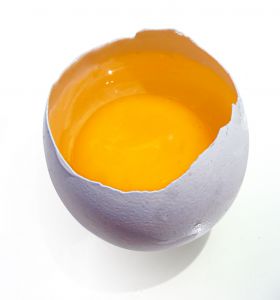
Hard Cooked (Boiled) Eggs. Yolks or whites?

sprinklefingers:

a sweet little white or yolk story ran in the ny times this week. seeing as how i made a chocolate custard containing 9 yolks yesterday, i’d say i’m voting yolk.

but if you’re into whites, there’s this.


Yolk or white? It’s an ongoing conversation I’ve had with my cousin Leslie since we were kids. Now I have the same conversation with my grandchildren, all of whom eat the whites and leave over the yolks of a hard-cooked egg.

That’s just WRONG!!

The yolks are dry and crumbly but they melt like velvet on your tongue. And they taste rich and full of wonder.

The whites are tasteless and rubbery. And if they’re not rubbery, they’re often too soft and reminiscent of junket, which I think is —- well, let’s leave that for another day. 

But I realize that reasonable minds may differ about egg yolks and whites. Which is why, at our Passover Seder, when the hard cooked eggs are served, few of us actually eat the whole thing. Plates go back and forth and yolks roll around (and sometimes fall onto the table) and chunks of egg white wiggle and there’s lots of exchanging of yellows and whites so that we all wind up eating the part of the egg that we like better.

But whatever the answer to the question (yolk or white?), there’s the matter of actually cooking the eggs.

I have been cooking for many many years and yet the question of HOW TO COOK A HARD COOKED EGG comes up every Seder meal. That’s because some people like it really really cooked, so much that the yolk surface has turned slightly green. And some people prefer it undercooked, with the center darker, moister yellow. And of course there’s always the one relative who has just read something in a food magazine and just has to tell you that are cooking the eggs all wrong.

Here’s how I cook hard cooked eggs — and by the way, lest anyone tell you that you are cooking the eggs all wrong just because the shells don’t come off perfectly, hear this: no matter what you do, you may have some problems peeling the eggs perfectly. Make extra (I use the awful looking ones for egg salad). The membrane between the white and the shell can be stubbornly clingy.

It’s best not use not-so-fresh eggs. Also, before you cook them, take them out of the fridge at least an hour ahead so that they are at room temperature.

Also, never BOIL the eggs. That makes them rubbery. Keep the cooking water at a simmer, not a full boil. 

Hard Cooked Eggs

large size eggs

water

Place the eggs in a deep saucepan and cover with water. Bring the water to a boil over high heat. When the water comes to a boil, turn the heat to low, to keep the water at a simmer. Cover the pan and cook for 10 minutes. Remove the pan from the heat. Drain the water. Fill the pan with the coldest water you have. Let the eggs cool. 

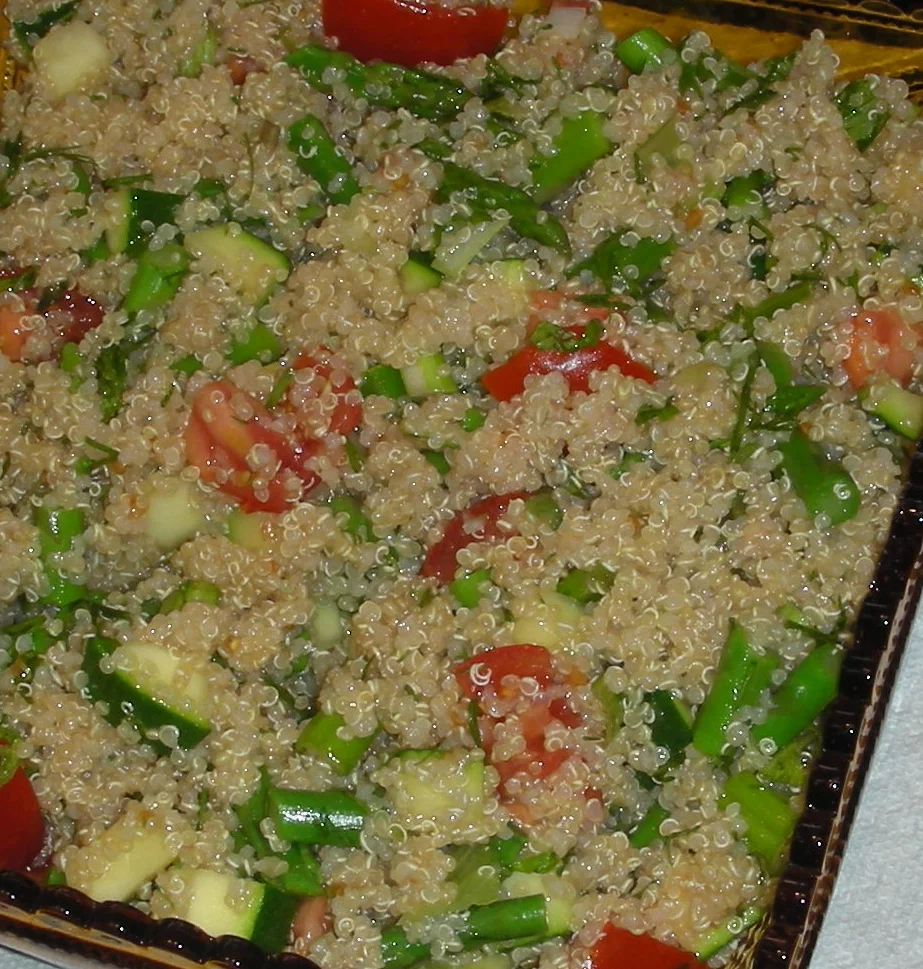
Quinoa has become the hot new Passover dish. Most authorities agree that it’s okay to eat it during the 8-day Passover holiday.
Quinoa is okay because even though it looks like a grain, cooks like grain and has the taste and texture of a grain — i…

Quinoa has become the hot new Passover dish. Most authorities agree that it’s okay to eat it during the 8-day Passover holiday.

Quinoa is okay because even though it looks like a grain, cooks like grain and has the taste and texture of a grain — it ISN’T a grain. It doesn’t rise. It doesn’t grow near grains that are forbidden during Passover. 

Wow, this opens up whole categories of recipes that my grandma never even contemplated! Or my mother. This is new. There are no “traditional Ashkenazi” or “traditional Sephardic” recipes for Passover quinoa dishes.

You just have to make stuff up, which is fine when it comes to food.

I have made up lots of quinoa recipes because we like grain-like side dishes and we also like vegetarian dinners on occasion — quinoa is filling enough to use for a main course (it also is loaded with protein).

Cooked quinoa is the perfect salad base: add vegetables of all sorts, add cheese if you like, or nuts, dried fruit, and so on. Use a good, homemade vinaigrette. By mixing it up you’ll end up with dozens and dozens of side dishes or main course salads. 

Here’s one of the dishes I plan to serve during Passover and all-summer long, in one variation or another. 

Quinoa Salad with Asparagus, Tomatoes and Zucchini

1 cup quinoa

1 cup cut up asparagus (1-inch pieces)

1 cup diced zucchini

1 cup cut up cherry tomatoes

2 scallions, chopped

2 tablespoons chopped fresh dill

1 tablespoon chopped fresh mint

3 tablespoons olive oil

2 tablespoons white wine vinegar

salt and freshly ground black pepper to taste

Place the quinoa in a strainer and rinse under cold water for about one minute. Let drain. Bring 1-1/2 cups water to a boil in a saucepan, add the quinoa, stir, lower the heat and cover the pan. Cook for about 15 minutes or until the liquid has been absorbed and the grains are tender. (If you prefer crunchier quinoa, cook for less time and drain any excess liquid.) Spoon the quinoa into a bowl. Bring more water to a boil in the saucepan. Add the asparagus and cook for 15 seconds. Add the zucchini and cook for another 15 seconds. Drain the vegetables and rinse under cold water to stop the cooking. Add the asparagus and zucchini to the quinoa. Add the tomatoes, scallions, dill and mint and toss ingredients to distribute them evenly. Pour in the olive oil and wine vinegar. Toss and taste for seasoning. Add salt and pepper to taste. Makes 4-6 servings

Grand Finale Cookies

What do Grandparents do with kids?

Well, for us, this weekend two of them (ages almost 10 and 4) came for a sleepover. We did lots of stuff.

A little makeup — notice the younger one’s THIRD eye is green (the other two are a rich mahogany brown).

A little reptile painting.

Some reading (a Harry Potter book).

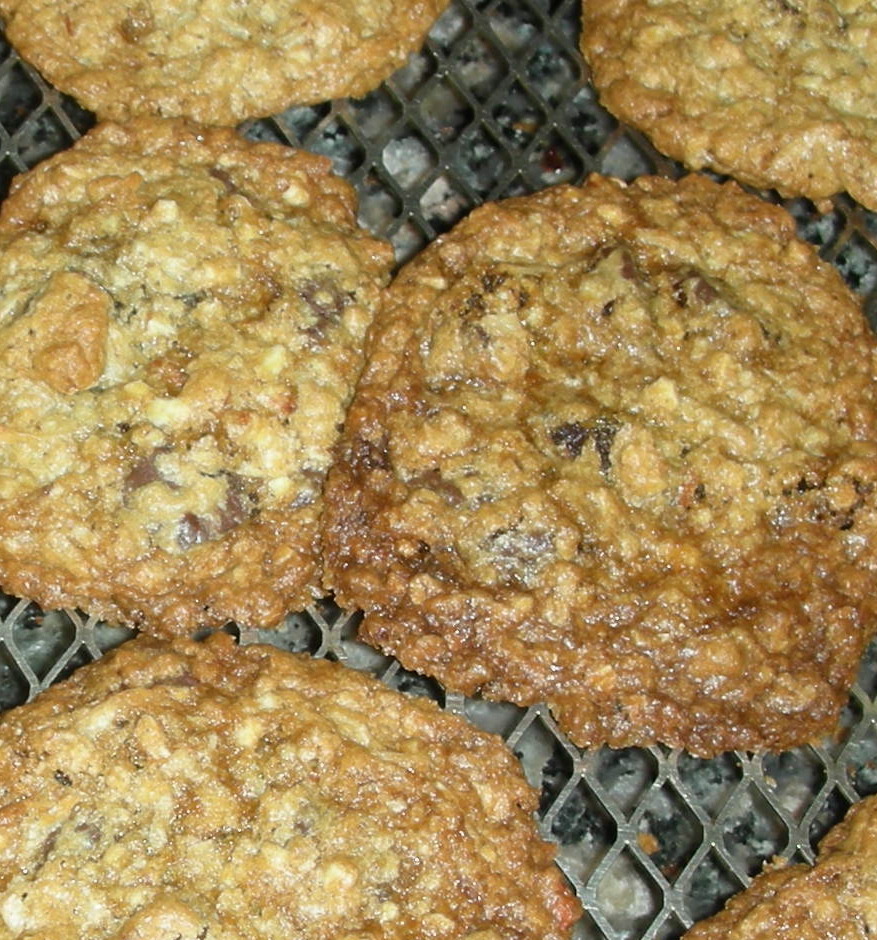
And of course we cooked. Chocolate Chip Cookies.

Of course. Who doesn’t love chocolate chip cookies?

And you not only get to scoop flour and press brown sugar into the cup and crack an egg to see if this time you can do it without breaking the yolk but you can also nibble a few chocolate chips while you’re adding them to the dough SO ALWAYS MEASURE OUT EXTRA CHIPS, MORE THAN THE RECIPES SAYS.

This batch turned out to be one of the VERY VERY BEST OF ALL TIME.

We’ve made these dozens of times. They are actually chocolate chip-oatmeal cookies and the recipe is called Grand Finale cookies in my book Hip Kosher. But in case you don’t have the book, here’s the recipe (I know I’ve done this before but I am telling you — these are the best chocolate chip cookies you’ll ever eat). I actually add more chocolate chips than the recipe says. Of course.

Grand Finale Cookies

  • 1 cup all-purpose flour

  • 1-1/2 teaspoons baking soda

  • 1-1/2 teaspoons baking powder

  • 1-1/2 teaspoons ground cinnamon

  • 1/2 teaspoon salt

  • 3/4 cup unsalted butter

  • 3/4 cup packed brown sugar

  • 3/4 cup sugar

  • 1 large egg

  • 1/4 cup orange juice

  • 1-1/2 teaspoons vanilla extract

  • 1-1/2 cups quick cooking oats

  • 1-1/4 cups chocolate chips

  • 1 cup packaged coconut

  • 1 cup chopped almonds (finely chopped)

  • 3/4 cup raisins

Preheat the oven to 350 degrees. Lightly grease a cookie sheet. In a bowl, mix the flour, baking soda, baking powder, cinnamon and salt. Combine the butter, brown sugar and sugar in the bowl of an electric mixer. Beat at medium speed for about 2 minutes, until creamy and well blended. Add the egg, orange juice and vanilla extract and beat thoroughly to blend them in. Add the flour mixture and beat until thoroughly blended in. Add the oats, chocolate chips, coconut, almonds and raisins. Blend the ingredients thoroughly. Scoop blobs of dough onto the cookie sheet, leaving ample space between each cookie. Bake for 15-18 minutes or until lightly browned and crispy. Makes about 3 dozen.

April showers bring...lots of reading time!

fridayreads:

Yep, it’s that time of the week again. When you reblog this post with a line about what you’re reading, you’ll be joining a global community of readers who share recommendations every week.

And you’ll be entered to win books and prizes! What’s not to love? Holler out those #fridayreads, folks.

#fridayreads Reading “Freedom” by Jonathan Franzen, about a middle-class St. Paul Minnesota couple who are in for a fall.

Incredibly Easy Macaroons

Yesterday I mentioned that my Seder will be a small gathering because none of the aunts, uncles and cousins are coming this year. So now there’s a question about the macaroons. Although I do all the cooking for the Seder, I usually don’t make macaroons for that meal (I do make some during the week). I usually count on someone else to bring some. 

I really really don’t like canned macaroons, so I won’t buy them. Some of the packaged ones are okay. But not like fresh, bakery-made or homemade ones. My grandmother and mother never served macaroons. We always had my aunt Roz’s famous orange-flavored spongecake at our Seder. But I LOVE macaroons. Good ones. Especially chocolate covered coconut ones.

Guess I’ll actually have to make some this year.

Fortunately I have an incredibly easy recipe. Here it is:

Incredibly Easy Macaroons

  • 2 cups packaged, shredded coconut
  • 1/2 cup sugar
  • pinch of salt
  • 3 large egg whites
  • garnish: chopped dried fruit, chocolate chips, crystallized ginger, whole almonds, etc.

Preheat the oven to 325 degrees. Lightly grease a cookie sheet. In a bowl, toss the coconut, sugar and salt together. Add the egg whites and mix the ingredients until a uniform “dough” has formed. Take heaping teaspoons of dough and shape them into about 20 balls. Place the balls on the cookie sheet a piece of put a garnish on top of each ball. Bake for about 20 minutes or until lightly browned. Let cool on the sheet for 5 minutes, then remove to a cake rack to cool completely.

Makes about 20

If you like firmer macaroons, mix 1/4 cup matzo cake meal into the dough.

To make them chocolate covered: melt some semisweet chocolate with vegetable shortening (about one tablespoon for every 6 ounces of chocolate). Use this as a dip to cover the baked macaroons.

Imam Bayildi with Onions

Passover will feel a little strange for me this year. I’m used to having lots of grownups and a bunch of kid cousins, a crowded dining room with tables that spill into the entryway, a ton of food, crayon-friendly placemats for the little ones, plus puppets and other props we use to keep the children occupied and interested during the Haggadah reading.

But families get bigger as the years go by and people move and somehow — it seems this happens to so many people — the time comes when families separate and have their own Seders. That’s what’s happening to me this year.

It’s been my gig for more than 25 years. In the early days when my generation were the young ones with children, there were a couple of times when my sister-in-law Barbara had a Seder. And two or three times we went to my brother Jeff’s house for Passover. And once we even had a Seder at a restaurant with extended family. I hated that.

My Mom had the Seders before I took over. Now I understand how she felt when my aunt Min called one year before Passover and told her that their family had become so big (4 children had married and had kids) they couldn’t burden my Mom anymore and would have their own.

But we’ll still celebrate. Still read the Haggadah. Still have the Seder plate and sing the songs and hide the afikomen and pour the cup of wine for Elijah. Passover is a joyous holiday. A time to be happy that so many of us are still together, celebrating together, appreciating our lives and being grateful for what we have. Isn’t that what the Haggadah really tells us? To read about the journey to freedom and be thankful for it?

A Thanksgiving of sorts. 

In fact, when my son-in-law Jesse asks what I’m serving and I tell him “turkey” he answers, “oh, Thanksgiving.”

Sort of. My Passover menu always centers around turkey. My mother made turkey. My grandmother made turkey. There’s also cranberry sauce. But that’s where the Thanksgiving comparison ends. Obviously there won’t be pie or bread stuffing!

Of course there will still be a ton of other food. Like most families, we will repeat our favorite menu, although I can’t help but add a few things here and there and experiment with a few dishes so we always wind up with days worth of leftovers.

One of the constant dishes in my menu is Imam Bayildi, which is braised eggplant with tomatoes. It’s a good side dish and you can make it a day or so ahead. Also, it’s the kind of dish you can eat hot, warm or at room temperature. If there’s a vegetarian in your life, this dish is also a winner.

So, smaller Seder or whatever, we are going to celebrate and wish everyone a Happy Passover.

Here’s the recipe:

Imam Bayildi

  • 1 medium eggplant
  • salt
  • 1/2 cup olive oil
  • 2 medium onions, chopped
  • 2 large cloves garlic, chopped
  • 3 large tomatoes, deseeded and chopped
  • 3 tablespoons chopped fresh parsley
  • 1 teaspoon sugar
  • 1 teaspoon salt or to taste
  • 3 tablespoons fresh lemon juice
  • 1/3 cup water

Cut the eggplant into slices about 3/8-inch thick. Sprinkle with salt and let rest for 30 minutes. Wipe the eggplant slices dry with paper towels. Preheat the oven to 350 degrees. Heat one tablespoon olive oil in a saute pan over medium heat. Cook the eggplant slices a few at a time for 2-3 minutes per side or until slightly wilted. Add more olive oil to the pan as needed to prevent scorching (use 4-5 tablespoons more if needed). Place the cooked eggplant into a baking dish (cut it into smaller pieces if you wish). Add 2 tablespoons olive oil to the pan. Add the onions and cook for 3 minutes. Add the garlic and cook for another minute. Add the tomatoes, parsley, sugar, salt and lemon juice. Cook for one minute, stirring frequently. Spoon the vegetables on top of the eggplant. Drizzle with any remaining olive oil and the water. Cover the pan and bake for 45 minutes. Serve hot, warm or at room temperature.

Makes 6-8 servings
Banana Crunch Cake

Why do I buy bananas! I can’t eat them (allergic) and my husband Ed sometimes eats them, but not regularly enough to warrant my buying a bunch whenever I shop. 
But I do buy them.
I love the smell of bananas and must confess that I get a vicar…

Why do I buy bananas! I can’t eat them (allergic) and my husband Ed sometimes eats them, but not regularly enough to warrant my buying a bunch whenever I shop. 

But I do buy them.

I love the smell of bananas and must confess that I get a vicarious thrill when I see people enjoying them. I also like the smell of banana bread and banana cake baking in the oven, so I frequently make one or the other to give away. If it’s a new recipe I’ll take a taste (and spit).

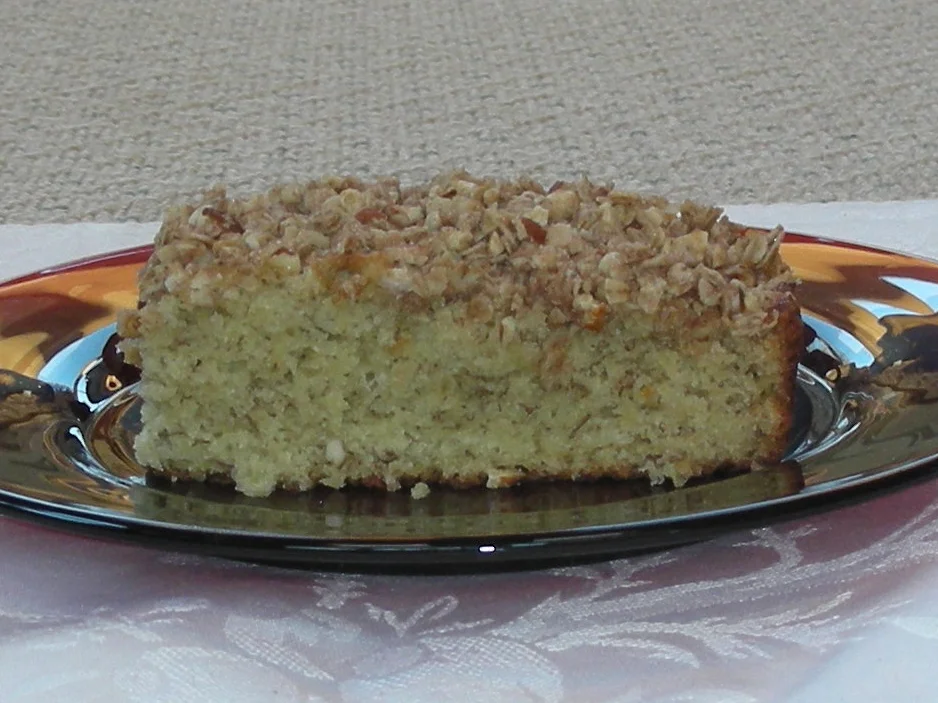
Here’s the latest one. It has a crust that I usually use over a fruit cobbler but here it adds a good, sweet, crunchy top for the soft cake beneath. 

Banana Crunch Cake

Crust:

1/2 cup butter

1-1/2 cups quick oats

1/4 cup all-purpose flour

1/2 cup brown sugar

2 teaspoons cinnamon

1/2 teaspoon salt


Melt the butter and set it aside. In a bowl, combine the oats, flour, brown sugar, cinnamon and salt. Mix ingredients. Pour in the melted butter. Mix until the dry ingredients are thoroughly coated with the butter. Set aside. 
Cake:

1-2/3 cups all-purpose flour

1 teaspoon salt

1 teaspoon baking powder

1/2 teaspoon baking soda

1/2 cup butter

1 cup sugar

2 large eggs

3 mashed bananas

1/4 cup buttermilk, plain yogurt or dairy sour cream

1 teaspoon vanilla extract

Preheat the oven to 350 degrees. Make the crust and set it aside. Mix the flour, salt, baking powder and baking soda together in a small bowl. In the bowl of an electric mixer, beat the butter and sugar together at medium speed for 2-3 minutes or until creamy and well blended. Add the eggs and bananas and beat the ingredients for another 2-3 minutes or until thoroughly blended. Add the flour mixture alternating with the buttermilk and blend in ingredients thoroughly. Stir in the vanilla extract. Spoon the batter into the prepared pan. Cover the top evenly with the crust mixture. Bake for 22-25 minutes or until a cake tester inserted into the center comes out clean. Makes 12-18 servings