vegetarian

Potato and Cheese Kreplach

fullsizeoutput_baff.jpeg
fullsizeoutput_b9ac.jpeg
fullsizeoutput_b9ad.jpeg
fullsizeoutput_b9ae.jpeg
fullsizeoutput_b969.jpeg

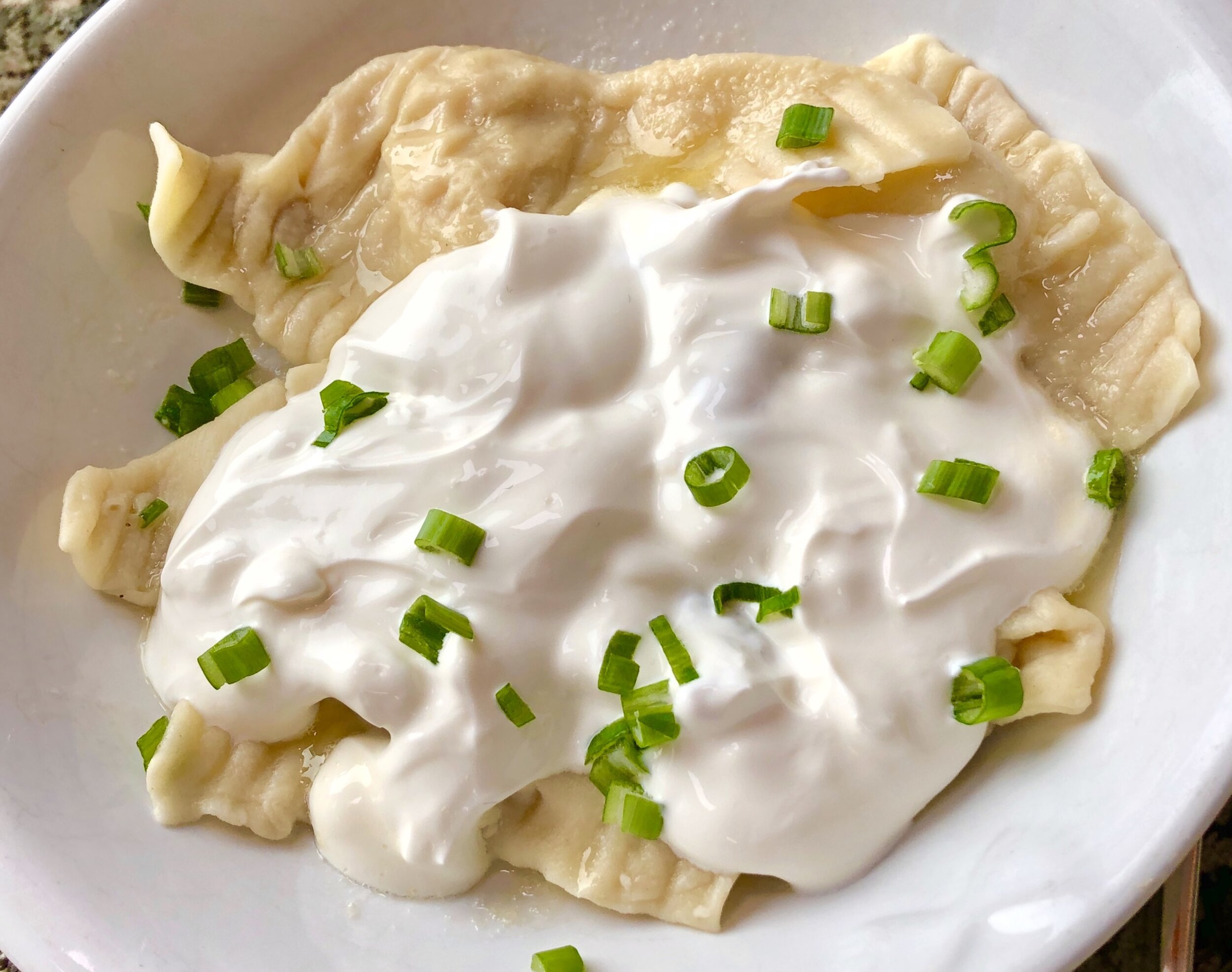
If I knew that the world was going to end or that it was my last day on earth, I would want potato-and-cheese kreplach with sour cream for dinner before I go.

For me, this simple, rustic, peasant dish is the ultimate.

I hadn’t had any for ages and ages and then, one day Ed and I were in Bratislava, Slovakia, perusing the menu at Houdini, a small restaurant conveniently located in our hotel.

They had potato-cheese pierogi!

Oh my.

There was no question about what I would order for dinner. I don’t even remember what else I could have chosen.

All I know is that the pierogies — the best I had ever eaten — came laden with sour cream and topped with chopped fresh chives.

I would go back to Bratislava just to have some more.

And I have been fantasizing about those things ever since.

However, because a trip to Slovakia is not in my immediate future, I decided to make some at home, but I made them kreplach shape in celebration of Purim, when it is customary to eat triangular shaped foods. These would be just perfect whether you make triangles or half moons.

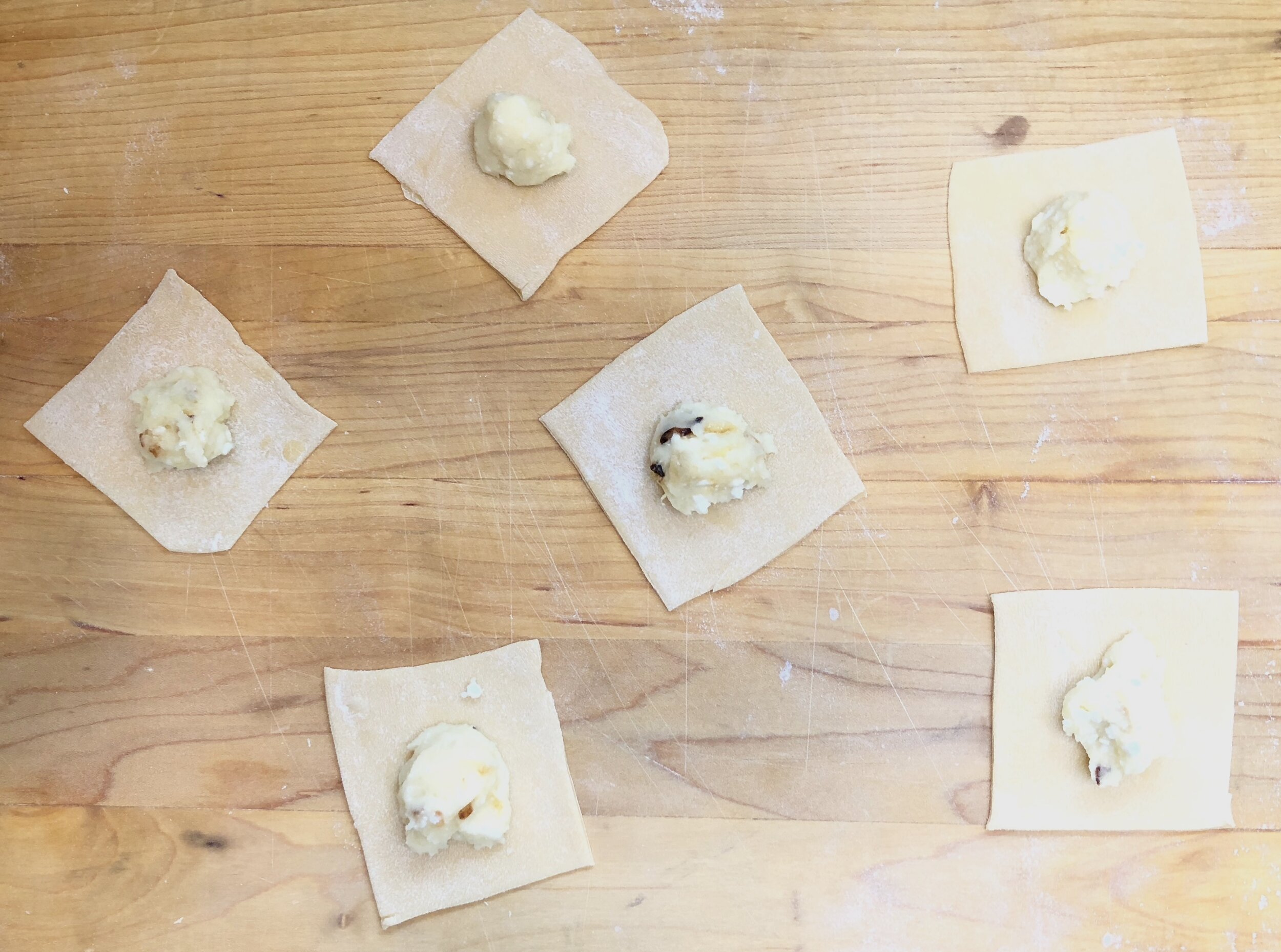
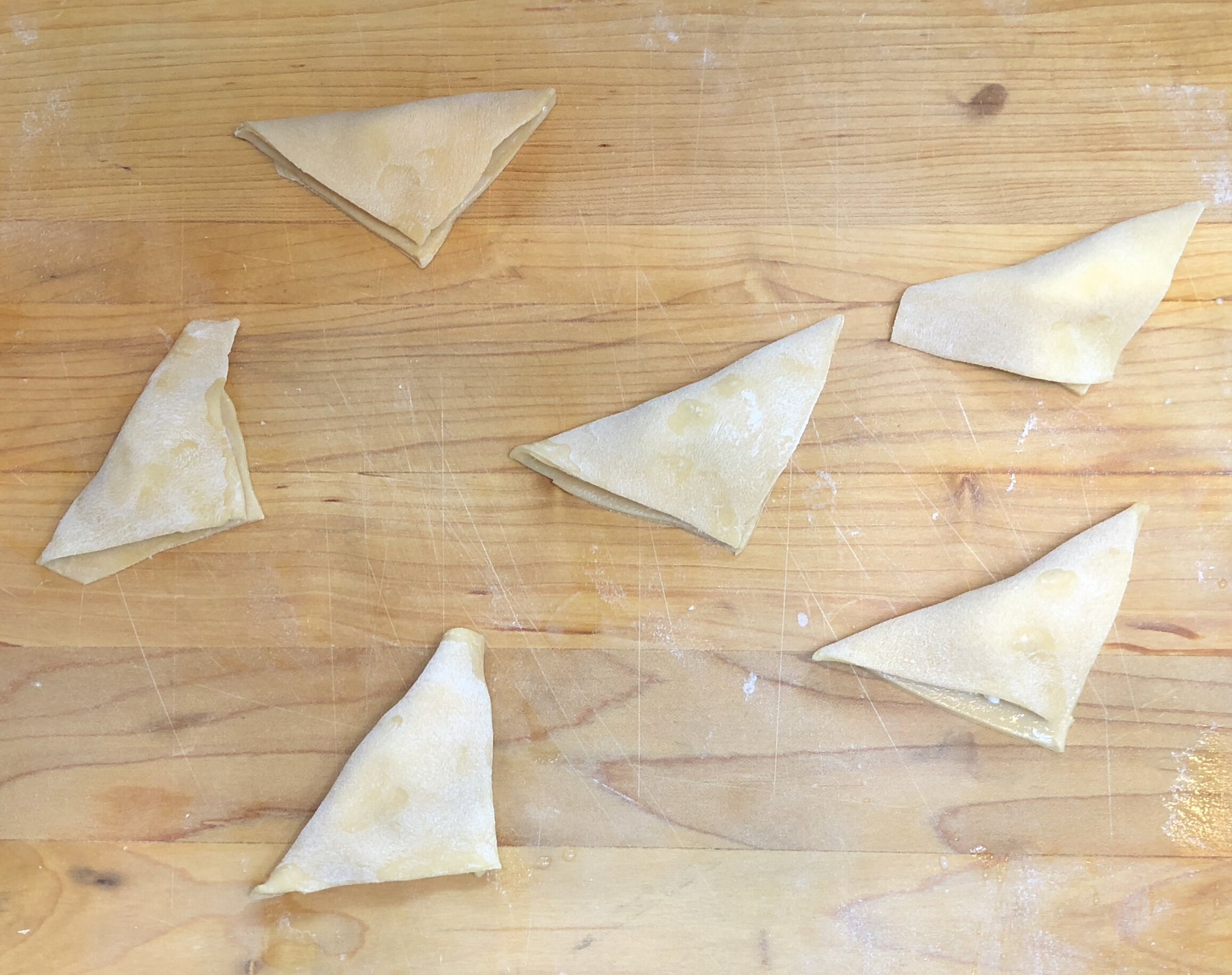
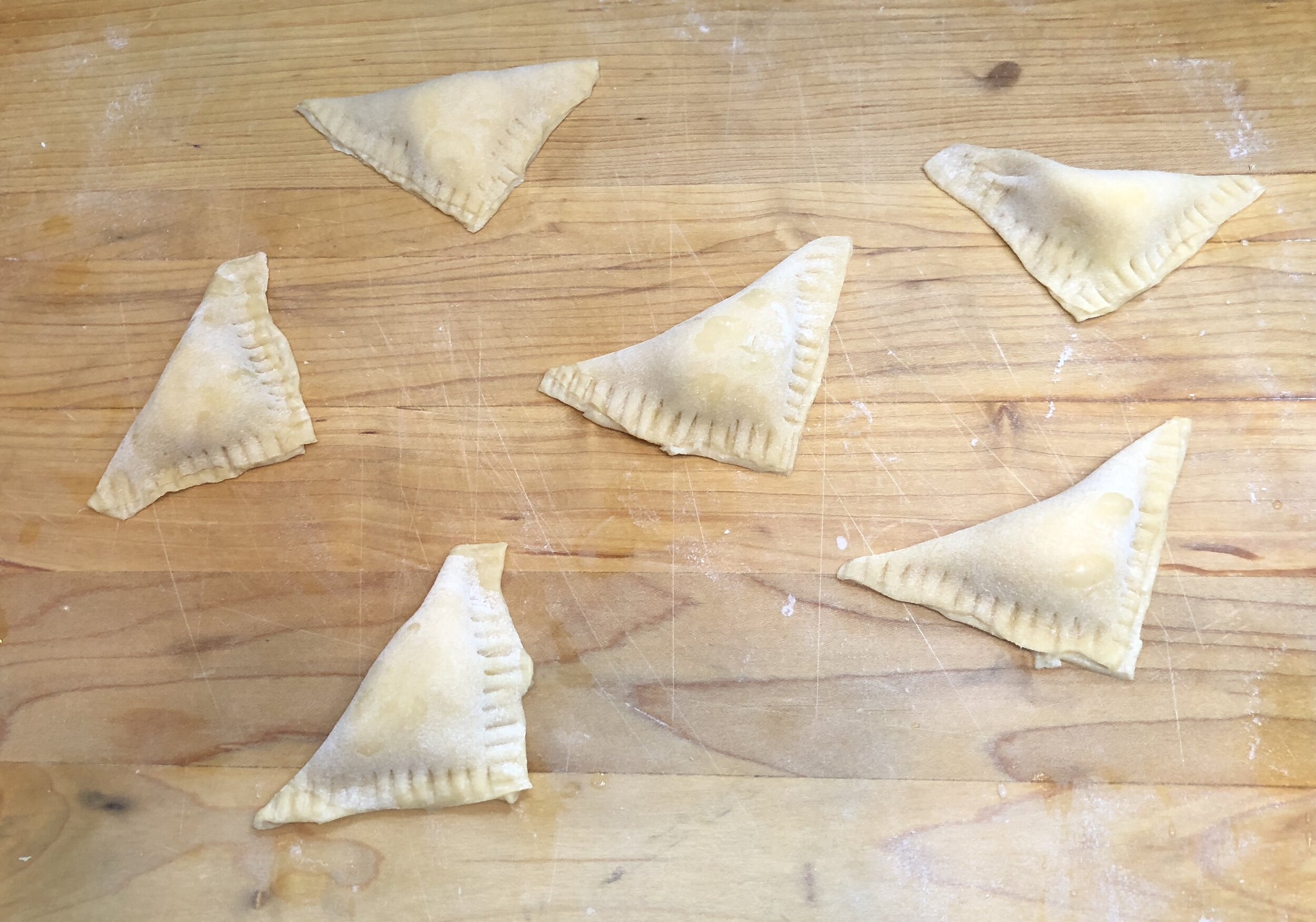
If you’d like to make some, follow the recipe and look at the photos to see how the triangles are cut, filled and folded.

This is truly good food. Last day on earth worthy.

Potato Cheese Kreplach

FillinG:

  • 3 large Yukon Gold potatoes (about one pound), peeled, cut into chunks (about 3 cups mashed potatoes)

  • 2 tablespoons butter

  • 1 large onion, chopped

  • 1 cup farmer cheese

  • salt and freshly ground black pepper to taste

Place the potato chunks in a large saucepan, cover with water and bring to a boil. Lower the heat to a simmer and cook for about 15 minutes or until the potatoes are tender. Drain the potatoes and spoon into a bowl. While the potatoes are cooking, heat the butter in a sauté pan over medium heat. When the butter has melted and looks foamy, add the onions and cook, stirring occasionally, for 12-15 minutes or until soft and golden brown. Add the onions to the potatoes. Add the farmer cheese, sprinkle with salt and pepper and mix the ingredients until well blended. Set aside to cool before filling the dough.

DougH: 

  • 3-1/2 cups all-purpose flour

  • 1/2 teaspoon salt

  • 1/4 cup butter, cut into chunks

  • 2/3 cup water, approximately

  • 1 cup dairy sour cream

Place the flour and salt in a large bowl. Add the butter and work it into the dough until the mixture is crumbly. Add 1/2 cup of the water and the sour cream and mix the dough until it is smooth, soft and well blended. If the dough seems too dry, add more water. (You can do this in a food processor.) Let the dough rest for at least 30 minutes. Using portions of the dough, roll the dough on a floured surface to 1/8-inch thick. Cut the dough into 3-3-1/2” squares. Place about one tablespoon of the filling onto each square. Slightly wet 2 sides of the square along the border. Fold the dough over the filling to make a triangle, pressing down onto the moist strips to seal the dough. Use the back of a fork to press the edges. Bring a large pot of water to a boil. Add the filled kreplach, 8-10 at a time, and simmer for about 15 minutes or until they are tender. Remove the kreplach with a slotted spoon and set aside; repeat.

Serve with sour cream and chopped chives or scallion tops.

Makes about 30
 

Vegetarian Moussaka

fullsizeoutput_95b9.jpeg

Way back in 2009 I wrote an article about wedding feasts for Connecticut Bride Magazine, interviewed several caterers, and was astonished that among the menus they showed me there were so many choices for vegetarians and vegans. I read about creative, gorgeous hors d’oeuvres. Substantial, festive main courses. Glamorous desserts.

I’m not a vegetarian but that assignment was a sort of turnaround for me. I realized that there were lots of delicious foods I hadn’t tried and, that even if I had no intention of becoming a vegetarian or vegan, and even if I wasn’t particularly trying to cut down on meat protein, I was missing some really good food!

I don’t like to miss good food!

So, over the years I have prepared many vegetarian hors d’oeuvre and entrees, many of them spectacular.

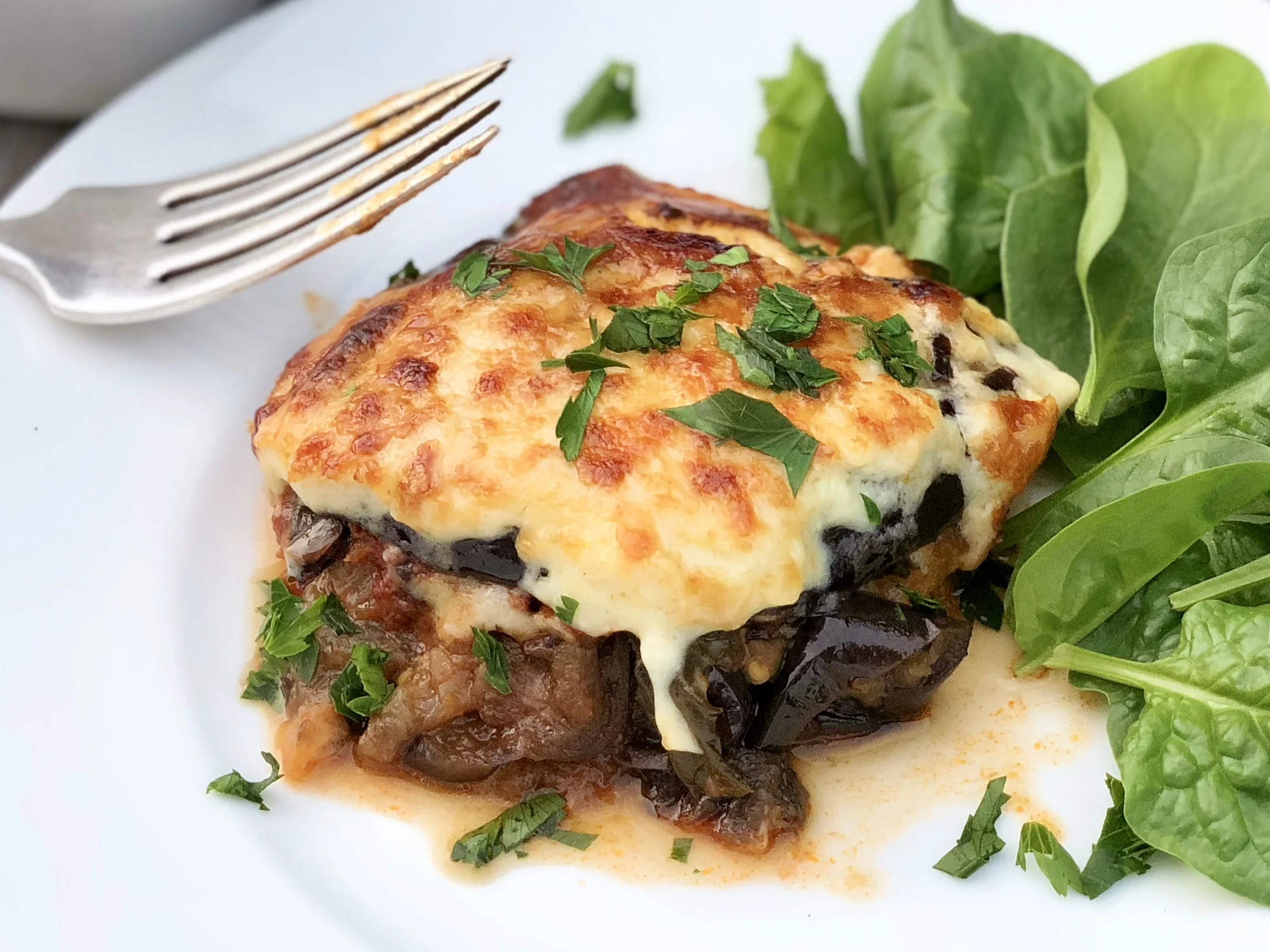
This Vegetarian Moussaka is one of them. Portobello mushrooms take the place of meat in this creamy, tangy, comforting dinner dish. A hearty, filling meal, perfect for meatless Monday or any other day. Celebratory enough for a special occasion, wedding or otherwise.

Vegetarian Moussaka

  • 2 medium eggplants, sliced into 1/2-inch thick rounds

  • salt

  • 2/3 cup olive oil, approximately

  • 1 large onion, chopped

  • 2 medium chopped carrots

  • 3 cloves garlic, finely chopped

  • 3 Portobello mushrooms, chopped

  • 1 bunch fresh spinach (or 2 packed cups baby spinach leaves)

  • 1 28-ounce can plum tomatoes, undrained

  • 3 tablespoons chopped fresh parsley

  • 1 teaspoon dried oregano

  • 1/2 teaspoon ground cumin

  • 1/4 teaspoon ground cinnamon

  • freshly ground black pepper to taste

  • 3 medium Yukon Gold potatoes, peeled

  • 6 tablespoons butter

  • 6 tablespoons all-purpose flour

  • 2-1/2 cups milk

  • 2 large egg yolks

  • 1 cup grated Parmesan or Romano cheese

Preheat the oven to 400 degrees. Place the eggplant slices on a surface and salt them lightly. Let sit for about 15 minutes, then wipe the surface dry with paper towels. Brush the slices with about 4-5 tablespoons of the olive oil and place them in a single layer on a baking sheet. Bake for 15 minutes, turn the slices and bake for another 12-15 minutes, or until the slices are tender. Let the slices cool. Reduce the oven heat to 350 degrees.

Heat 6 tablespoons olive oil in a sauté pan over medium heat. Add the onion and carrots and cook, stirring occasionally, for 4-5 minutes or until the onions have softened. Add the garlic and mushrooms and continue to cook for another 3-4 minutes. Add the spinach and cook for 1-2 minutes. Add the tomatoes, parsley, oregano, cumin and cinnamon. Season to taste with salt and pepper. Cook for about 15 minutes or until the sauce is very thick.

Cook the potatoes in a large pot of lightly salted water for about 15 minutes, or until tender. Let the potatoes cool, then peel and slice them into 1/4-inch rounds and set aside.

Make a béchamel white sauce: heat the butter in a saucepan over medium heat. When the butter has melted and looks foamy, lower the heat, add the flour and whisk the ingredients for 2-3 minutes. Gradually add the milk and whisk the ingredients for 2-3 minutes or until a thick sauce has formed. Stir about a half cup of the hot sauce into the egg yolks, stir to blend the ingredients and add the mixture back into the saucepan. Stir in 3/4 cup of the cheese, whisk the ingredients until smooth and set aside.

Lightly grease a 9”x13” ovenproof casserole. Layer: half the eggplant on the bottom, then the potatoes, then the vegetable sauce, then the remaining eggplant. Cover with the béchamel sauce. Sprinkle with the remaining 1/4 cup cheese.

Bake for about 45 minutes or until top is bubbly and golden brown.

Makes 8 servings


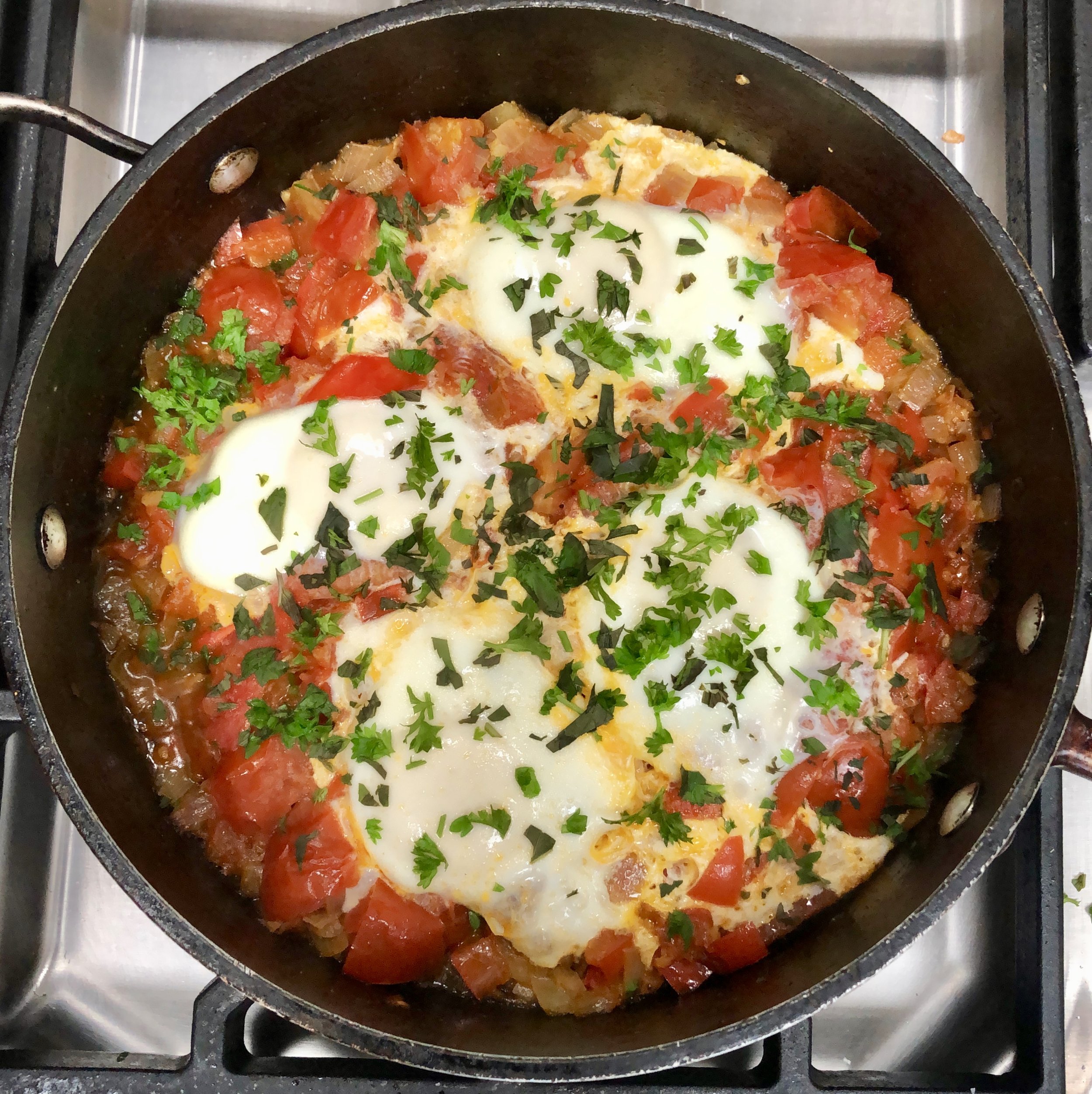
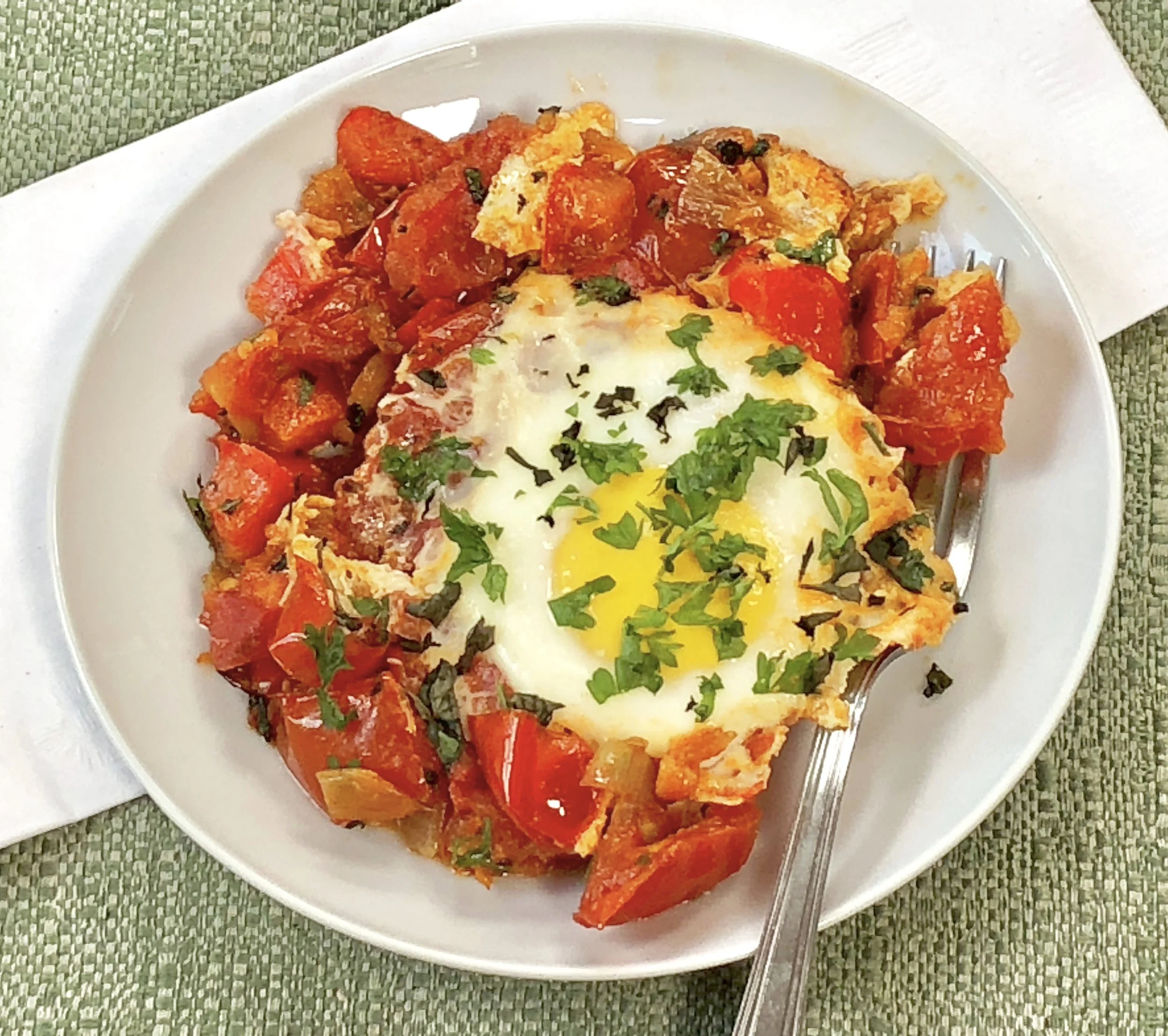
India-style Shakshuka

fullsizeoutput_abe6.jpeg
fullsizeoutput_ac19.jpeg

We always have sleepover guests — my cousins — for New Year’s Eve. The next morning it’s always the same brunch: smoked fish, herrings, whitefish salad, bagels and coffee.

Perfect.

Except this year, for a variety of reasons, we have to consider less-salty meals.

I decided on a complete change. Something delicious, different and needs no extra salt because the seasonings are so bountiful and flavorful (the recipe says salt to taste, which can be zero).

I’ve made this for dinner and brunch. Works either way. Add a hunk of bread (naan if possible).

May become a new tradition.

Happy New Year 2020.

India-style Shakshuka

  • 1/4 cup olive oil

  • 1 medium onion, chopped

  • 1 red bell pepper, deseeded and chopped

  • 1 small habanero, serrano or other chili pepper, deseeded and chopped

  • 1 large garlic clove, chopped

  • 2 teaspoons chopped fresh ginger

  • 8 plum tomatoes, coarsely chopped

  • 2 teaspoons curry powder

  • Salt to taste

  • 4-6 large eggs

  • 2 tablespoons chopped fresh mint

  • 1 tablespoon chopped fresh parsley

Heat the olive oil in a large sauté pan over medium heat. Add the onion, bell pepper and habanero peppers. Cook for 3-4 minutes or until softened slightly. Add the garlic and ginger and cook briefly. Add the tomatoes, curry powder and salt to taste. Stir, cover the pan, turn the heat to low and cook for about 10 minutes, stirring occasionally, or until vegetables are very soft and sauce-like. Crack the eggs into a small bowl one at a time then transfer each one next to the other over the vegetables. Cover the pan and cook for 4–5 minutes or until the eggs are set but yolks are still slightly runny. Sprinkle with mint and parsley. Serve each person an egg with some of the vegetables.

Makes 4-6 servings.


Spinach and Tomato Egg Scramble

fullsizeoutput_acdb.jpeg

After the eating fest that takes place over Rosh Hashanah/Break-the-Fast through Sukkot and before the onslaught of a zillion-calorie Thanksgiving dinner plus leftovers, I need a break from heavy meals. Meaning, something other than a meat-and-potatoes type dinner.

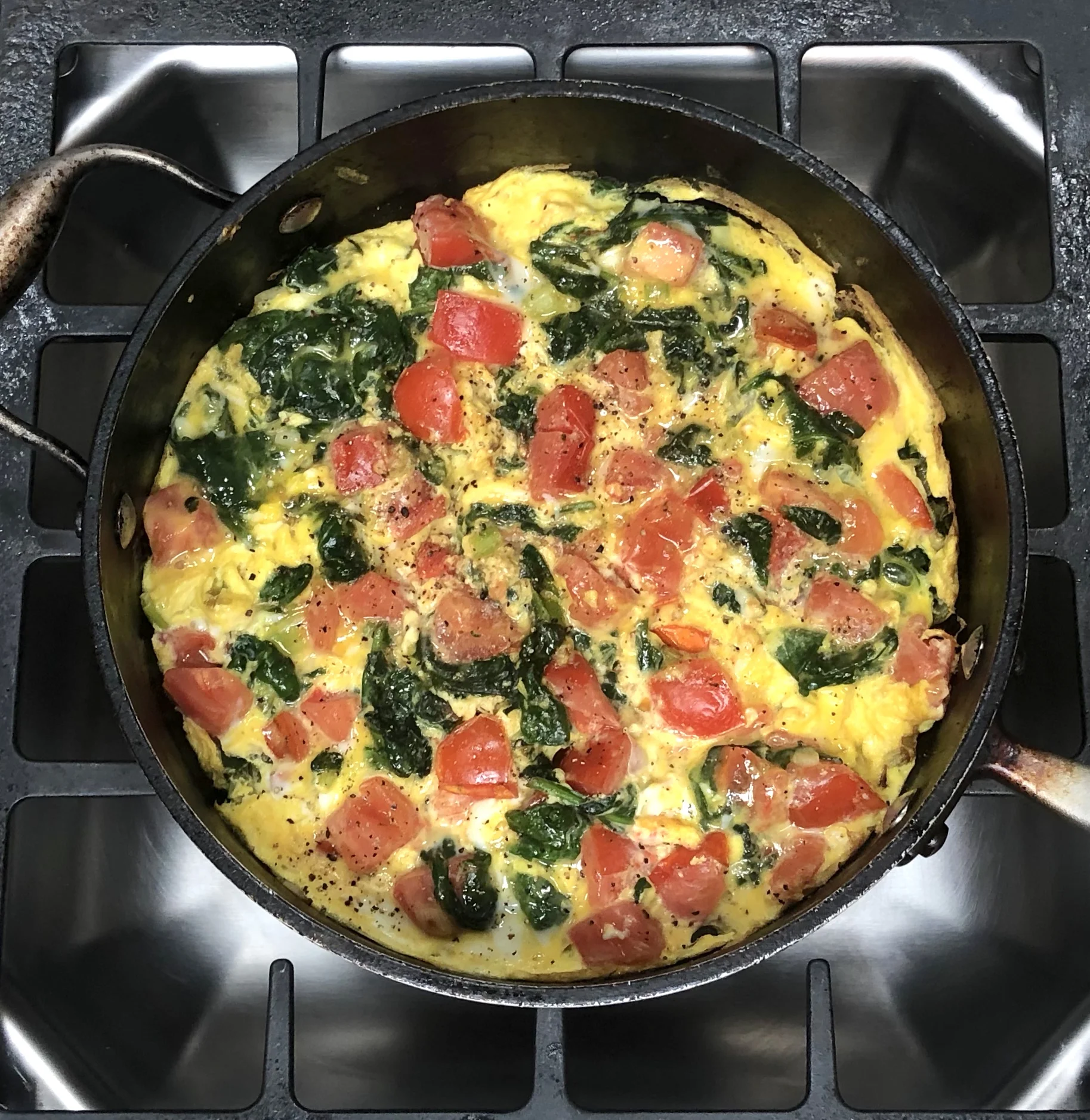
For example? This omelet-y dish, only it’s scrambled eggs, which means it’s even easier to cook because you don’t even have to fold it. It’s filling enough for dinner if you include a hunk of crusty bread or challah. It’s versatile too: you can add diced cooked potatoes and use any green vegetable instead of spinach; substitute onions or shallots for the scallions; add some crumbled goat cheese or shredded hard cheese such as Swiss or Mozzarella.

But we like it as is. Simple. Tasty. Easy to make. Easy going down. Just right for between holiday feasts.

Spinach and Tomato Egg Scramble

  • 2 tablespoons vegetable oil (butter if you prefer; let it melt before adding ingredients)

  • 4 thick scallions, chopped

  • 1 tablespoon finely chopped fresh chili pepper

  • 2 cloves garlic, chopped

  • 1 large bunch spinach

  • 4 medium tomatoes, cut into quarters

  • 8 large eggs, beaten

  • salt and freshly ground black pepper to taste

Heat the vegetable oil in a large sauté pan over medium heat. Add the scallions, chili pepper, garlic and spinach and cook, stirring occasionally, for about 2 minutes. Add the tomatoes and cook for another minute. Pour in the eggs, let the eggs set partially, then mix gently to scramble the ingredients together and cook to desired consistency. Season with salt and pepper to taste.

 Makes 4 servings

Stuffed Zucchini Boats

fullsizeoutput_ac92.jpeg

There’s no particular food associated with the holiday of Simchat Torah, which begins on Sunday night (October 20, 2019), but lots of people make food that resemble torah scrolls.

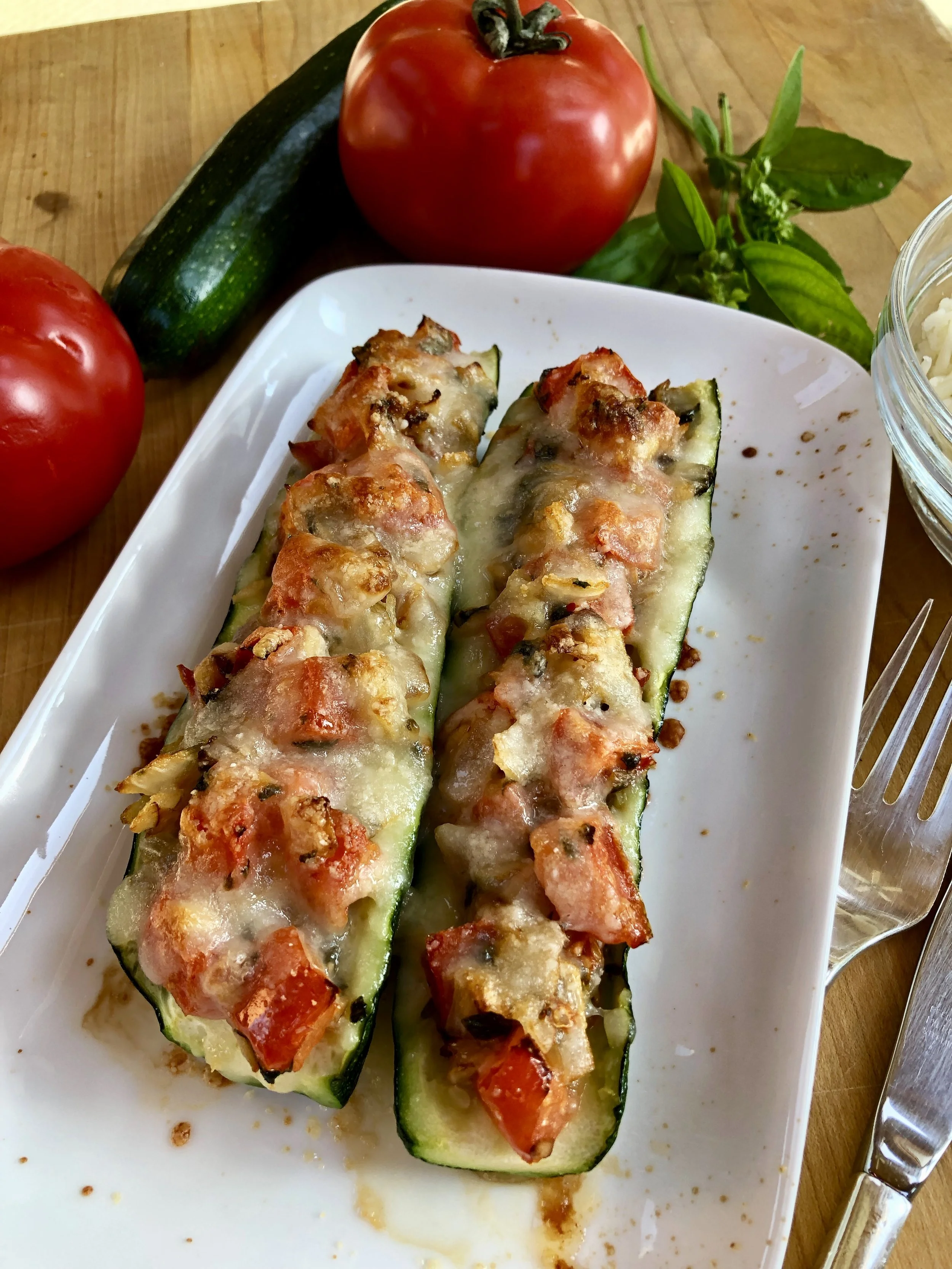
Stuffed cabbage is a classic. But when I used up the last of my home garden zucchini and stuffed it with tomatoes and cheese I thought these look somewhat like torah scrolls too!

So, for me: Stuffed Zucchini boats are the order of the day for the holiday (or any other time).

Stuffed Zucchini Boats 

  • 2 medium zucchini

  • 2 tablespoons olive oil

  • 1 medium onion, chopped

  • 1 large clove garlic, chopped

  • 2 tomatoes, chopped

  • 2 tablespoons chopped fresh basil

  • 6-8 tablespoons shredded mozzarella

  • 2 tablespoons grated Parmesan

Preheat the oven to 400 degrees. Cut the zucchini in half lengthwise. Scoop out the seeds and part of the flesh, leaving a wall of at least ¼-inch next to the skin. Coat the outside surface of the zucchinis with a film of olive oil. Place them in a baking dish and bake for 15-20 minutes, depending on size, or until barely tender (use the tip of a sharp knife to test tenderness). While the zucchini boats are baking, pour the remaining olive oil in a saute pan over medium heat. Add the onion and garlic and cook, stirring occasionally, for 2-3 minutes, to soften the vegetables slightly. Add the tomatoes and basil, stir and remove the pan from the heat to cool slightly. When the zucchini boats are ready, remove them from the oven and fill the cavities with the tomato mixture. Sprinkle the mozzarella cheese evenly over the filling. Sprinkle the Parmesan cheese evenly over the filling. Bake for 12-15 minutes or until the cheese has melted and is beginning to brown.     

 Makes 4 servings

Beet and Chickpea Salad

fullsizeoutput_867c.jpeg

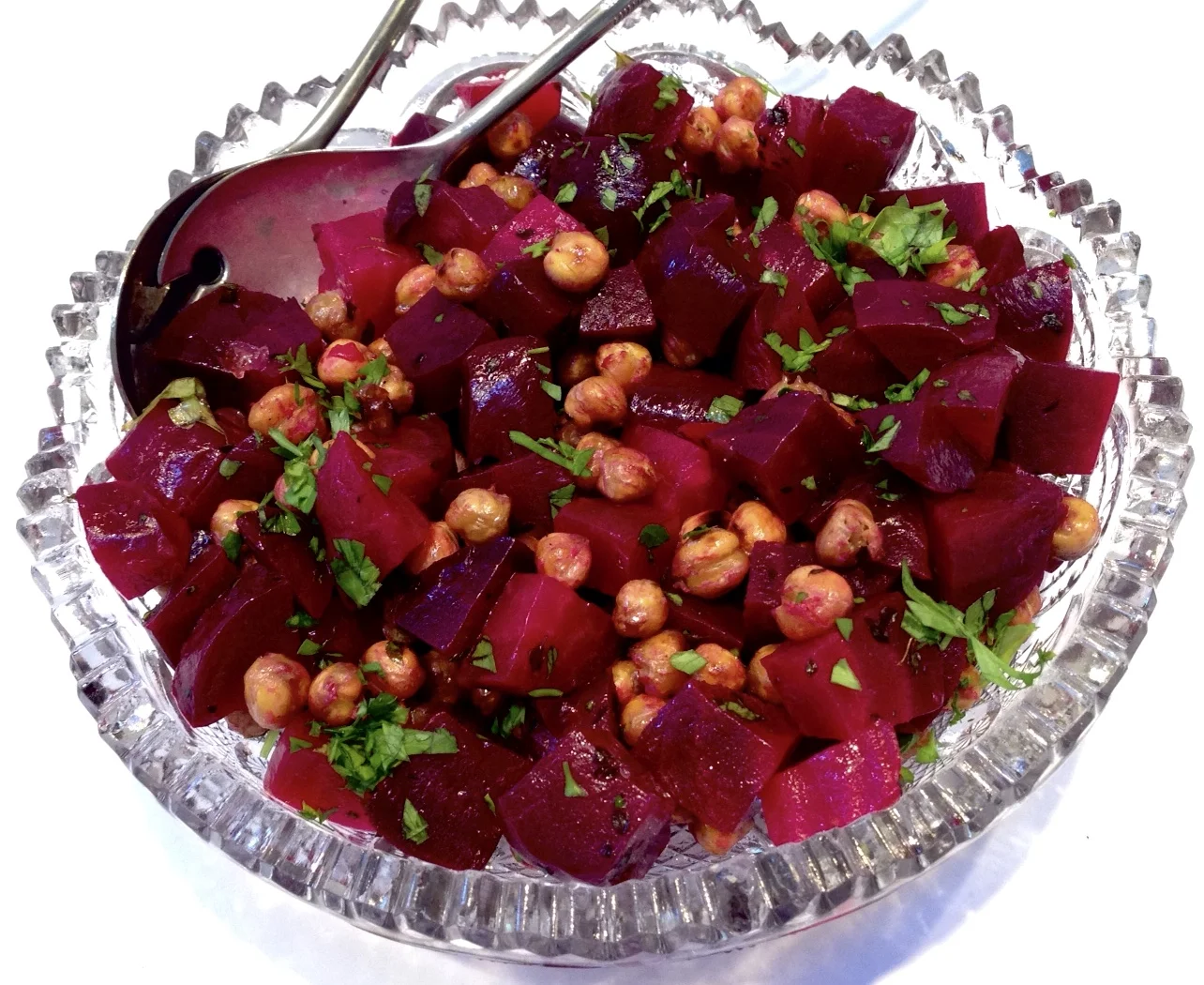
I realize beets are available throughout the year. We are a beet-loving family, so I buy them all the time. Throughout the year.

And yet, I still associate beets with autumn. In my memory, September, October, November — those months are the real “season” for harvesting beets. In fact, I remember them as an integral part of the meals during Jewish holidays.

Sukkot, the “harvest holiday” is a good time to include beets on the menu. Look for beets with the greens still attached — they are from a current harvest. They are sweeter and tastier. Lovely however you cook them, including this salad, which you can make ahead. Serve it at room temperature.

Beet and Chickpea Salad

  • 4 large beets

  • 1 15-ounce can chickpeas, drained and rinsed

  • 1 tablespoon olive oil

  • 2 teaspoons fresh thyme leaves

  • sea salt

  • 3 tablespoons olive oil

  • 3 tablespoons white wine vinegar

  • 2-3 tablespoons chopped fresh parsley

  • salt and freshly ground black pepper to taste

Preheat the oven to 450 degrees. Trim the beets, cutting away the greens, if any, and discarding any hard, fibrous parts of the stem. Wash and drain the greens and use them for other purposes. Scrub the beets, wrap them in aluminum foil and roast for 50-60 minutes or until they are tender. Peel the beets when they are cool enough to handle. Cut the beets into bite size pieces and place in a bowl. While the beets are cooking, place the chickpeas on a foil-lined baking sheet. Pour the one tablespoon olive oil on top and shake the pan to coat all the chickpeas. Sprinkle with thyme and sea salt to taste. Shake the pan again. Roast for 20 minutes, shaking the pan every 5 minutes or so, or until golden brown and crispy. Add the roasted chickpeas to the beets. Pour the remaining olive oil over the vegetables and toss, then pour in the white wine vinegar and toss again. Sprinkle with parsley and salt and pepper to taste. Let rest for 10-15 minutes before serving.

Makes 8 servings


Chick Pea and Carrot Salad

DSC08424.jpg

Of course, of course we will be slicing apples and dipping them in honey on Rosh Hashanah. (which begins at sunset on September 29th).

But chickpeas are on the menu too. In his Encyclopedia of Jewish Food, the late rabbi and food authority Gil Marks wrote that “chickpeas are a traditional Rosh Hashanah food, a symbol of fertility, abundance and a wish for a well-rounded year to come.”

I usually make chickpeas into hummus, but sometimes I serve them whole, as a snack, roasted, the way my mother made them when I was growing up – a recipe called nahit. She coated the chickpeas with vegetable oil, sprinkled them with salt and paprika and baked them until crispy.

I changed her recipe somewhat -- I use olive oil, kosher salt and fresh thyme, or sometimes za’atar, as seasonings. Nahit is a delicious snack and a healthy one too: chickpeas are a good source of protein, minerals (including calcium) and fiber.

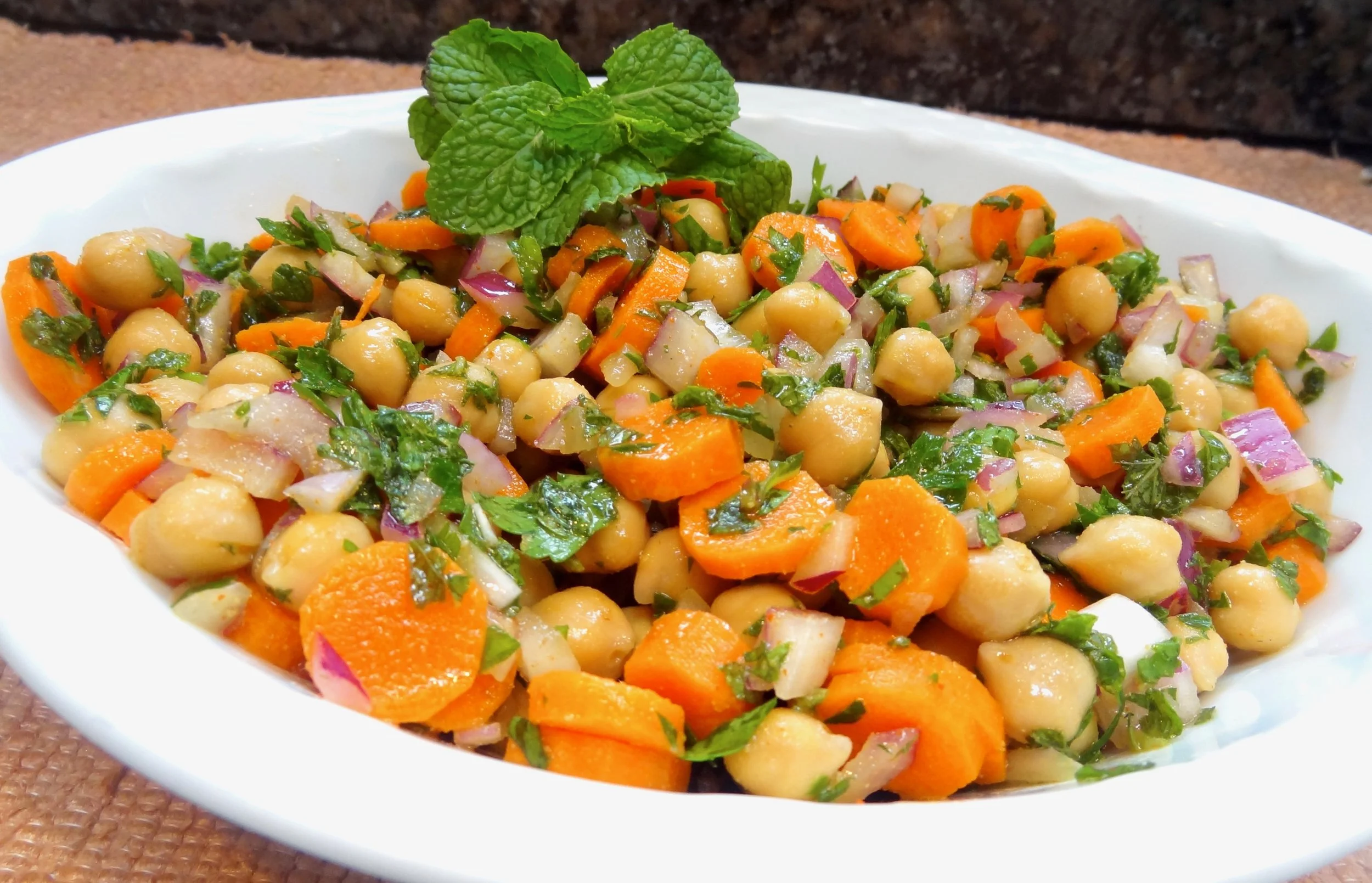
For this coming holiday though I’ll be making a chickpea and carrot salad to serve with dinner. Carrots are another symbolic ingredient of the holiday, so this recipe is a double-up of special ingredients of festive food for the holiday table. It’s a dish that can be made in advance, which makes it a good choice at such a busy time. And it is colorful too, fit for any celebration, including Break-the-Fast. 

Chick Pea and Carrot Salad

  • 1 15-ounce can chickpeas

  • 4 medium carrots, sliced thin

  • 1/2 chopped red onion

  • 1/4 cup chopped fresh parsley

  • 1/4 cup chopped fresh mint

  • 1 teaspoon ground cumin

  • 1/8 teaspoon cayenne pepper

  • 1/4 cup olive oil

  • 3 tablespoons lemon juice

  • salt to taste

Rinse the chickpeas under cold running water; let drain and place in a bowl. Add the carrots, onion, parsley, mint, cumin and cayenne pepper and toss to distribute the ingredients evenly. Pour in the olive oil and lemon juice. Toss to coat the ingredients evenly. Taste for seasoning and add salt to taste.

Makes 6 servings

Blue Salad (with green): Berries and Cheese

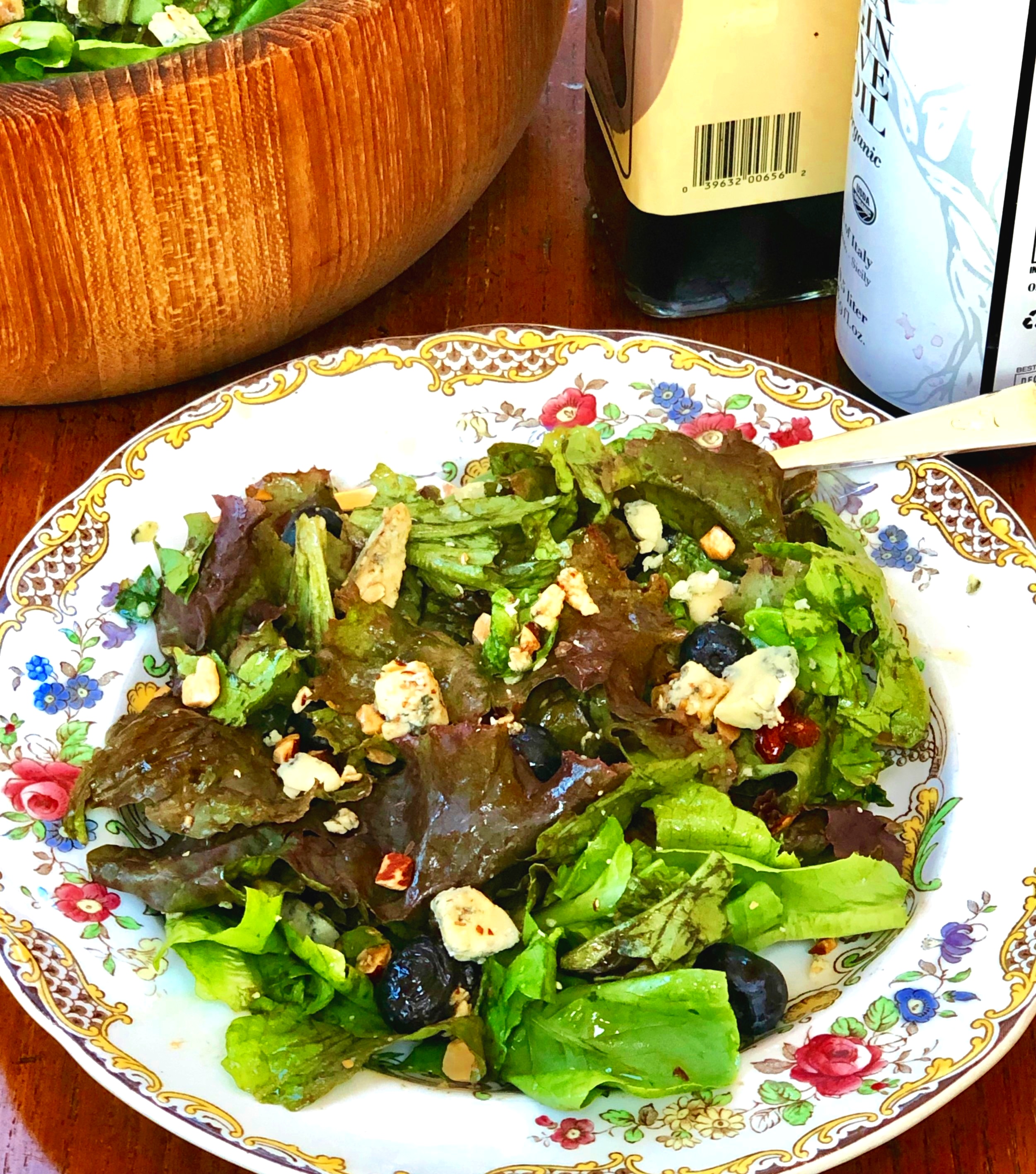
I love blueberries and I love blue cheese, so I figured they might go together well.

They did!

In this light, refreshing summer salad.

Nice for a full lunch — add a crust of bread. Or as a first course for dinner.

I bought the blueberries and the cheese. But the greens? Right from my garden! What a joy!

Blue Salad (with green)

  • 1 head leaf lettuce or 6 cups mixed greens

  • 1 cup blueberries

  • 1 cup crumbled blue cheese

  • 3 tablespoons chopped chives or scallion tops

  • 1/3 cup olive oil (or use avocado oil)

  • 3-4 tablespoons Balsamic vinegar

  • 1/4 cup chopped toasted almonds, optional

Tear the lettuce into smaller pieces and place them in a salad bowl. Add the blueberries, cheese and chives and toss the ingredients. Pour in the olive oil and toss the ingredients again. Add 3 tablespoons of the Balsamic vinegar, toss and taste, add more Balsamic vinegar to taste. Serve and garnish with the toasted almonds if desired.

Makes 4-6 servings

Vegetable Salad

fullsizeoutput_a6ee.jpeg

Light, refreshing food. That’s what we want during the summer.

Also, easy to make. And as quick as possible.

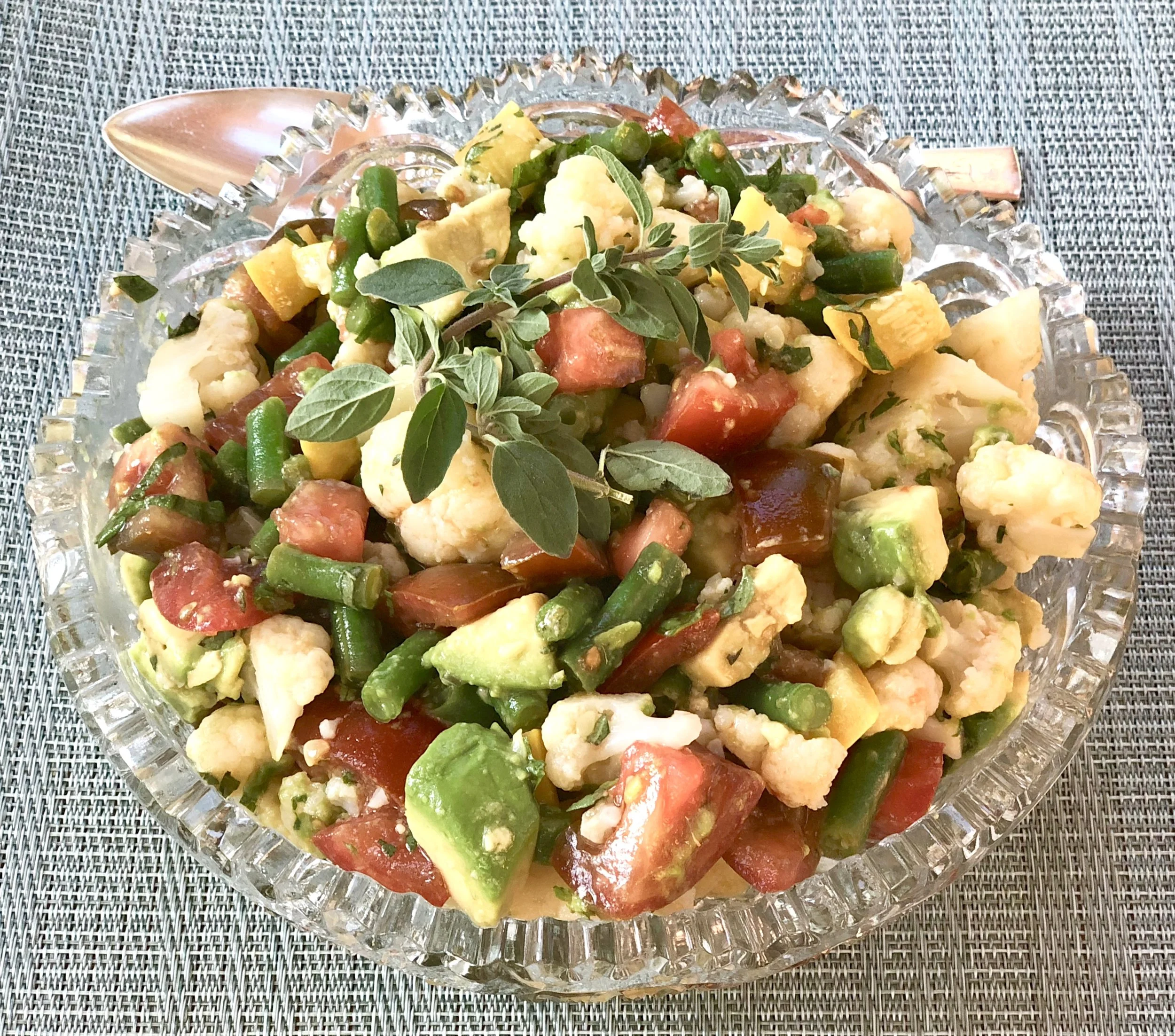
I made this vegetable salad using leftovers from the veggies we had over a couple of meals. Added some fresh tomatoes, an avocado and some herbs. Not only did I get to use up stuff from the fridge, the dish took less than 10 minutes to make.

It’s a side dish. But you can add some tofu, cheese or hard-cooked eggs and make it into a main course (or add leftover fish, meat or poultry).

Add crusty bread and it’s a sandwich filling.

Mix it into cooked penne or ziti and it becomes pasta primavera.

Use whatever vegetables you have in proportions suggested. There’s no magic here, no actual recipe that will fail if you don’t have one of the ingredients.

Vegetable Salad

  • 3 cups cooked cut up cauliflower

  • 1 cup cooked, cut up green beans

  • 1 cup cooked cut up yellow squash

  • 3-4 cut up small tomatoes

  • 1 avocado, cut into small chunks

  • 3 tablespoons chopped fresh basil

  • 2 teaspoons chopped fresh oregano

  • 2 tablespoons olive oil

  • 2-3 tablespoons fresh lemon juice (or use white wine vinegar)

  • salt and freshly ground black pepper to taste

Place the cauliflower, green beans, yellow squash, tomatoes, avocado, basil and oregano in a bowl and toss the ingredients to distribute them evenly. Pour the olive oil over the vegetables and toss again. Pour 2 tablespoons of the lemon juice over the vegetables and toss again. Taste for seasoning and add more lemon juice and salt and pepper to taste.

Makes 4-6 servings

Bulgur Wheat Varnishkes

fullsizeoutput_86ca.jpg

Tisha B’av isn’t one of the better-known Jewish holidays. I’ve heard people say “oh yeah, I think that’s when you can’t get married.” Or, “you can’t get a haircut or listen to music.”

All true, and much more, and that’s because, unlike holidays when we celebrate joyful occasions such as a new year or deliverance from Pharaoh, Tisha B’av is when observant Jews mourn the destruction of the First and Second Temples. In addition, we remember the numerous times throughout history that the Jewish people were subjected to pogroms, exile and a multitude of other catastrophes. These are days that we don’t celebrate; we grieve.

Mournful times deserve respect and reflection. During the nine days leading up to the actual holiday (which begins at sundown on August 10th) many families will refrain from the usual pleasure-filled events and activities that make up our lives.

That includes getting married or getting a haircut or listening to music.

It also includes refraining from eating certain foods.

Tisha B’av is a full fast day, but during the days leading up to it many families don’t eat meat. Fish, dairy, vegetarian — is on the menu, and especially eggs and lentils, which are considered “mourner’s food.”

It’s just as well frankly. Skipping heavy meat meals during the hot weather makes good sense. It’s a whole lot smarter to eat fish, dairy and vegetarian.

Whether or not you follow the culinary guidelines during the Nine Days, this dish will do!

Anytime.

It’s my particular riff on classic kasha varnishkes. Our family really doesn’t like kasha, so I make the dish using bulgur wheat. Not only does it taste better, it’s easier to prepare and easier on the digestion.

Bulgur wheat or kasha varnishkes is usually a side dish, but it becomes a full meal if you add a fried egg or two on top.

Bulgur Wheat Varnishkes

  • 6 tablespoons vegetable oil

  • 1 cup bulgur wheat

  • 1-3/4 cup water, vegetable stock (can use chicken stock)

  • 2 large onions, chopped

  • Salt and freshly ground black pepper to taste

  • 6 ounces bow-tie pasta

  • 6 fried eggs

Heat 3 tablespoons of the vegetable oil in a sauté pan over medium heat. Add the bulgur wheat and cook, stirring occasionally, for about 3-4 minutes or until lightly toasted. Pour in the water or stock, bring to a boil, lower the heat and cover the pan. Cook for about 20 minutes or until all the liquid has been absorbed. Heat the remaining 3 tablespoons vegetable oil in a sauté pan over medium heat. Add the onions, sprinkle with salt and pepper and cook for about 20 minutes, stirring often, or until the onions are soft and browned. Cook the pasta according to directions on the package. Combine the bulgur wheat, pasta and onions in a large bowl. Sprinkle with salt and pepper. Keep warm while you fry 6 eggs, sunnyside-up style.

Makes 6 servings