vegetable

Beet and Chickpea Salad

fullsizeoutput_867c.jpeg

I realize beets are available throughout the year. We are a beet-loving family, so I buy them all the time. Throughout the year.

And yet, I still associate beets with autumn. In my memory, September, October, November — those months are the real “season” for harvesting beets. In fact, I remember them as an integral part of the meals during Jewish holidays.

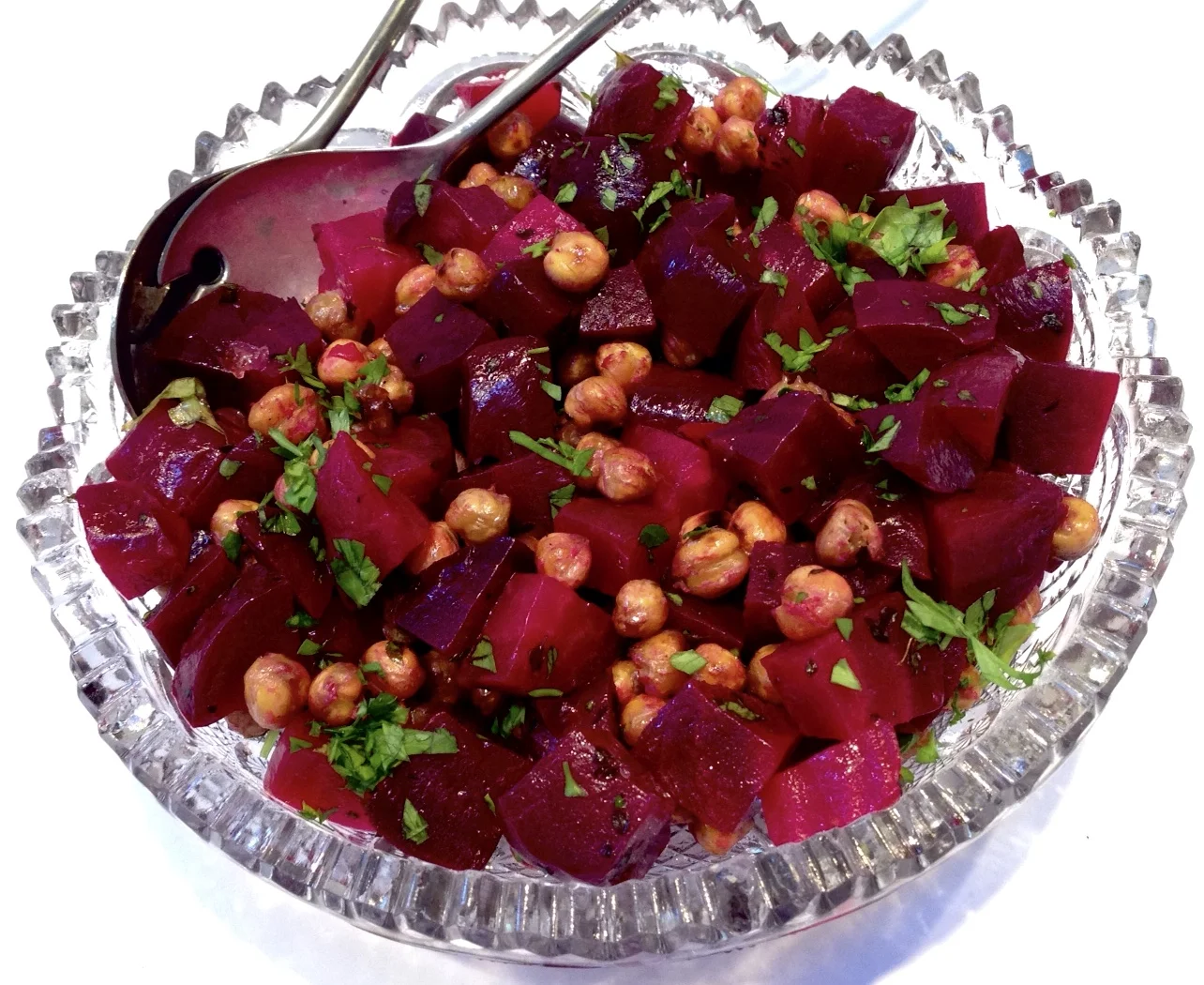
Sukkot, the “harvest holiday” is a good time to include beets on the menu. Look for beets with the greens still attached — they are from a current harvest. They are sweeter and tastier. Lovely however you cook them, including this salad, which you can make ahead. Serve it at room temperature.

Beet and Chickpea Salad

  • 4 large beets

  • 1 15-ounce can chickpeas, drained and rinsed

  • 1 tablespoon olive oil

  • 2 teaspoons fresh thyme leaves

  • sea salt

  • 3 tablespoons olive oil

  • 3 tablespoons white wine vinegar

  • 2-3 tablespoons chopped fresh parsley

  • salt and freshly ground black pepper to taste

Preheat the oven to 450 degrees. Trim the beets, cutting away the greens, if any, and discarding any hard, fibrous parts of the stem. Wash and drain the greens and use them for other purposes. Scrub the beets, wrap them in aluminum foil and roast for 50-60 minutes or until they are tender. Peel the beets when they are cool enough to handle. Cut the beets into bite size pieces and place in a bowl. While the beets are cooking, place the chickpeas on a foil-lined baking sheet. Pour the one tablespoon olive oil on top and shake the pan to coat all the chickpeas. Sprinkle with thyme and sea salt to taste. Shake the pan again. Roast for 20 minutes, shaking the pan every 5 minutes or so, or until golden brown and crispy. Add the roasted chickpeas to the beets. Pour the remaining olive oil over the vegetables and toss, then pour in the white wine vinegar and toss again. Sprinkle with parsley and salt and pepper to taste. Let rest for 10-15 minutes before serving.

Makes 8 servings
 

Fried Green Cherry Tomatoes

fullsizeoutput_adfb.jpeg

This year my tomato crop was such a bonanza that we ate tomato-something almost every day!

I am not complaining. Fresh garden tomatoes are among the treasures of the food world.

But it’s getting on in the season, the weather is turning, the Jewish holidays are around the corner and hundreds of those little things will never ripen from green to red in time.

I made some chutney of course.

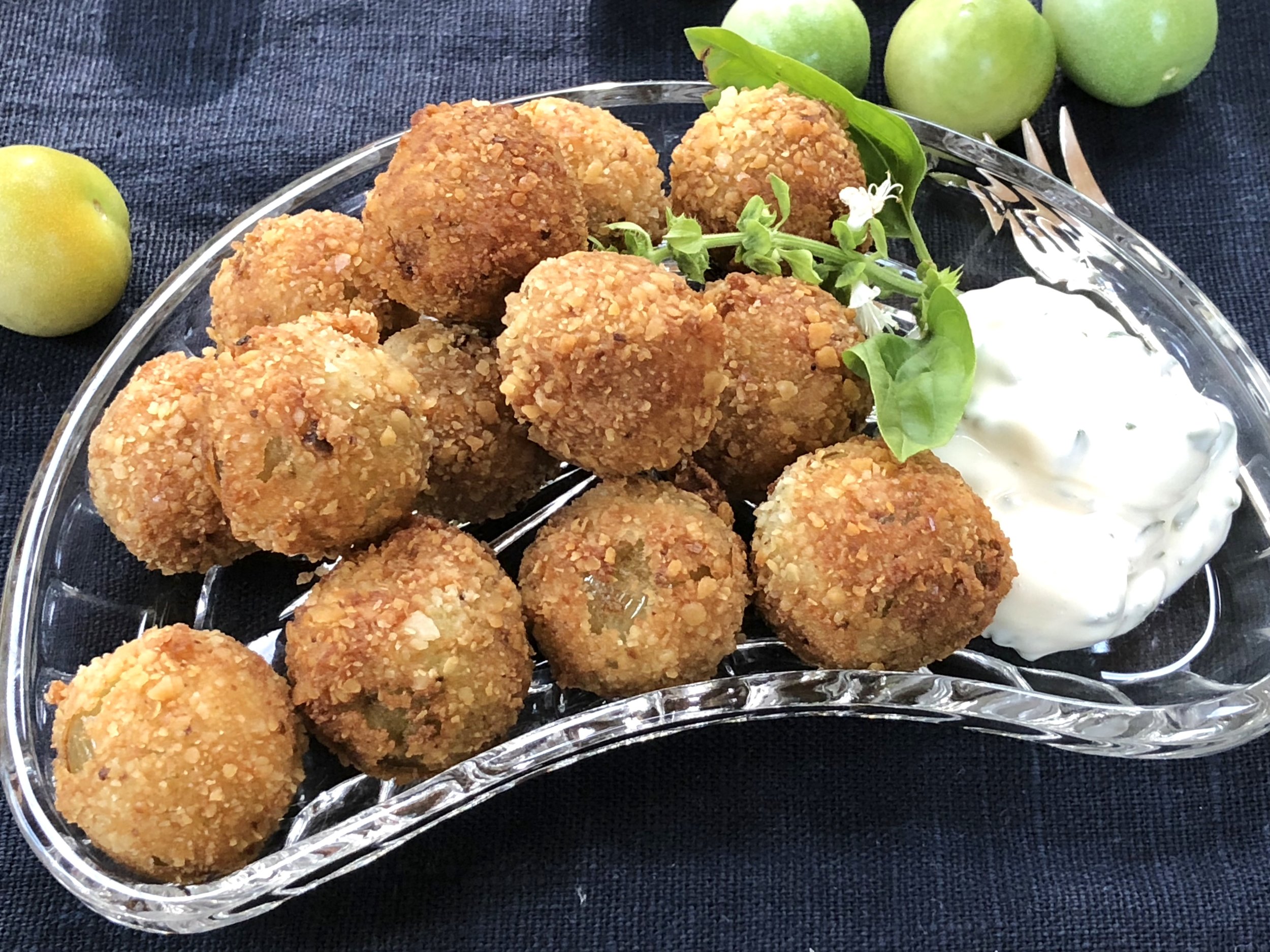
I like fried green tomatoes in a sandwich but the cherry tomatoes are too small for slicing, coating and frying.

So I tried making them whole.

Yes!

Crunchy outside — and when you bite in, you get spurts of sweet-tart juicy tomato.

Terrific as an hors d’oeuvre. If you have extra, little, green tomatoes, try this:

Fried Green Cherry Tomatoes

  • 1/2 cup mayonnaise

  • 2 tablespoons chopped fresh basil

  • lemon juice

  • 18-24 small green cherry tomatoes

  • 1/4 cup all-purpose flour

  • 1 large egg

  • 1/4 teaspoon Sriracha or other hot sauce

  • 1/2 cup matzo meal or breadcrumbs

  • salt, freshly ground black pepper and garlic powder to taste

  • vegetable oil

Combine the mayonnaise, basil and a teaspoon or two of lemon juice in a small bowl. Taste and add more lemon juice if desired. Set aside. Wash and dry the tomatoes. Place the flour in a bowl, add the tomatoes and toss them around to coat them completely. Beat the egg and hot sauce together. Immerse the tomatoes into the egg and roll them around to coat each one completely. In a bowl, combine the matzo meal with salt, pepper and garlic powder to taste. Add the egg-coated tomatoes a few at a time and roll them around to coat them completely. Place the coated tomatoes on a cake rack or other surface for at least 20 minutes, to “air dry” slightly. Heat vegetable oil in a deep pan to a depth of about 2-inches. When the oil is hot enough to make a crumb sizzle quickly, add the tomatoes, a few at a time and cook them, turning them occasionally, for 4-5 minutes, or until golden brown. Remove the tomatoes and set the on paper towels to drain. When all the tomatoes are fried, serve them with the basil mayonnaise.

Makes 6-8 servings

Chick Pea and Carrot Salad

DSC08424.jpg

Of course, of course we will be slicing apples and dipping them in honey on Rosh Hashanah. (which begins at sunset on September 29th).

But chickpeas are on the menu too. In his Encyclopedia of Jewish Food, the late rabbi and food authority Gil Marks wrote that “chickpeas are a traditional Rosh Hashanah food, a symbol of fertility, abundance and a wish for a well-rounded year to come.”

I usually make chickpeas into hummus, but sometimes I serve them whole, as a snack, roasted, the way my mother made them when I was growing up – a recipe called nahit. She coated the chickpeas with vegetable oil, sprinkled them with salt and paprika and baked them until crispy.

I changed her recipe somewhat -- I use olive oil, kosher salt and fresh thyme, or sometimes za’atar, as seasonings. Nahit is a delicious snack and a healthy one too: chickpeas are a good source of protein, minerals (including calcium) and fiber.

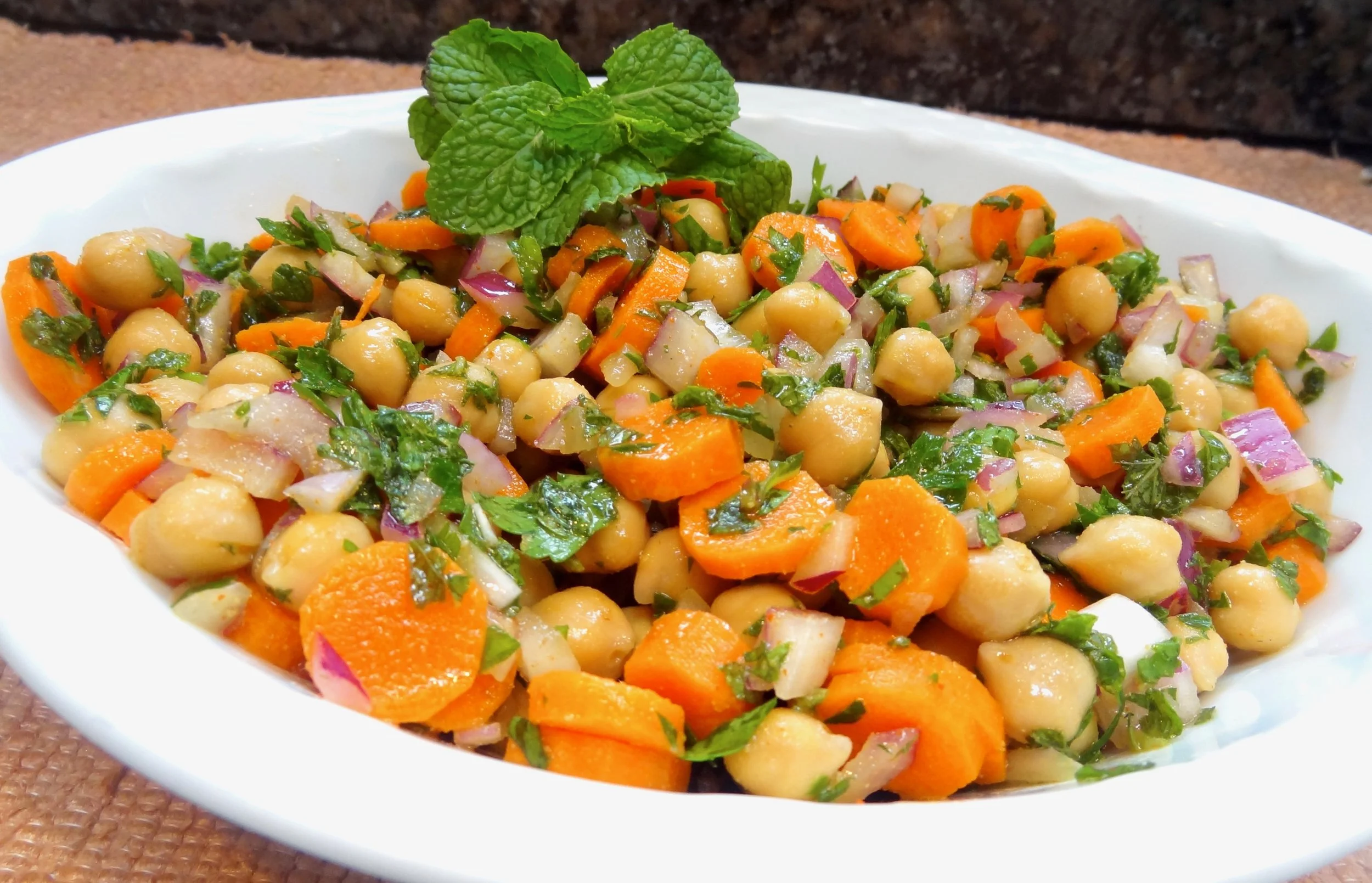
For this coming holiday though I’ll be making a chickpea and carrot salad to serve with dinner. Carrots are another symbolic ingredient of the holiday, so this recipe is a double-up of special ingredients of festive food for the holiday table. It’s a dish that can be made in advance, which makes it a good choice at such a busy time. And it is colorful too, fit for any celebration, including Break-the-Fast. 

Chick Pea and Carrot Salad

  • 1 15-ounce can chickpeas

  • 4 medium carrots, sliced thin

  • 1/2 chopped red onion

  • 1/4 cup chopped fresh parsley

  • 1/4 cup chopped fresh mint

  • 1 teaspoon ground cumin

  • 1/8 teaspoon cayenne pepper

  • 1/4 cup olive oil

  • 3 tablespoons lemon juice

  • salt to taste

Rinse the chickpeas under cold running water; let drain and place in a bowl. Add the carrots, onion, parsley, mint, cumin and cayenne pepper and toss to distribute the ingredients evenly. Pour in the olive oil and lemon juice. Toss to coat the ingredients evenly. Taste for seasoning and add salt to taste.

Makes 6 servings

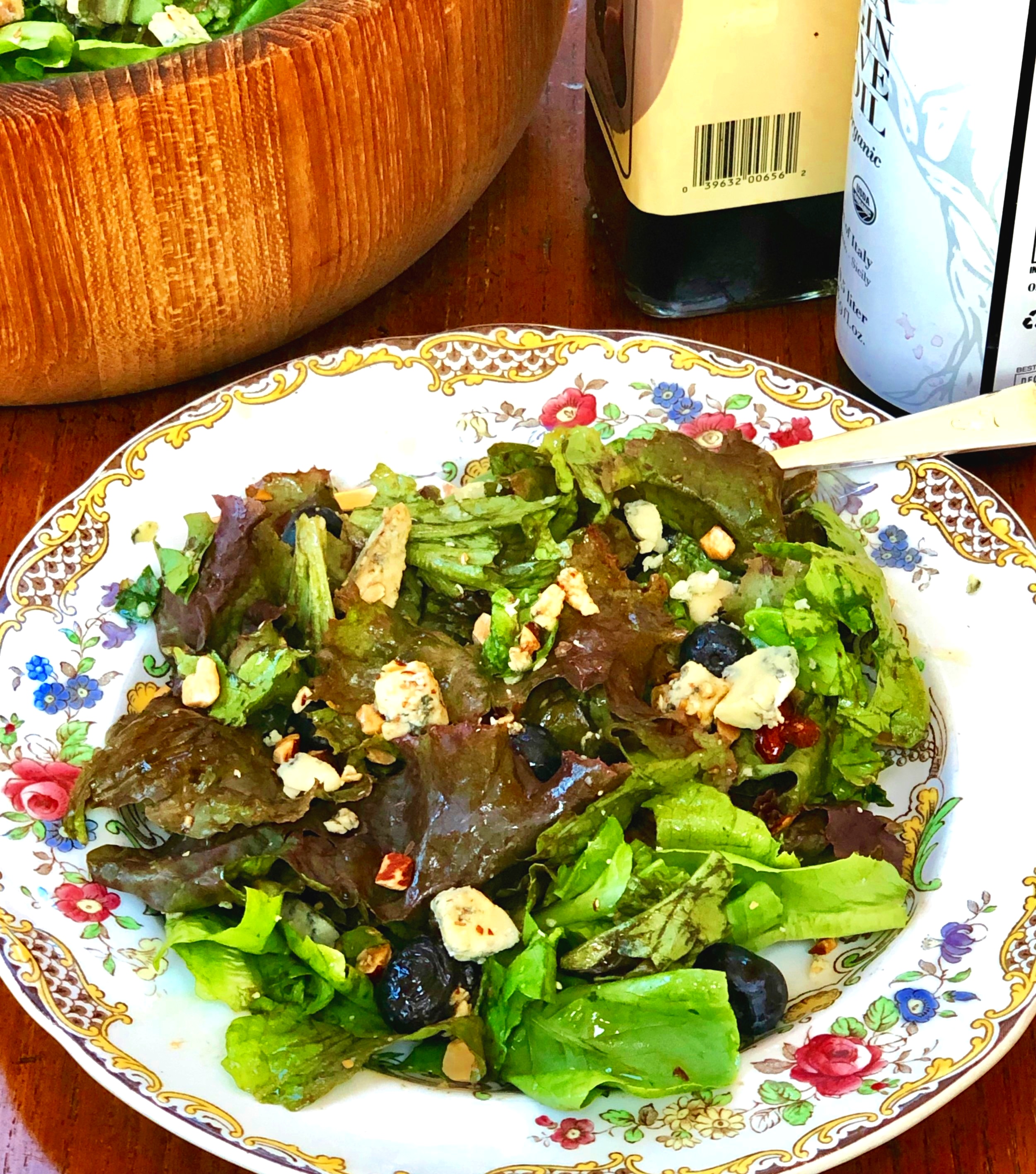
Blue Salad (with green): Berries and Cheese

I love blueberries and I love blue cheese, so I figured they might go together well.

They did!

In this light, refreshing summer salad.

Nice for a full lunch — add a crust of bread. Or as a first course for dinner.

I bought the blueberries and the cheese. But the greens? Right from my garden! What a joy!

Blue Salad (with green)

  • 1 head leaf lettuce or 6 cups mixed greens

  • 1 cup blueberries

  • 1 cup crumbled blue cheese

  • 3 tablespoons chopped chives or scallion tops

  • 1/3 cup olive oil (or use avocado oil)

  • 3-4 tablespoons Balsamic vinegar

  • 1/4 cup chopped toasted almonds, optional

Tear the lettuce into smaller pieces and place them in a salad bowl. Add the blueberries, cheese and chives and toss the ingredients. Pour in the olive oil and toss the ingredients again. Add 3 tablespoons of the Balsamic vinegar, toss and taste, add more Balsamic vinegar to taste. Serve and garnish with the toasted almonds if desired.

Makes 4-6 servings

Vegetable Salad

fullsizeoutput_a6ee.jpeg

Light, refreshing food. That’s what we want during the summer.

Also, easy to make. And as quick as possible.

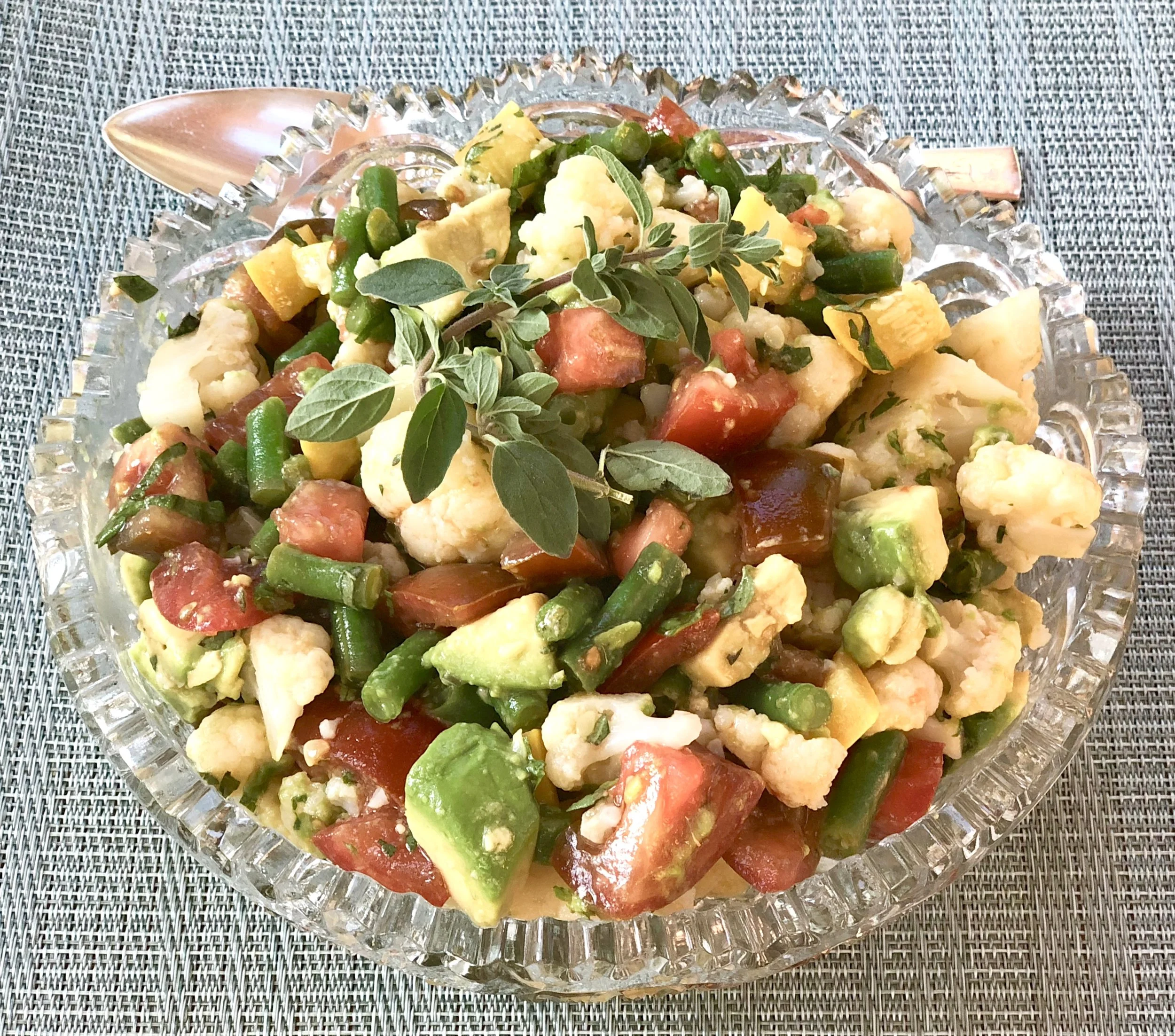
I made this vegetable salad using leftovers from the veggies we had over a couple of meals. Added some fresh tomatoes, an avocado and some herbs. Not only did I get to use up stuff from the fridge, the dish took less than 10 minutes to make.

It’s a side dish. But you can add some tofu, cheese or hard-cooked eggs and make it into a main course (or add leftover fish, meat or poultry).

Add crusty bread and it’s a sandwich filling.

Mix it into cooked penne or ziti and it becomes pasta primavera.

Use whatever vegetables you have in proportions suggested. There’s no magic here, no actual recipe that will fail if you don’t have one of the ingredients.

Vegetable Salad

  • 3 cups cooked cut up cauliflower

  • 1 cup cooked, cut up green beans

  • 1 cup cooked cut up yellow squash

  • 3-4 cut up small tomatoes

  • 1 avocado, cut into small chunks

  • 3 tablespoons chopped fresh basil

  • 2 teaspoons chopped fresh oregano

  • 2 tablespoons olive oil

  • 2-3 tablespoons fresh lemon juice (or use white wine vinegar)

  • salt and freshly ground black pepper to taste

Place the cauliflower, green beans, yellow squash, tomatoes, avocado, basil and oregano in a bowl and toss the ingredients to distribute them evenly. Pour the olive oil over the vegetables and toss again. Pour 2 tablespoons of the lemon juice over the vegetables and toss again. Taste for seasoning and add more lemon juice and salt and pepper to taste.

Makes 4-6 servings

Two Color Cabbage Slaw

fullsizeoutput_a6e7.jpeg

Picnic on July 4th? Of course! It’s the American thing to do.

So of course, we need to bring typically American food.

Like cole slaw.

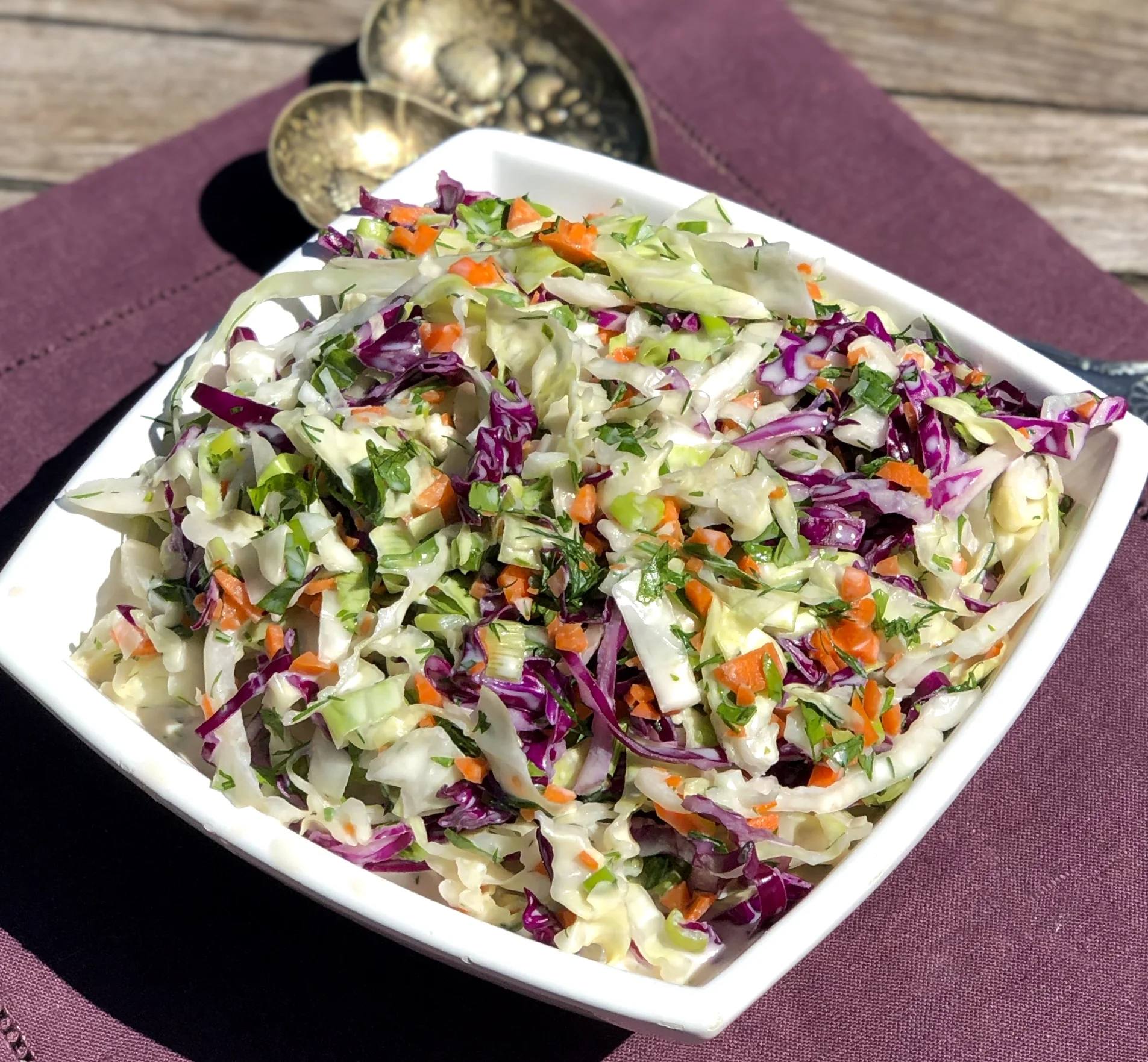
Which has become an iconic American picnic dish but is actually not an American recipe at all. Cole slaw (which means “cabbage salad”) was originally a Dutch specialty.

Nevertheless, we Americans love it so much we have claimed it as our own and it is therefore perfectly perfect for any Fourth of July celebration.

Two Color Cabbage Slaw

  • 4 cups packed shredded green cabbage

  • 2 cups packed shredded purple cabbage

  • salt

  • 2 finely chopped carrots

  • 3 chopped scallions

  • 1/4 cup chopped fresh parsley

  • 2 tablespoons chopped fresh dill

  • 1-1/4 cups buttermilk

  • 1/3 cup mayonnaise

  • 2 tablespoons cider vinegar

  • 1 tablespoon sugar

  • pinch or two of cayenne pepper, optional

Place the green and purple cabbage shreds in a large bowl, sprinkle with 1-2 teaspoons of kosher salt and toss to distribute the ingredients evenly. Let rest for 45 minutes. Rinse the cabbage and wipe the shreds dry on paper towels. Place the shreds in a large bowl. Add the carrots, scallions, parsley and dill and toss the ingredients. In another bowl, combine the buttermilk, mayonnaise, cider vinegar and sugar. Whisk the ingredients and pour over the vegetables. Toss the ingredients and let rest for at least 15 minutes. Before serving, taste for seasoning and add salt and cayenne pepper to taste.

Makes 8 servings

Chopped Salad with Chick Peas, Feta Cheese and Zatar Vinaigrette

fullsizeoutput_96d0.jpeg

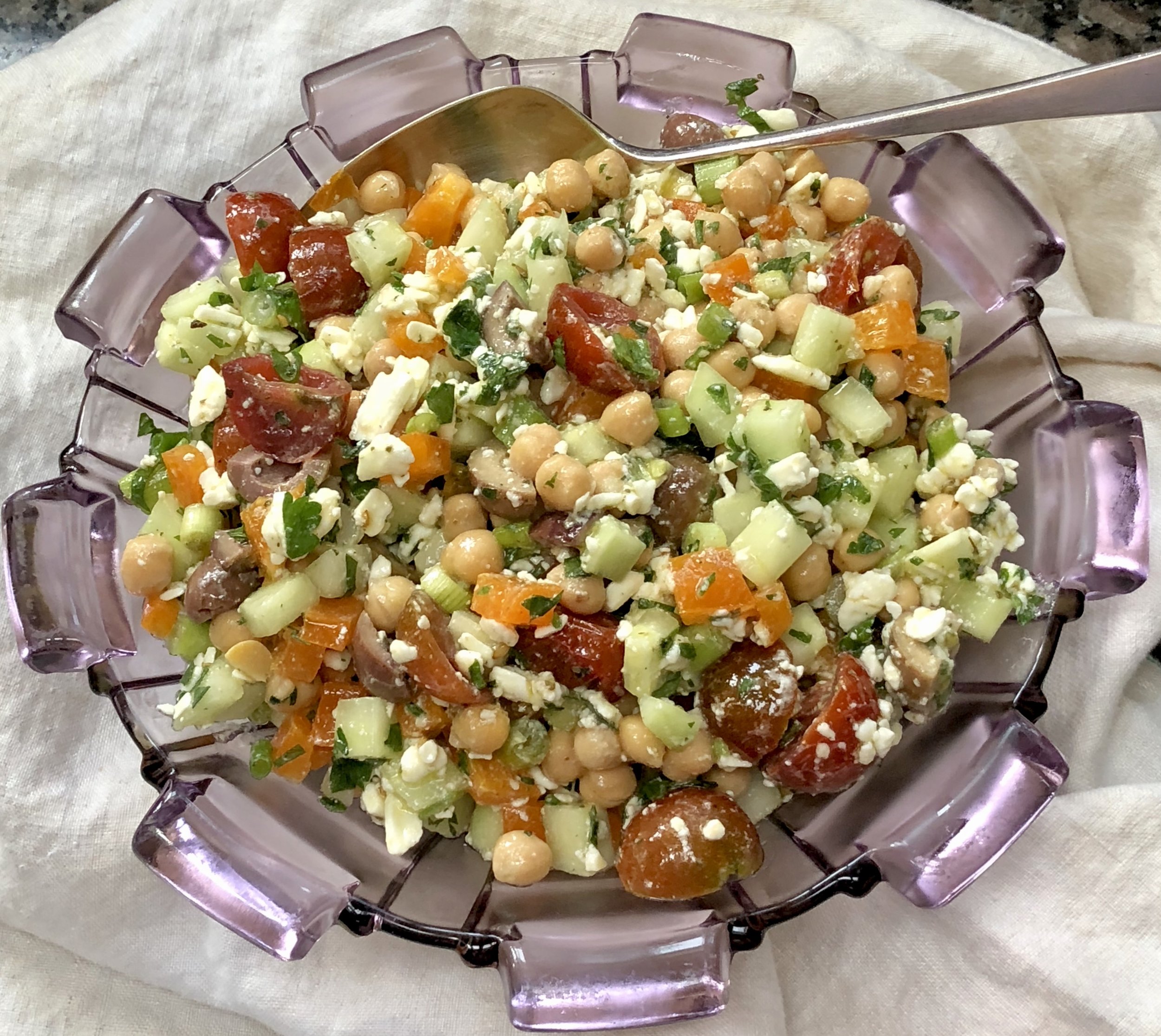
For us, summer means salad. Not just leafy greens and tomatoes for starters to a meal. We eat bulky filling salads for dinner. Like this chopped salad, which of course could be served with other salads or as a side dish to grilled fish. But it’s also satisfying on its own, just like this. Add a crust bread and some fabulous olive oil for dipping and that’s all you need (except for dessert of course).

Chopped Salad with Chickpeas, Feta Cheese and Zatar Vinaigrette

  • 1 large cucumber, peeled, deseeded, and chopped

  • 1 large red bell pepper, chopped

  • 2 large ripe tomatoes, chopped

  • 3–4 scallions, chopped

  • 1 (15-ounce) can chick peas, rinsed and drained

  • 1 cup crumbled feta cheese

  • 1/4 cup minced fresh parsley

  • 1/2 cup tangy black olives, pitted and halved

  • 3–4 tablespoons extra virgin olive oil

  • 2 tablespoons lemon juice

  • 1/2 teaspoon zatar

  • Salt and freshly ground black pepper to taste

  • Pita bread or crisps, optional

Place the cucumbers, bell pepper, tomatoes, scallions, chick peas, cheese, parsley, and olives in a bowl and toss ingredients gently. Just before serving, mix together the olive oil, lemon juice, and zatar. Pour over the salad. Season to taste with salt and pepper. Salad tastes good with Pita bread or crisps.

Makes 4 servings.


Roasted Vegetable Galette

Roasted Vegetable Galette

Roasted Vegetable Galette

Everyone who knows me or has read a few Mother’s Day posts on my blog knows we don’t celebrate the usual way. We don’t go out to a restaurant or club.

We stay home and have a cookoff.

Yes, we cook and it’s work and a mess but we have the best time ever. Everyone participates (except that some years I am just in charge of the beverages).

We choose a theme, form into teams and each team chooses a recipe. I buy the ingredients a couple of days before and then, on Sunday, my two daughters, their husbands, my husband and my grandkids all get cooking.

Last year our theme was dips. I prepared a tropical salsa.

One year it was chocolate chip cookies.

We’ve done tomato sauce, eggs and so on.

This year we decided on PIE. Each team will make some sort of pie.

There are no rules. They interpret the word (pie) however they wish.

So — apple pie? Sure!

Pizza pie? Of course!

Pot pie? Yes!

The only limit: this will be a vegetarian/dairy meal. So, no beef pot pie.

But — quiche? Why not — it’s a type of open face pie, right?

How about a potato/olive/onion empanada? YUM!

Cabbage pastie? ok!

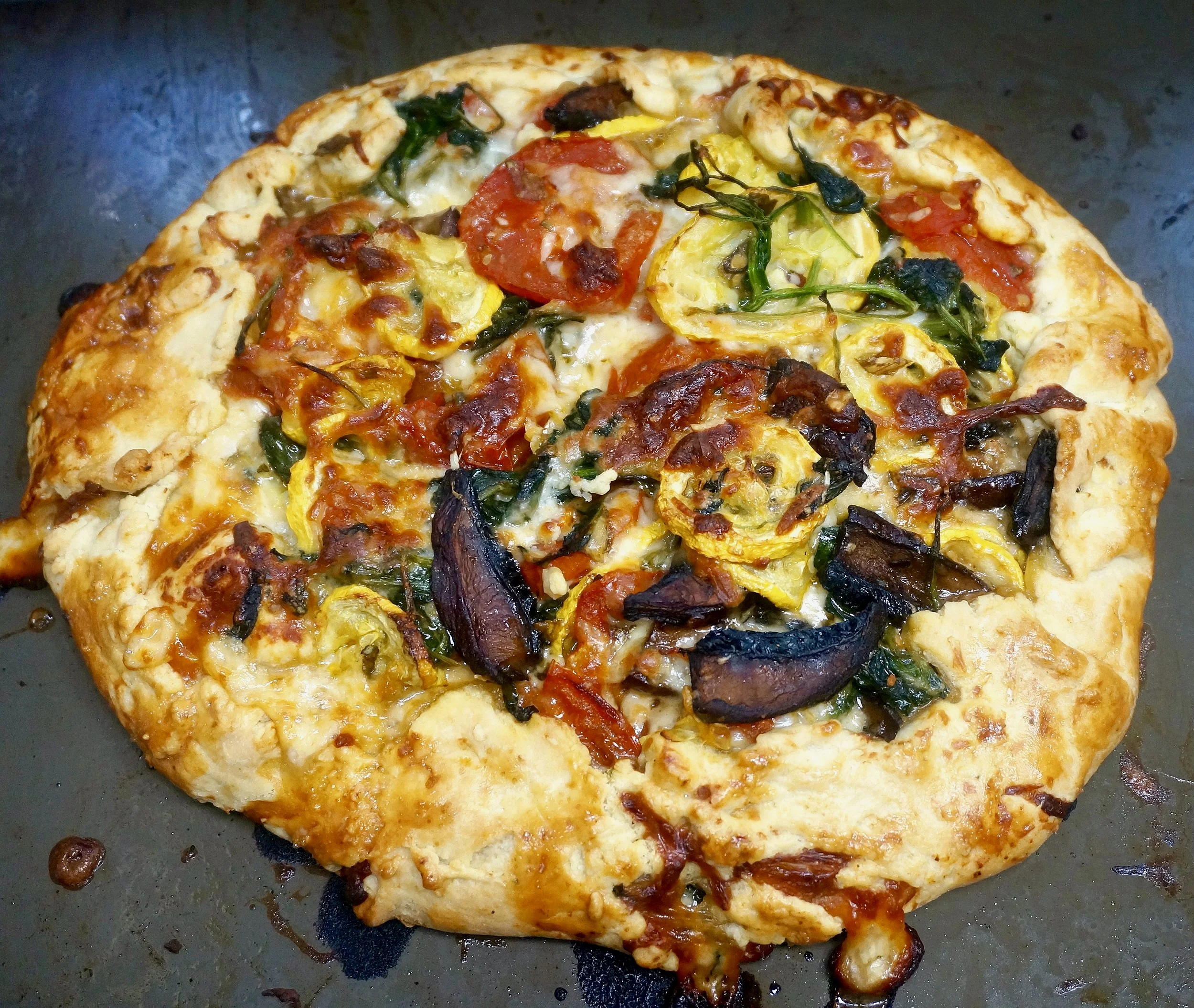
I am thinking of this though: roasted vegetable galette. I make it with pie dough so it qualifies, doesn’t it?

A good Meatless Monday (or any other day) choice.


Roasted Vegetable Galette

  • 1-1/2 cups all-purpose flour

  • 1/2 teaspoon salt

  • 1 tablespoon chopped chives or scallion tops

  • 6 tablespoons butter, cut into chunks

  • 2 tablespoons cold vegetable shortening

  • 3-4 tablespoons milk

  • 2 medium yellow squash, sliced

  • 4-5 plum tomatoes, sliced

  • 1 large Portobello mushroom, sliced

  • 4 tablespoons olive oil

  • salt to taste

  • 1 bunch spinach, washed and dried

  • 2 tablespoons chopped basil

  • 1-1/2 cups (6 ounces) shredded Mozzarella cheese

  • 2-3 tablespoons grated Parmesan cheese

  • 1 egg, beaten, optional

For the crust: mix the flour, salt and chives together in a bowl or food processor. Add the butter and shortening and cut the fat into the flour mixture with your hands or a pastry blender or by processing on pulse until the mixture looks like coarse crumbs. Gradually add 3 tablespoons milk and mix to form a soft dough, adding more milk as needed. Flatten the dough into a disk, wrap and let rest in the refrigerator for at least one hour. Line a large baking sheet with parchment paper. Roll the dough on a lightly floured board into a circle about 12-13 inches in diameter (about 1/8-inch thick) and transfer the circle to the prepared baking sheet.

For the filling: Preheat the oven to 425 degrees. Line a baking sheet with parchment paper. Place the squash, tomato and Portobello slices on the baking sheet and brush on both sides with 3 tablespoons of the olive oil. Roast for 20-22 minutes or until tender. Remove from the oven. Heat the remaining tablespoon olive oil in a sauté pan over medium heat. Add the spinach and cook for 2-3 minutes until softened. Drain any liquid, chop the spinach coarsely and set aside.

Reduce the oven heat to 400 degrees. Scatter the circle of dough with 1 cup of the mozzarella cheese, leaving a border of about 1-1/2 inches. Mix the vegetables together with the basil and place over the cheese. Scatter the remaining mozzarella cheese and the Parmesan cheese on top. Fold the dough over the vegetables but not completely; leave the center open, with 7-8 inches of the vegetables showing. Pleat the dough at the edge to give the galette a rustic look. Beat the egg and brush it onto the dough for a glazed look, if desired. Bake for 35-40 minutes or until the crust is golden brown.

Makes 8 servings

Matbucha

fullsizeoutput_a219.jpeg

Spring has sprung and for me, that means more salad.

So I got to thinking about that word salad, which I realize means so many things that I was never able to fit all of my salad recipes into a file folder simply marked “salad.” I had to sub-categorize them into files such as “grain salads,” “tomato salads,” “fruit salads” and so on.

Over the years I’ve made salads of all sorts. Some based mostly on greens and some that had no greens at all.

I’ve made beet salads, dinner salads, fish salads and quinoa salads.

I could go on. But really, there is no one way to describe “salad,” even though a dictionary might say something like “a mixture of raw and cooked vegetables served with dressing.”

No.

Because recently I prepared some Matbucha, which is an entirely different salad category.

Matbucha is a “salade cuit” — that is, “cooked salad.” In fact the word Matbucha, is an Arabic word that means “cooked salad".”

Cooked salad may seem odd to Western thinking except for the fact that most of us actually eat lots of cooked salads, such as potato salad and egg salad too. We just don’t think of them as “cooked salads,” but that’s what they are.

Matbucha is a Moroccan dish, especially popular in the Moroccan Jewish community, which was once large and thriving in North Africa. When good numbers of Moroccan Jews migrated to Israel, they brought their love of this dish with them and it is now wildly popular in Israel too.

For good reason: Matbucha is vibrantly tasty, easy to cook and is ideal for Shabbat because, even though it’s cooked, you can serve it at room temperature. Use it as a salad course or as a side dish with dinner. I’ve always served it with hors d’oeuvre, as a topping for crackers or pita wedges (it works well with other Middle Eastern nibbles and dips such as hummus, raheb, baba ghanoush and so on).

You can make Matbucha 3-4 days ahead. That’s handy isn’t it?

Matbucha

  • 2 large red bell peppers

  • 3 tablespoons olive oil

  • 1 serrano pepper, deseeded and chopped

  • 2 large cloves garlic, finely chopped

  • 6 medium tomatoes peeled and finely chopped

  • 1-1/2 teaspoons paprika

  • 1 teaspoon sugar

  • 1/2 teaspoon salt or to taste

Preheat the broiler. Place the peppers under the broiler, about 4-6" away from the heat, and broil for 2-3 minutes, until the skin has blistered. Turn the peppers and repeat this process until the entire surface is blistered and lightly charred. Remove the peppers and place them in a paper bag. Let rest at least 10 minutes. Remove the peppers from the bag, peel off the skin and discard the stem and the seeds. Cut the peppers into pieces. Heat the olive oil in a large saucepan over medium heat. Add the peppers, serrano pepper and garlic and cook for 2-3 minutes. Add the tomatoes, paprika, sugar and salt. Bring to a simmer over medium-high heat. Cook for 30-35 minutes, until most of the liquid has evaporated and the mixture is thick.

 Makes 1-1/2 to 2 cups


Roasted Cauliflower with Crumbs

Roasted Cauliflower with Crumbs

Roasted Cauliflower with Crumbs

I recently read Mark Twain’s novel “The Tragedy of Puddin’head Wilson,” a story about what happens after two babies are switched and their real identities are lost almost forever.

In addition to being a good read, filled with humor and irony, this book also includes a character who keeps a diary where he writes wise sayings.

I always wondered where this famous Twain quote came from: “Cauliflower is nothing but cabbage with a college education.” Now I know.

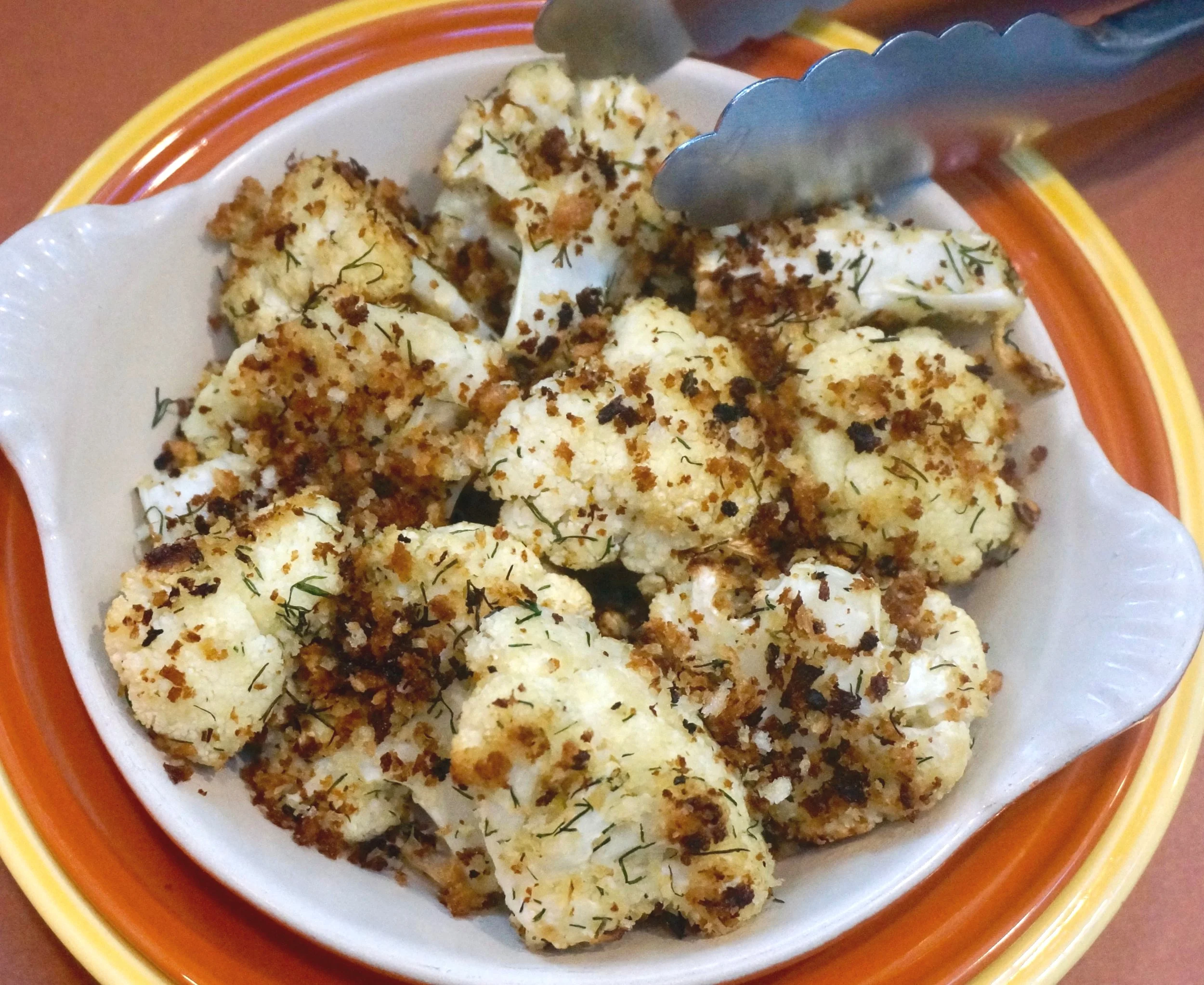
I recommend the book. Also recommend this cauliflower dish, which is so easy to prepare you don’t need a college eduction to make it.

Roasted Cauliflower with Crumbs

  • 3/4 cup Panko

  • 1 large clove garlic, finely chopped

  • 2 tablespoons chopped fresh dill

  • 1/4 cup olive oil

  • 2 teaspoons Dijon mustard

  • 1 large head cauliflower, cut into florets

Preheat the oven to 425 degrees. Mix the Panko, garlic and dill together and set aside. In a large bowl, mix the olive oil and mustard together until thoroughly blended. Place the cauliflower in the mustard-oil bowl and toss to coat the pieces on all sides. Place the coated pieces on a baking sheet. Scatter the Panko over the pieces and toss to coat the pieces lightly. Roast for about 15 minutes or until crispy and tender, turning the pieces once or twice. Most of the crumbs will separate from the cauliflower. Place the cauliflower in a serving dish, scatter the crumbs on top.

Makes 6 servings