holiday

Honey Cookies

Still thinking honey. This time, more or less, a sweet little treat to greet people when they come to my house for the Break-the-fast on Saturday night. I’ve noticed over the years that when people haven’t eaten for a long time they can’t just go at it and shovel in food. They need to nibble first. 

For a few years I served homemade hummus as a starter food. But somehow so many people went right over to the dessert trays and took a cookie or two that now I keep the hummus for the main meal buffet and have a plate of sweet cookies available before we actually have dinner.

My friend Susan always brought cookies, but as I mentioned, she isn’t coming this year. So, I’ll serve crescent cookies and plum torte. My friend Barbara’s daughter-in-law Karen will bring chocolate chip cookies and my daughter Gillian will bake an apple cake.

But because I also still have honey on my mind, in hopes for a sweet new year, I will also bake honey cookies today.

Honey Cookies

1/2 cup melted butter or margarine, cooled

1/4 cup honey

1/4 cup sugar

1 teaspoon baking soda

1 large egg yolk

1/2 teaspoon grated fresh orange peel

1/2 teaspoon vanilla extract

1/4 teaspoon salt

1-1/2 cups all-purpose flour

1 large egg white

crystal sugar

Preheat the oven to 350 degrees. Lightly grease a cookie sheet. In the bowl of an electric mixer combine the melted butter, honey, sugar, baking soda, egg yolk, orange peel, vanilla extract and salt. Beat at medium speed for about one minute or until the ingredients are thoroughly blended. Add the flour and blend it in to make a soft dough. Pinch off heaping teaspoons of dough and roll them on a floured surface to make balls about 1-inch in diameter. Beat the egg white until it is thick and foamy. Dip the balls into the egg white to coat the entire surface. Press the balls on one side in some crystal sugar (or sprinkle the crystal sugar on top). Place the balls (sugared side up) on the cookie sheet, leaving some space (about an inch) between them. Bake for 8-10 minutes or until golden brown. Let cool for 10 minutes, then place on a cookie rack to cool completely. Makes about 36
Another Plum Torte

Another recipe for Plum Torte?Yeah. Why not?! Because it’s one of the best of the best cakes to eat. No, don’t say you like chocolate cake or coconut cake better. Plum Torte serves an entirely different purpose. You can’t compare it to any othe…

Another recipe for Plum Torte?

Yeah. Why not?! 

Because it’s one of the best of the best cakes to eat. No, don’t say you like chocolate cake or coconut cake better. Plum Torte serves an entirely different purpose. You can’t compare it to any other cake. It’s its own thing.

I have no idea why Plum Torte is a typical Rosh Hashanah-Yom Kippur Break-the-Fast dessert. Maybe it’s because those lovely little Italian prune plums needed for the recipe are in season at about the same time as the Jewish High Holidays. All I know is that this was one of THE desserts for the holidays even when I was a little girl.

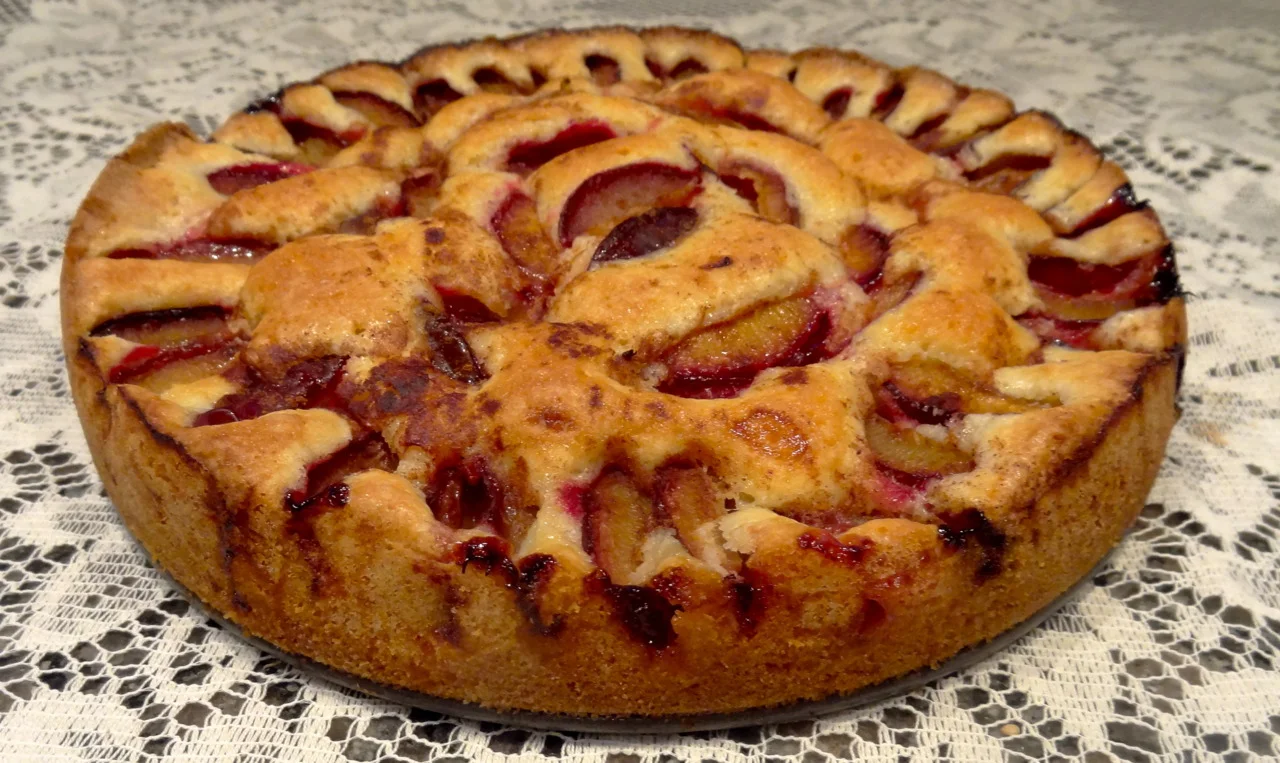
There are dozens of recipes for it. Plum Torte is one of those recipes like apple pie. Everyone who bakes one does a little something different. The New York Times used to print their tried-and-true recipe every September. I’ve made that one and it is quite good. This one is even better. I just made two to freeze and reheat for my annual Break-the-Fast Saturday night:

Plum Torte

  • 1/2 cup unsalted butter

  • 3/4 cup plus one tablespoon sugar

  • 1 cup all-purpose flour

  • 1 teaspoon baking powder

  • 1/2 teaspoon finely grated lemon peel

  • 1/4 teaspoon salt

  • 2 large eggs

  • 15 prune plums, pit removed, quartered

  • lemon juice (about one tablespoon)

  • cinnamon (about 1/4 teaspoon)

Preheat the oven to 350 degrees. Lightly grease a 9-inch springform pan. In the bowl of an electric mixer, cream the butter and 3/4 cup sugar on medium speed for 3-4 minutes or until creamy and well blended. Add the flour, baking powder, lemon peel and salt and mix briefly to blend ingredients slightly. Add the eggs and beat at medium speed for 2-3 minutes or until smooth and creamy. Spoon the batter into the prepared springform pan. Arrange the plum quarters on top, pressing them slightly into the batter. Sprinkle the cake with the remaining tablespoon sugar. Squeeze some lemon juice over the cake and sprinkle with cinnamon. Bake for 55-60 minutes or until browned, set and crispy. Let cool.

Makes 8 servings


Carrot and Parsnip Soup

Need a quick soup for Rosh Hashanah? Try this Carrot and Parsnip Soup, which comes from my book Hip Kosher. Just a few ingredients. And ingredients can be substituted to make it fit in a meat, dairy or pareve meal. It can be frozen too, so you can m…

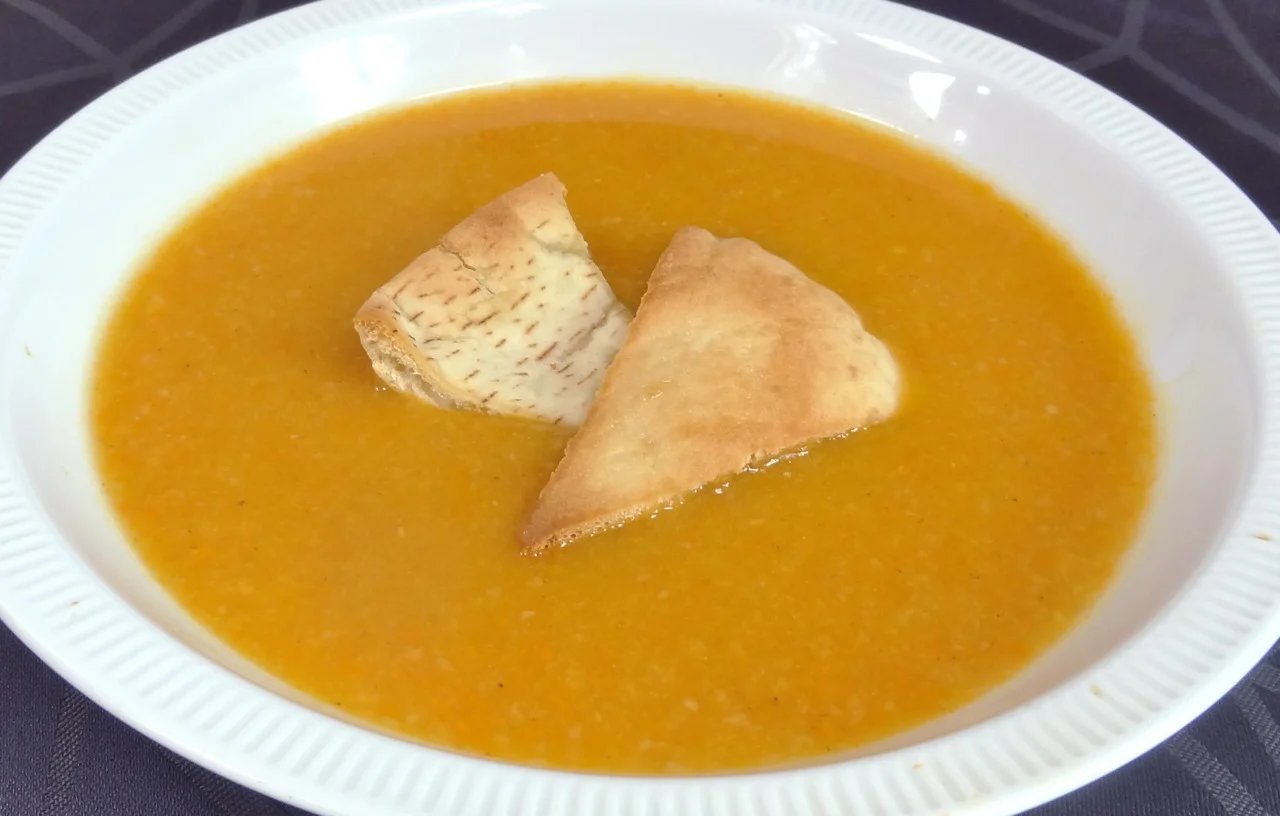
Need a quick soup for Rosh Hashanah? Try this Carrot and Parsnip Soup, which comes from my book Hip Kosher. Just a few ingredients. And ingredients can be substituted to make it fit in a meat, dairy or pareve meal. It can be frozen too, so you can make plenty and store it for when it’s cold outside and you need a good, light, but nourishing starter for dinner.

And also — it’s loaded with vegetables. That’s a good thing.

Carrots and parsnips are both sweet vegetables, which makes this soup particularly nice for Rosh Hashanah, when sweet foods are in order. While not quite as ubiquitous as honey, carrots have always been a key High Holiday food. The Yiddish word for carrot is “mehren,” which means to “increase” or “multiply,” and thus underscores wishes for good fortune and good deeds in the new year.

So here it is. Good, cheap and easy to make.


Carrot and Parsnip Soup


·      2 tablespoons olive oil

·      1 large onion, chopped

·      2 medium garlic cloves, chopped

·      1 teaspoon finely chopped fresh ginger

·      1/2 pound carrots, peeled and chopped

·      1/2 pound parsnips, peeled and chopped

·      1 teaspoon ground cumin

·      3/4 teaspoon ground coriander

·      salt and freshly ground black pepper to taste

·      4 cups vegetable or chicken stock


Heat the olive oil in a soup pot or large saucepan over medium heat. Add the onion and cook for 2-3 minutes, or until the onion is slightly softened. Add the garlic and ginger and cook for another minute. Add the carrots, parsnips, cumin, coriander and salt and pepper to taste and stir. Pour in the stock and one cup water. Bring to a boil, then lower the heat to a simmer. Cook, partially covered, for about 25 minutes or until the vegetables are tender. Puree the ingredients, return the soup to the pan and reheat to serve.


Makes 4-6 servings


For cream soup: use vegetable stock; add 1/2 cup half and half cream; reheat.

For dairy soup: prepare soup with vegetable stock and serve with a dollop of plain yogurt or dairy sour cream

For parve cream soup: use coconut milk or soy milk

Garnish: with croutons or pita crisps

Pita crisps: brush pita bread wedges with olive oil and bake for 5-6 minutes at 400 degrees (or until crispy and browned)


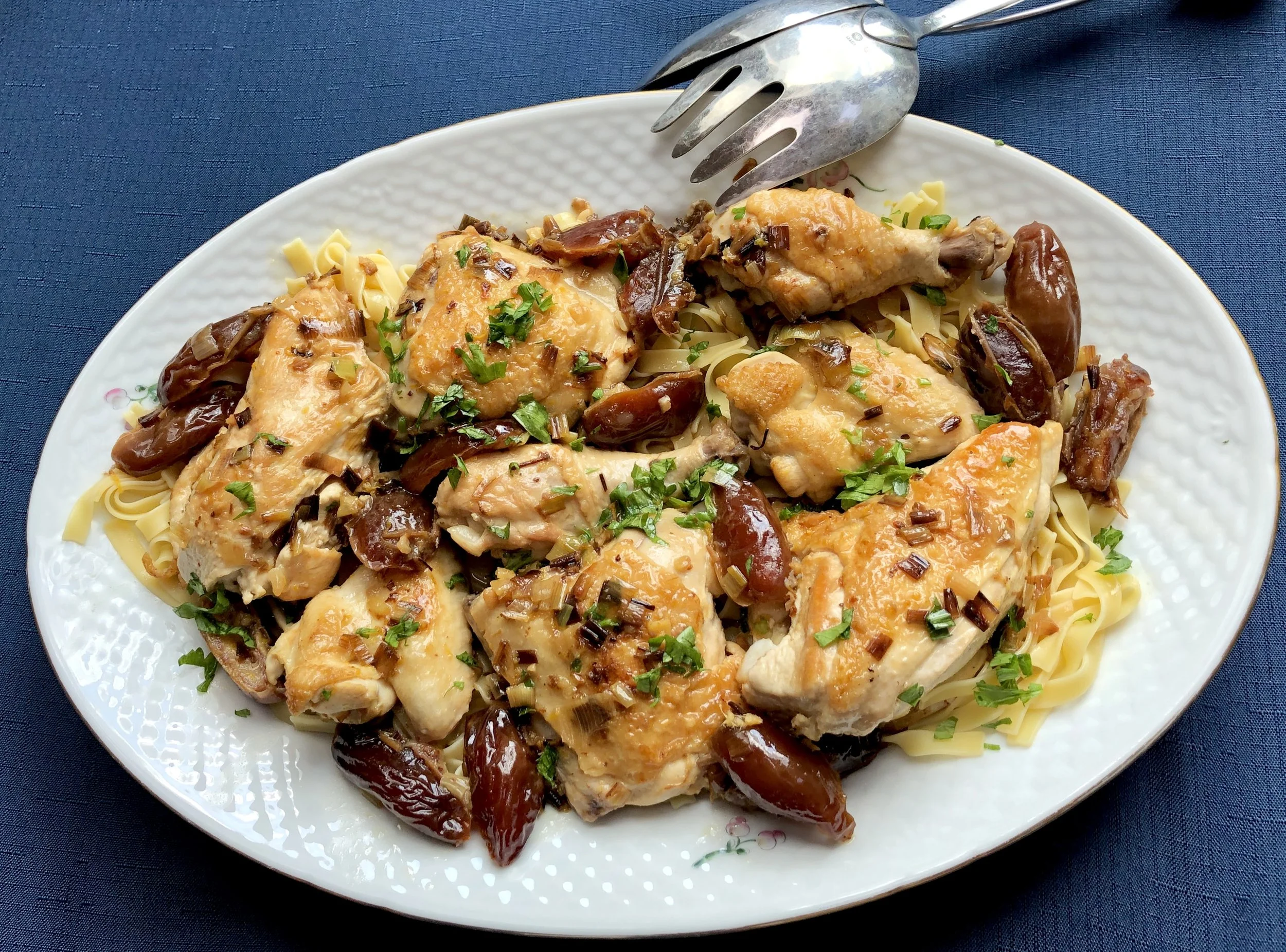
Braised Chicken with Dates

When I think about comfort foods I’m no different than most people. I’ll go for Macaroni and Cheese, Mashed Potatoes and Chocolate Pudding just like the next guy.

But my list also includes Chicken Fricassee. My mother made Chicken Fricassee with chicken wings, gizzards and necks. She included potatoes and little meatballs, lots of onions and sometimes mushrooms. She loaded it up with paprika, covered it and cooked it slowly for hours until there was a rich, russet gravy and chicken soft-as-you-know-what. 

That was good.

When my mother was much older and not well, I would make some for her and bring it to her house in a kind of comforting culinary role reversal. She loved Chicken Fricassee too.

This dish was such a regular when I was a child that when I became a Mom and my kids were young, I made it too. 

They hated it. Made fun of it. Wouldn’t eat it.

I still don’t get it.

But, it wasn’t something I made because what’s the point? If your family doesn’t like something you don’t cook it for dinner.

I did however, continue to make braised chicken. Which is actually, for most purposes except the strictest definition, the same as fricassee. My daughters did eat many of the newer versions. And one day Gillian actually called me out on it and said she knew it was fricassee only with different spices and no meatballs.

This is one of the recipes that proved to be a big winner. Call it Braised Chicken with Dates if the word fricassee is not a word you want to use in your house.

Braised Chicken with Dates

  • 1 cut up broiler-fryer chicken

  • 2 tablespoons olive oil

  • 1 large onion, sliced

  • 1 large clove garlic, chopped

  • 2 teaspoons chopped fresh ginger

  • 1/2 teaspoon ground cumin

  • 1/4 teaspoon cayenne pepper

  • 1/8 teaspoon freshly grated nutmeg

  • 1 cup chicken broth

  • 12 whole dates, preferably medjool

Rinse and dry the chicken and set aside. Heat the olive oil in a large saute pan over medium heat. Cook the chicken a few pieces at a time until they are lightly browned, about 8 minutes. Remove the chicken to a dish and set aside. Add the onion to the pan and cook for 2-3 minutes. Add the garlic and ginger an cook briefly. Return the chicken to the pan and spoon the onions on top. Sprinkle with the cumin, cayenne and nutmeg. Pour in the chicken broth. Stir the liquid, cover the pan and turn the heat to low-medium. Cook for 15 minutes. Add the dates and cook for another 10-15 minutes or until chicken is cooked through.

Makes 4 servings

Passover Birthday Cake

Passover Birthday CakeMy daughter Meredith’s birthday sometimes falls during Passover, which means that in certain years she isn’t able to have a “traditional” birthday cake.Which didn’t bother her one bit when she was a kid because she absolutely l…

Passover Birthday Cake

My daughter Meredith’s birthday sometimes falls during Passover, which means that in certain years she isn’t able to have a “traditional” birthday cake.

Which didn’t bother her one bit when she was a kid because she absolutely loved the flourless chocolate jelly roll cake I made for her and for years this is what she asked me to bake even when it wasn’t Passover. I always thought it was an interesting and glamorous choice considering her age.

Guess it all comes down to how it tastes. Mer was never one to pick something just because it was “the thing” or because someone else liked or wanted it. She liked how this chocolate roll tasted and I don’t blame her. It’s de-lish. Passover-friendly too. But you can make this any old time.

Here’s the recipe.


Flourless Chocolate Jelly Roll Cake


6 ounces semisweet chocolate

3 tablespoons cooled coffee (or brandy or rum)

5 large eggs 

1 cup sugar

1-1/2 cups heavy cream

1-1/2 teaspoons vanilla extract

1 pint strawberries, sliced

cocoa powder or (Passover) confectioner’s sugar


Preheat the oven to 350 degrees. Butter a 15-1/2”x10-1/2” jelly roll pan. Line the pan with parchment paper, leaving several inches hanging over each of the short edges. Butter the portion of the paper that fits inside the pan. 

Melt the chocolate and coffee together in the top part of a double boiler set over barely simmering water. Mix the ingredients well and remove the top part of the pan from the heat. Let cool. In the bowl of an electric mixer set at medium speed (or use a hand mixer), beat the egg yolks and all but 2 teaspoons of the sugar together for 3-4 minutes or until thick and pale. Add the cooled chocolate mixture and blend it in thoroughly. In another bowl, beat the egg whites until they stand in stiff peaks. Mix about 1/4 of the beaten whites into the chocolate mixture. Fold the remaining whites into the chocolate mixture. Spoon the batter into the prepared pan, smoothing it to make it even. Bake for about 10 minutes or until “set.” Remove the cake from the oven. Cover it with a slightly dampened kitchen towel. Let cool.

Loosen the cake by pulling the overlapping ends of parchment paper. Invert the cake onto a clean sheet of parchment paper or kitchen towel and roll it up starting with one of the long sides. Set aside. 

Whip the cream and remaining 2 teaspoons sugar and vanilla extract until thick (use an electric mixer or hand mixer). Unroll the cake and spread the whipped cream on top of the cake, leaving about 1-inch at the edges. Top with the strawberries. Roll the cake starting on the long side. Place on a serving platter, seam side down. Dust (using a strainer) with cocoa or confectioner’s sugar.

Makes 10-12 servings

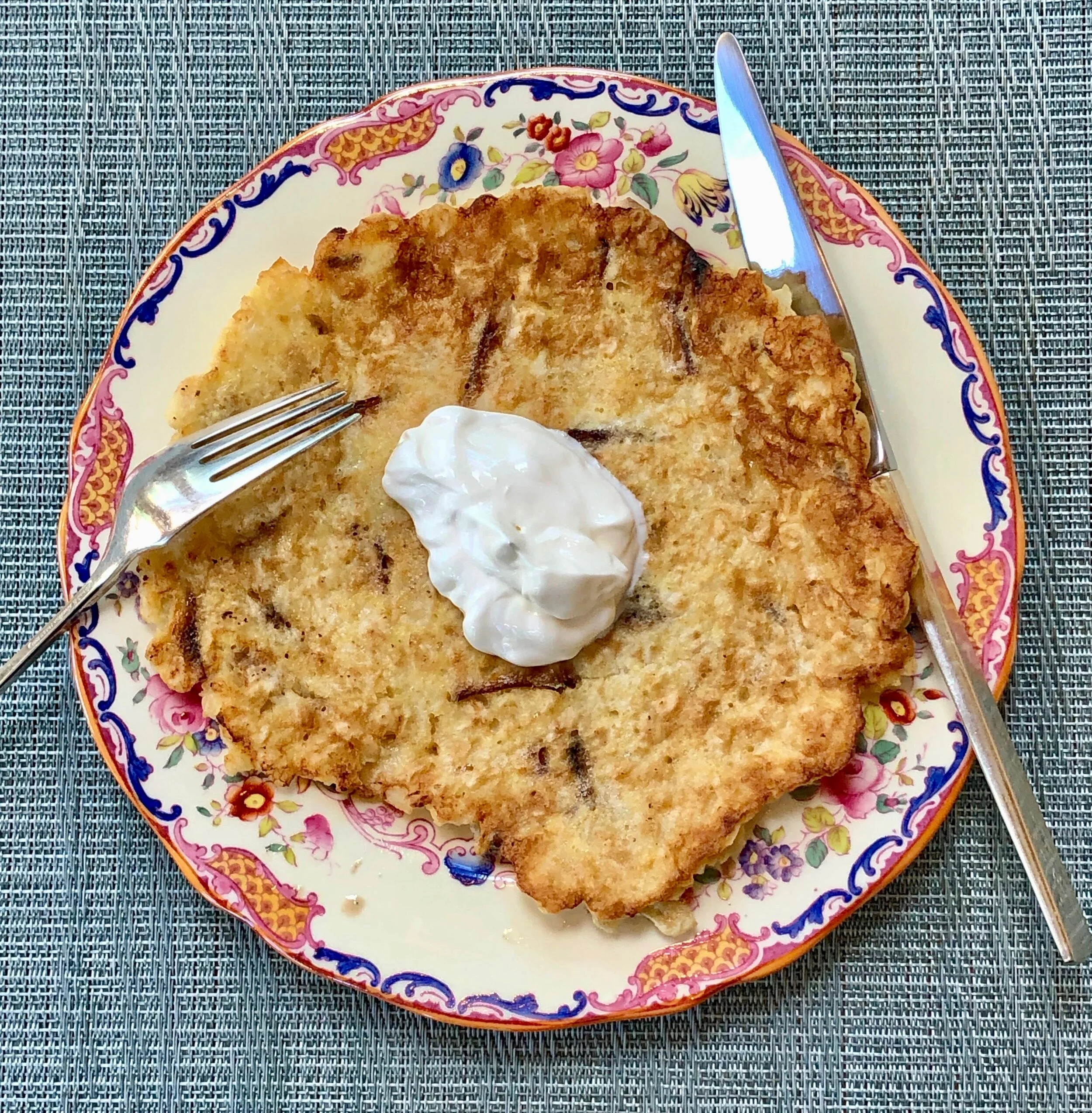
Soft Matzo Brei

IMG_4290.jpeg

“There’s no French Toast during Passover.” That’s what I told my grandkids when they were here for a few days for Seders and sleepovers. They’re used to French Toast when they come to grandma’s house because I always have a spare challah in the freezer, or we make one and then have leftovers, and everyone on earth knows that the best French Toast is made with challah.

But never mind that. “Israeli Toast” is on the menu, is what I told them.

You know. Matzo Brei. It’s the same thing as French Toast but instead of using bread, you use matzo.

But here’s a dilemma. Topping for French Toast is easy: either maple syrup, cinnamon sugar or jelly. A lot of people do the same for Matzo Brei. But when I was a little girl my grandma served Matzo Brei sprinkled with salt and topped with a big blob of sour cream. Sometimes applesauce.

My husband Ed always thought this was weird. But it’s how I served it to my own daughters too, who think it’s weird to drizzle matzo brei with anything as sweet as maple syrup. If I had sour cream in the fridge, that’s what they would choose. But we’ve switched to fat-free Greek yogurt instead.

“Israeli Toast” or Matzo Brei is so easy to make. And a delicious switch from every other cereal-based breakfast. So if you want to give it a try, here’s my recipe:

Matzo Brei

  • 3 pieces of matzo

  • hot water

  • 2 large eggs

  • salt

  • butter

  • sour cream or plain Greek style yogurt

Break the matzot into small pieces into a bowl. Cover with hot water and let it soak until the pieces are soft. Drain any non-absorbed water, then squeeze the pieces to extract as much excess water as possible. Add the eggs to the soft matzo pieces and mix until the matzo and egg are well combined. Sprinkle to taste with salt. Heat the butter in a saute pan over medium heat. When the butter has melted and looks foamy, add the egg-matzo mixture. Cook for 2-3 minutes per side or until golden brown and crispy. Serve with sour cream or plain yogurt, or, if you must, with maple syrup.

Makes 2-3 servings

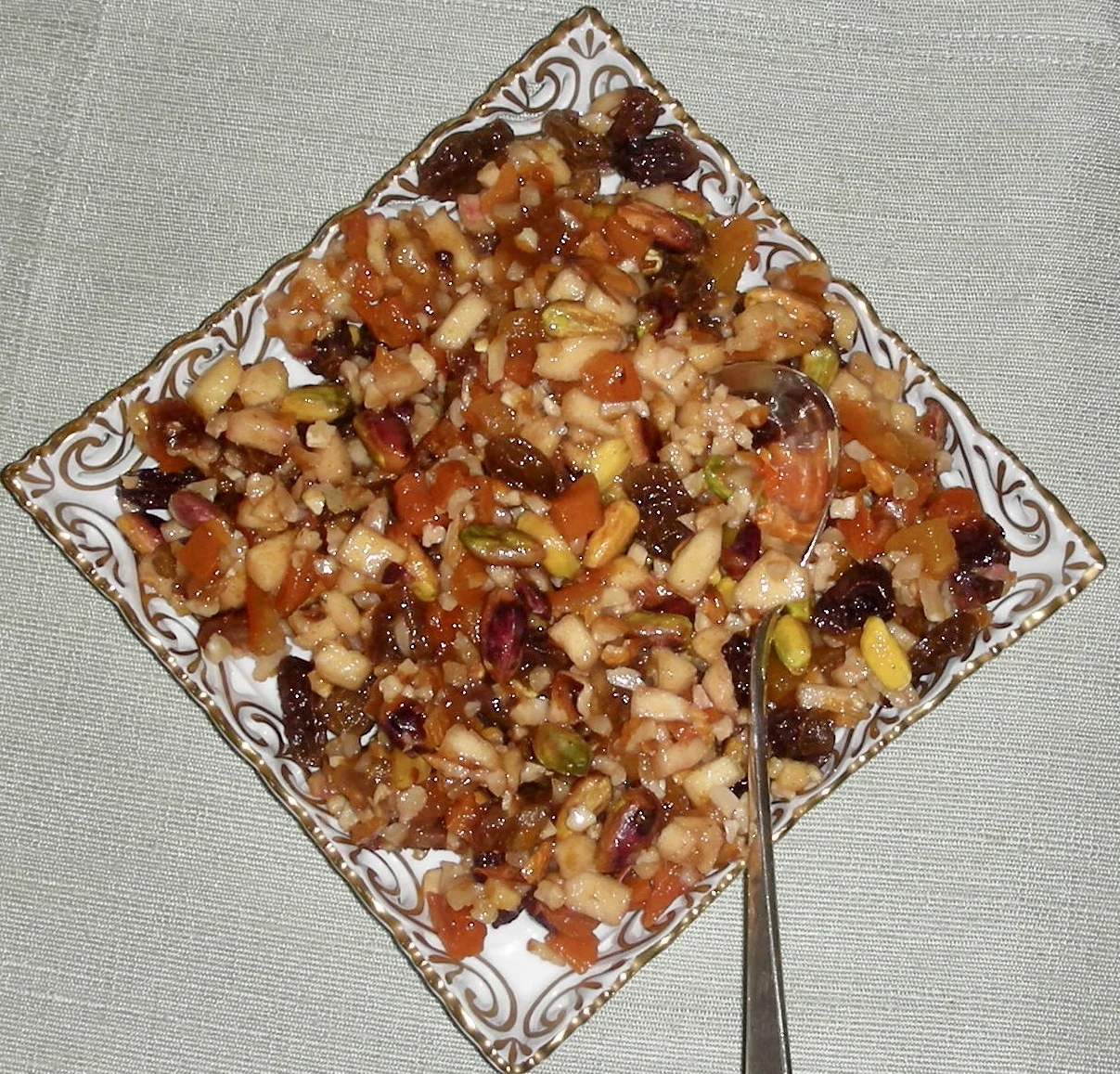
Haroset with Pistachios and Pepper

fullsizeoutput_a305.jpeg

Charoset (Haroset) is more than a blob of stuff that sits on the Passover Seder plate. Sure, we talk about it during the Haggadah reading. It’s there to symbolize the mortar used between the bricks that Jewish slaves used to build the pyramids for the ancient Egyptian pharaoh.

But it’s also food. In our family, another fabulous side dish, more like a relish, that we eat plenty of during the meal.

None of us ever really loved the old fashioned apple-wine mixture that most of us Ashkenazi Jews of Eastern European descent grew up with. It always tasted a bit sour and it got brown and ugly and besides, my daughter Gillian can’t eat walnuts and somehow almonds didn’t taste right in the mixture.

So, years ago I experimented with lots of recipes and found one I liked. It was a “Persian” recipe that I changed over and over until I got it the way I liked. At first my kids refused to eat it saying they would rather eat real mortar than this new charoset. But over the years they gradually came to love it and now insist they always did or at least can’t remember when they didn’t.

I double the recipe I am going to post here because it’s so good we eat a lot of it and besides, this relish lasts a while in the fridge so you can keep on having it all during Passover.

Haroset with Pistachios and Pepper

  • 1 cup chopped dried apricots

  • 1 cup chopped dates

  • 1/2 cup raisins

  • 1 cup shelled pistachio nuts

  • 1 cup chopped almonds

  • 2 tart apples, peeled, cored and chopped

  • 2/3 cup sweet red Passover wine

  • 1/4 cup apple cider vinegar

  • 2 teaspoons grated fresh orange peel

  • 2 teaspoons finely chopped fresh ginger

  • 3/4 teaspoon ground cinnamon

  • 1/2 teaspoon cayenne pepper

  • 1/2 cup orange marmalade

    Combine the apricots, dates, raisins, pistachio nuts and almonds in a bowl and toss ingredients to distribute them evenly. (You can prepare this much a week ahead). Add the apples, wine, vinegar, orange peel, ginger, cinnamon, cayenne and marmalade and mix ingredients. Let rest at least 4 hours before serving. May be made 3 days ahead.

Makes about 6 cups.

Imam Bayildi with Onions

Passover will feel a little strange for me this year. I’m used to having lots of grownups and a bunch of kid cousins, a crowded dining room with tables that spill into the entryway, a ton of food, crayon-friendly placemats for the little ones, plus puppets and other props we use to keep the children occupied and interested during the Haggadah reading.

But families get bigger as the years go by and people move and somehow — it seems this happens to so many people — the time comes when families separate and have their own Seders. That’s what’s happening to me this year.

It’s been my gig for more than 25 years. In the early days when my generation were the young ones with children, there were a couple of times when my sister-in-law Barbara had a Seder. And two or three times we went to my brother Jeff’s house for Passover. And once we even had a Seder at a restaurant with extended family. I hated that.

My Mom had the Seders before I took over. Now I understand how she felt when my aunt Min called one year before Passover and told her that their family had become so big (4 children had married and had kids) they couldn’t burden my Mom anymore and would have their own.

But we’ll still celebrate. Still read the Haggadah. Still have the Seder plate and sing the songs and hide the afikomen and pour the cup of wine for Elijah. Passover is a joyous holiday. A time to be happy that so many of us are still together, celebrating together, appreciating our lives and being grateful for what we have. Isn’t that what the Haggadah really tells us? To read about the journey to freedom and be thankful for it?

A Thanksgiving of sorts. 

In fact, when my son-in-law Jesse asks what I’m serving and I tell him “turkey” he answers, “oh, Thanksgiving.”

Sort of. My Passover menu always centers around turkey. My mother made turkey. My grandmother made turkey. There’s also cranberry sauce. But that’s where the Thanksgiving comparison ends. Obviously there won’t be pie or bread stuffing!

Of course there will still be a ton of other food. Like most families, we will repeat our favorite menu, although I can’t help but add a few things here and there and experiment with a few dishes so we always wind up with days worth of leftovers.

One of the constant dishes in my menu is Imam Bayildi, which is braised eggplant with tomatoes. It’s a good side dish and you can make it a day or so ahead. Also, it’s the kind of dish you can eat hot, warm or at room temperature. If there’s a vegetarian in your life, this dish is also a winner.

So, smaller Seder or whatever, we are going to celebrate and wish everyone a Happy Passover.

Here’s the recipe:

Imam Bayildi

  • 1 medium eggplant
  • salt
  • 1/2 cup olive oil
  • 2 medium onions, chopped
  • 2 large cloves garlic, chopped
  • 3 large tomatoes, deseeded and chopped
  • 3 tablespoons chopped fresh parsley
  • 1 teaspoon sugar
  • 1 teaspoon salt or to taste
  • 3 tablespoons fresh lemon juice
  • 1/3 cup water

Cut the eggplant into slices about 3/8-inch thick. Sprinkle with salt and let rest for 30 minutes. Wipe the eggplant slices dry with paper towels. Preheat the oven to 350 degrees. Heat one tablespoon olive oil in a saute pan over medium heat. Cook the eggplant slices a few at a time for 2-3 minutes per side or until slightly wilted. Add more olive oil to the pan as needed to prevent scorching (use 4-5 tablespoons more if needed). Place the cooked eggplant into a baking dish (cut it into smaller pieces if you wish). Add 2 tablespoons olive oil to the pan. Add the onions and cook for 3 minutes. Add the garlic and cook for another minute. Add the tomatoes, parsley, sugar, salt and lemon juice. Cook for one minute, stirring frequently. Spoon the vegetables on top of the eggplant. Drizzle with any remaining olive oil and the water. Cover the pan and bake for 45 minutes. Serve hot, warm or at room temperature.

Makes 6-8 servings

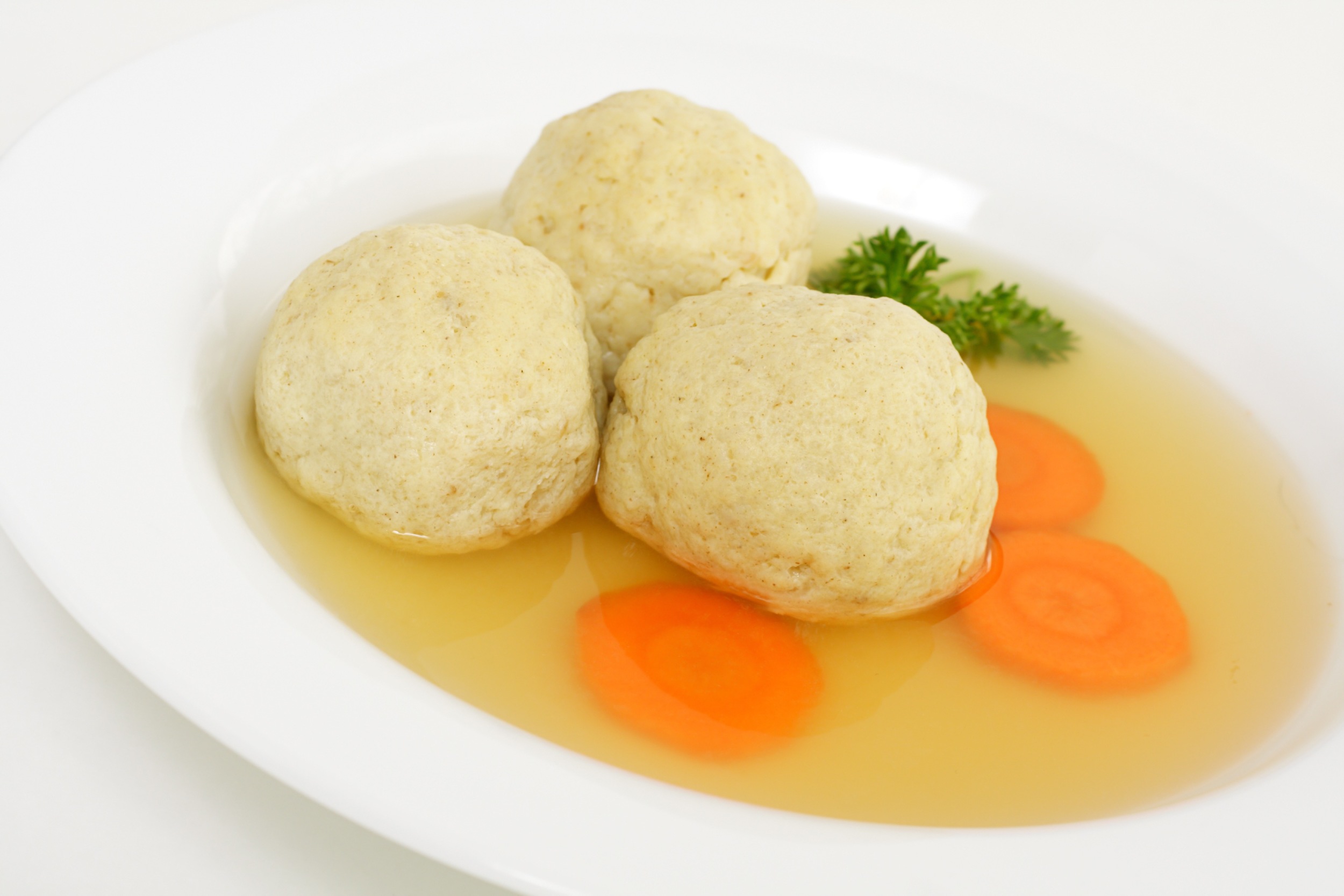
The Differences Among Matzo Balls

OMG it’s April already! April 1st! No fooling!

Passover is only 18 days away.

It’s not as if I haven’t been thinking about it. I have written three separate articles about it already (you can see one in Jewish Woman Magazine about Passover desserts here: http://www.jwi.org/Page.aspx?pid=2751) and the one at kosher.com about Haroset here: http://blog.kosher.com/2011/03/25/old-world-charosis-gets-a-hip-makeover/. The third article (on quinoa) hasn’t appeared yet and I’ll post it when it comes out next week.

But I haven’t really thought about my own Seder yet.

Except for the turkey. There’s always a turkey.

And there’s always a bunch of other stuff like spinach pie and braised eggplant. Cranberry sauce. A lot of veggies. And even though I like to make new recipes and serve less traditional foods, it wouldn’t be Passover without Matzo Ball Soup.

In our family we have had the same important discussions about these as everyone else: which is better, light fluffy matzo balls or chewy firms ones? Like politics, opinions on this subject tend to be definite and once decided, difficult to change. 

When I was a kid and my grandma and then mother had the Seders, my cousin Essie would bring her famous matzo balls. They were cannonballs, like in a children’s picture book — you could picture one falling out of the plate and bouncing out the window and into the city streets and out into the countryside.

But her husband and kids loved them. Fortunately, my mother also made a batch of spongier ones too.

The difference among matzo balls has to do with how many eggs you use, what kind of fat you mix in, how much you handle the dough, how long you cook them, whether you include spices or chopped fresh herbs and so on and so on. I use goose fat, which I put in in the freezer in December (from the goose I make for Hanukkah) because it gives the matzo balls a smooth, rich texture. And I include chopped fresh parsley or dill because it adds some flavor but also enhances the look. And mostly I use chicken soup in the mix, though occasionally I will use seltzer instead.

Here’s the recipe we use. These make medium, slightly-firm, soup soaked delicious matzo balls.

Matzo Balls

1 cup matzo meal

1 teaspoon salt

freshly ground black or white pepper to taste

1 tablespoon finely chopped fresh parsley or dill, or both, optional

4 whole large or extra large eggs, slightly beaten

1/4 cup melted goose fat, chicken fat, margarine or vegetable oil

1/4 cup chicken soup, water or seltzer

In a bowl. combine the matzo meal, salt, pepper and parsley or dill (or both). In another bowl, beat the eggs, melted fat and soup together. Add the egg mixture to the matzo mixture and blend thoroughly. Stir in the liquid. Cover the ingredients and refrigerate for about 30 minutes.. Bring a large pot of lightly salted water to a boil. With wet cold hands shape the matzo mixture into balls 1/2-inch to 1-inch balls (you may have to re-wet hands occasionally). Add the matzo balls one by one to the boiling water. Lower the heat so that the water is at a simmer. Cover the pan and cook for at least 50 minutes (do not lift the cover) or until they are tender. Remove the matzo balls from the water. Place into the soup to soak up more flavor. Makes up to 20

Scallion Cakes

DSC00328.jpg

If the Giants or Jets aren’t playing I’m not much interested in the Superbowl. It might have been okay if the New England Patriots were in it, since I live in New England, sort of (a lot of Yankees consider us lower Fairfield county folks New England-imposters). And maybe even if the Bears were in it because I went to college at Northwestern, in Evanston, Illinois and spent 4 years cheering on Da Bears, Cubs, White Sox, etc.

Frankly, Green Bay and Pittsburgh? Not interested so much. 

But we always go to my brother and sister-in-law’s house on Superbowl Sunday. It’s been a tradition for years and years now, whether or not we watch the game or just switch TV channels occasionally to see who’s winning. They have an enormous TV that makes you feel as if you are in the stadium. Jeff makes the best fireplace fire and also the best popcorn (he uses an entire stick of butter). Eileen will surely make a turkey breast and fixins. So I guess my contribution will be hors d’oeuvre.

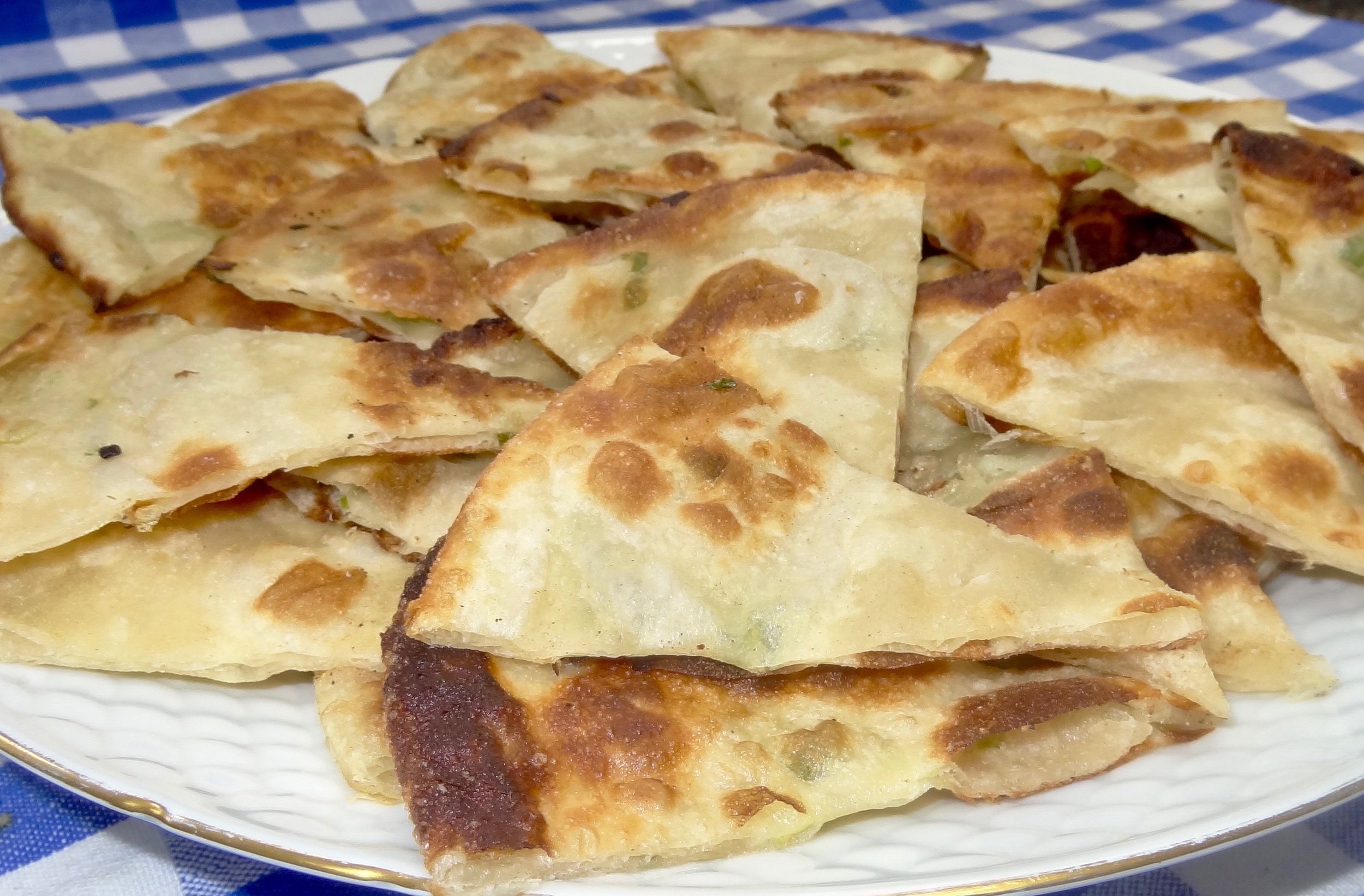
Instead of the usual guacamole or salsa, I’ll bring Scallion Cakes. They’re crispy wedges of fried dough filled with little bits of chopped scallions sprinkled judiciously with crunchy particles of kosher salt. Believe me, these things are like potato chips. You can never eat just one. I better make a double recipe to have in my freezer for when my kids come to visit. You don’t even have to defrost them — reheat them in a single layer in a preheated 425 degree oven for a few minutes on each side until they’re hot.

Scallion Cakes

  • 3 cups all-purpose flour
  • 1 cup boiling water
  • 1/3 cup cold water
  • vegetable oil
  • 4-1/2 teaspoons kosher salt
  • 3 scallions, finely chopped

Place the flour in the bowl of an electric mixer. Add the boiling water and mix at medium speed until a rough dough has formed. Let cool for 2-3 minutes. Pour in the cold water and mix until the dough forms into a ball. Knead for 4-5 minutes or until smooth and elastic (you can do all this in a food processor). Divide the dough into 6 pieces. Using a rolling pin on a lightly floured surface, roll one piece of dough into a 10-inch circle. Brush the dough with about 1-1/2 teaspoons vegetable oil. Sprinkle with about 3/4 teaspoon kosher salt. Sprinkle with about one tablespoon of the chopped scallion. Roll the circle jelly roll style. Form the rolled dough into a coil. Press down on the coil to flatten it slightly. Roll the coil into circles about 1/8-inch thick (don’t worry if some of the dough breaks and the scallions pop through slightly). Repeat with the remaining dough, salt and scallions. Keep the circles separated. Heat a small amount of vegetable oil in a skillet large enough to hold the circles. Cover the pan and cook each circle, one at a time, over medium-high heat for about 2 minutes per side, or until browned and crispy. Add more vegetable oil to the pan as necessary for each circle of dough. Drain the fried circles on paper towels. Cut each circle into 8 wedges. Serve hot. Makes 48 pieces