buffet food

Azerbaijani Plov

9CEF1DB5-7306-435A-949E-477B7CB80F43_1_201_a.jpeg

A while ago my husband and I took the plunge and took the 23-and-me DNA tests.

One of the best things that happened is that I met a couple of wonderful new cousins I didn’t know I had! And I also was able to catch up on news with family we had lost contact with years and years ago.

I wasn’t surprised by anything in my ethnic background. I am an Ashkenazi Jew and that’s what it said.

Mostly.

There were a couple of odd little things. The one that intrigued me most was the tiny, tiny, tiny bit of “Azeri” — roughly meaning from Azerbaijan.

Wow. Where did that come from?

It doesn’t matter. I will never be able to trace anything to anyone. My “people” come from Romania and Ukraine.

I only actually wondered about one thing: what do they eat in Azerbaijan?

Alas, no relatives to tell me. So, I did some research and some cooking.

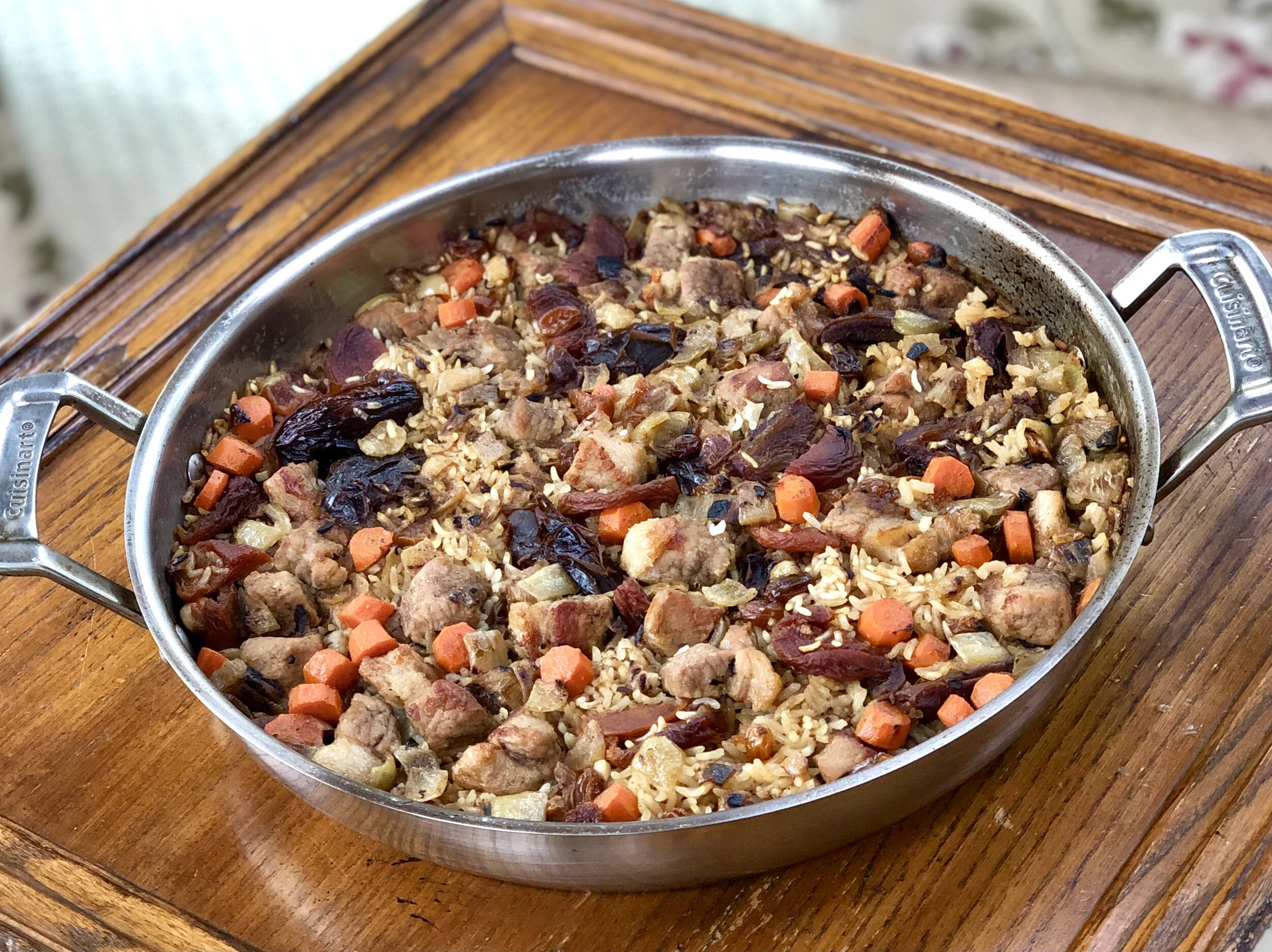
One of the best Azerbaijani dishes is something called Plov. It’s basically “pilaf” — the west Asian version. And, like pilaf (Caribbean Pelau, Carolina Bog, Kenyan Pilau, Turkish Pilav) it means: rice with stuff in it. Azerbaijani versions are generally sweeter than others. They usually include dates and dried apricots — so the dish is perfect for Tu B’shevat (the Jewish holiday with some really delicious food). They mostly contain meat, but can be vegetarian.

I experimented of course. The best version is the one below, which I made using veal, because that’s what I had, but I know it would be even better with lamb. Vegetarians — use vegetable stock and leave out the meat (you can add peas nearer the end of the cooking time if you wish).

I have no idea if this tastes like an authentic Azerbaijani dish. But it’s really good and, alas, I didn’t have an ancient family recipe to guide me.

Azerbaijani Plov

  • 3 tablespoons olive oil
    1 pound lamb, veal or boneless chicken, cut into bite size pieces
    1 onion, chopped 
    1 clove garlic, chopped
    3 medium carrots, sliced 1/2-inch thick
    1/2 cup halved dates, preferably medjool 
    1/2 cup cut up dried apricots
    1/3 cup golden raisins 
    Salt 
    1 teaspoon ground cumin
    1/2 teaspoon ground coriander
    1/2 teaspoon saffron threads, optional
    Pinch or two of Aleppo pepper, cayenne or crushed red pepper
    1 cup white rice
    2 cups chicken, beef or vegetable stock 

Preheat the oven to 350 degrees. Heat 2 tablespoons of the olive oil in a large heat-proof, oven-proof pan over medium heat. Add the meat and cook, turning the pieces, for 4-5 minutes or until lightly browned. Remove the meat and set aside. Pour the remaining olive oil into the pan. Add the onion and cook for 2-3 minutes. Add the garlic and carrots and cook for 1-2 minutes. Add the dates, apricots and raisins. Sprinkle with salt, cumin,  coriander, saffron and Aleppo pepper, stir and cook for 1-2 minutes. Add the rice and meat. Stir to distribute the ingredients evenly. Pour in the stock, bring to a boil. Remove from the heat, cover the pan and place in the oven. Bake for about 45 minutes. Let rest, covered, for 10 minutes.

Makes 4 servings
Greens with Figs and Roasted Hazelnuts

fullsizeoutput_b2cd.jpeg

I find it incredibly sad that Ed and I will not be able to host our annual Break-the-Fast. Our group has been gathering together for what seems like forever, and unlike all the other holidays which we celebrate with family, our Yom Kippur break-the-fast included friends from our synagogue and community, people who got together, just for this occasion.

I can’t even remember when we started.

Decades ago.

Not everyone who came had fasted, but we had all done something — skipped breakfast or not had carbs or not had coffee — that reminded us to be mindful about the joy and meaning behind celebrating the new year as well as looking back on what had happened the year before, who we needed to be better to, what we needed to be better at. The Break-the-fast marked a real beginning.

But now we can’t begin because the end of what has brought us to this place doesn’t seem anywhere in sight.

Virtual break-the-fast just doesn’t cut it for me.

I will miss the food too. Our meal is always vegetarian/dairy. No fish because my daughter is allergic. Our must-haves have always been mujadarah, eggplant-mashed potato gratin, my friend Susan’s kugel, a giant challah. And much more, with some changes over the years.

Dessert of course.

But this year it’s just the two of us, so dinner will be salad and roasted salmon.

But ——— even with all the trials and tribulations of the past year as well as the health concerns and social unrest that continue into 5781, I try to be grateful. For my family, friends, my life.

As for food? It will be different this one year. Fortunately, fresh figs are now available! (But only for a short time — one of those get-them-while-you-can items.) Ed and I both love them and I’ve already made several recipes using both green and black figs.

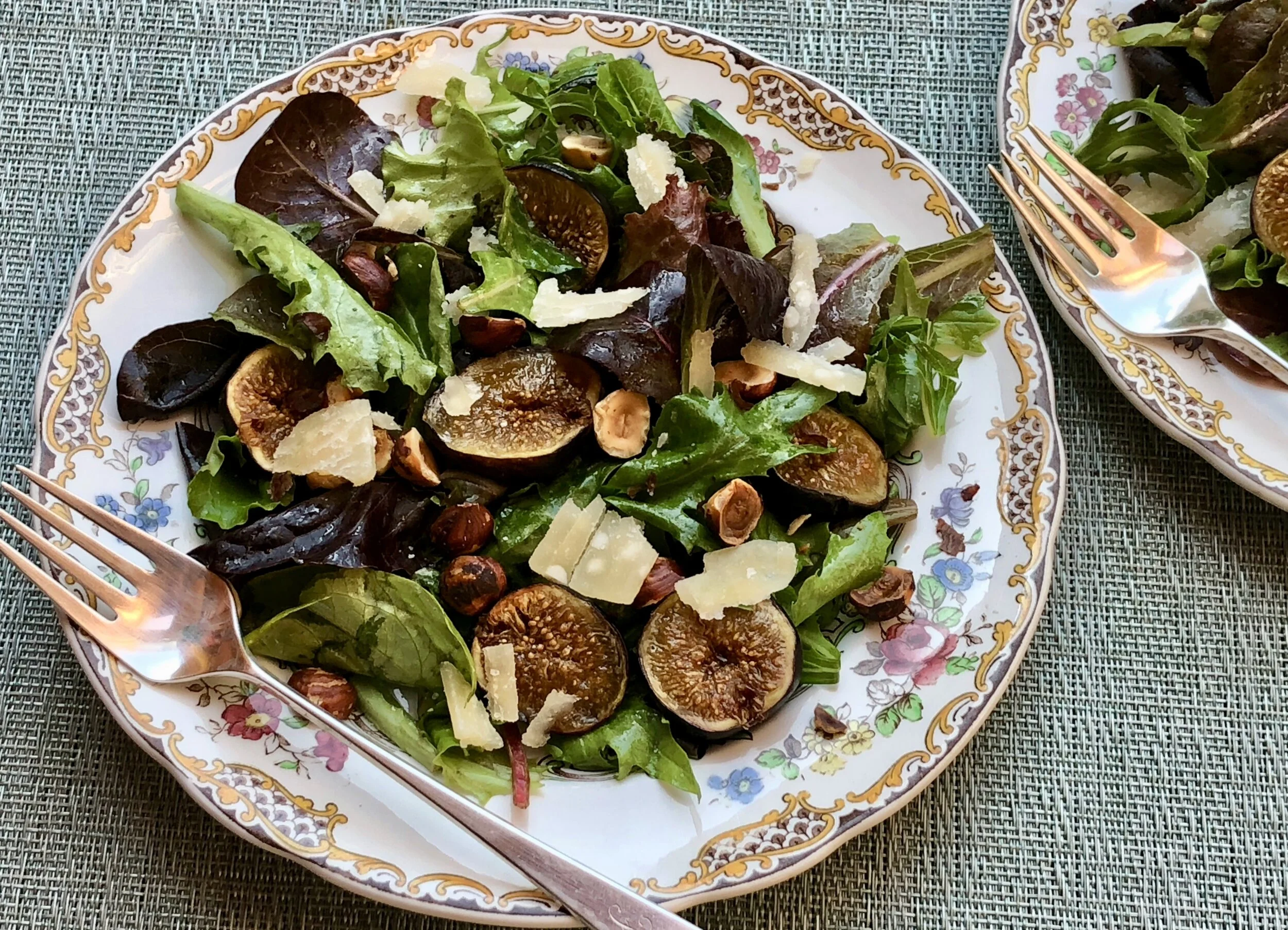
But this salad is the fig dish I’ll be serving post Yom Kippur. It’s easy, festive enough for a holiday meal and easy on the stomach after not eating for a while.

Greens with Figs and Roasted Hazelnuts

  • 6 fresh figs

  • 2 tablespoons olive oil plus extra for coating the figs

  • 3 tablespoons coarsely chopped hazelnuts

  • 3 packed cups mixed soft greens such as spinach, frisee, Bibb lettuce, washed and dried

  • 2-3 teaspoons white wine vinegar

  • salt and freshly ground black pepper

  • Parmesan cheese

Preheat an outdoor grill or oven broiler. Brush the figs with a thin film of olive oil and cut them in half. Place them, flesh side down, on a parchment lined baking sheet. Broil for about 5 minutes or until lightly browned. Remove the figs and set them aside. OR: grill them on an outdoor grill. Place the hazelnuts on the baking sheet and broil them for a minute or two to toast them lightly (or bake in a preheated 400 degree oven for 5-6 minutes). Remove the nuts and set aside. Place the greens in a bowl. Pour in the 2 tablespoons olive oil and toss to coat the leaves. Add 2 teaspoons wine vinegar and toss, taste and add the additional vinegar if desired. Add the figs and nuts, toss, taste and add salt and pepper to taste. Grate or shave Parmesan cheese over the greens and serve.

Makes 2 servings


Beet Salad with Pepitas

fullsizeoutput_b38f.jpeg

Lucky me!

My entire Rosh Hashanah celebration has changed for the better. I thought it would just be Ed and me, attending Zoom services and sharing a meal for two.

But my kids and grandkids are coming too! We will watch outdoors on the patio. And be together —- sort of — for a meal! Each family will have a separate place to eat.

I can’t tell you how thrilled I am, even though it won’t be normal and we can’t hug and kiss. But it’s something. And I am grateful.

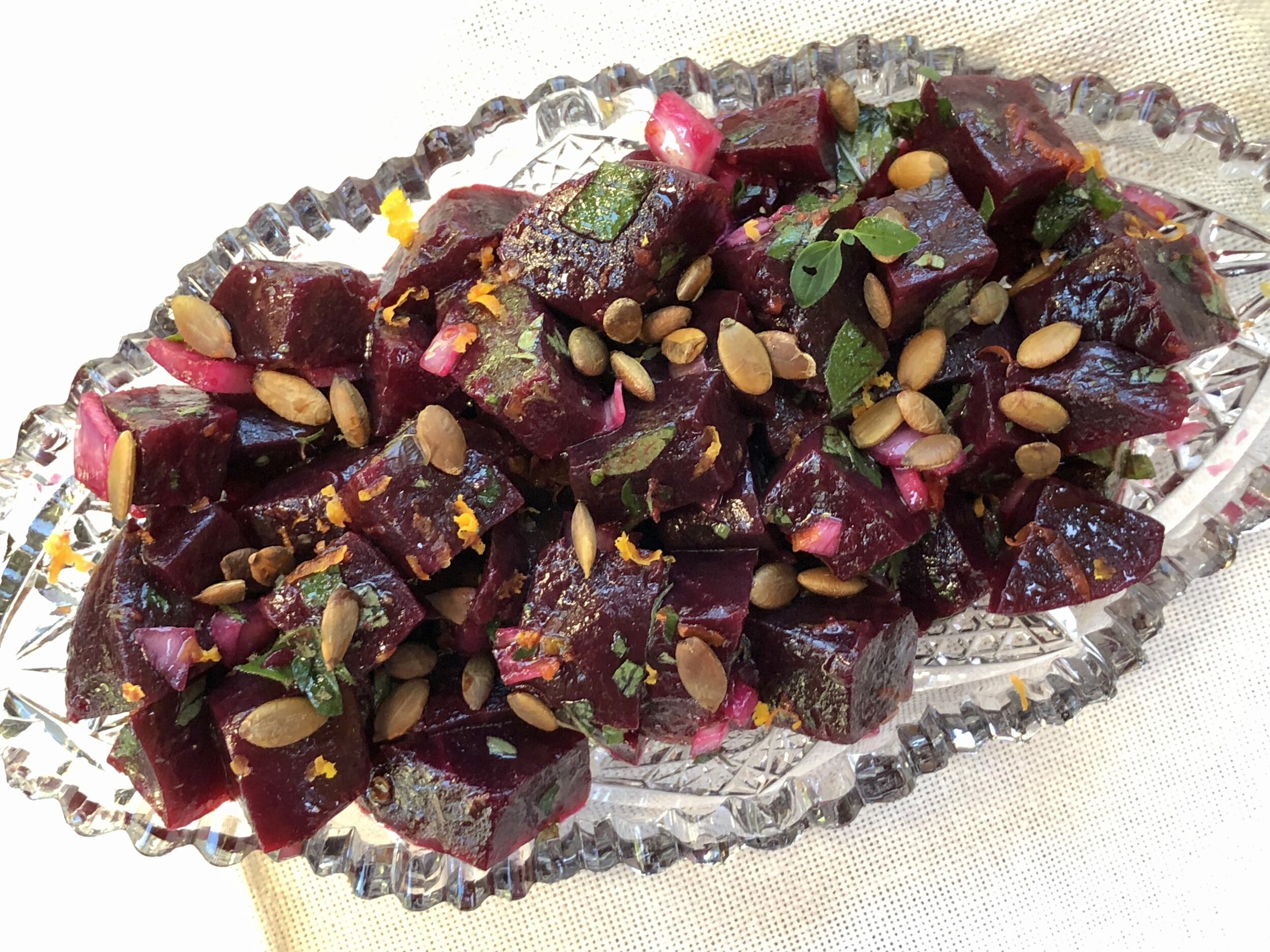
Instead of the chicken dish I was planning to make, it’s going to be food for a family, not just the two of us: brisket (I was finally able to get one) and a turkey breast plus several sides, including this beet salad, which I can make in advance and scatter with seeds at the last minute.

This is better than the original plan. For sure.

Beet Salad with Pepitas

  • 3 large beets, trimmed

  • 3 scallions, chopped (or one large shallot or 1/3-1/2 cup chopped red onion)

  • 2 tablespoons olive oil

  • 3 tablespoons orange juice

  • 2 tablespoons chopped fresh mint

  • 1 teaspoon grated fresh orange peel

  • salt to taste

  • 2 tablespoons toasted pepitas

Preheat the oven to 425 degrees. Scrub the beets and wrap them tightly in aluminum foil. Roast until tender, about 45-75 minutes, depending on size. Unwrap the beets and when they are cool enough to handle, peel them. Cut the beets into bite size pieces. Place the beet chunks in a bowl. Add the scallions, olive oil, orange juice, mint and orange peel. Toss ingredients. Sprinkle with salt. Let rest for at least 15 minutes before serving. Sprinkle with pepitas. Serve at room temperature. 

Makes 4-6 servings


Garden Fresh Salsa (Pico de Gallo)

024F4DF5-3AEE-483E-A2A4-19130A623DEA_1_201_a.jpeg

Last year my garden was like a jungle, loaded with tomatoes, zucchinis, eggplants, peppers and other stuff.

This year —-meh. Tomatoes not so plentiful (but delicious), I got two measly zucchinis, didn’t grow eggplants. The collard leaves were eaten up by roving outsiders. We managed one good bunch of kale.

The chili peppers though! They gave their all. We have plenty of them, all perfect.

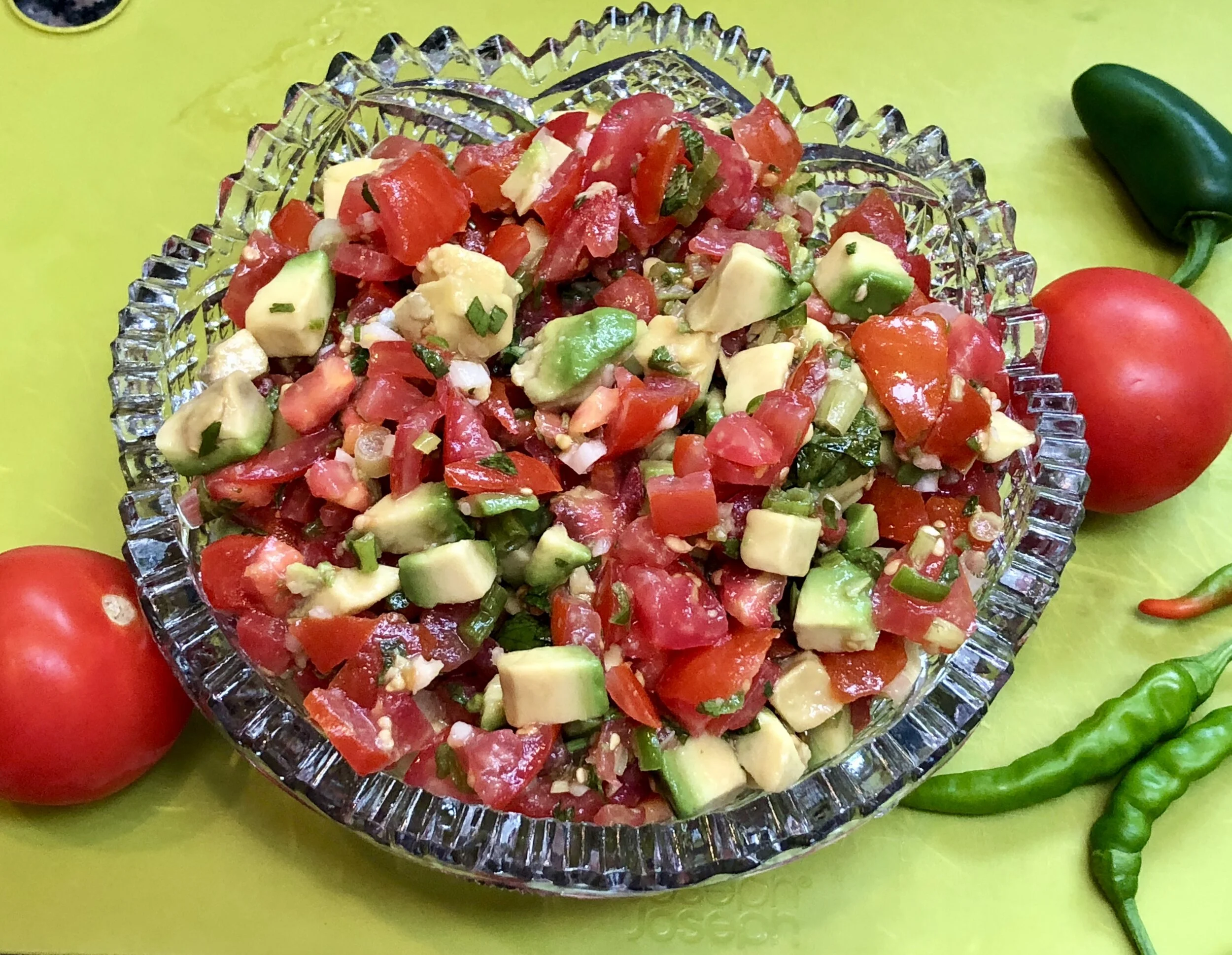
So I decided to make homemade salsa.

I used peppers, tomatoes and scallions, all from my garden. I didn’t have cilantro, so I used the small green leaves from what I thought was a parsley plant but it turned out to be celery.

The avocado — store bought, and I know it isn’t a usual addition to Pico de Gallo, but I added some anyway and it gave a lovely, mellowing flavor and creamy texture.

Garden Fresh Salsa

  • 4 medium tomatoes, chopped

  • 2-3 scallions, chopped

  • 2 small chili peppers, deseeded and chopped

  • 1 small (or 1/2 large) avocado, chopped*

  • 2 tablespoons chopped cilantro, parsley or celery leaves

  • 1 large clove garlic, finely chopped

  • 2 teaspoons olive oil

  • 2 tablespoons lime juice

  • salt to taste

Place the tomatoes, scallions, chili peppers, avocado, cilantro and garlic in a bowl. Pour the olive oil over the vegetables and toss the ingredients to distribute them evenly. Add the lime join, toss again and let rest for at least one hour. Taste for seasoning and add salt as needed.

*You can make this a day ahead. If so, add the avocado an hour before serving rather than at the same time as the other ingredients.

Roasted Corn Salad

fullsizeoutput_b664.jpeg

I can’t wait for 2020 to end. It’s been a stressful, depressing year.

In addition to the pandemic and the hate-filled political climate, we had a storm last week that knocked out our power and land-line telephone for days, and there was sketchy internet service too.

And we lost a huge limb from our favorite hundreds-of-years-old maple tree.

Then there was a water main break so we had no water for a whole day.

YECH!!

Still, I am grateful for a number of things.

For instance: crops. Vegetables that grow despite the political circus, despite the hatreds, despite the racial tensions, despite the bad weather, despite the virus, despite the social distancing and the quarantines.

They don’t make up for the lost lives, the lack of hugs, the inability to travel or be with loved ones. But, thank goodness for these, the positives that nature brings us.

Summer’s best crops: tomatoes, peaches and nectarines.

And corn.

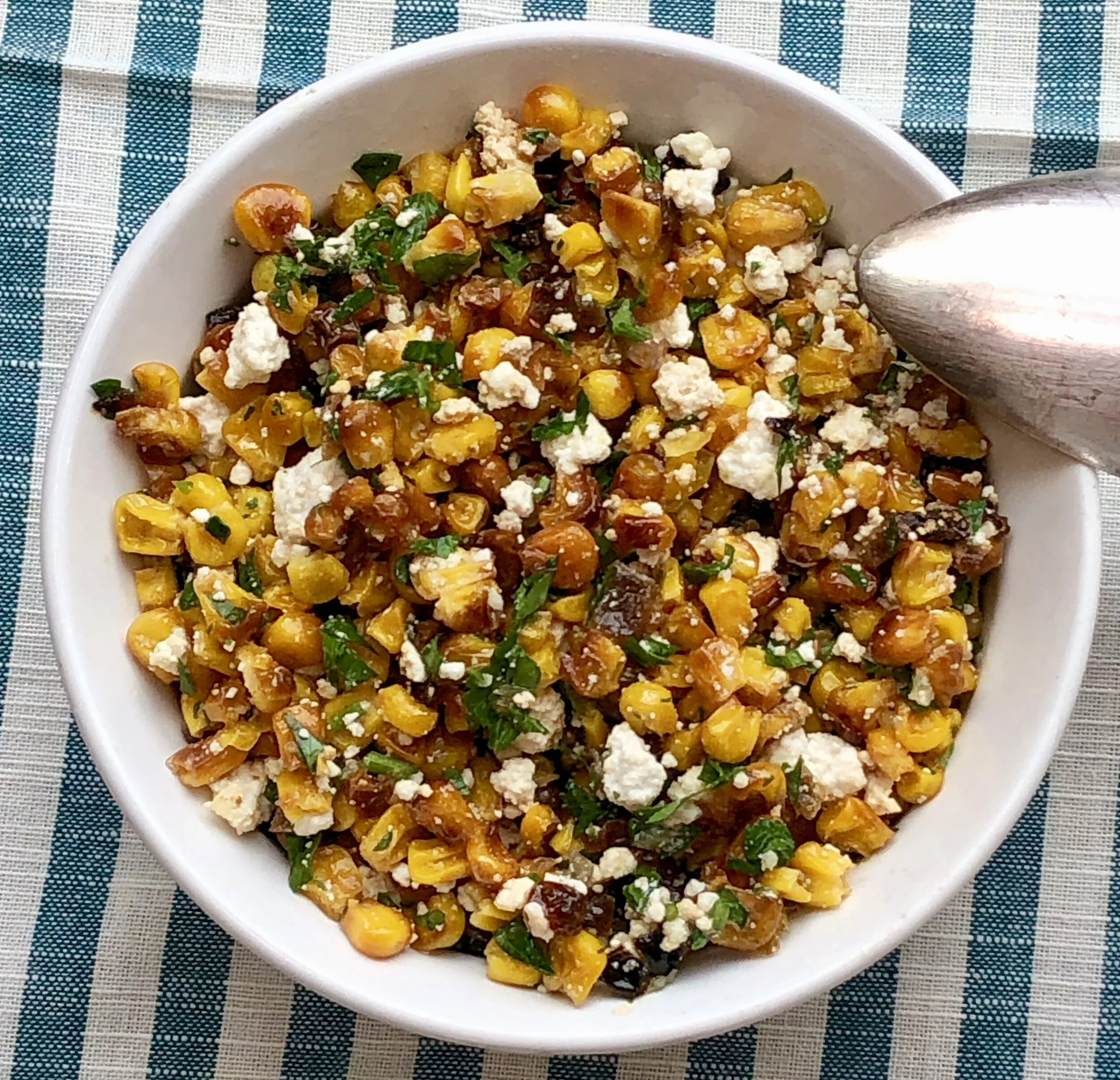
Get a couple of good ears of corn and grill them or use your oven and follow the recipe below for a refreshing summer salad. It made me feel better to make this one.

Charred Corn Salad

  • 2 cups corn (about 3 ears of corn)

  • 1/2 cup chopped red onion ( 2 3/4-inch thick slices)

  • 3 tablespoons olive oil

  • 1/2 cup crumbled queso fresco (or use goat cheese or any crumbly white cheese)

  • 2 tablespoons chopped parsley

  • 2 tablespoons lime juice

  • Salt and freshly ground black pepper (or crushed red pepper or Aleppo pepper)

Preheat the oven to 450 degrees. Place the corn and onion on a parchment lined baking sheet. Pour 2 tablespoons of the olive oil over the vegetables, toss and roast for 12-20 minutes or until crisped and browned. Alternatively, rub the ears of corn and the onion with the olive oil and grill for about 10-12 minutes, turning the vegetables occasionally, or until crispy and tender, then remove the kernels and chop the onion. Place the vegetables in a bowl. Let cool. Add the cheese and parsley. Pour in the remaining tablespoon olive oil and the lime juice. Season to taste with salt and pepper.

Makes 4 servings

Three Cabbage Cole Slaw

fullsizeoutput_bf70.jpg

These days we entertain outside.

By entertain I mean (other than my kids and grandkids) one couple at a time, six feet (at least) away from us on our back terrace.

Fortunately the weather has been good and the outdoor insects have cooperated by being elsewhere.

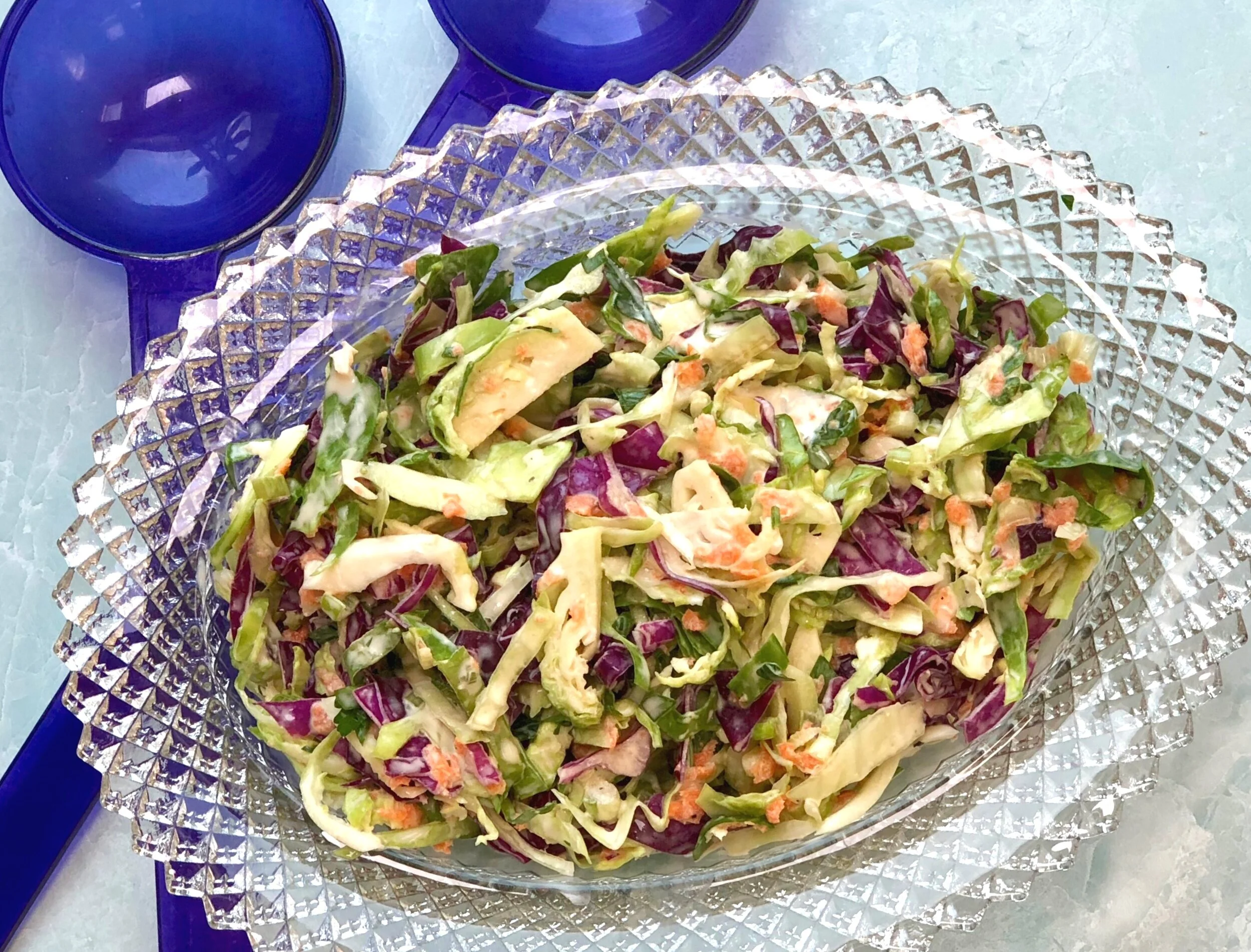
We recently had our cousins over for a feast: smoked salmon and really fabulous Long Island bagels (they brought). They also donated homemade potato salad. I made beet salad and this coleslaw. I call it three-cabbage because it has green and red cabbage plus shredded Brussels sprouts which, after all, are baby cabbages.

I like coleslaw made with buttermilk — it has a tang that other dressings don’t quite measure up to — but if you don’t have any, you can substitute plain yogurt plus lemon juice.

This might be nice for Father’s Day or July 4th or even Labor Day.

THREE CABBAGE COLE SLAW

  • 3 cups shredded green cabbage

  • 3 cups shredded red cabbage

  • 2 cups shredded Brussels sprouts

  • 2 medium carrots, grated

  • 3 scallions, finely chopped

  • 1 cup buttermilk (or plain yogurt plus 2-3 teaspoons lemon juice)

  • 1/2 cup mayonnaise

  • 3 tablespoons apple cider vinegar

  • 2 tablespoons honey

  • 1 teaspoon dry mustard

  • 2 tablespoons chopped fresh parsley

  • salt and freshly ground black pepper to taste

Place the cabbage and Brussels sprouts shreds, carrots and scallions in a large bowl and toss to distribute the ingredients evenly. Whisk the buttermilk, mayonnaise, honey and mustard together and pour over the vegetables. Toss the ingredients, sprinkle with parsley, salt and pepper to taste. Let rest for at least 15 minutes before serving.

Makes 8-10 servings

Roasted Citrus Yogurt

Roasted Citrus Yogurt

Roasted Citrus Yogurt

I have been a yogurt woman for decades. Even before it became as popular and ubiquitous as it is today. I mentioned it last week in a post about muffins.

Back in the day, at least where lived, there was only one brand of yogurt to buy — Dannon — and just a few flavors. No mango that I recall, or key lime, and most certainly no salted caramel.

My favorite was prune, which disappeared even before yogurt became au courant because, I’m guessing, there were maybe two or three people in the entire world other than me, who loved it.

I wish there was a good prune yogurt today (there is one brand but it contains gelatin, which I don’t want in my yogurt). I confess to buying plain yogurt and occasionally adding a blob or two of prune lekvar. For those who haven’t tried that — it’s awesome.

In fact, I almost never buy flavored yogurt, other than Chobani Passion Fruit flavored, because, after prune that is my top choice. I almost always get a large tub of unflavored Greek-style, so I can create my own flavors. Like prune.

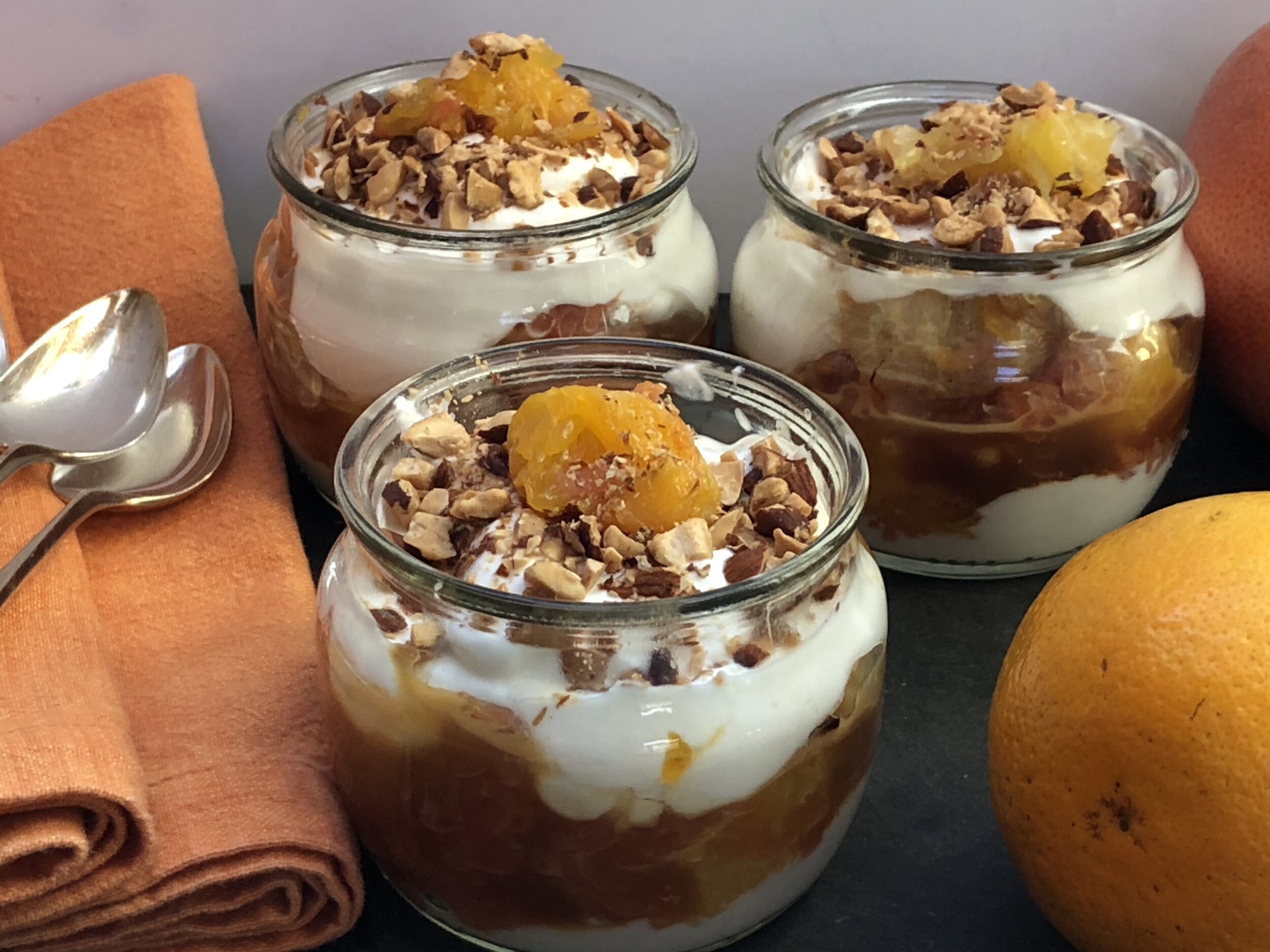
This being winter, when citrus fruit is the best that a supermarket can offer (I do not buy out of season summer fruit!) I decided to prepare a citrusy flavor blend for my yogurt breakfast: roasted grapefruit and oranges, a touch of honey and butter, a texture crunch by way of toasted almonds.

Delicious. I’ve made this with all-oranges too. Equally delicious (substitute 4-5 oranges for the grapefruit).

Roasted Citrus Yogurt

  • 2 large grapefruit

  • 4 oranges

  • 2 tablespoons butter

  • 3 tablespoons honey

  • 2-1/2 cups plain Greek style yogurt

  • 1/4 cup chopped toasted almonds

Preheat the oven broiler. Remove the skin and pith from the fruit. Cut the fruit into bite size chunks and place the chunks on a parchment lined baking sheet. Heat the butter and honey in a small pan over medium heat. When the butter has melted, stir the mixture to blend the ingredients and pour the mixture over the fruit and toss to coat each piece. Broil the fruit for about 6 minutes, tossing once, or until lightly crispy. Remove the fruit from the oven and set aside to cool. Spoon layers of the fruit and yogurt into 6 serving bowls. Sprinkle the nuts on top.

Makes 6 servings

Banana Muffins with Buttermilk or Yogurt

fullsizeoutput_941b.jpeg

Today is National Muffin Day and it reminds me of what happened long ago when I first started working full time as a low-level attorney at a high-power firm, right after law school. All the other associates came to work carrying coffee and cartons of breakfast, which they proceeded to eat at their desks. Eggs, and everything with it.

I was always a yogurt woman, even back in the day when Dannon was the only one you could buy and there were only about 5-6 flavors.

But then someone told me about the blueberry muffins from the deli downstairs and unfortunately I tasted one. That was the end of my days of never even thinking about whether I gained a pound or two. I added a blueberry muffin to my yogurt breakfast.

Every day.

I gained a quick “freshman ten” and that was no small thing because back then I was really slim.

Alas, I gave up the morning muffins our of sheer vanity. But not my love of them.

Over the years I’ve occasionally made some at home. Blueberry. Cranberry-Orange. Pumpkin Spice. Zucchini. But it’s usually when we have sleepover guests because the muffin indulgence and the memory of how quickly they added to my girth has tempered my desire to eat them as often as I would like to.

Buying muffins is a no-no for me because the store-bought ones have become so ENORMOUS since the days when I had those luscious things from the deli.

I prefer the old-days size. The kind that comes out of a normal household muffin tin.

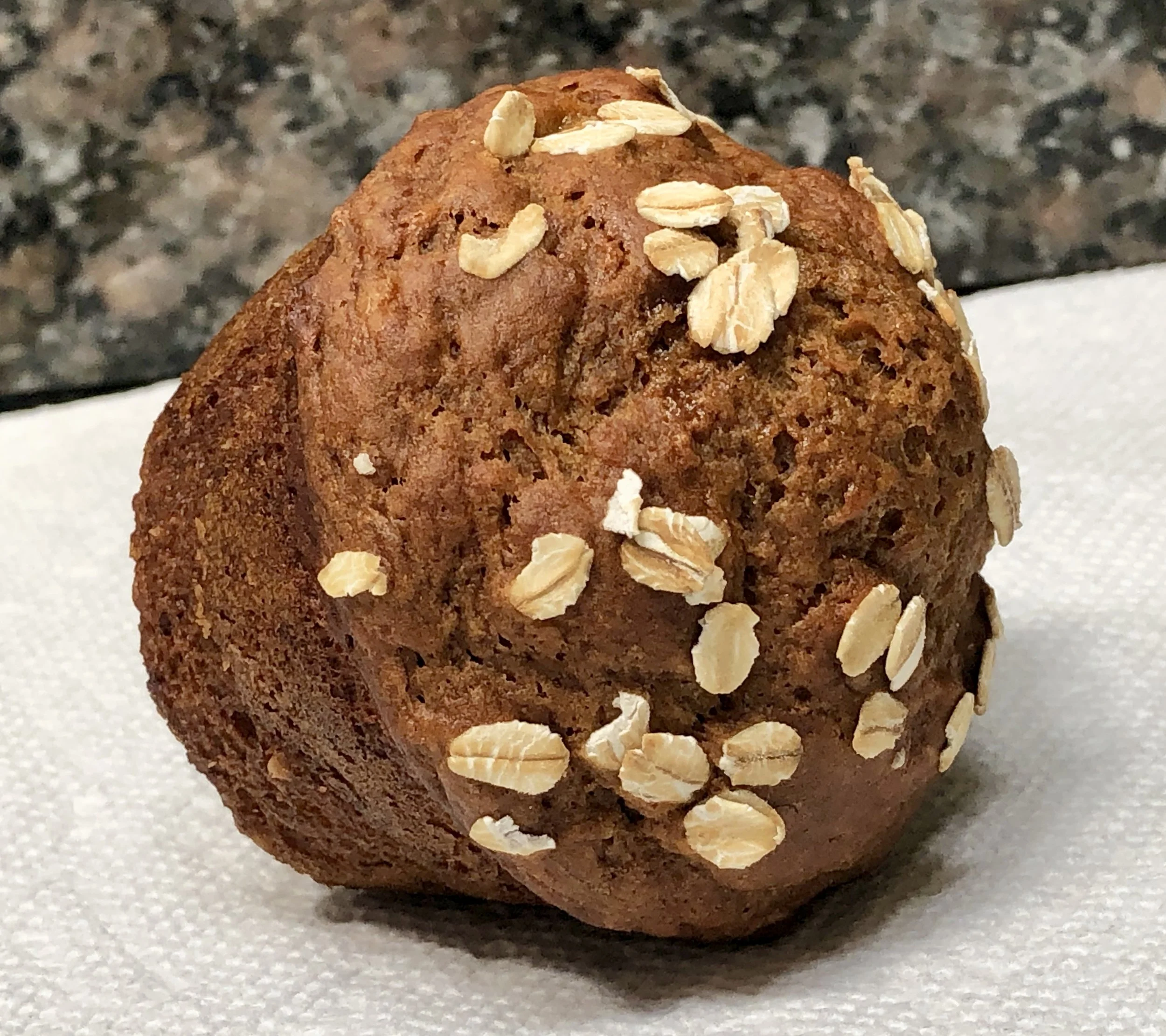
I made these Banana Muffins recently. They’re a lot less sweet the the typical muffin and have a vaguely robust hint of molasses. I’ve made these with stirred, plain yogurt for the times I didn’t have buttermilk on hand.

If you love muffins as much as I do, there are plenty of recipes on my blog. Type “muffins” in the box under “search my recipes” and you can find them.

Btw, if you give away food for Purim, these make a lovely gift.

Banana Muffins with Buttermilk or Yogurt

  • 1-3/4 cups flour

  • 1 teaspoon baking soda

  • 1/2 teaspoon baking powder

  • 3/4 teaspoon salt

  • 1 teaspoon cinnamon

  • 1/2 teaspoon freshly grated nutmeg

  • 2 tablespoons brown sugar

  • 3 very ripe bananas, mashed

  • 3/4 cup buttermilk or sour milk

  • 1/4 cup molasses

  • 3 tablespoons vegetable oil

  • 1 large egg

  • 1-1/2 teaspoons vanilla extract

  • 2-3 tablespoons old fashioned oats

Preheat the oven to 400 degrees. Lightly grease 9 muffin tins. Mix the flour, baking soda, baking powder, salt, cinnamon, nutmeg and brown sugar in a bowl. In a separate bowl, mix the bananas, buttermilk molasses, vegetable oil, egg and vanilla extract. Add the liquid ingredients to the dry ones and mix only long enough to combine thoroughly. Spoon the batter into the prepared muffin tins. Scatter the oats evenly on top of each muffin. Bake for 22-25 minutes or until a cake tester inserted into the center comes out clean.

Makes 9


Vegetarian Moussaka

fullsizeoutput_95b9.jpeg

Way back in 2009 I wrote an article about wedding feasts for Connecticut Bride Magazine, interviewed several caterers, and was astonished that among the menus they showed me there were so many choices for vegetarians and vegans. I read about creative, gorgeous hors d’oeuvres. Substantial, festive main courses. Glamorous desserts.

I’m not a vegetarian but that assignment was a sort of turnaround for me. I realized that there were lots of delicious foods I hadn’t tried and, that even if I had no intention of becoming a vegetarian or vegan, and even if I wasn’t particularly trying to cut down on meat protein, I was missing some really good food!

I don’t like to miss good food!

So, over the years I have prepared many vegetarian hors d’oeuvre and entrees, many of them spectacular.

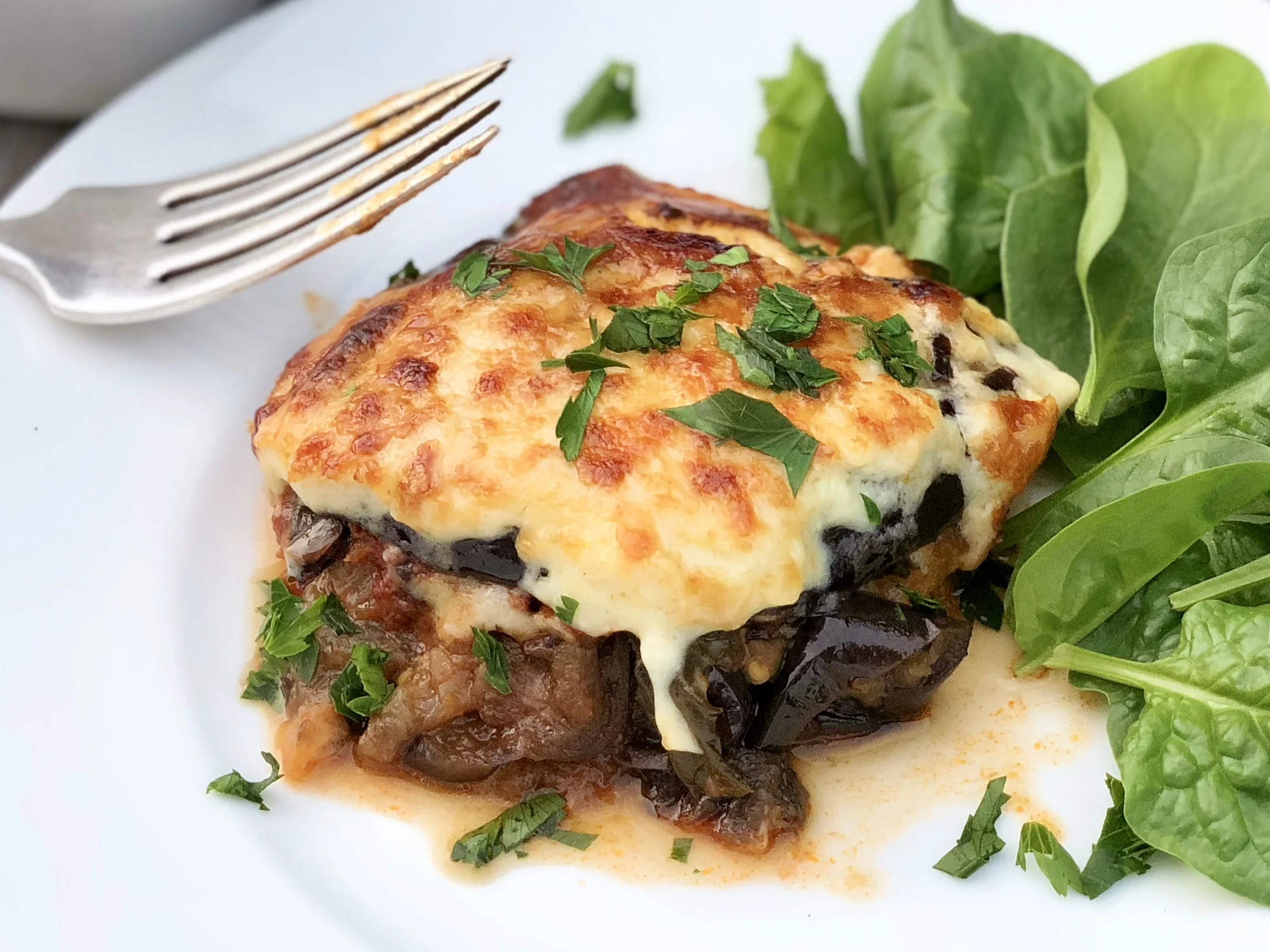
This Vegetarian Moussaka is one of them. Portobello mushrooms take the place of meat in this creamy, tangy, comforting dinner dish. A hearty, filling meal, perfect for meatless Monday or any other day. Celebratory enough for a special occasion, wedding or otherwise.

Vegetarian Moussaka

  • 2 medium eggplants, sliced into 1/2-inch thick rounds

  • salt

  • 2/3 cup olive oil, approximately

  • 1 large onion, chopped

  • 2 medium chopped carrots

  • 3 cloves garlic, finely chopped

  • 3 Portobello mushrooms, chopped

  • 1 bunch fresh spinach (or 2 packed cups baby spinach leaves)

  • 1 28-ounce can plum tomatoes, undrained

  • 3 tablespoons chopped fresh parsley

  • 1 teaspoon dried oregano

  • 1/2 teaspoon ground cumin

  • 1/4 teaspoon ground cinnamon

  • freshly ground black pepper to taste

  • 3 medium Yukon Gold potatoes, peeled

  • 6 tablespoons butter

  • 6 tablespoons all-purpose flour

  • 2-1/2 cups milk

  • 2 large egg yolks

  • 1 cup grated Parmesan or Romano cheese

Preheat the oven to 400 degrees. Place the eggplant slices on a surface and salt them lightly. Let sit for about 15 minutes, then wipe the surface dry with paper towels. Brush the slices with about 4-5 tablespoons of the olive oil and place them in a single layer on a baking sheet. Bake for 15 minutes, turn the slices and bake for another 12-15 minutes, or until the slices are tender. Let the slices cool. Reduce the oven heat to 350 degrees.

Heat 6 tablespoons olive oil in a sauté pan over medium heat. Add the onion and carrots and cook, stirring occasionally, for 4-5 minutes or until the onions have softened. Add the garlic and mushrooms and continue to cook for another 3-4 minutes. Add the spinach and cook for 1-2 minutes. Add the tomatoes, parsley, oregano, cumin and cinnamon. Season to taste with salt and pepper. Cook for about 15 minutes or until the sauce is very thick.

Cook the potatoes in a large pot of lightly salted water for about 15 minutes, or until tender. Let the potatoes cool, then peel and slice them into 1/4-inch rounds and set aside.

Make a béchamel white sauce: heat the butter in a saucepan over medium heat. When the butter has melted and looks foamy, lower the heat, add the flour and whisk the ingredients for 2-3 minutes. Gradually add the milk and whisk the ingredients for 2-3 minutes or until a thick sauce has formed. Stir about a half cup of the hot sauce into the egg yolks, stir to blend the ingredients and add the mixture back into the saucepan. Stir in 3/4 cup of the cheese, whisk the ingredients until smooth and set aside.

Lightly grease a 9”x13” ovenproof casserole. Layer: half the eggplant on the bottom, then the potatoes, then the vegetable sauce, then the remaining eggplant. Cover with the béchamel sauce. Sprinkle with the remaining 1/4 cup cheese.

Bake for about 45 minutes or until top is bubbly and golden brown.

Makes 8 servings


Mini Salmon Latkes

fullsizeoutput_9bea.jpeg
fullsizeoutput_8536.jpeg

I’m thinking ahead to Hanukkah and the New Year’s Eve weekend. For the first, of course latkes! For New Year’s? Hors d’oeuvre.

Here’s a recipe that works for either or both.

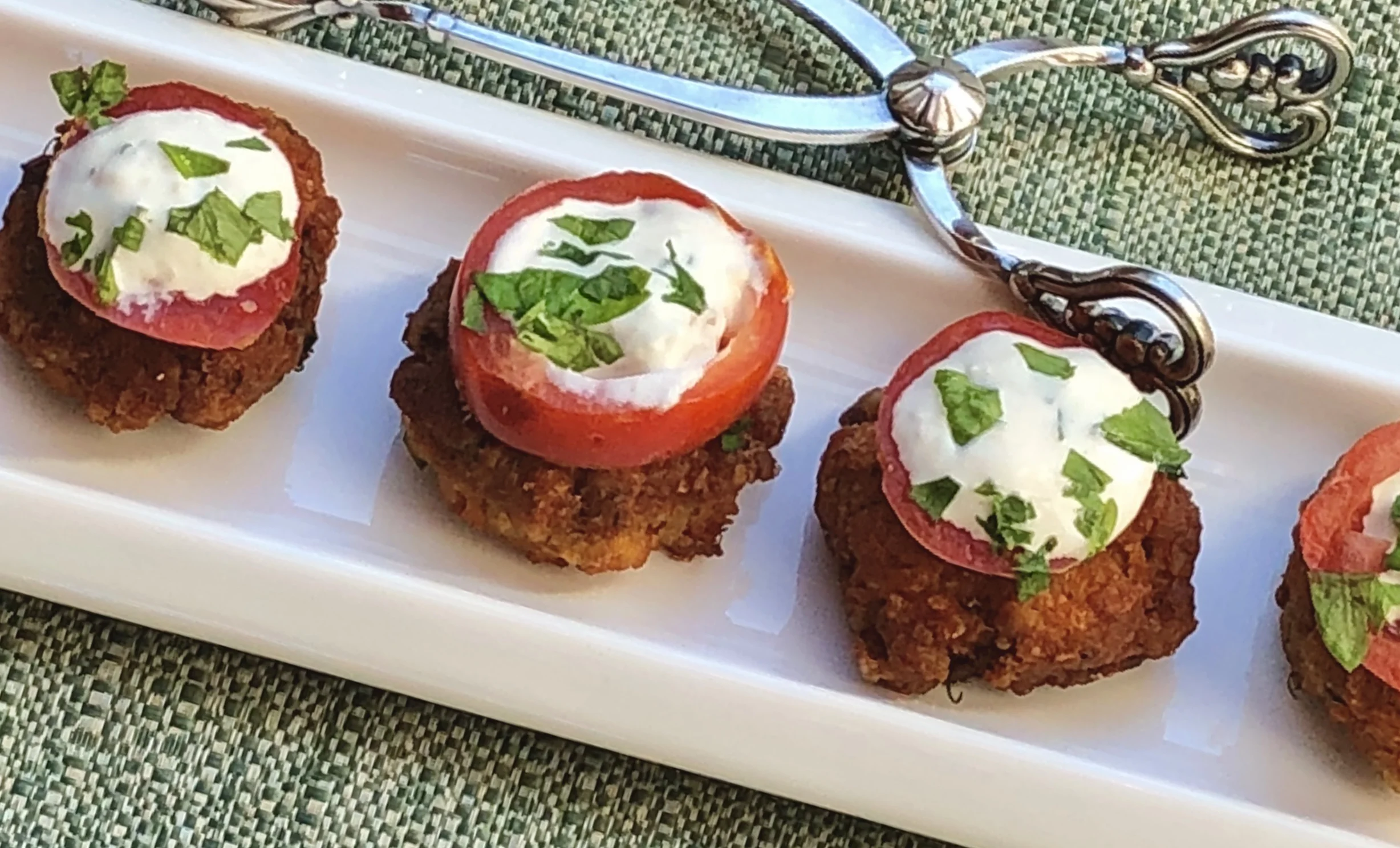
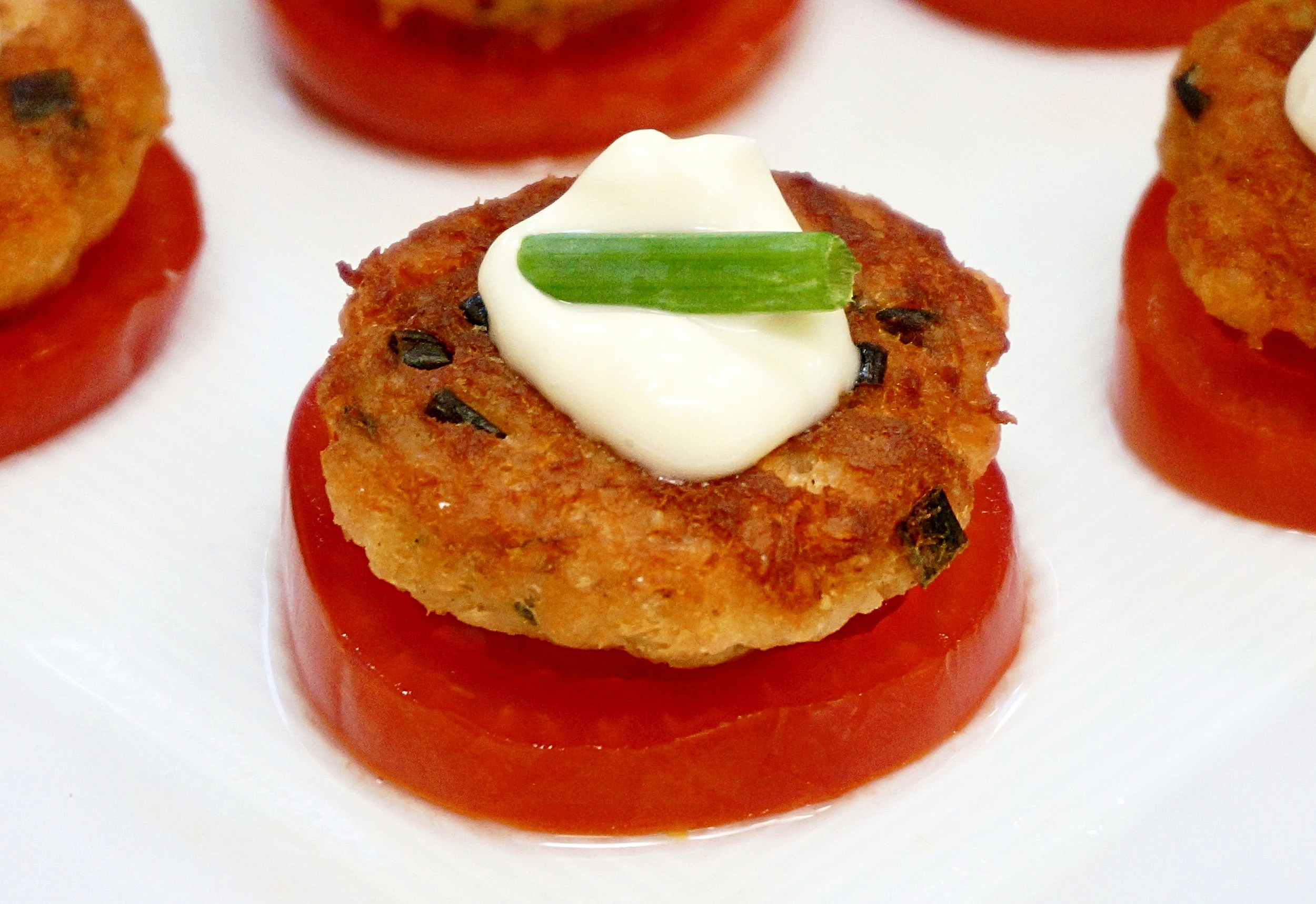
Salmon latkes in mini form. Fried right? So perfect for Hanukkah. Make them small enough and put them on some sort of base and you’ve got a super morsel for cocktail hour.

You can put the latkes on crackers or toasted bread, but I like using small tomatoes (campari tomatoes in the photo) as a base because it makes the hors d’oeuvre colorful. They are less crunchy but much juicier.

The latkes are freezable. Isn’t that nice?!

Mini Salmon Latkes

  • 2 cups mashed cooked salmon

  • 2 large eggs

  • 1/2 cup matzo meal

  • 2 tablespoons chopped chives

  • vegetable oil

  • 12 campari tomatoes (approximately) (or other small tomatoes)

  • 3 tablespoons mayonnaise

  • chives or fresh dill for garnish

In a bowl, mix the salmon, eggs, matzo meal and chives until well combined. Heat about 1/8-inch vegetable oil in a saute pan over medium heat. Shape the salmon mixture into 36 small disks. Fry, a few at a time, for 2-3 minutes per side or until crispy. Drain on paper towels. Before serving, slice the tomatoes about 1/2-inch thick. Place the latkes on top of the tomato slices. Spoon a small amount of mayonnaise onto the tops. Sprinkle with chopped chives for garnish (or use a tiny leaf of fresh dill).

Makes 36