brunch

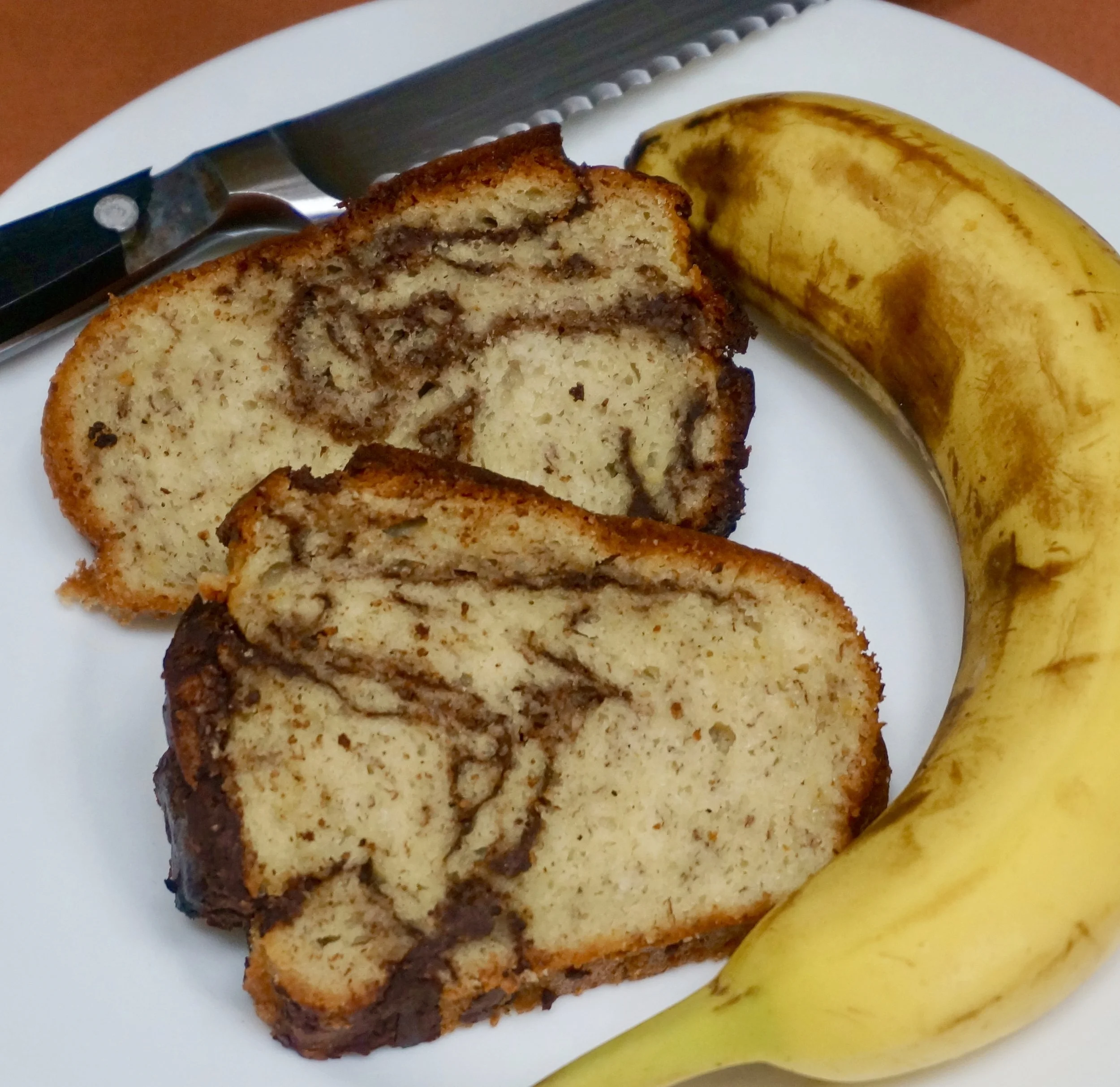
Banana Marble Cake

fullsizeoutput_828e.jpeg

Whenever my mother had leftover sour cream that was still safe to eat but had been hanging around the fridge for too long for it to taste fresh, she would use it to bake something. Like her marble cake. 

That cake was a simple wonder. Tender, vaguely sweet, with just enough melted chocolate swirling through the vanilla crumb. Rarely frosted, we ate it like coffee cake, just as is.

I've made that cake many times, and for the same reasons. Leftover sour cream (I also use leftover plain Greek yogurt when I have some). I've made it the original way and with coconut oil in place of shortening. 

Recently I had sour cream and yogurt leftover, the not exactly new kind.

I also had bananas left over. I always have bananas left over. I usually make banana bread with the leftover bananas.

So I took a cue from my mother and decided to bake marble cake. Using bananas.

So good.

Banana Marble Cake

  • 4 ounces semisweet chocolate
  • 2-1/2 cups all-purpose flour
  • 1 teaspoon salt
  • 2 teaspoons baking powder
  • 1/2 teaspoon baking soda
  • 1 cup sugar
  • 3 large eggs
  • 1 teaspoon vanilla extract
  • 1/2 cup vegetable oil
  • 4 very ripe medium bananas, mashed
  • 1 cup dairy sour cream or plain Greek yogurt 

Preheat the oven to 350 degrees. Grease and flour a (10-inch) 8-cup bundt pan. Melt the chocolate and set it aside. Mix the flour, salt, baking powder and baking soda together in a bowl and set aside. In the bowl of an electric mixer set at medium speed, beat the sugar and eggs for 2-3 minutes or until well blended. Add the vanilla extract and vegetable oil and beat for 1-2 minutes or until thoroughly blended. Add the bananas and sour cream and beat them in. Add the flour mixture and beat for 1-2 minutes or until the batter is well blended. Pour half the batter into the prepared pan. Pour in half the melted chocolate and swirl it into the batter using a knife or wooden spoon. Repeat with the remaining batter and melted chocolate. Bake for 50-60 minutes or until a cake tester inserted into the center comes out clean. Remove from the oven and let cool in the pan for 10 minutes. Remove to a cake rack to cool completely.

Makes one bread, serving 12-16


Lullabye Bread

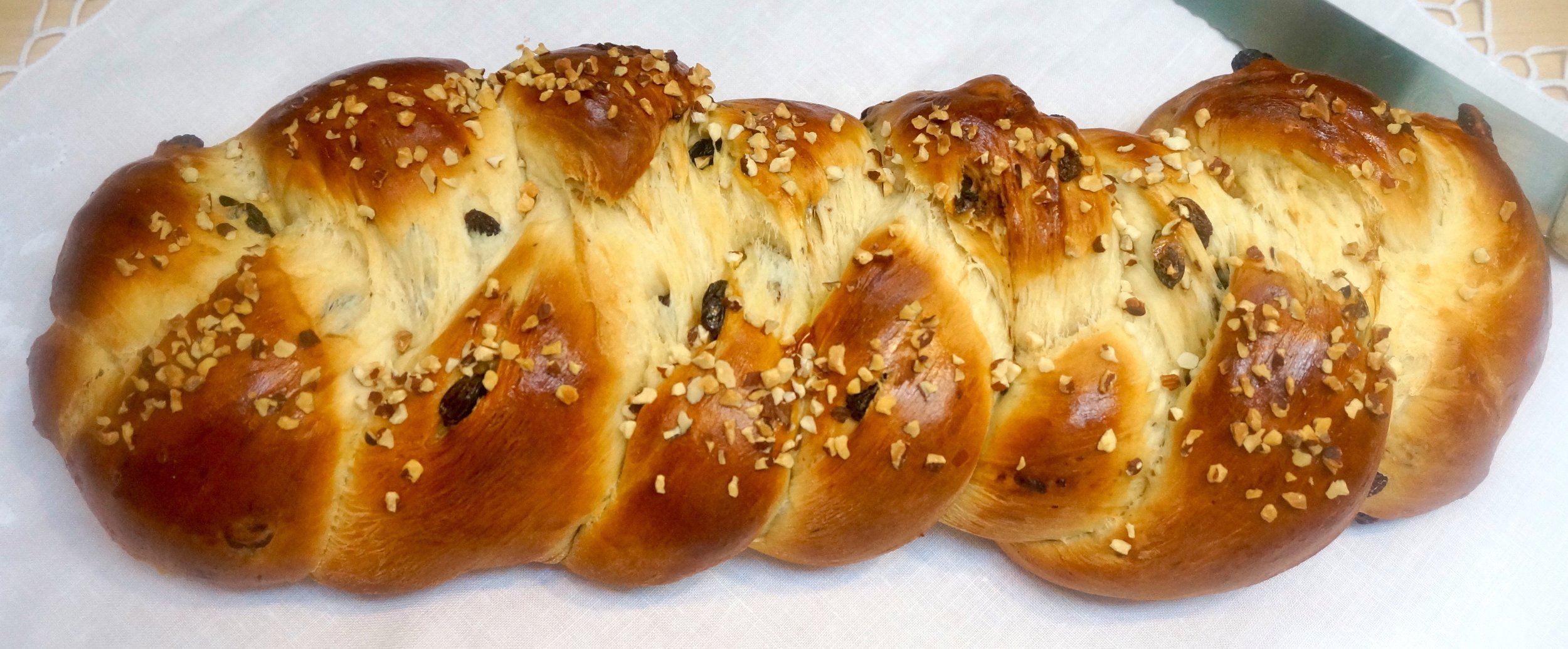
DSC08114.jpg

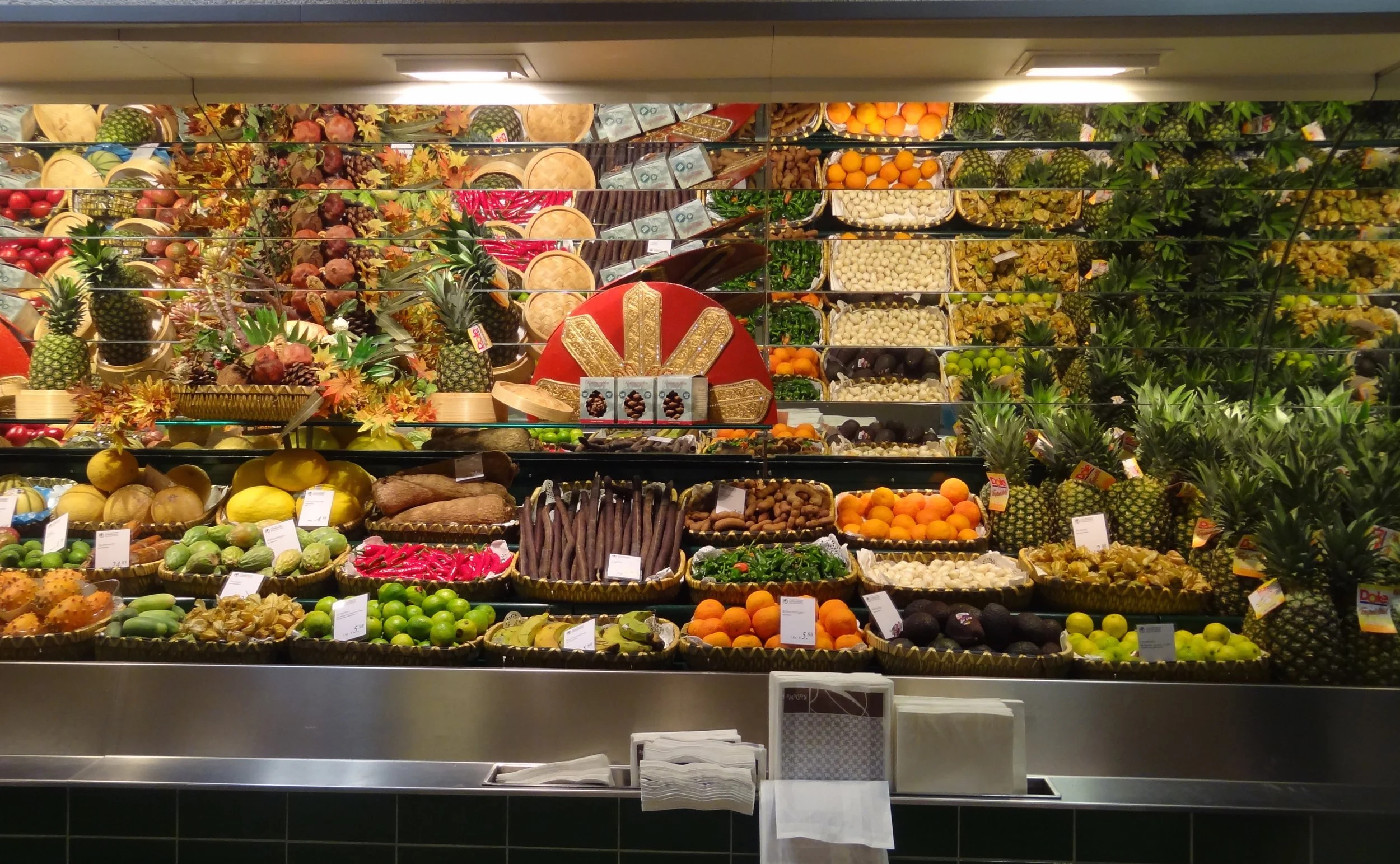
A few years ago Ed and I were in Berlin and checked out KaDeWe, the city's famous department store that has the biggest food halls in Europe and maybe in the world. They sell every kind of food you can imagine. Gorgeous cakes and pastries. Bountiful, beautiful fruit. Different kinds of eggs, dairy products, chocolates. 

It was all familiar. Pineapples. Peaches. Sachertorte. Macarons. Freshly butchered chickens, and so on.

We stopped counting the different kinds of sausages after we reached 100. Apparently they sell sausages from every region in Germany. 

But we were there for lookin', not cookin' -- so, in the two hours we walked through this place it was more like a visit to an art gallery. 

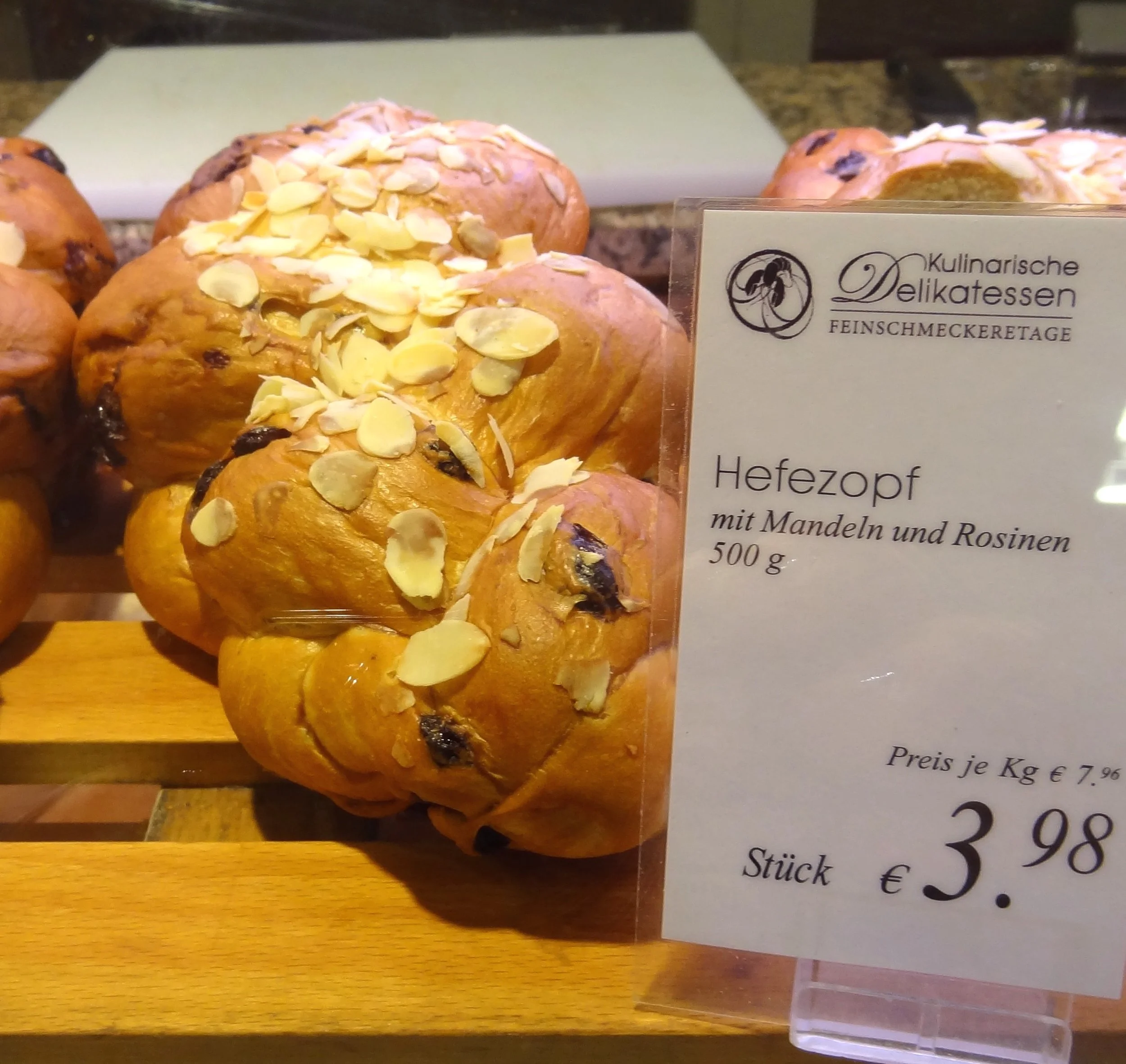
But then we came to the bakery and there, in the case, was a beautiful, braided loaf called Hefezopf, which is like a challah, but with raisins and almonds.

It was a vision. All at once my mind filled with memories of a lovely shabbat challah mixed with grandma singing rozhinkes mit mandlen, that hauntingly beautiful, classic Yiddish lullabye.

Oh my. My eyes well up even thinking about it.

This was something I had to try at home and get right.

I did, but it took several tries. At first I used my challah recipe and sweetened it a bit, but that just tasted like sweeter challah. The consistency wasn't right.

After doing some research about Hefezopf I realized it was more like brioche -- dense, buttery, dairy-laden, so I started tinkering with my brioche recipe.

Yes. 

A taste is worth a thousand looks.

Try this. It's called Hefezopf, but like to call it Lullabye Bread.

Lullabye Bread (HEFEZOPF)

  • 1 cup milk
  • 1 3-inch piece of cinnamon stick, broken in half
  • 2 2-inch strips of lemon peel
  • 5 tablespoons butter
  • 1/3 cup sugar
  • 1 package active dry yeast
  • 3-1/2 cups all purpose flour, approximately
  • 1 teaspoon salt
  • 2 large eggs
  • 1 cup raisins, optional
  • 2-3 tablespoons chopped almonds, optional


Lightly grease a baking sheet. Pour the milk into a saucepan. Add the cinnamon stick, lemon peel, butter and sugar cook over medium heat, stirring to dissolve the sugar, until bubbles form around the edges of the pan and the mixture is hot. Set aside to cool to lukewarm (about 105-110 degrees). Sprinkle the yeast over the milk mixture and whisk the ingredients to dissolve the yeast. Let rest for about 5 minutes or until thick bubbles form. Place the flour and salt in the bowl of an electric mixer. Remove the cinnamon stick pieces and lemon peel from the yeast mixture and pour the liquid into the mixer bowl. Add one egg and mix the dough with a dough hook for about 2 minutes. Add the raisins, if used, and mix for another 2 minutes or so, or until the dough is smooth. If the dough is sticky, add more flour as needed. (Kneading can be done in a food processor or by hand.) Cover the bowl and let rise in a warm place for about 1-1/2 hours or until doubled in bulk. Punch the dough down and cut it into 3 equal pieces. Working on a floured surface, roll the pieces to make strands of about 12-inches long. Braid the strands and place them on the baking sheet. Beat the remaining egg with one teaspoon water and brush the egg wash over the surface of the braid. Sprinkle with almonds, if used. Let rise again for 30 minutes. Preheat the oven to 350 degrees. Bake for about 30 minutes or until puffed and golden brown.

Makes one bread

Passover Spinach Pie

_DSC8890 2.jpg

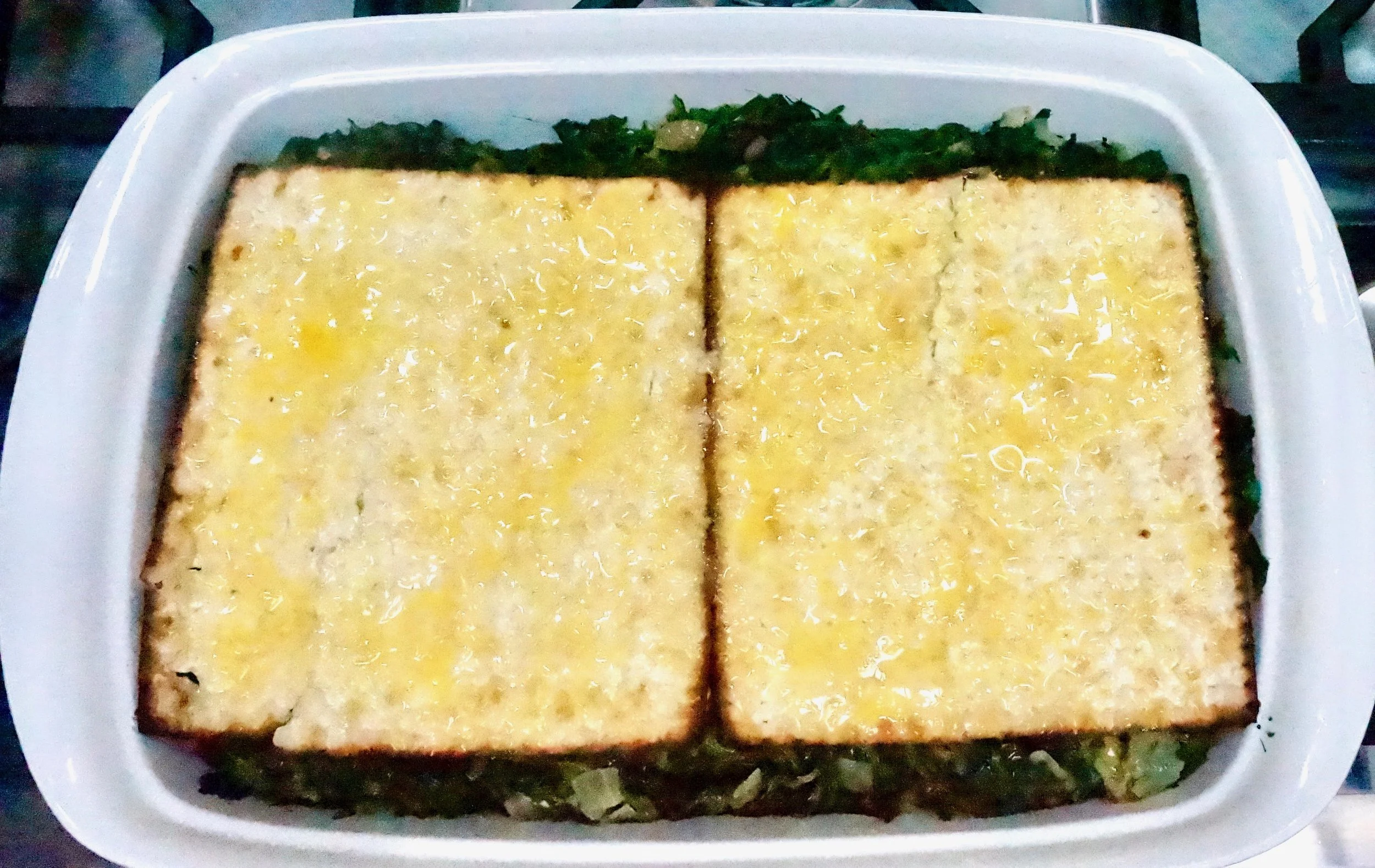
I can't imagine Passover without this dish. Spinach pie which, during the year I top with buttered phyllo sheets and sometimes with puff pastry, depending on the occasion.

On Passover it gets a matzo crust -- like this one, ready for the oven.

It's a versatile dish too. You can make it plain or add mushrooms or make it with cheese. You can also switch to kale or other greens if you prefer.

Nice for a meatless dinner too.


SPINACH PIE with MATZO CRUST

  • 2 10-ounce packages frozen whole leaf spinach, thawed
  • 3 tablespoons olive oil
  • 1 medium onion, chopped
  • 2 cups cut up mushrooms, optional
  • 8 ounces feta cheese, crumbled, optional
  • 6 tablespoons freshly grated Parmesan cheese, optional
  • 4 large eggs
  • 1 tablespoon finely chopped fresh dill
  • salt and freshly ground black pepper to taste
  • 2 sheets matzo

Preheat the oven to 400 degrees. Squeeze as much water out of the spinach as possible and set aside. Heat the olive oil in a saute pan over medium heat. Add the onion and cook for 2-3 minutes or until slightly softened. Add the mushrooms, if used, and cook, stirring often, for another 2-3 minutes or until the mushrooms are softened. Stir in the spinach and mix well. Remove the pan from the heat. For dairy, add the feta and Parmesan cheeses and mix them in. Add 3 of the eggs, the dill, and salt and pepper to taste. Mix well and place in a baking dish. Soak the matzo in cold water to cover for 1-2 minutes or until softened but not mushy. Shake off excess water. Place the matzo on top of the spinach mixture. Beat the remaining egg and brush over the top of the matzot. Bake for about 20 minutes or until golden brown.

Makes 4-8 servings (as main course or side dish)

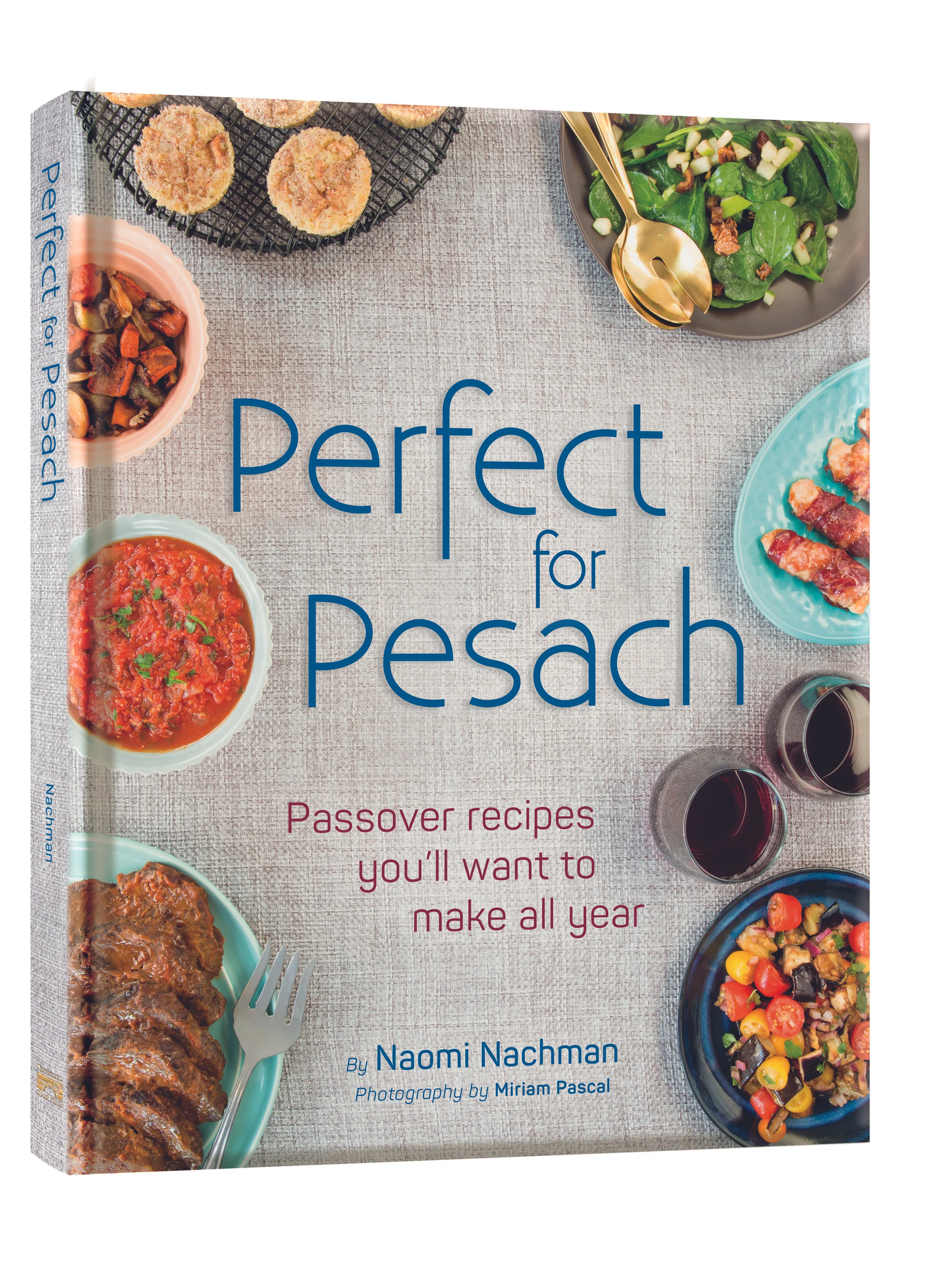
Perfect for Pesach

Perfect for Pesach_1.jpg

Passover is less than a month away so I've already begun the purge of pasta and stuff and am also trying to use up all my flour and get ready for the holiday.

But there's still snow outside and it's cold here so it's nearly impossible to think spring and all the new beginnings we talk about at the Seder. Even if it is the first official day of spring.

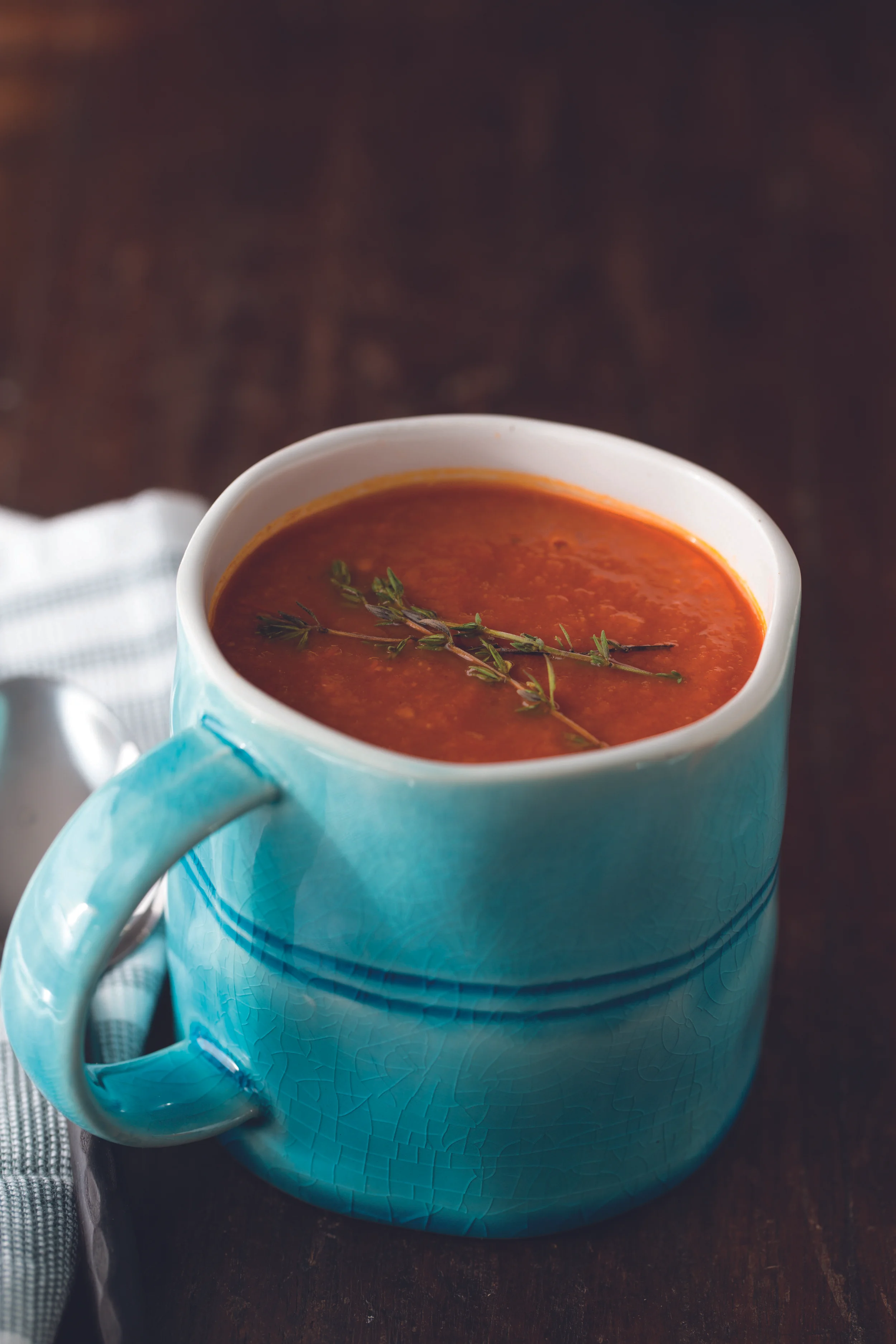
That's why, of all the recipes in Naomi Nachman's new cookbook, Perfect for Pesach, I decided to make the Roasted Tomato Soup. Few recipes are more comforting in the winter than tomato soup and yet it is also spring-and-Passover-friendly.

This recipe seemed especially intriguing because it calls for both roasted tomatoes and canned tomatoes. It is no ordinary tomato soup. And Naomi's book is no ordinary book, which is chock full of recipes that are not only perfect for Passover, but also year round. 

Here's another thing that I love about this book: the recipes are EASY, uncomplicated, accessible. There aren't a zillion steps to get to the final product. All the ingredients are easy to find. Almost everyone will have all the equipment needed to make each recipe.

User friendly.

The older I get the more I like user-friendly, easy, simple. 

I don't know how Naomi found the time to write this book. She is a personal kosher chef, she travels world wide, catering all sorts of events. She hosts her own radio show. She gives cooking demonstrations and MCs at scads of events (including Kosher Chopped).

She is everywhere and always with a big smile on her face.

Kudos to you Naomi! Mazal tov on the book.


Roasted Tomato Soup

pareve – yields 10 servings – freezer friendly

Growing up, I always loved tomato soup; my mum used to serve it on Sunday night at dinner. Now that I’ve grown up, I make my own version and I discovered that roasting the tomatoes deepens the flavors.

Method

Preheat oven to 400°F. Line a baking sheet with parchment paper; set aside.

Slice each tomato in half lengthwise; place, skin-side down, on prepared baking sheet. Drizzle with 1 tablespoon olive oil and salt.

Roast for 30 minutes or until tomatoes are caramelized; set aside.

Heat remaining tablespoon oil in a 4-quart soup pot over medium heat. Add onion and garlic; sauté for a few minutes, until translucent. Add roasted tomatoes; cook, stirring occasionally, for a few minutes.

Add crushed tomatoes, stock, and thyme; bring to a boil. Reduce heat to low; simmer for 30 minutes.

Use an immersion blender to process soup for a full 3 minutes, until smooth; add salt and pepper to taste.

Ingredients

  • 8 plum tomatoes
  • 2 Tablespoons olive oil, divided
  • ½ teaspoon kosher salt
  • 1 large onion, diced
  • 2 large cloves garlic, crushed
  • 1 (28-ounce) can crushed tomatoes 
  • 8 cups vegetable stock
  • ½ teaspoon dried thyme
  • kosher salt, to taste
  • pepper, to taste

Cook’s Tip

For a dairy meal, add a handful of shredded cheese to each bowl; stir to melt cheese.

Mashed Potato Pancakes

It has been said that on St. Patrick's Day everyone is Irish.

That's okay by me! I've been to Ireland. It's gorgeous. The people are friendly, the sites are interesting, the weather is glorious, the food is awesome. What's not to like?

The potato dishes are especially good.

Like mashed potato pancakes. You absolutely cannot go wrong making these. A terrific side dish with fish or at a vegetarian dinner. But, ya know, I've had these for dinner just by themselves, topped with sunnyside eggs (and served with some grilled tomatoes) and that's a perfect meal as far as I am concerned.


Mashed Potato Latkes

  • 2 pounds boiling potatoes (such as Yukon Golds)
  • 2 tablespoons butter
  • 1/2 cup milk
  • salt and freshly ground black pepper to taste
  • 2 tablespoons chopped fresh chives, optional
  • 1 large egg
  • Panko crumbs
  • vegetable oil for frying

Wash the potatoes and cut them into chunks. Bring them to a boil in a large pan in lightly salted water. Reduce the heat to a simmer and cook for about 15 minutes or until the potatoes are tender. Drain and, when cool enough to handle, peel the potatoes. Mash the potatoes in a bowl using a potato masher or ricer. Add the butter and the milk and stir them in. Stir in the chives, if used, and the egg. Make flat cakes, about 1/4-inch thick out of the potato mixture. Press each side of the cake into Panko crumbs. Heat about 1/4" vegetable oil in a cast iron or other heavy heat retaining skillet over moderately high heat. Fry for 2-3 minutes per side or until the pancakes are golden brown and crispy. Drain on paper towels.

Makes about 12

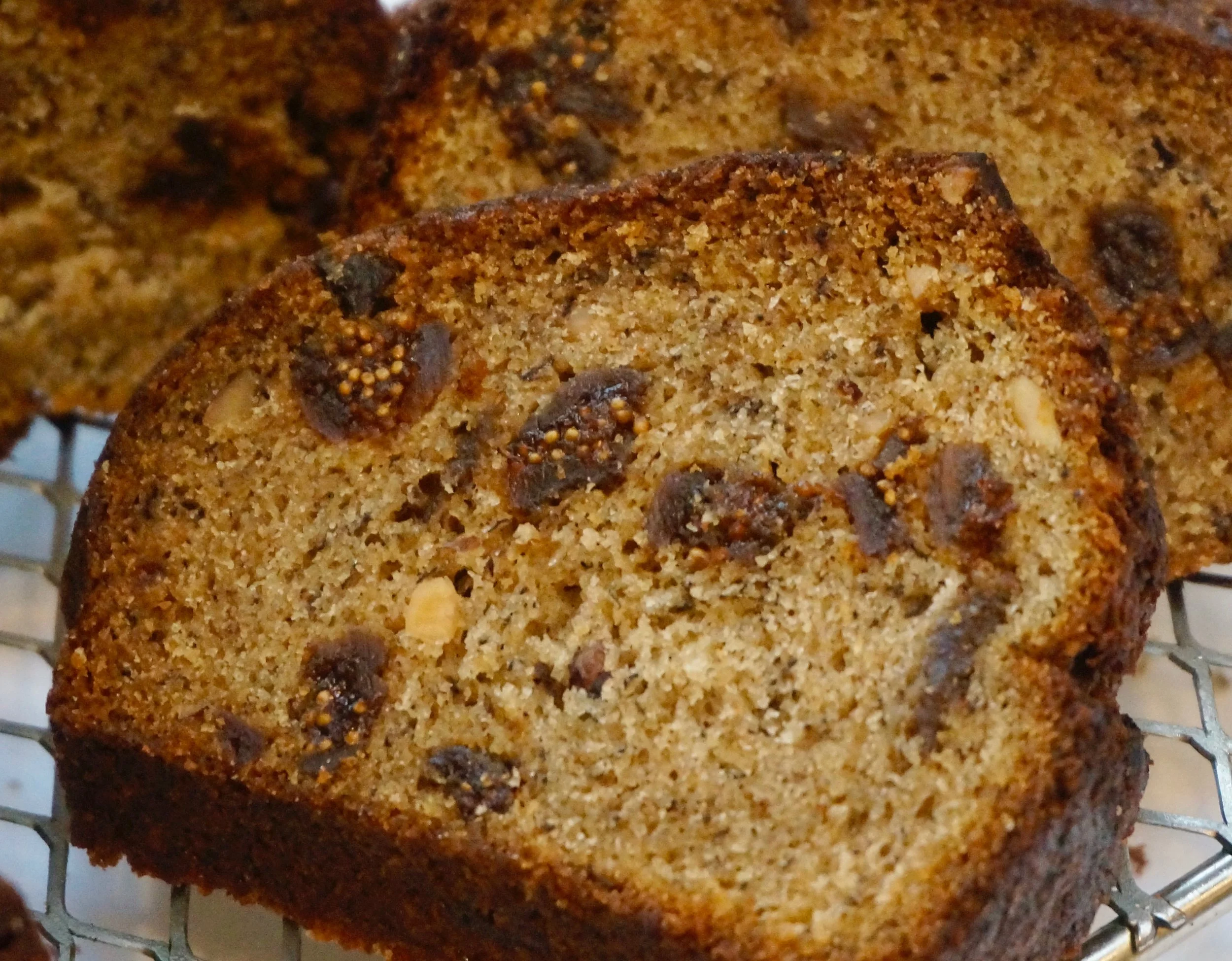
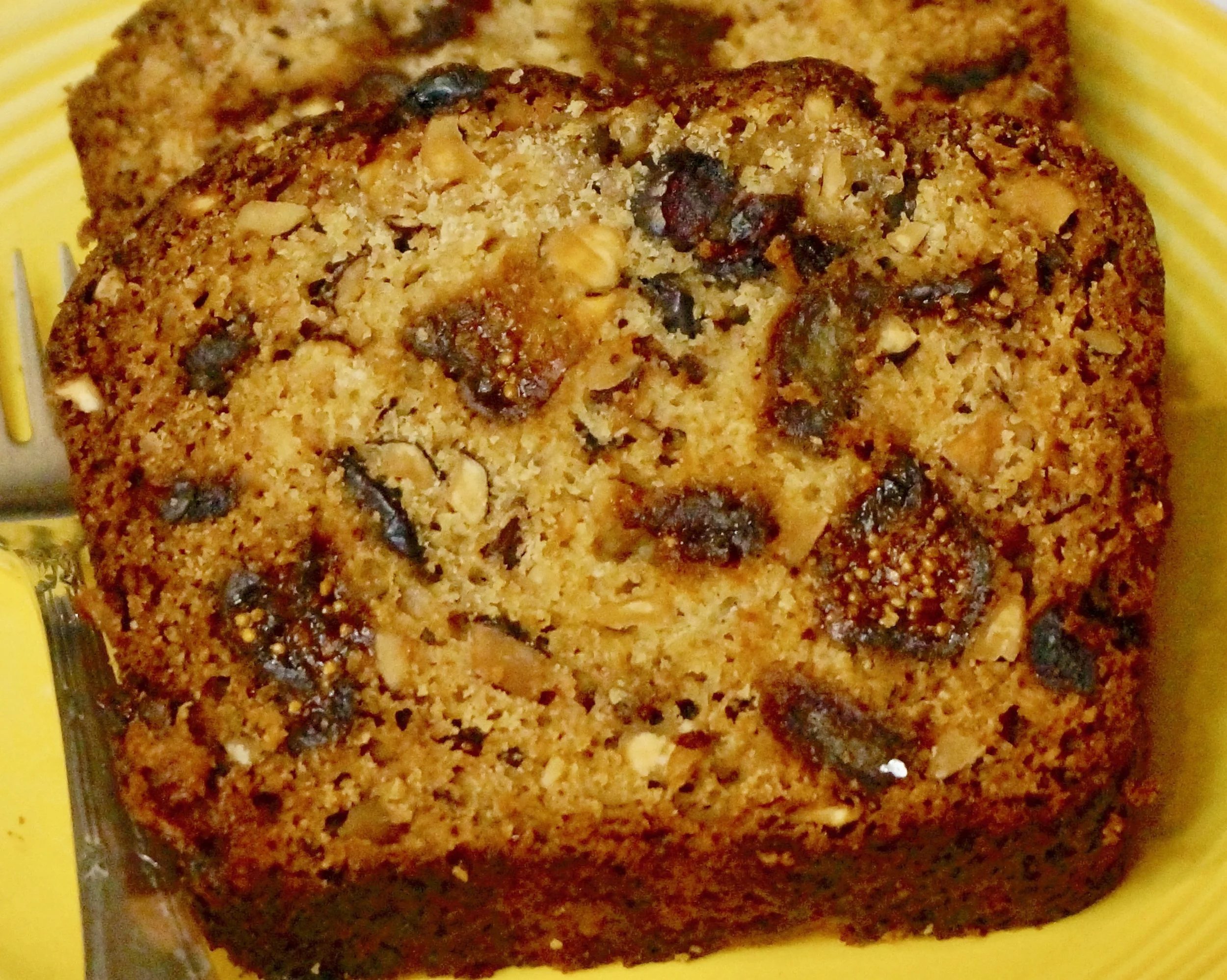
Banana Bread with Dates and Figs

_DSC2355.jpg

Every Purim I try new hamantaschen from different bakeries. I've also made my own hamantaschen using a variety of recipes.

But so far, after years and years of buying this one and that one, my favorites are the (parve) ones I get at The Bakery, in Plainview, NY. For me, they are the enduring treats of childhood, never failing to please, never changing, even in a world where innovation is honored.

And so -- I will buy my hamantaschen this year. Old fashioned flavors: prune and apricot. At The Bakery.

Which means that for Purim, instead of creating a completely new hamantaschen recipe or even trying a new pastry recipe with old fashioned filling, I am going to bake banana bread as mishloach manot gifts.

I have a zillion recipes for banana bread. Some with streusel. Some dairy-free. Some loaded with chocolate chips, some with coconut. Some all chocolate-y. Some spicy. And on and on.

This is my most recent banana bread recipe, one I came up with while revising my mother's date-nut bread recipe. 


Banana Bread with Figs, Dates and Nuts

  • 2-1/2 cups all-purpose flour
  • 1 teaspoon salt
  • 2 teaspoons cinnamon
  • 2 teaspoons baking soda
  • 1 cup vegetable shortening
  • 1-1/2 cups sugar
  • 4 large very ripe bananas, mashed
  • 4 large eggs
  • 1 cup chopped dried figs
  • 1/2 cup chopped dried dates
  • 1/2 cup chopped toasted almonds

Preheat the oven to 350 degrees. Grease and flour a 10-cup bundt pan. Mix the flour, salt, cinnamon and baking soda together in a bowl. In the bowl of an electric mixer set at medium speed, beat the shortening and sugar until well blended. Add the bananas and beat them in thoroughly. Add the eggs and beat them in thoroughly. Add the flour mixture and beat for a minute or so until the batter is well blended. Fold in the figs, dates and nuts. Pour the batter into the prepared pan and bake for about one hour or until a cake tester inserted into the center comes out clean. Remove from the oven and let cool in the pan for 15 minutes. Remove to a cake rack to cool completely.

Makes one bread, serving 16-18


Buttermilk Pancake Day

One of the first newspaper food articles I ever wrote had to do with Shrove Tuesday (tomorrow, February 28th), a holiday my family doesn't celebrate, so at the time I didn't know that it is also Mardi Gras (Fat Tuesday), and in food circles -- Pancake Day!

Live and learn. It seems that in days gone by, when the Catholic Church imposed stricter rules during Lent, fatty items such as eggs, butter, milk and so on, were forbidden from Ash Wednesday, when Lent begins, until Easter. So the day before Lent everyone tried to eat up all the fats in the house.

Hence, the eating of gras (fat) on that mardi (Tuesday).

What's a delicious, filling, welcome and wondrous way to include eggs, butter, milk and stuff?

Pancakes!

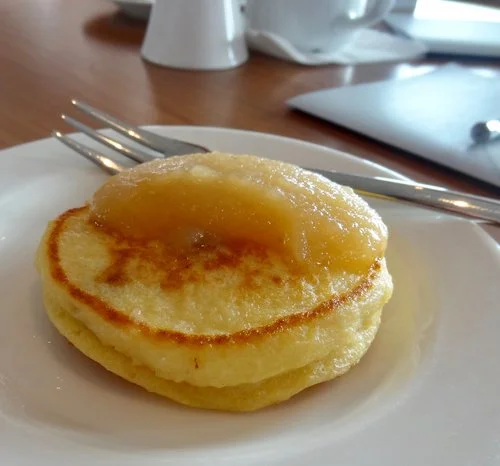
I've made all sorts of pancakes: German Apple, Oatmeal, Lemon-Cottage Cheese and others. But plain old buttermilk pancakes are simple and always fluffy and full of down home pleasure.

Maple syrup goes on top, for sure. But homemade apple sauce is a bit different, less sweet and so easy to make. I like to mix apples and pears for sauce during the winter because there are so many pear varieties available. 

Happy Pancake Day. Mardi Gras. Btw, this also makes a nice dinner on a meatless Monday.

Buttermilk Pancakes with Apple-Pear Sauce

  • 3 tablespoons butter
  • 2-1/2 cups all-purpose flour
  • 2 tablespoons sugar
  • 1 teaspoon baking powder
  • 1 teaspoon baking soda
  • 1/2 teaspoon salt
  • 1 large egg
  • 3 cups buttermilk
  • butter for frying the pancakes
  • Apple-Pear Sauce

Melt the 3 tablespoons butter and set aside to cool. Mix the flour, sugar, baking powder, baking soda and salt into a bowl. In a second bowl mix the egg, buttermilk and melted, cooled butter. Add the liquid ingredients to the dry ones and mix to blend them but do not beat vigorously. Preheat a griddle or large saute pan over medium heat. Lightly butter the pan before cooking the pancakes. When the pan butter has melted and looks foamy, slowly pour about 2 tablespoons batter (for small pancakes) or more (for larger pancakes), leaving space between each pancake. Cook for about 2 minutes, or until bottom is lightly browned and bubbles form on the top. Flip the pancakes with a rigid spatula and cook for a minute or until the second side is lightly browned. Serve with Apple-Pear Sauce.

Apple-Pear Sauce

  • 4 apples
  • 3 pears
  • 1/8 teaspoon cinnamon

Peel, core and slice the apples and pears and place the pieces in a saucepan. Add the cinnamon, stir, cover the pan and cook over low heat for 25-30 minutes or until the fruit is soft. Stir occasionally during the cooking process. Puree the ingredients in a food processor with a hand blender. Serve hot, cold or at room temperature. Makes about 3-1/2 cups.

Makes 6-8 servings


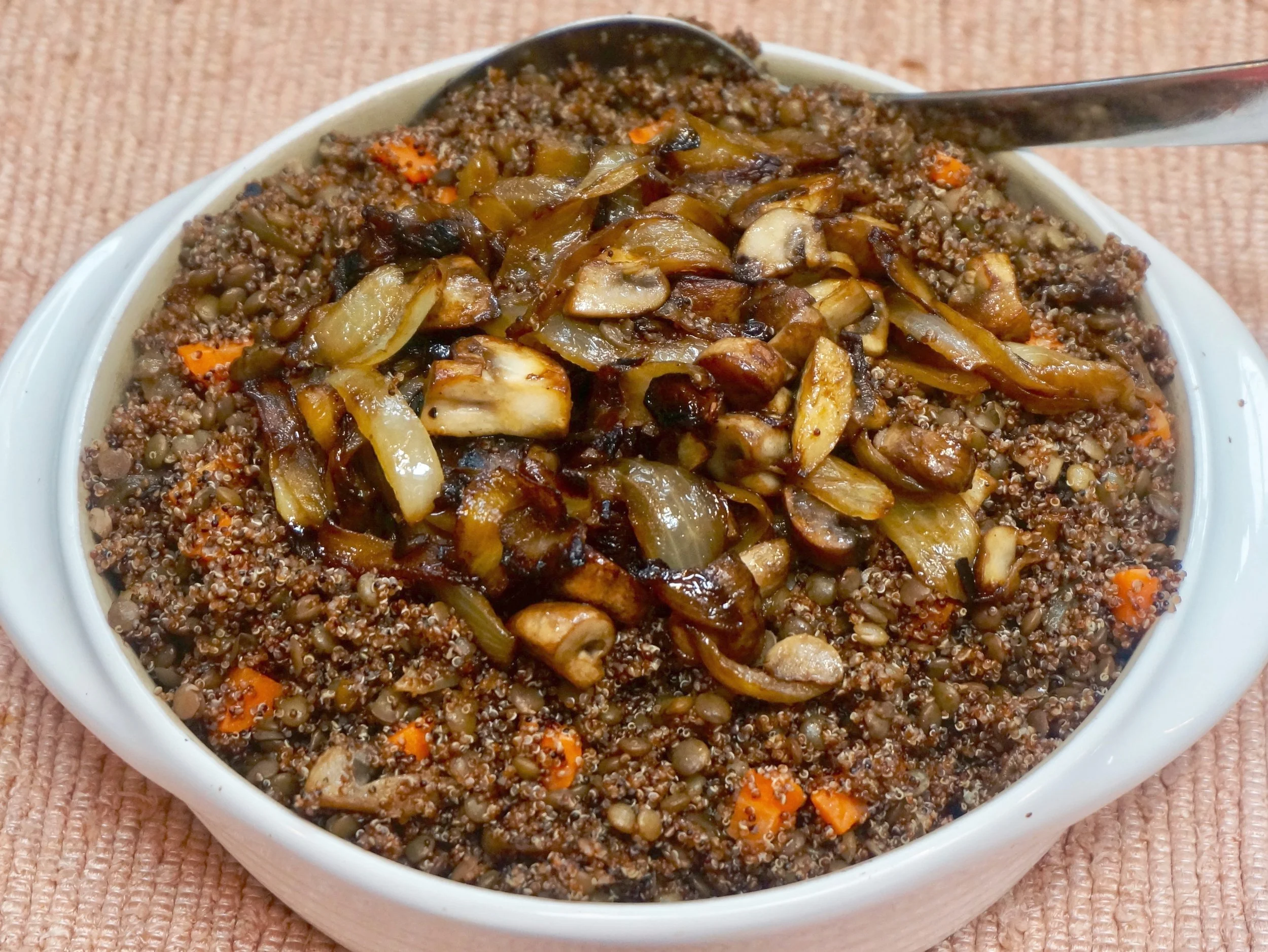
Kaniwa Mujadarah

_DSC2680.jpg

Everyone who knows me knows that Mujadarah is among my favorite things to eat. I serve it for my annual break-the-fast. I serve it anytime I have lots of people over for a celebration, like a birthday or a welcome-to-the-world party for a new grandchild.

I've made Mujadarah using brown rice. I've made it with bulgur wheat

Sometimes I add mushrooms (there's a recipe for that in my book, Hip Kosher).

Recently, the good folks at Pereg sent me a bag of Kaniwa. 

What?

Have you heard of kaniwa?

It's similar to quinoa (in fact some call it baby quinoa), but the seeds are much smaller (about the same size as poppy seeds). It is a complete protein, it's gluten-free and high in iron. That is a big big deal when you are looking for nourishing, meat-free recipes.

Unlike quinoa, kaniwa does not have a coating of saponin on the surface, which means it does not have the somewhat bitter, somewhat soapy taste that some find objectionable in quinoa. You don't have to rinse kaniwa (in fact, if you do, these teeny things will fall right through the holes in the strainer!).

I've actually cooked with kaniwa. A while ago I posted a recipe for Kaniwa Salad with Roasted Tomatoes. It's a terrific base for salads. A nice soup filler. You can sweeten it and eat it like cereal, for breakfast.

But me, with my mujadarah love? I made some kaniwa mujadarah! Look how beautiful this is! Perfect dish for a meatless Monday.


Kaniwa Mujadarah

  • 3/4 cup lentils
  • water or stock
  • 3 carrots, diced
  • 1 cup kaniwa
  • 1-3/4 cup water
  • 1/2 cup olive oil
  • 4 large yellow onions, peeled and sliced
  • 10 ounces mushrooms, cut up
  • 1/2 cup chopped fresh parsley, optional
  • 1 teaspoon ground cumin, optional
  • salt to taste

Place the lentils in a saucepan, cover with water and bring to a boil over high heat. When the water starts to boil, lower the heat, cover the pan and cook the lentils for about 25 minutes or until they are tender. Drain the lentils and set them aside. While the lentils are cooking, place the carrots in a saucepan, cover with water and bring to a boil over high heat. When the water starts to boil, lower the heat, cover the pan and cook the carrots for 5-6 minutes or until they are tender. Drain the carrots and set them aside. Place the kaniwa in a saucepan, cover with 1-3/4 cups water and bring to a boil over high heat. Lower the heat, cover the pan and cook for about 15-18 minutes until all the water has been absorbed. While the kaniwa is cooking, heat 5 tablespoons of the olive oil in a large saute pan over medium heat. Add the onions and cook, stirring occasionally, for about 10 minutes or until beginning to brown. Add the mushrooms and cook an additional 5 minutes or until the onions and mushrooms are soft and brown. Place the lentils, carrots, kaniwa and most of the onion-mushroom mixture in a bowl. Stir gently to distribute the ingredients evenly. Stir in the remaining olive oil. Add the parsley and cumin, if desired and toss the ingredients. Sprinkle with salt to taste. Top with the remaining onion-mushroom mixture.

If serving at a later time, cover the pan and reheat in a covered baking dish in a preheated 350 degree oven.

Makes 6-8 servings


Mom's Date-Nut Bread

Tu B'Shevat is one of the lesser known Jewish holidays, but also one of the more delicious ones. From my childhood I remember it as a time when my mom would buy dried figs that came in a wreath of sorts, the figs tied together with string.

I ate dozens of them.

It was also when she made her fabulous Date-Nut Bread. She served the slices like a sandwich, with cream cheese slathered between the layers. 

I ate dozens of those too.

My cousin reminded me that her mother and mine baked Date-Nut bread in a coffee can. Yes, of course! Because our mothers were married young women during WWII, when metal -- and therefore loaf pans and other assorted baking equipment -- was in short supply. So they kept the cans from ground coffee and other foods such as fruit cocktail and used those instead.

I recently made a batch of date-nut bread using my mom's recipe. I used a loaf pan and was a little disappointed. Not in the pan. In the bread. It seemed dry. Maybe I over baked it. Not sure, but I always loved this recipe, so I tried again but made a few changes.

I used less flour.

I also thought it might be a good idea to include some figs (or, frankly, any other dried fruit) with the dates and I also thought the flavor would perk up a bit with a small amount of fresh orange peel. 

My mother added Madeira or sherry, but because I had a lovely sample of Cherry Heering that I got at Kosherfest, I used that instead. She also mixed in walnuts but because of allergies, I replaced them with toasted almonds.

Of course, the bread was completely different with all these changes.

I loved it.

Especially when sliced and slathered with cream cheese.


Mom’s Date-Nut Bread New Version

  • 1-3/4 cups all-purpose flour
  • 1 cup sugar
  • 2 teaspoons baking soda
  • 1 teaspoon salt
  • 1 cup chopped dates
  • 1 cup chopped dried figs, apricots, cranberries, cherries, prunes or raisins
  • 1 cup chopped toasted almonds
  • 2 teaspoons grated fresh orange peel
  • 2 tablespoons vegetable oil
  • 2 tablespoons Orange brandy, cherry Heering, Madeira, Port or Sherry wine
  • 1 large egg
  • 1 cup boiling water
  • cream cheese, optional

Preheat the oven to 350 degrees. Grease a 8”x4-1/2”x3” loaf pan (or a one-pound coffee can). Mix the flour, sugar, baking soda and salt into a bowl. Add the fruits and nuts and toss the ingredients to coat the fruit with the flour mixture. In another bowl, combine the vegetable oil, wine and egg. Pour the boiling water into the fruit-flour mixture and mix thoroughly. Add the egg mixture and blend it in thoroughly. Spoon the batter into the prepared loaf pan. Bake for about 50 minutes or until a cake tester inserted into the center comes out clean. Let the bread cool in the pan for 10 minutes. Invert onto a cake rack to cool completely. Slice and serve plain or with cream cheese.


Makes one loaf


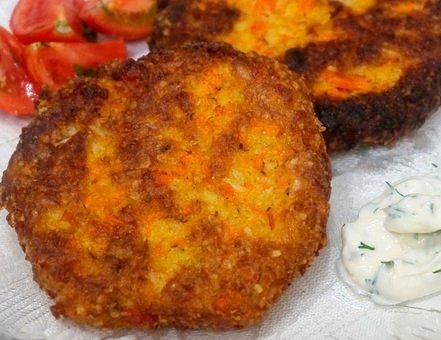
Chicken Soup Burgers

My daughters are not big meat eaters, so when they were young kids and still living at home,  I never made stuff like roast beef or beef stew or meatloaf. They just didn't want any of it.

They didn't even eat hamburgers.

We were basically a chicken and turkey family (including chicken and turkey burgers).

Also, I would make burgers out of all the vegetables I used for chicken soup, which I cooked more often than almost everything.

That was a kid favorite. They still talk about those burgers.

Recently I made some chicken soup because, well, it's been rainy and gloomy in my part of the world and soup is like magic to help get you in a good mood. I used the leftover vegetables for burgers, just for the two of us. Fabulous not-quite-meatless dinner. Of course you can make this a vegetarian meal with regular cooked vegetables not from soup!


CHICKEN SOUP BURGERS

  • 8 cooked carrots, cut up

  • 6 stalks cooked celery, cut up

  • 2 cooked parsnips, cut up

  • 1 large cooked onion, cut up

  • some sprigs of cooked dill

  • 1 large egg

  • 1/2 cup matzo meal

  • salt and freshly ground black pepper to taste

  • vegetable oil

Place the cooked vegetables and dill in a food processor and pulse to combine them and chop them into very fine pieces. Spoon the contents into a bowl. Add the egg, matzo meal and some salt and pepper to taste. Mix thoroughly to combine the ingredients evenly. Shape portions of the mixture into patties about 1/2-inch thick. Heat about 1/4-inch vegetable oil in a saute pan over medium-high heat. When the oil is hot enough to make a crumb sizzle, add the patties, a few at a time, leaving space between them in the pan. Do not crowd the pan. Fry the patties for about 3 minutes per side or until golden brown and crispy. Drain on paper towels. 

Makes about 12