brunch

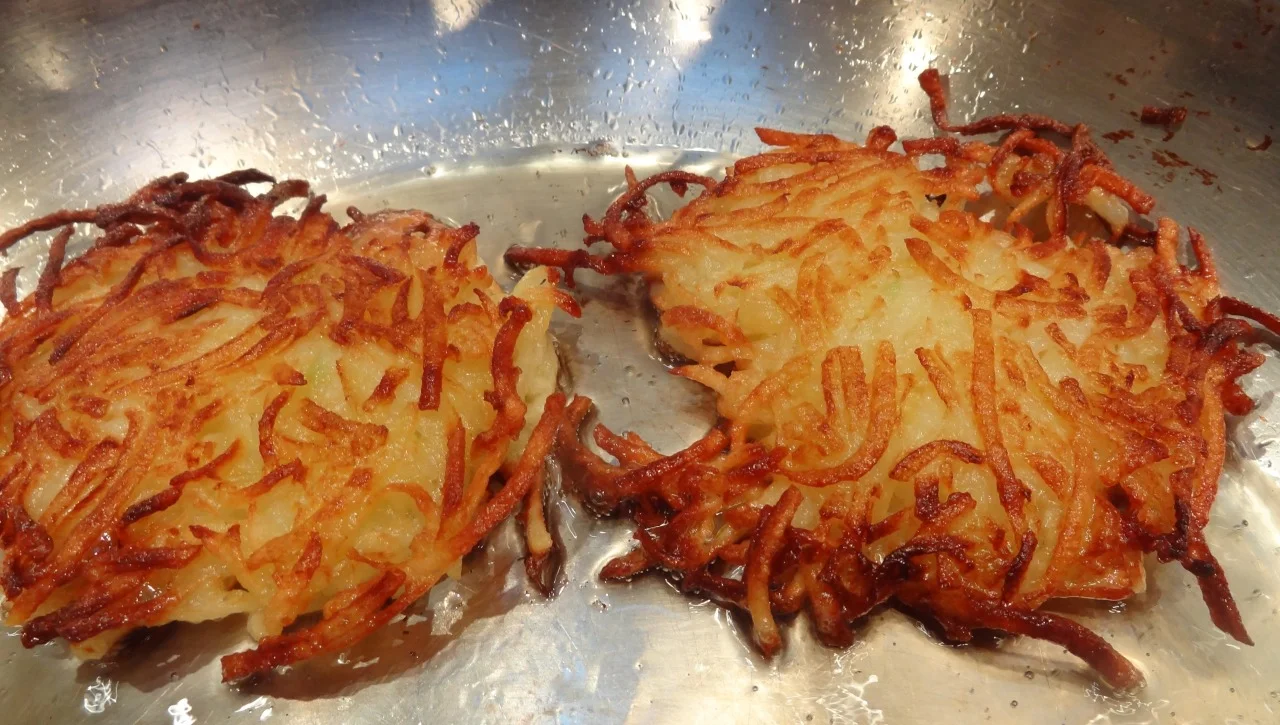
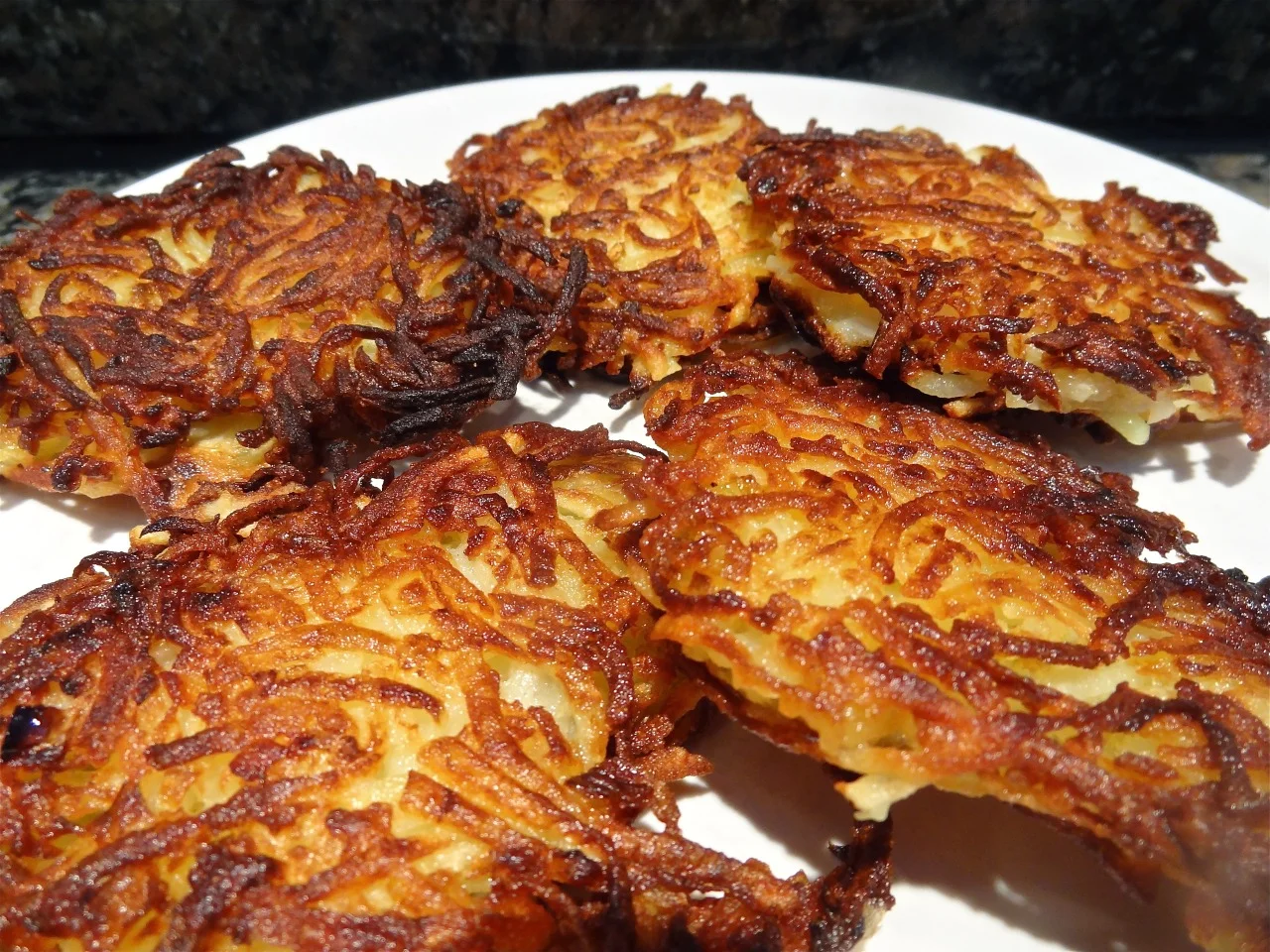
Potato Latkes

What do you do when you have finished preparing potato latkes for a Hanukkah party and you’re sitting in your family room watching TV and your husband comes in with a handful of the latkes you just made and says “I’m taking a down payment on our Hanukkah party on Saturday night.”

And you’ve cleaned up the kitchen and everything and you thought you were done with latkes and the entire house smells from fried so you had to make a kitchen bouquet (1/4 cloves, 3 broken cinnamon sticks, tablespoon or so cardamom pods, orange peel, water) so that anyone who comes to the house even the next day (like the UPS delivery man or the guy who is coming to repair the oven) isn’t blasted with stale fried smell?

Why, you get up the next day and make more latkes. Otherwise there won’t be enough. Because I know what happens when people see potato latkes. You can’t eat just one.

And so I did.

These:

Potato Latkes

  • 4 large peeled baking potatoes

  • 1 large onion

  • 2 large eggs

  • 3 tablespoons potato starch

  • 1 teaspoon salt or to taste

  • freshly ground black pepper to taste

  • 1/2 teaspoon baking powder

  • vegetable oil for frying


Shred the potatoes and onion in a food processor. Squeeze out as much of the liquid as possible (I put portions of the shreds in a kitchen towel and squeeze until they are practically dry). Place the shreds in a bowl. Immediately mix the eggs in (this helps keep the potatoes from browning). Add the potato starch, salt, pepper and baking powder. Heat about 1/4” vegetable oil in a heavy pan over medium-high heat. Shape latkes by hand, squeezing liquid out if there is any, and place them in the hot oil, leaving space between each one so that they brown well and become crispy (if they are too close they will “steam” and become soggy). Press down on the latkes to keep them evenly shaped. Fry for 2-3 minutes per side or until the pancakes are golden brown and crispy. Drain on paper towels. Makes 12-15
 

Lemon Cottage Cheese Pancakes

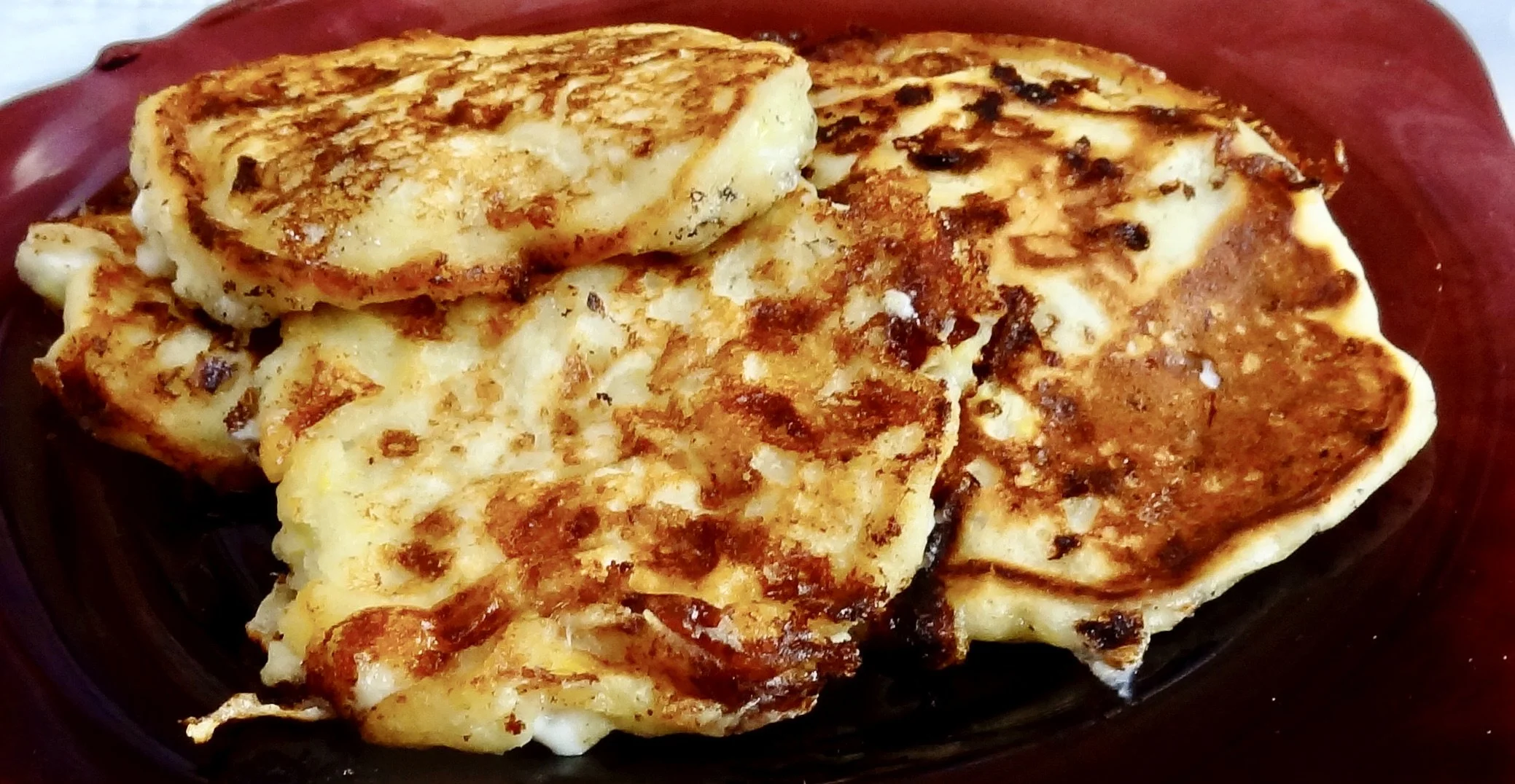
Lemon Cottage Cheese Pancakes

Pancakes? Oh yes! Who doesn’t love them?

But who cooks them at your house?

My Dad was the pancake maker in ours. I can close my eyes now all these years later and still see my mother’s face as she surveyed the mess he made. Flour puffs here and there. Drops of grease from melted butter on the floor. Batter on the counter. A crusted pancake turner in the sink.

But wow, those were some great pancakes. Puffy, thick and soft with a bit of a crispy edge. Gobs of butter on top melting into the surface. Syrup of course.

No redeeming nutritional value, but oh, what a big deal for the Memory Box.

Pancakes are always welcome I think, any time of year and also for any meal, breakfast, lunch or dinner.

So I am going to make some for Hanukkah. A recipe from my book, Hip Kosher, for Lemon-Cottage Cheese pancakes. Almost everyone knows that it is traditional to eat fried foods during this holiday. Less well known is that cheese is traditional too. So I’ve combined fried plus cheese plus memory in these, light, fluffy pancakes. There’s some protein and they are vaguely sweet, with good flavor from the lemon, so syrup isn’t really needed. Fried? Yes, but just in a small amount of butter on a griddle, not a whole lot of deep-dry fat.

Lemon Cottage Cheese Pancakes (from Hip Kosher)

1-1/3 cups dry curd cottage cheese, pot cheese, or farmer cheese
3 large eggs
1 cup milk
1-1/2 tablespoons finely grated fresh lemon peel
1 cup all-purpose flour
2 tablespoons sugar
1 teaspoon baking powder
1/2 teaspoon salt
Butter for the griddle

Combine the cottage cheese, eggs, milk and lemon peel in a bowl. Add the flour, sugar, baking powder and salt and mix to combine ingredients. Heat a griddle over medium heat and add a small amount of butter. When the butter has melted and looks foamy, working in batches, pour about 1/4 cup batter onto the griddle for each pancake. Cook the pancakes for about 2 minutes per side, or until they are golden brown, adding more butter to the pan as necessary.

Makes 4 servings.

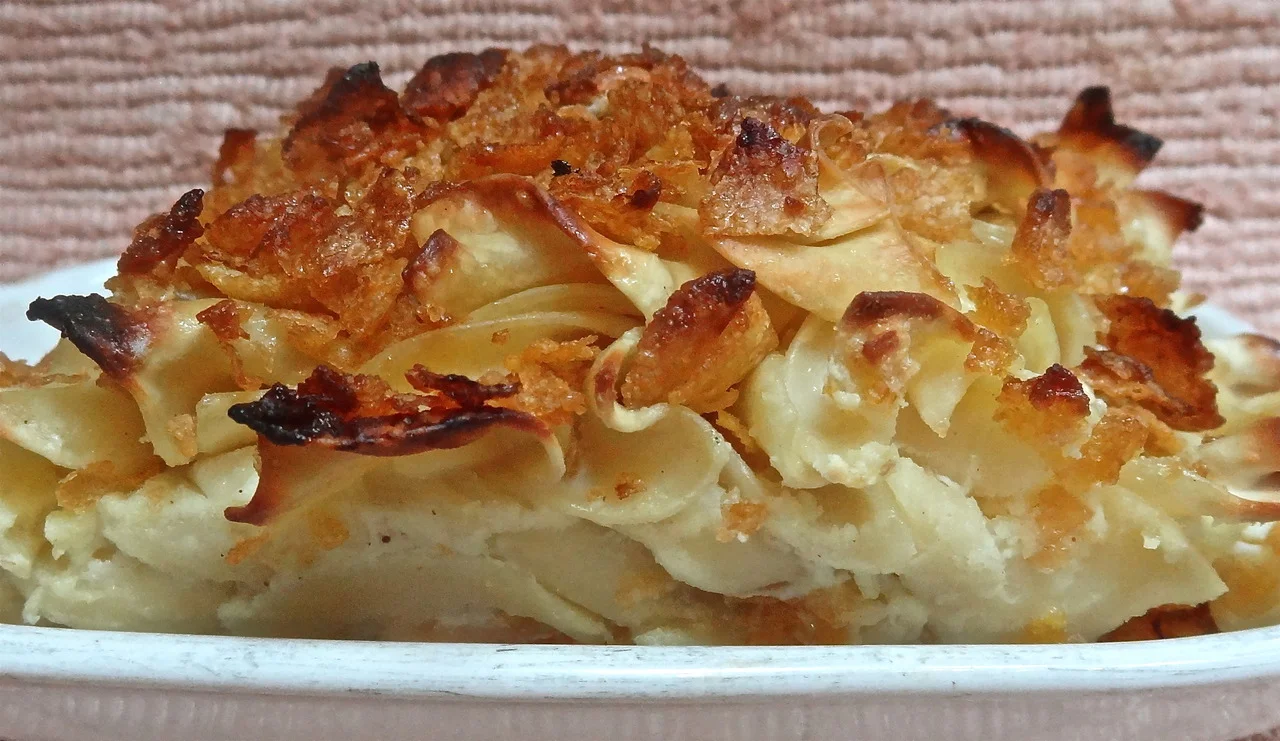
The Kugel to End all Kugels

This is the kugel to end all kugels.I mean it. I am a kugel-eating expert, if only because when I grew up my grandmother and mom made salty kugel stuffed with mushrooms and onions and it was only when I was grown, married and with kids that I had my…

This is the kugel to end all kugels.

I mean it. I am a kugel-eating expert, if only because when I grew up my grandmother and mom made salty kugel stuffed with mushrooms and onions and it was only when I was grown, married and with kids that I had my first taste of this. That taste was a transforming moment.

My friend Susan brought this dish to my annual Break-the-fast (she got the recipe from her friend Linda and I don’t know where Linda got it).

For years after that I have tasted more kugels than you could possibly imagine (including those hard, dried up things they sell in some supermarkets) always trying to surpass that moment of culinary discovery. 

I was even a judge once in a kugel contest.

I have made some wonderful kugels since then. But this is still my favorite. I always ask Susan to make an extra one so there will be leftovers. I pack pieces of it in my freezer so I can have a little treat whenever.

Don’t even think about the calories. Just enjoy.


Susan/Linda’s Sweet Noodle Kugel

      1 12-ounce package egg noodles

      1 8-ounce package cream cheese at room temperature

      1/4 pound unsalted butter at room temperature

      1 cup sugar

      2 cups dairy sour cream

      6 large eggs

      1 teaspoon cinnamon

      1 cup raisins, optional

      2 cups crushed frosted flakes or corn flakes

      4 tablespoons melted butter

Preheat the oven to 350 degrees. Cook the noodles in slightly salted water until al dente (not soft). Drain and set aside. In an electric mixer, beat the cream cheese and butter until thoroughly blended and softened. Beat in the sugar until well blended. Add the sour cream and blend thoroughly. Add the eggs one at a time, beating after each addition. Stir in the cinnamon and raisins, if used. Pour the mixture into the noodles and toss to coat them completely. Place in a baking dish. Combine the frosted flakes and melted butter and sprinkle on top of the noodles. Bake for about 40 minutes or until the top is crispy. 

Makes 8 servings  

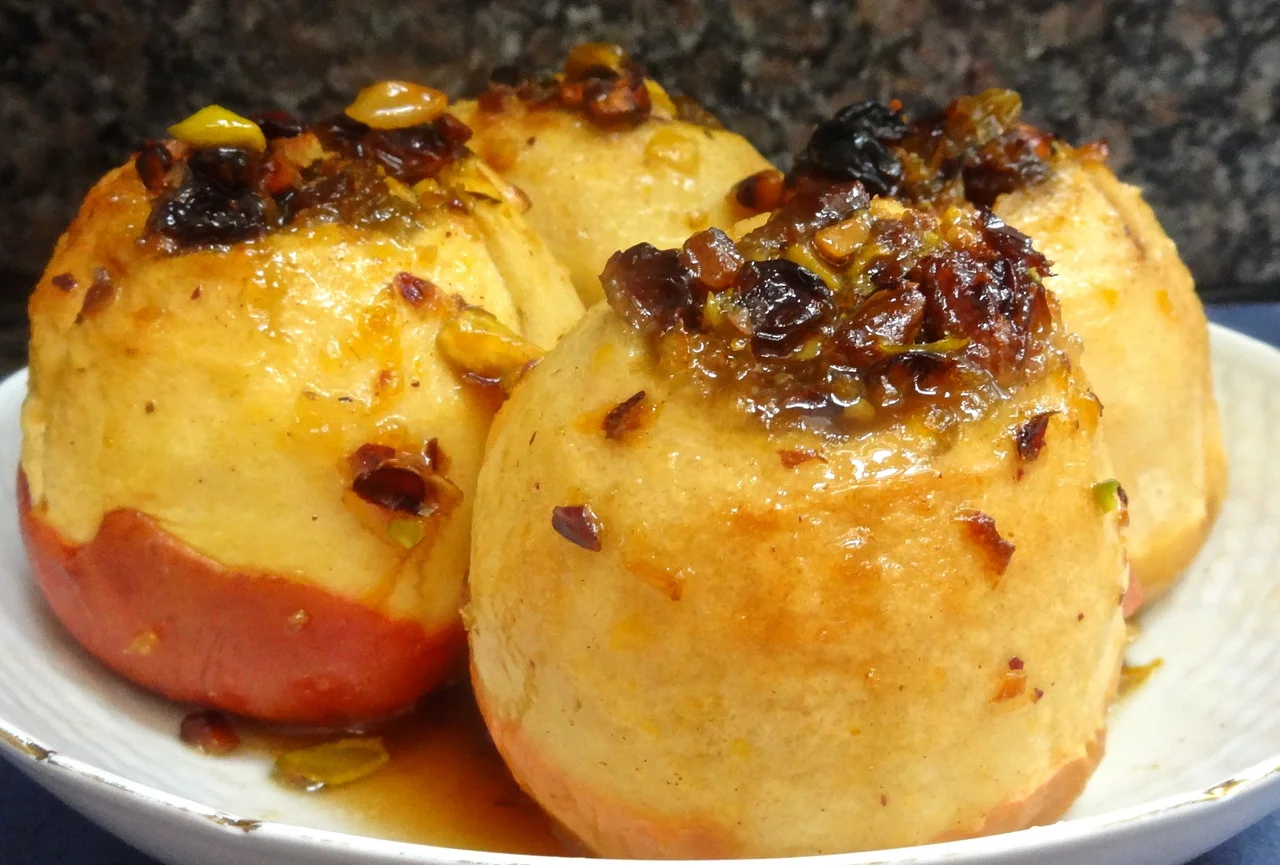
Baked Apples with Raisins, Honey, Orange and Pistachios

It’s apples and honey time. First, because those two ingredients are delicious symbols of Rosh Hashanah, which starts at sundown next Sunday.But also because new crop apples are just beginning their season, and after months and months of mealy, dry,…

Baked Apples with Raisins, Honey, Orange and Pistachioos

It’s apples and honey time. First, because those two ingredients are delicious symbols of Rosh Hashanah, which starts at sundown next Sunday.

But also because new crop apples are just beginning their season, and after months and months of mealy, dry, tasteless supermarket apples, we can finally find some that taste fresh, juicy and wonderful. Like maybe the kind that tempted Eve. 

And also because September is National Honey Month. Honey, too, is in a high season right now, especially in the Northeast.

So I was delighted to read an article in The Huffington Post that said honey has health benefits.

That means I am going to be terrifically healthy. I have several jars of honey in my pantry. That I keep replenishing because, well, I use a lot of honey.

Honey is so, so good, right from my fingers, as I scoop the remnants that remain on the outside as I close up the jar.

It also tastes really good poured onto ice cream, cereal and pancakes.

And it’s an incredibly useful ingredient in recipes for dessert, like honey cake and also in savory foods — like mixing it with apple juice to baste a turkey.

Honey as healthy?

Well, that’s just an added bonus.

When I read the article and it mentioned using honey to help with night time coughs I thought about where I had heard that before.

Oh yeah. My Mom. Ages ago, when I was a little girl and had a cold and she mixed honey into tea.

Some things never change, nor should they.

Here’s an old recipe that I can now say is healthy because it has honey. Also, fresh, new crop apples.

It’s also a wonderful treat for Rosh Hashanah or any other holiday or any day in the week.

BAKED APPLES WITH RAISINS, HONEY, ORANGE AND PISTACHIOS

  • 4 large baking apples

  • 6 tablespoons golden raisins

  • 1/4 cup chopped pistachios

  • 2 teaspoons grated fresh orange peel

  • 1/2 teaspoon ground ginger

  • 1/4 teaspoon ground cinnamon

  • 6 tablespoons honey

  • 1/2 cup orange juice

  • 1/2 cup water

  • 1 tablespoon butter, cut into 4 pieces (or use coconut oil)

Preheat the oven to 375 degrees. Wash the apples and remove the cores, leaving about one-half inch at the bottom. Peel the apples about halfway down from the top. Place the apples in a baking dish. Mix the raisins, pistachios, orange peel, ginger, cinnamon, 3 tablespoons honey and 3 tablespoons orange juice in a small bowl. Spoon equal amounts of this mixture into the hollowed apple cores. Combine the remaining honey, juice and water and pour over the apples. Dot the tops with butter. Bake for 45 minutes, or until the apples are tender, basting occasionally with the pan juices.

Makes 4 servings

Milk and Honey White Bread

95954099_2581425922125465_2398630099697008640_n.jpg
Milk and Honey Bread

Milk and Honey Bread

Sometimes I’m just bored with all food. It frequently happens after a summer’s worth of grilling and when roasting a turkey or making a hearty stew doesn’t seem right yet.

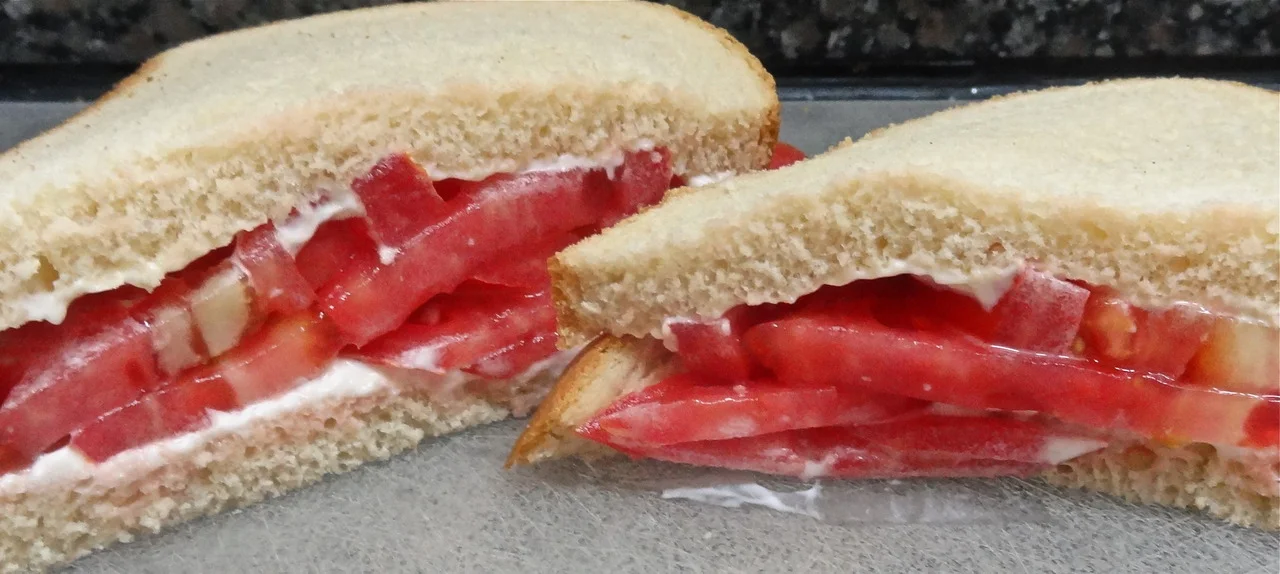
Also, the tomatoes are coming in now. Real tomatoes. Red, red ones. Aromatic, juicy, sweet, oozing seeds tomatoes. Late August tomatoes.

Then, for dinner, at least one night, I can make tomato sandwiches. Nothing special. I have no need for $40 olive oil or rare, aged Balsamic vinegar. No chili pepper additions. No teriyaki or hummus. No fusion version.

Just white bread, mayo and sliced tomatoes.

Nothing more. Life is sweet.

Packaged (not soft white) or bakery white bread will do. But if you like to bake and have a few moments, here’s a recipe for a spectacular bread that measures up to a good tomato.

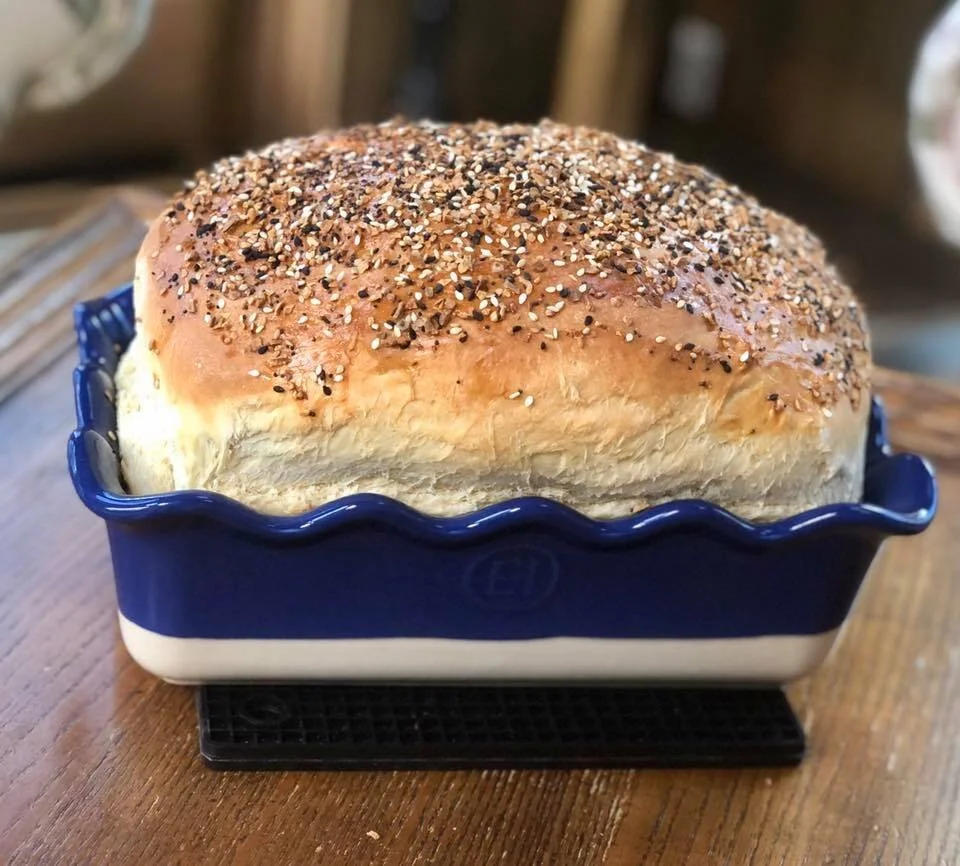
Milk and Honey White Bread

  • 1 package active dry yeast

  • 1/4 cup warm water (105-110 degrees)

  • 1/4 teaspoon sugar

  • 4 cups all purpose flour, approximately

  • 1-1/2 teaspoons salt

  • 2 large eggs

  • 2 tablespoons softened butter or vegetable oil

  • 3/4 cup warm milk

  • 2 tablespoons honey

In a small bowl, mix the yeast, water, sugar and 1/2 teaspoon flour. Stir, set aside and let rest for 5 minutes or until the mixture is bubbly. In a bowl of an electric mixer, combine the remaining flour and salt. Add the eggs, butter, milk and honey. Add the yeast mixture. Blend ingredients thoroughly, then knead using the kneading hook, for 4-5 minutes or until the dough is smooth and elastic (or knead by hand for about 10 minutes). Add more flour as necessary to keep the dough from being sticky. (Dough may be made in a food processor). Cover the bowl of dough and put it in a warm place to rise for about 1-1/2 hours or until doubled in bulk. Punch down the dough, cover the bowl and let rise again for about 30 minutes or until doubled. Lightly oil a 9” loaf pan. Place the dough in the pan. Let rise in a warm place for 30 minutes. Preheat the oven to 350 degrees. Bake for about 25 minutes or until firm and golden brown.

Makes one

Corn fritters

Do you ever daydream about foods you haven’t had in a long time?Like the fried chicken you used to eat but you don’t now because it’s too fattening, too fatty and too messy to make?Or Mac n’ Cheese the way your Grandma made it, but it doesn’t taste …

Do you ever daydream about foods you haven’t had in a long time?

Like the fried chicken you used to eat but you don’t now because it’s too fattening, too fatty and too messy to make?

Or Mac n’ Cheese the way your Grandma made it, but it doesn’t taste the same since she’s gone?

Or the original Bonomo’s Turkish Taffy that doesn’t taste anything like it used to so you don’t bother?

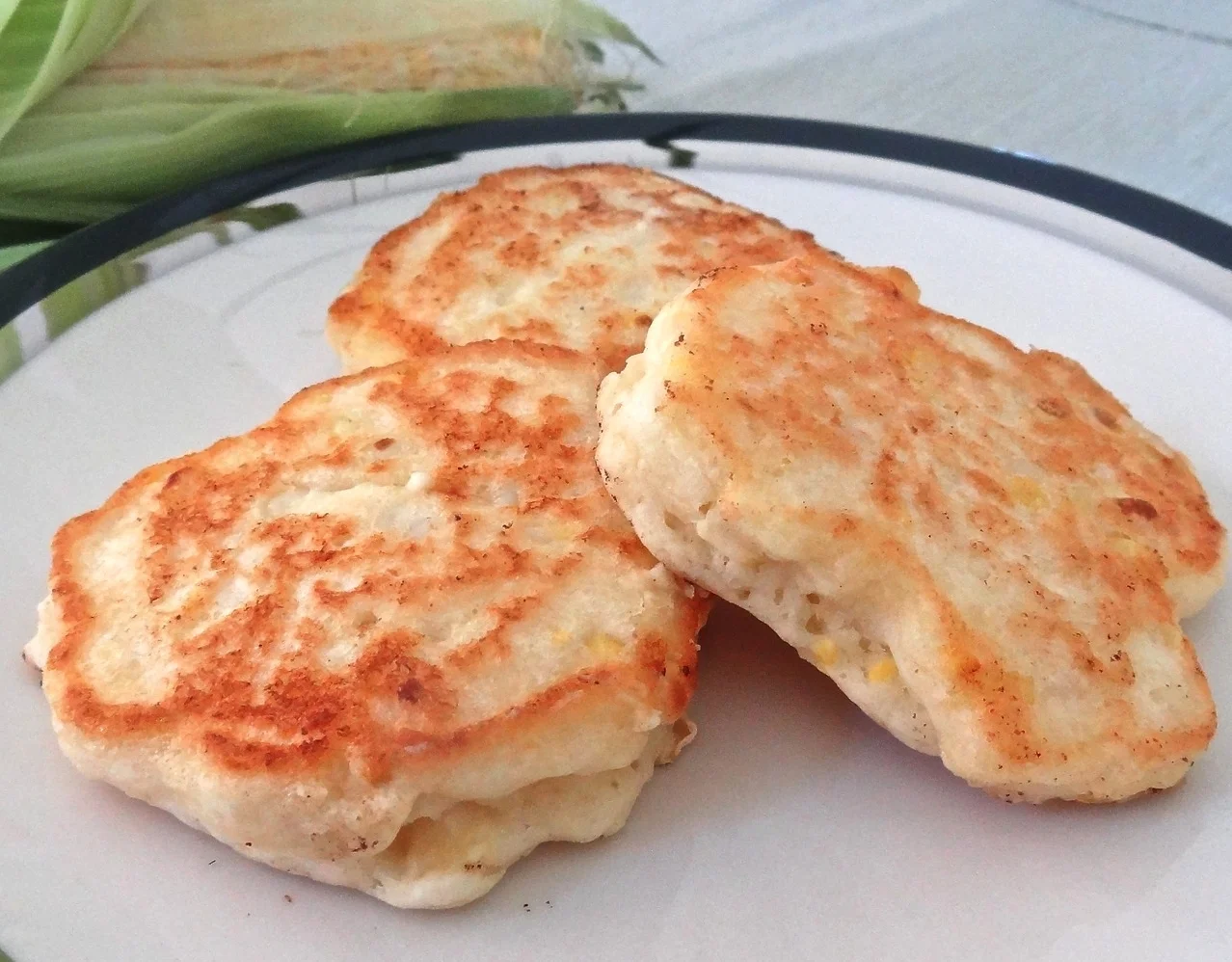
One of the foods I think about more than occasionally is my Mom’s Corn Fritters. Crispy outside, soft and puffy within, and loaded with corn. Great for breakfast, lunch or dinner. With a little real maple syrup.

It’s an indulgence, to be sure, so I don’t make them too often. But I just had to have some yesterday. I had been thinking about them, mostly because I had some corn left over from a few extra cobs I cooked over the weekend.

So I made some. I changed one important ingredient though. I switched from dairy milk to coconut milk. UNSWEETENED refrigerator case coconut milk (not canned).

The fritters were vaguely sweeter, but every bit as wonderful, delicate, crispy-edged and perfect. I think Mom would approve.


CORN FRITTERS


2 tablespoons margarine or butter

1 large egg

1 cup coconut milk (or use regular, whole milk)

2 cups cooked corn kernels (about 4 ears of corn)

1-1/4 cups all-purpose flour

1 tablespoon baking powder

1 teaspoon sugar

1-1/4 teaspoons salt (or to taste)

margarine/butter/vegetable oil for frying

maple syrup, optional

Melt the butter and set it aside to cool. In a bowl, beat the egg and coconut milk together. Stir in the cooled melted butter and the corn kernels. In a second bowl, mix the flour, baking powder, sugar and salt; add this to the corn mixture and stir ingredients gently to blend them together. Heat enough margarine, butter and/or vegetable oil in a saute pan over medium heat. When the fat has melted and looks foamy (or the vegetable oil is hot), drop the corn batter by the 1/4-cupful. Cook for about 2 minutes or until the bottom has browned. Flip the pancakes and cook for another 2 minutes or until the second side is brown. Serve with maple syrup if desired.

Makes 6-8 servings

Blueberry Crisp

What’s one of the best things you can do with boxed breakfast cereal? Use it as crust for fruit crisps!My Mom used cereal crust over apples and when I went to visit my parents on cool autumn days the perfume of this dish baking in the oven would rea…

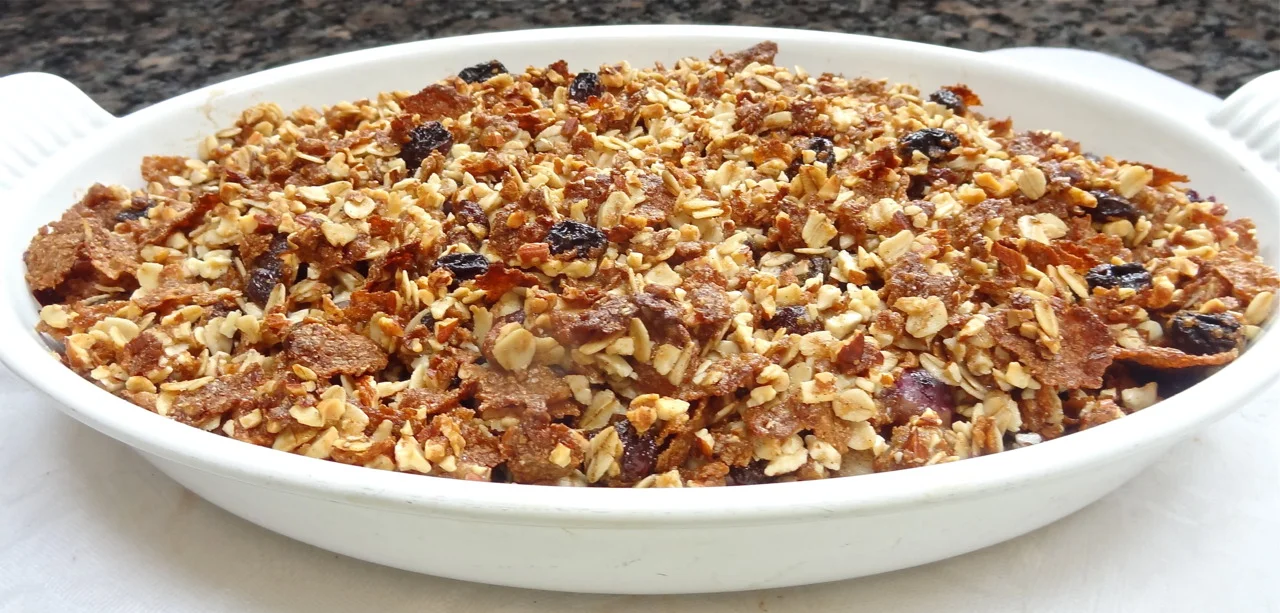
What’s one of the best things you can do with boxed breakfast cereal? Use it as crust for fruit crisps!

My Mom used cereal crust over apples and when I went to visit my parents on cool autumn days the perfume of this dish baking in the oven would reach me all the way out past the garage. As soon as I opened the car door I’d know I was in for a really good treat for dessert. 

She served the dish still warm, with cold cream on top.

Those were good days.

When I wrote my last cookbook, Hip Kosher, I decided to include My Mom’s special recipe but use it with blueberries, not apples. And this week, when I saw some good looking blueberries on sale, I decided to make that dish for my weekend company. I used Raisin Bran, rolled oats and almonds.

This was a big hit. 

Btw, for variety, you can make a simple change by adding some sliced peaches.


BLUEBERRY CRISP  


2 pints fresh blueberries

1/3 cup sugar

5 tablespoons all-purpose flour

1/4 teaspoon ground cinnamon

2 tablespoons lemon juice

1 cup bran flakes or raisin bran

1/2 cup quick cooking or rolled oats

1/2 cup chopped nuts such as almonds, cashews or pecans

1/4 cup brown sugar

1/2 teaspoon ground cinnamon

6 tablespoons melted unsalted butter or margarine


Preheat the oven to 350 degrees. Combine the blueberries, sugar, flour, 1/4 teaspoon cinnamon and lemon juice in a 6-quart baking dish. Set aside. Crush the cereal flakes slightly and put them in a bowl. Add the oats, nuts, brown sugar and 1/2 teaspoon cinnamon and toss ingredients to distribute them evenly. Pour in the melted butter. Mix until the dry the ingredients are coated with the melted butter. Place the cereal mixture over the fruit. Bake for 30 minutes or until the crust is crispy and brown. Let cool slightly but serve warm (may be rewarmed). Serve plain or with cream, ice cream, whipped cream, or sorbet.

Makes 6–8 servings.

Farro Salad with Carrots, Peas, Tomatoes and Dill

Farro is becoming trendy. So says this article, which I read recently.Actually, farro has been pretty popular in my house for the last several years. It’s one of those whole grains, you know, the stuff everyone says is so healthy, full of fiber…

Farro is becoming trendy. So says this article, which I read recently.

Actually, farro has been pretty popular in my house for the last several years. It’s one of those whole grains, you know, the stuff everyone says is so healthy, full of fiber and nutrients and so on.

It’s popular with me because it tastes so good and because there are so many things you can do with it.

I first cooked farro because I was getting bored with white rice, brown rice, black rice, red rice and every other kind of rice. And with pasta, potatoes and egg noodles. And there’s been an overload of quinoa recently too.

But I wanted something filling and “starchy” as a side dish with dinner. 

There was this little bag of farro in the store. It looked intriguing. I decided to give it a try.

SUCCESS! Farro is sumptuous and tastes sort of nutty and toasty.

I’ve made it dozens of ways, treating it just like rice: steamed, poached, sauteed, in pilaf. Plain. With vegetables. As a salad, drizzled with vinaigrette.

Every recipe is terrific.

Some say farro is the same as spelt, but it is actually a different, if similar grain. It is also a lot like wheatberries and oat groats (so you can substitute those in recipes). Farro is sometimes called emmer wheat. 

Do try it. You can use it all summer in a salad and all through the year in other ways.

Here’s one recipe we love at our house. 

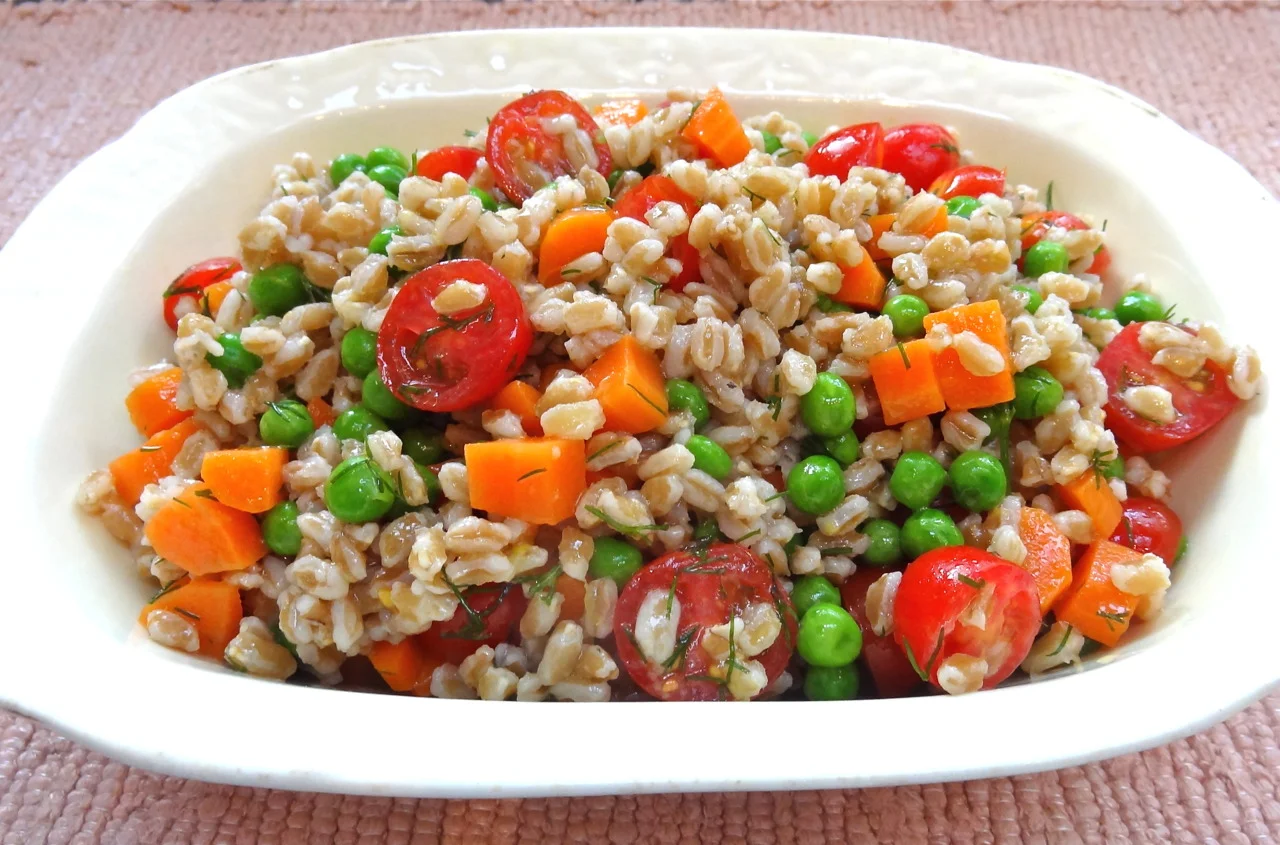
Farro Salad with Carrots, Peas, Tomatoes and Dill


1 cup farro

1-3/4 cup water or vegetable stock

2 carrots, chopped

1 cup thawed frozen green peas

1 cup halved grape tomatoes

3 tablespoons olive oil

2 tablespoons lemon juice

1-1/2 tablespoons chopped fresh dill

1 teaspoon grated fresh lemon peel

salt and freshly ground black pepper to taste


Place the farro and water in a saucepan and bring the liquid to a boil over high heat. Lower the heat, cover the pan and simmer for about 30 minutes or until the farro is tender, but still chewy. Set the farro aside to cool slightly. Cook the carrots in boiling water for 3-4 minutes or until tender. Drain and add to the farro. Add the peas and tomatoes and toss the ingredients to distribute them evenly. In a separate bowl or a jar, combine the olive oil, lemon juice, dill and lemon peel. Whisk the ingredients until well combine (or shake in a covered jar). Pour into the farro mixture and toss the ingredients. Season to taste with salt and pepper.


Makes 4-6 servings 


Imam Bayildi

Need a good side dish? Imam Bayildi is one of my favorite go-to recipes whenever I am at a loss. It’s a good family dish and also works for company. 

I learned to make Imam Bayildi years ago when I was working on an article for eggplant. I found a recipe and the name of the dish, translated, was so intriguing — “the Imam fainted” — I had to try it. If only because, as the story goes, the Imam (an Islamic clergyman or spiritual leader) who first ate this dish was so delighted that he passed out from joy.

Well, whether the tale is apocryphal or not, this dish is very very good. And what’s more, you can serve it hot, warm or at room temp, so you can either get it together in advance and cook it for dinner, or make the whole thing in advance and serve it for dinner.

It’s also a good item for a vegetarian meal (I like it accompanied by scrambled eggs or mushroom ragout).

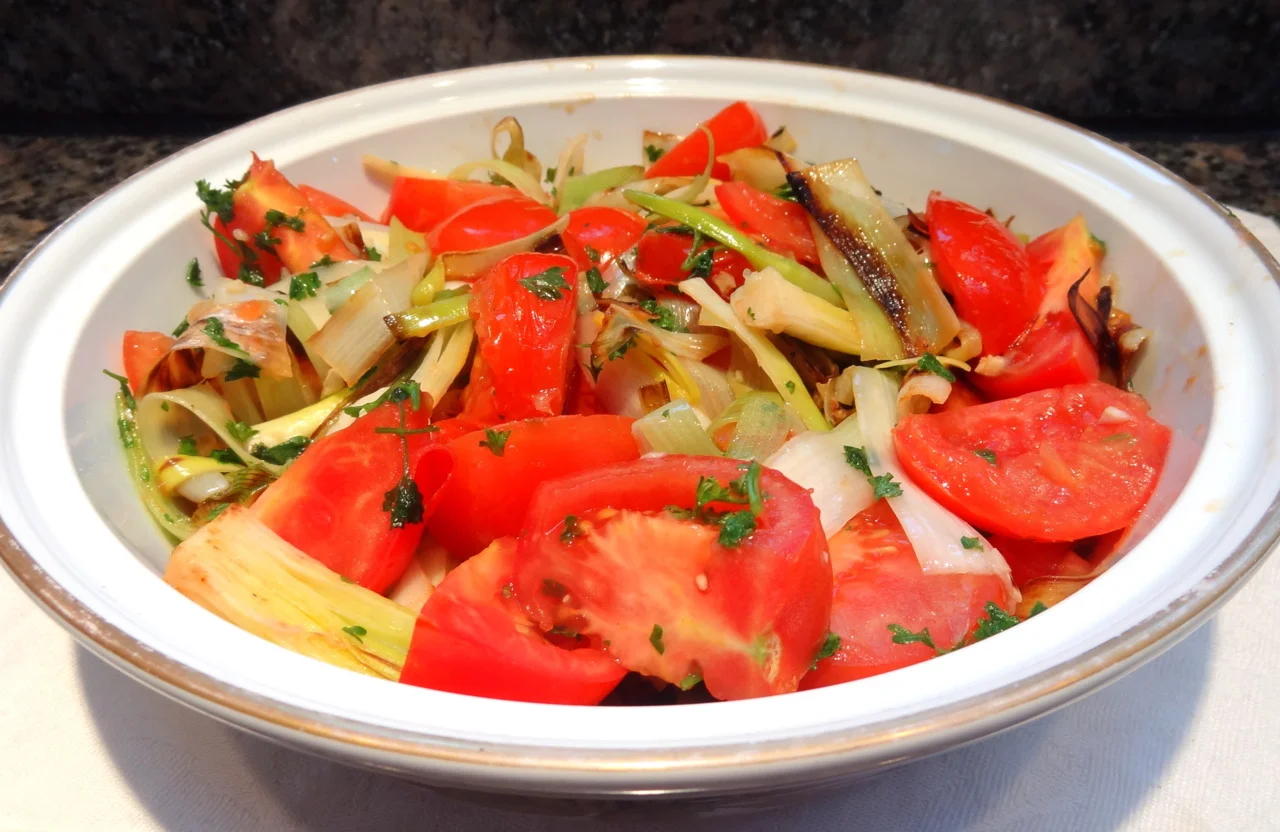
This year during Passover I made this dish for dinner and used leeks instead of the usual onions. My family liked it even better this way, so here’s the recipe.

Btw, a tumblr reader once told me she added olives to the dish when she made it. I’ve tried that and it is delicious! So, add some olives if you like — black, pitted olives make the dish even more colorful.

Imam Bayildi

  • 1 medium eggplant

  • salt

  • 1/2 cup olive oil

  • 3 medium leeks, cleaned and sliced

  • 2 large cloves garlic, chopped

  • 3 large tomatoes, deseeded and chopped

  • 3 tablespoons chopped fresh parsley

  • 1 teaspoon sugar

  • 1 teaspoon salt or to taste

  • 3 tablespoons fresh lemon juice

  • 1/3 cup water

Cut the eggplant into slices about 3/8-inch thick. Sprinkle with salt and let rest for 30 minutes. Wipe the eggplant slices dry with paper towels. Preheat the oven to 350 degrees. Heat one tablespoon olive oil in a saute pan over medium heat. Cook the eggplant slices a few at a time for 2-3 minutes per side or until slightly wilted. Add more olive oil to the pan as needed to prevent scorching (use 4-5 tablespoons more if needed). Place the cooked eggplant into a baking dish (cut it into smaller pieces if you wish). Add 2 tablespoons olive oil to the pan. Add the leeks and cook for 2-3 minutes. Add the garlic and cook for another minute. Add the tomatoes, parsley, sugar, salt and lemon juice. Cook for one minute, stirring frequently. Spoon the vegetables on top of the eggplant. Drizzle with any remaining olive oil and the water. Cover the pan and bake for 45 minutes. Serve hot, warm or at room temperature.

Makes 6-8 servings

Milk and Honey White Bread

IMG_4602.jpeg

Would you believe — there’s a book entirely devoted to white bread. It’s called, (of course), “White Bread” and has a cover reminiscent of a loaf of packaged Wonder Bread.

I thought the scorn for white bread was something new. But according to the author, Aaron Bobrow-Sprain, apparently there’s been a lot of controversy about this stuff on and off for centuries. Some of it had to do with food safety issues. But some of it had to do with racism (one health advocate apparently thought white bread was “threatening white racial superiority”).

Who knew?

When I was growing up my Mom would buy bakery rye bread and something called “corn bread” which isn’t that yellow, cakey Southern style stuff but more like sour-dough rye bread and was known in Jewish neighborhoods as “Jewish corn bread.” Those were for having with dinner. Or toasting for breakfast. Or for deli sandwiches.

But she bought packaged white bread too. It was the modern thing. The help-the-little-lady convenience food. It was too convenient not to buy. And there weren’t very many choices in packaged bread anyway. Maybe whole wheat, but I didn’t know anyone whose mother bought packaged whole wheat bread.

My mother bought packaged white bread for this reason (which Bobrow-Sprain also acknowledges), and that is, there are certain kinds of sandwiches that just don’t work with rye, corn bread or any kind of fancy artisinal loaves.

Like peanut butter and jelly and mostly, my mother’s fried-to-a-crisp kosher salami with yellow mustard. That salami was hot and sizzling, right out of the pan when she put it on the mustard-slathered slices and when you held the sandwich to take a bite, your fingers would make such deep indentations in the soft bread that sometimes it made a hole in the sandwich. Never mind. That’s the way it was supposed to be with packaged white bread.

I could actually have one of those sandwiches now. It’s been years.

No, decades.

Generations.

I don’t remember when I last bought packaged white bread. 

I do bake white bread though. With one of my help-the-little-lady convenience machines like my KitchenAid mixer and my Cuisinart food processor. With either of those it’s not that difficult to make a good loaf of bread.

I don’t agree with those who say white bread is bland. Sometimes it’s the ingredients on the bread that you want to give a starring role, not the bread itself. Like that fried salami.

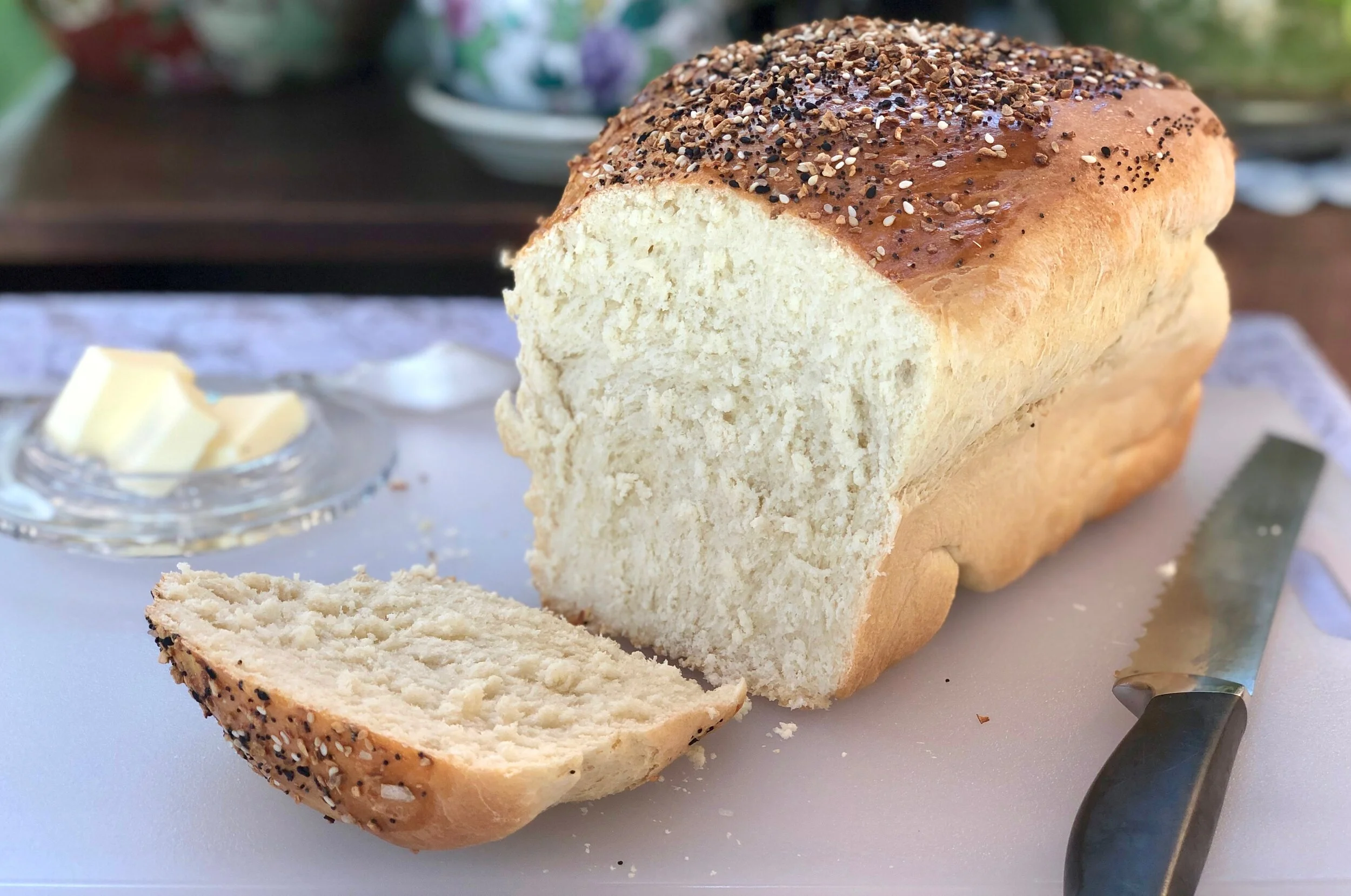
So, for any of you who would like to have a good white bread, try this recipe.

Milk and Honey White Bread

  • 1 package active dry yeast

  • 1/4 cup warm water

  • 4 cups all-purpose flour, approximately

  • 1/4 teaspoon sugar

  • 1-1/2 teaspoons salt

  • 2 large eggs

  • 2 tablespoons softened butter

  • 3/4 cup warm milk

  • 2 tablespoons honey

  • 1 egg beaten with 1 teaspoon water

Place the yeast and 1/4 cup water in a small bowl. Add 1 teaspoon flour and the sugar. Mix well and set aside for about 5 minutes. In the bowl of an electric mixer, combine the remaining flour and salt. Add the 2 eggs, butter, milk, honey and the yeast mixture. Blend ingredients thoroughly. Knead until the dough is smooth and elastic, adding more flour if the dough seems too sticky. Dough should be soft but not sticky. Place the dough in a bowl, cover and let rise in a warm place for about 1-1/2 hours or until doubled in bulk. Punch down the dough, knead briefly and let rise again for 20 minutes.

Preheat the oven to 350 degrees. 

Lightly grease a 9” loaf pan. Place the dough inside the pan. Let rise for another 30 minutes. Brush the surface of the bread with the beaten egg. Bake for about 30 minutes or until golden brown and well risen.

Makes one loaf