Jewish food

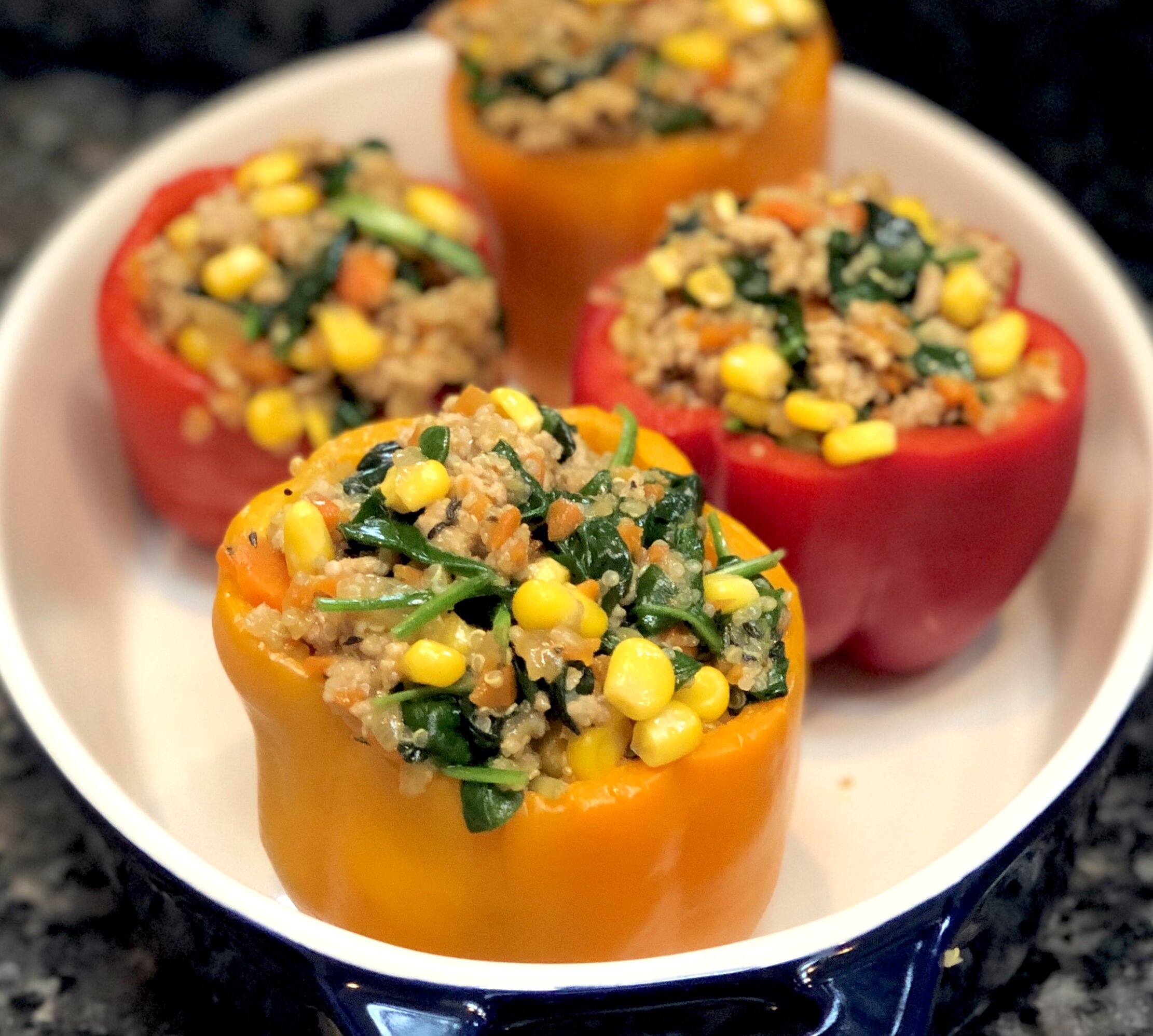
Quinoa, Turkey and Veggie Stuffed Peppers

fullsizeoutput_b930.jpeg

My grandma made stuffed peppers for Sukkot. Unfortunately they weren’t my favorite dish because bell peppers and my stomach don’t get along, even when I was a kid.

But I did love what she put on the insides. It was sort of a Turkish-style filling. The family wasn’t Turkish, they were from Romania, which was part of the Ottoman Empire when she was a girl, and a lot of the food she made was influenced by the fabulous cuisine of Turkey.

I realized later in life that using red, orange and yellow peppers made all the difference to my digestive system. They are much easier going down than the green ones my grandma always used! So, I’ve made and enjoyed her recipe from time to time over the years.

But this year I decided on a whole new stuffing based on quinoa instead of rice. It’s nothing like grandma’s but is very tasty and it reminds me of her anyway.

Veggie and Quinoa Stuffed Peppers

  • 4 large bell peppers

  • 1/4 cup quinoa

  • 1/2 cup chicken or vegetable stock or water

  • 2 tablespoons olive oil

  • 2 chopped carrots

  • 1 medium onion, chopped

  • 1 large clove garlic, chopped

  • 1 cup ground veal, beef or turkey

  • 2 packed cups chopped spinach

  • 1 cup corn kernels

  • 2 large eggs

  • 2 teaspoons chopped fresh thyme

  • Salt and freshly ground black pepper to taste


Preheat the oven to 350 degrees. Cut the top of the peppers to remove about 1/2-inch from the top. Reserve the caps. Reach inside the peppers and remove the stringy flesh and the seeds. Place the peppers open side up in a large pot. Fill the peppers with water, then carefully fill the pot with water to cover the peppers. Bring the water to a boil over high heat. Cover the pan. Reduce the heat to medium. Cook for 3-4 minutes. Remove the peppers with a slotted spoon and let cool. Place the quinoa and stock in a saucepan, bring to a boil over high heat, reduce the heat to low, cover the pan and cook for about 15 minutes or until all the liquid has been absorbed and the quinoa is fluffy. Set aside. Heat the olive oil in a sauté pan over medium heat. Add the carrots, onion and garlic and cook for 3-4 minutes, to soften them slightly. Add the veal and spinach and cook, breaking the meat into smaller pieces, for 3-4 minutes or until no longer pink. Remove the pan from the heat. Stir in the corn and quinoa and stir to distribute the ingredients evenly. Mix in the eggs, thyme and salt and pepper to taste. Spoon equal amounts of the mixture inside the peppers. Cover with aluminum foil and bake for 25 minutes. Remove the cover and bake for another 10-15 minutes or until the peppers are tender.

Makes 4
Beet Salad with Pepitas

fullsizeoutput_b38f.jpeg

Lucky me!

My entire Rosh Hashanah celebration has changed for the better. I thought it would just be Ed and me, attending Zoom services and sharing a meal for two.

But my kids and grandkids are coming too! We will watch outdoors on the patio. And be together —- sort of — for a meal! Each family will have a separate place to eat.

I can’t tell you how thrilled I am, even though it won’t be normal and we can’t hug and kiss. But it’s something. And I am grateful.

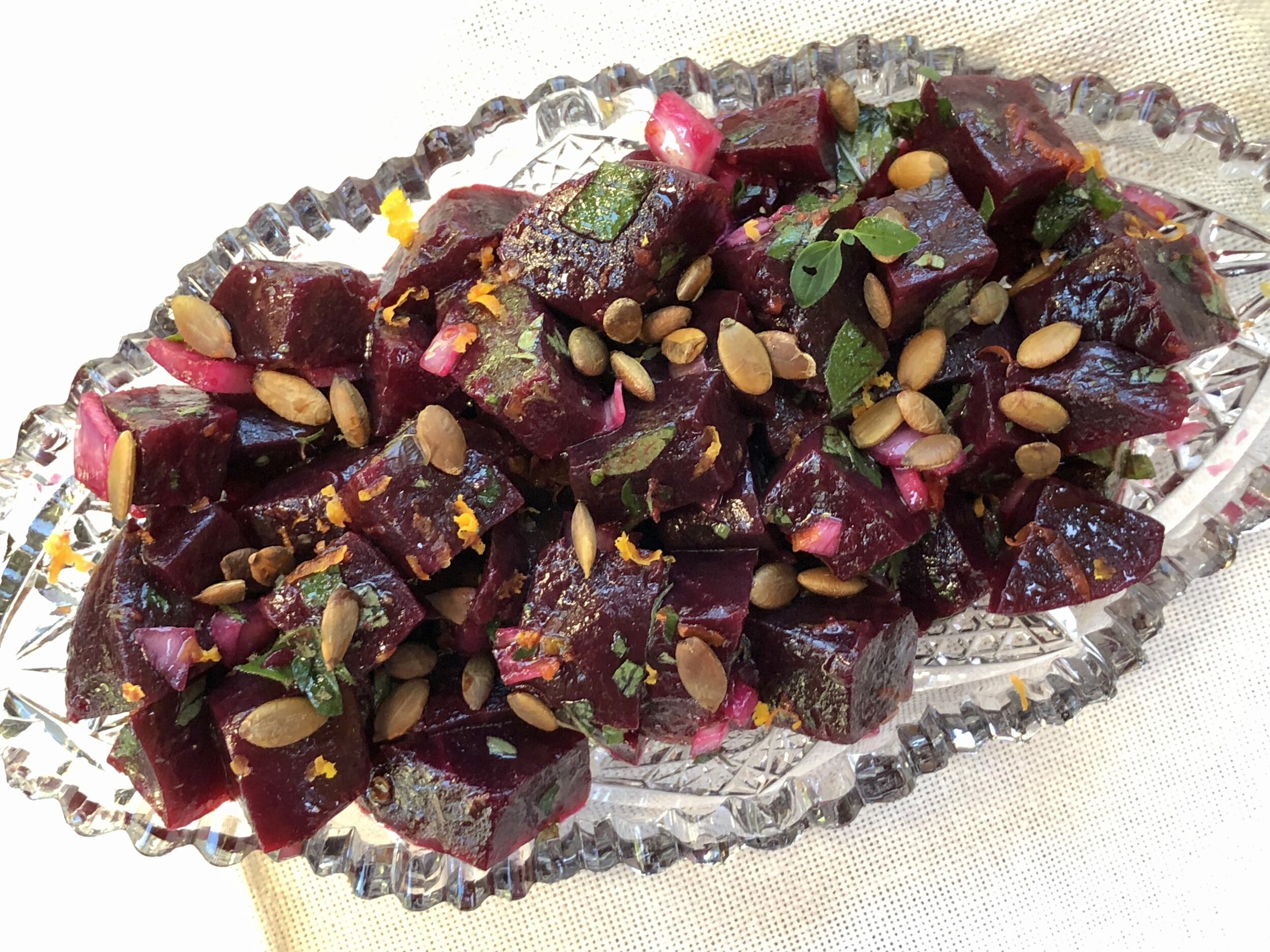
Instead of the chicken dish I was planning to make, it’s going to be food for a family, not just the two of us: brisket (I was finally able to get one) and a turkey breast plus several sides, including this beet salad, which I can make in advance and scatter with seeds at the last minute.

This is better than the original plan. For sure.

Beet Salad with Pepitas

  • 3 large beets, trimmed

  • 3 scallions, chopped (or one large shallot or 1/3-1/2 cup chopped red onion)

  • 2 tablespoons olive oil

  • 3 tablespoons orange juice

  • 2 tablespoons chopped fresh mint

  • 1 teaspoon grated fresh orange peel

  • salt to taste

  • 2 tablespoons toasted pepitas

Preheat the oven to 425 degrees. Scrub the beets and wrap them tightly in aluminum foil. Roast until tender, about 45-75 minutes, depending on size. Unwrap the beets and when they are cool enough to handle, peel them. Cut the beets into bite size pieces. Place the beet chunks in a bowl. Add the scallions, olive oil, orange juice, mint and orange peel. Toss ingredients. Sprinkle with salt. Let rest for at least 15 minutes before serving. Sprinkle with pepitas. Serve at room temperature. 

Makes 4-6 servings


Smoked Salmon and Cottage Cheese Pie

fullsizeoutput_bee6.jpeg

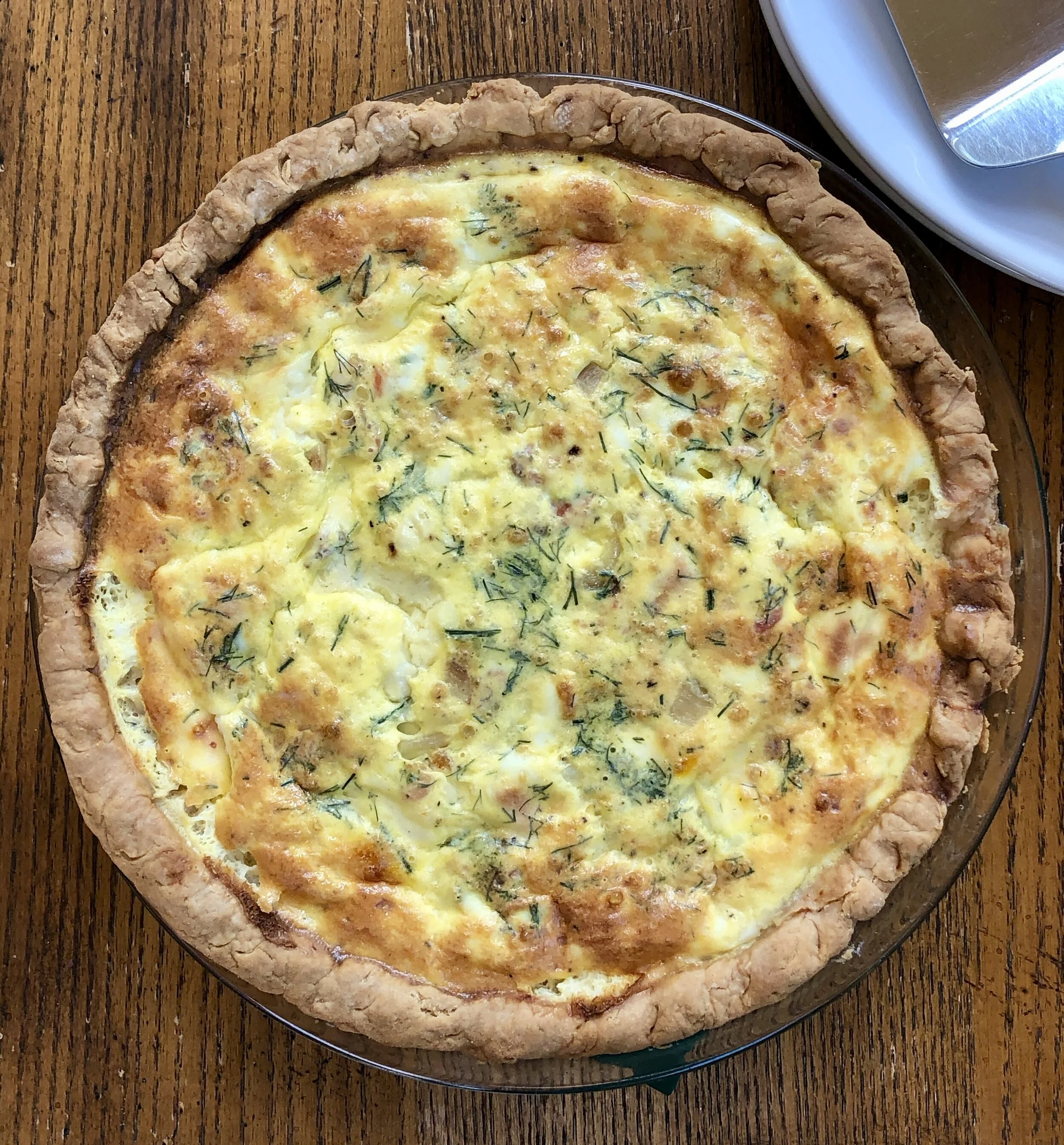
Last week I made the ideal dish.

By that I mean it is light and easy to eat during the scorching days of summer.

It’s meatless, so perfect for the Nine Days and any other time we don’t want to eat the usual meat-two-veggie or salad dinner.

I got to use up leftovers and bits of this and that (smoked salmon, cottage cheese, cream cheese).

It served as dinner and also as hors d’oeuvre — I rewarmed the leftover portion and cut it into bite-size pieces for some socially distanced company.

You can use any leftover fish. I happened to have smoked salmon, so that’s what I used.

Smoked Salmon and Cottage Cheese Pie

  • 1 tablespoon butter

  • 1 large shallot, chopped

  • 1 partially baked pie crust

  • 3-4 ounces smoked salmon, chopped

  • 2 tablespoons cream cheese

  • 4 large eggs

  • 1 cup cottage cheese

  • 1 cup half and half

  • 2 tablespoons chopped fresh dill

  • 1/2 teaspoon salt or to taste

Preheat the oven to 375 degrees. Heat the butter in a small frying pan over medium heat. When the butter has melted and looks bubbly, add the shallot and cook for 3-4 minutes or until softened. Spoon the shallot onto the bottom of the partially baked pie crust. Scatter the salmon pieces on top. Cut the cream cheese into small pieces and scatter them on top. In a bowl, beat the eggs, cottage cheese, half and half, dill and salt together until well mixed. Pour into the pie crust. Bake the pie for about 45 minutes or until the top is nicely browned and the custard has set.

Makes 4-6 servings

Whitefish Cakes with Asparagus and Egg

fullsizeoutput_b6aa.jpeg

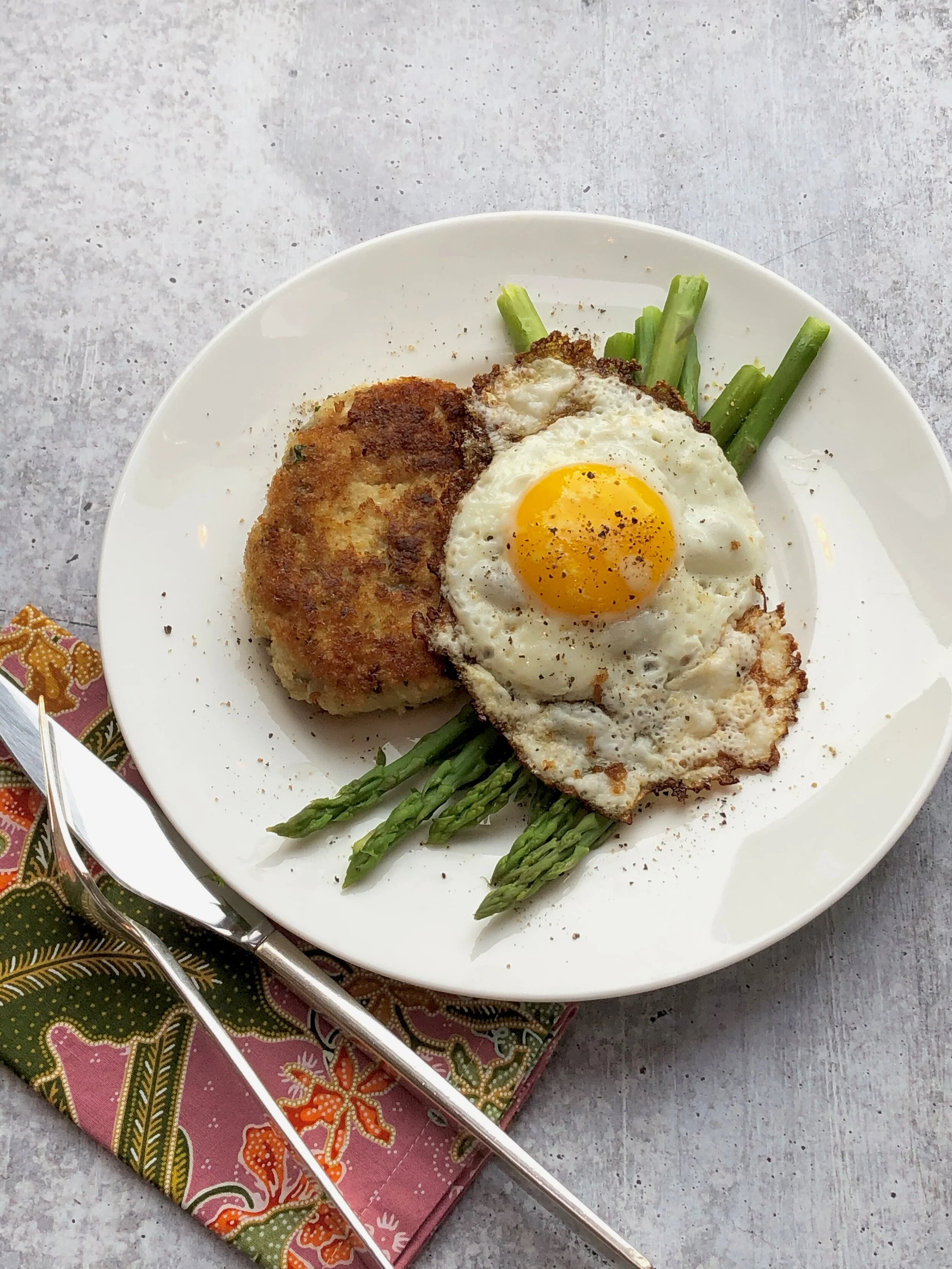
If you’re refraining from eating meat during the Nine Days, or because the weather is hot and humid and the thought or eating something heavy like meat is beyond your emotional capacity or you just love the occasional meatless meal, try these fish cakes!

I had leftovers from a large smoked whitefish that we didn’t finish — but it would work with any cooked fish (I’ve made this dish with smoked trout and cooked salmon).

It’s also the kind of amazingly versatile recipe you need during a pandemic when you may not be able to shop or find the exact ingredients you need and you also don’t want to waste any food.

So, for example, if you don’t have red onion, use scallion or chives or shallot or plain old yellow onion.

No matzo meal? Use dry bread crumbs. Or panko. No parsley? Substitute fresh dill, basil or thyme.

Add a fried egg, a vegetable (here I’ve shown it with asparagus but carrots, spinach, cooked kale and so on would work too) and the meal is complete.

Whitefish Cakes with Asparagus and Egg

  • 2 cups mashed smoked whitefish

  • 1/3 cup chopped red onion

  • 2 tablespoons chopped fresh parsley

  • 1/4 cup matzo meal

  • 2 large eggs

  • 1/2 cup matzo meal, approximately

  • 20-24 asparagus spears

  • 2 tablespoons butter, margarine or vegetable oil

  • 4 large eggs

Place the whitefish, red onion, parsley and 1/4 cup matzo meal in a bowl and mix briefly. Add the eggs and mix to combine the ingredients. Shape into 4 thick patties (about 1/2-inch). Place the 1/2 cup matzo meal on a dish and press the fish cakes into the matzo meal to coat both sides. Refrigerate the patties for 30-60 minutes. Heat the oven to warm (or use a warming drawer.) Heat the butter in a large saute pan over medium-high heat. Fry the fish cakes for about 3-4 minutes per side or until crispy. While the fish cakes are frying, steam the asparagus for 3-4 minutes or until crisp tender. When the asparagus are cooked, place equal amounts on dinner plates and top each with a fish cake. Keep warm in the oven or warming drawer. Heat the remaining tablespoon butter; when it has melted add the eggs and fry until desired consistency. Place one egg on top of each asparagus-topped fish cake.

Makes 4 servings

Homemade Lekvar

fullsizeoutput_bdf1.jpeg

A few days ago, while looking into my cupboard for something, I found an unopened package of prunes that had reached its "best by" date. Indeed, when I opened it, the prunes were a bit too dry for tasty snacking.

But!

I can’t throw out perfectly good food. Rather than discard, I decided to make my own lekvar (and then use it for all sorts of recipes).

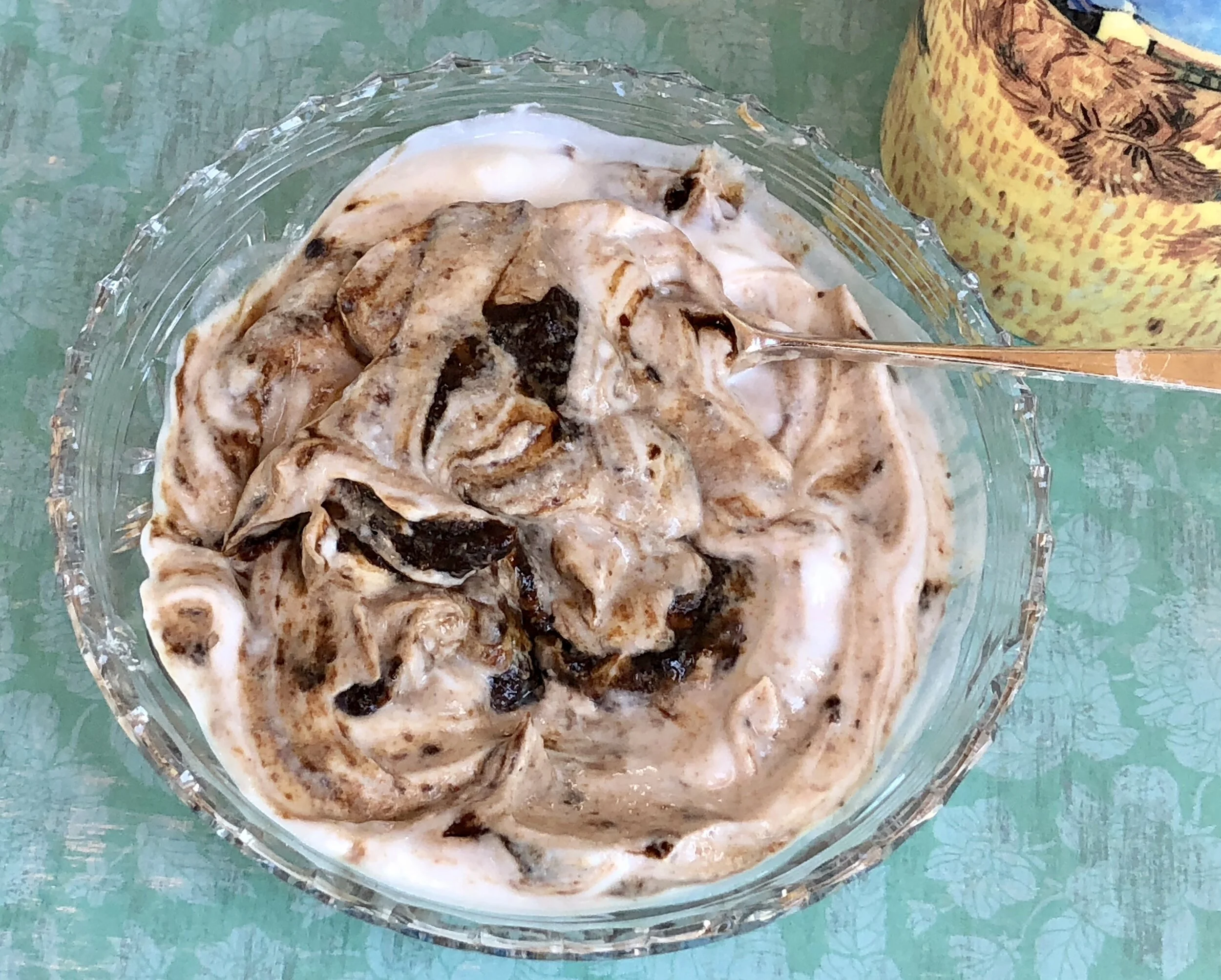
For several mornings I had some lekvar with yogurt (awesome). Just like the old days when Dannon had a perfectly wonderful prune yogurt.

I also made some of our treasured family recipe of butter cookies and used the lekvar for filling the center.

I don't ever have to buy lekvar again.

Here’s the recipe. I added fresh ginger to a portion and cooked it separately. It’s not typical for lekvar but I thought it added a good flavor. I list it as an option, but encourage you to try it too.

I’ll remember this recipe next Purim when I need to fill some homemade hamantashen.

Prune Lekvar

  • one pound pitted prunes (about 2 cups)

  • mixture or orange juice, apple juice or other fruit juice plus water (enough to cover the prunes)

  • 4 slices of peeled fresh ginger (1/4-inch thick)

  • pinch of salt

  • 5 tablespoons packed brown sugar

  • 1 tablespoon fresh lemon juice

Place the prunes in a saucepan. Add juice plus water, using enough to cover the fruit and add the ginger and salt. Bring the liquid to a boil over high heat. Lower the heat, cover the pan and simmer for about 20 minutes or until the prunes are soft. Be sure there is some liquid left in the pan; if not, add a bit more. Stir in the sugar and cook for another 5-6 minutes. Remove from the heat, stir in the lemon juice and puree using a blender hand blender.

Makes 2 cups

Quarantine Charoset or Pantry Charoset or Completely Made-up Charoset

fullsizeoutput_a458.jpeg

When I was growing up the Seder charoset was used symbolically only. My grandmother, and in later years my mother, would grate an apple or two, mix it with some walnuts and Manischewitz concord grape wine and that was that. It always turned brown and didn’t look very appetizing and we ate it only as commanded during the reading of the Haggadah.

Then, several years ago, charoset became a big deal. It was now expected to taste good, look good and be eaten like a side dish, the way we eat cranberry sauce or apple sauce.

And so, I stopped making the apple mush. Instead, over the years, I’ve made Persian versions, nut-free versions, coconut charosets and all sorts of others, based on different ethnicities.

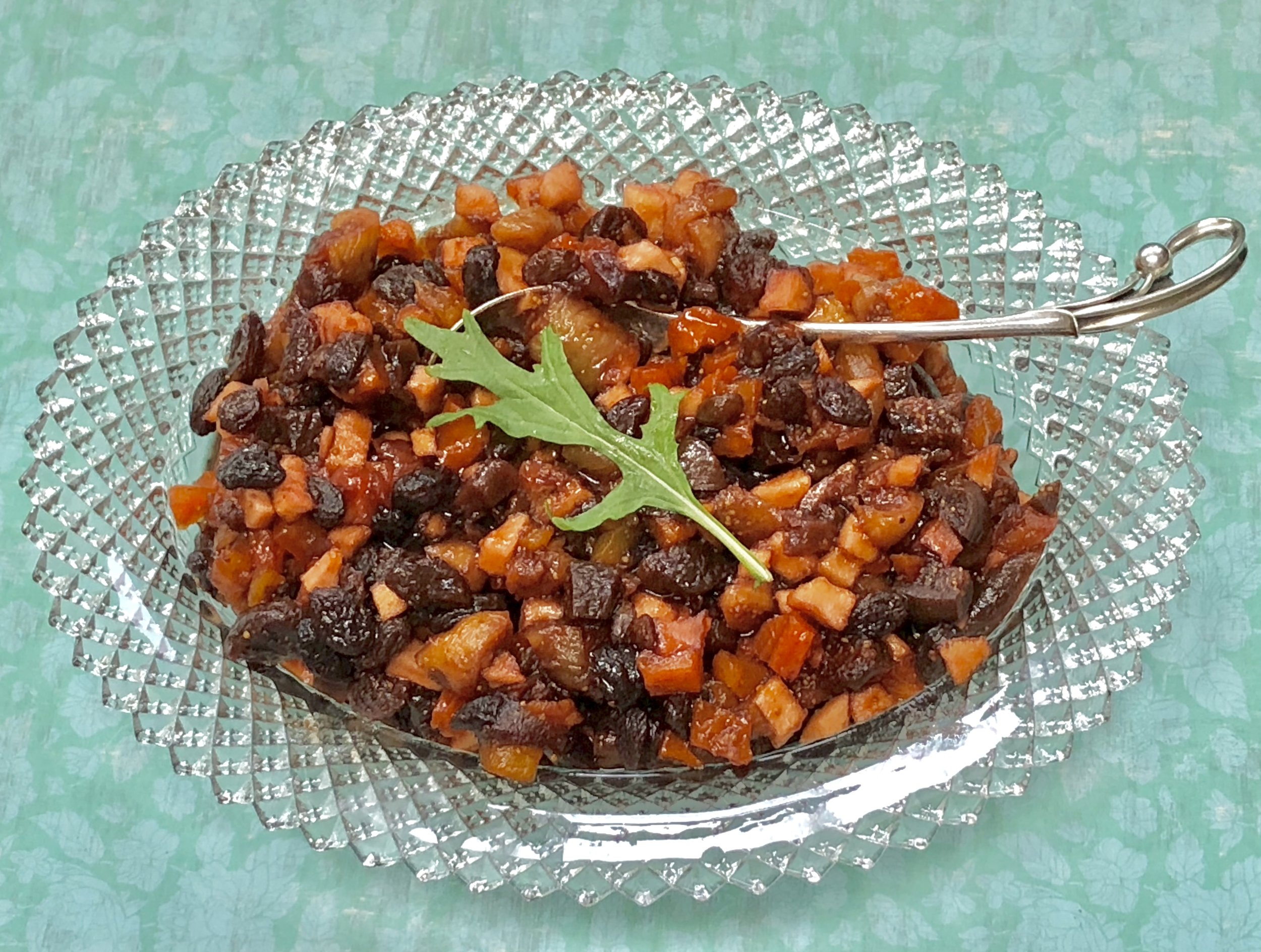
This year I am making my special COVID19 jumble, made with what I have on hand in the way of dried fruit (plus an orange, which I always have in the fridge.

Should I call it Quarantine Charoset, Pantry Charoset or simply Completely Made Up Charoset?

I don’t use any nuts because of allergies, but you can add 1/3-1/2 cup of chopped nuts (any kind) to this recipe if you have some in your pantry.

Quarantine Charoset or Pantry Charoset or Completely Made-up Charoset

  • 1-1/2 cups chopped dates

  • 1 cup chop dried figs

  • 1 cup chopped dried apricots

  • 1/2 cup raisins

  • 1 fresh apple, peeled and chopped

  • 1/2 cup pomegranate jam (or any jam you have)

  • 1/3 cup Passover wine (preferably Concord grape)

  • 1/4 cup orange juice

  • 1 teaspoon grated fresh orange peel

Place the dates, figs, apricots, raisins and apple in a bowl and toss the fruit to distribute the pieces evenly. Add the pomegranate jam and stir to coat the fruit. Pour in the wine and orange juice; add the orange peel. Toss the ingredients. Let rest for at least one hour before serving.

Makes about 5 cups

Potato and Cheese Kreplach

fullsizeoutput_baff.jpeg
fullsizeoutput_b9ac.jpeg
fullsizeoutput_b9ad.jpeg
fullsizeoutput_b9ae.jpeg
fullsizeoutput_b969.jpeg

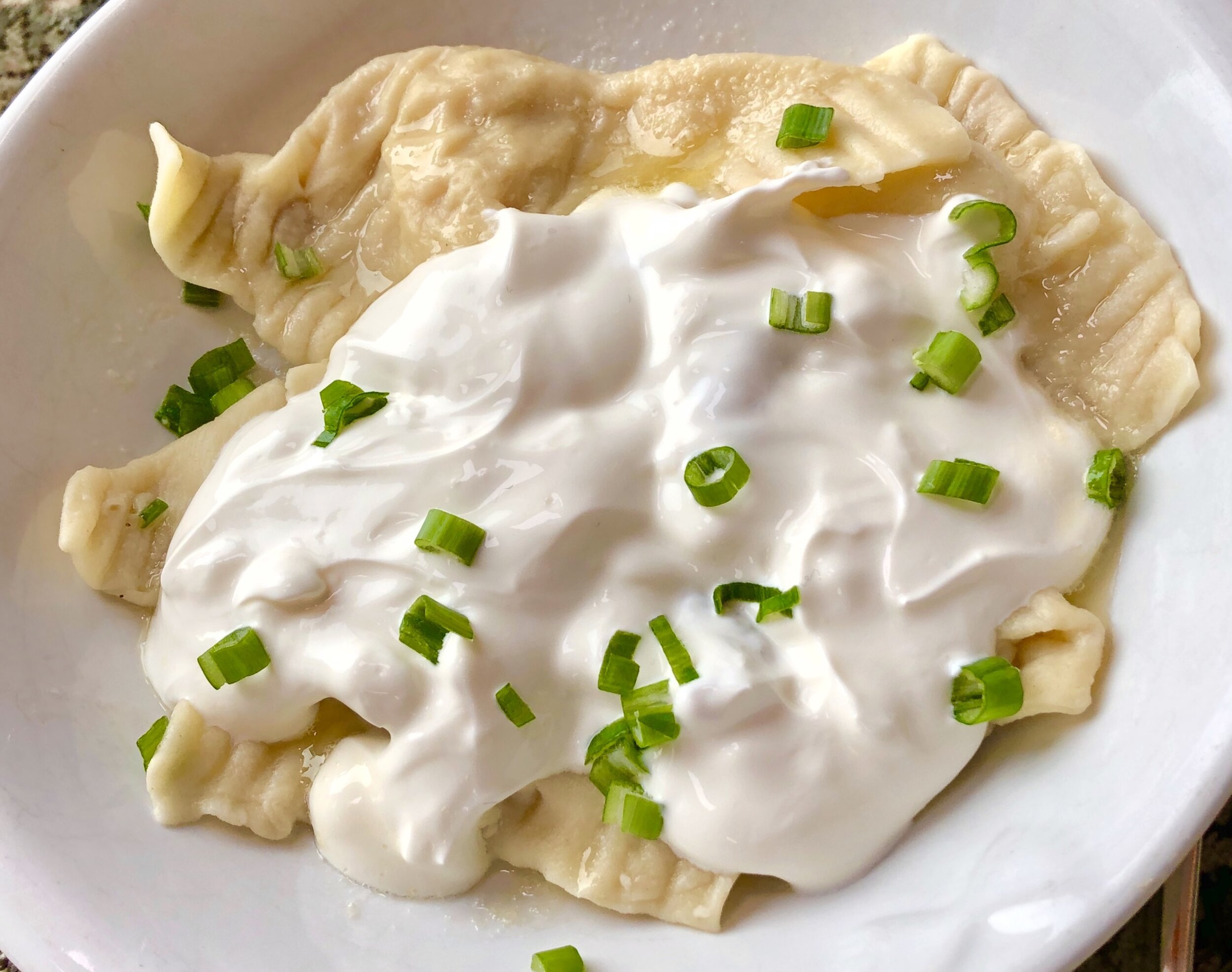
If I knew that the world was going to end or that it was my last day on earth, I would want potato-and-cheese kreplach with sour cream for dinner before I go.

For me, this simple, rustic, peasant dish is the ultimate.

I hadn’t had any for ages and ages and then, one day Ed and I were in Bratislava, Slovakia, perusing the menu at Houdini, a small restaurant conveniently located in our hotel.

They had potato-cheese pierogi!

Oh my.

There was no question about what I would order for dinner. I don’t even remember what else I could have chosen.

All I know is that the pierogies — the best I had ever eaten — came laden with sour cream and topped with chopped fresh chives.

I would go back to Bratislava just to have some more.

And I have been fantasizing about those things ever since.

However, because a trip to Slovakia is not in my immediate future, I decided to make some at home, but I made them kreplach shape in celebration of Purim, when it is customary to eat triangular shaped foods. These would be just perfect whether you make triangles or half moons.

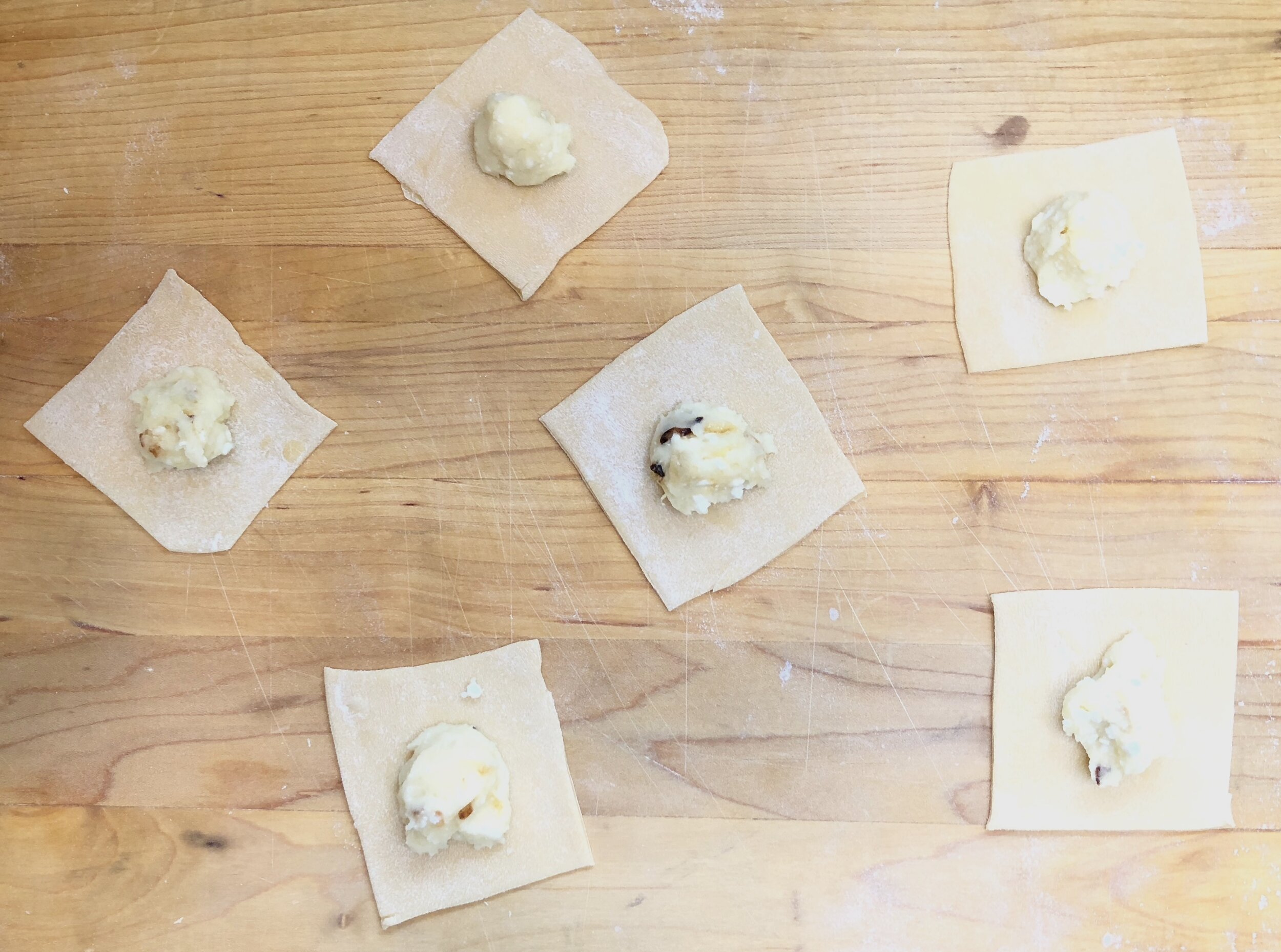
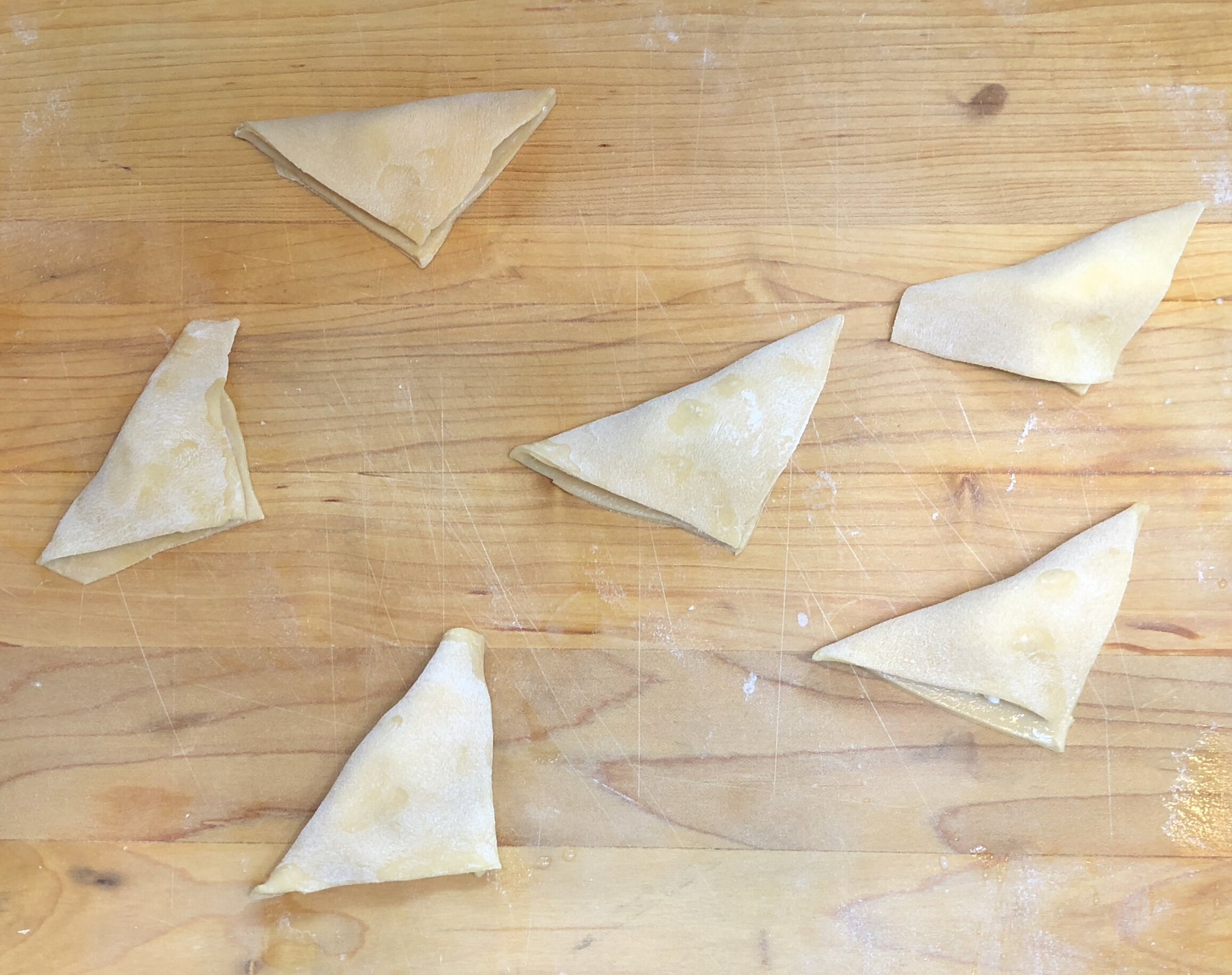
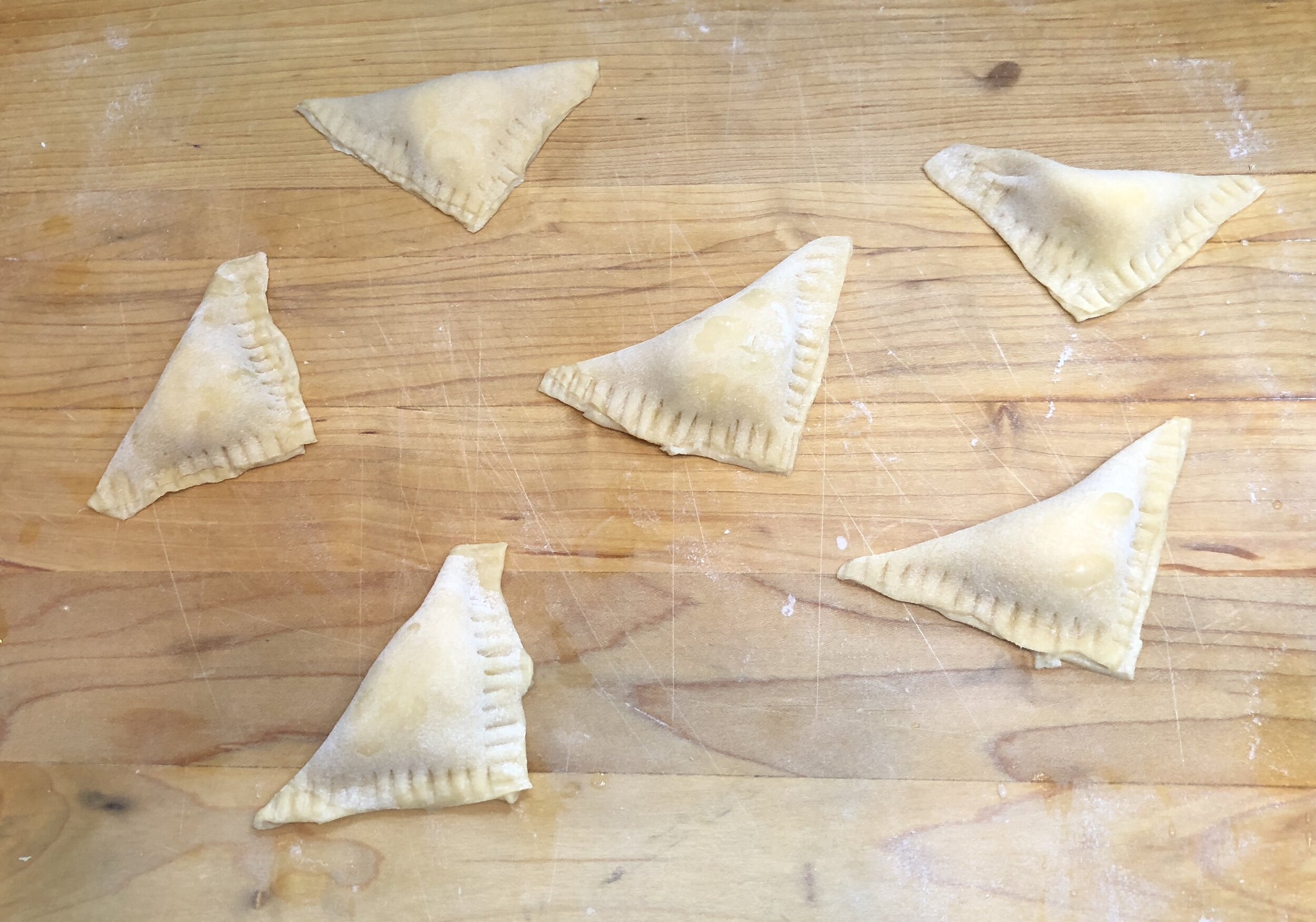
If you’d like to make some, follow the recipe and look at the photos to see how the triangles are cut, filled and folded.

This is truly good food. Last day on earth worthy.

Potato Cheese Kreplach

FillinG:

  • 3 large Yukon Gold potatoes (about one pound), peeled, cut into chunks (about 3 cups mashed potatoes)

  • 2 tablespoons butter

  • 1 large onion, chopped

  • 1 cup farmer cheese

  • salt and freshly ground black pepper to taste

Place the potato chunks in a large saucepan, cover with water and bring to a boil. Lower the heat to a simmer and cook for about 15 minutes or until the potatoes are tender. Drain the potatoes and spoon into a bowl. While the potatoes are cooking, heat the butter in a sauté pan over medium heat. When the butter has melted and looks foamy, add the onions and cook, stirring occasionally, for 12-15 minutes or until soft and golden brown. Add the onions to the potatoes. Add the farmer cheese, sprinkle with salt and pepper and mix the ingredients until well blended. Set aside to cool before filling the dough.

DougH: 

  • 3-1/2 cups all-purpose flour

  • 1/2 teaspoon salt

  • 1/4 cup butter, cut into chunks

  • 2/3 cup water, approximately

  • 1 cup dairy sour cream

Place the flour and salt in a large bowl. Add the butter and work it into the dough until the mixture is crumbly. Add 1/2 cup of the water and the sour cream and mix the dough until it is smooth, soft and well blended. If the dough seems too dry, add more water. (You can do this in a food processor.) Let the dough rest for at least 30 minutes. Using portions of the dough, roll the dough on a floured surface to 1/8-inch thick. Cut the dough into 3-3-1/2” squares. Place about one tablespoon of the filling onto each square. Slightly wet 2 sides of the square along the border. Fold the dough over the filling to make a triangle, pressing down onto the moist strips to seal the dough. Use the back of a fork to press the edges. Bring a large pot of water to a boil. Add the filled kreplach, 8-10 at a time, and simmer for about 15 minutes or until they are tender. Remove the kreplach with a slotted spoon and set aside; repeat.

Serve with sour cream and chopped chives or scallion tops.

Makes about 30


Banana Cake with Dates and Orange

fullsizeoutput_b58f.jpeg

Tu B’shevat is not one of the more well-known Jewish holidays, but it certainly is one of the more delicious ones. It’s known as “new year of the trees” and although it comes in mid-winter it’s a reminder that tree fruit is forming, that winter is nearly over, that warmer weather and new crops will be here soon.

And so, on Tu B’shevat we eat fruit. Our meals typically include some or all of the 7 species mentioned in the Torah: wheat, barley, grapes, figs, pomegranates, olives, and dates.

What a perfect occasion for banana cake studded with sweet, dried dates! I use medjool dates, but any variety will do. Or, you could substitute dried figs or raisins (dried grapes, right?)

Banana Cake with Dates and Orange

  • 2-1/2 cups flour

  • 1 teaspoon salt

  • 1 teaspoon freshly grated orange peel

  • 1 teaspoon baking soda

  • 1 teaspoon baking powder

  • 1/2 cup butter, margarine or vegetable shortening

  • 1 cup sugar

  • 1/4 cup date syrup (silan)

  • 3 very ripe bananas, mashed

  • 3 large eggs, slightly beaten

  • 1 cup chopped dates

Preheat the oven to 350 degrees. Grease and flour a (10-inch) 8-cup bundt pan. Mix the flour, salt, orange peel, baking soda and baking powder together in a bowl and set aside. In the bowl of an electric mixer set at medium speed, beat the butter and sugar until well blended. Add the date syrup and bananas and blend them in thoroughly. Add the eggs and beat well. Add the flour mixture and beat until batter is well blended. Fold in the dates. Pour into the prepared pan and bake for about 45-50 minutes or until a cake tester inserted into the center comes out clean. Remove from the oven and let cool in the pan for 10 minutes. Remove to a cake rack to cool completely.

Makes one cake serving 12-16


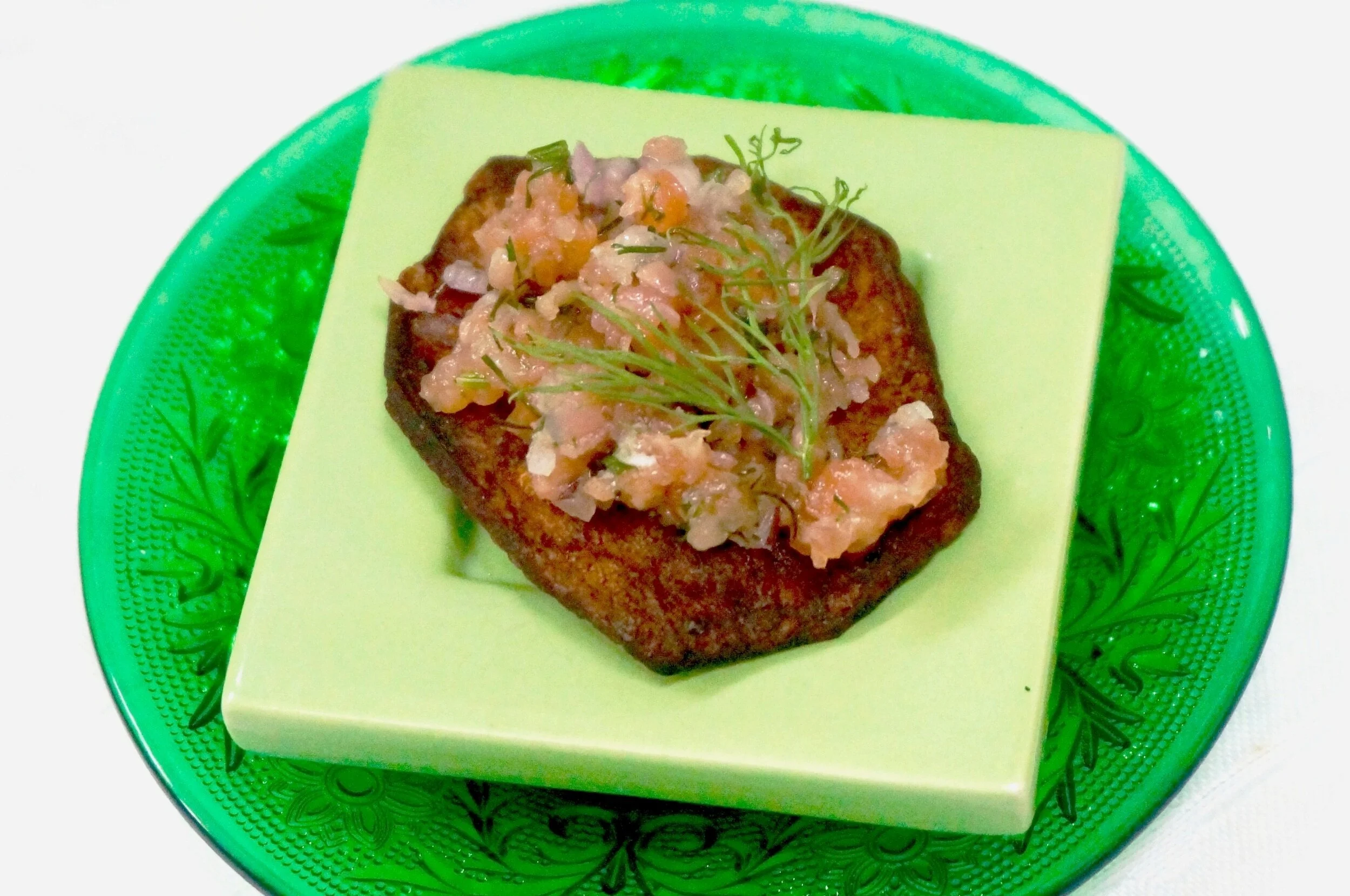
Handmade Potato Chips with Smoked Salmon Tartare

image.jpg

Potato latkes for Hanukkah? Of course!

But homemade potato chips also satisfy the holiday requirement of crispy potato.

And SO MUCH EASIER! And HEALTHIER. Because the chips in my recipe are baked, not fried (you could fry them if you wish though). They are so crispy they crunch as if they were fried.

And of course a homemade potato chip topped with smoked salmon tartare is perfect for my New Year’s celebration.

If you’ve never tasted homemade potato chips you have missed something spectacular in life. Do try this soon, with or without the salmon. You could serve them plain or with sour cream or applesauce, just like latkes. If you want to get fancy, make a dip by mixing some chopped fresh herbs into creme fraiche or mascarpone cheese.

Potato Chips with Smoked Salmon Tartare 

  • One large Russet baking potato

  • Vegetable oil

  • salt

  • 1/4 pound smoked salmon pieces

  • 2 tablespoons finely chopped red onion

  • 1-2 tablespoons chopped fresh dill

  • a few drops of olive oil

  • few drops of lemon juice

  • cream cheese, dairy sour cream, crème fraiche or mascarpone cheese, optional

Preheat the oven to 425 degrees. Peel the potato and slice 1/8-inch thick slices. Wipe the slices with paper towels. Brush the slices on both sides with vegetable oil. Sprinkle lightly with salt. Place on a cookie sheet and bake for 9 minutes. Turn the slices over and bake for another 8-9 minutes or until golden brown. Remove from the oven and set aside. Chop the smoked salmon. Add the red onion and dill and mix thoroughly. Sprinkle in a few drops of olive oil and lemon juice and mix. For a dairy hors d'oeuvre, spread the chips with cream cheese, sour cream, crème fraiche or mascarpone cheese. Top with some of the salmon mixture. For a parve hors d'oeuvre, place the salmon mixture directly on the potato chips

Makes 16-24

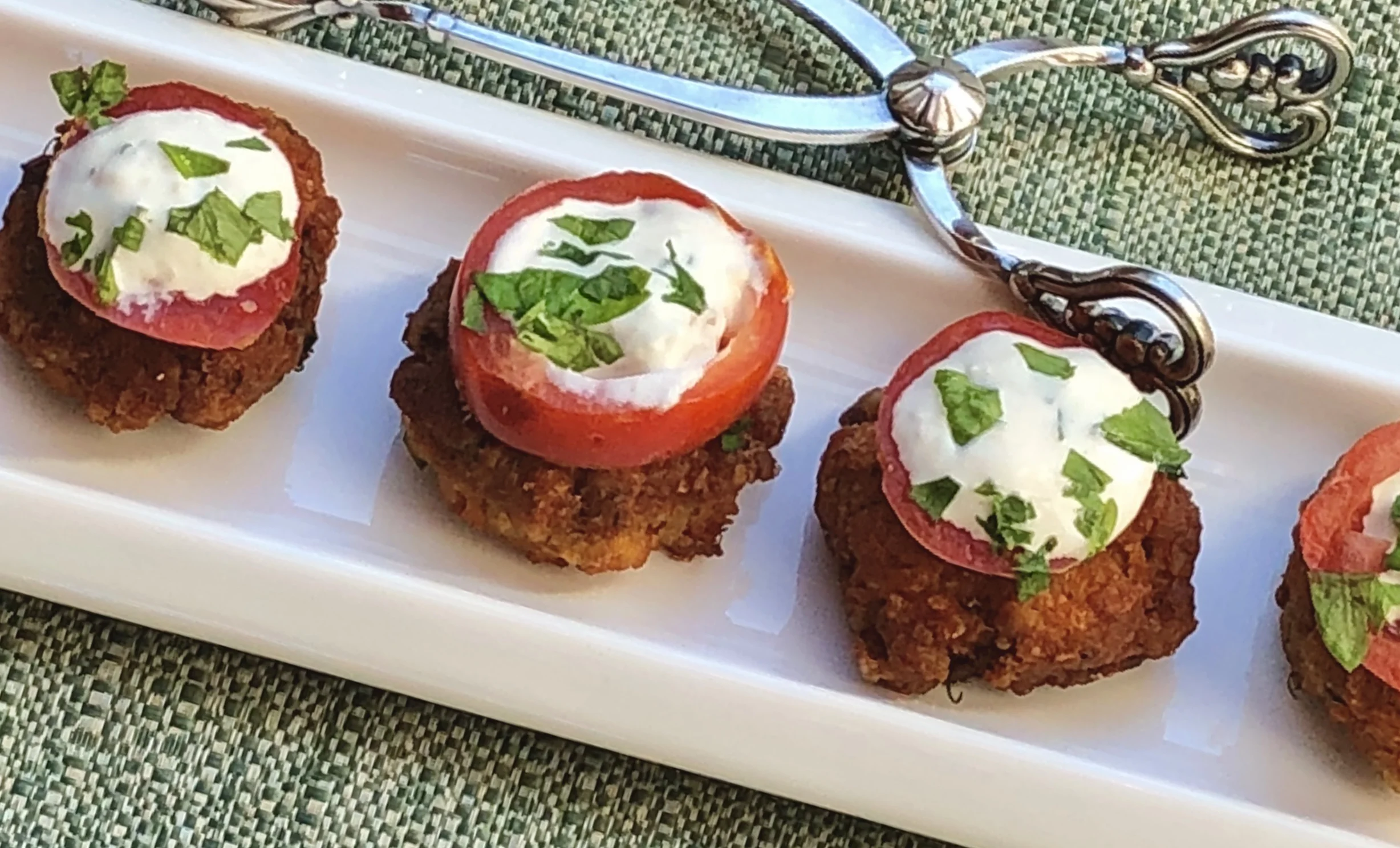
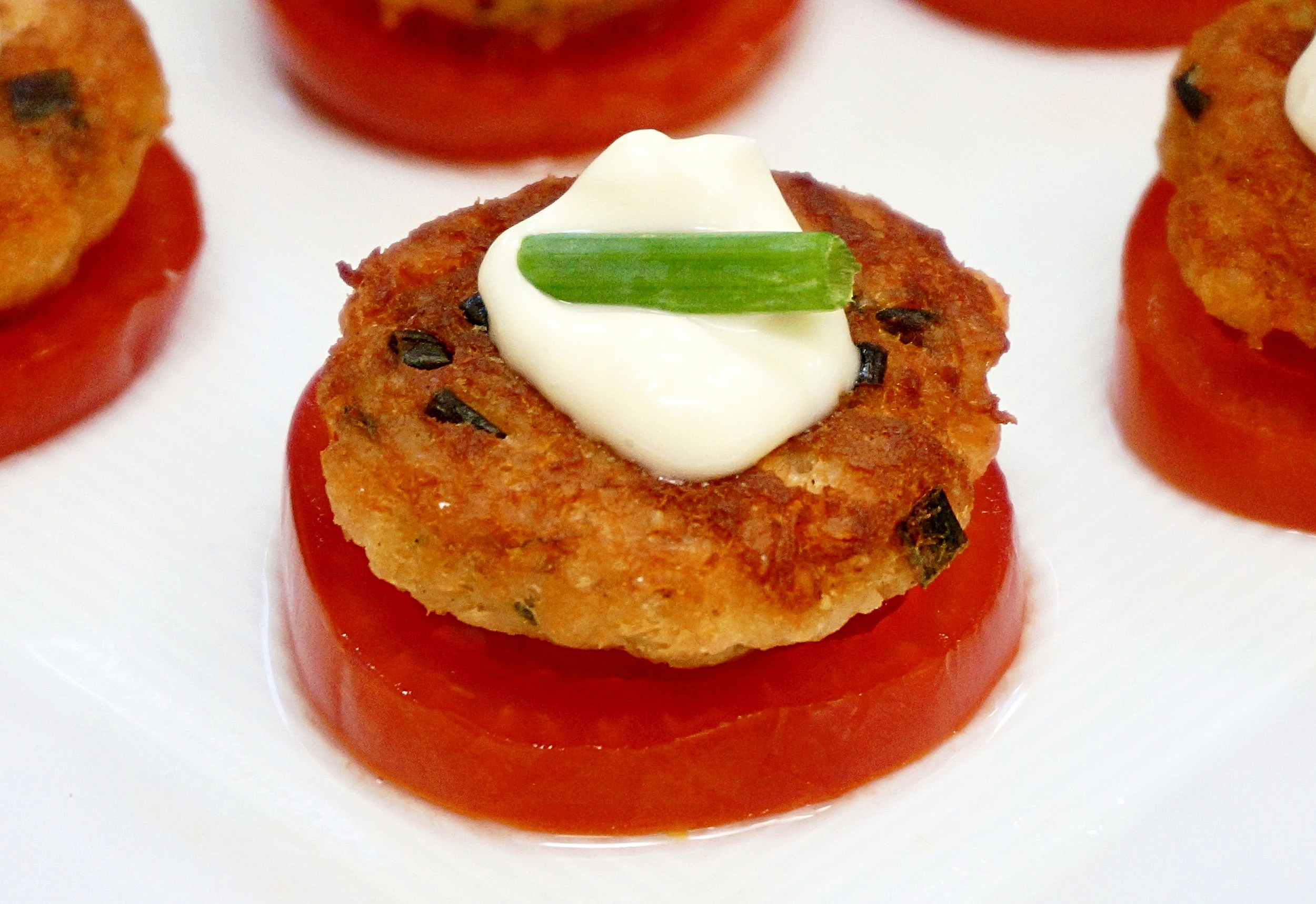
Mini Salmon Latkes

fullsizeoutput_9bea.jpeg
fullsizeoutput_8536.jpeg

I’m thinking ahead to Hanukkah and the New Year’s Eve weekend. For the first, of course latkes! For New Year’s? Hors d’oeuvre.

Here’s a recipe that works for either or both.

Salmon latkes in mini form. Fried right? So perfect for Hanukkah. Make them small enough and put them on some sort of base and you’ve got a super morsel for cocktail hour.

You can put the latkes on crackers or toasted bread, but I like using small tomatoes (campari tomatoes in the photo) as a base because it makes the hors d’oeuvre colorful. They are less crunchy but much juicier.

The latkes are freezable. Isn’t that nice?!

Mini Salmon Latkes

  • 2 cups mashed cooked salmon

  • 2 large eggs

  • 1/2 cup matzo meal

  • 2 tablespoons chopped chives

  • vegetable oil

  • 12 campari tomatoes (approximately) (or other small tomatoes)

  • 3 tablespoons mayonnaise

  • chives or fresh dill for garnish

In a bowl, mix the salmon, eggs, matzo meal and chives until well combined. Heat about 1/8-inch vegetable oil in a saute pan over medium heat. Shape the salmon mixture into 36 small disks. Fry, a few at a time, for 2-3 minutes per side or until crispy. Drain on paper towels. Before serving, slice the tomatoes about 1/2-inch thick. Place the latkes on top of the tomato slices. Spoon a small amount of mayonnaise onto the tops. Sprinkle with chopped chives for garnish (or use a tiny leaf of fresh dill).

Makes 36