Jewish food

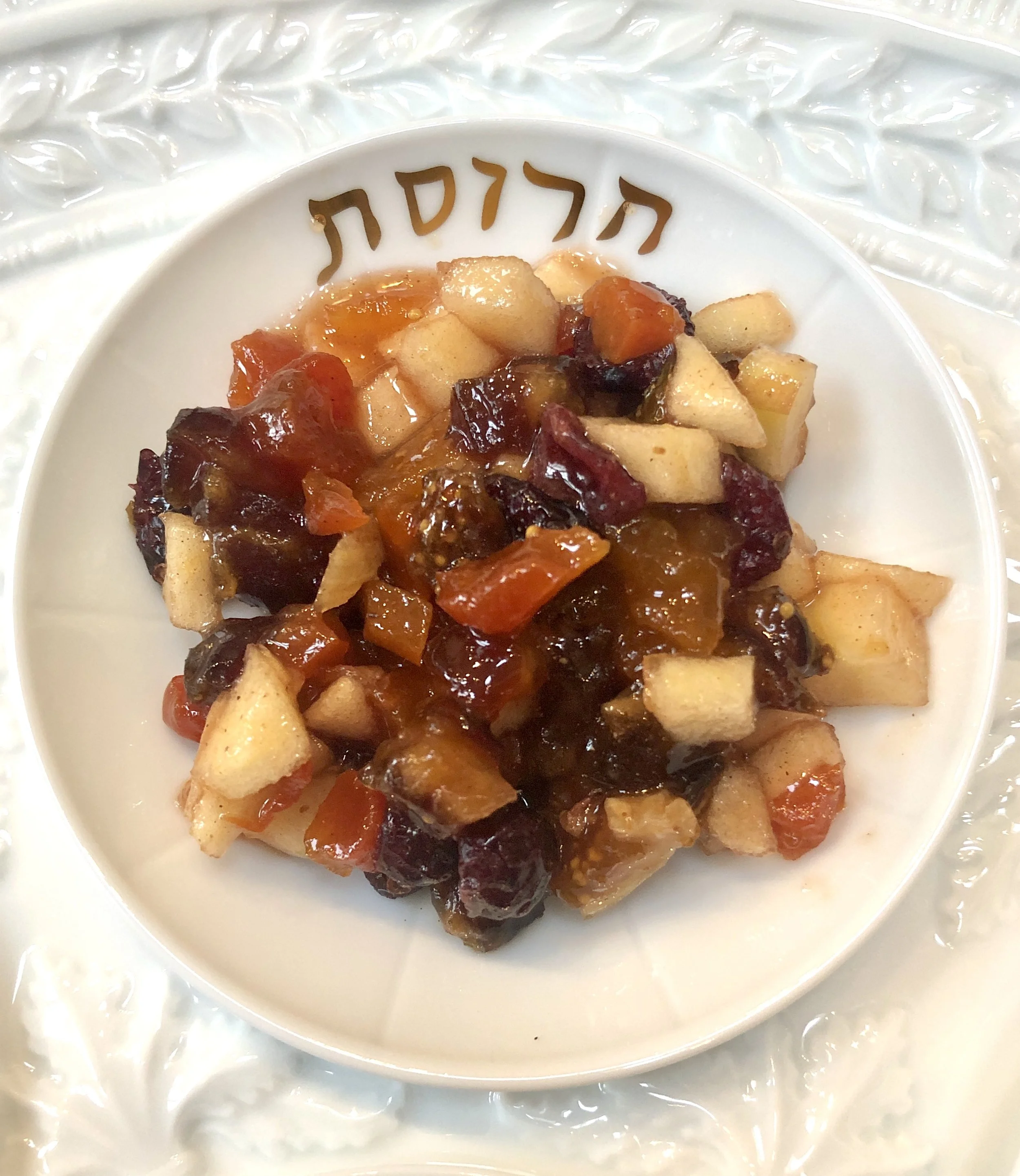
Nut-Free Dried Fruit and Apple Haroset

Passover has it's culinary challenges, it's true, but if you're like me, and have a kid with food allergies you are used to reading labels and figuring out substitutions throughout the year. I actually never minded this part. The fears of what could happen to my daughter if she ate fish or certain nuts, plus the medication and trips to the ER when it did happen were enough to motivate me.

Looked at it in a positive way, the Passover prohibitions plus the allergy no-nos are actually ways that have made my cooking more creative.

I like that.

Obviously, we do not have traditional Ashkenazi haroset at our Seders. My daughter can't even be in the same room as a walnut. She can eat pistachios and almonds, so our usual family haroset with dried fruit includes these.

But -- why take any chances? Because it's possible that one nut allergy could be a warning against all others, my daughter doesn't eat any nuts, in haroset or anything else. On Passover I always serve a second version that's nut-free.

Here is this year's:

Nut-Free Dried Fruit and Apple Haroset

  • 1/2 cup chopped dried figs

  • 1/2 cup chopped dates

  • 1/2 cup chopped dried apricots

  • 1/2 cup raisins

  • 1 apple, peeled, cored and chopped

  • 1/4 teaspoon freshly ground nutmeg

  • 1/3 cup apricot preserves

  • 4-5 tablespoons sweet red Passover wine

  • pinch of cayenne pepper 

Combine the figs, dates, apricots, raisins and apple in a bowl. Add the nutmeg, preserves, wine and cayenne pepper and mix until the ingredients are evenly distributed. Let the mixture stand for at least one hour before serving. 

 Makes about 2-1/2 cups


Chicken with Figs and Grapes

fullsizeoutput_8718.jpeg

Tu B'Shevat may not be the most well-known Jewish holiday but it always conjures up good thoughts and fond memories for me.

First: it was when my parents gave money to plant trees in Israel.

Second: it was when my Mom would buy dried figs that came in a wreath of sorts, the figs tied together with string, and I ate at least half of them.

Third: it was when my Mom made her famous Date-Nut Bread.

And more: spring is coming soon!

And finally: it is one delicious holiday, featuring foods that include lots of fruits and vegetables. 

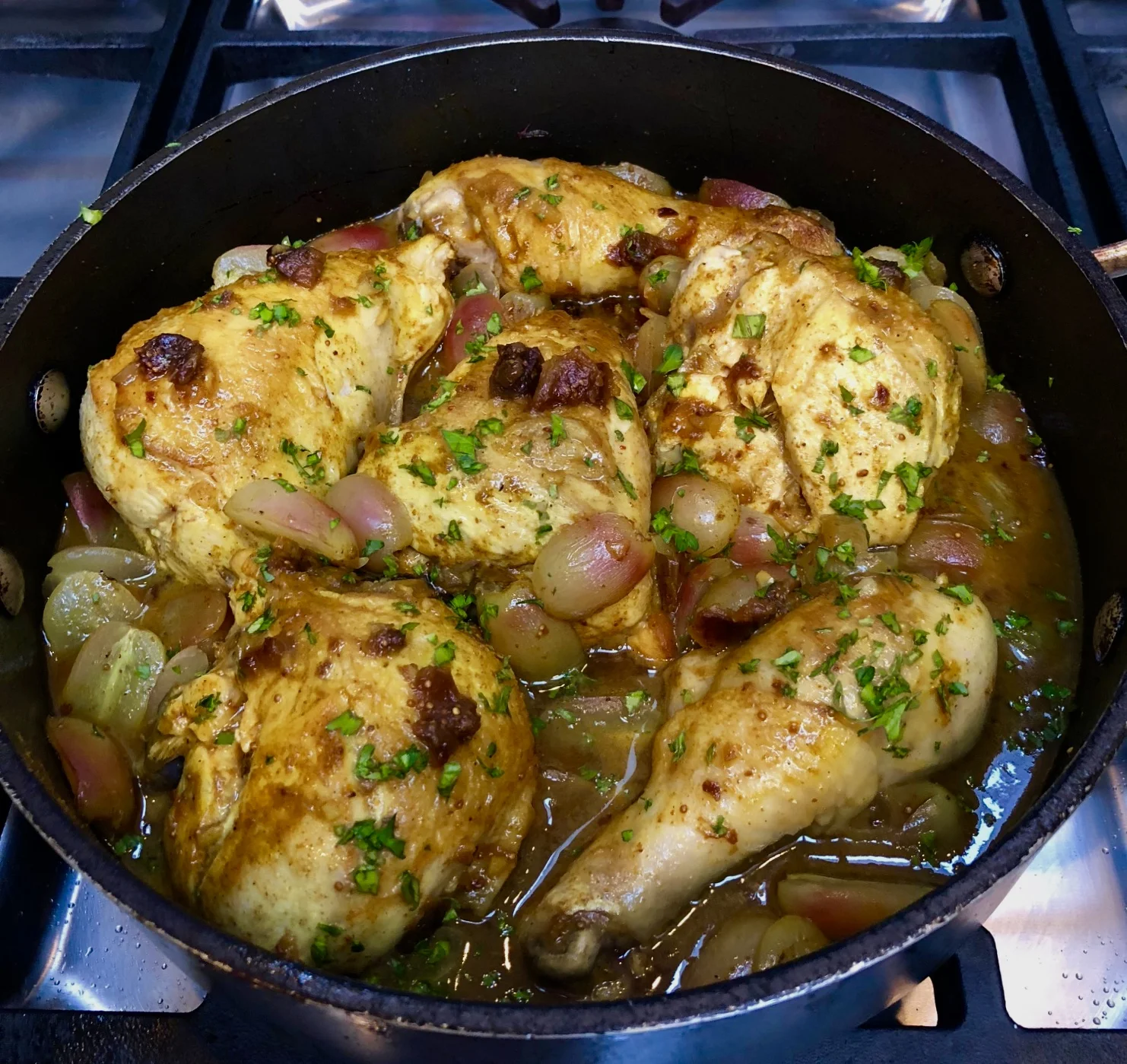
So, this year, to celebrate I am making this chicken dish, which includes figs and grapes, and served on cooked, fluffy bulgur wheat.


Chicken With Figs and Grapes

  • 1-3/4 cups apple cider
  • 2 tablespoons vegetable oil
  • 6 bone-in pieces of chicken
  • 1 shallot, chopped
  • 1-1/2 teaspoons chopped fresh ginger
  • 1/2 cup diced dried figs
  • 2-1/2 teaspoons curry powder
  • 1/4 teaspoon Aleppo pepper (or use 1/8 teaspoon cayenne pepper)
  • salt and freshly ground black pepper to taste
  • 1 cup halved fresh grapes
  • chopped fresh mint
  • cooked bulgur wheat, optional

Boil the cider for about 5 minutes or until it has reduced to 3/4 cup.  Heat the vegetable oil in a sauté pan over medium heat. Add the chicken and cook for 8-10 minutes, or until lightly browned, turning the pieces occasionally. Remove the chicken pieces and set them aside on a plate. Add the shallot, ginger and diced figs to the pan and cook for 1-2 minutes over low-medium heat. Return the chicken to the pan. Sprinkle the ingredients with curry powder, Aleppo pepper and salt and black pepper to taste. Pour in the reduced cider. Turn the pieces of chicken to coat all sides with the pan ingredients. Cover the pan, turn the heat to low and cook for 15 minutes. Add the grapes and cook for an additional 10 minutes or until the chicken is cooked through. Sprinkle with chopped fresh mint. Serve on a bed of cooked bulgur wheat if desired.

Makes 4-6 servings


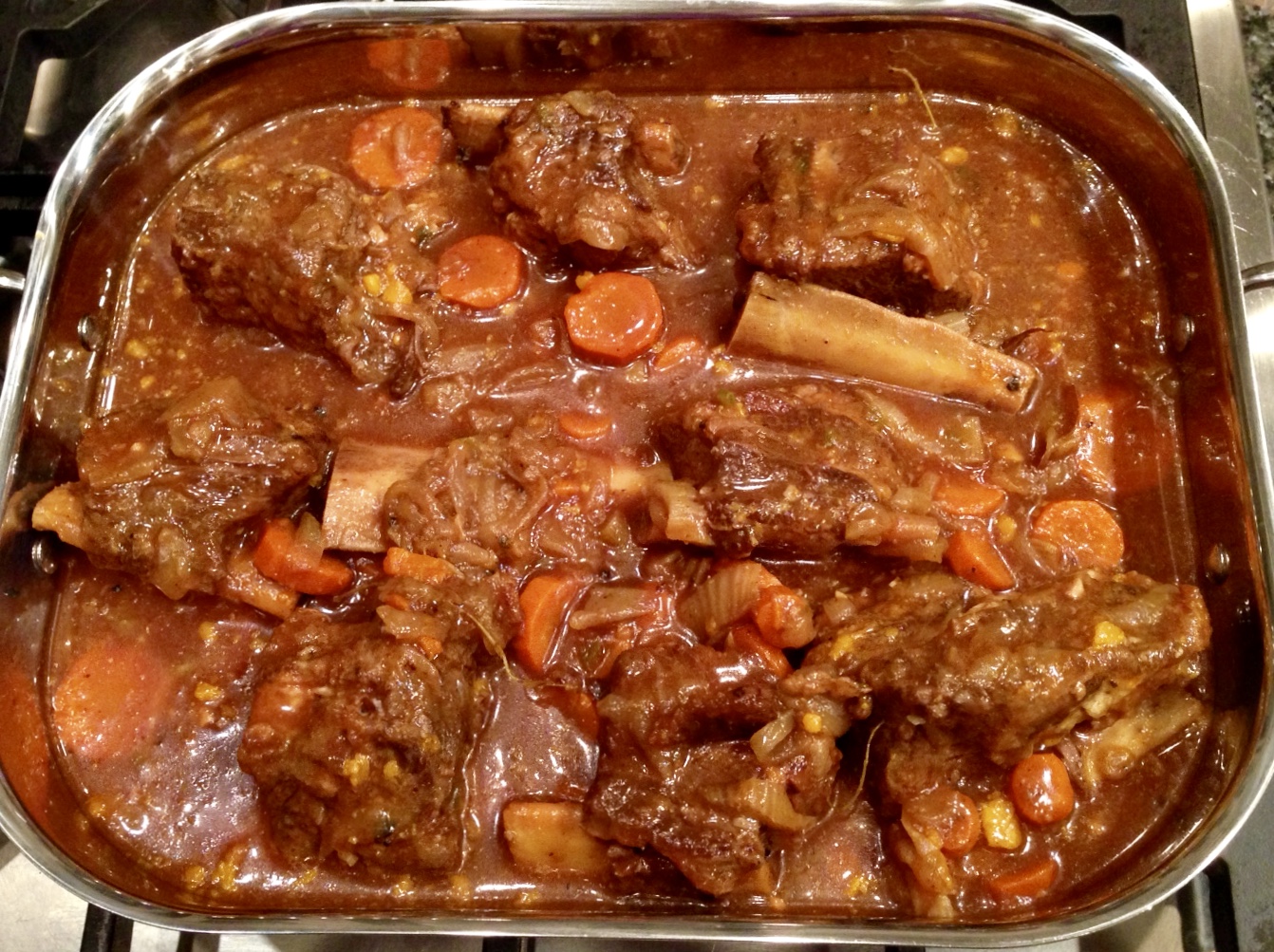
Short Ribs with Barbecue Gravy

fullsizeoutput_86af.jpeg

Lots of people find January a big disappointment. It can be cold and dreary and sometimes seems like a letdown after months of holidays and celebrating.

But the food is good.

I like to call January cuisine. Filling, nourishing, comforting stuff.

Like short ribs.


Short Ribs with Barbecue Sauce

  • 5-6 pounds beef short ribs 
  • 1/4 cup all-purpose flour
  • 2 tablespoons vegetable oil
  • 2 medium onions, sliced
  • 2 garlic cloves, chopped
  • 1 teaspoon finely chopped chile pepper
  • 2 carrots, peeled and cut into chunks
  • 2 stalks celery, peeled and cut into chunks
  • 1 cup ketchup 
  • 1 cup beef stock
  • 1 cup beer or ale
  • 1/4 cup apple cider vinegar 
  • 2 teaspoons soy sauce
  • 3 tablespoons brown sugar 
  • 2-3 thyme sprigs (or 1 teaspoon dried thyme)
  • 1 bay leaf
  • salt and freshly ground black pepper to taste

Dry the surface of the meat with paper towels. Heat the vegetable oil in a large sauté pan over medium heat. Working in batches, cook the meat, turning the pieces to brown them, for 4-5 minutes or until lightly browned. (If the oil seems too dark, discard it, wipe the pan and add 2 fresh tablespoons vegetable oil.) Remove the meat and set it aside. Add the onions, garlic, chili pepper, carrots and celery to the pan and cook for 2 minutes. Stir in the ketchup. Pour in the stock, beer, cider vinegar and soy sauce and stir the ingredients. Stir in the brown sugar. Return the meat to the pan and spoon some of the sauce over them. Place the thyme sprigs and bay leaf in the liquid. Sprinkle with salt and pepper to taste. Bring the liquid to a boil. Lower the heat, cover the pan and cook at a bare simmer for about 4 hours or until the meat is fork tender (or place in the oven at 225 degrees).

Makes 6-8 servings


Modern Jewish Baker by Shannon Sarna

fullsizeoutput_8692.jpeg

When I got Shannon Sarna’s new book, Modern Jewish Baker, I wanted to run into the kitchen and start baking. It’s that kind of book – based on a few beloved, classic, Jewish bakery basics (challah, bagels, babka and so on) plus an amazing number of inventive variations that sound too seriously compelling to miss.

Exactly my kind of cooking.

One problem. I have to lose weight and get my glucose at normal levels before my doctor’s appointment next month.

OY! Which of these fabulous bakery items should I make and still be on the straight and narrow path until the doctor thing is over?

Challah was out because, ok, I had tasted Shannon’s pull-apart spinach-cheese version at the book launch party and had to stop myself from eating more only because it would have been rude and gluttonous not to leave some for the other guests.

Bagels? No way, because then I’d eat a couple of those fat, crispy-crusted, puffy-inside things, load them with cream cheese and lox and then have to promise to start my diet “tomorrow.”

Rugelach or babka? Tell me the truth -- could you eat just one piece?

Me either. I had several samples at that launch party and – see above for thoughts on my ability to control myself if I had this stuff in my kitchen.

So it was down to either matzo or pita.

I chose pita because matzo means butter. Lots of it, or matzo brei loaded with sour cream, so, no.

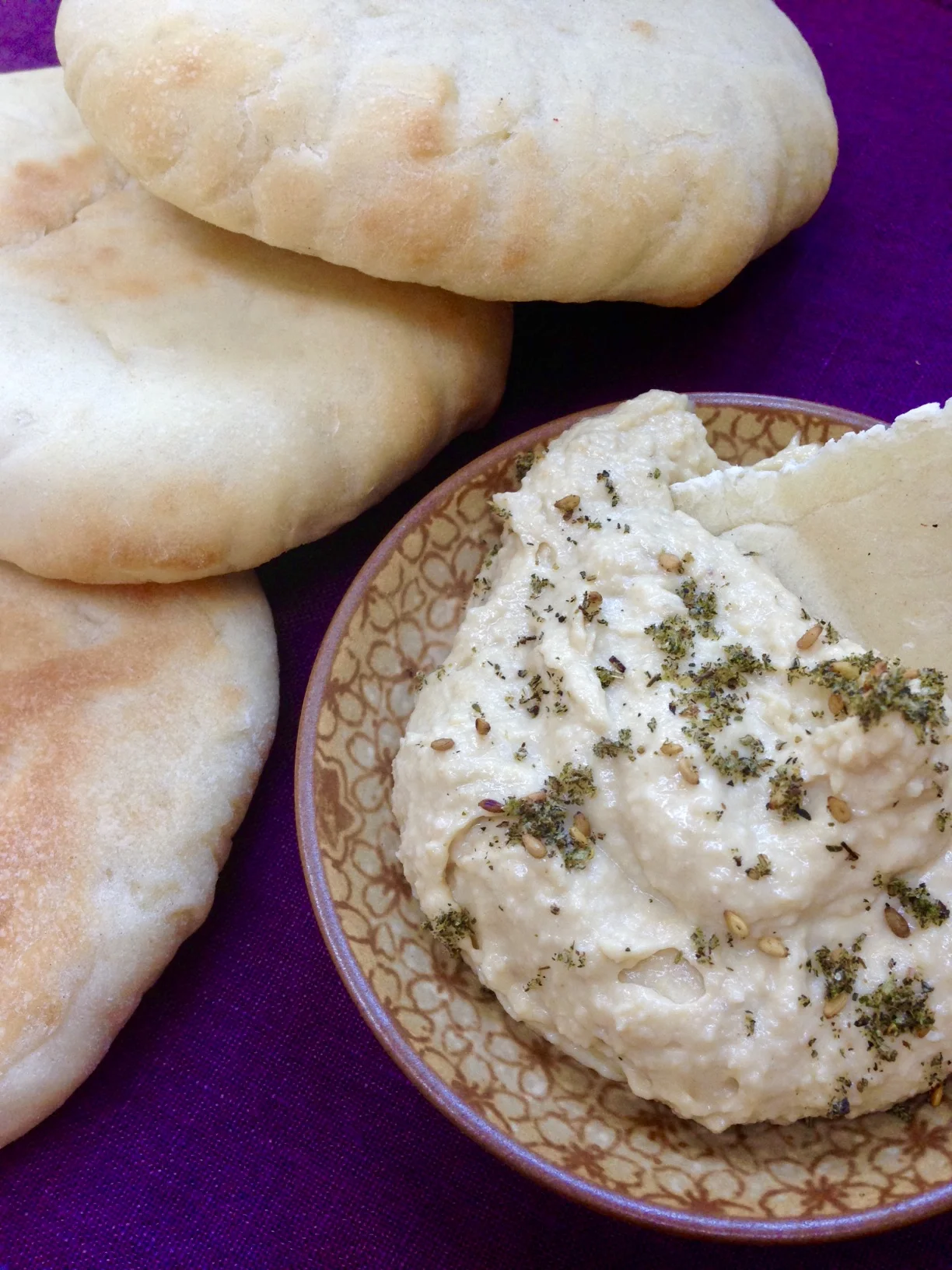
Pita it was, because then I could have it with the hummus I could make with the recipe from the book and that’s healthy, right? Also, how much pita can one person eat? It's plain old bread, no chocolate or cheese or other extras.

Believe it or not, one person can actually eat quite a bit of plain old pita when it’s this good. Plus, it is really a thrill to see those yeasty rounds come out of the oven and actually look like packaged pita! (But taste much fresher and better). I felt like a triumphant teenager who had baked her first cake. Who knew you can make pita at home?! I’ve been at this cooking thing for years and years and never did it before.

But I will again! This stuff is not only tasty, but fun to make.

And the hummus was quite good too!

I’ll start the diet tomorrow.

This book is a winner.

Bonus recipe from the book -- Classic Hummus (Modern Jewish Baker):

  • 1 (15-ounce) can chickpeas, rinsed and shells removed
  • 1/4 cup tahini
  • 1/2 teaspoon cumin
  • 1/2 teaspoon salt
  • 2 whole garlic cloves
  • 1/2 cup olive oil plus additional for serving
  • 2-3 tablespoons water
  • Paprika (optional), for garnish
  • Za'atar (optional), for garnish

Place chickpeas, tahini, cumin, salt and garlic cloves in a food processor fitted with a blade attachment. Puree for 30 seconds. Add olive oil and process until smooth. Add water one tablespoon at a time until desired smoothness. Spoon onto plate or into a bowl. Top with paprika or za'atar and an extra drizzle of olive oil for serving.

Can be kept in an airtight container for 5-7 days in the refrigerator.

Makes 4-6 servings


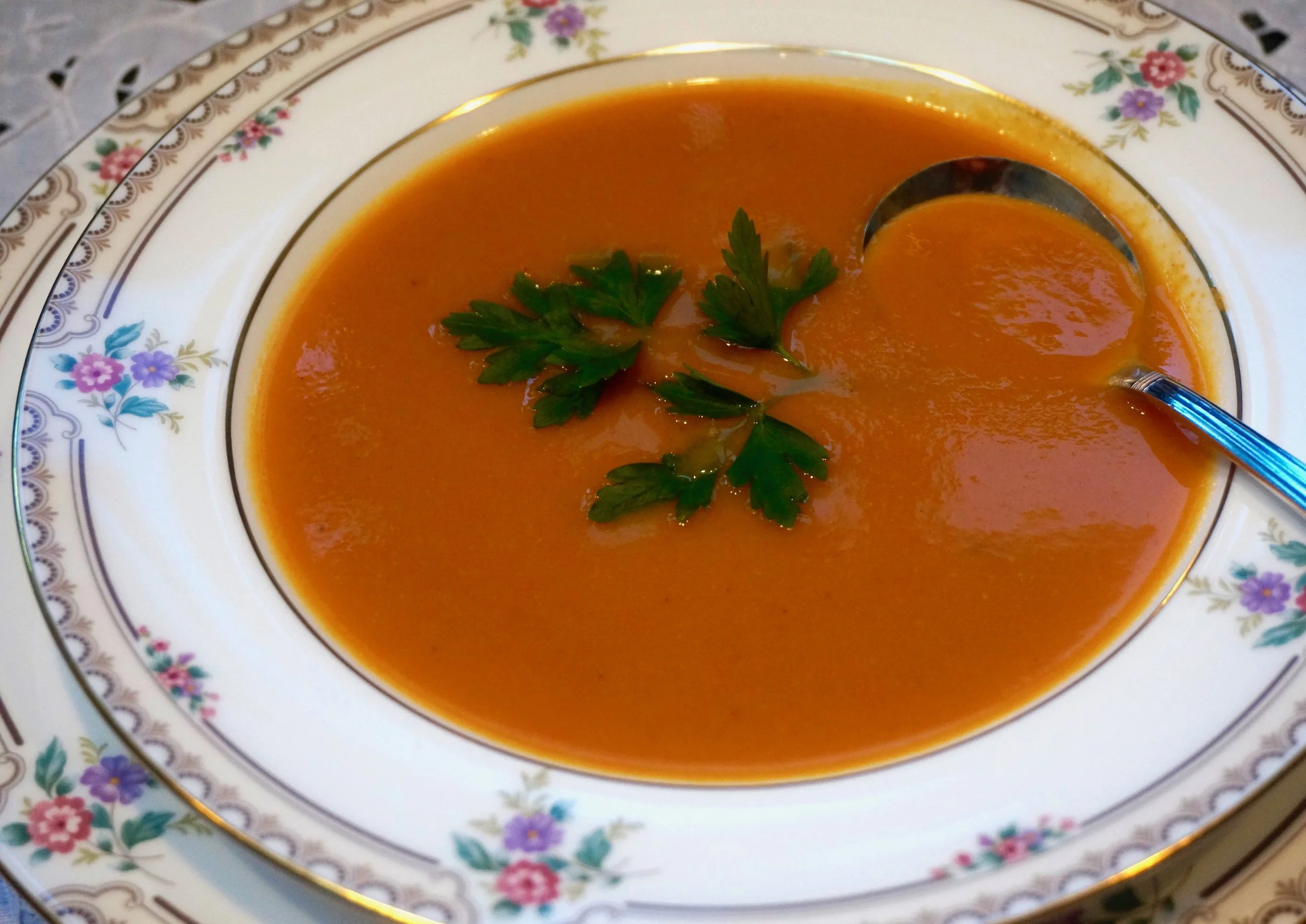
Carrot Soup with Cloves

Carrot soup is a classic for Rosh Hashanah. One year I cooked some with harissa and coconut and my husband said it was the best soup he ever tasted. There's a slightly different version in my cookbook, The Modern Kosher Kitchen.

But I'm always trying new recipes -- because for us, carrot soup is beyond holiday festive. It's a healer, a comforter. Ok, not like chicken soup.  But still -- it's a dish I make for new moms or when someone isn't feeling up to par or when anyone I know is a little grumpy or sad.

This carrot soup recipe welcomes even before you taste it with its scent of cloves and cinnamon. I used Aleppo pepper for heat, but if you don't like spicy, you can leave it out.


CARROT SOUP WITH CLOVES AND PEPPER (P)

  • 2 tablespoons olive oil
  • 1 large onion, chopped
  • 1 pound carrots, peeled and chopped
  • 1 medium all-purpose potato, peeled and chopped
  • 1-1/2 teaspoons chopped fresh ginger
  • 6 whole cloves
  • 1-inch piece cinnamon stick
  • 1/2 teaspoon Aleppo pepper (or crushed red pepper)
  • 4 cups vegetable stock
  • 1/2 cup coconut milk

Heat the olive oil in a large saucepan over medium heat. Add the onion and cook, stirring occasionally, for 3-4 minutes, or until softened. Add the carrots, potato, ginger, cloves, cinnamon stick and Aleppo pepper. Stir to mix the ingredients. Pour in stock. Bring the liquid to a boil, lower the heat to a simmer and cook for about 30 minutes or until the carrots are tender. Remove the cloves and cinnamon stick. Puree the soup. Add the coconut milk, stir to blend the mixture until it is uniform in color and heat through.

Makes 4-6 servings


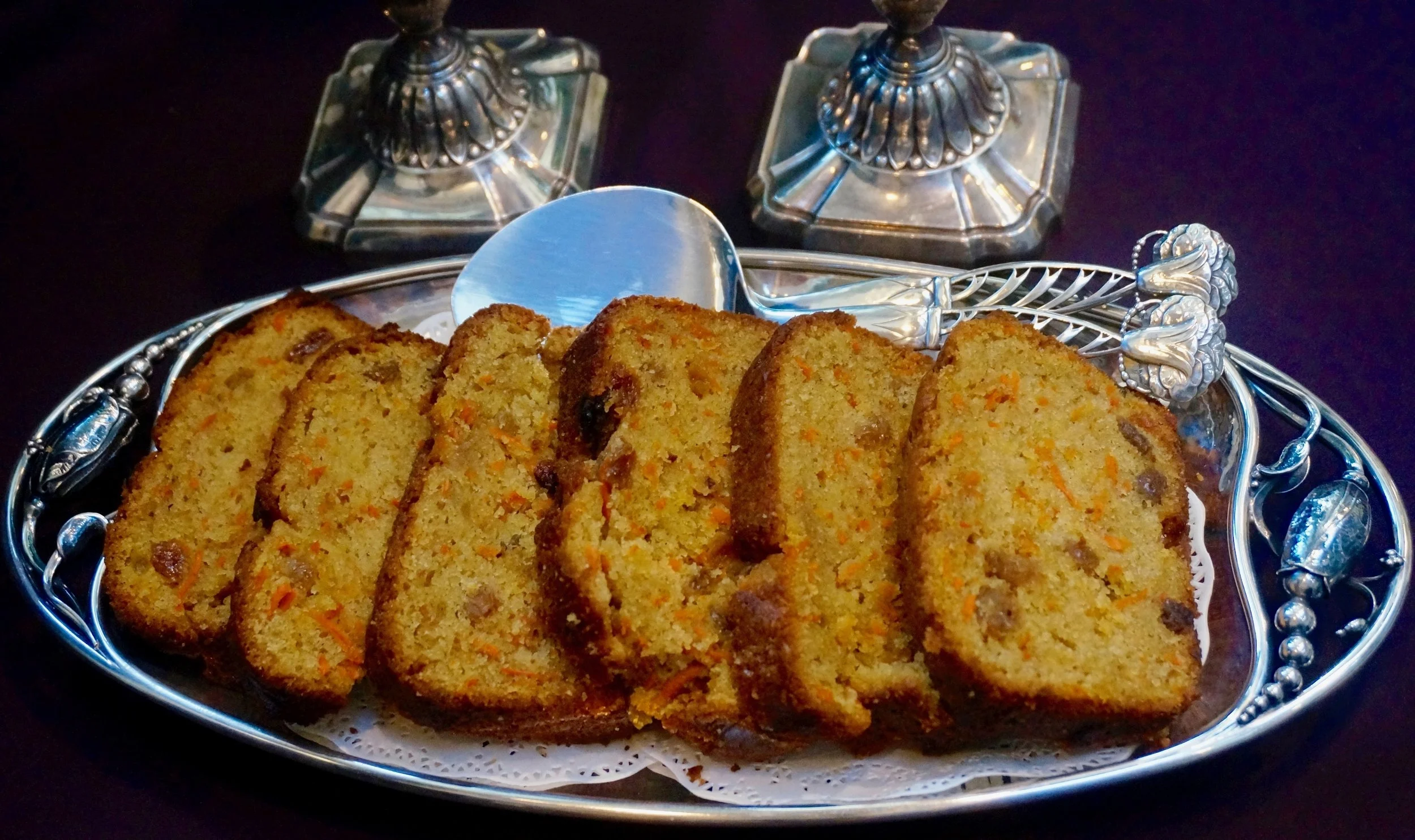
Carrot Bread with Raisins for Rosh Hashanah

Somehow Labor Day is over and the food thoughts in my head go straight from tomato salad and grilled chicken to pumpkin soup and baked apples

Of course there's still time to enjoy the last of the summer fruits and vegetables, still time for outdoor-cooked grilled, marinated steak

But I'm thinking forward. It's almost a new season and -- yikes! -- the High Holiday season is only two weeks away.

Which leads toady's food thoughts to: carrots, because carrots are traditional during Rosh Hashanah. I usually cook them in soup -- one version or another. But last year I decided to experiment with a few recipes for carrot quick bread.

This is the one we like best. It's moist and sweet, so it can be dessert, and because it is parve, it is a good choice after a traditional holiday meat meal.

But also makes a good snack either by itself or smeared with cream cheese (softened is best and maybe even mixed with some lemon juice).

CARROT BREAD(P)

  • 1-1/2 cups all-purpose flour
  • 2-1/2 teaspoons baking powder
  • 1 teaspoon salt
  • 1 teaspoon cinnamon
  • 1/2 teaspoon nutmeg
  • 1/2 cup brown sugar
  • 1/3 cup white sugar
  • 1 cup vegetable oil
  • 3 large eggs
  • 1 tablespoon lemon juice
  • 1-1/2 teaspoons grated lemon peel
  • 1-1/2 cups grated carrots
  • 1/2 cup golden raisins

Preheat the oven to 350 degrees. Grease an 8-1/2”x4-1/2” loaf pan. Mix the flour, baking powder, salt, cinnamon and nutmeg into a bowl. Set aside. Beat the brown sugar, white sugar and vegetable oil in the bowl of an electric mixer set at medium speed for 2-3 minutes, or until well blended. Add the eggs, one at a time, beating after each addition. Stir in the lemon juice and peel. Add the dry ingredients and blend them into the egg mixture. Fold in the carrots and raisins. Pour the batter into the loaf pan. Bake for about 50 minutes or until a cake tester inserted into the center comes out clean. Let cool in the pan for 10 minutes, then invert onto a rack to cool completely. 

Makes one loaf  

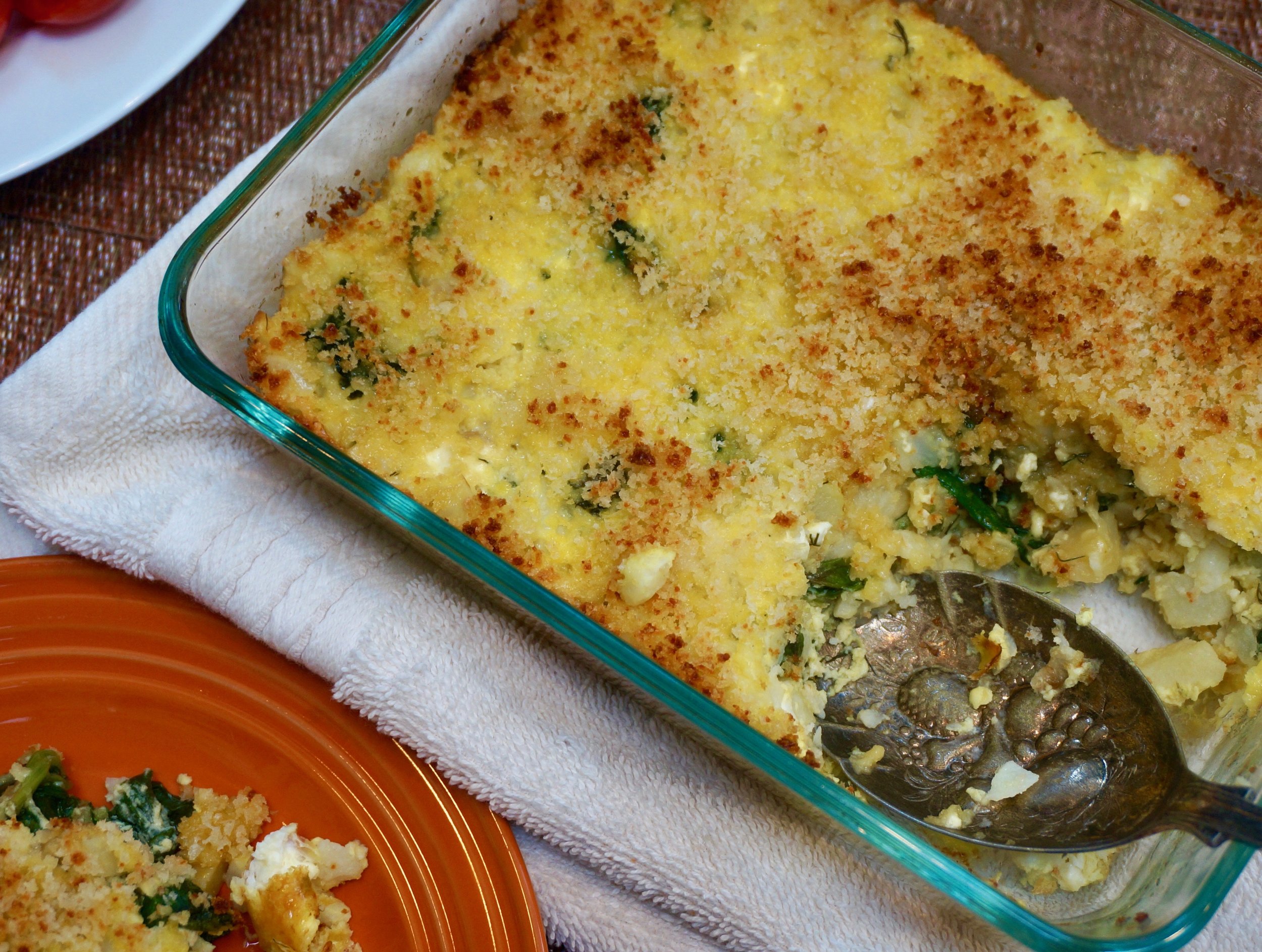
Potato Cheese and Spinach Kugel

Tell me Shavuot is coming and my first thought is cheesecake.

Of course. Cheesecake the dish most associated with the holiday. I love it. Make all kinds. Some plain. Some spiced. Some covered with fruit. Some with chocolate.

On the other hand you can't just eat cheesecake. 

Shavuot is generally a dairy holiday.

I love dairy.

Especially if there is a potato involved.

Like in this kugel, which is a wonder all by itself. But also good with salad, other dairy dishes or served with sunnyside eggs on top.

Perfect dish for the holiday.


Potato Cheese and Spinach Kugel

  • 4 medium Yukon Gold potatoes (about 1-1/2 pounds)

  • 8-10 ounces fresh spinach

  • 2 tablespoons olive oil

  • 1 medium onion, chopped

  • 1 cup crumbled feta cheese

  • 2 tablespoons chopped fresh dill

  • 6 large eggs

  • 5 tablespoons melted butter

  • salt and freshly ground black pepper to taste

  • 3/4 cup panko crumbs

  • 2-3 tablespoons grated Parmesan cheese

Preheat the oven to 375 degrees. Lightly grease a 2-quart baking dish. Peel the potatoes, cut them into chunks and boil them in lightly salted water for about 15 minutes or until tender. Let cool and chop into small pieces. Place the potatoes in a bowl. While the potatoes are cooking, wash and dry the spinach and chop it coarsely. Heat 2 tablespoons olive oil in a sauté pan over medium heat. Add the onion and cook for about 3 minutes or until softened. Add the spinach and cook for 2-3 minutes or until wilted (if there is liquid in the pan, raise the heat and cook until it evaporates, or drain using a strainer). Add the spinach mixture, the feta cheese and dill to the potatoes and mix gently to distribute the ingredients evenly. Beat the eggs in a large bowl. Mix in 3 tablespoons of the melted butter and pour over the potato mixture. Sprinkle with salt and pepper. Gently mix the ingredients. Place the mixture inside the greased baking dish. In a small bowl, mix the panko, the remaining 2 tablespoons melted butter and the Parmesan cheese and sprinkle over the ingredients. Bake for about 30 minutes or until hot and crispy.

Makes 8-10 servings


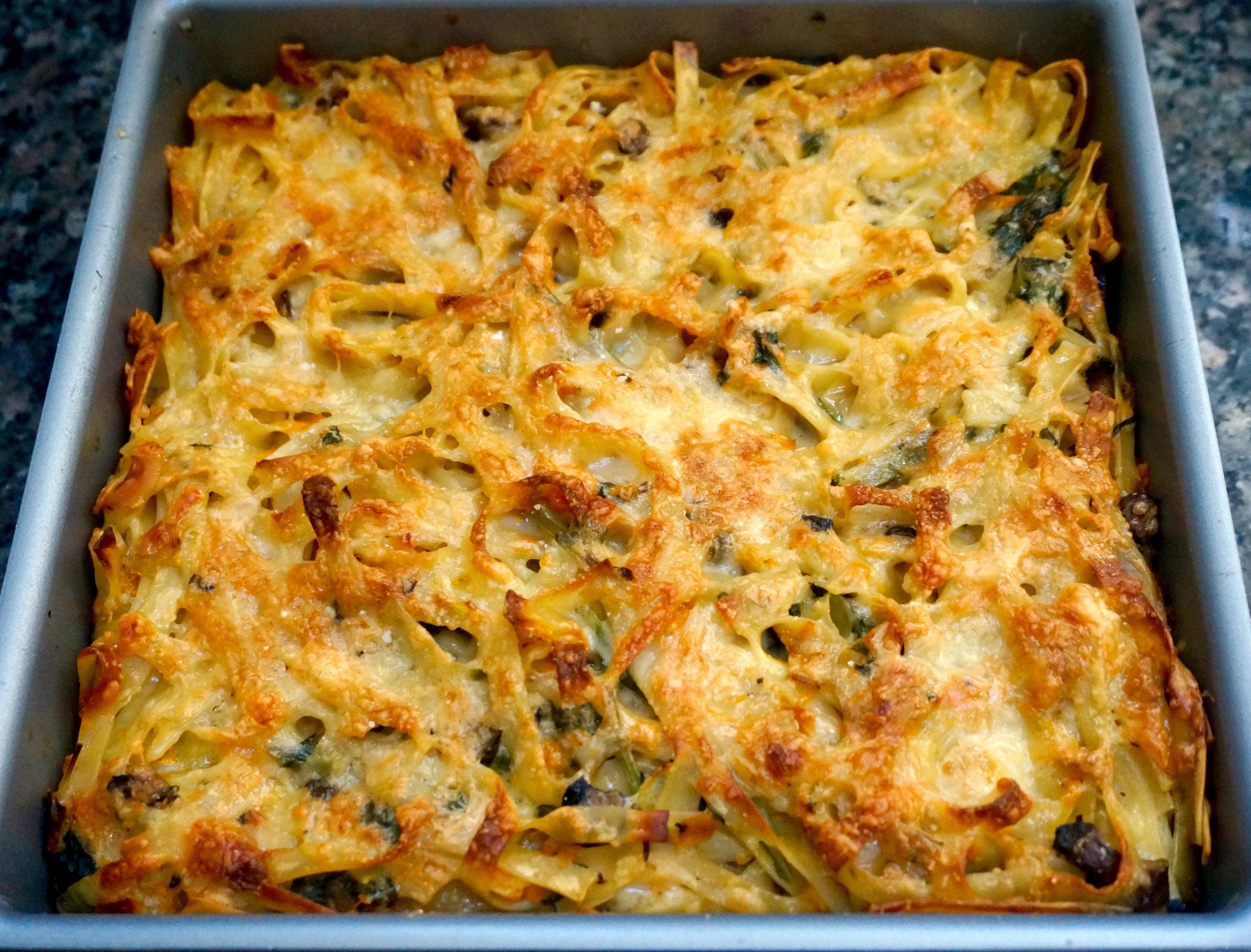
Cheese and Vegetable Kugel

_DSC9295.jpg

When my kids were young and still living at home, I made kugel a lot. My daughters were not terribly anti-vegetable, but I realized that pairing veggies and noodles would make it even easier to have more vegetables at our meals.

Also, it is a good way to use leftovers -- the recipe below is extremely versatile. Add cut up cooked green beans or asparagus, corn kernels, peas. Like that.

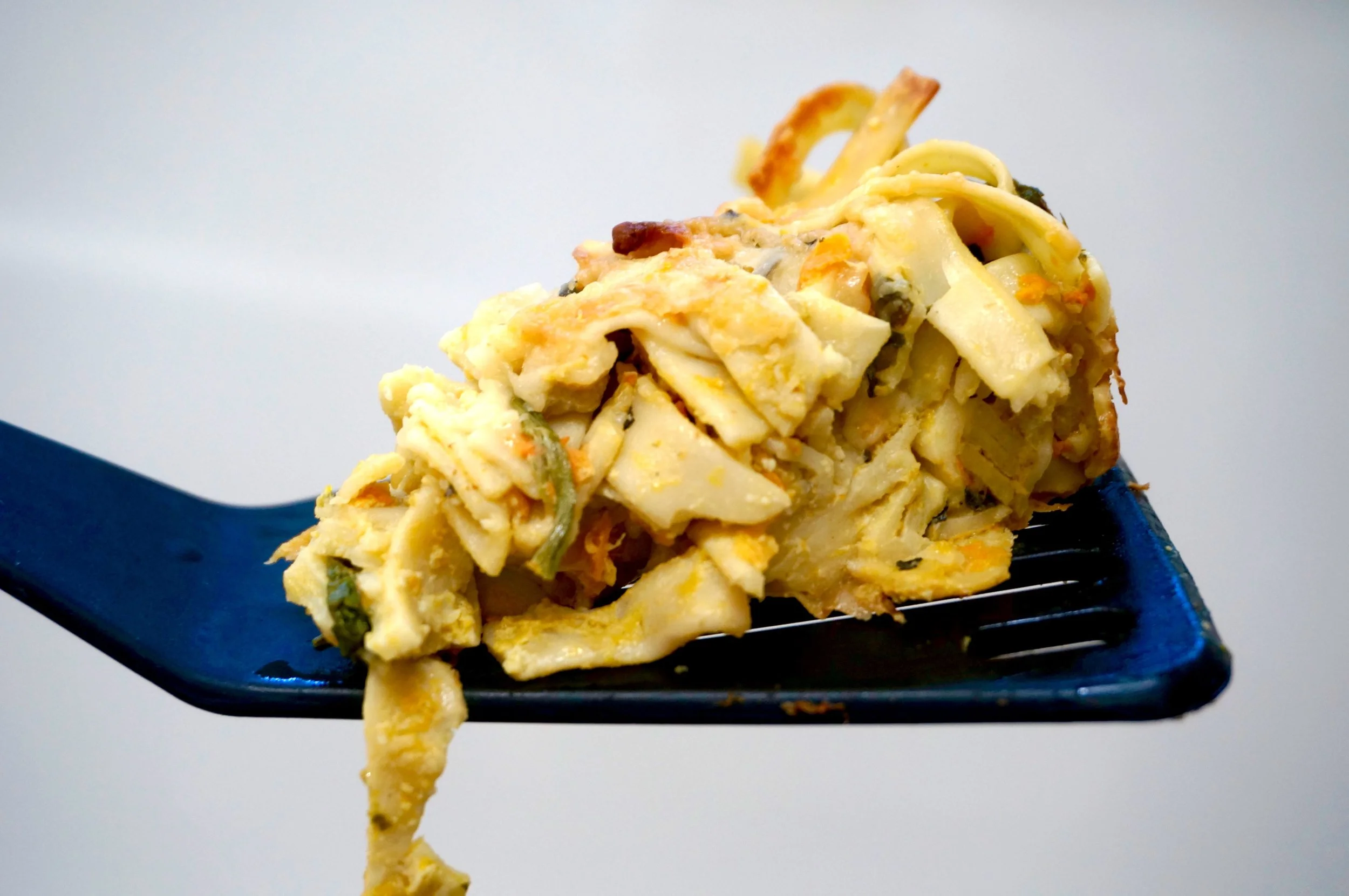
This kugel is filling enough for dinner. Also yummy with a sunny-side egg or two on top of each serving for a meatless (Monday) dinner. And a wonderful choice for dairy-fest Shavuot.

Veggie Kugel

  • 4 tablespoons olive oil or vegetable oil
  • 1 medium onion, chopped
  • 10-12 ounces mushrooms, chopped
  • 1 bunch spinach or kale, washed and dried, coarsely cut
  • 2 medium carrots, shredded
  • 12 ounces medium-wide egg noodles
  • 3 large eggs, beaten
  • 1/2 cup sour cream
  • 1 cup grated Swiss cheese
  • salt and freshly ground black pepper to taste
  • 3 tablespoons grated Parmesan cheese
  • paprika

Preheat the oven to 375 degrees. Lightly grease a 9”x9” baking dish. Heat 2 tablespoons of the olive oil in a sauté pan over medium heat. Add the onion and mushrooms and cook for 3-4 minutes. Add the spinach and cook for another 1-2 minutes or until it has wilted (kale may take a minute or so longer). Add the carrots and cook for another minute. Remove from the heat and set aside. Cook the noodles according to package directions, drain and place in a large bowl. Add the remaining 2 tablespoons vegetable oil, the cooked vegetables, eggs, sour cream and 3/4 cup of the Swiss cheese. Season to taste with salt and pepper. Stir to mix ingredients well. Place in the prepared baking dish. Sprinkle the top with the remaining Swiss cheese, Parmesan cheese and paprika. Bake for about 35 minutes or until the top is crispy and brown.

Makes 6-8 servings


Stir-fried String Beans with Meat (Ants on a Tree)

DSC04806.jpg

There's an old, ongoing joke about Jews and Chinese food. You know, the Jewish year is 5777 and the Chinese year is 4714; we love Chinese food so how did we get along without it for over a thousand years?

All kidding aside, there is a real connection among the Jews and Chinese going back -- in the United States at least -- to May 1903. 

In April of that year there was a terrible pogrom in Kishinev (now in Moldava) during Russian Easter. Several days of anti-semitic violence took its toll on the Jewish community: 49 dead, 500 injured and about 2,000 homeless. News of the violence reached the United States, where Jewish philanthropists raised money to help the victims.

But a Chinese businessman on New York's Lower East Side felt the outrage too.

His name was John Singleton, who understood the cruelty and sometimes barbarism inflicted upon minority groups. He and three fellow merchants Guy Main (Yee Kai Man), Dek Foon and Jue Chue arranged for a benefit performance at the Chinese Theater on Doyers Street on May 11, 1903.

The program consisted of a short play (performed in Chinese) -- all the Chinese actors donated their time. Then speakers. Guy Main and Rabbi Joseph Zeff (who spoke in Yiddish) talked about the common bond between the two people, noting the atrocities committed by Russians against both. Another speaker expressed Jewish gratitude to the Chinese and wished the United States to welcome them as Americans, a somewhat veiled protest against the Chinese Exclusion Act.

Finally? Dinner at Mon Lay Won, considered the "Chinese Delmonico's." A very special place. The famous Yiddish actress Bertha Kalisch attended, as well as many other prominent Jews. There is no record of the menu, but it was definitely NOT kosher. The restaurant, which usually served featured pork and shrimp, apparently tried to be sensitive to the Jewish dietary laws and didn't serve those items, but we know that among the dishes served were chicken, squab and reindeer.

The event raised about $280 for the Kishinev victims (that's about $7,300 in today's dollars).

Of course this is not the reason that Jews love Chinese food. But the gesture stands, the solidarity cannot be forgotten. And so, on this 114th anniversary of the event, I offer a tasty Chinese dish that's welcome for spring. If you can get Chinese long beans that's perfect, but I make the dish with common string beans. The authentic Chinese version calls for ground pork, but my recipe uses turkey. It's kosher.

Celebrate solidarity, unity, kinship, friendship, respect for all ethnic groups and minorities.

Stir Fried String Beans with Meat

  • 1/2 pound Chinese long beans, green string beans or haricots vertes
  • 3 scallions, shredded
  • 3 tablespoons vegetable oil
  • 4 ounces ground turkey or veal
  • 1/2 cup water
  • 1 tablespoon rice wine or sherry
  • 2 teaspoons soy sauce
  • 1 teaspoon sugar
  • 2 dried red chili peppers (or 1/2 teaspoon crushed red pepper)
  • 1 tablespoon sesame oil
  • 1 teaspoon finely chopped fresh ginger

Wash and trim the beans. Shred the scallions by using a small sharp knife tip and cutting through from the root end through the greens. Cut away the root and set the scallions aside. Steam the beans for about 3 minutes or until barely tender. Drain under cold water and set aside. Preheat a wok or stirfry pan. Pour in the vegetable oil, let it get hot. Add the meat and stirfry for a minute or so, stirring constantly and breaking up the pieces, until the meat is no longer pink. Add the water, wine, soy sauce, sugar, peppers and sesame oil. Cook for 3-4 minutes or until the water has evaporated. Add the scallions and ginger and mix them in. Add the beans and stirfry for a bout a minute, mixing the ingredients to distribute them evenly. 

Makes 4 servings

Lullabye Bread

DSC08114.jpg

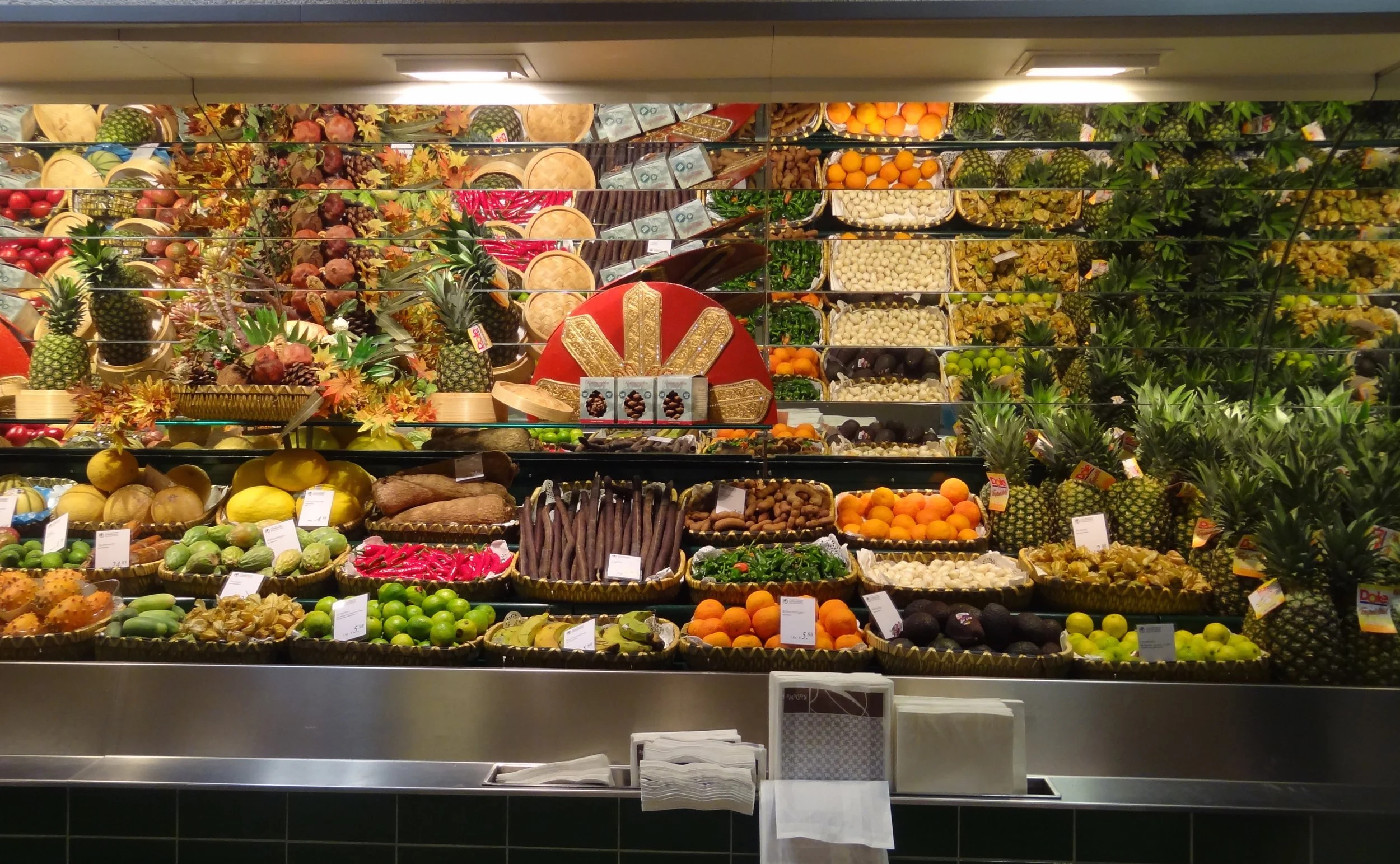
A few years ago Ed and I were in Berlin and checked out KaDeWe, the city's famous department store that has the biggest food halls in Europe and maybe in the world. They sell every kind of food you can imagine. Gorgeous cakes and pastries. Bountiful, beautiful fruit. Different kinds of eggs, dairy products, chocolates. 

It was all familiar. Pineapples. Peaches. Sachertorte. Macarons. Freshly butchered chickens, and so on.

We stopped counting the different kinds of sausages after we reached 100. Apparently they sell sausages from every region in Germany. 

But we were there for lookin', not cookin' -- so, in the two hours we walked through this place it was more like a visit to an art gallery. 

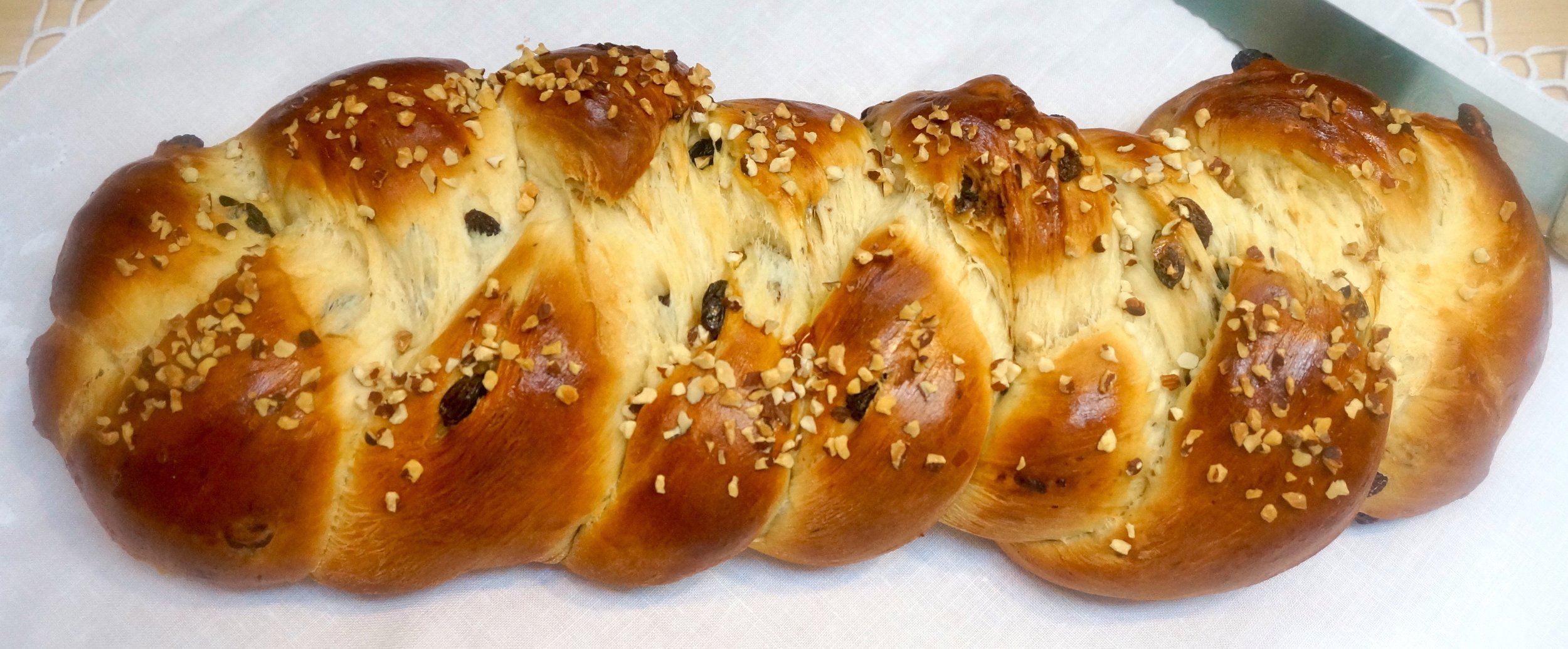
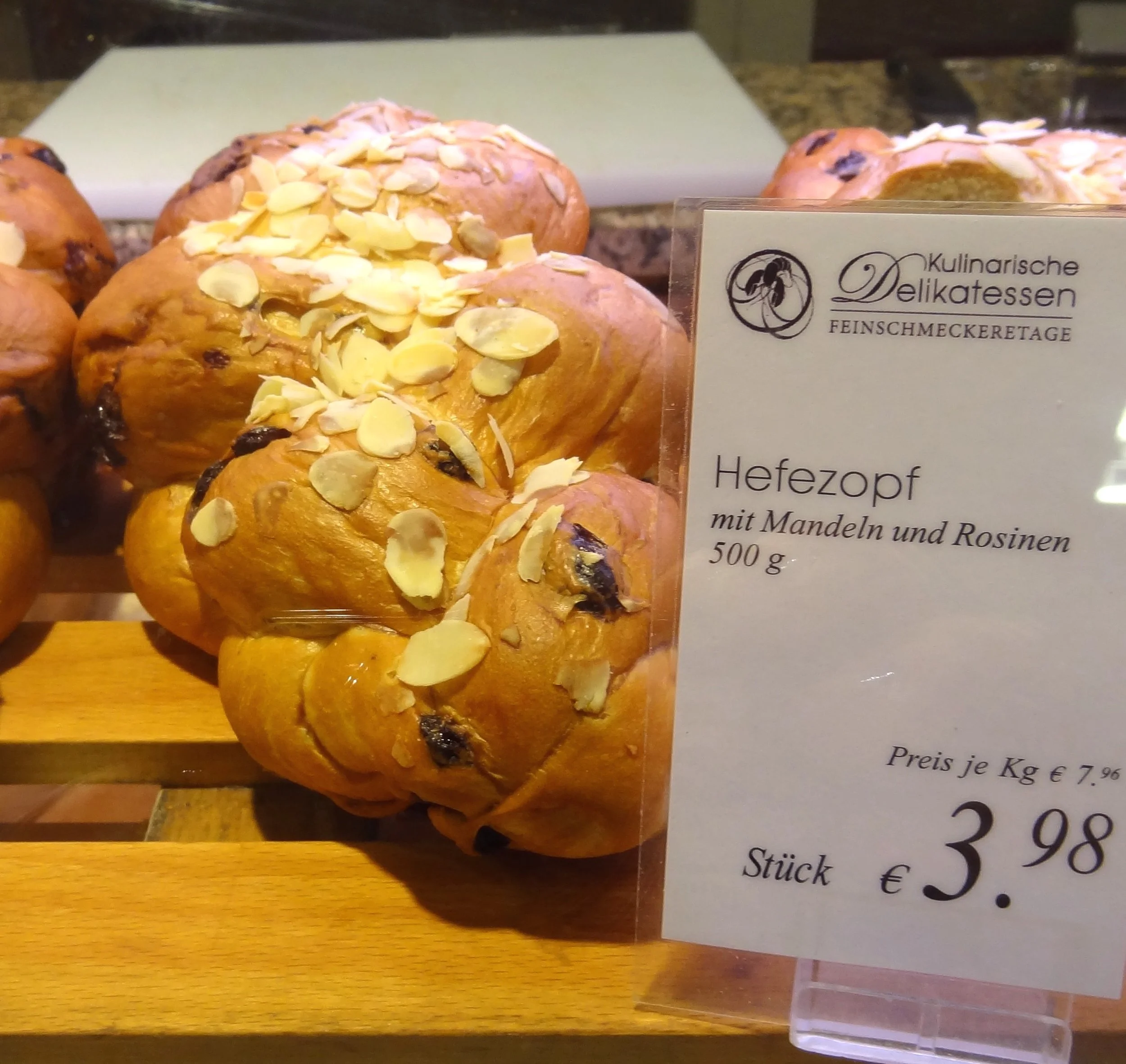
But then we came to the bakery and there, in the case, was a beautiful, braided loaf called Hefezopf, which is like a challah, but with raisins and almonds.

It was a vision. All at once my mind filled with memories of a lovely shabbat challah mixed with grandma singing rozhinkes mit mandlen, that hauntingly beautiful, classic Yiddish lullabye.

Oh my. My eyes well up even thinking about it.

This was something I had to try at home and get right.

I did, but it took several tries. At first I used my challah recipe and sweetened it a bit, but that just tasted like sweeter challah. The consistency wasn't right.

After doing some research about Hefezopf I realized it was more like brioche -- dense, buttery, dairy-laden, so I started tinkering with my brioche recipe.

Yes. 

A taste is worth a thousand looks.

Try this. It's called Hefezopf, but like to call it Lullabye Bread.

Lullabye Bread (HEFEZOPF)

  • 1 cup milk
  • 1 3-inch piece of cinnamon stick, broken in half
  • 2 2-inch strips of lemon peel
  • 5 tablespoons butter
  • 1/3 cup sugar
  • 1 package active dry yeast
  • 3-1/2 cups all purpose flour, approximately
  • 1 teaspoon salt
  • 2 large eggs
  • 1 cup raisins, optional
  • 2-3 tablespoons chopped almonds, optional


Lightly grease a baking sheet. Pour the milk into a saucepan. Add the cinnamon stick, lemon peel, butter and sugar cook over medium heat, stirring to dissolve the sugar, until bubbles form around the edges of the pan and the mixture is hot. Set aside to cool to lukewarm (about 105-110 degrees). Sprinkle the yeast over the milk mixture and whisk the ingredients to dissolve the yeast. Let rest for about 5 minutes or until thick bubbles form. Place the flour and salt in the bowl of an electric mixer. Remove the cinnamon stick pieces and lemon peel from the yeast mixture and pour the liquid into the mixer bowl. Add one egg and mix the dough with a dough hook for about 2 minutes. Add the raisins, if used, and mix for another 2 minutes or so, or until the dough is smooth. If the dough is sticky, add more flour as needed. (Kneading can be done in a food processor or by hand.) Cover the bowl and let rise in a warm place for about 1-1/2 hours or until doubled in bulk. Punch the dough down and cut it into 3 equal pieces. Working on a floured surface, roll the pieces to make strands of about 12-inches long. Braid the strands and place them on the baking sheet. Beat the remaining egg with one teaspoon water and brush the egg wash over the surface of the braid. Sprinkle with almonds, if used. Let rise again for 30 minutes. Preheat the oven to 350 degrees. Bake for about 30 minutes or until puffed and golden brown.

Makes one bread