Jewish food

Bubbe and Me in the Kitchen

photo by Evi Abeler

photo by Evi Abeler

Although my Mom was the one who taught me how to cook and who encouraged me to expand my recipe repertoire, I post a lot about the dishes my grandma cooked. My mom's food was thoroughly up-to-date and wonderful, but my grandma made the old-fashioned, old-world Ashkenazi favorites that I loved (still love!) so much. 

And so, when I got hold of Miri Rotkovitz's new cookbook, "Bubbe and Me in the Kitchen," I felt right at home. I understood immediately that for Miri, whose recipes are geared to mostly modern food that today's kosher home cooks prefer, she keeps a special place within her heart and soul for her bubbe, for the foods her bubbe cooked and the words of wisdom, culinary and otherwise, that her bubbe gave to her. Like how bubbe taught her that using spices could "bump up the flavor and stamp a personal signature on favorite dishes." That slicing apples rather than chopping them would result in a more flavorful Apple Cake.  

The book is filled with some of her bubbe's recipes, culled from a collection of index cards and clippings, plus an occasional recipe from other kosher food writers (including me) and mostly, Miri's own contemporary creations and riffs on traditional dishes. There are so many fabulous recipes, I don't even know where to begin cooking them. Shall it be the chapter on Grains, with the Forbidden Rice Salad with Mango and Ginger Vinaigrette? Or the Mezze/Snack chapter that includes Nori and Smoked Salmon "Petits Fours?"

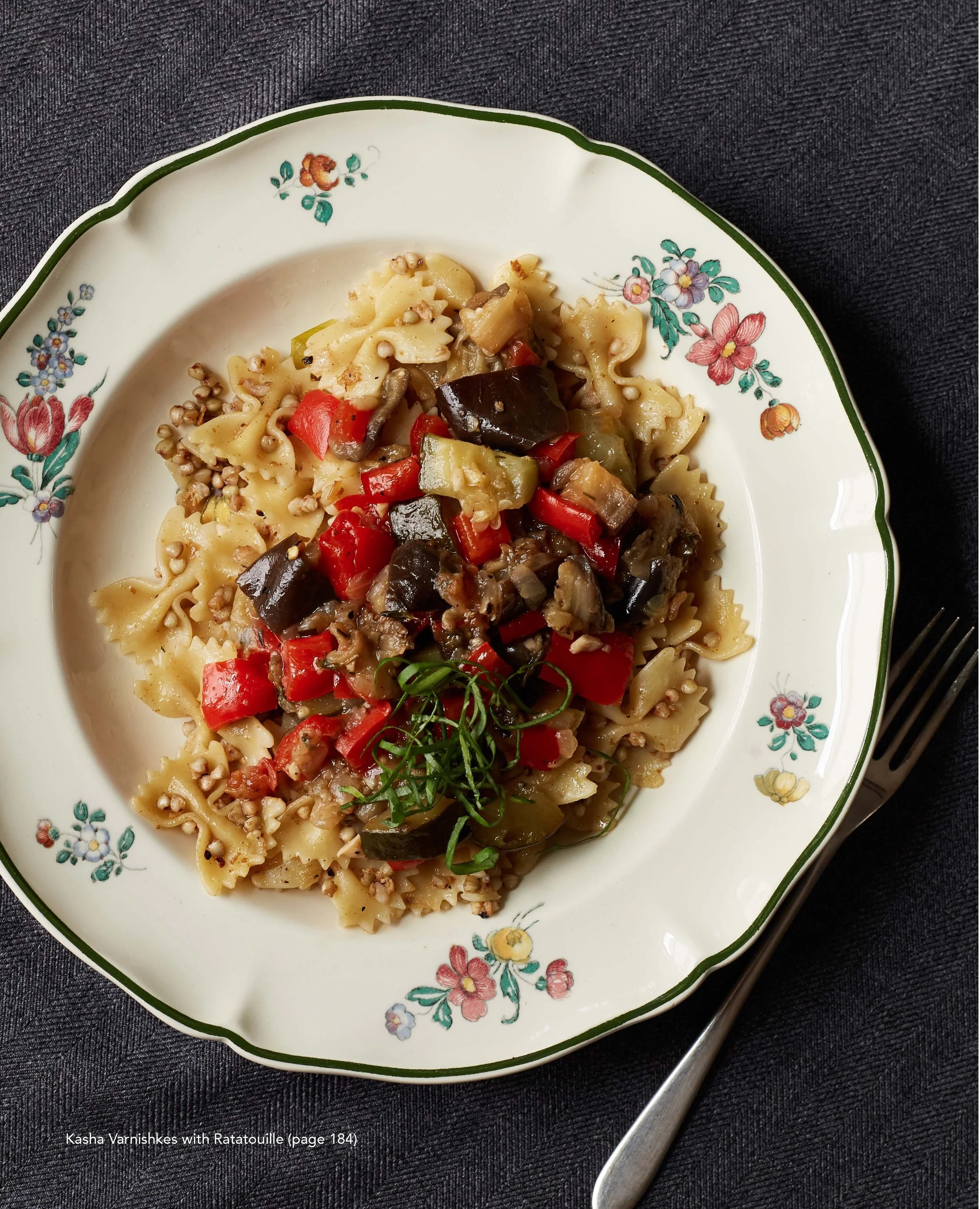
I love meatless meals, so actually, it's the Kasha Varnishkes with Ratatouille for me. This is the kind of dish that brings together traditional and contemporary, that makes a standard side dish into a full meal.

This book is a winner and a keeper. Not simply for the wonderful kosher recipes, but also for all the extras: notes on pantry items, information about what kosher means today in terms of global ingredients and healthy eating, and because of the charming narrative and headnotes that lets us hear bubbe's voice, translated by a loving grand daughter.

Here's that recipe, so fine for a meatless Monday (but really, anytime).

Kasha Varnishkes with Ratatouille

SERVES 4 TO 6 | PAREVE 

Prep time: 25 minutes Cook time: 45 minutes

 FOR THE RATATOUILLE

  • 3 tablespoons extra-virgin olive oil

  • 1 large onion, peeled and chopped

  • 3 large garlic cloves, chopped

  • 1medium eggplant, cut into 1-inch pieces

  • 1 large red bell pepper, cored and chopped

  • 1 medium zucchini, trimmed and cut into 1-inch pieces

  • 2 medium tomatoes, seeded and cut into 1-inch pieces

  • 2 tablespoons tomato paste or tomato sauce

  • Generous pinch dried thyme

  • 2 tablespoons thinly sliced fresh basil leaves, plus extra for garnish

  • Sea salt or kosher salt

  • Freshly ground black pepper

FOR THE KASHA VARNISHKES

  • 4 tablespoons extra-virgin olive oil or canola oil, divided

  • 1 large onion, peeled and finely chopped

  • 1 pound bowtie (farfalle) noodles

  • 1 large egg

  • 1 cup kasha (medium granulation) 2 cups water or vegetable stock

  • 1 teaspoon salt

  • ¼ teaspoon freshly ground black pepper

MAKE THE RATATOUILLE:  Preheat the oven to 400°F. Warm the oil in a Dutch oven or ovenproof covered chef’s pan set over medium heat. Add the chopped onion and sauté  until it softens and begins to turn translucent, about 5 minutes. Add the garlic and sauté 1 minute more.

Add the chopped eggplant and cook, stirring frequently, until it begins to soften, about 5 minutes. Add the red peppers, sauté for 2 minutes, then add the zucchini, stirring occasionally, until the zucchini softens, about 3 minutes more. Stir in the tomatoes, tomato paste (or sauce) and thyme.

Cover the pan and place in the preheated oven. Bake for 30 minutes, stirring after 15 minutes. The vegetables should be saucy and tender, yet still mostly hold their shape. Remove from the oven, stir in the basil, and season with salt and pepper. Set aside.

MAKE THE KASHA VARNISHKES: While the ratatouille is baking, set a large pot of water to boil for the pasta. In a chef’s pan or large skillet, heat 2 tablespoons of oil over medium-high heat. Add the onions and sauté until they turn soft and translucent, about 5 minutes. Reduce the heat and cook, stirring occasionally, until the onions start to caramelize, about 10 minutes more. Remove from the heat and set aside.

In the meantime, when the pasta water comes to a boil, stir in the bowties and cook until al dente, about 10 to 11 minutes. Drain and transfer the pasta to a large serving bowl.

In a small bowl, beat the egg. Add the kasha and stir well to coat the kasha grains. Transfer the onions from the chef’s pan to the serving bowl with the pasta. Return the pan to the stove top and place over medium heat. Add the kasha and cook, stirring constantly, until the egg dries and the kasha separates into individual grains, about 3 minutes.

Add the water or stock to the kasha and bring to a boil. Reduce the heat, cover, and simmer until the liquid is absorbed, about 10 minutes.

When the kasha is cooked, add to the bowl with the bowties and onion. Drizzle with 2 table- spoons of oil and stir well to combine. Spoon into shallow bowls and top with the ratatouille. Garnish with additional basil.

STORAGE: Store the ratatouille and the kasha varnishkes in separate covered containers in the refrigerator. The ratatouille will keep for 4 to 5 days, the kasha for 2 to 3 days. You can also freeze both dishes in freezer-safe containers
New LaLa Lunchbox kosher content

My daughter Gillian, mother of three kids and creator of the best-selling lalalunchbox app, is expanding the content of this wildly successful tool that helps parents and children plan lunches for school, camp, field trips and so on.

It involves cute monsters and shopping lists that make it easy to get all that's needed, but mostly it encourages children to make decisions and healthy food choices. You can read more about it here.

Now there is going to be a special section geared for kosher food. Yes, many of the original items can already be kosher -- chicken leg, for example. Or made with kosher substitutions. But now there is a special section that is kosher-only. With no need to make changes or substitutions.

And I am thrilled to be curating the kosher items for the app!

Here are some of the items you can choose from when you download this app:

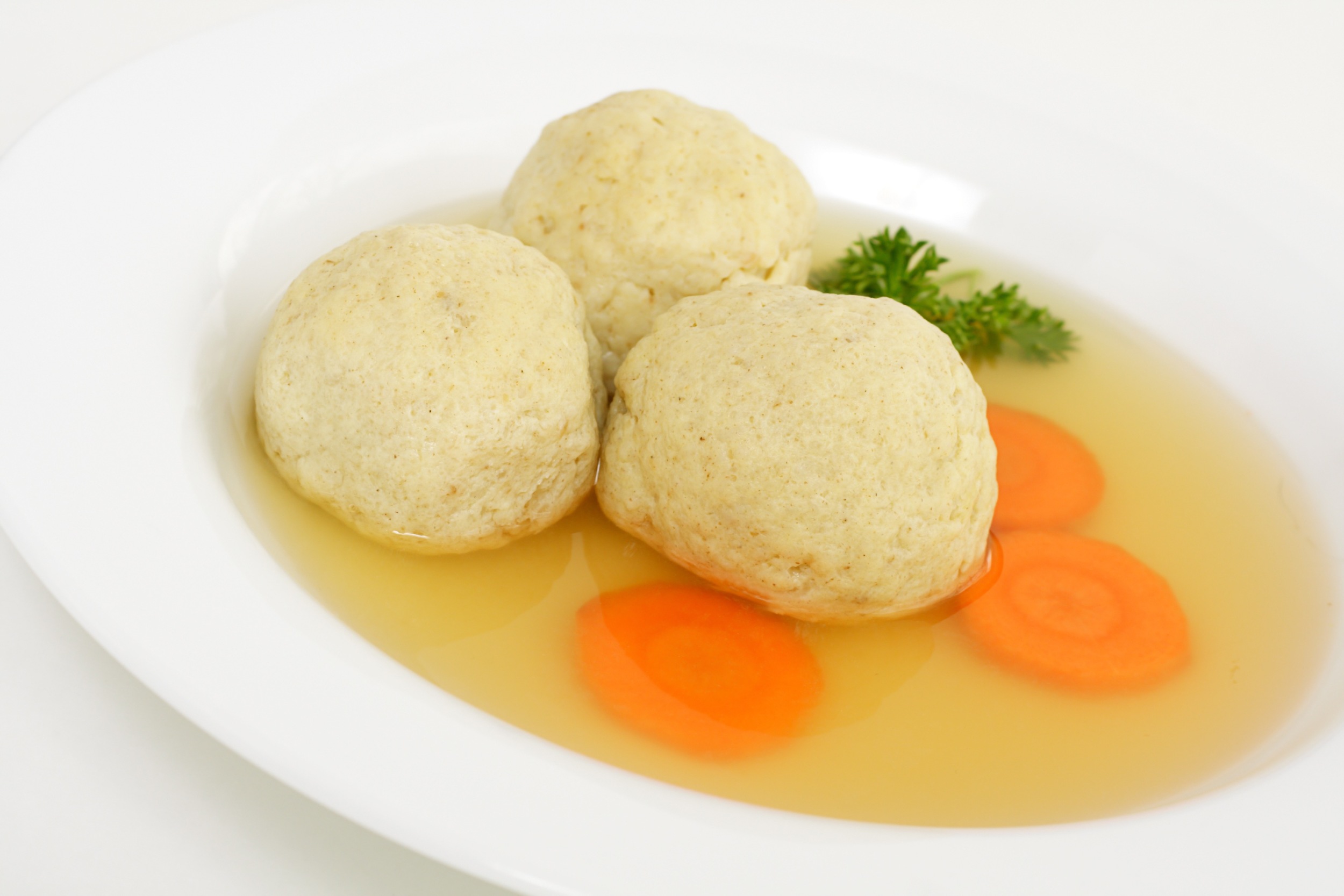
Traditional favorites such as: Pierogies! Blintzes! Banana bread! Hamantaschen! Potato Latkes! Matzo Ball Soup!

Pierogies KOSHER protein (1).jpeg

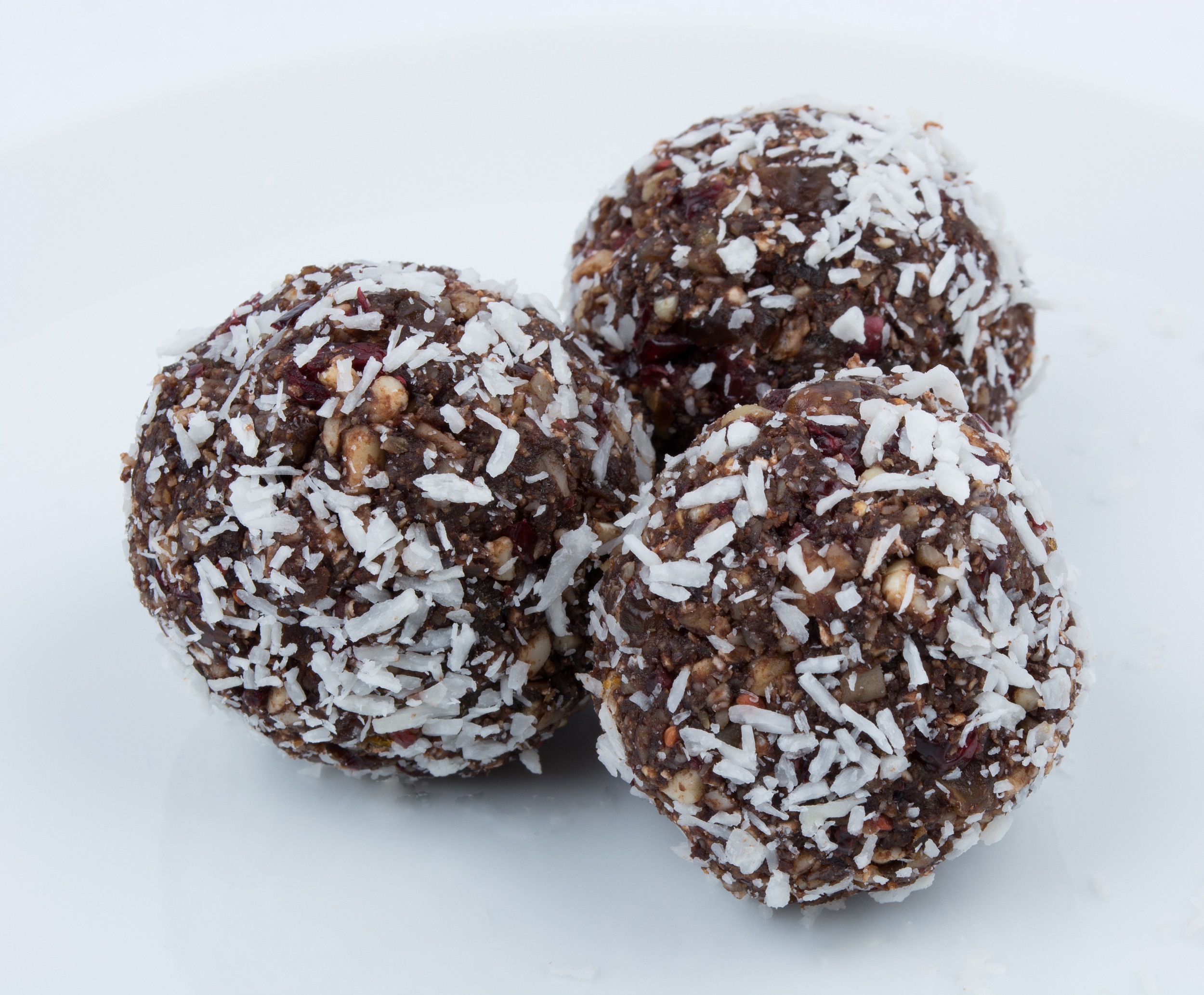
But also lots of up-to-date foods that kids love, like Date Snack Balls, Roasted Carrots, Grilled ChickenHummus, and much, much more.


I am happy to shard my recipes with you so you can make them with your family.

Check it out today so you can be ahead of the game in time for back-to-school!

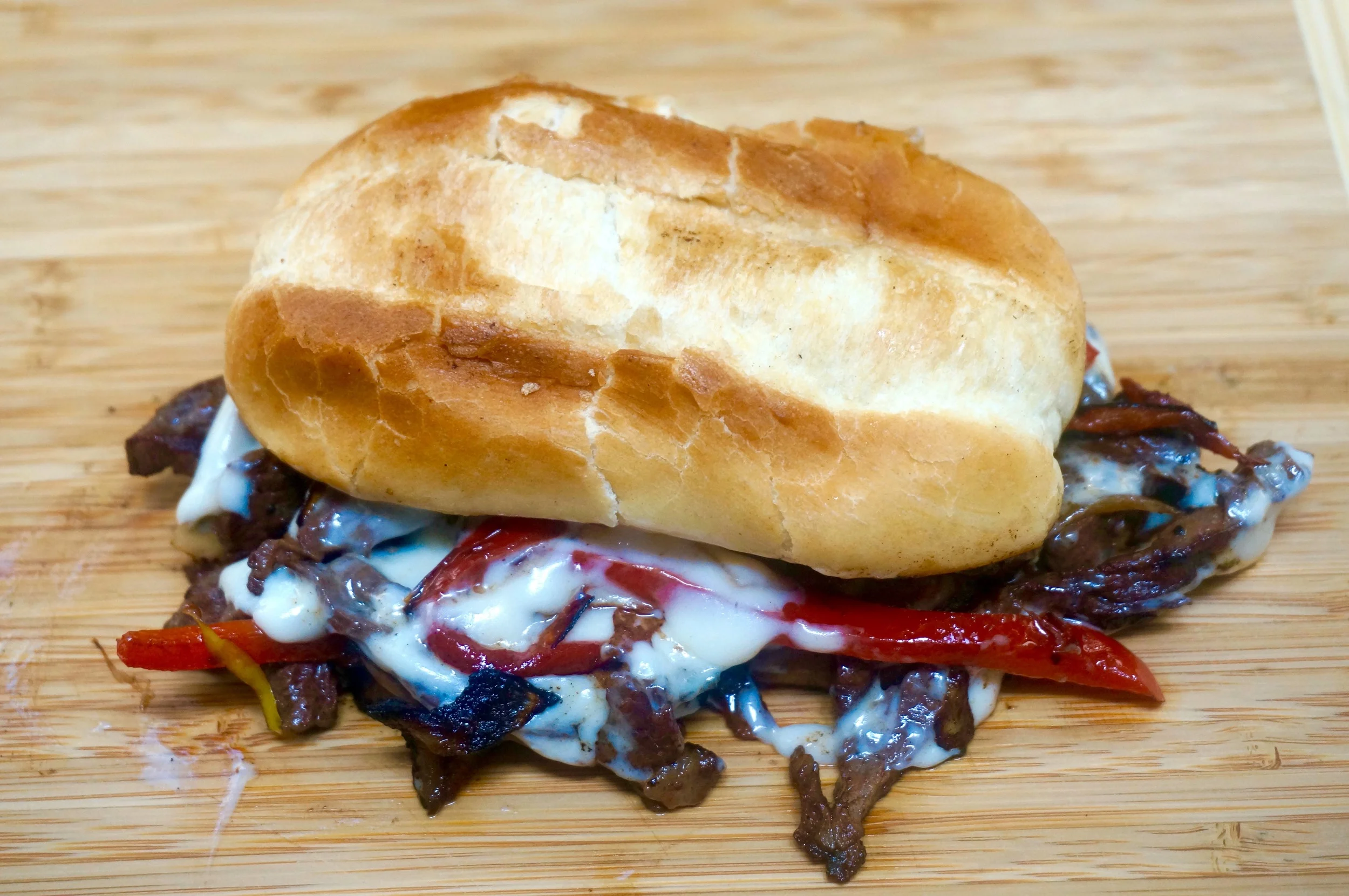
Philly Cheese Steak, the Kosher way

Philadelphia. City of Brotherly Love. So named (from the Greek words "philos" meaning love and "adelphos" meaning brother) because the city's founder, William Penn, wanted the place to be a refuge from religious persecution. 

I wonder what Penn might think of that today, what with this year's contentious election and the Democratic National Convention at hand in the city.

But, current times aside, Philadelphia has a lovely history.

Home of the Liberty Bell. And Independence Hall, where the founding fathers debated (and adopted) the Declaration of Independence AND the Constitution.

Once the temporary capital of the United States while the newly minted America waited for the District of Columbia to be built.

And, among the more mundane of matters, home of the Philly Cheese Steak.

Philly Cheese Steak.

I have to say, I've been to Philadelphia several times and never ate one.

But thoughts of the city and its famous hoagie (hero sandwich, sub, whatever others may call it) got me to think about trying one at home.

Kosher.

I looked at lots of recipes and saw that they called for different cuts of beef, cut into strips. I decided on skirt steak because it's so juicy and flavorful.

I also noticed that the cheese could be cheddar or American or provolone and even -- OY -- cheese whiz. 

I opted for provolone (non-dairy, soy-based from Daiya Foods) because it has such a magnificent tang to it.

Some recipes called for sauteed mushrooms or other vegetables in addition to the more usual onions and red bell pepper. I decided not to.

In the end -- magnifico!!

Does it taste the way a Philly Cheese Steak is supposed to? 

I have no clue.

All I know is that it tasted good. Very good.

And so, in honor of Philadelphia's few days in the sun again -- my recipe for Philly Cheese Steak.


Kosher Philly Cheese Steak

  • 8 ounces skirt steak, semi-frozen
  • 2 tablespoons vegetable oil
  • 1 small onion, sliced
  • 1 small red bell pepper, deseeded and sliced into narrow strips
  • 2 hoagie rolls
  • salt and freshly ground black pepper to taste
  • 4 slices Daiya soy “provolone style cheese”

Cut the beef into thin slices against the grain. Heat the vegetable oil in a large sauté pan over medium heat. Add the onion and pepper strips and cook, stirring occasionally, for 4-5 minutes or until soft and lightly browned. Add the meat to the pan and cook, stirring occasionally, for 3-4 minutes or until browned. Cut the rolls in half. Move the meat and vegetables to one side of the pan (or temporarily spoon into a plate) and place the 4 pieces of roll, cut side down in the pan. Cook for a minute or so, to lightly toast the rolls. Turn the rolls cut side up. Using equal quantities, place equal quantities of meat and vegetables on each of the two roll bottoms. Top with equal amounts of the soy cheese. Cover with the tops of the rolls. Turn the heat to low. Cover the pan and cook for a minute or so or until the cheese has melted.

Makes 2 sandwiches

Cleveland Cuisine! Really.

Cleveland cuisine? Really?

Yes!

Cleveland is an important place.

For one thing, it's the home of the Rock and Roll Hall of Fame.

And that should be enough.

But there's also The Cleveland Museum of Art -- it has a large, diverse collection. And unlike so many museums of its kind, admission is FREE!!!!

Also -- Cleveland has a world-famous orchestra, a distinguished university (Case Western Reserve), an AFC football team (the Browns) and a major league baseball team (the Indians).

AND, of course, their basketball team is this year's NBA Champions! (You've surely heard of the Cavaliers!)

I'm impressed!

And now there's more. This summer Cleveland will be home to the 2016 Republican National Convention (July 18-21).

And, whatever the goings on at the convention itself, the city will get lots of extra attention in the press. There will be loads and loads of extra people in Cleveland.

So, me being me, I got to wondering about what those people might be eating during their stay. 

I don't mean the food they're going to get at the convention. I mean real, special, famous Cleveland food. 

Not every city has its own culinary specialties. Surely nothing in Stamford, CT., where I live. 

But Cleveland does! And some real goodies, at that! 

For example, because the city is home to large numbers of families whose origins trace back to central and eastern Europe, bratwurst (on a bun) and crunchy apple fritters are really popular.

The apple fritters alone are worth a visit I think.

But also this -- among the most famous of "Cleveland food" is something called the Polish Boy (basically a kielbasa sandwich with coleslaw, french fries and barbecue sauce all on a club roll).

Well, okay. Maybe.

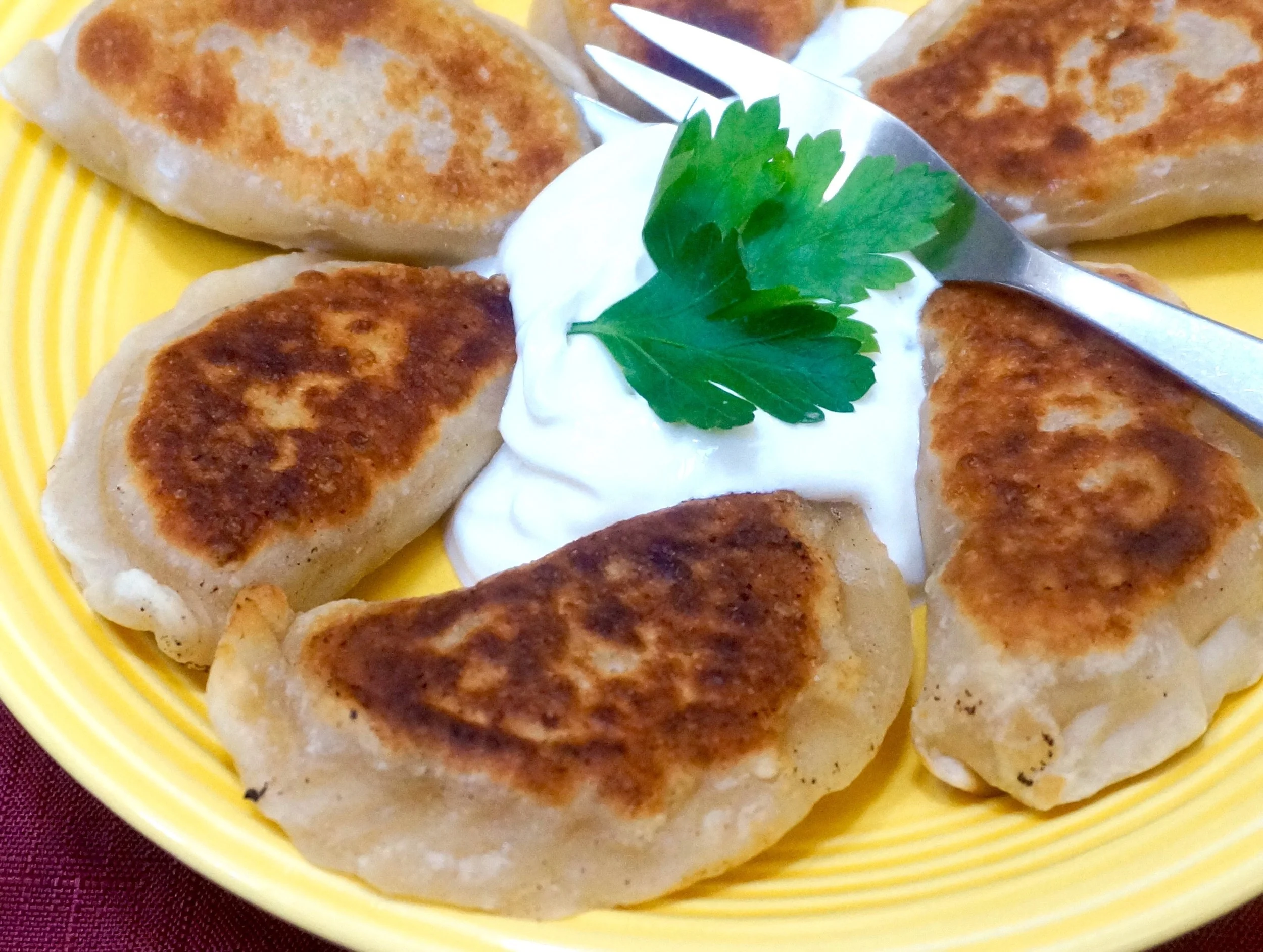
Then I discovered that among the iconic Cleveland dishes are pierogi.

Pierogi. Do you hear my heart pounding? Can you see my grin?

Oh! How I love pierogi! Doughy dumplings stuffed with stuff. Like beef cheeks or potato and cheese (served with thick, tangy sour cream).

Pierogi. The kind of food some of us used to get at grandma's, if we were lucky.

I haven't had a pierogi for as long as I can remember. Thanks to Cleveland I was reminded of that fact.

I had to have some. But the only ones I could find in Stamford, CT. were packaged.

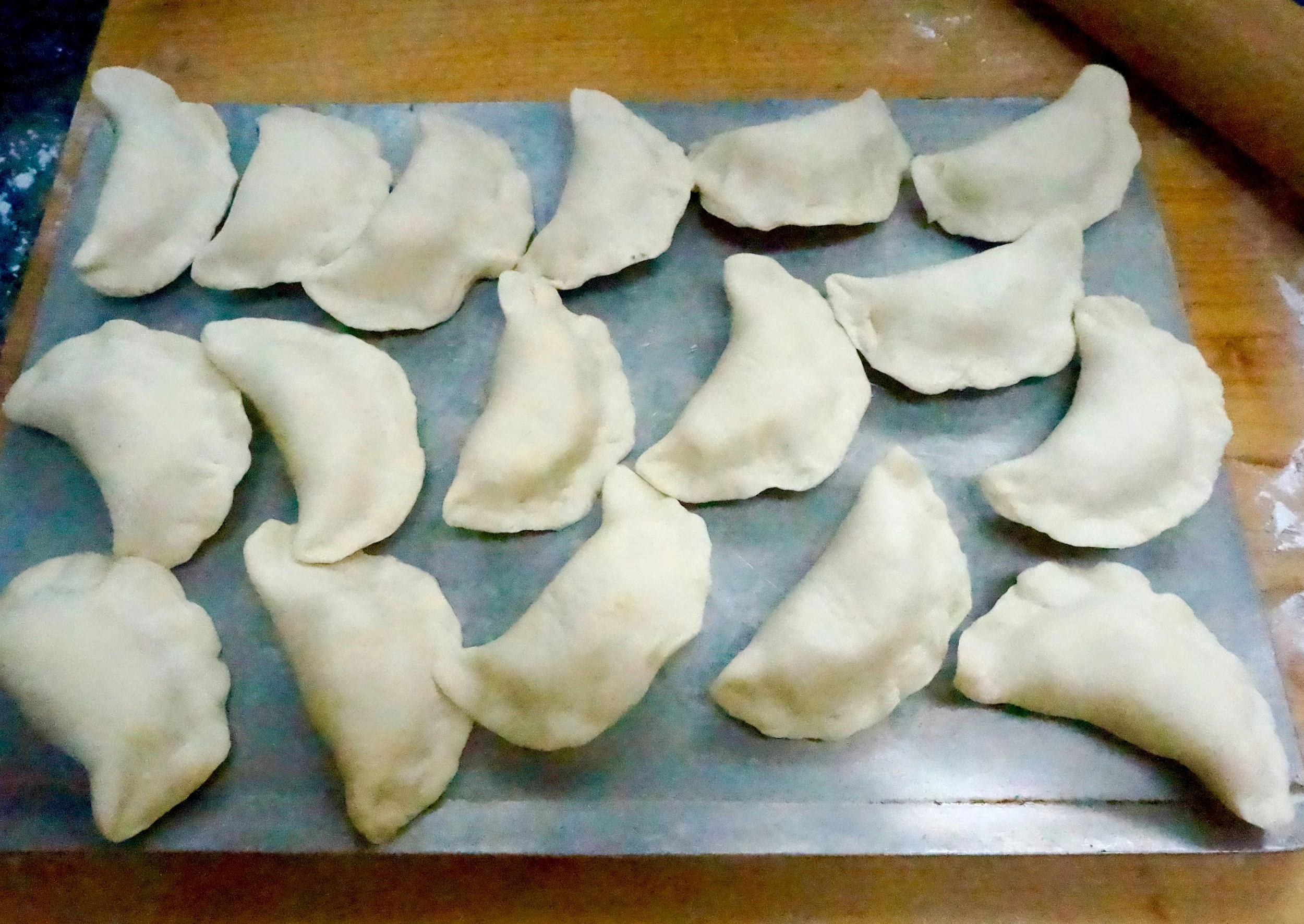
So I decided to make some myself. And after a couple of tries -- oh!

They are as wonderful as I remember.

Thank you, Cleveland, for inspiring this recipe. Good luck this summer.


Potato Cheese Pierogi

Filling:

  • 3 large Yukon Gold potatoes (about one pound), peeled, cut into chunks (about 3 cups mashed potatoes)
  • 2 tablespoons butter
  • 1 large onion, chopped
  • 1 cup farmer cheese
  • salt and freshly ground black pepper to taste

Place the potato chunks in a large saucepan, cover with water and bring to a boil. Lower the heat to a simmer and cook for about 15 minutes or until the potatoes are tender. Drain the potatoes and spoon into a bowl. While the potatoes are cooking, heat the butter in a sauté pan over medium heat. When the butter has melted and looks foamy, add the onions and cook, stirring occasionally, for 12-15 minutes or until soft and golden brown. Add the onions to the potatoes. Add the farmer cheese, sprinkle with salt and pepper and mix the ingredients until well blended. Set aside to cool before filling the dough.

Dough:

  • 3-1/2 cups all-purpose flour
  • 1 teaspoon salt
  • 1/4 cup butter, cut into chunks
  • 1/2 cup water, approximately
  • 1 cup dairy sour cream

Extras:

  • butter
  • vegetable oil
  • sour cream

To make the dough: place the flour and salt in a large bowl. Add the butter and work it into the dough until the mixture is crumbly. Add 1/2 cup of the water and the sour cream and mix the dough until it is smooth, soft and well blended. If the dough seems too dry, add more water. (You can do this in a food processor.) Let the dough rest for at least 30 minutes. Using portions of the dough, roll the dough on a floured surface to 1/8-inch thick and cut out circles with a 3-inch cookie cutter. Place the circles on a board or cookie sheet and cover them with plastic wrap or a kitchen towel while you cut the rest of the dough. Fill the dough using about one tablespoon of the filling for each circle.

To fill the pierogis: place the filling in the center of the dough circle. Fold the circle in half, pinching the edges to seal in the filling.

To cook the pierogis: bring a large pot of lightly salted water to a boil. Add the filled pierogis, 6-8 at a time, and boil for about 3-8 minutes depending on whether they are at room temperature, refrigerated or frozen (or until they float to the surface). Remove the pierogis with a slotted spoon and set aside; repeat with remaining pierogis.

Extras: To serve the pierogis: serve boiled (as above), with sour cream (can also serve with caramelized onions – make more when making filling above). OR, heat 1 tablespoon butter plus 1 tablespoon vegetable oil in a sauté pan over medium heat. When the butter has melted and looks foamy, add some of the pierogi (do not crowd the pan) and cook for 3-4 minutes on the flat side, or until golden brown on the bottom, then turn the pierogis over and cook for another 2-3 minutes or until crusty and golden brown. Repeat using more butter/vegetable oil with the remaining pierogis. Serve with sour cream (and sautéed onion if desired). 

Makes about 4 dozen

Grandma's Blintzes

_DSC9289.jpg
_DSC9381.jpg

I feel blessed that my children and grandchildren come to stay over at my house in Connecticut for holidays and birthdays and occasionally just to hang out. It reminds me of when I was a kid and visited my grandma -- almost every weekend -- along with practically everyone else in my mother's family (aunts, uncles and cousins).

That was back in the day before children had so many other activities. Sure, there were brownies and cub scouts, but back then I never heard of things like soccer or gymnastics. Art classes happened during school hours. The only cooking classes for children took place in your own kitchen if you were lucky to have a Mom like mine who let you patchky around.

Weekends were strictly for family activities.

I'm not saying one way of life is better than another. One size does not fit all, as they say. And maybe today's kids are better educated or are more well-rounded than we were.

But I have wonderful memories of that life. 

It was good. I got to play with my cousin Leslie every weekend. She and her family lived with our grandma.

I also got to eat some of my grandma's wonderful food. 

I hope that in years to come my grandchildren will feel happy when they recall their visits to Ed and me. And have good memories of some of the favorite foods I cooked when they came.

Like Macaroni and Cheese. Apple Pie. Matzo Brei.

My grandma also made matzo brei and macaroni and cheese. But one of her signature dishes was blintzes.

She filled the blintzes with cheese, the classic, but, as I learned later, most people made the cheese filling sweet, seasoned with vanilla and/or cinnamon. My grandma's cheese-blintz filling was lemony, with just a hint of sugar.

Also, because there were so many of us, she had no time to fry them a couple at a time and still have everyone eat at the same time. So she placed the blintzes, seam-side down, on a baking sheet, topped each with a little dab of butter, and baked them until they were golden brown.

Me? I still love blintzes lemony and baked. And -- surprise to me! -- so do my grandchildren.

Her recipe is below, but the filling instructions give you the option to make the more popular vanilla version (and also how to fry them). Don't worry if the wrappers don't fry into perfect circles -- you're going to roll them and if they're a little off, no one will ever know.

Grandma Rachelle Hoffman’s Blintzes

Wrapper:

  • 3/4 cup all-purpose flour
  • 1-1/2 teaspoons sugar
  • 1/2 teaspoon salt
  • 3/4 cup milk, approximately
  • 2 large eggs
  • softened butter for frying

Filling:

  • 1 pound farmer’s cheese
  • 1 large egg
  • 2 tablespoons sugar
  • 1 teaspoon lemon juice
  • 1/2 teaspoon grated fresh lemon peel, optional
  • 1 teaspoon vanilla extract, optional

To make the wrapper, combine the flour, sugar and salt in a bowl and stir to blend the ingredients. Add the milk and eggs and whisk until the batter is smooth and uniform (you may do this in a food processor). Add more milk if the batter seems too thick (it should be the consistency of heavy cream). Set aside for 30 minutes. Place a small amount of the softened butter in a crepe or omelet pan and place the pan over medium-high heat. When the butter has melted and the foam is beginning to separate, add enough batter to cover the bottom of the pan (for an 8-inch pan it will be 1/4-cup), shaking the pan quickly to spread the batter evenly. Cook for a minute or so or until the bottom is lightly browned. Turn the wrapper over and cook briefly. Remove the wrapper and proceed with the remaining batter, separating the cooked wrappers with aluminum foil or waxed paper.

To make the filling, place the cheese, egg, sugar and lemon juice in a bowl and mix thoroughly. Add the lemon peel OR vanilla extract and mix in thoroughly.

To fill each wrapper: use the first fried side as the inside of the blintz. Use about 2 tablespoons of filling for an 8-inch wrapper and place the filling in the center of the wrapper. Fold the bottom side up, over the filling. Fold the left side, then the right side over the filling, then roll up to enclose the filling. Fry the blintzes seam side down first over medium heat (using the same method as for frying the wrappers – let the butter melt and become foamy). Or, you can bake the filled blintzes: Preheat the oven to 350 degrees. Place the blintzes in a single layer on a jelly roll pan, top each with a tiny piece of butter. Bake for about 10 minutes.

Makes 8 8-inch blintzes

Passover Orange Almond Cake

A few weeks ago I was going through my Passover recipes file and came across a recipe for Italian Almond Cake with Poached Fruit from the Jerusalem Post. Unfortunately, it didn't say whose recipe it was. Also I didn't have the second page of instructions.

I made some changes and figured out how to proceed based on similar cakes I've baked.

 First, I converted all the metric measurements. 

I figured out how much, in cups, came from 3/4 cup whole almonds.

I didn't use blanched almonds, figuring that almonds with skin were just as good.

I switched to coconut oil because I don't like margarine. 

I deleted the liquor and used orange juice instead, and added some freshly grated orange peel. 

I separated the eggs and whipped the whites with sugar to provide a lighter texture than I thought the cake would have without fluffed whites.

I didn't serve it with poached fruit (I used fresh oranges and sorbet).

Some would say that with all these changes the recipe is now mine, and I understand that.

Still, the cake was delicious and I would have preferred to give credit!

Btw, it's gluten free!

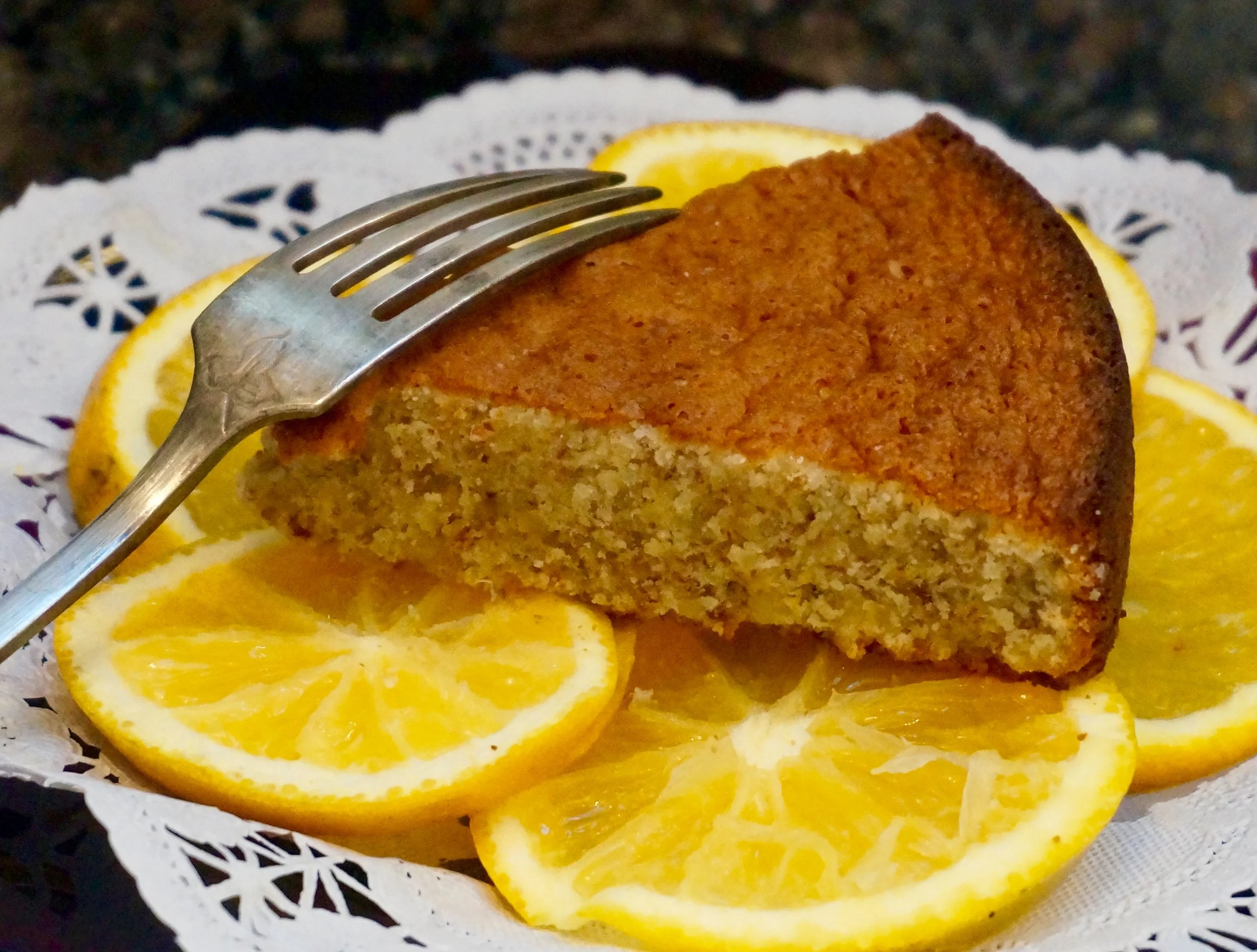
Here's my version of Passover Orange-Almond Cake.

Passover Orange Almond Cake

  • 1/3 cup coconut oil
  • 1 cup ground almonds
  • 6 tablespoons plus 2 tablespoons sugar
  • 3 large eggs, separated
  • 2 tablespoons orange juice
  • 2 teaspoons finely grated fresh orange peel
  • 1/4 cup potato starch

Preheat the oven to 350 degrees. Using a small amount of the coconut oil, lightly grease an 8-inch round cake pan, line the bottom with parchment paper and lightly grease the paper. Set aside. Melt the remaining coconut oil and set aside to cool. Place the almonds and 6 tablespoons sugar in the bowl of an electric mixer and stir at low speed for a minute until the ingredients are well distributed. Add the egg yolks, orange juice and orange peel and beat them in at medium speed for about one minute. Stir in the potato starch. Stir in the cooled coconut oil. In a separate bowl, beat the egg whites for 1-2 minutes, going from low to high speed, or until the whites stand in soft peaks. Add the remaining sugar and beat until the mixture stands in stiff peaks. Fold them into the almond mixture. Pour the batter into the prepared pan. Bake for about 25 minutes or until golden brown and a cake tester inserted into the center comes out clean.

Makes 6-8 servings


Beet and Brussels Sprouts Salad

Now that my children are grown, with children of their own, I sometimes think about the “old days” and remember the good times, the festive occasions, the fun we had. The Jewish holidays rank high on my list of best memories, especially the Passover Seders. Whether I’m thinking about the times that my cousin and I would crawl under the table while my uncle recited the Haggadah or last year, when my grandchildren threw the styrofoam “hail” and plastic locusts as we mentioned the Ten Plagues, the memories are good, the kind that I love to deposit in my memory bank.

There are good food memories too, from my grandma’s famous chicken soup to the complaints I got when I first served haroset made with dried apricots, pistachio nuts and cayenne pepper.

My first Seder continues my family's generations long menu featuring matzo ball soup, followed by roasted turkey. Chremslich, of course. In fact, a double portion of that. 

But all the rest is different. Over the years there was one food change after another, little by little as new in-laws came into our family, tastes changed and allergies had to be considered. So these days we have our own family expected recipes -- matzo ball soup and turkey, plus homemade baked cranberries, spinach pie (made with a matzo crust), imam bayeldi, and lots of other vegetables and the now standard spicy dried fruit haroset.

I used to serve flourless chocolate cake, but we had that a little too often, so because Passover is also my grandson's birthday, I will serve homemade macaroons along with a traditional chocolate roll, the one I used to make when my daughter Meredith's birthday fell during Passover. (You can stuff the roll with whipped cream, jelly or parve lemon curd filling).

Every year I add one new dish to my first Seder. One year it was Ratatouille. A few times there was a new version of haroset. I even made matzo farfel chocolates one year.

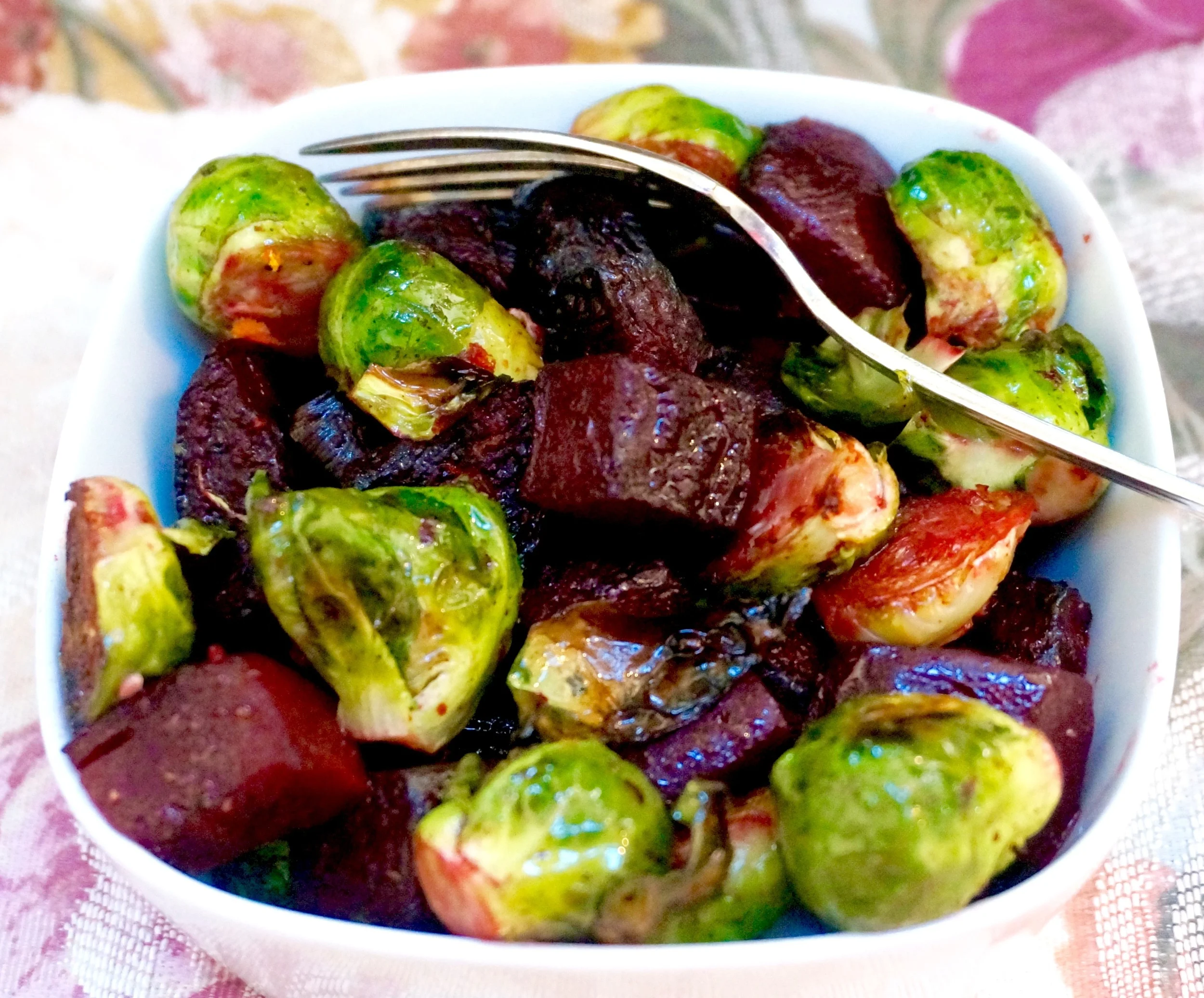
This year? A new salad! Here it is:

Roasted Beet and Brussels Sprouts Salad

  • 4 medium beets
  • 3 tablespoons olive oil
  • salt to taste
  • 1/2 pound (about 30) medium size Brussels sprouts
  • 2 tablespoons apple cider vinegar (or use Balsamic vinegar)
  • 1 tablespoon lemon juice
  • 2 teaspoons grated fresh orange peel
  • freshly ground black pepper

Preheat the oven to 425 degrees. Peel the beets and cut them into bite size pieces. Place the beets on a baking sheet and pour one tablespoon olive oil over them. Toss to coat the beets. Sprinkle with salt. Roast for about 20 minutes or until tender. Trim the Brussels sprouts (cut them in half if they are large). Place them on a baking sheet and pour one tablespoon olive oil over them. Toss to coat the sprouts. Sprinkle with salt. Roast for about 15 minutes or until tender. Place the vegetables together in a bowl. Mix the remaining olive oil, apple cider vinegar, lemon juice and orange peel and pour over the ingredients. Let rest for about 10 minutes, place in a serving bowl and sprinkle with salt and black pepper to taste.

Makes 6-8 servings


Breast of Veal for Passover

_DSC9020.jpg

In my world, Passover is not usually the brisket fest that is typical for so many of the other families I know.

Our usual is turkey. Second night veal.

That's because, growing up, when the Seders were at my grandma's house, and the crowd could be as many as 24 people, she always served a big turkey the first night. The second night, when we were a much smaller group, she would cook a batch of veal cutlets with a crunchy matzo meal crust.

Frankly, I don't feel like frying up a whole mess of cutlets, so my Passover veal dinner will likely be breast of veal, one of my favorites meats to eat. I realize a lot of people think breast of veal is too down home for a festive occasion such as Passover.

I don't agree. Look how beautiful this roast is! Golden brown skin, meaty bones, moist meat, savory vegetables to accompany. Looks impressive to me! And also quite good to eat, for Passover or otherwise.

Roast Breast of Veal with Mushrooms, Onions and White Wine

  • 3 tablespoons olive oil
  • 1 large onion, chopped
  • 10 ounces fresh mushrooms
  • 1 large clove garlic, finely chopped
  • 2 tablespoons chopped fresh parsley
  • salt and freshly ground black pepper to taste
  • 1 breast of veal, about 3-4 pounds
  • 1/2 cup white wine

Preheat the oven to 400 degrees. Heat 2 tablespoons of the olive oil in a saute pan over medium heat. Add the onion and cook for about 2 minutes, to soften slightly. Add the mushrooms, garlic and parsley, stir and cook for another 2 minutes. Season to taste with salt and pepper. Spoon the vegetables into a roasting pan. Place the veal breast on top. Brush the top surface of the meat with the remaining olive oil. Sprinkle with salt and pepper. Roast for 30 minutes. Pour the wine over the meat. Reduce the heat to 350 degrees. Roast for another 45-50 minutes, basting occasionally, or until the surface is crispy.

Makes 4 servings

Classic Dairy Hamantaschen

You can't get through Purim without eating at least one hamantaschen.

It's tradition, and for me, a treat I look forward to every year. Hamantaschen are among my very favorite desserts.

Over the years I've tried dozens of different kinds from a variety of bakeries: the classics, filled with poppy seeds or with prune, apricot or raspberry lekvar, and in recent years some with more contemporary fillings including white chocolate and halvah and fig and rhubarb and so on.

The traditional fillings are the ones I love best. 

I usually buy hamantaschen at a place called The Bakery, in Plainview, New York. It's right across the street from my contact lens doctor, so in the past, whenever I had an appointment with him I'd go to the bakery and stuff my trunk with a dozen hamantaschen (also mandelbread, babka and a few other treats I can't get (as delicious) in Connecticut).

However, this year I had cataract surgery and don't wear contact lenses anymore! A good thing too because my contact lens doctor retired.

So am I going to drive all the way to Plainview, Long Island for hamantaschen when there is no other reason to go?

Well, I might.

But in the meantime I decided to make my own. I never made dessert hamantaschen before (I did make lamb-phyllo hamantaschen for a recipe contest though and won a jar of tahini from Soom Foods!).

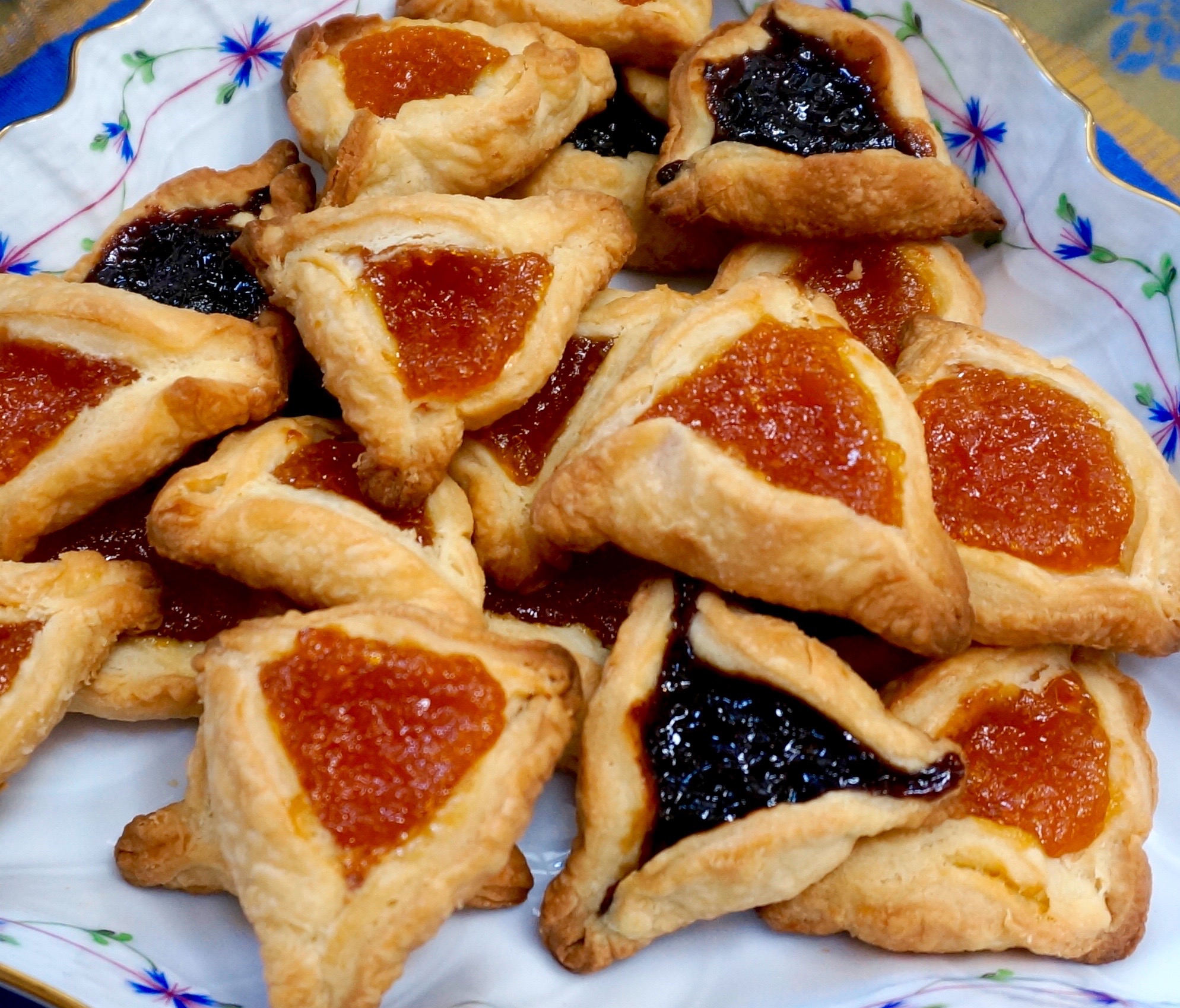
Here's my dairy version of classic sweet hamantaschen. The dough is tender and vaguely flaky and very rich. The ones in the photo all got gobbled in a flash.

I will make more for sure. With classic prune and apricot lekvar filling.

Dairy Hamantschen

  • 2-1/4 cups all-purpose flour
  • 1/4 cup sugar
  • 1 teaspoon salt
  • 1 cup butter, cut into chunks
  • 8 ounces cream cheese, cut into chunks
  • 1 medium or large egg, beaten
  • lekvar (about one cup)

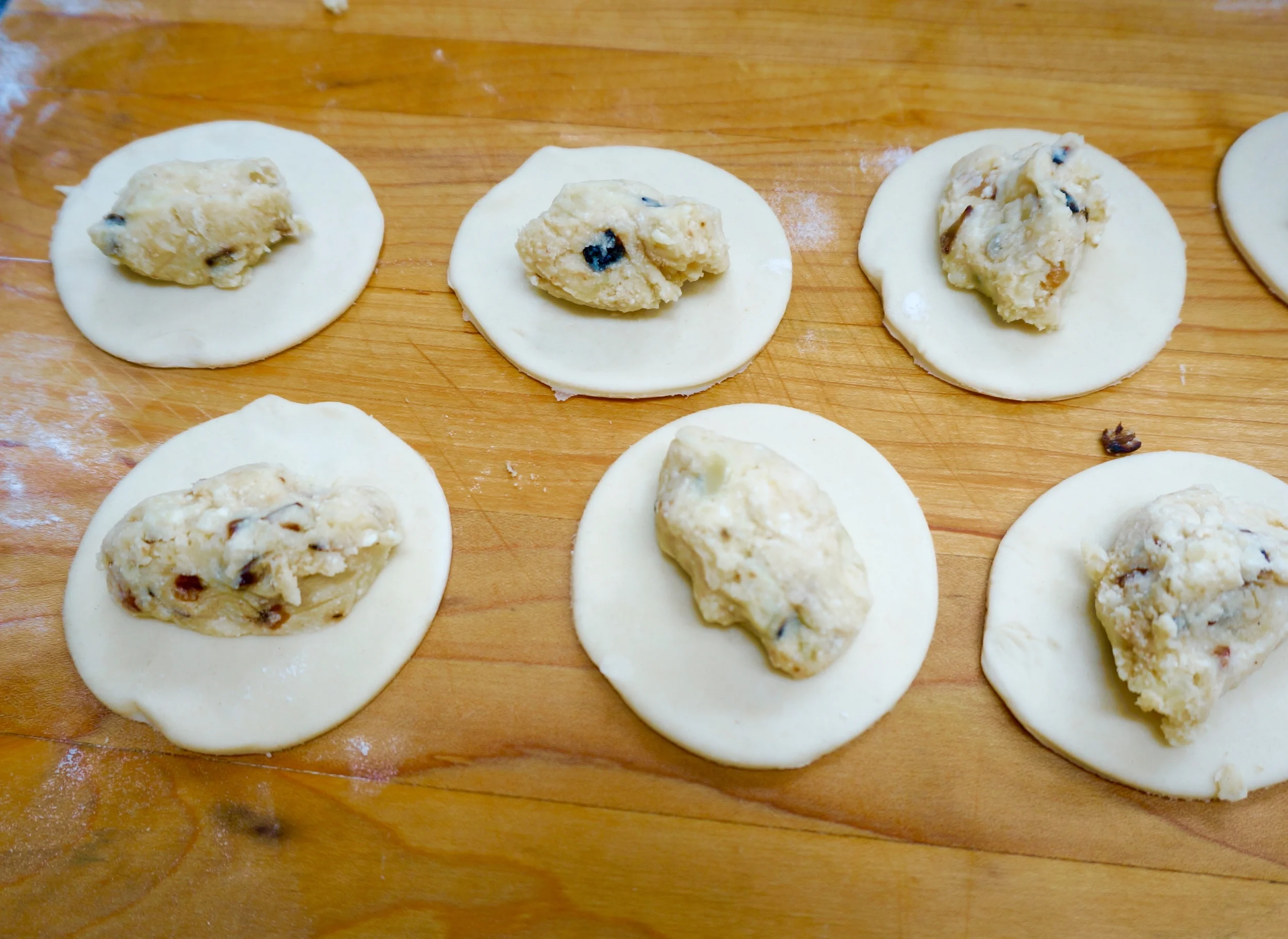
Place the flour, sugar and salt in the bowl of an electric mixer and mix briefly. Add the butter and cream cheese and mix on low-medium speed for a minute or so until the mixture is crumbly. Raise the speed to medium and continue to mix until a smooth dough has formed. Wrap the dough in plastic and refrigerate for at least 8 hours. Preheat the oven to 350 degrees. Using small chunks of dough at a time, roll the dough thin (about 1/8th-inch) and cut out circles with a 3-inch cookie cutter. Brush each circle lightly with the beaten egg. Place one slightly mounded teaspoon of lekvar in the middle of each circle. Bring up the sides to shape the circles into a triangle. Press the sides tightly to keep them from opening when they bake. Place the triangles on a lightly greased cookie sheet. Refrigerate for at least 30 minutes. Bake for about 30 minutes or until lightly browned.

Makes about 36

Russ & Daughters at the Jewish Museum

Now hear this! Russ & Daughters at the Jewish Museum is open!!!!

It's a cafe but also a retail takeout shop.

It's new. Clean. Bright. Comfortable. Kosher!

And with all those fabulous items we love -- like herring and lox and whitefish.

PLUS: lots more, like blintzes, mushroom barley soup, knishes, chocolate egg creams, noodle kugel.

Oh my, oh my oh my.

PLUS: some Israeli favorites: Shakshuka and Chopped Salad.

And a few extras like pickles, beet salad and halvah ice cream.

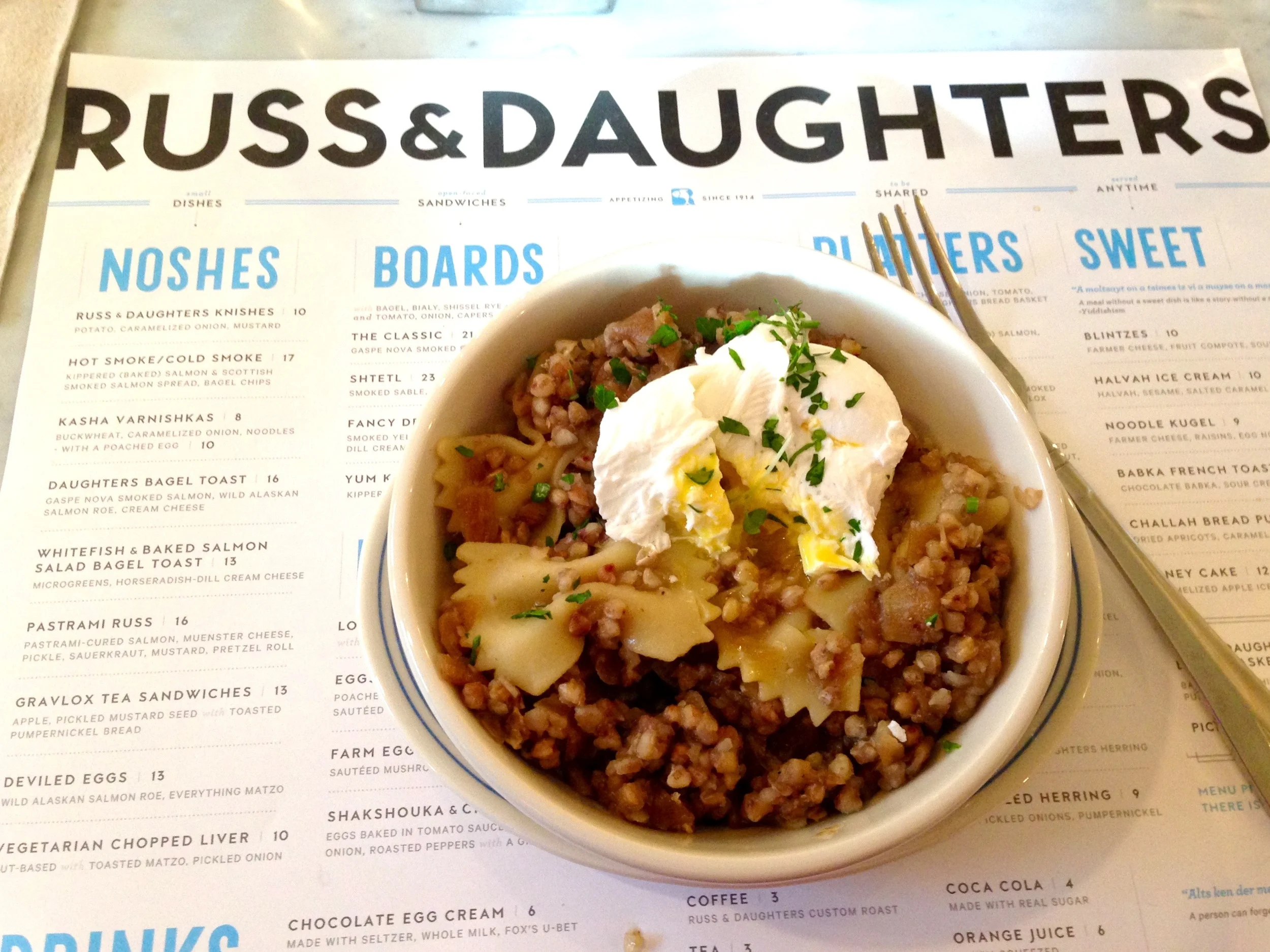
Ed and I were lucky to be invited for a preview lunch last week. I was a glutton and ordered two things. First Kasha Varnishkas, which I am really fussy about because my mother-in-law's recipe was so spectacularly delicious. This dish was fabulous and they add a modern touch that makes this side dish into a whole lunch (at least for me!) -- a poached egg on top so that the runny yolk oozes into the grains and caramelized onions. Ooooooh, is all I can say.

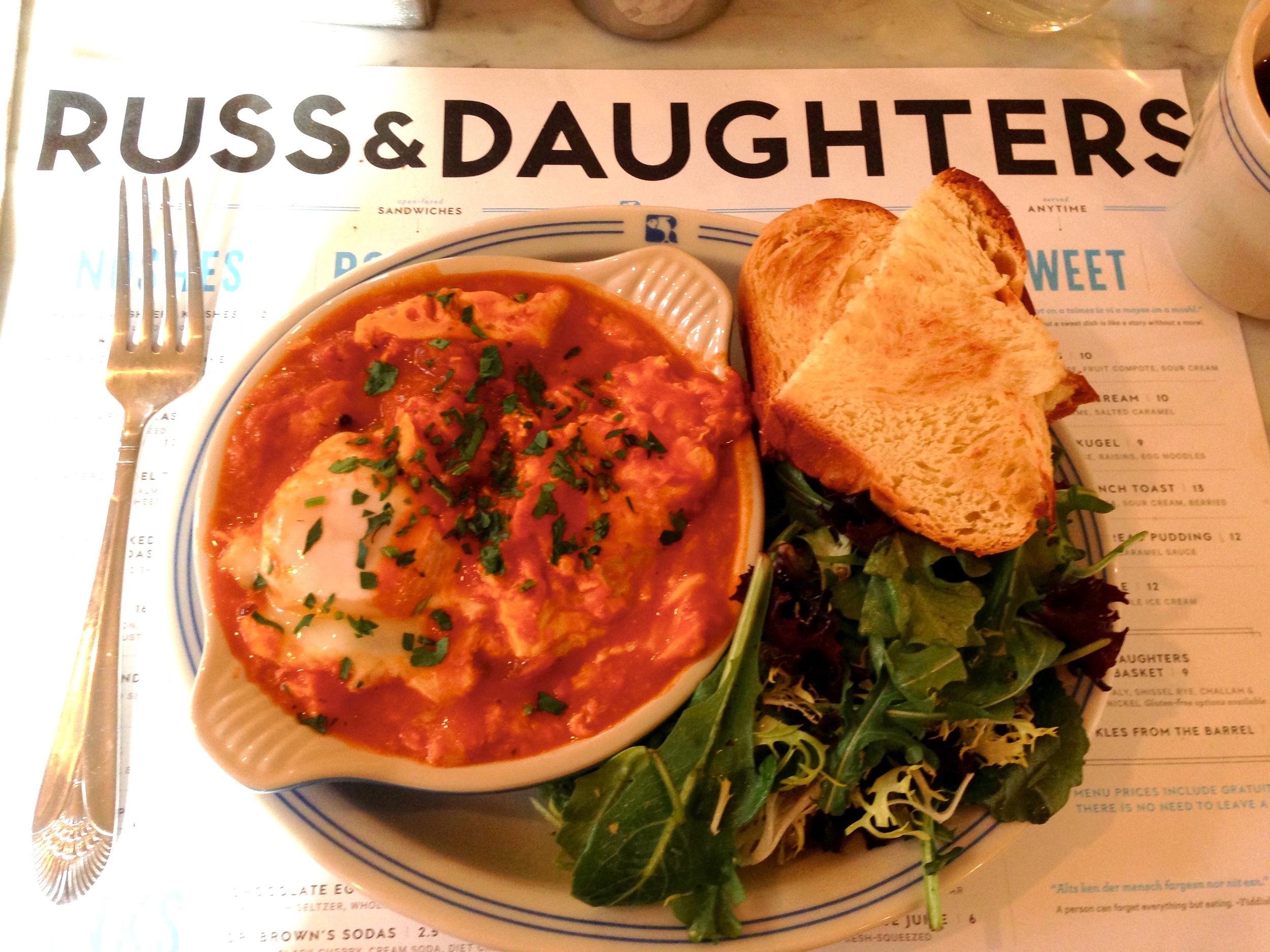
I also had the shakshuka (which they spell with an extra o), which was nice and tomato-y and rich with -- another poached egg.

I was too full for dessert.

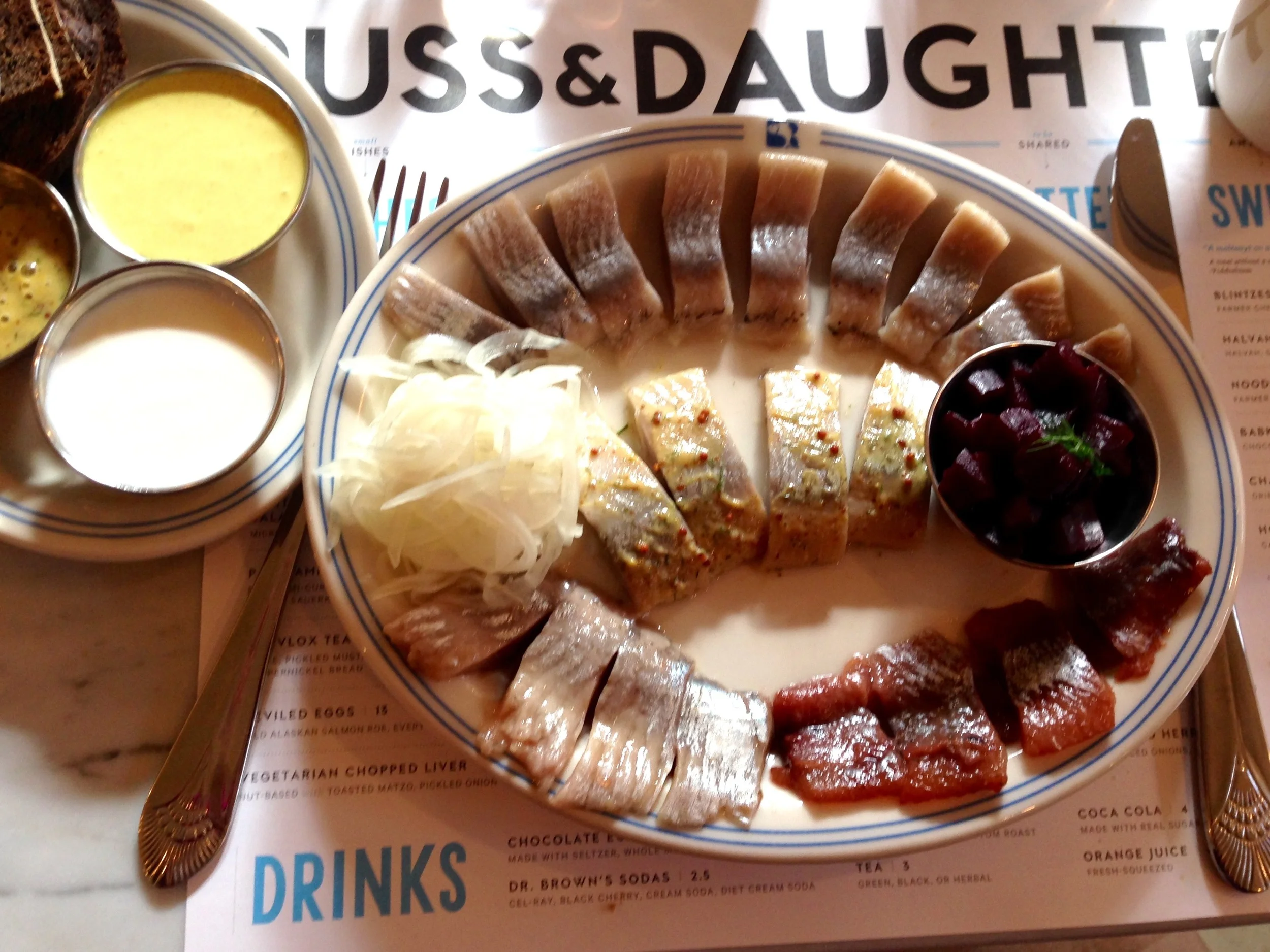
Ed did the easy thing -- testing out the Russ & Daughters herring plate, which was loaded with tidbits of different flavored herrings and accompanied by several sauces and chopped beets. The fish were very fresh, briny, tender. I had tastes of course.

The fish is where Russ & Daughters has always excelled of course. The takeout shelves included whitefish that were so fresh and fat they didn't look real. I wanted desperately to get one but we were on our way elsewhere and I didn't think carrying a big fish around would be such a good idea.

The breads are some of the best I've ever tasted. Rye and pumpernickel and especially the challah. If you ever read this blog you know I am pretty stubborn about my own challah being unsurpassed. But Russ & Daughters challah is amazing.

We will go back. 

Thanks for the invite, Niki Russ Federman and Josh Russ Tupper (4th generation owners). Good luck on your new venture!