Jewish Holiday

Chicken with Figs and Grapes

fullsizeoutput_8718.jpeg

Tu B'Shevat may not be the most well-known Jewish holiday but it always conjures up good thoughts and fond memories for me.

First: it was when my parents gave money to plant trees in Israel.

Second: it was when my Mom would buy dried figs that came in a wreath of sorts, the figs tied together with string, and I ate at least half of them.

Third: it was when my Mom made her famous Date-Nut Bread.

And more: spring is coming soon!

And finally: it is one delicious holiday, featuring foods that include lots of fruits and vegetables. 

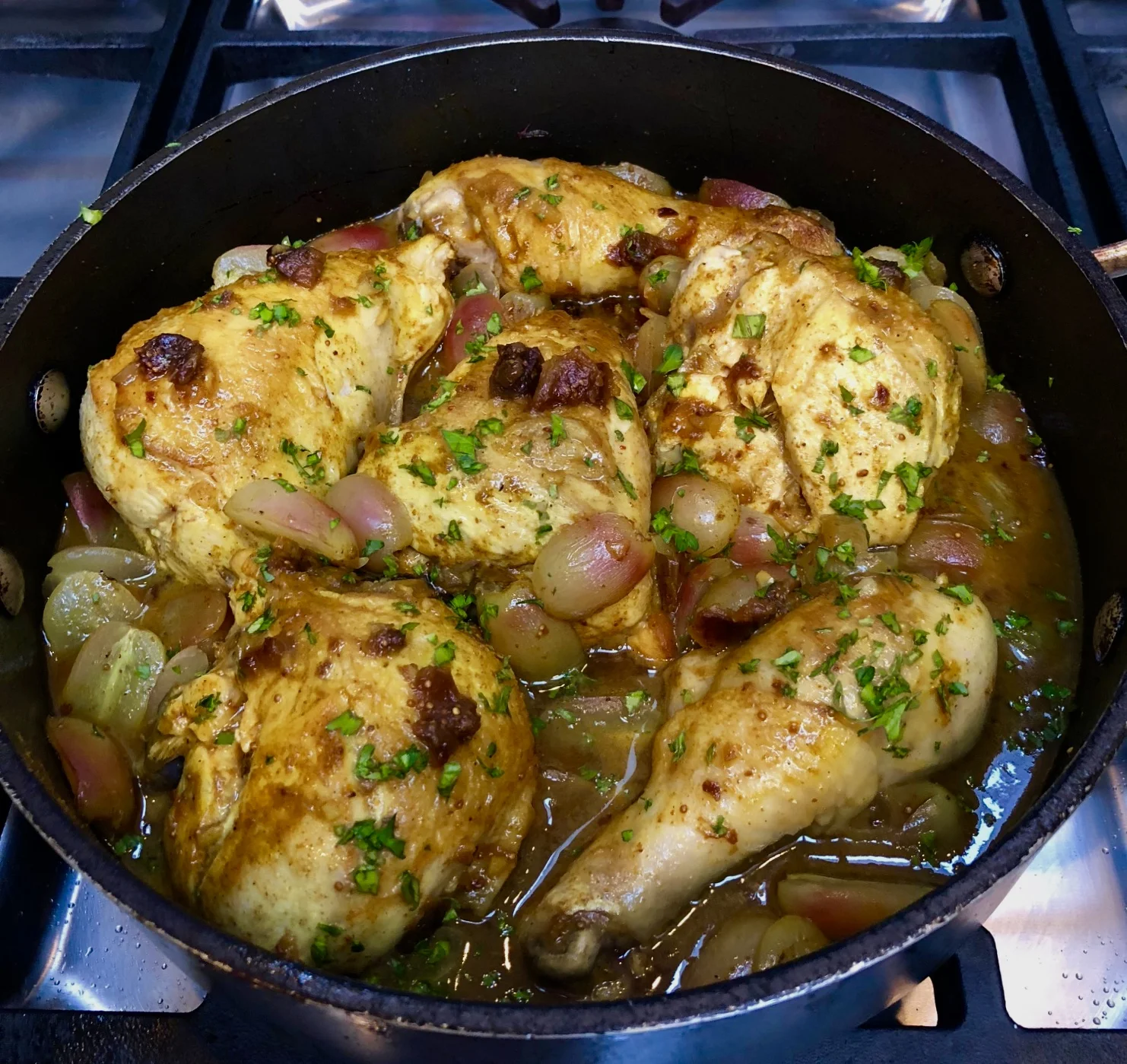
So, this year, to celebrate I am making this chicken dish, which includes figs and grapes, and served on cooked, fluffy bulgur wheat.


Chicken With Figs and Grapes

  • 1-3/4 cups apple cider
  • 2 tablespoons vegetable oil
  • 6 bone-in pieces of chicken
  • 1 shallot, chopped
  • 1-1/2 teaspoons chopped fresh ginger
  • 1/2 cup diced dried figs
  • 2-1/2 teaspoons curry powder
  • 1/4 teaspoon Aleppo pepper (or use 1/8 teaspoon cayenne pepper)
  • salt and freshly ground black pepper to taste
  • 1 cup halved fresh grapes
  • chopped fresh mint
  • cooked bulgur wheat, optional

Boil the cider for about 5 minutes or until it has reduced to 3/4 cup.  Heat the vegetable oil in a sauté pan over medium heat. Add the chicken and cook for 8-10 minutes, or until lightly browned, turning the pieces occasionally. Remove the chicken pieces and set them aside on a plate. Add the shallot, ginger and diced figs to the pan and cook for 1-2 minutes over low-medium heat. Return the chicken to the pan. Sprinkle the ingredients with curry powder, Aleppo pepper and salt and black pepper to taste. Pour in the reduced cider. Turn the pieces of chicken to coat all sides with the pan ingredients. Cover the pan, turn the heat to low and cook for 15 minutes. Add the grapes and cook for an additional 10 minutes or until the chicken is cooked through. Sprinkle with chopped fresh mint. Serve on a bed of cooked bulgur wheat if desired.

Makes 4-6 servings


Orange and Vanilla Scented Cheese Stuffed Dates

fullsizeoutput_86f1.jpeg

Sometimes I think life is a bunch of holidays with not much in between, except for the entire month of January.

I suppose that's a good thing, because holidays are happy and celebratory. Also, there's the food. Except for Yom Kippur, every holiday has food. And even when it comes to Yom Kippur, there's the break-the-fast when it's all over and the break-the-fast is all about food. 

As far as holidays go, at this point of the year, we've just finished Thanksgiving. Next up? Hanukkah!

Hanukkah is a really delicious holiday. Lots of fried stuff like latkes and doughnuts.

It's also a dairy holiday because of the story of Judith. You can read all about it here

So for me, in honor of Judith, in addition to the usual potato latkes and doughnuts, I have served cheese latkes and potato latkes with a yogurt based sauce laced with lemongrassPotato Galette with Caramelized Onions and Cheese has been on my Hanukkah menu and also Almond Crusted Winter Squash and Noodle Kugel

Desserts? I could go with Meyer Lemon Yogurt Pie (you can use regular lemons) or maybe Baked Goat Cheese with Honey Sauce and Cranberries. Maybe even cheesecake. Or some fabulous cheesecake cookies!

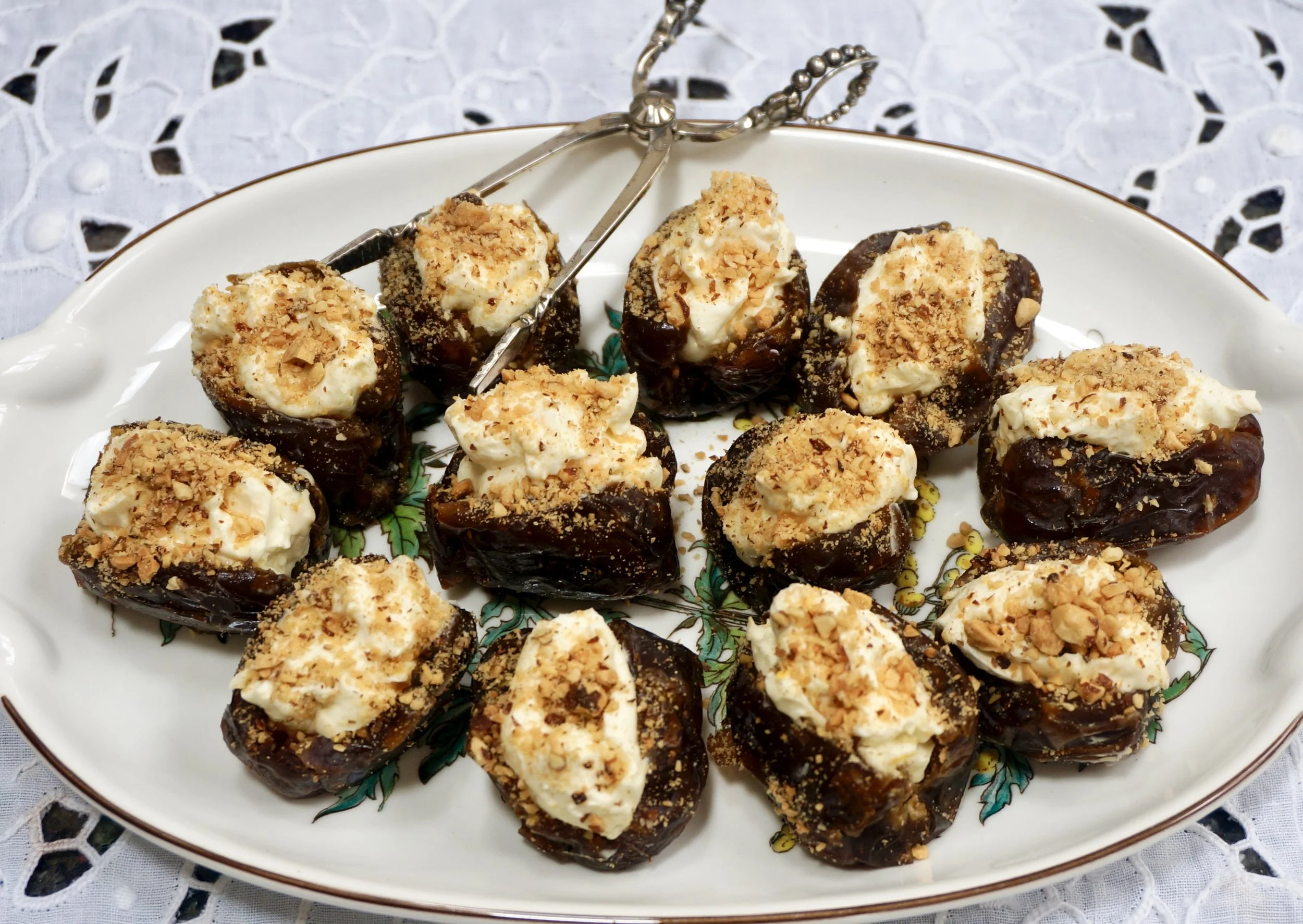
And also these stuffed dates! Easy to make, not too sweet (no added sugar), these little morsels are perfect for the holiday. If you don't want to use almonds for garnish, crushed, toasted coconut will do nicely.


ORANGE-VANILLA SCENTED CHEESE STUFFED DATES

  • 12 medjool dates
  • 1/2 cup cream cheese (4 ounces)
  • 2 tablespoons plain yogurt
  • 1 teaspoon grated orange peel
  • 1/4 teaspoon vanilla extract
  • 3 tablespoons crushed toasted almonds (or pistachios or crushed, toasted coconut)

Cut the dates through the center, but not all the way through to the bottom. Remove the pit and spread the date slightly to form a hollow for filling. Mix the cram cheese, yogurt, orange peel and vanilla extract in a small bowl until the mixture is smooth and soft. Fill the dates with the cheese mixture. Sprinkle with the nuts.

Makes 12 

Spinach Gnocchi for Break-the-Fast

We never have a traditional smoked fish break-the-fast because one of my daughters is allergic to fish. Instead, we have a vegetarian-dairy feast. My friend Susan brings her famous, not-to-be-missed kugel. Another friend brings dessert, although I usually also make rugelach

The rest is up to me. For years I've served Mujadarah, either made with brown rice or bulgur wheat. Other usuals are Spinach Pie, a tomato salad of some sort, egg salad and hummus.

But this year I'm not doing the Spinach Pie.

No particular reason other than it's time for a change.

But not a huge change.

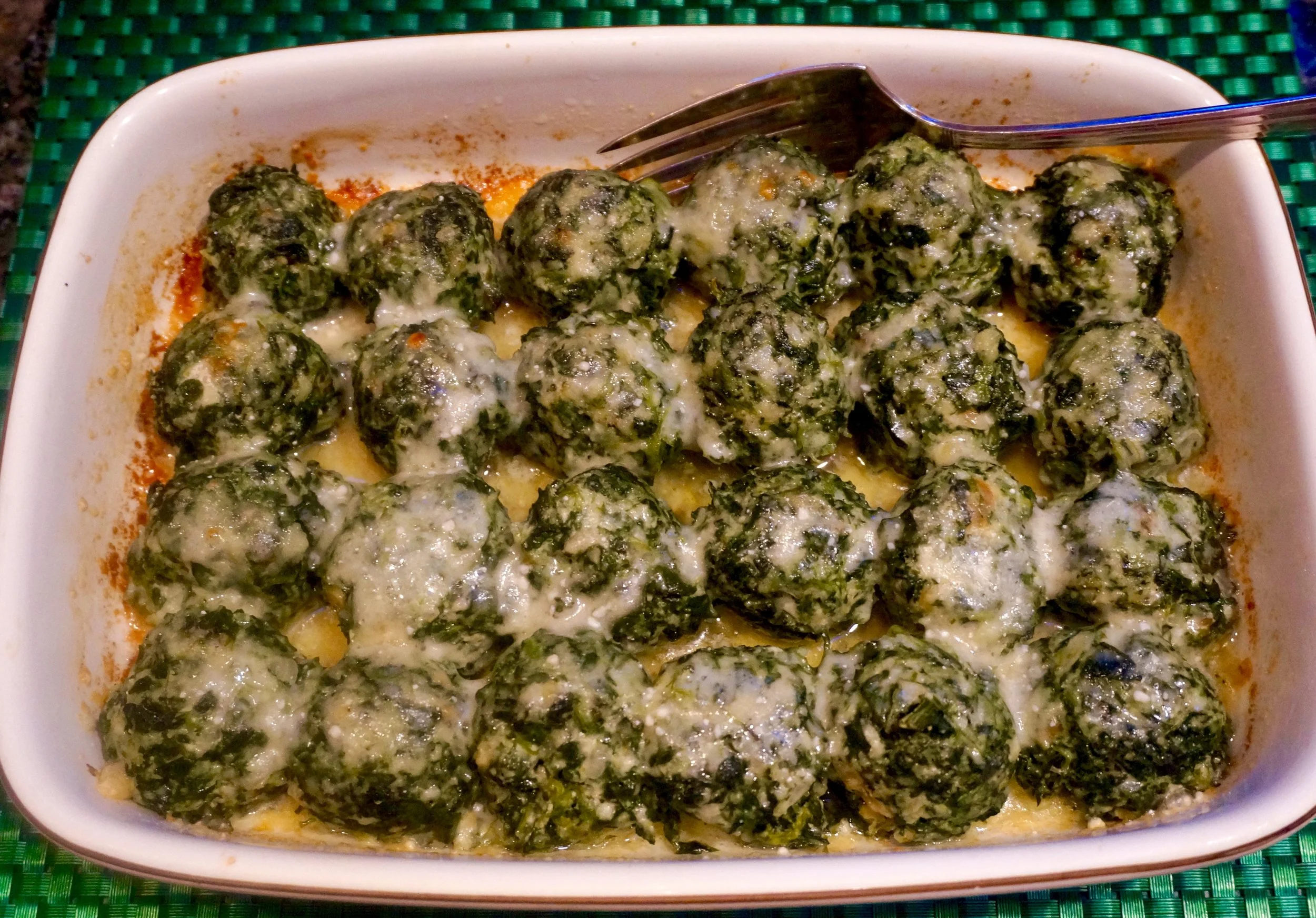
I decided to make Spinach Gnocchi. It's already in the freezer, ready-to-bake.

Spinach Gnocchi

  • 2 10-ounce packages thawed, frozen chopped spinach
  • 2 tablespoons olive oil
  • 1 tablespoon butter
  • 1 small onion, finely chopped
  • 3/4 cup ricotta cheese
  • 6 tablespoons all-purpose flour
  • 2 large eggs
  • 6 tablespoons grated Parmesan cheese
  • salt and freshly ground black pepper to taste
  • 1/8 teaspoon grated fresh nutmeg
  • 4 tablespoons melted butter
  • 1/2 cup grated Parmesan cheese

Butter a baking dish. Squeeze the spinach to extract as much liquid as possible. Place the olive oil and butter in a sauté pan over medium heat. When the butter has melted and looks foamy, add the onion. Cook, stirring occasionally for 2-3 minutes, or until softened. Add the spinach and cook for 1-2 minutes. Spoon the spinach mixture into a large bowl and let cool slightly. Add the ricotta cheese and mix thoroughly. Add the flour and mix thoroughly. Add the eggs, the 6 tablespoons Parmesan cheese, salt, pepper and nutmeg. Mix thoroughly to blend the ingredients. Refrigerate for at least one hour.

Preheat the oven to 350 degrees. Bring a large pot of salted water to a boil. With floured hands, shape the spinach mixture into balls about 1-1/2-inches in diameter. Gently drop the balls into the water. Keep the water at a simmer. Cook for 6-7 minutes or until the balls rise to the top and look fluffy. Lift the balls with a slotted spoon and place them on paper towels to dry slightly. Place the balls in the buttered baking dish. Drizzle them with melted butter and the 1/2-cup Parmesan cheese. Bake for about 18 minutes or until the cheese is bubbly and lightly crisped.

Makes 24


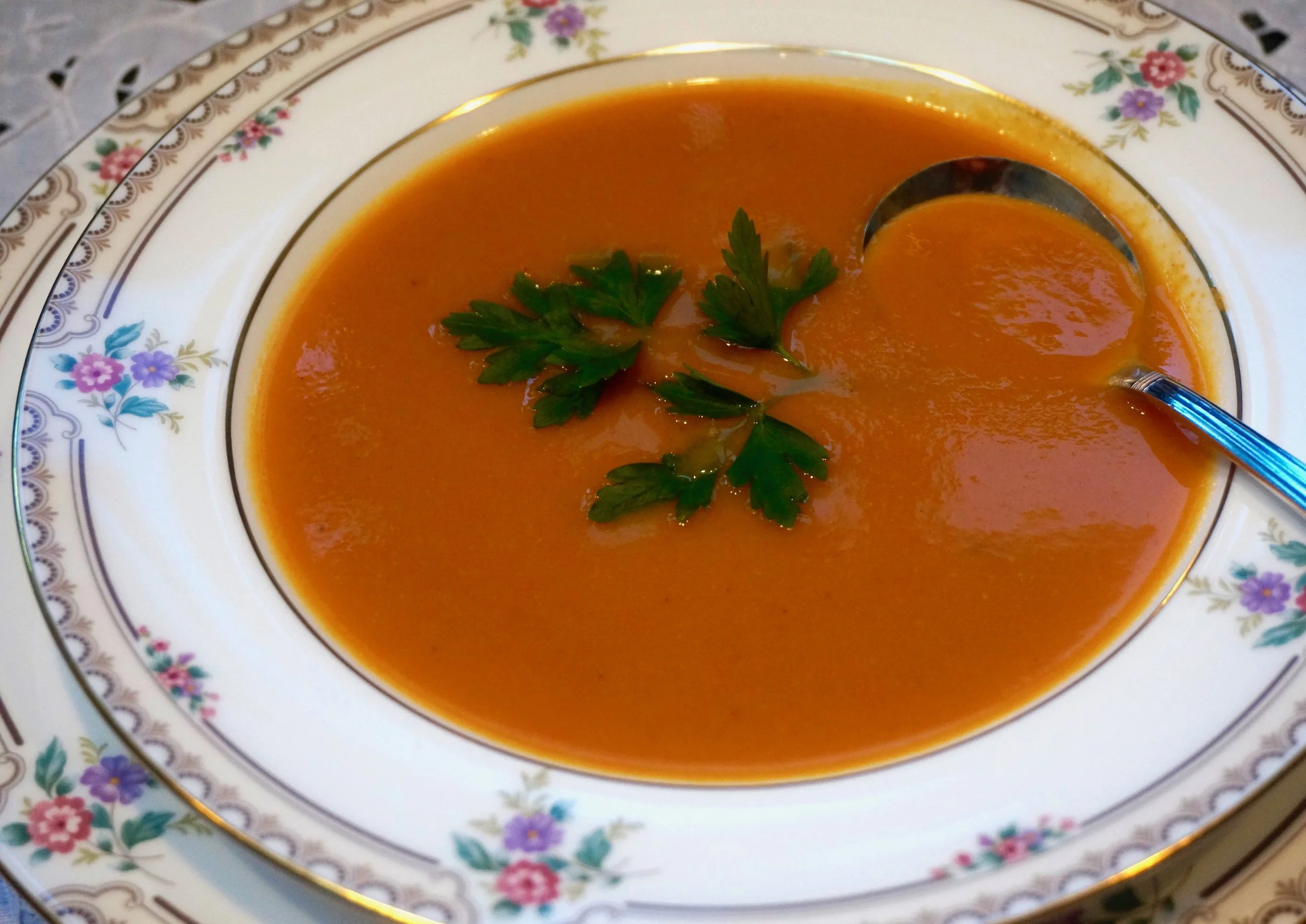
Carrot Soup with Cloves

Carrot soup is a classic for Rosh Hashanah. One year I cooked some with harissa and coconut and my husband said it was the best soup he ever tasted. There's a slightly different version in my cookbook, The Modern Kosher Kitchen.

But I'm always trying new recipes -- because for us, carrot soup is beyond holiday festive. It's a healer, a comforter. Ok, not like chicken soup.  But still -- it's a dish I make for new moms or when someone isn't feeling up to par or when anyone I know is a little grumpy or sad.

This carrot soup recipe welcomes even before you taste it with its scent of cloves and cinnamon. I used Aleppo pepper for heat, but if you don't like spicy, you can leave it out.


CARROT SOUP WITH CLOVES AND PEPPER (P)

  • 2 tablespoons olive oil
  • 1 large onion, chopped
  • 1 pound carrots, peeled and chopped
  • 1 medium all-purpose potato, peeled and chopped
  • 1-1/2 teaspoons chopped fresh ginger
  • 6 whole cloves
  • 1-inch piece cinnamon stick
  • 1/2 teaspoon Aleppo pepper (or crushed red pepper)
  • 4 cups vegetable stock
  • 1/2 cup coconut milk

Heat the olive oil in a large saucepan over medium heat. Add the onion and cook, stirring occasionally, for 3-4 minutes, or until softened. Add the carrots, potato, ginger, cloves, cinnamon stick and Aleppo pepper. Stir to mix the ingredients. Pour in stock. Bring the liquid to a boil, lower the heat to a simmer and cook for about 30 minutes or until the carrots are tender. Remove the cloves and cinnamon stick. Puree the soup. Add the coconut milk, stir to blend the mixture until it is uniform in color and heat through.

Makes 4-6 servings


Carrot Bread with Raisins for Rosh Hashanah

Somehow Labor Day is over and the food thoughts in my head go straight from tomato salad and grilled chicken to pumpkin soup and baked apples

Of course there's still time to enjoy the last of the summer fruits and vegetables, still time for outdoor-cooked grilled, marinated steak

But I'm thinking forward. It's almost a new season and -- yikes! -- the High Holiday season is only two weeks away.

Which leads toady's food thoughts to: carrots, because carrots are traditional during Rosh Hashanah. I usually cook them in soup -- one version or another. But last year I decided to experiment with a few recipes for carrot quick bread.

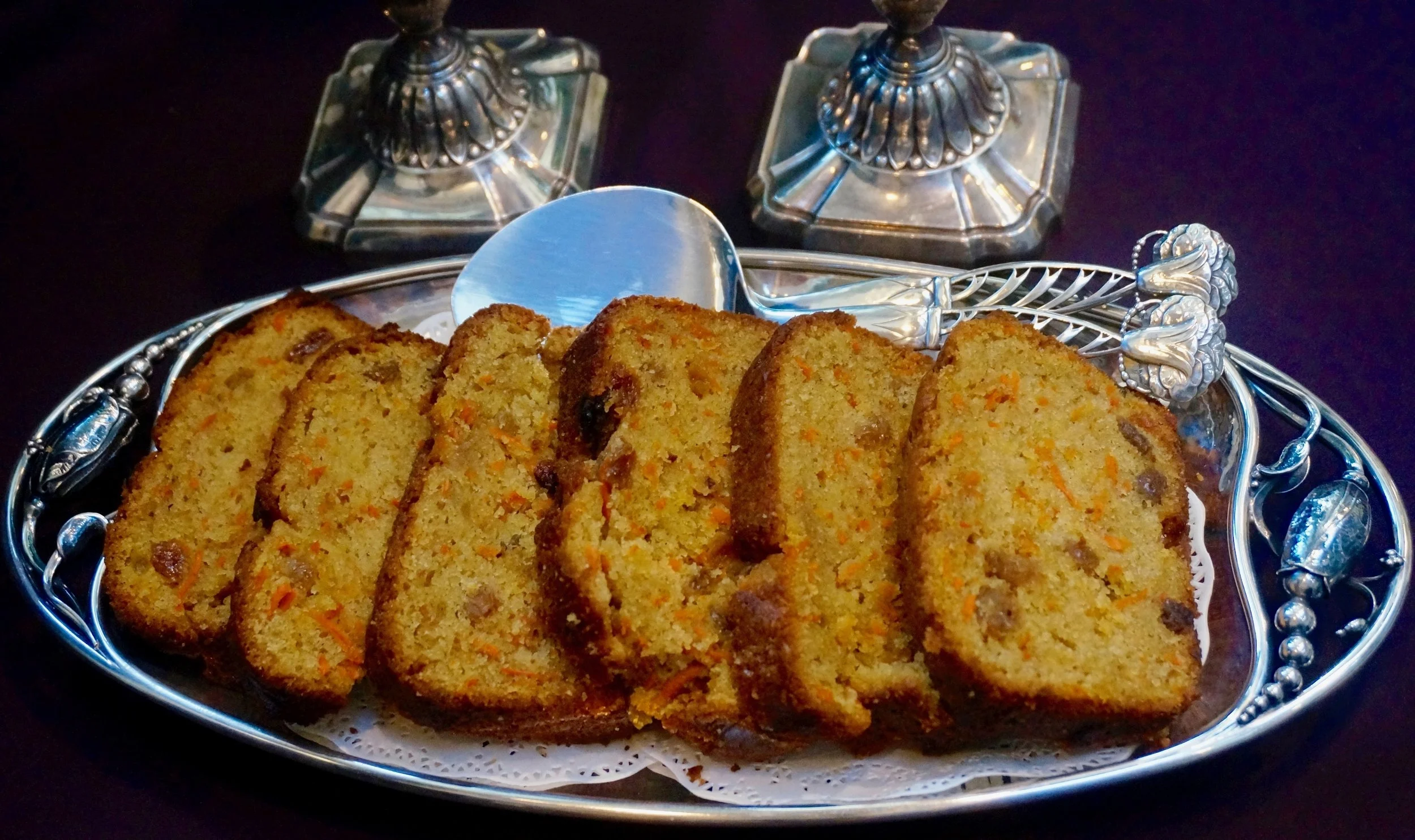
This is the one we like best. It's moist and sweet, so it can be dessert, and because it is parve, it is a good choice after a traditional holiday meat meal.

But also makes a good snack either by itself or smeared with cream cheese (softened is best and maybe even mixed with some lemon juice).

CARROT BREAD(P)

  • 1-1/2 cups all-purpose flour
  • 2-1/2 teaspoons baking powder
  • 1 teaspoon salt
  • 1 teaspoon cinnamon
  • 1/2 teaspoon nutmeg
  • 1/2 cup brown sugar
  • 1/3 cup white sugar
  • 1 cup vegetable oil
  • 3 large eggs
  • 1 tablespoon lemon juice
  • 1-1/2 teaspoons grated lemon peel
  • 1-1/2 cups grated carrots
  • 1/2 cup golden raisins

Preheat the oven to 350 degrees. Grease an 8-1/2”x4-1/2” loaf pan. Mix the flour, baking powder, salt, cinnamon and nutmeg into a bowl. Set aside. Beat the brown sugar, white sugar and vegetable oil in the bowl of an electric mixer set at medium speed for 2-3 minutes, or until well blended. Add the eggs, one at a time, beating after each addition. Stir in the lemon juice and peel. Add the dry ingredients and blend them into the egg mixture. Fold in the carrots and raisins. Pour the batter into the loaf pan. Bake for about 50 minutes or until a cake tester inserted into the center comes out clean. Let cool in the pan for 10 minutes, then invert onto a rack to cool completely. 

Makes one loaf  

Eggplant, Mashed Potato and Portobello Gratin

Whenever I need a meatless or dairy meal -- for a meatless Monday (or any other day of the week when I am not in the mood for meat), or for during the Nine Days, or a Yom Kippur Break-the-Fast, or during Passover -- this is one of the recipes I turn to. It's filling enough for dinner (served with a salad) yet not heavy.

Another benefit? Set it up ahead and bake just before you need it.

I change the recipe occasionally, because -- why not! This dish is versatile. Sometimes I use zucchini instead of or together with eggplant. Sometimes I add feta cheese or a layer of cooked kale or spinach or some cooked carrots. But basically this is it.


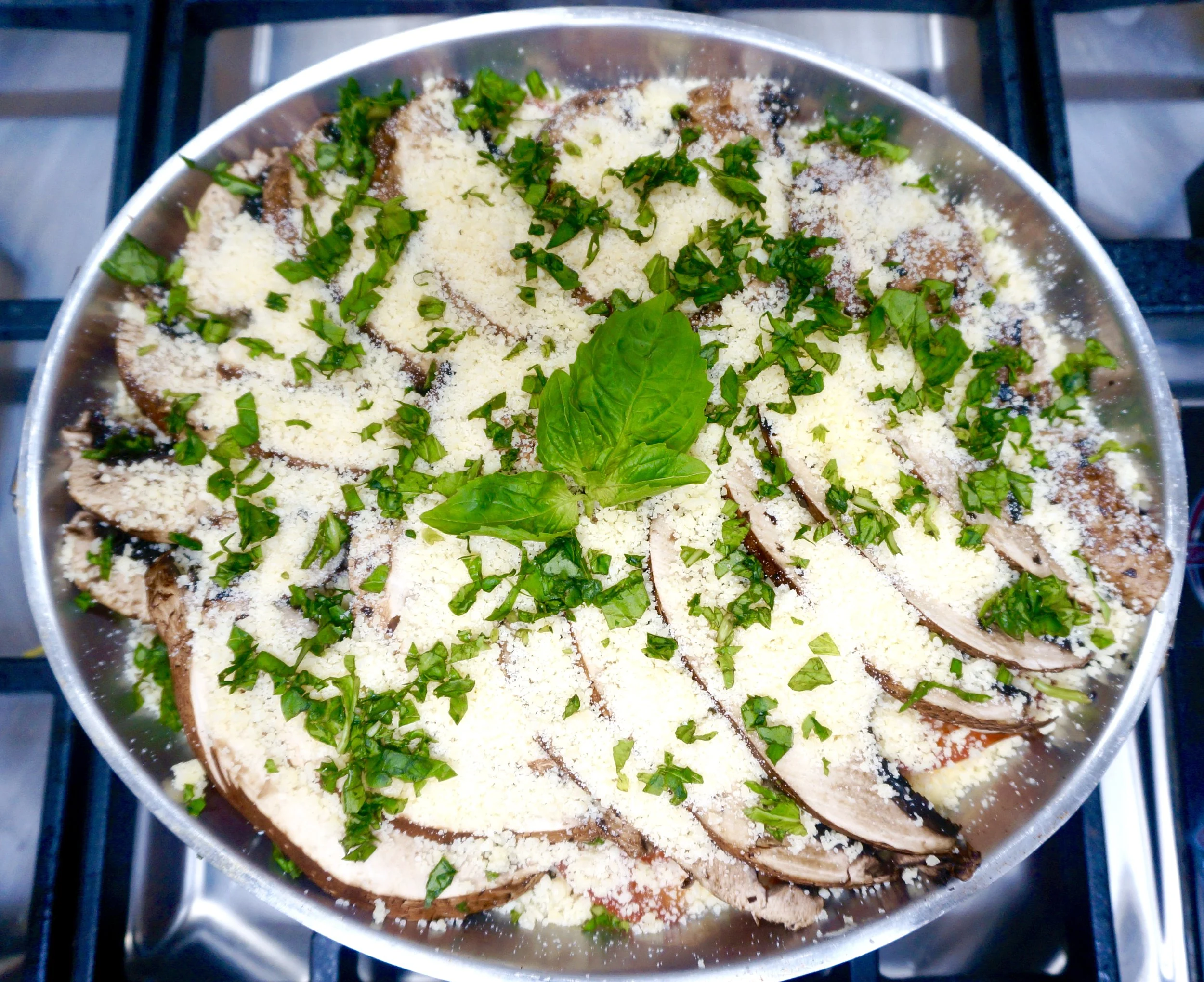
Eggplant, Mashed Potato and Portobello gratin

  • 2 large Yukon gold potatoes
  • 3/4 cup grated Swiss cheese
  • 3/4 cup grated Parmesan cheese
  • 3 large eggs
  • salt and freshly ground black pepper to taste
  • 1 medium eggplant (or 2 medium zucchini)
  • 6 tablespoons olive oil
  • 2 large Portobello mushroom caps
  • 2 medium tomatoes
  • 3 tablespoons chopped fresh basil
  • 2 tablespoons chopped fresh parsley

Preheat the oven broiler or outdoor grill. Peel the potatoes, cut them into chunks and cook them in simmering water until tender, about 15 minutes. Drain the potatoes and mash them in the pot. Stir in 1/2 cup of Swiss cheese, 1/2 cup Parmesan cheese and the eggs. Season lightly with salt and pepper. While the potatoes are cooking, trim the ends from the eggplant. Slice the eggplant lengthwise into 1/4-inch slices. Brush both sides with the olive oil. Broil or grill the eggplant for 2-3 minutes per side or until softened and lightly browned. Place half the eggplant slices in a rectangular baking dish. Cover with the mashed potatoes. Layer the remaining eggplant on top. Slice the mushroom caps about 1/4-inch thick and place them on top of the eggplant. Slice the tomatoes and place them over the mushrooms. Scatter the basil and parsley on top. Sprinkle the remaining cheese on top. Preheat the oven to 350 degrees. Cook for 45 minutes or until crispy and lightly browned on top.

Makes 8-10 servings


Potato Cheese and Spinach Kugel

Tell me Shavuot is coming and my first thought is cheesecake.

Of course. Cheesecake the dish most associated with the holiday. I love it. Make all kinds. Some plain. Some spiced. Some covered with fruit. Some with chocolate.

On the other hand you can't just eat cheesecake. 

Shavuot is generally a dairy holiday.

I love dairy.

Especially if there is a potato involved.

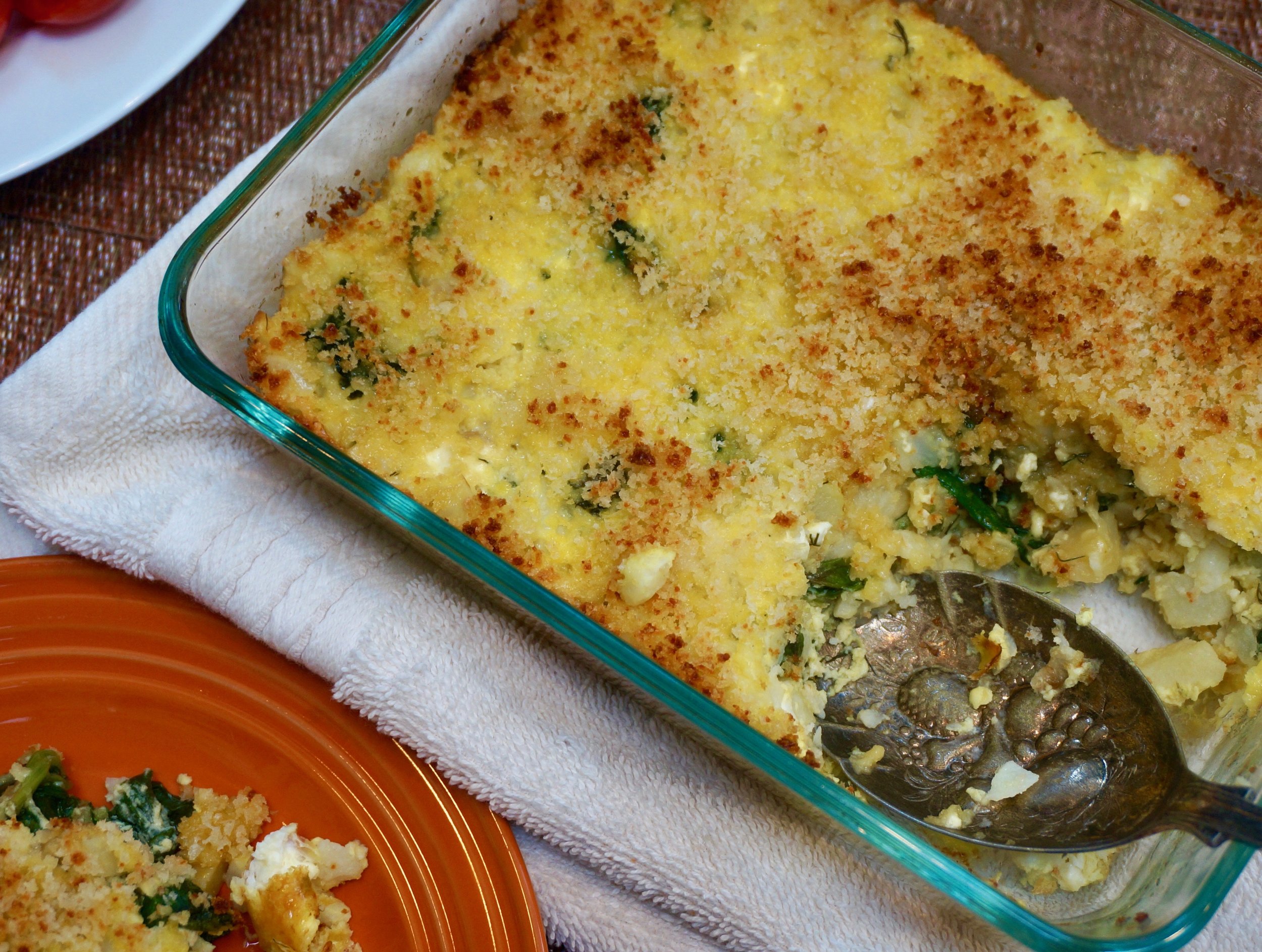
Like in this kugel, which is a wonder all by itself. But also good with salad, other dairy dishes or served with sunnyside eggs on top.

Perfect dish for the holiday.


Potato Cheese and Spinach Kugel

  • 4 medium Yukon Gold potatoes (about 1-1/2 pounds)

  • 8-10 ounces fresh spinach

  • 2 tablespoons olive oil

  • 1 medium onion, chopped

  • 1 cup crumbled feta cheese

  • 2 tablespoons chopped fresh dill

  • 6 large eggs

  • 5 tablespoons melted butter

  • salt and freshly ground black pepper to taste

  • 3/4 cup panko crumbs

  • 2-3 tablespoons grated Parmesan cheese

Preheat the oven to 375 degrees. Lightly grease a 2-quart baking dish. Peel the potatoes, cut them into chunks and boil them in lightly salted water for about 15 minutes or until tender. Let cool and chop into small pieces. Place the potatoes in a bowl. While the potatoes are cooking, wash and dry the spinach and chop it coarsely. Heat 2 tablespoons olive oil in a sauté pan over medium heat. Add the onion and cook for about 3 minutes or until softened. Add the spinach and cook for 2-3 minutes or until wilted (if there is liquid in the pan, raise the heat and cook until it evaporates, or drain using a strainer). Add the spinach mixture, the feta cheese and dill to the potatoes and mix gently to distribute the ingredients evenly. Beat the eggs in a large bowl. Mix in 3 tablespoons of the melted butter and pour over the potato mixture. Sprinkle with salt and pepper. Gently mix the ingredients. Place the mixture inside the greased baking dish. In a small bowl, mix the panko, the remaining 2 tablespoons melted butter and the Parmesan cheese and sprinkle over the ingredients. Bake for about 30 minutes or until hot and crispy.

Makes 8-10 servings


Cheese and Vegetable Kugel

_DSC9295.jpg

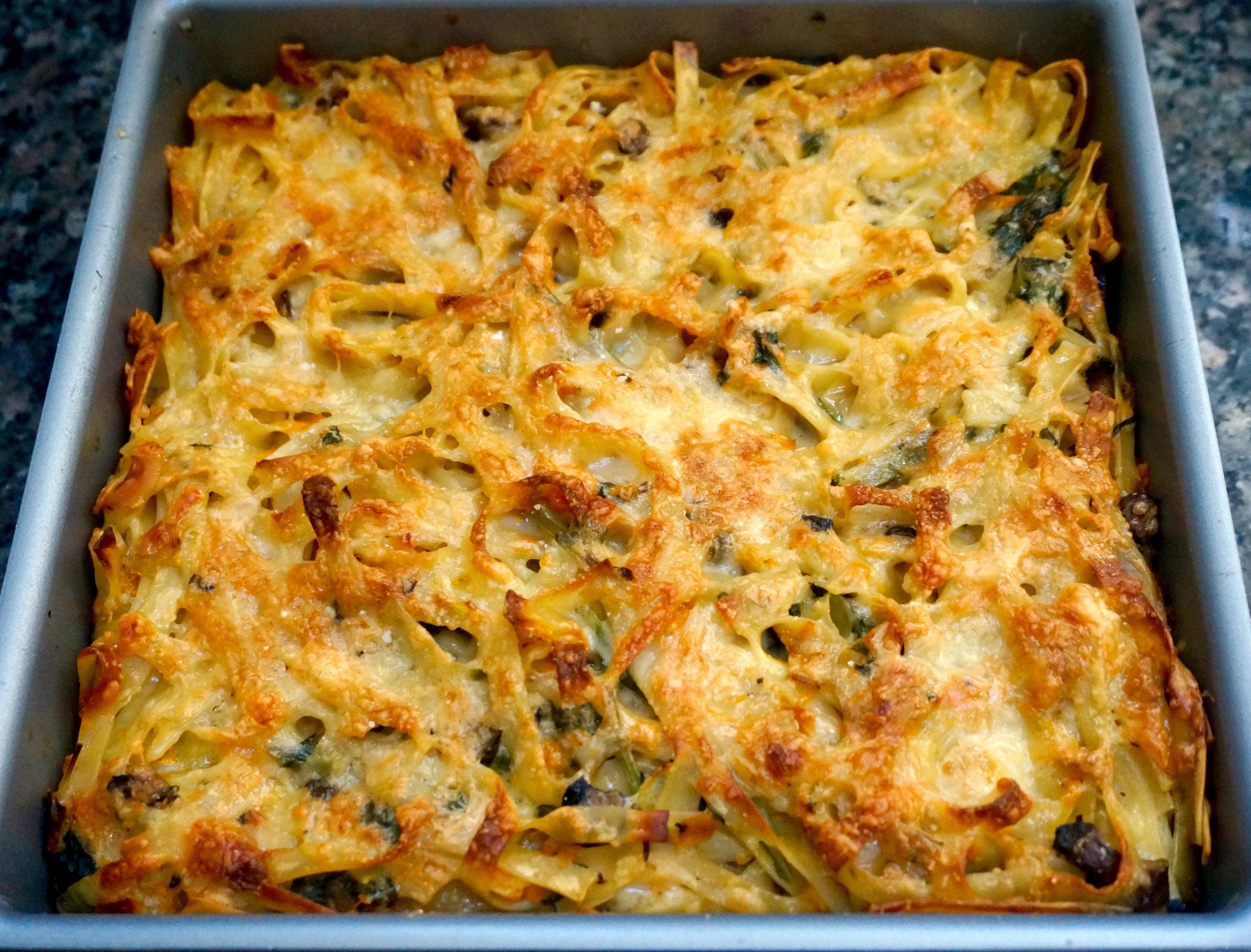
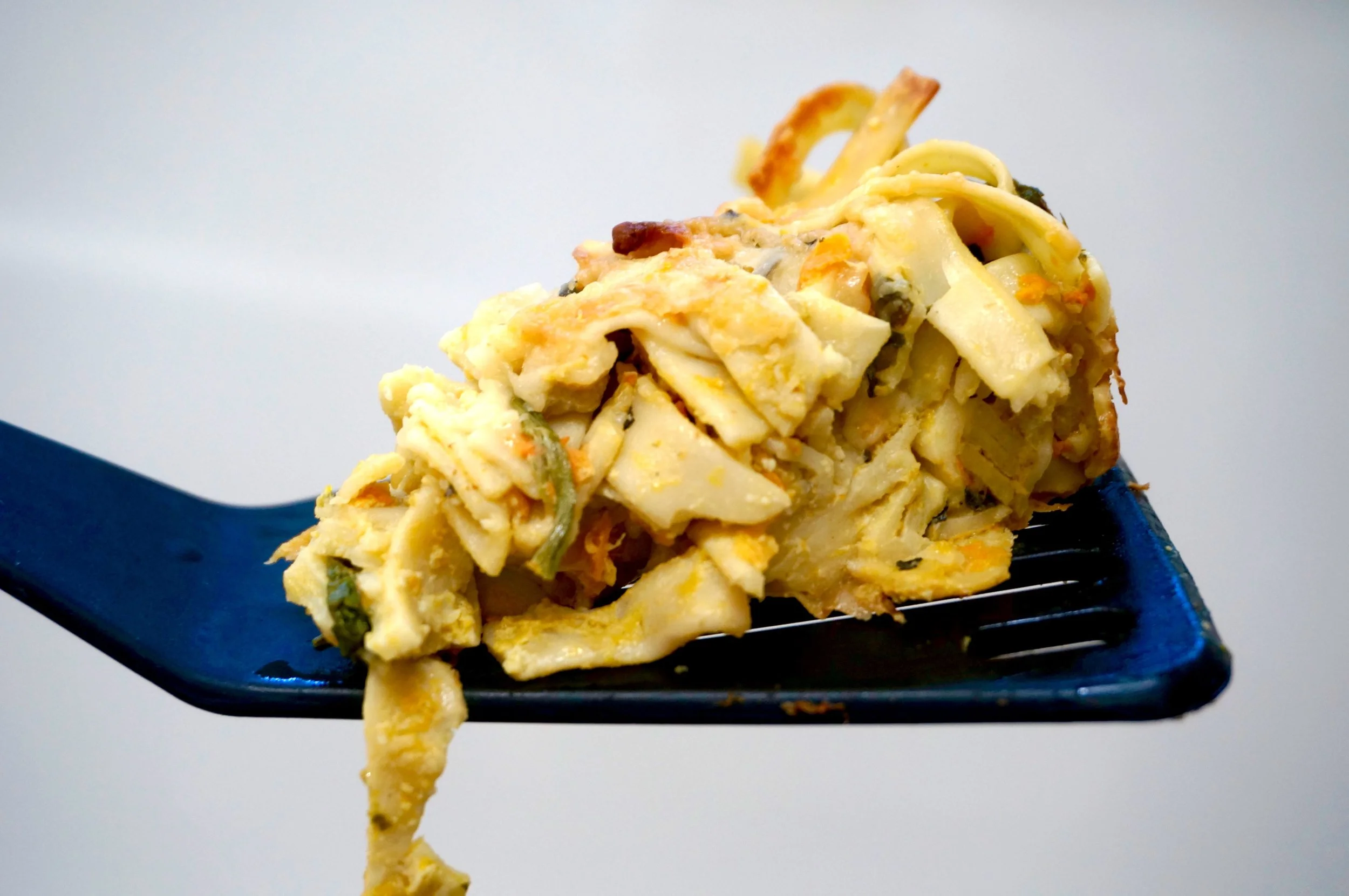
When my kids were young and still living at home, I made kugel a lot. My daughters were not terribly anti-vegetable, but I realized that pairing veggies and noodles would make it even easier to have more vegetables at our meals.

Also, it is a good way to use leftovers -- the recipe below is extremely versatile. Add cut up cooked green beans or asparagus, corn kernels, peas. Like that.

This kugel is filling enough for dinner. Also yummy with a sunny-side egg or two on top of each serving for a meatless (Monday) dinner. And a wonderful choice for dairy-fest Shavuot.

Veggie Kugel

  • 4 tablespoons olive oil or vegetable oil
  • 1 medium onion, chopped
  • 10-12 ounces mushrooms, chopped
  • 1 bunch spinach or kale, washed and dried, coarsely cut
  • 2 medium carrots, shredded
  • 12 ounces medium-wide egg noodles
  • 3 large eggs, beaten
  • 1/2 cup sour cream
  • 1 cup grated Swiss cheese
  • salt and freshly ground black pepper to taste
  • 3 tablespoons grated Parmesan cheese
  • paprika

Preheat the oven to 375 degrees. Lightly grease a 9”x9” baking dish. Heat 2 tablespoons of the olive oil in a sauté pan over medium heat. Add the onion and mushrooms and cook for 3-4 minutes. Add the spinach and cook for another 1-2 minutes or until it has wilted (kale may take a minute or so longer). Add the carrots and cook for another minute. Remove from the heat and set aside. Cook the noodles according to package directions, drain and place in a large bowl. Add the remaining 2 tablespoons vegetable oil, the cooked vegetables, eggs, sour cream and 3/4 cup of the Swiss cheese. Season to taste with salt and pepper. Stir to mix ingredients well. Place in the prepared baking dish. Sprinkle the top with the remaining Swiss cheese, Parmesan cheese and paprika. Bake for about 35 minutes or until the top is crispy and brown.

Makes 6-8 servings


Zucchini Bayildi

Every year, at every Passover Seder, I serve a side dish called Imam Bayildi, which is basically stewed eggplant, leeks and tomatoes, though sometimes I've made it with onions instead of leeks.

Somehow the occasion wouldn't seem right without this traditional dish.

And yet, last year my kids said that maybe it was getting a little boring. One of them doesn't care for eggplant, so -- there was no Imam Bayildi this year. 

But during the week I will serve a kind of "bayildi" (which means "fainted" -- because it tastes so good that the Imam who first tasted it fainted).

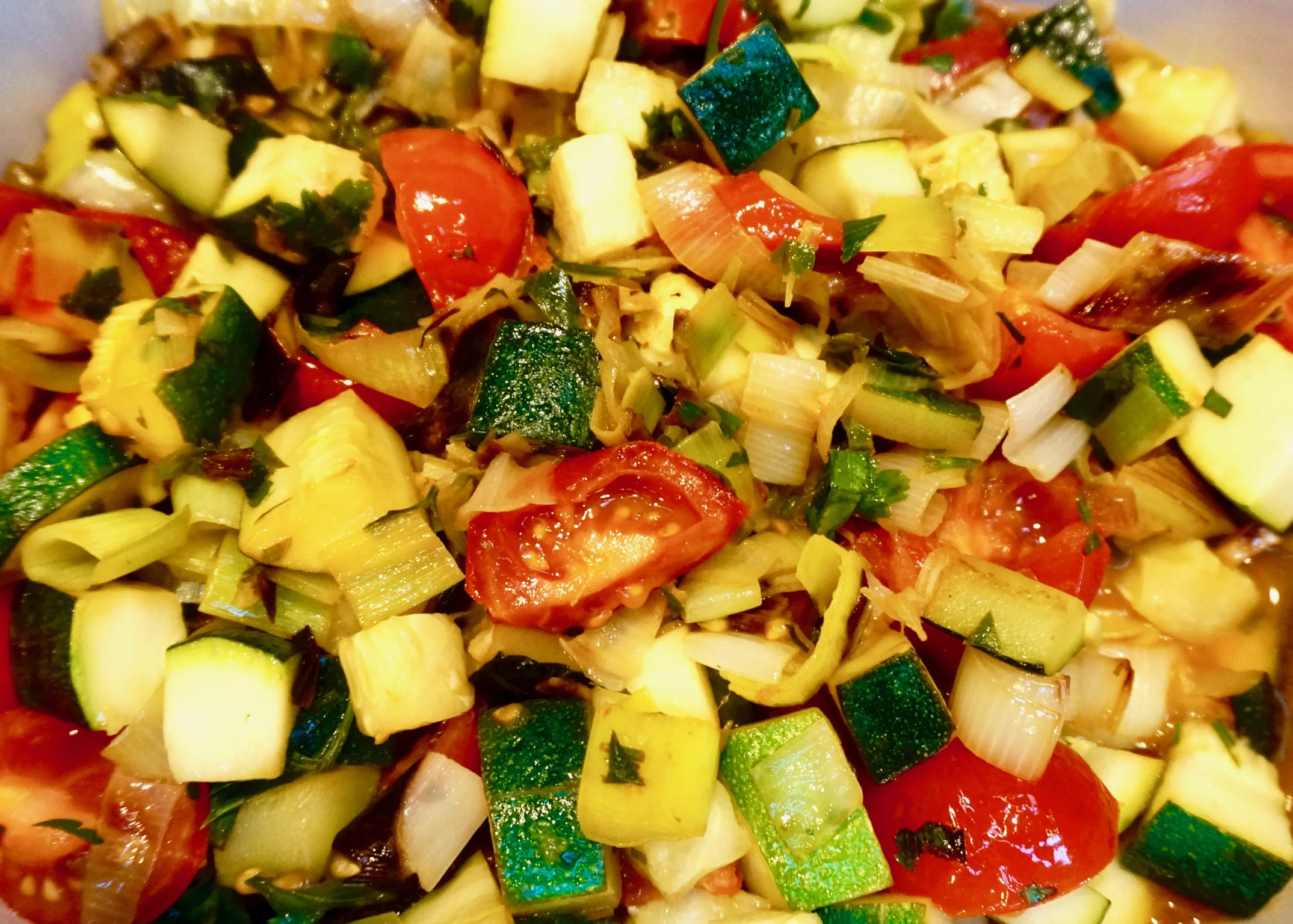
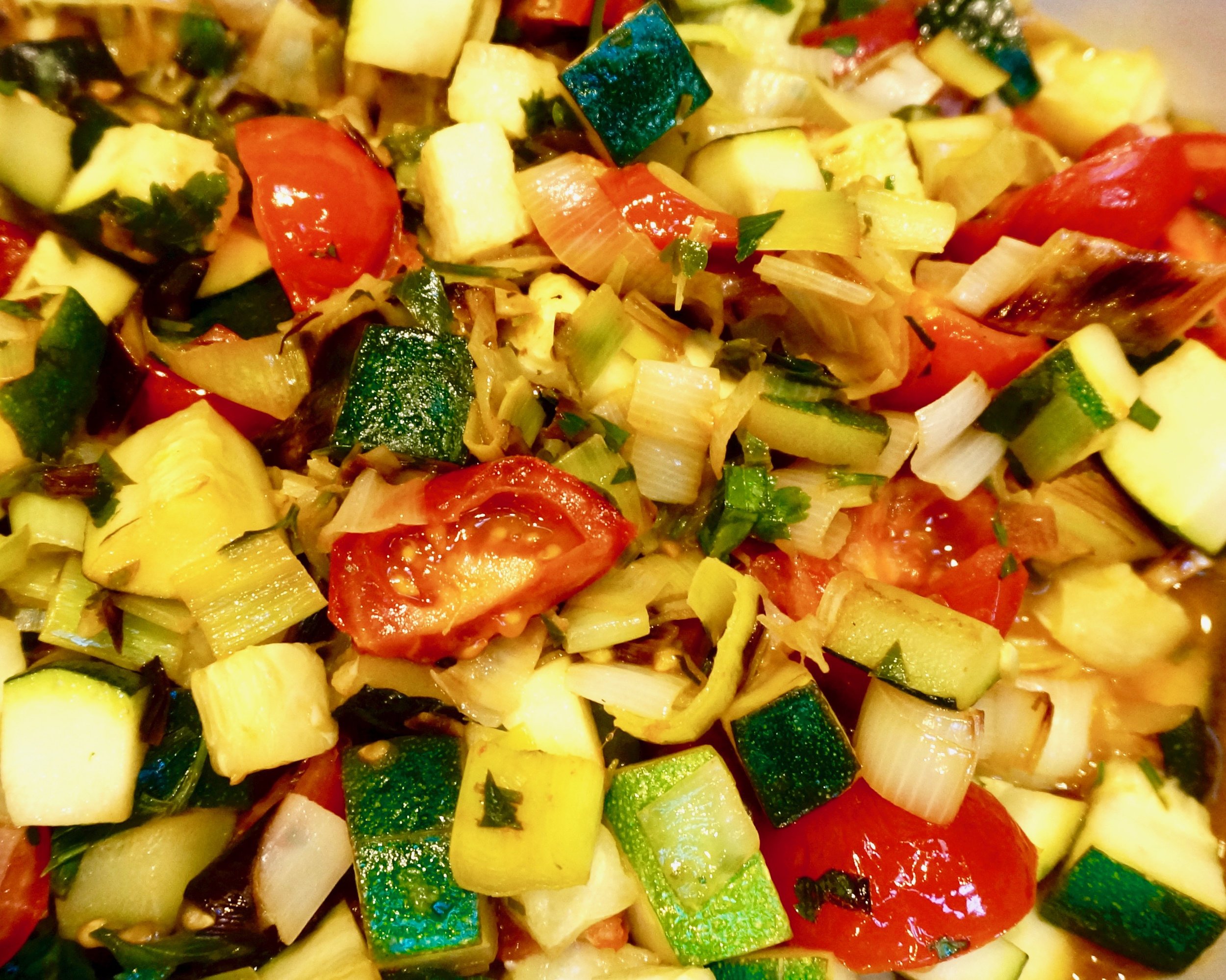
This new dish is colorful and chock full of vegetables. It's spring-like and refreshing, so it is perfect for Passover's sometimes heavy meals. But it's also an all-year round dish that goes with any meat, poultry or fish you might serve. Or serve it as part of a vegetarian dinner.

It also takes much less time than the original recipe.

ZUCCHINI “BAYILDI”

  • 3 tablespoons olive oil
  • 3 medium leeks, cleaned and sliced
  • 2 large cloves garlic, chopped
  • 1 large zucchini, cut into bite size pieces
  • 3 large tomatoes, chopped (or 10-12 campari tomatoes)
  • 3 tablespoons chopped fresh parsley
  • 1 teaspoon sugar
  • 1/2 teaspoon salt or to taste
  • 2 tablespoons lemon juice
  • 2 tablespoons water

Heat the olive oil in a saute pan over medium heat. Add the leeks and garlic and cook, stirring occasionally, for 2-3 minutes. Add the zucchini and cook for 2 minutes. Add the tomatoes, parsley, sugar, salt, lemon juice and water. Cook for 3-5 minutes, stirring frequently, or until all the vegetables are tender. Serve hot, warm or at room temperature.

Makes 6-8 servings


Tagged: vegetablesvegetarianside dishPassoverPesachzucchini bayildibayildiSeder

Zucchini Bayildi

Every year, at every Passover Seder, I serve a side dish called Imam Bayildi, which is basically stewed eggplant, leeks and tomatoes, though sometimes I've made it with onions instead of leeks.

Somehow the occasion wouldn't seem right without this traditional dish.

And yet, last year my kids said that maybe it was getting a little boring. One of them doesn't care for eggplant, so -- there was no Imam Bayildi this year. 

But during the week I will serve a kind of "bayildi" (which means "fainted" -- because it tastes so good that the Imam who first tasted it fainted).

This new dish is colorful and chock full of vegetables. It's spring-like and refreshing, so it is perfect for Passover's sometimes heavy meals. But it's also an all-year round dish that goes with any meat, poultry or fish you might serve. Or serve it as part of a vegetarian dinner.

It also takes much less time than the original recipe.

Zucchini “BayIldi”

  • 3 tablespoons olive oil
  • 3 medium leeks, cleaned and sliced
  • 2 large cloves garlic, chopped
  • 1 large zucchini, cut into bite size pieces
  • 3 large tomatoes, chopped (or 10-12 campari tomatoes)
  • 3 tablespoons chopped fresh parsley
  • 1 teaspoon sugar
  • 1/2 teaspoon salt or to taste
  • 2 tablespoons lemon juice
  • 2 tablespoons water

Heat the olive oil in a saute pan over medium heat. Add the leeks and garlic and cook, stirring occasionally, for 2-3 minutes. Add the zucchini and cook for 2 minutes. Add the tomatoes, parsley, sugar, salt, lemon juice and water. Cook for 3-5 minutes, stirring frequently, or until all the vegetables are tender. Serve hot, warm or at room temperature.

Makes 6-8 servings