Peach (or Nectarine) Galette

fullsizeoutput_9319.jpeg

At the end of every September I buy a bushel of Rhode Island Greening apples and bake at least a dozen pies over the course of a few days. It's a ritual for me, as constant as making mujadarah for my annual break-the-fast or makfrying latkes on Hanukkah.

But right now, it's the height of stone-fruit season and I bought so many peaches and nectarines! Way too many to have just as a snack. So of course I could make pies.

But I don't feel like baking pies.

I might make a crisp or two. Or maybe some chutney or barbecue sauce. Maybe make a roasted dessert or soaked fruit for weekend company.

Or maybe a pie-like but much easier galette. Yep, that's it! 

Nectarine or Peach Galette

  • 2 cups all-purpose flour
  • 1 tablespoon sugar
  • 1/2 teaspoon salt
  • 1 teaspoon grated lemon peel
  • 8 tablespoons butter, cut into chunks
  • 2 tablespoons cold vegetable shortening
  • 6 tablespoons milk
  • 4 cups sliced nectarines or peeled peaches
  • 6 tablespoons plus 2 teaspoons sugar
  • pinch of salt
  • 2 tablespoons lemon juice
  • 3 tablespoons all-purpose flour

For the crust: mix the flour, sugar, salt and lemon peel together in a bowl or food processor. Add the butter and shortening and cut the fat into the flour mixture with your hands or a pastry blender or by processing on pulse until the mixture looks like coarse crumbs. Add 5 tablespoons milk and mix to form a soft dough. Flatten the dough into a disk, wrap and let rest in the refrigerator for at least one hour. Preheat the oven to 400 degrees. Line a large baking sheet with parchment paper. Roll the dough on a lightly floured board into a circle about 14-inches in diameter (about 1/8-inch thick) and transfer the circle to the prepared baking sheet.

For the filling: slice the fruit into a large bowl. Add 6 tablespoons of the sugar, salt, lemon juice and flour and toss the ingredients to completely coat the fruit. Place the fruit on top of the dough circle, leaving a border of about 1-1/2-inches. Fold the dough over the fruit but not completely; leave a circle of fruit showing, about 7-8-inches. Pleat the dough to give it a rustic look. Brush the dough with the remaining tablespoon milk. Sprinkle with the remaining 2 teaspoons sugar. Bake for 35-40 minutes or until the crust is golden brown. Let cool for at least 15 minutes. Best when served warm.

Makes 8 servings

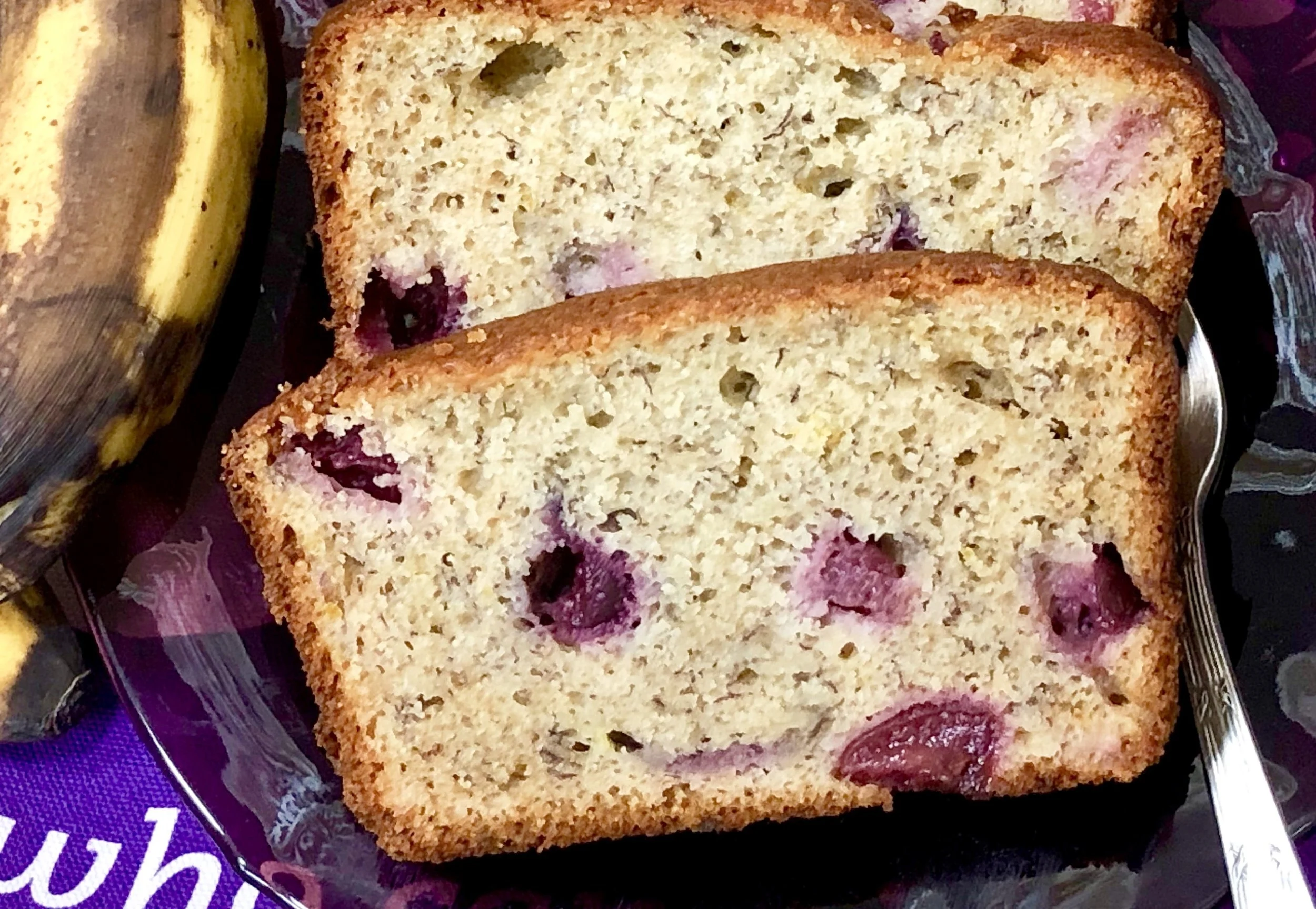
Banana Bread with Cherries

fullsizeoutput_9095.jpeg

This summer's cherries have been especially delicious. I've been buying (and eating) tons of them.

So, when I had to think of what to do with the usual leftover bananas, I decided to use some in a new version of Banana Bread. I also added some orange (peel and juice) -- just a hint to bring out the best in both of the fruits.

Pitting cherries can be a real drag. But there's an easy way to do it and you don't even have to buy a cherry pitter. Look here.

Banana BREAD with cherries

  • 2 cups all-purpose flour
  • 1 teaspoon grated fresh orange peel
  • 1 teaspoon baking soda
  • 1/2 teaspoon baking powder
  • 1/2 teaspoon salt
  • 1 cup sugar
  • 1/2 cup vegetable oil
  • 2 large eggs
  • 3 medium very ripe bananas
  • 1/3 cup orange juice 
  • 1 teaspoon vanilla extract
  • 1 cup cut up fresh cherries

Preheat the oven to 350 degrees. Grease a 9”x5”x3” loaf pan. Mix the flour, orange peel, baking soda, baking powder and salt in a bowl and set it aside. Beat the sugar and vegetable oil with a handheld or electric mixer set at medium speed for 2-3 minutes or until the mixture is well blended. Add the eggs one at a time, beating after each addition. Mash the bananas and add them to the sugar mixture. Beat thoroughly until the ingredients are well blended. Add the flour mixture and beat for 1-2 minutes to blend the ingredients thoroughly. Stir in the juice and vanilla extract. Fold in the cherries. Pour the batter into the prepared pan. Bake for about 1 hour or until a cake tester inserted into the center comes out clean. Cool the bread in the pan 15 minutes. Remove the bread from the pan and let it cool on a cake rack.

 Makes one bread serving 10-12

Sweet Soaked Summer Fruit

fullsizeoutput_92ad.jpeg

A few years ago I learned how to make khoshaf, a Muslim (primarily Egyptian) version of compote -- what my grandma called "kumput," (which she made by cooking dried prunes and apricots with sugar, lemon and cinnamon). Kumput was delicious, but sometimes a bit mushy.

Khoshaf isn't cooked -- you pour simmering, seasoned, sweet syrup over the dried fruit and let it macerate for a while. The fruit becomes tender but never gets soggy.

The khoshaf was such a success that I never went back to "kumput."

So, I figured that the soaking/macerating method would work on fresh fruit too.

I was right.

This simple dish -- cut up fruit steeped in a seasoned, sweetened syrup -- is the perfect ending to a meal on a hot summer day, especially when you want a dairy-free dessert. Of course you could always top the fruit with ice cream or whipped cream. But sorbet would be fine too.

I like it plain, as-is, with a small amount of boiled-down, thickened syrup.


SOAKED SUMMER FRUIT

  • 2 pounds stone fruit (peaches, nectarines, plums, apricots), approximately
  • 3 cups water
  • 1/4 cup honey
  • 1 vanilla bean, broken
  • 2 orange slices, about 1/4-inch thick
  • 4-5 slices crystallized ginger

Cut the fruit in half and remove the pits. Cut the fruit into bite-size chunks and place in a dish deep enough to hold the pieces plus liquid. In a saucepan, combine the water, honey, vanilla bean, orange slices and crystallized ginger and bring to a boil over high heat. Reduce the heat to a simmer and cook for 15 minutes. Pour the contents of the saucepan through a strainer over the fruit. Let soak for at least 2 hours. Serve as-is or strain the fluids, boil the fluids for 6-8 minutes or until thickened, and pour over the fruit (or let cool first).

Makes 8 servings


Roasted Salmon with Chive Flowers

fullsizeoutput_9087.jpeg

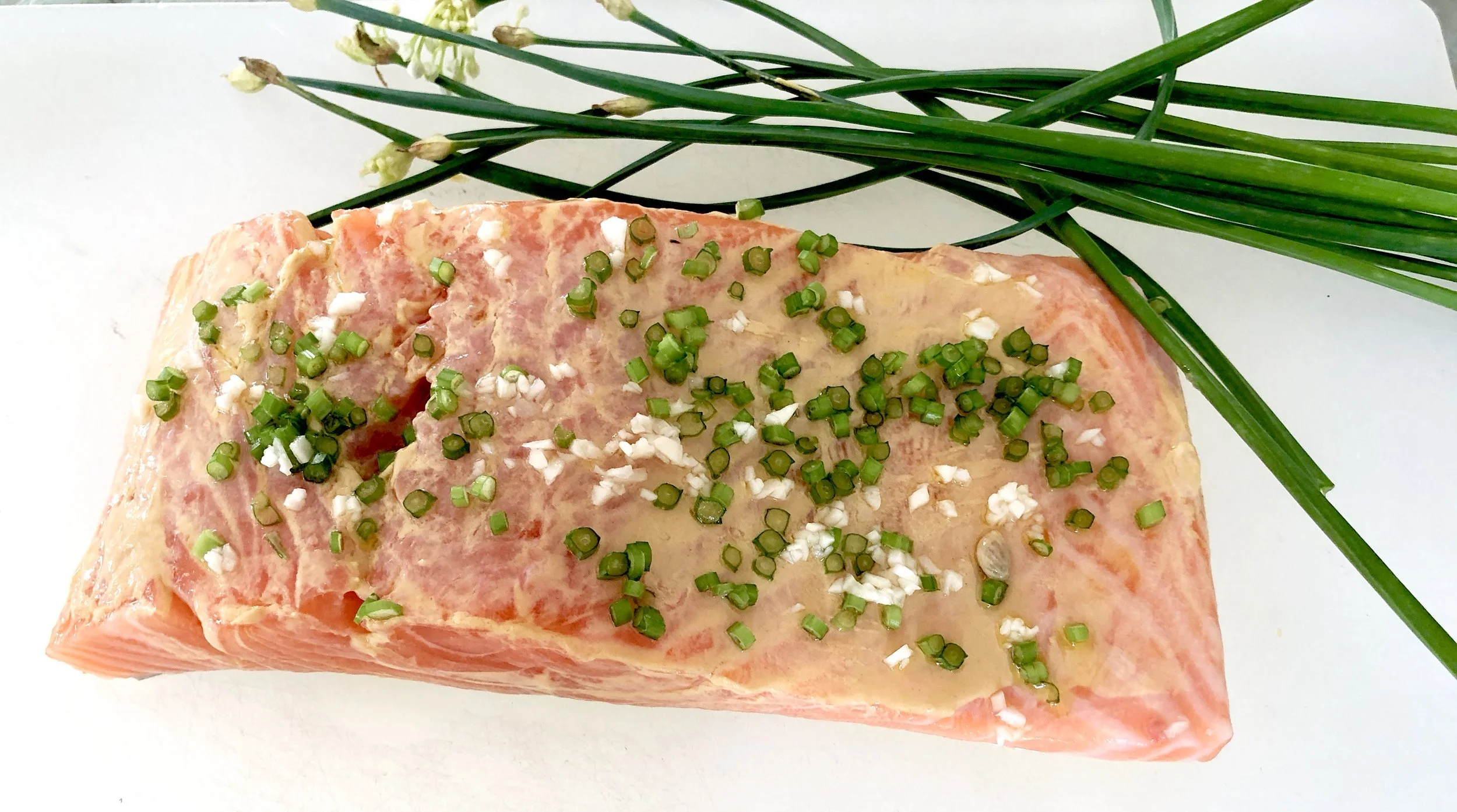
On a recent trip to an Asian supermarket in Queens, New York, I bought a lot of interesting vegetables. Greens -- Chinese broccoli, bok choy, yau choy and cabbage -- and some herbs, including chive flowers (pictured above). 

Chive flowers are just like ordinary chives, except they've been allowed to mature and produce an actual flower. As a result, they are thicker and have a somewhat bolder flavor than regular chives.

I used them to season salmon one night. This dish couldn't be simpler. Takes about 5 minutes to prepare and 15 minutes to cook.

How easy is that!

Roasted Salmon with Chive Flowers

  • 24-32 ounces salmon
  • 2 teaspoons Dijon mustard
  • 2 teaspoons olive oil
  • 1 clove garlic, finely chopped
  • 2 tablespoons chopped chives
  • 1 tablespoon lemon juice
  • salt and freshly ground black pepper to taste

Preheat the oven to 475 degrees. Place the salmon in a baking dish. Mix the mustard, olive oil and garlic together in a small bowl and spread this mixture evenly on top of the fish. Sprinkle with the chives, lemon juice, salt and pepper. Roast for about 15 minutes, depending on the thickness of the fish, or until the fish is cooked to desired doneness and the top is crispy-browned. 

Makes 4 servings

Tahini Turmeric and Mjadra

WILD RICE MJADRA_PHOTO.png
9780738220109.jpg

I have made mjadra (mujadara) so often I can't even count the ways. It's a family favorite that I serve on special occasions (the #1 item at my Yom Kippur Break-the-Fast), at somber times (the Nine Days), for holidays (my Thanksgiving vegetarian entree) and sometimes just for any old meatless meal. 

I've made mujadara using bulgur wheat and brown rice, barley and kaniwa

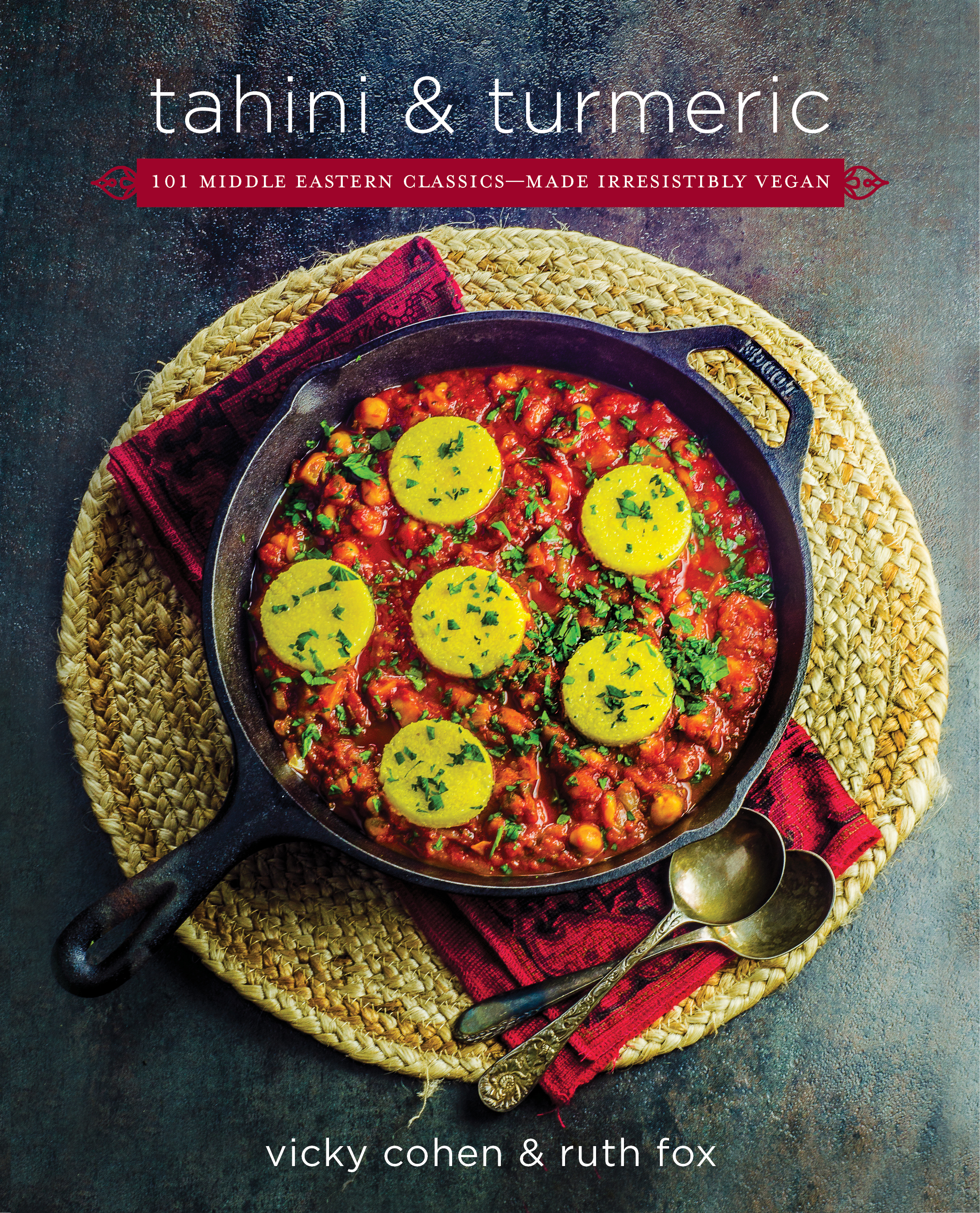
But I never made it with wild rice or with white rice. In fact, I hadn't even thought about that possibility until I got Vicky Cohen and Ruth Fox's new cookbook: tahini & turmeric; 101 Middle Eastern Classics Made Irresistibly Vegan.

This is one gorgeous book, stuffed with recipes that anyone who loves good food, or who is kosher or a vegetarian or even a hearty carnivore and even a vegan-skeptic would find -- yes -- irresistible.

There were (still are) so many recipes I want to try. I've followed Vicky and Ruth's blog for years and have cooked many of the dishes in their posts, every one of them a winner.

But when I saw the recipe for Mjadra, I knew that had to be the first from the book.

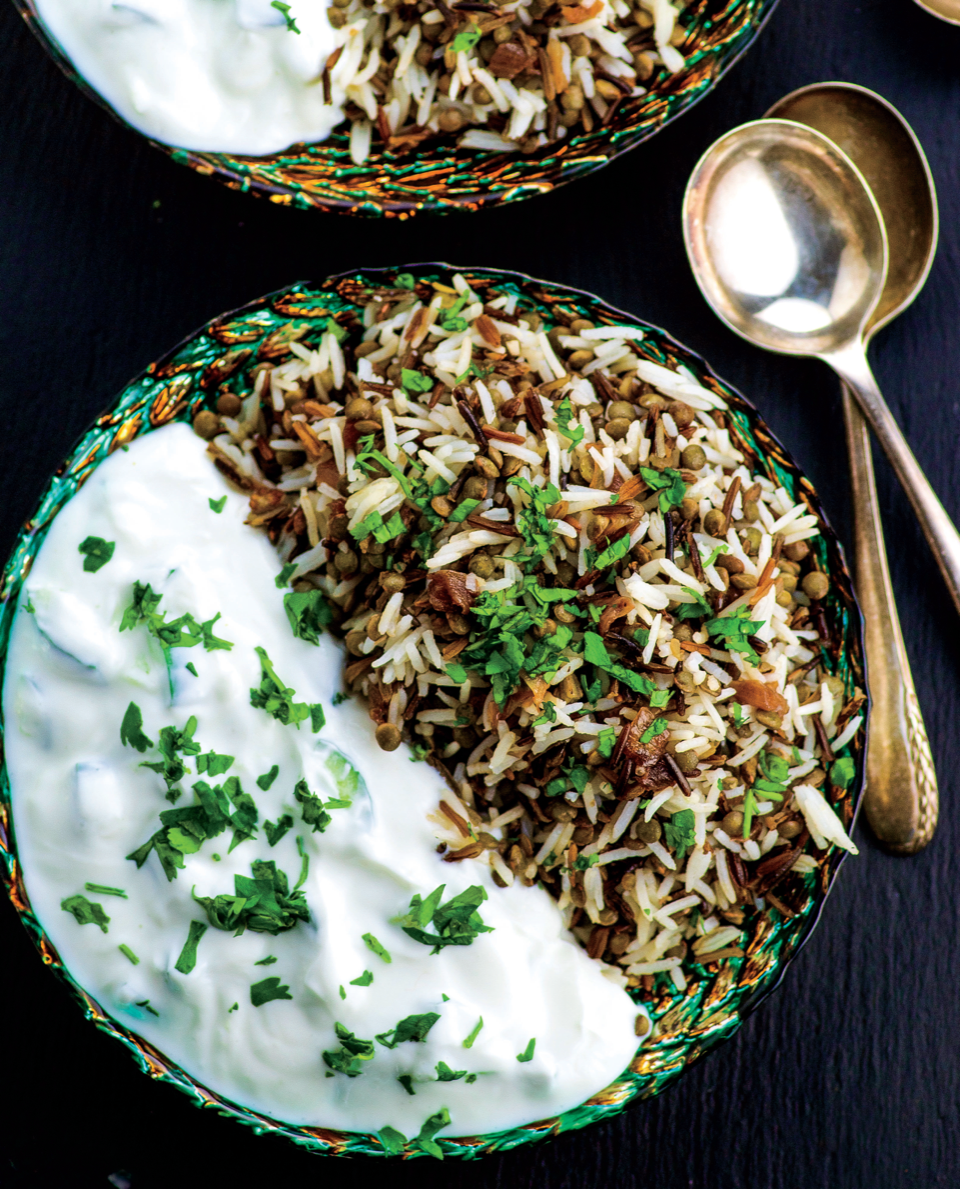
It was as delicious as any version of this dish I have ever tried. The addition of pomegranate molasses to the onions gave the dish a faint, lush tang. The authors suggest one of two sauces to accompany the grains. I prepared the (vegan) Cucumber Yogurt Sauce (which is also paired in the book with Zucchini Fritters -- a delicious-sounding recipe that I will try next to see how the taste compares with my own, non-vegan version).

Every recipe sounds and looks tempting. Over the summer I will try my hand at the Tangy Roasted Carrot Hummus -- a quick and easy hors d'oeuvre for the company I am sure to have. And because I love all versions of Shakshuka, I will definitely try the interesting Chickpea and Pepper Shashuka -- with rounds of polenta taking the place of the traditional eggs! (It's the recipe on the book cover.) Before the High Holidays I am going to try the spectacular-sounding Creamy Tahini Cheesecake with Pistachio Crust and Fresh Pomegranate. 

I could go on and on. I rarely post about cookbooks, but this one is special, and comes in handy particularly this week, when the Nine Days begin and observant Jews will be eating meatless meals. 

Good luck with the book Vicky and Ruth!

WILD RICE MJADRA

Our take on this classic Middle Eastern dish incorporates wild rice and sautéed on-ions, as opposed to fried, for a healthier version. We also cook the rice, lentils, and onions separately, and then mix them together right before serving. This is a fool-proof method to prevent the mjadra from becoming mushy.

Traditionally, this dish is served topped with a cucumber yogurt sauce, which we made using nondairy yogurt (see Zucchini Fritters with Cucumber Yogurt Sauce, page 26). While we were growing up, our dad always ate it with his favorite Spicy Israeli Salsa (page 62), made with freshly picked tomatoes and cucumbers from his garden.

Store in the refrigerator for up to four days.

Prep time: 10 minutes

Cook time: 50 minutes

Makes 6 to 8 servings

INGREDIENTS:

WILD RICE:

½ cup uncooked wild rice

½ teaspoon salt

LENTILS:

1 cup dried French green lentils,

picked over and rinsed well

½ teaspoon salt

WHITE RICE:

1 cup uncooked basmati rice

1 teaspoon salt

SAUTÉED ONIONS:

2 tablespoons extra-virgin olive oil

1 large onion, sliced

¼ teaspoon salt

1/8 teaspoon freshly ground black pepper

1 tablespoon pomegranate molasses

            (see page 132 for homemade)

Cucumber Yogurt Sauce (page 26) or Spicy Israeli Salsa (page 62), to serve

Prepare the wild rice: Bring 2 cups of water to a boil in a medium-size saucepan over high heat. Add the wild rice and salt. Bring again to a boil, lower the heat to low, and simmer, covered, for 40 to 45 minutes, or until tender. Remove from the heat, drain well, and set aside.

Prepare the lentils: Bring 4 cups of water to a boil in a large saucepan over high heat. Add the lentils and salt. Lower the heat to medium and cook, uncovered, for 18 to 20 minutes, or until the lentils are soft but not mushy. Remove from the heat, drain well, and set aside.

Prepare the basmati rice: In a medium-size saucepan, bring 1½ cups of water to a boil in a separate medium-size saucepan over high heat. Add the basmati rice and salt. Return to a boil, lower the heat to low, and simmer, covered, for 20 minutes, until the water has been absorbed and the rice is tender. Remove from the heat and set aside, covered.

Prepare the onion: Heat the olive oil in a large, nonstick skillet. Add the sliced onion, salt, and pepper, and cook over high heat for 5 minutes, stirring often. Lower the heat to medium-low and cook for 15 minutes. Add the pomegranate molasses and continue to cook for another 5 minutes, or until the onion turns dark golden brown.

Assemble the mjadra: Combine the cooked wild and basmati rice, the cooked lentils, and the onion in a large bowl, and toss well. Serve warm, topped with Cucumber Yogurt Sauce or Spicy Israeli Salsa.

Referenced recipes:

CUCUMBER YOGURT SAUCE:

½ cup plain unsweetened coconut or CASHEW YOGURT

1½ teaspoons freshly squeezed lemon juice

¼ teaspoon salt

1 small cucumber, peeled and cut into small dice

SPICY ISRAELI SALSA:

1 pound assorted colored tomatoes, diced small

5 to 6 Persian cucumbers, diced small

2 to 3 jalapeño peppers, diced small

½ cup chopped fresh cilantro

2 tablespoons extra-virgin olive oil

2 tablespoons freshly squeezed lemon juice

¼ to ½ teaspoon salt

HOMEMADE POMEGRANATE MOLASSES:

6 cups pomegranate juice

1 cup sugar

1/3 cup freshly squeezed lemon juice

Combine all the ingredients in a large saucepan and bring to a boil. Lower the temperature to a low boil and cook, uncovered, for 2 hours, or until the liquid has reduced to about one third. Keep an eye on it, so it doesn’t overflow.

Remove from the heat, let cool, and transfer to a glass jar with a tight lid. The molasses will thicken once cooled.

Store in the refrigerator for up to six months.


Excerpted from Tahini and Turmeric: 101 Middle Eastern Classics—Made Irresistibly Vegan by Ruth Fox and Vicky Cohen. Copyright © 2018. Available from Da Capo Lifelong Books, an imprint of Perseus Books, LLC, a subsidiary of Hachette Book Group, Inc.

Sour Cherry Crisp

fullsizeoutput_84f8.jpeg

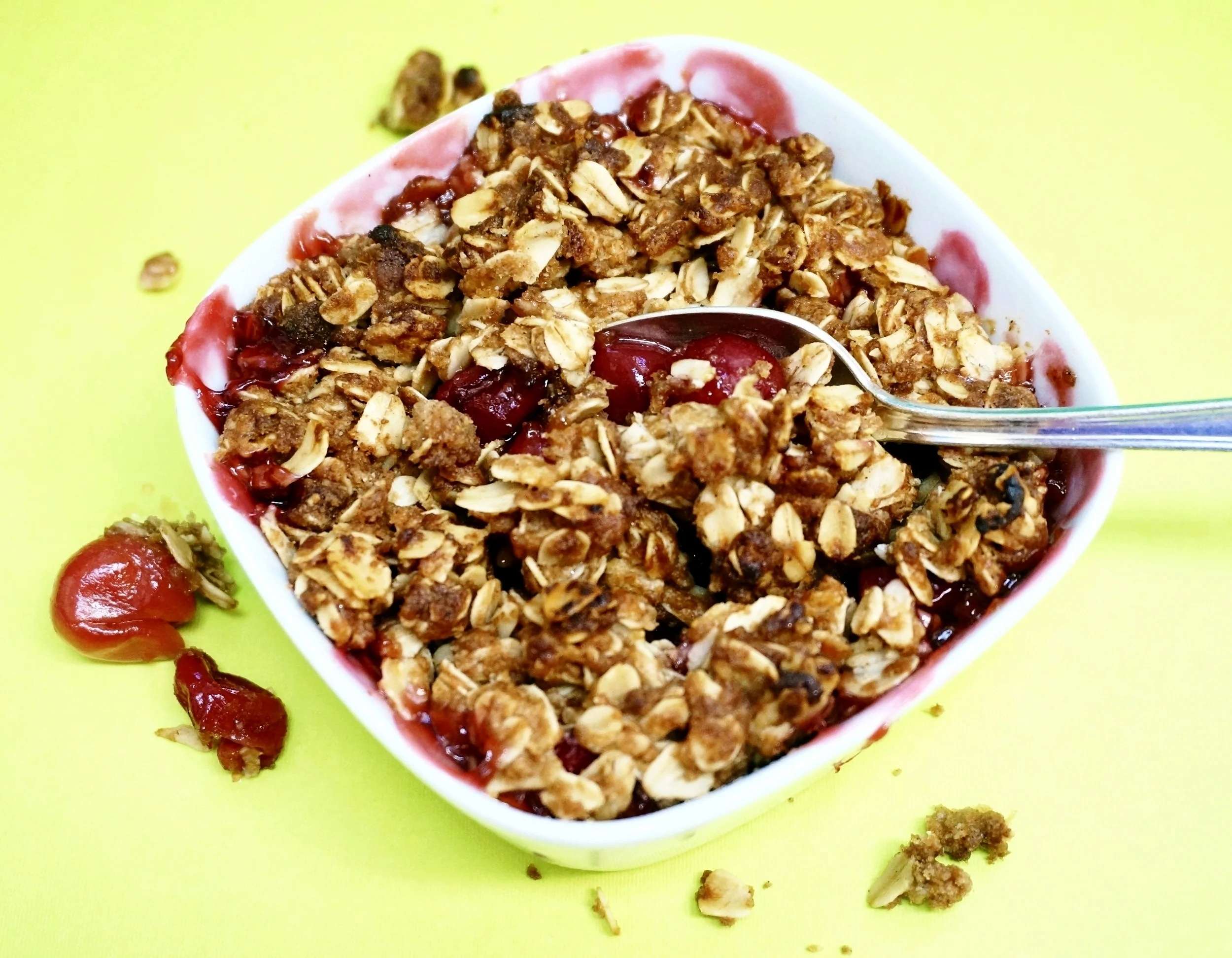
Recently my daughter Gillian brought me some fresh sour cherries. Cherries that are intended for baking, not eating out of hand.

I love sour cherries. In fact I like most foods that are sour -- anything that provides that satisfying pucker in my mouth. 

Mostly, I like sour cherry pie, but I didn't have enough fruit.

Also, I don't have a cherry pitter.

Thanks to some instruction at The Spruce, I learned how to remove the cherry stones using a pastry tube tip, so I decided to make two individual Sour Cherry Crisps.

Notice that the amount of sugar I use is less than what you'll see in most recipes. The point of sour cherries -- for me -- is that they are supposed to be sour, merely mellowed by sugar, not overwhelmed by it. But, by all means, if you like your desserts more on the sweet side, you can add more.

Sour Cherry Crisp

  • 5 cups pitted sour cherries
  • 1/3 cup sugar
  • 1 teaspoon cornstarch
  • 1-1/2 cups old fashioned oats
  • 1/2 cup all-purpose flour
  • 1/2 cup brown sugar
  • 1 teaspoon cinnamon
  • 1/2 teaspoon salt
  • 1/2 cup melted unsalted butter

Preheat the oven to 375 degrees. Place the cherries, sugar and cornstarch in a bowl and mix to coat the cherries completely. Spoon the cherries into 4 baking ramekins (or a small baking dish). In a bowl, mix the oats, all-purpose flour, brown sugar, cinnamon and salt until the ingredients are evenly distributed. Pour in the butter and mix to coat the dry ingredients. Spoon equal amounts of the oat mixture on top of the cherries. Bake for 28-30 minutes or until the top is crispy and golden brown.

Makes 4 servings


Baked Beans. Real American Food for the 4th.

fullsizeoutput_924f.jpeg

I was thinking about which "real American" foods to serve on July 4th. Not just the usual icons: burgers, apple pie, lemonade. I wanted something that represented the "mongrels" that we are: Americans may be tribal in some ways, but we are also an odd mix-and-blend of a zillion cultures.

And so is American food.

For example, some say that Baked Beans are originally from France -- some sort of easy version of cassoulet. But the countries where they eat baked beans the most are English speaking: England, Ireland, Canada and Australia.

And yet ... baked beans are also a favorite in Holland and Hong Kong.

And of course beans themselves are native to South America, so who knows?

The original Puritan colonists in New England made baked beans often and for the same reason as observant Jews make cholent -- the dish cooks slowly in a pot so there's no work to be done during the Sabbath. Baked beans have been popular ever since, and particularly so after the canned versions first came along at the turn of the 20th century. 

Green labelled Heinz Vegetarian baked beans were a standard item at my house when I was a kid.

So, baked beans it is.

I like making my own because when they're homemade I can season the beans the way I like, make them spicy or not, use more or less sugar (or sugar substitutes such as honey or maple syrup), make them vegetarian or with meat.

I recently had a couple of slices of flanken left over, so I decided to use them in a new recipe.

My husband usually likes my cooking and there are some dishes he thinks are so good he brags to people about them. Like my recipe for Carrot Soup with Harissa and Coconut.

These beans? He told me several times that they are among the best foods he has ever tasted. In fact, one night he only had baked beans (and a few of the chunks of flanken in them) for dinner. 

So, this recipe is a yes for July 4th.

Baked beans take time. But you can make them several days ahead. They last for a week in the fridge. If you don't have flanken you can use chuck, smoked turkey or some kind of sausage.


Baked Beans for the Fourth of July

  • 1 pound dried navy or great northern beans
  • water
  • 2 tablespoons vegetable oil
  • 6-8 ounces beef chuck or flanken , cut into chunks
  • 1 medium onion, sliced
  • 1/3 cup dark brown sugar
  • 1/3 cup honey
  • 1/3 cup ketchup
  • 1/2 teaspoon salt
  • 1 tablespoon powdered mustard

Place the beans in a large saucepan and cover them with water. Bring the water to a boil over high heat. Lower the heat and cook for 2 minutes. Remove the pan from the heat and let the beans soak for one hour. Drain the beans and return them to the pot. Cover the beans again with water and bring to a boil over high heat. Lower the heat and simmer for 45 minutes. (Alternatively, cover the beans with water and let them soak for at least 8 hours.) Drain the beans and place them in an oven-proof casserole. While the beans are cooking, heat the vegetable oil in a sauté pan over medium heat. Add the meat and cook for 5-6 minutes, turning the pieces occasionally, until they are browned. Remove the meat from the pan and add to the beans. Add the onion to the pan and cook for 2-3 minutes to soften. Add to the drained beans and meat. Place the brown sugar, honey, ketchup, salt and mustard in a bowl and mix thoroughly to blend the ingredients. Stir in 2-1/2 cups water. Pour the mixture over the beans and meat. Cover the casserole and put it in the oven. Set the temperature at 300 degrees and cook the beans at least 5 hours, or until they are tender.

Makes 8 servings

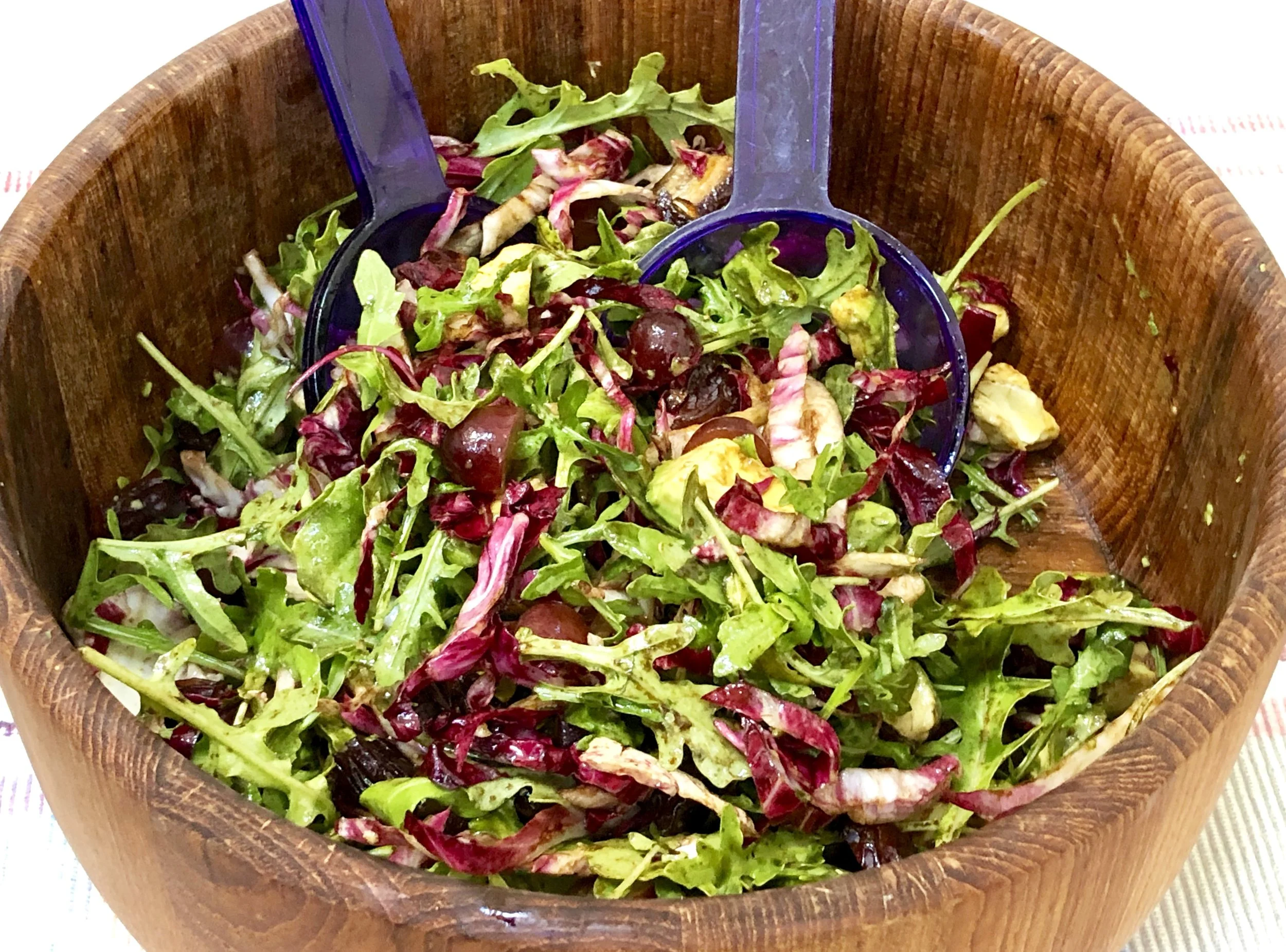
Arugula Salad with Grapes and Dates

fullsizeoutput_90a3.jpeg

On the first day of summer, what could be more refreshing than a good salad?

This one is a good fit with grilled meat, chicken or fish but if you're doing a meatless meal add some crumbled blue, feta or goat cheese. Or hard cooked eggs. Or tofu.

Doesn't get much easier than this. 

I used La Tourangelle* avocado oil for this -- it is rich, with a fabulous mouth-feel and is a really delicious vegetable oil for salad. But olive oil would be fine too.

*I did not get paid for this or receive free product. I just love La Tourangelle products.

Arugula Salad with Grapes and Dates

  • 2 cups (packed) baby arugula
  • 2 cups (packed) shredded radicchio
  • 1 cup halved red grapes
  • 12 medjool dates, pitted and coarsely chopped
  • 1 avocado, peeled and coarsely chopped
  • 2 tablespoons avocado oil (or use olive oil)
  • 1-1/2 tablespoons balsamic vinegar

Place the arugula, radicchio, grapes, dates and avocado in a salad bowl and toss the ingredients to distribute them evenly. Pour the avocado oil over the salad and toss to coat them. Pour the balsamic vinegar over the salad and toss again. Let stand about 5 minutes before serving.

Makes 4-6 servings


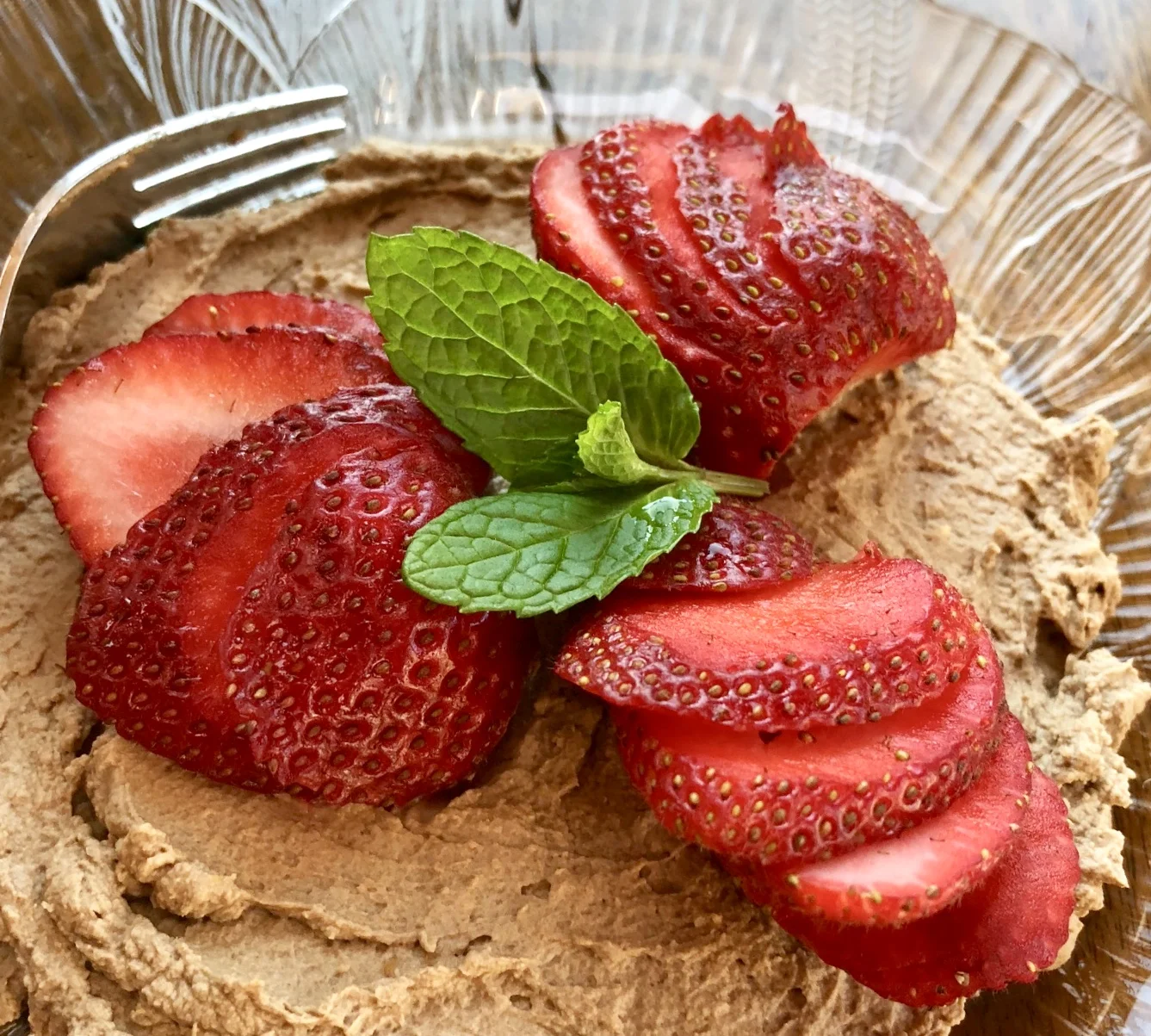
Strawberry Shortcake (Without the cake)

fullsizeoutput_8989.jpeg

The strawberries are fabulous right now -- the local ones anyway. They're sweet, juicy and fragrant. They're small to medium rather than gigantic -- like the year-round supermarket staples, which are dry, tasteless and smell like plastic. The strawberries you can buy now are the kind I remember strawberries from long ago, (especially the ones I picked right off the plants in my parents' garden).

If you are lucky enough to get good, seasonal strawberries, try this recipe. I call it Strawberry Shortcake without Cake because the whipped cream mixture, which is made with mascarpone cheese, is thick, almost like a really moist cake, and yet it is sort of like whipped cream.

So easy too!

Remember this recipe next Passover. Or Valentine's Day. Or July 4th for that matter!

Make the cream part ahead and top it with berries just before you serve it. Lovely with coffee or tea and also an after dinner drink (brandy and so on).

Strawberry Shortcake without Cake

  • 1 pint strawberries
  • 1 cup whipping cream
  • 2/3 cup mascarpone cheese (or use whipped cream cheese)
  • 1 tablespoon sugar
  • 1 tablespoon grated fresh orange peel
  • 2 tablespoons Balsamic vinegar

Wash and dry the berries and remove the hulls. Make incisions into each berry as if to cut slices but do not slice through. Set aside. Whip the cream and mascarpone cheese with the sugar and orange peel until the mixture is thick. Fold in the Balsamic vinegar. Spoon equal amounts of the cheese mixture onto 4-6 dessert plates. Place sliced strawberries on top, gently moving the “almost” slices to fan them slightly.

Makes 4-6 servings


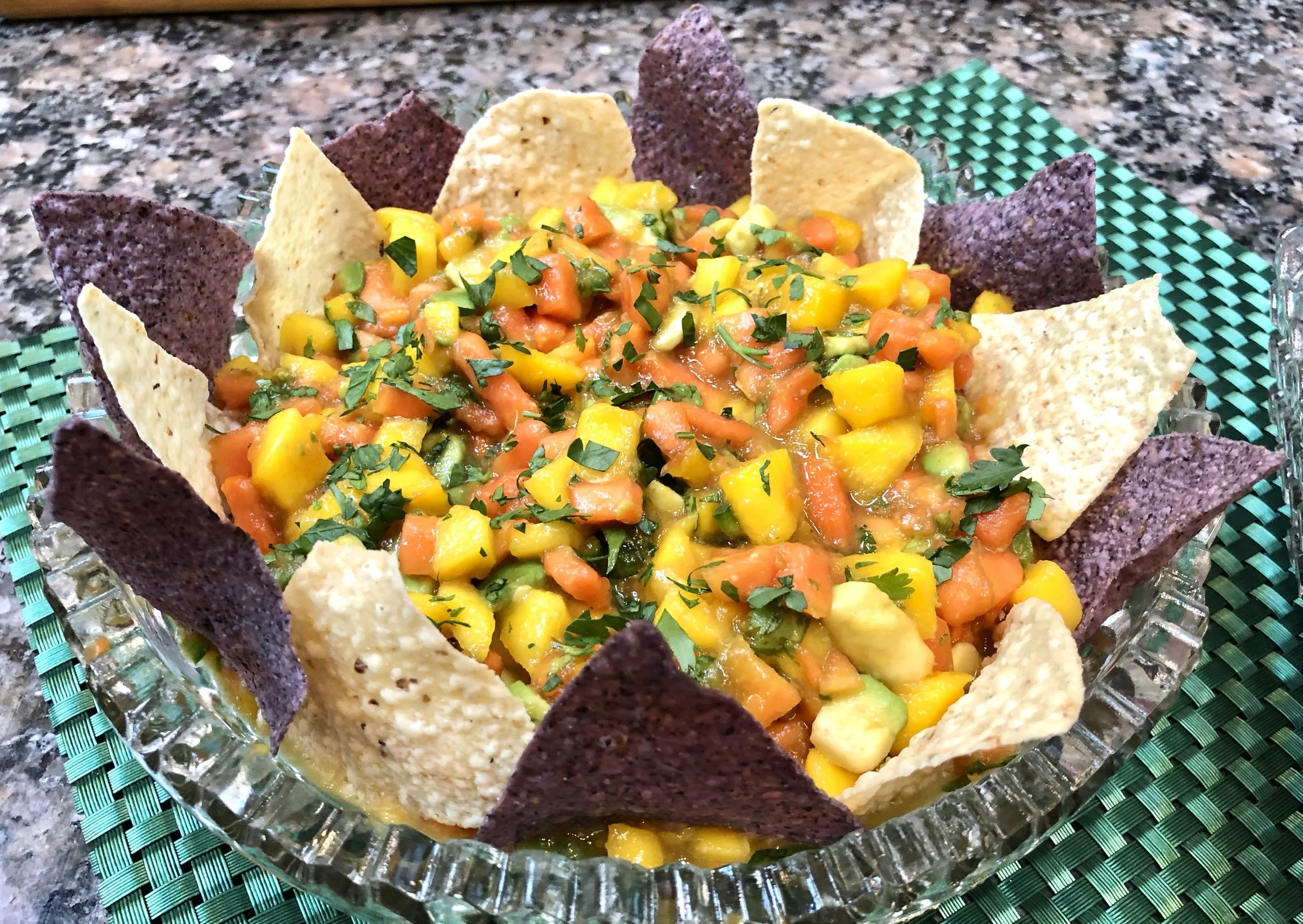
Tropical Salsa

fullsizeoutput_8f15.jpeg

In our family, Mother's Day involves a cookoff. Everyone participates in some way. We pick a theme, some people cook, some set the table, some help clean up and so on. Then we all eat what we have cooked and everyone wins a prize for something, like: best looking; most delicious; most unusual.....

It's been so much fun over the years and we all believe it beats going to a restaurant which, because it's a holiday, is usually crowded and noisy and the service awful.

This year's theme was "dips."

My son-in-law and one of the grandkids made a hot French Onion Dip; one daughter and granddaughter made a spicy Red Pepper Dip; another daughter and child made a chocolate dip for dessert.

It was all awesome.

This was my entry, which got the award for "most refreshing" and "most attractive" as well as "most perfect for summer" awards.

It's so easy to make too.

Also, it really is perfect for summer.

And it is actually refreshing and attractive.

So -- for summer company or just for yourself, try my award-winning Tropical Salsa. Serve it on Father's Day. Or July 4th!

By the way, this is also a good side dish with grilled meat, poultry or fish and can be used to top a hamburger.

Tropical Salsa

  • 2 cups diced fresh papaya
  • 2 large mangoes, peeled and diced
  • 1 large avocado, peeled and diced
  • 1 jalapeno pepper, deseeded and finely chopped
  • 1 teaspoon grated fresh lime peel
  • 1/4 cup lime juice
  • 1/4 cup chopped fresh cilantro
  • salt
  • corn chips or other favorite chips

Place the papaya, mango and avocado dice in a bowl. Add the jalapeno pepper, lime peel, lime juice and cilantro and toss to distribute the ingredients evenly. Taste and add salt as needed. Serve with chips.

Makes about 3 cups