Chocolate Roll with Jam and Strawberries

So you think chocolate is delicious?

Okay, I grant you: chocolate is delicious.

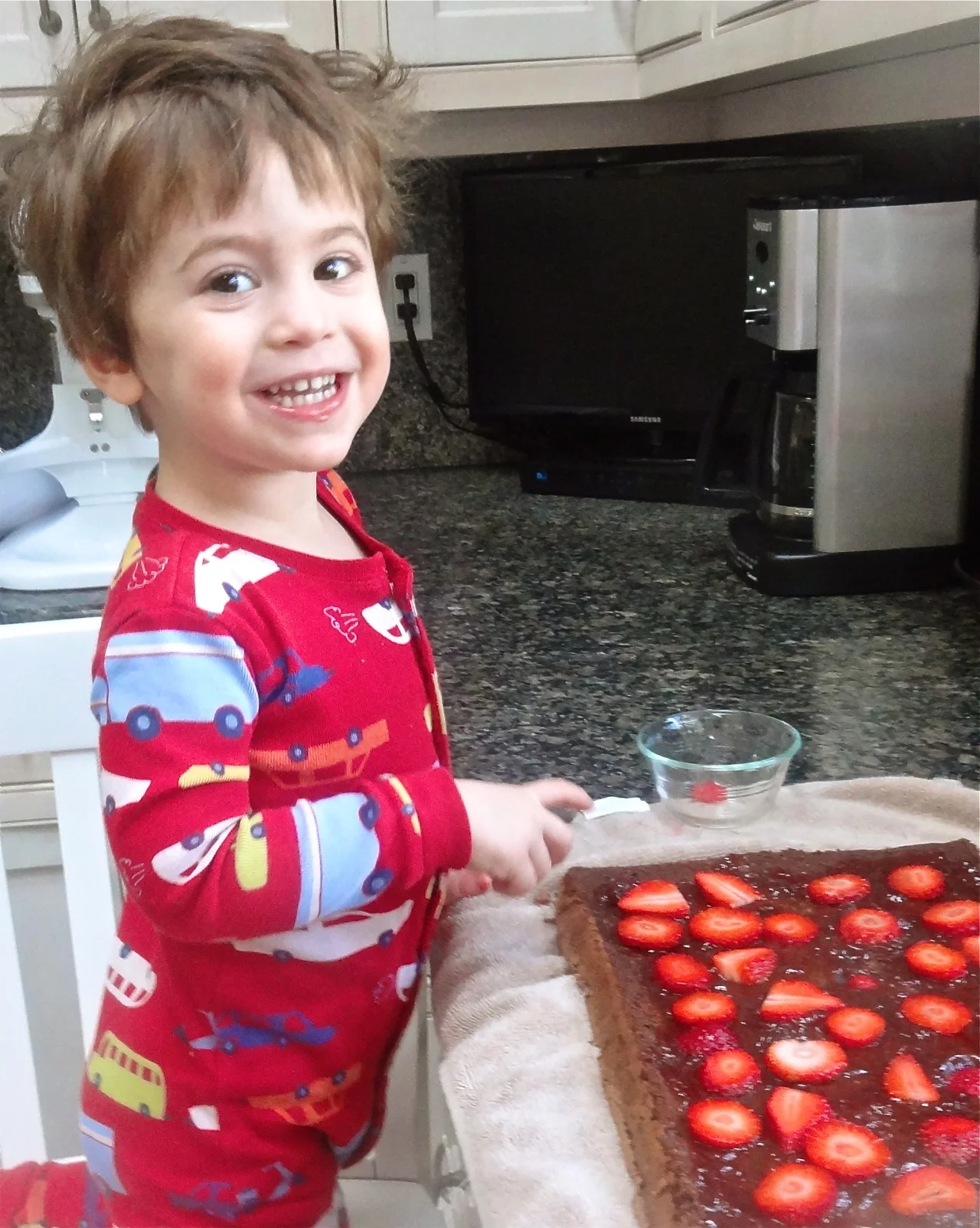
But in my opinion, the most delicious thing in these photos isn’t the dessert, it’s the kid. My grandson, age 2-3/4.

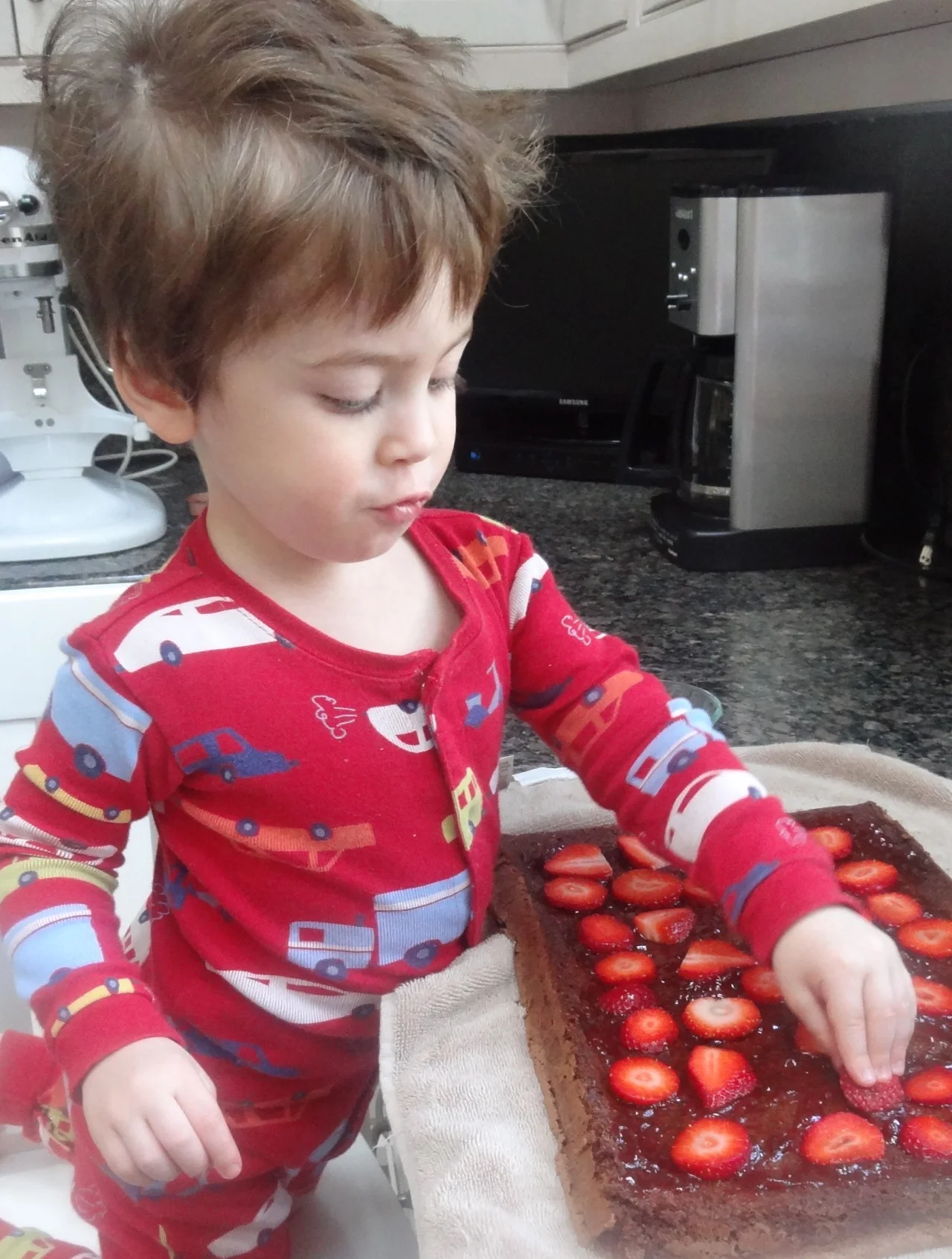
Here he is putting the final touches on a chocolate roll cake. I prepared the batter. He licked the bowl.

These photos are proof of how easy it is to cook with children, even one who is 2-3/4. Remy was able to spread the strawberry jam on the baked cake. I sliced the strawberries. He placed them over the jam. 

He did a pretty good job don’t you think?

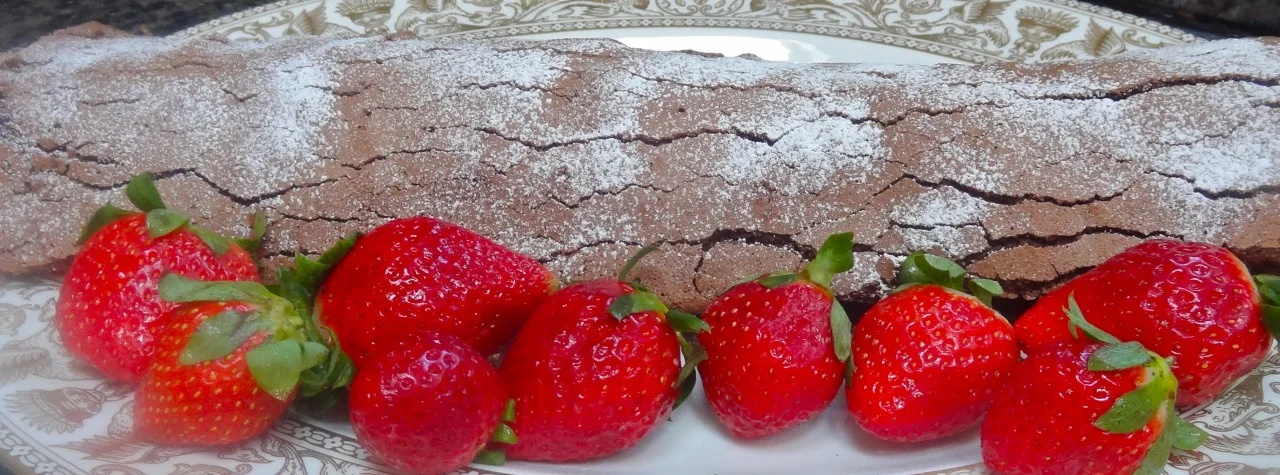
We rolled the cake together and plopped it onto a big serving dish.

Okay, the cake has some cracks in the surface. That sometimes happens to rolled cakes. So we covered it up somewhat: I held the strainer filled with confectioner’s sugar and he tapped it with a spoon, causing the white sprinkles to come down like snow and give a nice finish to our work.

No one cared that the cake didn’t look perfect. The time we had together was perfect.

Delicious.

You can do it with a kid in your life using my recipe. It would be a good Mother’s Day project. 


Chocolate Roll with Jam and Strawberries


6 ounces semisweet chocolate

3 tablespoons cold, strong coffee or orange juice

5 large eggs

1 cup sugar

1/2 teaspoon salt

1-1/2 teaspoons vanilla extract

1 cup strawberry jam

1 pint strawberries, sliced 

confectioners' sugar


Preheat the oven to 350 degrees. Butter a 15-1/2”x10-1/2” jelly roll pan. Line the pan with parchment paper, leaving several inches hanging over each of the short edges. Lightly grease the portion of the paper that fits inside the pan. Melt the chocolate and coffee together in the top part of a double boiler (or a bowl that fits into a saucepan) set over barely simmering water. Mix the ingredients well and remove the top part of the pan from the heat. Let cool. In the bowl of an electric mixer set at medium speed (or use a hand mixer), beat the egg yolks, sugar, salt and vanilla extract together for 3-4 minutes or until the mixture is thick and pale. Add the cooled chocolate mixture and blend it in thoroughly. In another bowl, beat the egg whites until they stand in stiff peaks. Mix about 1/4 of the beaten whites into the chocolate mixture. Fold the remaining whites into the chocolate mixture until the mixture has an even color. Spoon the batter into the prepared pan, smoothing it to make it even. Bake for 10 minutes. Remove the cake from the oven. Cover it with a slightly dampened kitchen towel. Let cool. Loosen the cake by pulling the overlapping ends of parchment paper. Invert the cake onto a clean sheet of parchment paper or kitchen towel (use the towel if you will be filling the roll later; keep the cake rolled inside the towel and set it aside, then unroll the cake to proceed).

Spread the jam evenly over the top of the cake. Top with the strawberries. Roll the cake starting on the long side. Place on a serving platter, seam side down. Dust (using a strainer) with confectioner’s sugar. Makes 8-10 servings
 

Grilled Asparagus with Ponzu Sauce

Grilled Asparagus with Ponzu SauceWhen you can go into a supermarket any day, any time of year and find practically everything you need or desire — like peaches in December or apples in June — it’s easy to forget that there’s such a thing as seasona…

Grilled Asparagus with Ponzu Sauce

When you can go into a supermarket any day, any time of year and find practically everything you need or desire — like peaches in December or apples in June — it’s easy to forget that there’s such a thing as seasonal food.

Yes, there are a few foods that still invite yearning, as you wait for them to be ready at a precise time. You can’t force shad to spawn whenever you want them to, so shad lovers like me have to wait to buy the fish around May or June. And I have yet to see a pumpkin for sale in July.

But even for the stuff you can buy whenever, there is an actual season where it is available locally. And that seasonal, local food is infinitely better. A tasty break from the transported foods from afar.

Locally grown asparagus is just about beginning its season in many parts of the U.S. So if you like asparagus, now is the time to buy and savor it. Local, seasonal asparagus is like no other. The spears are more tender and delicate tasting than the others.

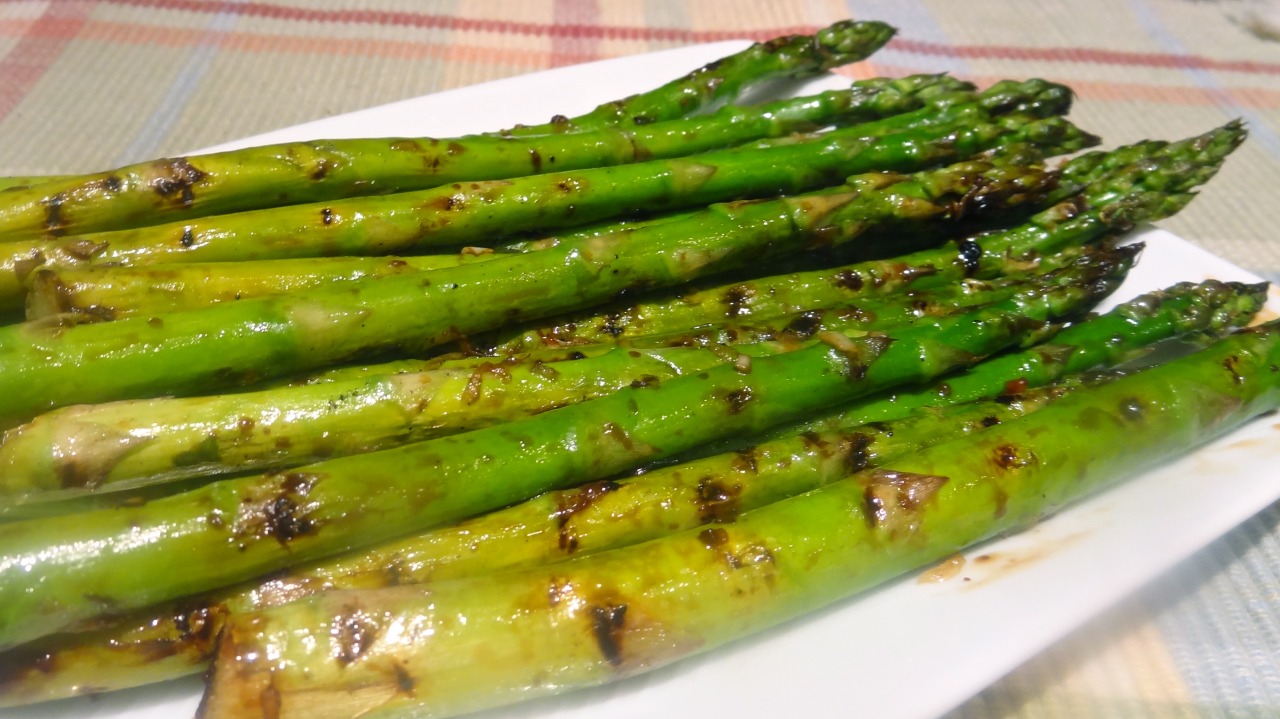
Also, it’s Earth Day. If it’s sunny out where you are and you have a grill, celebrate the call for eating local products when you can by grilling a bunch of asparagus. Or use a grill pan or an oven broiler. No matter.

Here’s a recipe for Grilled Asparagus with Ponzu Sauce. It’s an easy recipe and you can skip the Ponzu Sauce if you like, because plain old grilled asparagus is fine too. You can save leftover Ponzu Sauce in the fridge for a few weeks.

Grilled Asparagus with Ponzu Sauce:

6 tablespoons Ponzu Sauce

2 pounds asparagus

2 tablespoons olive oil

salt to taste

Ponzu Sauce:

1/2 cup orange juice

1/4 cup lemon juice

1/4 cup lime juice

1/2 cup soy sauce

1/4 cup rice vinegar

1 tablespoon fresh ginger, grated

1 serrano chile, deseeded and chopped

2 scallions, finely chopped

1/4 teaspoon ground coriander

Make the Ponzu Sauce and let it rest for at least one hour. Preheat an outdoor grill or indoor grill pan (or oven broiler). Wash and trim the asparagus and dry the stalks on paper towels. Rub the olive oil over the asparagus. Grill the asparagus for 6-8 minutes, or until they are tender, turning them occasionally and brushing with the Ponzu Sauce. Makes 4-6 servings

To make the Ponzu Sauce: place the orange juice, lemon juice, lime juice, soy sauce and rice vinegar in a bowl. Add the ginger, chili pepper, scallions and coriander. Mix well and let rest for one hour or more before using. Makes about 1-3/4 cups

Grilled Cheese, Egg and Avocado Panini

Grilled Cheese with a difference
For me, grilled cheese brings to mind the version my mother made: slices of American cheese over one piece of white bread (sometimes topped with a slice of tomato) and broiled or toaster-oven toasted until the chee…

Grilled Cheese with a difference

For me, grilled cheese brings to mind the version my mother made: slices of American cheese over one piece of white bread (sometimes topped with a slice of tomato) and broiled or toaster-oven toasted until the cheese melted and bubbled on top.

But grilled cheese is one of those dishes that defies definition. Although almost everyone’s mother I knew back in my childhood days made the sandwich with American cheese and white bread (except that, unlike my mom, they used two slices of bread and fried the sandwich instead of toasting it), that wasn’t the case for all households.

Some moms used actual, real cheese, not processed American. Like my friend Lynne’s mother, who made it with Swiss cheese, which I hated, but this woman was so strict and glared at us so sternly that I ate every bit of that sandwich when I was at her house. To this day I can see Mrs. Remer standing there, arms folded over a well-endowed chest and willing us to finish.

When I was much older I realized that grilled cheese might be a kid favorite (at least when it had American cheese or, at worst, cheddar), but it continues to endure all through adulthood. It does in our house. Ed and I eat grilled cheese for dinner occasionally, or for a Sunday late breakfast, lunch or early dinner. 

I use all sorts of meltable cheeses (even Swiss) and types of bread and add other ingredients for variety. Like fruit or jam. One time we wanted something more substantial, so I made this version:

Grilled Cheese, Egg and Avocado Panini

  • 2 teaspoons butter

  • 2 large eggs

  • 2 tablespoons mayonnaise

  • 4 slices homestyle white or multigrain bread

  • 1 tablespoon chopped fresh basil, optional

  • 3-4 ounces cheddar, sliced

  • 4-6 tomato slices

  • 1 ripe Haas avocado, peeled and sliced

  • 1 tablespoon butter

Melt the 2 teaspoons butter in a sauté pan over medium heat. Crack the eggs and place them in the pan. Cook until the whites are set and barely crispy. Flip the eggs and cook for 30-45 seconds. Dish out and set aside. Spread equal amounts of mayonnaise on each of two slices of bread (mix the mayonnaise with basil if desired). Top with equal amounts of cheese, tomato and avocado slices. Add one egg on top of each sandwich. Cover with second piece of bread. Melt half the remaining tablespoon of butter in the sauté pan over medium heat. Place the sandwiches in the pan. Place another, heavier pan on top. Cook for about 2 minutes. Remove the heavier pan, lift the sandwiches with a spatula and add the remaining butter to the pan. When the butter has melted, turn the sandwiches on the uncooked side, weight down with the heavier pan and cook for another minute or so or until second side is golden brown.

Makes 2 sandwiches

Grilled Halibut Salad with Avocado, Tomato, Olives and Egg with Garlic-Herb Toasts

Grilled Halibut Salad with Garlic-Herb Toasts           My mother didn’t like fish so I grew up in a house where we didn’t have much of it. Except maybe for salmon steaks, which she broiled, and occasionally some f…

Grilled Halibut Salad with Garlic-Herb Toasts           

My mother didn’t like fish so I grew up in a house where we didn’t have much of it. Except maybe for salmon steaks, which she broiled, and occasionally some fresh mackerel when my Dad and uncle would go on their once-a-year fishing trip during the summer.

Otherwise, a “fish meal” was canned tuna, sardines or “tomato herring” or smoked salmon, pickled herring or whitefish. And occasionally, because my mother thought we should eat some fish because it was probably healthy, she made frozen white filets of something.

Frankly, when what you think of as fish is white filets of something it’s no wonder you don’t like fish.

I should say that in those years there wasn’t the abundance, variety or availability of fresh fish that we have today. It’s much easier nowadays. Go into a store and choose salmon, tuna, branzino, cod, tilapia. All sorts of goodies.

One of my favorites is fresh halibut. So thick and meaty. It has a delicate taste that you can dress up a bit. It’s wonderful by any cooking method but when the weather is warm enough to go outside and grill, that’s the way for my tastes.

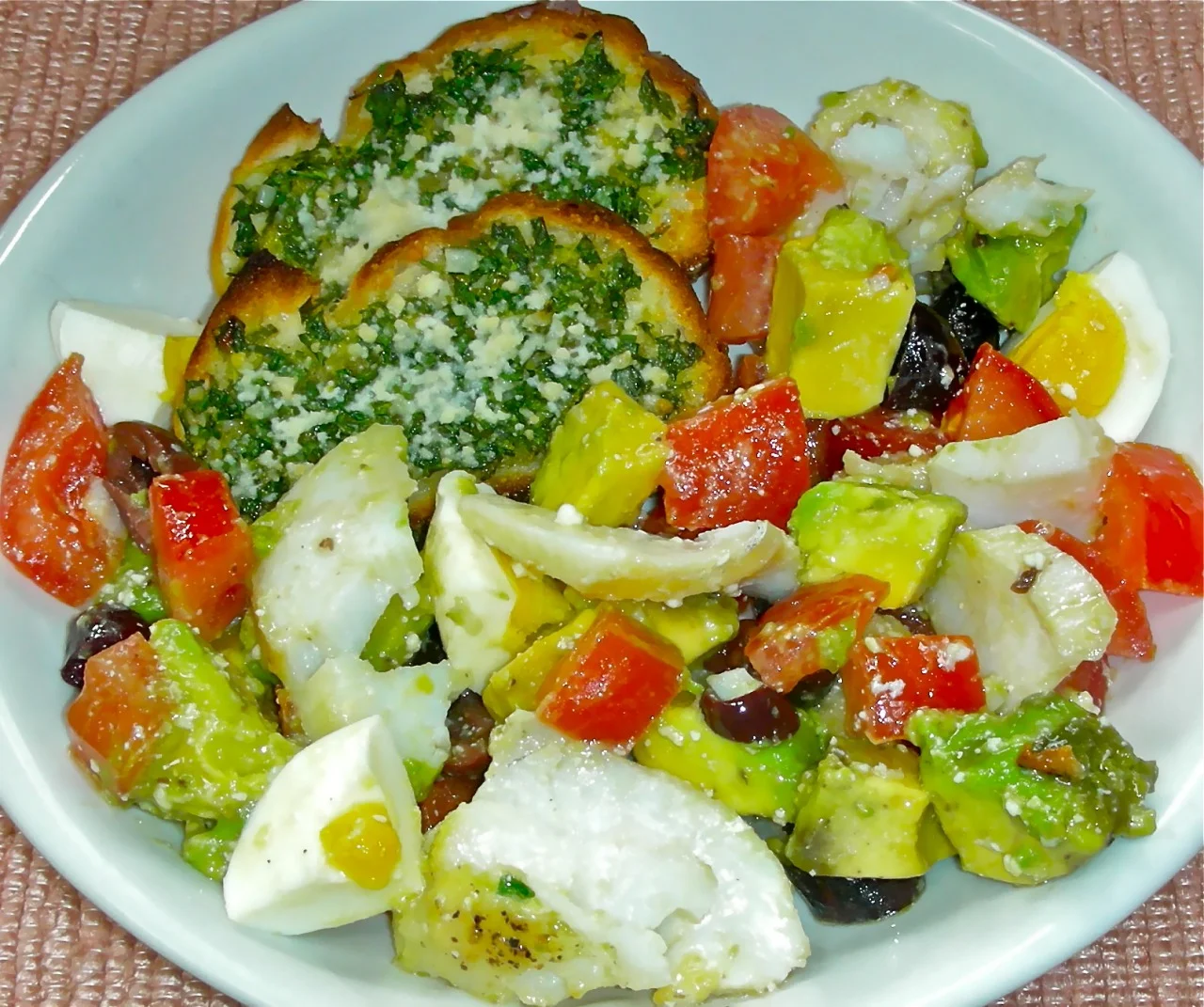
This grilled halibut salad with avocado, tomato, eggs and olives is an all-spring, all-summer treat. The Garlic-Herb Toasts make it a more substantial dinner. It’s also delightfully colorful and pleasing to look at.

Healthy too. Can you beat that?


Grilled Halibut Salad with Avocado, Tomato, Olives and Egg with Garlic-Herb Toasts


16-20 ounces halibut

5 tablespoons olive oil

salt and freshly ground black pepper to taste

2 large hard-cooked eggs

1 large avocado, peeled, pit removed

2 tomatoes, chopped

1/2 coarsely cut imported black olives

2 tablespoons lemon juice

2 tablespoons grated Parmesan cheese

1/2 teaspoon Dijon mustard

Garlic-Herb Toasts

Preheat an outdoor grill or oven broiler. Brush the fish with some of the olive oil, sprinkle with salt and pepper and grill or broil for 4-5 minutes per side or until cooked through. Cut into bite sized chunks and set aside. Cut the eggs, avocado and tomatoes into chunks and place them in a bowl. Add the olives and fish and toss ingredients gently. In a small bowl mix the remaining olive oil, lemon juice, Parmesan cheese and mustard. Pour over the ingredients and toss gently. Season to taste with salt and pepper. Let rest for 10-15 minutes before serving over Garlic-Herb Toasts (2 per person). Makes 4 servings

Garlic-Herb Toasts

2 tablespoons olive oil

8 1/2-inch slices Italian bread

1 large clove garlic, mashed

2 tablespoons chopped fresh parsley

1/2 teaspoon grated lemon peel

2 tablespoons grated Parmesan cheese

Preheat the oven to 425 degrees (or use an outdoor grill). Brush a small amount of the olive oil on one side of each slice of bread. Mix the remaining olive oil, garlic, parsley and lemon peel in a small bowl. Place the bread slices, oiled side up on a cookie sheet. Bake for 3 minutes. Turn the slices over and spread with the olive oil-parsley mixture. Sprinkle with the Parmesan cheese. Bake for 3-4 minutes or until crispy. Let cool. Makes 8


Mashed Potatoes with Frizzled Scallions

Mashed Potatoes with Frizzled ScallionsYou know that question people ask: “if there was only one food you could have if you were alone on a desert island, what would it be?” I say potato.Of course that’s not realistic. But I’m never going to be…

Mashed Potatoes with Frizzled Scallions

You know that question people ask: “if there was only one food you could have if you were alone on a desert island, what would it be?” 

I say potato.

Of course that’s not realistic. But I’m never going to be stranded on a desert island. (But of course, if I were, I’d want to be Mrs. Howell and have my butler bring me whatever I wanted.)

I know the question really isn’t about forcing me to think about survival. What they want to know is “what’s the first item that comes to mind when someone asks you what your favorite food is.”

I say potato. All kinds. Every way.

And did I mention some time ago that when Ed and I traveled to Ireland we ate salmon, salmon, salmon and potatoes, potatoes, potatoes? And it was SO delicious?

Most of the potato dishes we ate were plain. Baked, boiled, roasted, mashed. But several of the mashed potato dishes also included steamed cabbage, kale, scallions or leeks (variations on Colcannon).

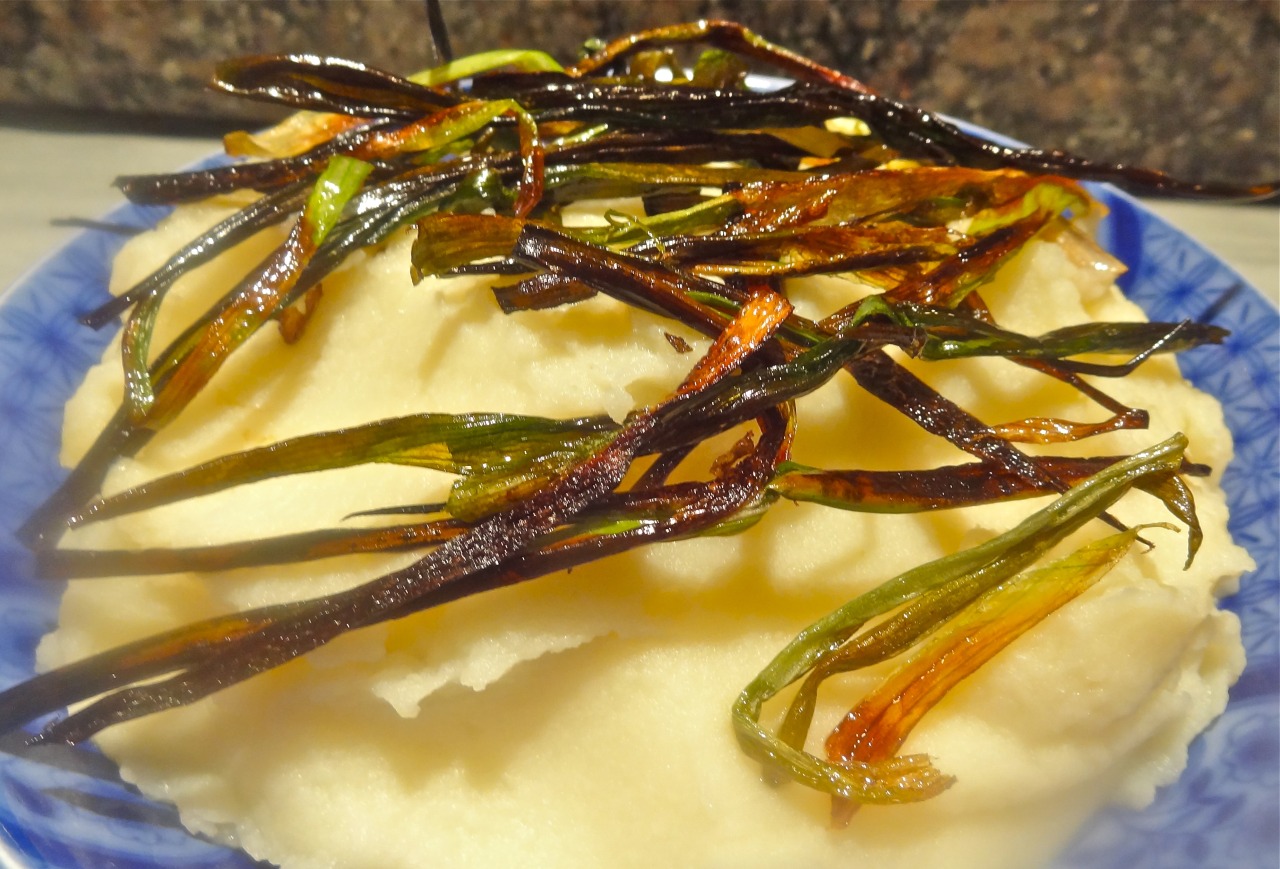
When we got back to the States I decided to create a variation on this theme. Here’s the result: mashed potatoes with scallions, but the scallions are fried and caramelized and I serve them on top because they are crisp and make a nice contrast to the soft and creamy stuff beneath.

Another wonderful thing about mashed potatoes? They are non seasonal. Perfect any time of year.


Mashed Potatoes with Frizzled Scallions


8-10 scallions

2 tablespoons olive oil

6 medium all-purpose potatoes, peeled and coarsely chopped

5 tablespoons butter

1-1/2 cups milk, heated to warm

salt and freshly ground black pepper to taste

Wash the scallions and with the tip of a sharp knife, cut along the length of each to cut each scallion in half lengthwise. Remove the root. Cut the lengths in half to make them shorter. Heat the olive oil in a sauté pan over medium heat. Add the scallion shreds and cook, stirring occasionally, for 3-4 minutes or until the scallions are tender and browned. Set aside. Cook the potatoes in lightly salted simmering water for about 15 minutes or until tender. Drain. Add the butter and mash the potatoes until most of the lumps have disappeared. Add the heated milk, salt and pepper and mix the ingredients until evenly distributed. Place in a serving bowl. Top with the scallions. Makes 6-8 servings

White Asparagus

White Asparagus
Spring has sprung which means asparagus is in season.
Okay, I sense that you’re thinking — “asparagus is always in season!”
And of course, it is. From somewhere. But there are two kinds that aren’t. First, the kind you can buy from l…

White Asparagus

Spring has sprung which means asparagus is in season.

Okay, I sense that you’re thinking — “asparagus is always in season!”

And of course, it is. From somewhere. But there are two kinds that aren’t. First, the kind you can buy from local farms and farmer’s markets. And two, white asparagus.

Elegant-looking, white asparagus. It has a limited season. Like now.

I had a friend once, she has since passed away, and was quite a bit older than me (in fact, she was older than my parents). Her name was Ro Dekker and she was one remarkable woman. She and her Dutch-Jewish family escaped the Nazis in 1939 on the last ship that sailed to New York from Holland.

There is so much more I could say about her.

But I will simply relate this little story and maybe some other time tell you more about her.

Ro, who made dinner for us even when she was over 90 years old, told me that when she first came to this country she bought a bunch of green asparagus and purposely chose the spears that had large, white bottoms, which she cut off and cooked, thinking that this part was the edible part, like the white asparagus she had always cooked for her meals back home in Europe. She was upset that so much of the asparagus was green, and had to be discarded.

Of course she discovered that the white part was not at all like the white asparagus she was used to. And for the rest of her life she knew to buy all-green asparagus or at least to cut off and throw away that woody, inedible white part of green asparagus.

She also learned that for a few precious weeks a year she could get European white asparagus. Elegant, delicate white asparagus. And so she did.

Folks, white asparagus is very expensive. It’s a treat. An occasional treat for most of us. So treat it right.

Susur Lee, a chef with restaurants in New York, Toronto and Singapore says that white asparagus is his favorite ingredient because it is so gloriously sweet and tender. He says that treating it right means: peel the skin, which can be chewy, and don’t overcook. You can read the article here.

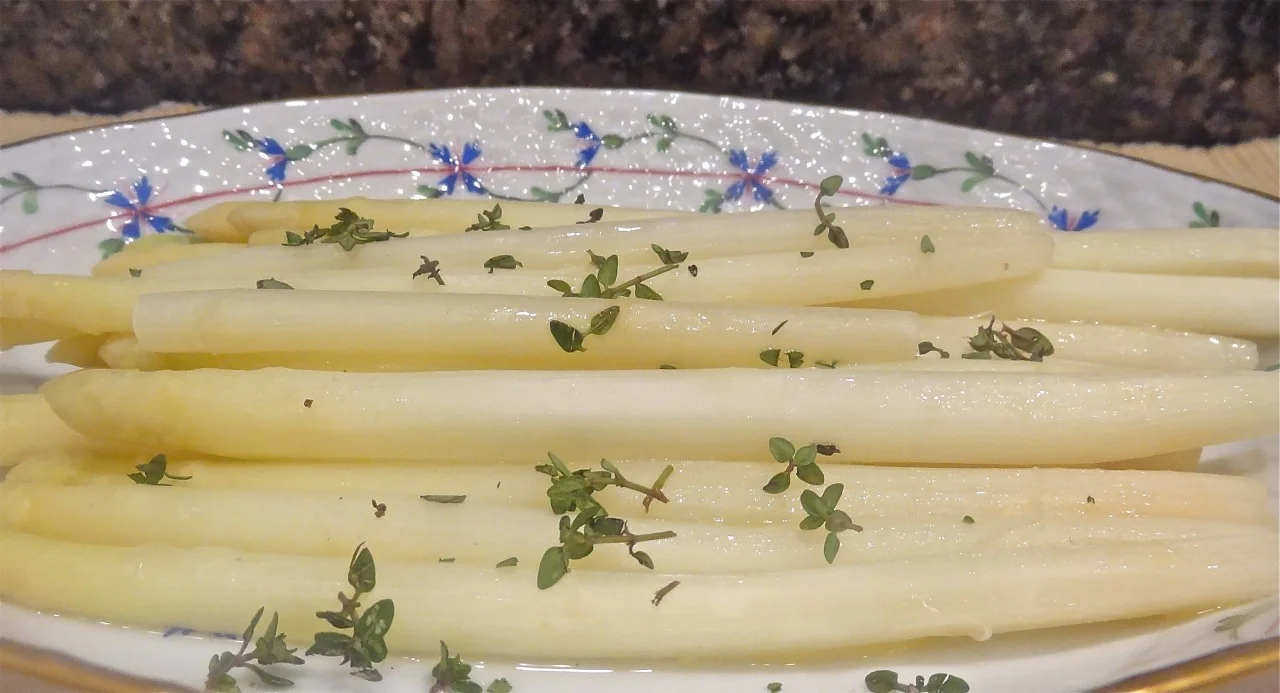
If you’re lucky enough to be able to buy white asparagus, keep the preparation simple. You can eat the spears uncooked, sprinkled with lemon juice or dipped in some flavored mayonnaise or vinaigrette.

Or steam or poach them quickly and add a sprinkle of butter or coconut oil.

Eat these hot or cold.

In memory of my friend Ro Dekker: 


White Asparagus

1 pound fresh white asparagus

butter or coconut oil

lemon juice

chopped fresh tarragon, chives, thyme, parsley or dill

Trim about 1/2-inch from the bottom of each asparagus spear. Peel the skin (use a vegetable peeler) starting from about 1-1/2 inches down from the tip all the way to the bottom. Rinse the spears and place them in a saute pan. Cover with water. Bring the water to a boil over high heat. Lower the heat, cover the pan and simmer for 3-5 minutes, depending on the thickness of the spears, or until the spears are tender. Remove the spears and drain them. Place the spears in a serving dish. Top with a bit of butter or coconut oil. Sprinkle with lemon juice. Sprinkle with chopped fresh tarragon, chives, thyme, parsley or dill if desired. Makes 4 servings


Fresh Tuna Nicoise Salad with Feta Cheese

Grilled Tuna Nicoise SaladThe first time I tasted Tuna Nicoise Salad I was in Paris with my Mom. The weather was perfect and we were thrilled to be lucky enough to be there. Thrilled as we drove into the city from the airport and get our first glimp…

Grilled Tuna Nicoise Salad

The first time I tasted Tuna Nicoise Salad I was in Paris with my Mom. The weather was perfect and we were thrilled to be lucky enough to be there. Thrilled as we drove into the city from the airport and get our first glimpse of the Eiffel Tower. Thrilled to visit the Louvre and finally see the Mona Lisa for real (it’s so much smaller than I had imagined!). Not so thrilled to be yelled at by a taxicab driver because our French wasn’t as fluent as it should have been. At least in the driver’s opinion.

So there we were in a French cafe in that marvelous city and having the time of our lives and eating Tuna Nicoise with tiny little black olives and perfectly cooked eggs, crisp green beans and grilled tuna.

When we got back home and I looked at the cookbooks I owned then, there weren’t very many recipes for Tuna Nicoise and all called for canned tuna. I didn’t own an outdoor grill or a grill pan at the time and I was young and single and didn’t care so much about dinner then, so Tuna Nicoise made with canned tuna was (still is) pretty good, assuming everything else is fresh and the dressing is homemade.

But I do own a grill now. And a grill pan. And maybe it’s just me, but I think canned tuna ain’t what it used to be. It’s way too salty and the fish isn’t as firm as I remember.

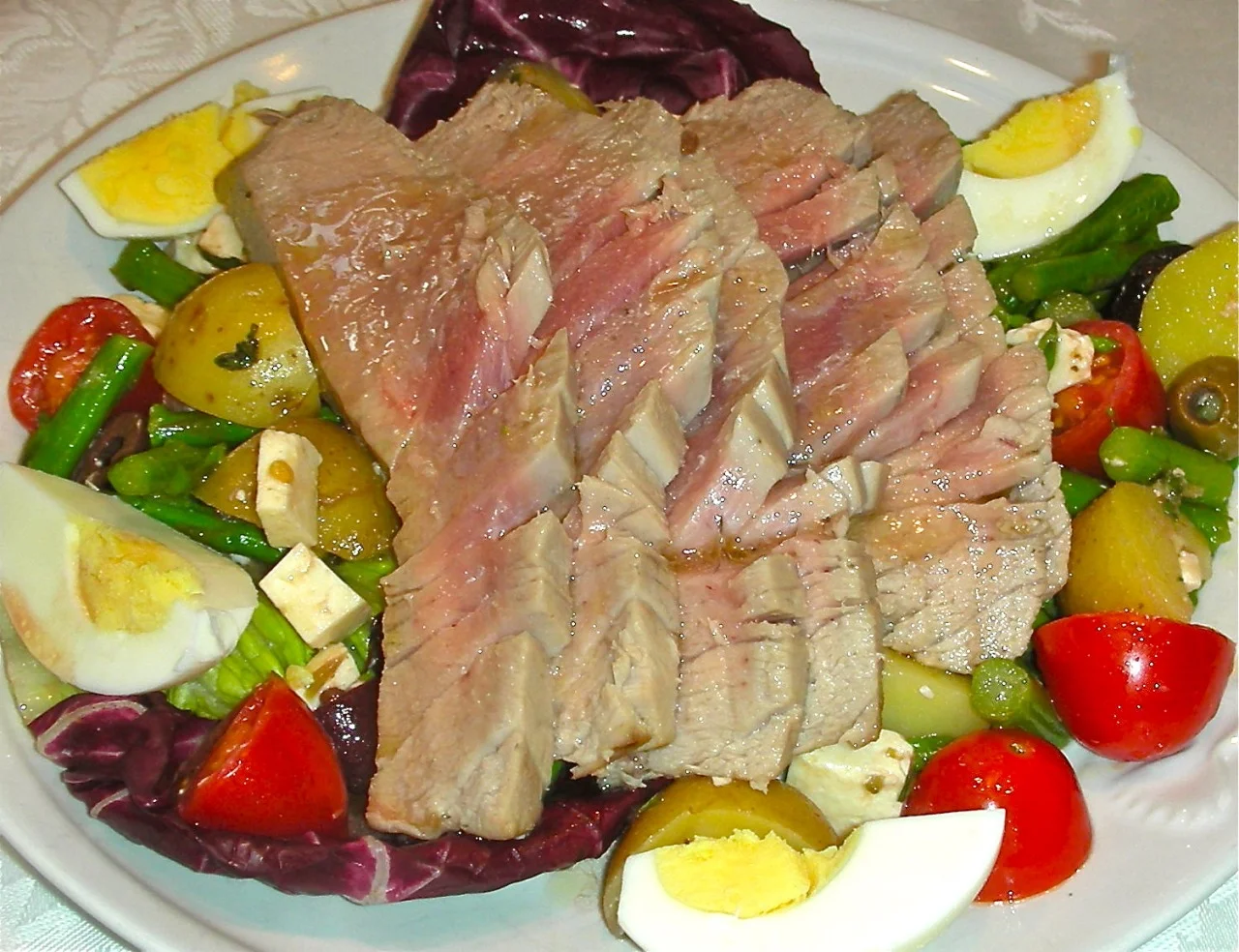
So now I make Tuna Nicoise with fresh, grilled fish. It’s so refreshing, the perfect dish to welcome spring and enjoy throughout the summer. For me it also brings back some wonderful memories of Paris and my Mom.


Fresh Tuna Nicoise Salad with Feta


16-20 ounces fresh tuna, 1-1/4” thick

olive oil

12 small new potatoes

20-24 slim asparagus, cut up (2 cups)

12 grape or cherry tomatoes, cut in half

1/2 cup imported olives, cut in half if large

1 cup crumbled feta cheese

lettuce leaves, rinsed and dried

radicchio leaves, optional, rinsed and dried

6 tablespoons olive oil

3-4 tablespoons red wine vinegar

1 teaspoon Dijon mustard

salt and freshly ground black pepper to taste

1-2 teaspoons chopped fresh oregano, marjoram or thyme

2-4 hard cooked eggs, cut into 4 wedges


Preheat a grill, broiler or grill pan. Brush the tuna with a film of olive oil and grill, broil or pan-broil the fish about 3-4 minutes per side or until cooked but still rare. Remove the fish from to a cutting board and carve into slices. Set aside to cool slightly. Cook the potatoes in simmering water for about 15 minutes or until they are tender. About 2-3 minutes before they are done, add the asparagus. Cook for 2-3 minutes or until tender but still firm. Drain the vegetables under cold water. Cut the potatoes into bite size pieces and Place them in a large bowl. Add the asparagus, tomatoes, olives and feta cheese. Toss gently to distribute the ingredients evenly. Line 4 plates with the lettuce leaves and radicchio, if used. Combine the 6 tablespoons olive oil, wine vinegar, mustard, salt, pepper and oregano and mix well. Pour most of the dressing over the vegetable mixture and toss the ingredients. Spoon equal amounts of the vegetable mixture on the plates. Top with the tuna slices. Surround with the egg quarters. Drizzle the remaining dressing over the tuna and egg. Makes 4 servings


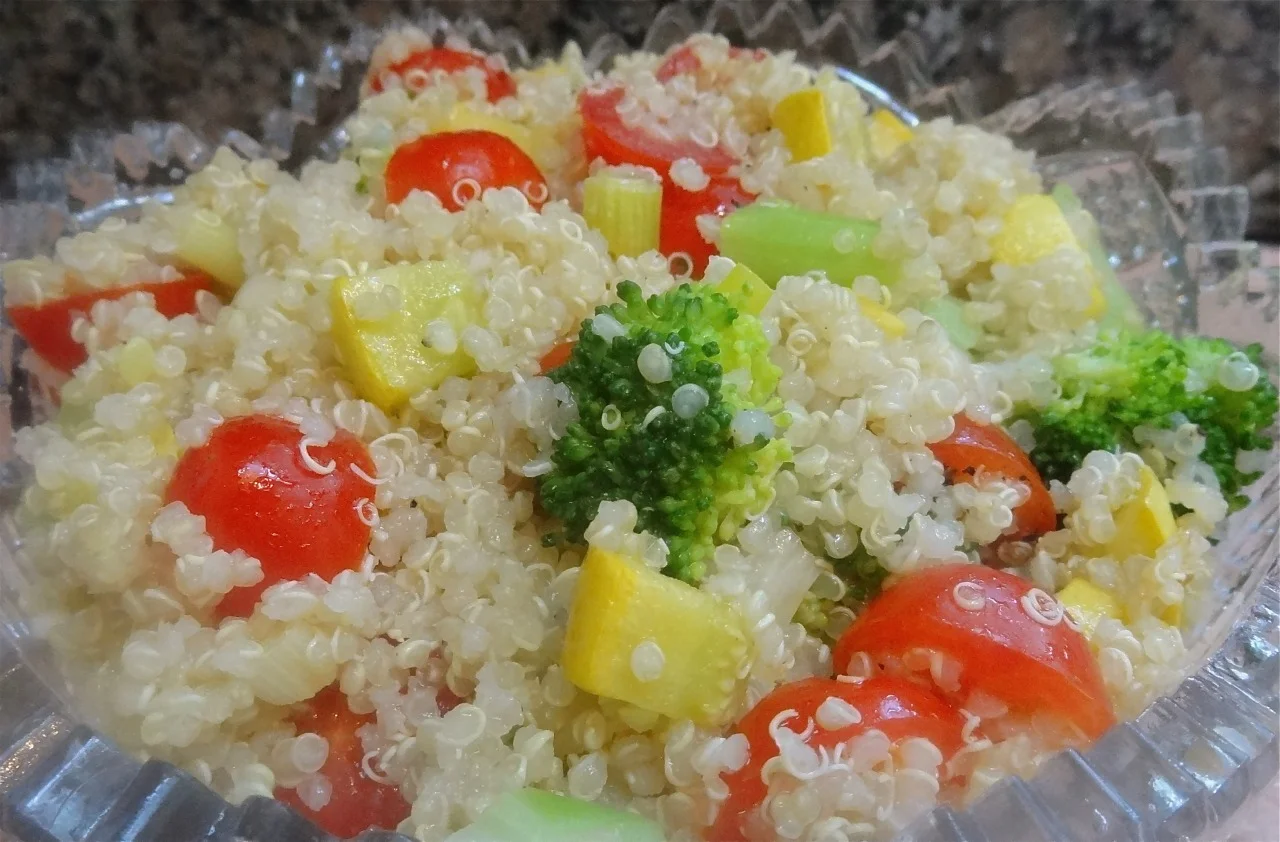
Quinoa Salad with Broccoli, Yellow Squash and Tomatoes

Quinoa Salad with Broccoli, Yellow Squash and TomatoesHealth and nutrition experts try in earnest to get everyone to eat more whole grains. I guess that’s a convincing message for some people, but for those of us who love food, the better reason is …

Quinoa Salad with Broccoli, Yellow Squash and Tomatoes

Health and nutrition experts try in earnest to get everyone to eat more whole grains. I guess that’s a convincing message for some people, but for those of us who love food, the better reason is that ingredients like farro, bulgur wheat, oat groats and so on, are incredibly versatile and we can make them into wonderful things to eat.

I use cooked whole grains a lot because there is so much to do with them that my food is less likely to get boring. So — I put them into soups, side dishes, risottos, pilafs, and on and on — just as, in the old days, I used to use rice.

Now that warmer weather has arrived, there are going to be more salads on my menu. Cooked whole grains with: raw and cooked vegetables and/or fruit, maybe some nuts added. Mix in vinaigrette and it’s done.

So easy.

Quinoa isn’t a whole grain. It isn’t even a grain. It’s a seed.

But it looks and cooks like grain. It’s filling like a grain. And is as versatile.

So quinoa salad will be on my menu more often now too, starting with this one:  


Quinoa Salad with Broccoli, Yellow Squash and Tomatoes

1 cup quinoa

1 stalk broccoli, cut into bite size pieces (about 2 cups)

3-1/2 tablespoons olive oil

1 medium yellow squash, cut into bite size pieces

4 scallions, chopped

1 clove garlic, finely chopped

1 cup cut up grape tomatoes

3 tablespoons lemon juice

salt and freshly ground black pepper to taste


Place the quinoa in a strainer and rinse thoroughly with cold water. Let drain. Bring 1-3/4 cups water to a boil, add the quinoa, stir, lower the heat and simmer, covered, for 10-12 minutes, or until all the liquid has been absorbed. Remove the pan from the heat and spoon the quinoa into a bowl to cool. While the quinoa is cooking, cook the broccoli in simmering water for about 3-4 minutes or until tender. Drain, let cool and add to the quinoa. Heat one tablespoon olive oil in a sauté pan over medium heat. Add the squash and scallions and cook for 2-3 minutes to soften the vegetables slightly. Add the garlic and cook briefly. Spoon the vegetables into the bowl with the quinoa. Add the tomatoes and toss ingredients to distribute them evenly. In a separate bowl, combine the lemon juice, remaining olive oil and salt and pepper to taste; mix well. Pour over the quinoa mixture and toss. Let rest for at least 15 minutes before serving. Makes 4 servings


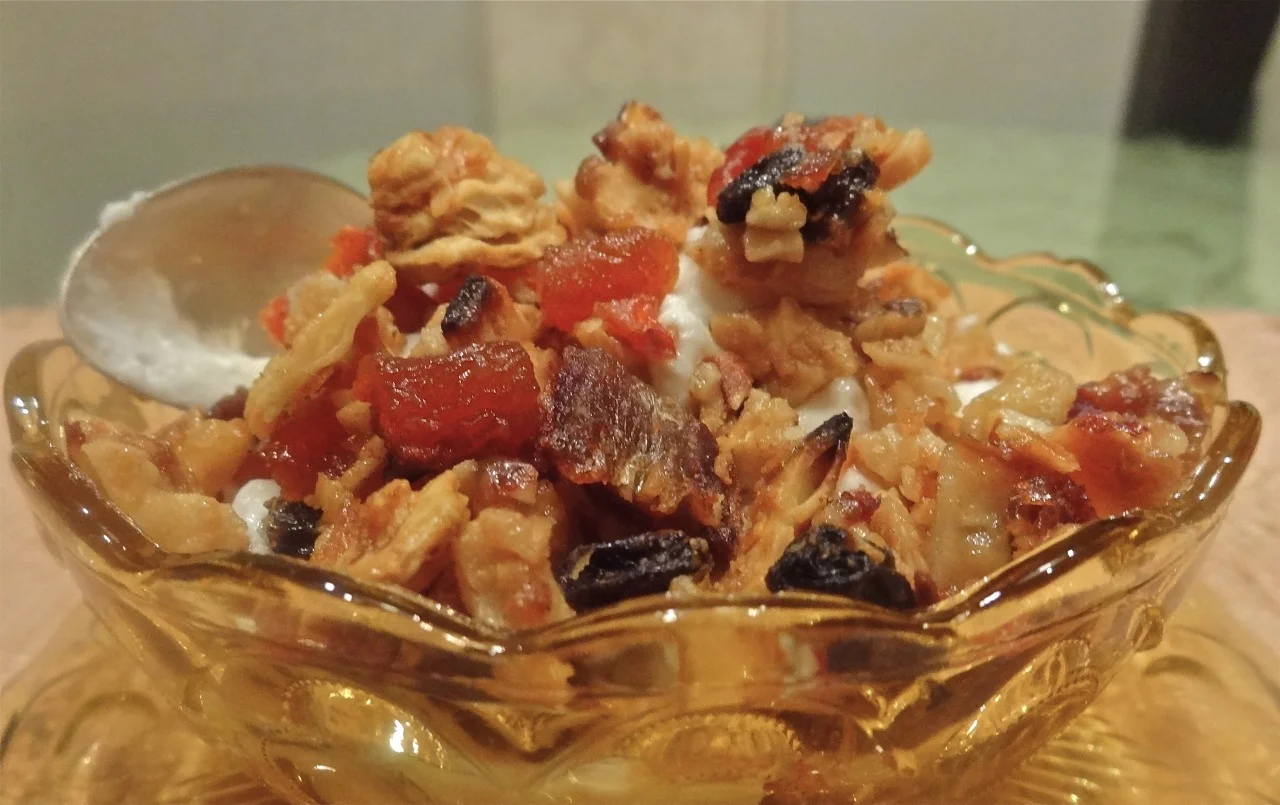
Matzolah Granola

Homemade Matzolah GranolaWhen my kids were little I wanted to give them what I considered to be healthy snacks. Never mind that cheese crackers with peanut butter were fat laden and salty. Or that the sugary granola bars I bought because they were h…

Homemade Matzolah Granola

When my kids were little I wanted to give them what I considered to be healthy snacks. Never mind that cheese crackers with peanut butter were fat laden and salty. Or that the sugary granola bars I bought because they were healthy, weren’t.

My kids laugh about those (and other things like bean burritos) now, although they do acknowledge that at least I was trying and it wasn’t as if I was giving them Snickers Bars in their lunch boxes.

Granola has come a long way since those days. And I am no nutrition expert. But it seems to me that certain parts of granola can be healthy. Like the dried fruit and nuts. And some not as healthy, like the sweetener and fat.

But I also know that it can be absolutely delicious. A grand topper for yogurt or fruit. And if you make it at home you can more or less cut down on the bad things.

Which I’ve done here. Only 1/4 cup honey and 6 tablespoons of butter for what becomes 4 cups of granola.

Only this granola is not made with oats or other whole grains. It begins with Matzolah, which I used (and blogged about) for a scrumptious Pear Crisp.

It’s a matzo based granola-type snack (available at many supermarkets).

So it’s okay for Passover.

But a good thing to eat any time.


Matzolah Granola


2-1/2 cups Matzolah

6 tablespoons melted butter or margarine

1/4 cup honey

1/2 cup chopped dates

1/2 cup chopped dried apricots

1/4 cup dried cranberries

Preheat the oven to 300 degrees. Lightly grease an 8-inch or 9-inch square baking pan and set aside. In a bowl, combine the Matzolah with 3 tablespoons melted butter. Toss to coat the Matzolah. Place the buttered Matzolah on a baking sheet and bake for 5 minutes. Stir the Matzolah and bake for another 5 minutes. Remove from the oven. Raise the oven heat to 350 degrees. Return the baked Matzolah to the bowl. Add the honey, dates, apricots, cranberries and remaining 3 tablespoons melted butter. Toss to mix ingredients. Place the mixture into the prepared pan. Bake for 15 minutes. Stir the ingredients and bake for another 15 minutes or until golden brown. Let cool. Makes about 4 cups.

Sweet and Fruity Matzo Brei

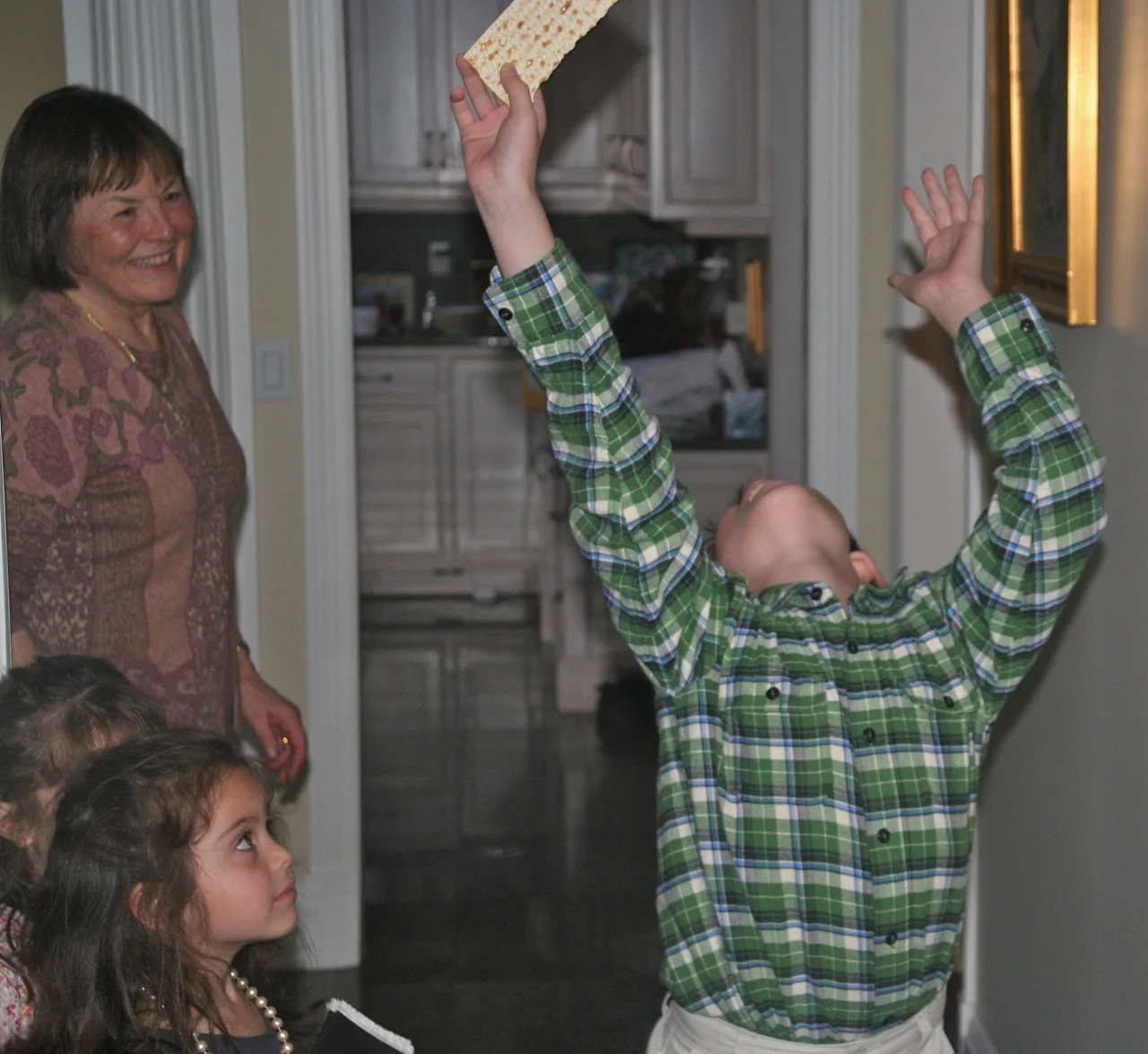
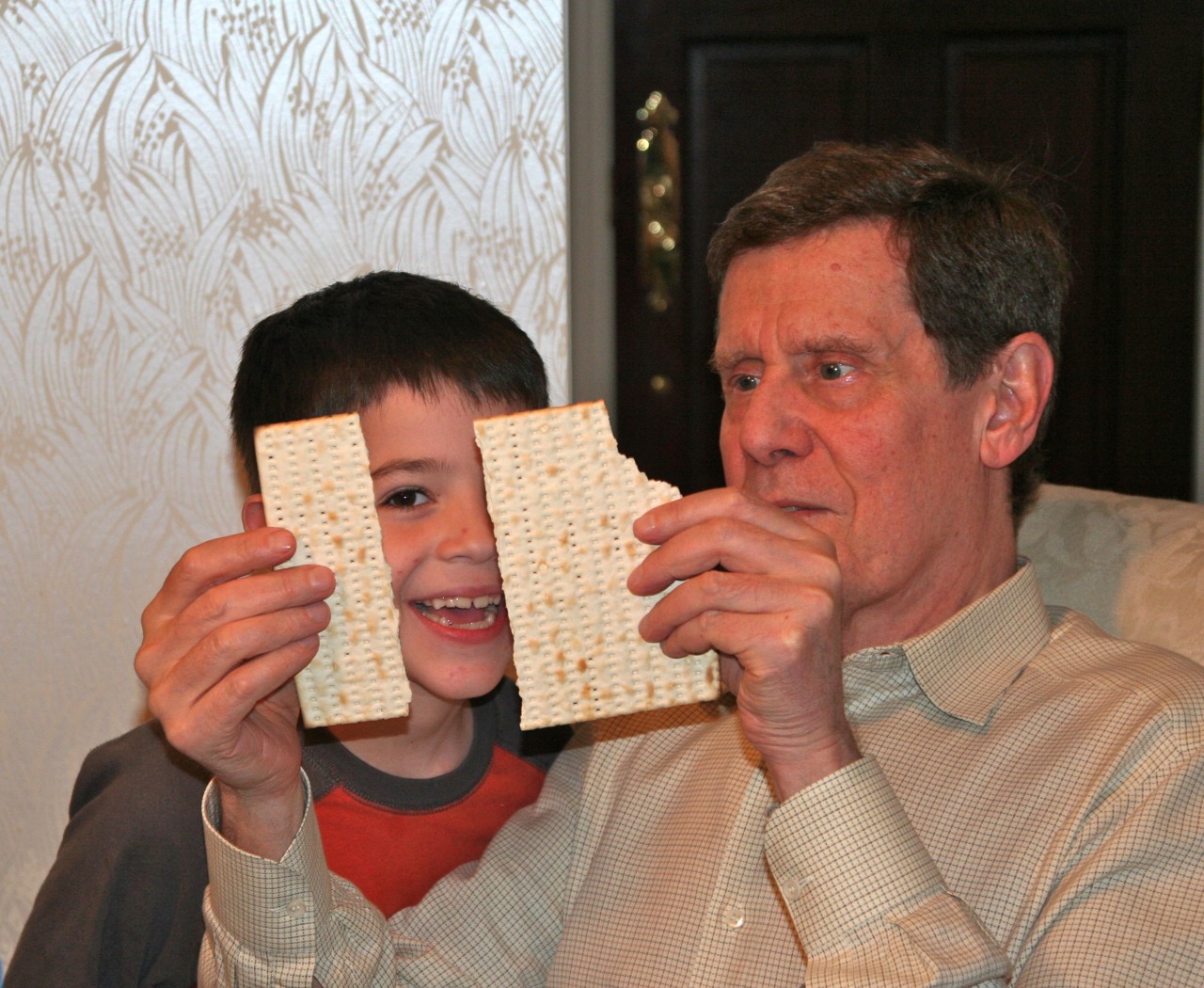
For kids, finding the afikomen is the most thrilling part of the Passover Seder. I can remember running through my grandma’s house searching for that half of a matzo. My cousin Leslie and I would look together. (We did everything together.) And when we found the matzo we screamed with joy and then when my Uncle Irving fit it together with the other half, we shared the prize (which I think was a piece of candy).

I remember my daughters yelling and jumping up and down with delight when it was their turn to find the afikomen.

This is the way it’s supposed to be. When the children find the half that some grownup has hidden they all shriek and shout, as you can see by the expression of utter joy shown by the kid in the first photo.

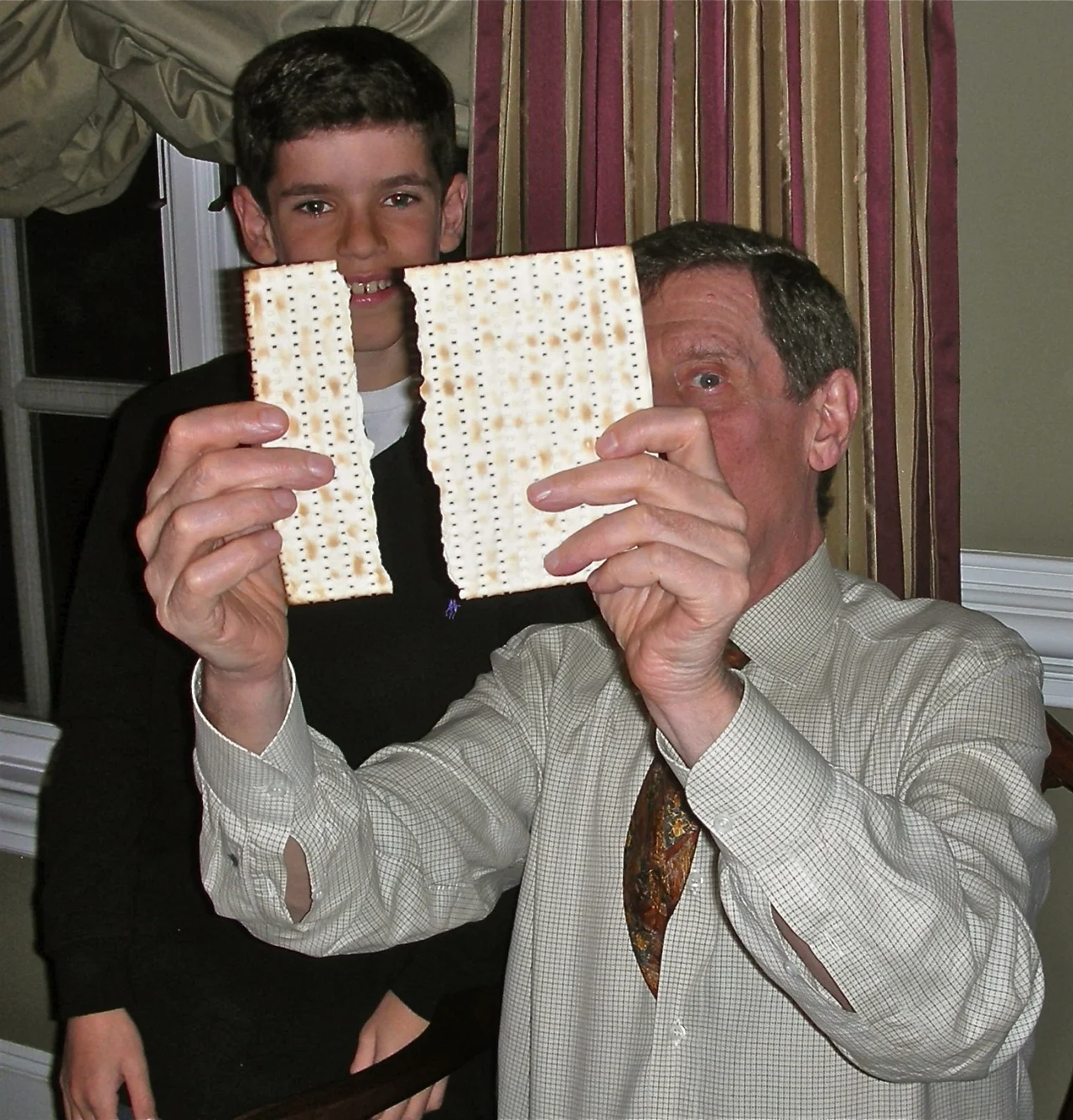
But the two pieces of matzo have to fit together. (It always does! But somehow the kids have that tiniest bit of doubt, which makes it so much fun for the grownups to watch.)

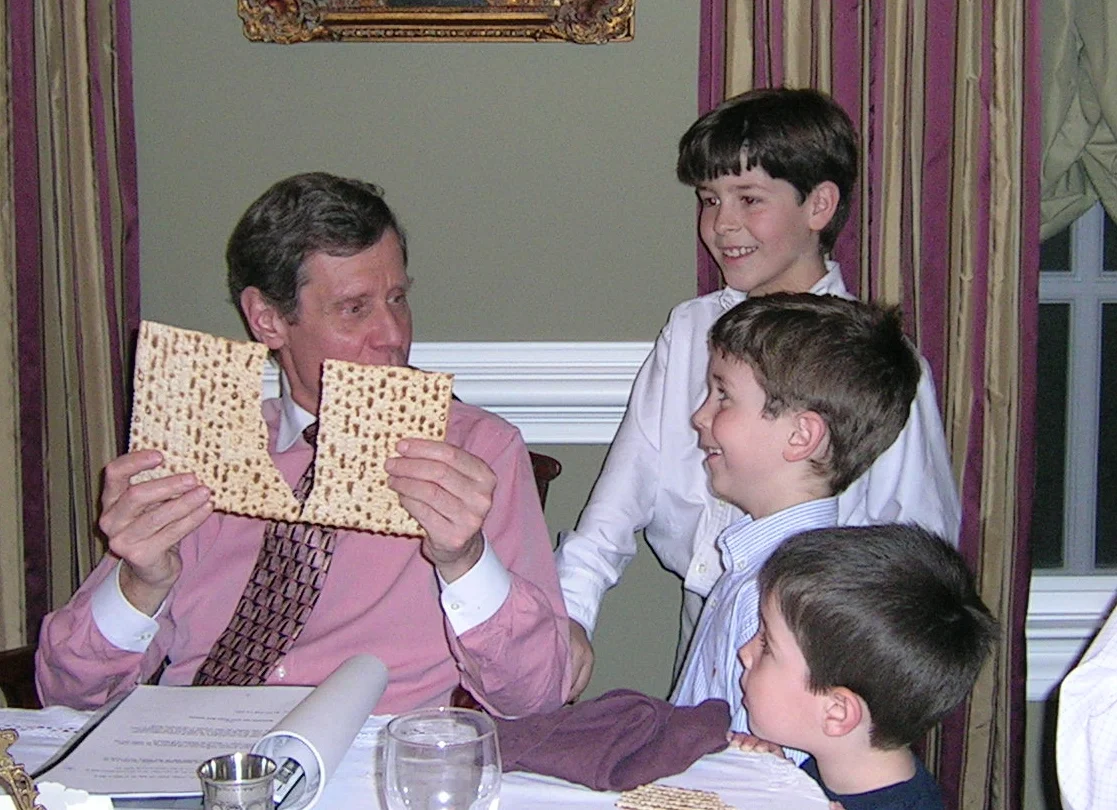
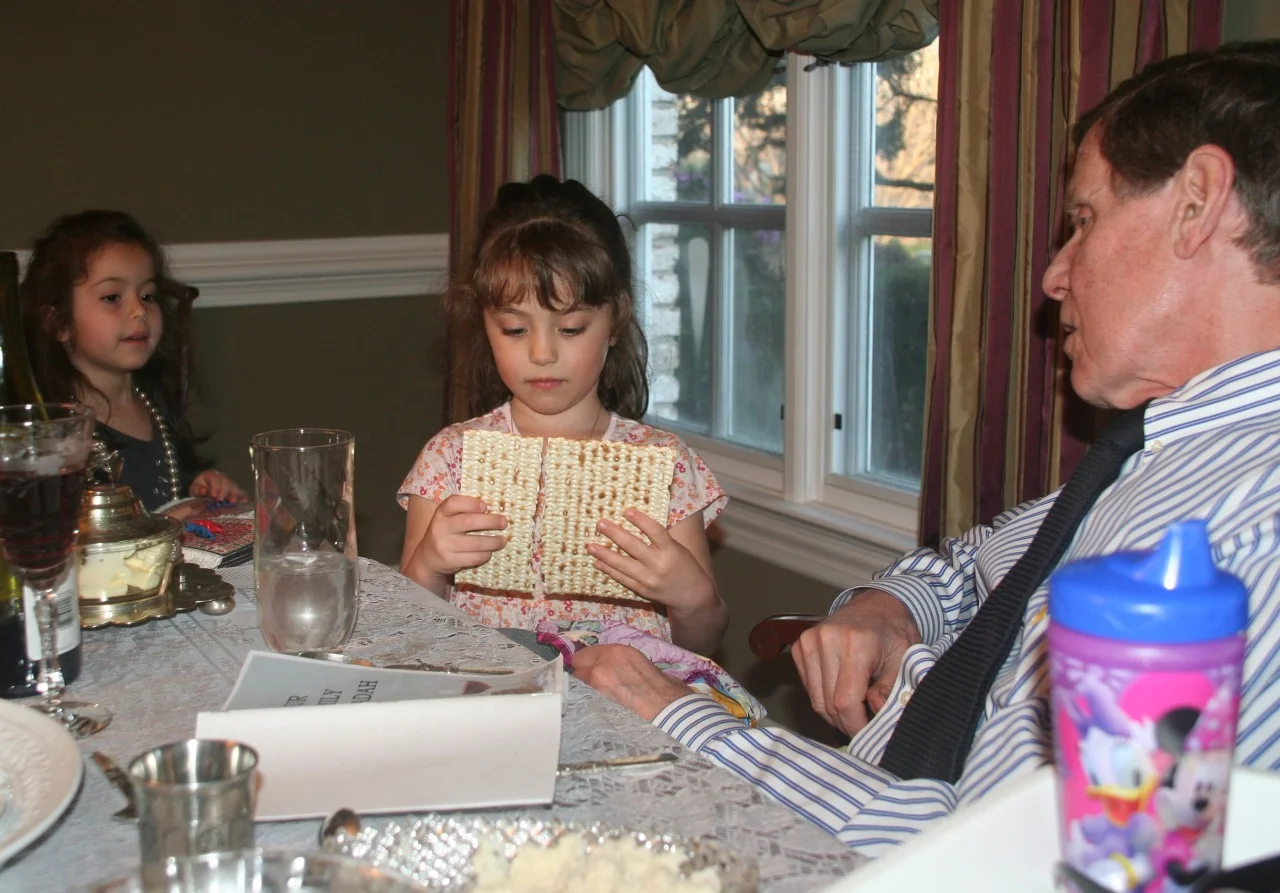
The fitting together part is my husband Ed’s task and you can see (in the other photos) that he’s pretty much thrilled with it and jokes about it with the kids. Sometimes he purposely gets out the wrong half so the afikomen won’t fit. Sometimes he pretends he’s eaten the other half. Or tries to fit it together sideways.

And so on.

Of course Passover, beyond the tradition of finding the afikomen, is all about matzo. Which suits me just fine because I think it is one of life’s most delicious foods. Fresh matzo. Crispy, toasty. Just plain, smeared with butter or cream cheese. Or topped with leftover chicken or chopped liver. Or strawberry jam. 

During Passover I use a matzo to make a crust on top of spinach pie (the same recipe I use year round with a phyllo dough crust). 

I even make toasted cheese sandwiches with matzo (place slices of cheese on top of the matzo and cook in a toaster oven). 

But the family favorite is matzo brei. For breakfast, brunch and an occasional dinner. Is there anyone who doesn’t like matzo brei?

Ed and I still argue over whether matzo brei is better soft (me) or crunchy (him). 

I think this is a common theme among matzo brei enthusiasts.

Although we usually eat plain old matzo brei, I tinker with the recipe. Of course. That’s what I do.

And although we come back to the original time after time, sometimes it’s nice to have a new version. So here is one that we liked. 


Sweet and Fruity Matzo Brei

  • 4 matzos

  • boiling water

  • 4 large eggs, beaten

  • 1/2 teaspoon salt or to taste

  • 1/2 cup chopped apple

  • 3 tablespoons raisins

  • 1 teaspoon vanilla extract

  • 1 teaspoon grated fresh lemon peel

  • 2 tablespoons butter or margarine


Break the matzos into pieces into a bowl. Cover with boiling water for about 5-6 minutes or until soft. Drain and squeeze out as much water as possible. Return the matzos to the bowl. Add the eggs, salt, apple, raisins, vanilla extract and lemon peel and mix thoroughly. Melt the butter in a large saute pan over medium heat. When the butter has melted and looks foamy, pour the batter into the saute pan. Fry for 2-3 minutes or until lightly browned on the bottom. Turn and fry for another 2-3 minutes. NOTE: you can fry smaller portions instead of one large pancake.

Makes 3-4 servings