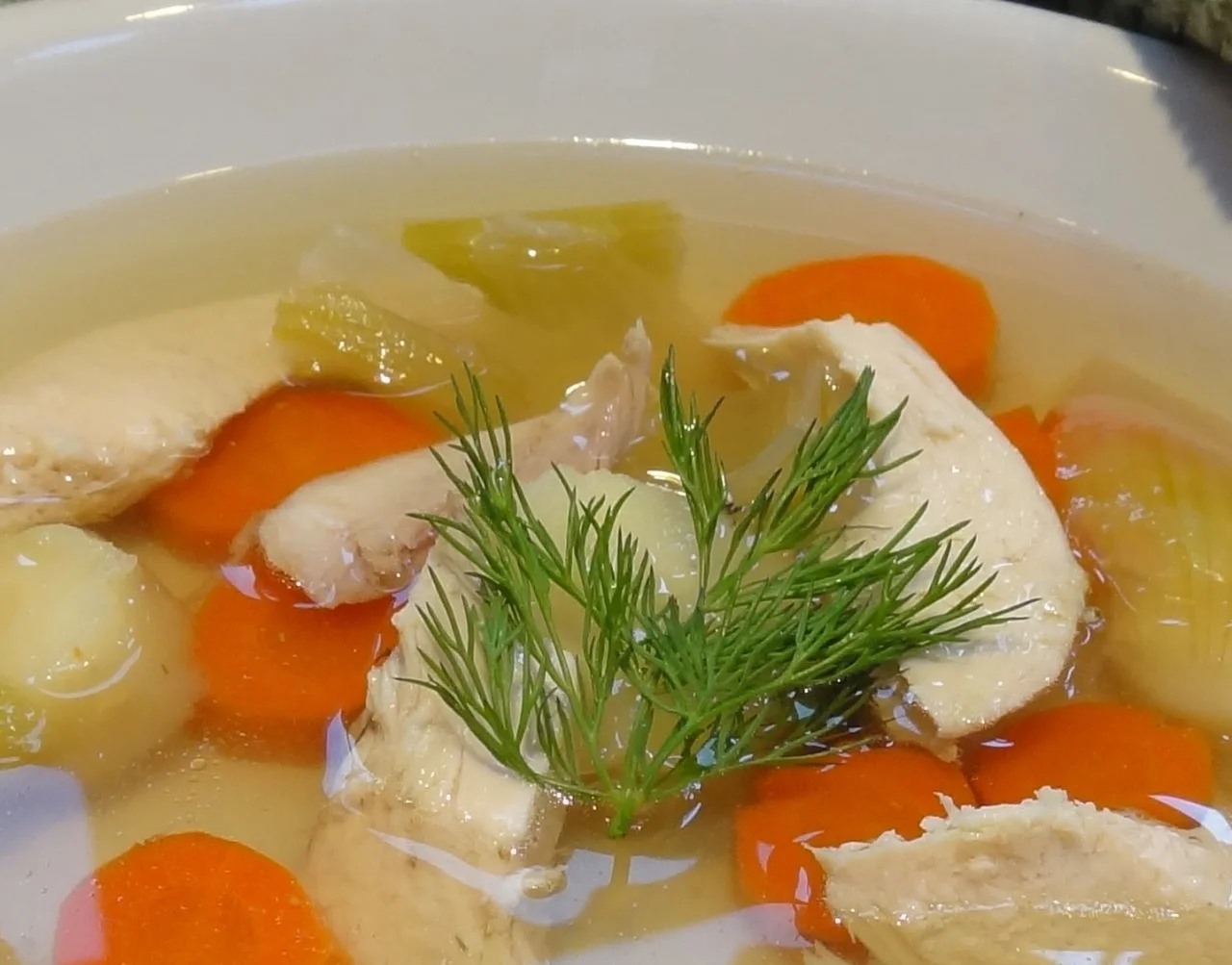
My Mom’s Chicken Soup

Gosh I need my mother and some chicken soup.I have an annoying cold and fever and so, so wish my mother was here to make some chicken soup for me. She made such good chicken soup, always with a large chicken, I think maybe a stewing hen. A kosher on…

Gosh I need my mother and some chicken soup.

I have an annoying cold and fever and so, so wish my mother was here to make some chicken soup for me. She made such good chicken soup, always with a large chicken, I think maybe a stewing hen. A kosher one with soft flesh and the right amount of salt that flavors the soup perfectly.

And always fresh dill. She taught me that it isn’t real chicken soup without fresh dill.

Well, I don’t happen to have a large kosher stewing hen in the house.

But I do have a small roaster! AND I do have fresh dill. AND I do have carrots, parsnips and onions in the bin. I always have carrots, parsnips and onions in the bin.

So, I’ll be the Little Red Hen. I’ll make the soup myself. 

I know this recipe is good because I’ve used it all my life, with whatever size chicken I happen to have in the fridge or freezer.

My Mom’s Chicken Soup

1 large whole chicken

water

4 carrots, peeled

3 stalks celery, peeled

1 medium parsnip, peeled

1 large onion, left whole but peeled

small bunch of fresh dill

1 tablespoon salt, or salt to taste

6-8 whole black peppercorns

Wash the chicken inside and out, remove pinfeathers and hairs and place it in a soup pot. Pour enough water in the pot to cover the chicken by 1-inch. Bring the liquid to a boil, lower the heat and for the next several minutes, remove any scum that rises to the surface. Add the carrots, celery, parsnip, onion, dill, salt and peppercorns. Cover the pan partially and simmer the soup for 2-1/2 to 3 hours or until the chicken meat is very soft when pierced with the tip of a sharp knife. Pour the soup through a strainer or colander into a large bowl or a second pot. Set the chicken and vegetables aside. Remove the fat from the surface of the liquid with a spoon or fat-skimming tool or by patting paper towels on the surface. For best results, refrigerate the strained soup; when it is cold, the fat will rise to the surface and harden and you can scoop it off. (Refrigerate the vegetables and the chicken separately.) Serve the soup plain or with the vegetables (cut them up) and chicken (remove the meat from the bones and cut it up).

Makes 8 servings
Beet, Quinoa and Vegetable Burgers

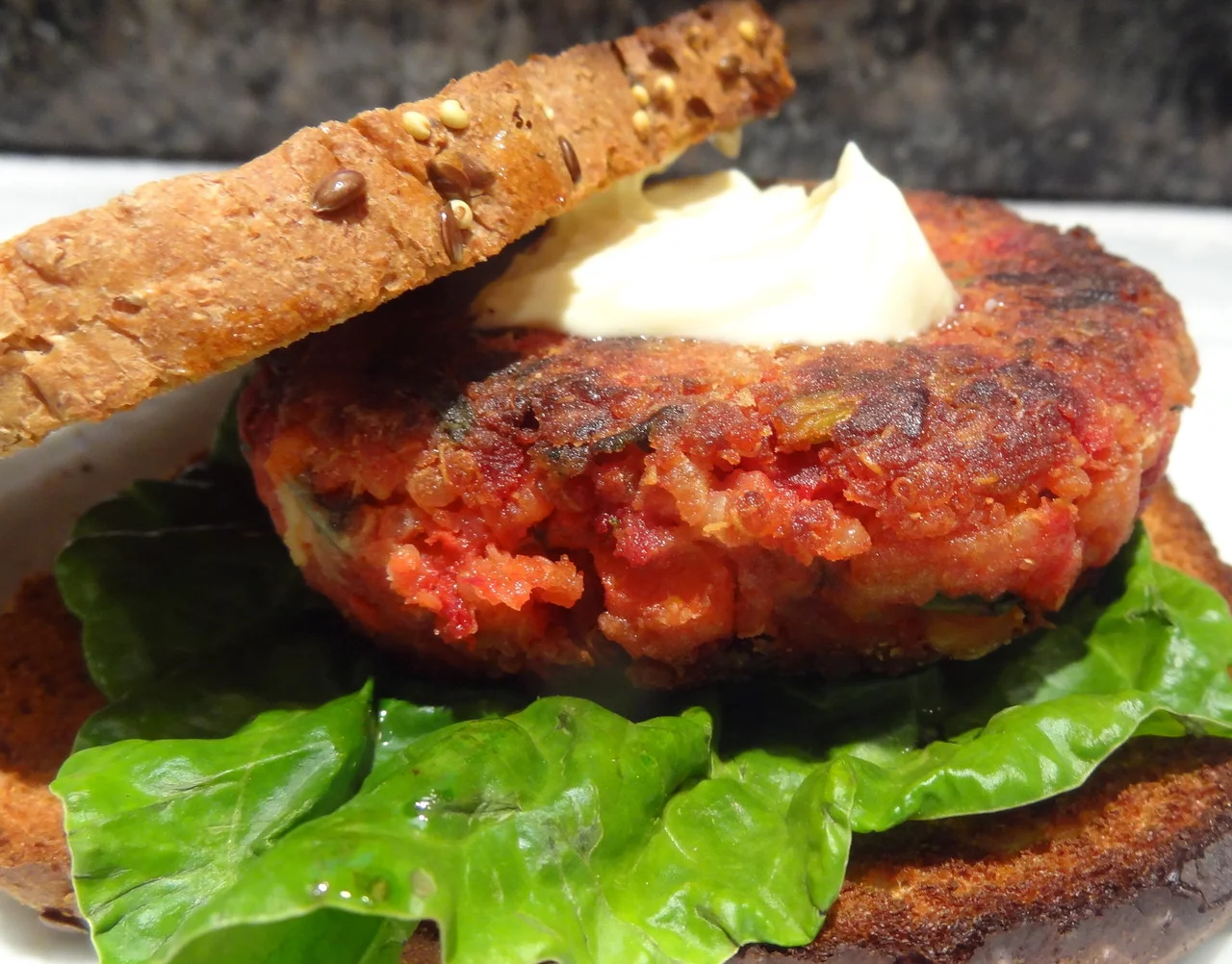
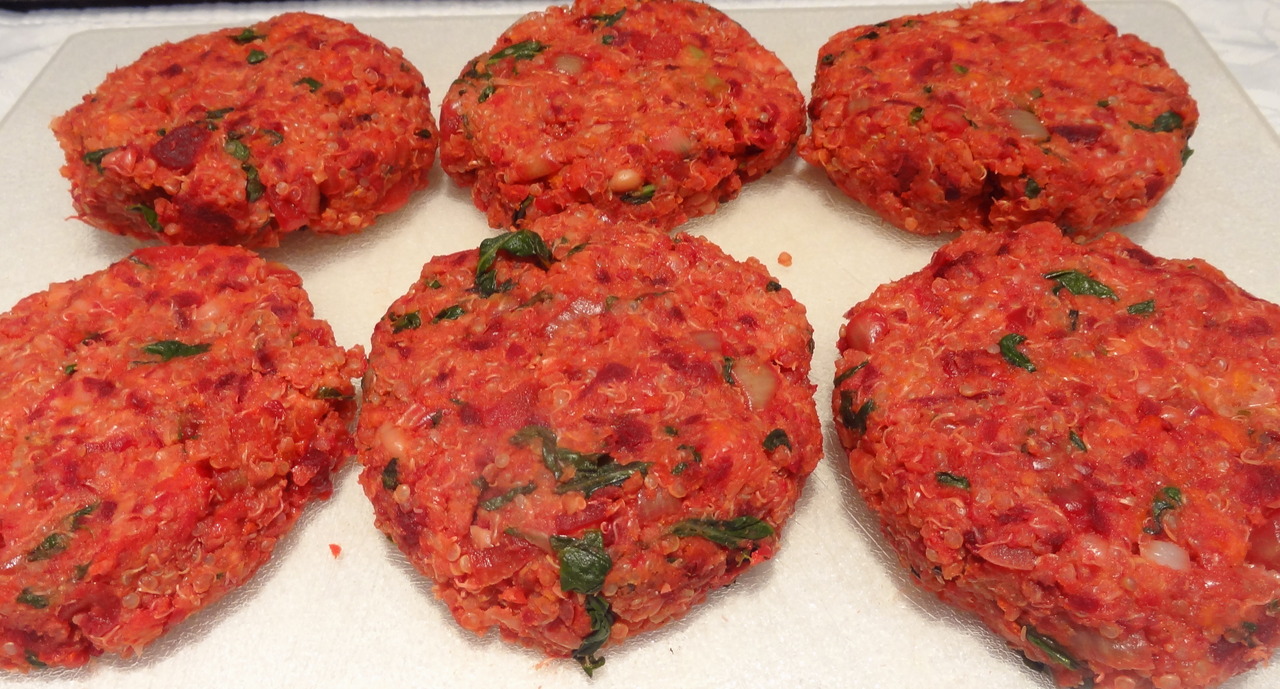
Don’t those patties look like regular, ready-to-cook burgers? The ones in the top photo?

But they’re not. In fact, they are veggie burgers and the vegetable mixture includes chopped beets, which makes them red, like raw beef.

I am a meat eater for sure. So is Ed. But sometimes we want something lighter for dinner. So occasionally we will have a vegetarian meal. Usually it’s eggs or a salad or some kind of pasta dish. But I love root vegetables and thought I would figure out how to make a burger looking dish, like this one.

I also cooked the mixture as meatloaf (glazed the top with a mixture of some Balsamic vinegar and vegetable oil). That was quite tasty too, though I prefer the burgers. We are big sandwich eaters at our house.

Beet, Quinoa and Vegetable Burgers

  • 1 small sweet potato 
  • 1/2 cup raw quinoa
  • 3/4 cup water
  • 1 cup cooked white beans
  • 3 tablespoons vegetable oil
  • 1 large onion, chopped
  • 1 small beet, peeled and finely chopped
  • 2 medium carrots, peeled and finely chopped
  • 1 large clove garlic, finely chopped
  • 1 teaspoon finely chopped fresh ginger
  • 1 packed cup chard leaves, chopped
  • 1/4 cup plain dry bread crumbs
  • 1 large egg
  • salt and freshly ground black pepper to taste
  • all-purpose flour
  • vegetable oil for frying
  • 12-16 slices multigrain bread (or use burger buns)
  • 1/2 cup mayonnaise
  • 2 teaspoons Dijon mustard

Roast the sweet potato until tender (or microwave it). Scoop the flesh into a bowl. While the potato is cooking, place the quinoa and water together in a small saucepan and bring to a boil over high heat. Cover the pan, turn the heat to low and cook for about 12-14 minutes or until all the water has been absorbed. Add the quinoa to the bowl with the sweet potato. Mash the beans and add to the bowl. Heat the 3 tablespoons vegetable oil in a large saute pan over medium heat. Add the onion, beet, carrots, garlic and ginger and cook, stirring often, for 3-4 minutes or until softened. Add the chard and mix it in. Remove the pan from the heat, let cool slightly and add to the bowl. Toss ingredients to distribute them evenly. Add the bread crumbs, egg and salt and pepper to taste. Shape the mixture into 6 or 8 patties. Coat the patties with some flour. Heat about 1/8-inch vegetable oil in a saute pan over medium heat. Fry the burgers for 2-3 minutes per side or until hot and crispy. Toast the bread if desired. Mix the mayonnaise and mustard. Spread equal amounts of the mustard-mayo on half the bread slices. Top with a burger, then the remaining bread.

Makes 6-8 servings

Potato Latkes

What do you do when you have finished preparing potato latkes for a Hanukkah party and you’re sitting in your family room watching TV and your husband comes in with a handful of the latkes you just made and says “I’m taking a down payment on our Hanukkah party on Saturday night.”

And you’ve cleaned up the kitchen and everything and you thought you were done with latkes and the entire house smells from fried so you had to make a kitchen bouquet (1/4 cloves, 3 broken cinnamon sticks, tablespoon or so cardamom pods, orange peel, water) so that anyone who comes to the house even the next day (like the UPS delivery man or the guy who is coming to repair the oven) isn’t blasted with stale fried smell?

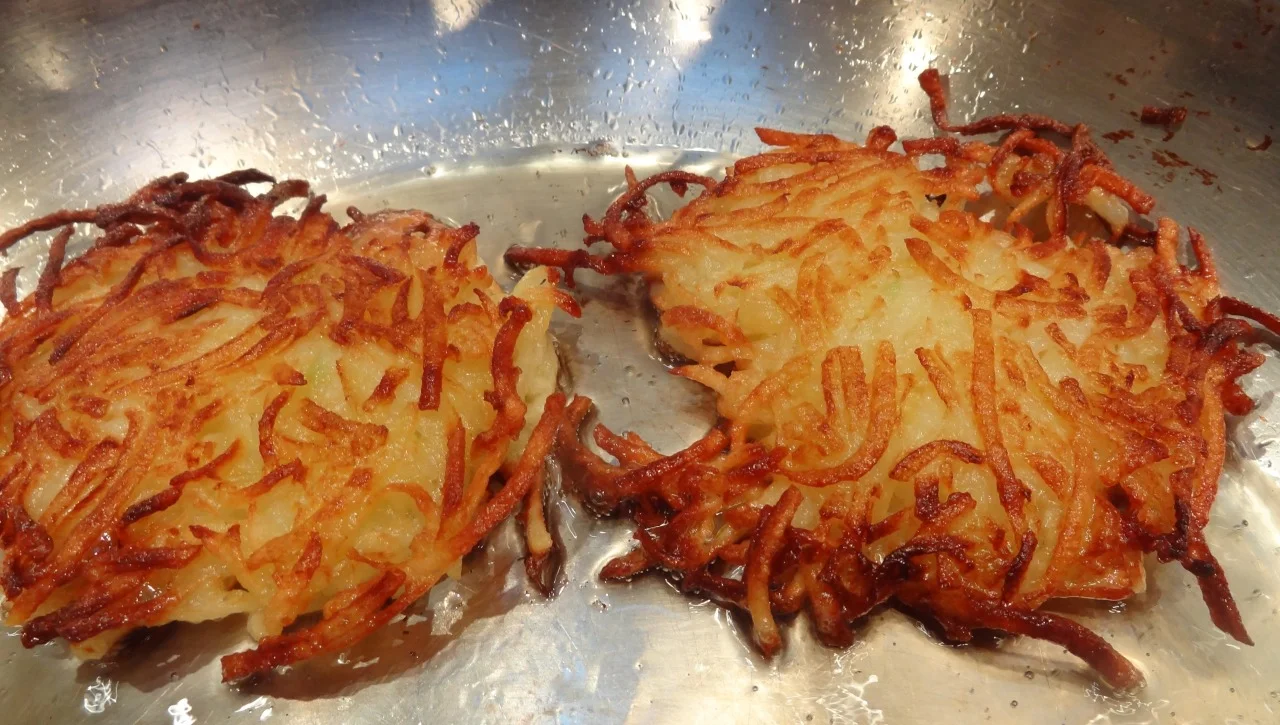
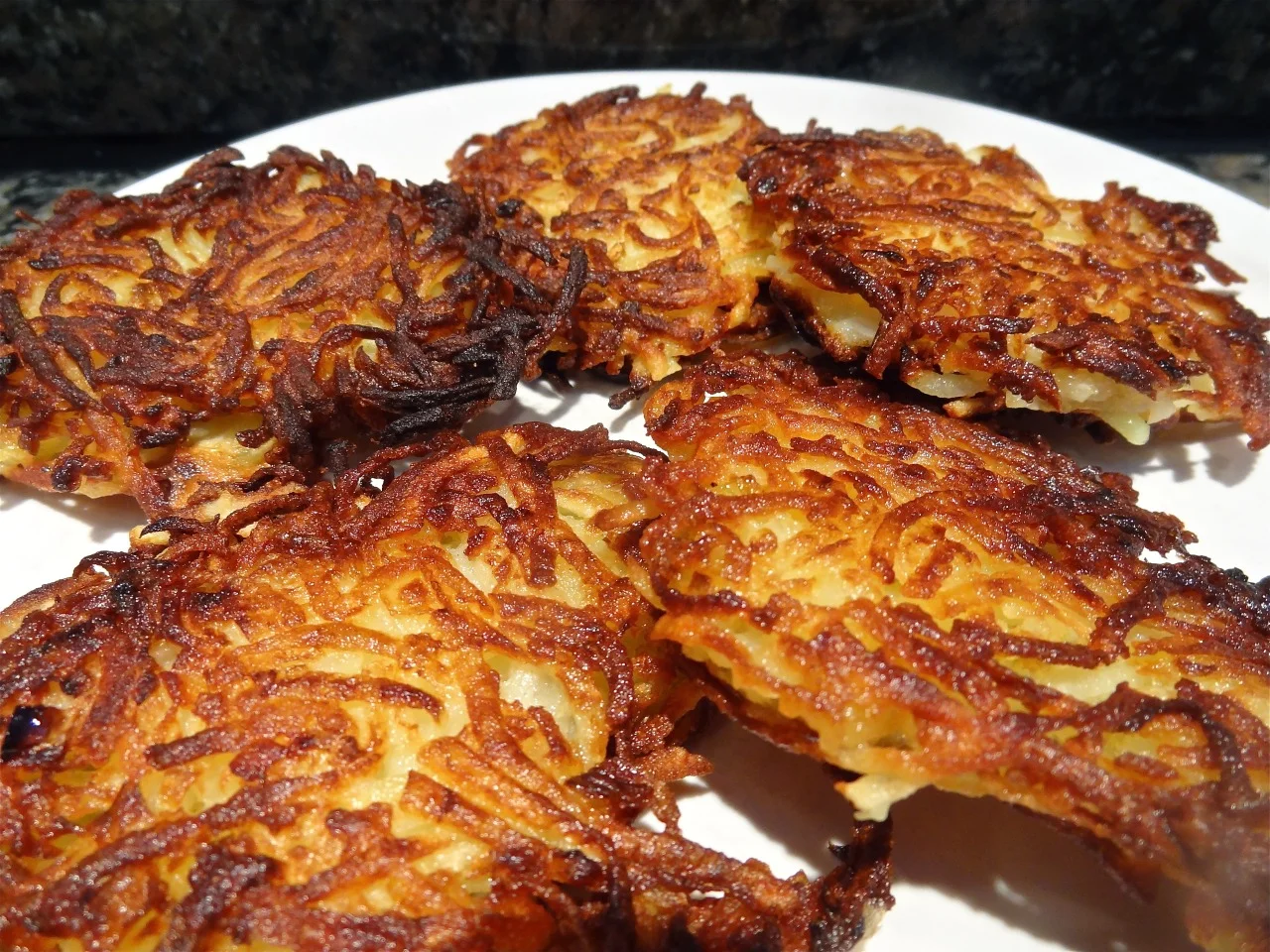
Why, you get up the next day and make more latkes. Otherwise there won’t be enough. Because I know what happens when people see potato latkes. You can’t eat just one.

And so I did.

These:

Potato Latkes

  • 4 large peeled baking potatoes

  • 1 large onion

  • 2 large eggs

  • 3 tablespoons potato starch

  • 1 teaspoon salt or to taste

  • freshly ground black pepper to taste

  • 1/2 teaspoon baking powder

  • vegetable oil for frying


Shred the potatoes and onion in a food processor. Squeeze out as much of the liquid as possible (I put portions of the shreds in a kitchen towel and squeeze until they are practically dry). Place the shreds in a bowl. Immediately mix the eggs in (this helps keep the potatoes from browning). Add the potato starch, salt, pepper and baking powder. Heat about 1/4” vegetable oil in a heavy pan over medium-high heat. Shape latkes by hand, squeezing liquid out if there is any, and place them in the hot oil, leaving space between each one so that they brown well and become crispy (if they are too close they will “steam” and become soggy). Press down on the latkes to keep them evenly shaped. Fry for 2-3 minutes per side or until the pancakes are golden brown and crispy. Drain on paper towels. Makes 12-15


Jenny Rosenstrach's Salmon Salad

My daughters used to complain about having to eat dinner together as a family. They would say things like “Nobody else’s parents make them do it!” 
But I was adamant, even when they rolled their eyes at anything I said or wouldn&#8…

My daughters used to complain about having to eat dinner together as a family. They would say things like “Nobody else’s parents make them do it!” 

But I was adamant, even when they rolled their eyes at anything I said or wouldn’t talk or said stuff like “oh there’s Mom again trying to make conversation.”

It all went away eventually and, well at least my daughters have both told me how much they appreciated eating dinner as a family, and that their friends who never “had to” (as if it were some form of punishment) were the unlucky ones.

They are both married, with children of their own and they have family dinner.

 I say, good for them! And especially their kids.

All of this to say I found it fascinating that a cousin of mine (second cousin once removed actually), Jenny Rosenstrach, a cookbook author, has a blog entirely devoted to: Family Dinner! It’s called, appropriately enough, Dinner: A Love Story. Check it out for some warm, humorous, engaging stories about eating dinner with your children (and all sorts of other family oriented notes).

I didn’t grow up knowing Jenny. Life took some unusual turns and we met as adults, married, with children, except I am more like in her mother’s generation. But her family and mine apparently had more in common than some genes.

Like eating family dinner.

Which is the subject of her new book: Dinner: A Love Story. It has lots of recipes, but it’s much more than that. It describes the value of family dinner, and even more than that, lots of tips on how to get it done at various stages of your life and your children’s lives and despite schedules. 

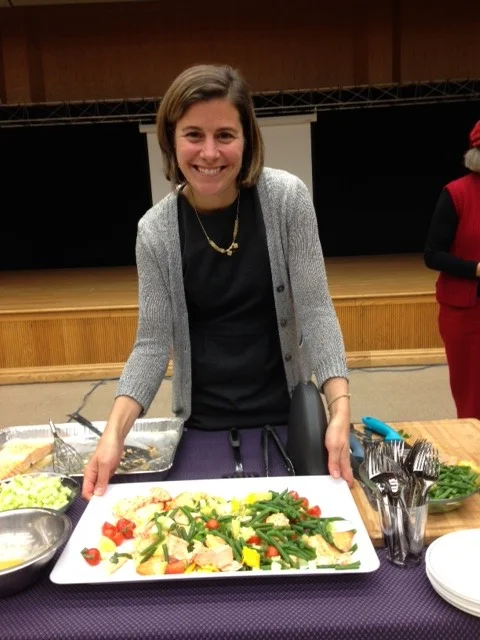
I caught up with Jenny the other night when she gave a talk and food demo at the Stamford JCC, near where I live. Of course I wanted to be there.

The “tip” she demonstrated that night was “deconstructing dinner.” That is, serve dinner as separated ingredients so your children can pick and choose the ones they like, but they also get used to seeing other new ingredients that they might try, or recognize it the next time they see it at the table and maybe try it then. And so on. There’s a whole chapter on that in the book.

She demonstrated with this recipe:

Salmon Salad

For the Vinaigrette:

1/4 cup red wine vinegar

2 teaspoons mustard

1 teaspoon sugar

squeeze of fresh lemon or lime

1/2 cup olive oil


For the Salmon:

1 salmon fillet (about one pound)

salt and pepper

4 potatoes (Yukon Gold, red or blue if you can find them) peeled and quartered

2 ears of corn

Hanfdul of thin green beans, trimmed and chopped into 1-inch pieces

1 cup cherry or grape tomatoes, halved

1 cucumber, peeled, seeded and chopped

5-6 scallions (white and green parts) chopped

2 tablespoons chopped fresh cilantro

Preheat the oven to 400 degrees.

To make the vinaigrette: in a small bowl, whisk together the vinegar, mustard, sugar, lemon juice and oil and set aside.

Make the salmon: Sprinkle the salmon with sat and pepper. Roast in a foil-lined baking dish for 15 minutes. (if you prefer to grill the fish, brush with a mixture of olive oil, salt, pepper and a dash of honey and cook over medium coals 4-5 minutes on each side).

Meanwhile, bring a medium pot of water to a boil. Add the potatoes and cook until a knife slices through them with no resistance, about 12 minutes. Using a slotted spoon remove the potatoes to a large serving bowl. Add the corn to the same pot of water. Boil for 4 minutes. Remove to a cutting board, allow to cool, slice off the kernels and add to the serving bowl. Add beans to the same pot of water and cook for 3 minutes. Remove with a slotted spoon and add to the serving bowl. Add the tomatoes, cucumbers, scallions and cilantro to the bowl. Cut the salmon into chunks and add to the bowl. Toss with the vinaigrette and serve. OR, serve it in its individual components “so the kids can pick what they like before any green specks or offensive sauces get mixed in.” Makes 4 servings

Almond Crusted Winter Squash and Noodle Kugel

One of the tumblr blogs I follow asked readers what their favorite comfort food was.I thought about it for awhile because there are so many, I couldn’t make up my mind. Like challah and butter; baked, crispy-skinned Russet potato; app…

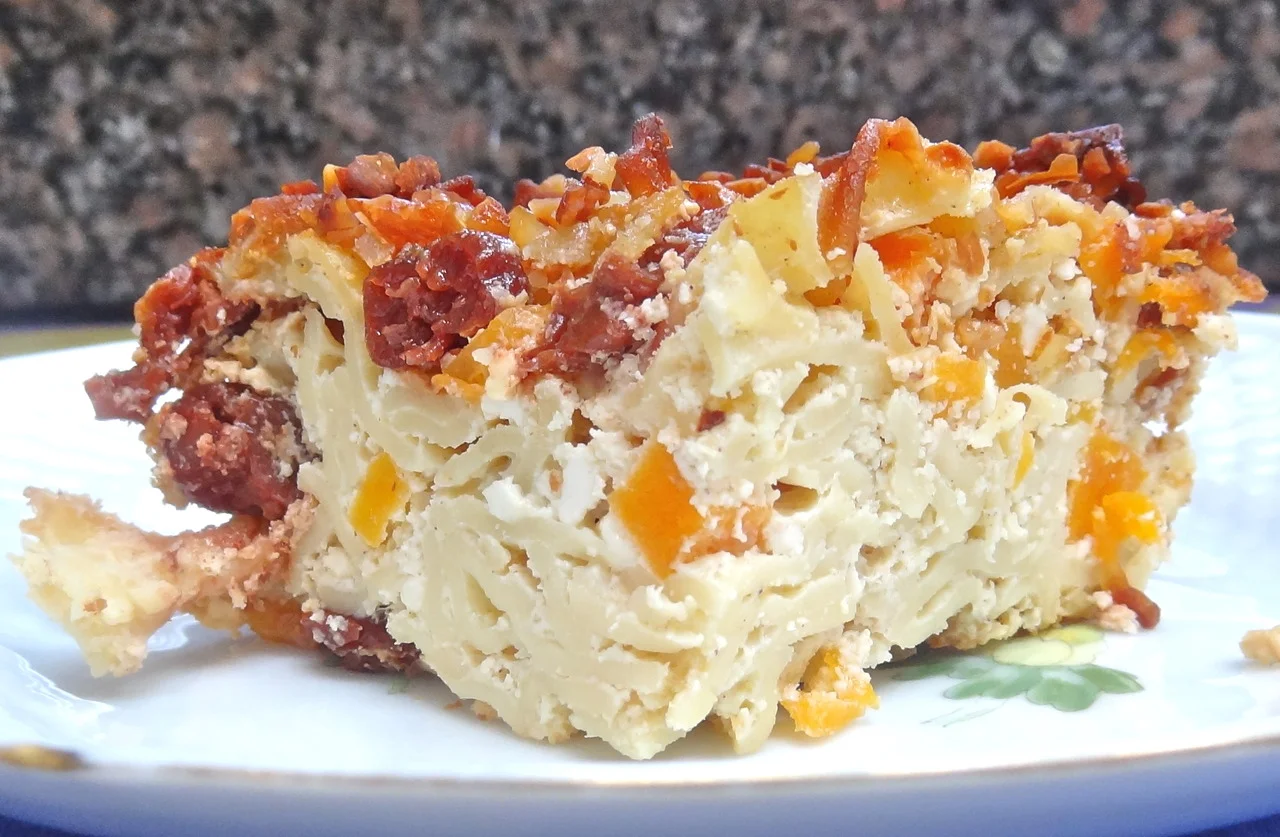
Almond Crusted Winter Squash and Noodle Kugel

One of the tumblr blogs I follow asked readers what their favorite comfort food was.

I thought about it for awhile because there are so many, I couldn’t make up my mind. Like challah and butter; baked, crispy-skinned Russet potato; apple piefried chicken wings. Snacks like potato chips and popcorn.

You’ll notice most of these are starch. Even the chicken dish I chose is wings and therefore mostly crunchy, flour-crusted skin.

And of course, there’s kugel: egg noodles, boiled until they’re tender, then crisped in the oven, either plain or with all sorts of stuff inside. Like this recipe for Almond Crusted Winter Squash and Noodle Kugel. 

What makes this kugel such a comfort?

Not just the soft noodles, but the sweet crunchy crust. You get to feel them both in your mouth at the same time, with one bite.

And there’s color too, because I’ve included white cottage cheese, dark red cranberries and orange winter squash, so when you cut a piece it looks pretty on a plate.

Notice please, that you can sort of cut down on some of the less healthy aspects by using Greek style, plain (non-fat) yogurt instead of dairy sour cream and non-fat cottage cheese instead of the full-fat kind.

Kugel is a year ‘round treat. But it’s usually a must for Hanukkah. Sure is for us.


Almond Crusted Winter Squash and Noodle Kugel

  • 5 tablespoons butter, melted

  • one pound medium egg noodles

  • 3 cups diced winter squash (such as butternut or acorn)

  • 1 cup dried cranberries

  • 2 cups cottage cheese (nonfat is fine)

  • 1-1/2 cups nonfat Greek style plain yogurt (or use dairy sour cream)

  • 6 large eggs, beaten

  • 1/3 cup sugar

  • 3/4 teaspoon cinnamon

  • 1/4 teaspoon salt

  • 1/2 cup chopped almonds

  • 2 tablespoons brown sugar

Preheat the oven to 375 degrees. Lightly grease a 9”x13” baking dish using some of the melted butter. Cook the noodles according to package directions, drain and place in a large bowl. Add the squash, cranberries, cottage cheese, yogurt and remaining melted butter and toss the ingredients to distribute them evenly. Beat the eggs, sugar and cinnamon together with a hand mixer at medium speed for about 3 minutes or until thickened. Fold into the noodle mixture. Place in the prepared baking dish. In a small bowl, mix the almonds and brown sugar. Sprinkle on top of the kugel. Bake for 35-40 minutes or until the top is crispy and brown. Makes 8-10 servings

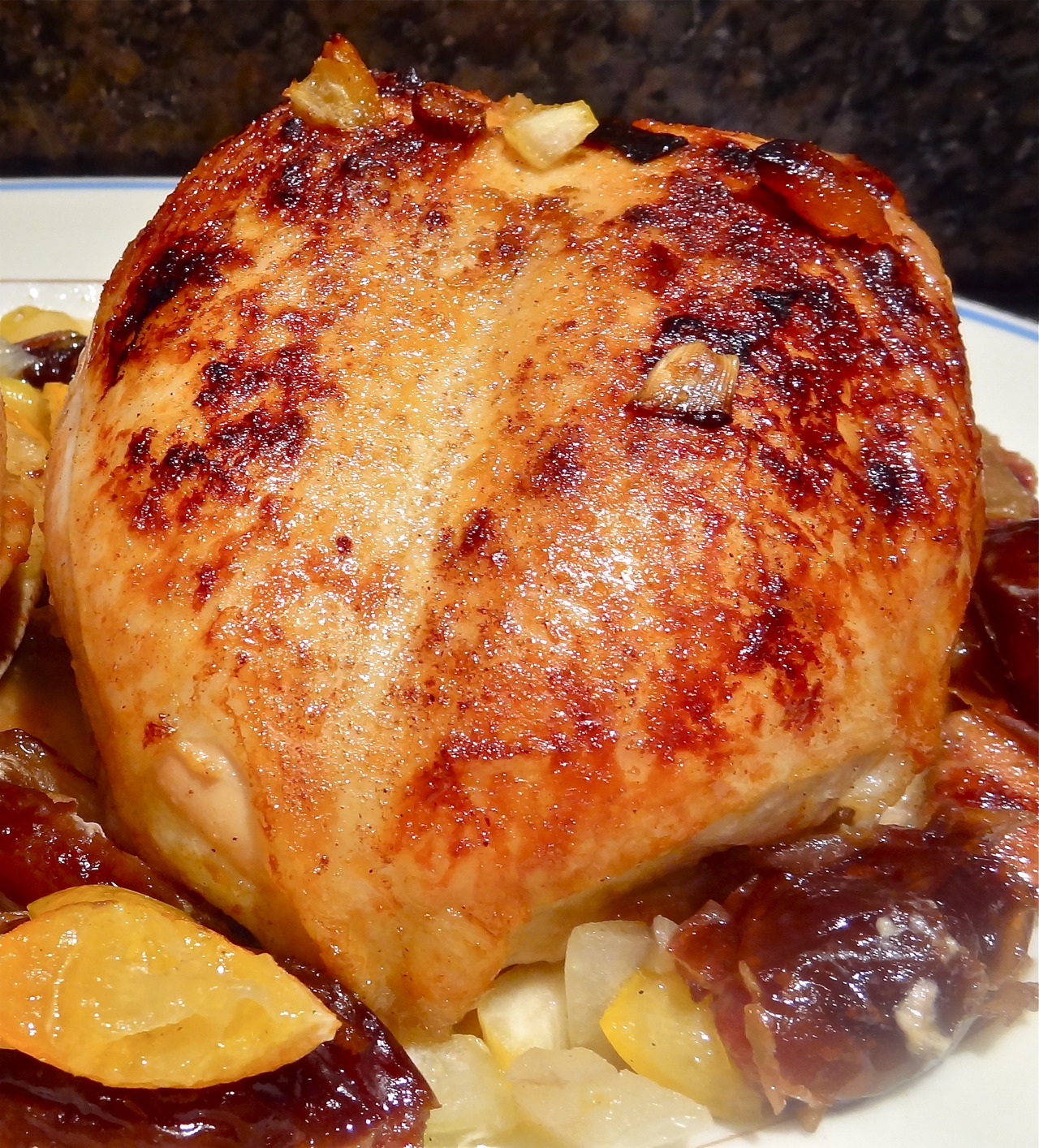
Roasted Chicken Breast with Buddha’s Hand Citron, Kumquats and Dates

Some people can’t resist a gorgeous handbag or a swell looking tie. But for me, it’s about food. So, when I saw this strange looking fruit that’s in the top photo yesterday there was no question about it, I had to buy it.

It’s called Buddha’s Finger Citron. A citrus member of course, with skin like lemon, and with a bitter taste. It’s not the kind of fruit you eat out of hand like an orange or pear. In fact, it’s mostly used as a table decoration or cooked as candy (with lots of sugar) or marmalade (with lots of sugar).

I’d used citron before, but only the candied kind (for fruitcake and such). I wasn’t sure what to do with this thing.

Thanks thanks for the internet.

After doing a little research and then getting into experimental mode, I decided to pair it with kumquats, which are also bitter, but also dates, which are devastatingly sweet, so there would be some ying-yang of flavor to the chicken breast I was going to roast for dinner.

The results were delicious. 

The Buddha’s Finger Citron gave a haunting, deep lemony taste to the pan juices. The citron remained bitter, the kind of taste you either love or hate, appealing to those who like candied fruit-studded fruitcake/Panettone/Panforte and so on, or, on the other hand, distressing to those who purposely pick the chopped up candied fruit out of those desserts.

Fortunately (or not) you can make the recipe without the citron — add a strip or two of lemon peel and remove it before serving. 

If you bought one of these too, you can make candy or marmalade. Or use the skin as you would lemon peel (for vinaigrette, marinades, scattered on top of fish, etc.) Or to flavor vodka or a cocktail or holiday punch. 

Roasted Chicken Breast with Buddha’s Hand Citron, Kumquats and Dates

  • 1/4 cup diced Buddha’s hand citron
  • 8-10 kumquats, cut up and seeded
  • 8-12 large Medjool dates, pits removed
  • 1 onion, chopped
  • 2 chicken breasts
  • 1 tablespoon olive oil
  • salt and freshly ground black pepper to taste
  • 1/4 teaspoon powdered ginger
  • 1/4 teaspoon ground cinnamon
  • 1/4 teaspoon ground cumin
  • 1 cup orange juice
  • 2 tablespoons honey


Preheat the oven to 500 degrees. Place the citron, kumquats, dates and onion in a roasting pan. Place the chicken breasts on top. Rub the surface of the chicken with olive oil. Sprinkle the chicken with salt, pepper, ginger, cinnamon and cumin. Roast for 5 minutes. Turn the heat to 350 degrees. Roast for another 15 minutes. Mix the orange juice and honey and pour over the chicken. Continue to roast, basting occasionally, for another 30 minutes or until the skin is golden brown and the chicken is cooked through (160 degrees on a meat thermometer).

Makes 6 servings

Roasted Salmon with Lemon, Rosemary and Coriande

Putting on the pounds is easy, isn’t it, especially during the holiday season with all its latkes and cookies, eggnog and hot chocolate. It’s an indulgent time in many ways.Every year I become one among the many people who gain weight between Thanks…

Putting on the pounds is easy, isn’t it, especially during the holiday season with all its latkes and cookies, eggnog and hot chocolate. It’s an indulgent time in many ways.

Every year I become one among the many people who gain weight between Thanksgiving and January 2nd. And every year I try to figure out ways to avoid gaining even more weight than the year before (it takes months to take it off).

I wrote about this a few days ago and decided that this year my strategy is to eat sensibly in between celebrations. No stuffing myself allowed, no extra treats just because well, I’m gonna gain the weight anyway so I might as well put on a few more and have myself a few bags of potato chips.

Nope.

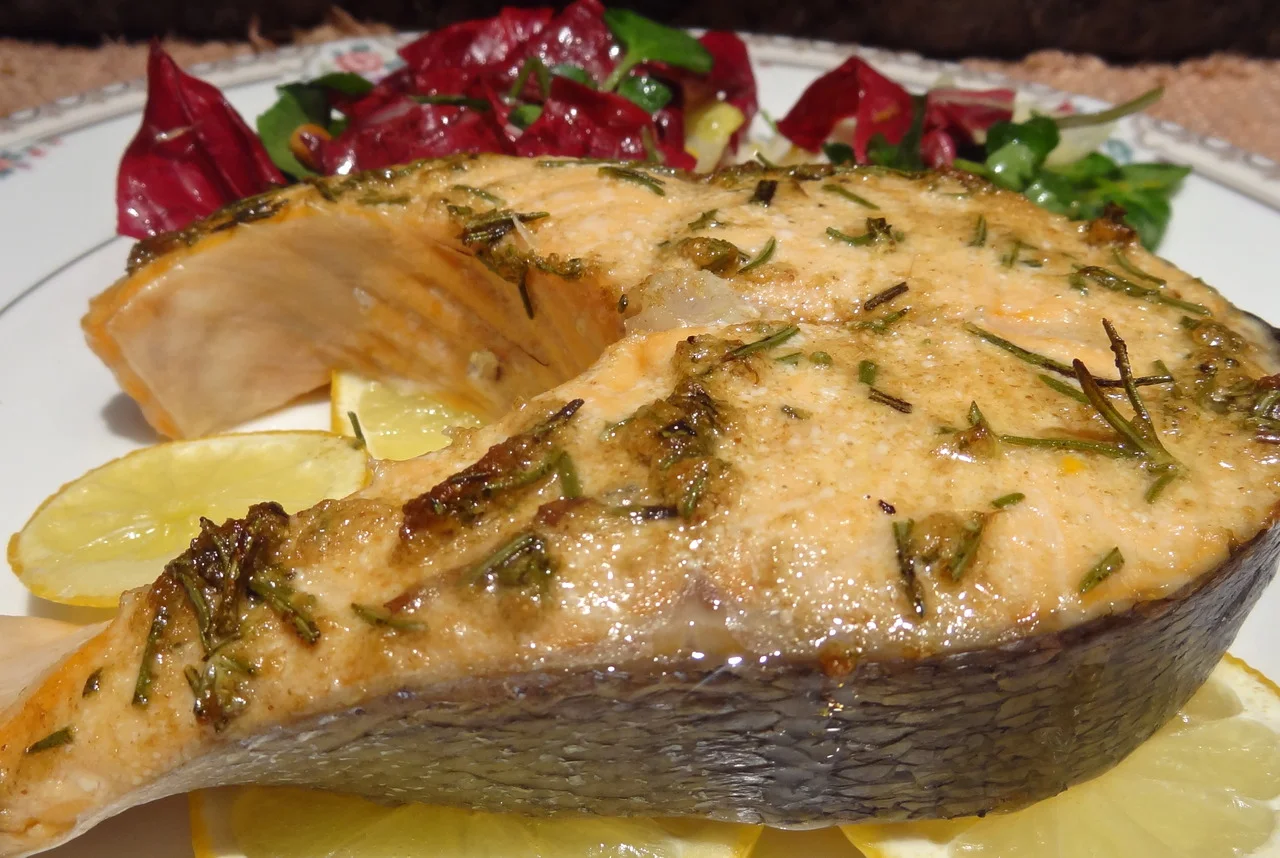
My sensible eating plan is working so far. The pound I gained over Thanksgiving is gone, so I am ahead of the game. Here’s what we had for dinner one night this week: Roasted Salmon with Lemon, Rosemary and Coriander. Low calorie, low fat and so simple.

All that’s required to make plain old salmon into something more memorable is to include herbs and spices (here the rosemary and coriander but you could substitute with dill and Aleppo pepper; there’s lots of choices) and some lemony tang. A salad or plain vegetables, maybe some cooked quinoa and you’re all set for dinner.

Btw, the salad you see in the photo is a perfect side dish for salmon. You can find the recipe here.


Roasted Salmon with Lemon, Rosemary and Coriander

1-2 lemons

4 salmon fillets or steaks, about 6 ounces each, about 1-1/4 inches thick

2 tablespoons olive oil

1 teaspoon Dijon mustard

1 tablespoon chopped fresh rosemary

1 teaspoon ground coriander

salt and freshly ground black pepper to taste


Preheat the oven to 475 degrees. Cut the lemon(s) into thin slices and place them in a single layer in a baking dish. Place the salmon pieces on top (make sure there are enough slices for the entire piece of fish). In a small bowl, combine the olive oil, mustard, rosemary and coriander. Spread this mixture on top of the fish. Sprinkle with salt and pepper. Roast for about 15 minutes, depending on thickness, or until cooked to desired doneness.

Makes 4 servings  

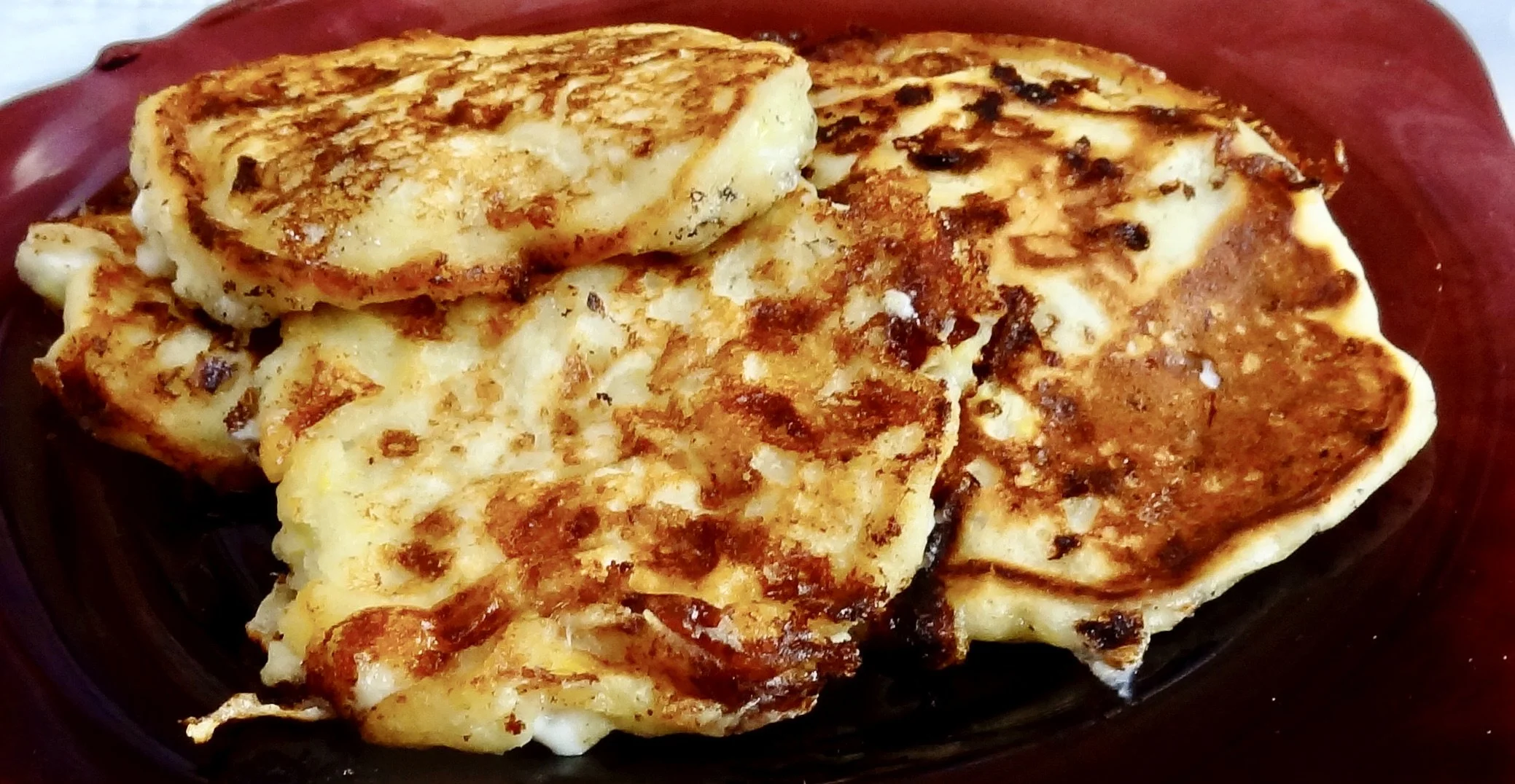
Lemon Cottage Cheese Pancakes

Lemon Cottage Cheese Pancakes

Pancakes? Oh yes! Who doesn’t love them?

But who cooks them at your house?

My Dad was the pancake maker in ours. I can close my eyes now all these years later and still see my mother’s face as she surveyed the mess he made. Flour puffs here and there. Drops of grease from melted butter on the floor. Batter on the counter. A crusted pancake turner in the sink.

But wow, those were some great pancakes. Puffy, thick and soft with a bit of a crispy edge. Gobs of butter on top melting into the surface. Syrup of course.

No redeeming nutritional value, but oh, what a big deal for the Memory Box.

Pancakes are always welcome I think, any time of year and also for any meal, breakfast, lunch or dinner.

So I am going to make some for Hanukkah. A recipe from my book, Hip Kosher, for Lemon-Cottage Cheese pancakes. Almost everyone knows that it is traditional to eat fried foods during this holiday. Less well known is that cheese is traditional too. So I’ve combined fried plus cheese plus memory in these, light, fluffy pancakes. There’s some protein and they are vaguely sweet, with good flavor from the lemon, so syrup isn’t really needed. Fried? Yes, but just in a small amount of butter on a griddle, not a whole lot of deep-dry fat.

Lemon Cottage Cheese Pancakes (from Hip Kosher)

1-1/3 cups dry curd cottage cheese, pot cheese, or farmer cheese
3 large eggs
1 cup milk
1-1/2 tablespoons finely grated fresh lemon peel
1 cup all-purpose flour
2 tablespoons sugar
1 teaspoon baking powder
1/2 teaspoon salt
Butter for the griddle

Combine the cottage cheese, eggs, milk and lemon peel in a bowl. Add the flour, sugar, baking powder and salt and mix to combine ingredients. Heat a griddle over medium heat and add a small amount of butter. When the butter has melted and looks foamy, working in batches, pour about 1/4 cup batter onto the griddle for each pancake. Cook the pancakes for about 2 minutes per side, or until they are golden brown, adding more butter to the pan as necessary.

Makes 4 servings.

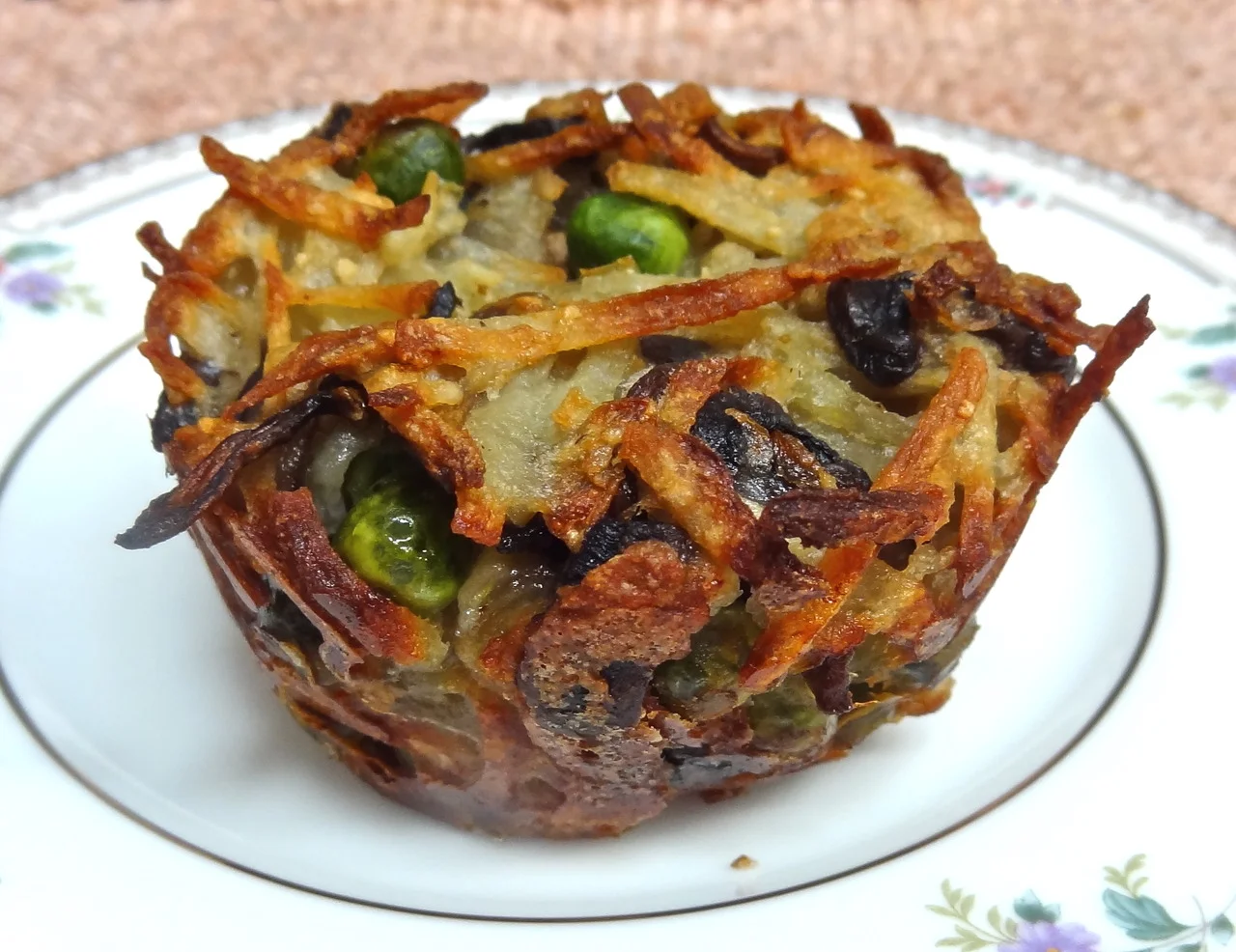
Potato Latke Kugels with Mushrooms and Peas

If you like your potato latkes crispy and crunchy and golden brown but you hate the smell and mess of frying in your house (and also want to avoid some of the holiday season fat), I’ve got a solution: 
Potato Latke Kugels
It’s the same s…

If you like your potato latkes crispy and crunchy and golden brown but you hate the smell and mess of frying in your house (and also want to avoid some of the holiday season fat), I’ve got a solution: 

Potato Latke Kugels

It’s the same stuff as regular potato latkes. Really: mostly potato shreds, onions, eggs and salt.

But instead of frying individual latkes, you stuff the mixture into muffin tins and bake them at a high temperature. Every surface crunches as you bite. And there’s a little bit of a soft interior.

There’s a bonus too. Unlike fried latkes, which get soft and soggy as they cool, these don’t.

You can make a basic version of these. I’ve added peas and mushrooms, just so I can say there’s some veggies in there.

Btw, if all you want is super crunch, and no soft middle at all, bake the potato mixture in a jelly roll pan (see instructions).

Potato Latke Kugels with Mushrooms and Peas 

1/3 cup vegetable oil or melted chicken or goose fat

2 cups sliced mushrooms

3 large russet potatoes

1 medium onion

2 large eggs

1/4 cup matzo meal, breadcrumbs or potato starch

1 cup thawed frozen peas

salt and freshly ground black pepper to taste

Preheat the oven to 400 degrees. Using some of the vegetable oil, lightly grease 12 muffin tins. Heat 2 tablespoons of the vegetable oil in a sauté pan over medium heat. Add the mushrooms and cook for 5-6 minutes or until crispy and no liquid remains in the pan. Set aside. Peel the potatoes and shred them by hand or with the fine shredding blade in a food processor. Place in a bowl. Grate the onion into the potato shreds. Stir in the eggs, matzo meal and remaining oil and incorporate them completely. Add the mushrooms and peas and mix. Season to taste with salt and pepper. Place mounds of the potato mixture into the muffin tins. Bake for 40-45 minutes or until browned and crispy. (Can make this in a 9”x13” pan or in a jelly roll pan; bake until golden) Makes 12

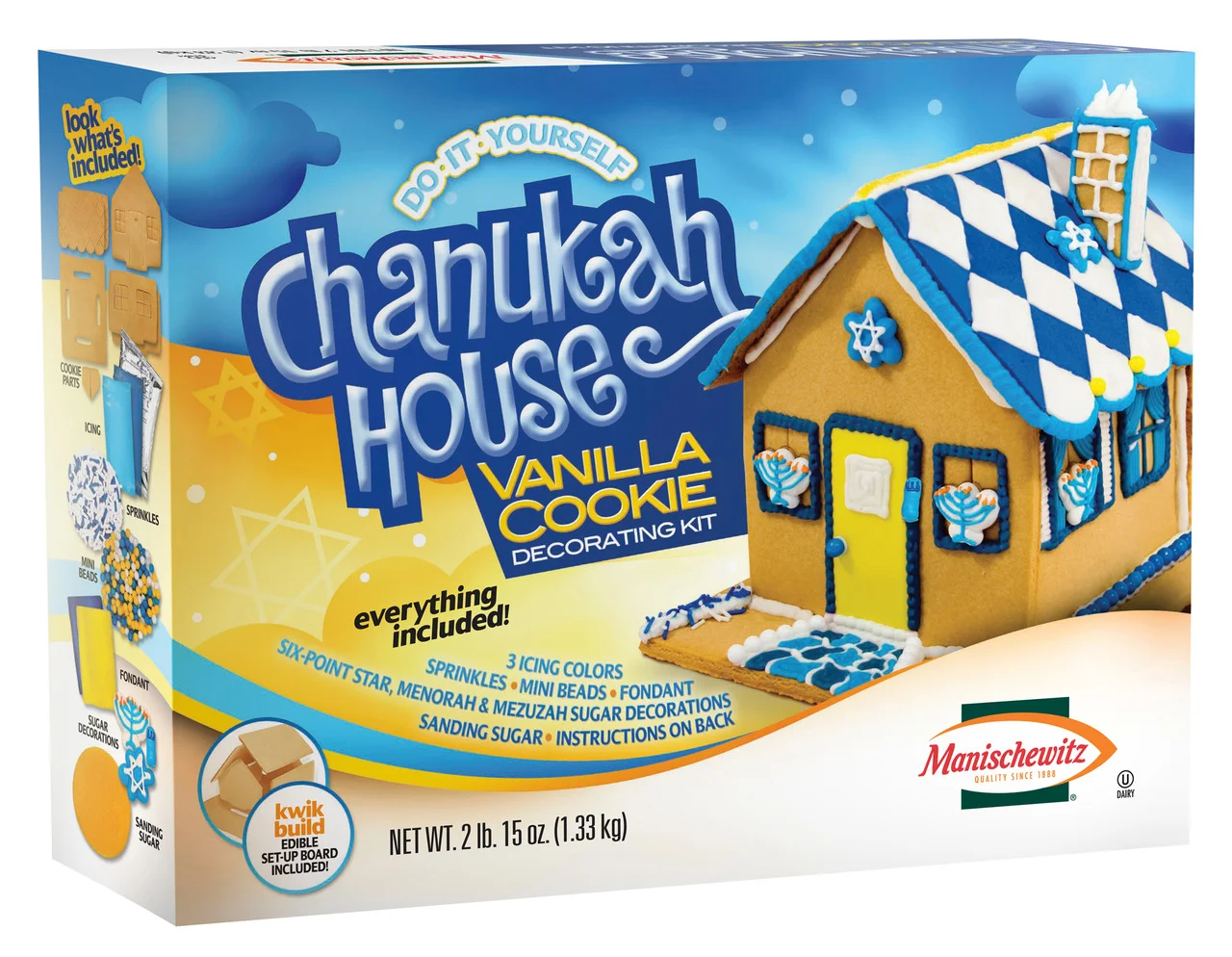
Manischewitz Chanuka House

If you think Manischewitz is all old school, with tried and true stuff like matzos and gefilte fish, you wouldn’t be wrong. But this company, born in 1888 (will celebrate its 125th birthday next year!), has got its act in the 21st century too.

Like so many other manufacturers who now offer thousands of products for kosher home cooks whose culinary aspirations go beyond traditional, Manischewitz has a bunch of new items, like Dark Chocolate Covered Potato Chips, Almond Butter Spread, Chocolate Hazelnut Spread, Moroccan Roasted Vegetables, and others.

And for the kids, there’s the new Chanuka kits, a sort of kosher take on the seasonal gingerbread house. There are two kinds: a Chanuka Sugar Cookie Decorating Kit (4 vanilla cookies with Hanukkah (or Chanuka) themes, plus icing, beads and sprinkles; and a second, more elaborate Chanuka House Decorating Kit with all the goodies needed to make a holiday cookie house, decorated with icing and sugary things all over.

In addition, the company is sponsoring a contest (grand prize $500) — for folks who actually make one of the vanilla cookie houses, creating the design of their desire. It’s a terrific and sweet project for kids. You can get the entry rules and information here.

But it’s more than just a contest. You don’t have to enter (entering involves taking a photo of the finished project). Cooking and crafting with kids can be a lot of fun. A nice start to the holiday season.

Enjoy!