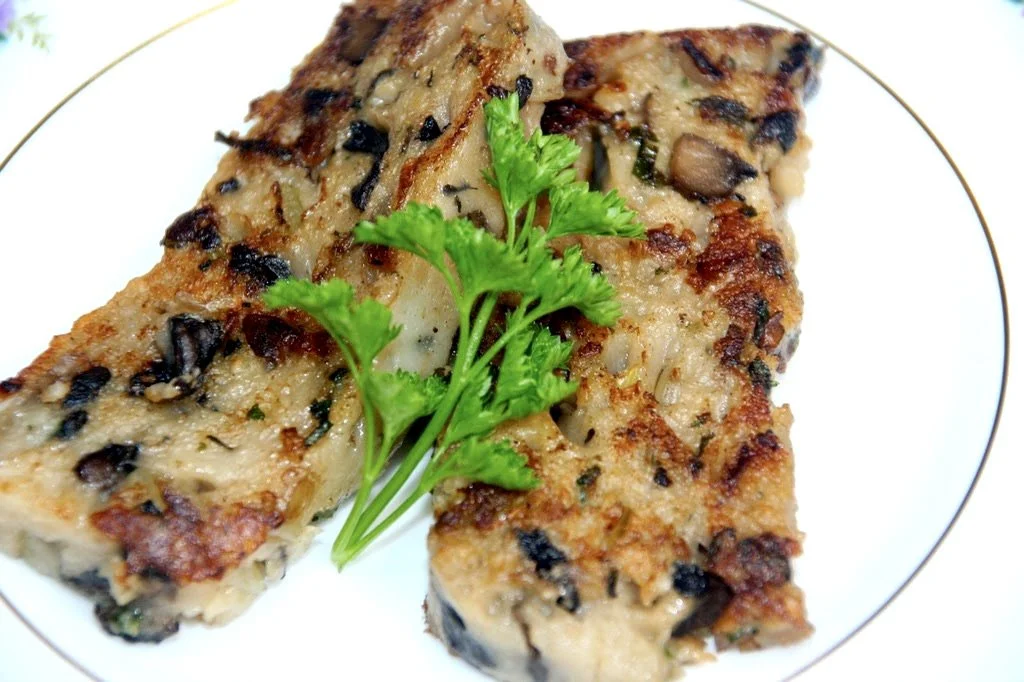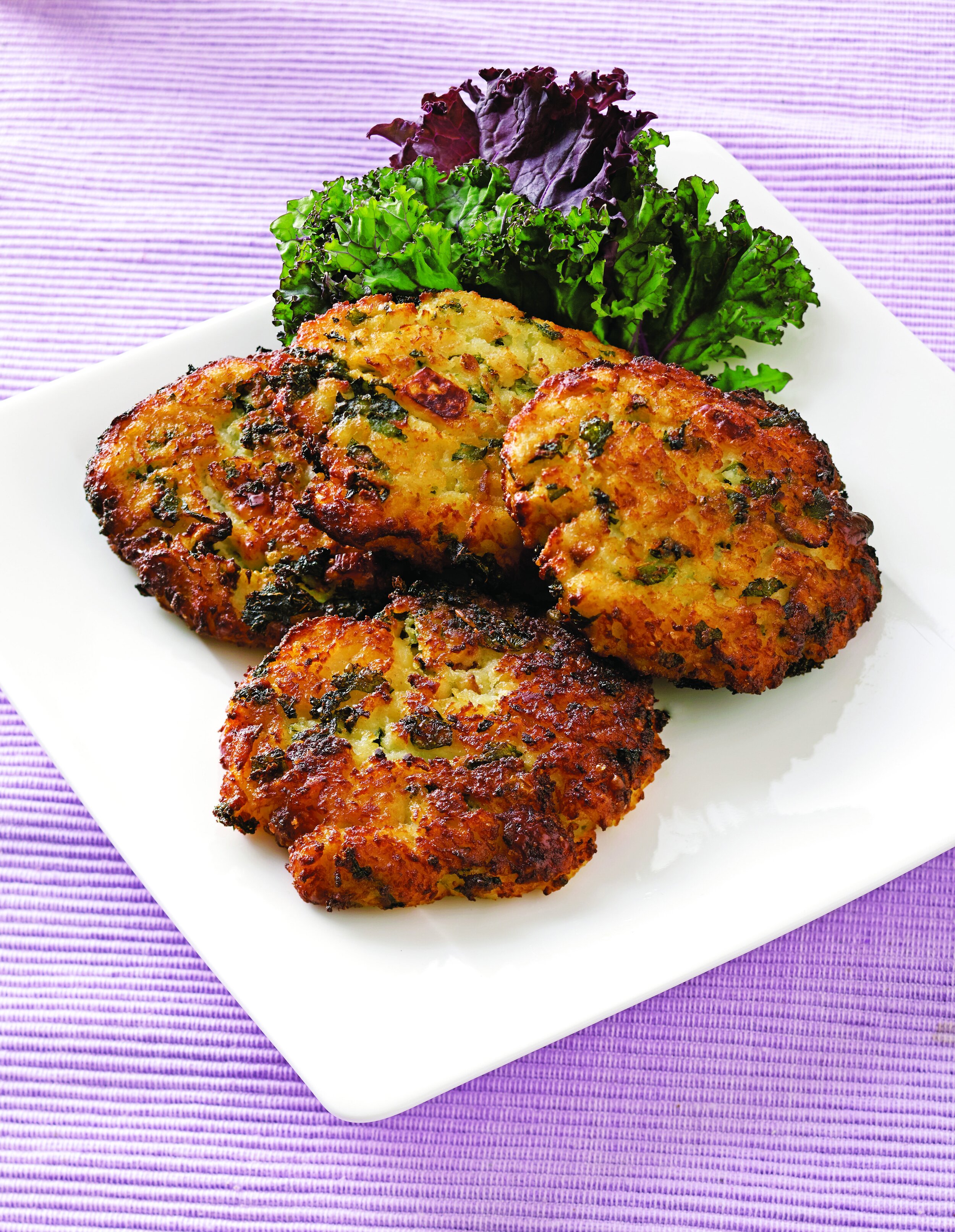
Passover Potato Pancakes with Leeks, Feta Cheese and Mashed Potatoes

Glen Scott Photography

When is matzo brei actually a potato pancake?

When you mix them together. Like in this matzo-potato pancake which is a terrific lunch or brunch dish during Passover.

This has been one of my go-to dishes for years, after that time I wanted to use up all the matzo farfel instead of having to throw it away knowing I wouldn’t use it again when Passover was done. So I experimented using it like the soaked matzo of matzo brei and added different ingredients to see what we all liked. 

I’ve made a version of this with sauteed mushrooms. And some with plain old yellow onion. But this is the best.

Passover Potato Pancakes with Leeks, Feta Cheese and Mashed Potatoes

  • 1 bunch leeks

  • 2 cups matzo farfel

  • 6 ounces crumbled feta cheese

  • 2 cups mashed potatoes

  • 1 large egg

  • salt and freshly ground black pepper to taste 

  • vegetable oil for frying

  • dairy sour cream or plain, Greek style yogurt, optional

Discard the dark green portions of the leeks, then wash the leaves carefully; rinse and chop into small pieces. Bring a small saucepan of water to a boil, add the leek pieces, reduce the heat to a simmer and cook for 4-5 minutes, or until the leeks have softened. Drain and place the leeks in a mixing bowl. Place the farfel in another bowl, cover with hot water and let soak for 3-4 minutes or until softened. Drain the farfel, squeeze it as dry as possible and add to the leeks. Add the feta cheese, mashed potatoes and egg. Mix the ingredients thoroughly to distribute them evenly. Season with salt and pepper (about 1 teaspoon salt, 1/4 teaspoon pepper). Heat about 1/8-inch vegetable oil in a large saute pan over medium heat. Drop the farfel mixture by the heaping tablespoon into the hot fat. Flatten and cook for 2-3 minutes per side or until golden brown. Drain on paper towels. Serve plain or with sour cream or yogurt. Makes 4-6 servings

Passover, A Time to Remember

On Passover, as we taste the maror and chazeret to remember the bitter tears of slavery I also remember the people who are no longer with us at our Seder.

My parents and Ed’s parents. My grandma, at whose house I spent all the Seders of my childhood, my cousin Leslie and I scampering under the table to tickle peoples’ feet as Uncle Irving led the reading.

It’s always at the good times that you remember the people who are no longer around to share it, right?

I also remember that my brother Mickey has moved far away to Buenos Aires and my brother Jeff celebrates Passover with his own kids, grandkids and my sister-in-law’s family. And Ed’s sister Barbara celebrates with her kids, grandkids and in-law family. And so too with Leslie. She has her own extended family. 

None of us shares Passover anymore. I miss everyone.

Passover is such a happy time and so you want to be with all the people you love and care about and it’s a good thing that families are grow and have active lives and celebrations. Still, the bitter tears of remembrance of what used to be gets to me every Passover. 

Is everyone like this or am I just a sentimental old fool?

Peppered Strawberries with Orange-Scented Zabaglione

Years ago, you couldn’t get strawberries any old time of year. You’d have to wait for the right season, starting around April, when you’d go to your local market and get a basketful of small red fruit that gave off a mesmerizing perfume as sweet as …

Years ago, you couldn’t get strawberries any old time of year. You’d have to wait for the right season, starting around April, when you’d go to your local market and get a basketful of small red fruit that gave off a mesmerizing perfume as sweet as cotton candy. The berries were soft and juicy and half the time I’d eat half a boxful before we even got home, so it was usually the case that my Mom would have to buy much more if she wanted to use them for dessert.

Fresh, new season strawberries were a big thing for Passover. Served with macaroons or spongecake. Nothing else was needed. No ice cream, whipped cream, sauce. Nothing.

But strawberries aren’t like they used to be. I hate those enormous things you see in the stores today. They look as if they came from some giant planet in outer space and taste like they were shipped to earth after several light years. Dry and tasteless.

And why they have to grow them so gigantic I know not why.

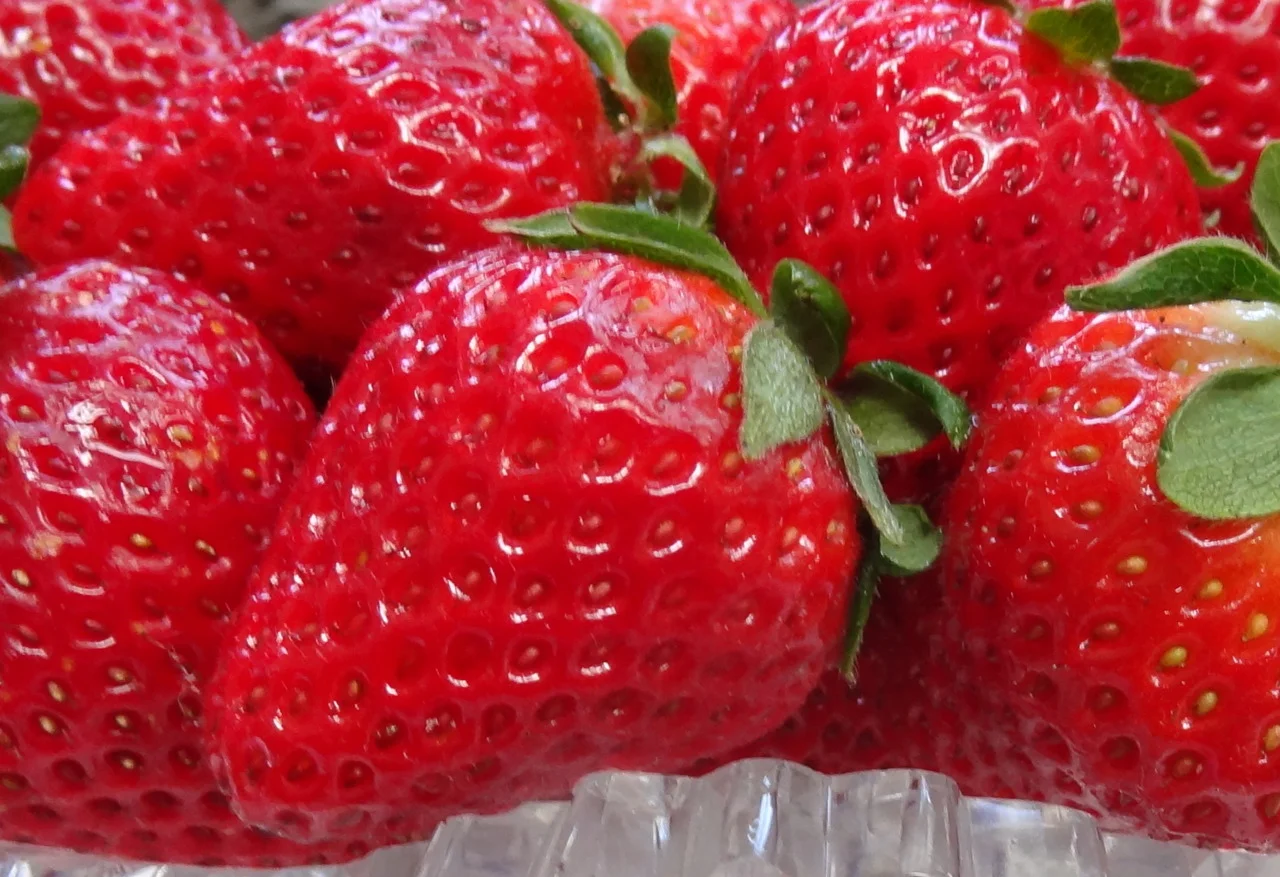
If you can find yourself some local, small berries, do yourself a favor and buy some. Let the aroma draw you near. That’s the way you can tell a good strawberry.

But if you can’t, look for smaller berries that are all red, dark red, and have a sweet, floral fragrance. Maybe they aren’t as perfect for eating out of hand.

But — if you add a hint of freshly ground black pepper, a bit of refreshing grated orange rind and a lush, thick, rich zabaglione, you’ll have a really swell dessert for your Seder dinner.

Or anytime really.

Peppered Strawberries with Orange-Scented Zabaglione

4-6 cups fresh strawberries
2 tablespoons sugar
2 tablespoons orange juice
1/2 teaspoon freshly ground black pepper
8 large egg yolks
2/3 cup sugar
2 tablespoons finely grated fresh orange rind
1/2 cup sweet white Passover wine
Fresh mint leaves as garnish

Rinse the berries, remove the hull and cut into chunks into a bowl. Add the 2 tablespoons sugar, orange juice and pepper. Toss gently and let macerate while you prepare the zabaglione. Place the egg yolks, 2/3 cup sugar and the orange rind in the top part of a double boiler over barely simmering water. Beat with a handheld mixer at medium speed for 3-4 minutes or until the mixture has thickened slightly and is pale in color. While continuing to beat constantly, gradually going from medium to high speed, gradually add the wine. Beat for 8-10 minutes or until the mixture is thick and fluffy. Place the berries in individual serving dishes. Pour equal amounts of the zabaglione over the berries. Mix gently. Garnish each with a mint leaf. Makes 8 servings.

NOTE: You can use the zabaglione warm from the pan, let it cool to room temperature or serve it chilled. To chill, place the bowl of zabaglione in a larger bowl filled with ice and stir until the sauce is cold. It will hold for up to one hour.

Abu Simbel

There came a Pharaoh who knew not Joseph.
That is the transformative historical point that we read about every year in the Haggadah at the Passover Seder.
The point at which the Pharaoh enslaved the Hebrews. Before Moses, generations later, asked a …

There came a Pharaoh who knew not Joseph.

That is the transformative historical point that we read about every year in the Haggadah at the Passover Seder.

The point at which the Pharaoh enslaved the Hebrews. Before Moses, generations later, asked a different Pharaoh to set the Hebrews free.

This story of the Exodus is more ingrained in my being than I had ever realized. Such that, on a recent trip to Egypt, I was overwhelmed at the Egyptian Museum when I saw the mummy of Ramses, the Pharaoh who said no to Moses. Who would not let the slaves go.

Here he was thousands of years later, shriveled and little. And I thought, “this is what has become of the great Pharaoh.”

It was a profound moment for me.

And then we visited the site (in the photo) of Abu Simbel, the monument to this Ramses, where four large statues (3-1/2 anyway) of this Pharaoh sit triumphantly before the entrance. 

I was surprised at the turmoil of emotions I was feeling. Looking at this massive structure dedicated to a man’s need to glorify himself. And remembering this is the one who wouldn’t let the slaves go. Who needed 10 terrible plagues as a convincer. 

The story behind the site at Abu Simbel is astonishing, especially since the entire structure had to be moved prior to the building of the Aswan High Dam so as to prevent possible flooding to the site. And because of the engineering genius of some of the interior points.

That’s all fine as far as being a tourist goes. It was fascinating to be sure.

Still, what captured my attention was how after years and years of reading the Haggadah every Passover, I could not be objective. I couldn’t simply contemplate the historical site. I couldn’t let go of who this man was. 

I am adding the photo of the site at Abu Simbel to our family Hagaddah.

Chremslach

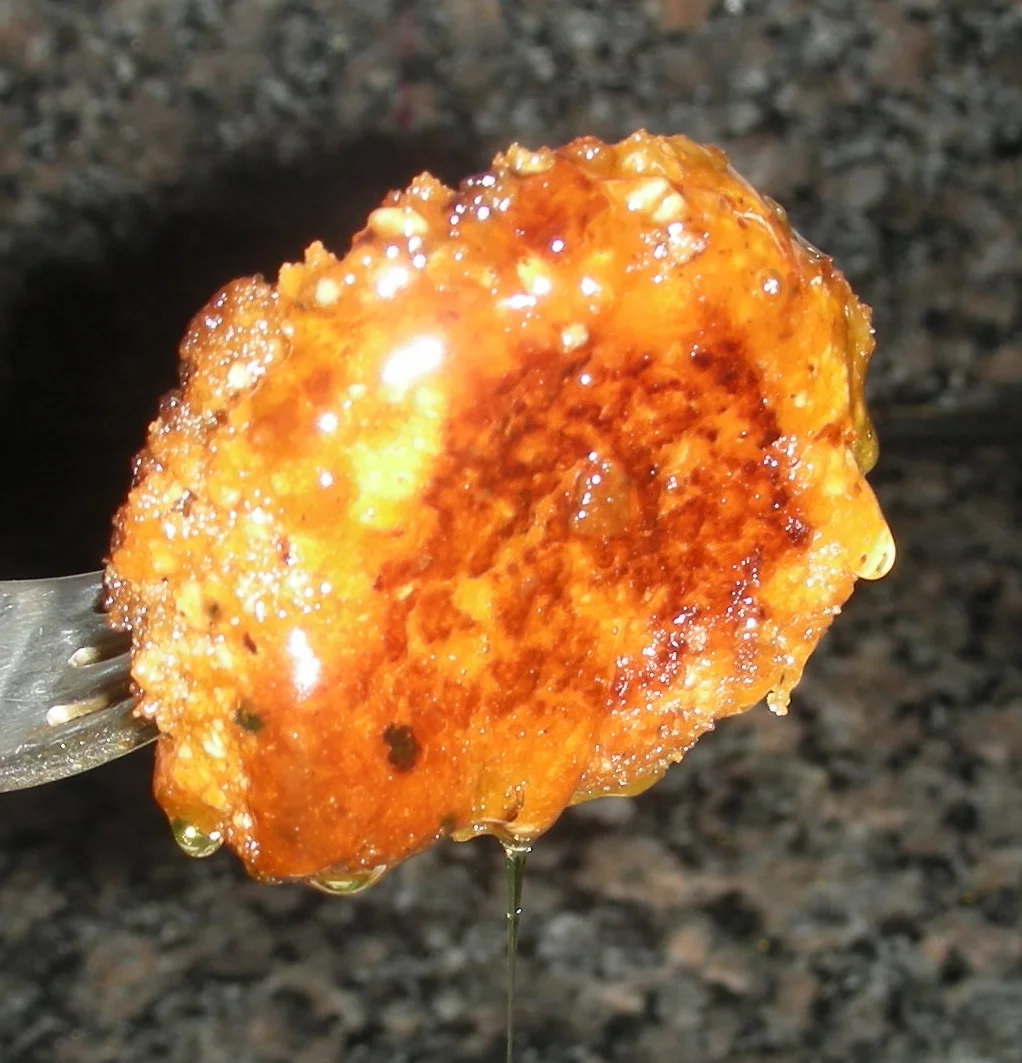
Passover wouldn’t be right without Chremslich. My grandma’s soft, honey-drenched matzo fritters.
I can’t remember ever having a Seder without these. 
Some people eat chremslich for dessert but grandma always served them with the tu…

Chremslach

Passover wouldn’t be right without Chremslich. My grandma’s soft, honey-drenched matzo fritters.

I can’t remember ever having a Seder without these. 

Some people eat chremslich for dessert but grandma always served them with the turkey, right alongside whatever vegetables there were. Like the cranberry sauce at Thanksgiving.

There are hundreds of recipes for chremslich and I’ve tried many. But none measure up to the ones I’ve known since before I can even remember.

Except that my grandmother added broken walnuts to hers and my daughter Gillian is allergic to walnuts so I make mine with pignolis, to which my brother Jeff always says “it’s better with walnuts,” but it actually isn’t.

I have also included raisins, on occasion, just to see what it’s like. And once in a while, grated fresh orange peel. Although methinks that the orange peel, though delicious, might be a bit too nouvelle for some people.

Maybe.

Anyway, here’s grandma’s recipe. I hope this is one of those recipes that my kids make in years to come. I can’t imagine Passover without these.

Btw, you can make these days in advance and keep them in the honey — and add more honey because by then the fritters are soaked through. And they are just as good. Some would say even better.

Or you can keep the fritters and honey separate and cook them together just before you serve them.

Chremslach

  • 3 large eggs

  • pinch of salt

  • 1 tablespoon vegetable oil

  • 1 teaspoon grated fresh lemon or orange peel, OPTIONAL

  • 1/4 cup sugar

  • 3/4 cup matzo meal

  • vegetable oil for frying

  • 1 pound honey, approximately

  • 1/2 cup raisins, OPTIONAL

  • 1/3 cup pignoli nuts (or use 1/2 cup chopped walnuts)

Separate the eggs. In a bowl, beat the egg yolks, salt and one tablespoon vegetable oil together until well blended. Stir in the citrus peel, if used, and set aside. In a separate bowl, beat the egg whites until foamy. Gradually add the 1/4 cup sugar and continue to beat until the whites stand up in peaks. Fold the beaten whites into the egg yolk mixture. Fold in the matzo meal. Let the mixture rest for about 30 minutes (I refrigerate). With cool, wet hands, shape portions of the mixture into disks about 1-1/2-inches in diameter and 1/2-inch thick (sometimes I drop the batter by the tablespoonful into the pan). Heat about 1/4-inch vegetable oil in a saute pan over medium heat. Fry the disks for 1-2 minutes per side or until golden brown on both sides (you may have to flatten them slightly with a rigid spatula). Drain on paper towels and place the fried disks in a large saucepan. Pour the honey over the disks. Add the raisins, if used, and the nuts. Cook over low-medium heat for 5-6 minutes or until heated through and all the disks are coated with honey. Serve immediately or make ahead and reheat. Add more honey as tastes dictate.

Makes 10-12 servings

Toasted Almond Napoleon with Balsamic-Glazed Bananas

Every cook makes mistakes. Even the best cooks. Even chefs. Even food writers and cooking teachers.

Once, when I was teaching a baking class and meant to prepare a recipe for a chocolate “souffle roll” — a jelly roll stuffed with whipped cream and sliced strawberries — I forgot to put a towel or parchment paper underneath the cake that would help me roll it up. The cake stuck to the counter in parts, so rolling it was nearly impossible. The top cracked in several places and looked awful. So I quickly got out some confectioner’s sugar and sifted lots of it all over the top of the cake. It looked so pretty you could actually think that this was the way it was supposed to be all along.

Jelly rolls, made without flour, are very popular for Passover, of course. And maybe most people won’t make the mistake I did with that chocolate roll. But sometimes, when you’re rolling a flourless jelly roll, it cracks anyway.

That has happened to me too. When I don’t doctor things by sifting confectioner’s sugar or cocoa or something else on top (like a glaze or frosting), I cut the cake and make layers out of it, instead of rolling it jelly roll style.

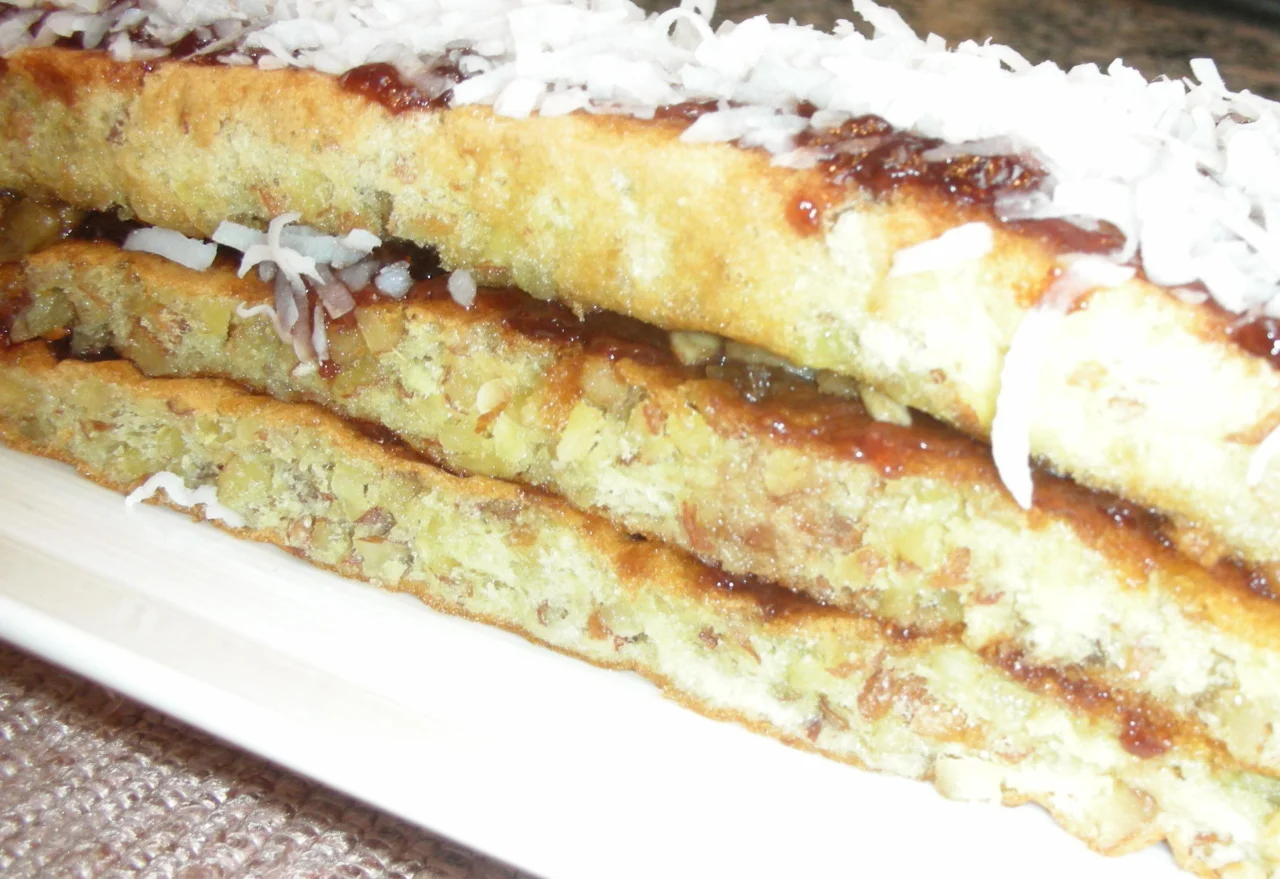
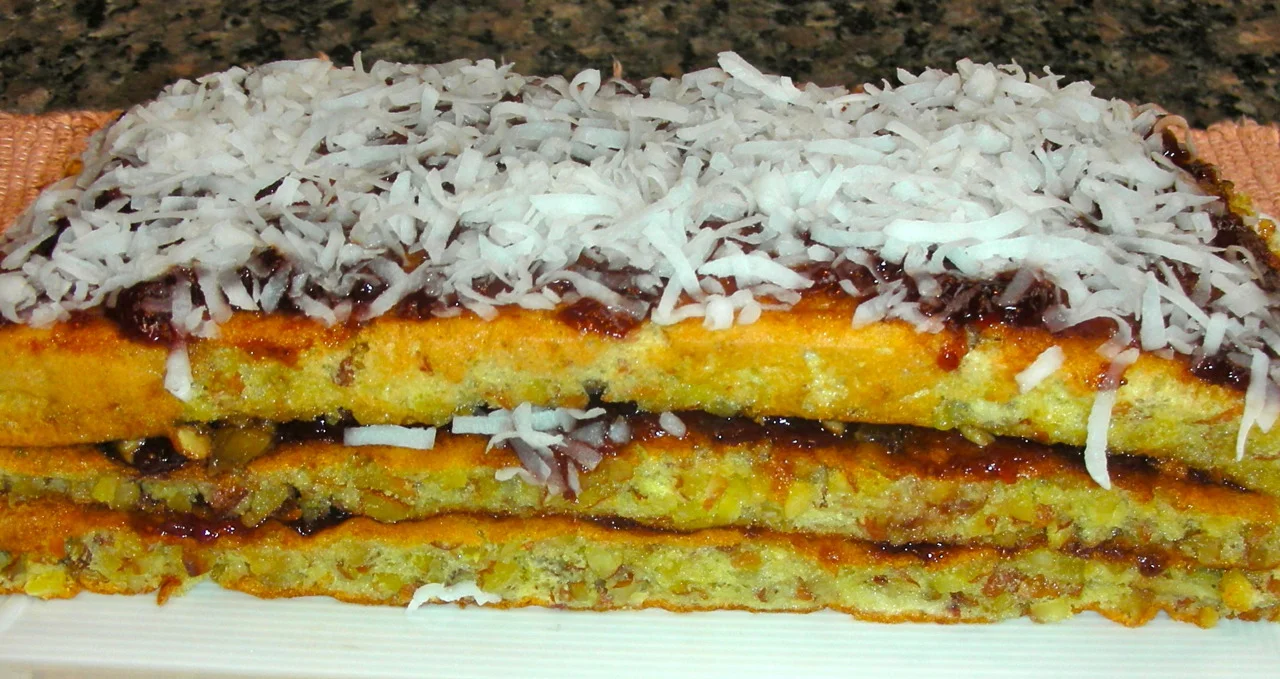
Take a look at this recipe, for a toasted almond flourless jelly roll cake. You can roll it the standard way (look for instructions at the end of the recipe). But it is also pretty when you cut the cake and stack it stuffed with good, moist ingredients like fruit and jam (or pastry cream, whipped cream, ganache and so on) and garnish the top with a simple sprinkle of confectioner’s sugar, chopped nuts, shredded coconut and so on.

Toasted Almond Napoleon with Balsamic-Glazed Bananas

6 large eggs, separated
1/2 cup sugar
pinch of salt
1-1/2 cups ground almonds
1 teaspoon ground ginger 
potato starch or Passover confectioner’s sugar
10 ounces strawberry or cherry preserves 
2 tablespoons balsamic vinegar
1 medium chopped banana (about 1 cup)
Passover confectioner’s sugar, optional
Grated coconut

Preheat the oven to 350º. Line a 15-1/2-inch by 10-1/2-inch jelly roll pan with parchment paper or waxed paper; lightly oil the paper. Set aside. Beat the egg yolks with 6 tablespoons of the sugar and the salt with an electric mixer set at medium for about 3 minutes or until the mixture is thick and pale. Stir in the almonds and ginger. Beat the egg whites with an electric mixer at medium speed until the whites are foamy. Continue to beat, gradually raising the speed to high and gradually adding the remaining 2 tablespoons of sugar until the whites stand in stiff, glossy peaks. Stir one-third of the whites into the nut mixture and blend in thoroughly. Add the remaining beaten whites and fold them in gently. Spread the batter evenly in the prepared pan. Bake for about 20 minutes or until the cake is lightly browned and springs back when touched gently. Place the pan on a cake rack. Cover it with a lightly dampened towel and let it cool. Place a kitchen towel on a clean work surface and sprinkle it with potato starch or Passover confectioner’s sugar. Invert the cake over the towel and pat the pan to loosen the cake. Remove the paper. Cut the cake into 3 sections on the longer edge (each section will now be about 5 inches x 10-1/2 inches). Mix the preserves and balsamic vinegar together. Spread most of the preserves on two of the sections, reserving about 3 tablespoons. Scatter the banana on top of the preserves. Layer one section on top of the other. Place the plain layer on top. Spread with the remaining 3 tablespoons preserves. Sprinkle with grated coconut. Cut with a serrated knife. Makes 8-10 servings.

To make a classic jelly roll: Spread the preserves mixture on top of the cake. Scatter the chopped banana (and coconut, if desired) on top. Roll the cake, starting at a narrow end. Lift it onto a platter, seam side down. Sprinkle with Passover confectioner’s sugar if desired.

Basic Roasted Chicken

"She didn’t even know how to make a plain old roast chicken."

This is what my husband Ed said about the girlfriend just before I entered his life.

I have to say, what I learned about this particular woman afterwards was that she was smart and knew several languages and was hard working and knew how to order in a French restaurant.

But she couldn’t make a roasted chicken and maybe that wasn’t the “test” for what was important in a wife, but apparently this person’s lack of ability in the chicken area was remarkable enough to be remarked upon.

Ed was thrilled that I knew how to roast a chicken.

Among other things.

Basically, roasted chicken is one of those foods that can be rustic or fancy, dressed down or dressed up. For family or for company.

Roasted chicken. Always a comfort. Always welcome. Always with that compelling home aroma that makes you feel good to be home.

A great choice for Friday night dinner, to start the weekend off right.

A great choice for Sunday dinner, to get you ready for the week ahead.

Roasted chicken is something everyone, man or woman, should know how to cook.

So here is a basic, basic recipe for all to try and enjoy.

Basic Roasted Chicken

1 roasting chicken, 4-1/2 to 6 pounds

2 tablespoons olive oil or vegetable oil

Salt and freshly ground black pepper

Garlic powder and paprika, optional

2 tablespoons chopped fresh herbs, optional

1 to 1-1/2 cups chicken stock, white wine, cider or juice (apple, pineapple, mango, etc.)

 Preheat the oven to 400 degrees. Remove any pinfeathers and extra flesh and fat from the chicken. Take out the package of giblets inside the cavity (you may save these pieces for stock, except for the liver, or roast them along with the chicken). Rinse and dry the chicken. Brush the olive oil all over the chicken. Sprinkle with salt and pepper and optional garlic powder and paprika or fresh herbs. Place the chicken breast side down on a rack placed inside a roasting pan. Roast for 15 minutes. Reduce the oven heat to 350 degrees. Roast the chicken for 15 minutes. Pour the stock (wine, cider or juice) over the chicken and roast another 15 minutes. Turn the chicken breast side up. Roast the chicken, basting occasionally, for 45-60 minutes, depending on the size of the chicken, or until the chicken is cooked through (a meat thermometer inserted in the thickest part of the breast registers 160 degrees or 165 degrees in the thickest part of the thigh). Remove the chicken to a carving board and let rest for 15 minutes before carving. Serve with pan juices (you may strain the pan fluids if desired, and/or reduce them to desired thickness by boiling the fluids in a small saucepan over high heat). Makes 6 servings 

Orange-Honey-Nut Tart

What to do with MacaroonsIn the old days we ate macaroons straight out of the can. That was dessert.But there are so many delicious things you can do with plain old macaroons. Like use them to make a crust for cheesecake. Or crumble them to top a fr…

What to do with Macaroons

In the old days we ate macaroons straight out of the can. That was dessert.

But there are so many delicious things you can do with plain old macaroons. Like use them to make a crust for cheesecake. Or crumble them to top a fruit crisp. Or break them up into a parfait dish with ice cream and chocolate sauce.

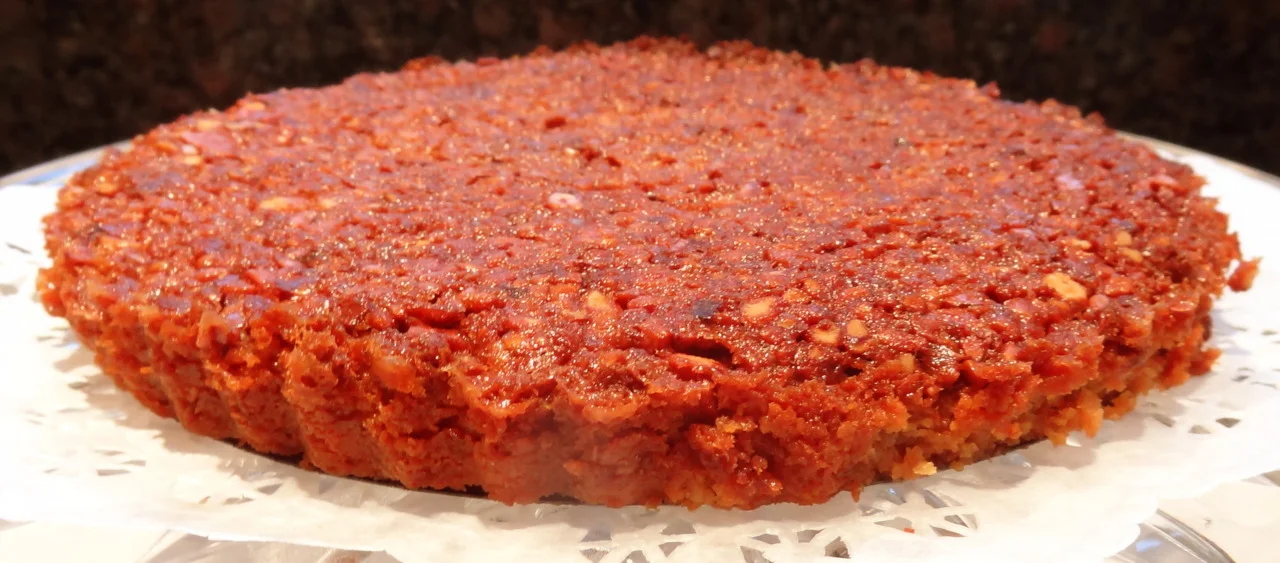
Or make this fabulously rich tart. It’s sort of like a Chess Pie or Pecan pie. With a macaroon crust. 

Make it ahead and keep it in the fridge for 2-3 days. You won’t be sorry.


Orange-Honey-Nut Tart


18-20 macaroons

2/3 cup honey

1/2 cup butter

1/3 cup sugar

3/4 teaspoon salt

1/2 cup cream (light, whipping or half and half)

2 large eggs

1 tablespoon grated fresh orange peel

1 cup medium-fine chopped almonds


Preheat the oven to 375 degrees. Lightly grease the bottom and sides of a 10-inch tart pan with removable bottom. Crumble the macaroons and press them onto the bottom and sides of the greased pan. Set aside. Place the honey, butter, sugar and salt and bring to a boil over medium-high heat, mixing constantly. Cook for about a minute or until the sugar has completely dissolved. Set aside to cool slightly. In a bowl, beat the cream, eggs and orange peel together until well blended. Pour in the honey mixture and blend ingredients thoroughly. Pour the mixture into the macaroon crust. Scatter the nuts on top. Place the tart in the oven and bake for about 30 minutes or until golden brown. Let cool.

Makes 8 servings

Matzo Polenta Crisps

Matzo Polenta Crisps

I like to tweak recipes. So sometime last year as I was making polenta — or what my grandma called mamaliga — I wondered whether I could adapt the recipe using matzo meal instead of corn meal and thus be able to serve it at Passover.

It was awful. Like some cooked cereal I once served my daughter Gillian and she said it tasted like a box.

So I fried some onions, celery and mushrooms until they were golden brown, mixed them into the matzo-meal mamaliga and let it chill inside a loaf pan. When it was cold, I cut the loaf into slices and fried the slices until they were hot and crispy.

Who says you can’t make a silk purse out of a sow’s ear?

Now these were absolutely delicious. And are a terrific side dish during Passover.

Matzo Meal “Polenta” Crisps

  • 2 tablespoons olive oil

  • 1 medium onion, chopped

  • 1 large stalk celery, chopped

  • 2 cups chopped mushrooms

  • 2 tablespoons chopped fresh parsley

  • 1 tablespoon chopped fresh mixed herbs such as dill, basil, rosemary, thyme, etc.

  • 2 cups vegetable or chicken stock

  • 1 cup water

  • 1 cup matzo meal

  • salt and freshly ground black pepper to taste

  • 1/2 cup grated Fontina cheese. optional

  • vegetable oil and/or butter for frying

Lightly grease a 9”x5”x3” loaf pan. Heat 2 tablespoons olive oil in a saute pan over medium heat. Add the onion and celery and cook, stirring occasionally, for 3-4 minutes or until softened. Add the mushrooms, parsley and herbs and and cook for another 3-4 minutes or until all the liquid has evaporated from the pan. Set aside to cool slightly. Bring the stock and water to a boil in a large saucepan. Whisk constantly as you gradually add the matzo meal and cook for about 2-3 minutes or until the mixture is thick. Reduce the heat to low and cook, stirring occasionally for another 3-4 minutes or until the mixture is very thick. Stir in the vegetable mixture and season to taste with salt and pepper. Mix in the cheese of used. Spoon the mixture into the prepared loaf pan. Refrigerate until cold, at least one hour. Unmold the loaf onto a cutting board and cut into 3/4-inch slices. Heat the olive oil and/or butter in a saute pan over medium heat. Cook the s,ices a few at a time, for 2-4 minutes per side, or until crispy. Makes 6-8 servings

Fairway Passover Catering

I am what Jewish people call a “balabusta.” Which is a yiddish term generally meaning something like a woman who likes to cook, is energetic and keeps herself busy with a lot of different things. 
So preparing for Passover and cooking an…

I am what Jewish people call a “balabusta.” Which is a yiddish term generally meaning something like a woman who likes to cook, is energetic and keeps herself busy with a lot of different things. 

So preparing for Passover and cooking an entire dinner for anywhere from 14 to 30 people never seemed daunting to me.

But I also realize that while being a “balabusta” always worked for me, it is not every woman’s goal. Many many women have absolutely no interest in cooking, no less for a crowd of guests. Or they have absolutely no time or are too busy with kids or elderly parents or whatever it is that takes up a life. They need help if they are having a Seder at their house.

Order in!

Sometimes a local kosher catering place has a special Passover menu. Sometimes you can order through your synagogue. If you live anywhere near Fairway (there’s one where I live in Stamford, CT.) you can order from their menu: http://www.fairwaymarket.com/files/catering/fairwaystamfordkosherforpassovercateringmenu2012.pdf

It’s a traditional Ashkenazi style dinner, complete with matzo ball soup, gefilte fish, brisket, potato kugel, etc. and you can order a complete dinner or a la carte items.

Why not!?