X-Ray Vision Carrots

Food names make a difference. A cousin of mine won’t eat yogurt just because he doesn’t like the word yogurt. And he’s not the only one.

People might refuse to eat stuff if they don’t like what it’s called.

I blogged about this yesterday.

Well apparently, it’s no different for kids. Children respond better when food has a cool name. According to one study 4-year old girls ate almost twice as many “Xray Vision Carrots” as regular carrots even though the dish they got served was exactly the same.

So folks, if you’re trying to get your children to try something new or to eat a particular vegetable or other ingredient that might not be a favorite, maybe if you give it a good name your child might actually try it and better yet, like it!

X-Ray Vision Carrots

  • 1 pound carrots
  • 2 tablespoons butter or margarine
  • 1 medium shallot, finely chopped
  • 1 teaspoon finely chopped fresh ginger
  • 1 teaspoon grated fresh orange peel
  • 1/4 cup orange juice
  • 2-3 tablespoons maple syrup
  • salt to taste

Peel the carrots and cut them into 1/2-inch chunks. Bring a large saucepan of water to a boil, add the carrots and cook for 5-6 minutes or until nearly tender. Drain and set aside. Heat the butter in a saute pan over medium heat. When the butter has melted and looks foamy, add the shallot, ginger and orange peel and cook for one minute. Stir in the orange juice and maple syrup and cook for one minute. Add the carrots and cook, stirring occasionally, for 3-4 minutes or until the carrots are hot, tender and well glazed. Season with salt to taste.

Makes 4 servings

California-Cabernet-Braised Short Ribs with Winter Squash and Dried Cranberries

What’s in a name? 

Not much, according to Shakespeare’s Juliet who famously told Romeo:

That which we call a rose

By any other name would smell as sweet.”

But apparently, when it comes to food, a name can make a big difference. So, for example, Chocolate Cake may get plenty of takers, but “Heirloom, Fudge-Lacquered Chocolate Decadence” would get more. 

Recently there was an article in the New York Post decrying some menu and food descriptions that were beginning to sound overused and over-the-top. It mentioned “artisinal” and “heirloom” among others.

And the writer asked “can we just eat already?”

Well, there have always been culinary buzzwords. Check out some old-time cookbooks and you’ll find entries for things like “Best Ever” Sugar Cookies and “Savory Stuffed Veal.”

The words didn’t actually mean much. Maybe the cookies were the best ever and maybe not. But they sounded better. And what was savory about the veal? Would anyone have expected veal to be something other than savory?

I remember when Chinese food was the rage in America. The names of the new (to us) dishes were awesome and appealing! “Dragon and Phoenix” sounded sublime. Much much better than “fried cut up chicken and shrimp,” which is what that is. 

I think it was ever since that time that the high-flung adjectives and nouns took on new life in the food biz. Ever since we’ve been entranced with “pesto” everything and foods that are “pan-roasted” and salads that include “shaved” Parmigiana and “Balsamic infused you-name-it” and “dried shiitake mushroom dusted something-or-others.”

So the current trend to use descriptors like “artisinal” and “bespoke” and “house-made” are really just more of same though maybe a bit grander and more self-aggrandizing these days.

I mean, really, can a big, national chain like Domino’s really serve “artisinal” pizza?

I like to use fancy names once in a while too. My grandma served me gedemfte fleish and my mother served it as Pot Roasted beef. But I always call the dish California-Cabernet-Braised Short Ribs with Winter Squash and Dried Cranberries. Doesn’t that sound nice?

California-Cabernet-Braised Short Ribs with Winter Squash and Dried Cranberries

4 pounds short ribs (with bone)

1/3 cup all-purpose flour

2 tablespoons vegetable oil

2 medium onions, coarsely chopped

2 cloves garlic, chopped

2 cups California Cabernet wine

salt and freshly ground black pepper to taste

1 butternut squash, peeled, deseeded and cut into chunks

1 cup dried cranberries

Rinse and dry the meat. Dredge the meat in the flour to coat all surfaces. Heat the vegetables oil in a large saute pan over medium heat. Cook the ribs in batches, leaving ample space between them so that they can brown properly. Remove the ribs as they brown and set aside in a plate. Continue until all the ribs have been browned. Add the onions to the pan, lower the heat and cook for 3-4 minutes. Stir in the garlic and cook for another minute. Return the meat and any accumulated juices to the pan. Pour in the wine. Sprinkle to taste with salt and pepper. Cover the pan. Cook at a simmer for 2-1/2 to 3 hours or until the meat is tender. Remove the meat to a dish. Skim the fat from the pan fluids. Return the meat to the pan. Add the squash chunks and dried cranberries. Cook, covered, for another 30 minutes or until the squash is tender. Makes 4 servings

S’mores with Variations

1927 was a very good year. S’mores were invented that year and it is the year portrayed in the movie “The Artist,” which everyone says is going to win all sorts of Oscars tonight at the Academy Awards Ceremony.

We can thank the Girl Scouts for S’mores. The recipe came from a book called Tramping and Trailing with the Girl Scouts. 

Please don’t tell Republican state Representative Bob Morris of Indiana, who said the Girls Scouts is a “radicalized organization” that promotes abortions and homosexuality (he later issued some sort of one of those non-apology apologies).

I sure hope he refrains from S’mores, which WAS promoted by the Girl Scouts in that book.

He doesn’t deserve any.

But you do.

Here’s a good recipe to nibble on while you watch the ceremony, or any other time really:

S’mores with Variations

2 graham crackers

piece of milk or dark chocolate (like Hershey Bar)

2 roasted, gooey marshmallows

Lay out the graham crackers and place the chocolate on one piece. Place the gooey marshmallow on top of the chocolate, top with the second graham cracker. Eat. Makes one.

According to the Girl Scout recipe, “Though it tastes like “some more” one is really enough.” Well, let’s just say this make one serving but you can have as many as you like.

Variations:

1. Spread the graham crackers with raspberry jam, Nutella or peanut butter in addition to the chocolate and marshmallows

2. Use Reese’s Peanut Butter Cups instead of plain chocolate (or white chocolate, chili-chocolate, etc.)

3. Use chocolate or cinnamon grahams

4. Add slices of banana or strawberries


How to Braid a 6-strand Challah

Baking challah? I posted my recipe last week and later realized that a lot of people don’t know how to braid a challah. A cousin of mine called a while ago to confirm that fact. She had wanted to make a challah but didn’t know how to make the bread …

Baking challah? I posted my recipe last week and later realized that a lot of people don’t know how to braid a challah. A cousin of mine called a while ago to confirm that fact. She had wanted to make a challah but didn’t know how to make the bread look professional.

Btw, her name is Jenny Rosenstrach and she is a food writer and blogger, with a terrific book about getting dinner to the table every day (Time for Dinner) and book coming in June called Dinner: a Love Story and a wonderful, family-oriented blog with the same name: Dinner: a Love Story.

She wasn’t the first to consider the whole braiding issue (plus how to make a round challah at holiday time).

So I decided to tell you all how to do it.

I myself became a “pro” not to long ago, I should confess. I had been to a bakery on a tour with one of the women’s groups I belong to. The baker zipped through the braiding so fast it reminded me of those old time black and white movies where people are walking but they look as if they’re running. So we asked him to show us again but of course it was a “show” not a real instruction lesson so he went even faster the next time and no one figured it out.

I always made challah with a standard three-strand braid.

Then I found someone who showed how to do it on Youtube. I don’t remember which version it was or I would mention it here. But my eldest grand child and I were watching and trying to braid the challah as we watched. We had to stop the computer after each step so we could write it all down (and of course we got flour crumbs all over the keyboard) but we finally did get it right.

The next time we made a challah together he remembered it all.

I had to get my instruction sheet out and do it step by step.

I finally got it (after several times).

Okay, you can make a regular three-strand braided challah, the way I had done for years and years. The challah is still delicious. That kind of braid is like braiding someone’s hair. Left over middle, right over middle, left over middle, right over middle, etc.

But, making a 6-strand braid is a little more complicated.

Here’s how:

Lay the six strands alongside each other and press the strands together at the top to seal the top edge. Then braid the strands as follows:

1. far right strand all the way over to the left

2. former far left strand all the way over to the right

3. the now far left strand into the middle

4. the second from right strand all the way over to the left

5. the now far right into the middle

6. the second from the left all the way over to the right

7. the now far left into the middle

8. repeat 4 through 7 as many times as necessary to use up the strands

9. press the strands together at the bottom

Good luck! And enjoy.

Peanut Butter and Banana Panini

What do you feed a kid who doesn’t like a whole lot of things to eat?

It’s vacation time for the kids in public school. In New York anyway, where my grandkids are. So, happily, luckily for me, my grandchildren came for a visit for a couple of days.

One of my grandsons doesn’t like meat (poultry or fish). Or vegetables. Not even french fries. Even pizza is iffy. 

Ohmyohmyohmy.

He does love cheese blintzes, but you can’t eat that every day. And he eats pasta and butter. And grilled cheese. And macaroni and cheese — sometimes. Fortunately, he loves and eats most fruit.

So, I think long and hard about what to buy before he comes for a visit. 

The other day I made him a Peanut Butter and Banana panini. 

It was such a hit that he asked for a second sandwich.

That was a first! 

A couple of days later another grandchild came for a visit and I told her about the sandwich, which sounded so good to her that she asked for one too.

She ate the entire sandwich, crust and all! (She’s only 5 so a second sandwich was out of the question.)

That was a first also.

For all of you who cook for kids who might be fussy eaters or who balk at a variety of food or who just like peanut butter and jelly, here’s the recipe for the sandwich that was such a big hit:

GRILLED PEANUT BUTTER AND BANANA PANINI

2 slices whole-wheat bread

2 tablespoons peanut butter

1 tablespoon raspberry jam

1/2 banana, cut into slices

2 teaspoons butter

Spread one slice of bread with the peanut butter. Spread the other slice with the jam. Place the banana slices on top of the peanut butter. Place the jam-slathered bread slice, jam side down, on top of the peanut butter side. Heat half the butter in a sauté pan over medium heat. When the butter has melted, place the sandwich in the pan. Place another, heavier pan on top. Cook for about 2 minutes or until the bottom is lightly brown. Remove the heavier pan, lift the sandwich with a spatula and add the remaining butter to the pan. When the butter has melted, turn the sandwich onto the uncooked side, weigh down with the heavier pan and cook for another 2 minutes or until second side is golden brown. (Of course if you have a panini pan, use that!)

Makes 1 serving.

Liberal Buttermilk Pancakes with Citrus-Butter

Today is the day of the famous pancake race in Olney, England and also in Liberal, Kansas. It’s an old tradition, dating back more than 550 years (at least in England).

Well of course, who doesn’t like pancakes?

But a pancake race?

Apparently, the tradition got started back in 1445 when housewives would make food like pancakes on the day before Ash Wednesday, in order to use up all the butter and eggs and other foods that weren’t allowed during Lent.

Well, as it turns out, one woman was running a little late for services and when she heard the church bells she ran out of the house, skillet and all, flipping pancakes. The next year the other women in the town mocked her by running to church with their frying pans filled with pancakes.

But apparently the Vicar thought it was humorous and a good way to bring everyone together so he decided to make it a yearly event. With a winner — the one who runs with the pan, flipping pancakes, and gets to the church first.

Move along 500 years more or less and the mayor of Liberal Kansas visits Olney, sees the race and decides this is great fun. And decides to have one back home. (According to another version though the folks in Kansas read about the race in Time Magazine and decided to make it a competition.)

So now the two “sister” towns, at least on the (Fat) Tuesday before Ash Wednesday, run a similar race (about 415 yards) and people in each place call each other to compare times.

This morning’s race in Olney was won in record time by an 18-year old newcomer, Devon Byrne. In fact, she beat out the winner in Kansas by 10.1 seconds. 

When I first read about the Pancake Race it inspired me to cook pancakes, which are one of my very favorite things to eat. I don’t eat them too often either because they’re so high-carb and all. But every once in a while one needs an indulgence right?

If you love pancakes as much as I do, make this recipe (on Pancake Day or not). I have worked on this recipe for ages, tweaking it here and there and think it is about perfect now. Yes, it calls for buttermilk, which makes the pancakes really really fluffy and tender. It’s worth buying buttermilk just for this recipe (or you can buy dry buttermilk that keeps in your cabinet for about a year). You can also use the buttermilk for lots of other delicious things like muffins and quick breads or blend it with fruit to make a terrific smoothie.

Liberal Buttermilk Pancakes with Citrus-Butter

  • 3 tablespoons butter
  • 2-1/2 cups all-purpose flour
  • 1 teaspoon baking soda
  • 1 teaspoon baking powder
  • 1/2 teaspoon salt
  • 2 tablespoons sugar
  • 1 large egg
  • 3 cups buttermilk
  • butter for frying
  • Citrus Butter

Melt the 3 tablespoons butter and set aside. Sift the flour, baking soda, baking powder, salt and sugar into a bowl. In another bowl, mix the egg and buttermilk until well blended and uniform in color. Add the egg mixture and melted butter to the flour mixture. Stir until well blended. Melt butter in a saute pan over medium-high heat. When the butter has melted and look foamy, drop the batter by the 1/4-cupful (or make larger or smaller pancakes) into the pan. Cook for about 2 minutes or until the bottoms are lightly browned and the pancakes start to bubble on top. Flip the pancakes and cook for another minute or so until the second side is lightly browned. Serve with butter and syrup or with Citrus Butter.

Makes 4-6 servings

To make the Citrus Butter:

  • 1/4 pound butter, slightly softened
  • 1 teaspoon confectioner’s sugar
  • 1-1/2 teaspoons grated fresh orange peel

Mix ingredients until well blended.

Makes 1/2 cup

Chicken Jambalaya

When I first heard about Mardi Gras — I was a little kid — I absolutely wanted to go down to New Orleans and go to what I thought of as this endless, huge street party where people dress in crazy costumes and eat a lot of good things. The pictures looked so tantalizing.

Well, I never did, and it was years before I understood the religious significance of the day. I was raised Jewish, not Catholic, so the traditions of the holiday were unknown to me. But once I learned about them I found them fascinating, particularly when it came to the food traditions. What I learned was that Mardi Gras, or Fat Tuesday food goes back to another era, when the rules regarding the Christian Lenten fast were stricter. At one time meat, eggs and all cooking fats were prohibited during the season preceding Easter.

That meant, the day before the fast (which begins on Ash Wednesday) became a day of indulgence. To get rid of all the prohibited foods. Like fat. Using up all the kitchen fat was what people did on Fat Tuesday. People cooked things like pancakes, doughnuts and bread pudding. (OH YUM!) And dishes with lots of meat.

In New Orleans, which I eventually visited, though never for Mardi Gras, Jambalaya is one of the premier choices for a Mardi Gras dinner. So, if you’re home and just dreaming about the possibility of going to Mardi Gras one day or even if you’re not, here’s a good recipe for Chicken Jambalaya. It’s good anytime, but maybe Fat Tuesday you’ll be in more of the mood for it.

Chicken Jambalaya

8 pieces of chicken (breasts, thighs, drumsticks)

2 tablespoons olive oil

Jack’s Gourmet Mexican Style Chorizo sausage, cut into 1/4-inch slices

2 medium onions, chopped

2 stalks celey, chopped

1 red bell pepper, deseeded and chopped

4 large cloves garlic, chopped

4 tomatoes, chopped

1-1/2 cups white rice

2 tablespoons chopped fresh parsley

1-1/2 teaspoons fresh thyme leaves (or 1/2 teaspoon dried)

1/4 to 1/2 teaspoon cayenne pepper

1/8 teaspoon ground cloves (or 2 whole cloves)

salt and freshly ground black pepper to taste

2-3/4 cups chicken or vegetable stock

2 tablespoons tomato paste

Rinse and dry the chicken pieces. Heat 2 tablespoons olive oil in a large saute pan over medium heat. Cook the chicken in batches for about 8-10 minutes, turning the pieces occasionally, or until lightly browned. Remove the chicken to a dish and set aside. Add the sausage to the pan and cook, stirring occasionally, for 3-4 minutes or until lightly crispy. Remove the sausage to a dish and set aside. Add the onions, celery and bell pepper to the pan and cook, stirring occasionally, for 6-8 minutes or until the onions are soft and lightly browned. Add the garlic and tomatoes and cook for 2 minutes. Add the rice, parsley, thyme, cayenne, cloves, salt and pepper, stock and tomato paste. Stir to distribute and combine the ingredients. Return the chicken and sausage to the pan. Bring the liquid to a boil over high heat. Lower the heat, cover the pan and cook for about 25 minutes or until the chicken is cooked through. Makes 6 servings

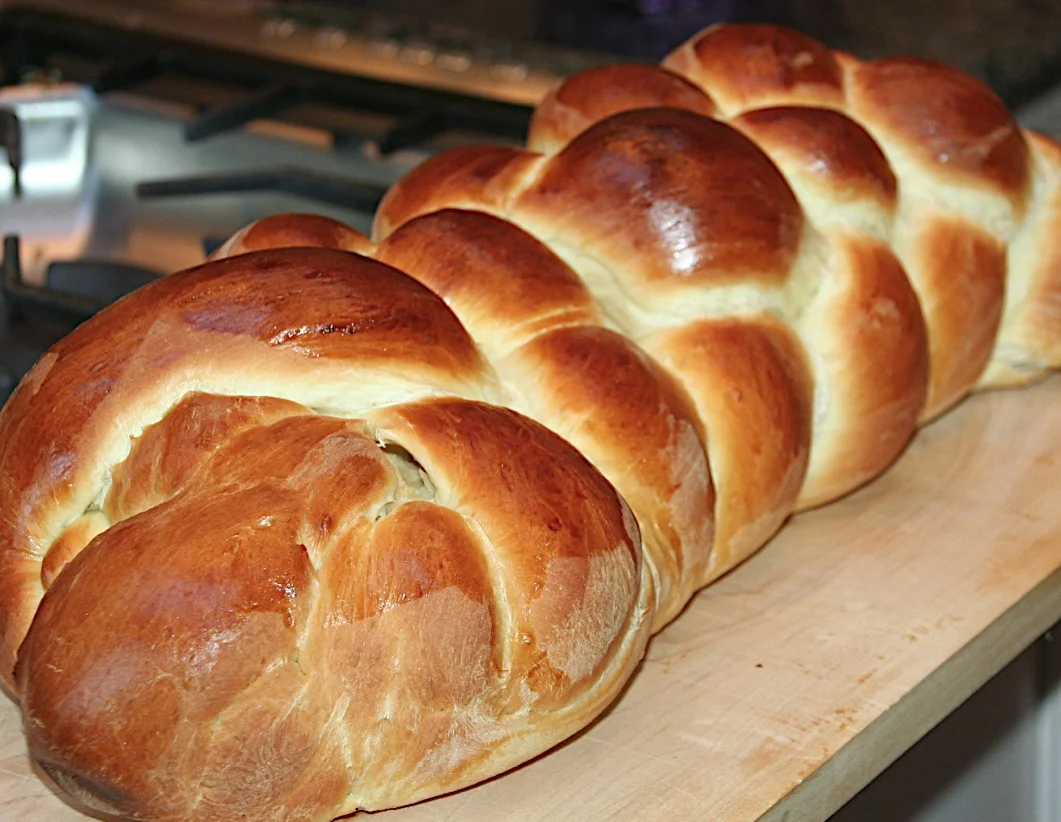
My Grandma's Award-winning Challah

My house is going to smell GREAT today! It’s Friday. The grandkids are coming for the weekend. That means challah with dinner, Challah French Toast in the morning.There are few things that smell as good as a challah baking in the oven.This challah r…

My house is going to smell GREAT today! It’s Friday. The grandkids are coming for the weekend. That means challah with dinner, Challah French Toast in the morning.

There are few things that smell as good as a challah baking in the oven.

This challah recipe is from my father’s mother. Last year I had lunch with a long lost cousin on my father’s side who had been brought up by that grandmother (and grandfather). I hadn’t seen him in 40 years. We started to talk about his life with them and at some point got to the cooking and of course, the challah. He told me that grandma’s challah was legendary and that once, one of her challahs went up at auction for their synagogue and it raised $100. And that was in the 1930s! A fortune of money, but I guess the buyer knew how good that challah would be.

Grandma’s recipe, as handed down by my mother, had no instructions and the list of ingredients said stuff like “8 hands of flour” and “1/2 hand of sugar.”

It took several tries for me to work this out but I finally did get it right.

Here is the award-winning challah recipe:

Challah

2 packages active dry yeast
1/2 cup warm water (about 105 degrees; feels slightly warm to touch)
1/2 cup sugar
8 cups all-purpose flour, approximately
1 tablespoon salt
5 large eggs
1/4 cup vegetable oil
1–1/2 cups warm water (about 105 degrees)
Poppy seeds or sesame seeds, optional

In a small bowl, mix the yeast, 1/2 cup water, 1/2 teaspoon sugar and a pinch of flour. Stir and set aside for about 5 minutes or until the mixture is bubbly.

While the yeast is resting, place 7-1/2 cups flour with the remaining sugar and salt in the bowl of an electric mixer with a dough hook. Add 4 of the eggs, the vegetable oil and the 1-1/2 cups water. Mix, using the dough hook until well combined. Add the yeast mixture and blend in thoroughly. Knead for about 3-4 minutes or until the dough is smooth and elastic. Add more flour as needed to make the dough smooth and soft, but not overly sticky.

Cover the bowl and let the dough rise in a warm place for about 1-1/2 hours or until doubled in bulk. Punch the dough down, cover the bowl and let rise again for about 45 minutes or until doubled in bulk. Remove the dough to a floured surface.

Cut the dough into 3 or 6 pieces, depending on whether you are going to make a 3 or 6 strand braid. Make long strands out of each piece. Braid the strands and seal the ends together by pressing on the dough. Place the bread on a lightly greased cookie sheet. Beat the last egg. Brush the surface with some of the egg. Sprinkle with seeds if desired. Let rise in a warm place for 30 minutes.

While the dough is in the last rise, preheat the oven to 350 degrees. Bake the challah for about 30 minutes or until firm and golden brown.

Makes one large challah. You can cut the dough in half to make two smaller loaves (bake for about 22-25 minutes) or make a half recipe. (For half recipes you can use a food processor to make and knead the dough).

****If you want to make a6-braid challah, click here: 6-braid challah

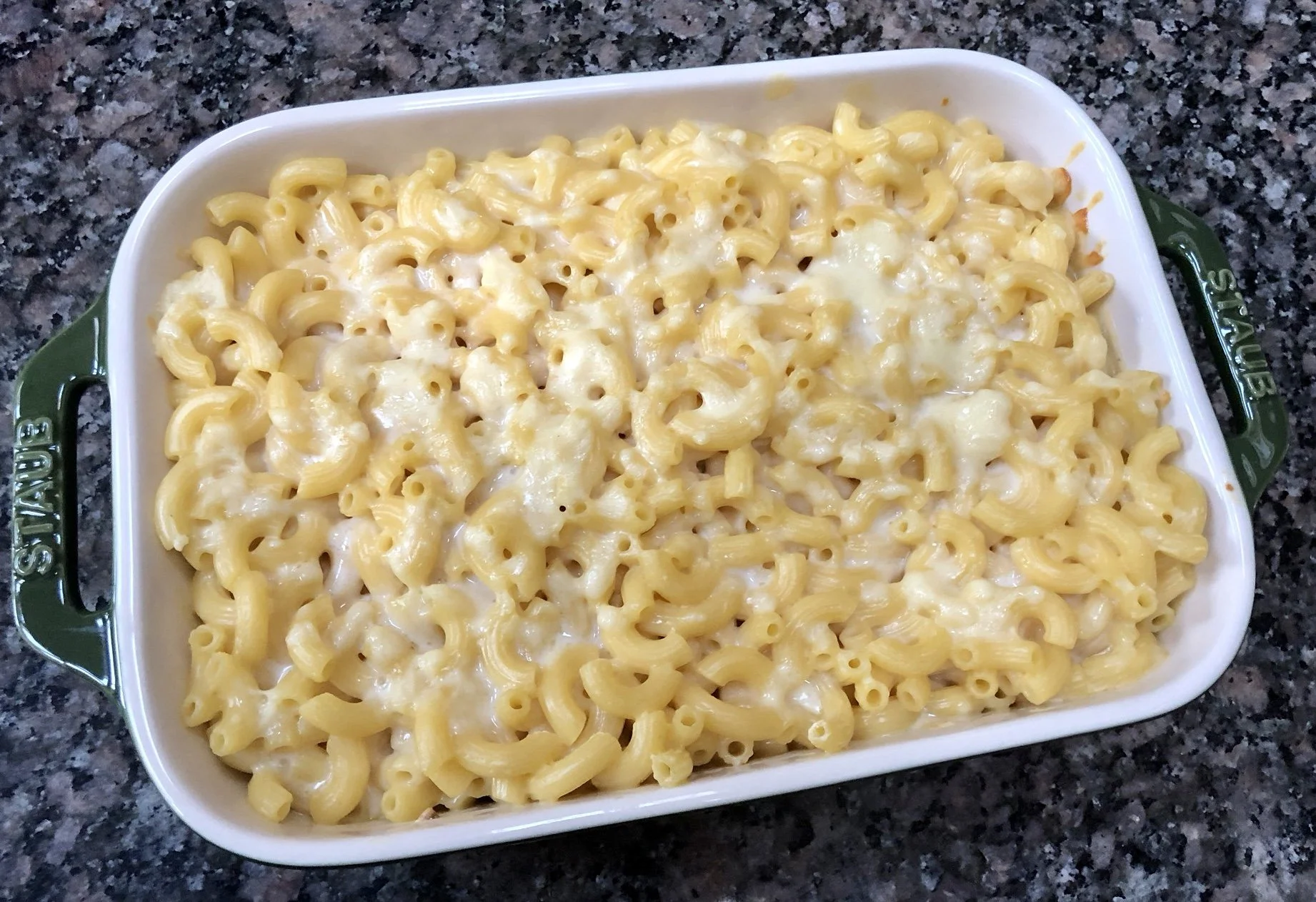
Macaroni and Cheese

What do I cook when the grandkids come for a visit? Well, lots of things depending on which one, but I know I am safe if I have some Macaroni and Cheese on hand. Just in case.

All of my grandchildren like Macaroni and Cheese.

Doesn’t everybody?

If I have time, I make the recipe ahead and freeze portions in one-serving casserole dishes, then thaw and bake them until they’re hot enough.

Macaroni and Cheese is easy enough to make. And yet people ask me questions about it all the time. Mostly about the sauce separating or feeling grainy or gritty. So, here’s some tips for would-be Macaroni and Cheese makers out there. Followed by my standard recipe.

1. You can use a variety of cheeses, even blue-type cheeses, which give the dish a tangy taste. Although most people use cheddar by itself, that can make the texture grainy.

2. Use young cheeses such as asiago, non-aged cheddar, havarti, muenster, non-aged gouda, and so on. These have more water content than aged, older, drier cheeses and melt more easily, keeping the mixture stable.

3. Include American cheese; adding a bit of American cheese to the mix can stabilize the sauce too.

4. Use whole milk rather than skim because fat serves as a stabilizer.

5: Shred, chop or grate the cheese so that it melts more easily when you add it to the hot white sauce. Only add a little at a time and mix it in thoroughly before adding more. If you add cheese all at once there’s more of a tendency for the sauce to separate.

Macaroni and Cheese

  • 8 ounces elbow macaroni

  • 3 tablespoons butter

  • 3 tablespoons all-purpose flour

  • 2 cups whole milk

  • 1/2 teaspoon salt or to taste

  • pinch or two of freshly grated nutmeg

  • 4 ounces American cheese, shredded or chopped

  • 2 ounces Muenster, Gouda or a blue-veined cheese, shredded, chopped or crumbled

  • 2 ounces sharp cheddar cheese, shredded or chopped

  • 1/2 cup grated cheddar cheese

Preheat the oven to 350 degrees. Cook the macaroni until it is al dente, drain and set aside. In a saucepan melt the butter over low-medium heat. When it looks foamy, add the flour and cook, stirring constantly, for 2 minutes, without letting the mixture become brown. Gradually add the milk and stir constantly using a whisk until the sauce is smooth and thickened. Stir in the salt, nutmeg, American cheese, Muenster (or other) cheese and 2 ounces of cheddar cheese and whisk the sauce until the cheese has melted and the sauce is smooth. Stir the sauce into the cooked macaroni. Spoon into a baking dish and top with grated cheddar cheese. Bake for a few minutes until the grated cheese is hot and melty or the bread crumbs are golden brown.

Makes 4 servings

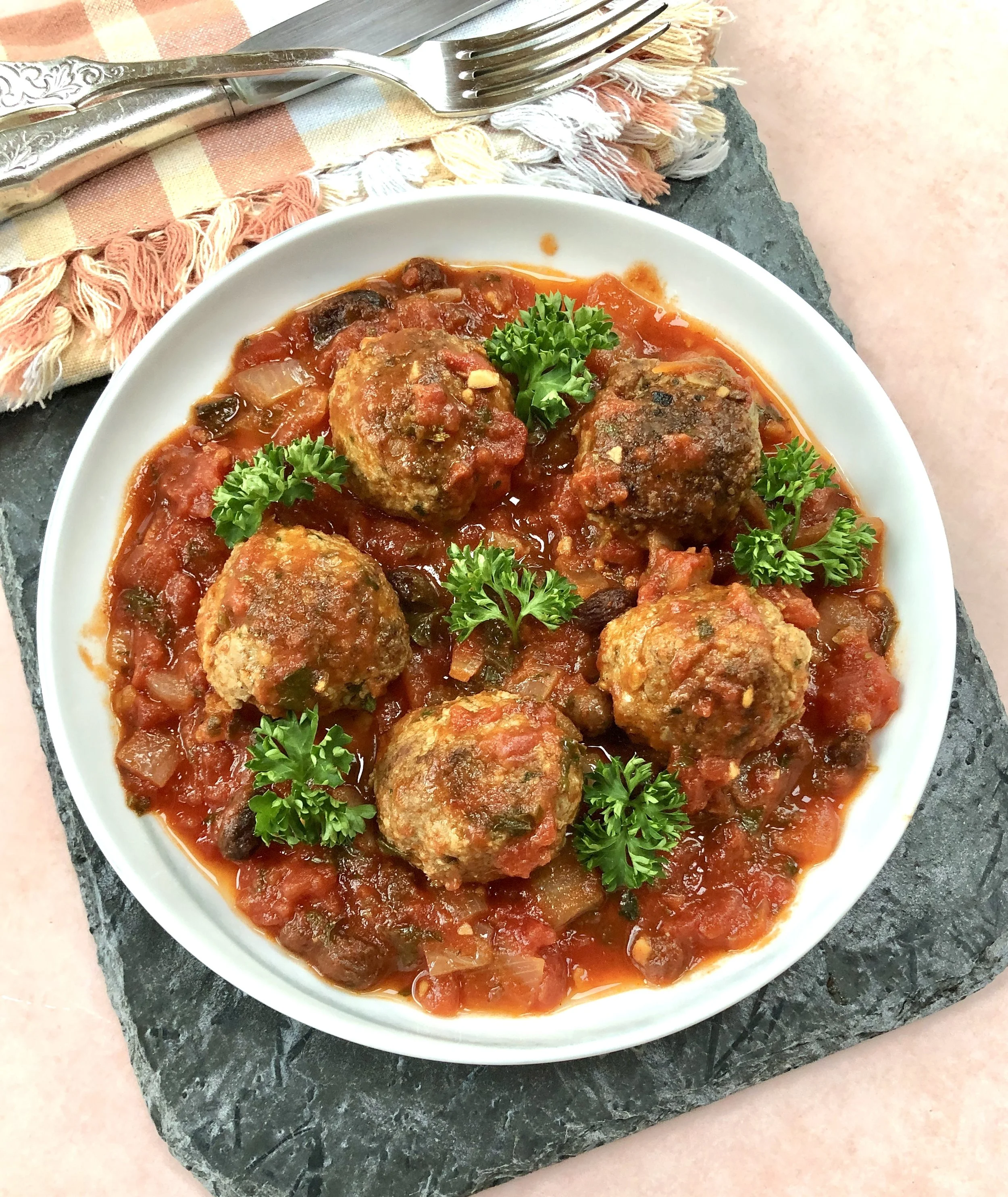
Moroccan Meatball Stew

Meatballs are big these days. I don’t mean big, as in size.

I mean hot.

I don’t mean hot as in temperature.

I mean, meatballs are really really popular right now.

Did you know that there are now meatball restaurants? Also, there have been quite a few articles written about meatballs since the start of the new year.

It’s all okay with me because I like meatballs. Always have. Except for the ones my father made once when my mother was sick and he decided to cook dinner. Unfortunately, cooking was not his long suit. He made the meatballs by rolling ground beef (with nothing else) into balls that were larger than your average cupcake. He put them in the broiler pan, opened a can of tomato paste over them and broiled them to death.

Oh my. 

Moroccan Meatballs (recipe here) are much better. They’re nicely spiced, moist and a wonderful treat when added to a sauce, especially on a chilly or rainy day. The stew goes well with cooked couscous. But you can serve the meatballs on their own too, without the sauce. Still good with couscous.

Moroccan Meatball Stew

  • 1 pound ground beef

  • 1/2 pound ground turkey

  • 1 small onion, grated

  • 1 large egg

  • 1/2 cup fresh breadcrumbs

  • 3 tablespoon chopped fresh parsley

  • 2 tablespoons chopped fresh cilantro

  • 2 teaspoons finely chopped fresh ginger

  • 1/2 teaspoon ground cumin

  • 1/4 teaspoon cayenne pepper

  • 1/4 teaspoon ground cinnamon

  • 1/4 teaspoon grated nutmeg

  • 1/2 teaspoon salt or to taste

  • 1 tablespoon olive oil

Combine the beef and turkey in a large bowl. Add the onion, egg, breadcrumbs, parsley, cilantro, ginger, cumin, cayenne pepper, cinnamon, nutmeg and salt to taste and mix gently to distribute the ingredients evenly. Shape the mixture into balls about 1-1/2 inches in diameter. Heat the olive oil in a non-stick saute pan over medium high heat. Cook the meatballs a few at a time, turning them to brown all the surfaces, for 5-6 minutes or until well browned.

Sauce:

  • 2 tablespoons vegetable oil

  • 1 onion, chopped

  • 2 cloves garlic, finely chopped

  • 1 teaspoon chopped fresh ginger

  • 28 ounce can tomatoes, drained and chopped

  • 1/3 cup raisins

  • 1/3 cup chopped fresh parsley

  • 3 tablespoons chopped fresh cilantro

  • 1 teaspoon ground cumin

  • 1/2 teaspoon ground cinnamon

  • salt and freshly ground black pepper to taste

  • 1 cup beef stock

Heat the vegetable oil in a large saute pan over medium heat. Add the onion and cook for 2-3 minutes. Add the garlic and ginger and cook for another minute. Add the tomatoes, raisins, parsley, cilantro, cumin, cinnamon, salt and pepper and stock. Stir the ingredients, bring to a simmer and cook for 15 minutes. Add the meatballs, cover the pan and simmer for 15-20 minutes.

Makes 4-6 servings