holiday

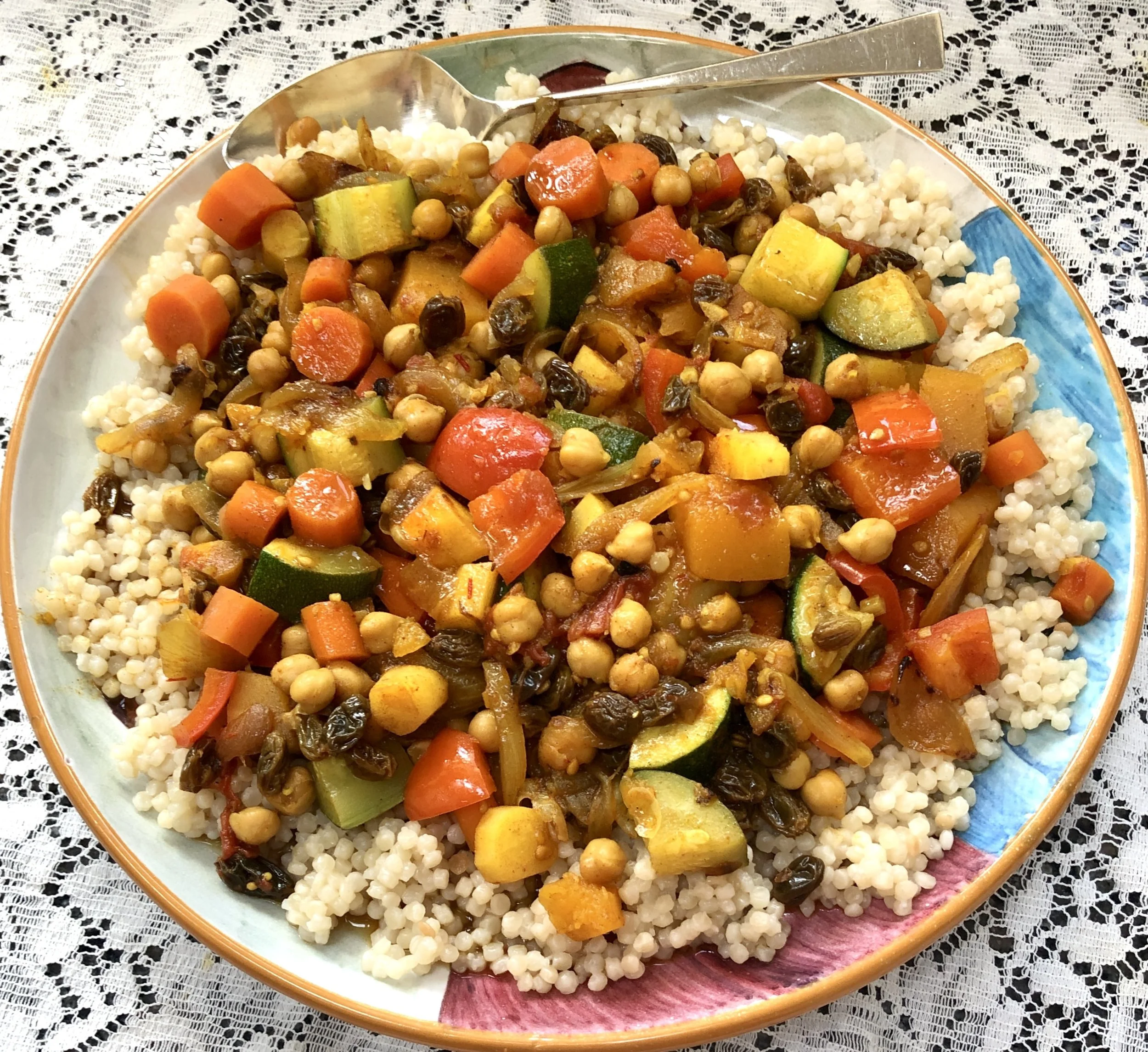
Israeli Couscous with Seven Vegetables

It isn’t my Ashkenazi family tradition, but among North African Jews, and particularly Moroccan Jews, there’s a fabulous dish served on Rosh Hashanah: Couscous with Seven Vegetables.

I’ve cooked versions of this dish several times mostly because it sounded so delicious and also because I am always on the lookout for a good, festive and filling vegetarian entree.

This one satisfies in every way possible.

This is the recipe we like best: I used Israeli couscous rather than the traditional tiny grains of Moroccan couscous because my family likes it better. Also, I used Harissa paste (because I always have some) but you can substitute red pepper flakes or a pinch or two of cayenne pepper (or leave it out if you don’t want any pepper). My husband said he would like more raisins. Up to you…..

Israeli Couscous with Seven Vegetables 

  • 2 tablespoons olive oil

  • 1 large onion (preferably a sweet variety such as Vidalia), sliced

  • 1 teaspoon finely chopped fresh ginger

  • 1 clove garlic, finely chopped

  • 4 carrots, peeled and cut into 1/2-inch slices

  • 2 medium tomatoes, cut into chunks

  • 1 parsnip, peeled and cut in 1/2-inch slices

  • 1 cup cut up bite sized butternut squash

  • 1/2 teaspoon harissa paste

  • 1/2 teaspoon ground turmeric

  • 1/2 teaspoon ground cinnamon

  • 2-1/2 cups vegetable stock

  • 1/2 large red bell pepper, cut into bite sized chunks

  • 1 small zucchini, cut into bite sized chunks

  • 1 cup raisins

  • 1 cup canned chickpeas, rinsed and drained

  • Salt to taste

  • 1-1/2 cups Israeli couscous

Heat the olive oil in saucepan over medium heat. Add the onion and cook, stirring often, for about 5-6 minutes or until softened and beginning to brown. Add the ginger and garlic and cook for 1-2 minutes. Add the carrots, tomatoes, parsnip and squash and stir the ingredients. Stir in the harissa, turmeric and cinnamon. Add the stock, bring to a boil, reduce the heat to medium low and cook for about 15 minutes. Add the bell pepper, zucchini, raisins and chickpeas. Cook for about 10 minutes more, or until vegetables are tender. Add salt to taste. Cook the couscous according to the manufacturer’s directions. Spoon the couscous on large serving platter. Spoon the vegetables and pan fluids over the couscous.

Makes 4 dinner servings, 8 side dish ervings
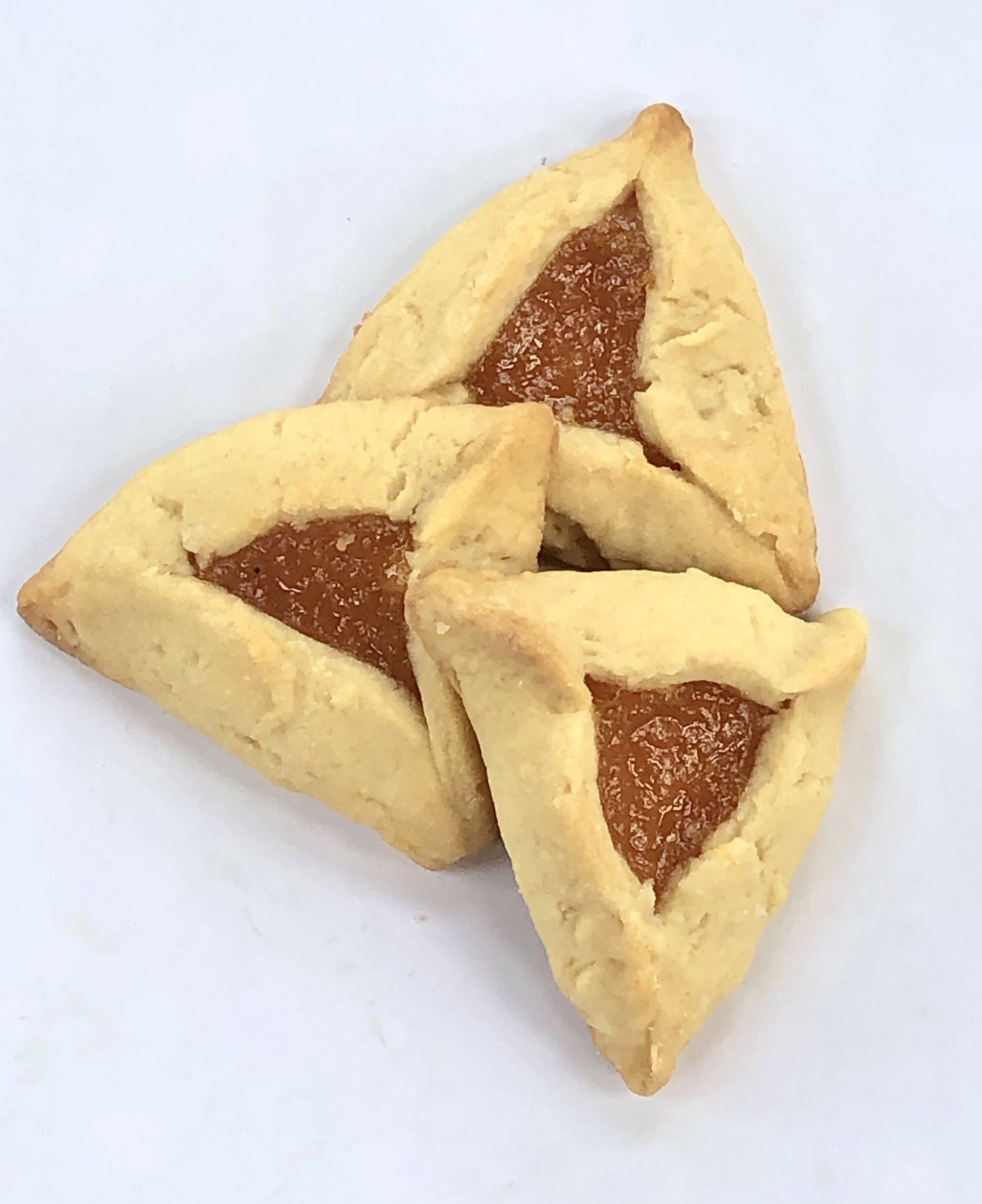
 

Classic, Dairy-free Hamantashen

Every year in the few weeks before Purim I look with great anticipation for new variations on hamantashen. I can’t get over the creativity, not to mention how delicious so many of them sound! Halvah hamantashen (Amy Kritzer). Savory gochujang caramel hamantashen (Sharon Matten). A large, all-in-one, easy-to-bake pear-filled puff pastry hamantashen galette (Leah Koenig). Mazal tov to these fabulous women and the culinary magic they spin.

I also love tinkering and experimenting with recipes, creating new riffs on classics and making up recipes out of whole cloth. I’ve been doing this throughout my food-writing career. In fact, speaking of Purim and hamantashen, one year I won a contest run by Soom foods for my Spiced Lamb Phyllo Hamantashen with Lemon-Tahini Sauce.

OTOH sometimes I just want the old thing.

Like this past week, when I decided to bake some hamantashen for Purim and just wanted plain old apricot.

How about both? Why not!

Have fun baking hamantashen for the holiday — whether you decide to go with something new or the old classic. Or both.

Btw, if you need a good, classic dairy/shortbread version, here it is.

Here’s one for frozen dough hamantashen.

And in case you like prune-filled hamantashen, here’s my recipe for prune lekvar.

Classic, Dairy-free Hamantashen

  • 1-3/4 cups all-purpose flour

  • 1/2 cup confectioners’ sugar

  • 1-1/2 teaspoons grated orange peel

  • 1-1/2 teaspoons baking powder

  • 1/4 teaspoon salt

  • 1/4 cup cold vegetable shortening, cut into chunks

  • 3 tablespoons solid coconut oil

  • 3 tablespoons vegetable oil

  • 1/3 cup orange juice

    Combine the flour, confectioners’ sugar, orange peel, baking powder and salt in a bowl. Add the shortening and coconut oil and work into the dry ingredients until the mixture is crumbly. Combine the vegetable oil and orange juice and pour into the flour mixture. Mix until a soft dough has formed. Cover and chill for at least one hour. Preheat the oven to 350 degrees. Roll the dough thin (about 1/8” inch thick). Cut out circles with a 3-inch cookie cutter. Place about 2 teaspoons of filling in the center of each circle. Fold the dough around the filling to form a triangle. Seal them edges tightly. Place the triangles on a parchment-lined baking sheet and bake for 20-22 minutes or lightly tanned.

     Makes 16-18


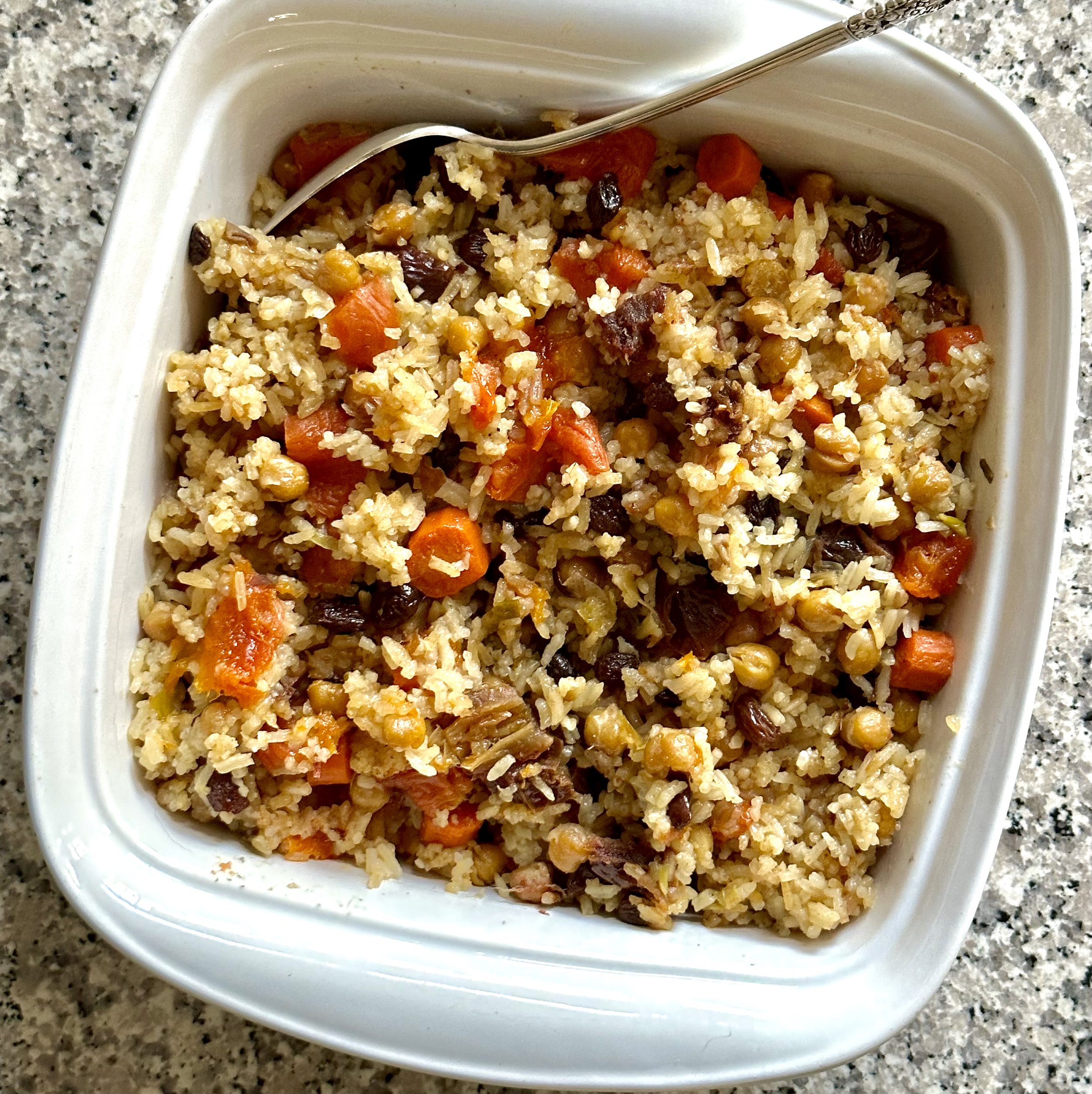
Chick Pea, Dried Fruit and Vegetable Pilaf

We have been eating more vegetarian dishes recently — somehow just in the mood and don’t have as big a yen for meat.

Besides, vegetarian dishes are traditional for Purim, which begins at sundown on Monday, March 6, 2023, so the casserole recipe below is something for you to consider this year.

We had this dish a few times (variations) and loved the combination of tangy and sweet (dried fruit), the savory chick peas and the seasoned but just gently spicy flavors in the rice.

It’s also a good way to use up rice and chick peas if you don’t eat them during Passover.

And — it’s a good bet for Break-the-fast if (as we do) you have a dairy or vegetarian feast instead of the traditional smoked fish.

Chick Pea, Dried Fruit and vegetable Pilaf

  • 1 15 ounce can chick peas, drained

  • 3 tablespoons olive oil

  • salt, paprika

  • 3-4 medium scallions (or use a yellow onion), chopped

  • 1 large clove garlic, chopped

  • 2 medium carrots sliced 1/2-inch thick

  • 1/2 cup halved dates, preferably medjool

  • 1/3 cup cut up dried apricots

  • 1/3 cup golden raisins

  • 1-1/2 teaspoons grated lemon zest

  • 1 teaspoon cumin

  • 1/2 teaspoon ground coriander

  • pinch or two of Aleppo pepper (or use crushed red pepper or cayenne)

  • 1 cup white rice

  • 2 cups vegetable stock

Preheat the oven to 400 degrees. Place the chick peas on a parchment paper lined baking sheet, pour one tablespoon of the olive oil over them and toss to coat them. Sprinkle with salt and paprika. Roast for about 20 minutes, shaking the pan occasionally, or until the chick peas are lightly crispy. When they are done, remove the chick peas from the oven, set them aside and turn the oven heat to 350 degrees. Heat 2 tablespoons of the olive oil in a large heat-proof, oven-proof pan over medium heat. Add the scallions, garlic and carrots and cook for 1-2 minutes. Add the dates, apricots and raisins. Sprinkle with salt, cumin, coriander and Aleppo pepper, stir and cook for 1-2 minutes. Add the rice and chick peas. Stir to distribute the ingredients evenly. Pour in the stock, bring to a boil. Remove from the heat, cover the pan and place in the oven. Bake for about 45 minutes. Let rest, covered, for 10 minutes.

Makes 4 servings

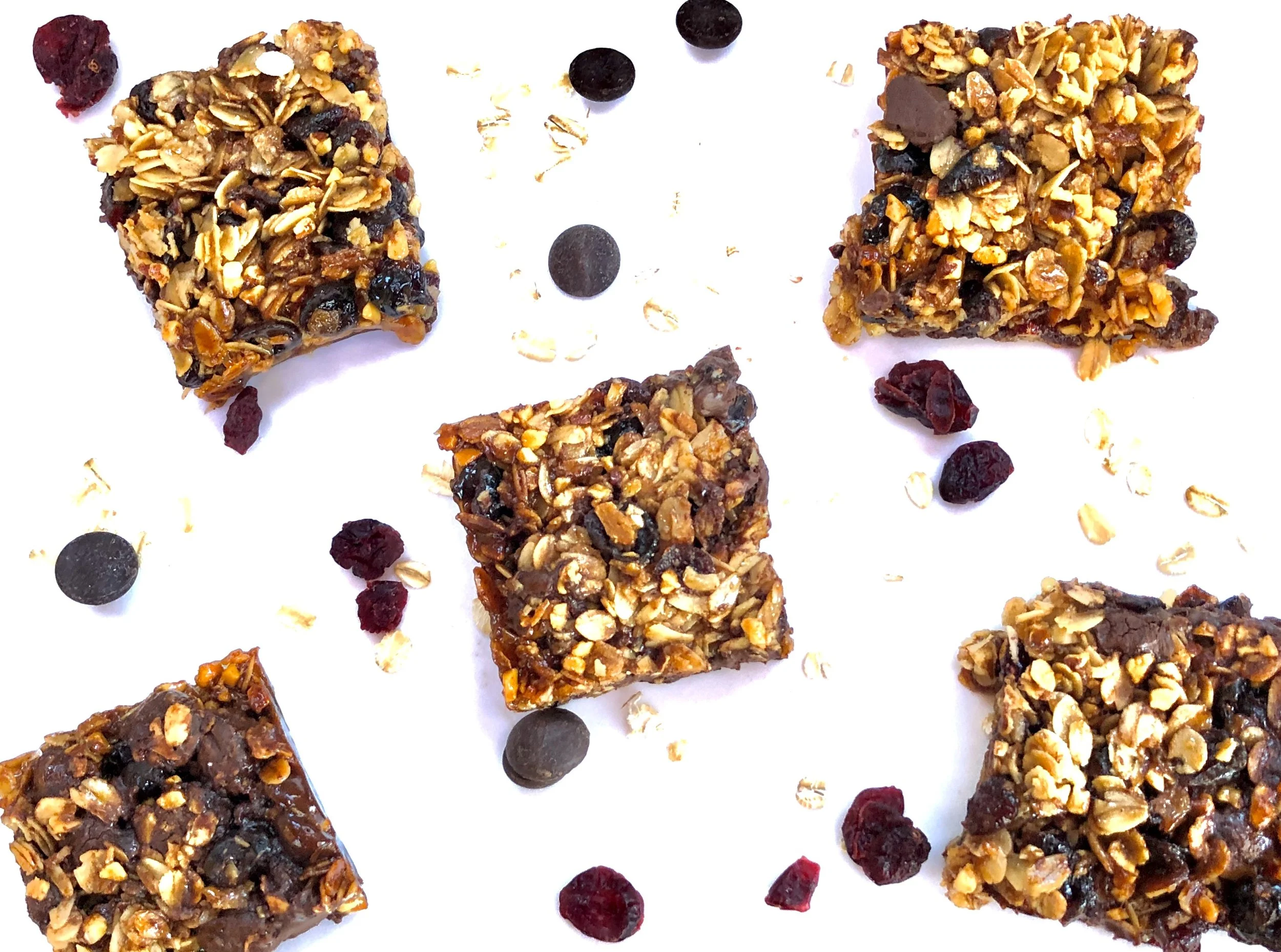
Cranberry-Oat-Chocolate Chip Bars

Back in the day — before emailing — I hand-delivered hard copy of the food articles I wrote to the editors of the various media I wrote for (I snail-mailed copy to the people who were further away). After some years I would deliver (or send) “floppy discs.”

Of course that ended long ago and with it, the hundreds of cookies I baked, packed, decorated and delivered to the various newsrooms during the year-end holiday season.

Today? I still bake cookies — not as many! — because I always think of the end of the calendar year as cookie season. Christmas cookies. Hanukkah cookies. New Year cookies. Kwanzaa cookies. I give a lot away to friends but there’s always a load left for us in my freezer.

Whatever you want to celebrate, cookies always win.

Like these Cranberry-Oat bars. Bonus: they’re egg-free, dairy-free and gluten-free.

Happy Everything.

Cranberry-Oat-Chocolate Chip Honey Bars

  • 2 cups rolled oats

  • 1/2 cup chopped almonds

  • 6 tablespoons vegetable oil

  • 1/2 cup honey

  • 1/3 cup maple syrup

  • 1/4 cup brown sugar

  • 1/2 teaspoon salt

  • 1 teaspoon ground cinnamon

  • 1 cup dried cranberries

  • 3/4 cup chocolate chips

Preheat the oven to 350 degrees. Lightly grease a 9-inch square cake pan, line the pan with parchment paper, leaving an overhang (to pull the cookies out after baking) of about 3-inches on each side. Lightly grease the paper. Place the oats and almonds on a cookie sheet and bake for 4-5 minutes, stirring once or twice, or until the oats and almonds are lightly toasted and aromatic. Remove from the oven. In a medium saucepan, combine the vegetable oil, honey, maple syrup, brown sugar and salt and cook, stirring frequently for 2-3 minutes or until hot and smooth. Remove the pan from the heat and stir in the oat mixture. Stir in the cinnamon and cranberries. Let cool. Stir in the chocolate chips. Spoon the mixture into the prepared pan. Bake for 25-30 minutes or until lightly browned. Let cool. Remove by pulling the overhanging paper. Lift out, place on a cutting board and cut into 16-24 pieces.

Makes 16-24 cookies


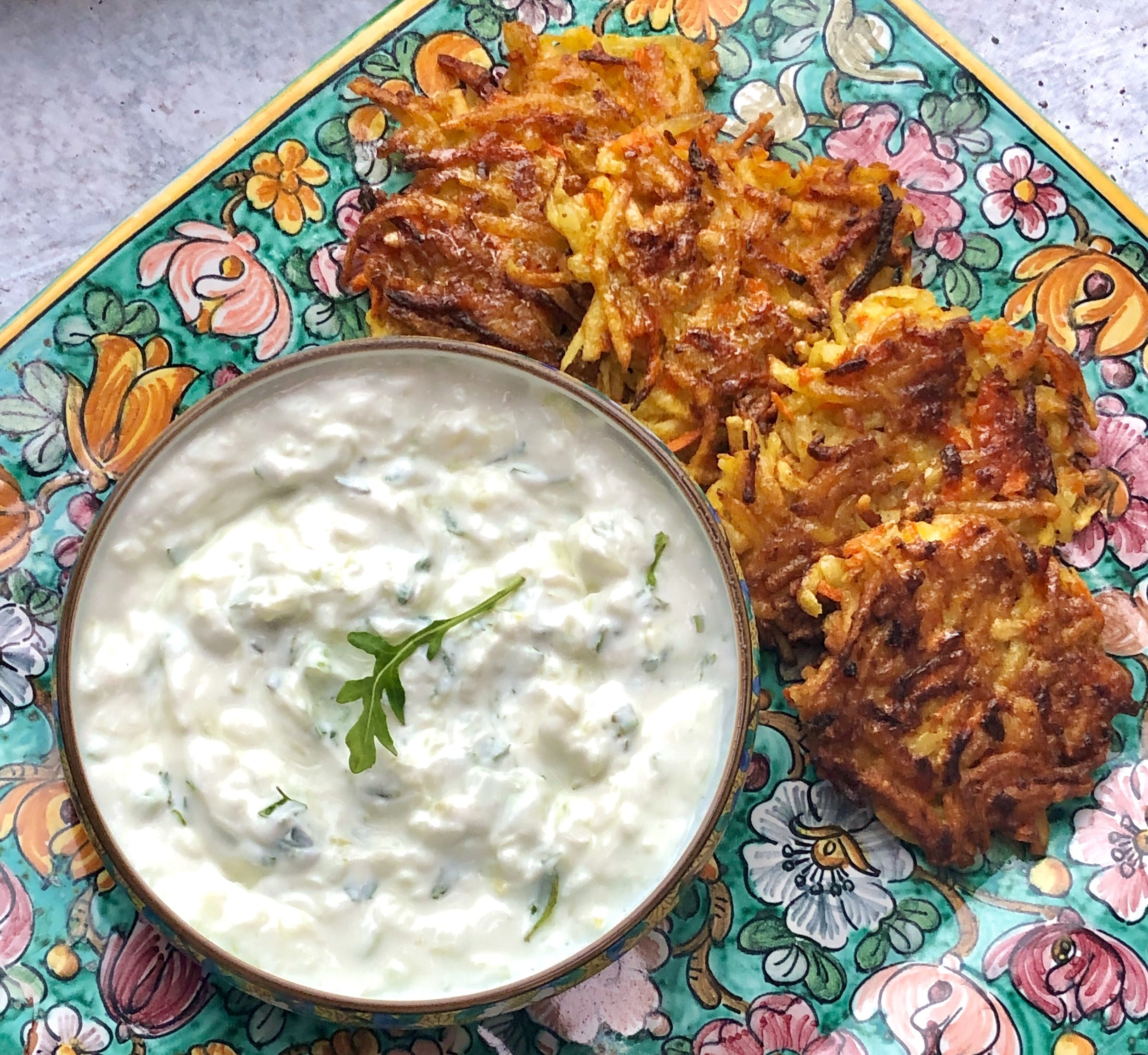
Potato-Carrot-Curry Latkes

Potato latkes for Hanukkah? Of course!

But I make other kinds of latkes too.

This year it’s going to be these potato-carrot latkes. They have just enough curry powder to add an intriguing but not too spicy seasoning. I’ve made them several times already and they’ve been getting rave reviews. I’ll also serve some for my new year’s hors d’oeuvres fest.

The sauce is a bit tangy and very refreshing, sort of like tzadiki (cacik). It’s a soft, rich, smooth and tasty counterpoint for the crispy fried latkes.

Potato-Carrot-Curry Latkes with Yogurt Sauce

  • 3 medium Russet type potatoes, peeled

  • 4 medium carrots, peeled

  • 1 large onion, cut into chunks

  • 2 large eggs

  • 1/4 cup potato starch, matzo meal or bread crumbs

  • 1 teaspoon salt or to taste

  • freshly ground black pepper to taste

  • 2 teaspoons curry powder

  • vegetable oil for frying

Yogurt Sauce

  • 1 cup plain Greek yogurt

  • 2-3 scallions, chopped

  • 1/4 cup grated cucumber

  • 2-3 teaspoons lemon juice


Shred the potatoes, carrots and onion in a food processor. Squeeze out as much of the liquid as possible (I put portions of the shreds in a kitchen towel and squeeze until they are practically dry). Place the shreds in a bowl. Immediately mix the eggs in (this helps keep the potatoes from browning). Add the potato starch, salt, pepper and curry powder. Heat about 1/4” vegetable oil in a heavy pan over medium-high heat. Shape latkes by hand, squeezing liquid out if there is any, and place them in the hot oil, leaving space between each one so that they brown well and become crispy (if they are too close they will “steam” and become soggy). Press down on the latkes to keep them evenly shaped. Fry for about 3 minutes per side or until the pancakes are golden brown and crispy. Drain on paper towels. Serve with the Yogurt Sauce.

To make the sauce, mix the yogurt, scallions, cucumber and lemon juice together until well mixed. Place in a serving bowl.

Makes 12-15

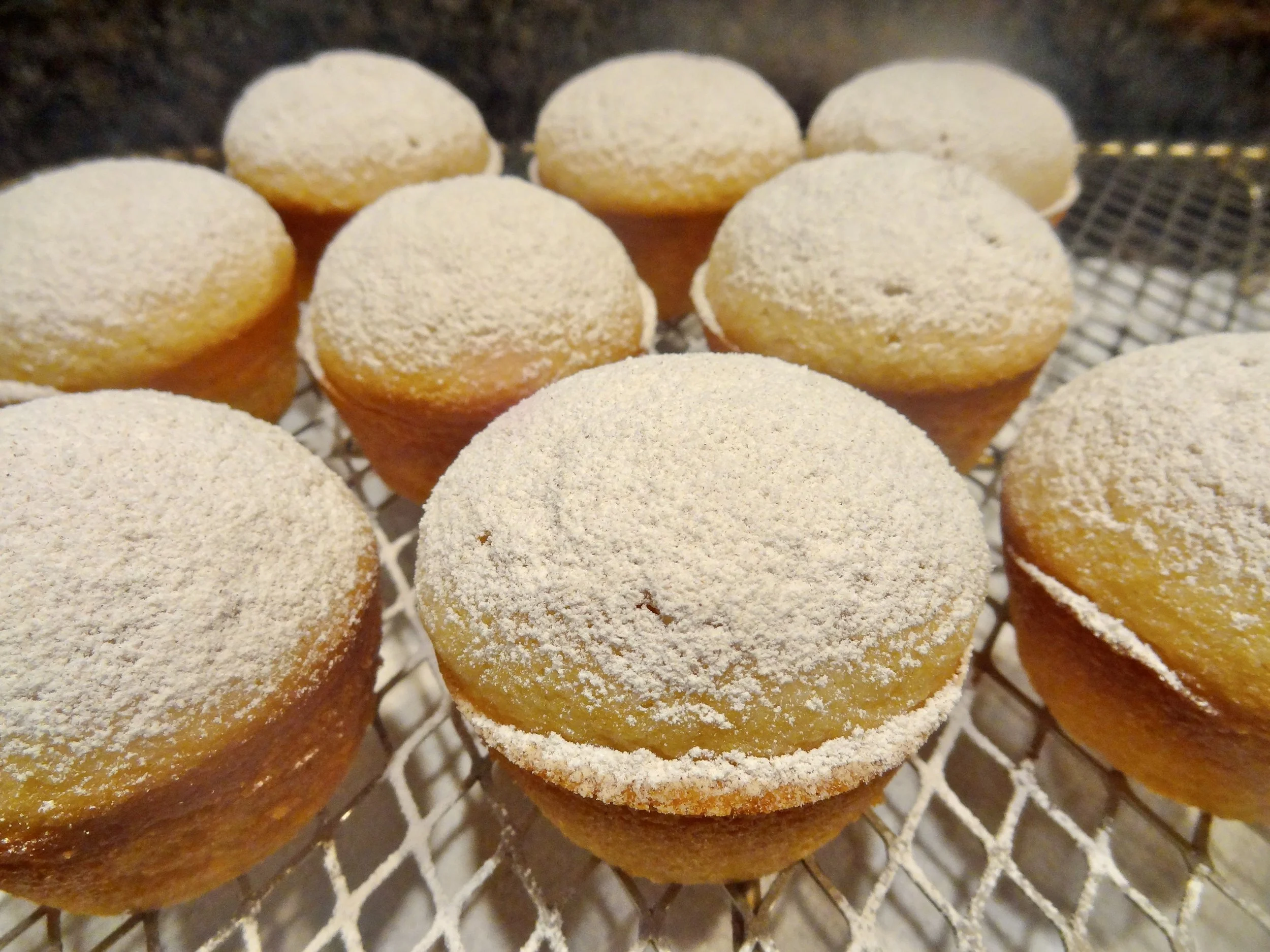
Hanukkah Muffin Tin Doughnuts (Duffins)

Remember a few years ago there was a new bakery item called a duffin?

It’s a cross between a doughnut and a muffin. It became world famous but began in the U.K. at a famous tea room called Bea’s. Then Starbucks sold a version of it and it was a hot item for a while.

I remember duffins because I made them at home and everyone loved them. Unlike classic doughnuts, they are incredibly easy to prepare and taste absolutely wonderful, so for me, these are the best choice when you want a homemade Hanukkah doughnut but don’t want the fry-mess and the fried-food-kitchen-odor.

My version (the recipe first appeared in The Jewish Week) is also dairy-free but you can substitute dairy milk or cream for the coconut milk, and you can brush the surface of the baked muffin with melted butter, then roll it in sugar and stuff it with jam (that’s the way it was done at Bea’s). Also, you can cut them (or use a pastry tube) and fill them with whipped cream or sweetened mascarpone cheese. Or jam.

Btw, I don’t call them duffins because I don’t want to get into legal or social media trouble. So for me, these are simply Hanukkah Muffin Tin Doughnuts.

Hanukkah Muffin Tin Doughnuts (Duffins)

  • 1 cup sugar

  • 1 large egg

  • 3/4 cup coconut milk (or use dairy milk or cream or other nondairy milk)

  • 1/4 cup vegetable oil

  • 1 teaspoon vanilla extract

  • 1-1/2 cups all-purpose flour

  • 2 teaspoons baking powder

  • 1/4 teaspoon salt

  • 2 tablespoons confectioners’ sugar

  • 1/4 teaspoon cinnamon


Preheat the oven to 350 degrees. Lightly grease 10 muffin tin wells. Place the sugar and egg in a large bowl and beat with an electric mixer at medium speed for 1-2 minutes or until light, thick and smooth. Add the coconut milk, vegetable oil and vanilla and mix for 1-2 minutes or until they are thoroughly blended. Mix the flour, baking powder and salt together. Add the flour mixture to the egg mixture and beat at medium speed for a minute or until well blended. Fill the muffin wells about 3/4 full. Bake for 18-20 minutes, or until a toothpick inserted into the center comes out clean. Let cool for 5 minutes. While the doughnuts are baking, mix the confectioners’ sugar and cinnamon together. After the doughnuts are baked, but still warm, sprinkle the tops with the cinnamon sugar.

Makes 10 

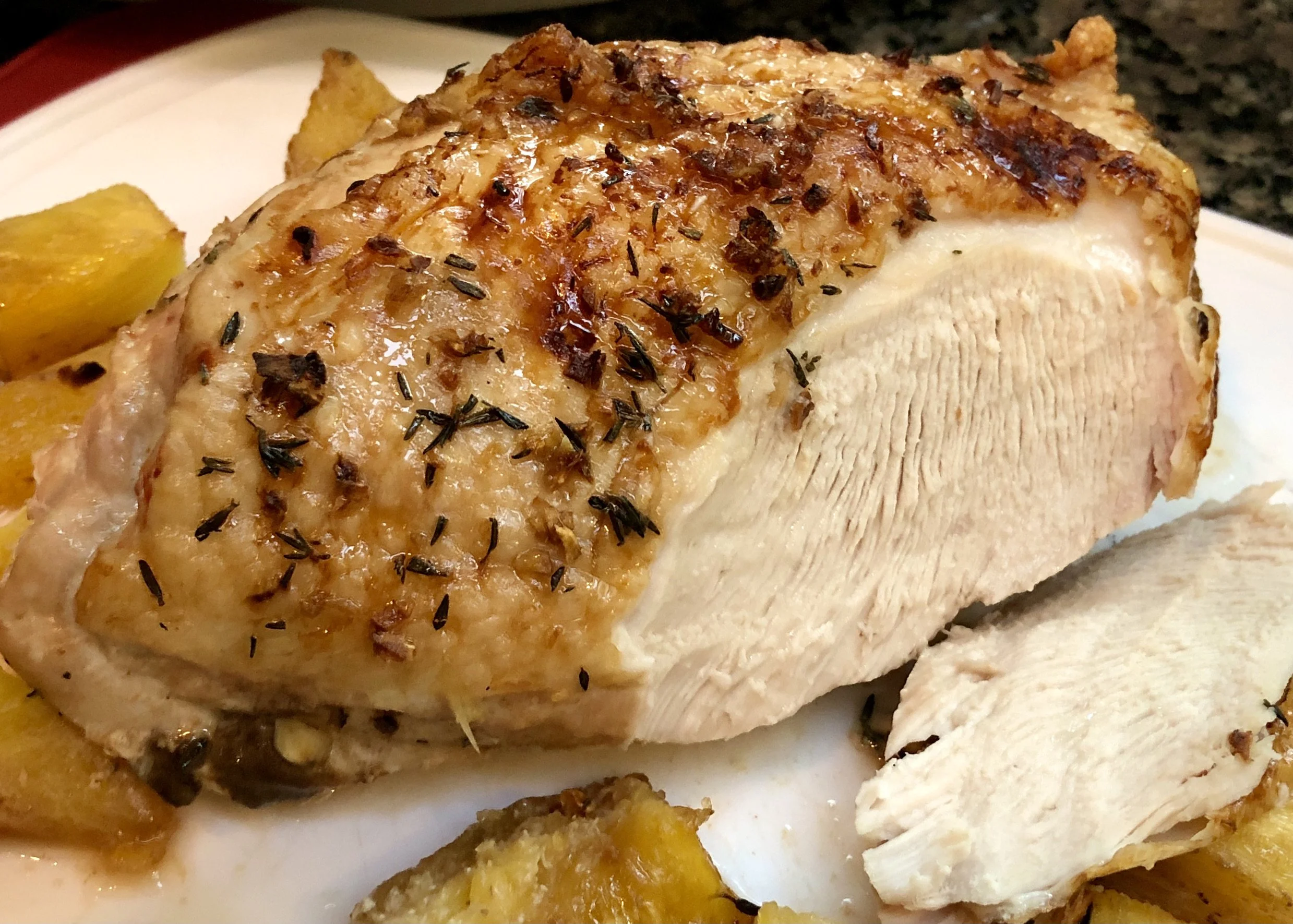
Roasted Turkey Breast with Pineapple, Balsamic Vinegar and Sweet White Wine

Don't want to make a whole turkey?

Fortunately these days you can have it your way. Breast. Drumsticks. Whatever! Every part is sold separately. I always buy extra wings and necks when the whole gang is over.

I made this recipe using 3-pound half breast that was enough for 6 people.

The seasonings and liquids will also work with a large or two medium thighs or drumsticks or 4 wings. Double the ingredients for a whole breast. I’ve doubled this recipe when I roast a whole bird. 

Roasted Turkey Half Breast with Pineapple, Balsamic Vinegar and Wine

  • 1 small pineapple

  • 1/2 turkey breast, about 3-4 pounds

  • 2 tablespoons olive oil

  • 1 clove garlic, finely chopped

  • 1 tablespoon finely chopped fresh ginger

  • 1-1/2 teaspoons chopped fresh thyme leaves

  • salt and freshly ground black pepper to taste

  • 1/2 cup sweet white wine

  • 2 tablespoons Balsamic vinegar

  • 1 tablespoon honey

Preheat the oven to 400°F. Cut out the pineapple flesh and chop it into bite-size pieces. Place the chunks in a roasting pan. Place the turkey breast skin-side up on top of the pineapple chunks and brush the surface with olive oil. Sprinkle with the garlic, ginger, thyme, salt and pepper to taste. Place the turkey in the oven and reduce the heat to 350 degrees. Roast for 25 minutes. Mix the wine, Balsamic vinegar and honey and pour it over the turkey. Continue to roast for 40-60 minutes or until a meat thermometer placed in the thickest part of the breast measures 160 degrees, basting occasionally with the pan juices. Remove the turkey from the oven and let rest for about 15 minutes before carving. Serve with the pineapple and pan fluids.

Makes 6 servings.


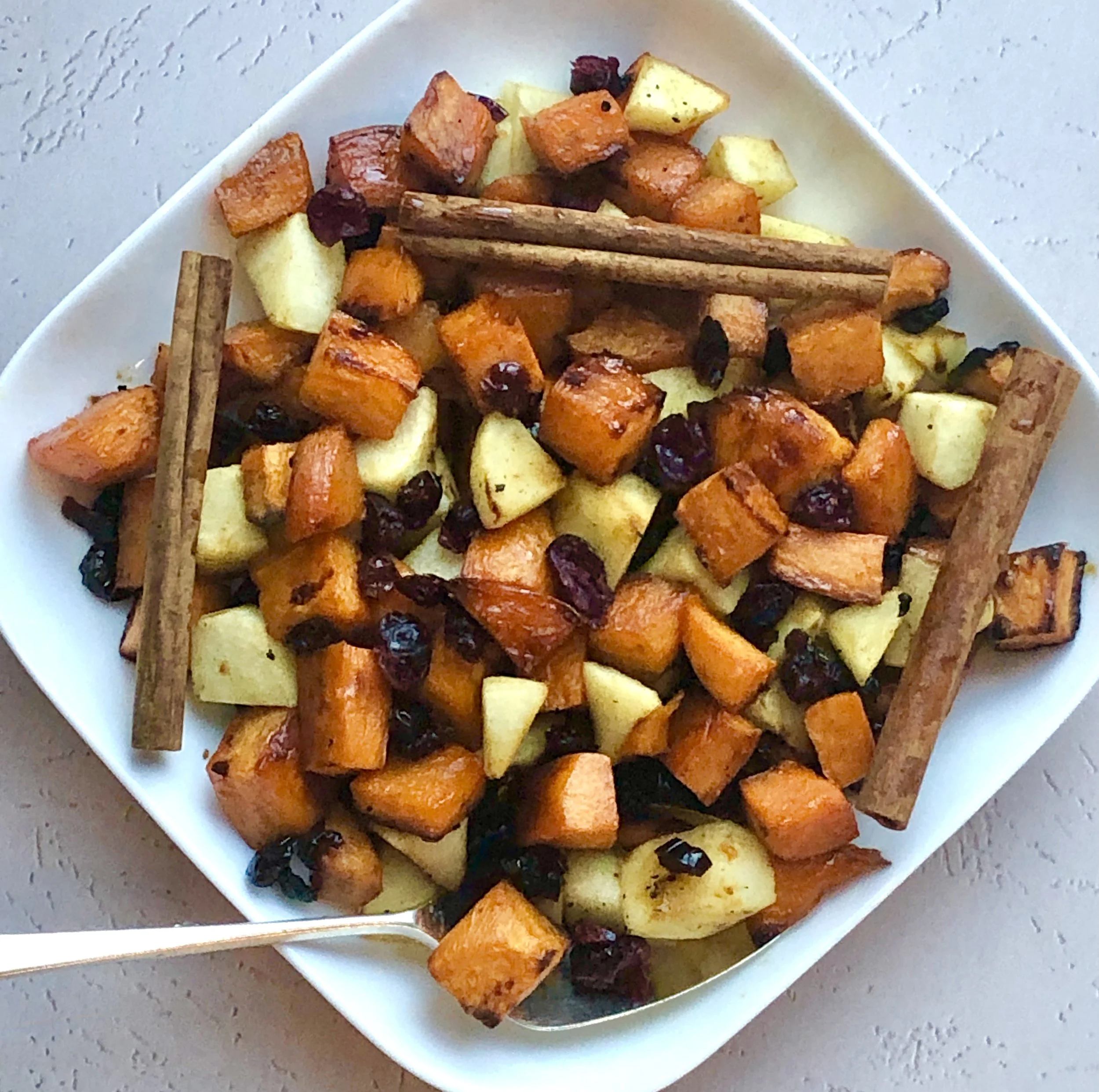
Roasted Sweet Potatoes with Apples and Cranberries

I usually make mashed sweet potatoes of some sort for Thanksgiving. It’s easy (one of my recipes has 3 ingredients), I can make it ahead and I can vary the seasonings from year to year. I can serve them plain or with marshmallows on top.

But, as anyone who knows me knows — I don’t like to cook and/or eat the same food over and over again, so I always tinker a bit and add a new dish or two to a holiday menu.

This year, instead of mashed sweet potatoes I am making this sweet potato/apple combo. I’ve cooked it several times in the last few weeks, to get it right. The flavor combo is perfect: sweet vegetable, tangy fruit; and the texture is nice too: tender sweet potatoes and softened but still firm apple.

Best of all — I can still prep all of it beforehand. It’s also an easy side dish and a nice change from the usual.

Roasted Sweet Potatoes with Apples and Cranberries

  • 3 medium sweet potatoes

  • 2 tablespoons vegetable oil

  • 3 tablespoons maple syrup or honey

  • cinnamon, salt

  • Aleppo (or cayenne) pepper, optional

  • 2 apples, peeled and cut into bite sized pieces

  • 1/4 cup dried cranberries

Preheat the oven to 425 degrees. Line a baking sheet with parchment paper. Peel the sweet potatoes, cut them into bite size pieces and place on the baking sheet. Pour the vegetable oil and maple syrup or honey over the pieces and toss to coat them. Sprinkle lightly with cinnamon, salt and Aleppo pepper if desired. Roast for 12-15 minutes, turning the potatoes once or twice, or until softened. Add the apples and dried cranberries, toss and continue to roast for another 12-15 minutes or until the potatoes and apples are crispy and tender.

Makes 6 servings


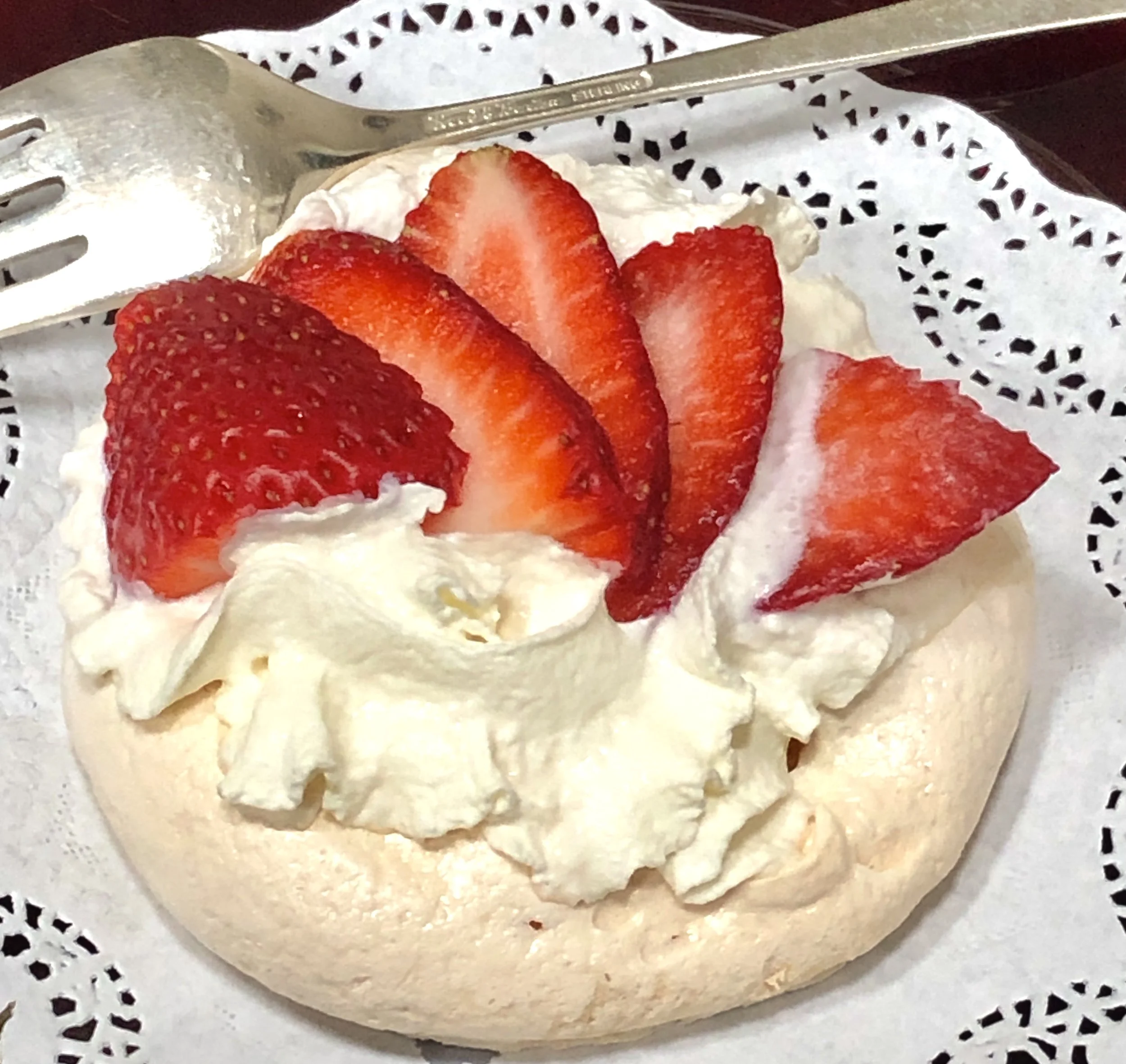
Strawberry Pavlova

If you’re like everyone else who observes Passover, you’ve used a lot of eggs during the holiday!

Our usual family Passover menus use up more yolks than whites, so I’m always left with a load of egg whites. So, because I am one of those “waste not want not” people, I recently made a lot of meringues and meringue cookies and these Pavlovas.

Pavlovas, which are hard meringue shells filled with fruit, lavished with sauce and topped with whipped cream, are sugary sweet and you can do a lot with them. They’re also easy to make and are terrific for Passover because there’s no flour or any other ingredient we can’t eat during the holiday.

The meringue shell-cream-fruit dessert is named after a famous Russian ballet dancer named Anna Pavlova (1881-1931). Food historians say that a hotel chef in either Australia or New Zealand named the dessert after her visit there in 1926. The white meringue shell is said to mimic her tutu and in the original recipe, the shells were filled with kiwi fruit, in imitation of the decorations on one of her outfits. But any soft fruit will do.

Note: for more on beating egg whites properly, click here.

Pavolvas

Meringue Shells:

  • 4 large egg whites at room temperature

  • 1 tablespoon lemon juice

  • 1/4 teaspoon salt

  • 1 cup sugar

  • 3/4 teaspoon vanilla extract

  • whipped cream

  • sliced fruit such as strawberries, kiwi fruit, bananas, etc.

Preheat the oven to 275 degrees. Line a cookie sheet with parchment paper. Beat the egg whites in the bowl of an electric mixer with whisk attachment set at medium speed until the mixture is foamy. Add the lemon juice and salt and beat, gradually increasing the speed, until soft peaks form. Gradually add the sugar (2 tablespoons at a time) and the vanilla and continue to beat, gradually increasing the speed to high, until the mixture stands in stiff, glossy peaks. Spread 8-10 equal amounts of the meringue mixture onto the sheet. Flatten the mounds with the back of a large spoon, leaving the edges slightly higher. Bake for 45 minutes. Reduce the oven heat to 250 degrees. Bake for another 15 minutes. Remove the cookie sheet to a cake rack to cool. Gently release the meringues from the parchment. Fill the centers of the meringue shells with whipped cream. Top with sliced fresh fruit.

Makes 8-10

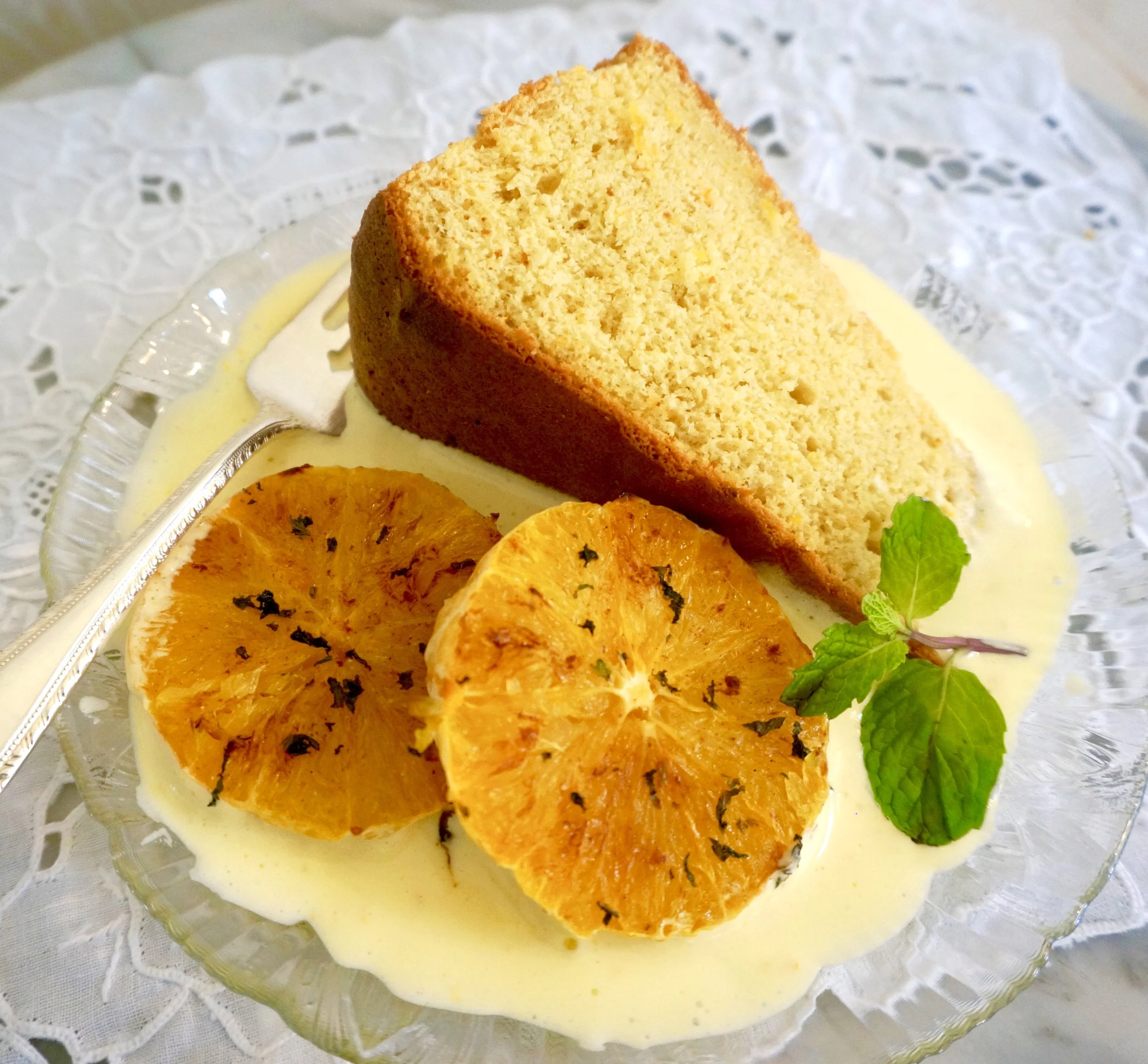
Passover Orange Cake with Roasted Oranges and Zabaglione

fullsizeoutput_89c2.jpeg

When I was growing up the standard Seder dessert was sponge cake. Everyone made fun of it and said it was true to its name and that frankly, biting into a sponge was not a good thing.

I actually never cared because as long as I got chocolate covered macaroons I was a happy girl.

By the time I began to host the Seders, flourless chocolate cakes had become fashionable and my aunt Rozzie's recipe for sponge cake was tucked away in a recipe file.

Now more time has gone by and my family got bored with flourless chocolate cake. So I spent years experimenting with flourless rolled cakes and cakes made with nut crumbs instead of wheat and going fancy with layers of jelly-roll pan cakes. Some of those were absolutely fabulous.

But a few years ago I decided to pull out the family recipe. That sponge cake isn't spongy at all. The trick is not to overbeat the egg whites, which are supposed to be thick and glossy with tips that fall over slightly (not so beaten that you can cut a chunk off). Also — fold in the beaten whites rather than mixing them in vigorously.

Although the cake is just fine, plain or served with sorbet, I have served it with a rich and creamy zabaglione sauce and some roasted oranges, which provide a tangy contrast to the sweet cake. They also make a plain sponge cake a bit more festive looking, so it’s a good bet for the holiday.

Bonus: you can make all parts in advance!


Passover Orange Cake with Roasted Oranges and Zabaglione

  • 12 large eggs, separated, at room temperature

  • 1-3/4 cups sugar

  • 6 tablespoons orange juice

  • 1/4 cup lemon juice

  • 2 tablespoons finely grated orange peel

  • 1 tablespoon finely grated lemon peel

  • 1 cup matzo cake meal, sifted after measuring

  • 1/3 cup potato starch

  • Passover Zabaglione

  • Roasted Orange Slices

Preheat the oven to 350 degrees. Line the bottom of a large (10-1/2-inch - 11-inch springform pan with parchment paper and lightly grease the paper. Beat the egg yolks and 1-cup of the sugar in a mixer bowl at medium-high speed for 3-4 minutes or until the mixture is thick and pale yellow. Stir in the orange juice, lemon juice, orange peel and lemon peel, mix thoroughly and set aside. In another bowl, beat the egg whites at medium speed until they are foamy. Continue to beat, gradually increasing the speed and gradually adding the remaining 3/4 cup sugar. Beat until the whites are stiff but not dry, and look glossy. Stir about one-quarter of the beaten whites into the yolk mixture. Gently fold the remaining beaten whites into the yolk mixture, until the mixture is uniform in color. In a small bowl whisk the matzo cake meal and potato starch until they are thoroughly blended. Using about 1/4 of the matzo meal mixture at a time, fold the mixture into the egg mixture until the ingredients are thoroughly blended. Pour the batter into the prepared pan. Bake for 55-60 minutes or until a cake tester inserted into the center comes out clean. Cool the cake in the pan on a wire rack. When ready to serve, spoon some zabaglione onto serving dishes, place a slice of cake on top and surround with some roasted orange slices. (Or serve with sorbet, whipped cream, ice cream, etc. to suit your meal.)

Makes 12 servings

Passover Zabaglione

  • 8 large egg yolks

  • 3/4 cup sugar

  • 2 tablespoons finely grated orange peel

  • 1/2 cup sweet white Passover wine

  • fresh mint as garnish

Place the egg yolks, 3/4 cup sugar and the orange peel in the top part of a double boiler set over barely simmering water. Beat the ingredients with a hand mixer at medium speed for about 3 minutes or until the mixture is thick and pale yellow. Continue to beat, gradually increasing the speed to high and gradually adding the wine. Beat for 8-10 minutes or until the mixture is thick and fluffy. You may use the zabaglione warm, immediately, or let it cool to room temperature.

Makes about 3 cups

Roasted Orange Slices

  • 6 navel oranges

  • 2 tablespoons melted coconut oil (or butter)

  • 1 tablespoon sugar

  • ground cinnamon (approximately 1/2 teaspoon)

  • 2 tablespoons finely chopped fresh mint

Preheat the oven to 450 degrees. Line a baking sheet with parchment paper. Peel the oranges removing as much of the white pith as possible. Cut the oranges crosswise into 24 even slices (there should be 4 center slices from each orange; reserve the ends for other purposes). Place the slices on the baking sheet. Brush the tops with the coconut oil. Sprinkle with the sugar. Sprinkle lightly with cinnamon and the mint. Roast for about 4 minutes. Turn the slices over and roast for another 4-6 minutes or until lightly browned. Remove from the oven and set aside.

Makes 12 servings