Jewish food

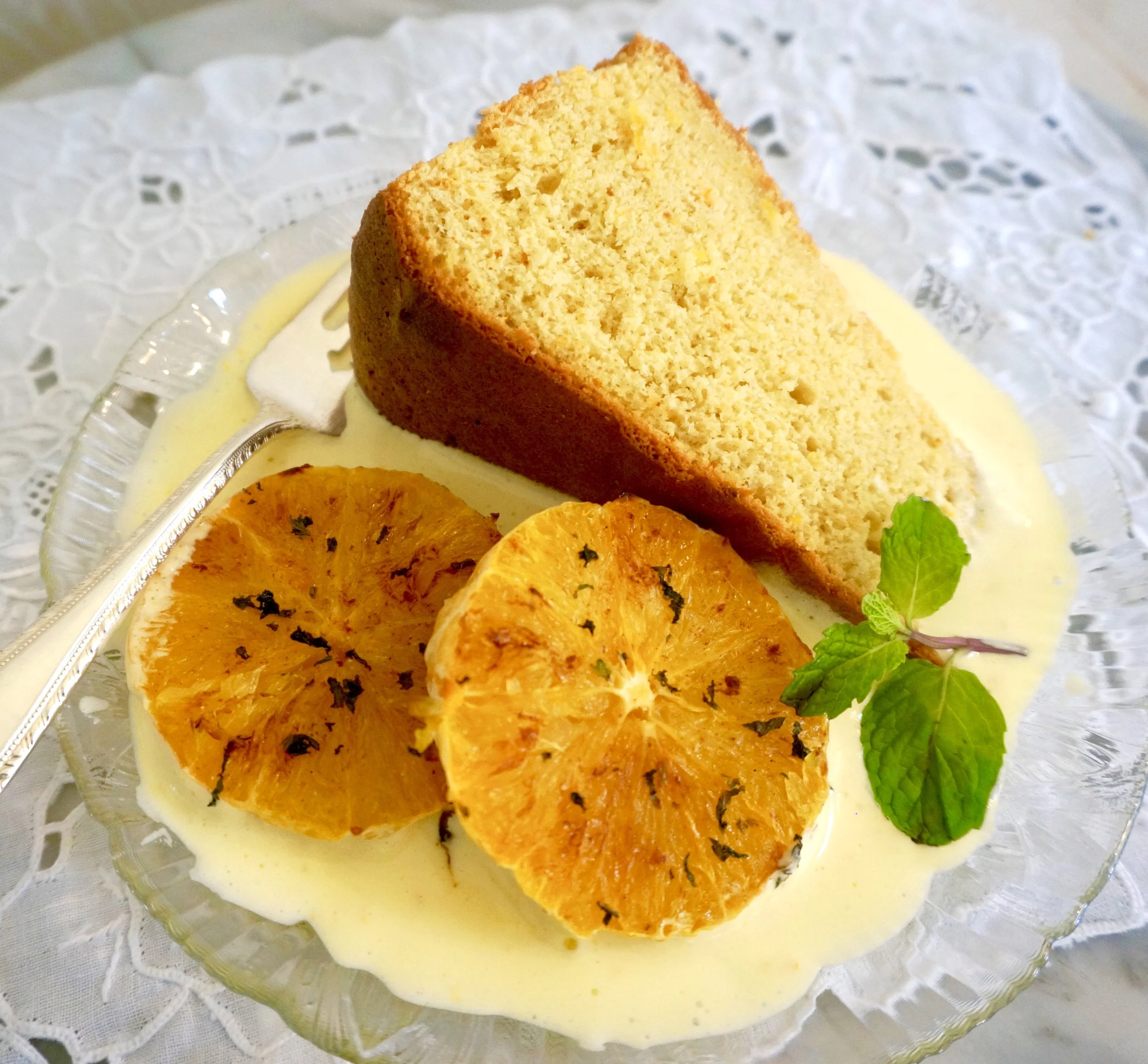
Passover Orange Cake with Roasted Oranges and Zabaglione

fullsizeoutput_89c2.jpeg

When I was growing up the standard Seder dessert was sponge cake. Everyone made fun of it and said it was true to its name and that frankly, biting into a sponge was not a good thing.

I actually never cared because as long as I got chocolate covered macaroons I was a happy girl.

By the time I began to host the Seders, flourless chocolate cakes had become fashionable and my aunt Rozzie's recipe for sponge cake was tucked away in a recipe file.

Now more time has gone by and my family got bored with flourless chocolate cake. So I spent years experimenting with flourless rolled cakes and cakes made with nut crumbs instead of wheat and going fancy with layers of jelly-roll pan cakes. Some of those were absolutely fabulous.

But a few years ago I decided to pull out the family recipe. That sponge cake isn't spongy at all. The trick is not to overbeat the egg whites, which are supposed to be thick and glossy with tips that fall over slightly (not so beaten that you can cut a chunk off). Also — fold in the beaten whites rather than mixing them in vigorously.

Although the cake is just fine, plain or served with sorbet, I have served it with a rich and creamy zabaglione sauce and some roasted oranges, which provide a tangy contrast to the sweet cake. They also make a plain sponge cake a bit more festive looking, so it’s a good bet for the holiday.

Bonus: you can make all parts in advance!


Passover Orange Cake with Roasted Oranges and Zabaglione

  • 12 large eggs, separated, at room temperature

  • 1-3/4 cups sugar

  • 6 tablespoons orange juice

  • 1/4 cup lemon juice

  • 2 tablespoons finely grated orange peel

  • 1 tablespoon finely grated lemon peel

  • 1 cup matzo cake meal, sifted after measuring

  • 1/3 cup potato starch

  • Passover Zabaglione

  • Roasted Orange Slices

Preheat the oven to 350 degrees. Line the bottom of a large (10-1/2-inch - 11-inch springform pan with parchment paper and lightly grease the paper. Beat the egg yolks and 1-cup of the sugar in a mixer bowl at medium-high speed for 3-4 minutes or until the mixture is thick and pale yellow. Stir in the orange juice, lemon juice, orange peel and lemon peel, mix thoroughly and set aside. In another bowl, beat the egg whites at medium speed until they are foamy. Continue to beat, gradually increasing the speed and gradually adding the remaining 3/4 cup sugar. Beat until the whites are stiff but not dry, and look glossy. Stir about one-quarter of the beaten whites into the yolk mixture. Gently fold the remaining beaten whites into the yolk mixture, until the mixture is uniform in color. In a small bowl whisk the matzo cake meal and potato starch until they are thoroughly blended. Using about 1/4 of the matzo meal mixture at a time, fold the mixture into the egg mixture until the ingredients are thoroughly blended. Pour the batter into the prepared pan. Bake for 55-60 minutes or until a cake tester inserted into the center comes out clean. Cool the cake in the pan on a wire rack. When ready to serve, spoon some zabaglione onto serving dishes, place a slice of cake on top and surround with some roasted orange slices. (Or serve with sorbet, whipped cream, ice cream, etc. to suit your meal.)

Makes 12 servings

Passover Zabaglione

  • 8 large egg yolks

  • 3/4 cup sugar

  • 2 tablespoons finely grated orange peel

  • 1/2 cup sweet white Passover wine

  • fresh mint as garnish

Place the egg yolks, 3/4 cup sugar and the orange peel in the top part of a double boiler set over barely simmering water. Beat the ingredients with a hand mixer at medium speed for about 3 minutes or until the mixture is thick and pale yellow. Continue to beat, gradually increasing the speed to high and gradually adding the wine. Beat for 8-10 minutes or until the mixture is thick and fluffy. You may use the zabaglione warm, immediately, or let it cool to room temperature.

Makes about 3 cups

Roasted Orange Slices

  • 6 navel oranges

  • 2 tablespoons melted coconut oil (or butter)

  • 1 tablespoon sugar

  • ground cinnamon (approximately 1/2 teaspoon)

  • 2 tablespoons finely chopped fresh mint

Preheat the oven to 450 degrees. Line a baking sheet with parchment paper. Peel the oranges removing as much of the white pith as possible. Cut the oranges crosswise into 24 even slices (there should be 4 center slices from each orange; reserve the ends for other purposes). Place the slices on the baking sheet. Brush the tops with the coconut oil. Sprinkle with the sugar. Sprinkle lightly with cinnamon and the mint. Roast for about 4 minutes. Turn the slices over and roast for another 4-6 minutes or until lightly browned. Remove from the oven and set aside.

Makes 12 servings
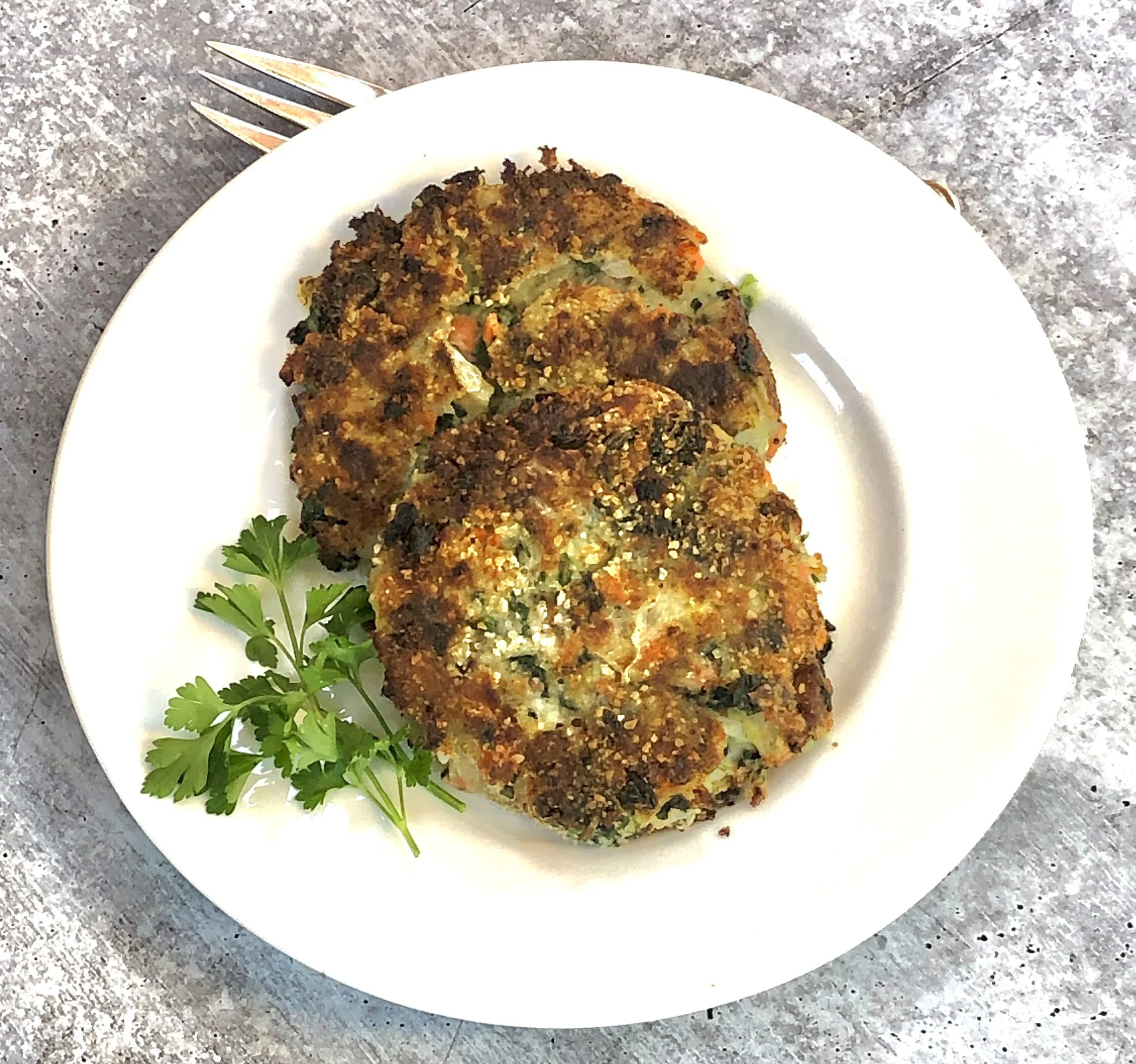
Vegetable Croquettes (Passover)

I was once in a pub in the west of England and ordered a dish called Bubble & Squeak. It’s simple, unfancy food, tasty and nourishing, consisting of mashed potatoes and cabbage fried to a crispy brown and topped with an egg.

It was magical.

So I made it many times at home, and, me being me, and this recipe being the kind that allows for endless variation, I added this and that to the potatoes, depending on what leftover vegetables I had. I used Brussels sprouts instead of cabbage (as do many restaurants in England); I’ve added corn, peas, carrots, spinach, broccoli and such. Once or twice I included cheese (feta, Parmesan) but I prefer the all-vegetable version best.

I don’t call it Bubble & Squeak (so named for the sounds it supposedly makes while being cooked), so I’ll just say: Vegetable Croquettes. We’ve eaten them as a side dish with meat but most of the time they are dinner, topped with a fried egg.

This is my Passover version. At other times of the year you can add beans/peas and coat the patties with bread crumbs.

Vegetable Croquettes

  • 1/2 cup vegetable oil, approximately

  • 1 medium onion, finely chopped

  •  1 cup chopped cooked cabbage

  •  2 chopped, cooked carrots

  • 10 ounce package frozen spinach, thawed

  • 3 cups mashed potatoes

  • salt and freshly ground black pepper to taste

  • 1/2 cup matzo meal, approximately

Heat 2 tablespoons vegetable oil in a sauté pan over medium heat. Add the onion and cook for 3-4 minutes or until softened. Spoon the onions into a bowl. Add the cabbage, carrots, spinach, mashed potatoes and some salt and pepper. Mix thoroughly and shape the mixture into 1/2-inch patties. Place the matzo meal on a plate. Press both sides of each patty into the crumbs. Refrigerate for at least 30 minutes. Heat 2-3 tablespoons vegetable oil in the sauté pan over medium heat. Fry the patties a few at a time (leave plenty of space between each) for 3-4 minutes per side or until crispy and golden brown, adding more vegetable oil to the pan as needed.

Makes 8-10


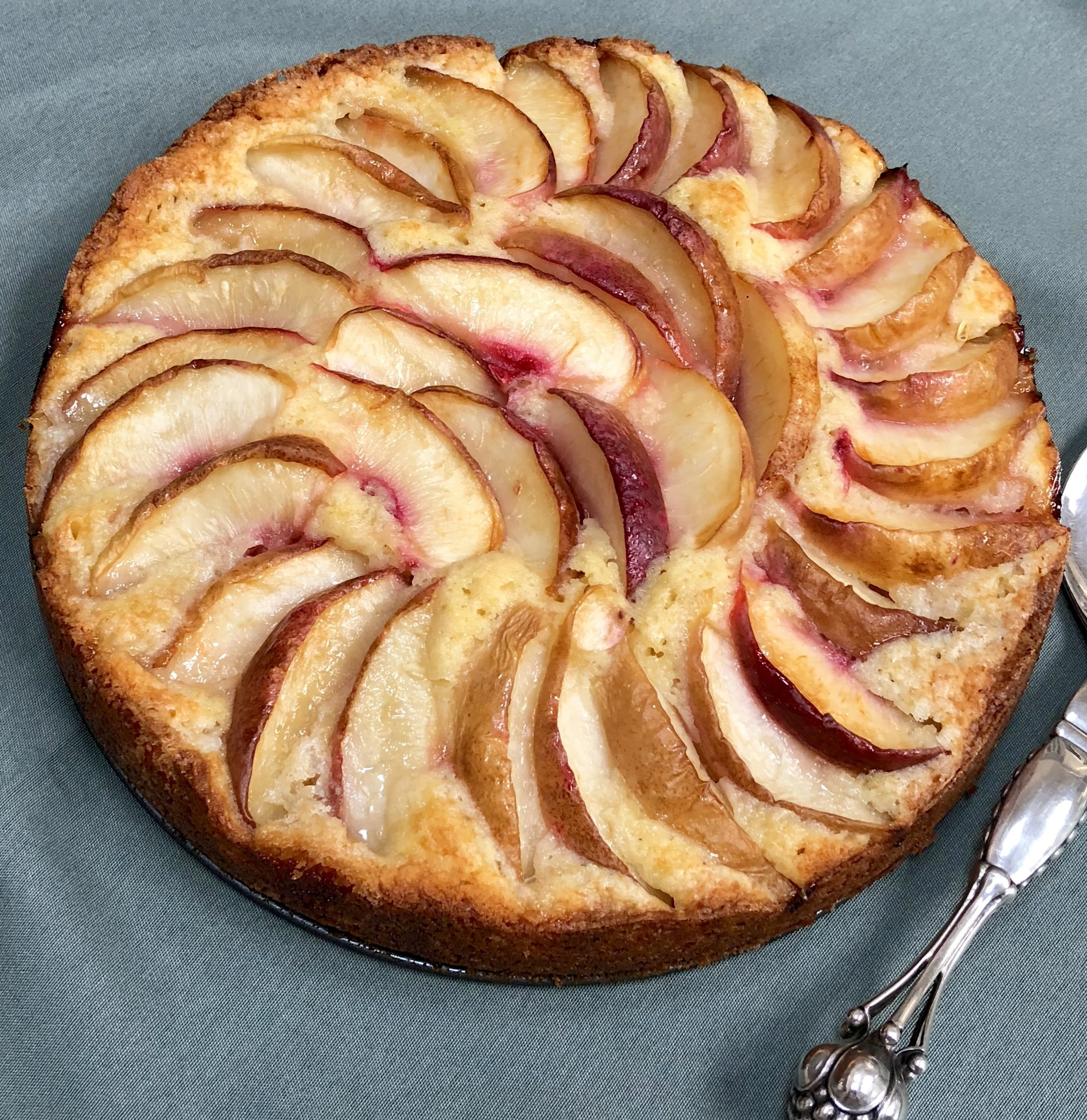
Peach Torte

fullsizeoutput_9450.jpeg

I usually make the classic, old-fashioned Italian-prune-plum torte during Rosh Hashanah.

But the holiday is so early this year that we’re still in the peak of peach season. So I adapted my recipe in order to use the most perfect end-of-August peaches.

Maybe I’ll make plum torte for break-the-fast.

Peach Torte

  • 1/2 cup unsalted butter

  • 2/3 cup plus one teaspoon sugar

  • 1-1/2 cups all-purpose flour

  • 1 teaspoon grated lemon peel

  • 1/2 teaspoon salt

  • 1 teaspoon baking powder

  • 1/4 teaspoon baking soda

  • 1 large egg

  • 1/2 cup buttermilk or unflavored yogurt

  • 3 peaches or nectarines

  • lemon juice (about one tablespoon)

Preheat the oven to 350 degrees. Lightly grease a 9-inch springform pan. In the bowl of an electric mixer, beat the butter and 2/3 cup sugar on medium speed for 3-4 minutes or until creamy and well blended. Mix the flour, lemon peel, salt, baking powder and baking soda together. Add the flour mixture to the butter mixture and beat for a minute or two at medium speed until well blended. Add the egg and buttermilk and beat at medium speed for 2-3 minutes or until smooth and creamy. Spoon the batter into the prepared springform pan. Slice the fruit and arrange the slices on top of the cake, pressing them slightly into the batter. Sprinkle the lemon juice over the top of the cake. Sprinkle with the remaining teaspoon of sugar. Bake for 50-55 minutes or until browned, set and crispy. Let cool.

Makes 8 servings

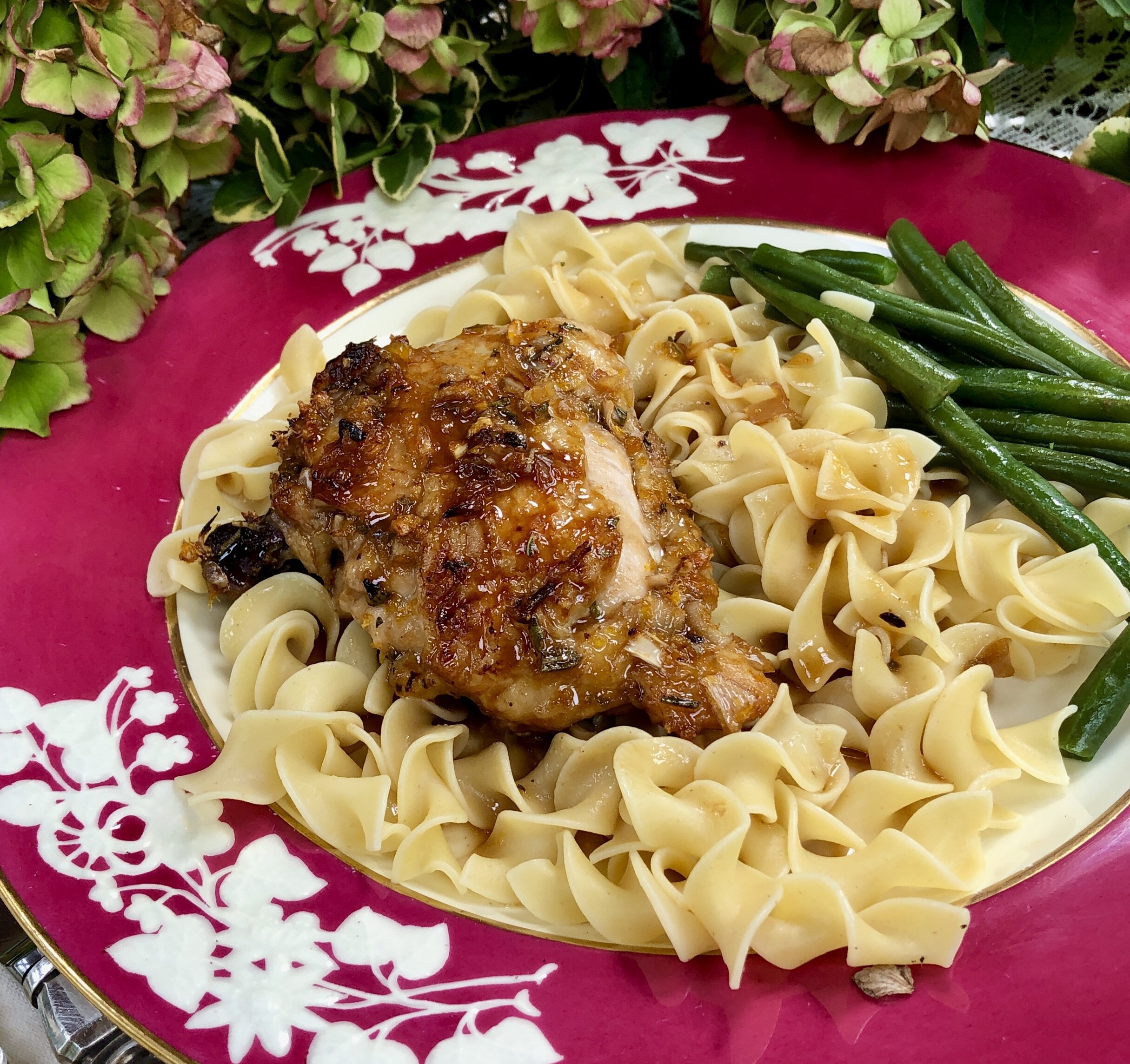
Chicken with Date Honey, Ginger and Orange

C95A7196-9517-4F2C-B620-11EB7D53D2B0_1_201_a.jpeg

I know brisket is traditional for Rosh Hashanah but have you seen the price of brisket this year?

Yikes!

How about chicken instead?

Please don’t say “ho hum.” Chicken absolutely doesn’t have to be boring.

For example — this recipe for chicken with honey and a little spike of fresh ginger. Plus some refreshing orange.

I’ve made this dish with both bee honey and date honey (silan). Either way, it’s a perfect choice for Rosh Hashanah.

Chicken with Date Honey, Ginger and Orange

  • one cut up chicken (or 6-8 pieces)

  • 2 tablespoons vegetable oil

  • 1/2 cup orange juice

  • 1/4 cup date honey (or substitute regular honey)

  • 1 large shallot, chopped

  • 1 teaspoon finely chopped fresh ginger

  • 1 teaspoon grated fresh orange peel

  • 1 teaspoon chopped fresh chili pepper, optional (or use a pinch of cayenne pepper)

  • 1 teaspoon chopped fresh rosemary

  • salt to taste

Preheat the oven to 350 degrees. Heat the vegetable oil over medium-high heat in an ovenproof pan. Dry the chicken pieces and cook them a few at a time in the pan until they brown lightly, about 6-8 minutes. Mix the orange juice and date honey and pour over the chicken. Sprinkle the chicken with the shallot, ginger, orange peel, chili pepper, rosemary and salt to taste. Place the pan in the oven and cook for 35-40 minutes or until the chicken is cooked through, basting occasionally with the pan juices. Serve the chicken with the pan juices.

Makes 6 servings 


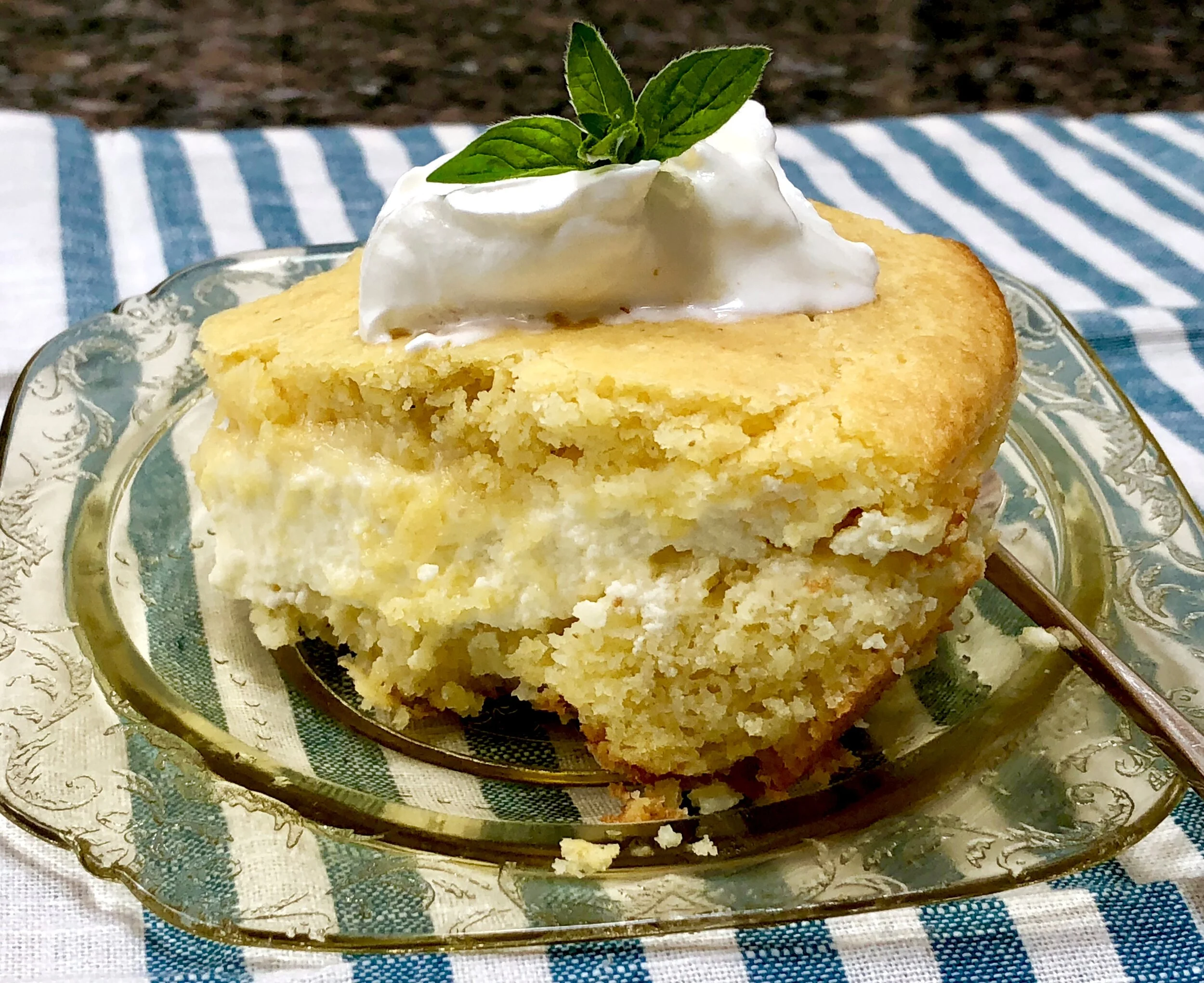
Romanian Cornmeal Cheese Cake

fullsizeoutput_bfc6.jpeg

My grandmother occasionally made a fabulous cornmeal dish — she called it mamaliga, the national dish of Romania — and served it with sweetened, mashed farmer cheese and sour cream. Sometimes with a drizzle of maple syrup over everything.

I never knew it as Malai, a classic Romanian Shavuot treat, but that’s what it was. But it wasn’t her usual, plain “cornmeal mush” because it also had eggs and sugar mixed into the batter.

All I knew was how delicious it tasted.

So, over the years I experimented over and over until I made a version that tastes something like what I remember.

Here it is, in time for Shavuot.

Romanian MALAI

The Batter:

  • 6 tablespoons butter

  • 3/4 cup all-purpose flour

  • 3/4 cup finely ground cornmeal

  • 1/3 cup sugar

  • 2 teaspoons baking powder

  • 1/2 teaspoon salt

  • 2/3 cup milk, half-and-half or buttermilk

  • 2 large eggs

  • filling

  • sour cream, whipped cream, ice cream, etc. optional

  • extra sugar or maple syrup

Preheat the oven to 350 degrees. Lightly grease an 8-inch cake pan. Melt the butter and set it aside to cool. In the bowl of an electric mixer, combine the flour, cornmeal, sugar, baking powder and salt and mix to distribute the ingredients evenly. Add the milk, eggs and cooled, melted butter and mix on medium speed for 1-2 minutes or until thoroughly blended. Spoon one half of the cornmeal mixture into the prepared pan and spread the batter to make it even. Top with the filling. Top with the remaining batter (spread the batter to make a smooth, even top crust). Bake for 35-40 minutes or until the top is golden brown and the cake is set.

Serve the cake warm, room temperature or slightly chilled. Serve plain or topped with sour cream (traditional), whipped cream or ice cream. (I add about 2 teaspoons of sugar for each cup of sour cream used as a garnish).

Makes 8-10 servings

THE Filling:

  • 1 pound farmer’s cheese

  • 1 large egg

  • 1/4 cup sugar

  • 1/2 teaspoon finely grated fresh lemon peel

Mix the farmer’s cheese, egg, sugar and lemon peel until the ingredients are well blended.

Roasted Potato Salad with Red Onions and Rosemary

8BC822CF-C763-40C4-B5D2-EB3326287046_1_201_a.jpg

If you’re getting out the grill to celebrate Lag BaOmer or because the warm weather is finally here or just because grilled food is so so good — have you decided about a side dish to go with those chicken legs or salmon steaks or hot dogs.

How about potato salad?

I make all sorts of potato salad, but because roasted potatoes are a classic food for Lag BaOmer, I went the extra step and roasted the potatoes for this version. The crispy edge added a really satisfying texture and the flavor was extra rich because the high heat caramelized the onions. I used a cast iron pan and suggest that for best results. Your oven is fine (instructions below) but if you have room for the pan on the grill — go for it and cook the entire feast outdoors.

This dish tastes best at room temperature, although my husband likes it hot, so, either way.

Roasted Potato Salad with Red Onions and Rosemary

  • 2 pounds “new” waxy potatoes (such as Red Bliss or baby Yukon Golds)

  • 1 small red onion, sliced

  • 5 tablespoons olive oil

  • 3 tablespoons lemon juice

  • 1 teaspoon Dijon mustard

  • 3 tablespoons chopped fresh parsley

  • 2 teaspoons chopped fresh rosemary

  • salt and freshly ground black pepper to taste 

Preheat the oven to 425 degrees. If you have a cast iron grill pan or frying pan, preheat it in the oven. Wash the potatoes and cook them in simmering water for 12-15 minutes or until tender. Peel the potatoes when they are cool enough to handle; cut them into bite size pieces and place them in a bowl with the onion slices. Pour 2 tablespoons of the olive oil over the vegetables, toss them to coat all sides and place them in the preheated pan (or use an ovenproof pan or baking sheet). Roast for 25-30 minutes, mixing 2-3 times, or until lightly browned and crispy. While the potatoes are cooking, mix the remaining olive oil, lemon juice and Dijon mustard in a large bowl. Add the roasted potatoes and onions when they are done. Add the parsley and rosemary. Toss the ingredients. Season to taste with salt and pepper. Let rest for at least 15 minutes before serving. Serve still warm or at room temperature.

Makes 4-6 servings


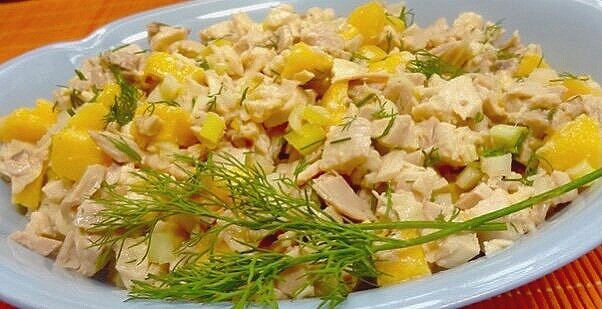
Chicken: Soup to Salad

5581E61D-E28E-4807-97F1-34515937322D_4_5005_c.jpg

Every year before Passover I think about new ways to eat the chicken from the chicken soup that I cook for my Seder. I make the soup several days ahead, strain the liquid and freeze it. 

The cooked vegetables and boiled chicken do make a good, plain, old-fashioned meal for dinner, but we don't always want that. So, with the vegetables? Best bet has always been veggie burgers.

The chicken? Salad. Made all sorts of ways.

Here's one way. Fortunately ataulfo (honey/champagne) mangoes are in season and they are easy to peel and cut for salad; they’re also not stringy like some mango varieties. Bonus: I put aside some of the dill I use to season my chicken soup and it is a lovely seasoning for chicken and mangoes.

Chicken and Mango Salad with Dill

  • 2-1/2 to 3 cups diced cooked chicken

  • 1 small (I used ataulfo) ripe mango, peeled and diced

  • 2-3 teaspoons chopped fresh dill

  • 3-5 tablespoons white wine vinegar

  • 2-3 tablespoons olive oil

  • salt and freshly ground black pepper to taste

Place the chicken and mango dice in a bowl. Sprinkle the dill on top. Mix 3 tablespoons white wine vinegar with 2 tablespoons olive oil and pour over the chicken and fruit. Toss. Season with salt and pepper. If you prefer a moister salad, add more olive oil and/or white wine vinegar to taste. Or fold in a bit of mayonnaise. Let rest for at least 15 minutes before serving.

Makes 2-4 servings


Passover Shepherd's Pie with Matzo Crust

IMG_4196.jpeg

I always try to make our Seder meals as festive as possible. Most years (sans pandemic) I roast a turkey and braise a big brisket. Lots of vegetable side dishes. Sometimes the second night is vegetarian. My grandma’s honey-soaked chremslach are a must. Ditto the Manischewitz concord grape wine (along with some lovelier selections).

But during the week — not so much. It’s regular meals. So, maybe meatloaf (with matzo meal substituting for bread crumbs). Or chicken cutlets crusted with coconut. Leftover turkey made into salad. Like that.

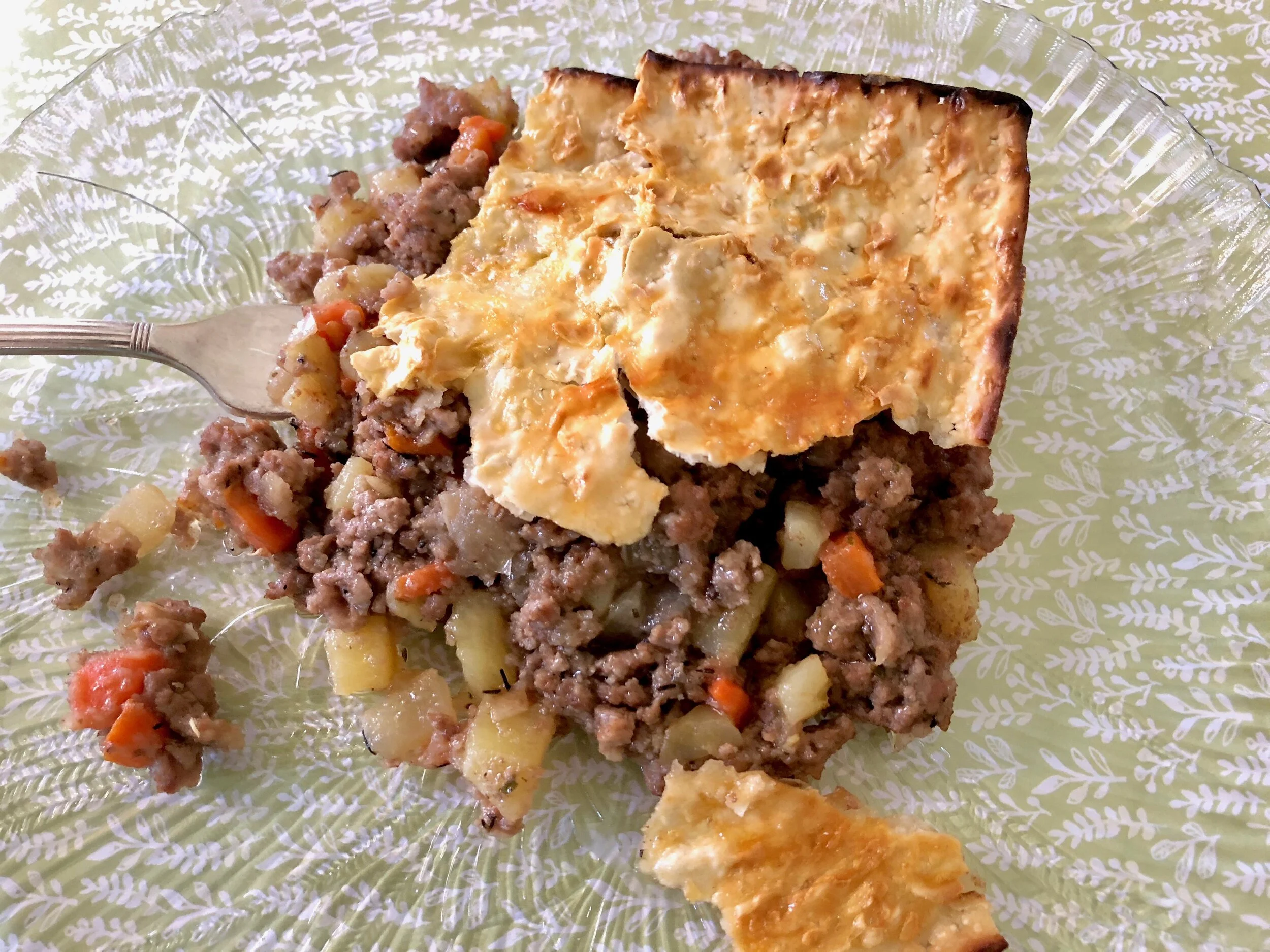
From time to time I make this “Shepherd’s Pie” — which really isn’t Shepherd’s Pie because there’s no potato crust. I include the potatoes in the meat mix and gave it a matzo crust. That crust is a crunchy, wonderful thing together with the softer, more tender inside ingredients.

Passover Shepherd’s Pie with Matzo Crust

  • 2 tablespoons olive oil

  • 1 medium onion, chopped

  • 1 large clove garlic, chopped

  • 2 carrots, peeled and chopped

  • 1 large Yukon Gold or other all-purpose potato, peeled and chopped

  • 1-1/2 pounds ground meat

  • Salt and freshly ground black pepper to taste

  • 1 teaspoon fresh thyme, optional (or use 1/2 teaspoon dried thyme)(or use 1-2 tablespoons chopped fresh parsley)

  • 2 tablespoons potato starch

  • 1 cup stock (beef, chicken or vegetable)

  • 2 matzot

  • 1 egg, beaten (or use olive oil)

Preheat the oven to 375 degrees. Heat the olive oil in a saute pan over medium heat. Add the onion, garlic, carrots and potato and cook, stirring frequently, for 7-8 minutes, or until softened and beginning to brown. Add the meat, salt, pepper and thyme and continue to cook and stir, breaking up the meat into small pieces, for another 5-6 minutes or until the meat has cooked through. Add the potato starch and stir it into the meat mixture. Pour in the stock and cook, stirring, until the sauce has thickened (about one minute). Spoon the mixture into a rectangular baking dish. Soak the matzot briefly to soften them slightly, then place them on paper toweling and press any excess water from them. Place the soaked matzot on top of the meat. Brush the surface with the beaten egg. Bake for about 25 minutes or until the top is crispy and browned.

Makes 4-6 servings

Shortbread Hamantashen

47DA87B7-E23A-4FB6-9262-9669795C1A6D_1_201_a.jpeg

I was heartbroken when my favorite bakery, the one that had the best hamantashen ever, closed a few years ago. It was The Bakery, in Plainview, Long Island, across the street from my contact lens eye doctor. They also had the best Mandel bread and the best Russian coffeecake, babka (both cinnamon and chocolate) and almond horns.

Also Jewish corn bread. And Chinese cookies.

I would call them in advance to place an order and after the visit to the eye doctor, would go get my stash, place it all (except for one hamantashen) in the trunk of my car and head home to Connecticut. I bought two freezer shelves worth, which was enough for six months (to time the next doctor visit).

I now buy hamantashen at Cafe Dolce, in Norwalk, CT. They’re awesome, like from The Bakery. Similar dough, same apricot and prune lekvar filling (but alas, no Mandel bread, babka, etc.)

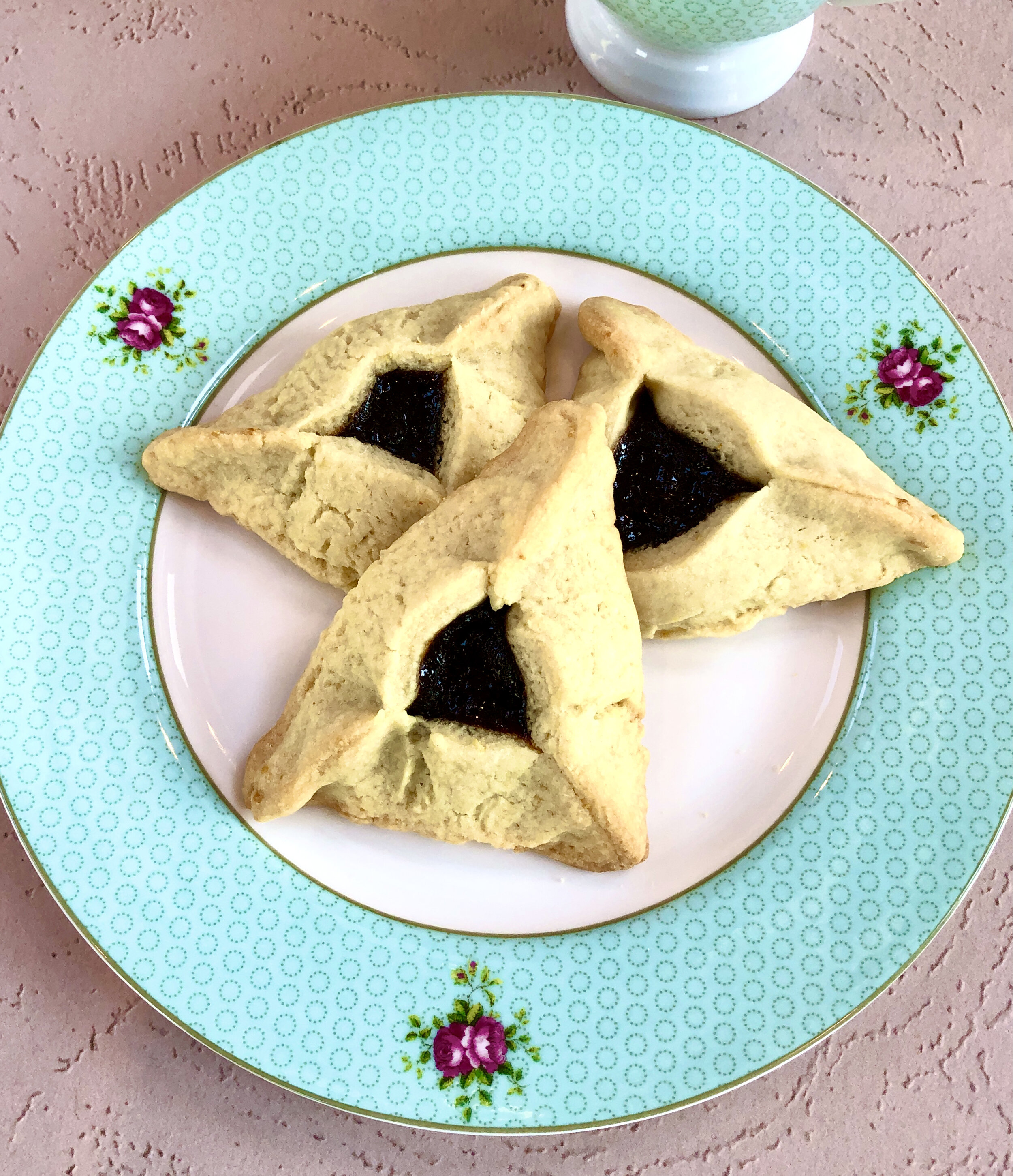
Every year I bake a new hamantashen recipe to see how close I can come to those memorable ones. This year I came really close — these have a soft, crumbly, flavorful dough with just a hint of citrus. There’s a good balance of dough to filling. Lekvar of course. I didn’t have any jarred lekvar so I made my own (recipe is below the recipe for hamantashen, although I have made lekvar before using the recipe here.

But - this is a dairy recipe. My next venture is to try this dough using vegetable shortening. I’ll let you know how it turns out,

Meantime, these are delicious. All my tasters have said so.

Shortbread Hamantashen

  • 2 cups all-purpose flour

  • 2 teaspoons grated orange or lemon zest

  • 3/4 teaspoon baking powder

  • 1/2 teaspoon salt

  • 10 tablespoons butter (or 2/3 cup shortening or a mixture of shortening and coconut oil)

  • 1/2 cup sugar

  • 1 large egg

  • lekvar (about half cup) or other filling

Combine the flour, orange zest, baking powder and salt in a bowl and set aside. In the bowl of an electric mixer (or use a food processor) beat the butter and sugar together at medium speed for 2-3 minutes or until thoroughly combined. Add the egg and beat the ingredients to blend it in. Add the flour mixture and mix for 2-3 minutes until a soft, slightly sticky dough forms. Wrap the dough and refrigerate for 35-40 minutes or until cool. Preheat the oven to 350 degrees. Roll the dough on a floured surface to a thickness between 1/8-inch to 1/4-inch. Cut out circles with a 3-inch cookie cutter. Place a heaping teaspoon of lekvar in the center of each circle. Pinch the sides to close the filling and shape into a triangle. Pinch tight so the cookies won’t open during baking. Place the cookies on the prepared baking sheet. Refrigerate again for at least 30 minutes. Bake for about 18 minutes or until beginning to brown.

Makes about 18

Prune Lekvar

  • 1/2 pound pitted prunes

  • 1 cup orange juice

  • 2 tablespoons honey or brown sugar

  • 1 tablespoon lemon juice

Place the prunes, juice and honey in a saucepan, bring to a boil over low heat, lower the heat to a simmer, cover the pan and cook for about 20 minutes until the prunes are very soft. Puree the ingredients. Stir in the lemon juice.

Makes about 2 cups

Braised Flanken, Just Like Grandma Used to Make

fullsizeoutput_bc0d.jpeg

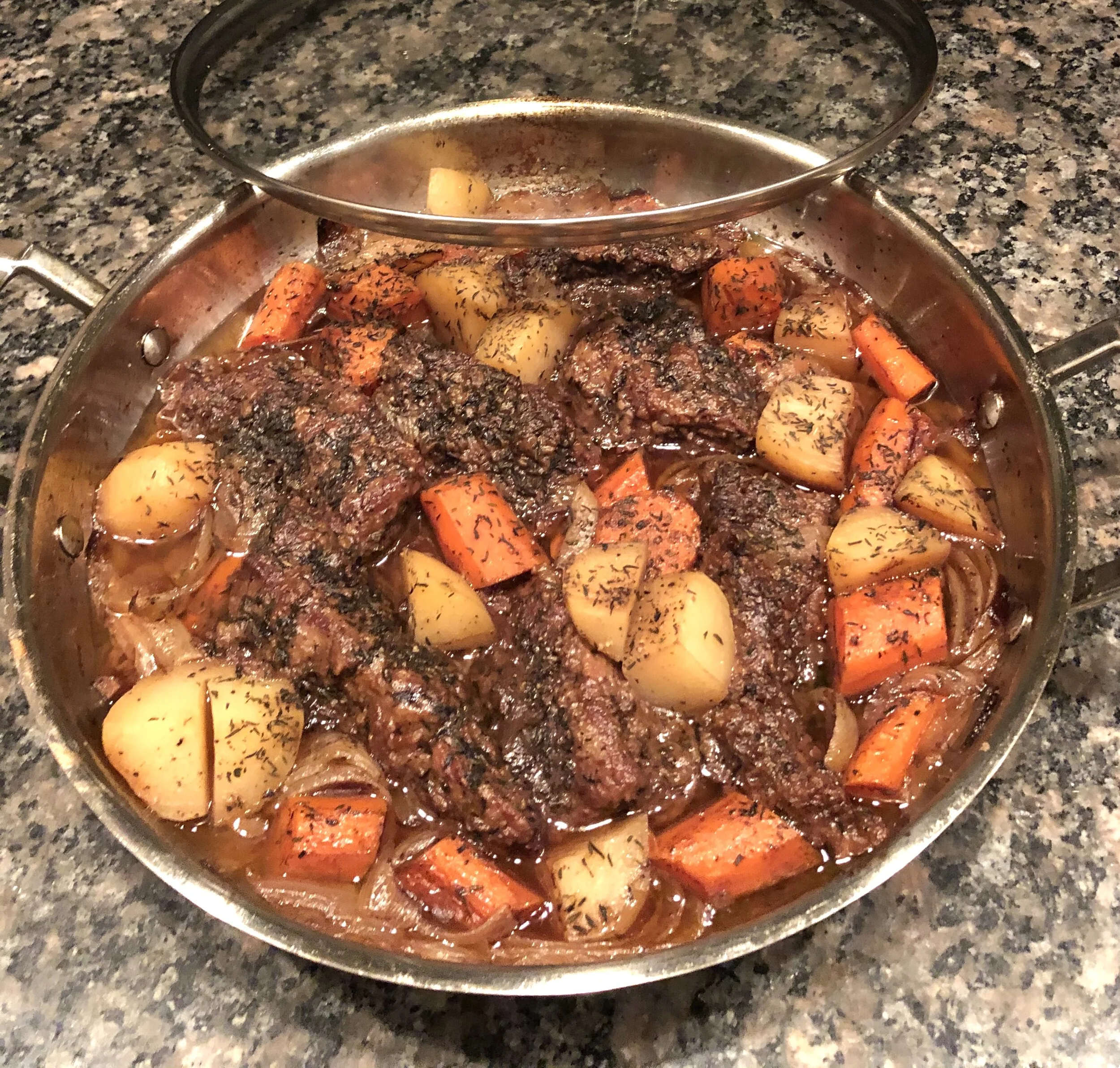
We got over a foot of snow this week. That’s flanken weather. And I’m in the mood for plain old. No frills, no riffs.

This recipe is tried (many times) and true. No fuss, no bother. Good old fashioned eats. For cold weather. For comfort.

If you don’t have flanken, you can make the same recipe using “English cut” short ribs, large chunks of chuck or really any “stew” type beef.

Braised Flanken

  • all-purpose flour

  • salt, freshly ground black pepper, garlic salt and paprika

  • 6 pieces flanken

  • 4 tablespoons vegetable oil

  • 2 medium onions, sliced

  • 3 cloves garlic, finely chopped

  • 2 tablespoons tomato paste

  • 4 large carrots, cut into chunks

  • 2 large all-purpose potatoes, peeled and cut into chunks

  • 2 cups red wine

  • 2-3 fresh thyme sprigs

Mix the flour with some salt, black pepper, garlic powder and paprika. Coat the meat with the flour mixture. Heat 2 tablespoons of the vegetable oil in a saute pan over medium heat and cook on both sides for 5-6 minutes or until lightly browned. Remove the meat and set it aside on a plate. Pour the remaining 2 tablespoons vegetable oil into the pan. Add the onions and cook, stirring occasionally, for 3-4 minutes, or until softened. Add the garlic and cook for another minute. Mix the tomato paste into the ingredients. Return the meat to the pan. Add the carrots and potatoes. Pour in the wine. Place the thyme sprigs on top. Turn the heat to low. Cook for about 3 hours or until the meat is soft and tender.

Makes 4-6 servings