Baharat

My Dad used to go into the hardware store and gaze upon the nuts, bolts and screws. It’s not that he actually knew how to fix things, and he never bought anything. He just liked looking. Maybe he thought it would help him be more of a fix-it t…

My Dad used to go into the hardware store and gaze upon the nuts, bolts and screws. It’s not that he actually knew how to fix things, and he never bought anything. He just liked looking. Maybe he thought it would help him be more of a fix-it type, but alas, although he was a terrific Dad, he wasn’t so handy around the house.

I am just like him. Except that I don’t go to hardware stores (the first time I ventured into a Home Depot I was so shocked at its sheer size and the quantity of things it sells that I started hyperventilating).

Nope, I go to specialty food stores and gaze upon the spices and spice blends. I like cooking with spices and using different ones to give flavor and add interest to the foods I cook.

But, like my Dad, I never buy the spice blends.

I make my own. Because I like the idea of creating my own versions, even my own versions of familiar spice blends such as Jerk, Herbs de Provence and Cajun seasoning. And that’s because I know my tastes and my family’s tastes and know to add more or less of this or that or leave some ingredient out completely instead of relying on what someone else thinks the blend should taste like.

So, I was intrigued recently to read about a spice blend I hadn’t cooked with: Baharat.

Baharat is an Arabic spice blend, used in dishes throughout the Middle East. The name just means “spices” so you can imagine that anything goes.

Well, almost anything. Recipes for this particular blend are similar, and usually include cinnamon, nutmeg, cumin and coriander. Some have heat thanks to cayenne or black pepper. Some contain sweet dried mint. And so on. Baharat is also similar to ras el hanout, another Middle Eastern blend. 

I tinkered with the recipe a few times until I got it right, using chicken as my foil. But this is a blend that you could sprinkle on lamb or fish and certain vegetables (such as eggplant and roasted tomatoes). Or mix into cooked rice or couscous or vegetable soup. Go easy at first and discover the depth of flavor this blend can give to food.

Here’s my version of Baharat. Some people make it by grinding their own spices, but I just mixed the pre-ground ones.

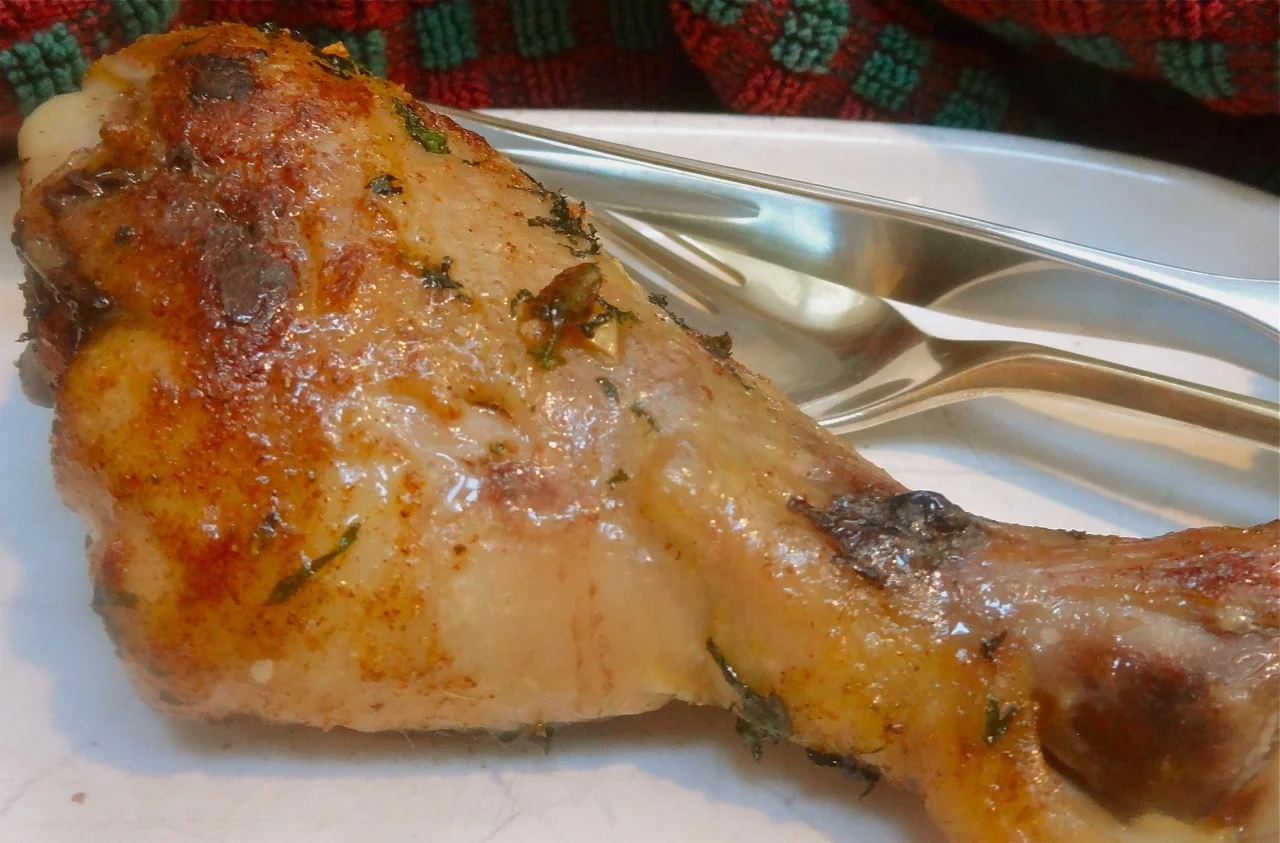
There’s also a recipe for a very simple baked chicken that is an easy dish to cook for daily dinner — but it is also intriguing enough for a company meal.


Baharat


1 tablespoon ground coriander

1 tablespoon ground ginger

2 teaspoons ground cinnamon

1 teaspoon freshly grated nutmeg

1 teaspoon ground allspice or cloves

1 teaspoon ground cumin

1 teaspoon freshly ground black pepper

1/2 teaspoon cayenne pepper


Mix the ingredients completely. Makes about 1/4 cup


Baked Chicken with Baharat, Garlic and Mint

One broiler-fryer chicken, cut up

1 tablespoon olive oil

2 tablespoons chopped fresh mint

2 large cloves of garlic, finely chopped

1 tablespoon Baharat

salt to taste

Preheat the oven to 425 degrees. Rinse and dry the chicken pieces and place them in a baking pan. Brush the skin with the olive oil. Sprinkle with the mint, garlic, Baharat and salt to taste. Turn the breast pieces skin side down in the pan. Bake for 10 minutes. Reduce the heat to 350 degrees. Turn the chicken pieces. Continue to bake for about 30 minutes basting occasionally with any pan juices, or until cooked through. Makes 4 servings.

 

hunger in America. It's a serious problem.

sprinklefingers:

I watched A Place at the Table last night and I don’t know when it will stop haunting me.

If you haven’t heard of it yet, it’s a documentary focusing on hunger in America. And while it’s tough to imagine anyone hungry when you live in a food-crazy town like Portland, the statistics revealed…

I haven’t seen this yet, but I know this is important to watch so I wanted to spread the word about this documentary.

Inside Out Strawberries Romanoff

I can’t remember when my mother first discovered Temp Tee Whipped Cream Cheese but I do remember that it was a wondrous discovery. Wondrous because now, when we wanted to spread cream cheese on a slice of bread it didn’t split apart and, if on a piece of matzo, it didn’t crumble into a zillion pieces under the weight of our usual cream cheese, which was quite delicious but also thick and not readily spreadable.

Temp Tee was soft, creamy, light. SPREADABLE. And just as delicious.

So it became the family go-to whenever we wanted to spread cream cheese on something or add it to a dish. Like Baked Stuffed Potatoes with Spinach and Cream Cheese, which are perfect all year round or for Passover.

Temp Tee was also especially fine and fitting for those occasions when we wanted to whip it with cream or some other ingredient to make a dip or spread or dessert sauce. Like Inside Out Strawberries Romanoff.

The baked potato recipe is a terrific dairy side dish. Also, if you top one or two of these with a fried egg it’s a wonderful brunch or lunch dish or part of a vegetarian meal.

The photos show the easy steps:

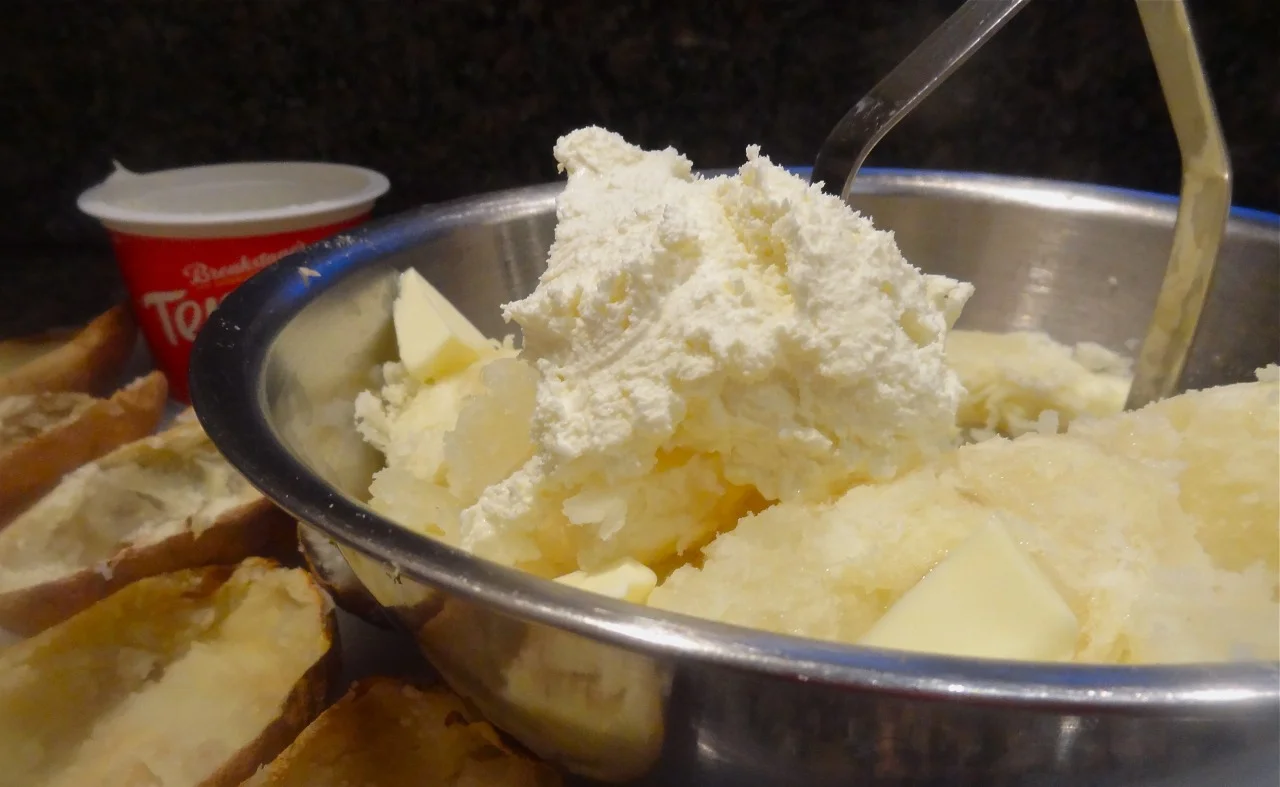
1) gather the ingredients and bake the potatoes.

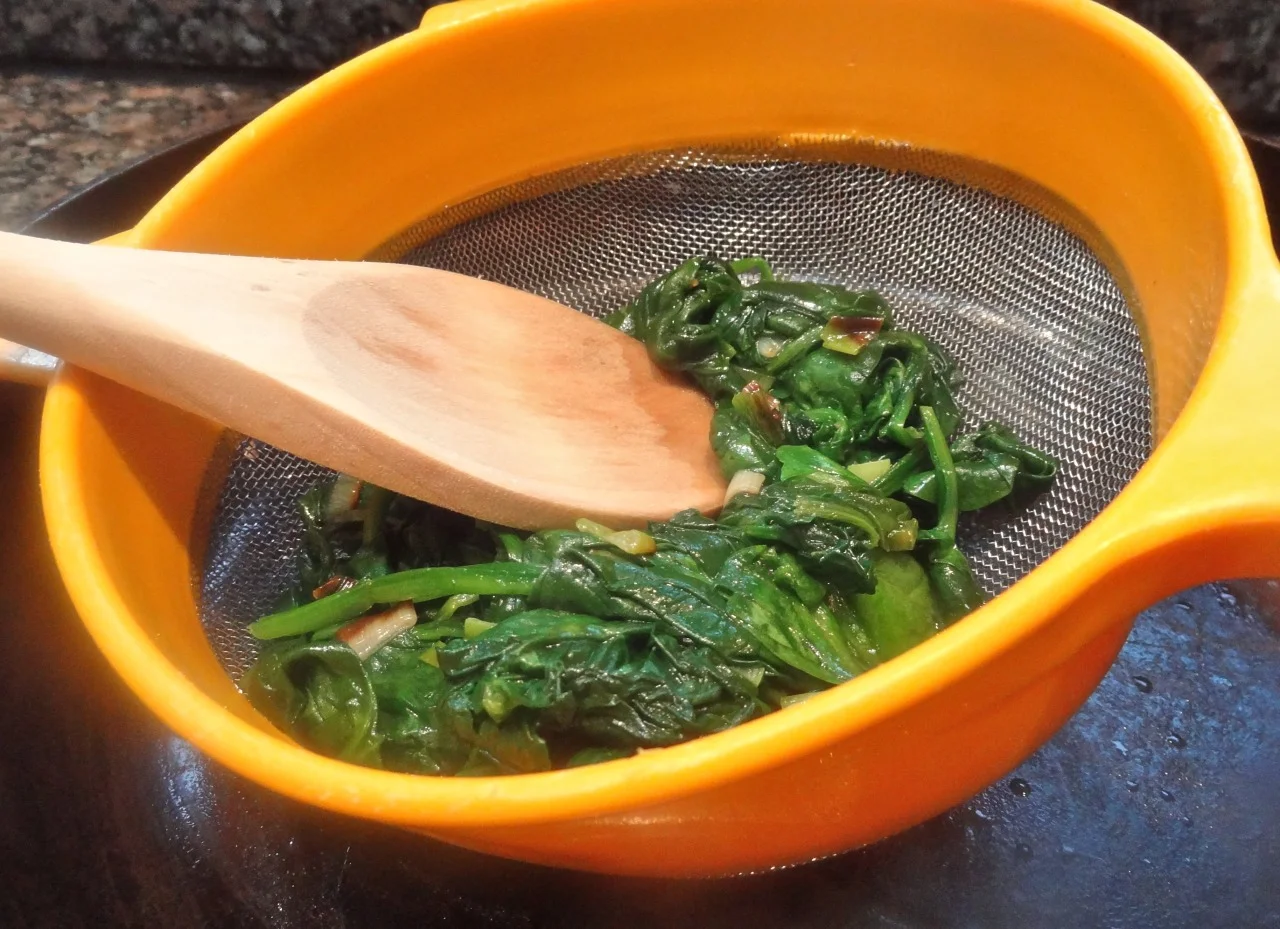
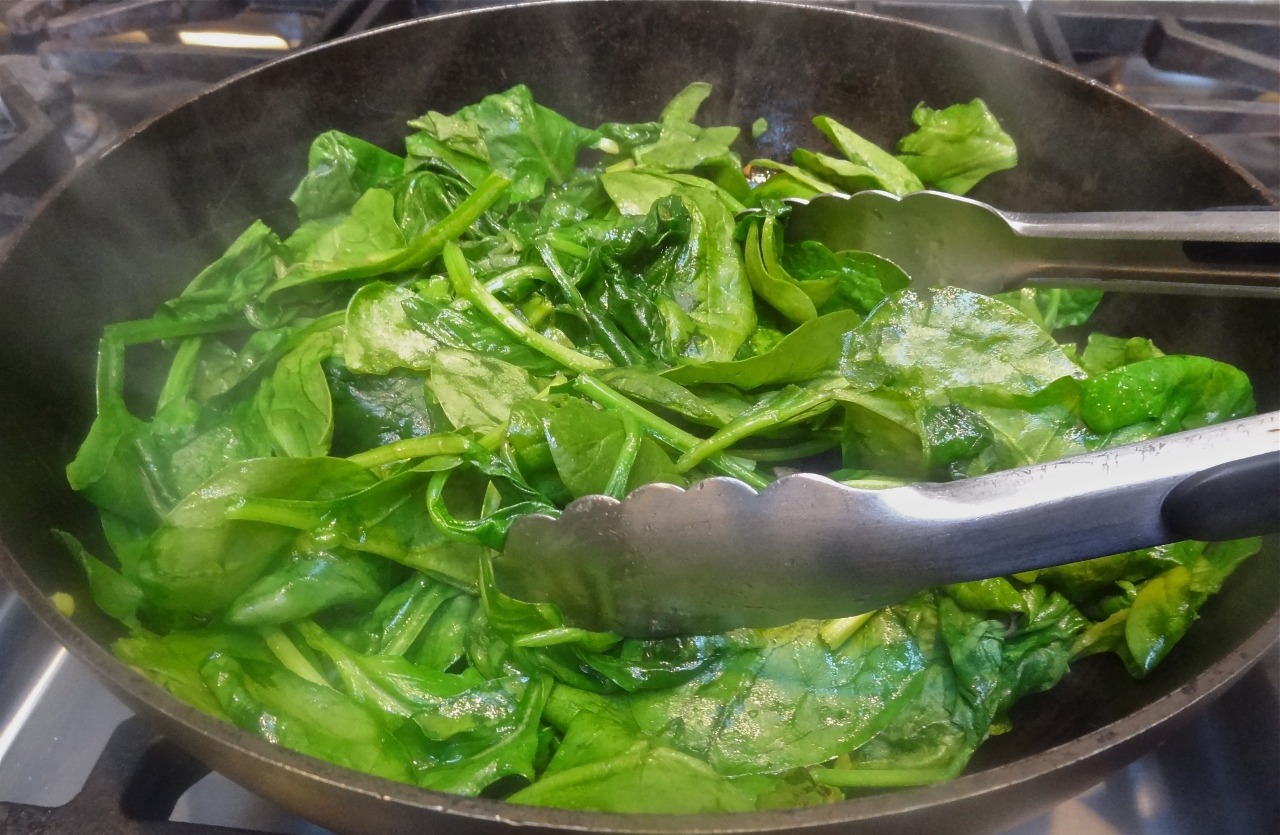
2) Fry the scallions, garlic and spinach, which takes about 3 minutes.

3) The trickiest part is making sure you squeeze out as much liquid from the cooked vegetables as you can — spinach contains quite a bit of water.

4) After you chop the spinach,

5) mash the potato flesh and mix the cooked ingredients,

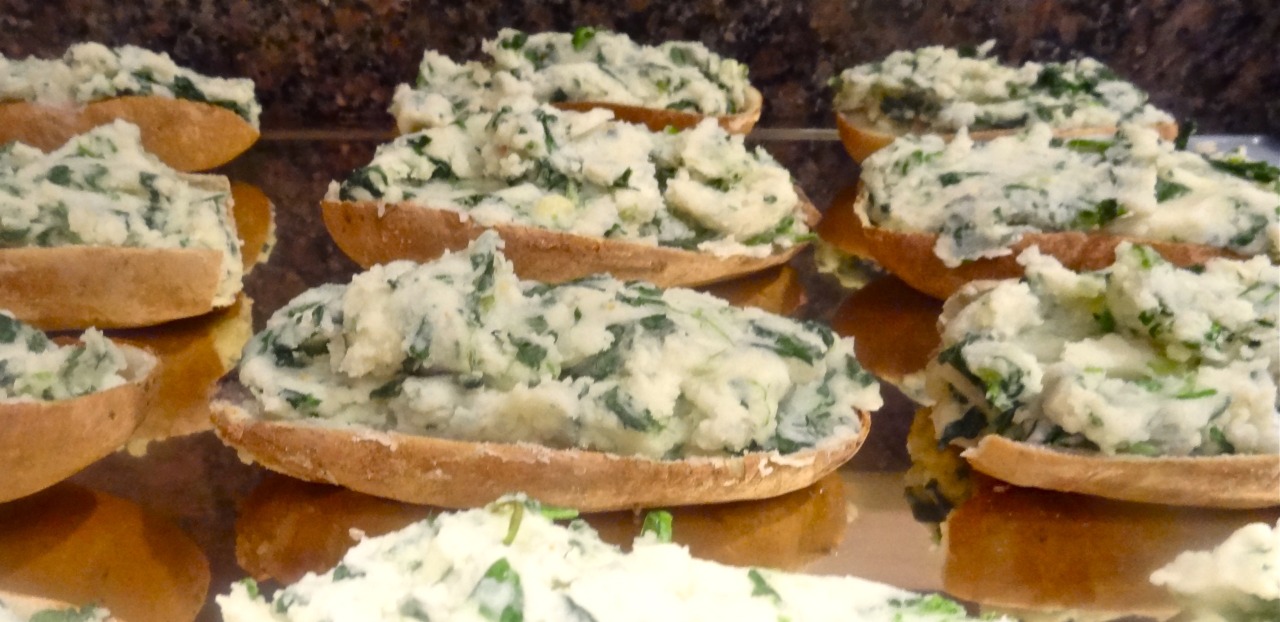
6) stuff the mixture inside the potato skin. You can keep them in the fridge for a day or so and then pop them into the oven to heat up.

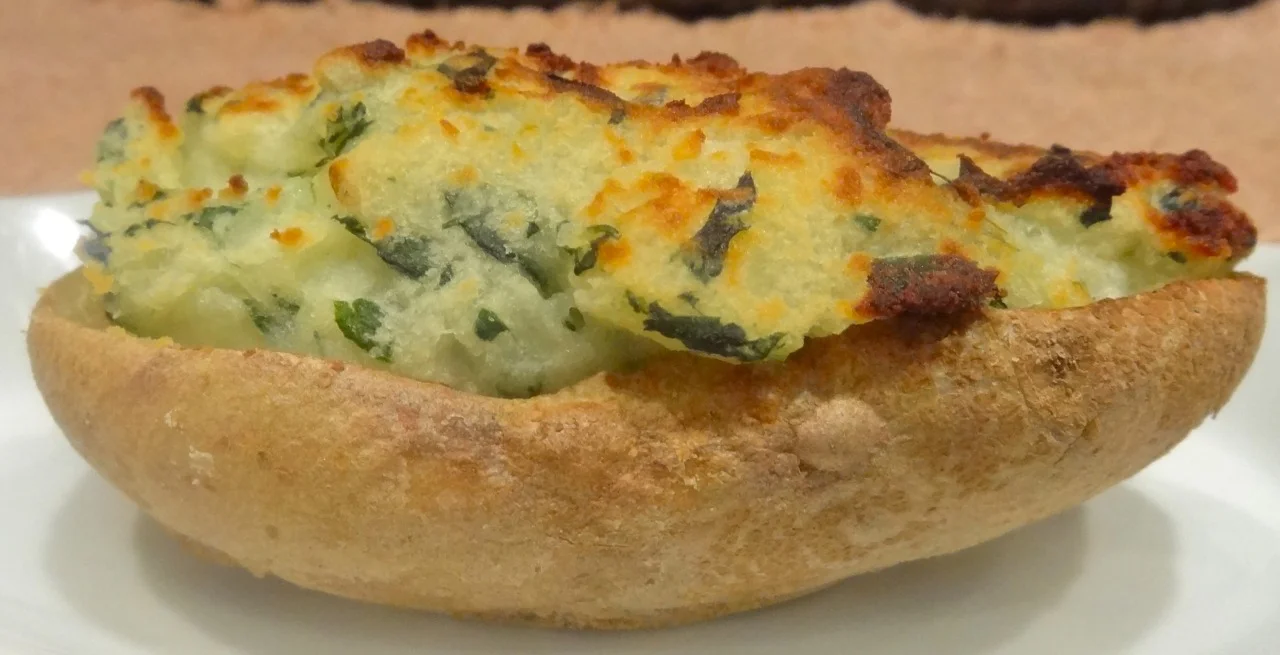
7) Just before serving I place them under the broiler to crisp up a bit on top.

You can find the recipe for the Baked Stuffed Potato here.

The Inside Out Strawberries Romanoff may also look like a challenge but is really easy:

1) The ingredients take about 5 minutes to mix together. You can cut the strawberries in advance and make both the cheese mixture and marmalade sauce ahead (fill the strawberries and the reheat the sauce just before serving). The strawberries get two cuts; be careful not to cut through the hull, but gently pull the 4 pieces of strawberry apart so you can fill the centers more easily.

2) If you don’t have a pastry bag or are not confident using one, use a small spoon to fill the strawberry centers.

3) Here’s what they look like when done; a lovely ending to any meal. I love the sprinkle of freshly grated nutmeg.

You can find the recipe for Inside Out Strawberries Romanoff here.

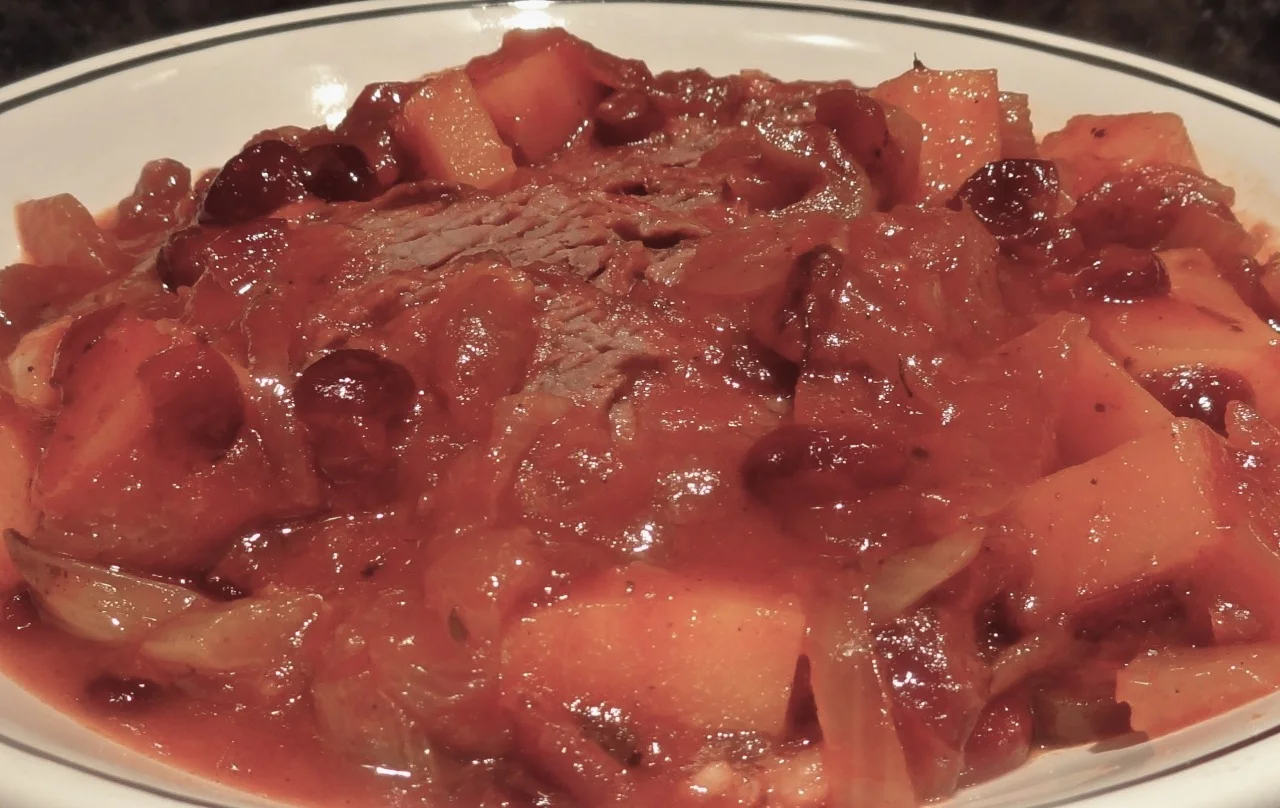
Beef Chuck Roast with Winter Squash and Dried Cranberries

I love pot roast not just because it is so filling and nourishing and heart warming in the winter when you need food that’s a bulwark against the cold. But also because it is such a forgiving, flexible dish.
First of all, you can use just abou…

I love pot roast not just because it is so filling and nourishing and heart warming in the winter when you need food that’s a bulwark against the cold. But also because it is such a forgiving, flexible dish.

First of all, you can use just about any meat that’s meant for long, slow cooking and you can play with the recipe and it will still probably come out okay.

Every time I make pot roast I add some new ingredient or combination of ingredients. And I use different liquids that have ranged from plain old water to stock to Port wine to mango juice. And all kinds of vegetables like cabbage or potatoes, squash, kohlrabi and dried mushrooms. And fruit, dried fruit (like crystallized ginger and prunes). 

Seasonings? Oh, just about anything. Thyme, cumin, ginger, nutmeg, ras el hanout. 

Anything goes. 

Of course we don’t love every recipe. Sometimes an experiment works, sometimes it doesn’t. But I continue to cook new pot roast recipes all the time.

Last week I made one with a portion of chuck, kaluchel, from KOL FoodsKOL Foods produces Glatt kosher poultry, beef and lamb. I like their products because everything I’ve tasted of them is packed with good flavor and also because the company’s mission is to produce humanely treated as well as humanely slaughtered meat, with an eye toward sustainability and animal welfare. All the beef is grass-fed, free-roaming; never given antibiotics or hormones. This is the essence of what it really means to be fit and proper.

You can use any cut of pot roast type meat for this recipe.

Beef Chuck Roast with Winter Squash and Dried Cranberries


4-5 pounds beef pot roast

1/4 cup all-purpose flour

Salt and freshly ground black pepper to taste

1 teaspoon paprika

3 tablespoons vegetable oil

2 medium onions, sliced

2 stalks celery, sliced

2 cloves garlic, sliced

6 ounce can tomato paste

1/4 cup apple cider vinegar

3 cups beef stock

3-4 sprigs thyme

1 large bay leaf

2 dried red chili peppers

1/4 teaspoon grated nutmeg

1 butternut squash, peeled and cut into 1/2-inch dice

3/4 cup dried cranberries


Preheat oven to 300 degrees. Rinse and dry the beef. In a dish, mix the flour with the salt, pepper and paprika. Dredge the beef in the flour mixture, to coat it on all sides. Pour 2 tablespoons vegetable oil in a Dutch oven over medium heat. Add the meat and cook, turning the meat occasionally, for about 8 minutes, to brown the surface. Remove the meat and set it aside. Add the remaining vegetable oil to the pan. Add the onions and celery and cook, stirring occasionally, for 3-4 minutes. Add the garlic and cook for another minute. Stir in the tomato paste, vinegar and stock, stir with a whisk to blend the ingredients. Return the meat to the pan. Add the thyme, bay leaf and chili peppers. Grate the nutmeg over the ingredients. Bring to a boil then remove the pan from the heat. Cover the pan and place it in the oven. Cook for 3 hours. Add the squash and cranberries. Cook for another 1-1/2 hours or until the meat is soft and the vegetables tender. Makes 6 servings


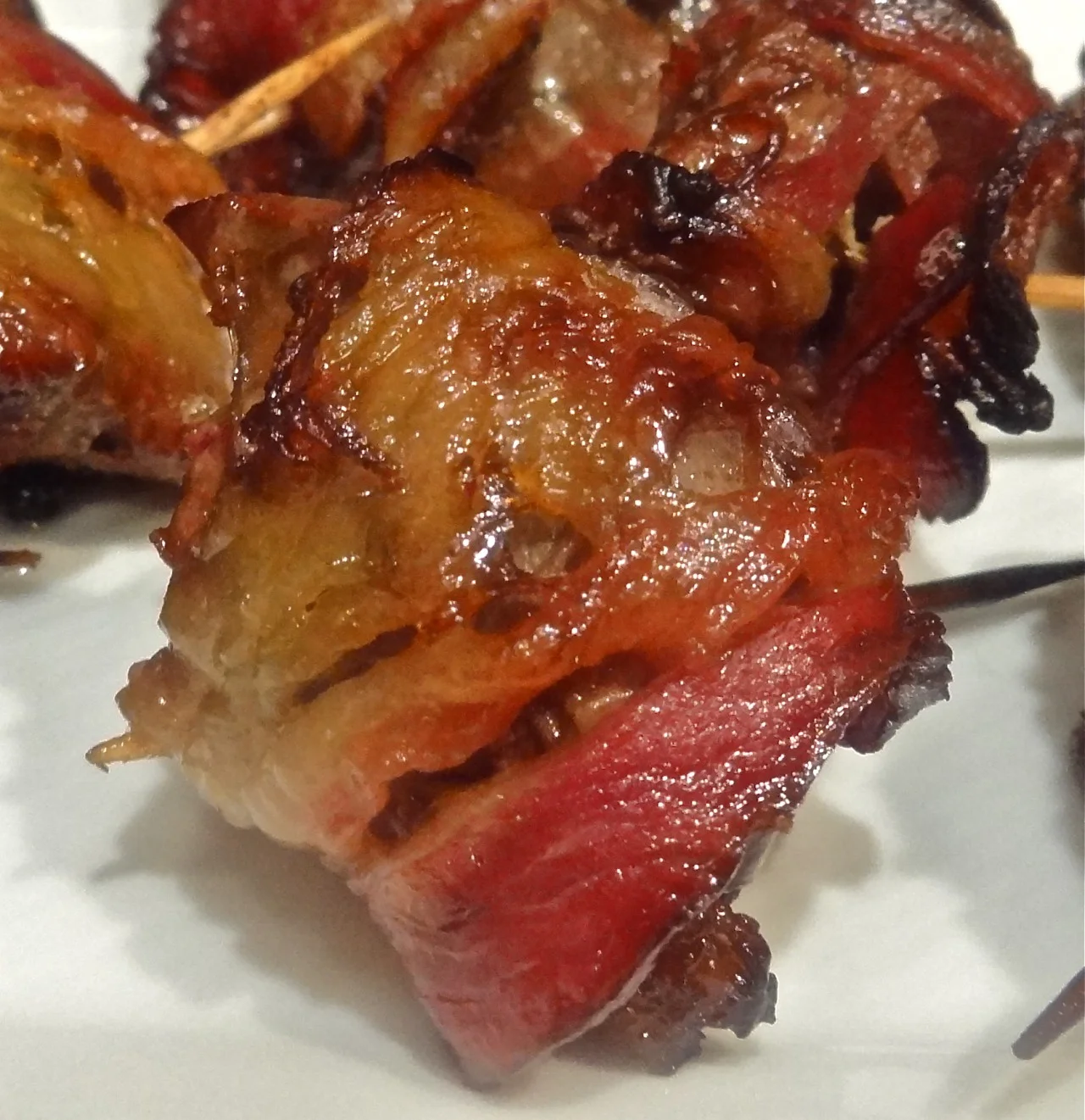
Rumaki

Would you believe this is kosher?
I mean — looks like bacon doesn’t it?
But it’s Facon. Fake bacon. A new product from Jack’s Gourmet. It’s made with beef. It is salty, smoky and with just the right amount of fat to giv…

Would you believe this is kosher?

I mean — looks like bacon doesn’t it?

But it’s Facon. Fake bacon. A new product from Jack’s Gourmet. It’s made with beef. It is salty, smoky and with just the right amount of fat to give it a rich, smooth feel.

I used it to make these Rumaki, which I served at my Academy Awards get-together. I can tell you this: some of my guests were not kosher, not Jewish. Everyone ate these and raved about them.

When people come to my house for dinner they know they’re usually going to get some experiment (or two or three) and are always wondering when it will come in the meal. But they didn’t think this was it and when I told them what this stuff was they were all flabbergasted.

So here’s the recipe:

Rumaki

  • 1/2 pound chicken livers

  • 1/4 cup soy sauce

  • 2 tablespoons molasses

  • 2 tablespoons honey

  • 2 tablespoons water

  • 1 tablespoon vegetable oil

  • 2 tablespoons crumbled crystallized ginger

  • 1 clove garlic, finely chopped

  • 1/2 star anise (or use 1/4 teaspoon anise extract)

  • 1/2 pound Facon (or use other kosher bacon)

Cut the chicken livers into bite-sized pieces. Combine the soy sauce, molasses, honey, water, vegetable oil, ginger, garlic and anise in a saucepan. Bring to a simmer. Add the livers and poach them for 5 minutes. Preheat a grill or broiler. Remove the liver pieces with a slotted spoon and let cool. Cut the Facon slices into smaller pieces that are large enough to wrap around each piece of poached liver. Secure each Facon-wrapped liver with a toothpick. Broil or grill the rumaki for several minutes, turning occasionally, until the Facon is browned and crispy.

Makes 18-20 pieces

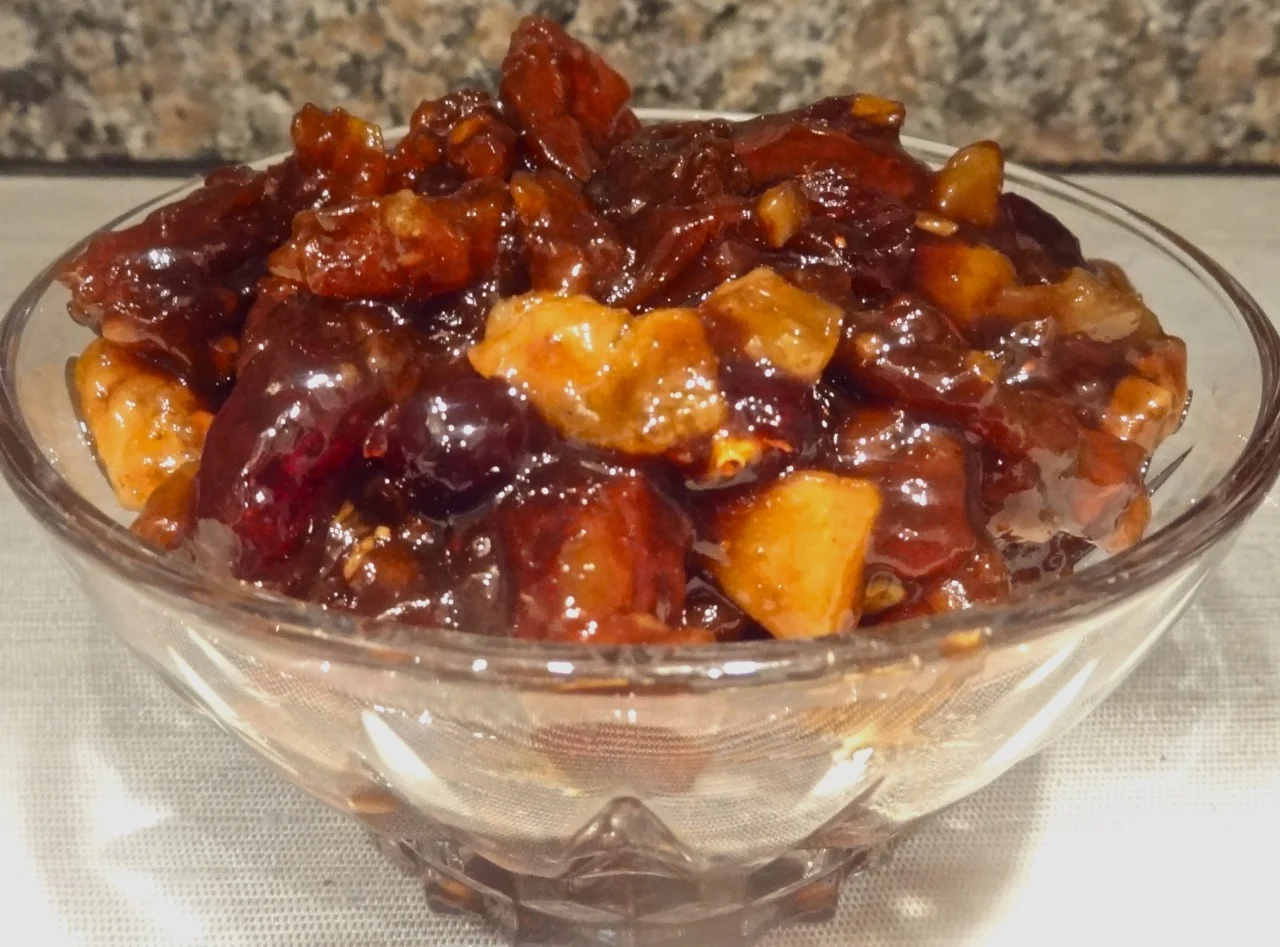
Dried Apricot, Pear and Raisin Chutney

I love when one recipe serves several purposes.Like this one for Dried Apricot, Pear and Raisin Chutney.I am using this (placed in pretty jars) as gifts to my friends for Purim. But I made enough for me too and am going to serve it along with the ro…

I love when one recipe serves several purposes.

Like this one for Dried Apricot, Pear and Raisin Chutney.

I am using this (placed in pretty jars) as gifts to my friends for Purim. But I made enough for me too and am going to serve it along with the roasted lamb I am going to make for my Academy Award dinner. We always watch the event, red-carpet stuff and all, with my brother Jeff and sister-in-law Eileen. Eileen will not eat this because it has hot pepper in it and she doesn’t like anything spicy (she’ll get a different homemade chutney with her dinner).

I’ve been thinking lately that we don’t eat enough chutney. It’s one of the most versatile and flexible of foods. You can use all sorts of fresh and dried vegetables and fruits, spices, herbs, other flavorings (like vinegar, citrus peel, Port wine) and the delicious concoctions you can make are endless.

I mean, there is life beyond ketchup, right?

Dried Apricot, Pear and Raisin Chutney

12 ounces dried apricot halves

boiling water

4 large cloves garlic, finely chopped

2 tablespoons finely chopped fresh ginger

12 whole cardamom pods

2 cups sugar

1 cup red wine vinegar

1/2 cup Balsamic vinegar

1/2 teaspoon cayenne pepper

1/4 teaspoon salt

2 pears, peeled, cored and cut into small chunks

3/4 cup golden raisins

Cut the apricots into quarters, place in a bowl and pour in enough boiling water to cover them. Let the apricots soak for 30 minutes. Drain and place them in a saucepan. Add the garlic, ginger, cardamom pods, sugar, vinegar, Balsamic vinegar, cayenne pepper and salt and bring to a boil over high heat. Reduce the heat and simmer, stirring occasionally, for 20 minutes. Add the pears and raisins and cook for another 20-25 minutes or until the fruits are tender and the mixture is thick. Let cool.

Makes about 3 cups

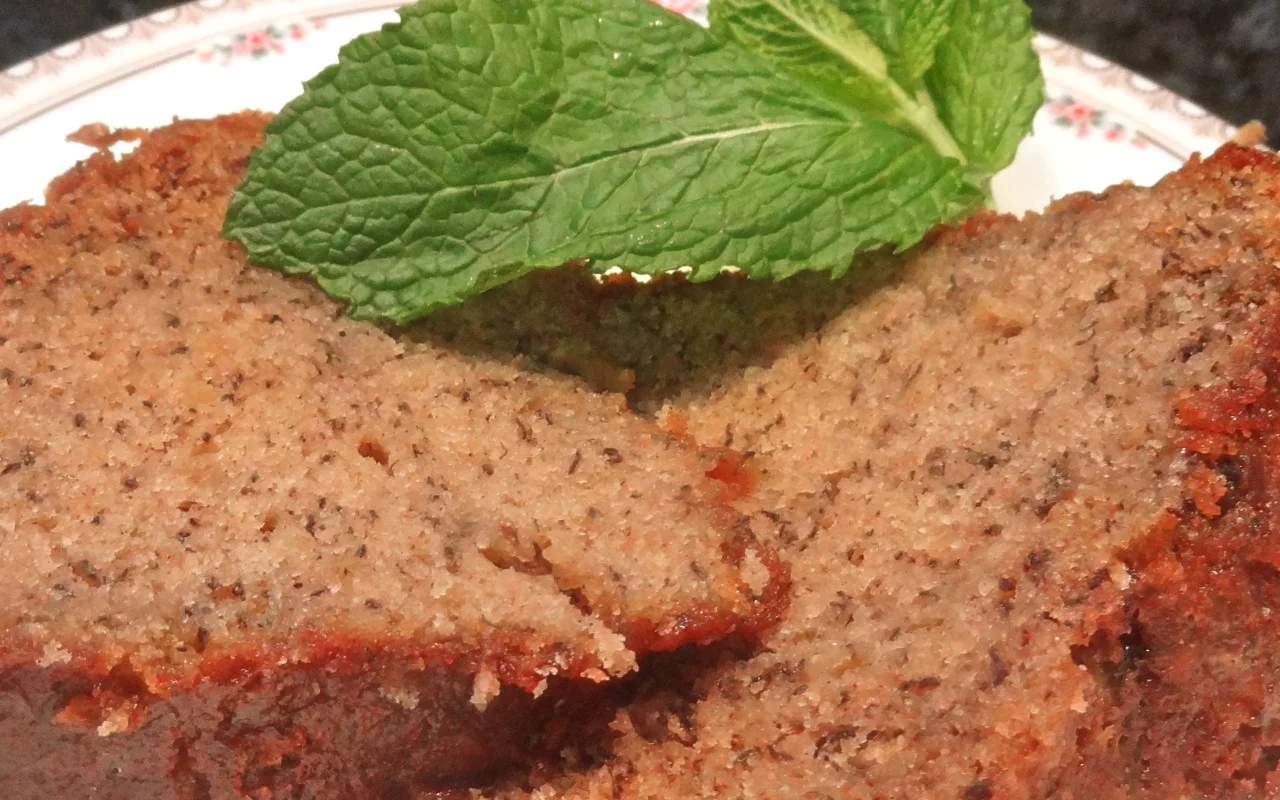
Dairy Free Banana Bread with Coconut Milk

Another day, another banana bread.Because, as everyone who reads this blog knows, I buy bananas but can’t eat them because I am allergic to them but love having them around the house because they smell so wonderful and besides, my husband Ed says he…

Another day, another banana bread.

Because, as everyone who reads this blog knows, I buy bananas but can’t eat them because I am allergic to them but love having them around the house because they smell so wonderful and besides, my husband Ed says he likes them and does, occasionally, eat one.

But most are left over so I have dozens of recipes for Banana Bread. My kids love Banana Bread but mostly I give it away, often for the bi-monthly Tea our local Hadassah group holds for cancer patients and caregivers at Stamford Hospital.

Recently, one of the patients, who has been taking chemotherapy and said nothing tasted good to him, mentioned that my Banana Bread was the best thing he had eaten in a long time. He also said he appreciated how soft and moist it was.

I think about that a lot. How a simple piece of cake can make someone so pleased. 

So next time I am sending this version. I wanted to make a Banana Bread without shortening, butter or any dairy. I used Earth Balance natural buttery spread plus coconut oil for the fat and coconut milk as the liquid.

It’s a simple recipe, but absolutely soft and moist. 

So, I will be able to enjoy the fragrance of the bread as it bakes, even if I can’t taste it. And I hope the patients at Stamford Hospital will love how it tastes and that it makes their day a little brighter and better.


Banana Bread


2-1/2 cups flour

1 teaspoon salt

1-1/2 teaspoons ground ginger

2 teaspoons baking soda

3/4 cup Earth Balance natural buttery spread

1/4 cup coconut oil

1-1/3 cups sugar

3 large or 4 small very ripe bananas, mashed

3 large eggs, slightly beaten (or use 3/4 cup unsweetened applesauce or plain soy yogurt as a vegan substitute)

1/2 cup coconut milk


Preheat the oven to 350 degrees. Grease and flour a 10-inch (8-cup) bundt pan. Mix the flour, salt, ginger and baking soda together in a bowl. In the bowl of an electric mixer set at medium speed, beat the buttery spread, coconut oil and sugar until well blended. Add the bananas and blend in thoroughly. Add the eggs and beat well. Stir in the coconut milk and blend thoroughly. Add the flour mixture and beat until batter is well blended. Pour into the prepared pan and bake for about one hour or until a cake tester inserted into the center comes out clean. Remove from the oven and let cool in the pan for 10 minutes. Remove to a cake rack to cool completely.

Makes one bread, serving 16-18


Raheb Eggplant Salad

fullsizeoutput_893e.jpeg
Styles and tastes change from time to time and modern couples may have their own notions about which rituals and traditions to keep as they exchange vows, but I think all weddings, whether they are extravaganzas for 500 people or intimate gatherings…

Styles and tastes change from time to time and modern couples may have their own notions about which rituals and traditions to keep as they exchange vows, but I think all weddings, whether they are extravaganzas for 500 people or intimate gatherings for immediate family have this in common: when everyone goes home it’s only the memories that remain. And maybe some photos or video.

The stress over stuff like what music should be played as people walk down the aisle, the color of the bridesmaids’ nailpolish or whether to serve a vegetarian or meat meal are all things past and best forgotten.

So the memories should be good ones. Which is what I am wishing today for an internet colleague of mine, Alison Barnett, a chef and food blogger who was married yesterday.

I am gathered “here” with several other colleagues to wish the bride and groom mazal tov and feature a recipe for them as if we were celebrating a sheva berachot (seven blessings) with them. 

A virtual simcha.

I chose this eggplant dish because it brought to mind a wedding feast from long ago. Centuries ago. 9th century to be exact. When the Caliph of Baghdad married a young woman named Burana. Their little fete lasted over 2 weeks and cost a sultan’s ransom.

They chose eggplant for the wedding dinner, because although almost everyone at the time hated eggplant and thought it was too bitter (a Bedouin once said it tasted like a scorpion’s sting), the chef figured out that by salting the vegetable first, eggplant would be tender and tasty and not bitter at all.

After this, eggplant’s fame spread far and wide. It was certainly a watershed moment for Middle Eastern cuisine, which uses lots and lots of this particular vegetable. In fact, at one time, a woman’s prospects for marriage increased in proportion to the number of eggplant dishes she could cook.

Well of course that’s not the case today.

I hope.

In any event, Alison knows how to cook eggplant (and everything else too). 

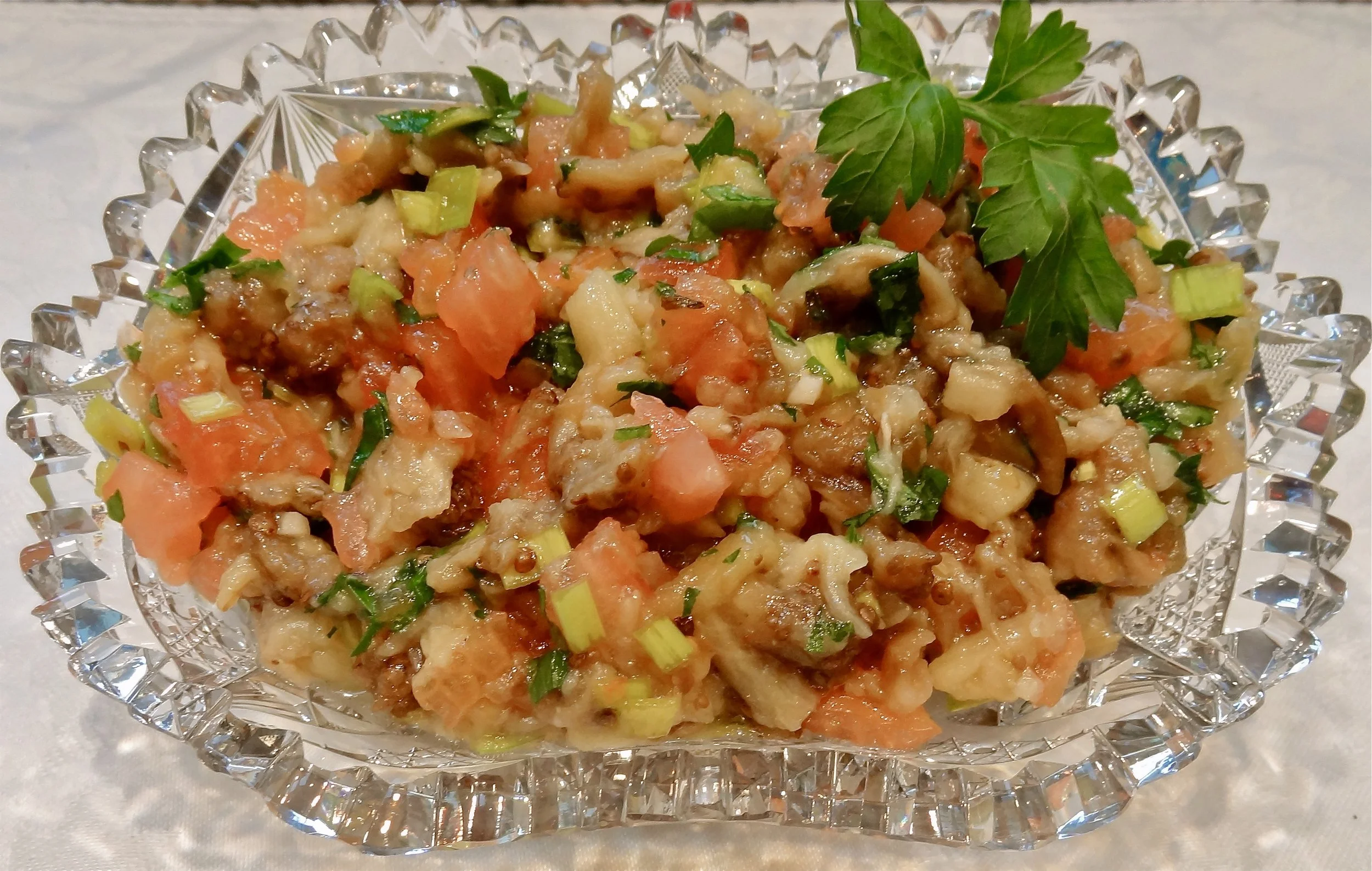
But to celebrate Alison and Matan’s wedding, I offer a sumptuous eggplant dish: Raheb, a salad to precede a meal or serve alongside meat or dairy. The Caliph’s chef might have pricked the whole eggplant with a fork and soaked the vegetable in salted water before roasting it, but that actually isn’t necessary. There is nothing bitter about this dish.

Raheb Salad

1 large eggplant

2 medium tomatoes, peeled, deseeded and diced

2 medium cloves garlic, finely chopped

2-3 scallions, chopped, or one small onion, chopped

2-3 tablespoons olive oil

2-3 lemon juice

3 tablespoons chopped fresh parsley or cilantro

salt and freshly ground black pepper to taste

1/2 teaspoon zatar, optional

Preheat the oven to 450 degrees. Place the eggplant on a cookie sheet, pierce the flesh in 3-4 places with the tines of a fork and roast, turning the eggplant occasionally, until tender and browned on all sides, for 25-30 minutes. Let cool and peel off the skin. (Or cook it on a gas burner or inside an outdoor grill.) Chop the flesh into small dice into a bowl. Add the tomatoes, garlic, scallions, olive oil, lemon juice, parsley, salt, pepper and zatar, if used. Stir gently to distribute the ingredients evenly.

Makes 1-1/2 cups


Saint Cupcake’s Brownie Cookies

Why bother with any other recipe this Valentine’s Day? That’s what I realized. These cookies, which I baked last weekend, were so good that my husband devoured almost the entire batch. He did leave some for a couple of workmen who happened to be at …

Saint Cupcake’s Chocolate Cookies

Why bother with any other recipe this Valentine’s Day? That’s what I realized. These cookies, which I baked last weekend, were so good that my husband devoured almost the entire batch. He did leave some for a couple of workmen who happened to be at our house making some repairs on the oven. But I am about to make another batch. Or two. So I know I will have some available.

I got the recipe from Sprinklefingers, a tumblr blog I follow. The woman who writes the Sprinklefingers blog is an energetic, interesting person who lives in Portland, Oregon, and has this fabulous bakery called Saint Cupcake (actually there are two bakeries now). I say fabulous because the photos and the menu of goodies looks fabulous. I’ve never been there or met the woman, Jami Curl, who owns it and writes the blog. The place and the woman are clear across the country from me.

But I do know that all the posts are interesting and the recipes wonderful.

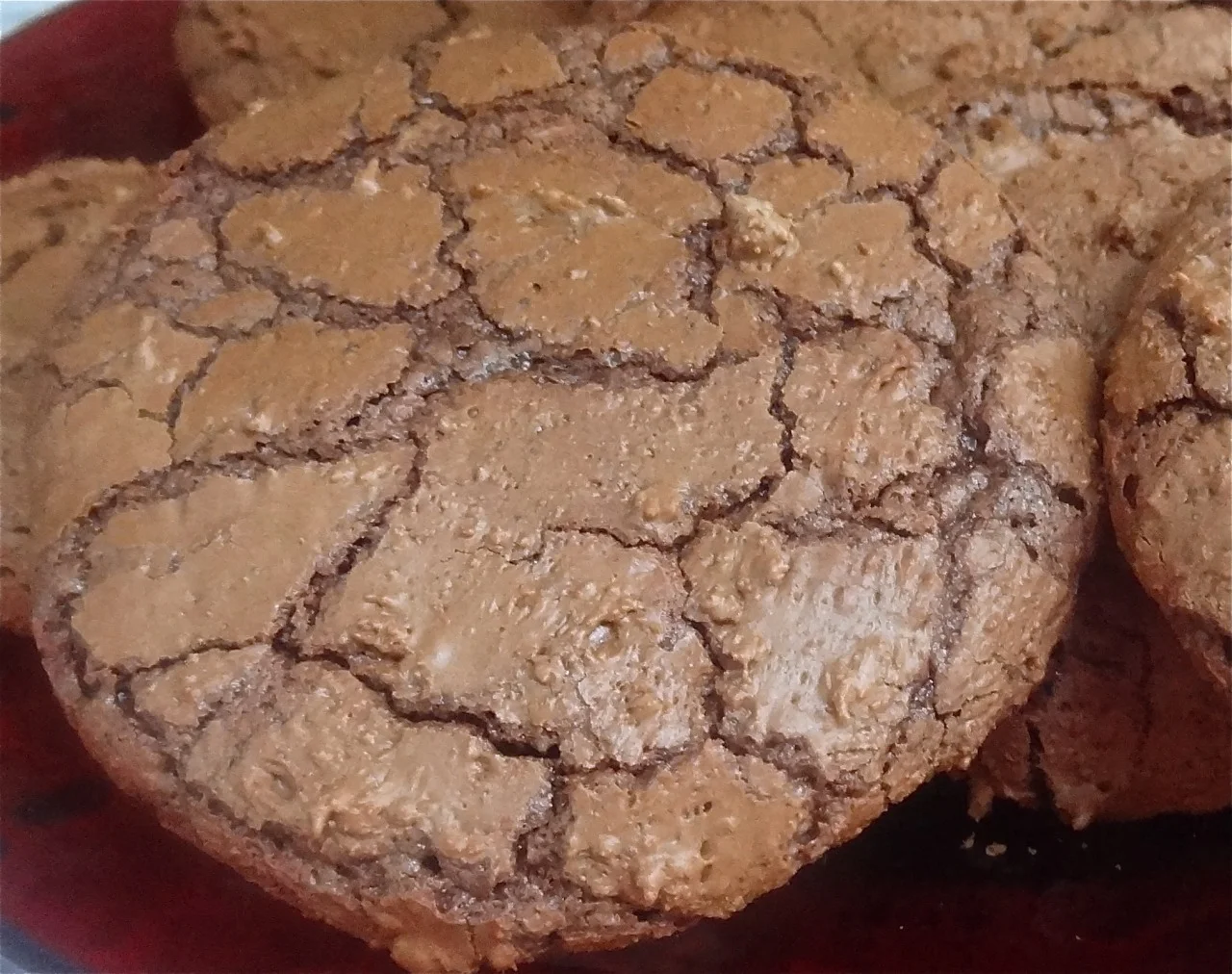
So the other day I tried her recipe for Chocolate Brownie Cookies. All I can say is: these are not to be missed. The cookies are awesome. Perfect for Valentine’s Day. Or any other day actually.

I made one batch of the larger cookies, one batch of the smaller. I prefer the smaller (then you don’t feel so guilty eating two).

I changed the way Jami’s recipe is written to conform to the way I write recipes, so maybe I should say it is adapted. But the ingredients and instructions are exactly the same. Maybe I should have this blurb like they do on TV when they say a movie has been edited to be formatted for your TV screen.

Saint Cupcake’s Brownie Cookies

  • 4 tablespoons butter, cut into small pieces

  • 12 ounces semisweet chocolate

  • 1/3 cup all-purpose flour

  • 1/4 teaspoon salt

  • 1/4 teaspoon baking powder

  • 2 large eggs plus one large egg yolk

  • 1/2 cup sugar

  • 1/4 cup packed brown sugar

  • 1 tablespoon vanilla extract

Preheat the oven to 350 degrees. Line a cookie sheet with parchment paper (or grease the sheet lightly). Melt the butter and chocolate together in the top part of a double boiler. Remove the pan from the heat and set aside to let ingredients cool. Sift the flour, salt and baking powder together in a bowl and set aside. Beat the eggs, egg yolk, sugar and brown sugar in the bowl of an electric mixer set at medium speed until well blended, about 5 minutes. Fold the cooled chocolate mixture into the egg mixture until thoroughly blended. Add the flour mixture and vanilla and blend them in thoroughly. Let the batter rest for 10 minutes. Use a 2-ounce scoop to form a rounded mound and place on the prepared cookie sheet. Leave space between the cookies for expansion. Bake for 15-17 minutes. OR, use a smaller (one-ounce scoop) and bake for about 10-12 minutes. Cookies should be cracked, with moist looking ingredients inside the cracks.

Pearl Fein’s Standing Rib Roast

Today is my husband’s birthday. He’s an almost impossible person to buy a gift for. But he is the most possible, positive and terrific person to cook for.
He eats and enjoys whatever food I prepare. He is a good sport and will taste and …

Pearl Fein’s Standing Rib Roast

Today is my husband’s birthday. He’s an almost impossible person to buy a gift for. But he is the most possible, positive and terrific person to cook for.

He eats and enjoys whatever food I prepare. He is a good sport and will taste and comment on all the recipe creations and experiments I work on for my newspaper articles and blogging.

So, what to make him for him birthday dinner? (He prefers to stay at home instead of go out, especially ever since our favorite local restaurant closed.)

I thought about Chinese take-out but he nixed that (maybe because he knows it’s not my favorite).

He would be happy with anything he could pour ketchup over, so maybe hamburgers or beef stew? (But those don’t seem festive enough.)

He would really love a corned beef sandwich on rye bread but our local deli’s stuff is awful and I don’t feel like driving into New York City and downtown to Katz’s to get one (even though they have some of the best corned beef sandwiches in the world).

He isn’t much of a dessert eater, so even though I make decent pie and cake, none of that would do it for him (although he does like European style, dense chocolate cake with apricot filling …).

He adores candy, but I usually don’t make my own, so I bought him his favorite dark chocolate-almond bark and a bagful of red-colored, chocolate coated candies filled with pomegranate.

After thinking it all over, I decided I’ll make Rib Roast. The way his mama made it. He really really loves that. It was his mother, Pearl Fein, who taught me how to make a Rib Roast. She would always make this dish for special family occasions. They were always so wonderful (the beef and the occasions).

So, that’s it. And here is her recipe, which I’ve posted before, but it’s worth doing again:

Pearl Fein’s Standing Rib Roast

  • 1 2-3 rib beef roast

  • kitchen string

  • 1 tablespoon paprika

  • 1-1/2 to 2 teaspoons salt

  • 1 teaspoon freshly ground black pepper

  • 1 to 1-1/2 teaspoons garlic powder

  • water

Preheat the oven to 450 degrees. Carve the meat from the bones as close to the bone as possible so that you are left with a round beef roast and L-shaped bones. Tie the meat back onto the bones with kitchen string. (This procedure makes it much easier to carve the cooked meat.) In a small bowl, combine the paprika, salt, pepper and garlic powder plus enough water to form a paste. Brush the paste on all of the meat and bone surfaces. Place the roast bone side down in a roasting pan. Roast for 20 minutes. Lower the heat to 350 degrees and cook for about 15 minutes per pound or until it is cooked to the doneness you like. Use a meat thermometer (place it in the middle of the meat) and remove the meat from the oven when it reaches 115 degrees F for rare and 130 degrees F for medium. Let the roast rest for 15-20 minutes before you carve it (the temperature will rise a bit during that time). Snip the strings and place the now-boneless roast on a carving board to slice.

Makes 4-6 servings