Ratatouille

Last Friday I mentioned how annoying I find the mixture of food and politics. I was talking about kiwi fruit then.

But after thinking about it some more, I should also say that I find the whole anti-French, anti-European political demagoging to be absurd, and at the very least, self-righteous. We Americans come from all cultures, including European ones. We’re mongrels. Inclusive. 

So why the smug sneers when someone eats French food or knows how to speak Chinese or has a father who came from Kenya?

Especially when it comes to food. Lately the anti-French thing has ratcheted up. It would be laughable if it weren’t so dumb.

Are they kidding? Do these people understand how much French culture has given us? Manet. Cezanne. Matisse. Proust and his famous madeleines. Hugo. Voltaire. Debussy. Faure. Halevy.

And so on.

And the food? Have these people ever tried French Onion Soup? Eclairs or Crepes? Cassoulet? Ratatouille? Chocolate Mousse?

Those are just a few of the goodies we know from French cooking.

Not to be sneered at.

I admit it. I learned to speak French in high school and bemoan the fact that I wasn’t very good at it so I can’t speak any anymore and my daughter has teased me about not even remembering how to conjugate “etre” (“to be”).

I also love and admire French food, one of the mother cuisines, one of the best in the world and from which some of the most famous chefs and their famous creations have come.

I wish these politicians would get off this subject. They sound silly and hollow, not to say unfit for any office. 

Here’s a recipe for FRENCH Ratatouille. It’s terrific in the summer when you can use fresh tomatoes, and in the winter it’s terrific too (use canned tomatoes). Good as a main course at a vegetarian meal (add eggs or a whole grain casserole) or as a side dish with meat, poultry or fish. 

Ratatouille

1 medium eggplant, about one pound

2 medium zucchini

salt to taste

1/4 cup olive oil

2 medium onions, sliced

2 large cloves garlic, finely chopped

1 red bell pepper, deseeded and sliced

1 green bell pepper, deseeded and sliced

1 28-ounce can Italian style tomatoes, including liquid

2 tablespoons chopped fresh basil

1-2 sprigs thyme (or 1/2 teaspoon dried thyme)

2 tablespoons chopped fresh parsley

freshly ground black pepper to taste

Cut the eggplant and zucchinis into bite size pieces, place in a colander and sprinkle with salt. Let rest for 30 minutes, dry with paper towels. Heat the olive oil in a large saucepan over medium heat. Add the onions and cook, stirring occasionally, for 2-3 minutes. Add the garlic, red pepper and green pepper and cook for another 2 minutes. Add the eggplant, zucchini, tomatoes, basil and thyme. Partially cover the pan and cook for about 30 minutes. Sprinkle with parsley and freshly ground black pepper to taste. Makes 4 servings

Kiwi Melba

Politics and food? It’s incredibly annoying.

Take kiwi fruit, for example.

This brown, fuzzy-skinned fruit originated in China, which introduced it to New Zealand which wanted to market it here during the 1950s.

Unfortunately, at that time it was known as a “Chinese Gooseberry” and the U.S.A. was deep into McCarthy fever at the time. There were politicians who wanted nothing to do with anything that smacked of communism.

Huh?

Sort of reminds me of those today who make fun of anyone who speaks “French” as if knowing another language was something to be embarrassed about. As if anything French was bad (like “french fries” once idiotically referred to as “liberty fries.”). 

Huh?

So back to Kiwi. Because of some demagogues the country missed out on this delicious — and healthy — and beautiful fruit for decades.

Chinese gooseberries became really really popular in the 1980s after they were renamed kiwi fruit. So popular, in fact, that it was overdone, like so many food trends. Kiwi this, kiwi that. People got sick of them.

Today we’re all used to seeing kiwi fruit in the produce bins. They’re not exotic anymore.

But they are delicious. Beautiful and healthy. I sometimes add a few chunks to Chicken with Rice or use them on top of shortcake when strawberries are out of season (like now) or add them to salads (like rice or some whole grain with leftover meat or fish) or to garnish a cheesecake or custard tart.

I tasted kiwi fruit for the first time ages ago at a friend’s wedding. The dessert they served was Kiwi Melba. Plain, simple and refreshing after a 3-course dinner. The garnet-colored sauce, made from fresh raspberries was a stunning contrast to the emerald-green flesh of the kiwi fruit, like two precious jewels in a cup. It dazzled. I’ve served it at home, to company. It’s one of those desserts that takes almost no time to prepare and comes off as something very special to look at and to eat, as if you’ve fussed.

Here’s the recipe. If you want to elaborate, add a dollop of whipped cream and/or chopped toasted almonds on top. And/or place the fruit and sauce inside a meringue shell.

Kiwi Melba

6-8 kiwi fruit

2 boxes fresh raspberries (2 to 2-1/2 cups)

2-3 tablespoons sugar

2 tablespoons orange flavored brandy

whipped cream, optional

chopped toasted almonds, optional

Peel the kiwi fruit, cut them into quarters or chunks and place the pieces inside 6 dessert serving dishes. Crush the berries in a food processor or by hand. Add the sugar and brandy and mix thoroughly. Let rest for at least 10 minutes. Spoon over the kiwi. Top with whipped cream and/or toasted almonds if desired. Makes 6 servings

baked potatoes

Jim Kuzzy (jimkuzzy@yahoo.com) submitted:

Ronnie,

Thanks for the stuffed potato recipes.  I look forward to trying the spinach and feta cheese variety.  I have a slight variation on baking potatoes which works well.  To your instructions, after scrubbing I would add drying with a paper towel to maximize benefits of 400 degree oven blast;  secondly, do not pierce the potato until it has baked for 30 minutes, then pierce as you said once with the tip of a knife.  Minor tweaks to be sure, but big results in the end. 

Thanks again for the recipes. 

Hey Jim — thanks for your wonderful input! Yes, quite true that the dry potato gets a better blast of heat and crunch. I agree fully.

I also agree that you should pierce the potato after 20-30 minutes — the most perfect way to bake a potato. I have to say — I did an article for a newspaper years ago on baked potatoes and actually recommended this and someone wrote to me that that was much too much trouble and picky for something as simple as a baked potato. So, I never recommended it again, for fear of angry readers!!  But you are so right — if you can remember and don’t think it’s too much to ask, pierce a baking potato 20-30 minutes after putting it into the oven!

Thanks!

Rutabaga and Potato Croquettes

Yesterday, while I was organizing some children’s books, I came across “The Turnip,” which I wrote about yesterday.

Reading it again put me into even more of a turnip frame of mind.

And I was thinking how ironic it is that turnips are so under appreciated in the United States but are considered so worthwhile in Europe that dozens of folk tales — not just the one about the huge turnip — have been written about them.

Like the one about a poor farmer who exchanges a cartload of turnips for a magical musical instrument which he plays and wins the heart of a beautiful princess.

And a Russian legend that tells of elves who steal all of a farmer’s turnips and when he goes after the thieves they refuse to give up the vegetables and instead give him a magic tablecloth that provides food, a goat who sneezes gold coins and a whistle that dispatches with unwanted guests.

And the one about the rabbit who gives his turnip to a poor family who gives it to an even poorer family who gives it to another, needier family who gives it to the most destitute of all — the rabbit.

Of course folk tales are often about the poor and needy. And the truth is that the rich have always disdained turnips as coarse, harsh, humble fare, fit only for the underclass.

But at one time oats had that reputation too. Samuel Johnson said oats were eaten by people in Scotland but only by horses in England. Nowadays everyone, rich, poor and in between, eats oats.

Same goes for beans. Saint Jerome forbade the nuns in his charge to eat any.

And potatoes, once thought poisonous so only animals and the poorest of the poor ate them. Today our fanciest restaurants serve beans and potatoes. 

So I can’t see any reason why we shouldn’t eat more turnips. They add variety, they’re widely available and are inexpensive. And, when made the right way, they taste good.

Like in this recipe, which is an absolutely perfect accompaniment to roasted chicken, baked fish and pot roast.

Rutabaga and Potato Croquettes

  • 1-1/3 cups mashed potatoes

  • 2/3 cup mashed cooked rutabaga

  • 1/8 teaspoon grated nutmeg

  • salt (about 3/4 teaspoon) and freshly ground black pepper to taste

  • 2 large egg yolks

  • 1/3 cup all-purpose flour

  • 1 large egg

  • 2 tablespoons vegetable or chicken stock or milk

  • 2/3 cup packed fresh breadcrumbs

  • vegetable oil for frying

Mix the mashed potatoes, mashed rutabaga, nutmeg, salt, pepper and egg yolks together in a bowl. (To make mashed potato and rutabaga, peel and dice the vegetables, then boil in water for abut 15 minutes.) Shape portions of the mixture into finger shapes about 2-inches long, 1-inch wide. Dredge the fingers in the flour. Beat the whole egg and stock together in a dish. Coat the flour coated fingers with the egg mixture. Press the fingers into the breadcrumbs, coating all sides. Refrigerate for about one hour. Heat about 1/2-inch vegetable oil in a large saute pan over medium-high heat. Add the fingers, a few at a time, leaving space between them so they can fry properly. Fry for 3-5 minutes, turning the fingers to brown all sides, or until well browned. Drain on paper towels.

Makes 4 servings

Stwns, Rutabaga and Potato Casserole

Yesterday I wrote about turnips and it made me think of an old folk tale about a man who plants a turnip but it grows so enormous he can’t get it out of the ground. So he asks his wife to help and still they can’t pull it out. And then they get their grandson, then the dog — the cat — and they all pull together and still nothing — and so on with helpers — a hen, pig, rooster and so on, until finally, a little bird comes along and they all pull at the turnip and it comes out of the earth and of course the little bird thinks he is the hero.

My children loved this story and now it’s a favorite of the grandkids.

That doesn’t mean turnips are their favorites though.

It’s hard enough to convince grown ups to try turnips. Almost impossible when it comes to kids.

But honestly, if you buy the right kind of turnip you can cook a lot of terrific side dishes all winter. And these go perfectly with roasts and baked fish and vegetarian dinners.

The point about turnips is to buy the smallest ones because they’re more delicate. Huge oversized turnips like the one in the folk tale can be as bitter and harsh as a cranky relative.

Turnips are kin to cabbage and broccoli. These vegetables also used to get a bad rap but everyone eats them nowadays. Rutabagas are also turnip cousins and, in fact, you can substitute rutabagas, which are milder than white turnips, (they’re often called “yellow turnips” or “Swedes”) in most turnip recipes. Like this lovely, rich rutabaga and potato casserole, an old Welsh recipe.

Stwns

1 pound diced peeled rutabaga

1 pound diced peeled all-purpose potatoes

4 tablespoons butter

2 tablespoons vegetable oil

2 leeks, cleaned and chopped

2 tablespoons chopped fresh parsley

1 teaspoon salt or to taste

freshly ground black pepper to taste

1/2 cup dairy sour cream, plain yogurt or buttermilk

Preheat the oven to 350 degrees. Place the rutabaga and potato dice in a large saucepan, cover with water and bring to a boil. Lower the heat and simmer for about 15 minutes or until the vegetables are tender. Drain the pan and mash the vegetables. Heat the butter and vegetable oil in a saute pan over medium heat. When the butter has melted and looks foamy, add the leeks and cook, stirring often, for 3-4 minutes or until softened. Add the contents of the pan to the mashed vegetables. Add the parsley, salt and pepper and mix ingredients. Add the sour cream and mix to incorporate it completely. Place the mixture inside a casserole dish. Bake for 10-15 minutes or until hot. Makes 6-8 servings

Turnip Custard

I had to try turnips several times before I got sold on them. 

The first time I cooked one was many years ago when one of my daughters was studying vocabulary words for the SATs. We had eaten a turnip dish a couple of nights before, one that we thought smelled and tasted rotten and I told her that the best hint for the word “noisome,” if that should ever come up on the exam, was to remember that turnip recipe.

It didn’t. But everyone in the family knows what the word noisome means.

Anyway, years passed. When you’re a food writer you have to eat stuff you may not like and experiment with ingredients and recipes, some of which you might not like. All part of the learning process.

And I learned that smaller turnips are not at all harsh, smelly or bitter. In fact, they can add a nice touch as a side dish during the winter.

I’ve made dozens of turnip dishes since the SAT time. Here’s one we all like. Another good thing about it — you can prepare it ahead a day or so and pop it in the oven just before serving.

Turnip Custard

  • 1-1/2 pounds turnips, peeled and diced

  • salt and freshly ground black pepper to taste

  • 1/8 teaspoon grated nutmeg

  • 1/2 cup half and half cream, light cream or whole milk

  • 1 large egg

  • 2 tablespoons butter

  • 1/2 cup packed fresh breadcrumbs

  • 1/4 cup grated Swiss cheese

Preheat the oven to 350 degrees. Place the turnip dice in a saucepan, cover with water and bring to a boil over high heat. Lower the heat and simmer for about 15 minutes or until the turnip is tender. Drain the water from the pan. Mash the turnips. Add salt and pepper to taste; add the nutmeg and mix ingredients. Beat the cream and egg together, add to the turnips and blend ingredients thoroughly. Place the mixture in a casserole dish. Heat the butter in a saute pan over medium heat. When the butter has melted and looks foamy, add the breadcrumbs and cook for 2-3 minutes, stirring occasionally, or until browned. Scatter the breadcrumbs over the turnip mixture. Sprinkle with the cheese. Bake for 10-15 minutes or until hot.

Makes 6 servings

Eggless Lemon-Blueberry Tea Bread

Even the most experienced home cooks make mistakes.Like the one I made yesterday. I decided to bake a Lemon-Blueberry Tea Bread and as soon as I put the pan in the oven I realized I had left the eggs out of the batter.Wow! That’s a biggie.I did that…

Eggless Lemon Blueberry Bread

Even the most experienced home cooks make mistakes.

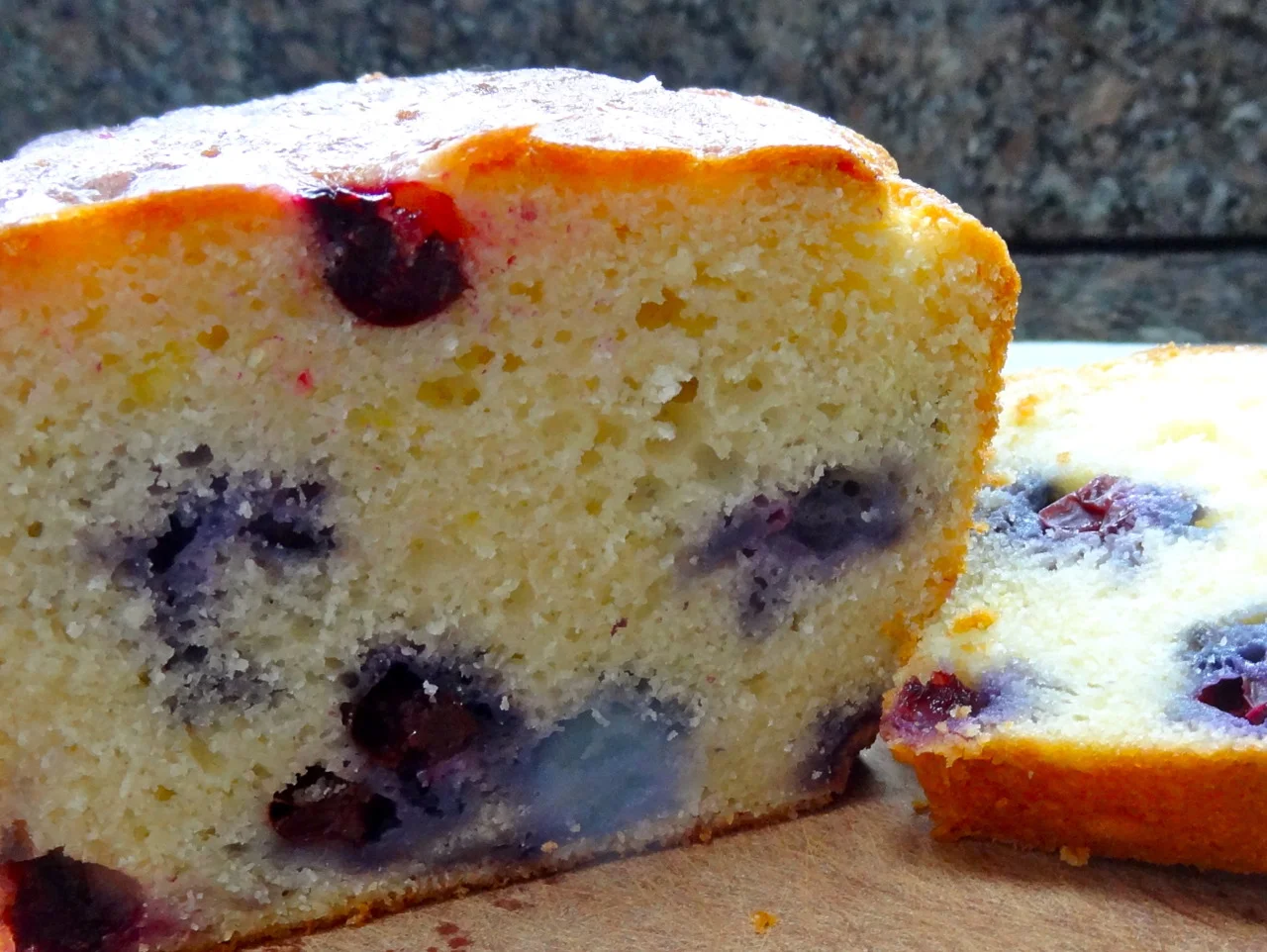
Like the one I made yesterday. I decided to bake a Lemon-Blueberry Tea Bread and as soon as I put the pan in the oven I realized I had left the eggs out of the batter.

Wow! That’s a biggie.

I did that once before, many years ago and made the big mistake of retrieving the loaf pan, scooping the batter back into a bowl, mixing in the eggs and then baking the bread as if nothing had happened.

Unfortunately, after the bread baked and cooled down, biting into a slice was like chewing day-old used bubble gum.

This time I just let the bread bake with a “let’s see what happens” kind of attitude.

The results were astonishingly surprising. What a boon for people who can’t eat eggs! This Lemon-Blueberry Tea Bread is delicious. Firmer, denser than one made with eggs, but tasty and tender without them.

So, here’s the recipe, including the eggs, but for egg-free diets — just leave the eggs out.

Lemon-Blueberry Tea Bread

  • 4 tablespoons butter

  • 3/4 cup sugar

  • 2 large eggs (optional)

  • 2 cups all-purpose flour

  • 2-1/2 teaspoons baking powder

  • 3/4 teaspoon salt

  • 1 tablespoon finely grated fresh lemon zest

  • 1 cup milk

  • 1 cup blueberries

  • 1/4 cup fresh lemon juice

  • 1-1/2 tablespoons sugar

Preheat the oven to 350 degrees. Grease a 9”x5”x3” loaf pan. In the bowl of an electric mixer, beat the butter and 3/4 cup sugar at medium speed for 1-2 minutes or until well combined. (Add the eggs and beat them in). Mix the flour, baking powder, salt and lemon zest in a small bowl. Add the dry ingredients to the creamed mixture in thirds, alternating with the milk. Beat to blend the ingredients to a smooth, even batter. Fold in the berries. Spoon the batter into the prepared pan. Bake for about 55 minutes or until a cake tester inserted into the center comes out clean. While the bread is baking, combine the lemon juice and 1-1/2 tablespoons sugar in a small saucepan and cook over medium heat for 1-2 minutes or until the sugar has dissolved. When the bread comes out of the oven, pour the lemon juice mixture on top. Cool the bread in the pan for 10 minutes. Invert onto a cake rack to cool completely.

Makes one bread

Vegetarian Tempura:

In case you’re not up on these things, you might want to know that tomorrow (Saturday), January 7th, is National Tempura Day.

YUM. Tempura is good stuff, especially if you can eat it within minutes after the making.

I know it’s soon after the holiday season and everyone’s thinking bad things about fried food. But with Tempura, the batter-dipped ingredients are cut small or thin and they’re fried very quickly in very hot oil. There isn’t much time for the food to absorb the fat, so you don’t actually wind up with too much.

And although Tempura is often made with fish or seafood, it is also a terrific way to have a delicious, filling vegetarian meal. Even the most ardent meat-eaters can’t resist this crispy, hot, vegetables-only dinner.

I’ve made Tempura many times. There are never leftovers. That’s how good this dish is. When I do make Tempura it always brings to mind one of my first cooking memories, not from my childhood but from when I first started cooking in my own apartment as an adult. I decided to make Tempura and didn’t realize that sesame oil, which is used for flavor — like a tiny sprinkle on a piece of fried eggplant for example — is not cooking oil. I heated up a wokful of sesame oil and fried everything in it.

YUK. Each piece felt as if it weighed a ton. I can still taste that heavy, sesame-laden, awful food! Two tastes and we all knew it was inedible. That evening ended up being a restaurant night.

Make sure you use a light, high-smoke point cooking oil (like canola, peanut, soybean or corn oil)! Keep the oil hot and the food sizzling. You’re in for a treat.

Btw, if you wish, you can add a pound of cut up thin filets of white, firm fish (such as sole or flounder) to the recipe.

Vegetarian Tempura:

Batter:

1 large egg

2 cups ice cold water

1-2/3 cups sifted all-purpose flour (measure after sifting)

1/4 teaspoon salt

pinch baking soda

Beat the egg and ice water together in a large bowl. Add flour, salt and baking soda and whisk ingredients until well blended.

Vegetables:

1 medium eggplant, peeled, sliced into 1/2-inch thick strips

16 snow pea pods

1 medium sweet potato, peeled, thinly sliced

1 bell pepper, red or green, stem removed, deseeded, cut into strips

1 medium zucchini, sliced into 1/4-inch thick rounds

all-purpose flour

vegetable oil for deep frying

Preheat the oven to 200 degrees. Place a cookie sheet in the oven (if possible place a cake rack inside the cookie sheet). Dredge the eggplant, snow peas, sweet potato, bell pepper and zucchini in the flour and shake off the excess. Heat about 3-inches of vegetable oil in a deep pan (or deep fryer) over medium-high heat until the oil reaches 375 degrees (a drop of batter will sizzle quickly). Using a few pieces at a time, immerse vegetables in the batter, shake off excess and place the coated vegetables in the hot oil. Fry for 2-3 minutes, turning the pieces, or until the vegetables are lightly tanned and crispy. Place the cooked pieces on the cookie sheet (on top of the rack, if used) to keep them warm. Repeat with remaining vegetables. Makes 6 servings

Dylan Rattigan's Greedy Bastard$

These days political candidates blog and tweet, but long ago they’d have to shake hands, kiss babies and feed zillions of people at campaign rallies. The best of the best of these events was the old fashioned political barbecue.

Free-food-for-votes!

This was a strategy perfected way back in 1840, by presidential candidate William Henry Harrison. One of his barbecues attracted about 30,000 people. 

He trounced incumbent President Van Buren. 

So who paid for all this food?

Did Harrison win because he had more money to spend on food, staff and advertising?

Historians say this particular presidential campaign is the grandma of the modern campaign, which is all about money and image making and how the rich and powerful can put their money behind a candidate who might do their bidding. And worst of all, how money in politics can lead to a political system that bleeds the country dry and leaves only a few on top to rake in all the goodies.

If you hate the fact that money runs the entire political process, do catch this new book by Dylan Ratigan: Greedy Bastard$! I managed to get an advance copy. It’s a page turner and unbelievably timely.

Ratigan even has his own recipe for a 2012 Barbecue. Not at all like Harrison’s in 1840 but delicious in its own, unique way. The barbecue recipe card came with my advance copy of the book. Here’s the recipe:

Greedy Bastard$ Antidote BBQ Sauce

(from the kitchen of Dylan Ratigan)

1 package

“Politics as Usual”

1/2 cup money and politics

1/2 cup American democracy (purified)

4 tblsp. each: banking reform, Federal Reserve audit, ending money priting

1 cup debt cancellation

3 tsp. international currency reform

2 tblsp. tax reform (bold flavor)

Add capital requirements wherever possible

First, in a large glass bowl, crack open package of “Politics as Usual.” With a skimmer. carefully separate business from state, and remove money from politics. (NOTE: May be difficult!)

Then, add remaining ingredients: American democracy, banking reform, and Federal Reserve audit. Whisk in international currency reform and tax reform, to counter acidity from extraction, especially Chinese currency rigging.

Proceed to remove money printing, bogus political debates, and bought politicians. Add capital requirements and restructure debt. Remaining ingredients should now be transparent and visible. 

Put in saucepan, and “hot-spot” until the sweet aroma of innovations in energy, health care, and education start bursting from the pan.

Garnish with hope for America’s rebirth and the sweetness of living up to our best ideals. 

Serve with a tall glass of personal resolve.

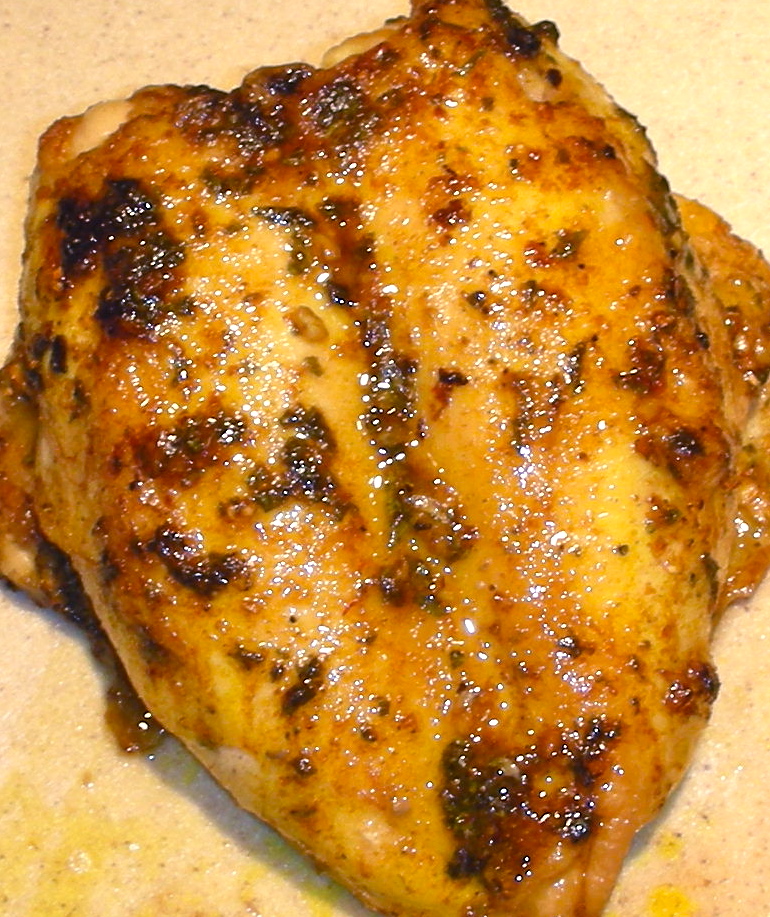
Roasted Moroccan Spiced Chicken Breast

Still groaning over how much food I consumed from Hanukkah through New Year’s Day.Why do I do this?It doesn’t help to know that most people overeat during the holidays.But I am happy to say that throughout most of the year we eat good food that’s fr…

Still groaning over how much food I consumed from Hanukkah through New Year’s Day.

Why do I do this?

It doesn’t help to know that most people overeat during the holidays.

But I am happy to say that throughout most of the year we eat good food that’s fresh, simple and healthy. So I’m right back in the routine as of today. This week we’ll be having the soup I posted about yesterday and also this chicken dish (with a roasted sweet potato and steamed broccoli).

This recipe, for Moroccan Spiced Chicken Breast, calls for a spice blend called Ras-el-Hanout. There’s a recipe for it in my book, Hip Kosher, but you can also find the blend in some specialty stores that sell spices (it’s basically a mixture of cumin, turmeric and cayenne pepper plus warm seasonings such as ground ginger, cinnamon, nutmeg, allspice and cloves). This dish goes well with sauteed escarole and roasted carrots and/or parsnips.

Roasted Moroccan Spiced Chicken Breast


2 bone-in whole chicken breasts, each about 1-1/2 pounds

1-1/2 tablespoons olive oil

salt to taste

1 tablespoon lemon juice

1 medium clove garlic, finely chopped

1 tablespoon chopped fresh mint

1 teaspoon Ras-el-Hanout

1 teaspoon grated fresh lemon peel

1/2 teaspoon paprika


Preheat the oven to 500 degrees. Wash and dry the chicken breasts and place them on a rack in the roasting pan. Brush with 1/2 tablespoon olive oil and sprinkle with salt to taste. Roast for 10 minutes. Combine the remaining tablespoon olive oil, lemon juice, garlic, mint, Ras-el-Hanout, lemon peel and paprika in a bowl and set aside. Brush the chicken with the spice mixture. Lower the oven heat to 350 degrees. Roast for another 30 minutes or until cooked through (meat thermometer inserted into the thickest part of the breast will register 160 degrees). Let rest for 15 minutes before carving.


Makes 4 servings