Pareve Irish Soda Bread

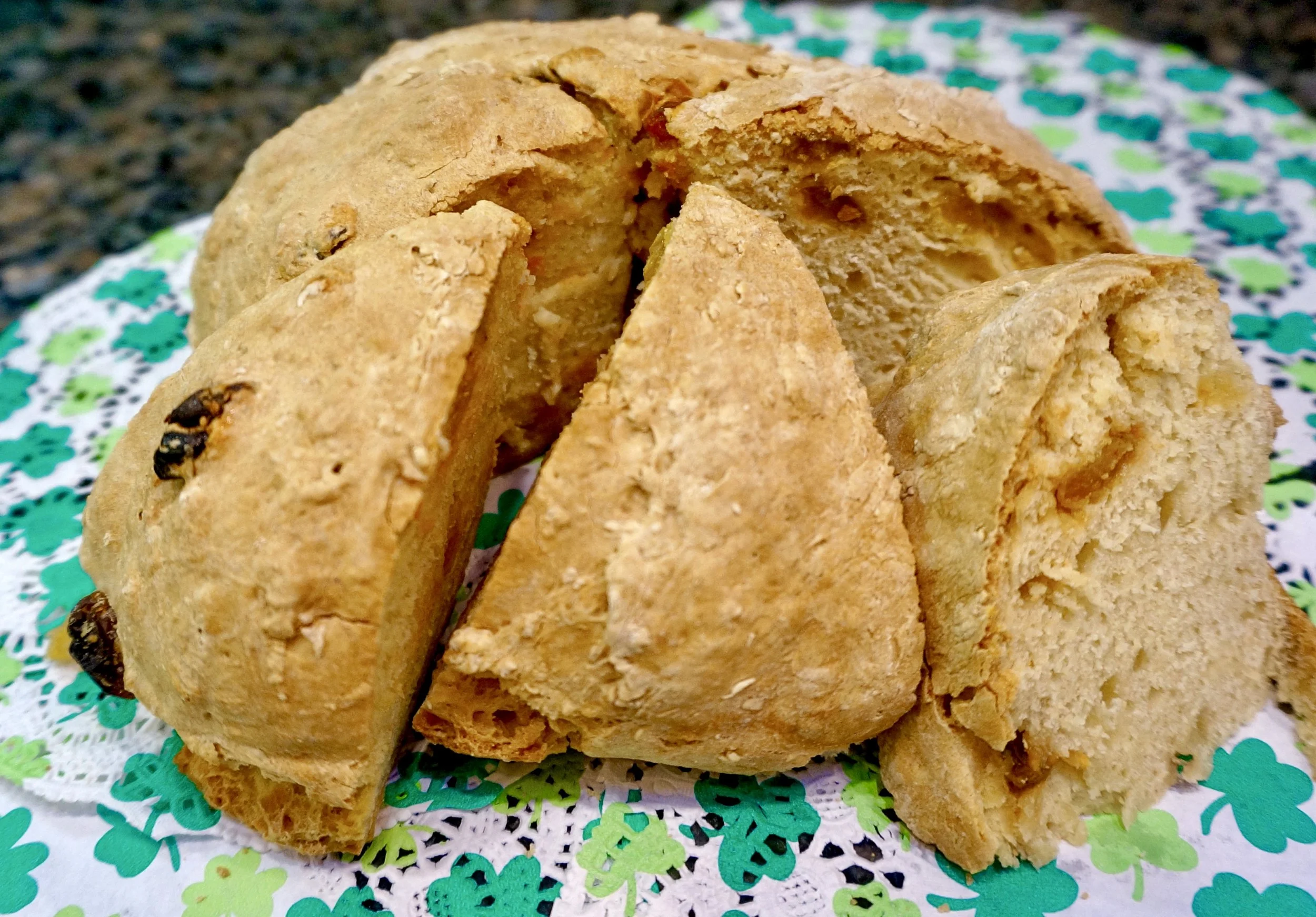
I don’t know why I wait for St. Patrick’s Day to make and eat Irish Soda Bread. It’s a really nice treat for breakfast together with my usual yogurt. It isn’t sweet and it has a compelling, moist, dense texture that makes you feel as if you aren’t going to be hungry again in an hour but also isn’t heavy at all. 

And yet I never think to make it until now.

Silly. This is too good for once-a-year.

Here’s a pareve version, which you can use if you’re kosher and want to have some delicious bread with corned beef and cabbage (or any other meat). It tastes just like the dairy version, made with buttermilk (there’s a note on how to substitute just below the recipe).

Irish Soda Bread (pareve version)

  • 3-1/2 cups all-purpose flour

  • 1 tablespoon brown sugar

  • 3/4 teaspoon salt

  • 1 teaspoon baking soda

  • 1-1/2 cups water

  • 1 tablespoon cider vinegar

  • 1/2 cup raisins

  • 1 teaspoon caraway seeds, optional

Preheat the oven to 350 degrees. Lightly grease a baking sheet. Combine the flour, brown sugar, salt and baking soda in a bowl. Mix the water and cider vinegar together and pour over the flour mixture. Mix the ingredients until you can form a soft dough. Work in the raisins and caraway seeds, if used. Sprinkle some flour on a work surface and knead the dough 18-20 times. Shape the dough into a ball, then flatten the ball slightly. Cut a small X on top with the tip of a sharp knife. Place the dough on the baking sheet. Bake for 40-45 minutes or until golden brown. Makes one

NOTE: For a more traditional, dairy version use 1-1/2 cups buttermilk in place of the water and cider vinegar

Crustless Spinach Pie

I have a cousin who won’t eat any green food. So he’s never tasted guacamole or creamed spinach or pea soup.
Me? I eat almost anything, but as I mentioned the other day, I don’t like fake green food. Which is what a lot of people e…

I have a cousin who won’t eat any green food. So he’s never tasted guacamole or creamed spinach or pea soup.

Me? I eat almost anything, but as I mentioned the other day, I don’t like fake green food. Which is what a lot of people eat on St. Patrick’s Day.

I say, if you want to eat green tomorrow, why not make it real? Like Spinach Pie.

This is a dish I make all the time. My kids love it. Even their kids love it. Most of the time I put a crust on top. Either the typical Greek way, using buttered phyllo dough sheets, or as I do if I’m in a hurry — topped with thawed out frozen puff pastry.

On Passover I make Spinach Pie with soaked matzo on top.

That’s how versatile this dish is. If you have my book, Hip Kosher, you’ll find it there. But here it is for everyone else:

Spinach Pie

2 10-ounce packages frozen whole leaf spinach, thawed

2 tablespoons olive oil

1 medium onion, chopped

3 large eggs

8 ounces feta cheese, crumbled

6 tablespoons grated Parmesan cheese

1 tablespoon minced fresh dill

freshly ground black pepper to taste

4 sheets phyllo dough

2 tablespoons butter, melted

Preheat the oven to 400 degrees. Squeeze as much water out of the spinach as possible and set aside. Heat the olive oil in a saute pan over medium heat. Add the onion and cook for 2-3 minutes. Stir in the spinach and mix well. Remove the pan from the heat. Add the eggs, feta cheese, Parmesan cheese, dill and pepper. Mix well and place in a baking dish. Top with 4 layers of phyllo dough each brushed with melted butter (or leave off the phyllo dough top). Bake for about 20 minutes or until golden brown. Makes 4-8 servings (as main course or side dish)

Vanilla Ice Cream

Anyone who thinks vanilla is boring, should read this column that appeared in the Guardian (U.K.) last week (I heard about this article from Sprinklefingers). 

http://www.guardian.co.uk/lifeandstyle/wordofmouth/2011/mar/01/consider-vanilla

The author, Oliver Thring rightly concludes that if you say that vanilla is boring, you probably haven’t tasted the real thing.

The real thing is a long, slender, pliable brown pod filled with teeny seeds. It has a bright, distinctive taste, but it never tramples your taste buds. Split the pod and plop it, or part of it, into custard and taste how it transforms the flavor into something sweet and floral but subtle. Use it for ice cream or to flavor a canister full of sugar. Use real vanilla in cake batter. Or to infuse vinegar, rum or vodka. 

I could go on and on. I’ve always loved vanilla, even back in the old days when my cousin Leslie told me that the little specks in the ice cream I was eating were dirt.

She always chose chocolate.

But as any vanilla aficionado knows, anything made with chocolate is nowhere unless it contains some vanilla to give it a boost. Hot chocolate, for example — make it without a bit of vanilla and you’ll notice it’s missing. Ditto brownies and chocolate cake.

For those who know the truth — and those who want to understand what the vanilla thing is all about — try this recipe for Vanilla Ice Cream.

Vanilla Ice Cream

  • 2 cups whole milk

  • 2 cups heavy or whipping cream

  • one vanilla bean, split open

  • 2 1-inch strips lemon peel

  • 3 large eggs

  • 3 large egg yolks

  • 2/3 cup sugar

Place the milk, cream, vanilla bean and lemon peel in a small saucepan and cook over medium heat until the liquid is hot and bubbles have formed around the sides of the pan. Set aside to cool. Beat the eggs, egg yolks and sugar together with an electric mixer set at medium speed until the mixture is thick and pale (4-5 minutes). Gradually add the milk mixture to the egg mixture, stirring to blend ingredients to a uniform color. Remove the vanilla bean (you can wipe it off and use it to flavor sugar, vinegar, rum or vodka). Heat the mixture, stirring frequently, until it has thickened, but do not let the mixture come to a boil. Let the mixture cool, then freeze in an ice cream maker according to manufacturer’s instructions. Makes 1-quart+

Hip Kosher Feedback

Hello Ronnie Fein!  I bought Hip Kosher last week.  Looking for new ways to cook. Three recipes in…and I’m hooked.  Last nite was Rice Sald with Raisins and Cashews.  In case you were not yet told, and for the next printing, there is an error on the third ingriedient.  It reads “1 cut” insteadof “1 cup of coarsely chopped cashews”.  Either way it was delish.  Eating it with the Sauteed Chicken Breasts w/Tomoates & Honey right now.  Thank you for this cooking adventure.

submitted by:

erappoport@hotmail.com

Thanks so much for the note! Glad you are enjoying the book. Try the Peppers and Eggs — one of my faves!

Buttermilk Pie

In case you didn’t know, today is Pi Day.

Yeah, that’s right. This is a special holiday that celebrates the mathematical constant pi that we all learned about once in grade school but that, at least when I was a youngster, girls were not actually required or expected to remember.

Pi is 3.1415926 blah blah blah and so on. The other day my grandson took pi out to about 16 numbers, which I found very impressive, until I read that in 2004, Daniel Tammet, a high-functioning autistic savant recited 22,514 numbers by memory.

I never particularly liked math and sort of feared it the way a proper suburban girl was supposed to back in the day. I regret that now. But, as the poet Robert Frost says, “knowing how way leads on to way” I followed a different path, and left pi aside for pie.

Which, come to think of it, I do like better anyway.

For those in the know, the official food of Pi Day is, of course, PIE. Here’s a recipe for one that I once hesitated to make at first because of the name but did because I had to write an article about unusual pies. It’s a Buttermilk Pie. It was so good I included the recipe in my book The Complete Idiot’s Guide to American Cooking.

You can’t tell a pie by its name.

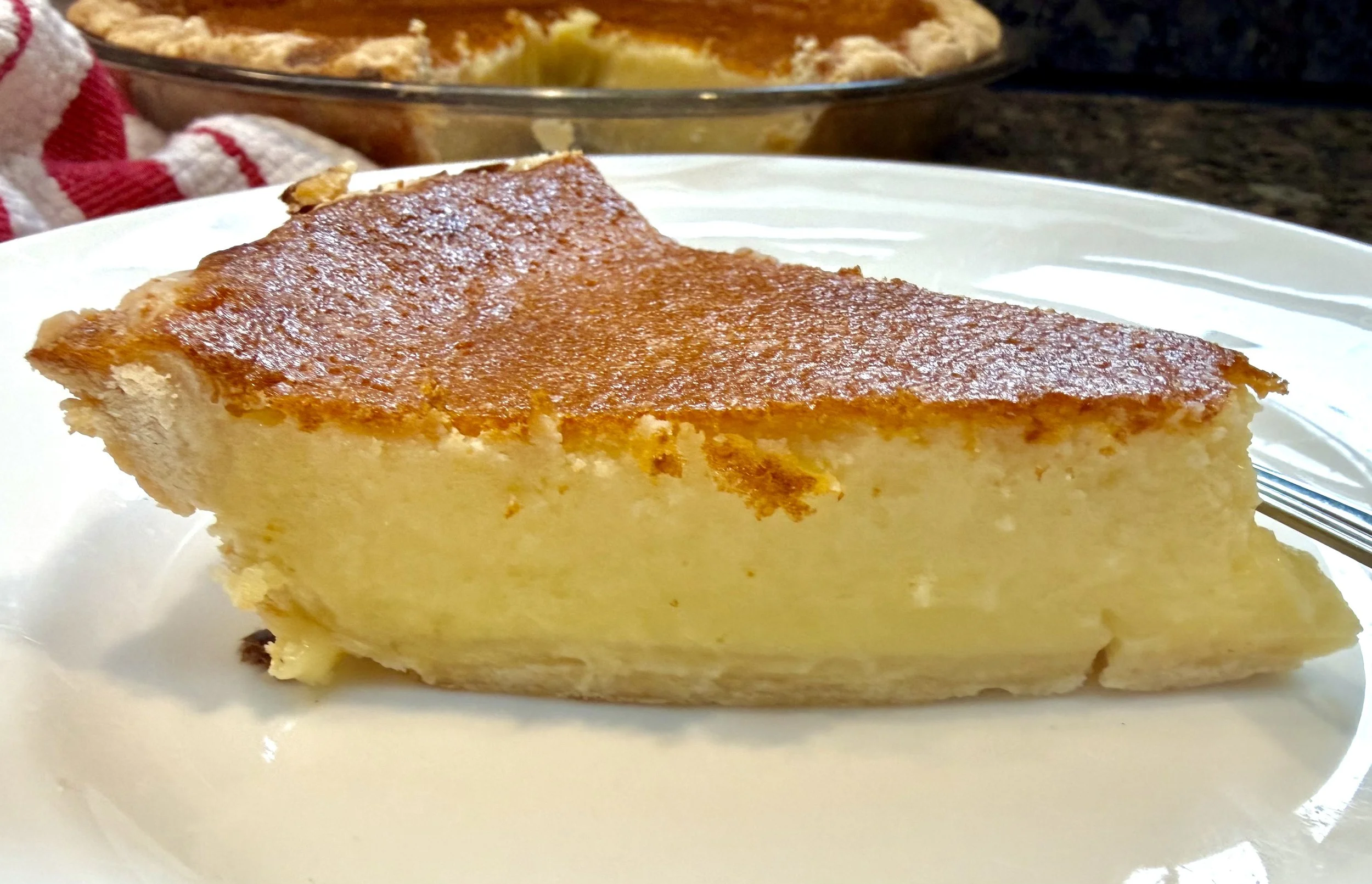
This one tastes rich and creamy, as if there is heavy cream within, but it is also light and subtle — the perfect dessert to welcome spring — and it is also just right as far as sweetness goes, nothing cloying or overpowering. The top has a delicate, faintly brittle crust that melts immediately, gratifyingly, on your tongue.

Buttermilk Pie

6 tablespoons butter

4 large eggs

1-1/2 cups sugar

2 tablespoons all-purpose flour

1 teaspoon vanilla extract

1/4 teaspoon salt

1 cup buttermilk

unbaked 9-inch pie crust

1/3 cup sliced almonds or 1/2 cup currants, optional

Whipped cream

Preheat the oven to 350 degrees. Melt the butter and set it aside to cool. In a bowl, combine the eggs, sugar, flour, vanilla extract, salt and melted, cooled butter and beat the ingredients with a whisk or an electric mixer set at medium speed, for about 2-3 minutes or until the mixture is smooth and uniform. Stir in the buttermilk and blend in thoroughly. Pour the mixture into the pie crust. Sprinkle the nuts or currants over the filling if desired. Bake for about 45 minutes or until the surface is golden brown and the center is set. Let cool. Cover with whipped cream if desired

Makes one pie

#piday #buttermilkpie #pie #buttermilk

JWI Hamantashen Contest

Yesterday I told you about my big mistake ordering only two chocolate hamantashen for Purim. I blame it on being old fashioned in a way. Although I am constantly experimenting and making up new recipes and cook modern food and am the author of the cookbook Hip Kosher, which features contemporary, not-necessarily-traditional-Jewish but kosher recipes, when it comes to hamantashen I want prune. Okay, maybe also apricot. Because those are what I always ate as a kid and all through my life (never liked the even more traditional poppy seed). 

But my family likes the chocolate filling.

And, come to think of it, you could use any kind of filling you like. I mean, why do we have to stick with prune and apricot? Let’s see, maybe lemon hamantashen? Strawberry-rhubarb? Candied kumquat? Spiced pumpkin?

Which is exactly what Jayne Cohen, cookbook author and blogger for Jewish Woman Magazine thought. So the magazine has decided to hold a recipe contest for — guess what? Hamantashen filling.

Here’s where to go: http://www.jwi.org/Page.aspx?pid=2730 Invent away! I think any filling would work with hamantashen dough (there’s a recipe for the dough on the site). And you could win Jayne’s book, Jewish Holiday Cooking, if yours is the winning filling!

TGI FridayReads! The Happy Prince

fridayreads:

Join thousands of readers across the internet—-and around the world—-by sharing what you’re reading this week. Just reblog this post and add a line about your book, and you’ll be entered to win wonderful books and prizes.

The Happy Prince, by Oscar Wilde. I’ve read this dozens and dozens of times, but am re-reading again today. In case you’ve never read it, it’s about a sparkling, gold-leaved, bejeweled statue of a prince who befriends a swallow who is on her way to Egypt for the winter. When she stops to rest on the prince’s shoulder he tells her that now that he stands so tall and can see everything in the city below, he is saddened by the poverty and by the arrogance and meanness of so many of the residents. He asks the bird to help him make amends, telling her that, in life, he was selfish too.

It’s a powerful story, one that for me shows the mark of great literature — it makes you happy and sad at the same time. It makes you think about what you’ve read.

When I was a kid we had a recording (remember records anyone?) of the Happy Prince, starring Bing Crosby (as the prince of course), Orson Welles narrating. My brothers and I listened to that record over and over, probably a thousand times, so much that my brother could recite it verbatim, with all the right tones and accents, to his grandchildren.

Yesterday I mentioned it to my grandchildren (ages 10 and almost 4), all the while thinking they’d be bored and roll their eyes and tell me to stop. But as I continued with the story they sat there, full-on attentive, waiting to hear what happened to the statue and the bird.

I stopped just short of the end and told them I would bring the book next time I see them.

They loved the story, as well they should and if you haven’t read The Happy Prince, do yourself a favor and read it. It’s a MUST.

Purim Balagan

A Balagan 
Some words are difficult to define, exactly. You have to actually be in a situation that fits the word in order to get the real meaning.
Like the Hebrew word “balagan.” It means “a little chaotic.” But that’s really tame. And lame.
If you…

A Balagan

Some words are difficult to define, exactly. You have to actually be in a situation that fits the word in order to get the real meaning.

Like the Hebrew word “balagan.” It means “a little chaotic.” But that’s really tame. And lame.

If you’ve ever been to a supermarket before a big snowstorm you may begin to understand the word a little. Or an airport when a few flights have been cancelled. Or if you’ve ever seen old time newsreels showing the pushcarts on the Lower East side at the turn of the 20th century.

But if you want to really understand what balagan means, go to a Purim celebration. You know how you always tell your kids to quiet down and behave? On Purim it’s just the opposite. You schlep them to synagogue, all dressed up as Queen Esther (if it’s a girl) or Mordechai (if it’s a boy) and you instruct them to make a lot of noise and run around and every time they hear the name “Haman” they shout, stamp their feet and make noise with their graggers, which are special toy noisemakers intended to kill your hearing as much as any rock concert would and designed to make senior citizens who are there with their grandchildren grateful they are old and can talk a trip to the bathroom for a few minutes.

It’s all in a good cause though. Purim celebrates the salvation of the Jews of ancient Persia, who were to be annihilated by order of Haman, who was the Prime Minister at the time. But Esther, who was married to the Persian King (Ahasueras), begged her husband to save her people. Mordechai, Esther’s cousin led the Jews in revolt. In the end, Haman was hanged, Mordechai was appointed the new Prime Minister and all was well. 

On Purim we are supposed to celebrate, to eat, drink and make merry. And so the costumes, the parties and the graggers, which are designed to blot out the name of the evil Haman. This year it all begins at sundown on March 18th. 

The food? Mostly Hamantashen, a three-cornered cake-cookie that’s supposed to resemble Haman’s hat. I don’t usually make hamantashen. Sometimes I buy them at The Bakery in Plainview, New York, but I’m not there very often (I live in Connecticut after all) and so this year I’ve chosen hamantashen from Kosher Care Packages (you can order them here: http://www.koshercarepackages.com/). 

My box came yesterday and I found I made a BIG mistake. I ordered the prune and apricot, which are really good — tender and not too sweet and also just the right size. Most hamantashen are too big. But Kosher Care Packages also has chocolate hamantashen and I, traditionalist, only ordered TWO. My grand daughter Lila and husband Ed said the chocolate was the best one! And now I have NONE LEFT! The raspberry was good too.

Who knew?! I do now, for next time.

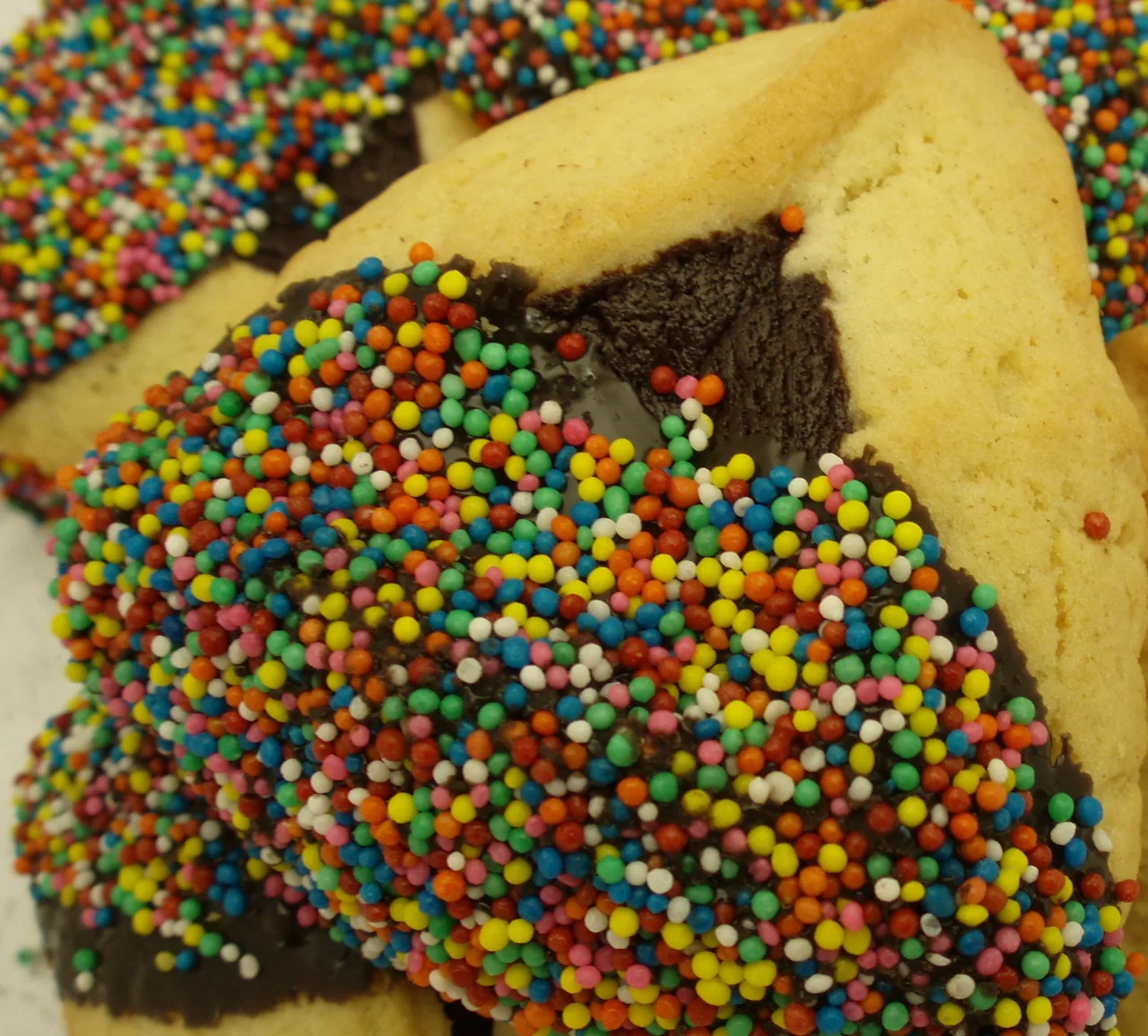
Make sure you order some in chocolate (with sprinkles, which Lila said tasted great “like bubble gum.”)

Why wait to enjoy what you have?

Last weekend my husband Ed and I went to the Cooper-Hewitt Museum in New York City to see “Set in Style: The Jewelry of Van Cleef & Arpels.” Well, I know this is going to sound trite but there’s no way else to say it. This stuff can knock your socks off. Diamonds, rubies, emeralds. Brooches, necklaces, earrings. Pieces that could be taken apart to become pins and earrings but when put together they became a necklace. Cigarette cases, compacts, evening minaudieres. And much more. 

What a delight. And to think of all those women — Wallis Simpson, Grace Kelly, Barbara Hutton — etc. — who actually bought them and wore them. 

The pieces could make one’s heart go thumpety-thump. But what touched my heart more and has stayed in my mind more than this display of beautiful art was our guide, a friendly woman who looked to be about my age. In addition to lovingly describing some of the pieces we were seeing, she told us she was a widow and cautioned our group not to “put things away and never use them” but to “wear your jewelry” even if it is with jeans, and even if the jewelry is small or fake or not the kind that could knock your socks off. 

It was sad to think that it was an unfortunate life transforming moment that made her realize what she could have been taking pleasure in all along.

I feel fortunate to be among those people who never needed an excuse and actually have always looked forward to using anything I own. Especially when it comes to kitchen stuff and tableware. I don’t groan at having to take out the “good china” or the “good silver” when I have company. In fact I still get a laugh when I think about how the pattern I picked was being discontinued but I bought it anyway (a theme that would repeat itself forever and ever). And I still think about how beautiful the table looked when I invited my siblings over for my first “real dinner party” — even though I don’t remember what I served.

I love the way a pretty table looks and to me, it is worth the extra effort over and above whatever it is I am cooking for the meal. 

Why else would I have the stuff if not to use it? 

Am I nuts?

New Orleans French Toast

I’ve never been to Mardi Gras but have travelled to New Orleans, where I absolutely feasted, drank tons of coffee and ate more than my share of beignets. I don’t remember where it was that I sampled “New Orleans French Toast” but wherever it was the memory of the dish lingered long enough for me to develop a recipe of my own.

This dish is not exactly breakfast food. More for brunch or even dinner. Also, definitely for grown ups, not kids.

New Orleans French Toast

5 large eggs

1/2 cup sugar

1/2 cup milk

2 tablespoons orange flavored brandy

1 teaspoon finely grated fresh orange peel

12 slices French or Italian bread cut about 1/2-inch thick

1 tablespoon butter

Preheat the oven to 140 degrees. Beat the eggs and sugar together with a whisk or hand beater for 2-3 minutes or until the mixture is thick and pale. Add the milk, brandy and orange peel and stir to blend the ingredients thoroughly. Place the mixture into a pan large enough to hold all the bread slices. Add the bread and let them soak up all the liquid, turning the pieces occasionally to moisten both sides. Place half the butter in a large skillet or griddle over medium heat. When the butter has melted and looks foamy, add some of the soaked bread and cook for about 2 minutes per side or until lightly browned and crispy. Keep warm in the preheated oven. Add remaining butter when half the bread slices have been cooked and repeat. You can cook this longer if you prefer French Toast less custardy. Makes 12 slices, serving 4-6 people