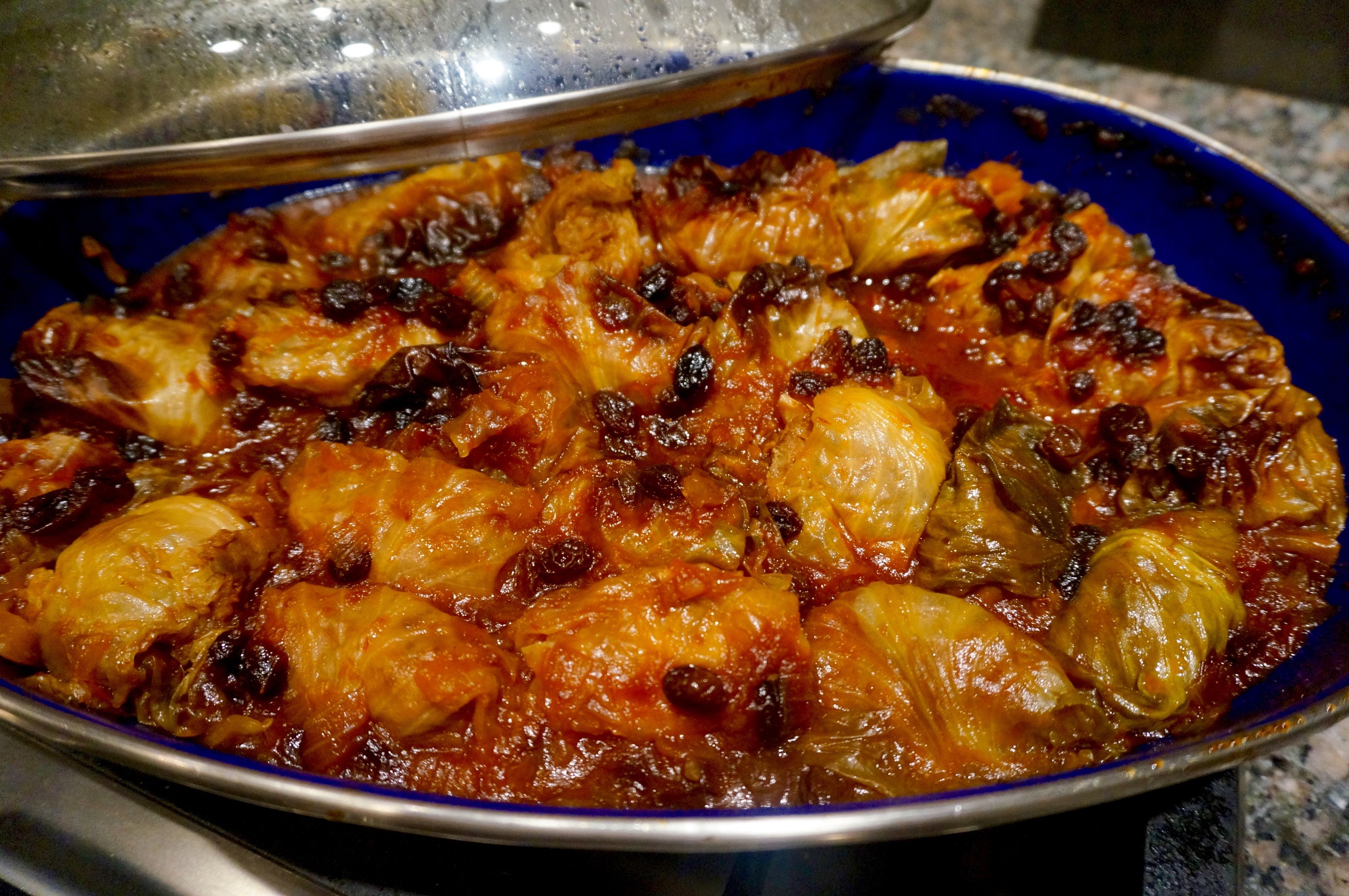
Old Fashioned Stuffed Cabbage

For me, Stuffed Cabbage is like hot dogs, blooming onions and caramel corn. Foods I love to eat but don’t, except for once a year because once I take that first bite I over indulge and stuff myself and then feel awful the next day.

Right now is Stuffed Cabbage time.

I never actually tasted stuffed cabbage until after I was married. It was something the women in my husband Ed’s family would cook. My grandmother made Stuffed Grape Leaves, which are similar, but the leaves are tangier and her sauce more sour than the typical one for Stuffed Cabbage.

Over the years I tried to develop a recipe that Ed would like and later, would appeal to my sons-in-law, who like the dish sweeter than I was used to. This year I got it right, according to everyone in the extended family, and that’s saying a lot because we are an opinionated bunch.

Here’s the recipe:

Stuffed Cabbage

  • 1 large head of green cabbage
  • 2 pounds ground beef
  • 1 medium onion, grated
  • 1 large egg
  • 1/4 cup raw white rice
  • 2 tablespoons matzo meal or plain bread crumbs
  • salt and freshly ground black pepper to taste
  • 2 tablespoons vegetable oil
  • 1 large onion, finely chopped
  • 1 cup brown sugar
  • 1 12-ounce bottle chili sauce
  • 1/2 cup fresh lemon juice
  • 1/2 cup raisins

Preheat the oven to 350 degrees F. Bring a large pot half filled with water to a boil. Cut out the hard center cabbage core. Remove the large cabbage leaves. Place the cabbage leaves plus the smaller remaining cabbage in the boiling water. Cook the cabbage leaves for about 3 minutes, or until they wilt. Cook the remaining cabbage core for 3-5 more minutes, or until you can easily remove the leaves. Cut off the hard stem portions from the large leaves so that they can be rolled easily. Set the leaves aside.

ALTERNATELY: if you plan ahead you can freeze the entire head of cabbage for 24 hours (or more). Thaw the cabbage and the leaves will already be wilted and you can avoid cooking them.

In a large bowl, mix the ground beef, grated onion, egg, rice, matzo meal and salt and pepper to taste. Place a mound of this mixture in the center of each leaf (more on the larger leaves of course). Enclose the meat by wrapping the cabbage leaves, envelope style. Place the stuffed cabbage leaves, seam side down, in deep baking dishes. (I separate the large rolls and smaller ones.)

Heat the vegetable oil in a saute pan over medium heat. Add the onion and cook for 4-5 minutes or until softened. Stir in the brown sugar, chili sauce, lemon juice and raisins and cook for 3-4 minutes. Pour the sauce over the cabbage rolls. Cover the pan. Bake for 2 hours (or, to cook ahead, bake for one hour, freeze, thaw and bake for an additional hour).

Makes 18-24
Creamy Macaroni and Cheese

Whenever I make macaroni and cheese, the sauce breaks.  Even though it tastes good, it looks curdled.  What am I doing wrong?

Submitted by bubby (leslie@sussmail.com):

Hi Bubby. Sorry you are having a problem with macaroni and cheese. It seems as if it is always the plainest foods that cause problems. Here are some pointers that might help:

1: evaporated milk and UNSWEETENED condensed milk (most of the condensed milk we see in the supermarket is sweetened) have stabilizers added, so it helps keep the sauce ingredients together.

2: same goes for American cheese; adding a bit of American cheese to the mix can stabilize the sauce too.

3: or use whole milk (rather than skim) because fat serves as a stabilizer.

4: use young cheeses such as asiago, non-aged cheddar, havarti, muenster, non-aged gouda, and so on. These have more water content than aged, older, drier cheeses and melt more easily, keeping the mixture stable.

5: shred or grate the cheese so that it melts more easily when you add it to the hot white sauce. Only add a little at a time and mix it in thoroughly before adding more. If you add cheese all at once there’s more of a tendency for the sauce to separate.

6: Although most people use cheddar, it’s better to use another cheese (or cheeses) in addition because cheddar alone can be grainy.

I hope this helps. Let me know!

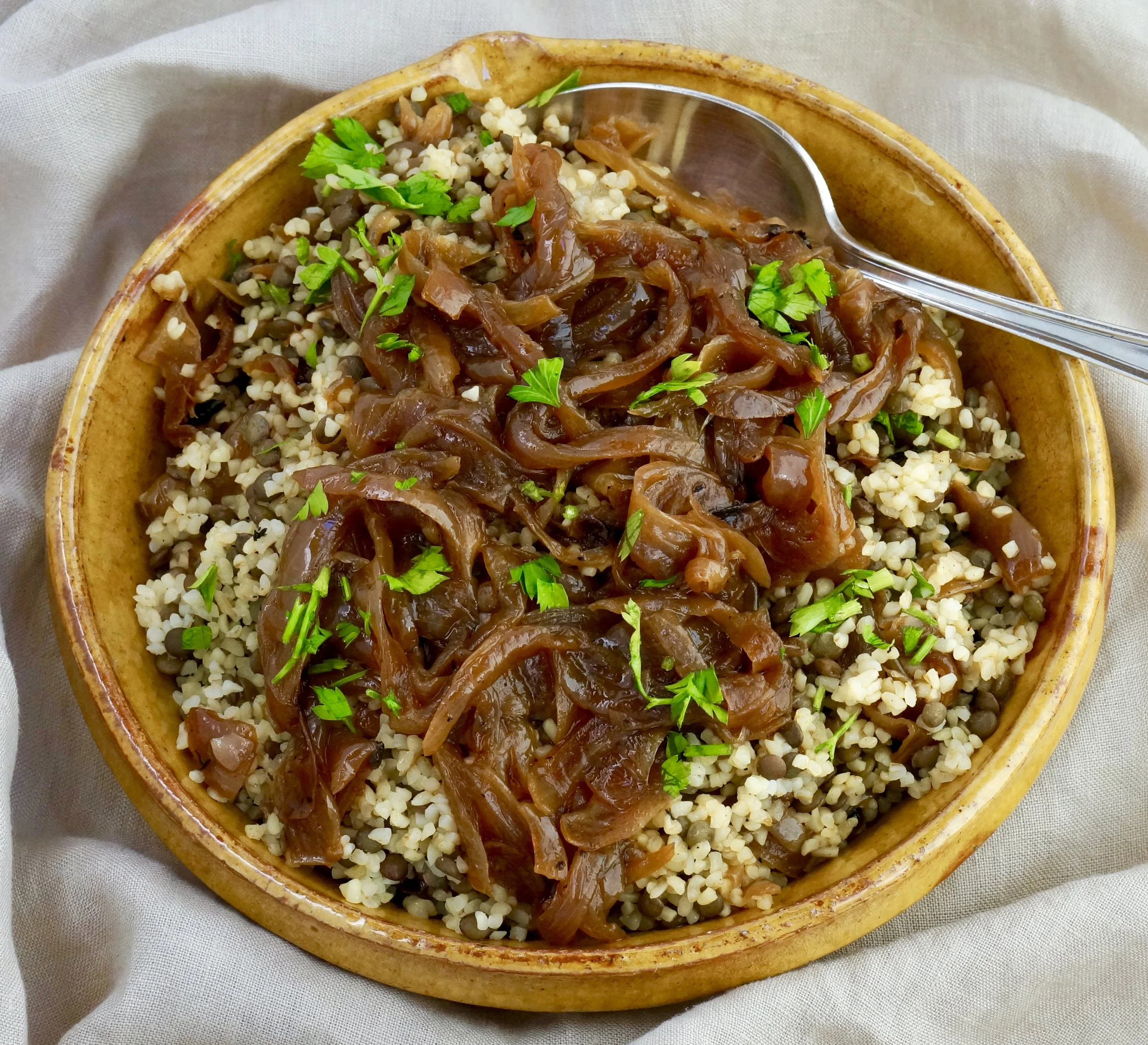
Bulgur Wheat Mujadarah

fullsizeoutput_96de.jpeg

Has anyone else noticed that people may or may not eat a particular food depending on what it’s called?

I know there’s a lot written about this but I saw it for myself yesterday, when I had a party at my house and served buffet style. One of the dishes was Mujadarah (there are lots of ways to spell this Middle Eastern dish). Everyone seemed taken by its name and helped themselves to some, which was terrific because it turned out to be one of the favorites of the day and people came back for seconds and more and there wasn’t a morsel left for today. :(

Only a couple of people asked what it was and when I explained it is made with bulgur wheat and lentils they hesitated.

Just say Mujadarah and people will eat it. It is a special dish. Not only delicious, but easy to make and you can cook it a day or so ahead of a party. It is also a vegetarian dish that is fabulously nutritious (high protein and fiber).

I once read that Mujadarah is the dish that the biblical Esau found so tempting that he sold his birthright to his brother Jacob for a bowlful. Recipes for this so-called “Esau’s Pottage” abound. Some of them contain meat or meat stock or vegetables. My recipe is fairly plain and simple. I make the onions at least one day ahead because the thick, rich juices leech out of the caramelized onions after a few hours and I pour these into the cooked bulgur and lentils for extra flavor. 

Make extra. This stuff goes (at least when you call it by its proper name).

Mujadarah

  • 1/2 cup olive oil

  • 3 large yellow onions, peeled and sliced

  • 3/4 cup lentils

  • 3 cups water or stock

  • 1 cup bulgur wheat

  • 1/2 cup chopped fresh parsley

  • 1 teaspoon ground cumin

  • salt to taste

Heat 4 tablespoons of the olive oil in a large saute pan over medium heat. Add the onions  and cook, stirring occasionally, for about 15 minutes or until the onions are soft and brown. Spoon the onions into a container and cover the container. Refrigerate when cool if not serving the dish immediately. Place the lentils in a saucepan and cover with the water. Bring to a boil over high heat. Lower the heat, cover the pan and cook for 18 minutes. Add the bulgur wheat, stir, cover the pan and cook for another 5 minutes or until all the liquid has been absorbed. Let rest in the covered pan for about 10 minutes, then transfer to a bowl. Stir in the remaining 4 tablespoons olive oil. Add the parsley and toss the ingredients. Add the cumin and salt to taste. If serving immediately, stir in the onions with any accumulated juices. If serving at a later time, stir in the onions and juices, cover the pan and reheat in a covered baking dish in a preheated 350 degree oven.

Makes 4 servings

Ask Ronnie a question: http://ronniefein.com/ask

To comment: http://ronniefein.com/submit

Carrot Salad a winning "experiment" for company

When I have company everyone sort of gravitates to the kitchen. I have a nice size kitchen, so it’s okay, but yesterday, when nearly all of my 40+ adults and several kids were gathered around the center island, where I had laid out a buffet of food, no one was actually eating, I asked one of my son-in-law’s friends to be the first to DIG IN and fill up a plate for himself.

He said he was more than willing to get the ball rolling.

I love when people are in my kitchen yakking, having a glass of wine or beer and looking at the food. But after cooking all that stuff I really really wanted them to start eating it!

So Joel get a plate full and believe it or not, then everyone else followed.

There was lots of food but the biggest hits were the challah (recipe on my website: www.ronniefein.com) — I made two enormous 4-1/2 pound breads. And also the Grand Finale Cookies (recipe in my book Hip Kosher but I added extra chocolate chips per the many requests from my children).

The spinach pie (also in Hip Kosher) was a hit, in fact, my daughter Gillian’s dog, who will eat anything she can and tries to jump up on tables, chairs and what have you to get near anything edible, actually succeeded in reaching two large pieces of spinach pie and polished them off, so I guess she liked it too.

Another winner was this carrot salad, an “experiment” on my guests, even though my mother always told me never to try out new recipes for company.

Carrot Salad

2 pounds carrots, peeled and shredded or grated

1/3 cup chopped fresh cilantro

1 large clove garlic, finely chopped

1-1/2 teaspoons paprika

1 teaspoon ground cumin

1 teaspoon harissa (or 1/4 teaspoon cayenne pepper)

1/8 teaspoon ground cinnamon

1/3 cup olive oil

1/4 cup lemon juice

salt to taste

Place the shredded or grated carrots in a bowl. In another bowl, mix the cilantro, garlic, paprika, cumin, harissa and cinnamon. Stir to mix the ingredients and spoon over the carrots. Toss the carrots with the cilantro mixture. Pour in the olive oil and lemon juice and toss ingredients. Sprinkle with salt to taste. Let marinate for at least 2 hours. Best served at room temperature. Makes 8 servings

Ask Ronnie a question: http://ronniefein.com/ask

To comment: http://ronniefein.com/submit

Maple Glazed Chicken

If you need a good entree for Sukkot, or for any family dinner or even a good company dish, think chicken.

Chicken is like a basic black dress. You can dress it up or make it plain, season it with almost any herb or spice and cook it by almost any method. It’s a good main dish for family but also suitable for company. Eat it cold. Eat it hot. We’d miss a lot if we didn’t cook chicken.

Here’s an easy chicken dish that’s perfect now as the weather gets cooler and we turn to fall foods. It’s a little sweet (maple syrup and orange peel), but also has a little heat (mustard and crushed dried red pepper). This dish doesn’t take long to prepare and it is easy to transport so it’s great if you’re bringing food to a sukkah or just planning an end of season picnic. Or having a meal at your kitchen table. You can make it ahead up to the actual cooking or cook it completely ahead if you want to eat the dish at room temperature.

Maple Glazed Chicken

  • 4 large bone-in chicken breast halves or whole legs (or one quartered chicken)
  • 6 tablespoons maple syrup
  • 2 tablespoons Dijon mustard
  • 2 tablespoons olive oil
  • 1 teaspoon finely grated fresh orange peel
  • 1/2 teaspoon crushed red pepper (flakes)
  • salt to taste

Preheat the oven to 350 degrees F. Rinse and dry the chicken pieces and place them in a baking dish, leaving space between each piece. In a small bowl, combine the maple syrup. Dijon mustard, olive oil, orange peel and red pepper flakes. Stir well, then spoon the mixture over the chicken. Turn the chicken to coat all sides with the glaze. Sprinkle with salt if desired. Place chicken skin side down. Bake for 10 minutes. Turn chicken skin side up. Cook for another 15 minutes, basting occasionally. Raise heat to 450 degrees F and cook for another 10 minutes or until browned on top and cooked through. Serve with the pan juices.

Makes 4 servings

Ask Ronnie a question: http://ronniefein.com/ask

To comment: http://ronniefein.com/submit

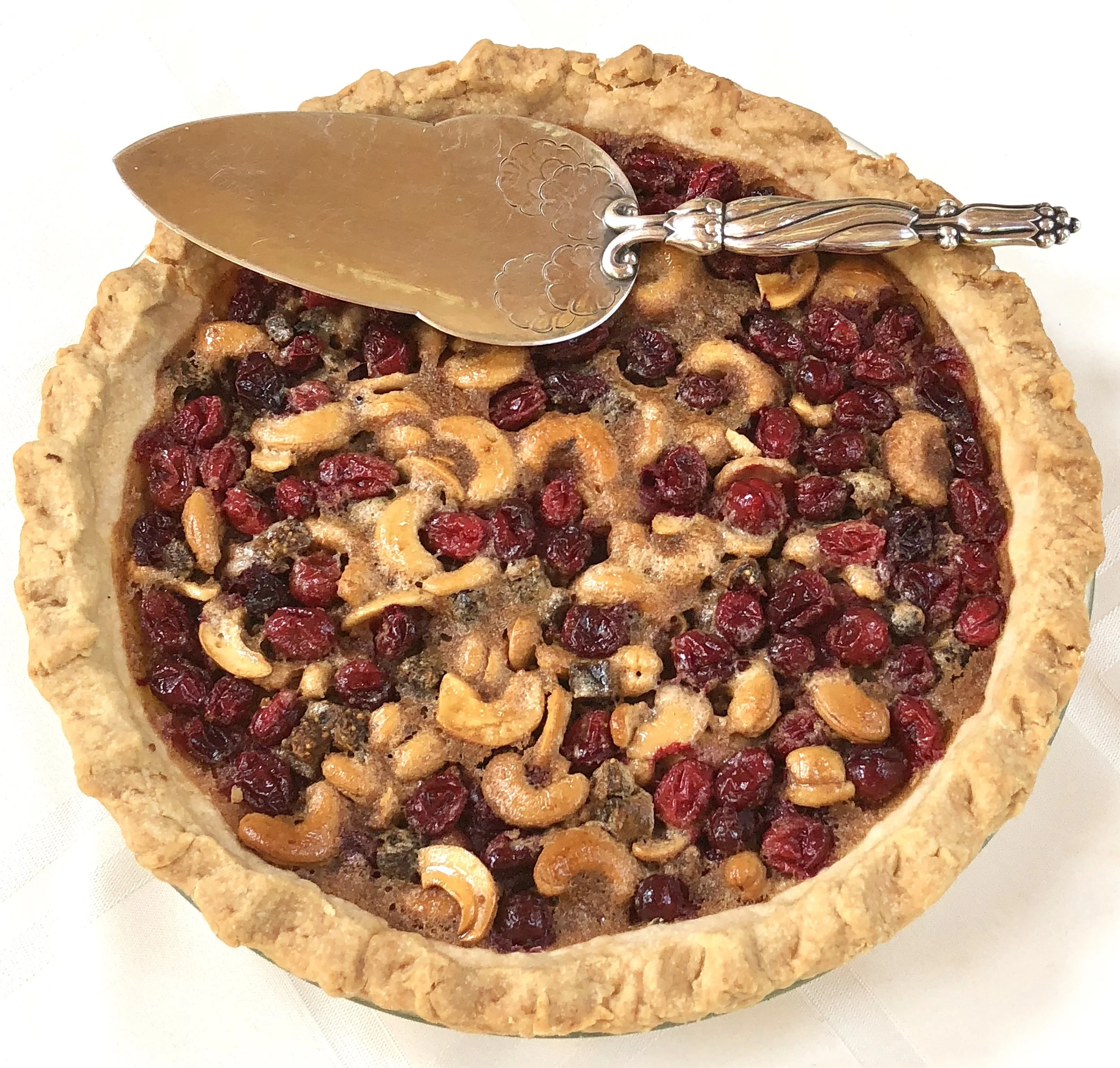
Cranberry-Maple-Cashew Pie

In the Jewish world, this is holiday season. The new year has begun. We’ve been repentant (hopefully!) and now it’s almost time for Sukkot, when we remember the 40 year period that the ancient Hebrews wandered in the desert after the Exodus. Sukkot is a most joyous holiday that comes after the introspective and solemn Days of Awe.

It’s like the period between Thanksgiving and Christmas only instead of putting up and decorating a tree, we build a sukkah in our backyard (or a smaller, representational one in our apartments). You can eat and sleep in a sukkah. It’s like camping out.

My family never built a sukkah when I was a girl. The closest I ever came to camping out was one night when my cousin Leslie and I were allowed to sleep under a bridge table set up in her kitchen. My aunt Beck threw a chenille bedspread over the table to enclose us. We didn’t have sleeping bags and the floor was hard. We lasted about 2 hours and then went to bed. But we still talk about it years and years later.

Of course, like most Jewish holidays, Sukkot brings with it some really terrific food. It’s a harvest holiday as well as one of remembrance, so it’s time to cook with the fresh fruits and vegetables of the season — like pumpkins, winter squash, nuts, cranberries, apples and so on — and prepare dishes that are warm, colorful and comforting as the cold weather approaches. Pumpkin soup. Baked Cranberry Stuffed Squash. Sauteed Eggplant with Yogurt and Pine Nuts (there’s a recipe in my book, Hip Kosher), Apple Crisp. Hazelnut Cake.

If you want to eat in a sukkah, it also has to be food that’s easily transportable and not too messy: pieces of chicken, stuffed peppers, Carrot and Parsnip “Fries” and Couscous with Dried Cranberries and Toasted Almonds (both of the last two recipes also in Hip Kosher).

One of my favorite Sukkot desserts is Cranberry-Maple-Cashew Pie. It’s a riff on Pecan Pie, but my daughter Gillian is fiercely allergic to pecans, so I made this one up as a replacement. Here’s the EASY EASY recipe:

Cranberry-Maple-Cashew Pie

  • 1 cup maple syrup

  • 1/3 cup light corn syrup

  • 1/4 cup sugar

  • 3 large eggs

  • 3 tablespoons melted butter or margarine

  • 2 tablespoons all-purpose flour

  • 1/8 teaspoon salt

  • 1 cup halved cashew nuts

  • 1 cup fresh cranberries

  • 1 unbaked 9-inch pie crust

Preheat the oven to 350 degrees. In a large bowl, combine the maple syrup, corn syrup, sugar, eggs and melted butter and blend the ingredients thoroughly using a whisk. Stir in the flour, salt, nuts and cranberries. Blend thoroughly. Pour the mixture into the pie crust. Bake for 45 minutes or until the top is golden brown and crusty.

Makes one 9-inch pie

Ask Ronnie a question: http://ronniefein.com/ask

To comment: http://ronniefein.com/submit

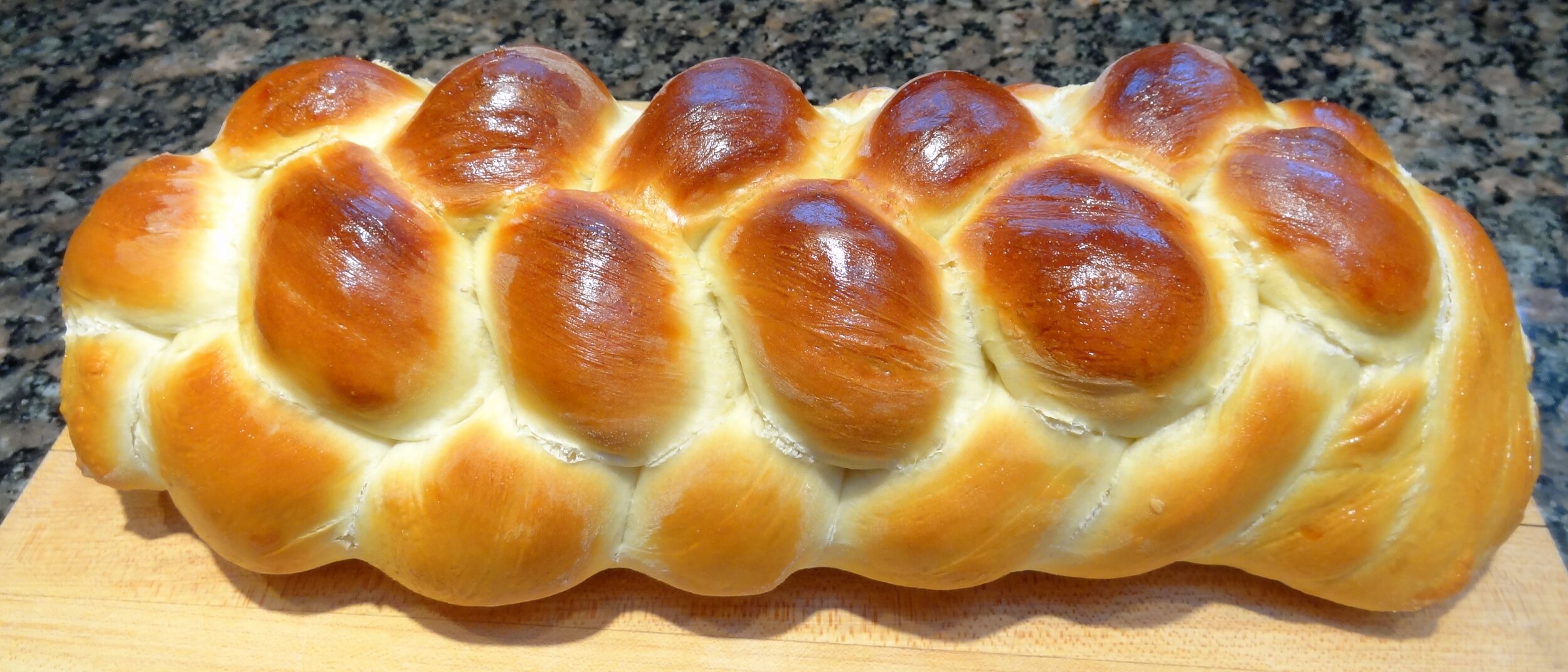
The Family Challah Recipe

fullsizeoutput_d.jpeg

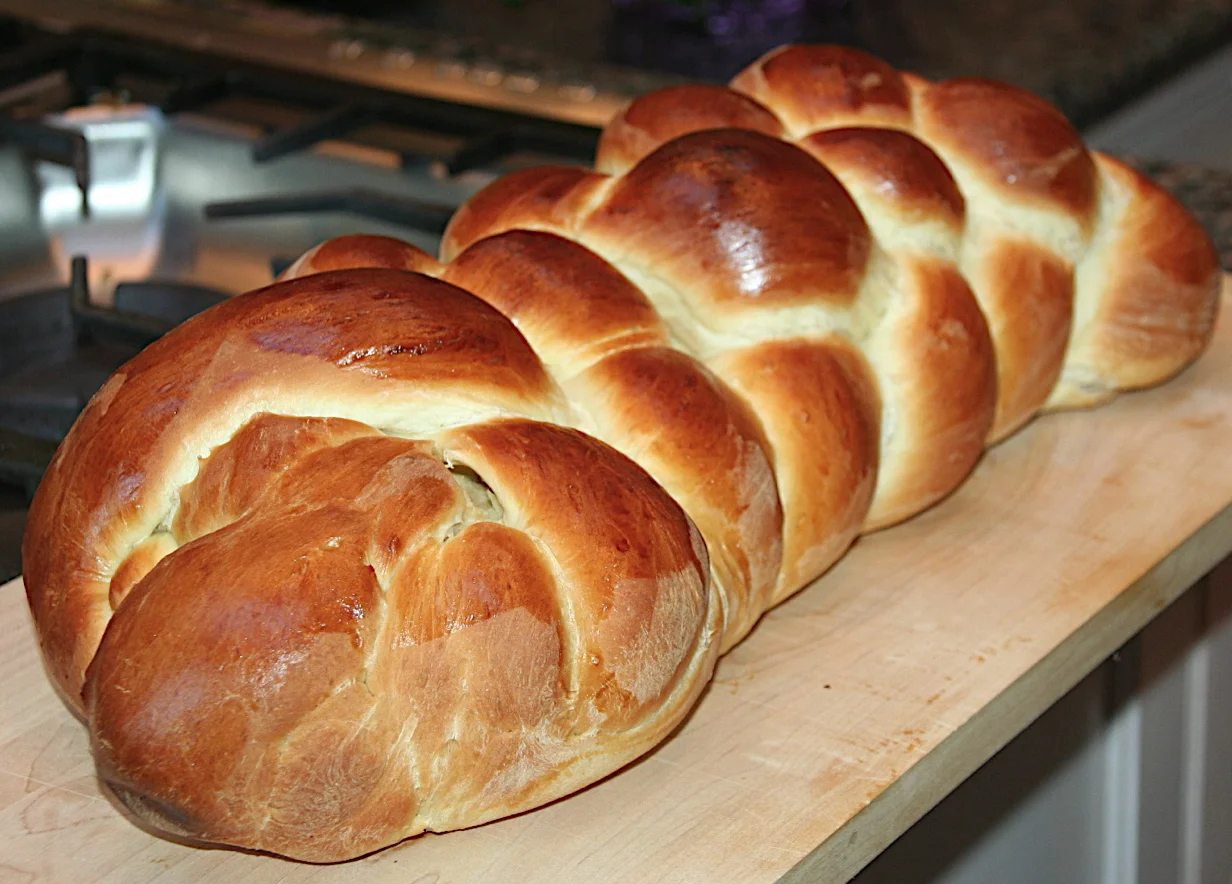
I know a round challah is traditional for the Jewish holidays but I will still make braided ones because after years and years of making an easy 3-braid bread, I have finally learned how to make the more professional-looking 6-braider and I want to practice until I can do it in my sleep, like butter cookies or apple pie.

Thanks to the internet, I learned the secrets of the 6-braider from a YouTube video. My eldest grandchild and I watched, stopped the video from time to time to write down what the woman was saying. The first one took us at least 10 minutes to braid because we had to go back a few times to figure out what she was saying and also to undo some of our missteps. Also to dust off my computer, which unfortunately was a bit too close to the floured work surface.

My mom, who was a good baker, nevertheless never baked a homemade challah. She baked butter cookies and apple pie and taught me how do do those which is why I could make them without even thinking about what I’m doing. But she did reminisce often about my grandmother’s challah. That would be my father’s mother, who my mother always said was a terrible cook but did make one terrific challah.

She gave me my grandmother’s recipe. In those days women didn’t really write down recipes. If someone wanted to learn they had to watch and learn by example. My mother wrote down the basic ingredients on a card. The one she gave me. No instructions, just amounts.

Sort of.

The recipe card called for 8 hands of flour. 1/2 hand sugar. Like that.

I have big hands. I don’t know about my grandmother’s hands though.

And I had no idea what to do with the dough after it was done.

So I experimented and tried and tried to get it right, which I finally did and I have to say it’s fabulous challah. There’s never enough of it and everyone loves it.

Recently I had lunch with a cousin who I had not seen in 40 years. He was brought up by my grandmother and one of the things he reminisced about over lunch was how delicious her challah was. I told him about my adventures with her recipe and he seemed really happy about the family challah recipe put to good use. He even told me that once, years before I was born, there was a charity auction for my grandmother’s synagogue. She baked a challah and it sold for $100!!! A huge amount of money today, for a bread, but can you imagine what that meant in the 1930s??

When challah is good, it’s really really good. Look for my recipe posted yesterday.

Ask Ronnie a question: http://ronniefein.com/ask

To comment: http://ronniefein.com/submit

Grandma's Challah

Why do challah recipes always tell you the yield in loaves, not how many a loaf serves?My guess is that an 8-cup-of-flour challah is supposed to be enough for at least 12 people. But when a challah’s really good you never know! In my family I someti…

Why do challah recipes always tell you the yield in loaves, not how many a loaf serves?

My guess is that an 8-cup-of-flour challah is supposed to be enough for at least 12 people. But when a challah’s really good you never know! In my family I sometimes think I need a personal challah for everyone (and in fact when I bake challah with my grandchildren I give them each a lump of dough and they actually do get their own personal challahs).

My challah recipe yields 2 regular size or one enormous loaf. But one eight cup of flour recipe is never enough for 6 adults and 3 kids, especially when there’s going to be a break-the-fast for 17 adults plus several more children. I make at least two of these and only sometimes are there any leftovers for French toast the next day.

I really should think about three. That’s my task for tomorrow. Thanks to a big freezer.

Here’s the recipe:

CHALLAH

2 packages active dry yeast

1/2 cup warm water (about 105 degrees; feels slightly warm to touch)

1/2 cup sugar

8 cups flour, approximately

1 tablespoon salt

5 large eggs

1/4 cup vegetable oil

1-1/2 cups warm water (about 105 degrees)

poppy seeds or sesame seeds, optional

In a small bowl, mix the yeast, 1/2 cup water, 1/2 teaspoon sugar and a pinch of flour. Stir and set aside for about 5 minutes or until the mixture is bubbly. While the yeast is resting, place 7-1/2 cups flour with the remaining sugar and salt in the bowl of an electric mixer with a dough hook. Add 4 of the eggs, the vegetable oil and the 1-1/2 cups water. Mix using the dough hook until well combined. Add the yeast mixture and blend in thoroughly. Knead (at medium-high speed) until the dough is smooth and elastic (3-4 minutes). Add more flour as needed to make the dough smooth and soft, but not overly sticky. Cover the bowl and let the dough rise in a warm place for about 1-1/2 hours or until doubled in bulk. Punch the dough down, cover the bowl and let rise again for about 45 minutes or until doubled in bulk. Remove the dough to a floured surface. Cut the dough into 3 or 6 pieces depending on whether you are going to make one large or two smaller loaves. Make long strands out of each piece. Braid the strands and seal the ends together by pressing on the dough. Place the bread(s) on a lightly greased cookie sheet. Beat the last egg. Brush the surface with some of the egg. Sprinkle with seeds if desired. Let rise in a warm place for 30 minutes. While the dough is in the last rise, preheat the oven to 350 degrees. Bake for about 30 minutes for one large bread, 22-25 minutes for two smaller breads. They should be firm and golden brown. Makes one large or two smaller challahs

NOTE: you can make the dough in a food processor — cut the recipe in half

Ask Ronnie a question: http://ronniefein.com/ask

To comment: http://ronniefein.com/submit

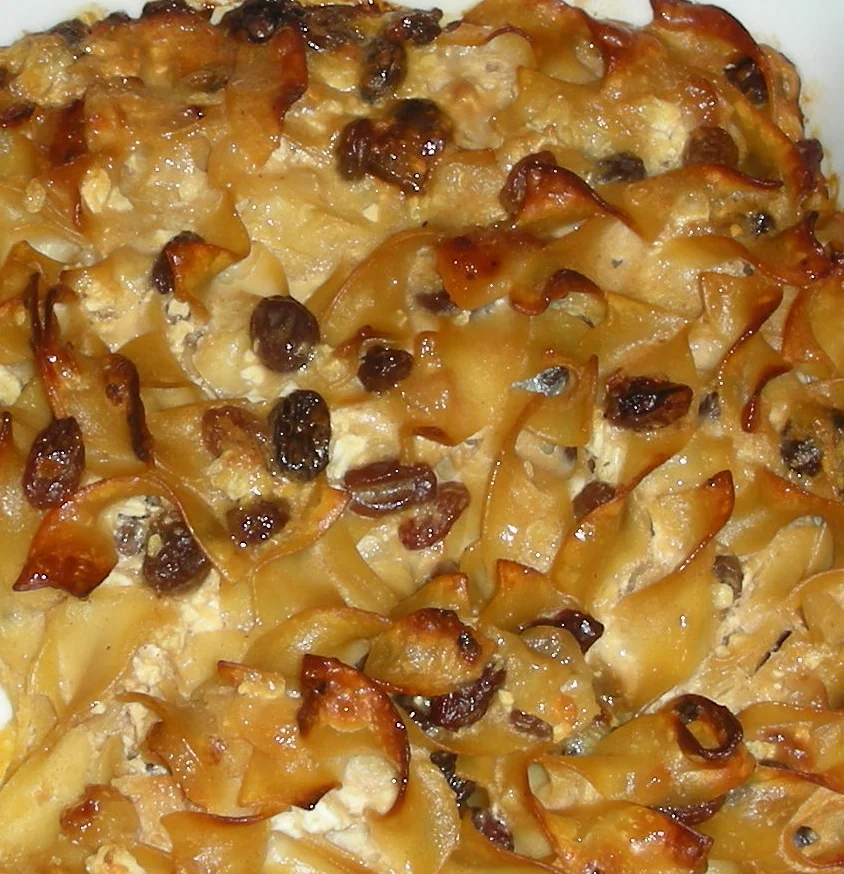
Cranberry-Orange Noodle Kugel

KUGEL CHALLENGE II
Just because Rosh Hashanah is over doesn’t mean I’m no longer thinking about kugel. Good food memories linger and besides, I always serve kugel for my Yom Kippur break-the-fast — the Linda/Susan recipe I mentione…

KUGEL CHALLENGE II

Just because Rosh Hashanah is over doesn’t mean I’m no longer thinking about kugel. Good food memories linger and besides, I always serve kugel for my Yom Kippur break-the-fast — the Linda/Susan recipe I mentioned last week — so I still have noodle pudding on the brain.

I know that ultra-rich and crunchy topped version is coming next Saturday night, so in the meantime, in between holidays, I like to tinker with different recipes.

My mother was an “if a recipe works why fix it?” person. But I can’t help myself. I experiment a lot to see what happens if you add this or that. Not necessarily to make it better. Just different.

I came up with this one, Cranberry-Orange, a traditional kugel with a contemporary twist. It’s sweet, tender in the middle and crunchy on top. 

Cranberry-Orange Noodle Kugel

1 cup dried cranberries

1/4 cup orange juice

1 pound wide egg noodles

1/4 pound butter, melted

6 large eggs

2 cups cottage cheese

1-1/2 cups dairy sour cream

1/3 cup sugar

1 teaspoon ground cinnamon

2 teaspoons grated fresh orange rind

1/8 teaspoon salt

Place the cranberries in a bowl and pour the orange juice over them. Let soak for at least 30 minutes. Set aside. Preheat the oven to 350 degrees. Butter a 9”x13” baking dish. Cook the noodles al dente (not quite done). Drain the noodles and place them in a large bowl. Pour in the melted butter and stir to coat all the noodles with the butter. In a separate bowl, combine the eggs, cottage cheese, sour cream, sugar, cinnamon, orange rind and salt. Mix thoroughly. Spoon the cheese mixture over the noodles and toss to coat all the noodles. Add the cranberries and any remaining juice. Mix in. Place the mixture into the prepared baking dish. Bake for about 40 minutes or until the top is browned and crunchy. Makes 8-10 servings

Ask Ronnie a question: http://ronniefein.com/ask

To comment: http://ronniefein.com/submit